


 Скачать презентацию Zoonyms of English Kazakh Russian languages in paroemia
диплом.pptx
- Количество слайдов: 15
 Zoonyms of English, Kazakh, Russian languages in paroemia Done by: Sovetova G. A. Scientific adviser : Bobesh R. S
 üThe aim of research is scientific systematization and English, Russian, Kazakh paremiya with zoonyms which characterizes person, identification and the description of their ethnic originality. üThe tasks: to define the case of English, Russian and Kazakh paremiya with zoonyms characterizing the world of the person; - to reveal and describe clusters of English, Russian and Kazakh paremiya with zoonyms; - to reveal and compare associative connections zoonym’s from their ethnic origin’s point of view; - to define an ethnic originality of analyzed paremiya with zoonyms; üObject of research are the English, Russian and Kazakh paremiya characterizing the world of the person. üSubject of research are English, Russian and Kazakh paremiya with zoonyms. üThe problem of offered research seems in studying of ethnic mentality of British, Russians and Kazakhs through linguistic methods, use of a new technique of comparison of paremiya - techniques of the cluster analysis. üWork consists of the introduction, two parts, the conclusion and the list of the used literature.
 Ø Paremiya is understood as secondary language signs – the closed steady phrases (proverbs and sayings), being markers of situations or the relations between realities. Ø Phraseological units, proverbs, sayings most visually illustrate a way of life, geography, history, traditions of society. Ø In system of language name of animals form a special semantic field–zoonyms. Zoonуms – as separate lexical units and as components of set expressions – are widely presented in all languages of the world and belong to the most ancient and most widespread words.
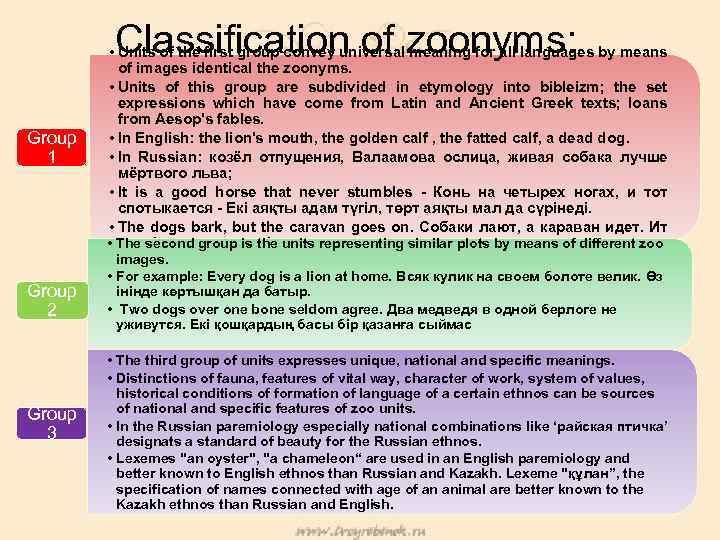 Classification of zoonyms: Group 1 Group 2 Group 3 • Units of the first group convey universal meaning for all languages by means of images identical the zoonyms. • Units of this group are subdivided in etymology into bibleizm; the set expressions which have come from Latin and Ancient Greek texts; loans from Aesop's fables. • In English: the lion's mouth, the golden calf , the fatted calf, a dead dog. • In Russian: козёл отпущения, Валаамова ослица, живая собака лучше мёртвого льва; • It is a good horse that never stumbles - Конь на четырех ногах, и тот спотыкается - Екі аяқты адам түгіл, төрт аяқты мал да сүрінеді. • The dogs bark, but the caravan goes on. Собаки лают, а караван идет. Ит үреді, керуен көшеді. • The second group is the units representing similar plots by means of different zoo images. • For example: Every dog is a lion at home. Всяк кулик на своем болоте велик. Өз інінде көртышқан да батыр. • Two dogs over one bone seldom agree. Два медведя в одной берлоге не уживутся. Екі қошқардың басы бір қазанға сыймас • The third group of units expresses unique, national and specific meanings. • Distinctions of fauna, features of vital way, character of work, system of values, historical conditions of formation of language of a certain ethnos can be sources of national and specific features of zoo units. • In the Russian paremiology especially national combinations like ‘райская птичка’ designats a standard of beauty for the Russian ethnos. • Lexemes "an oyster", "a chameleon“ are used in an English paremiology and better known to English ethnos than Russian and Kazakh. Lexeme "құлан”, the specification of names connected with age of an animal are better known to the Kazakh ethnos than Russian and English.
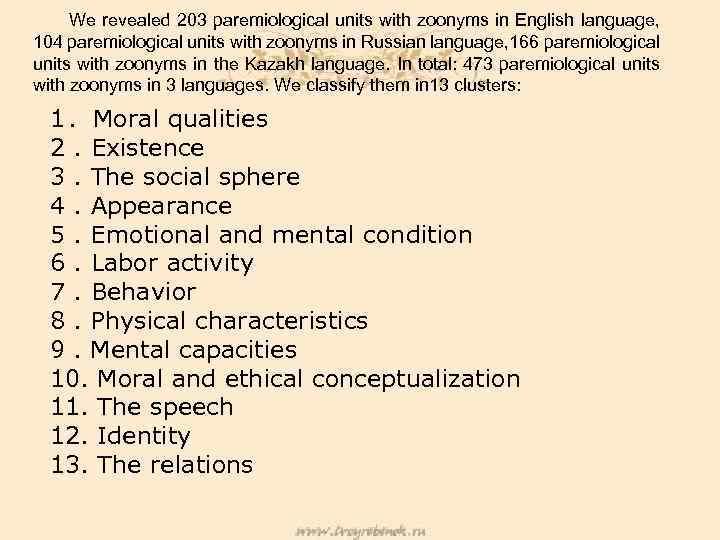 We revealed 203 paremiological units with zoonyms in English language, 104 paremiological units with zoonyms in Russian language, 166 paremiological units with zoonyms in the Kazakh language. In total: 473 paremiological units with zoonyms in 3 languages. We classify them in 13 clusters: 1. Moral qualities 2. Existence 3. The social sphere 4. Appearance 5. Emotional and mental condition 6. Labor activity 7. Behavior 8. Physical characteristics 9. Mental capacities 10. Moral and ethical conceptualization 11. The speech 12. Identity 13. The relations
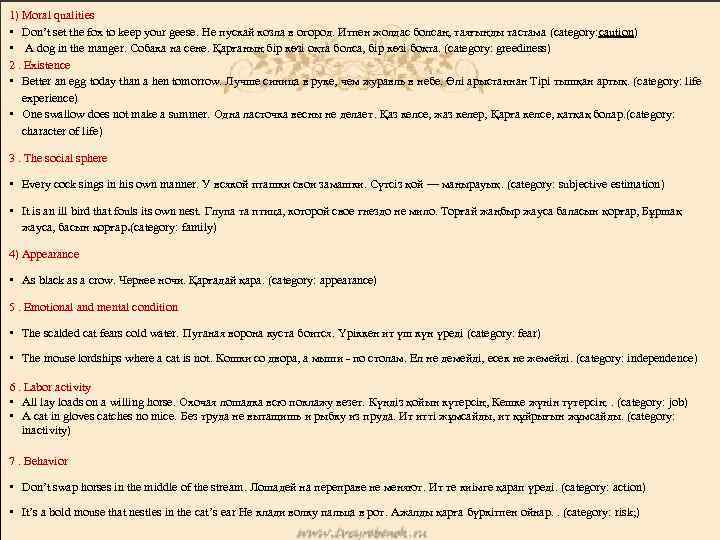 1) Moral qualities • Don’t set the fox to keep your geese. Не пускай козла в огород. Итпен жолдас болсаң, таяғыңды тастама (category: caution) • A dog in the manger. Собака на сене. Қарғаның бiр көзi оқта болса, бiр көзi боқта. (category: greediness) 2. Existence • Better an egg today than a hen tomorrow. Лучше синица в руке, чем журавль в небе. Өлi арыстаннан Тiрi тышқан артық. (category: life experience) • One swallow does not make a summer. Одна ласточка весны не делает. Қаз келсе, жаз келер, Қарға келсе, қатқақ болар. (category: character of life) 3. The social sphere • Every cock sings in his own manner. У всякой пташки свои замашки. Сүтсіз қой — маңырауық. (category: subjective estimation) • It is an ill bird that fouls its own nest. Глупа та птица, которой свое гнездо не мило. Торғай жаңбыр жауса баласын қорғар, Бұршақ жауса, басын қорғар. (category: family) 4) Appearance • As black as a crow. Чернее ночи. Қарғадай қара. (category: appearance) 5. Emotional and mental condition • The scalded cat fears cold water. Пуганая ворона куста боится. Үріккен ит үш күн үреді (category: fear) • The mouse lordships where a cat is not. Кошки со двора, а мыши - по столам. Ел не демейді, есек не жемейді. (category: independence) 6. Labor activity • All lay loads on a willing horse. Охочая лошадка всю поклажу везет. Күндіз қойын күтерсің, Кешке жүнін түтерсің. . (category: job) • A cat in gloves catches no mice. Без труда не вытащишь и рыбку из пруда. Ит итті жұмсайды, ит құйрығын жұмсайды. (category: inactivity) 7. Behavior • Don’t swap horses in the middle of the stream. Лошадей на переправе не меняют. Ит те киімге қарап үреді. (category: action) • It’s a bold mouse that nestles in the cat’s ear Не клади волку пальца в рот. Ажалды қарға бүркiтпен ойнар. . (category: risk; )
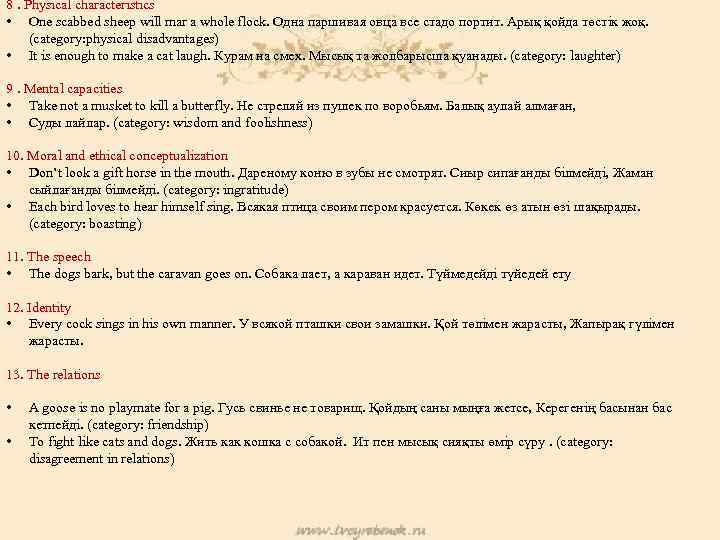 8. Physical characteristics • One scabbed sheep will mar a whole flock. Одна паршивая овца все стадо портит. Арық қойда төстік жоқ. (category: physical disadvantages) • It is enough to make a cat laugh. Курам на смех. Мысық та жолбарысша қуанады. (category: laughter) 9. Mental capacities • Take not a musket to kill a butterfly. Не стреляй из пушек по воробьям. Балық аулай алмаған, • Суды лайлар. (category: wisdom and foolishness) 10. Moral and ethical conceptualization • Don’t look a gift horse in the mouth. Дареному коню в зубы не смотрят. Сиыр сипағанды білмейді, Жаман сыйлағанды білмейді. (category: ingratitude) • Each bird loves to hear himself sing. Всякая птица своим пером красуется. Көкек өз атын өзi шақырады. (category: boasting) 11. The speech • The dogs bark, but the caravan goes on. Собака лает, а караван идет. Түймедейді түйедей етy 12. Identity • Every cock sings in his own manner. У всякой пташки свои замашки. Қой төлімен жарасты, Жапырақ гүлімен жарасты. 13. The relations • • A goose is no playmate for a pig. Гусь свинье не товарищ. Қойдың саны мыңға жетсе, Керегенің басынан бас кетпейді. (category: friendship) To fight like cats and dogs. Жить как кошка с собакой. Ит пен мысық сияқты өмір сүру. (category: disagreement in relations)
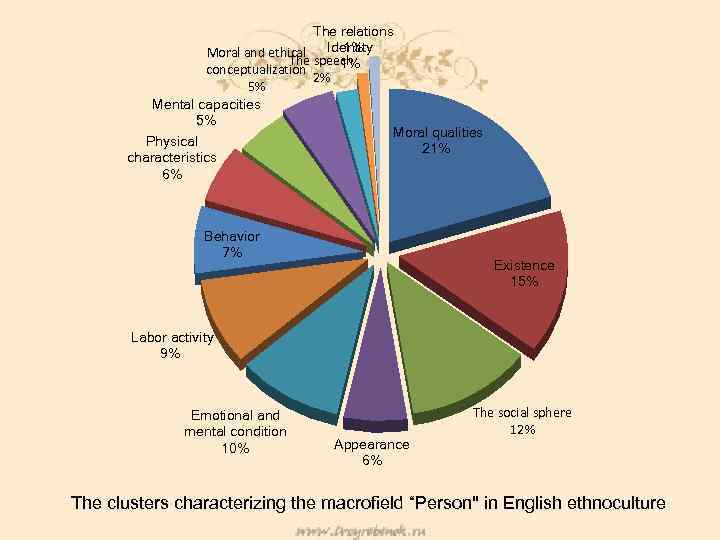 The relations Identity 1% Moral and ethical The speech 1% conceptualization 2% 5% Mental capacities 5% Moral qualities Physical 21% characteristics 6% Behavior 7% Existence 15% Labor activity 9% Emotional and mental condition 10% Appearance 6% The social sphere 12% The clusters characterizing the macrofield “Person" in English ethnoculture
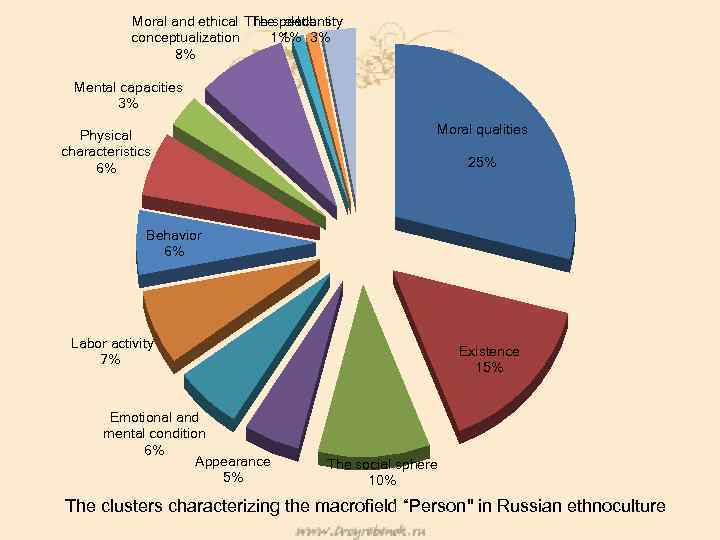 Moral and ethical The speech The relations Identity conceptualization 1% 3% 1% 8% Mental capacities 3% Physical characteristics 6% Moral qualities 25% Behavior 6% Labor activity 7% Emotional and mental condition 6% Appearance 5% Existence 15% The social sphere 10% The clusters characterizing the macrofield “Person" in Russian ethnoculture
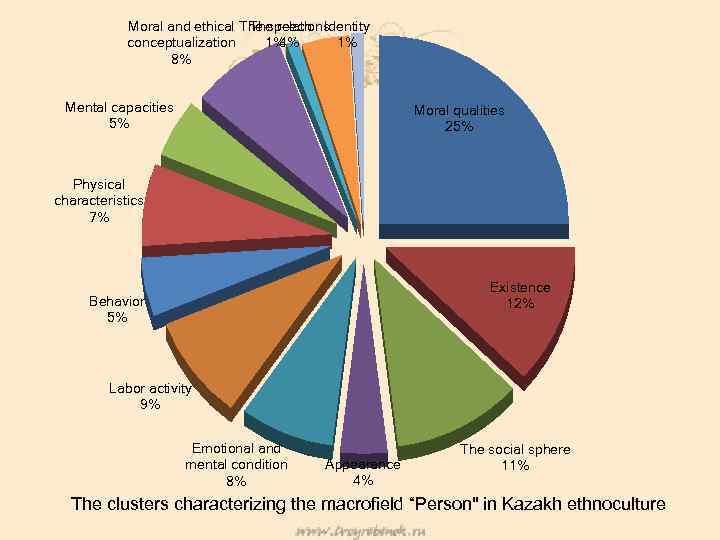 Moral and ethical The speech Identity The relations conceptualization 1% 4% 1% 8% Mental capacities 5% Moral qualities 25% Physical characteristics 7% Existence 12% Behavior 5% Labor activity 9% Emotional and mental condition 8% Appearance 4% The social sphere 11% The clusters characterizing the macrofield “Person" in Kazakh ethnoculture
 Labor activity 8% Emotional and mental condition 10% Moral qualities 20% The social sphere 10% Moral qualities 25% The social sphere 12% Existence 15% The dominant characteristics reflecting features of Russian mentality The dominant characteristics reflecting features of English mentality Labor activity 9% Moral qualities 25% The social sphere 11% Existence 12% The dominant characteristics reflecting features of Kazakh mentality
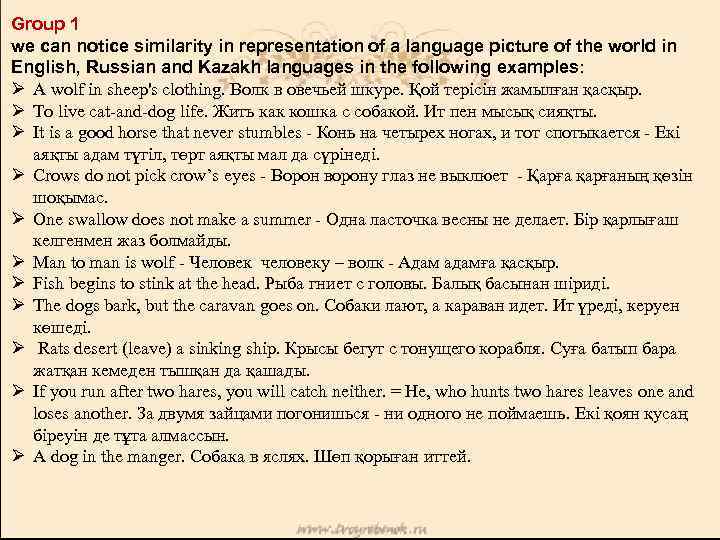 Group 1 we can notice similarity in representation of a language picture of the world in English, Russian and Kazakh languages in the following examples: Ø A wolf in sheep's clothing. Волк в овечьей шкуре. Қой терісін жамылған қасқыр. Ø To live cat-and-dog life. Жить как кошка с собакой. Ит пен мысық сияқты. Ø It is a good horse that never stumbles - Конь на четырех ногах, и тот спотыкается - Екі аяқты адам түгіл, төрт аяқты мал да сүрінеді. Ø Crows do not pick crow’s eyes - Ворон ворону глаз не выклюет - Қарға қарғаның қөзін шоқымас. Ø One swallow does not make a summer - Одна ласточка весны не делает. Бір қарлығаш келгенмен жаз болмайды. Ø Man to man is wolf - Человек человеку – волк - Адам адамға қасқыр. Ø Fish begins to stink at the head. Рыба гниет с головы. Балық басынан шіриді. Ø The dogs bark, but the caravan goes on. Собаки лают, а караван идет. Ит үреді, керуен көшеді. Ø Rats desert (leave) a sinking ship. Крысы бегут с тонущего корабля. Суға батып бара жатқан кемеден тышқан да қашады. Ø If you run after two hares, you will catch neither. = He, who hunts two hares leaves one and loses another. За двумя зайцами погонишься - ни одного не поймаешь. Екі қоян қусаң біреуін де тұта алмассын. Ø A dog in the manger. Собака в яслях. Шөп қорыған иттей.
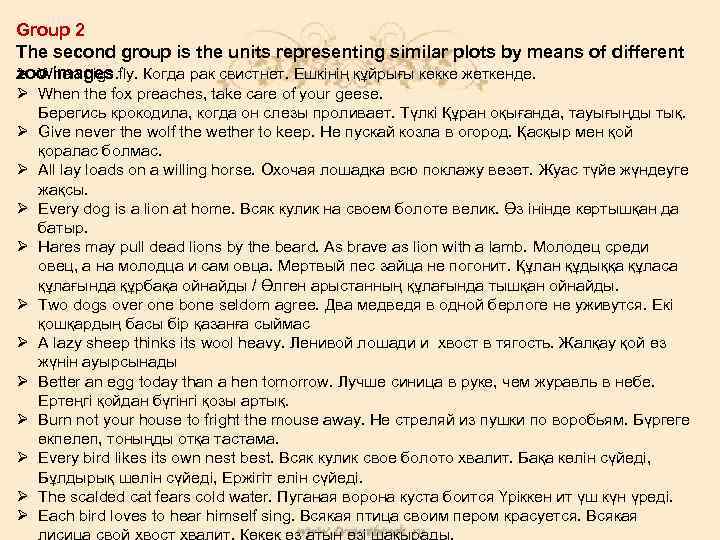 Group 2 The second group is the units representing similar plots by means of different zoo images. Ø When pigs fly. Когда рак свистнет. Ешкінің құйрығы көкке жеткенде. Ø When the fox preaches, take care of your geese. Берегись крокодила, когда он слезы проливает. Түлкі Құран оқығанда, тауығыңды тық. Ø Give never the wolf the wether to keep. Не пускай козла в огород. Қасқыр мен қой қоралас болмас. Ø All lay loads on a willing horse. Охочая лошадка всю поклажу везет. Жуас түйе жүндеуге жақсы. Ø Every dog is a lion at home. Всяк кулик на своем болоте велик. Өз інінде көртышқан да батыр. Ø Hares may pull dead lions by the beard. As brave as lion with a lamb. Молодец среди овец, а на молодца и сам овца. Мертвый пес зайца не погонит. Құлан құдыққа құласа құлағында құрбақа ойнайды / Өлген арыстанның құлағында тышқан ойнайды. Ø Two dogs over one bone seldom agree. Два медведя в одной берлоге не уживутся. Екі қошқардың басы бір қазанға сыймас Ø A lazy sheep thinks its wool heavy. Ленивой лошади и хвост в тягость. Жалқау қой өз жүнін ауырсынады Ø Better an egg today than a hen tomorrow. Лучше синица в руке, чем журавль в небе. Ертеңгі қойдан бүгінгі қозы артық. Ø Burn not your house to fright the mouse away. Не стреляй из пушки по воробьям. Бүргеге өкпелеп, тоныңды отқа тастама. Ø Every bird likes its own nest best. Всяк кулик свое болото хвалит. Бақа көлін сүйеді, Бұлдырық шөлін сүйеді, Ержігіт елін сүйеді. Ø The scalded cat fears cold water. Пуганая ворона куста боится Үріккен ит үш күн үреді. Ø Each bird loves to hear himself sing. Всякая птица своим пером красуется. Всякая
 Group 3 The third group of units expresses unique, national and specific meanings. • For example for Russians “поросенок” associates with slovenliness, untidiness, • and for British people - with obstinacy, nonsense, pride without any basis on that, • it is known that Kazakhs didn't hold pigs, nevertheless the words “Шошка, Доныз” were widely used in communication. When they say “Ол шошка сиякты” ( ‘like a pig’), Kazakhs mean a way of life of the person, his behavior, his dirty home etc. • For example for Russians the sheep associates with mildness, obedience, humility and possesses a positive connotation, • and for British - with alienation and has a negative connotation, Lexemes "an oyster", "a chameleon“ are used in English paremiology and better • for Kazakhs with wealth, merry. known to English ethnos than Russian and Kazakh. Lexeme "құлан”, the specification of names connected with age of an animal are better known to the Kazakh ethnos than Russian and English. In the Kazakh language is noted the big specification of names connected with age of an animal : «құлын (from the birth till 6 months), жабағы (from 6 months till 1 year), тай (from 1 year to 2 years), байтал (from 2 to 3 years), құнан (from 3 to 4 years), дөнен (from 4 to 5 years), ат/айғыр (from 6 to 8 years), қартаң (from 9 to 11 years), қартамыс (from 11 to 14 years), кәрі (from 15 to 18 years), лақса (), жасаған (от 20 до 22 лет), жасамыс (from 22 and more)»
 Thank you for attention!