


 Скачать презентацию Zoo Preview Dear Teacher Studies show that the
0980d3f8e2ee8885b22986d695425ba8.ppt
- Количество слайдов: 30
 Zoo Preview Dear Teacher, Studies show that the more familiar students are with their field trip destination, the more prepared they will be to learn during their visit. We hope that you will be able to take the time to share this presentation with your students before they visit the Zoo. Please note that the species on display may change as our staff biologists do their best to meet the needs of our animals. Therefore, the species highlighted in this presentation may vary slightly on the day of your visit. Use of the images in this presentation is restricted, please do not copy for other uses. However, please feel free to modify this presentation to best meet your teaching needs. Sincerely, Cathleen Mc. Connell Education Specialist Academic & Community Programs cathleen. mcconnell@pdza. org Academic and Community Programs Manager Cathleen Mc. Connell, 253 -404 -3666 (253 )404 -3666 or cmcconnell@pdza. org
 Let’s Go to the Zoo! Let’s go to the Zoo! Cathleen Mc. Connell, Academic and Community Programs Manager (253 )404 -3666 or cmcconnell@pdza. org
 Zoo Preview Hi! My name is Suki and I am an Asian Elephant. I am here to help you get ready for your trip to the Zoo! I’ll march with you as you learn about the Point Defiance Zoo & Aquarium. Are you ready to get started?
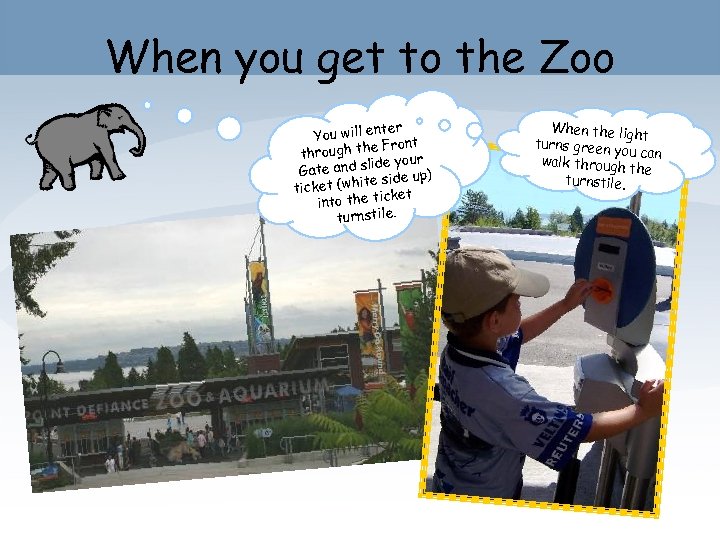 When you get to the Zoo ter You will en e Front through th de your ate and sli G side up) ket (white tic ket into the tic turnstile. When the lig ht turns green y ou can walk through the turnstile.
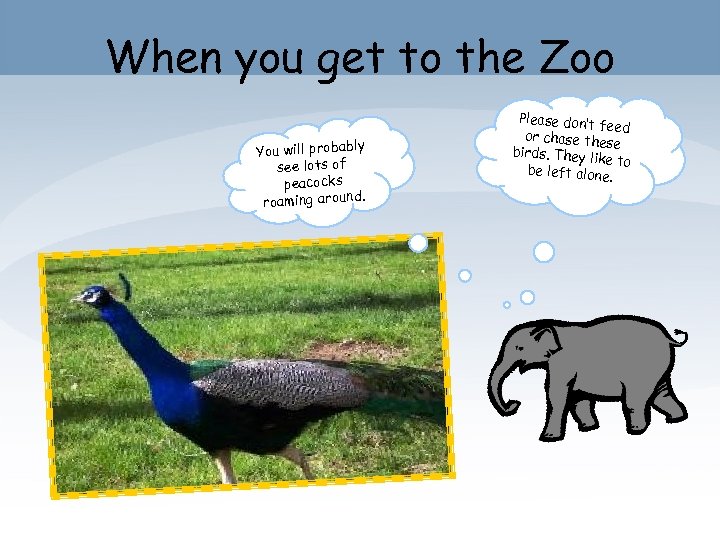 When you get to the Zoo You will probably see lots of peacocks roaming around. Please don’t feed or chase the se birds. They li ke to be left alone.
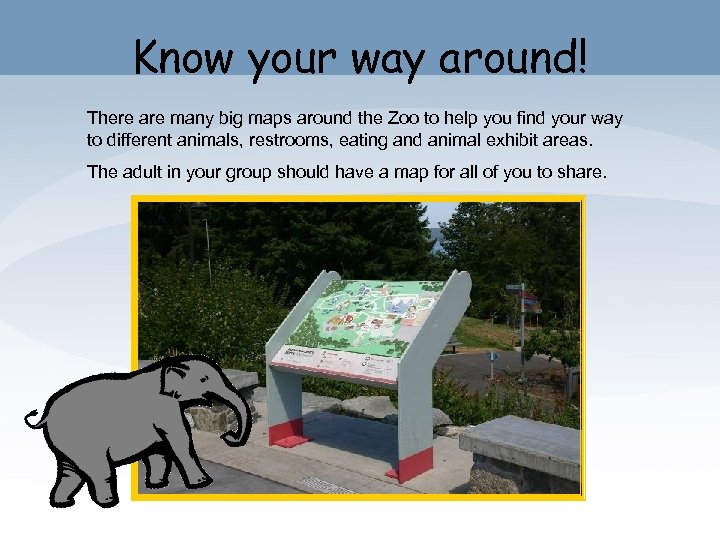 Know your way around! There are many big maps around the Zoo to help you find your way to different animals, restrooms, eating and animal exhibit areas. The adult in your group should have a map for all of you to share.
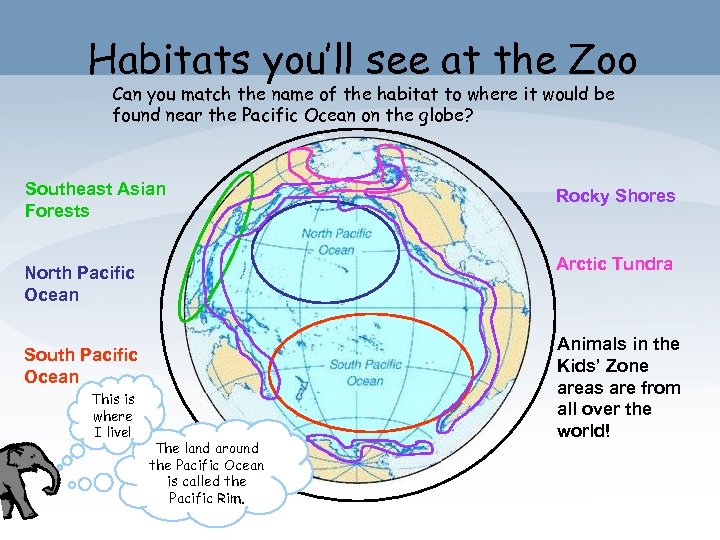 Habitats you’ll see at the Zoo Can you match the name of the habitat to where it would be found near the Pacific Ocean on the globe? Southeast Asian Forests Rocky Shores North Pacific Ocean Arctic Tundra South Pacific Ocean This is where I live! The land around the Pacific Ocean is called the Pacific Rim. Animals in the Kids’ Zone areas are from all over the world!
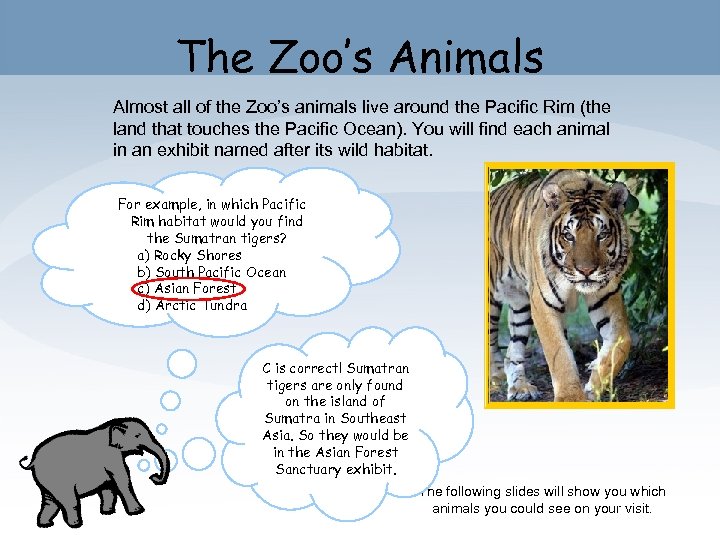 The Zoo’s Animals Almost all of the Zoo’s animals live around the Pacific Rim (the land that touches the Pacific Ocean). You will find each animal in an exhibit named after its wild habitat. For example, in which Pacific Rim habitat would you find the Sumatran tigers? a) Rocky Shores b) South Pacific Ocean c) Asian Forest d) Arctic Tundra C is correct! Sumatran tigers are only found on the island of Sumatra in Southeast Asia. So they would be in the Asian Forest Sanctuary exhibit. The following slides will show you which animals you could see on your visit.
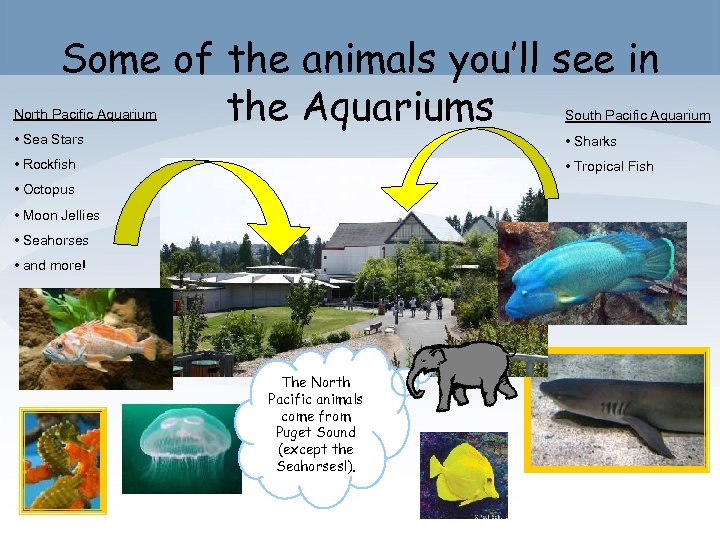 Some of the animals you’ll see in the Aquariums North Pacific Aquarium South Pacific Aquarium • Sea Stars • Sharks • Rockfish • Tropical Fish • Octopus • Moon Jellies • Seahorses • and more! The North Pacific animals come from Puget Sound (except the Seahorses!).
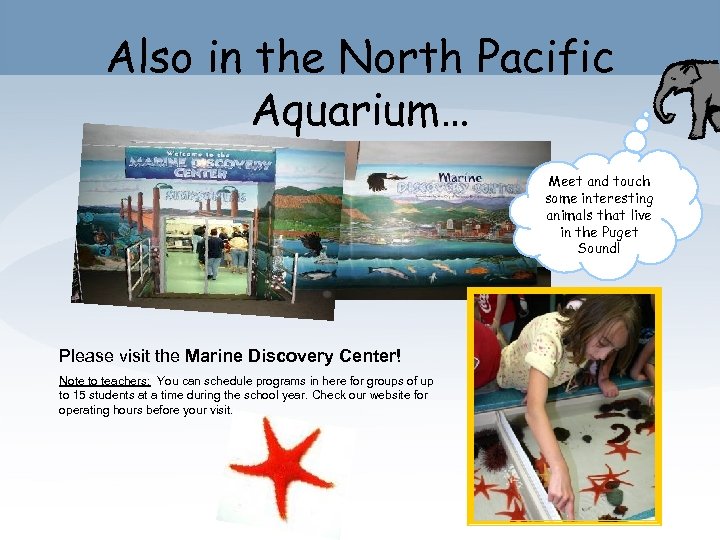 Also in the North Pacific Aquarium… Meet and touch some interesting animals that live in the Puget Sound! Please visit the Marine Discovery Center! Note to teachers: You can schedule programs in here for groups of up to 15 students at a time during the school year. Check our website for operating hours before your visit.
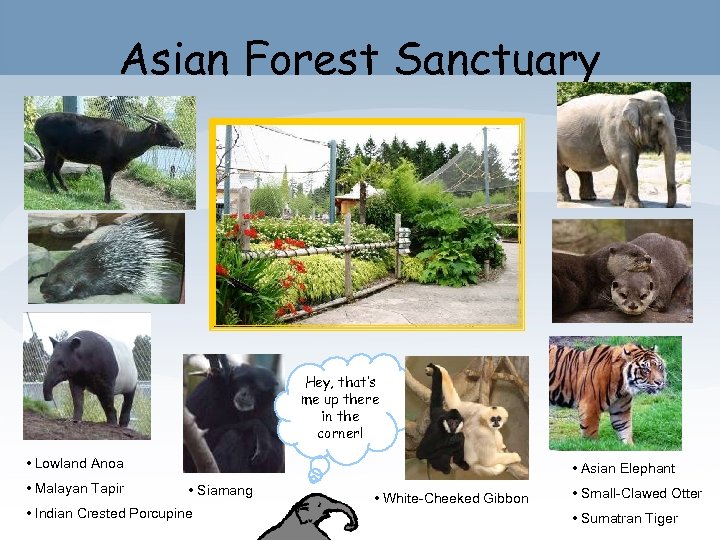 Asian Forest Sanctuary Hey, that’s me up there in the corner! • Lowland Anoa • Malayan Tapir • Asian Elephant • Siamang • Indian Crested Porcupine • White-Cheeked Gibbon • Small-Clawed Otter • Sumatran Tiger
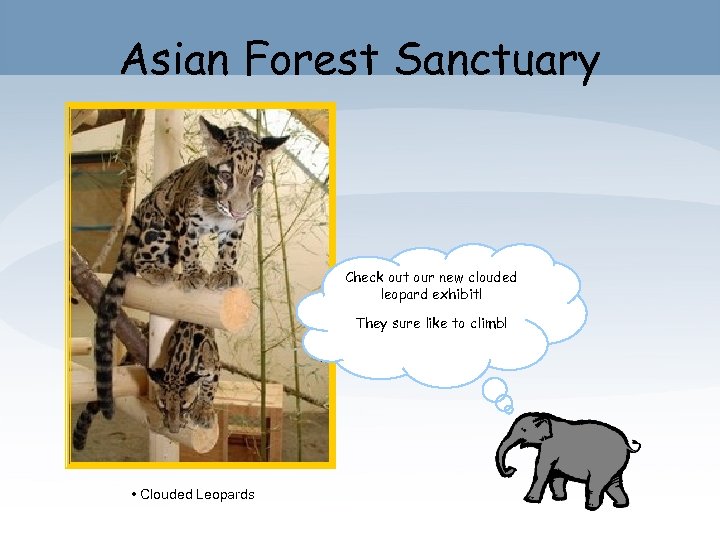 Asian Forest Sanctuary Check out our new clouded leopard exhibit! They sure like to climb! • Clouded Leopards
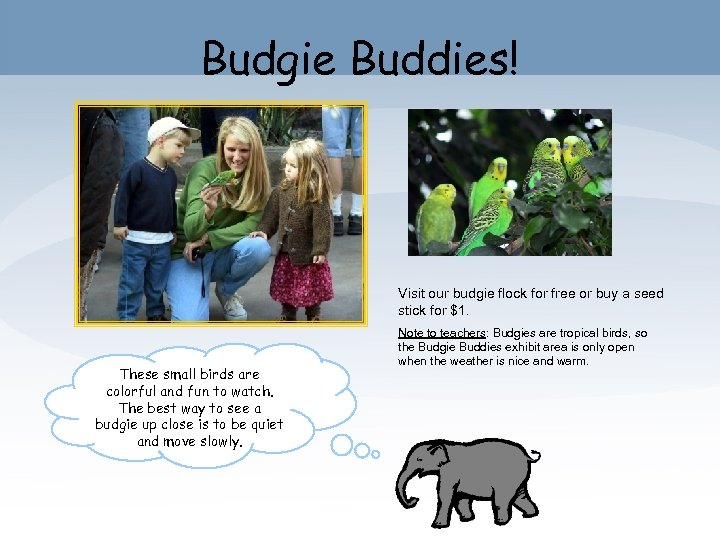 Budgie Buddies! Visit our budgie flock for free or buy a seed stick for $1. These small birds are colorful and fun to watch. The best way to see a budgie up close is to be quiet and move slowly. Note to teachers: Budgies are tropical birds, so the Budgie Buddies exhibit area is only open when the weather is nice and warm.
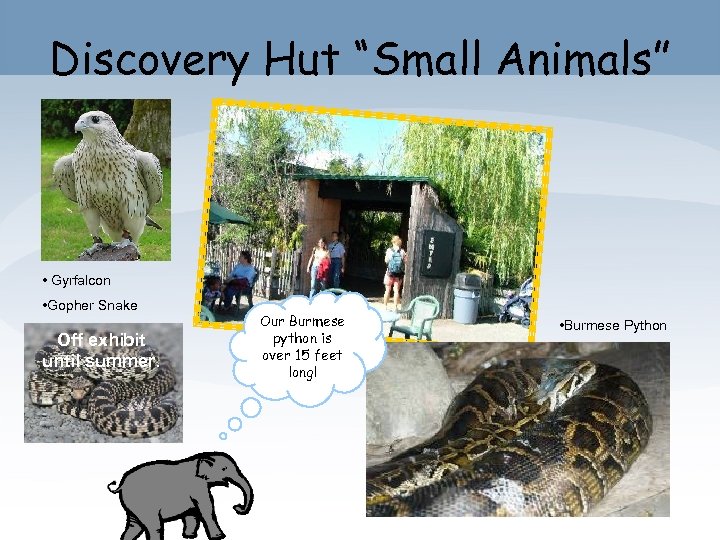 Discovery Hut “Small Animals” • Gyrfalcon • Gopher Snake Off exhibit until summer. Our Burmese python is over 15 feet long! • Burmese Python
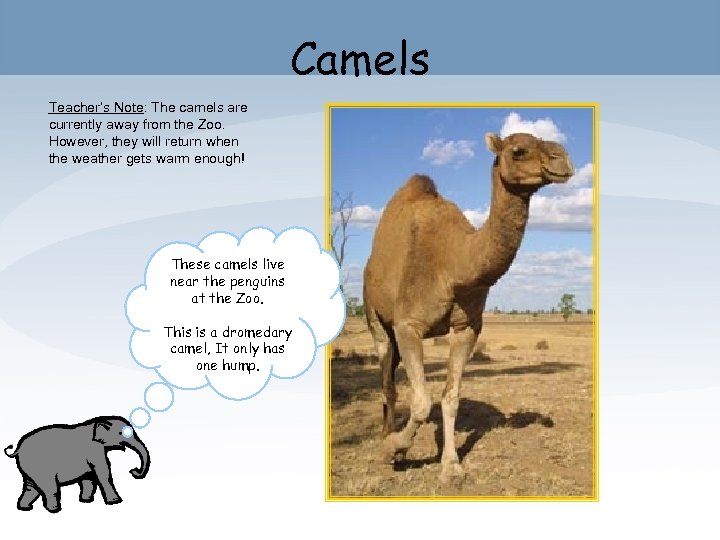 Camels Teacher’s Note: The camels are currently away from the Zoo. However, they will return when the weather gets warm enough! These camels live near the penguins at the Zoo. This is a dromedary camel, It only has one hump.
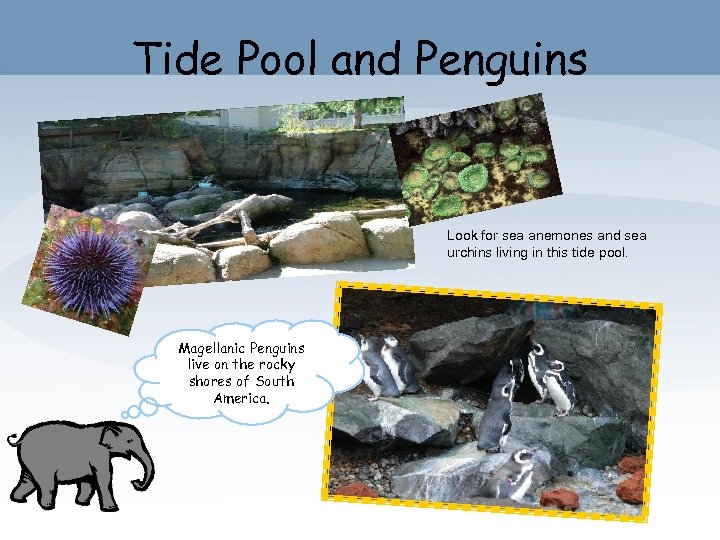 Tide Pool and Penguins Look for sea anemones and sea urchins living in this tide pool. Magellanic Penguins live on the rocky shores of South America.
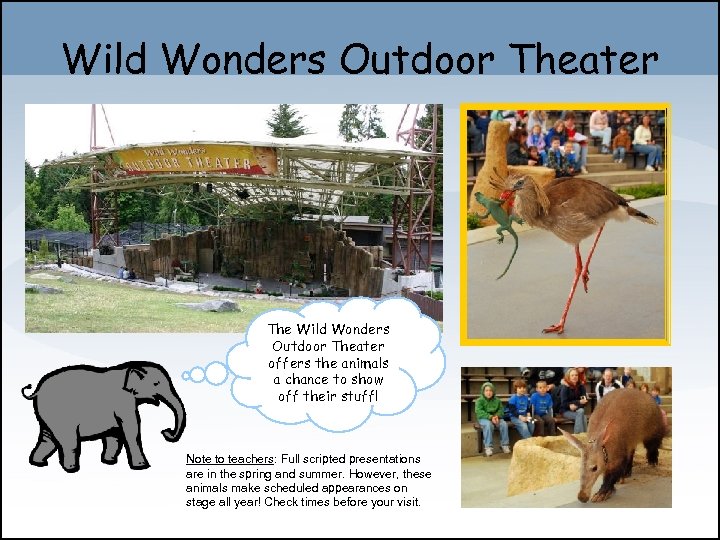 Wild Wonders Outdoor Theater The Wild Wonders Outdoor Theater offers the animals a chance to show off their stuff! Note to teachers: Full scripted presentations are in the spring and summer. However, these animals make scheduled appearances on stage all year! Check times before your visit.
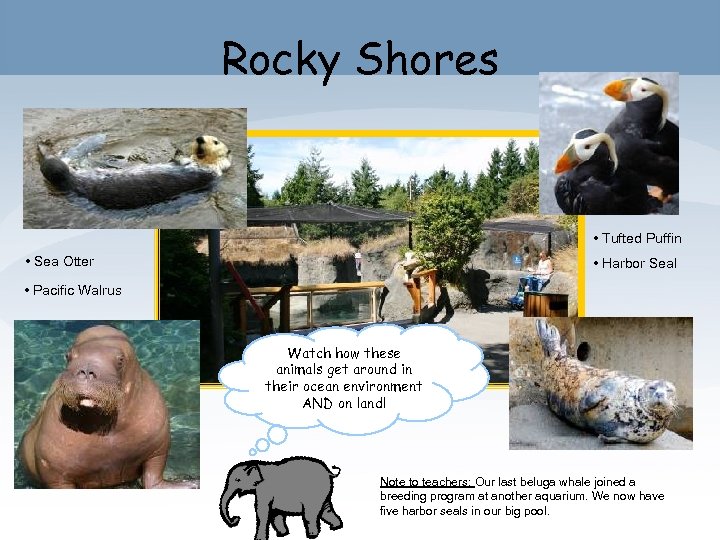 Rocky Shores • Tufted Puffin • Sea Otter • Harbor Seal • Pacific Walrus Watch how these animals get around in their ocean environment AND on land! Note to teachers: Our last beluga whale joined a breeding program at another aquarium. We now have five harbor seals in our big pool.
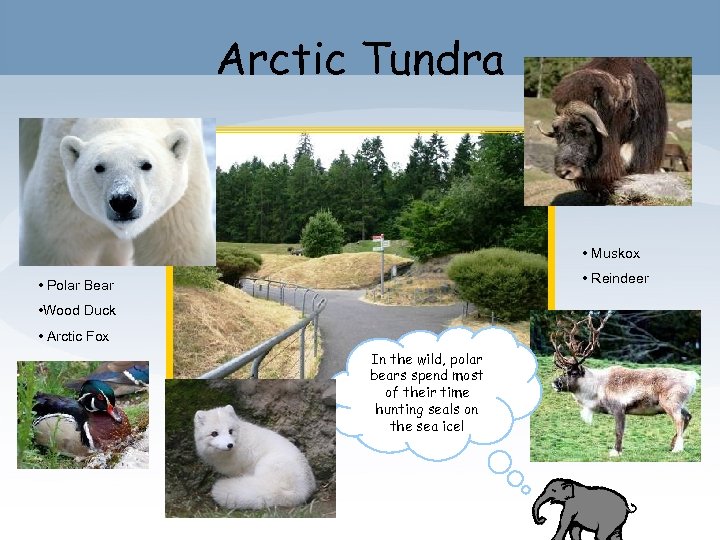 Arctic Tundra • Muskox • Reindeer • Polar Bear • Wood Duck • Arctic Fox In the wild, polar bears spend most of their time hunting seals on the sea ice!
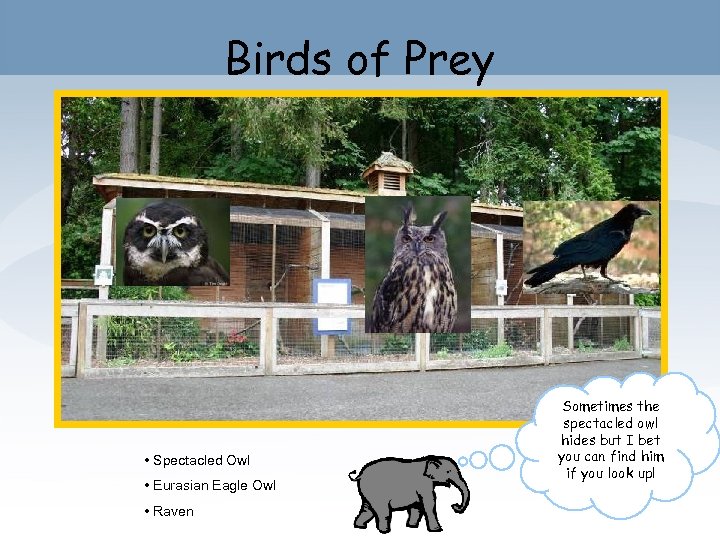 Birds of Prey • Spectacled Owl • Eurasian Eagle Owl • Raven Sometimes the spectacled owl hides but I bet you can find him if you look up!
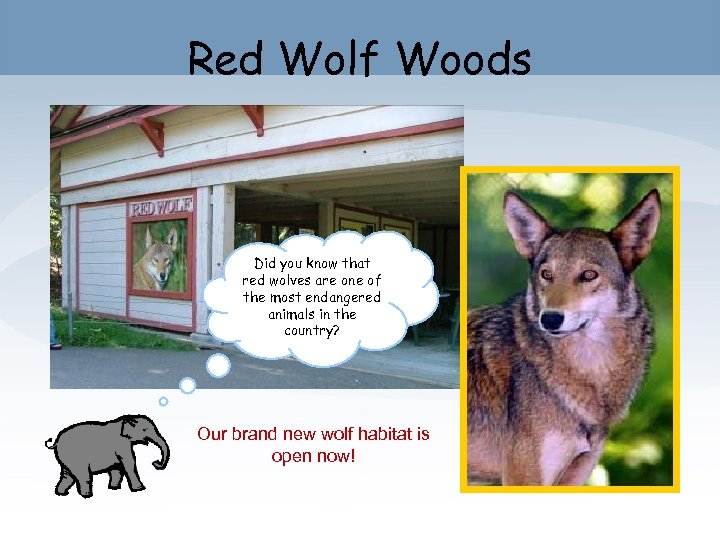 Red Wolf Woods Did you know that red wolves are one of the most endangered animals in the country? Our brand new wolf habitat is open now!
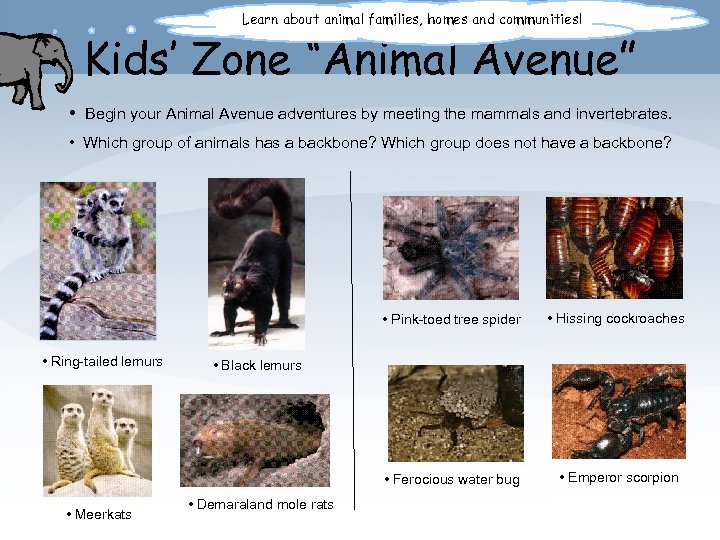 Learn about animal families, homes and communities! Kids’ Zone “Animal Avenue” • Begin your Animal Avenue adventures by meeting the mammals and invertebrates. • Which group of animals has a backbone? Which group does not have a backbone? • Pink-toed tree spider • Ferocious water bug • Ring-tailed lemurs • Meerkats • Hissing cockroaches • Emperor scorpion • Black lemurs • Demaraland mole rats
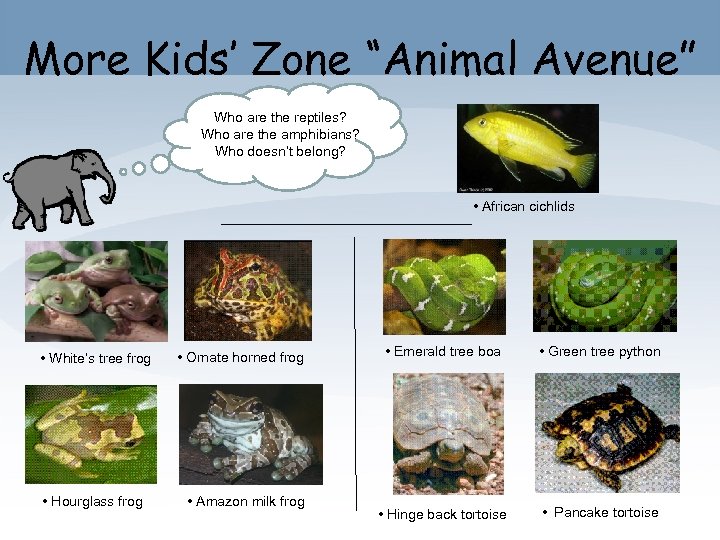 More Kids’ Zone “Animal Avenue” Who are the reptiles? Who are the amphibians? Who doesn’t belong? • African cichlids • White’s tree frog • Hourglass frog • Ornate horned frog • Amazon milk frog • Emerald tree boa • Green tree python • Hinge back tortoise • Pancake tortoise
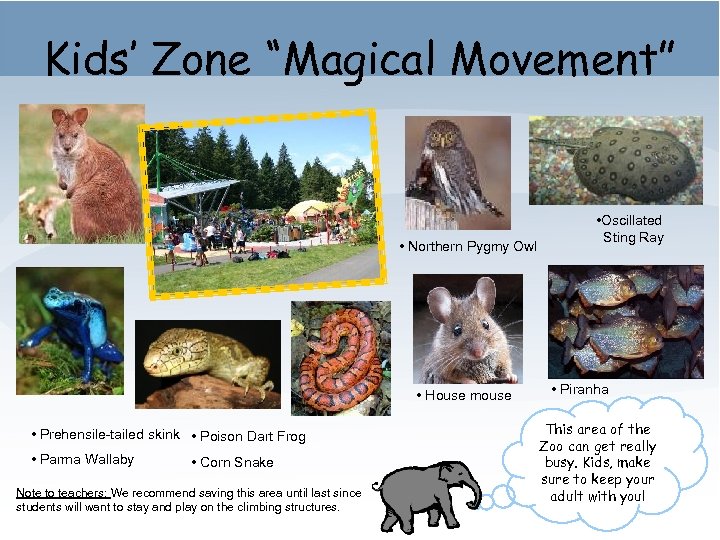 Kids’ Zone “Magical Movement” • Northern Pygmy Owl • House mouse • Prehensile-tailed skink • Poison Dart Frog • Parma Wallaby • Corn Snake Note to teachers: We recommend saving this area until last since students will want to stay and play on the climbing structures. • Oscillated Sting Ray • Piranha This area of the Zoo can get really busy. Kids, make sure to keep your adult with you!
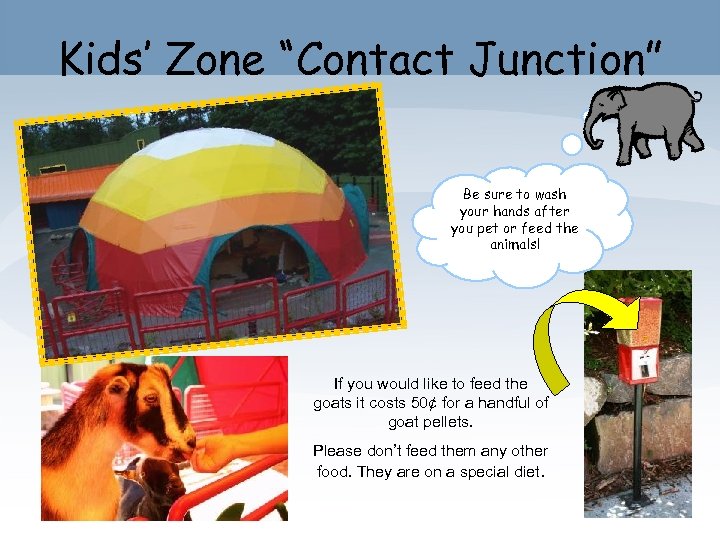 Kids’ Zone “Contact Junction” Be sure to wash your hands after you pet or feed the animals! If you would like to feed the goats it costs 50¢ for a handful of goat pellets. Please don’t feed them any other food. They are on a special diet.
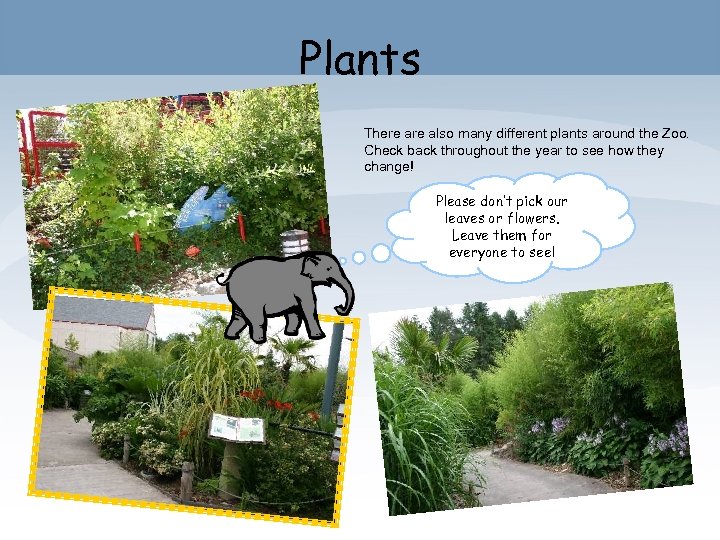 Plants There also many different plants around the Zoo. Check back throughout the year to see how they change! Please don’t pick our leaves or flowers. Leave them for everyone to see!
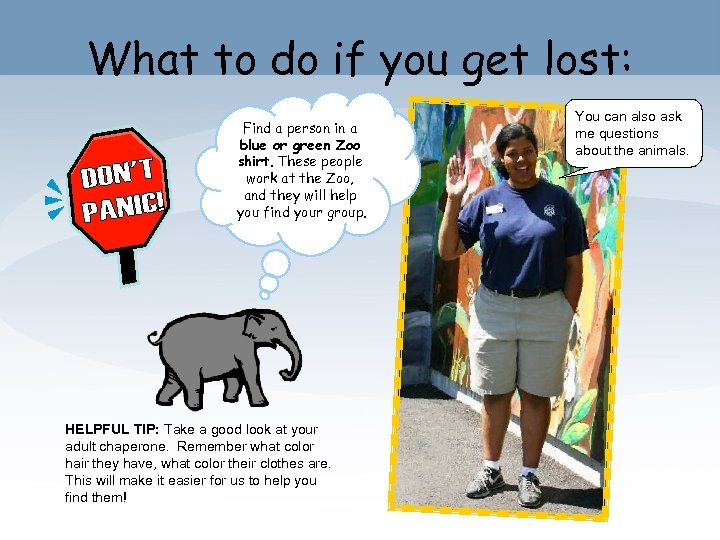 What to do if you get lost: Find a person in a blue or green Zoo shirt. These people work at the Zoo, and they will help you find your group. HELPFUL TIP: Take a good look at your adult chaperone. Remember what color hair they have, what color their clothes are. This will make it easier for us to help you find them! You can also ask me questions about the animals.
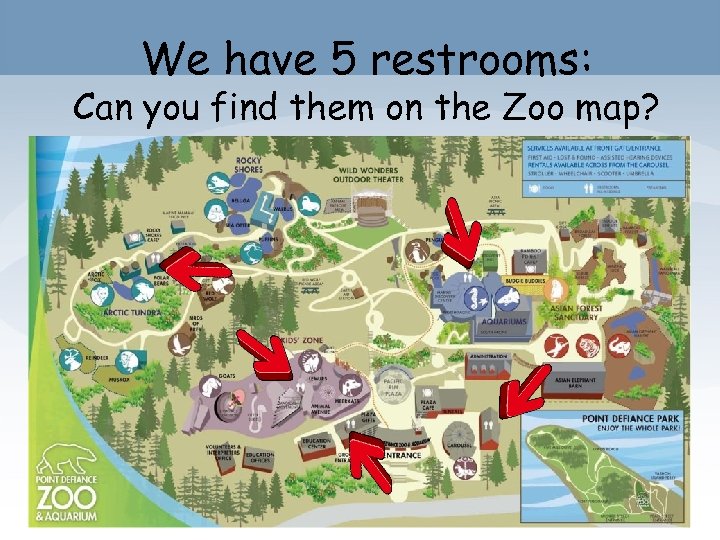 We have 5 restrooms: Can you find them on the Zoo map?
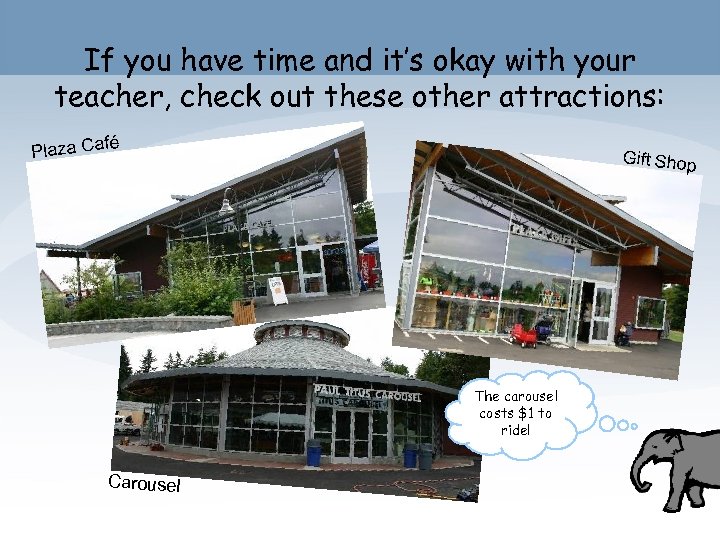 If you have time and it’s okay with your teacher, check out these other attractions: Plaza Caf é Gift Shop The carousel costs $1 to ride! Carousel
 Our Day at Point Defiance Zoo & Aquarium Leave school: _______am/pm Arrive at the Zoo: _______am/pm Snack Time: _______ I hope that you enjoy your field trip. See you soon! Lunch Time: _____am/pm Lunch meeting place: ___________ If you have scheduled a Discovery Program with us you can enter that information here! Discovery Program name: ___________ Meet outside the Education Center at: _______am/pm Meet to head back to school: _______am/pm Meeting place: ___________