


 Скачать презентацию Zero Waste Community Meeting March 12 th 2009
ddc055352acd37079933c0193cce29a2.ppt
- Количество слайдов: 26
 Zero Waste Community Meeting March 12 th, 2009
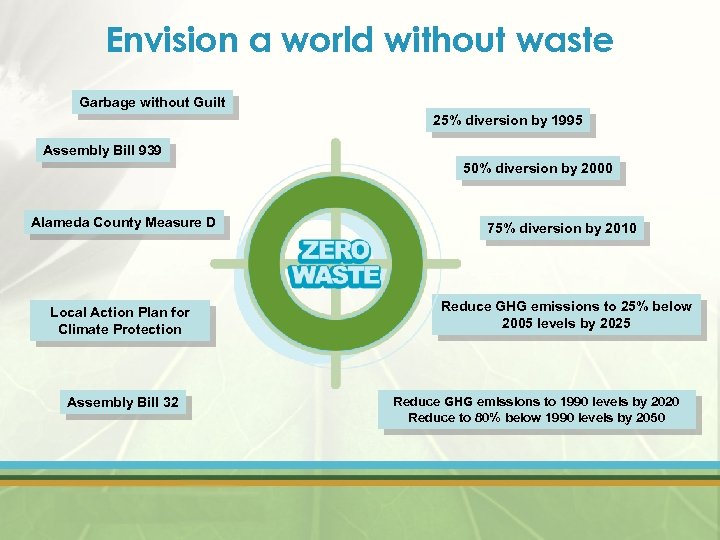 Envision a world without waste Garbage without Guilt 25% diversion by 1995 Assembly Bill 939 50% diversion by 2000 Alameda County Measure D Local Action Plan for Climate Protection Assembly Bill 32 75% diversion by 2010 Reduce GHG emissions to 25% below 2005 levels by 2025 Reduce GHG emissions to 1990 levels by 2020 Reduce to 80% below 1990 levels by 2050
 Alameda Firsts • Three collection cart program 1997 • Food scrap diversion 2002 • Comprehensive construction and demolition recycling requirements 2002 • Climate Protection Local Action Plan 2008 • Ban on polystyrene to-go containers 2008 • 48% diversion 1995 • 65% diversion 2000 • 68% diversion 2005
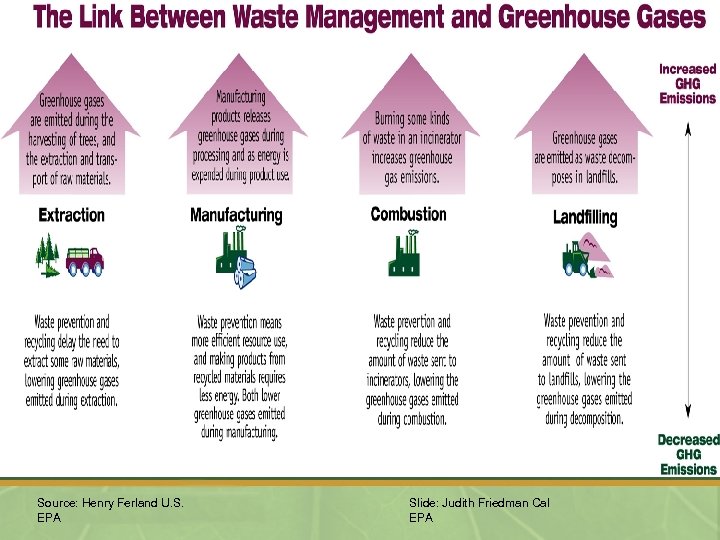
 Zero Waste and Climate Change • Landfills – Create carbon dioxide and methane – Account for 25% of U. S. methane emissions – Methane is 21 x more potent than carbon dioxide • Waste prevention, recycling and composting – Save energy – Divert materials from landfills – Reduce greenhouse gas emissions • Recycling & composting all discards = eliminating all auto exhaust
 Source: Henry Ferland U. S. EPA Slide: Judith Friedman Cal EPA
 Energy Savings from Recycling Source: Henry Ferland U. S. EPA Slide: Judith Friedman Cal EPA
 City of Alameda GHG Reduction Analysis Waste Management offers the most effective GHG reduction potential
 Opportunities in the Supply Stream Source: Alameda County Waste Characterization Study 2000 New study currently underway!
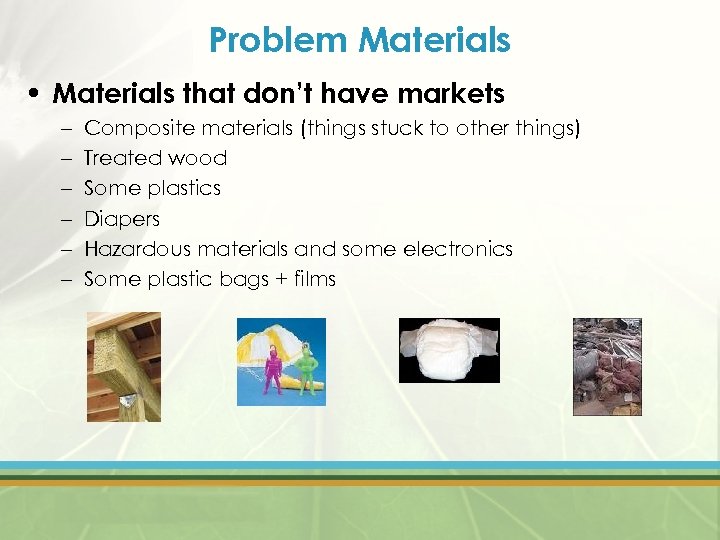 Problem Materials • Materials that don’t have markets – – – Composite materials (things stuck to other things) Treated wood Some plastics Diapers Hazardous materials and some electronics Some plastic bags + films
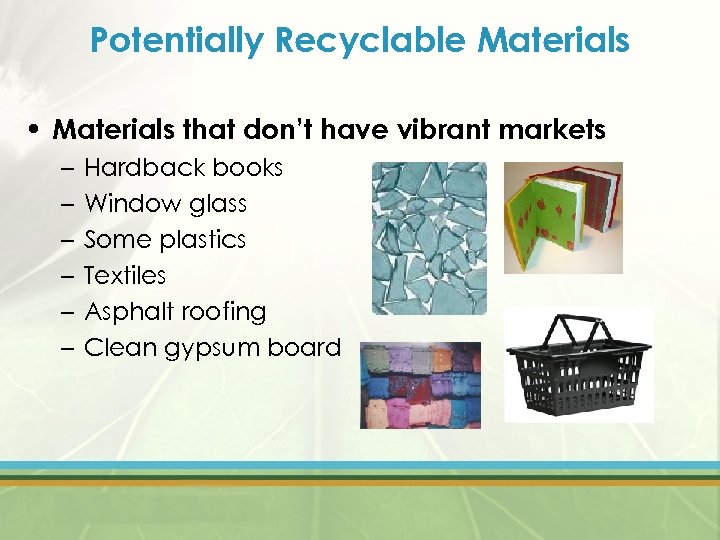 Potentially Recyclable Materials • Materials that don’t have vibrant markets – – – Hardback books Window glass Some plastics Textiles Asphalt roofing Clean gypsum board
 What is Zero Waste? • Zero Waste – Recognizes that “waste” is not inevitable – Discarded materials are potentially valuable resources – Goes beyond “end of the line” strategies – Maximizes recycling and composting – Reduces consumption – Designs “waste” out of the system
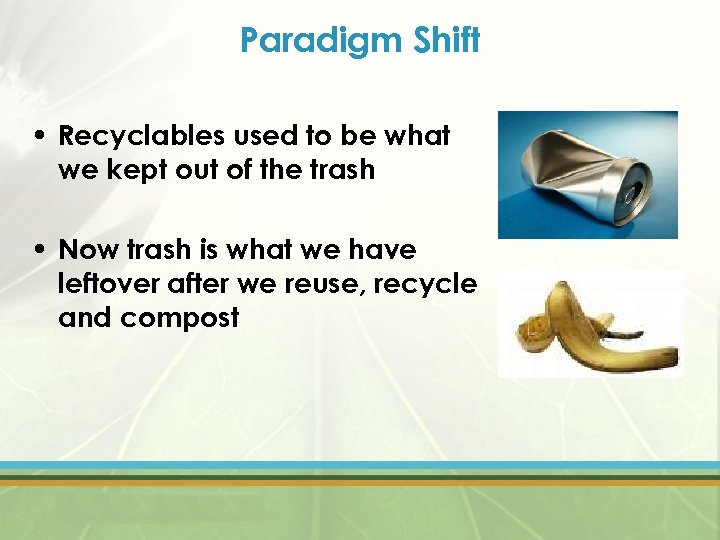 Paradigm Shift • Recyclables used to be what we kept out of the trash • Now trash is what we have leftover after we reuse, recycle and compost
 Pieces of Zero • Comprehensive recycling • Zero Waste Policies programs – “New rules” – Multi-material – Disposal bans – As convenient as trash – Mandatory recycling – Available to all generators – Product stewardship • Organics diversion – Comprehensive outreach and technical assistance – Yard trimmings • Zero Waste Infrastructure – Food scraps – Neighborhood scale – Compostable paper – Reuse and recycling • C&D diversion – Materials recovery – Generator-based – C&D processing – Hauler-based – Organics processing – Facility-based • Residual Waste Management – Residual waste processing – Residual waste disposal
 Zero Waste Around the World All of us together can make ZERO
 Reduce Reuse Recycle = Zero Waste
 Zero Waste Communities Around the World • Halifax, Nova Scotia • Canberra, Australia • New Zealand (Entire Country) • Toronto, Ontario – Plus over 50 percent of New • Nelson, British Columbia Zealand cities • Regional Districts, British Columbia • Buenos Aires, Argentina – Kootenay Boundary • Seattle, Washington – Central Kootenay • Boulder County, Colorado – Nelson • Summit County, Colorado – Cowichan Valley • Central Vermont Waste – Sunshine Coast Management District • Smithers, British Columbia • New York City • Nanaimo, British Columbia – (Citizens Zero Waste Plan)
 Zero Waste Communities in California • State Strategic Plan • Rancho Cucomonga • Culver City – Sustainability Plan • El Cajon • Fresno • Burbank - informally • San Bernardino County Zero Waste Communities – informally • San Luis Obispo County • Del Norte County • • • San Francisco Oakland Santa Cruz County – Plus all cities in the County Berkeley Palo Alto Marin County Novato Fairfax San Jose Sonoma County Los Angeles and…. Alameda!
 Zero Waste Businesses are Leading the Way • • • Anheuser-Busch Apple Computer Epson Fetzer Vineyards Frankie’s Bohemian Café Greens Restaurant Hewlett-Packard Mad River Brewery New Belgium Brewery • • NUMMI Pillsbury Playa Vista San Diego Wild Animal Park Scoma’s Restaurant Vons-Safeway Xerox Corp Yost Printer Businesses achieving greater than 90% waste diversion
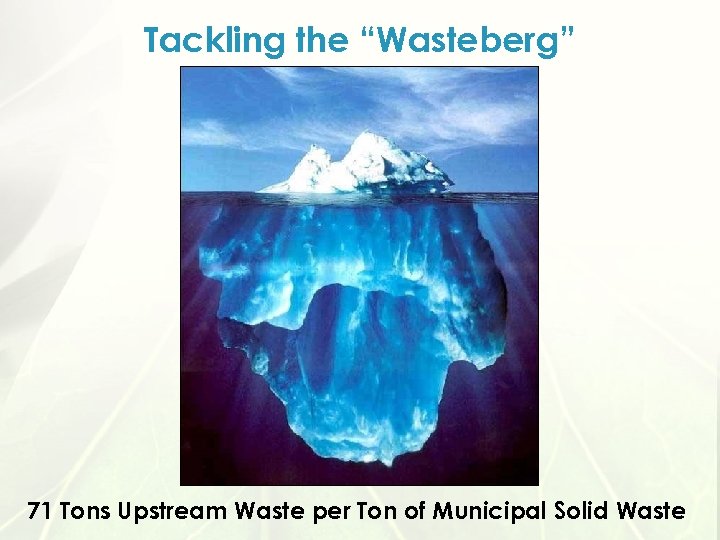 Tackling the “Wasteberg” 71 Tons Upstream Waste per Ton of Municipal Solid Waste
 Pillars of Zero Waste Upstream Downstream Green Businesses and Jobs
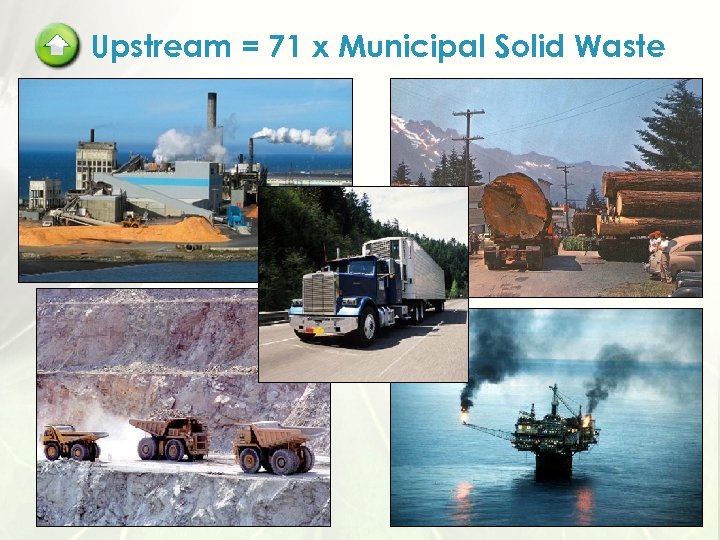 Upstream = 71 x Municipal Solid Waste
 Downstream • Ensure the highest and best use of products and packaging at the end of their useful lives • Reuse products and packaging, retaining their original form and function • Recycle or compost materials that are not reduced or reused
 Resource Recovery Parks • Reuse, Recycling, Composting, Manufacturing and Sales • Like Airports or Shopping Centers • Drop and Shop Convenience for Public • Lower Waste Fees • Buy at Discounts
 Green Businesses and Jobs • Expand, attract, and support green businesses and green collar jobs • Reserve sufficient land for Zero Waste infrastructure • Buy green goods and services • Recycling Industry = Size of Auto Industry 10, 000 tons of Sold Waste = • Landfill – 1 job • Composting – 4 jobs • Recycling – 10 jobs • Reuse – 75 to 250 jobs
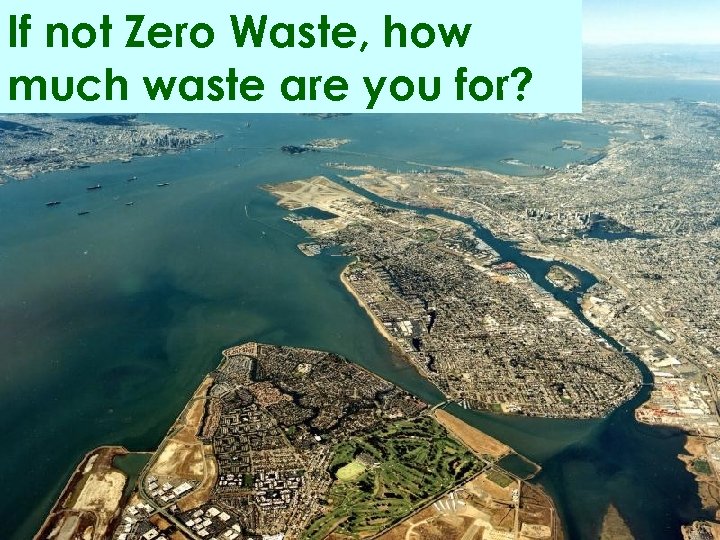 If not Zero Waste, how much waste are you for?
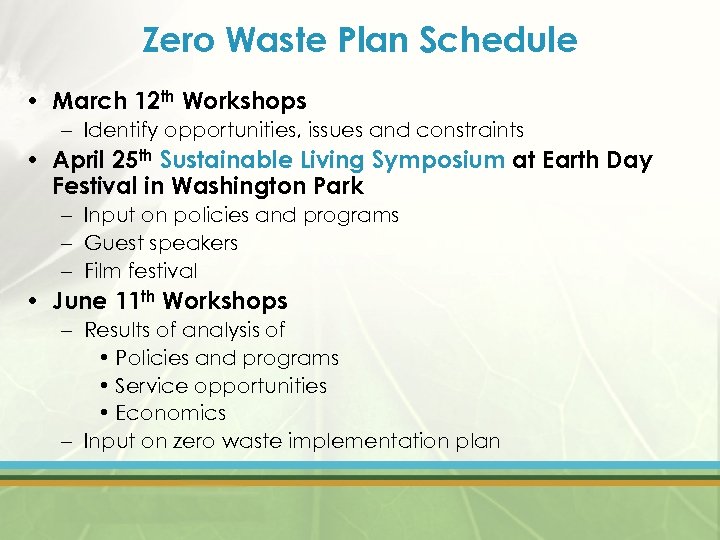 Zero Waste Plan Schedule • March 12 th Workshops – Identify opportunities, issues and constraints • April 25 th Sustainable Living Symposium at Earth Day Festival in Washington Park – Input on policies and programs – Guest speakers – Film festival • June 11 th Workshops – Results of analysis of • Policies and programs • Service opportunities • Economics – Input on zero waste implementation plan