



ZEBR

AFISH

HOLDI

NG

CHAM

BER
Team Members: Austin Ramme, Kristen Sipsma,

Mike Haggerty, Andrew Neumann Client:
Jill Kolesar, Pharm. D. , BCPS Advisor: Professor Justin Williams
Abstract Our objective is to build an apparatus to house between one and three zebrafish during a diagnostic micro CT scanning process. The device will be used for an evaluation of carcinogenesis in a zebrafish model research project currently being conducted at the UW hospital. The ultimate goal of this research is to cure cancer using drugs which eliminate the blood supply to malignant tumors. To guarantee the best imaging quality, the device must be composed of materials compatible with the micro CT scanner and must immobilize the fish. The zebrafish must remain alive for the duration of the twenty minute imaging process.
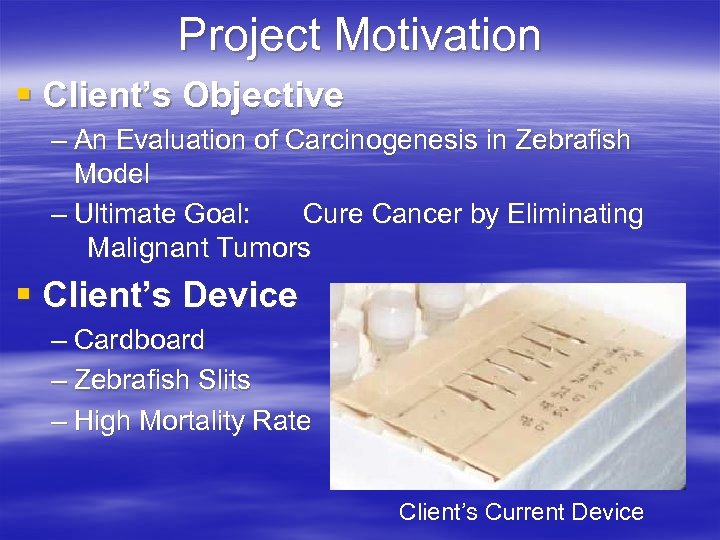
Project Motivation § Client’s Objective – An Evaluation of Carcinogenesis in Zebrafish Model – Ultimate Goal: Cure Cancer by Eliminating Malignant Tumors § Client’s Device – Cardboard – Zebrafish Slits – High Mortality Rate Client’s Current Device
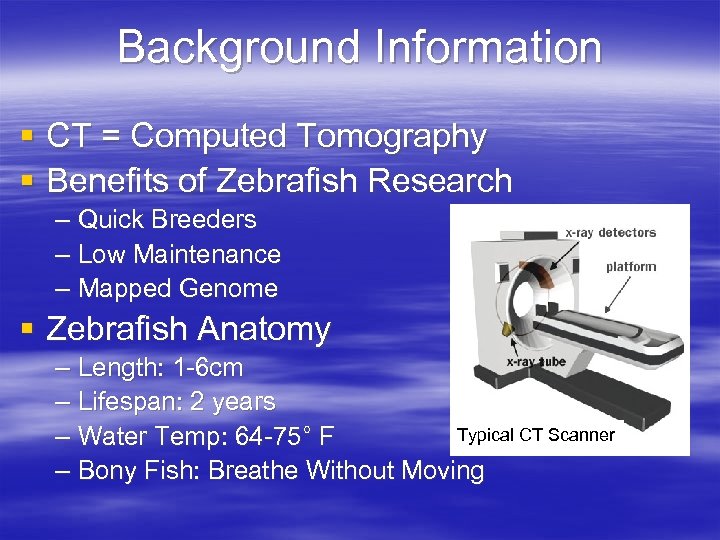
Background Information § CT = Computed Tomography § Benefits of Zebrafish Research – Quick Breeders – Low Maintenance – Mapped Genome § Zebrafish Anatomy – Length: 1 -6 cm – Lifespan: 2 years Typical CT Scanner – Water Temp: 64 -75° F – Bony Fish: Breathe Without Moving
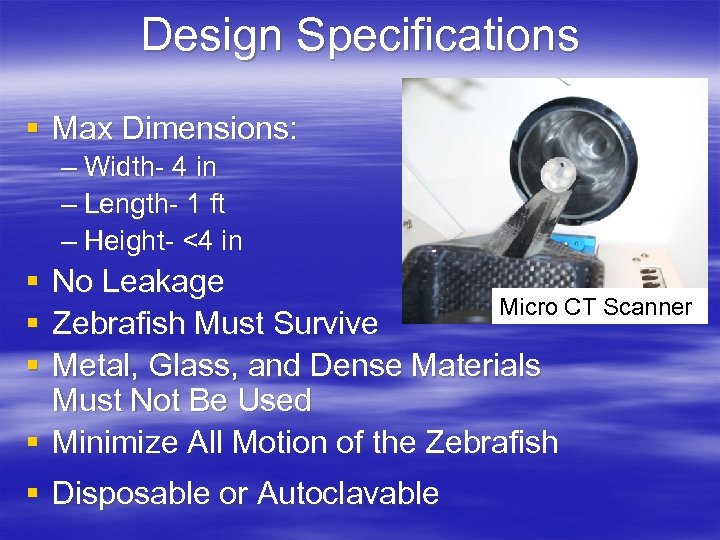
Design Specifications § Max Dimensions: – Width- 4 in – Length- 1 ft – Height- <4 in § § § No Leakage Micro CT Scanner Zebrafish Must Survive Metal, Glass, and Dense Materials Must Not Be Used § Minimize All Motion of the Zebrafish § Disposable or Autoclavable
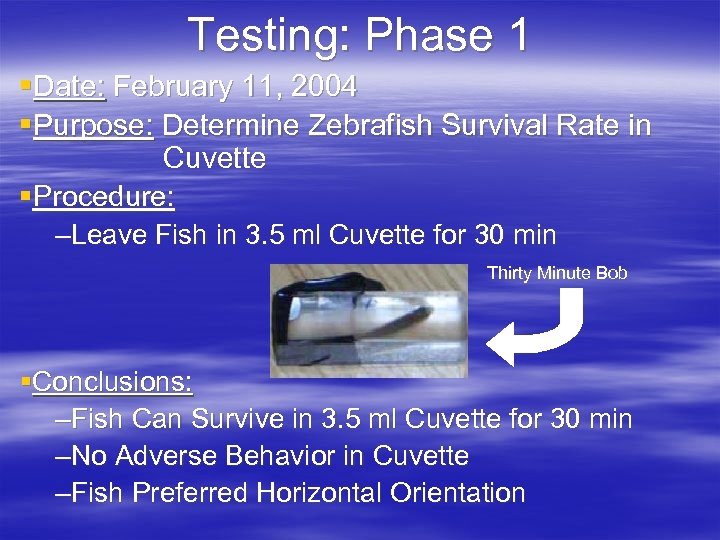
Testing: Phase 1 §Date: February 11, 2004 §Purpose: Determine Zebrafish Survival Rate in Cuvette §Procedure: –Leave Fish in 3. 5 ml Cuvette for 30 min Thirty Minute Bob §Conclusions: –Fish Can Survive in 3. 5 ml Cuvette for 30 min –No Adverse Behavior in Cuvette –Fish Preferred Horizontal Orientation
Testing: Phase 2 § § § Dates: April 4, April 6, April 12, 2004 Purpose: Test Restraints in Cuvette Procedure: – Test Various Restraints in Cuvettes for 20 min 1. 1. 5 ml semi-micro cuvette with dense dish scrubber 2. 1. 5 ml semi-micro cuvette with low-density tile sponge 3. 3. 5 ml cuvette with low-density tile sponge § Conclusions: – 75% Survival Rate with Restraint 1 – 100% Survival Rate with Restraint 2 and 3 – Restraint 2 and 3 Equally Immobilized the Fish
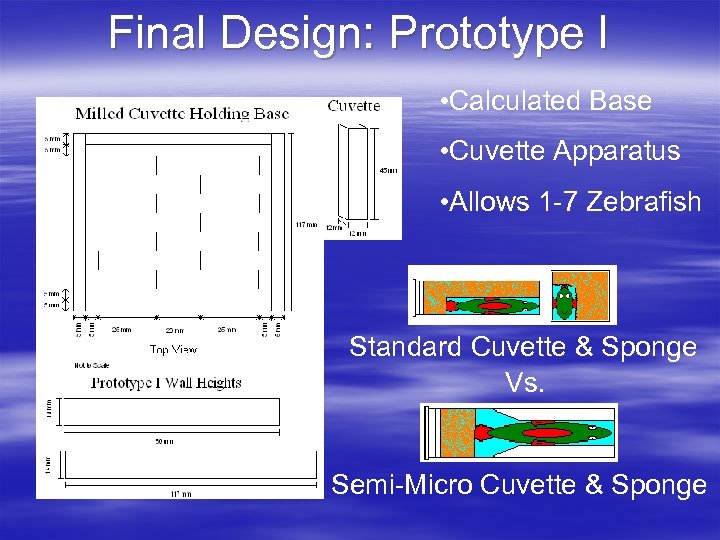
Final Design: Prototype I • Calculated Base • Cuvette Apparatus • Allows 1 -7 Zebrafish Standard Cuvette & Sponge Vs. Semi-Micro Cuvette & Sponge
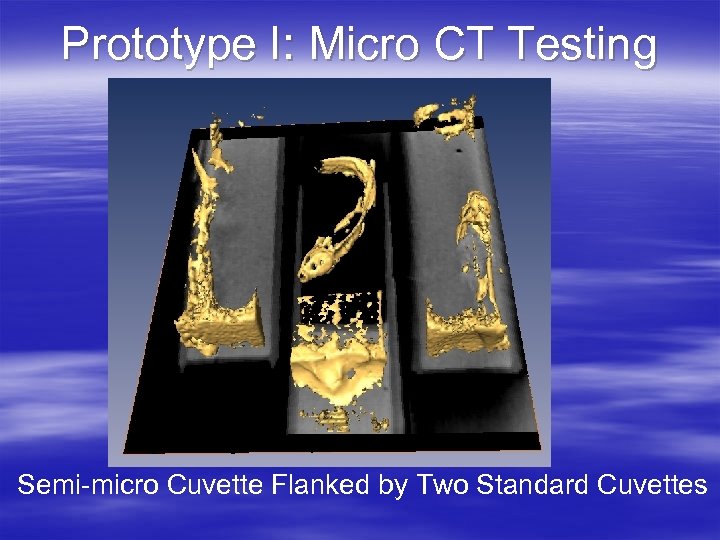
Prototype I: Micro CT Testing Semi-micro Cuvette Flanked by Two Standard Cuvettes
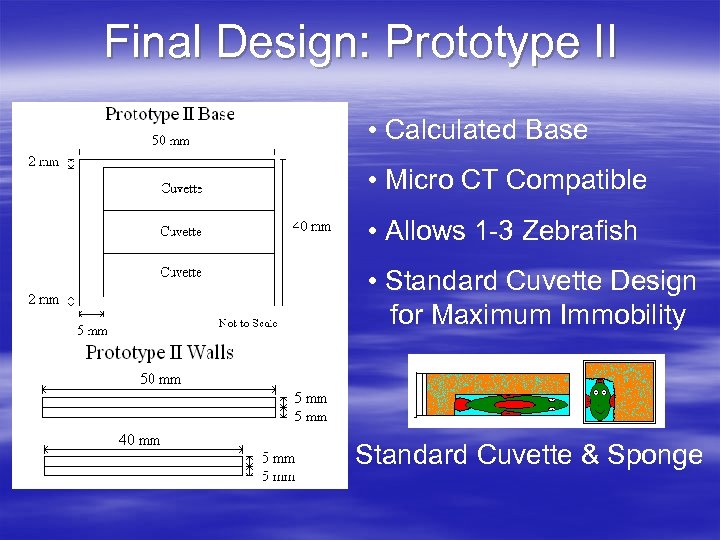
Final Design: Prototype II • Calculated Base • Micro CT Compatible • Allows 1 -3 Zebrafish • Standard Cuvette Design for Maximum Immobility Standard Cuvette & Sponge
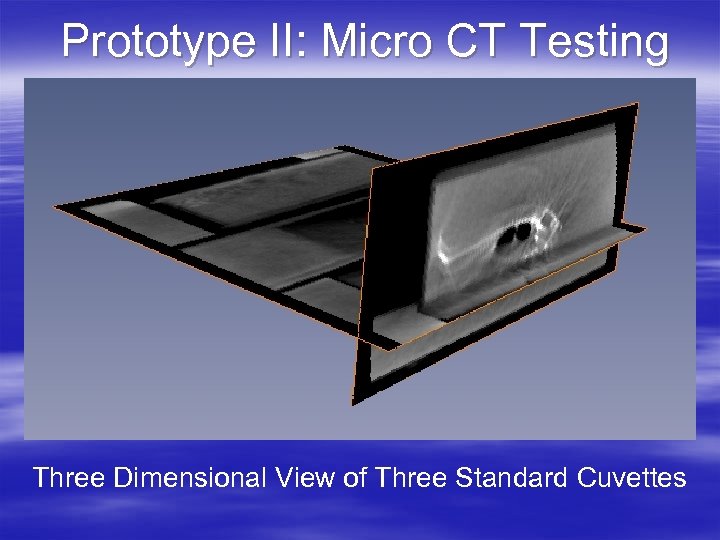
Prototype II: Micro CT Testing Three Dimensional View of Three Standard Cuvettes
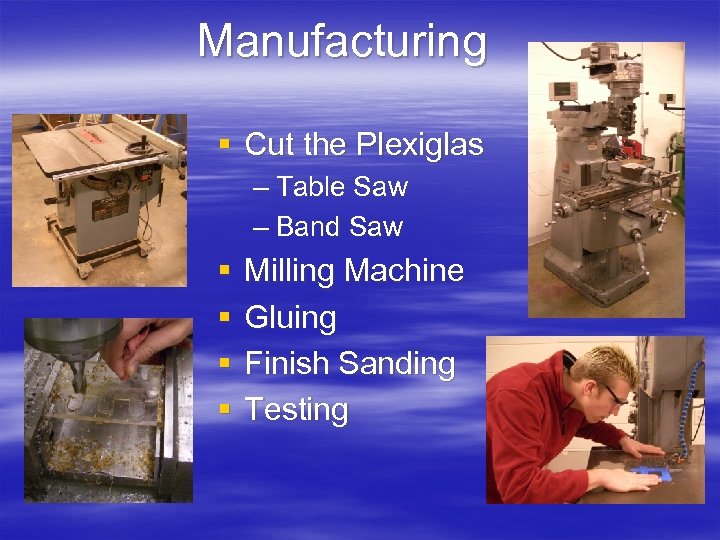
Manufacturing § Cut the Plexiglas – Table Saw – Band Saw § § Milling Machine Gluing Finish Sanding Testing
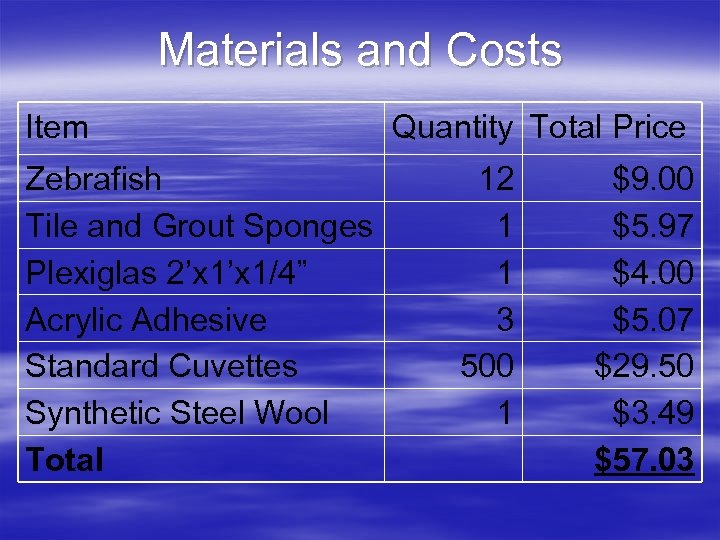
Materials and Costs Item Zebrafish Tile and Grout Sponges Plexiglas 2’x 1/4” Acrylic Adhesive Standard Cuvettes Synthetic Steel Wool Total Quantity Total Price 12 1 1 3 500 1 $9. 00 $5. 97 $4. 00 $5. 07 $29. 50 $3. 49 $57. 03
System Advantages § High Survival Rate § Immobilizes Zebrafish § Compatible with Micro CT Scanner § Disposable Design – Easy Maintenance – No Cross-Contamination § Flexible 1 -3 Zebrafish Design
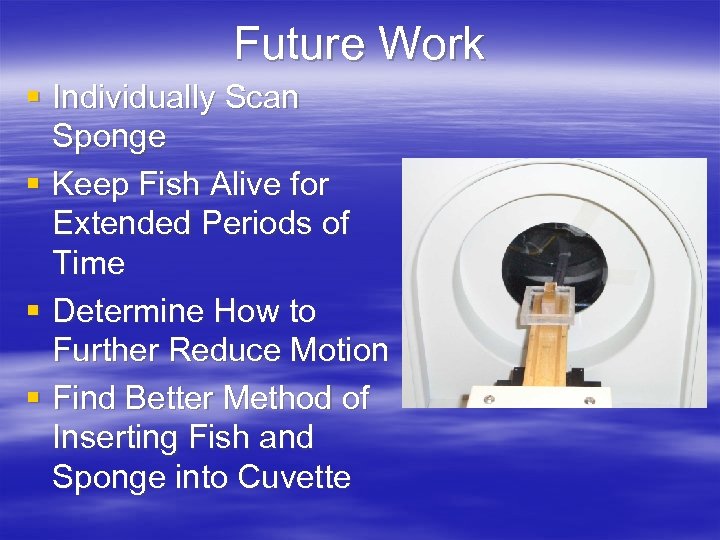
Future Work § Individually Scan Sponge § Keep Fish Alive for Extended Periods of Time § Determine How to Further Reduce Motion § Find Better Method of Inserting Fish and Sponge into Cuvette
References 1. Aquadex. 19 Feb 2004 <http: //aquadex. info/fish/Danio_rerio. cfm>. 2. Bailey, George S. Research. Oregon State University Molecular and Cellular Biology Program. 06 Feb 2004. <http: //www. cgrb. orst. edu/mcb/faculty/bailey/>. 3. e. Xplore RS Micro CT System Pre-clinical Imaging. GE Medical Systems. 08 Feb. 2004. <http: //www. gemedicalsystems. com/rad/nm_pet/preclinicalimaginghome. html>. 4. Functional Imaging: Pre-clinical Imaging. GE Medical Systems. 15 Feb. 2004. <http: //www. gemedicalsystems. com/>. 5. How Fish Breath? . Pet Place. 07 Feb 2004. <http: //petplace. netscape. com/Articles/ art. Show. asp? art. ID=3980 6. Info Center. Duke University. 30 Jan 2004. <http: //wwwcivm. mc. duke. edu/zebra /info. html> 7. Keil, Eli. Fish Base. World Wide Web Electronic Publication. 19 Feb 2004. <http: //www. fishbase. org/Summary/Species. Summary. cfm? genusname=Danio&speciesname=rerio>. 8. Mc. Allister, Michael Jason. Zebrafish: An Integrated 3 D Magnetic Resonance Study of Brachydanio Rerio. Duke Medical Center. 30 Jan 2004. <http: //wwwcivm. mc. duke. edu/zebra/info. html>. 9. Mc. Master-Carr. 21 April 2004. <http: //www. mcmaster. com/>. 10. Perfector Scientific. 21 April 2004. <www. perf-sci. com>. 11. Robinson, Tracy and Bates, Todd. Thousands of fish die in Belmar's Silver Lake. Asbury Park Press. 30 Jan 2004. <http: //www. app. com/app 2001/story/0%2 C 21133%2 C 777232%2 C 00. html 12. Sprague, Judy et al. The Zebrafish Information Network: a resource for genetic, genomic, and developmental research. The Zebrafish International Resource Center, University of Oregon. 30 Jan 2004. <http: //www. cs. uoregon. edu/~douglas/PAPERS%20 DOWNLOAD/Sprague 01. pdf>. 13. Tera. Recon to Demonstrate High Performance Cone Beam CT Reconstruction Server at RSNA. Tera. Recon Inc. 9 Feb 2004. <http: //www. rtviz. com/news/press/2001/11_november_13_pr. html>. 14. Vascular Anatomy of the 3. 5 -4 dpf Zebrafish Embryo. The Interactive Atlas of Zebrafish Vascular Anatomy. 20 Feb. 2004. <http: //mgchd 1. nichd. nih. gov: 8000/zfatlas/Final. Design 2/L 26. html>. 15. Zebrafish Cancer. Howard Hughes Medical Institute, Boston Children’s Hospital. 06 Feb 2004. <http: //zon. tchlab. org/zebrafishcancer. htm>. 16. Zebrafish Research: Activities at the NIH. Trans-NIH Zebrafish Initiative. 30 Jan 2004. <http: //www. nih. gov/science/models/zebrafish/reports/activities. html>.
A Special Thanks § Professor Justin Williams – Advisor § Dr. Jill Kolesar – Client § Dr. Jamey Weichert – Micro CT Expert § Dr. Marc Longino – Micro CT Expert
