


 Скачать презентацию Your Health Matters Growing Active Communities The Issue
591e5d061bd2a200656bbdca52ee3b07.ppt
- Количество слайдов: 53
 Your Health Matters: Growing Active Communities The Issue 1
 Acknowledgements This curriculum was created by The University of Texas School of Public Health, Brownsville Regional Campus with partial funding from the Texas Department of State Health Services (DSHS) Nutrition, Physical Activity and Obesity Prevention Program. 2
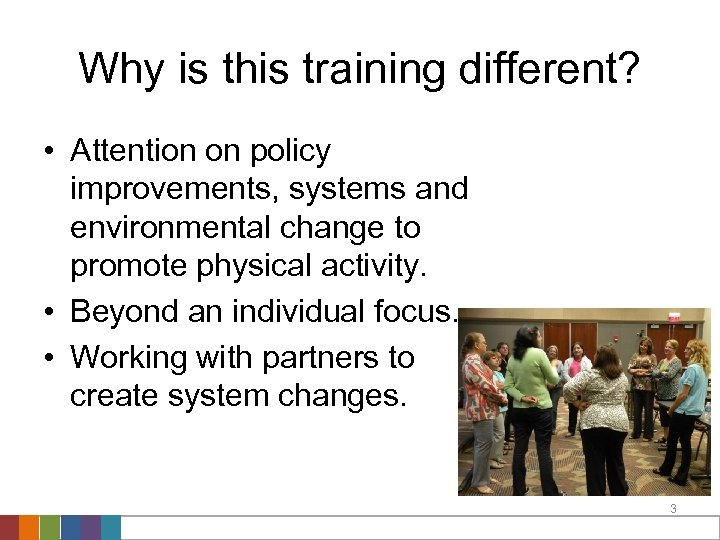 Why is this training different? • Attention on policy improvements, systems and environmental change to promote physical activity. • Beyond an individual focus. • Working with partners to create system changes. 3
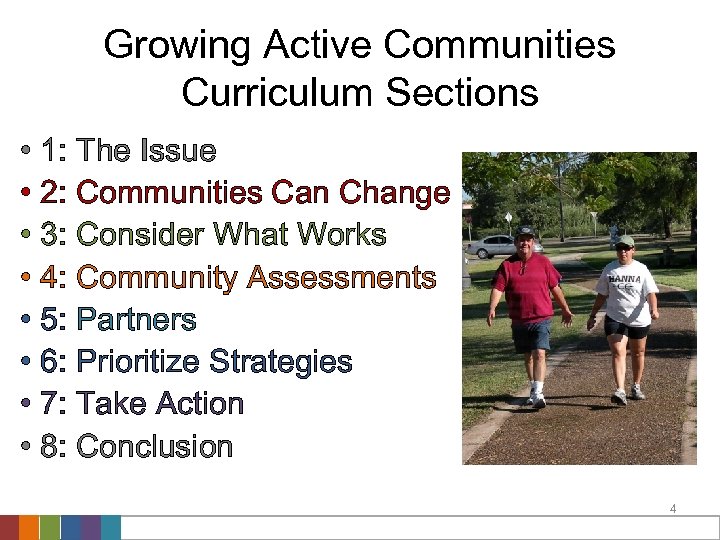 Growing Active Communities Curriculum Sections • 1: The Issue • 2: Communities Can Change • 3: Consider What Works • 4: Community Assessments • 5: Partners • 6: Prioritize Strategies • 7: Take Action • 8: Conclusion 4
 Special Features in this Training Symbol Meaning • Worksheet associated with this slide. MY PLAN Welcome to Unhealthy, Texas USA • A continuing activity focusing on different aspects from different sections. • Fictitious city used in activity. • 10 -minute activity breaks to keep us moving throughout the day. 5
 Curriculum Materials • Binders – Power. Point slides – Evaluations – Pre/post tests – Activity sheets – Assessment tools • CD – Power. Points – Activity sheets – Assessment tools – Videos 6
 Knowledge Questionnaire 7
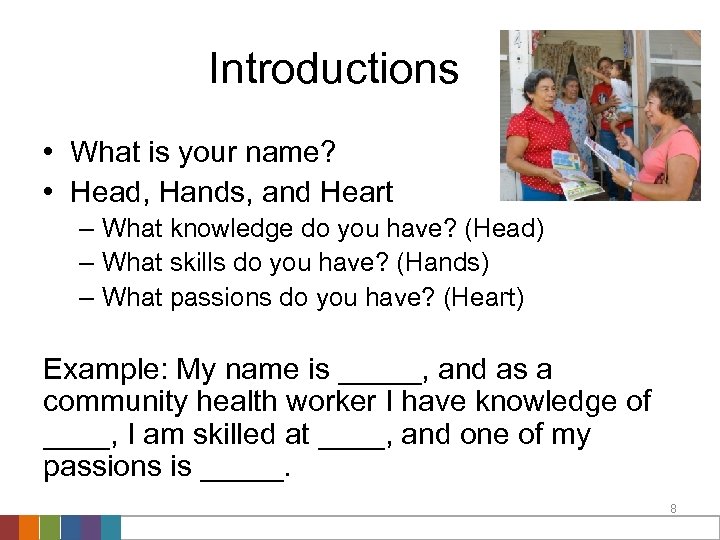 Introductions • What is your name? • Head, Hands, and Heart – What knowledge do you have? (Head) – What skills do you have? (Hands) – What passions do you have? (Heart) Example: My name is _____, and as a community health worker I have knowledge of ____, I am skilled at ____, and one of my passions is _____. 8
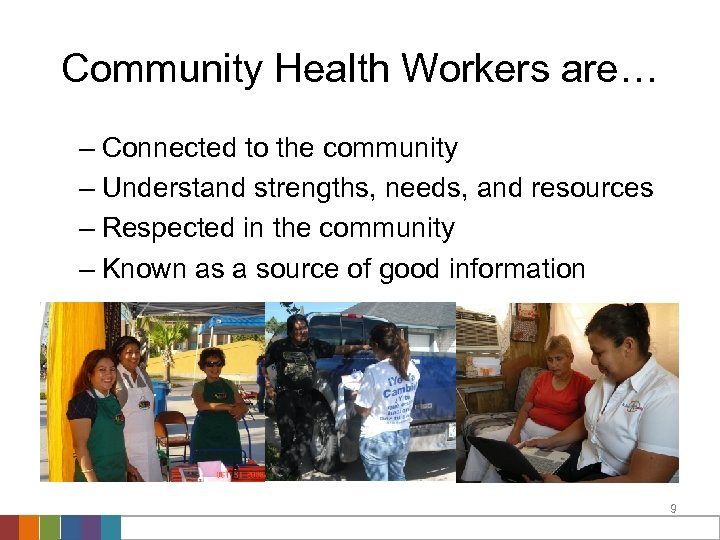 Community Health Workers are… – Connected to the community – Understand strengths, needs, and resources – Respected in the community – Known as a source of good information 9
 A Strong Leader is able to: • • Direct Encourage Engage Guide Shape Focus Connect 10 Goodman et al. (1998). Identifying and Defining the Dimensions of Community Capacity to Provide a Basis for Measurement. Health Education & Behavior, 258 -278.
 Lead or Partner? • Select your role. • Who do you need to compliment your strengths and weakness? 11
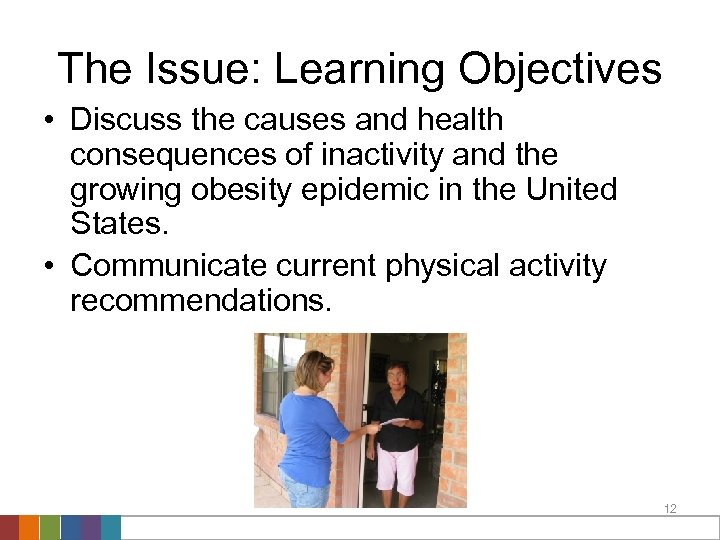 The Issue: Learning Objectives • Discuss the causes and health consequences of inactivity and the growing obesity epidemic in the United States. • Communicate current physical activity recommendations. 12
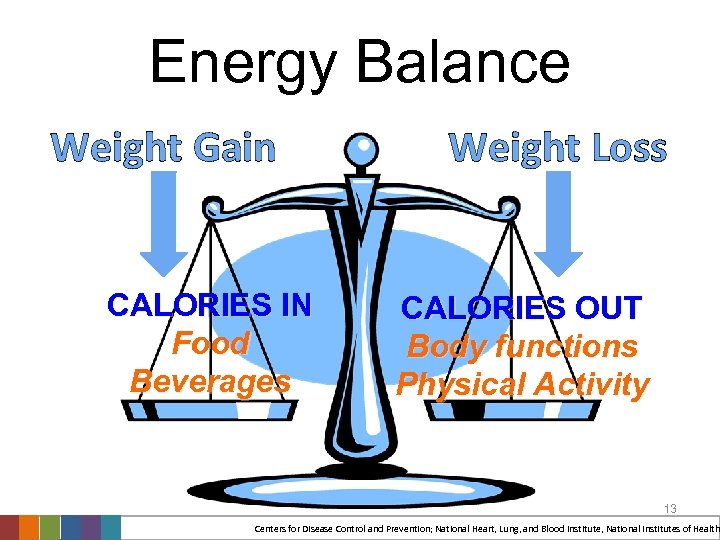 Energy Balance Weight Gain CALORIES IN Food Beverages Weight Loss CALORIES OUT Body functions Physical Activity 13 Centers for Disease Control and Prevention; National Heart, Lung, and Blood Institute, National Institutes of Health
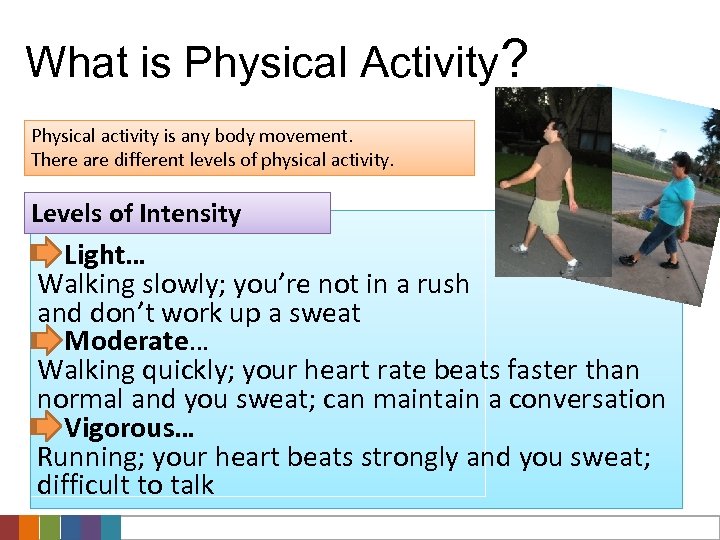 What is Physical Activity? Physical activity is any body movement. There are different levels of physical activity. Levels of Intensity Light… Walking slowly; you’re not in a rush and don’t work up a sweat Moderate… Walking quickly; your heart rate beats faster than normal and you sweat; can maintain a conversation Vigorous… Running; your heart beats strongly and you sweat; difficult to talk
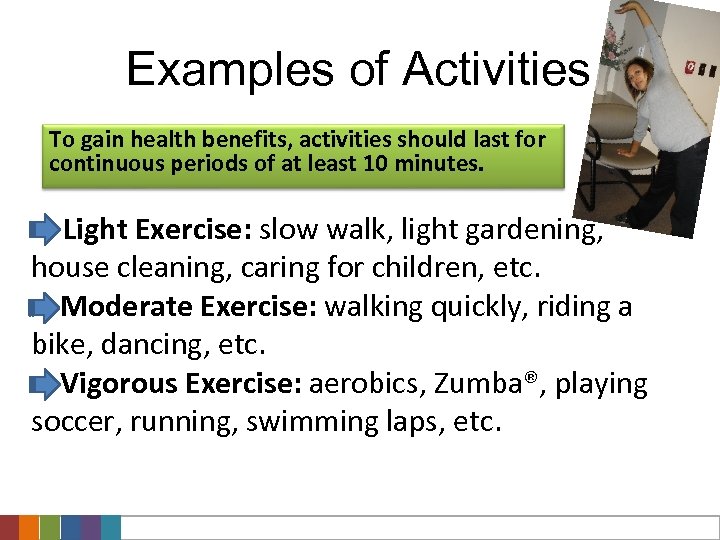 Examples of Activities To gain health benefits, activities should last for continuous periods of at least 10 minutes. Light Exercise: slow walk, light gardening, house cleaning, caring for children, etc. Moderate Exercise: walking quickly, riding a bike, dancing, etc. Vigorous Exercise: aerobics, Zumba®, playing soccer, running, swimming laps, etc.
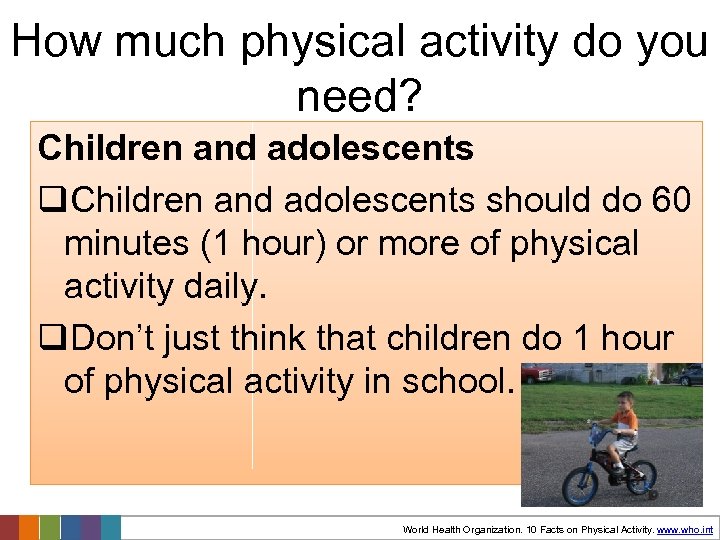 How much physical activity do you need? Children and adolescents q. Children and adolescents should do 60 minutes (1 hour) or more of physical activity daily. q. Don’t just think that children do 1 hour of physical activity in school. World Health Organization. 10 Facts on Physical Activity. www. who. int
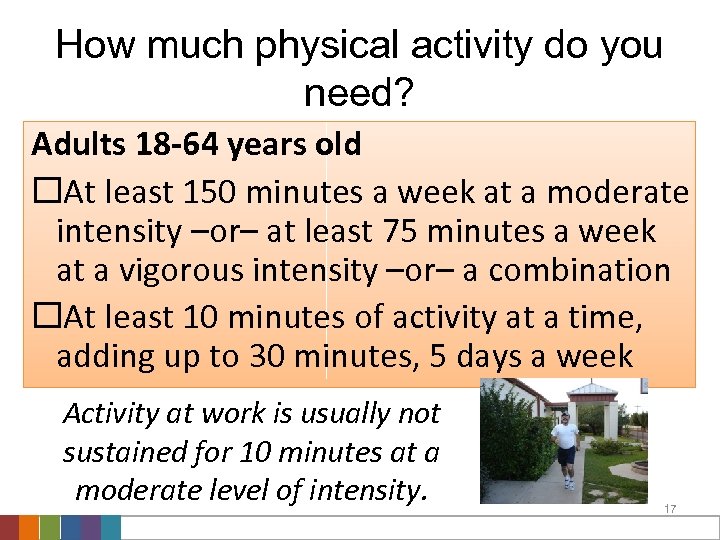 How much physical activity do you need? Adults 18 -64 years old At least 150 minutes a week at a moderate intensity –or– at least 75 minutes a week at a vigorous intensity –or– a combination At least 10 minutes of activity at a time, adding up to 30 minutes, 5 days a week Activity at work is usually not sustained for 10 minutes at a moderate level of intensity. 17
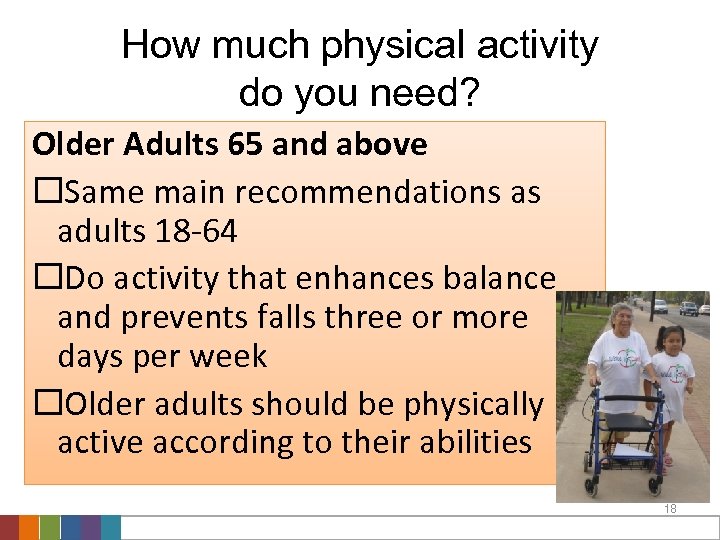 How much physical activity do you need? Older Adults 65 and above Same main recommendations as adults 18 -64 Do activity that enhances balance and prevents falls three or more days per week Older adults should be physically active according to their abilities 18
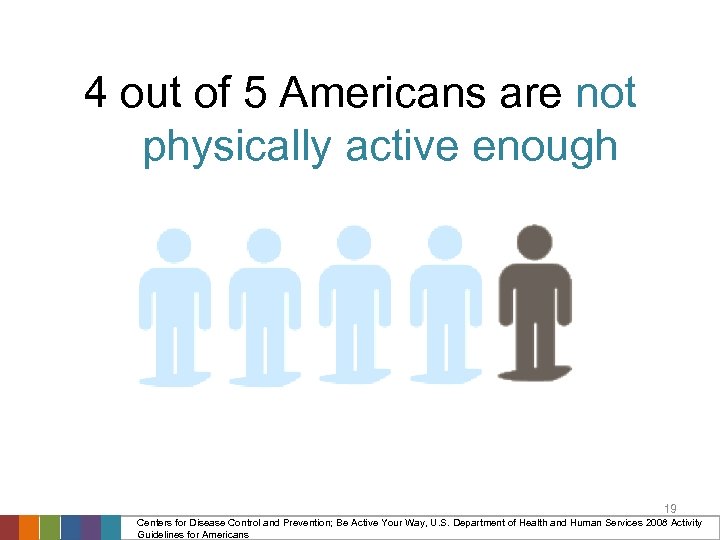 4 out of 5 Americans are not physically active enough 19 Centers for Disease Control and Prevention; Be Active Your Way, U. S. Department of Health and Human Services 2008 Activity Guidelines for Americans
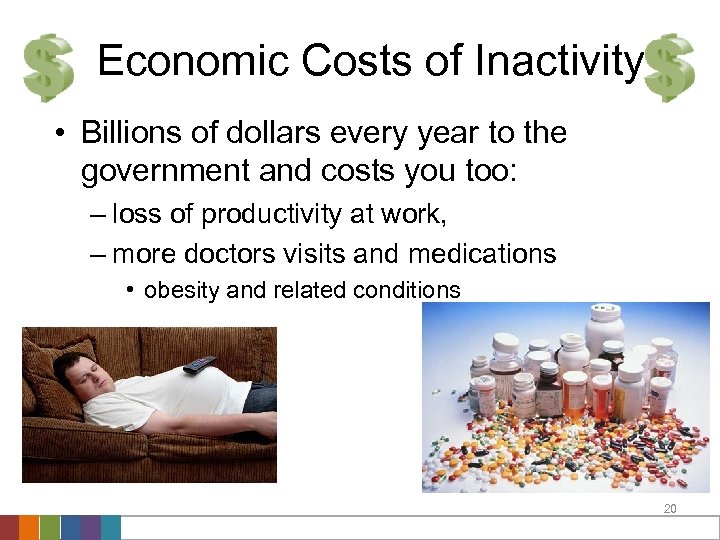 Economic Costs of Inactivity • Billions of dollars every year to the government and costs you too: – loss of productivity at work, – more doctors visits and medications • obesity and related conditions 20
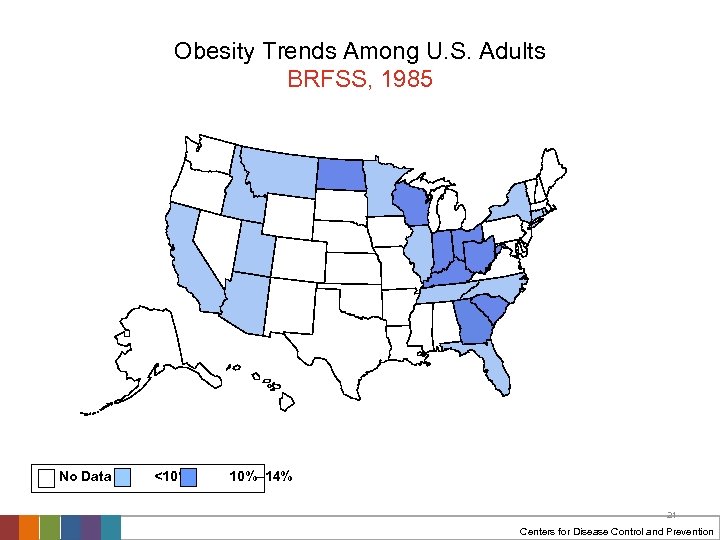 Obesity Trends Among U. S. Adults BRFSS, 1985 No Data <10% 10%– 14% 21 Centers for Disease Control and Prevention
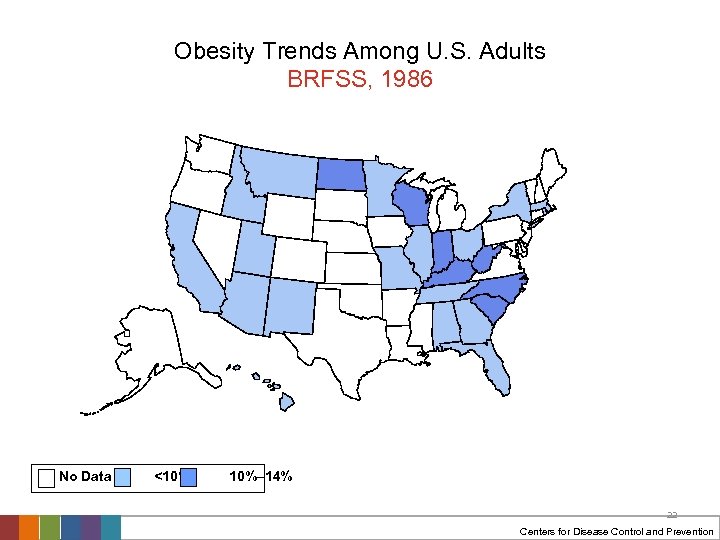 Obesity Trends Among U. S. Adults BRFSS, 1986 No Data <10% 10%– 14% 22 Centers for Disease Control and Prevention
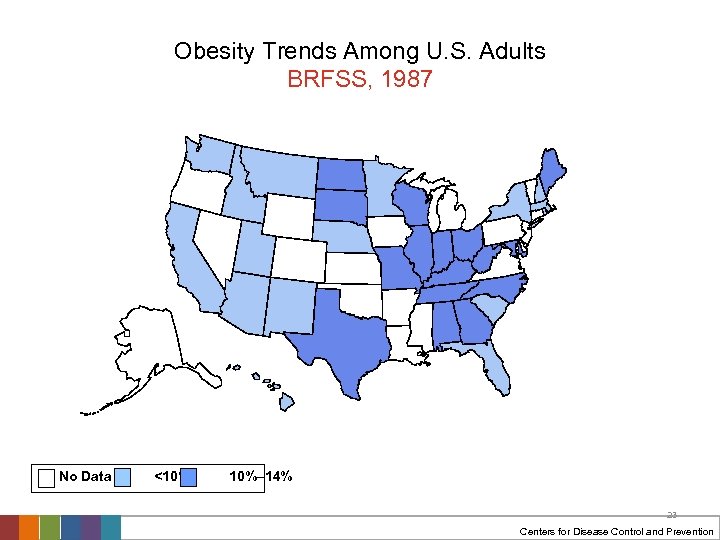 Obesity Trends Among U. S. Adults BRFSS, 1987 No Data <10% 10%– 14% 23 Centers for Disease Control and Prevention
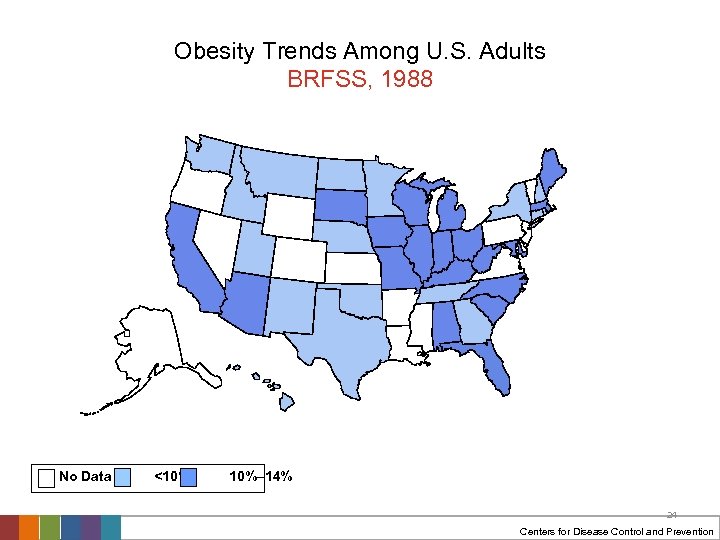 Obesity Trends Among U. S. Adults BRFSS, 1988 No Data <10% 10%– 14% 24 Centers for Disease Control and Prevention
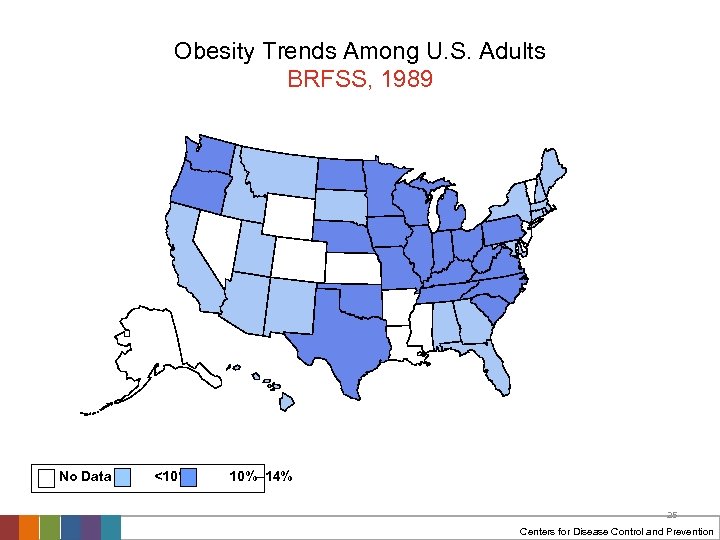 Obesity Trends Among U. S. Adults BRFSS, 1989 No Data <10% 10%– 14% 25 Centers for Disease Control and Prevention
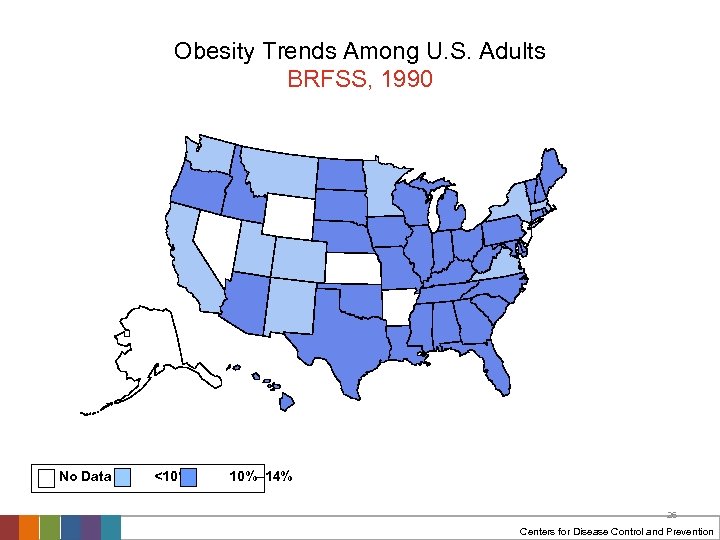 Obesity Trends Among U. S. Adults BRFSS, 1990 No Data <10% 10%– 14% 26 Centers for Disease Control and Prevention
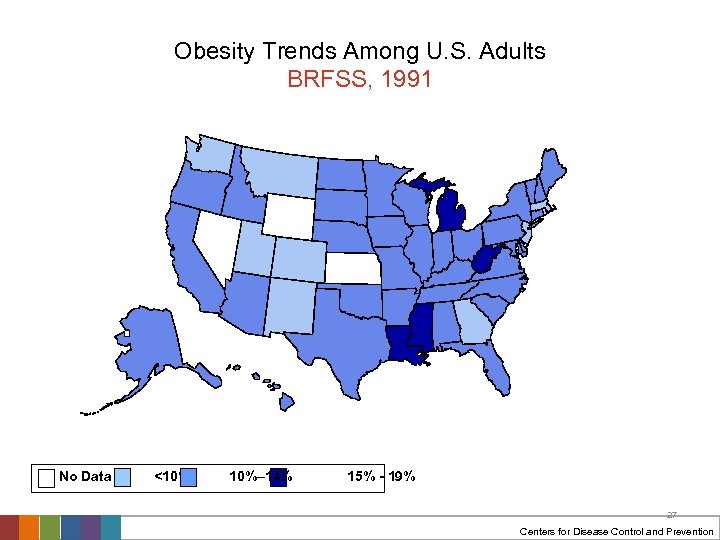 Obesity Trends Among U. S. Adults BRFSS, 1991 No Data <10% 10%– 14% 15% - 19% 27 Centers for Disease Control and Prevention
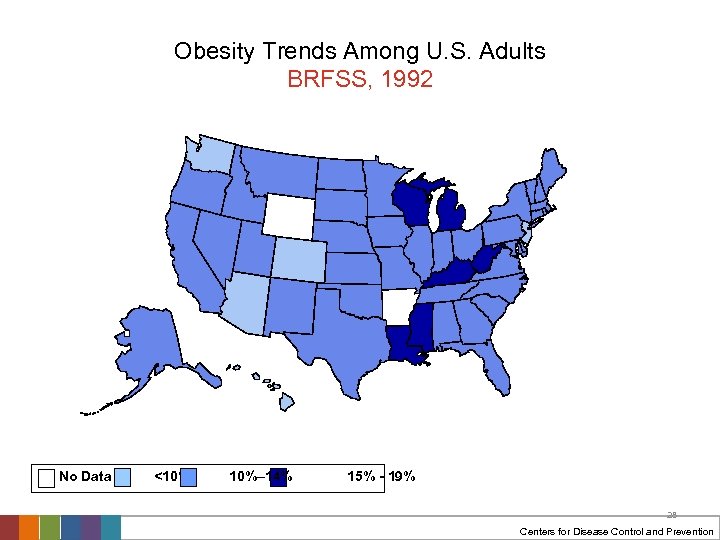 Obesity Trends Among U. S. Adults BRFSS, 1992 No Data <10% 10%– 14% 15% - 19% 28 Centers for Disease Control and Prevention
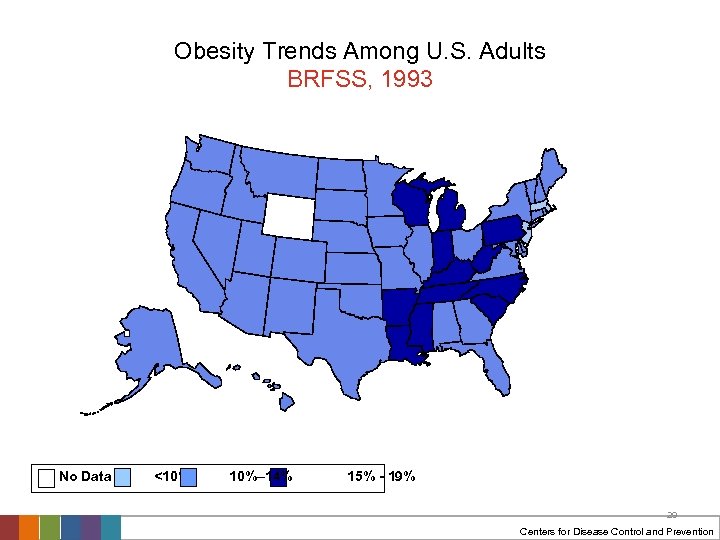 Obesity Trends Among U. S. Adults BRFSS, 1993 No Data <10% 10%– 14% 15% - 19% 29 Centers for Disease Control and Prevention
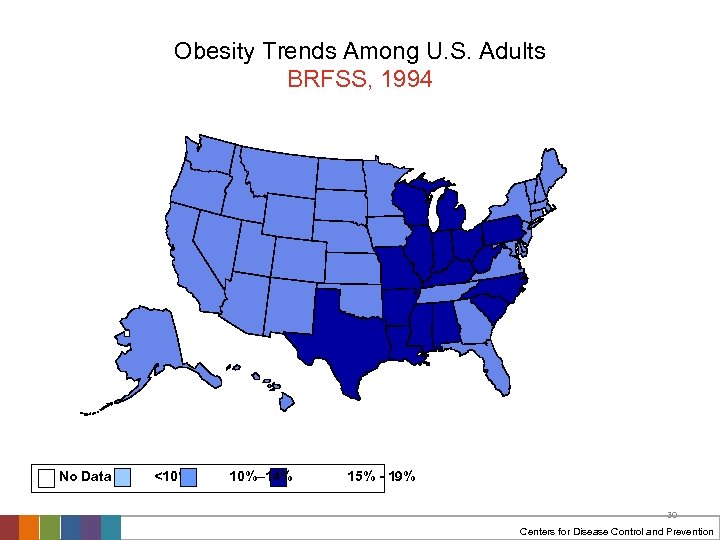 Obesity Trends Among U. S. Adults BRFSS, 1994 No Data <10% 10%– 14% 15% - 19% 30 Centers for Disease Control and Prevention
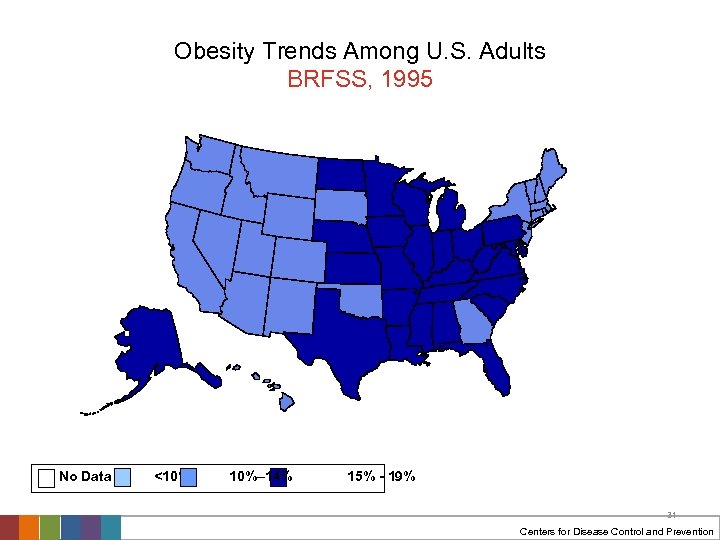 Obesity Trends Among U. S. Adults BRFSS, 1995 No Data <10% 10%– 14% 15% - 19% 31 Centers for Disease Control and Prevention
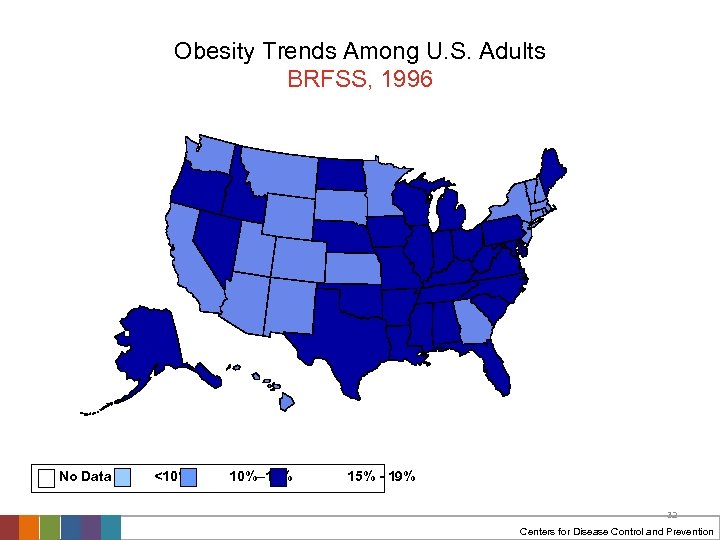 Obesity Trends Among U. S. Adults BRFSS, 1996 No Data <10% 10%– 14% 15% - 19% 32 Centers for Disease Control and Prevention
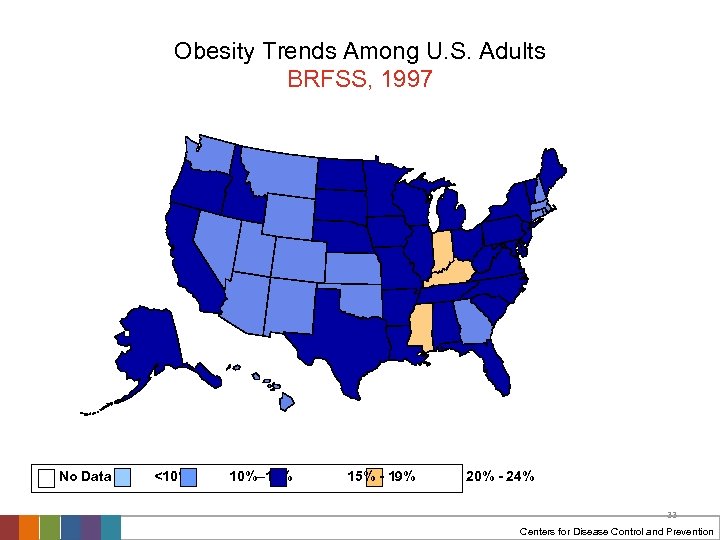 Obesity Trends Among U. S. Adults BRFSS, 1997 No Data <10% 10%– 14% 15% - 19% 20% - 24% 33 Centers for Disease Control and Prevention
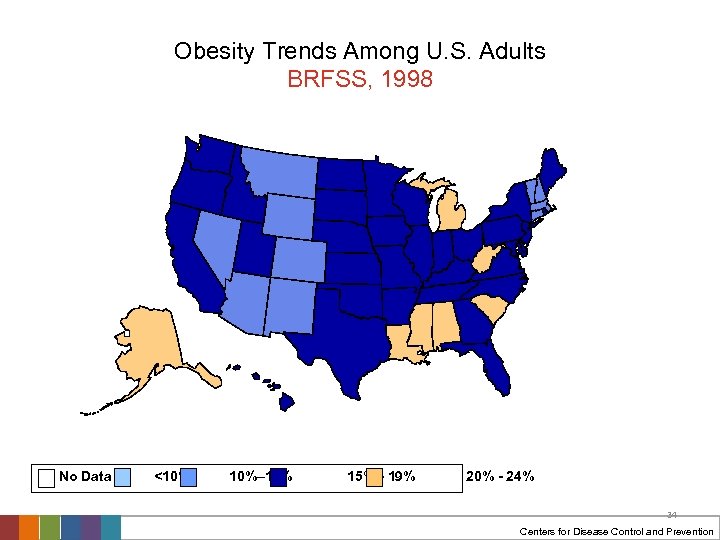 Obesity Trends Among U. S. Adults BRFSS, 1998 No Data <10% 10%– 14% 15% - 19% 20% - 24% 34 Centers for Disease Control and Prevention
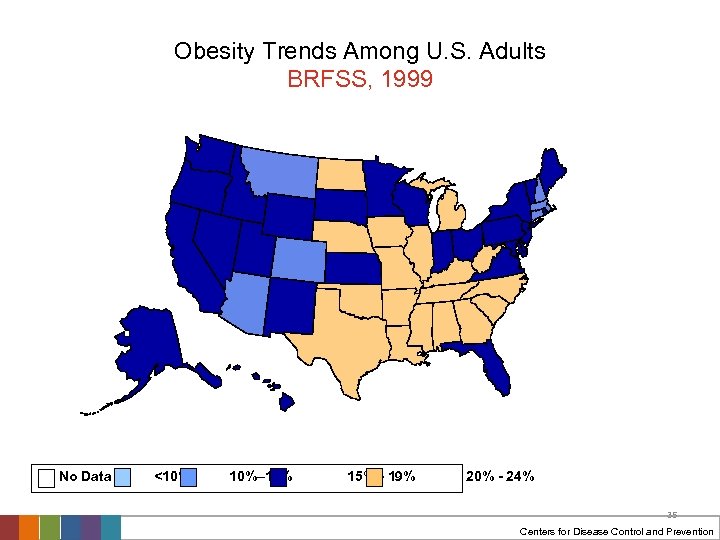 Obesity Trends Among U. S. Adults BRFSS, 1999 No Data <10% 10%– 14% 15% - 19% 20% - 24% 35 Centers for Disease Control and Prevention
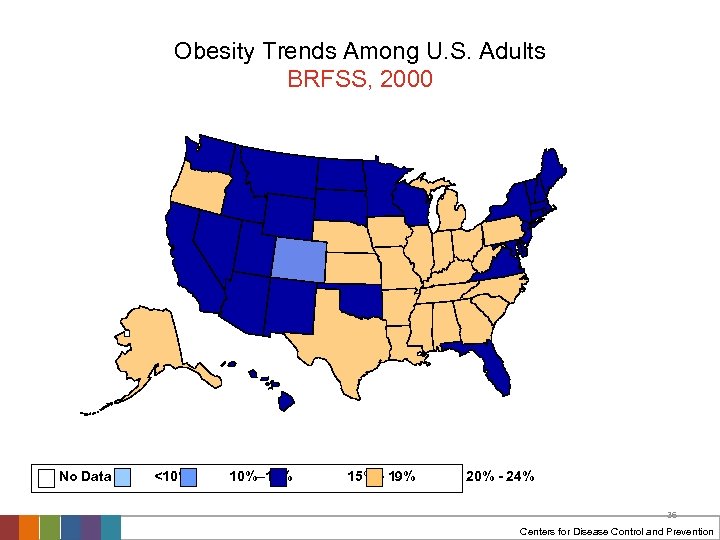 Obesity Trends Among U. S. Adults BRFSS, 2000 No Data <10% 10%– 14% 15% - 19% 20% - 24% 36 Centers for Disease Control and Prevention
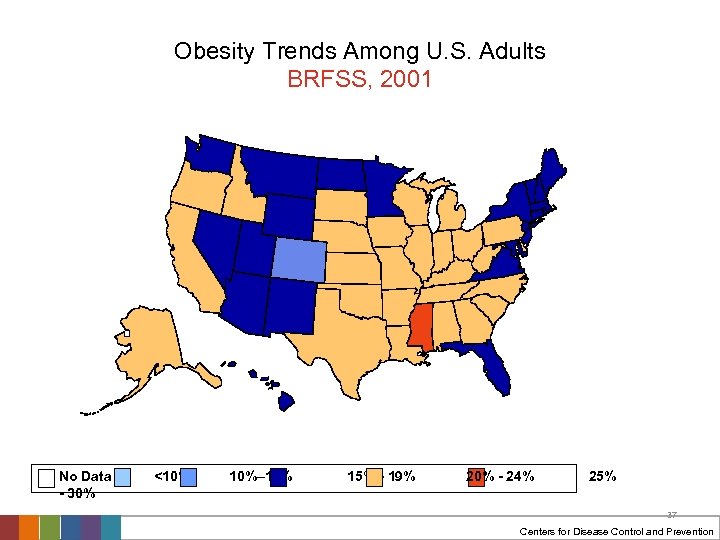 Obesity Trends Among U. S. Adults BRFSS, 2001 No Data - 30% <10% 10%– 14% 15% - 19% 20% - 24% 25% 37 Centers for Disease Control and Prevention
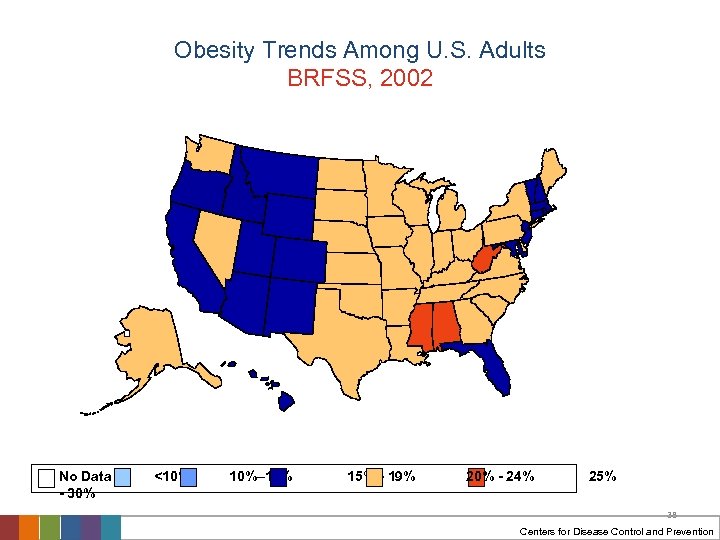 Obesity Trends Among U. S. Adults BRFSS, 2002 No Data - 30% <10% 10%– 14% 15% - 19% 20% - 24% 25% 38 Centers for Disease Control and Prevention
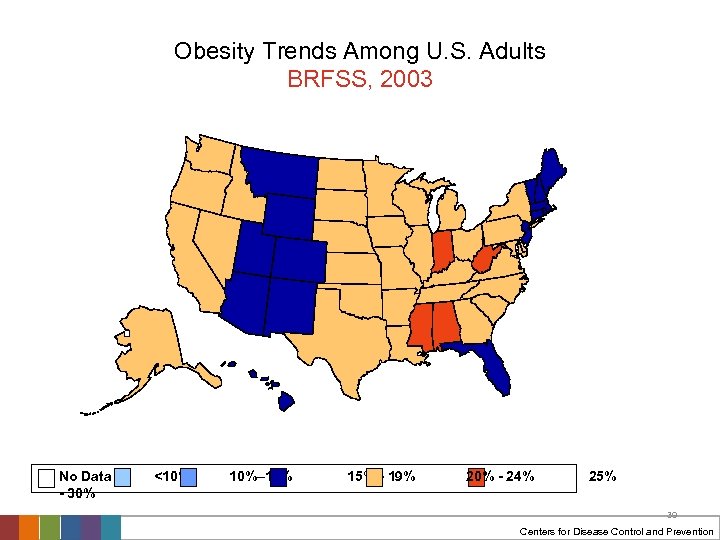 Obesity Trends Among U. S. Adults BRFSS, 2003 No Data - 30% <10% 10%– 14% 15% - 19% 20% - 24% 25% 39 Centers for Disease Control and Prevention
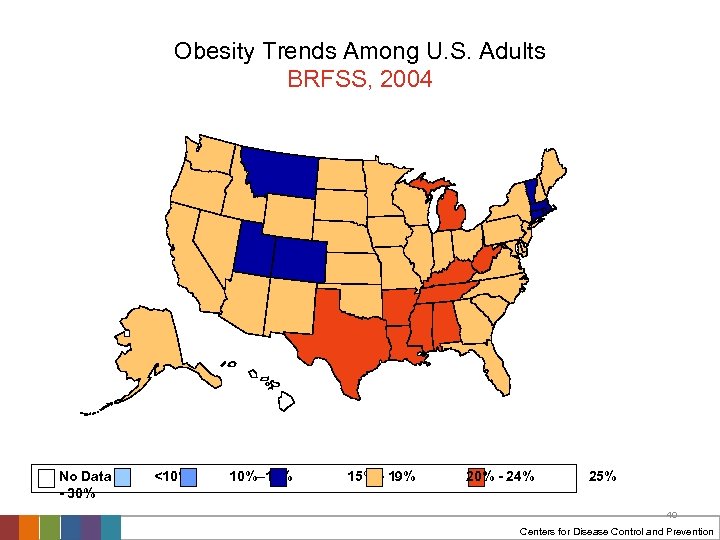 Obesity Trends Among U. S. Adults BRFSS, 2004 No Data - 30% <10% 10%– 14% 15% - 19% 20% - 24% 25% 40 Centers for Disease Control and Prevention
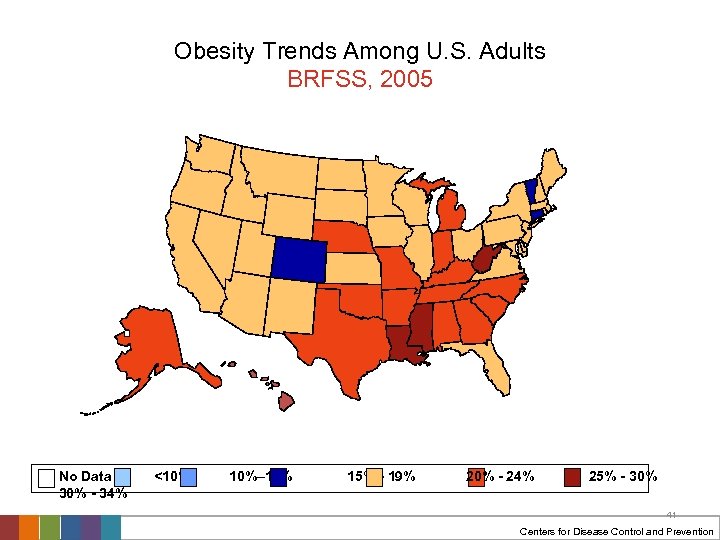 Obesity Trends Among U. S. Adults BRFSS, 2005 No Data 30% - 34% <10% 10%– 14% 15% - 19% 20% - 24% 25% - 30% 41 Centers for Disease Control and Prevention
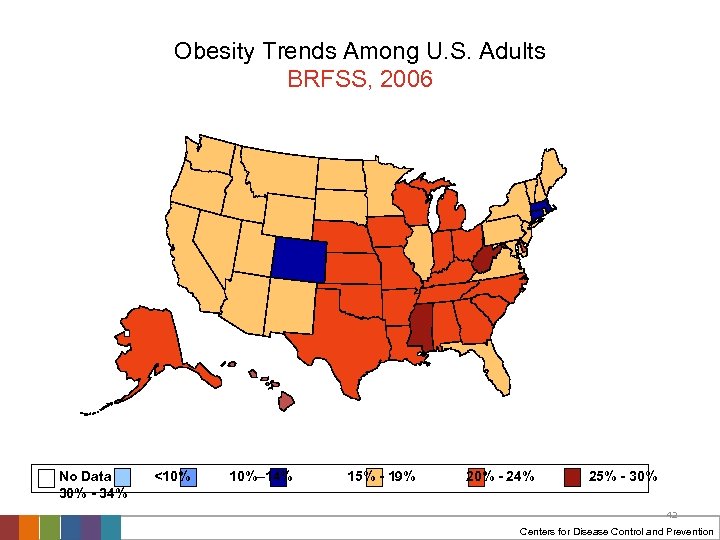 Obesity Trends Among U. S. Adults BRFSS, 2006 No Data 30% - 34% <10% 10%– 14% 15% - 19% 20% - 24% 25% - 30% 42 Centers for Disease Control and Prevention
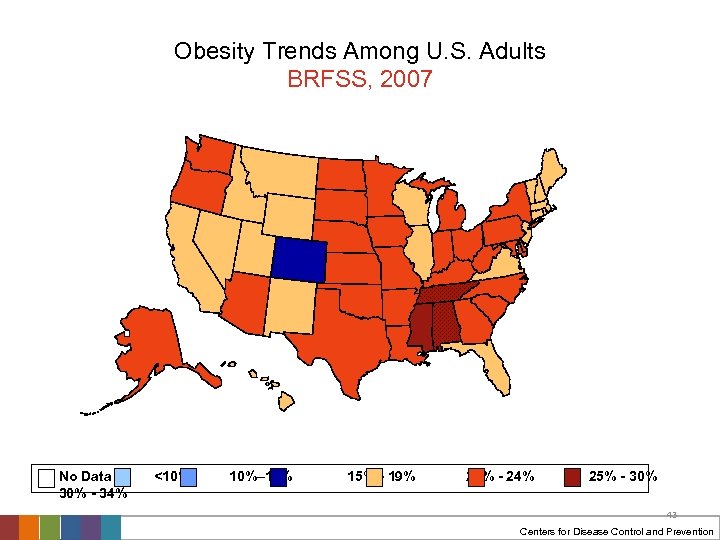 Obesity Trends Among U. S. Adults BRFSS, 2007 No Data 30% - 34% <10% 10%– 14% 15% - 19% 20% - 24% 25% - 30% 43 Centers for Disease Control and Prevention
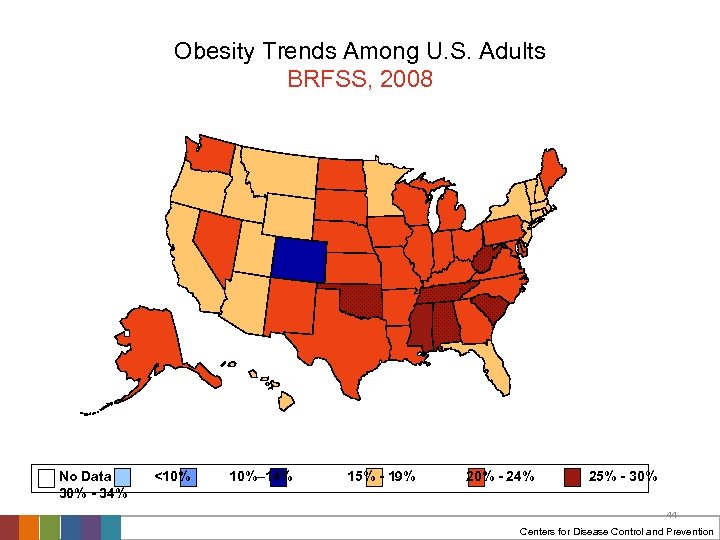 Obesity Trends Among U. S. Adults BRFSS, 2008 No Data 30% - 34% <10% 10%– 14% 15% - 19% 20% - 24% 25% - 30% 44 Centers for Disease Control and Prevention
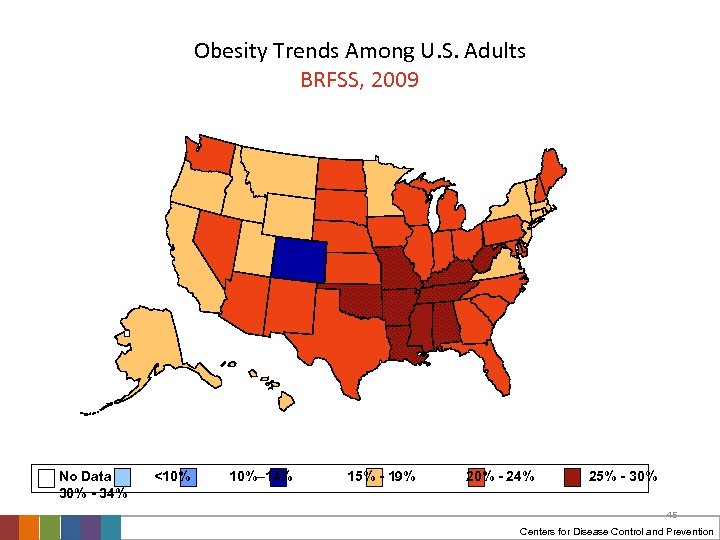 Obesity Trends Among U. S. Adults BRFSS, 2009 No Data 30% - 34% <10% 10%– 14% 15% - 19% 20% - 24% 25% - 30% 45 Centers for Disease Control and Prevention
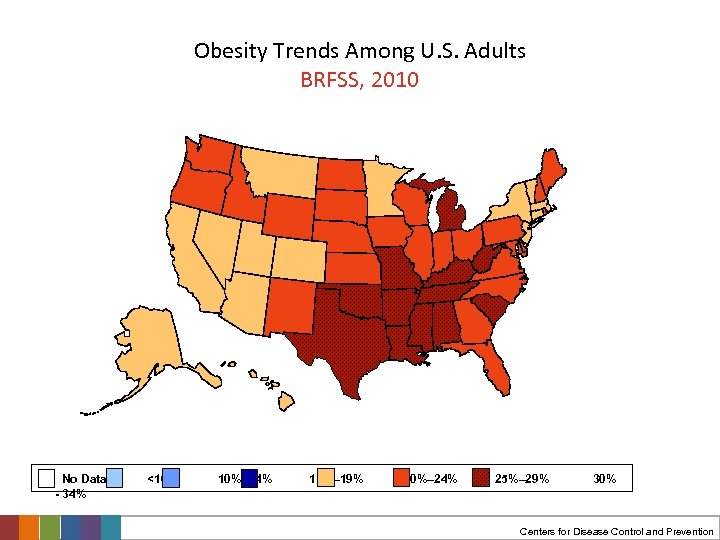 Obesity Trends Among U. S. Adults BRFSS, 2010 No Data - 34% <10% 10%– 14% 15%– 19% 20%– 24% 25%– 29% 30% Centers for Disease Control and Prevention
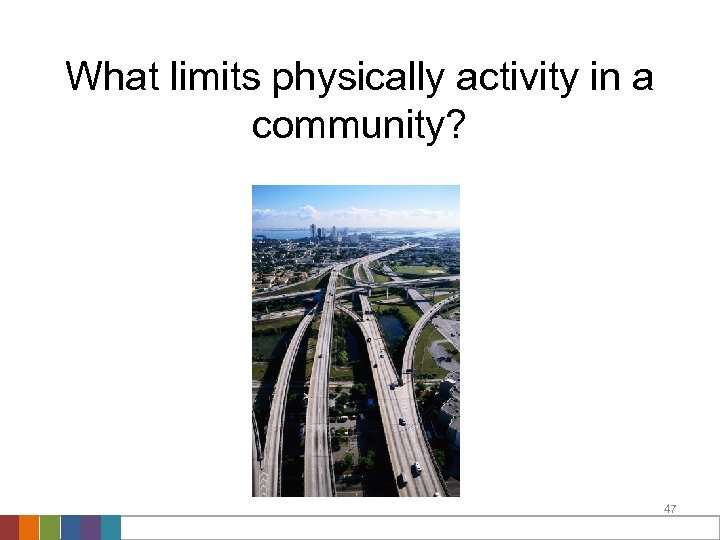 What limits physically activity in a community? 47
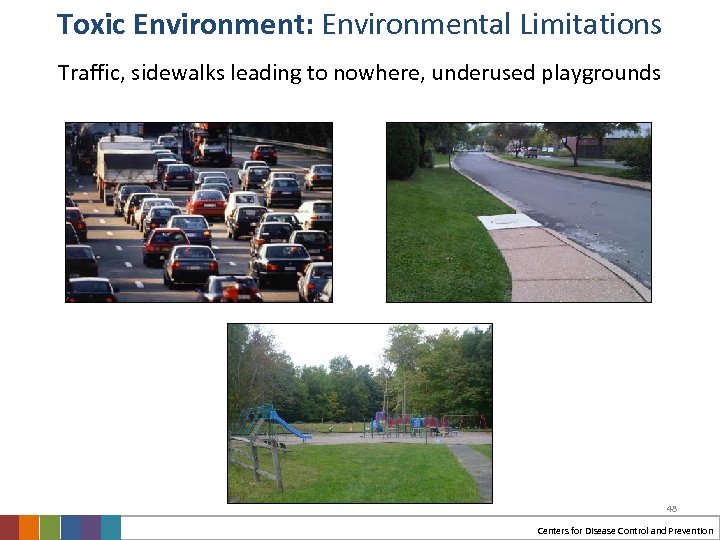 Toxic Environment: Environmental Limitations Traffic, sidewalks leading to nowhere, underused playgrounds 48 Centers for Disease Control and Prevention
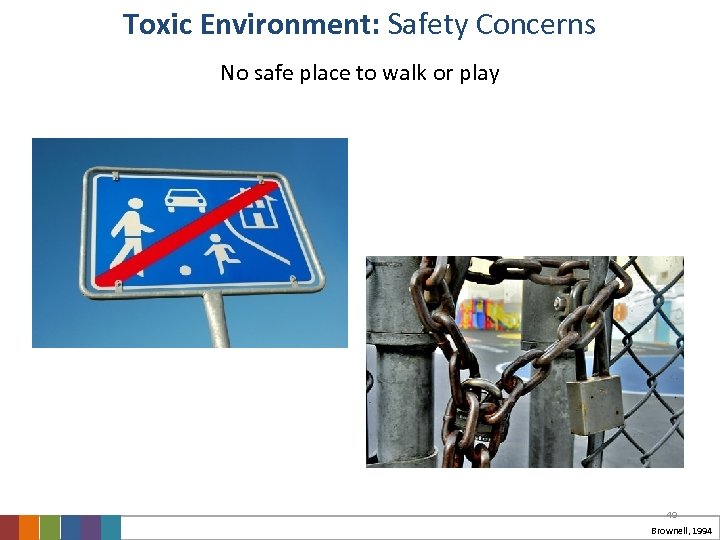 Toxic Environment: Safety Concerns No safe place to walk or play 49 Brownell, 1994
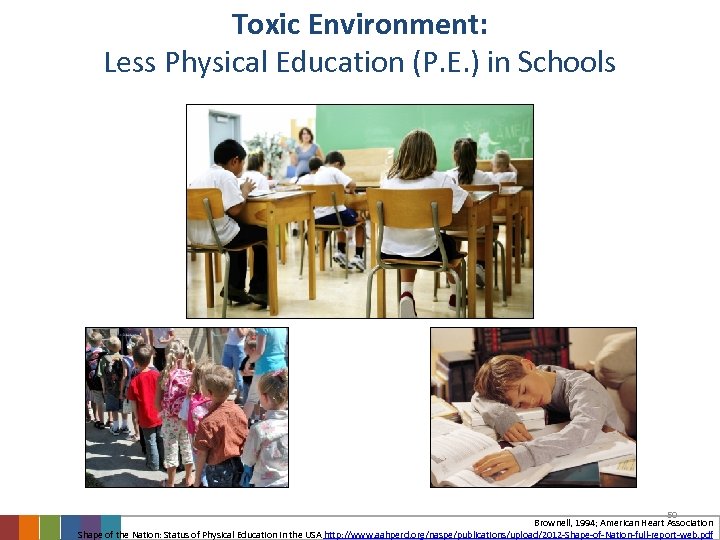 Toxic Environment: Less Physical Education (P. E. ) in Schools 50 Brownell, 1994; American Heart Association Shape of the Nation: Status of Physical Education in the USA http: //www. aahperd. org/naspe/publications/upload/2012 -Shape-of-Nation-full-report-web. pdf
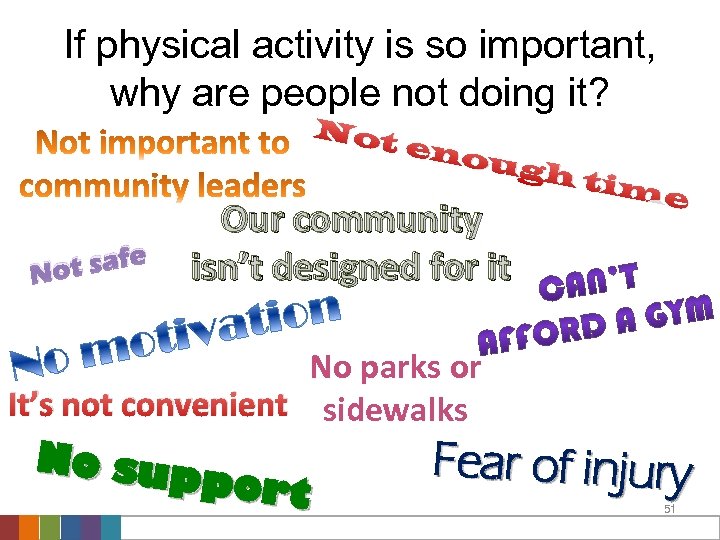 If physical activity is so important, why are people not doing it? Not e ot saf N eno ugh Our community isn’t designed for it tim e No parks or It’s not convenient sidewalks No sup port Fear of injury 51
 VIDEO 52 http: //planhealthytexas. org/English/Success-Stories/Videos. aspx
 Switch to Communities Can Change Power. Point 53