


 Скачать презентацию You May Ask Yourself An Introduction to Thinking
9ee32bbddcc9996416ad521ffa021e97.ppt
- Количество слайдов: 55
 You May Ask Yourself An Introduction to Thinking Like a Sociologist Dalton Conley SECOND EDITION Chapter 18 Collective Action, Social Movements, and Social Change
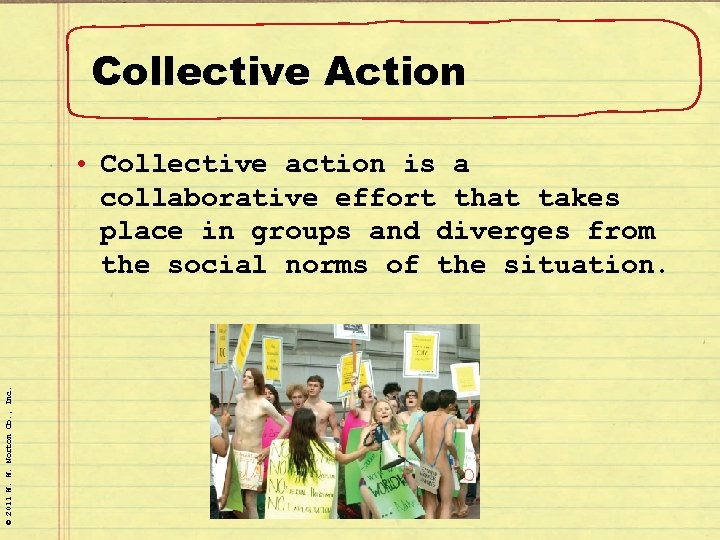 Collective Action © 2011 W. W. Norton Co. , Inc. • Collective action is a collaborative effort that takes place in groups and diverges from the social norms of the situation.
 Collective Action: What Is It Good For? © 2011 W. W. Norton Co. , Inc. • Crowd collective action takes place when members of a group are face to face. • Mass collective action in which close physical proximity is not necessary, such as a letter-writing campaign.
 Theories of Collective Action © 2011 W. W. Norton Co. , Inc. • According to convergence theory, collective action happens when people with similar ideas and tendencies gather in the same place.
 Theories of Collective Action © 2011 W. W. Norton Co. , Inc. • According to contagion theory, collective action arises because of people’s tendency to conform to the behavior of others.
 Theories of Collective Action © 2011 W. W. Norton Co. , Inc. • Emergent norm theory emphasizes the influence of leaders in promoting particular norms that members of a group then follow.
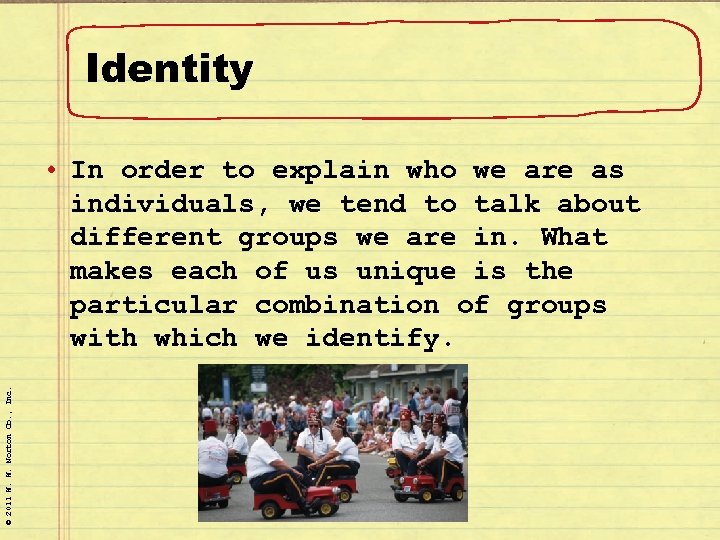 Identity © 2011 W. W. Norton Co. , Inc. • In order to explain who we are as individuals, we tend to talk about different groups we are in. What makes each of us unique is the particular combination of groups with which we identify.
 © 2011 W. W. Norton Co. , Inc. Types of Identity • A static identity is an aspect of your identity (such as race) that doesn’t change and that determines at least one group to which you belong. • A dynamic identity is an aspect of your identity that is more fluid (such as working as a lifeguard for one summer) and that is determined by a group to which you belong.
 Social Movements © 2011 W. W. Norton Co. , Inc. • A social movement is collective behavior that is purposeful, organized, and institutionalized, but not ritualized. • Alterative social movements seek limited social change and tend to be focused on a narrow group of people.
 © 2011 W. W. Norton Co. , Inc. Types of Social Movements • Redemptive social movements are also focused on a narrow group of people, but they advocate for more radical change. • Reformative social movements advocate for limited social change but seek to effect that change across an entire society. • Revolutionary social movements seek to make radical change across an entire society.
 A Social Movement: How Does It Happen? © 2011 W. W. Norton Co. , Inc. • The classical model of social movements proposes that social movements come about as a collective response to structural weaknesses in society that have a psychological effect on individuals.
 A Social Movement: How Does It Happen? © 2011 W. W. Norton Co. , Inc. • Resource-mobilization theory recognizes the importance of political context and goals to the development of social movements but also emphasizes that social movements are unlikely to emerge without the necessary resources.
 © 2011 W. W. Norton Co. , Inc. A Social Movement: How Does It Happen? • The political process model of social movements proposes that a social movement’s chances of developing are heavily influenced by three sets of conditions: – expanding political opportunities – indigenous organizational strength – certain shared cognitions among the movement’s proponents
 © 2011 W. W. Norton Co. , Inc. Stages of Social Movements • Social movements generally evolve through three stages: – Emergence: the social problem being addressed is first identified. – Coalescence: resources are mobilized and concrete action is taken to address the problem. – Routinization: a formal structure develops to promote the cause.
 What Makes a Social Movement Succeed? © 2011 W. W. Norton Co. , Inc. Interview, Doug Mc. Adam describes how Twitter, Facebook, and other social media can help movements frame a social issue. 15
 Social Movement Organizations © 2011 W. W. Norton Co. , Inc. • A social movement organization (SMO) is a group developed to recruit new members and coordinate participation in a particular social movement. • A professional movement organization is a type of SMO that has full-time leadership plus a large membership base that plays only a minor role in the organization.
 Social Movement Organizations © 2011 W. W. Norton Co. , Inc. • A participatory movement organization is a type of SMO that directly involves its rankand-file members in decisions and activities to support the organization’s cause.
 © 2011 W. W. Norton Co. , Inc. Social Movement Organizations • There are two types of participatory movement organizations: – Mass protest organizations advocate for social change through protest and demonstration. – Grassroots organizations tend to work through existing political structures to promote social change.
 © 2011 W. W. Norton Co. , Inc. Social Movement Organizations • Americans have traditionally had high participation levels in volunteer activities. • It seems that volunteerism has declined somewhat in the United States, and one possible explanation is the influence of the Internet: people can join groups online and donate money online to support causes without participating in any face-to-face meetings or activities.
 Social Movements and Social Change © 2011 W. W. Norton Co. , Inc. • Not all social change is produced by social movements: economic and political factors have a great deal to do with the evolution of society. • Social changes are not valued in the same way by all people — what is of major importance to one group may barely register for another group — and they do not affect all people in the same way.
 Causes of Social Change © 2011 W. W. Norton Co. , Inc. • Social change can be caused by factors other than social movements, such as technological innovation, new information and ideas, and conflict between social actors. • Ironically, perhaps the greatest sign that a social movement has been successful is when there is no longer a need for it because it has achieved its goal.
 Causes of Social Change • The Internet has opened new opportunities for people to create social change: © 2011 W. W. Norton Co. , Inc. – It provides a way for participants in social movements to connect, exchange information, and generally make their voices heard. – It has become a forum for radical social protest activities, such as virtual sit-ins that jam web servers and online impersonation. • The primary achievement of such protests is to draw media attention to a particular issue or cause.
 Concept Quiz © 2011 W. W. Norton Co. , Inc. 1. Which of the following is an example of mass collective action? a) A one-day strike by all Amtrak employees b) a rally in a state capital in support of stricter emissions standards for automobiles c) a boycott of a clothing manufacturer that has factories overseas where child labor is used d) a sit-in in the administrative building of a university by students who are protesting the firing of a professor
 Concept Quiz © 2011 W. W. Norton Co. , Inc. 2. According to ____, collective action happens when people with similar ideas and tendencies gather in the same place. a) resource-mobilization theory b) convergence theory c) emergent norm theory d) contagion theory
 Concept Quiz © 2011 W. W. Norton Co. , Inc. 3. Which of the following is a criticism of contagion theory? a) It downplays individual agency. b) It doesn’t explain why particular people emerge as leaders. c) It overemphasizes psychological tensions. d) It downplays the influence of cultural or emotional components.
 Concept Quiz 4. Which of the following is an example of a static identity? © 2011 W. W. Norton Co. , Inc. a) being a student b) being a graphic designer c) being of Italian descent d) being a precinct officer for a political party
 Concept Quiz © 2011 W. W. Norton Co. , Inc. 5. According to sociologist Georg Simmel, _____ refers to a form of social organization characterized by concentric circles of social affiliation. a) modernity b) premodernity c) postmodernity d) hypermodernity
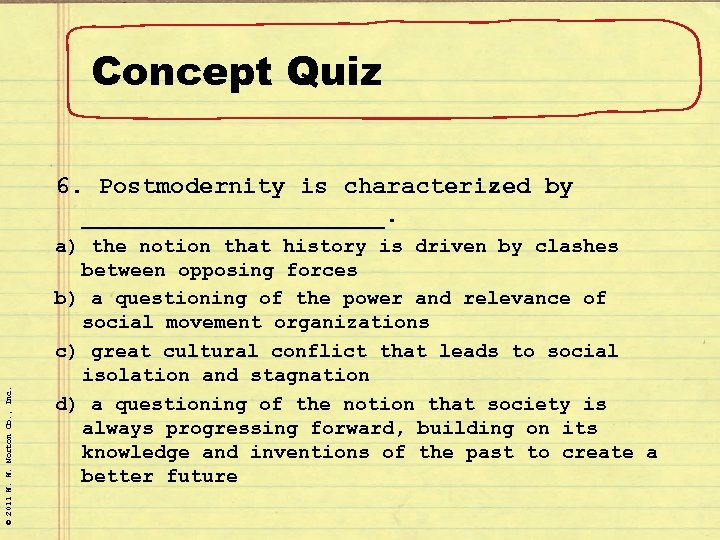 Concept Quiz © 2011 W. W. Norton Co. , Inc. 6. Postmodernity is characterized by ___________. a) the notion that history is driven by clashes between opposing forces b) a questioning of the power and relevance of social movement organizations c) great cultural conflict that leads to social isolation and stagnation d) a questioning of the notion that society is always progressing forward, building on its knowledge and inventions of the past to create a better future
 Discussion Questions 1. Do you think that the social movements that are happening today are as important as the ones from the 1960 s? © 2011 W. W. Norton Co. , Inc. a) yes b) no 29
 Discussion Questions 2. Are you part of an organization on campus that supports a cause? © 2011 W. W. Norton Co. , Inc. a) yes b) no 30
 Discussion Questions 2. Are you part of an organization online that supports a cause? © 2011 W. W. Norton Co. , Inc. a) yes b) no 31
 Chapter Opener You May Ask Yourself, 2 nd Edition Copyright © 2011 W. W. Norton & Company
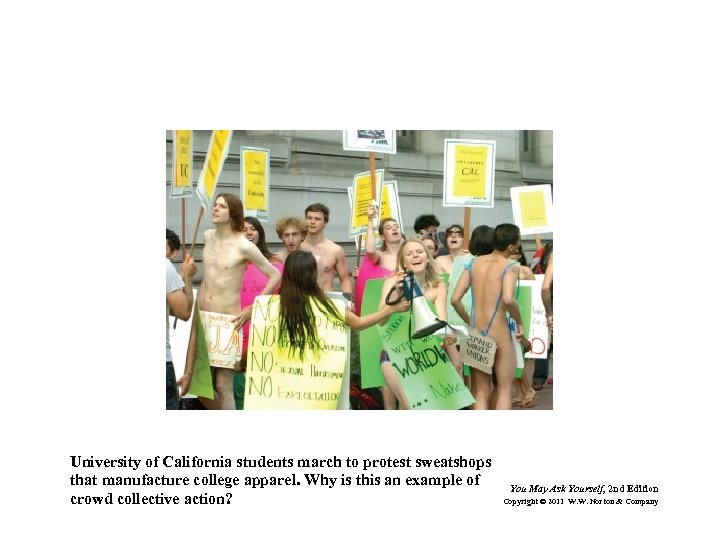 University of California students march to protest sweatshops that manufacture college apparel. Why is this an example of crowd collective action? You May Ask Yourself, 2 nd Edition Copyright © 2011 W. W. Norton & Company
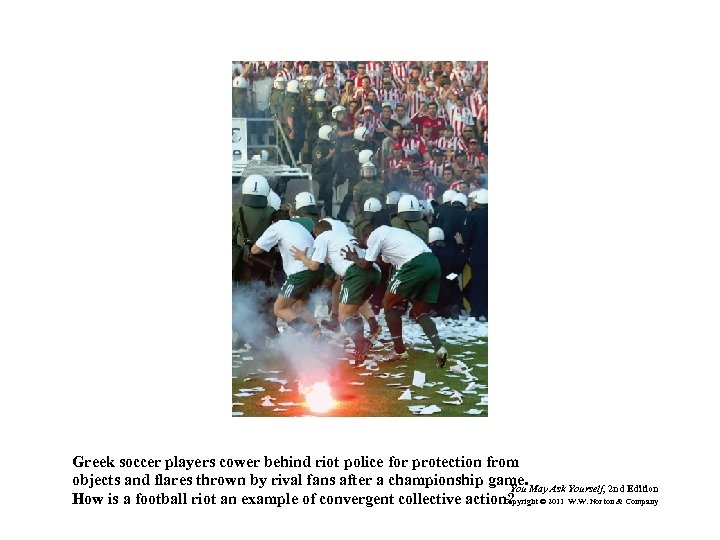 Greek soccer players cower behind riot police for protection from objects and flares thrown by rival fans after a championship game. May Ask Yourself, 2 nd Edition You How is a football riot an example of convergent collective action? Copyright © 2011 W. W. Norton & Company
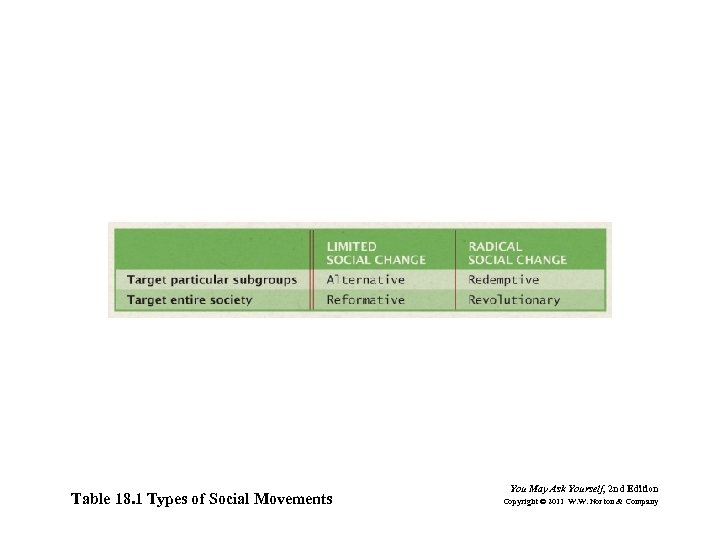 Table 18. 1 Types of Social Movements You May Ask Yourself, 2 nd Edition Copyright © 2011 W. W. Norton & Company
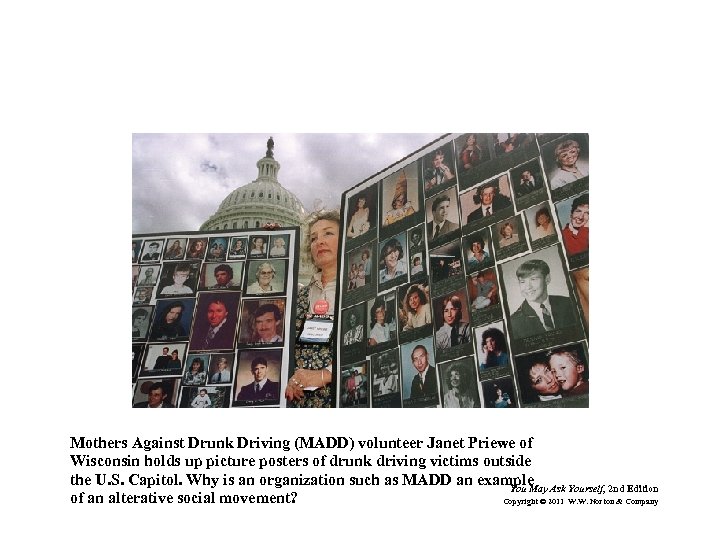 Mothers Against Drunk Driving (MADD) volunteer Janet Priewe of Wisconsin holds up picture posters of drunk driving victims outside the U. S. Capitol. Why is an organization such as MADD an example Ask Yourself, 2 nd Edition You May of an alterative social movement? Copyright © 2011 W. W. Norton & Company
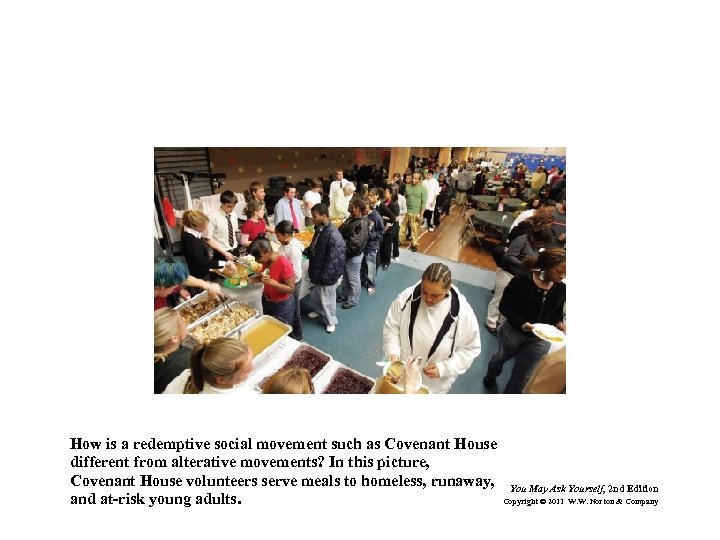 How is a redemptive social movement such as Covenant House different from alterative movements? In this picture, Covenant House volunteers serve meals to homeless, runaway, and at-risk young adults. You May Ask Yourself, 2 nd Edition Copyright © 2011 W. W. Norton & Company
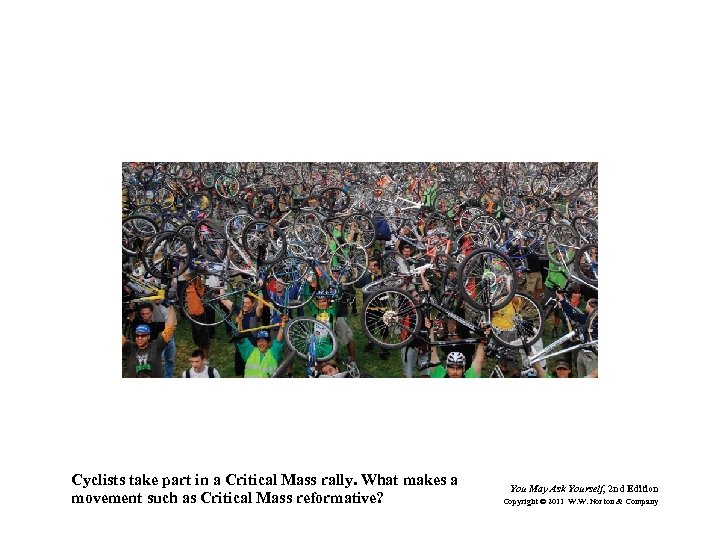 Cyclists take part in a Critical Mass rally. What makes a movement such as Critical Mass reformative? You May Ask Yourself, 2 nd Edition Copyright © 2011 W. W. Norton & Company
 Members of the United Democratic Front (UDF) march in South Africa. The UDF sought to overthrow the apartheid regime May Ask Yourself, 2 nd Edition You that governed South Africa until 1994. Copyright © 2011 W. W. Norton & Company
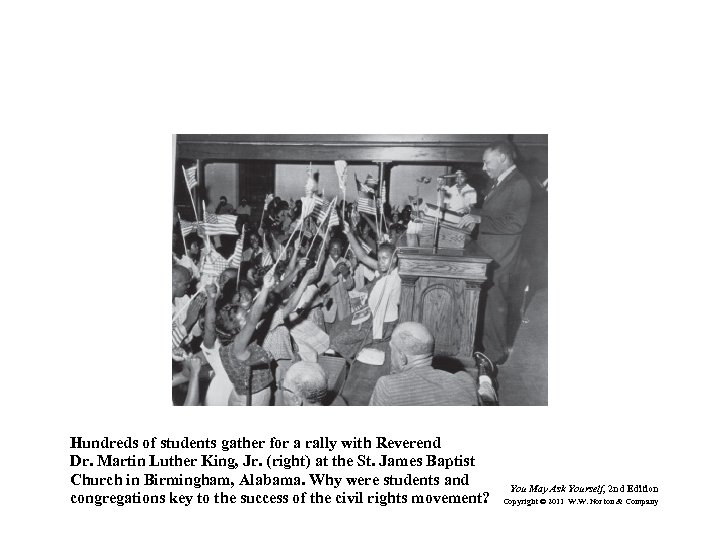 Hundreds of students gather for a rally with Reverend Dr. Martin Luther King, Jr. (right) at the St. James Baptist Church in Birmingham, Alabama. Why were students and congregations key to the success of the civil rights movement? You May Ask Yourself, 2 nd Edition Copyright © 2011 W. W. Norton & Company
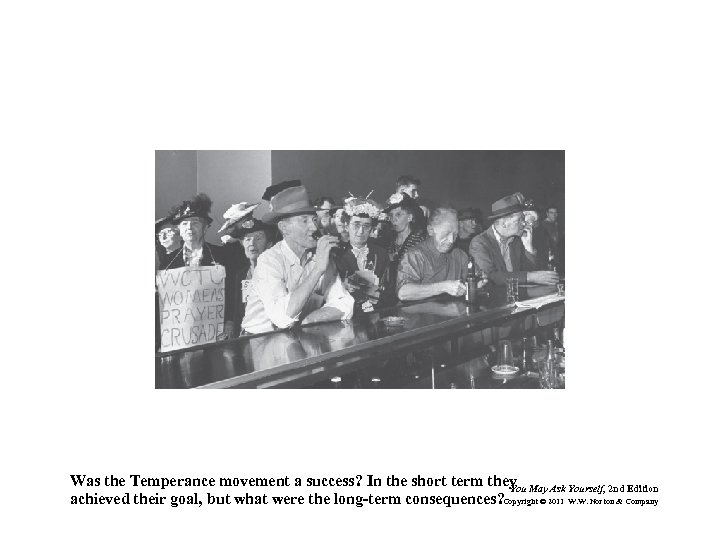 Was the Temperance movement a success? In the short term they May Ask Yourself, 2 nd Edition You achieved their goal, but what were the long-term consequences? Copyright © 2011 W. W. Norton & Company
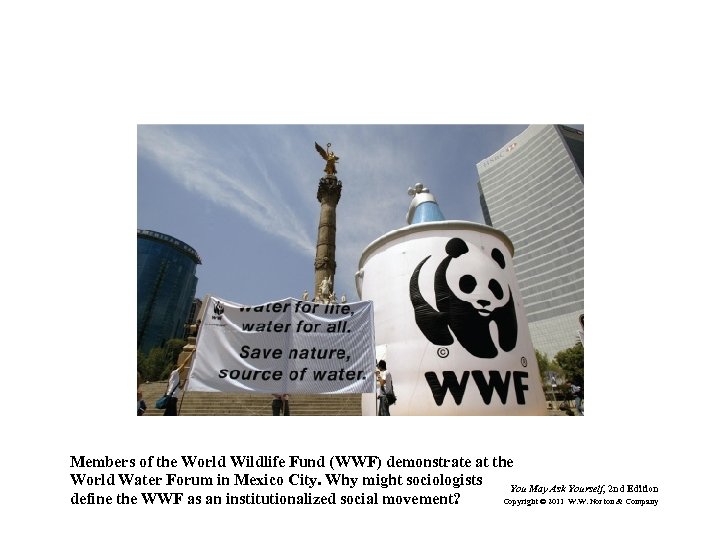 Members of the World Wildlife Fund (WWF) demonstrate at the World Water Forum in Mexico City. Why might sociologists You May Ask Yourself, 2 nd Edition define the WWF as an institutionalized social movement? Copyright © 2011 W. W. Norton & Company
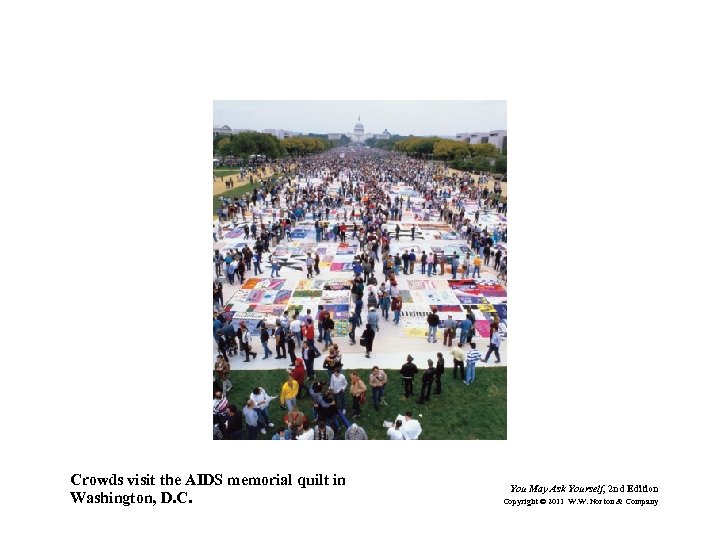 Crowds visit the AIDS memorial quilt in Washington, D. C. You May Ask Yourself, 2 nd Edition Copyright © 2011 W. W. Norton & Company
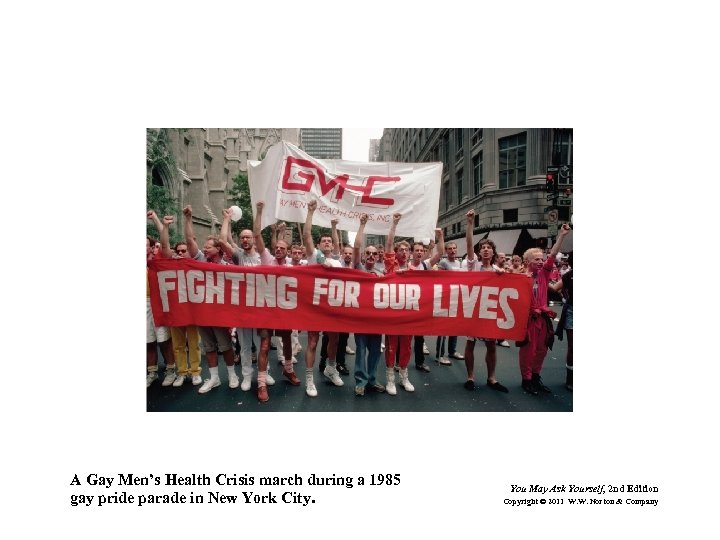 A Gay Men’s Health Crisis march during a 1985 gay pride parade in New York City. You May Ask Yourself, 2 nd Edition Copyright © 2011 W. W. Norton & Company
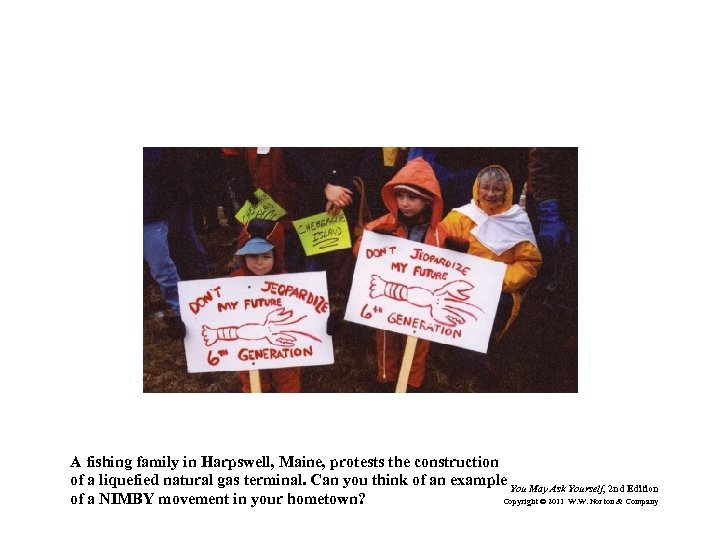 A fishing family in Harpswell, Maine, protests the construction of a liquefied natural gas terminal. Can you think of an example You May Ask Yourself, 2 nd Edition of a NIMBY movement in your hometown? Copyright © 2011 W. W. Norton & Company
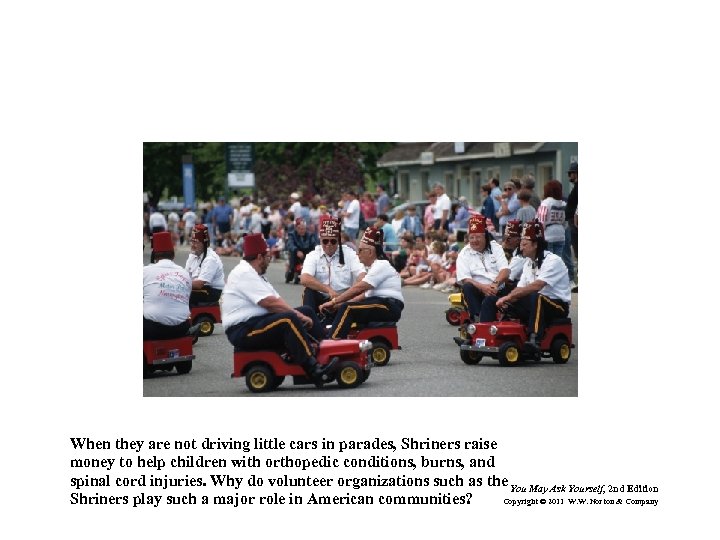 When they are not driving little cars in parades, Shriners raise money to help children with orthopedic conditions, burns, and spinal cord injuries. Why do volunteer organizations such as the You May Ask Yourself, 2 nd Edition Shriners play such a major role in American communities? Copyright © 2011 W. W. Norton & Company
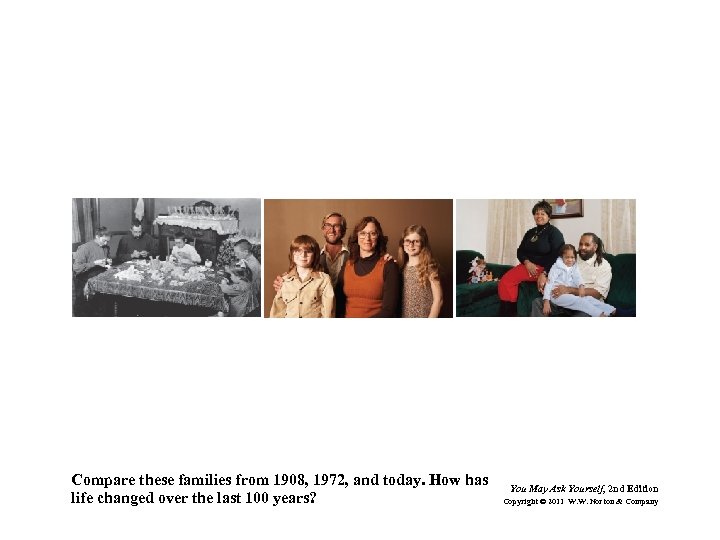 Compare these families from 1908, 1972, and today. How has life changed over the last 100 years? You May Ask Yourself, 2 nd Edition Copyright © 2011 W. W. Norton & Company
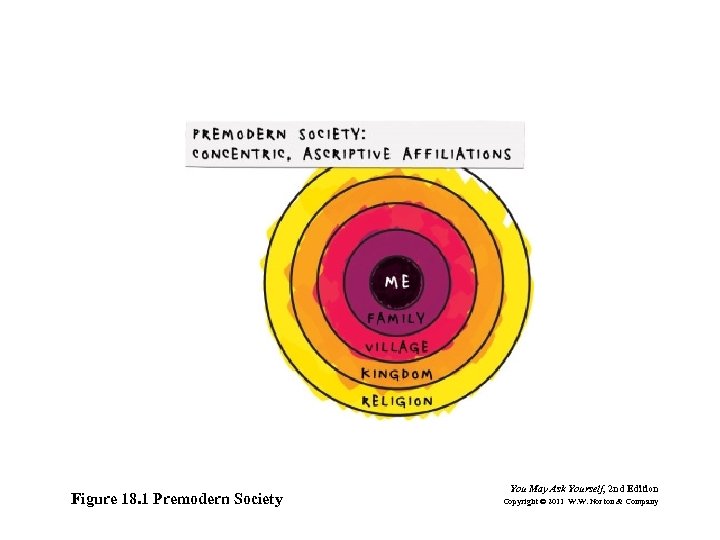 Figure 18. 1 Premodern Society You May Ask Yourself, 2 nd Edition Copyright © 2011 W. W. Norton & Company
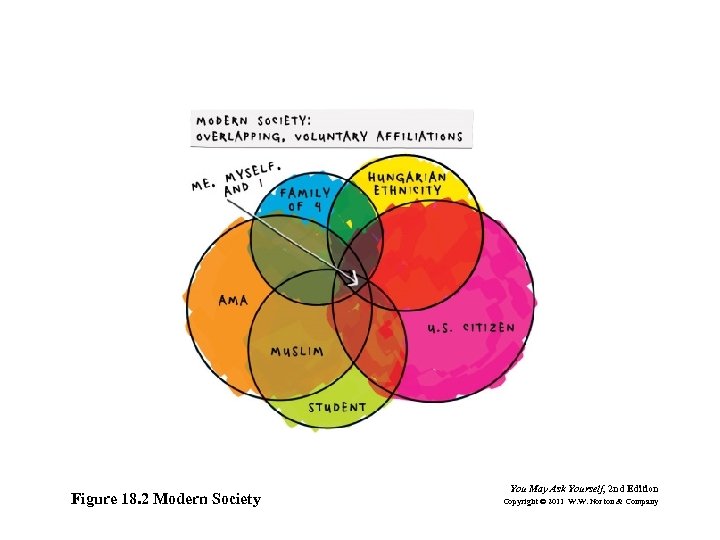 Figure 18. 2 Modern Society You May Ask Yourself, 2 nd Edition Copyright © 2011 W. W. Norton & Company
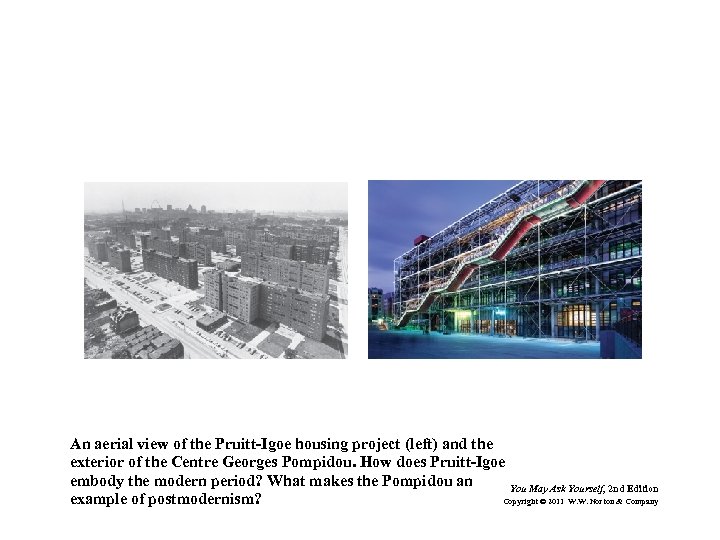 An aerial view of the Pruitt-Igoe housing project (left) and the exterior of the Centre Georges Pompidou. How does Pruitt-Igoe embody the modern period? What makes the Pompidou an You May Ask Yourself, 2 nd Edition example of postmodernism? Copyright © 2011 W. W. Norton & Company
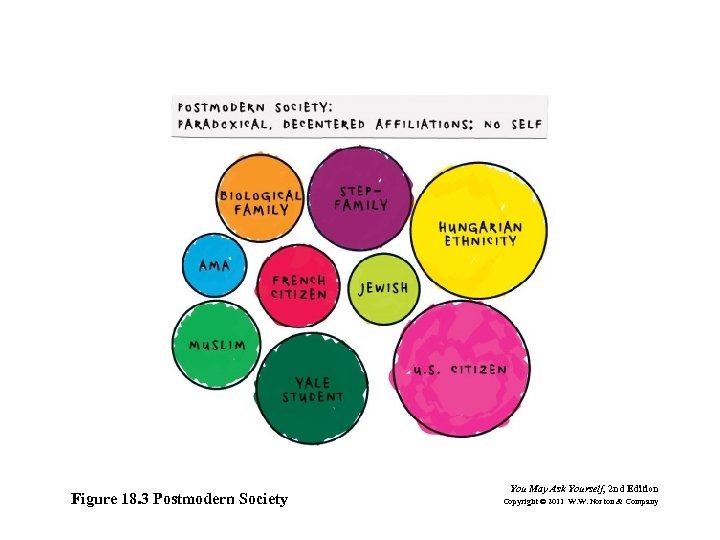 Figure 18. 3 Postmodern Society You May Ask Yourself, 2 nd Edition Copyright © 2011 W. W. Norton & Company
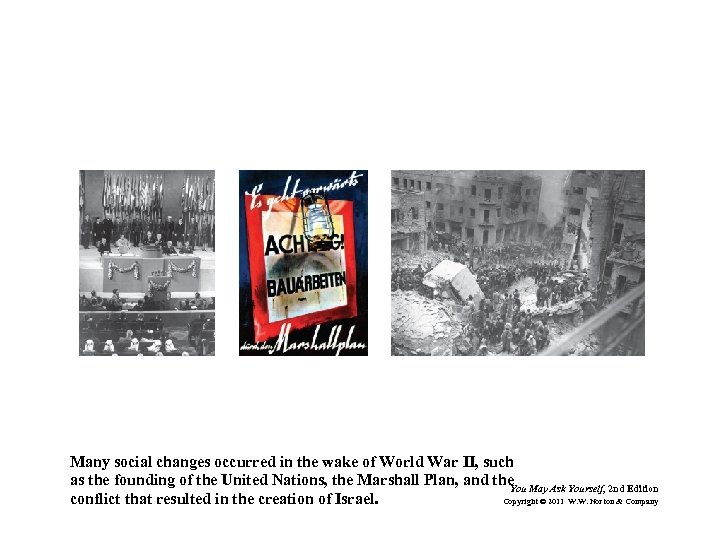 Many social changes occurred in the wake of World War II, such as the founding of the United Nations, the Marshall Plan, and the May Ask Yourself, 2 nd Edition You conflict that resulted in the creation of Israel. Copyright © 2011 W. W. Norton & Company
 Doug Mc. Adam. To see our conversation about social movements, May Ask Yourself, 2 nd Edition You visit wwnorton. com/studyspace. Copyright © 2011 W. W. Norton & Company
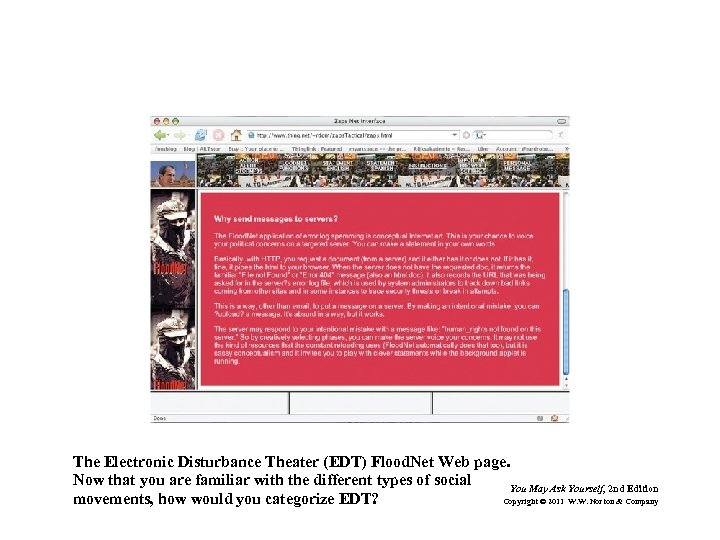 The Electronic Disturbance Theater (EDT) Flood. Net Web page. Now that you are familiar with the different types of social You May Ask Yourself, 2 nd Edition movements, how would you categorize EDT? Copyright © 2011 W. W. Norton & Company
 This concludes the Lecture Power. Point Presentation for Chapter 18: Collective Action, Social Movements, and Social Change For more learning resources, please visit our online Study. Space at: http: //www. wwnorton. com/college/soc/conley 2/ W. W. Norton & Company Independent and Employee-Owned 55