 Скачать презентацию Yorkshire Dales By Oleghkaa Pogorelov MENU
The Yorkshire Dales.ppt
- Количество слайдов: 22



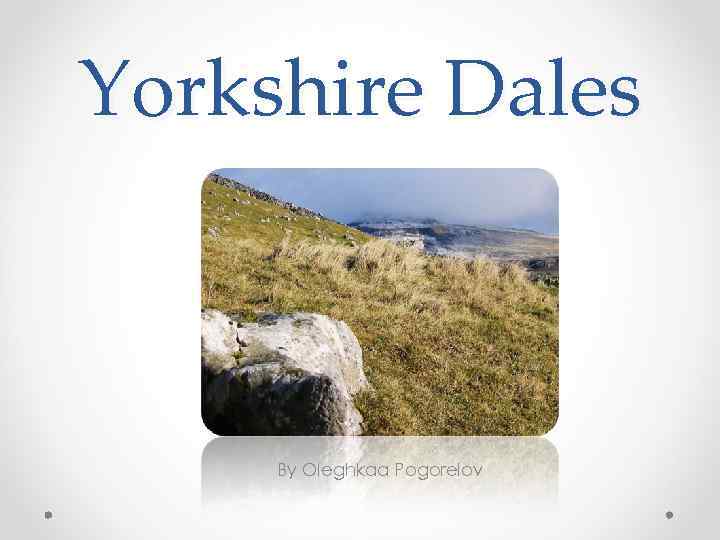
Yorkshire Dales By Oleghkaa Pogorelov
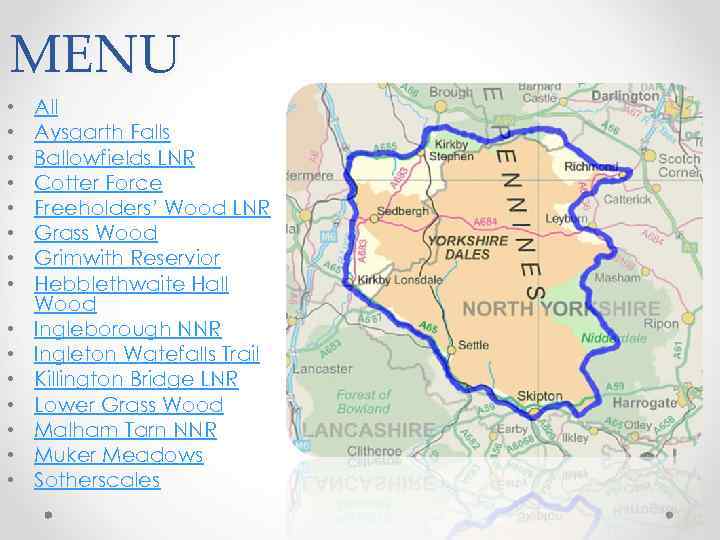
MENU • • • • All Aysgarth Falls Ballowfields LNR Cotter Force Freeholders’ Wood LNR Grass Wood Grimwith Reservior Hebblethwaite Hall Wood Ingleborough NNR Ingleton Watefalls Trail Killington Bridge LNR Lower Grass Wood Malham Tarn NNR Muker Meadows Sotherscales
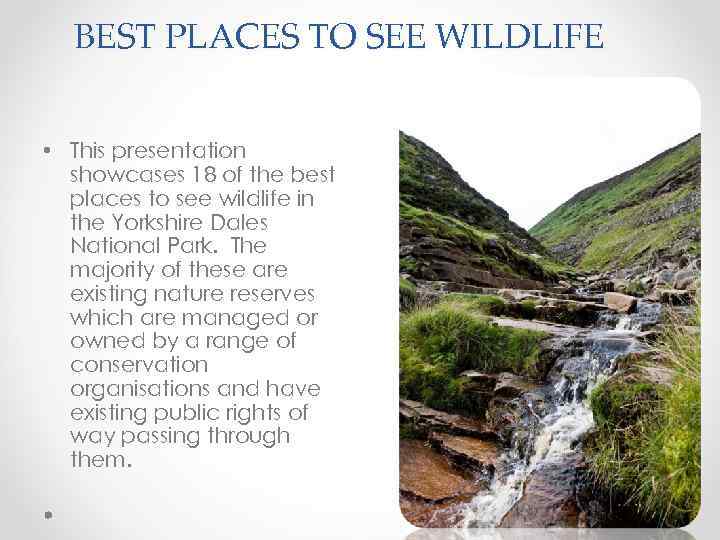
BEST PLACES TO SEE WILDLIFE • This presentation showcases 18 of the best places to see wildlife in the Yorkshire Dales National Park. The majority of these are existing nature reserves which are managed or owned by a range of conservation organisations and have existing public rights of way passing through them.
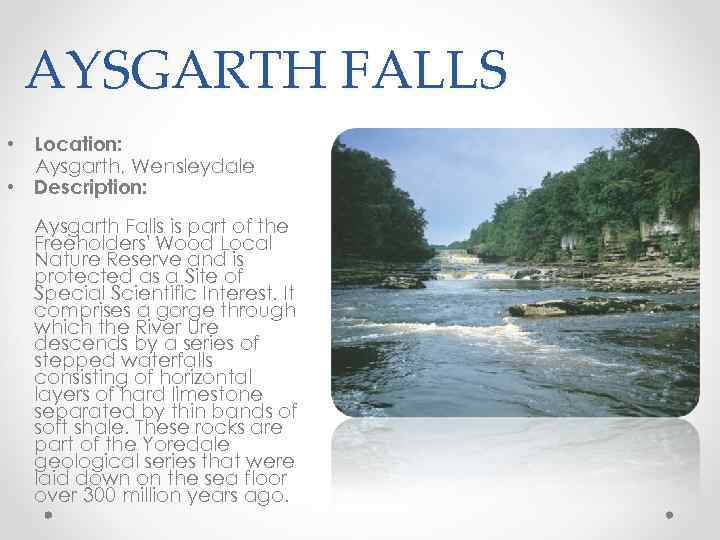
AYSGARTH FALLS • Location: Aysgarth, Wensleydale • Description: Aysgarth Falls is part of the Freeholders' Wood Local Nature Reserve and is protected as a Site of Special Scientific Interest. It comprises a gorge through which the River Ure descends by a series of stepped waterfalls consisting of horizontal layers of hard limestone separated by thin bands of soft shale. These rocks are part of the Yoredale geological series that were laid down on the sea floor over 300 million years ago.
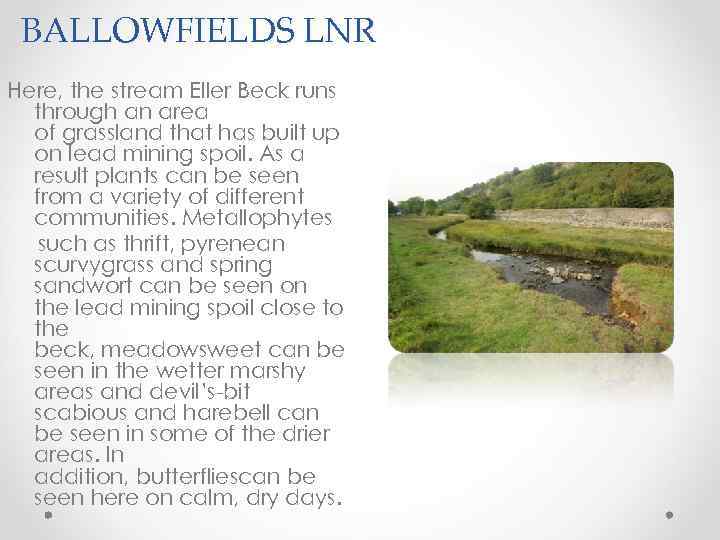
BALLOWFIELDS LNR Here, the stream Eller Beck runs through an area of grassland that has built up on lead mining spoil. As a result plants can be seen from a variety of different communities. Metallophytes such as thrift, pyrenean scurvygrass and spring sandwort can be seen on the lead mining spoil close to the beck, meadowsweet can be seen in the wetter marshy areas and devil’s-bit scabious and harebell can be seen in some of the drier areas. In addition, butterfliescan be seen here on calm, dry days.
hjg • ytkjhk
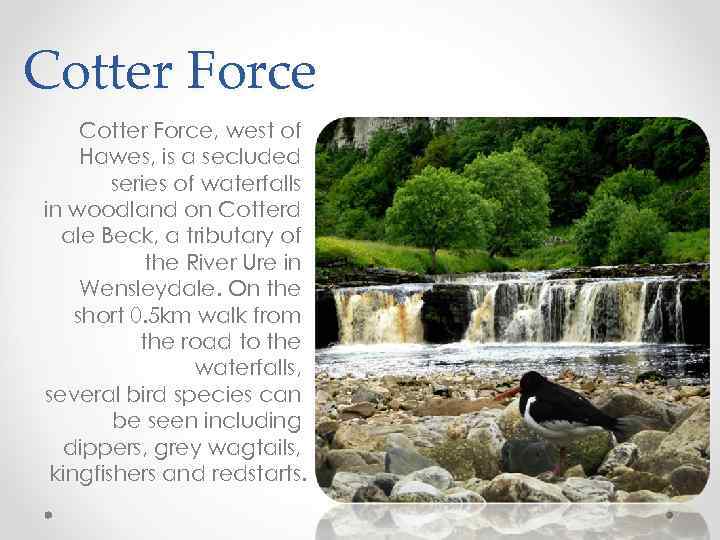
Cotter Force, west of Hawes, is a secluded series of waterfalls in woodland on Cotterd ale Beck, a tributary of the River Ure in Wensleydale. On the short 0. 5 km walk from the road to the waterfalls, several bird species can be seen including dippers, grey wagtails, kingfishers and redstarts.
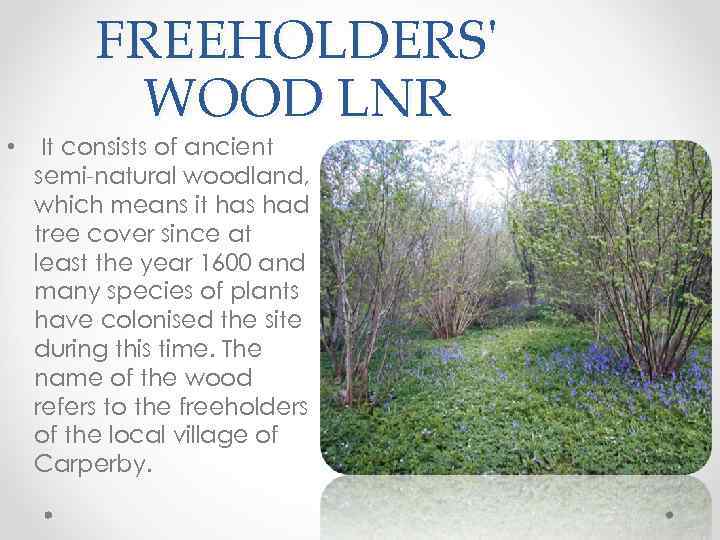
FREEHOLDERS' WOOD LNR • It consists of ancient semi-natural woodland, which means it has had tree cover since at least the year 1600 and many species of plants have colonised the site during this time. The name of the wood refers to the freeholders of the local village of Carperby.
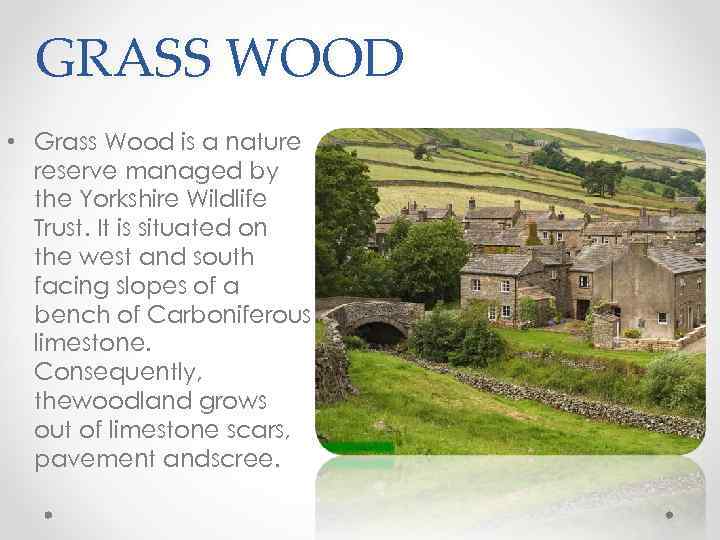
GRASS WOOD • Grass Wood is a nature reserve managed by the Yorkshire Wildlife Trust. It is situated on the west and south facing slopes of a bench of Carboniferous limestone. Consequently, thewoodland grows out of limestone scars, pavement andscree.
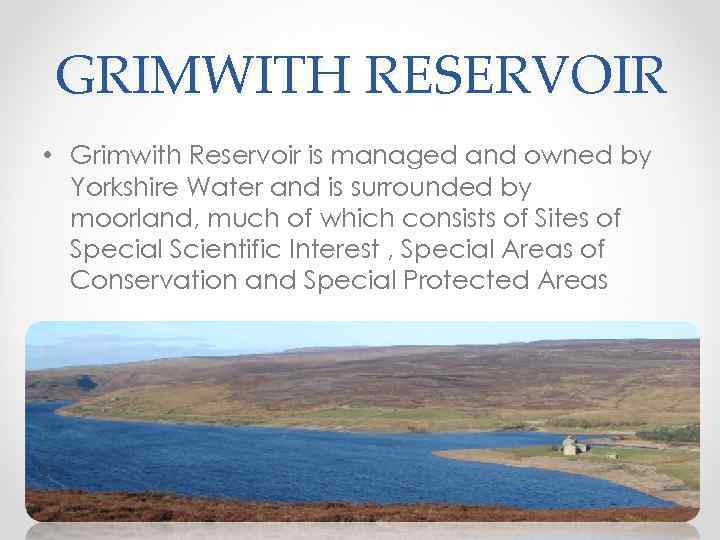
GRIMWITH RESERVOIR • Grimwith Reservoir is managed and owned by Yorkshire Water and is surrounded by moorland, much of which consists of Sites of Special Scientific Interest , Special Areas of Conservation and Special Protected Areas
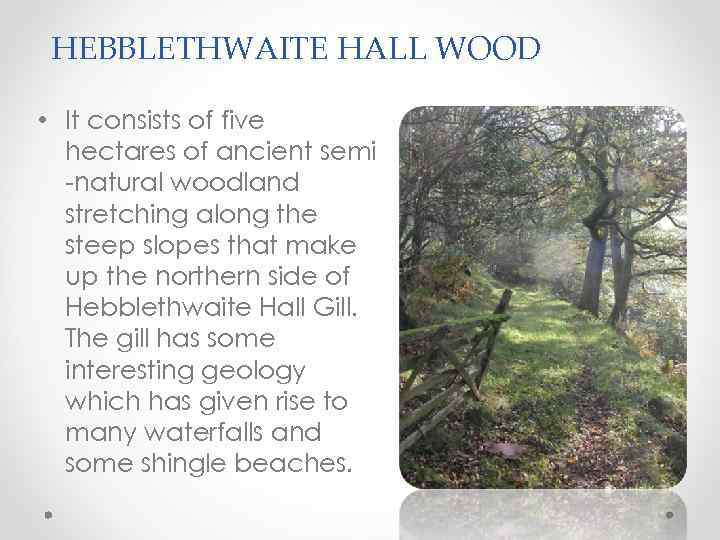
HEBBLETHWAITE HALL WOOD • It consists of five hectares of ancient semi -natural woodland stretching along the steep slopes that make up the northern side of Hebblethwaite Hall Gill. The gill has some interesting geology which has given rise to many waterfalls and some shingle beaches.
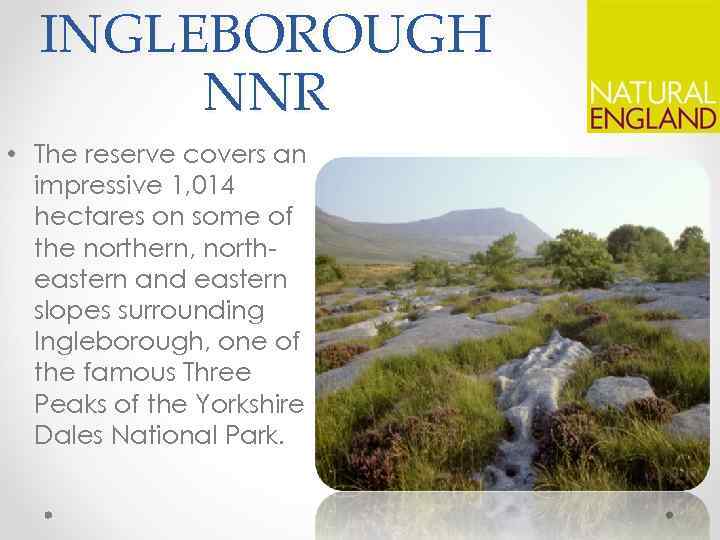
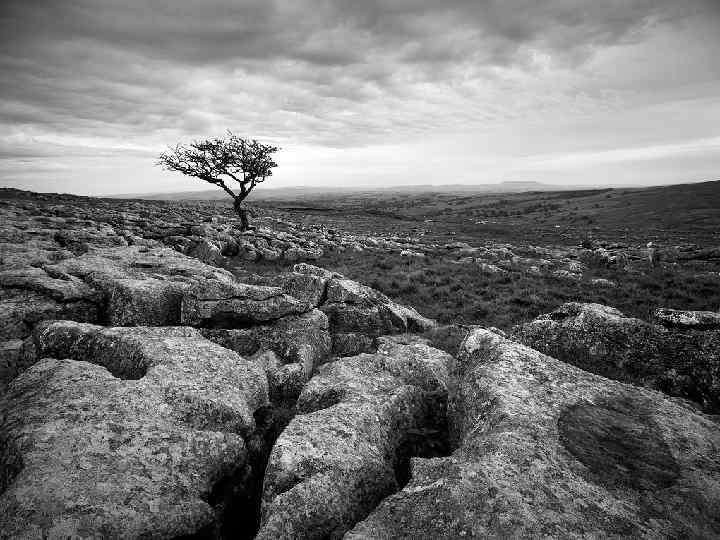
INGLEBOROUGH NNR • The reserve covers an impressive 1, 014 hectares on some of the northern, northeastern and eastern slopes surrounding Ingleborough, one of the famous Three Peaks of the Yorkshire Dales National Park.
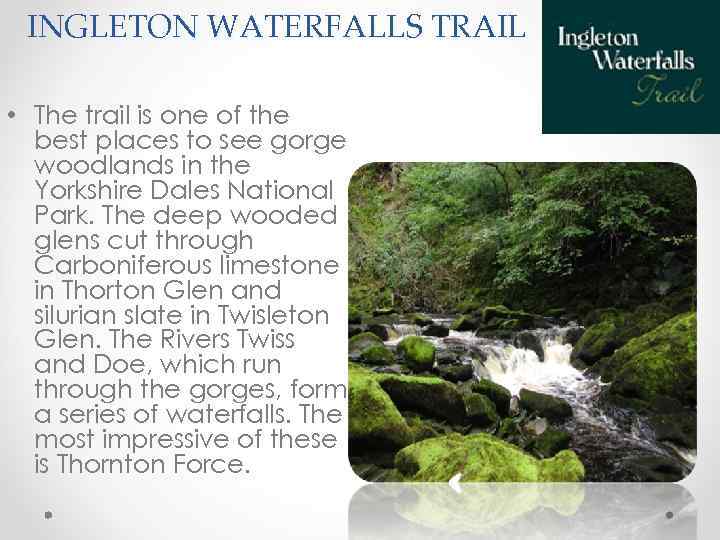
INGLETON WATERFALLS TRAIL • The trail is one of the best places to see gorge woodlands in the Yorkshire Dales National Park. The deep wooded glens cut through Carboniferous limestone in Thorton Glen and silurian slate in Twisleton Glen. The Rivers Twiss and Doe, which run through the gorges, form a series of waterfalls. The most impressive of these is Thornton Force.
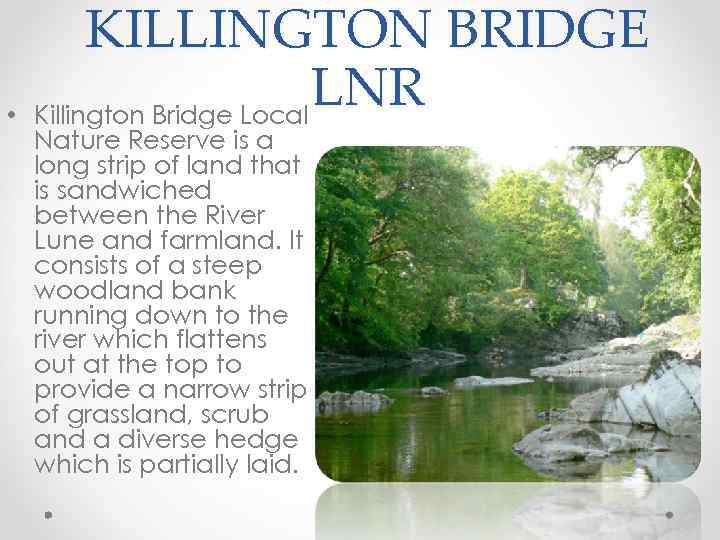
• KILLINGTON BRIDGE LNR Killington Bridge Local Nature Reserve is a long strip of land that is sandwiched between the River Lune and farmland. It consists of a steep woodland bank running down to the river which flattens out at the top to provide a narrow strip of grassland, scrub and a diverse hedge which is partially laid.
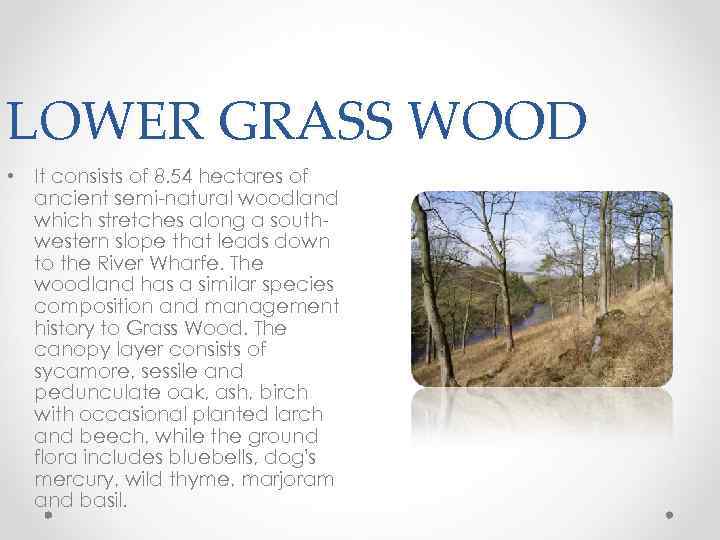
LOWER GRASS WOOD • It consists of 8. 54 hectares of ancient semi-natural woodland which stretches along a southwestern slope that leads down to the River Wharfe. The woodland has a similar species composition and management history to Grass Wood. The canopy layer consists of sycamore, sessile and pedunculate oak, ash, birch with occasional planted larch and beech, while the ground flora includes bluebells, dog's mercury, wild thyme, marjoram and basil.
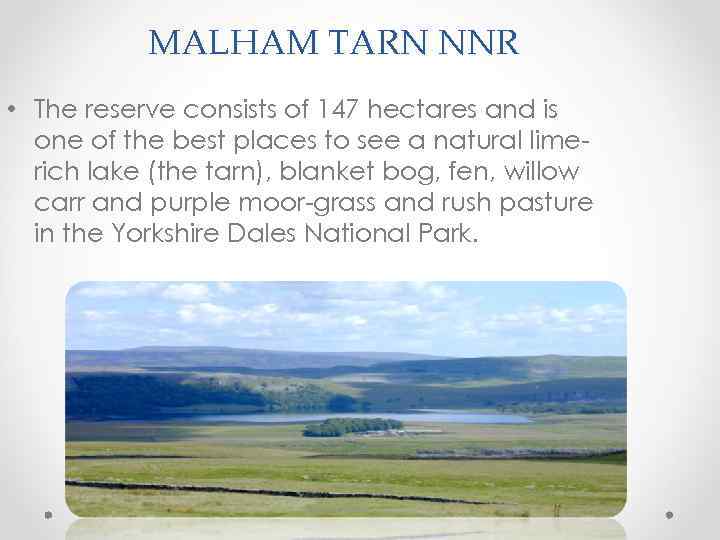
MALHAM TARN NNR • The reserve consists of 147 hectares and is one of the best places to see a natural limerich lake (the tarn), blanket bog, fen, willow carr and purple moor-grass and rush pasture in the Yorkshire Dales National Park.
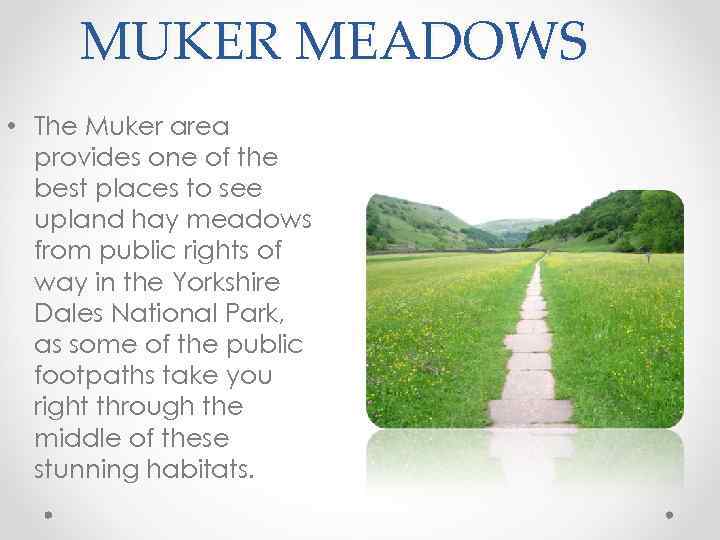
MUKER MEADOWS • The Muker area provides one of the best places to see upland hay meadows from public rights of way in the Yorkshire Dales National Park, as some of the public footpaths take you right through the middle of these stunning habitats.
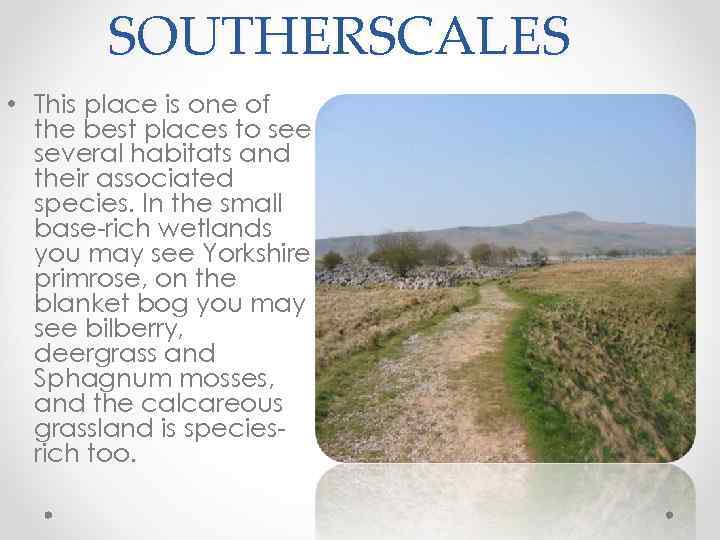
SOUTHERSCALES • This place is one of the best places to see several habitats and their associated species. In the small base-rich wetlands you may see Yorkshire primrose, on the blanket bog you may see bilberry, deergrass and Sphagnum mosses, and the calcareous grassland is speciesrich too.

)= )= By Vladik & Oleghka
Скачать презентацию Yorkshire Dales By Oleghkaa Pogorelov MENU
The Yorkshire Dales.ppt