


 Скачать презентацию Y 200 Politics and Film April 7 2011
0292abedc0bbace53b9ef4ad2df876ea.ppt
- Количество слайдов: 13
 Y 200 Politics and Film April 7, 2011
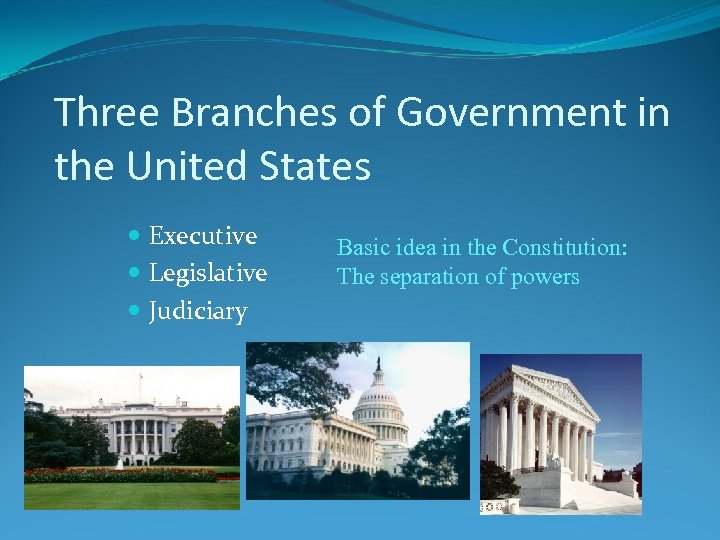 Three Branches of Government in the United States Executive Legislative Judiciary Basic idea in the Constitution: The separation of powers
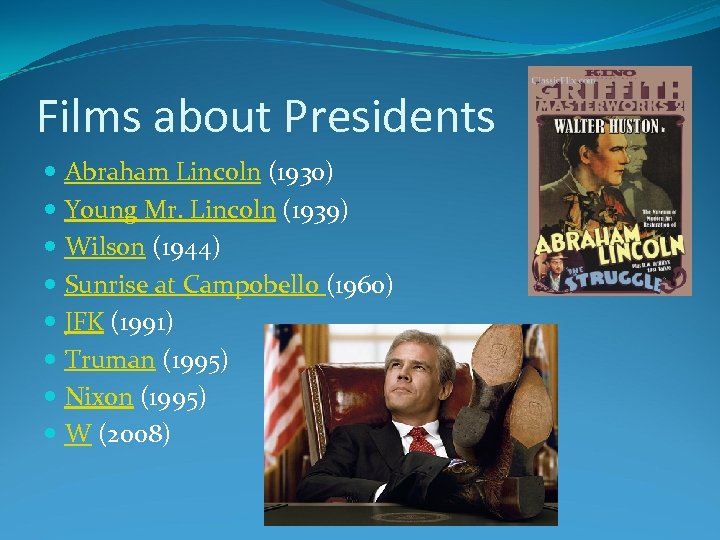 Films about Presidents Abraham Lincoln (1930) Young Mr. Lincoln (1939) Wilson (1944) Sunrise at Campobello (1960) JFK (1991) Truman (1995) Nixon (1995) W (2008)
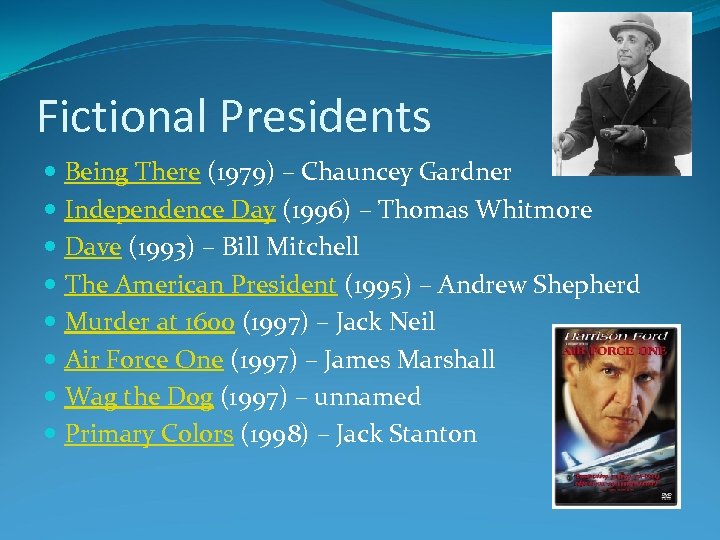 Fictional Presidents Being There (1979) – Chauncey Gardner Independence Day (1996) – Thomas Whitmore Dave (1993) – Bill Mitchell The American President (1995) – Andrew Shepherd Murder at 1600 (1997) – Jack Neil Air Force One (1997) – James Marshall Wag the Dog (1997) – unnamed Primary Colors (1998) – Jack Stanton
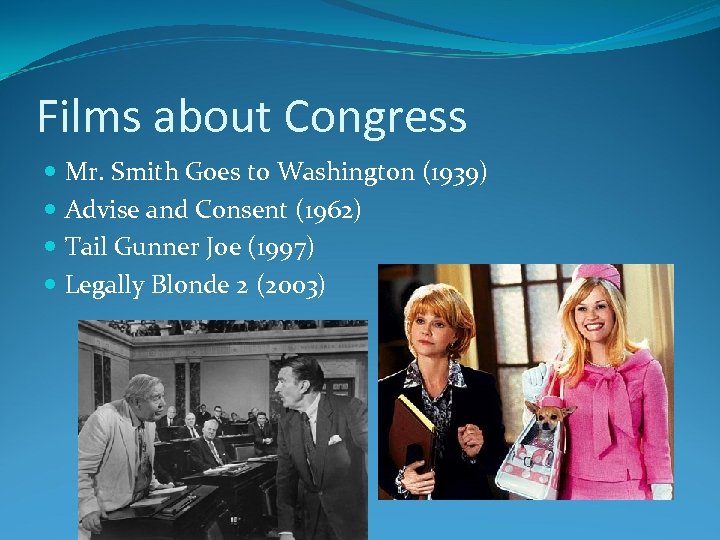 Films about Congress Mr. Smith Goes to Washington (1939) Advise and Consent (1962) Tail Gunner Joe (1997) Legally Blonde 2 (2003)
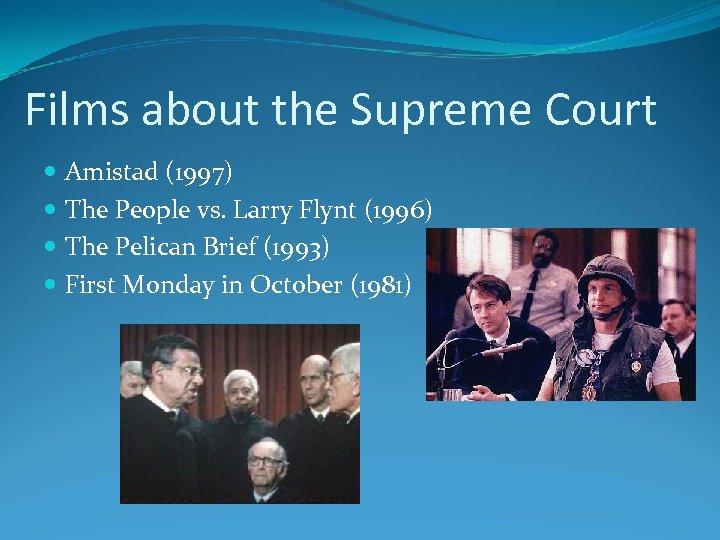 Films about the Supreme Court Amistad (1997) The People vs. Larry Flynt (1996) The Pelican Brief (1993) First Monday in October (1981)
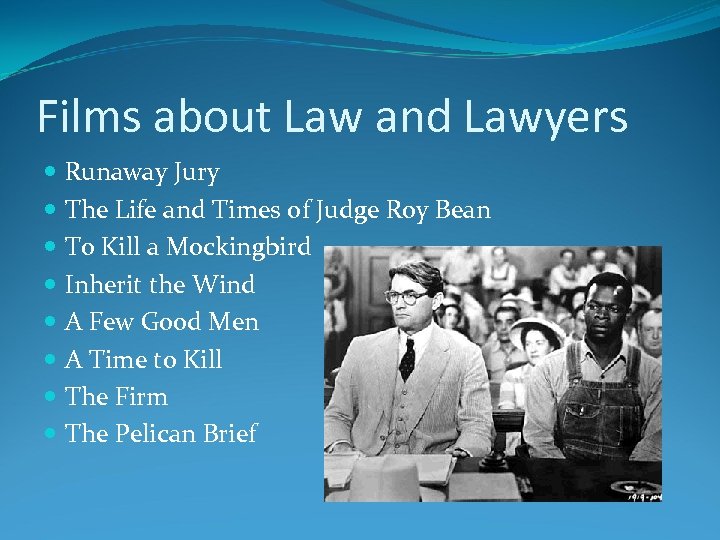 Films about Law and Lawyers Runaway Jury The Life and Times of Judge Roy Bean To Kill a Mockingbird Inherit the Wind A Few Good Men A Time to Kill The Firm The Pelican Brief
 Interest groups are part of civil society and try to influence public policy They achieve influence primarily through the collection and transmission of strategic information to the three branches of government (sometimes called lobbying) They may directly provide campaign funds to presidents and legislators who want to get elected to re -elected They may decide to take disputes over executive decision or legislation to the judiciary
 Interest group strategies Groups can modify or protect the status quo directly, by prevailing at the ballot box indirectly, by pressuring other actors to modify or preserve a certain policy for them To be influential, pressure groups must have access to the key players involved in the decision-making process Access depends on whether policy makers will listen to this particular group Interest groups that represent large constituencies will tend to have better access than others
 Examples of Large Interest Groups National Rifle Association (NRA) American Association of Retired Persons (AARP) American Federation of Labor – Congress of Industrial Organizations (AFL-CIO) National Association of Manufacturers (NAM) U. S. Chamber of Commerce American Medical Association (AMA) American Bar Association (ABA) Sierra Club
 Types of interest groups* Economic sector: e. g. NAM; AFL-CIO; Social sector: e. g. AARP; NEA; Public sector: e. g. Greenpeace; Human Rights Watch; Single issue groups: NRA; PETA; Ethnic groups: AIPAC; AAI Foundation; Ideological groups: ACLU; NARAL; Think-tanks: Heritage Foundation; Brookings Institution (the oldest think tank in the US); *the list below is not exhaustive
 Interest group tactics Nearly all groups testify at hearings, lobby government officials, make informal contacts with legislators, present research or technical information, send letters to members to inform them about their activities, enter into coalitions with other groups; Some interest groups publicize candidate-voting records, conduct direct mail fundraising efforts, buy issue advocacy advertisements in the print or electronic media, contribute time and staff to election campaigns, endorse candidates, and participate in protests and demonstrations;
 Interest group success How do we measure interest group success? Passed legislation; Campaign contributions; Public opinion; Media visibility; Some questions: Are lobbying groups more successful in PR systems than in two-party systems? Are specific types of interest groups more successful than others?