



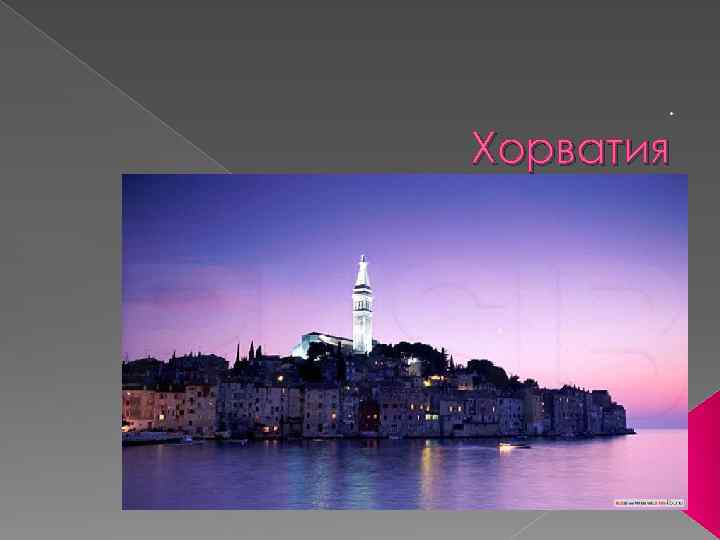
 . Хорватия
 History: The area known as Croatia today was inhabited throughout the prehistoric period. Fossils of Neanderthals dating to the middle Palaeolithic period have been unearthed in northern Croatia, with the most famous and the best presented site in Krapina Remnants of several Neolithic and Chalcolithic cultures were found in all regions of the country. [12] The largest proportion of the sites is in the northern Croatia river valleys, and the most significant cultures whose presence was discovered include Starčevo, Vučedol and Baden cultures The Iron Age left traces of the early Illyrian Hallstatt culture and the Celtic La Tène culture
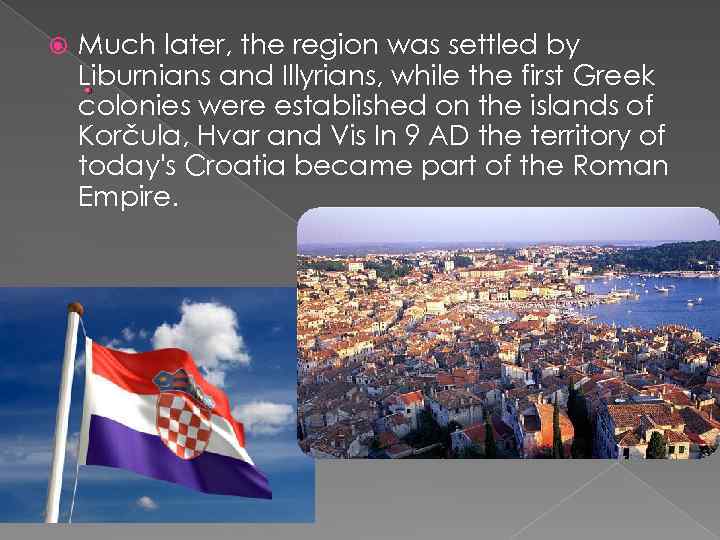 Much later, the region was settled by Liburnians and Illyrians, while the first Greek. colonies were established on the islands of Korčula, Hvar and Vis In 9 AD the territory of today's Croatia became part of the Roman Empire.
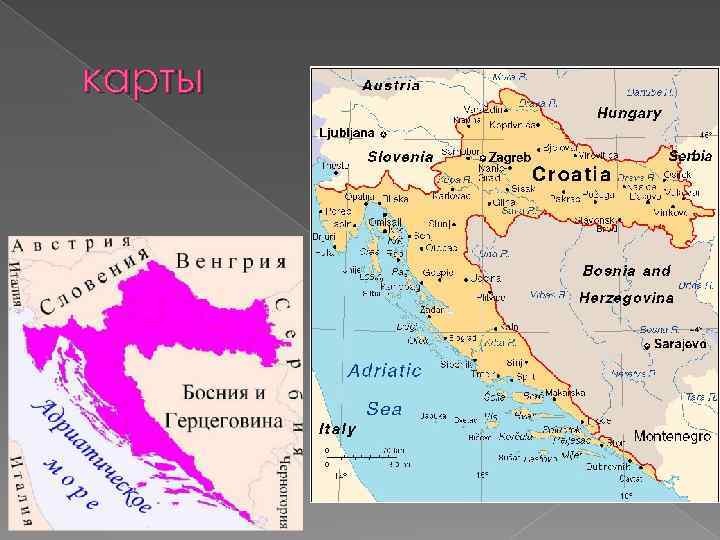 карты
карты
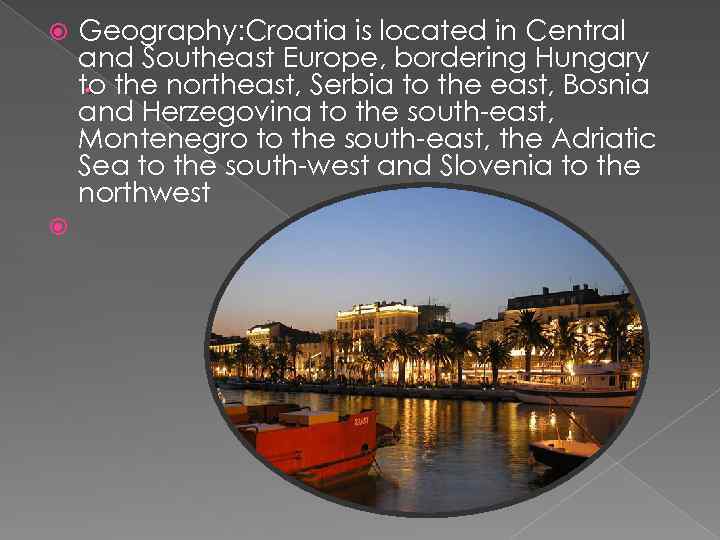 Geography: Croatia is located in Central and Southeast Europe, bordering Hungary. to the northeast, Serbia to the east, Bosnia and Herzegovina to the south-east, Montenegro to the south-east, the Adriatic Sea to the south-west and Slovenia to the northwest
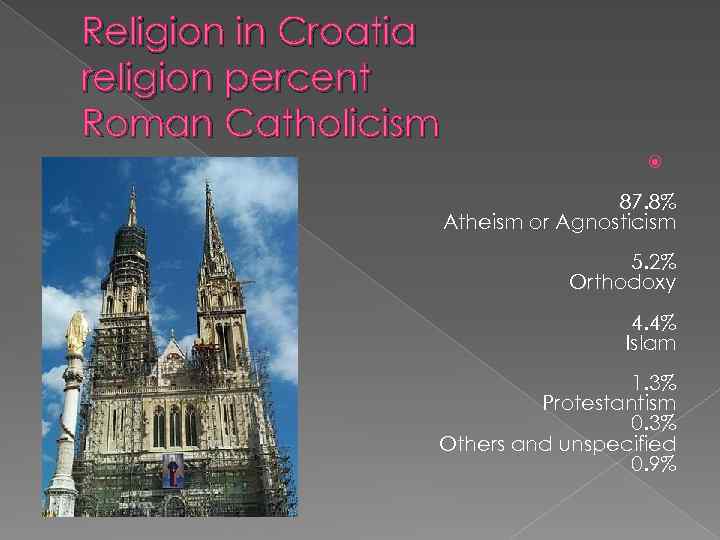 Religion in Croatia religion percent Roman Catholicism 87. 8% Atheism or Agnosticism 5. 2% Orthodoxy 4. 4% Islam 1. 3% Protestantism 0. 3% Others and unspecified 0. 9%
 Languages: Croatian language is the official language of Croatia, and it is expected to become the 24 th official language of the European Union upon its accession in 2013 Those languages are Czech, Hungarian, Italian, Ruthenian, Serbian and Slovakian.
 Education: . In 2007 a law was passed to increase free, noncompulsory education until 18 years of age. Compulsory education consists of eight grades of elementary school. Secondary education is provided by gymnasiums and vocational schools.
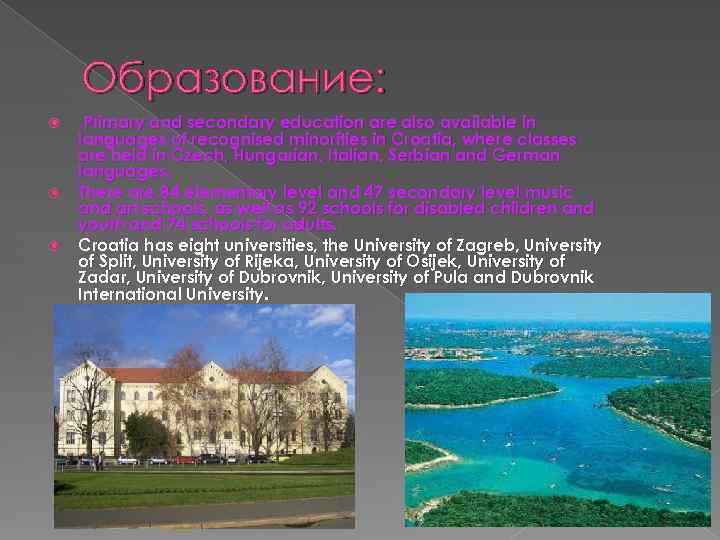 Образование: Primary and secondary education are also available in languages of recognised minorities in Croatia, where classes are held in Czech, Hungarian, Italian, Serbian and German languages. There are 84 elementary level and 47 secondary level music and art schools, as well as 92 schools for disabled children and youth and 74 schools for adults. Croatia has eight universities, the University of Zagreb, University of Split, University of Rijeka, University of Osijek, University of Zadar, University of Dubrovnik, University of Pula and Dubrovnik International University.
 cuisine: Mainland cuisine is more characterized by the earlier Slavic and the more recent contacts with neighboring cultures - Hungarian, Austrian and Turkish, using lard for cooking, and spices such as black pepper, paprika, and garlic. The coastal region bears the influences of the Greek, Roman and Illyrian, as well as of the later Mediterranean cuisine - Italian (especially Venetian) and French, using olive oil, and herbs and spices such as rosemary, sage, bay leaf, oregano, marjoram, cinnamon, clove, nutmeg, lemon and orange rind. Peasant cooking traditions are based on imaginative variations of several basic ingredients (cereals, dairy products, meat, fish, vegetables) and cooking procedures (stewing, grilling, roasting, baking), while bourgeois cuisine involves more complicated procedures and use of selected herbs and spices
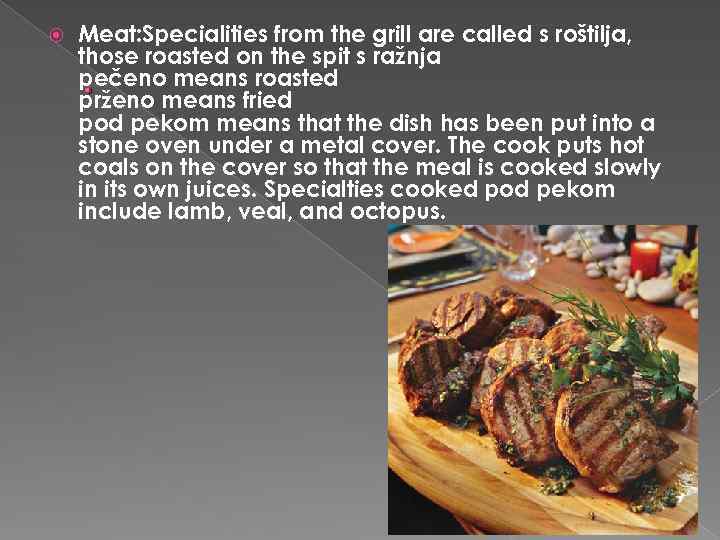 Meat: Specialities from the grill are called s roštilja, those roasted on the spit s ražnja pečeno means roasted prženo means fried pod pekom means that the dish has been put into a stone oven under a metal cover. The cook puts hot coals on the cover so that the meal is cooked slowly in its own juices. Specialties cooked pod pekom include lamb, veal, and octopus. .
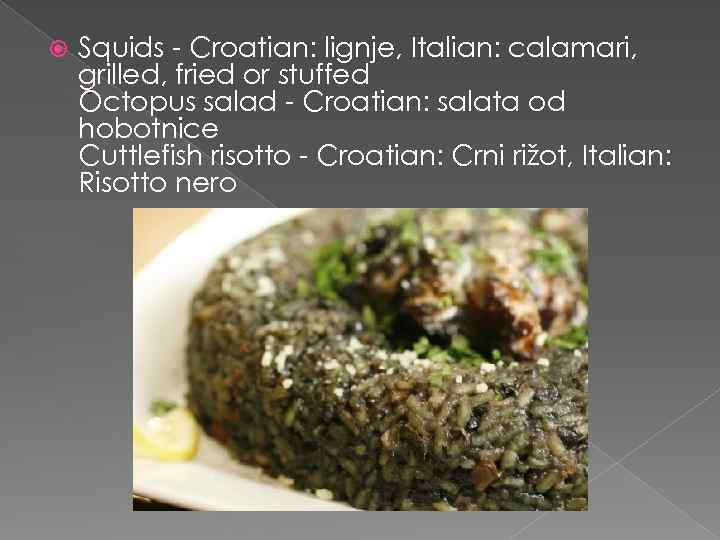 Squids - Croatian: lignje, Italian: calamari, grilled, fried or stuffed. Octopus salad - Croatian: salata od hobotnice Cuttlefish risotto - Croatian: Crni rižot, Italian: Risotto nero
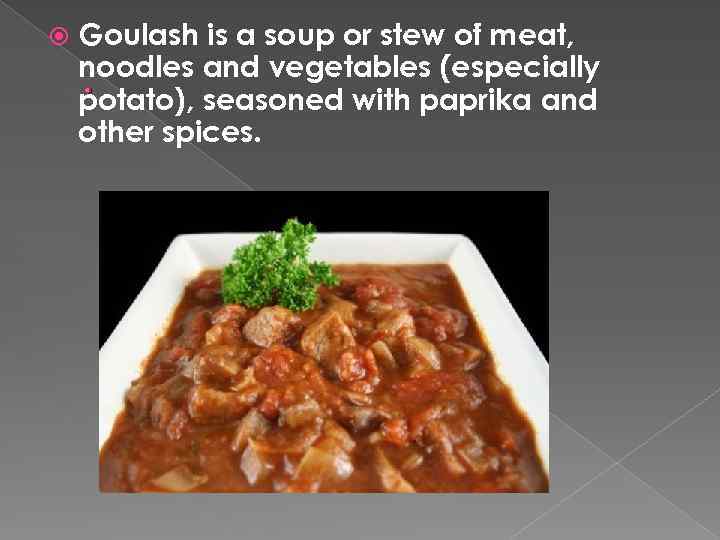 Goulash is a soup or stew of meat, noodles and vegetables (especially. potato), seasoned with paprika and other spices.
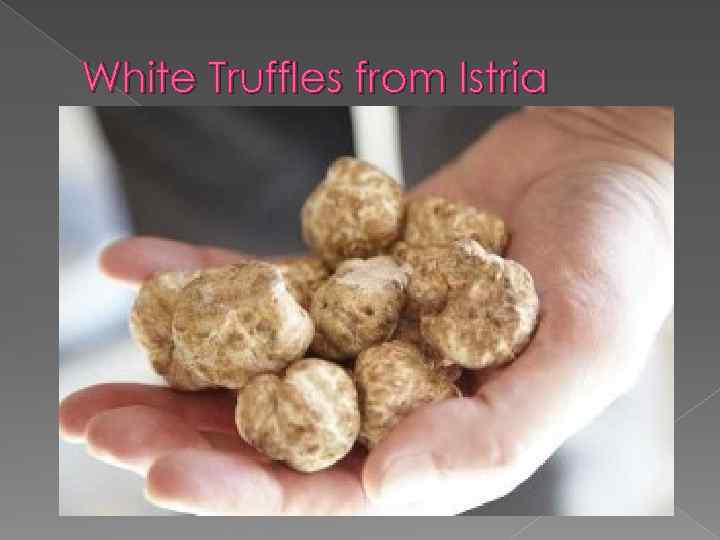 White Truffles from Istria
 Drinks: wine: Croatia has two main wine regions: Continental (Kontinetalna) and Coastal (Primorska), which includes the islands. Each of the main regions is divided into subregions which are divided yet further into smaller vinogorje, (literally wine hills) and districts. Altogether, there are more than 300 geographically-defined wine-producing areas in Croatia. In parts of Croatia, wine, either red or white, is sometimes consumed mixed in approximately equal proportions with water
 Communication Style: Direct and straightforward talk is valued in Croatia, however there is also an emphasis on choosing your words correctly and being diplomatic so as not to cause upset. Often, the level of the relationship will determine how direct someone is or can be. For newly established relationships diplomacy is key so you may find people are not always willing to speak their minds.
 Dining Etiquette: Table manners are relatively casual as people like to eat and chat at meal times. There are however standards of good behaviour that should be adhered to. Remember, when in doubt, watch others and copy what they do. . Wait to be shown where to sit. . Table manners are Continental, i. e. the fork is held in the left hand the knife in the right while eating. . At formal meals the napkin is unfolded and placed on the lap. . Do not begin eating until the host signals to begin. . Refusing second helpings initially is polite. After the host insists you should take more. . Leaving a small amount of food on your plate indicates that you are finished eating.
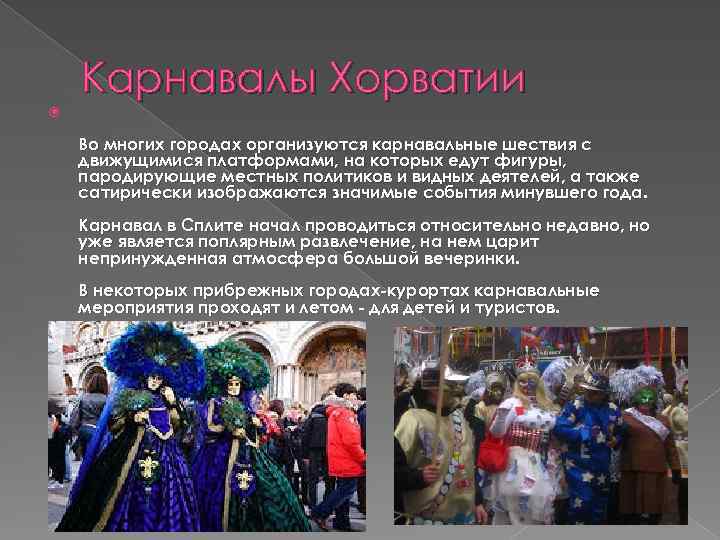 Карнавалы Хорватии Во многих городах организуются карнавальные шествия с движущимися платформами, на которых едут фигуры, пародирующие местных политиков и видных деятелей, а также сатирически изображаются значимые события минувшего года. Карнавал в Сплите начал проводиться относительно недавно, но уже является поплярным развлечение, на нем царит непринужденная атмосфера большой вечеринки. В некоторых прибрежных городах-курортах карнавальные мероприятия проходят и летом - для детей и туристов.
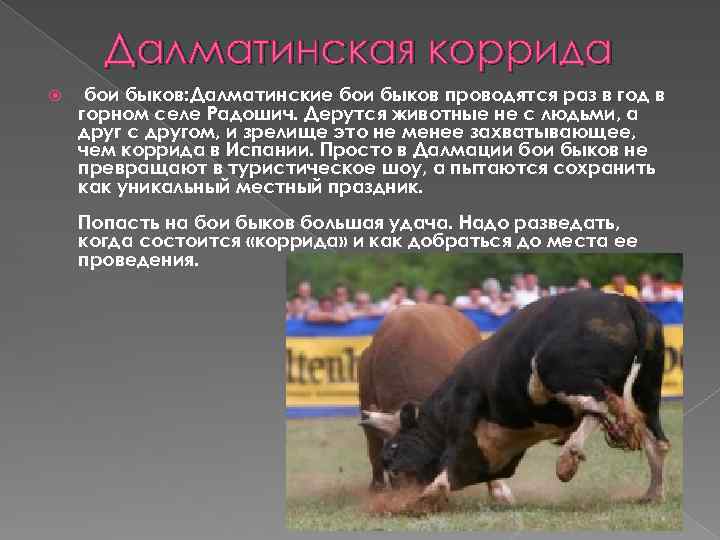 Далматинская коррида бои быков: Далматинские бои быков проводятся раз в год в горном селе Радошич. Дерутся животные не с людьми, а друг с другом, и зрелище это не менее захватывающее, чем коррида в Испании. Просто в Далмации бои быков не превращают в туристическое шоу, а пытаются сохранить как уникальный местный праздник. Попасть на бои быков большая удача. Надо разведать, когда состоится «коррида» и как добраться до места ее проведения.
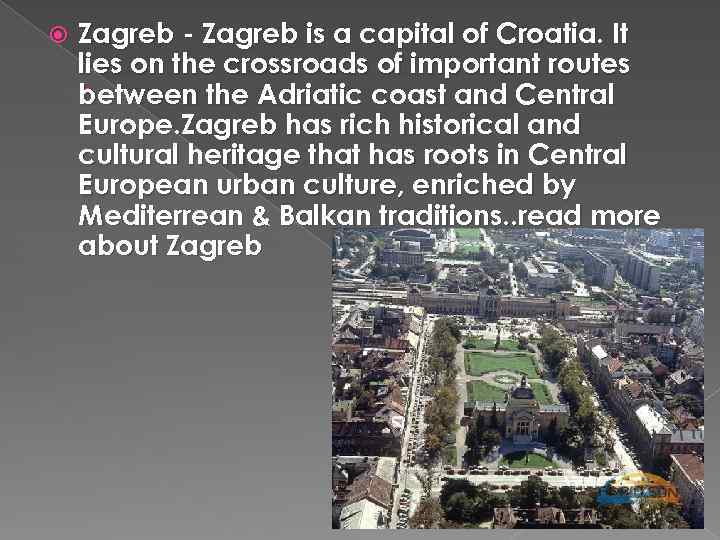 Zagreb - Zagreb is a capital of Croatia. It lies on the crossroads of important routes. between the Adriatic coast and Central Europe. Zagreb has rich historical and cultural heritage that has roots in Central European urban culture, enriched by Mediterrean & Balkan traditions. . read more about Zagreb
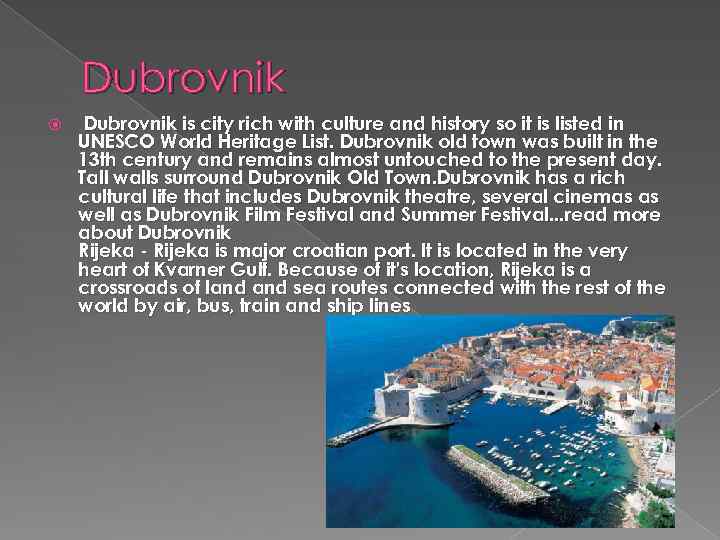 Dubrovnik is city rich with culture and history so it is listed in UNESCO World Heritage List. Dubrovnik old town was built in the 13 th century and remains almost untouched to the present day. Tall walls surround Dubrovnik Old Town. Dubrovnik has a rich cultural life that includes Dubrovnik theatre, several cinemas as well as Dubrovnik Film Festival and Summer Festival. . . read more about Dubrovnik Rijeka - Rijeka is major croatian port. It is located in the very heart of Kvarner Gulf. Because of it's location, Rijeka is a crossroads of land sea routes connected with the rest of the world by air, bus, train and ship lines
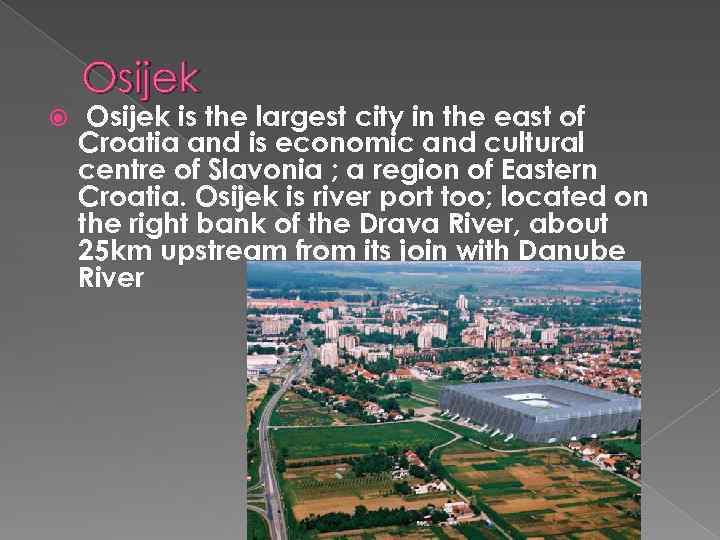 Osijek is the largest city in the east of Croatia and is economic and cultural centre of Slavonia ; a region of Eastern Croatia. Osijek is river port too; located on the right bank of the Drava River, about 25 km upstream from its join with Danube River
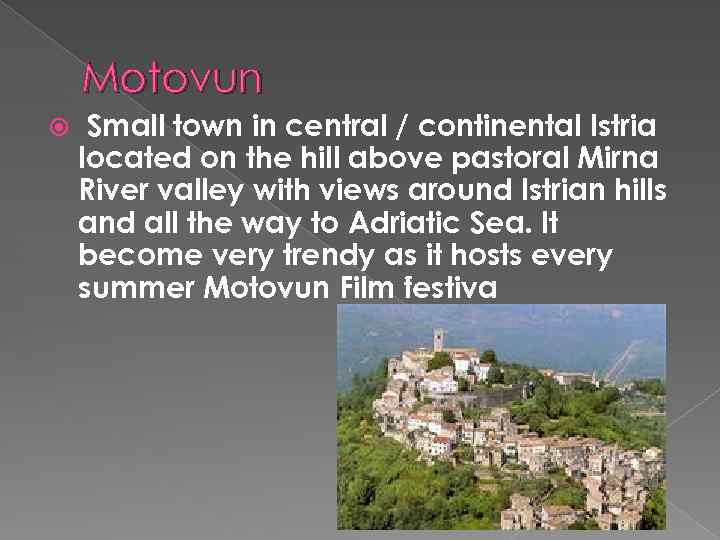 Motovun Small town in central / continental Istria located on the hill above pastoral Mirna River valley with views around Istrian hills and all the way to Adriatic Sea. It become very trendy as it hosts every summer Motovun Film festiva
 … Questions : 1. What are the main cities in Croatia? 2. Which nations bordering Croatia? 3. What is the main religions in Croatia? 4. On which languages they speak in Croatia?