


 Скачать презентацию Xia Qiang MD Ph D Department of
8d06327a1ca24ab6e6c6adf9b1ef4615.ppt
- Количество слайдов: 105
 Xia Qiang, MD & Ph. D Department of Physiology Rm C 518, Block C, Research Building, Zhejiang University School of Medicine, Zijingang Campus Tel: 88208252 Email: xiaqiang@zju. edu. cn Introduction to the Course of Basic Medical Sciences
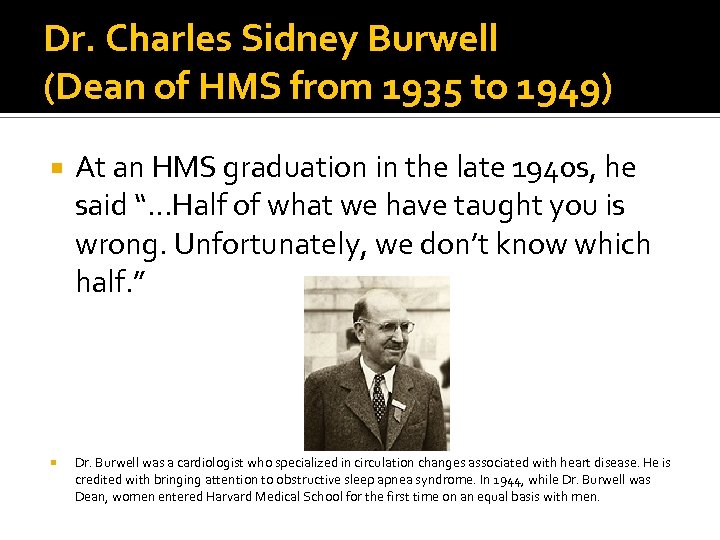 Dr. Charles Sidney Burwell (Dean of HMS from 1935 to 1949) At an HMS graduation in the late 1940 s, he said “…Half of what we have taught you is wrong. Unfortunately, we don’t know which half. ” Dr. Burwell was a cardiologist who specialized in circulation changes associated with heart disease. He is credited with bringing attention to obstructive sleep apnea syndrome. In 1944, while Dr. Burwell was Dean, women entered Harvard Medical School for the first time on an equal basis with men.
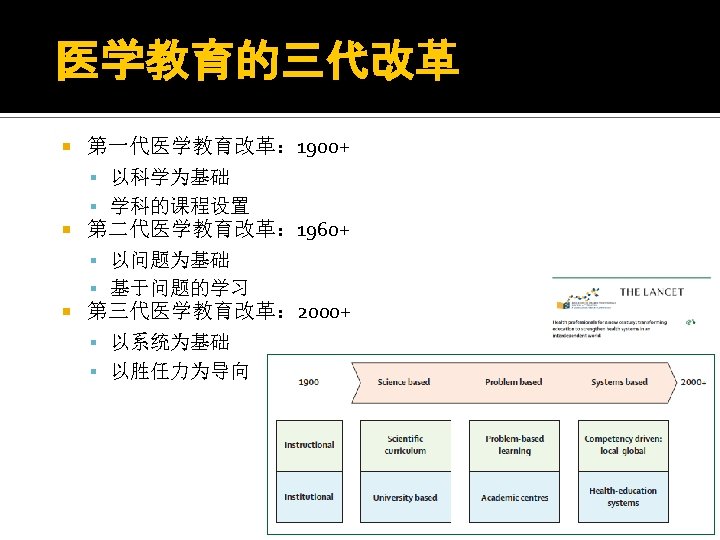 医学教育的三代改革 第一代医学教育改革: 1900+ 以科学为基础 学科的课程设置 第二代医学教育改革: 1960+ 以问题为基础 基于问题的学习 第三代医学教育改革: 2000+ 以系统为基础 以胜任力为导向
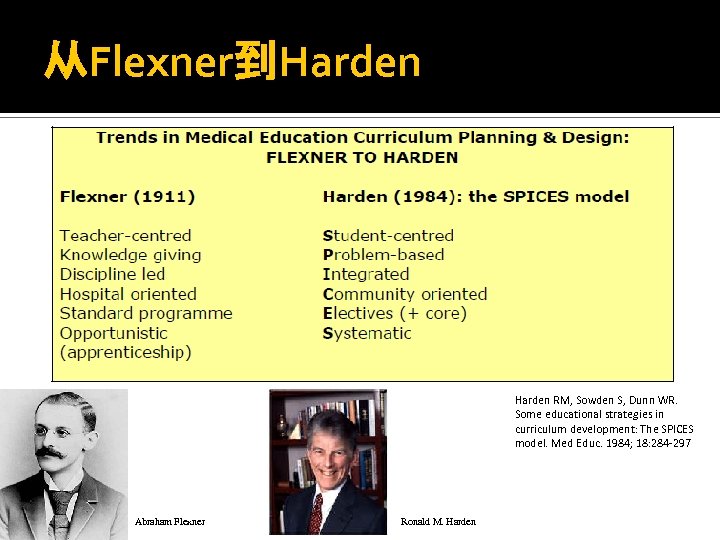 从Flexner到Harden RM, Sowden S, Dunn WR. Some educational strategies in curriculum development: The SPICES model. Med Educ. 1984; 18: 284 -297 Abraham Flexner Ronald M. Harden
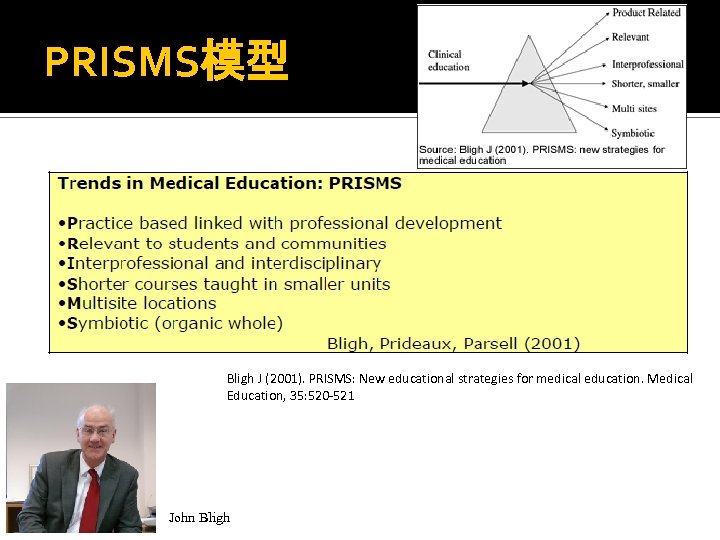 PRISMS模型 Bligh J (2001). PRISMS: New educational strategies for medical education. Medical Education, 35: 520 -521 John Bligh
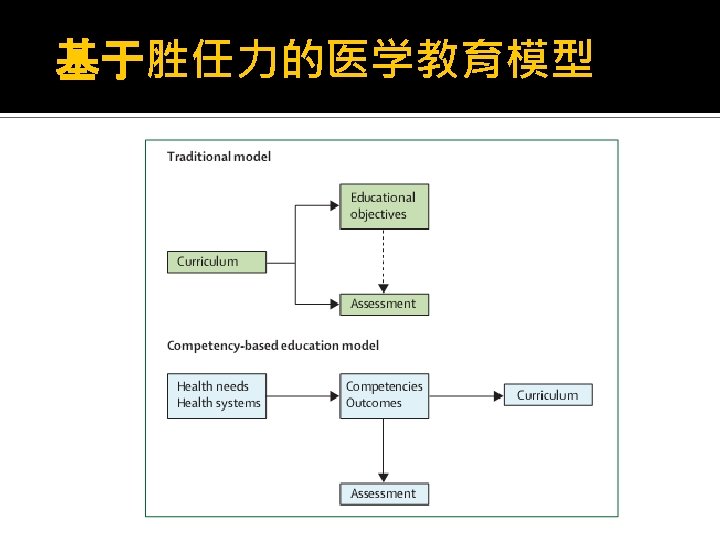 基于胜任力的医学教育模型
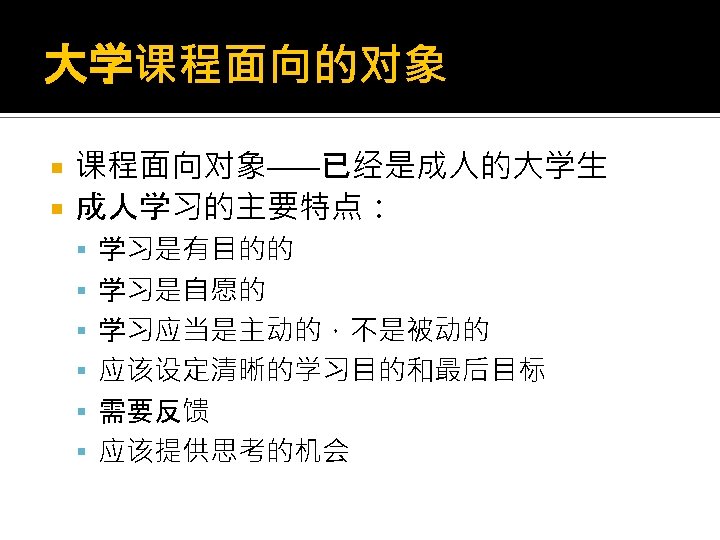 大学课程面向的对象 课程面向对象——已经是成人的大学生 成人学习的主要特点: 学习是有目的的 学习是自愿的 学习应当是主动的,不是被动的 应该设定清晰的学习目的和最后目标 需要反馈 应该提供思考的机会
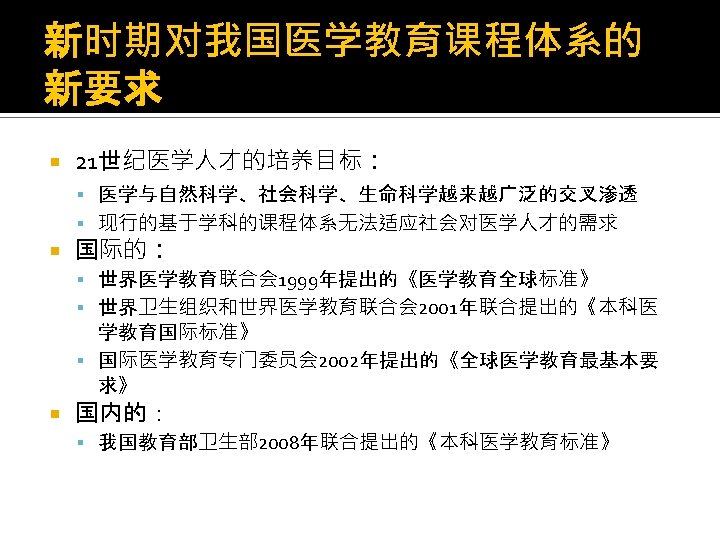 新时期对我国医学教育课程体系的 新要求 21世纪医学人才的培养目标: 医学与自然科学、社会科学、生命科学越来越广泛的交叉渗透 现行的基于学科的课程体系无法适应社会对医学人才的需求 国际的: 世界医学教育联合会 1999年提出的《医学教育全球标准》 世界卫生组织和世界医学教育联合会 2001年联合提出的《本科医 学教育国际标准》 国际医学教育专门委员会 2002年提出的《全球医学教育最基本要 求》 国内的: 我国教育部卫生部 2008年联合提出的《本科医学教育标准》
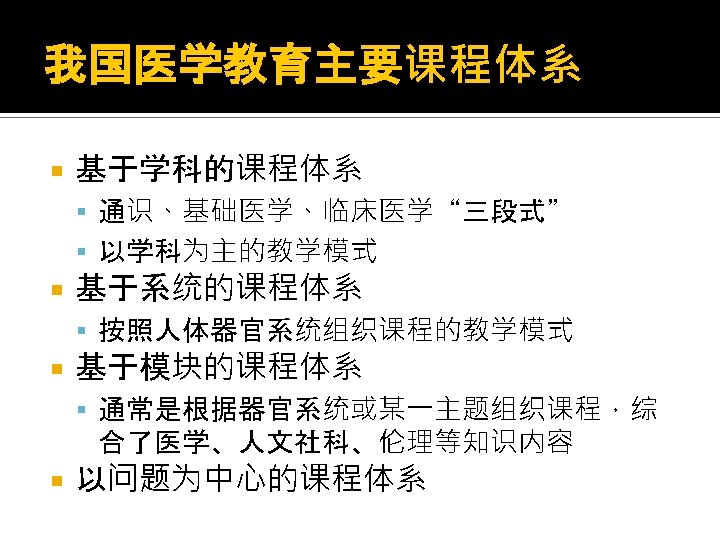 我国医学教育主要课程体系 基于学科的课程体系 通识、基础医学、临床医学“三段式” 以学科为主的教学模式 基于系统的课程体系 按照人体器官系统组织课程的教学模式 基于模块的课程体系 通常是根据器官系统或某一主题组织课程,综 合了医学、人文社科、伦理等知识内容 以问题为中心的课程体系
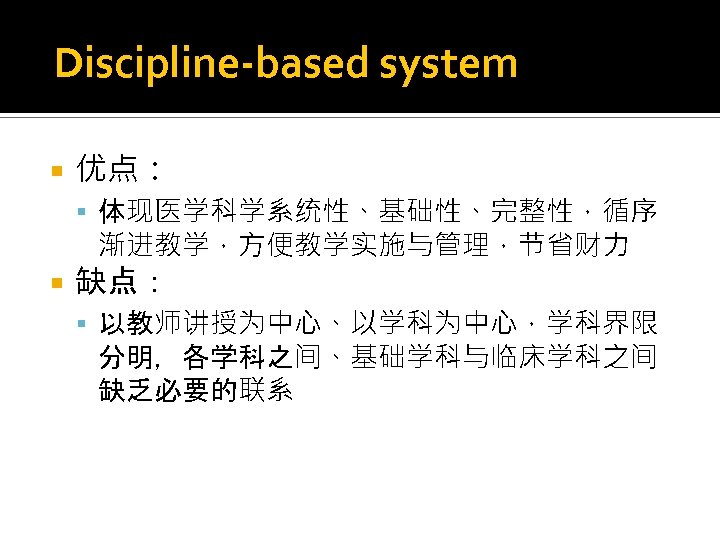 Discipline-based system 优点: 体现医学科学系统性、基础性、完整性,循序 渐进教学,方便教学实施与管理,节省财力 缺点: 以教师讲授为中心、以学科为中心,学科界限 分明,各学科之间、基础学科与临床学科之间 缺乏必要的联系
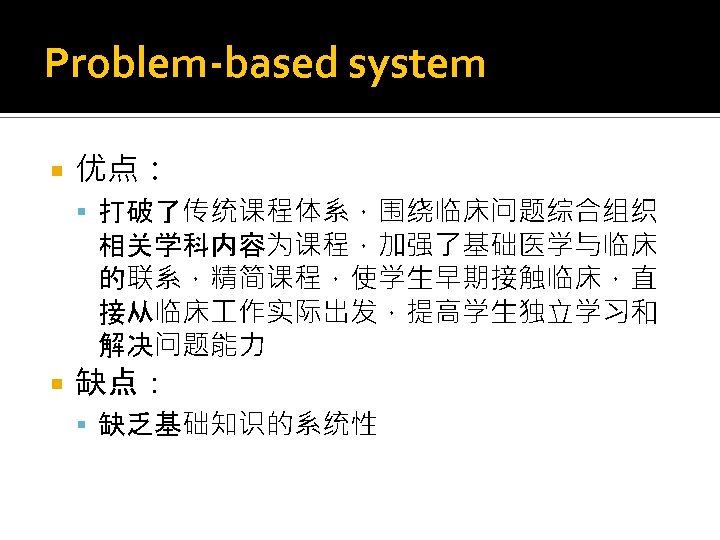 Problem-based system 优点: 打破了传统课程体系,围绕临床问题综合组织 相关学科内容为课程,加强了基础医学与临床 的联系,精简课程,使学生早期接触临床,直 接从临床 作实际出发,提高学生独立学习和 解决问题能力 缺点: 缺乏基础知识的系统性
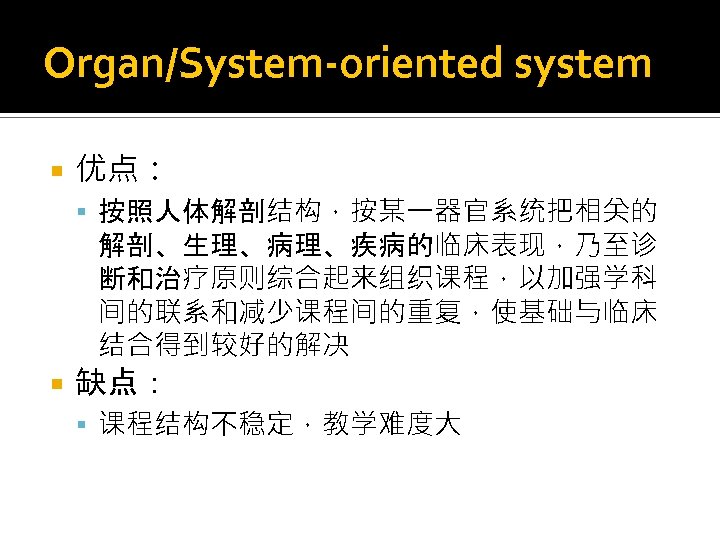 Organ/System-oriented system 优点: 按照人体解剖结构,按某一器官系统把相关的 解剖、生理、病理、疾病的临床表现,乃至诊 断和治疗原则综合起来组织课程,以加强学科 间的联系和减少课程间的重复,使基础与临床 结合得到较好的解决 缺点: 课程结构不稳定,教学难度大
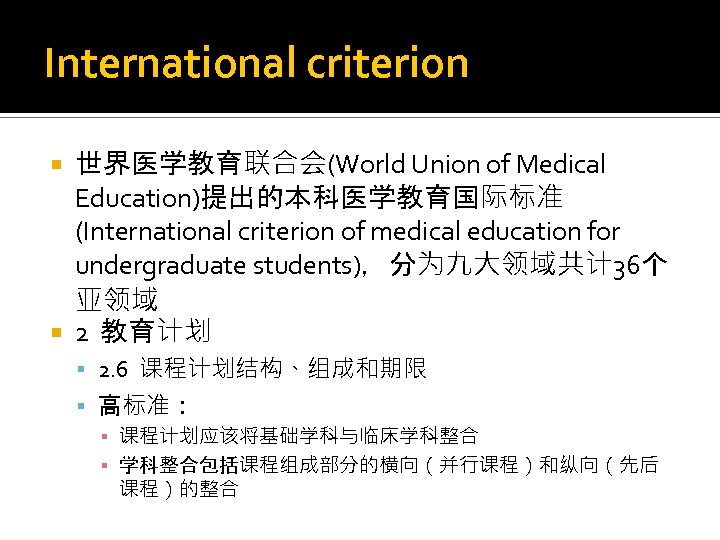 International criterion 世界医学教育联合会(World Union of Medical Education)提出的本科医学教育国际标准 (International criterion of medical education for undergraduate students),分为九大领域共计 36个 亚领域 2 教育计划 2. 6 课程计划结构、组成和期限 高标准: ▪ 课程计划应该将基础学科与临床学科整合 ▪ 学科整合包括课程组成部分的横向(并行课程)和纵向(先后 课程)的整合
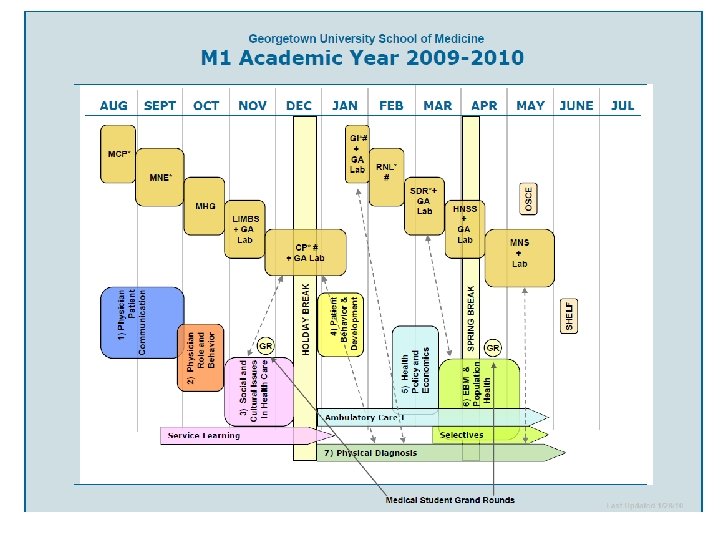
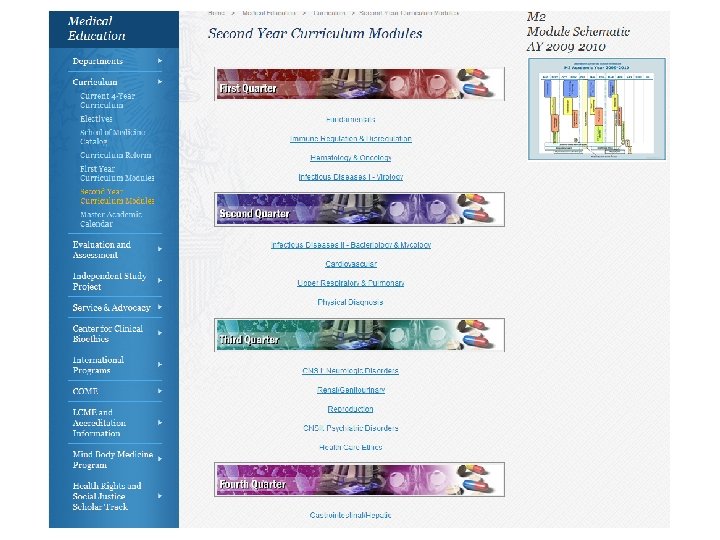
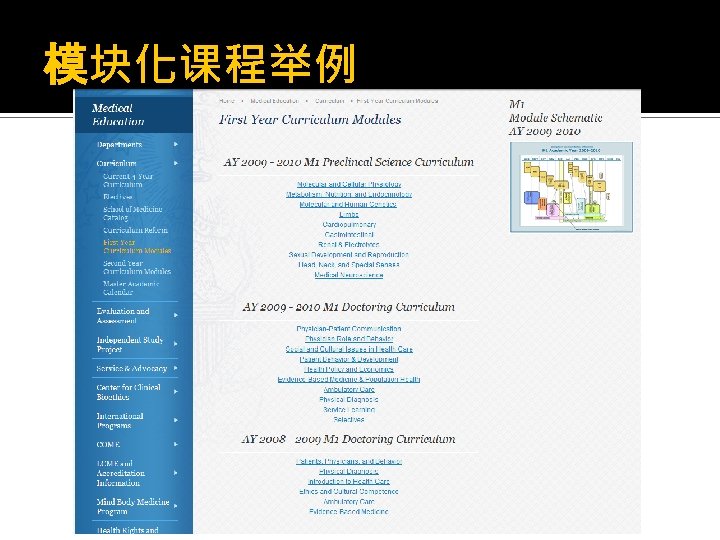 模块化课程举例
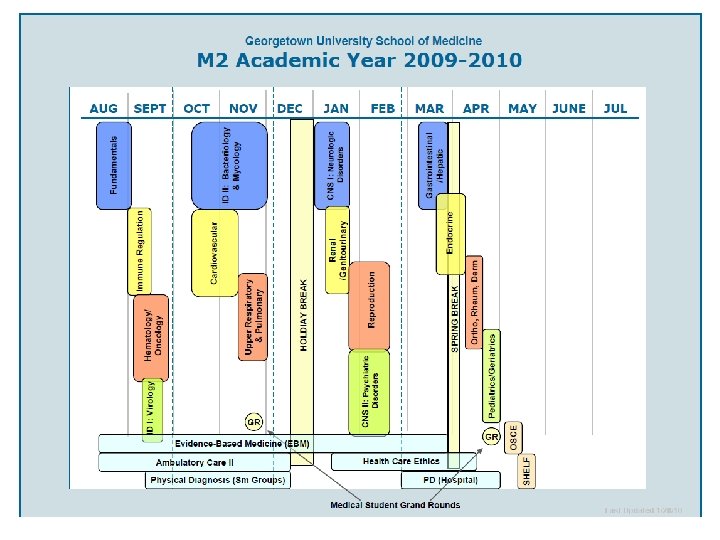
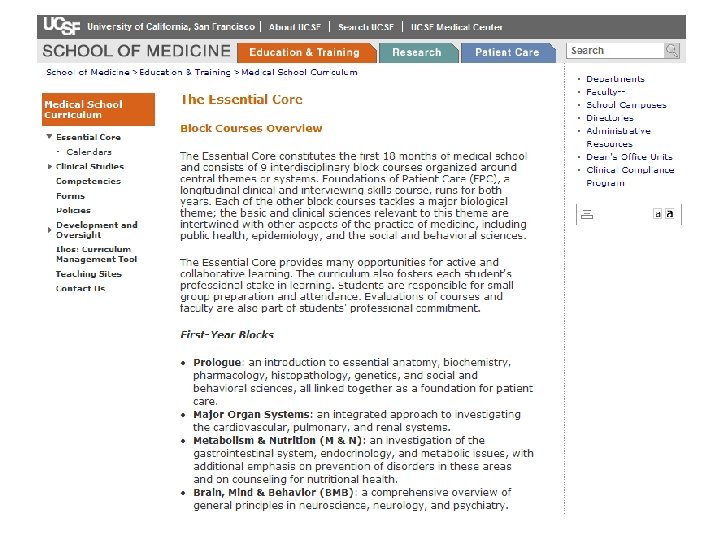
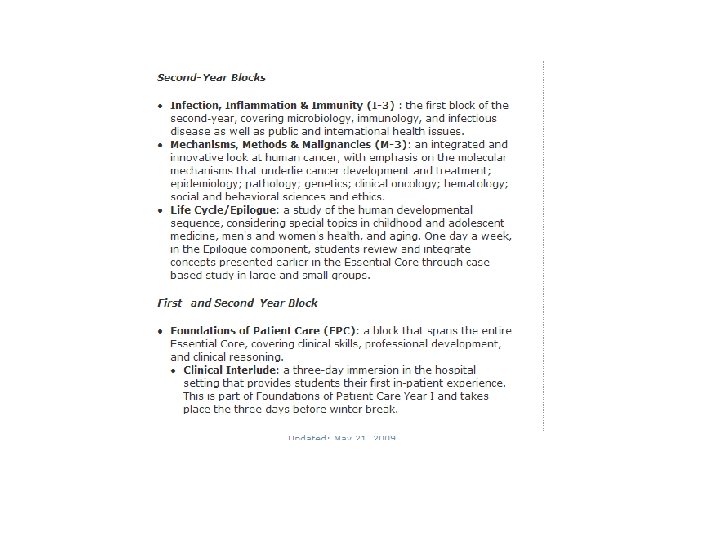
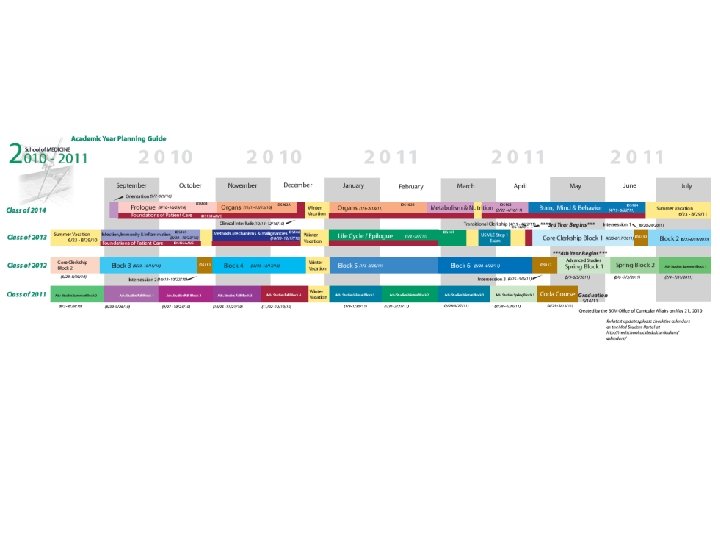
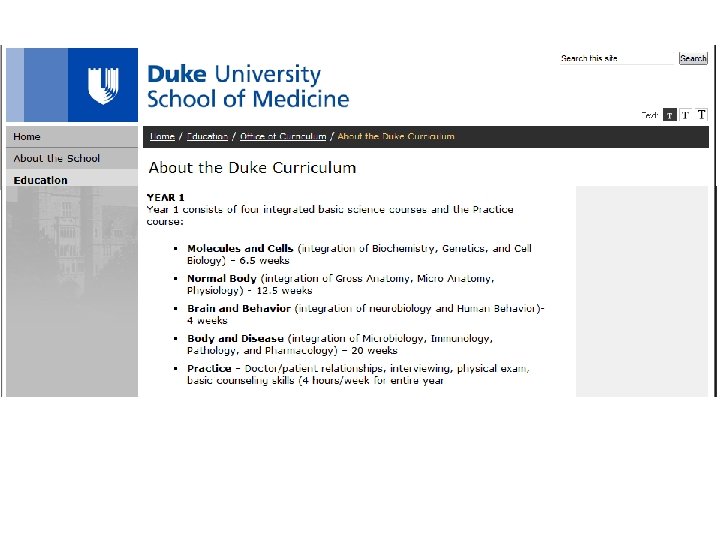
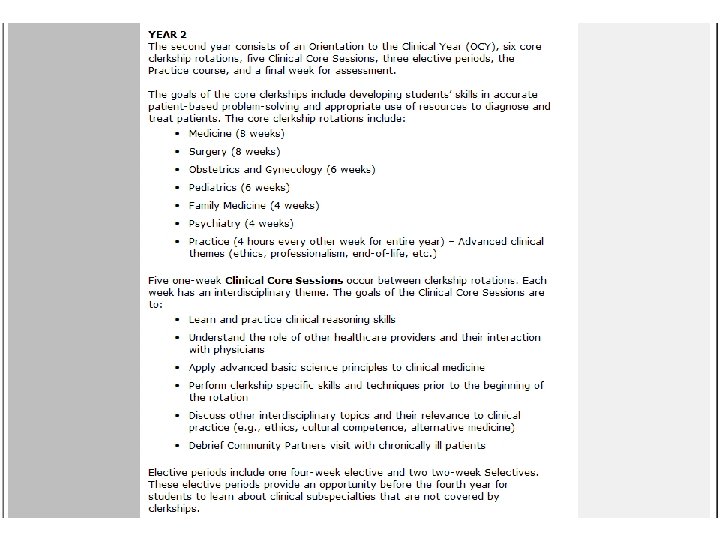
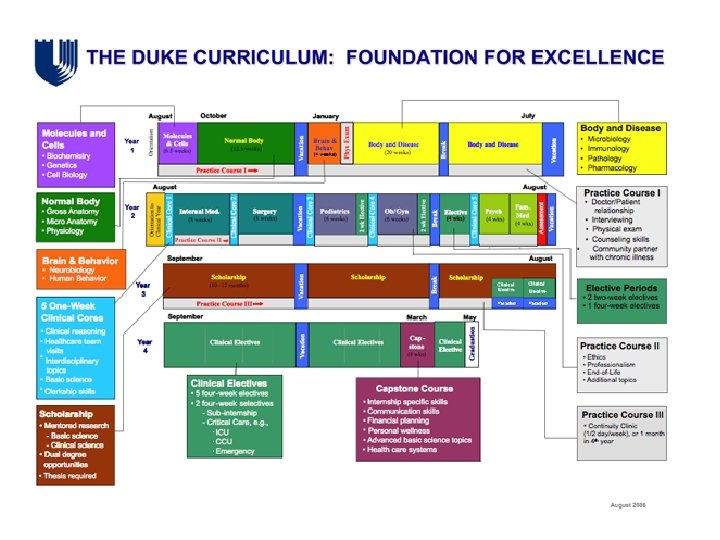
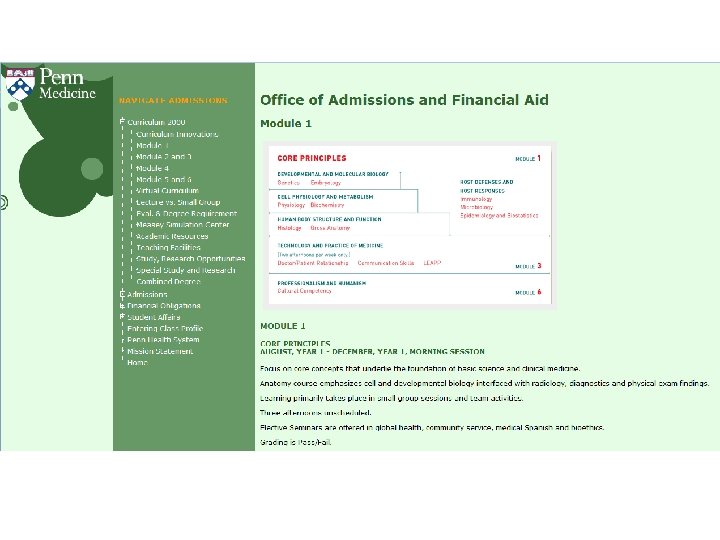
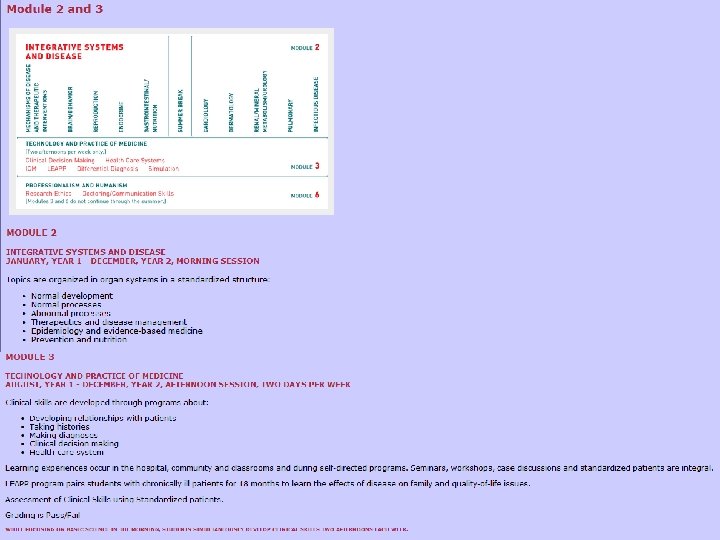
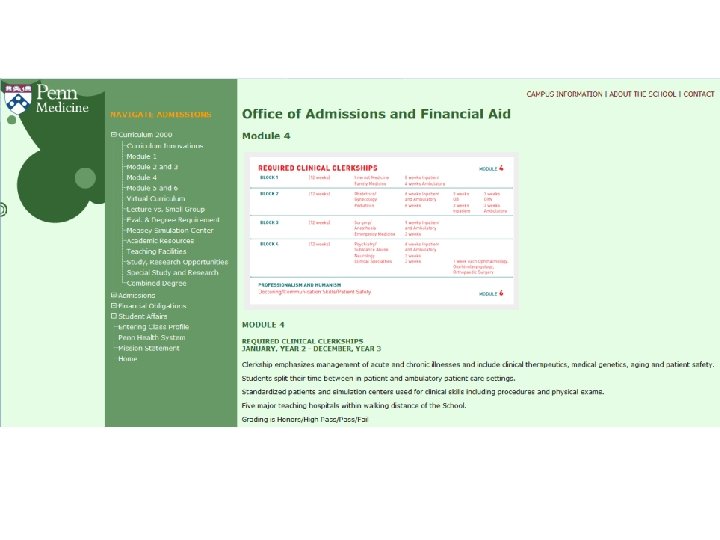
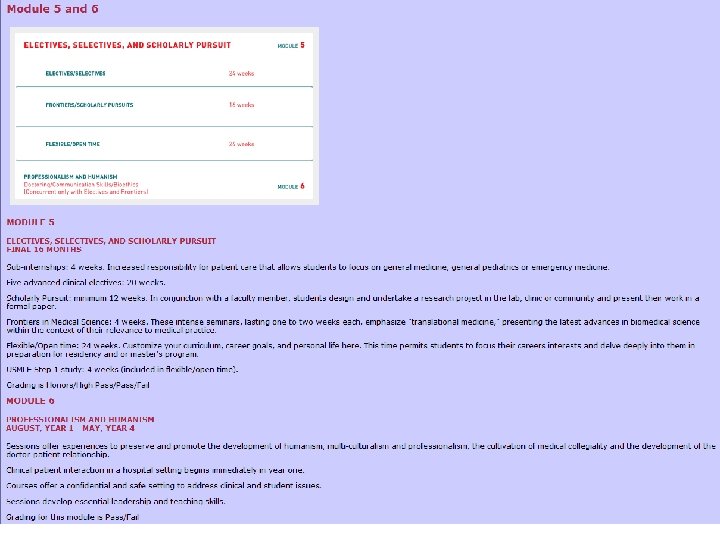
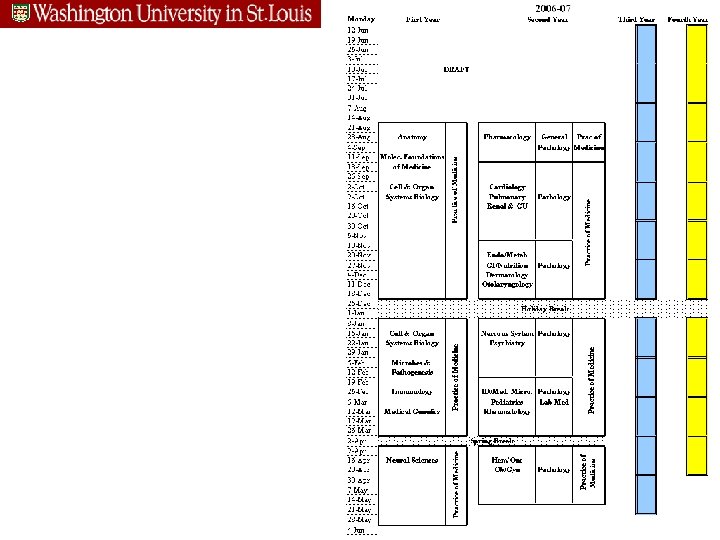
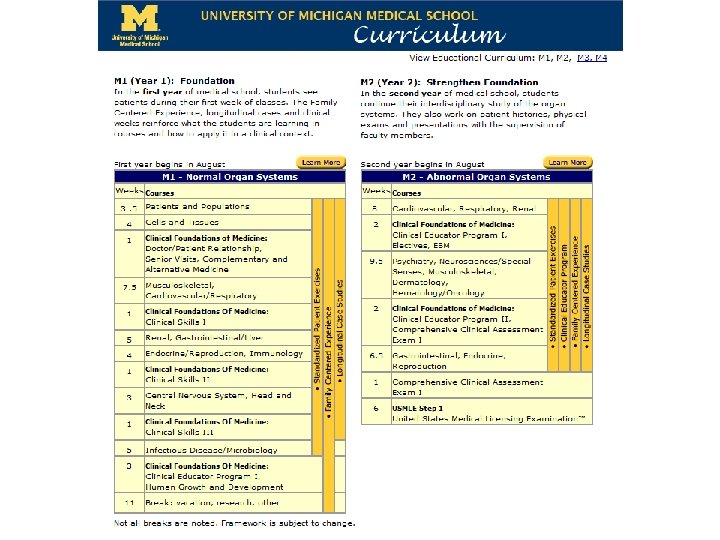
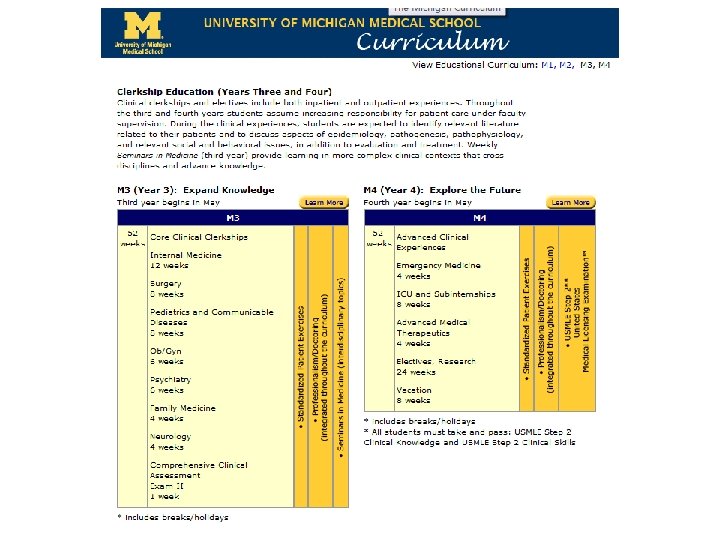
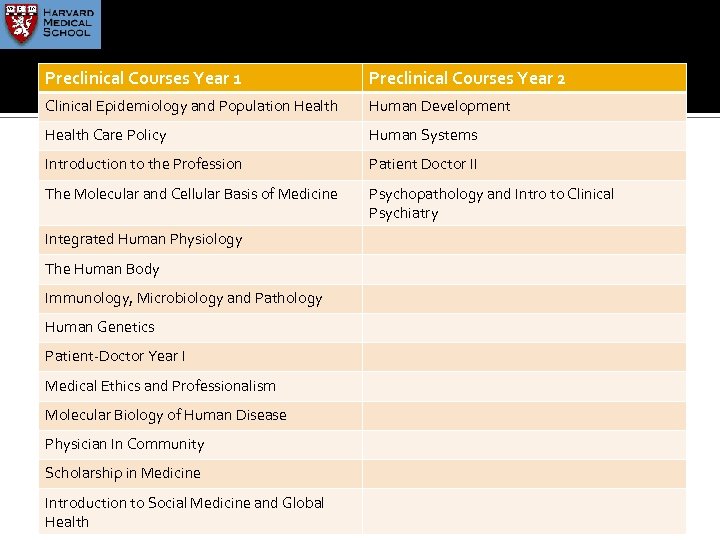 Preclinical Courses Year 1 Preclinical Courses Year 2 Clinical Epidemiology and Population Health Human Development Health Care Policy Human Systems Introduction to the Profession Patient Doctor II The Molecular and Cellular Basis of Medicine Psychopathology and Intro to Clinical Psychiatry Integrated Human Physiology The Human Body Immunology, Microbiology and Pathology Human Genetics Patient-Doctor Year I Medical Ethics and Professionalism Molecular Biology of Human Disease Physician In Community Scholarship in Medicine Introduction to Social Medicine and Global Health
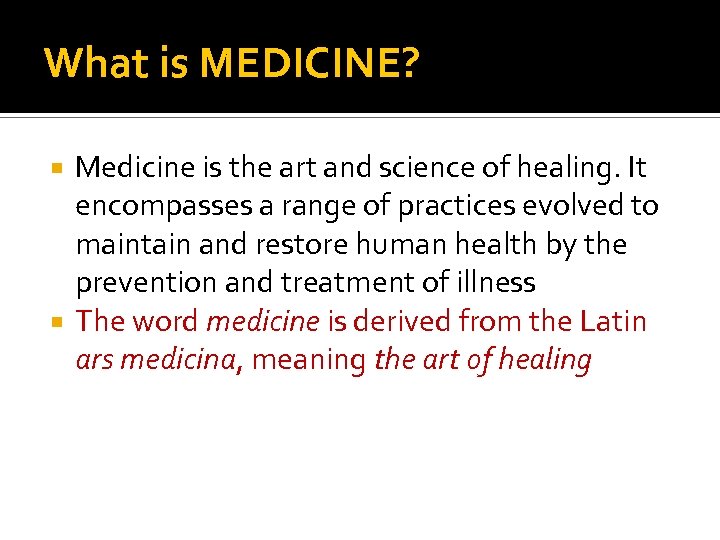 What is MEDICINE? Medicine is the art and science of healing. It encompasses a range of practices evolved to maintain and restore human health by the prevention and treatment of illness The word medicine is derived from the Latin ars medicina, meaning the art of healing
 What is MEDICINE? The science of diagnosing, treating, or preventing disease and other damage to the body or mind (http: //www. thefreedictionary. com/medicine) Medicine is concerned with maintaining or restoring human health through its study, diagnosis, and treatment (http: //www. biomedicine. org/medicine-definition/Medicine/)
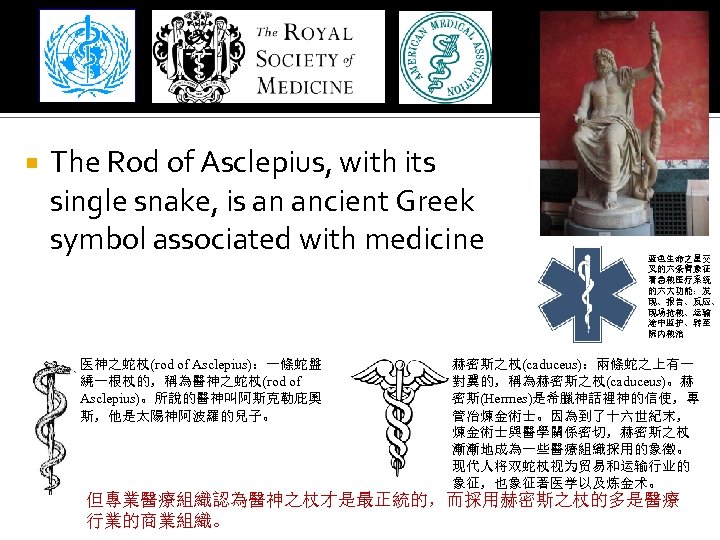 The Rod of Asclepius, with its single snake, is an ancient Greek symbol associated with medicine 医神之蛇杖(rod of Asclepius):一條蛇盤 繞一根杖的,稱為醫神之蛇杖(rod of Asclepius)。所說的醫神叫阿斯克勒庇奧 斯,他是太陽神阿波羅的兒子。 蓝色生命之星交 叉的六条臂象征 着急救医疗系统 的六大功能:发 现、报告、反应、 现场抢救、运输 途中监护、转至 院内救治 赫密斯之杖(caduceus):兩條蛇之上有一 對翼的,稱為赫密斯之杖(caduceus)。赫 密斯(Hermes)是希臘神話裡神的信使,專 管冶煉金術士。因為到了十六世紀末, 煉金術士與醫學關係密切,赫密斯之杖 漸漸地成為一些醫療組織採用的象徵。 现代人将双蛇杖视为贸易和运输行业的 象征,也象征著医学以及炼金术。 但專業醫療組織認為醫神之杖才是最正統的,而採用赫密斯之杖的多是醫療 行業的商業組織。
 Main branches of medicine Basic sciences of medicine (基础医学): this is what every physician is educated in, and some return to in biomedical research Medical specialties (专科) Interdisciplinary fields (跨学科领域): where different medical specialties are mixed to function in certain occasions
 Basic Sciences of Medicine Anatomy (解剖学) is the study of the physical structure of organisms. In contrast to macroscopic or gross anatomy, cytology and histology are concerned with microscopic structures. Biochemistry (生物化学) is the study of the chemistry taking place in living organisms, especially the structure and function of their chemical components. Biostatistics (生物统计学) is the application of statistics to biological fields in the broadest sense. A knowledge of biostatistics is essential in the planning, evaluation, and interpretation of medical research. It is also fundamental to epidemiology and evidencebased medicine. Cytology (细胞学) is the microscopic study of individual cells. Embryology (胚胎学) is the study of the early development of organisms. Epidemiology (流行病学) is the study of the demographics of disease processes, and includes, but is not limited to, the study of epidemics. Genetics (遗传学) is the study of genes, and their role in biological inheritance. Histology (组织学) is the study of the structures of biological tissues by light microscopy, electron microscopy and immunohistochemistry. Immunology (免疫学) is the study of the immune system, which includes the innate and adaptive immune system in humans, for example. Medical physics (医学物理学) is the study of the applications of physics principles in medicine. Microbiology (微生物学) is the study of microorganisms, including protozoa, bacteria, fungi, and viruses. Neuroscience (神经科学) includes those disciplines of science that are related to the study of the nervous system. A main focus of neuroscience is the biology and physiology of the human brain and spinal cord. Nutrition (营养学) is the study of the relationship of food and drink to health and disease, especially in determining an optimal diet. Medical nutrition therapy is done by dietitians and is prescribed for diabetes, cardiovascular diseases, weight and eating disorders, allergies, malnutrition, and neoplastic diseases. Pathology as a science (病理学) is the study of disease—the causes, course, progression and resolution thereof. Pharmacology (药理学) is the study of drugs and their actions. Physiology (生理学) is the study of the normal functioning of the body and the underlying regulatory mechanisms. Toxicology (毒理学) is the study of hazardous effects of drugs and poisons.
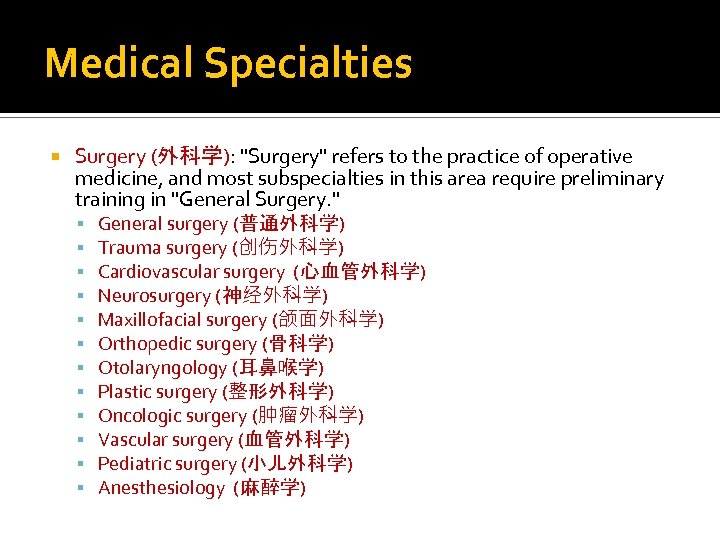 Medical Specialties Surgery (外科学): "Surgery" refers to the practice of operative medicine, and most subspecialties in this area require preliminary training in "General Surgery. " General surgery (普通外科学) Trauma surgery (创伤外科学) Cardiovascular surgery (心血管外科学) Neurosurgery (神经外科学) Maxillofacial surgery (颌面外科学) Orthopedic surgery (骨科学) Otolaryngology (耳鼻喉学) Plastic surgery (整形外科学) Oncologic surgery (肿瘤外科学) Vascular surgery (血管外科学) Pediatric surgery (小儿外科学) Anesthesiology (麻醉学)
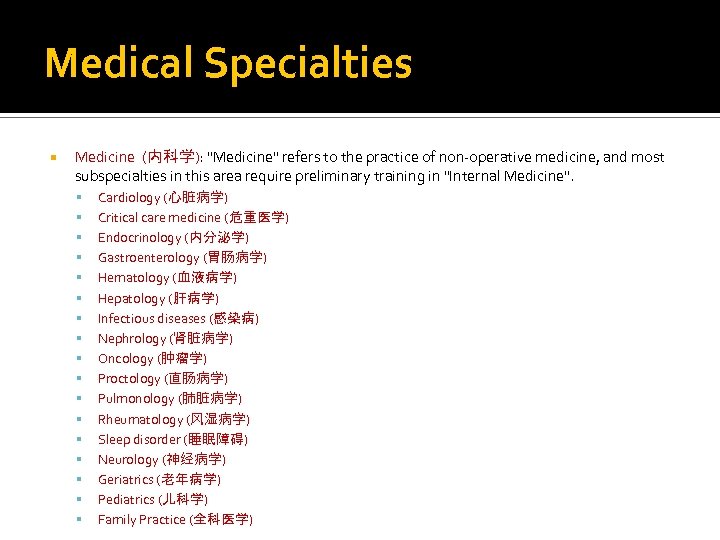 Medical Specialties Medicine (内科学): "Medicine" refers to the practice of non-operative medicine, and most subspecialties in this area require preliminary training in "Internal Medicine". Cardiology (心脏病学) Critical care medicine (危重医学) Endocrinology (内分泌学) Gastroenterology (胃肠病学) Hematology (血液病学) Hepatology (肝病学) Infectious diseases (感染病) Nephrology (肾脏病学) Oncology (肿瘤学) Proctology (直肠病学) Pulmonology (肺脏病学) Rheumatology (风湿病学) Sleep disorder (睡眠障碍) Neurology (神经病学) Geriatrics (老年病学) Pediatrics (儿科学) Family Practice (全科医学)
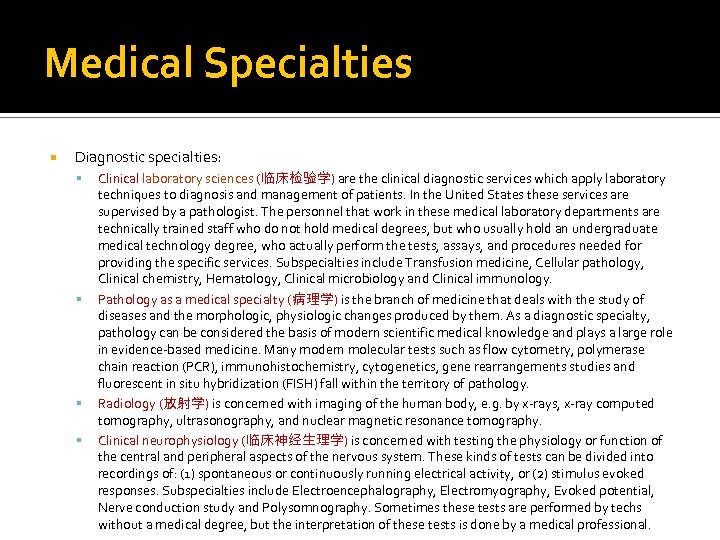 Medical Specialties Diagnostic specialties: Clinical laboratory sciences (临床检验学) are the clinical diagnostic services which apply laboratory techniques to diagnosis and management of patients. In the United States these services are supervised by a pathologist. The personnel that work in these medical laboratory departments are technically trained staff who do not hold medical degrees, but who usually hold an undergraduate medical technology degree, who actually perform the tests, assays, and procedures needed for providing the specific services. Subspecialties include Transfusion medicine, Cellular pathology, Clinical chemistry, Hematology, Clinical microbiology and Clinical immunology. Pathology as a medical specialty (病理学) is the branch of medicine that deals with the study of diseases and the morphologic, physiologic changes produced by them. As a diagnostic specialty, pathology can be considered the basis of modern scientific medical knowledge and plays a large role in evidence-based medicine. Many modern molecular tests such as flow cytometry, polymerase chain reaction (PCR), immunohistochemistry, cytogenetics, gene rearrangements studies and fluorescent in situ hybridization (FISH) fall within the territory of pathology. Radiology (放射学) is concerned with imaging of the human body, e. g. by x-rays, x-ray computed tomography, ultrasonography, and nuclear magnetic resonance tomography. Clinical neurophysiology (临床神经生理学) is concerned with testing the physiology or function of the central and peripheral aspects of the nervous system. These kinds of tests can be divided into recordings of: (1) spontaneous or continuously running electrical activity, or (2) stimulus evoked responses. Subspecialties include Electroencephalography, Electromyography, Evoked potential, Nerve conduction study and Polysomnography. Sometimes these tests are performed by techs without a medical degree, but the interpretation of these tests is done by a medical professional.
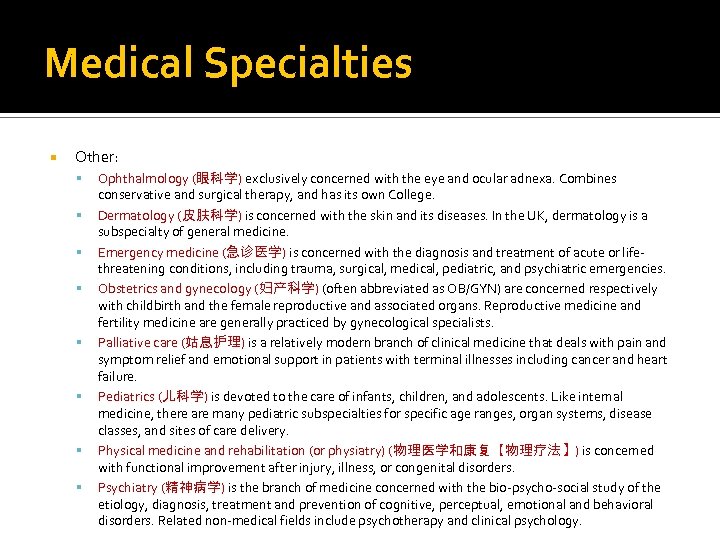 Medical Specialties Other: Ophthalmology (眼科学) exclusively concerned with the eye and ocular adnexa. Combines conservative and surgical therapy, and has its own College. Dermatology (皮肤科学) is concerned with the skin and its diseases. In the UK, dermatology is a subspecialty of general medicine. Emergency medicine (急诊医学) is concerned with the diagnosis and treatment of acute or lifethreatening conditions, including trauma, surgical, medical, pediatric, and psychiatric emergencies. Obstetrics and gynecology (妇产科学) (often abbreviated as OB/GYN) are concerned respectively with childbirth and the female reproductive and associated organs. Reproductive medicine and fertility medicine are generally practiced by gynecological specialists. Palliative care (姑息护理) is a relatively modern branch of clinical medicine that deals with pain and symptom relief and emotional support in patients with terminal illnesses including cancer and heart failure. Pediatrics (儿科学) is devoted to the care of infants, children, and adolescents. Like internal medicine, there are many pediatric subspecialties for specific age ranges, organ systems, disease classes, and sites of care delivery. Physical medicine and rehabilitation (or physiatry) (物理医学和康复【物理疗法】) is concerned with functional improvement after injury, illness, or congenital disorders. Psychiatry (精神病学) is the branch of medicine concerned with the bio-psycho-social study of the etiology, diagnosis, treatment and prevention of cognitive, perceptual, emotional and behavioral disorders. Related non-medical fields include psychotherapy and clinical psychology.
 Interdisciplinary fields General practice, family medicine or primary care (全科医学) is, in many countries, the first port-of-call for patients with non-emergency medical problems. Many other health science (健康科学) fields, e. g. dietetics (营养学) Bioethics (生物伦理学) is a field of study which concerns the relationship between biology, science, medicine and ethics, philosophy and theology. Biomedical Engineering (生物医学 程) is a field dealing with the application of engineering principles to medical practice. Clinical pharmacology (临床药理学) is concerned with how systems of therapeutics interact with patients. Conservation medicine (保护医学) studies the relationship between human and animal health, and environmental conditions. Also known as ecological medicine, environmental medicine, or medical geology. Disaster medicine (灾难医学) deals with medical aspects of emergency preparedness, disaster mitigation and management. Diving medicine (潜水医学) (or hyperbaric medicine) is the prevention and treatment of diving-related problems. Evolutionary medicine (进化医学) is a perspective on medicine derived through applying evolutionary theory. Forensic medicine (法医学) deals with medical questions in legal context, such as determination of the time and cause of death. Gender-based medicine (性别医学) studies the biological and physiological differences between the human sexes and how that affects differences in disease. Hospital medicine (医院医学) is the general medical care of hospitalized patients. Physicians whose primary professional focus is hospital medicine are called hospitalists in the USA. Medical humanities (医学人文学) includes the humanities (literature, philosophy, ethics, history and religion), social science (anthropology, cultural studies, psychology, sociology), and the arts (literature, theater, film, and visual arts) and their application to medical education and practice. Medical informatics (医学信息学), medical computer science, medical information and e. Health are relatively recent fields that deal with the application of computers and information technology to medicine.
 Interdisciplinary fields Nosology (疾病分类学) is the classification of diseases for various purposes. Preventive medicine (预防医学) is the branch of medicine concerned with preventing disease. Osteopathic medicine (骨病医学), a branch of the U. S. medical profession. Pharmacogenomics (药理基因学) is a form of individualized medicine. Sports medicine (运动医学) deals with the treatment and preventive care of athletes, amateur and professional. The team includes specialty physicians and surgeons, athletic trainers, physical therapists, coaches, other personnel, and, of course, the athlete. Therapeutics (治疗学) is the field, more commonly referenced in earlier periods of history, of the various remedies that can be used to treat disease and promote health [1]. Travel medicine (旅行医学) or emporiatrics deals with health problems of international travelers or travelers across highly different environments. Professions complementing physicians Community health (社区卫生) or public health is an aspect of health services concerned with threats to the overall health of a community based on population health analysis. Occupational medicine (职业医学) 's principal role is the provision of health advice to organizations and individuals to ensure that the highest standards of health and safety at work can be achieved and maintained. Aerospace medicine (航空航天医学) deals with medical problems related to flying and space travel. Nursing specialties (护理专业): specialties performed by Nurses. Mid-level practitioners (中级专业医师): performance of medical sciences by other certified people than physicians or nurses; Nurse practitioners, practitioners of medical psychology, midwives and physician assistants, treat patients and prescribe medication in many jurisdictions. Allied health professions (健康相关职业): a diverse set of clinical healthcare professions distinct from medicine and nursing. Urgent care (急救护理) focuses on delivery of unscheduled, walk-in care outside of the hospital emergency department for injuries and illnesses that are not severe enough to require care in an emergency department. In some jurisdictions this function is combined with the emergency room. Veterinary medicine (兽医学); veterinarians apply similar techniques as physicians to the care of animals.
 Branches of Medicine (中国分类) 基础医学: 人体解剖学、组织学和胚胎学、生理学、生物化学、 微生物学、寄生虫学、免疫学、病理生理 学、分子生物学、医学遗传学、药理学 公共卫生与预防医学 临床医学 口腔医学 中医学 法医学 护理学 药学
 Basic Medical Sciences Morphological courses: 人体解剖学、组织学和胚胎学、病理学 Functional courses: 生理学、病理生理学、药理学、生物化学、分 子生物学、免疫学 Mixed courses: 医学遗传学、微生物学、寄生虫学
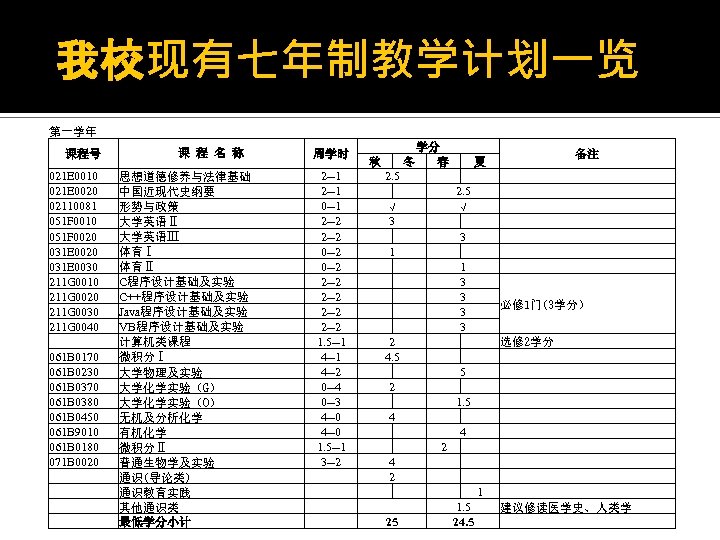 我校现有七年制教学计划一览 第一学年 课程号 021 E 0010 021 E 0020 02110081 051 F 0010 051 F 0020 031 E 0030 211 G 0010 211 G 0020 211 G 0030 211 G 0040 061 B 0170 061 B 0230 061 B 0370 061 B 0380 061 B 0450 061 B 9010 061 B 0180 071 B 0020 课 程 名 称 思想道德修养与法律基础 中国近现代史纲要 形势与政策 大学英语Ⅱ 大学英语Ⅲ 体育Ⅰ 体育Ⅱ C程序设计基础及实验 C++程序设计基础及实验 Java程序设计基础及实验 VB程序设计基础及实验 计算机类课程 微积分Ⅰ 大学物理及实验 大学化学实验(G) 大学化学实验(O) 无机及分析化学 有机化学 微积分Ⅱ 普通生物学及实验 通识(导论类) 通识教育实践 其他通识类 最低学分小计 周学时 2 --1 0 --1 2 --2 0 --2 2 --2 1. 5 --1 4 --2 0 --4 0 --3 4 --0 1. 5 --1 3 --2 学分 秋 冬 春 夏 2. 5 √ √ 3 1 3 2 4. 5 2 1. 5 4 2 1 1. 5 25 24. 5 备注 必修 1门(3学分) 选修 2学分 建议修读医学史、人类学
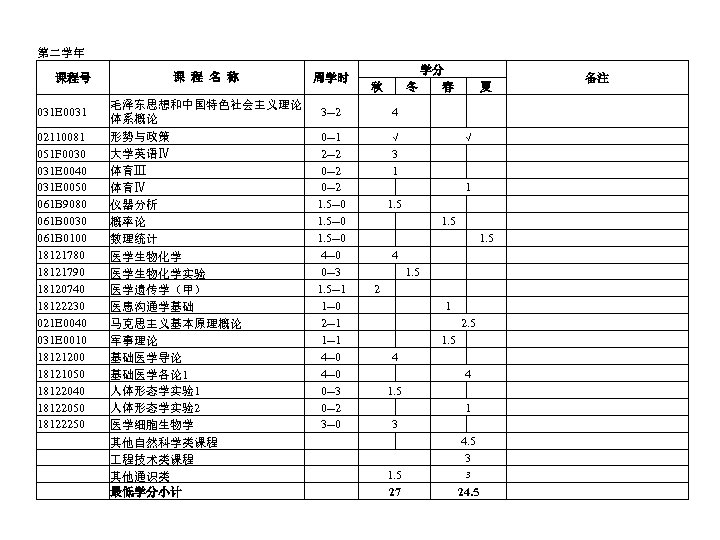 第二学年 课程号 031 E 0031 02110081 051 F 0030 031 E 0040 031 E 0050 061 B 9080 061 B 0030 061 B 0100 18121780 18121790 18120740 18122230 021 E 0040 031 E 0010 18121200 18121050 18122040 18122050 18122250 课 程 名 称 毛泽东思想和中国特色社会主义理论 体系概论 形势与政策 大学英语Ⅳ 体育Ⅲ 体育Ⅳ 仪器分析 概率论 数理统计 医学生物化学实验 医学遗传学(甲) 医患沟通学基础 马克思主义基本原理概论 军事理论 基础医学导论 基础医学各论 1 人体形态学实验2 医学细胞生物学 其他自然科学类课程 程技术类课程 其他通识类 最低学分小计 周学时 学分 冬 春 秋 3 --2 4 0 --1 2 --2 0 --2 1. 5 --0 4 --0 0 --3 1. 5 --1 1 --0 2 --1 1 --1 4 --0 0 --3 0 --2 3 --0 夏 √ 3 1 √ 1. 5 备注 1. 5 4 1. 5 2 1 2. 5 1. 5 4 1. 5 1 3 4. 5 3 1. 5 27 24. 5
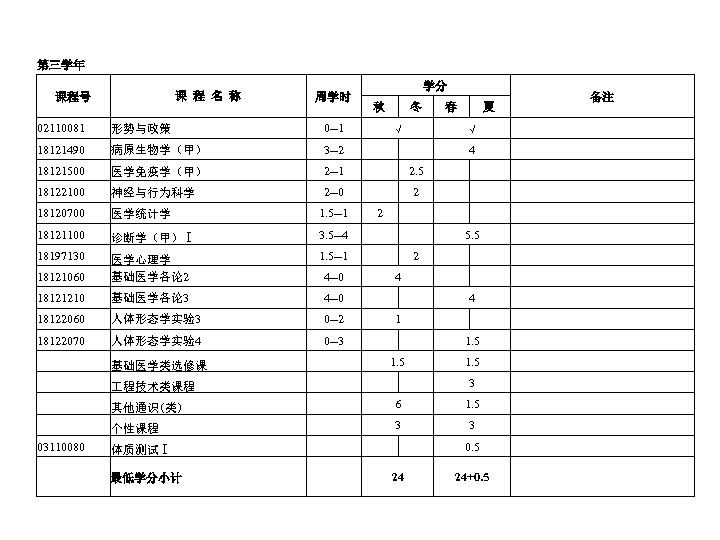 第三学年 课 程 名 称 课程号 周学时 学分 秋 冬 春 备注 夏 02110081 形势与政策 0 --1 18121490 病原生物学(甲) 3 --2 18121500 医学免疫学(甲) 2 --1 2. 5 18122100 神经与行为科学 2 --0 2 18120700 医学统计学 1. 5 --1 2 18121100 诊断学(甲)Ⅰ 3. 5 --4 18197130 1. 5 --1 18121060 医学心理学 基础医学各论 2 18121210 基础医学各论 3 4 --0 18122060 人体形态学实验3 0 --2 18122070 人体形态学实验4 0 --3 基础医学类选修课 程技术类课程 其他通识(类) 个性课程 03110080 体质测试Ⅰ 最低学分小计 √ 4 1 1. 5 4 5. 5 2 4 --0 1. 5 3 6 1. 5 3 24 0. 5 24+0. 5
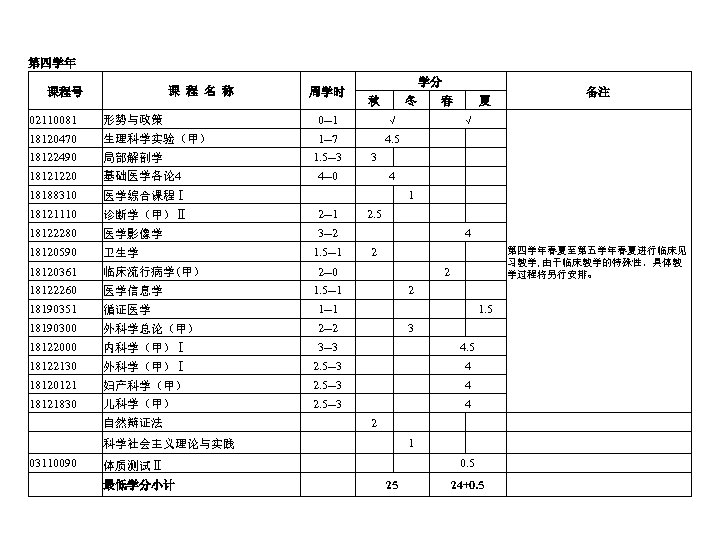 第四学年 课 程 名 称 课程号 周学时 学分 秋 冬 春 备注 夏 02110081 形势与政策 0 --1 √ 18120470 生理科学实验(甲) 1 --7 4. 5 18122490 局部解剖学 18121220 基础医学各论 4 4 --0 18188310 医学综合课程Ⅰ 18121110 诊断学(甲)Ⅱ 2 --1 2. 5 18122280 医学影像学 3 --2 18120590 卫生学 1. 5 --1 2 18120361 临床流行病学(甲) 2 --0 2 18122260 医学信息学 18190351 1. 5 --3 3 √ 4 1. 5 --1 2 循证医学 1 --1 1. 5 18190300 外科学总论(甲) 2 --2 18122000 内科学(甲)Ⅰ 3 --3 4. 5 18122130 外科学(甲)Ⅰ 2. 5 --3 4 18120121 妇产科学(甲) 2. 5 --3 4 18121830 儿科学(甲) 2. 5 --3 4 自然辩证法 2 科学社会主义理论与实践 03110090 体质测试Ⅱ 最低学分小计 第四学年春夏至第五学年春夏进行临床见 习教学, 由于临床教学的特殊性,具体教 学过程将另行安排。 3 25 1 0. 5 24+0. 5
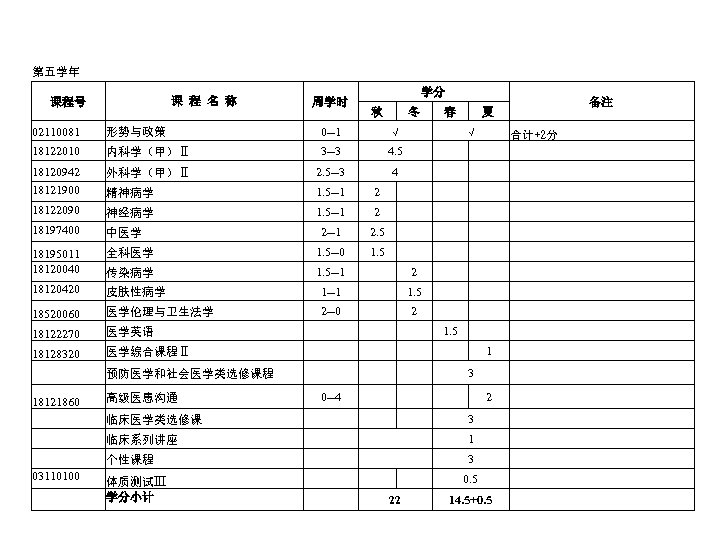 第五学年 课 程 名 称 课程号 周学时 学分 秋 冬 春 备注 夏 02110081 形势与政策 0 --1 √ 18122010 内科学(甲)Ⅱ 3 --3 4. 5 18120942 外科学(甲)Ⅱ 2. 5 --3 4 18121900 精神病学 1. 5 --1 2 18122090 神经病学 1. 5 --1 2 18197400 中医学 2 --1 2. 5 18195011 18120040 全科医学 1. 5 --0 1. 5 传染病学 1. 5 --1 2 18120420 皮肤性病学 1 --1 1. 5 18520060 医学伦理与卫生法学 2 --0 2 18122270 医学英语 1. 5 18128320 医学综合课程Ⅱ 1 预防医学和社会医学类选修课程 18121860 高级医患沟通 0 --4 临床医学类选修课 临床系列讲座 03110100 个性课程 体质测试Ⅲ 学分小计 √ 合计+2分 3 2 1 3 3 22 0. 5 14. 5+0. 5
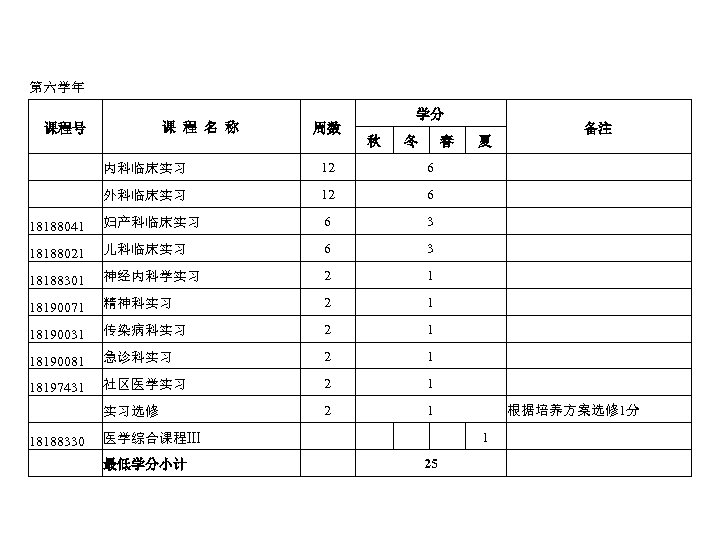 第六学年 课 程 名 称 课程号 周数 学分 秋 冬 春 备注 夏 内科临床实习 12 6 外科临床实习 12 6 18188041 妇产科临床实习 6 3 18188021 儿科临床实习 6 3 18188301 神经内科学实习 2 1 18190071 精神科实习 2 1 18190031 传染病科实习 2 1 18190081 急诊科实习 2 1 18197431 社区医学实习 2 1 实习选修 2 1 根据培养方案选修 1分 18188330 医学综合课程Ⅲ 最低学分小计 25 1
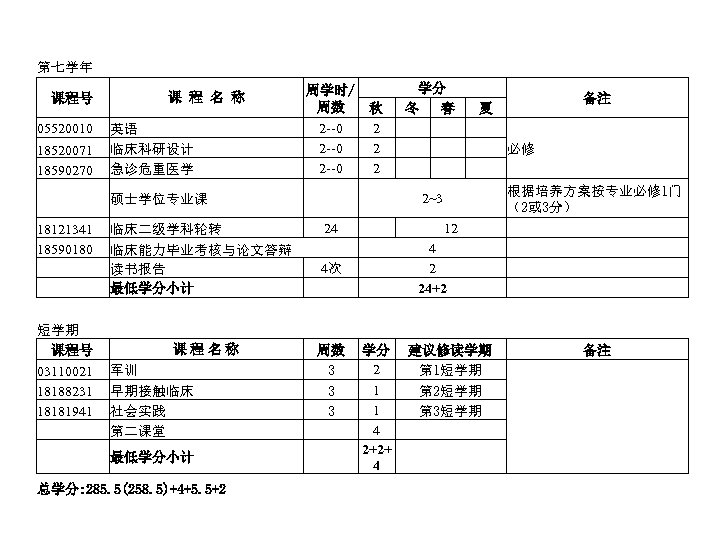 第七学年 课程号 05520010 18520071 18590270 18121341 18590180 短学期 课程号 03110021 18188231 18181941 课 程 名 称 英语 临床科研设计 急诊危重医学 周学时/ 周数 2 --0 硕士学位专业课 24 临床能力毕业考核与论文答辩 读书报告 最低学分小计 4次 课程名称 军训 早期接触临床 社会实践 第二课堂 最低学分小计 总学分: 285. 5(258. 5)+4+5. 5+2 4 2 24+2 学分 2 1 1 4 2+2+ 4 建议修读学期 第 1短学期 第 2短学期 第 3短学期 备注 根据培养方案按专业必修 1门 (2或 3分) 12 周数 3 3 3 夏 必修 2~3 临床二级学科轮转 秋 2 2 2 学分 冬 春 备注
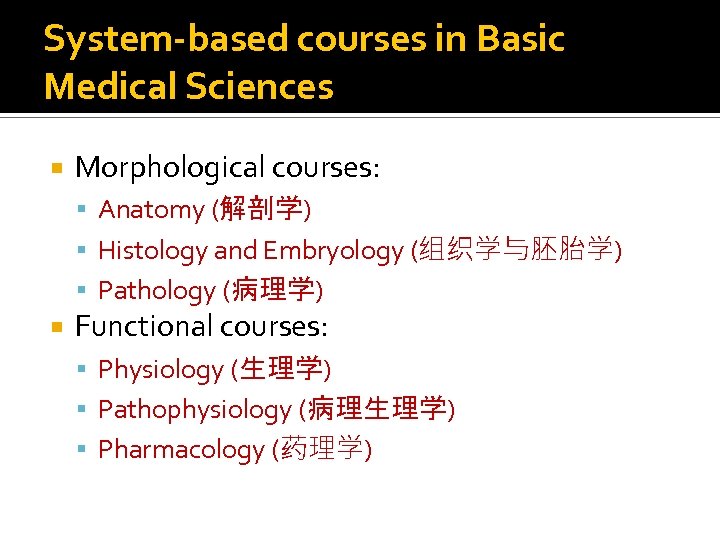 System-based courses in Basic Medical Sciences Morphological courses: Anatomy (解剖学) Histology and Embryology (组织学与胚胎学) Pathology (病理学) Functional courses: Physiology (生理学) Pathophysiology (病理生理学) Pharmacology (药理学)
 New Integrated Course: Course of Basic Medical Sciences Include theoretical contents and corresponding laboratory contents of following courses: Anatomy (解剖学) Histology and Embryology (组织学与胚胎学) Pathology (病理学) Physiology (生理学) Pathophysiology (病理生理学) Pharmacology (药理学)
 Course of Basic Medical Sciences Theoretical contents: 整合课程,解剖学、组织学与胚胎学、 病理学、生理学、病理生理学、药理学的理论部分 Introduction to BMS (基础医学导论) BMS 1 (基础医学各论 1) BMS 2 (基础医学各论 2) BMS 3 (基础医学各论 3) BMS 4 (基础医学各论 4) Laboratory contents: Morphological Practicals (整合实验课,人体形态学实验1、2、3、 4)(解剖学、组织学与胚胎学、病理学的实验部分。与理论课同步) Experiments of Physiological Sciences (整合实验课,生理科学实验)( 生理学、病理生理学、药理学的实验部分。独立开课)
 Brief introduction to Anatomy Systematic anatomy (系统解剖学) 是按人体的器官功能系统阐述正常人体器官的 形态结构的科学 Regional anatomy (局部解剖学) 是按人体的某一局部或器官,重点描述人体器 官的配布位置关系及结构层次等的学科 系统解剖学和局部解剖学主要通过肉眼观 察来描述人体的形态结构,又称巨视解剖 学(Macroanatomy)
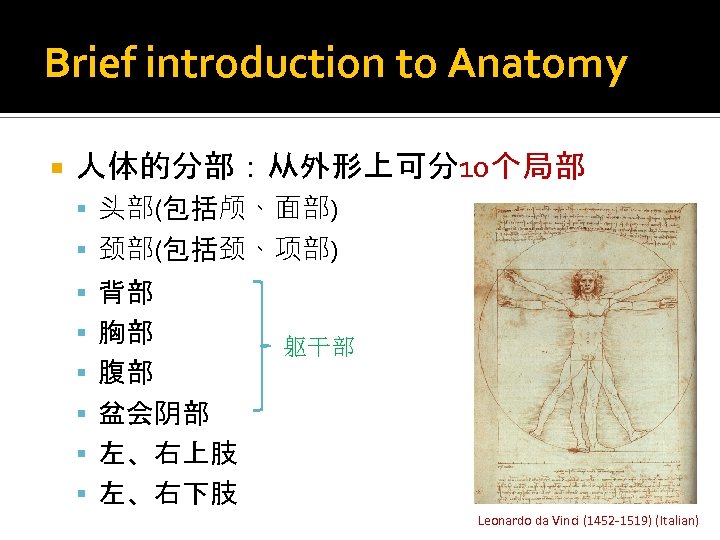 Brief introduction to Anatomy 人体的分部:从外形上可分10个局部 头部(包括颅、面部) 颈部(包括颈、项部) 背部 胸部 躯干部 腹部 盆会阴部 左、右上肢 左、右下肢 Leonardo da Vinci (1452 -1519) (Italian)
 Brief introduction to Anatomy 构成人体的基本单位是细胞(cell) 细胞与细胞间质共同构成组织(tissue) 几种组织相互结合,组成器官(organ) 两个或两个以上的器官及相关结构组合形 成系统(system) 多个系统组成整体的个体——人体(human body)
 Brief introduction to Anatomy 人体的9大系统: 运动系统 (locomotor system ) 消化系统 (alimentary system) 呼吸系统 (respiratory system) 泌尿系统 (urinary system) 生殖系统 (reproductive system) 脉管系统 (vascular system) 感觉器 (sensory organ) 神经系统 (nervous system) 内分泌系统 (endocrine system)
 Brief introduction to Histology and Embryology 组织学(histology): 是研究机体微细结构及其相关功能的科学 与解剖学的区别:组织学是在解剖学的基础上发展起来的 ▪ 解剖学:主要在系统和器官水平上研究机体的结构 ▪ 组织学:主要在组织、细胞、亚细胞和分子水平研究机体的结构 组织学的内容: 四大基本组织:上皮组织,结缔组织,肌组织,神经组织 各系统的组织学
 Brief introduction to Histology and Embryology 胚胎学(embryology): 是研究从受精卵发育为新生个体的过程及其机制的科学, 包括生殖细胞的发生、受精、胚胎发育、胚胎与母体关系、 先天性畸形等 胚胎学的内容: 人体胚胎发生:配子发生、受精和胚前期(受精后的前2 周)发育,胚期(受精后15 -56天)的发育,胎期(受精 后第 9周-胎儿出生)的发育 各器官系统的发生
 Brief introduction to Physiology 生理学(physiology): 是研究生物体及其各组成部分正常功能活动规律的一门科 学 人体生理学 (human physiology):是研究正常人体功能活 动规律的科学(功能、机制) 生理学的内容: 细胞的基本功能 各系统的生理学
 Brief introduction to Pathophysiology 病理生理学(pathophysiology): 是一门研究疾病发生、发展、转归的规律和机制的科学( 疾病中功能和代谢的变化) 病理生理学的内容: 疾病概论 细胞与分子病理生理学(细胞增殖分化凋亡异常、细胞信 号转导异常、基因异常) 基本病理过程的病理生理学(水电解质与酸碱平衡紊乱、 应激、发热、缺氧、缺血-再灌注损伤、休克、肿瘤) 各器官系统的病理生理学
 Brief introduction to Pathology 病理学(pathology): 是研究疾病的病因、发病机制、病理变化、结局和转归的 科学(疾病的本质与发生发展规律) 病理学的内容: 普通病理学(细胞和组织的适应与损伤、损伤的修复、局 部血液循环障碍、炎症、肿瘤) 各系统的病理学
 Brief introduction to Pharmacology 药理学(pharmacology): 是研究药物与机体(包括病原体)相互作用及作用规律的 科学 ▪ 药物效应动力学(pharmacodynamics,简称药效学):主要研究药物 对机体的作用和作用原理 ▪ 药物代谢动力学(pharmacokinetics,简称药动学):主要研究机体如 何对药物的处理,包括药物的吸收、分布、生物转化和排泄 药理学的内容: 药理学总论(药物效应动力学、药物代谢动力学、影响药 物作用的因素) 各系统的药理学
 Methodology 形态学学科/课程: 解剖学,组织学与胚胎学,病理学 形态学的主要研究方法: 肉眼观察:包括进行尸体解剖和对标本进行观察 光学显微镜、荧光显微镜和电子显微镜观察:有 时需要制作相应的切片进行观察,免疫显微术等 X线、计算机辅助X线断层扫描(CT)、正电子 断层扫描(PET)及磁共振(MRI)等
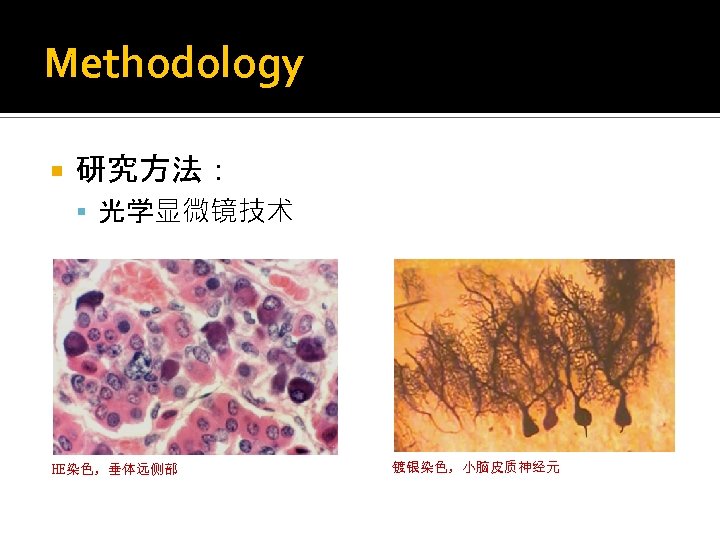 Methodology 研究方法: 光学显微镜技术 HE染色,垂体远侧部 镀银染色,小脑皮质神经元
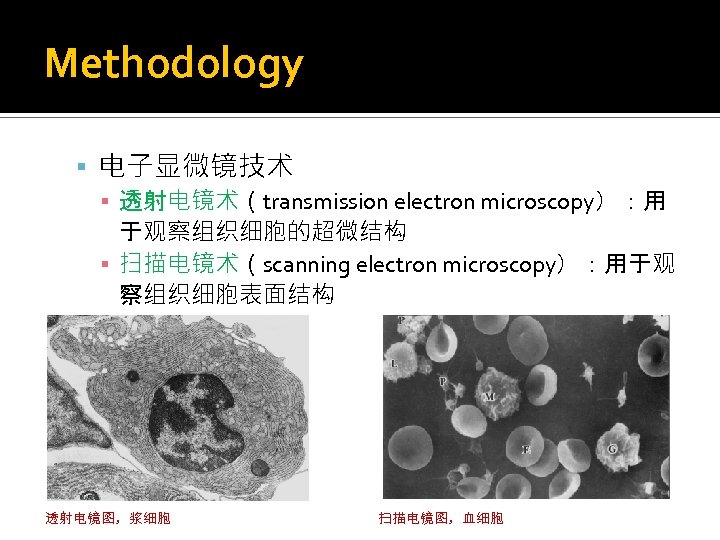 Methodology 电子显微镜技术 ▪ 透射电镜术(transmission electron microscopy):用 于观察组织细胞的超微结构 ▪ 扫描电镜术(scanning electron microscopy):用于观 察组织细胞表面结构 透射电镜图,浆细胞 扫描电镜图,血细胞
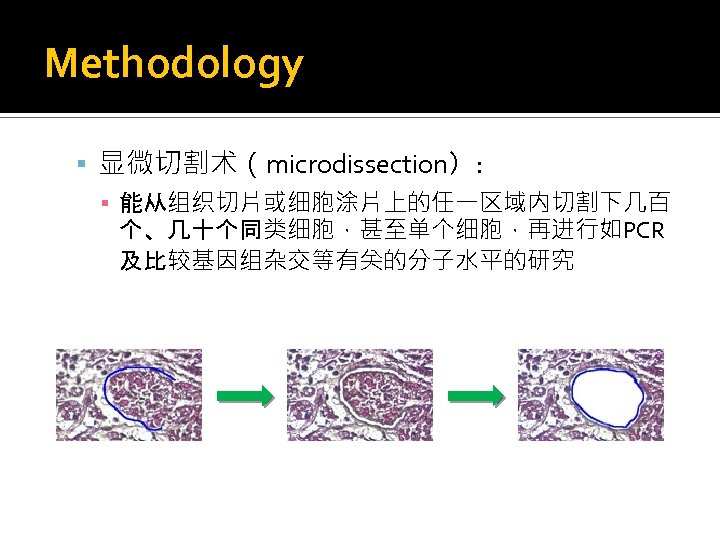 Methodology 显微切割术(microdissection): ▪ 能从组织切片或细胞涂片上的任一区域内切割下几百 个、几十个同类细胞,甚至单个细胞,再进行如PCR 及比较基因组杂交等有关的分子水平的研究
 Methodology 组织化学术(histochemistry):为应用化学、 物理、生物化学、免疫学或分子生物学的原理 和技术,与组织学技术结合而产生,在组织切 片显示某种物质的存在和分布状态 ▪ 一般组织化学术:组织中的某种结构成分与所加试剂发生化学 反应、并呈现某种颜色,在显微镜下可观察到 ▪ 免疫组织化学术(immunohistochemistry):根据抗原、抗体 特异性结合原理,检测组织切片中的肽和蛋白质 ▪ 原位杂交术(in situ hybridization):即核酸分子杂交组织化学 术,检测基因(DNA片段)的有无、基因的表达活性(m. RNA)
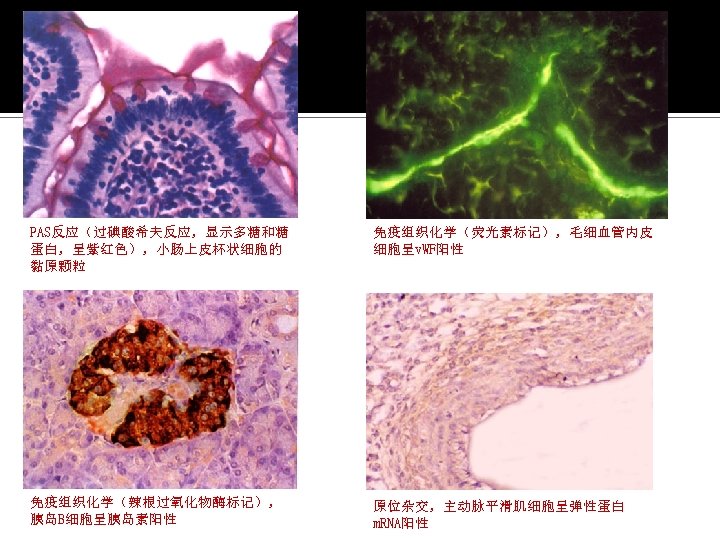 PAS反应(过碘酸希夫反应,显示多糖和糖 蛋白,呈紫红色),小肠上皮杯状细胞的 黏原颗粒 免疫组织化学(荧光素标记),毛细血管内皮 细胞呈v. WF阳性 免疫组织化学(辣根过氧化物酶标记), 胰岛B细胞呈胰岛素阳性 原位杂交,主动脉平滑肌细胞呈弹性蛋白 m. RNA阳性
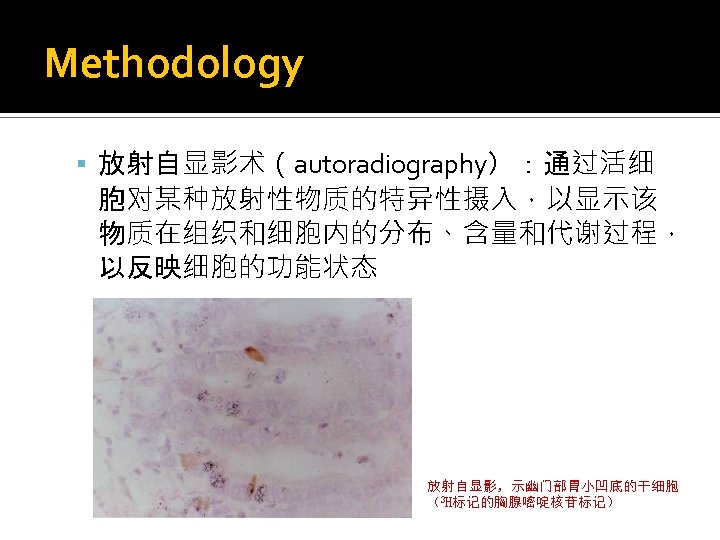 Methodology 放射自显影术(autoradiography):通过活细 胞对某种放射性物质的特异性摄入,以显示该 物质在组织和细胞内的分布、含量和代谢过程, 以反映细胞的功能状态 放射自显影,示幽门部胃小凹底的干细胞 (3 H标记的胸腺嘧啶核苷标记)
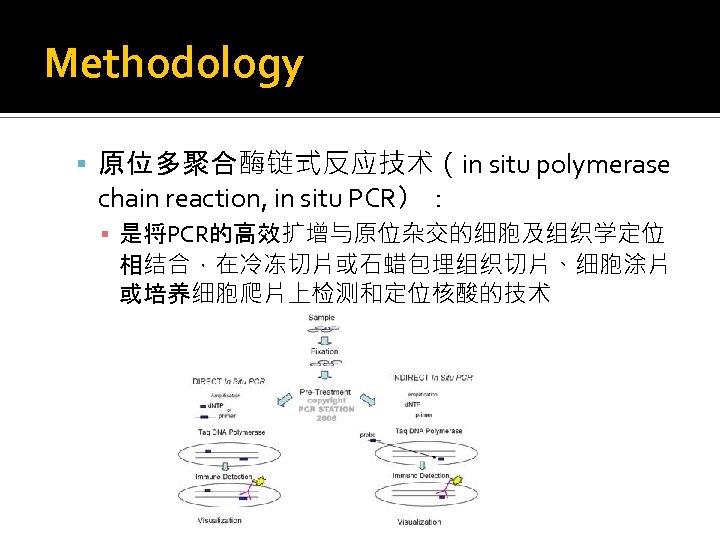 Methodology 原位多聚合酶链式反应技术(in situ polymerase chain reaction, in situ PCR): ▪ 是将PCR的高效扩增与原位杂交的细胞及组织学定位 相结合,在冷冻切片或石蜡包埋组织切片、细胞涂片 或培养细胞爬片上检测和定位核酸的技术
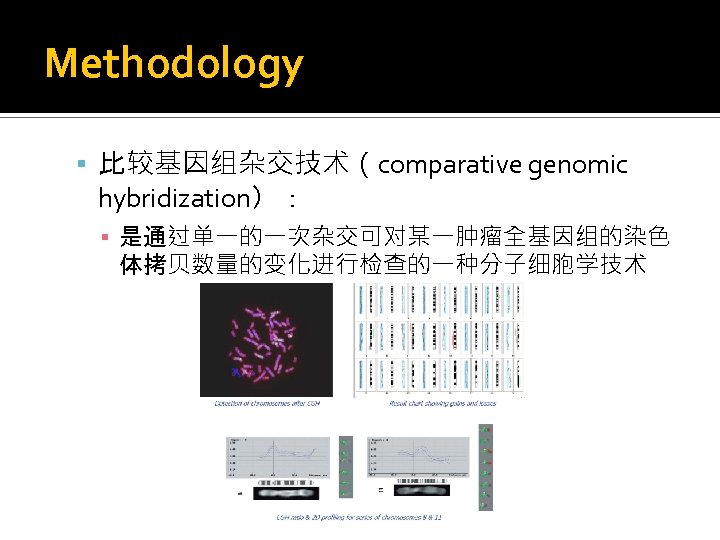 Methodology 比较基因组杂交技术(comparative genomic hybridization): ▪ 是通过单一的一次杂交可对某一肿瘤全基因组的染色 体拷贝数量的变化进行检查的一种分子细胞学技术
 Methodology 生物芯片技术(biochip technique): ▪ 基因芯片(gene chip):又称DNA芯片,是指在固相 载体上的高密度的DNA微点阵 ▪ 蛋白质芯片(protein chip):又称蛋白质微阵列( protein microarray),是在一个载体上高密度地点布 不同种类的蛋白质,再用荧光标记的已知抗体或配体 与待测样品中的抗体或配体一起与芯片上的蛋白质竞 争结合,利用荧光扫描仪测定芯片上各点阵的荧光强 度,再经计算机分析计算出待测样本结果 ▪ 组织芯片(tissue chip):又称组织微阵列(tissue microarray),是将数十个至数百个小的组织片排列 在某一载体上而成的微缩组织切片
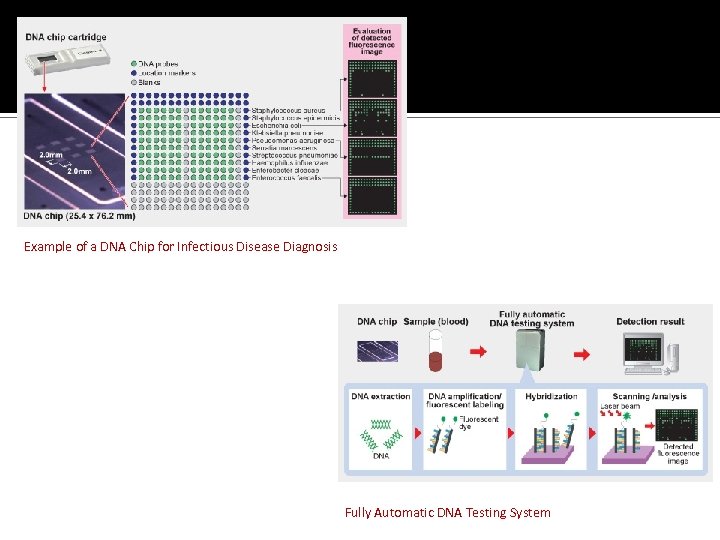 Example of a DNA Chip for Infectious Disease Diagnosis Fully Automatic DNA Testing System
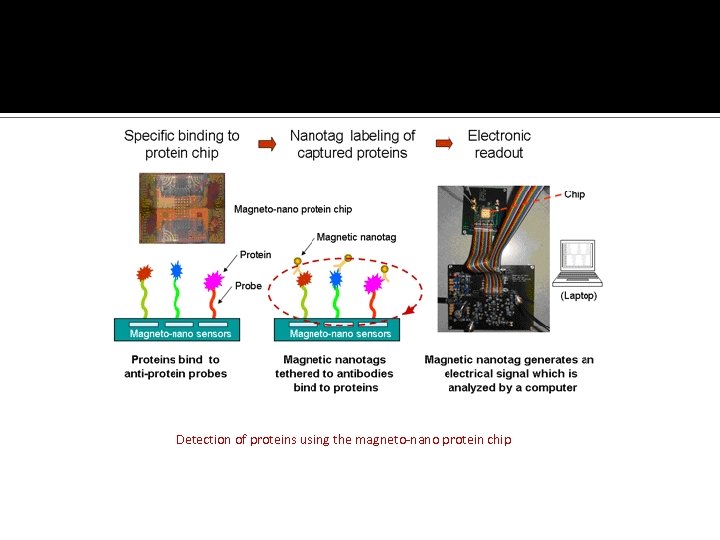 Detection of proteins using the magneto-nano protein chip
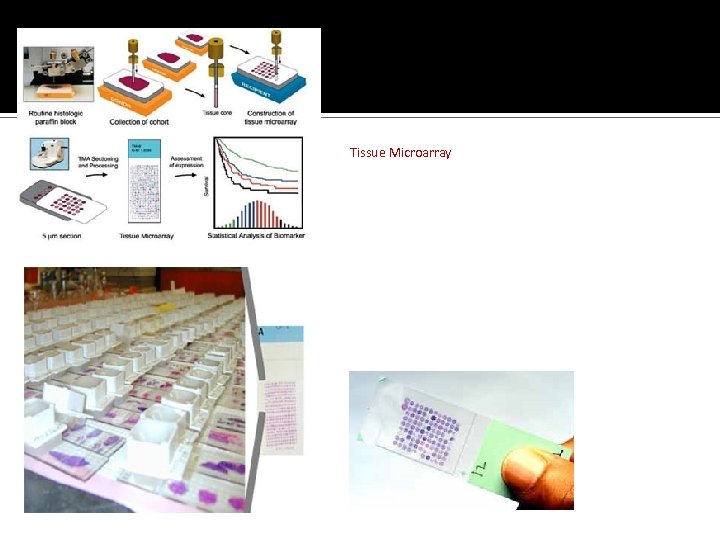 Tissue Microarray
 Methodology 形态学研究的定量术: ▪ 形态计量术(morphometry):运用数学和统计学原 理,对组织和细胞进行二维和三维的形态学测量研究。 其中三维立体结构的研究又称体视学(stereology) ▪ 显微分光光度术(microspectrophotometry):是应用 显微分光光度计测定标本中微细结构的吸收光度和荧 光光度,以进行化学成分定量的技术 ▪ 图像分析术(image analysis):应用图像分析仪进行 形态计量和显微光度测量 ▪ 流式细胞术(flow cytometry):应用流式细胞仪对单 个细胞进行生物化学和生物物理特性的快速定量测定
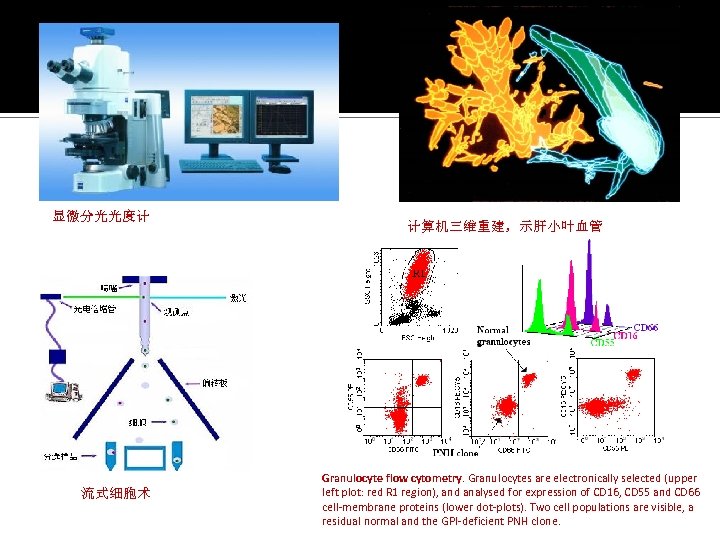 显微分光光度计 流式细胞术 计算机三维重建,示肝小叶血管 Granulocyte flow cytometry. Granulocytes are electronically selected (upper left plot: red R 1 region), and analysed for expression of CD 16, CD 55 and CD 66 cell-membrane proteins (lower dot-plots). Two cell populations are visible, a residual normal and the GPI-deficient PNH clone.
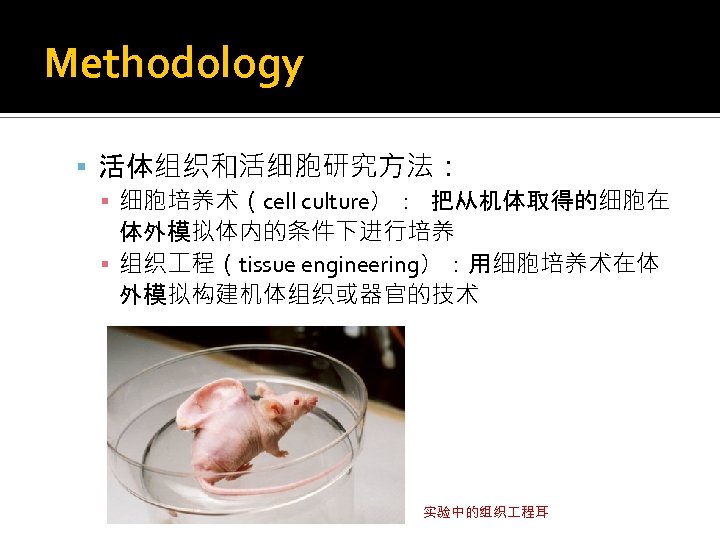 Methodology 活体组织和活细胞研究方法: ▪ 细胞培养术(cell culture): 把从机体取得的细胞在 体外模拟体内的条件下进行培养 ▪ 组织 程(tissue engineering):用细胞培养术在体 外模拟构建机体组织或器官的技术 实验中的组织 程耳
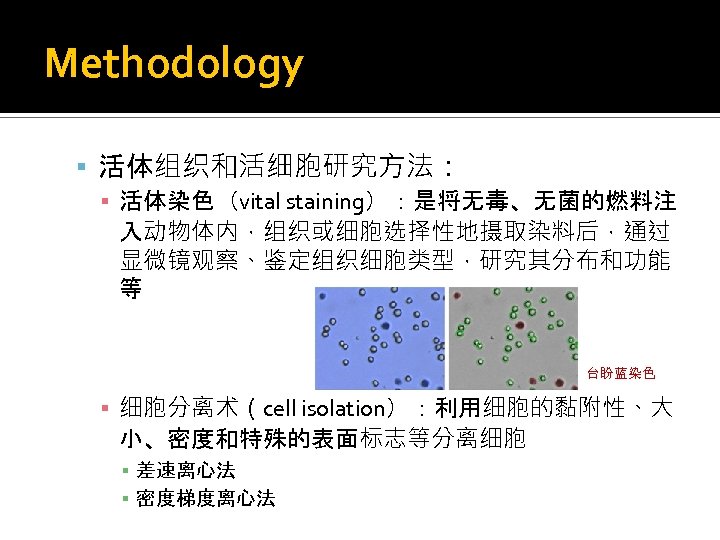 Methodology 活体组织和活细胞研究方法: ▪ 活体染色(vital staining):是将无毒、无菌的燃料注 入动物体内,组织或细胞选择性地摄取染料后,通过 显微镜观察、鉴定组织细胞类型,研究其分布和功能 等 台盼蓝染色 ▪ 细胞分离术(cell isolation):利用细胞的黏附性、大 小、密度和特殊的表面标志等分离细胞 ▪ 差速离心法 ▪ 密度梯度离心法
 Methodology 人体病理学的诊断和研究方法: 尸体剖检(autopsy):简称尸检,是对死者的 遗体进行病理解剖和后续的病理学观察 活体组织检查(biopsy):简称活检,是用局部 切取、钳取、细针穿刺和搔刮等手术方法,从活 体内获取病变组织进行病理诊断 细胞学检查(cytology):通过采集病变处的细 胞,涂片染色后进行诊断
 Methodology 机能学学科/课程: 生理学,病理生理学,药理学 研究方法: 动物实验(animal experiment):采用正常动 物或人类疾病的动物模型 ▪ 急性动物实验(acute animal experiment): ▪ 离体实验 ▪ 在体实验 ▪ 慢性动物实验(chronic animal experiment):
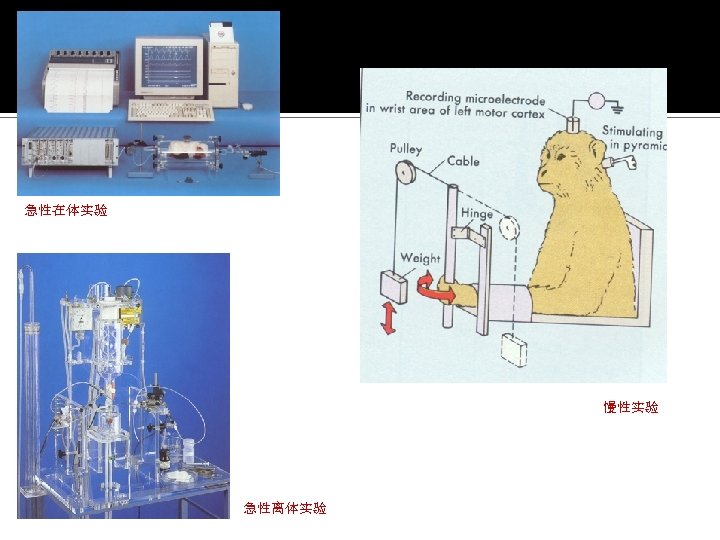 急性在体实验 慢性实验 急性离体实验
 Methodology 人类疾病的动物模型(animal model of human diseases):是指生物医学科学研究中所建立的 具有人类疾病模拟性表现的动物实验对象和材 料。分为: ▪ 自发性动物模型(spontaneous animal model):是指实验动物 未经任何有意识的人 处置,在自然情况下所发生的疾病。如 自发性高血压大鼠(spontaneous hypertensive rat, SHR) ▪ 诱发性或实验性动物模型(experimental animal model):是指 研究者通过物理性、化学性和生物性致病因素作用于动物,造 成动物组织、器官或全身一定的损害,出现某些类似于人类疾 病时的功能、代谢或形态结构方面的病变,以供研究使用
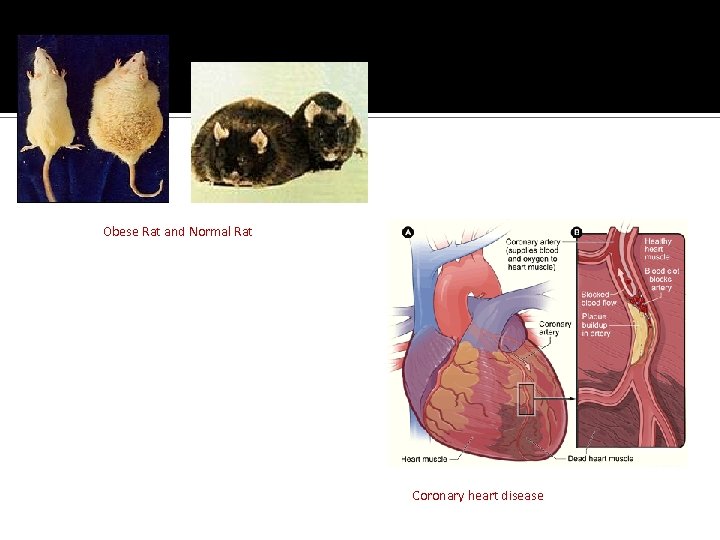 Obese Rat and Normal Rat Coronary heart disease
 Methodology 人体实验、临床观察或临床试验: ▪ 正常人体数据采集和实验 ▪ 病人的临床观察、检查和实验研究 ▪ 临床药理学:研究药物与人体(健康志愿者和病人) 相互作用的规律
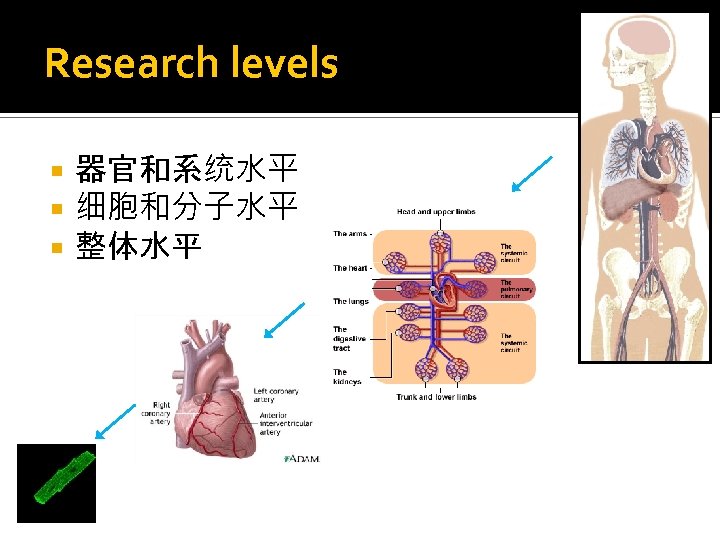 Research levels 器官和系统水平 细胞和分子水平 整体水平
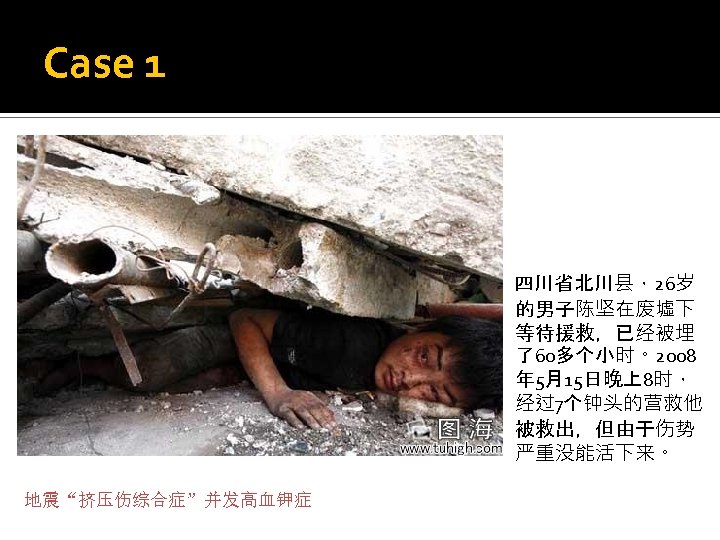 Case 1 四川省北川县,26岁 的男子陈坚在废墟下 等待援救,已经被埋 了60多个小时。2008 年 5月15日晚上8时, 经过7个钟头的营救他 被救出,但由于伤势 严重没能活下来。 地震“挤压伤综合症”并发高血钾症
 Case 2 患者男,现年 52岁,在一家企业谋职。7月18日上午,患 者因感觉身体不适,并伴有低热(体温: 37. 5),自带头 孢拉定,来到某医院一社区门诊就诊,因为是常来看病的 病人,门诊医生并未对病人做进一步询问和检查,而且病 人一再声称,此类药物以往经常使用,门诊有一药剂师接 过病人自带的药物,配置好药物之后就给患者进行静脉滴 注,滴注不过十分钟,患者突然感觉口中发苦,随之而来 的伴随呼吸困难,并出现一系列药物过敏体征,此时门诊 方对病人做了紧急处理之后,随之急送上级医院,最终抢 救无效死亡。 你的看法是什么?
 Course of Basic Medical Sciences 本学期的基础医学教程由两部分组成: 基础医学导论 ▪ 大教室,理论课 人体形态学实验I ▪ 实验室,实验课
 Course of Basic Medical Sciences 基础医学导论 学分: 4. 0 学时: 64 课程成绩: ▪ 形成性评价:多次作业和测验,文献阅读和报告。5060% ▪ 终结性评价:期末考试(至少四种题型)。40 -50% 教材:推荐教材,没有指定教材
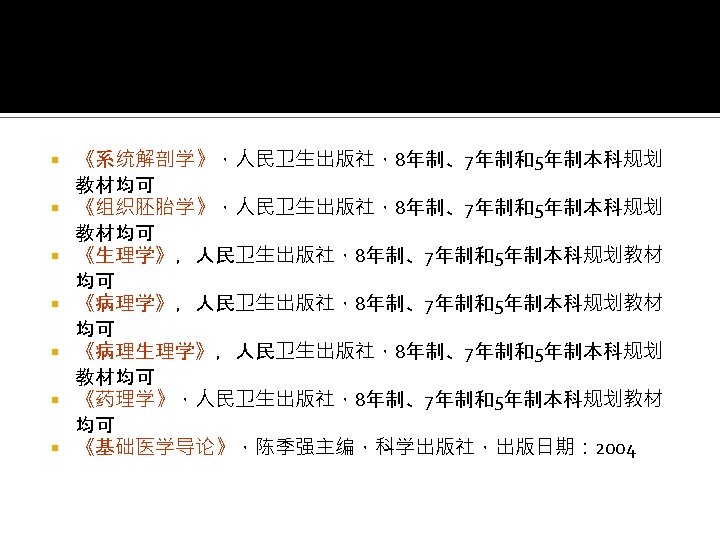 《系统解剖学》,人民卫生出版社,8年制、7年制和5年制本科规划 教材均可 《组织胚胎学》,人民卫生出版社,8年制、7年制和5年制本科规划 教材均可 《生理学》,人民卫生出版社,8年制、7年制和5年制本科规划教材 均可 《病理生理学》,人民卫生出版社,8年制、7年制和5年制本科规划 教材均可 《药理学》,人民卫生出版社,8年制、7年制和5年制本科规划教材 均可 《基础医学导论》,陈季强主编,科学出版社,出版日期: 2004
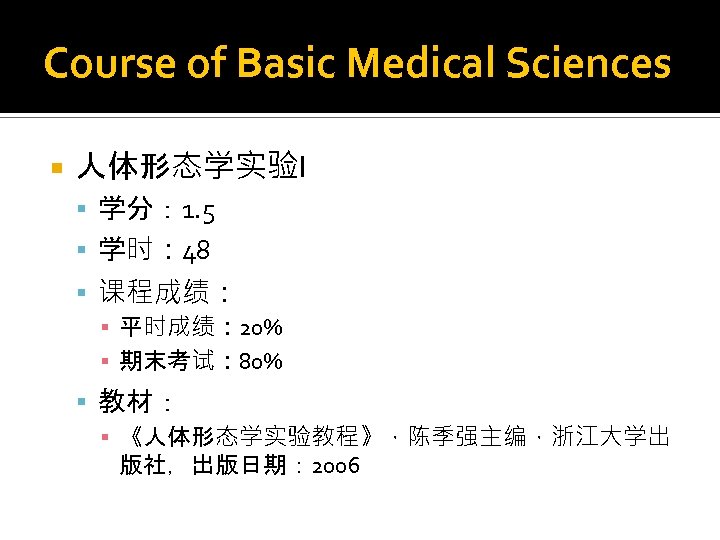 Course of Basic Medical Sciences 人体形态学实验I 学分: 1. 5 学时: 48 课程成绩: ▪ 平时成绩: 20% ▪ 期末考试: 80% 教材: ▪ 《人体形态学实验教程》,陈季强主编,浙江大学出 版社,出版日期: 2006
 The course website and requirements 课程网站: 网站名:基础医学导论(包括基础医学导论和人 体形态学实验I) 位置:浙江大学医学部课程中心(http: //10. 71. 121. 158) 登入方式: ▪ 浏览:基础医学导论-2010级 http: //10. 71. 121. 158/G 2 S/Template/View. aspx? action=vie w&course. Type=0&course. Id=27160
 The course website and requirements 登入方式: ▪ 登录:进入“浙江大学医学部课程中心”,在首页中, 输入“用户名”、“密码”和“验证码”登录,点击 “转到我的空间”,在“我的课程网站”中,点击“ 基础医学导论-2010级”,即进入课程网站 ▪ 以登录方式进入“我学习的课程”,可以获得各种课程相关的 通知和要求完成的作业、测验和网络考试的信息,学生在“我 的学习空间”完成有时间段限制的在线测试和考试 要求:每天登录检查一次
 The course website and requirements 课程网站内容: ▪ 课程资料: ▪ ▪ ▪ ▪ 教学周历 课程进度表 实验分班 教学楼地图 教学大纲 学习要求 秋学期、冬学期各个教学周 ▪ 扩展学习 ▪ 师生信息 ▪ 课程互动
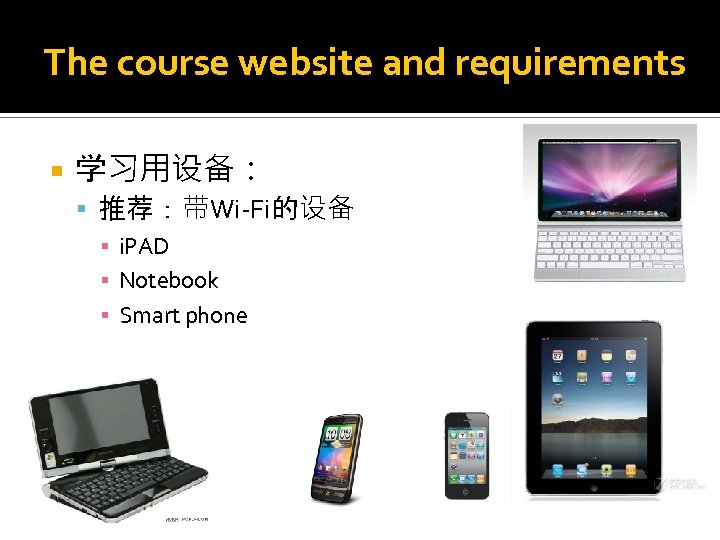 The course website and requirements 学习用设备: 推荐:带Wi-Fi的设备 ▪ i. PAD ▪ Notebook ▪ Smart phone
 医学毕业生的科学能力要求 医学毕业生的科学能力必须达到以下八个方面: 能够将维持稳态的分子、细胞和系统水平的机制及其机 制失调的知识应用到疾病的预防、诊断和管理中 能够应用物理和化学的基本原理解释正常生物学、重要 疾病的病理生物学和在疾病的预防、诊断和治疗中使用 的主要技术的作用机制 能够用人类基因组的遗传传递和分子生物学、人群遗传 学的原理,推断和计算疾病风险,制定实施计划以减轻 这种风险,获得和解释家族史和家系资料,预订遗传学 检验,指导治疗性决策,并评价患者风险 能够应用健康和疾病状态时免疫和非免疫的宿主防御机 制的细胞和分子原理,确定疾病的病因学和预防方法, 预测对治疗的反应
 能够将健康和疾病状态时的一般病理过程和疾病特异的 病理过程机制应用到重要人类疾病的预防、诊断、管理 和预后中 能够应用正常生理和疾病状态下的微生物的生物学原理, 解释疾病病因,确定预防方法,预测对治疗的反应 能够应用药理学原理,评价安全、合理、最理想的药物 治疗选择 能够将定量知识和推理(包括数据、模型、计算、分析 等的整合)、信息学 具,应用到诊断性和治疗性临床 决策中
 可传递技能(Transferable skills) Transferable skills are the skills and abilities that transfer from job to job no matter which position(s) you have held in the past Transferable skills are the skills you've gathered through various jobs, volunteer work, hobbies, sports, or other life experiences that can be used in your next job or new career
 A list of transferable skills Writing Analyzing Conducting research Organizing Advocating Delegating Public speaking Estimating Forecasting Planning Management Computer literacy Work well under pressure Foreign language skills Sign language skills Coordinate events Teach/Train others Negotiation skills Proofreading and editing skills Problem solving skills Flexibility/Adaptability Team player Interpersonal skills Interviewing skills Decision-making skills Creative thinking skills
 形态学实验1第一次上课地点 集中和学习虚拟人软件: 医学信息中心:医学院综合楼三楼网络教室 了解人体基本结构和异常: 人体博物馆:医学院露天二楼平台,长方形展览 室+球形结构
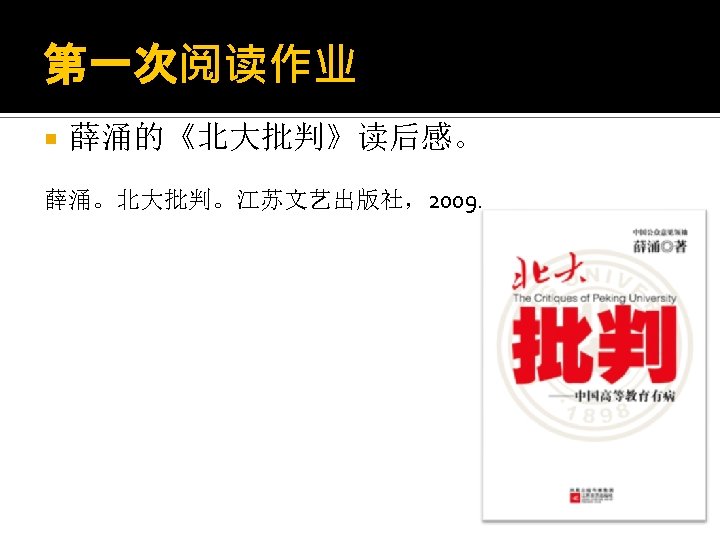 第一次阅读作业 薛涌的《北大批判》读后感。 薛涌。北大批判。江苏文艺出版社,2009.
 Thank you for your attention! We seek to prepare our graduates for distinguished careers in clinical practice, teaching, research, and public service!