


 Скачать презентацию XFEL Tuner Lorentz Force Detuning System Setup
1e71004b12aa45c672e867ba177bae75.ppt
- Количество слайдов: 35
 XFEL Tuner • Lorentz Force Detuning System Setup • New Saclay design Lutz Lilje DESY -MPY-
 General Remarks • Available today – Old Saclay Tuner – Simple Single Piezo fixture • 150 -200 Hz compensation • Feedforward works well – Piezo stacks • Desirable – Two piezo fixture • Sensor-Actuator configuration – Future Option: Feedback on sensor piezo? – Bipolar operation to gain more stroke from Piezo • At cold stroke of piezo is smaller by up to a factor of 10… • … but the material is more forgiving – New Saclay Tuner Lutz Lilje DESY -MPY-
 General remarks II • Need engineering – Detailed study on forces at the piezo position • Cold force sensor built by H 1 • Test in CHECHIA • Design of fixture/frame for 2 piezos – Selection of best Piezo supplier • Material • INFN works on that – Control system • Driver Amplifier modification for bipolar operation • Need automated procedures to setup Piezo – Collaboration with INFN • Detuning measurement – Preferably in one pulse – Warsaw colleagues are working on this Lutz Lilje DESY -MPY-
 Lorentz Force Detuning System Setup • Setup description • Single pulse compensation • Resonant excitation • Problems Lutz Lilje DESY -MPY-
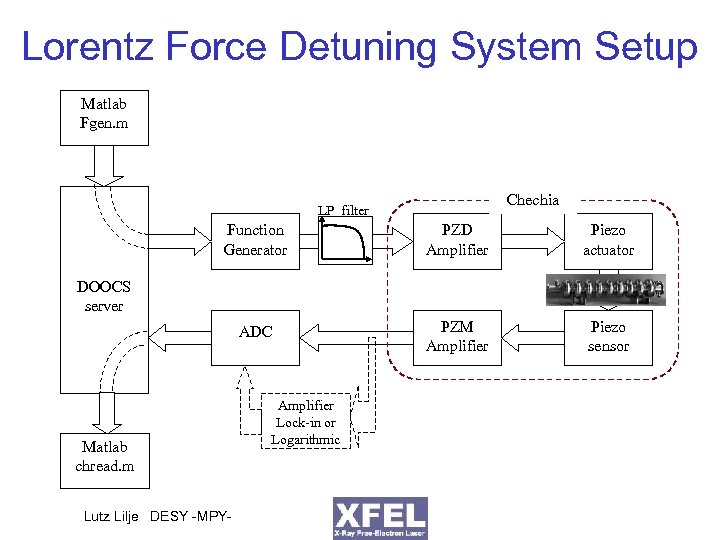 Lorentz Force Detuning System Setup Matlab Fgen. m Chechia LP filter Function Generator PZD Amplifier Piezo actuator ADC PZM Amplifier Piezo sensor DOOCS server Matlab chread. m Lutz Lilje DESY -MPY- Amplifier Lock-in or Logarithmic
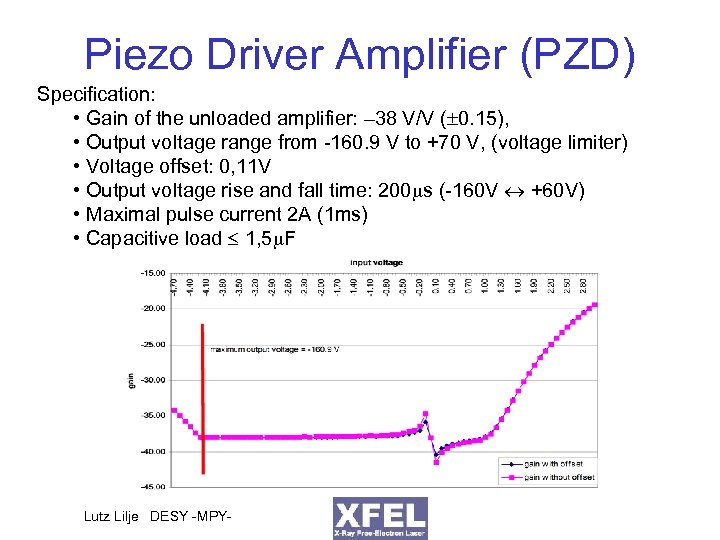 Piezo Driver Amplifier (PZD) Specification: • Gain of the unloaded amplifier: – 38 V/V ( 0. 15), • Output voltage range from -160. 9 V to +70 V, (voltage limiter) • Voltage offset: 0, 11 V • Output voltage rise and fall time: 200 s (-160 V +60 V) • Maximal pulse current 2 A (1 ms) • Capacitive load 1, 5 F Lutz Lilje DESY -MPY-
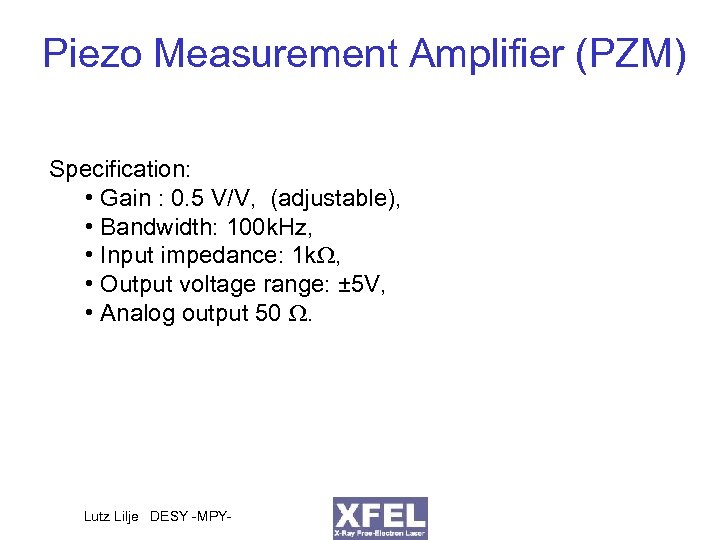 Piezo Measurement Amplifier (PZM) Specification: • Gain : 0. 5 V/V, (adjustable), • Bandwidth: 100 k. Hz, • Input impedance: 1 k , • Output voltage range: ± 5 V, • Analog output 50 . Lutz Lilje DESY -MPY-
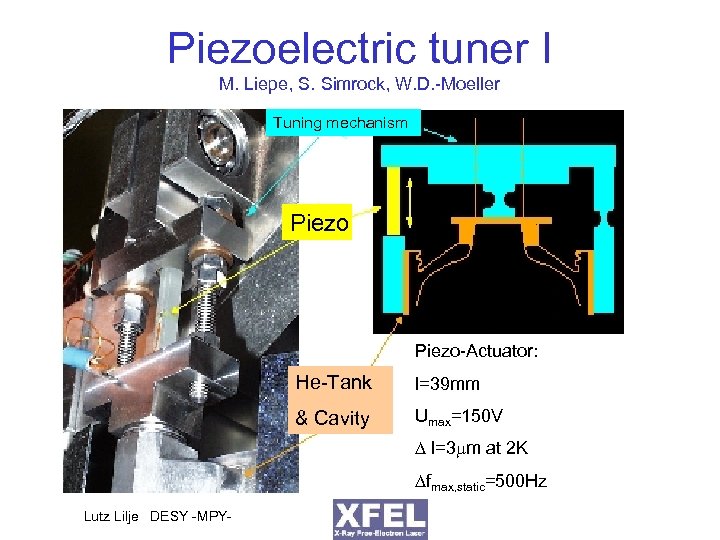 Piezoelectric tuner I M. Liepe, S. Simrock, W. D. -Moeller Tuning mechanism Piezo-Actuator: He-Tank l=39 mm & Cavity Umax=150 V l=3 m at 2 K fmax, static=500 Hz Lutz Lilje DESY -MPY-
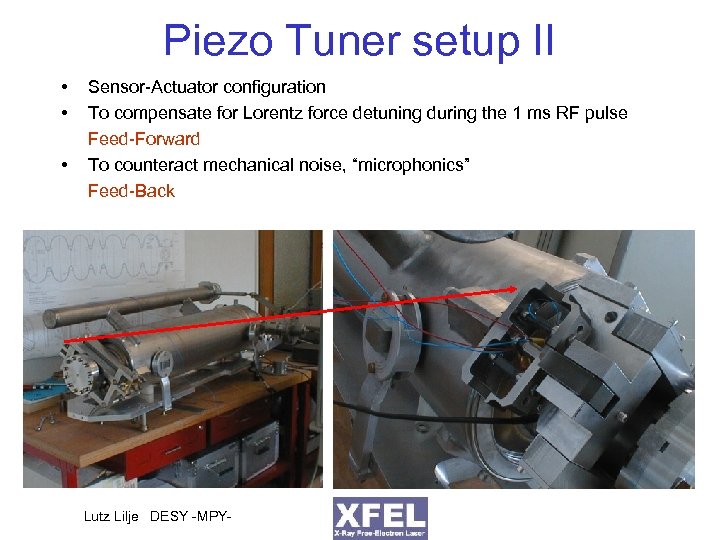 Piezo Tuner setup II • • • Sensor-Actuator configuration To compensate for Lorentz force detuning during the 1 ms RF pulse Feed-Forward To counteract mechanical noise, “microphonics” Feed-Back Lutz Lilje DESY -MPY-
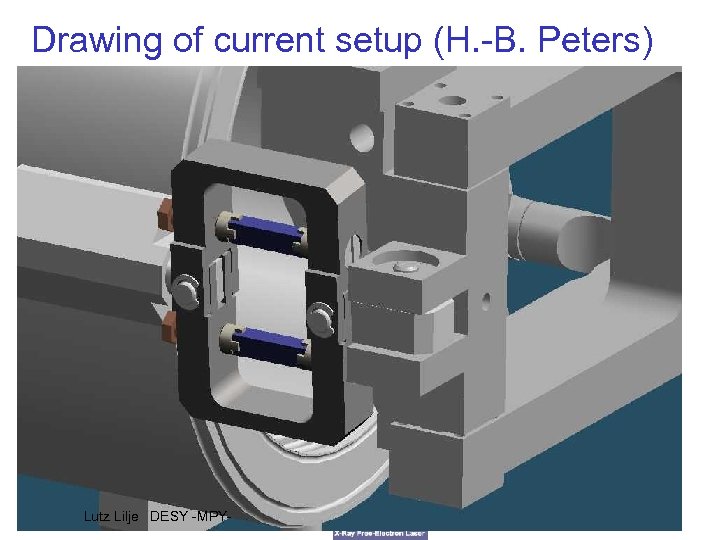 Drawing of current setup (H. -B. Peters) Lutz Lilje DESY -MPY-
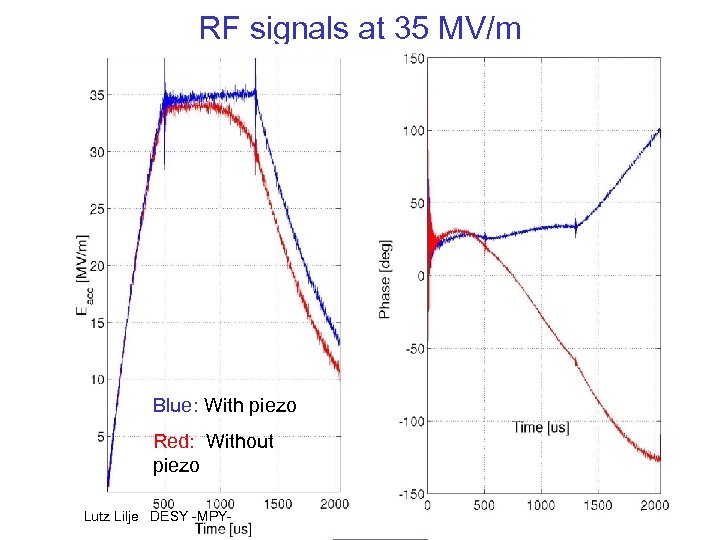 RF signals at 35 MV/m Blue: With piezo Red: Without piezo Lutz Lilje DESY -MPY-
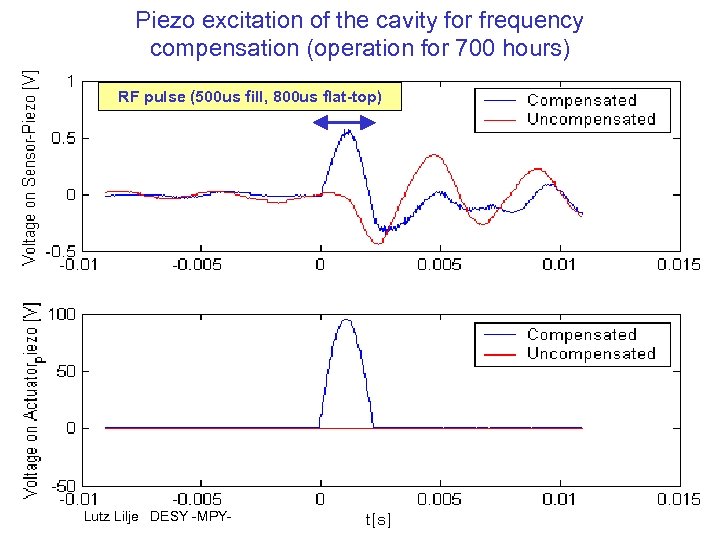 Piezo excitation of the cavity for frequency compensation (operation for 700 hours) RF pulse (500 us fill, 800 us flat-top) Lutz Lilje DESY -MPY-
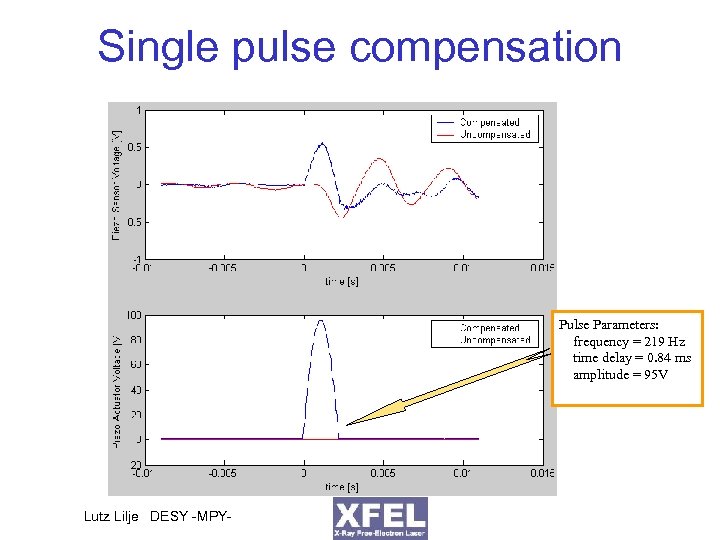 Single pulse compensation Pulse Parameters: frequency = 219 Hz time delay = 0. 84 ms amplitude = 95 V Lutz Lilje DESY -MPY-
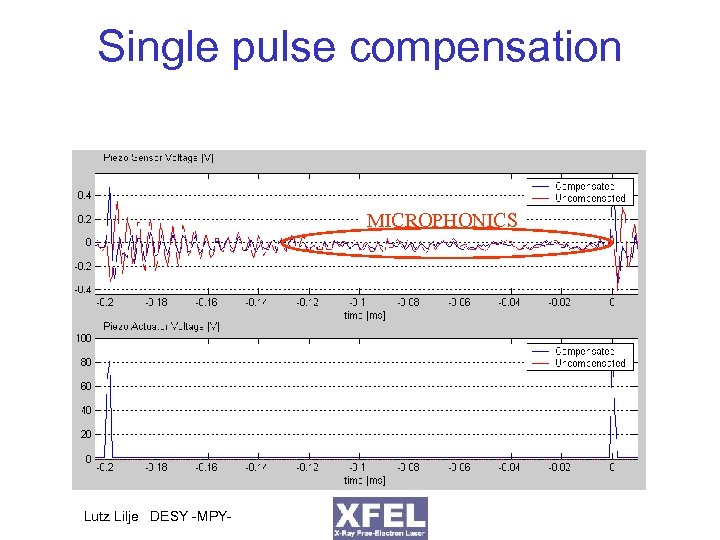 Single pulse compensation MICROPHONICS Lutz Lilje DESY -MPY-
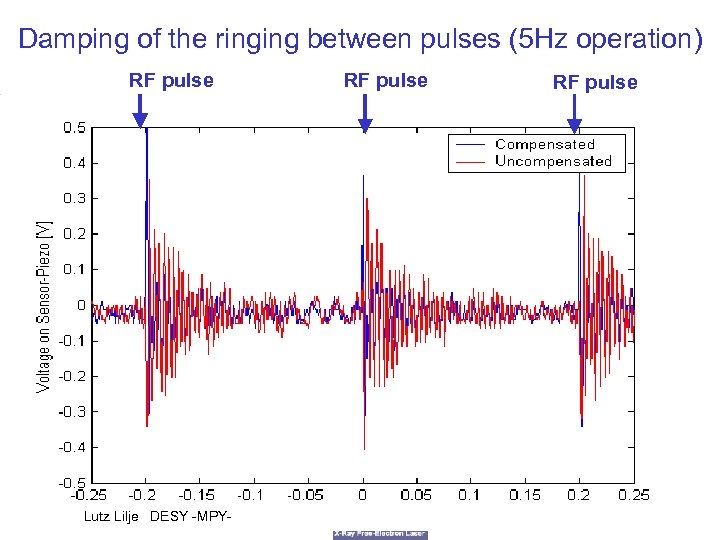 Damping of the ringing between pulses (5 Hz operation) RF pulse Lutz Lilje DESY -MPY- RF pulse
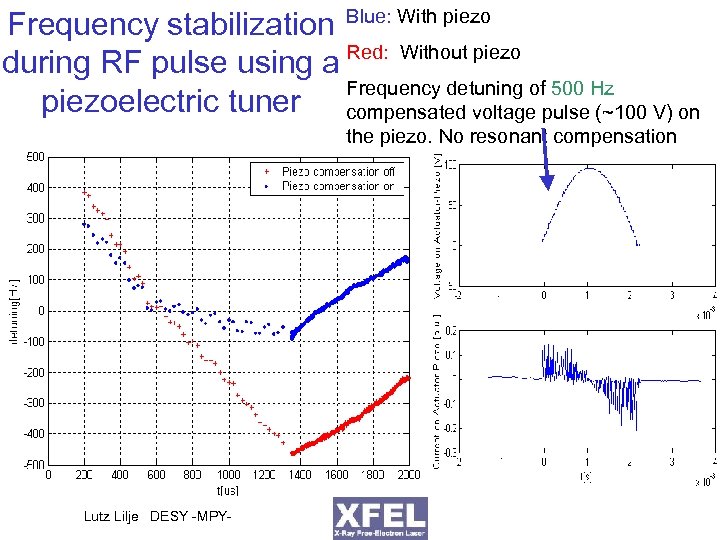 Frequency stabilization Blue: With piezo Red: Without piezo during RF pulse using a Frequency detuning of 500 Hz piezoelectric tuner compensated voltage pulse (~100 V) on the piezo. No resonant compensation Lutz Lilje DESY -MPY-
 Option: Resonant excitation of a mechanical cavity resonance • if one excites a mechanical resonance of a cavity with the piezo, one can use the cavity as an mechanical amplifier, so that a small stroke of the active element can compensate large detuning • we have shown that with the excitation of three periods of the mechanical resonance frequency, about 1000 Hz could be compensated Lutz Lilje DESY -MPY-
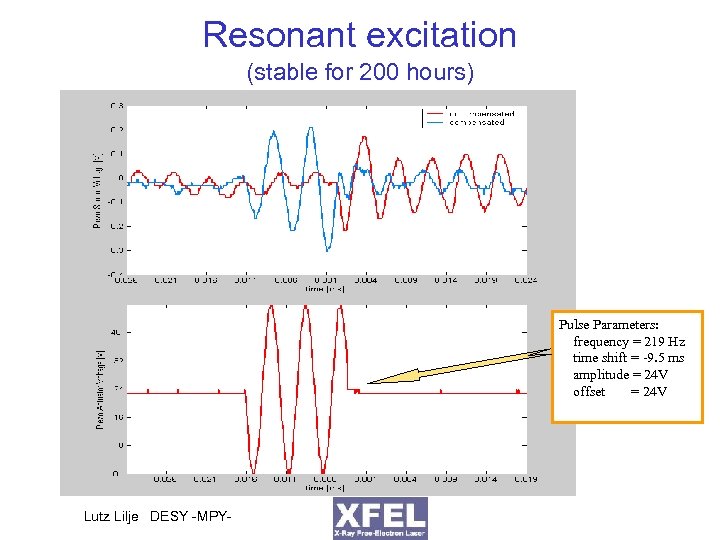 Resonant excitation (stable for 200 hours) Pulse Parameters: frequency = 219 Hz time shift = -9. 5 ms amplitude = 24 V offset = 24 V Lutz Lilje DESY -MPY-
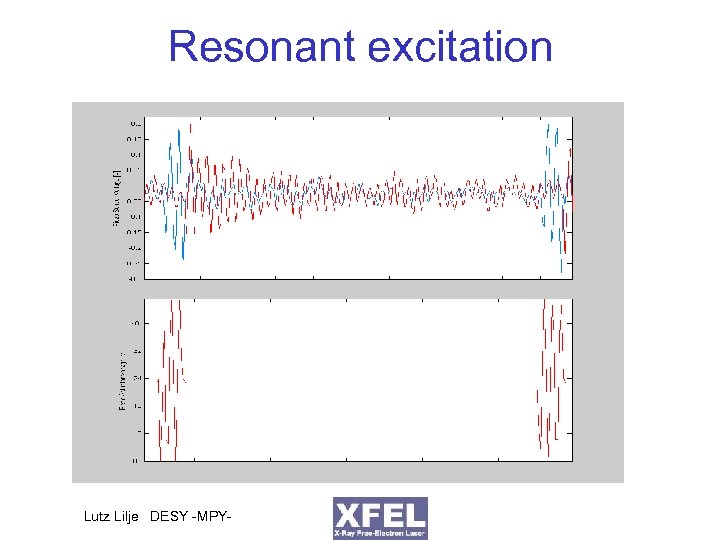 Resonant excitation Lutz Lilje DESY -MPY-
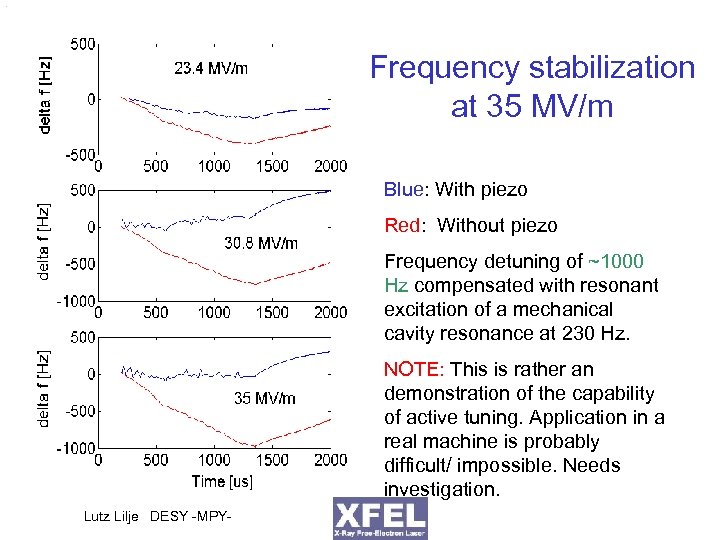 Frequency stabilization at 35 MV/m Blue: With piezo Red: Without piezo Frequency detuning of ~1000 Hz compensated with resonant excitation of a mechanical cavity resonance at 230 Hz. NOTE: This is rather an demonstration of the capability of active tuning. Application in a real machine is probably difficult/ impossible. Needs investigation. Lutz Lilje DESY -MPY-
 Module Measurements Lutz Lilje DESY -MPY-
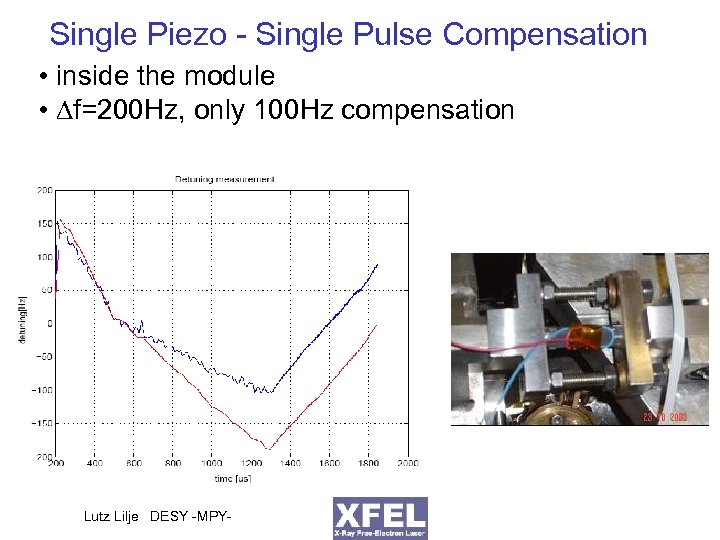 Single Piezo - Single Pulse Compensation • inside the module • f=200 Hz, only 100 Hz compensation Lutz Lilje DESY -MPY-
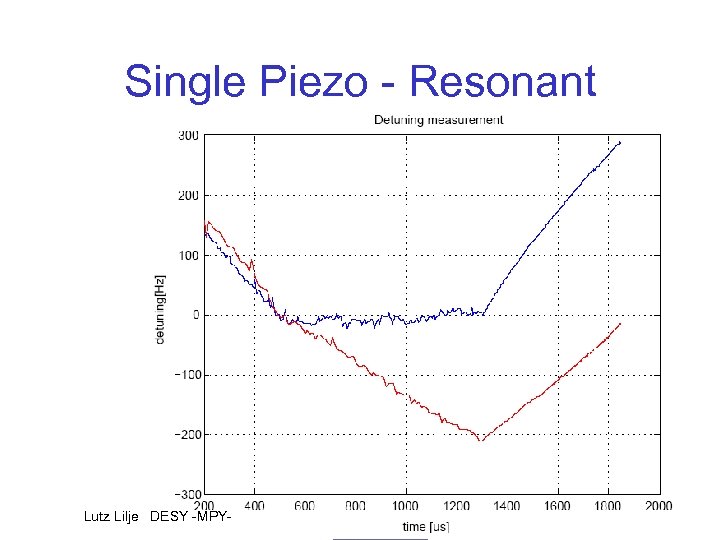 Single Piezo - Resonant Lutz Lilje DESY -MPY-
 Problems with the active tuner • Fundamental problem: – Preload at operating temperature not defined – Large tuning needed for both cavities tested in CHECHIA (AC 72, AC 73) • ´natural´ frequency after tank welding is 780 k. Hz above 1, 3 GHz • Normally this is more like 200 -300 k. Hz – This results in a very large force tearing on the piezo fixture • Fixtures open up and piezos become loose Lutz Lilje DESY -MPY-
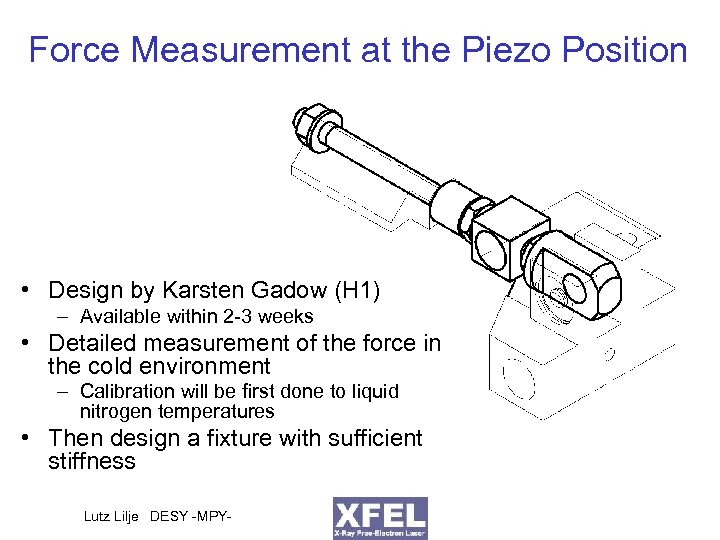 Force Measurement at the Piezo Position • Design by Karsten Gadow (H 1) – Available within 2 -3 weeks • Detailed measurement of the force in the cold environment – Calibration will be first done to liquid nitrogen temperatures • Then design a fixture with sufficient stiffness Lutz Lilje DESY -MPY-
 Problems with active tuning • Single Piezo fixture – So far only 100 -200 Hz compensated (no resonant excitation of the cavity) – Achieved compensation at 1, 3 GHz – Alternative: Resonant mechanical excitation of the cavity • Double Piezo fixture – Has only been operated at 1, 3 GHz + 600 k. Hz – Needs a stiffer design – Alternative: Put 2 single Piezo fixtures at different posts of the tuner • Bipolar operation of Piezos helps in any case – Check in CHECHIA and INFN Lutz Lilje DESY -MPY-
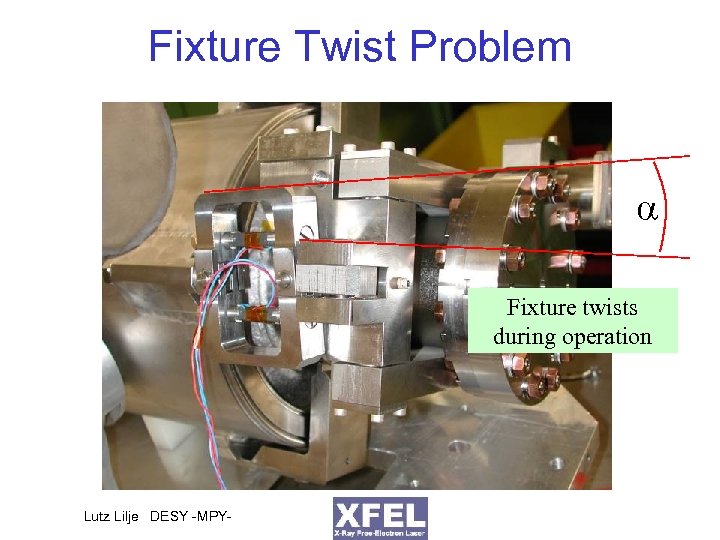 Fixture Twist Problem Fixture twists during operation Lutz Lilje DESY -MPY-
 Problems with active tuning • Automation is needed for operation of the piezos in the machine – Determination of optimum pulse shape – Interconnection to LLRF system Lutz Lilje DESY -MPY-
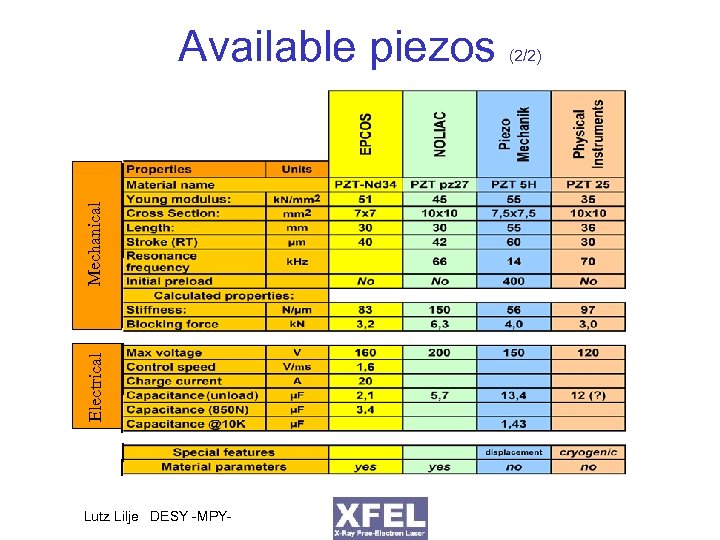
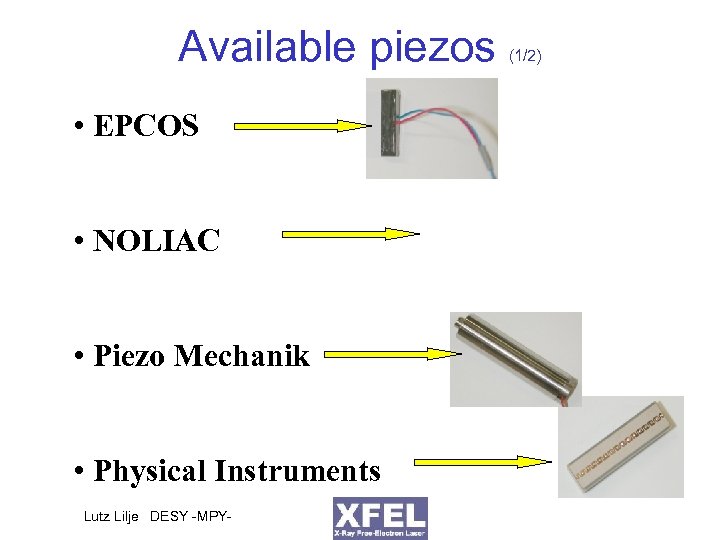 Available piezos • EPCOS • NOLIAC • Piezo Mechanik • Physical Instruments Lutz Lilje DESY -MPY- (1/2)
 Electrical Mechanical Available piezos Lutz Lilje DESY -MPY- (2/2)
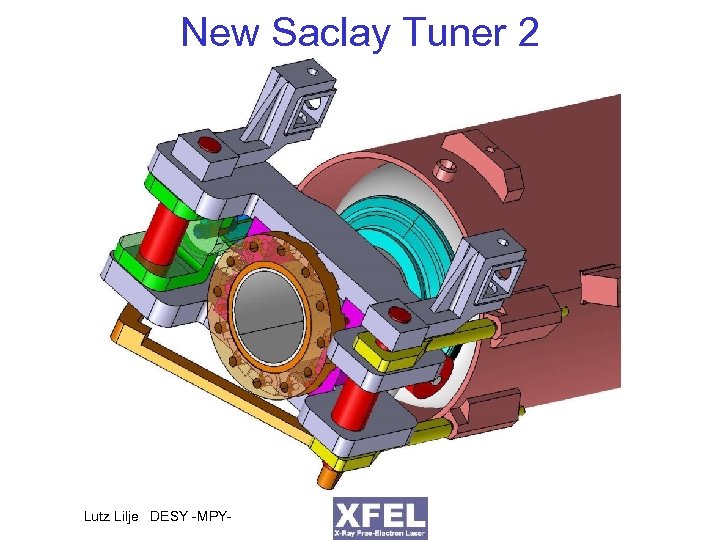
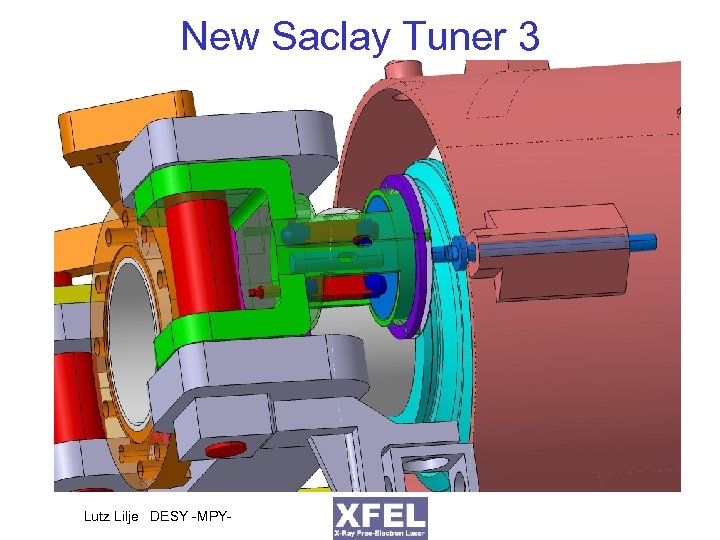
 New Saclay Tuner • Design by P. Bosland • More compact design possible • Cavity should be pre-tuned so that the tuner is not pushing • Piezo integrated • Available by the end of the year for first tests Lutz Lilje DESY -MPY-
 New Saclay Tuner 2 Lutz Lilje DESY -MPY-
 New Saclay Tuner 3 Lutz Lilje DESY -MPY-
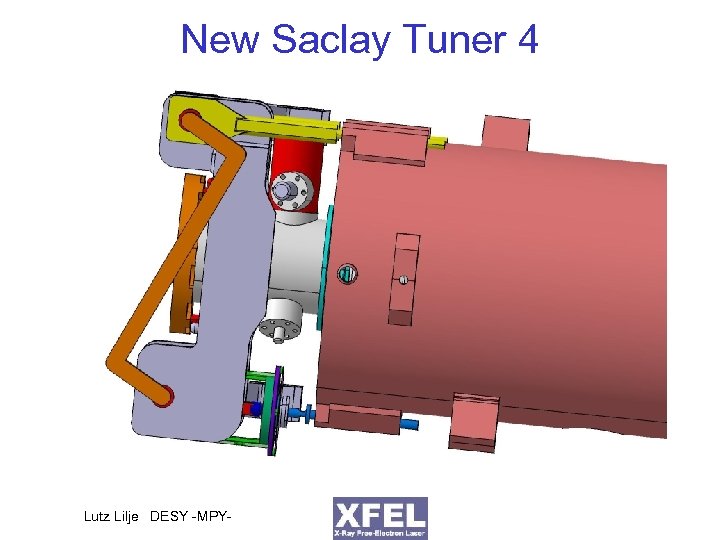 New Saclay Tuner 4 Lutz Lilje DESY -MPY-
 • Proof-of-principle Conclusion – Single-piezo » Non-resonant: 100 Hz in the module » Resonant: 200 Hz in the module » (We can use this in module 6!) – Double-piezo » Non-resonant: 400 Hz (not at 1. 3 GHz exact) » Resonant: 1 k. Hz – Test of bipolar operation • Engeneering is needed – Choice of Piezo (-> together with INFN, IPN Orsay)) – Stiffer Piezo fixture/frame for 2 Piezos » Force measurement is underway (finished end 2004? ) – LLRF integration • New Saclay tuner tests needed – Available end 2004 / beginning 2005 – Change of cavity pre-tuning desirable Lutz Lilje DESY -MPY-