


 Скачать презентацию www epa gov air Healthy Homes Home Energy Upgrades
b1540e944b1d6740bc6a28ca0afeb95e.ppt
- Количество слайдов: 55
 www. epa. gov/air Healthy Homes, Home Energy Upgrades, Partnership for Clean Indoor Air, Asthma Programs Sarany Singer Indoor Environments Division Office of Radiation & Indoor Air EPA/WESTAR Residential Wood Smoke Workshop March 2, 2011
 Why Indoor Air? www. epa. gov/air • High Risk – Chemicals (i. e. . formaldehyde, PCBs, lead), Pesticides, Biologicals (i. e. . mold) – Consumer products, furniture, building materials • High Exposure – Concentrations usually 2 -5 x higher than outdoors – Up to 90% of time spent indoors (especially for children/seniors) – Exposure to indoor pollutants causes health effects • High Economic Costs – $150 - $200 B per year in lost work/school hours • Focus on Children’s Health and Environmental Justice Issues – Asthma disparities are greater in these groups – Ability to pay for low income households to fix indoor air problems
 What Does the Indoor Air Program Do? www. epa. gov/air • Asthma – Lead Children’s Health Taskforce on asthma disparities – Avoid 50, 000+ ER visits annually, 27% of health plans support environmental management • Partnership for Clean Indoor Air – 300 Partner organizations/115 countries to increase the use of clean, efficient, affordable, reliable, and safe cooking technology and fuels – Laid the foundation for what has become a large international program • Promoting Healthy Environments and Families – Homes • Indoor air. PLUS program for new homes – specifications to build new homes in a safe and healthy way • Integrate IAQ policies, protocols and specifications into existing building related initiatives (Energy Efficiency, Green Buildings, DOE, HUD) – Schools • Leader in getting schools to develop and integrate effective Indoor air quality management plans • Interagency Leader- IAQ, Radon, Children’s Health
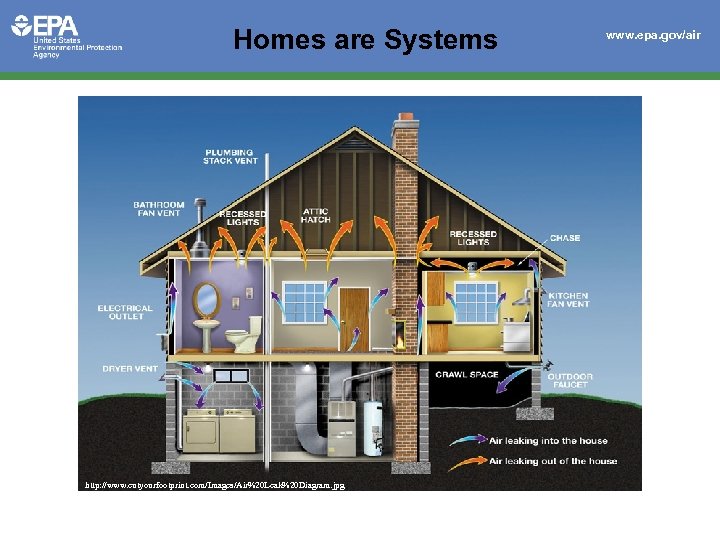 Homes are Systems http: //www. cutyourfootprint. com/Images/Air%20 Leak%20 Diagram. jpg www. epa. gov/air
 Energy Efficiency and Weatherization www. epa. gov/air Weatherizing (sealing and insulating) • Moderates temperature changes • Helps save energy But… Sealing and tightening the home’s envelope (reducing air leakage) can: • Make existing problems worse • Create new problems • Problems can cause discomfort or in rare cases death
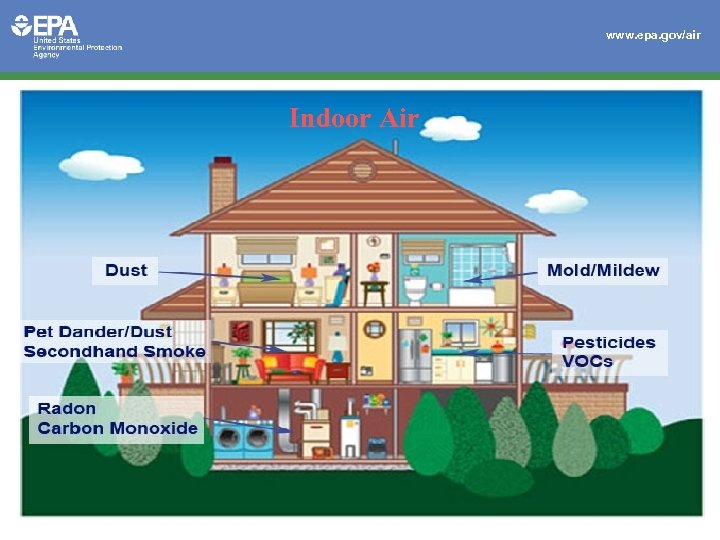
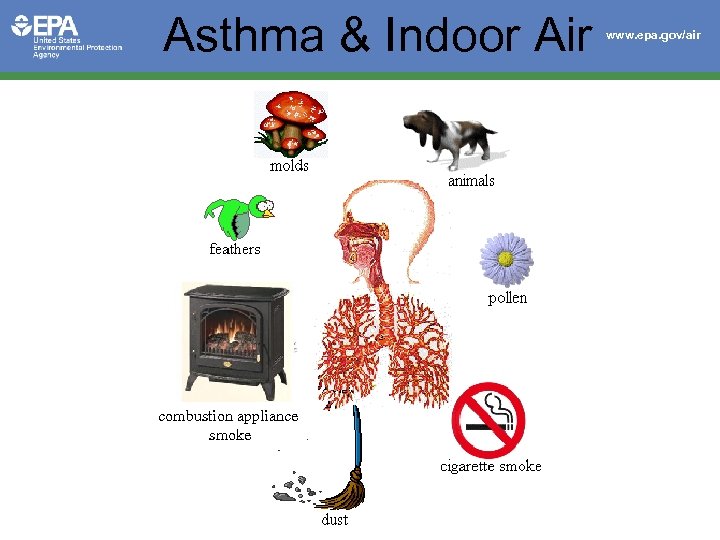 Asthma & Indoor Air combustion appliance smoke www. epa. gov/air
 Asthma Facts • About 23 M people in US have asthma (includes 7. 1 M children) • Asthma accounts for 217, 000 emergency room visits and 10. 5 M visits to the physician office per year • Deaths in the U. S. = 3, 447 people in 2007 • Asthma costs in the U. S. = $30 B in 2007 www. epa. gov/air
 High-Risk Populations • • • Children Low-income, urban residents Minorities Those with hereditary predisposition Allergic individuals www. epa. gov/air
 IAQ-Asthma Connection www. epa. gov/air • Indoor pollutants = significant contributor to asthma-related morbidity and mortality • Prevention is an important asthma management tool
 Indoor Combustion Appliances and Respiratory Effects Inefficient combustion produces • Asphyxiants • Irritants • PM www. epa. gov/air
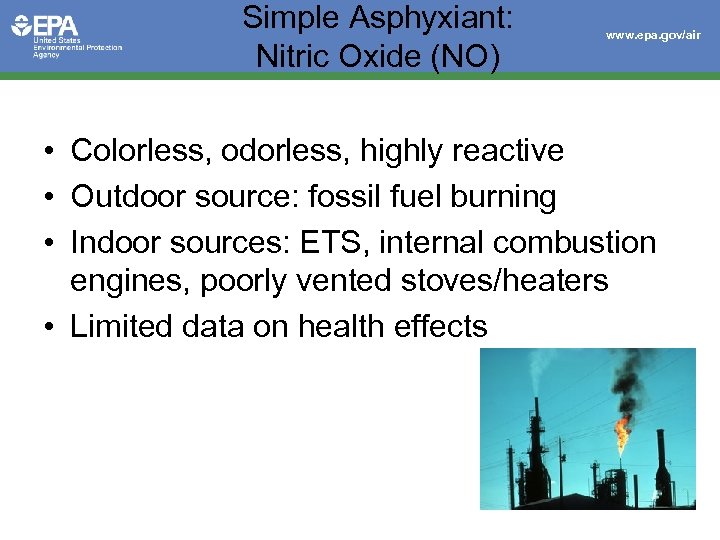 Simple Asphyxiant: Nitric Oxide (NO) www. epa. gov/air • Colorless, odorless, highly reactive • Outdoor source: fossil fuel burning • Indoor sources: ETS, internal combustion engines, poorly vented stoves/heaters • Limited data on health effects
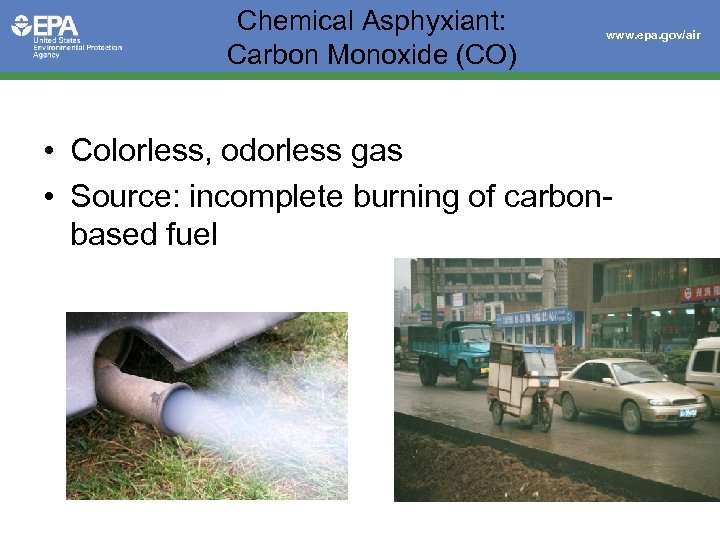 Chemical Asphyxiant: Carbon Monoxide (CO) www. epa. gov/air • Colorless, odorless gas • Source: incomplete burning of carbonbased fuel
 Health Effects of CO www. epa. gov/air • Increased respiration • Aggravated angina (chest pain) • Decreased: visual perception, dexterity, learning, & task performance • Headache, fatigue, & impaired judgment • Confusion, collapse w/exercise • More than 400 deaths/yr in the U. S. due to unintentional CO poisoning
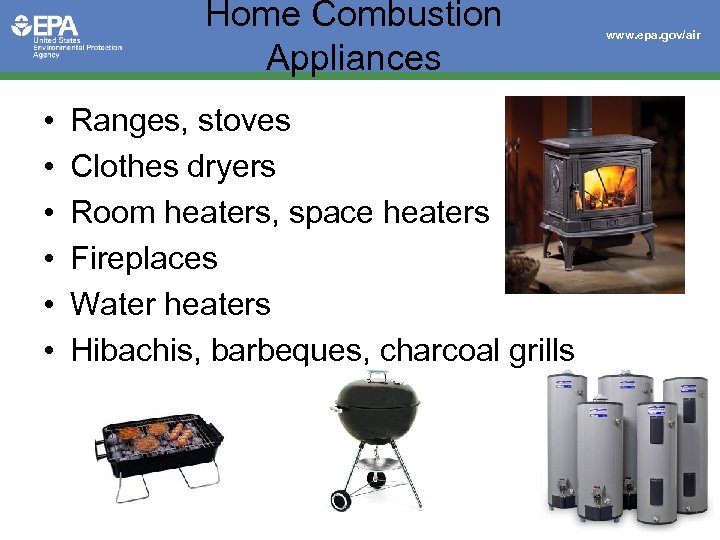 Home Combustion Appliances • • • Ranges, stoves Clothes dryers Room heaters, space heaters Fireplaces Water heaters Hibachis, barbeques, charcoal grills www. epa. gov/air
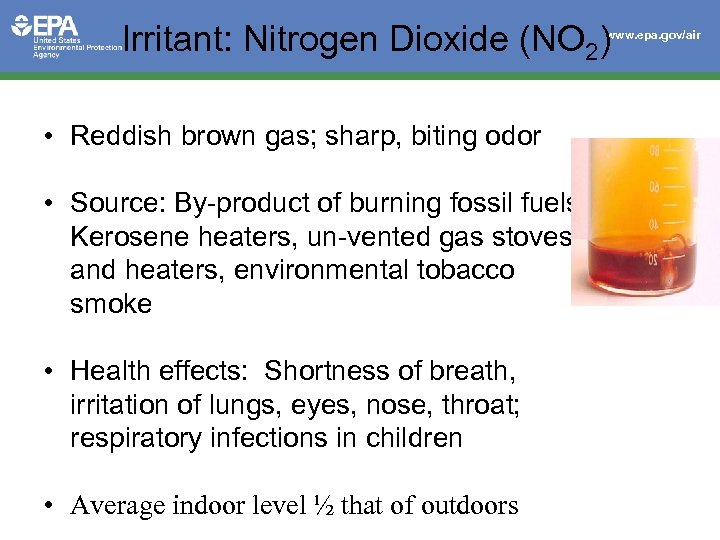 Irritant: Nitrogen Dioxide (NO 2) www. epa. gov/air • Reddish brown gas; sharp, biting odor • Source: By-product of burning fossil fuels, Kerosene heaters, un-vented gas stoves and heaters, environmental tobacco smoke • Health effects: Shortness of breath, irritation of lungs, eyes, nose, throat; respiratory infections in children • Average indoor level ½ that of outdoors
 Particulate Matter (PM) www. epa. gov/air • Chemical, fiber or metal components • Health effects depend on particle size and composition • Inhalable range = diam. 10 microns or less • Respirable range = diam. 2. 5 microns or less • Health Effects: Irritation of lungs, eyes, nose, throat, may increase respiratory symptoms in people with chronic lung disease or heart problems • Some chemicals attached to PM may be carcinogenic
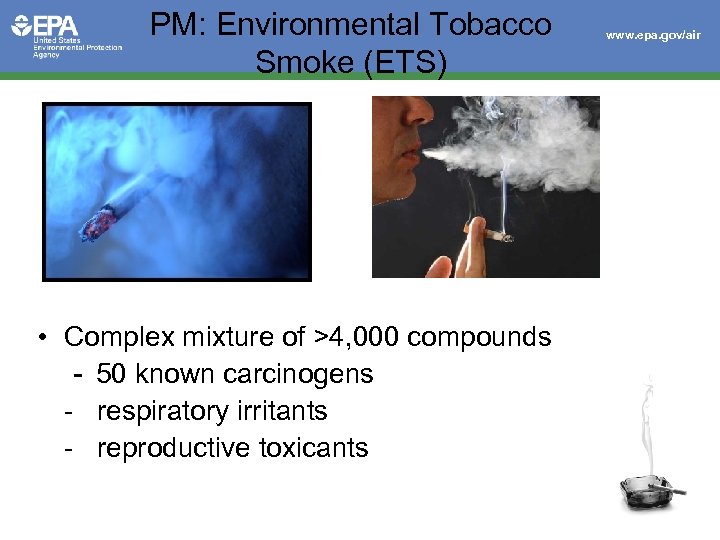 PM: Environmental Tobacco Smoke (ETS) • Complex mixture of >4, 000 compounds - 50 known carcinogens - respiratory irritants - reproductive toxicants www. epa. gov/air
 EPA Recommendations www. epa. gov/air Indoor Air Pollutant Reduction Source Control Ventilation Air Filtration
 Reduce Exposure to Combustion Gaseous Pollutants • • • www. epa. gov/air Keep gas appliances properly adjusted Consider vented space heater Use proper fuel in heaters/furnaces Install & use exhaust fan vented to outside Choose properly sized wood stoves certified to meet EPA emission standards • Have trained professional inspect, clean, & tune up central heating systems annually • Fix identified problems promptly • Don’t idle car in garage
 Indoor Environment Programs www. epa. gov/air • Create a balance between high energy efficiency home and health • Relevant IED Programs (to name a few!): • Partnership for Clean Indoor Air • Asthma Program • Indoor Air Plus 20
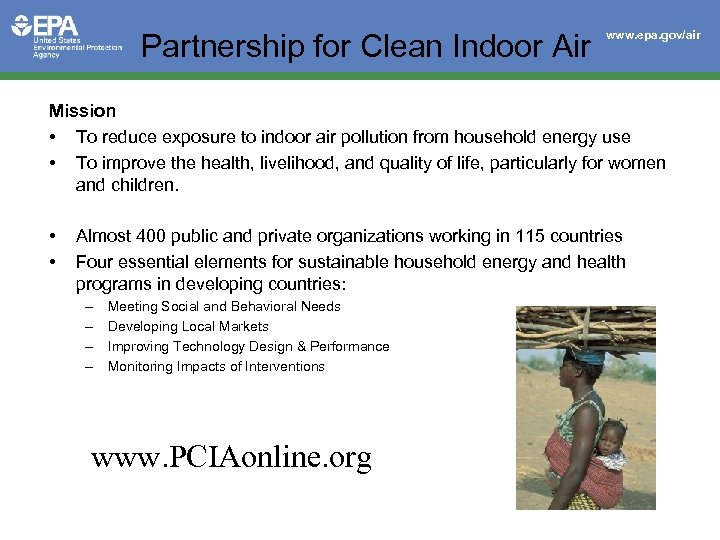 Partnership for Clean Indoor Air www. epa. gov/air Mission • To reduce exposure to indoor air pollution from household energy use • To improve the health, livelihood, and quality of life, particularly for women and children. • • Almost 400 public and private organizations working in 115 countries Four essential elements for sustainable household energy and health programs in developing countries: – – Meeting Social and Behavioral Needs Developing Local Markets Improving Technology Design & Performance Monitoring Impacts of Interventions www. PCIAonline. org
 EPA Asthma Program www. epa. gov/air Program Goals: Reduce exposure to indoor asthma triggers and improve the quality of life for 6. 5 million people by 2012. Program components: • Community Outreach and Education • National Public Awareness Campaigns • Science Support www. epa. gov/asthma
 Indoor air. PLUS Program www. epa. gov/air www. epa. gov/indoorairplus
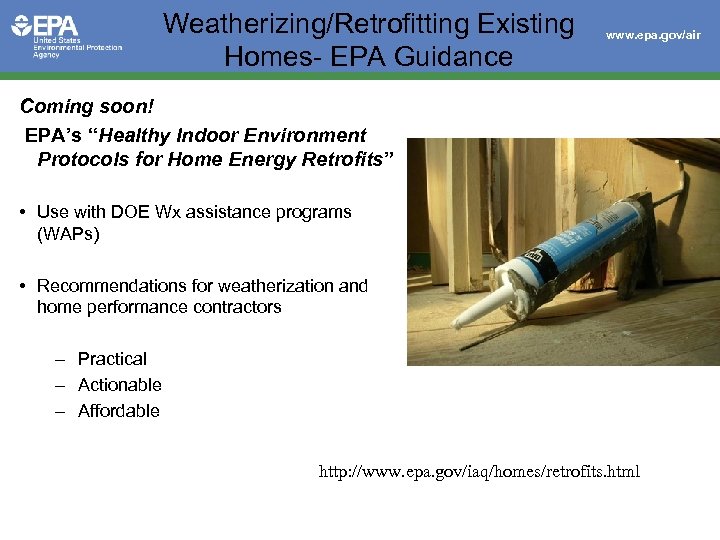 Weatherizing/Retrofitting Existing Homes- EPA Guidance www. epa. gov/air Coming soon! EPA’s “Healthy Indoor Environment Protocols for Home Energy Retrofits” • Use with DOE Wx assistance programs (WAPs) • Recommendations for weatherization and home performance contractors – Practical – Actionable – Affordable http: //www. epa. gov/iaq/homes/retrofits. html
 Ventilation Study www. epa. gov/air EPA is coordinating with other federal agencies • Ventilation Study – Planned multi-year, multi-phase research study – Intended to improve indoor air quality (IAQ) and energy performance of the U. S. housing stock – Inform the setting of ventilation standards to • manage the health risks associated with indoor air pollutant exposures • maintain or improve new home energy efficiency
 Sustainable Energy Efficiency www. epa. gov/air • Indoor air pollution impacts health • Source control is most effective in achieving risk reduction • Increased use of efficient combustion appliances indoors • Energy efficiency • Less impact on the environment via reduced fuel usage and reduced outdoor air pollution • Reduced risk of health impacts from exposure to combustion pollutants indoors 26
 Thank you for your attention! www. epa. gov/air Sarany Singer sarany. singer@epa. gov U. S. EPA is not responsible for materials from external sources – consult our web page for official guidance www. epa. gov/iaq
 www. epa. gov/air Thank You Sarany Singer singer. sarany@epa. gov U. S. EPA is not responsible for materials from external sources – consult our web page for official guidance 28
 www. epa. gov/air Back Up Slides 29
 www. epa. gov/air
 www. epa. gov/air Weatherization Impacts on Indoor Air Quality • The house is a system; air sealing and insulating can change how a house operates • Sealing and tightening the home’s envelope (reducing air leakage) can: – Make existing problems worse – Create new problems – Problems can cause discomfort or may be lethal
 www. epa. gov/air Weatherization Impacts on IAQ - Continued • Stack-effect altered and reduced make-up air • Spillage/Back-drafting of combustion products (e. g. , carbon monoxide) from atmospherically vented furnaces, hot water heaters, wood stoves and fireplaces • Reduced natural ventilation impacts: – – – Increased moisture/mold, other biologicals Increased chemical pollutant levels Increased odors Effects of gas leaks magnified Less fresh air for occupants
 Determining the Right Amount of Ventilation www. epa. gov/air • Test In-Test Out: Blower-door testing – Before alterations to establish leakage of envelope and target sealing upgrades – After energy upgrades to ensure adequate ventilation for indoor air quality • Establish “Minimum Ventilation Requirement” (MVR or “Building Tightness Limit, ” BTL) • Compute MVR with ASHRAE 62 -1989 or ASHRAE 62. 2 (latest version)
 www. epa. gov/air Targeting Air Sealing • Sealing/weather stripping conducted • Target for blower door reading usually between pre-weatherization test result and calculated MVR • State programs often determine the target test result differently • Test atmospherically vented combustion appliances/equipment for spillage/backdrafting
 www. epa. gov/air Additional Resources • EPA’s Indoor Air Quality Web site: www. epa. gov/iaq • EPA’s Climate Change: www. epa. gov/climatechange/ • ENERGY STAR Home Improvement: www. energystar. gov/homeimprovement • EPA’s Ventilation for Homes Web page: www. epa. gov/iaq/homes/hip-ventilation. html • EPA’s The Inside Story: A Guide to
 www. epa. gov/air
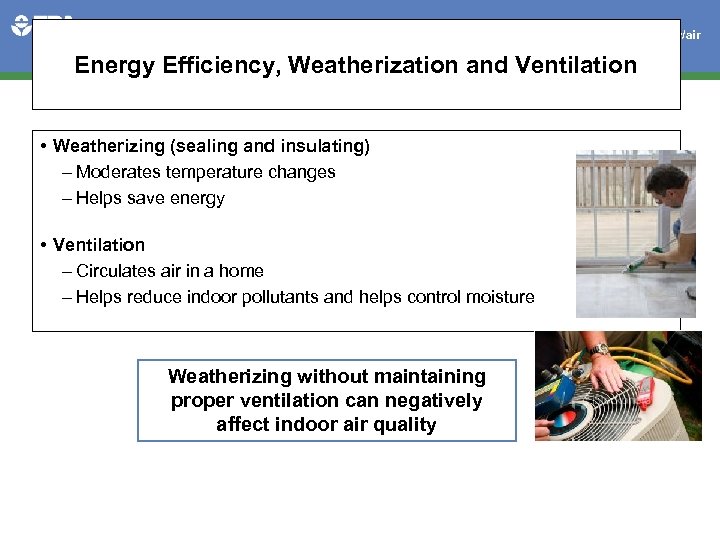 www. epa. gov/air Energy Efficiency, Weatherization and Ventilation • Weatherizing (sealing and insulating) – Moderates temperature changes – Helps save energy • Ventilation – Circulates air in a home – Helps reduce indoor pollutants and helps control moisture Weatherizing without maintaining proper ventilation can negatively affect indoor air quality
 www. epa. gov/air Proper ventilation must be included in a weatherization plan Residential indoor air quality www. epa. gov/iaq/homes/index. html Ventilation and remodeling www. epa. gov/iaq/homes/hip-front. html Ventilation for homes www. epa. gov/iaq/homes/hip-ventilation. html Control moisture and limit mold growth - Vent appliances that produce moisture to the outside - Fix moisture problems & dry materials and furnishings within 48 hours to prevent mold growth www. epa. gov/iaq/mold Build new homes with the Indoor air. PLUS label - Use Indoor air. PLUS guidance to improve indoor air quality and save energy - Indoor air. PLUS specifications cover insulation and ventilation www. epa. gov/indoorairplus
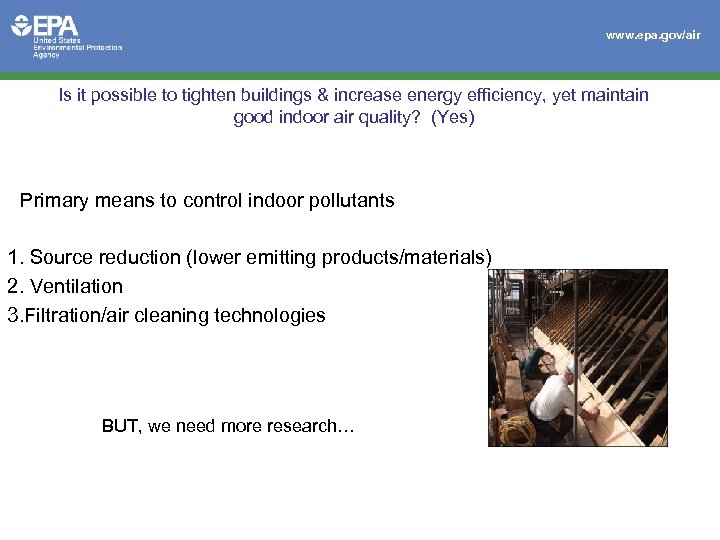 www. epa. gov/air Is it possible to tighten buildings & increase energy efficiency, yet maintain good indoor air quality? (Yes) Primary means to control indoor pollutants 1. Source reduction (lower emitting products/materials) 2. Ventilation 3. Filtration/air cleaning technologies BUT, we need more research…
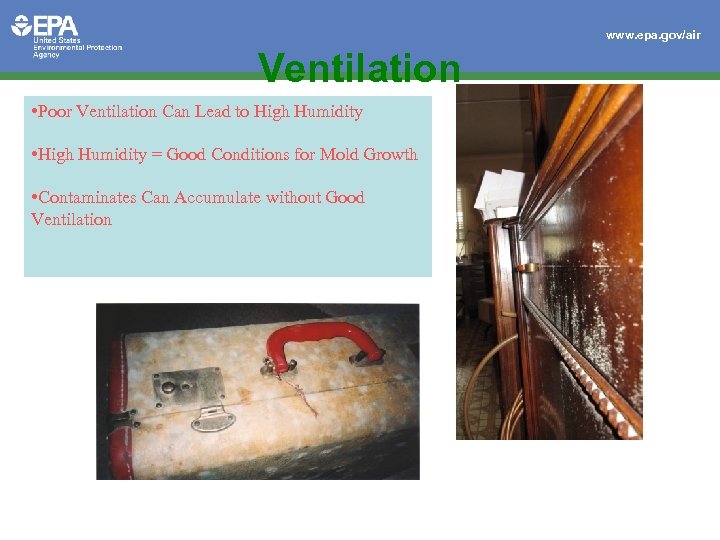 www. epa. gov/air Ventilation • Poor Ventilation Can Lead to High Humidity • High Humidity = Good Conditions for Mold Growth • Contaminates Can Accumulate without Good Ventilation
 www. epa. gov/air A Growing Problem & Critical Priority: RADON • Leading cause of environmental cancer mortality • 21, 000 Lung Cancer Deaths/Year, leading cause for non-smokers • The poor have virtually no way to reduce their risk • While proud of our results – the problem has grown: currently 8 million American houses with high levels • Aggressively ramping up effort to reverse trend: – Assistant-Secretary level initiative with 8 federal agencies (HHS, HUD, DOE, USDA, Do. D, GSA, DOI, VA) – Joint EPA/industry/state initiative to engage NGOs (public health, environmental, housing advocates) February 2, 2011 Office of Radiation and Indoor Air Page 41
 www. epa. gov/air Radiation Protection • Revise out-of-date uranium rules to reflect scientific and technological advances – Health and Environmental Protection Standards for Uranium and Thorium Mill Tailings (40 CFR 192) – Revise NESHAP for active uranium mills (40 CFR 61, Subpart W) • Revise Environmental Standards for Nuclear Power Operations (40 CFR 190) • Finalize Radiogenic Cancer Risk Models and Projections for the U. S. Population (the “Blue Book”) – Provides scientific basis for estimating radiogenic cancer risks to the U. S. population from defined doses of radiation – Forms scientific basis for radiation rules and Federal Guidance February 2, 2011 Office of Radiation and Indoor Air Page 42
 CO: Relevant Body Chemistry • CO + Hemoglobin = carboxyhemoglobin (COHb) • COHb = less O 2 in bloodstream Affinity www. epa. gov/air
 Current EPA Projects www. epa. gov/air EPA funded National Academy of Sciences Institute of Medicine Climate Change Study: “The Effect of Climate Change on Indoor Air Quality and Public Health” • Panel is gathering information on topics including: – occupant health, allergen exposure, infectious disease transmission, and research and data collection related to climate change, indoor environments, public health issues, etc. – indoor air quality, adaptation and mitigation strategies for buildings, green architecture, etc. For more information or to submit comments: http: //www 8. nationalacademies. org/cp/projectview. aspx? key=49138
 www. epa. gov/air Indoor Air
 What Happens During Attack? www. epa. gov/air Airways Narrow Normal Airway Muscle Lining Airway in Person with Asthma Swelling Mucus
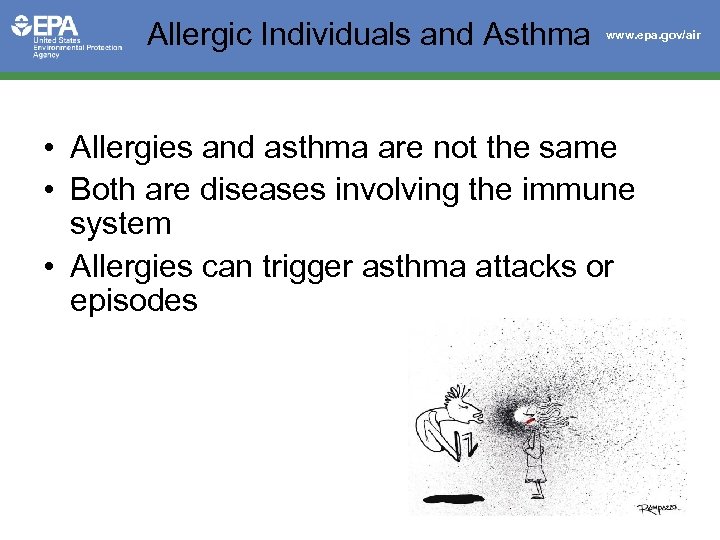 Allergic Individuals and Asthma www. epa. gov/air • Allergies and asthma are not the same • Both are diseases involving the immune system • Allergies can trigger asthma attacks or episodes
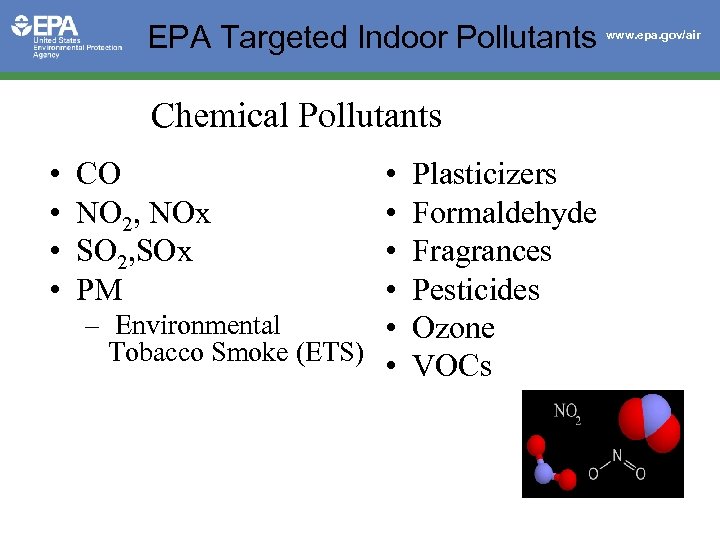 EPA Targeted Indoor Pollutants Chemical Pollutants • • – Environmental • Tobacco Smoke (ETS) • CO NO 2, NOx SO 2, SOx PM Plasticizers Formaldehyde Fragrances Pesticides Ozone VOCs www. epa. gov/air
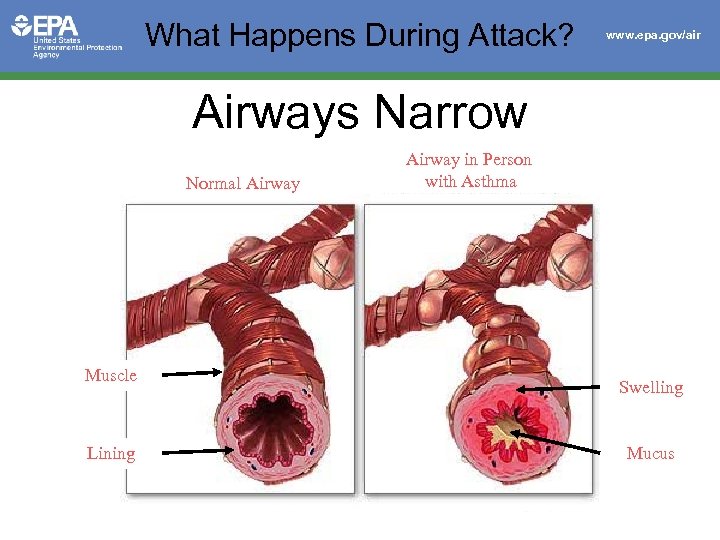
 What is Asthma? www. epa. gov/air • Chronic inflammatory disorder of airways • Characterized by: • Recurrent episodes of airflow limitation • Usually reversible spontaneously, or with appropriate treatment
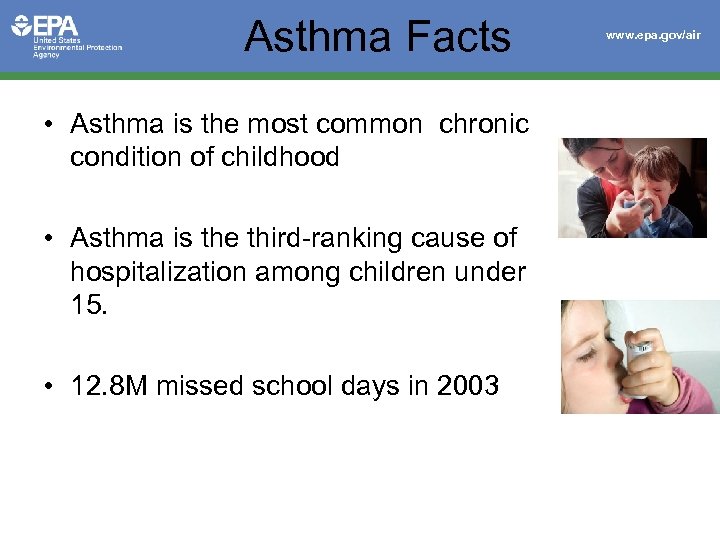 Asthma Facts • Asthma is the most common chronic condition of childhood • Asthma is the third-ranking cause of hospitalization among children under 15. • 12. 8 M missed school days in 2003 www. epa. gov/air
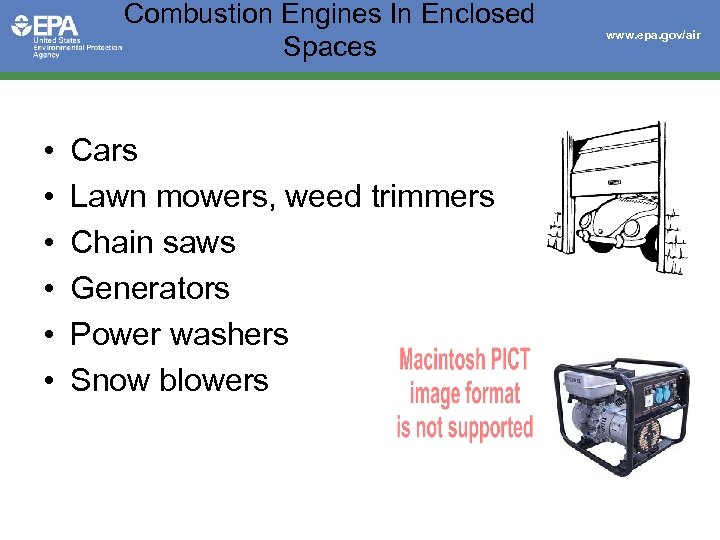 Combustion Engines In Enclosed Spaces • • • Cars Lawn mowers, weed trimmers Chain saws Generators Power washers Snow blowers www. epa. gov/air
 www. epa. gov/air More than 400 deaths/yr in the U. S. due to unintentional CO poisoning
 ETS Health Effects www. epa. gov/air • ETS exposure causes health effects in children • 43 % of U. S. children exposed to ETS in their own homes • 150, 000 - 300, 000 cases/year of bronchitis and pneumonia in children • Estimated 750, 000 cases/year middle ear infections in children
 Reduce Gaseous Pollutants: Preventing CO Deaths www. epa. gov/air • Don’t idle car in garage or near air intake vents • Have combustion appliances checked once a year • Do not rely on smoke detectors [are not protective] • Do not rely completely on CO detectors [vary in sensitivity & accuracy]
 Reduce Particulate Matter Exposure: Environmental Tobacco Smoke • Choose not to smoke around children, especially infants & toddlers, or those with asthma • Choose not to smoke in your home or permit others to do so • If you must smoke, choose to smoke outside www. epa. gov/air