


 Скачать презентацию www dpi wi gov rti 1 Topics to
61e60c3a8051b2a7ea16377fde1ac25b.ppt
- Количество слайдов: 21
 www. dpi. wi. gov/rti 1
 Topics to be Covered Wisconsin’s vision for Rt. I Essential elements High Quality Instructional practice Balanced Assessment Collaboration Culturally responsive practices Multi-level system of support State and regional resources 2
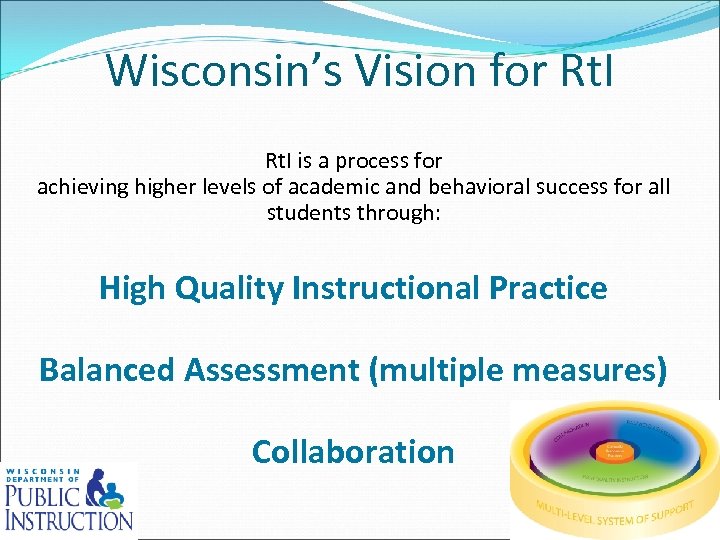 Wisconsin’s Vision for Rt. I is a process for achieving higher levels of academic and behavioral success for all students through: High Quality Instructional Practice Balanced Assessment (multiple measures) Collaboration 3
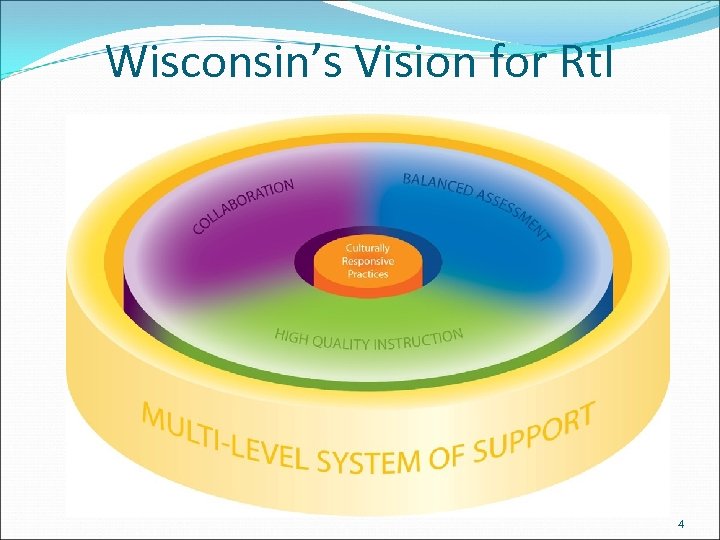 Wisconsin’s Vision for Rt. I 4
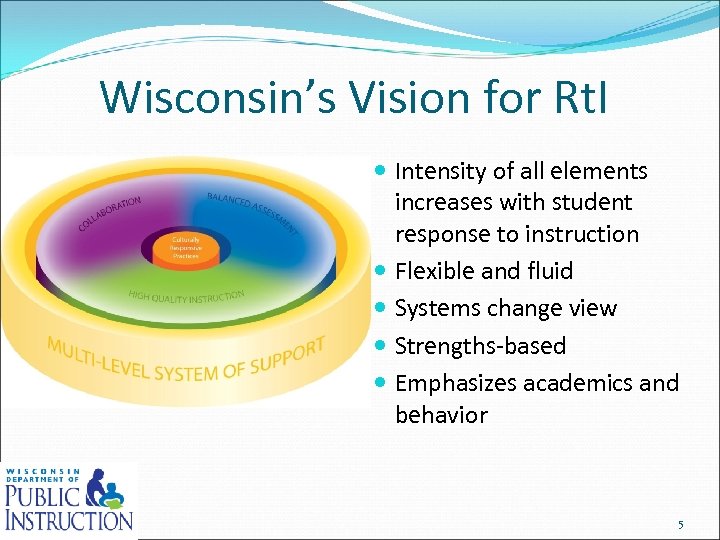 Wisconsin’s Vision for Rt. I Intensity of all elements increases with student response to instruction Flexible and fluid Systems change view Strengths-based Emphasizes academics and behavior 5
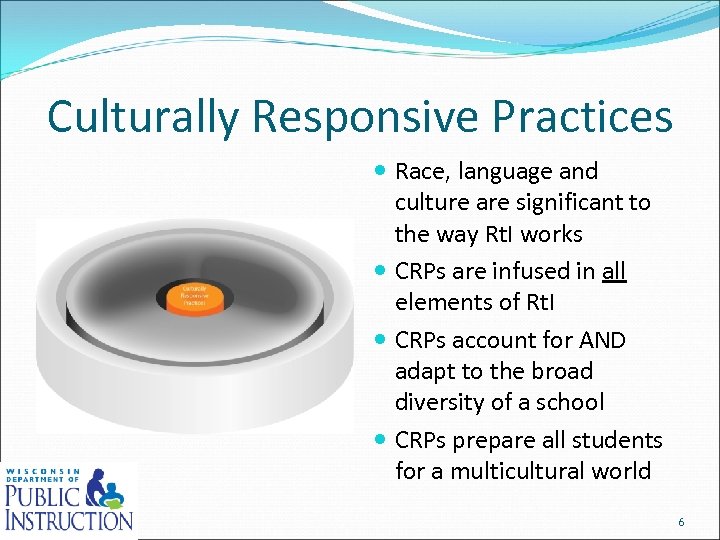 Culturally Responsive Practices Race, language and culture are significant to the way Rt. I works CRPs are infused in all elements of Rt. I CRPs account for AND adapt to the broad diversity of a school CRPs prepare all students for a multicultural world 6
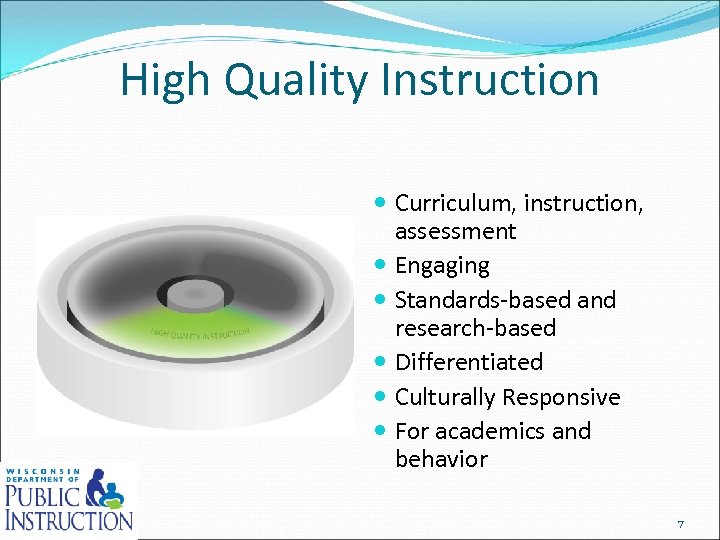 High Quality Instruction Curriculum, instruction, assessment Engaging Standards-based and research-based Differentiated Culturally Responsive For academics and behavior 7
 High Quality Instruction 8
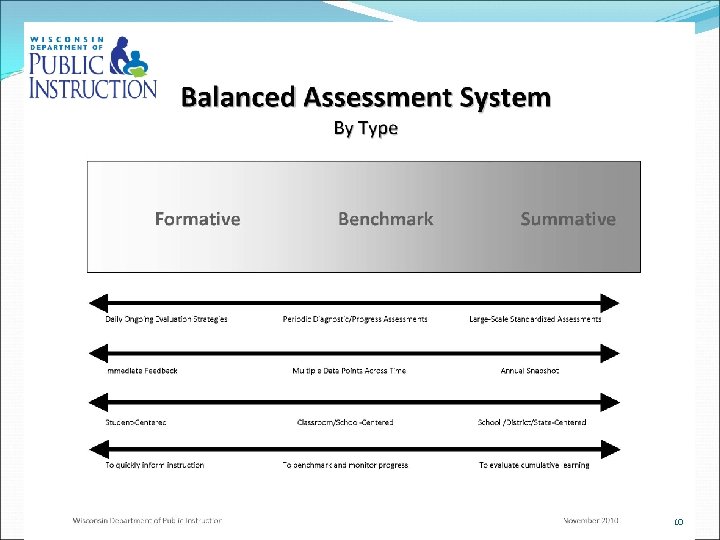
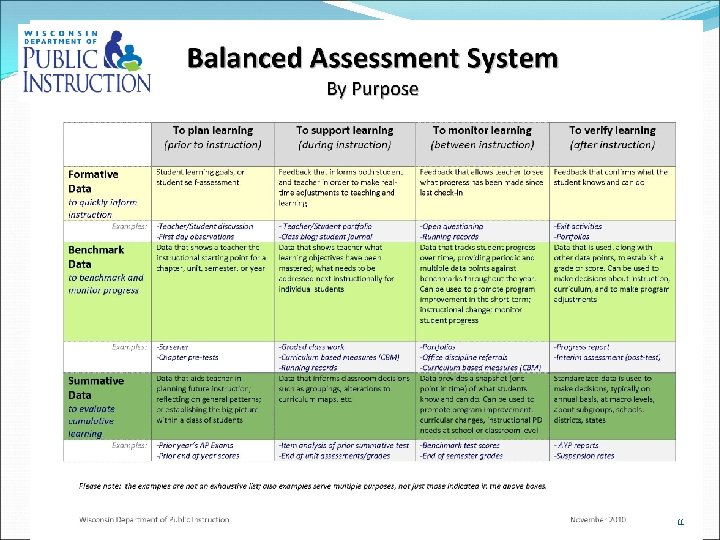
 Balanced Assessment Balanced, systematic process of constant inquiry Multiple measures Assessment processes include: Screening Progress monitoring 9
 10
10
 11
11
 Universal Screening Progress Monitoring A process through which data from multiple measures is accurately analyzed to determine whether each student is likely to meet, exceed, or not meet benchmarks and can be constructed for both academic and behavioral purposes A process used to assess students’ academic and behavioral performance, to measure student improvement or responsiveness to instruction, and to evaluate the effectiveness of instruction. The frequency of progress monitoring increases with the intensity of an intervention or additional challenge. 12
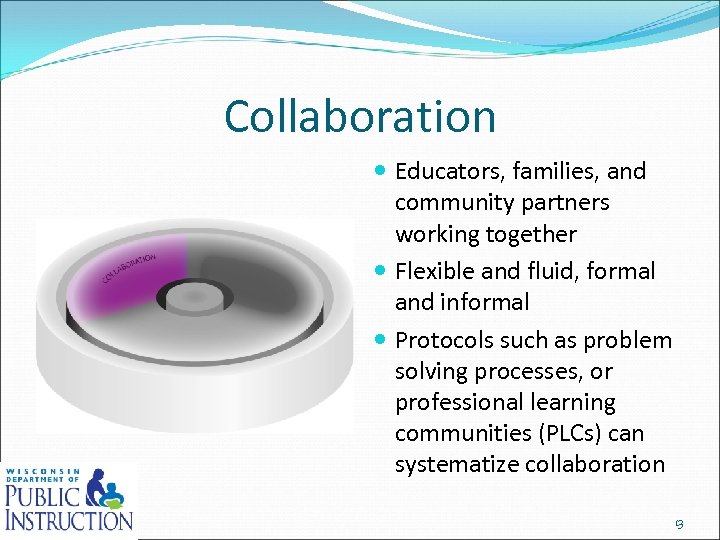 Collaboration Educators, families, and community partners working together Flexible and fluid, formal and informal Protocols such as problem solving processes, or professional learning communities (PLCs) can systematize collaboration 13
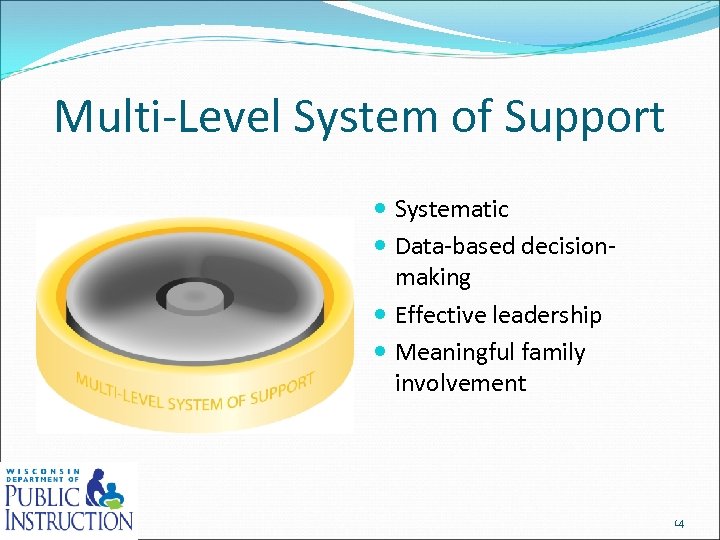 Multi-Level System of Support Systematic Data-based decisionmaking Effective leadership Meaningful family involvement 14
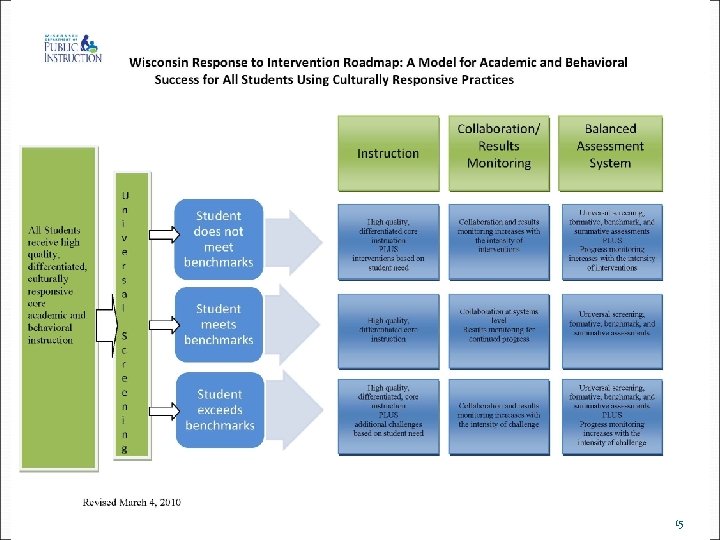 WI Rt. I Roadmap for Academic and Behavioral Success 15
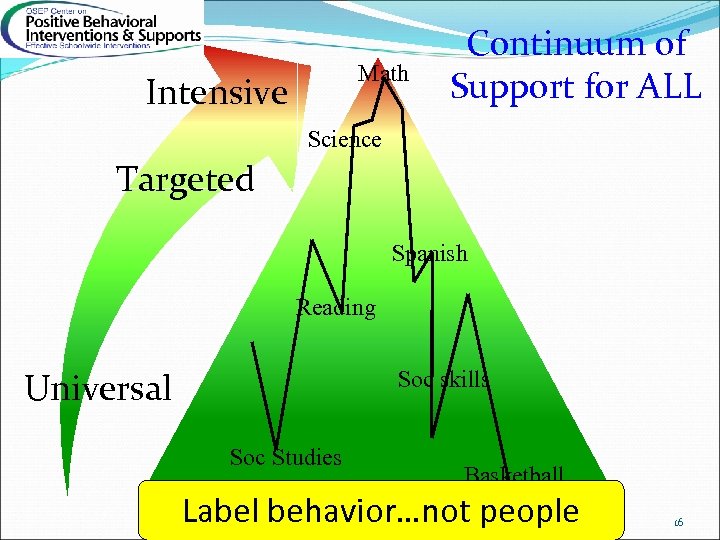 Math Intensive Continuum of Support for ALL Science Targeted Spanish Reading Soc skills Universal Soc Studies Basketball Label behavior…not people Dec 7, 2007 16
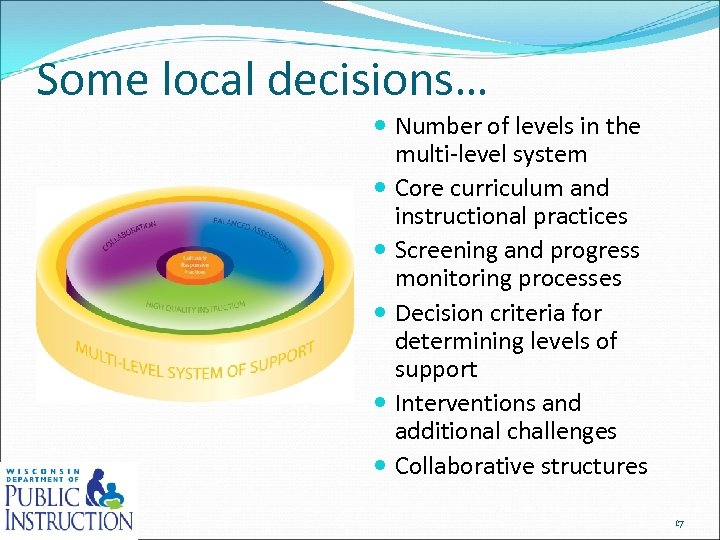 Some local decisions… Number of levels in the multi-level system Core curriculum and instructional practices Screening and progress monitoring processes Decision criteria for determining levels of support Interventions and additional challenges Collaborative structures 17
 Rt. I and Specific Learning Disabilities (SLD) Determination The Wisconsin Rt. I Guiding Document is for all students The SLD rule (http: //dpi. wi. gov/sped/ld. h tml) describes using a Rt. I system for the identification of specific learning disabilities Special considerations apply when using Rt. I for SLD determination 18
 Principles for the successful implementation of Rt. I in Wisconsin: Rt. I is for ALL children and ALL educators. Rt. I must support and provide value to effective practices. Success for Rt. I lies within the classroom through collaboration. Rt. I applies to both academics and behavior. Rt. I supports and provides value to the use of multiple assessments to inform instructional practices. Rt. I is something you do and not necessarily something you buy. Rt. I emerges from and supports research and evidence based practice. 19
 For more information DPI http: //dpi. wi. gov/rti/ The Wisconsin Rt. I Center www. wisconsinrticenter. org Kathy Ryder Heidi Thuli The Wisconsin PBIS Network www. wisconsinpbisnetwork. org Justyn Poulos Nicole Beier 20
 For questions DPI Rt. I Co-Chairs Emilie Amundson emilie. amundson@dpi. wi. gov English Language Arts Consultant Julia Hartwig julia. hartwig@dpi. wi. gov School Improvement Consultant 21