 Скачать презентацию WP D Integrating Mobility Management and Land Use
b3db2202d7df71ea9047236088ff0ac5.ppt
- Количество слайдов: 21



WP D Integrating Mobility Management and Land Use Planning A good example of integration: Sihlcity, Zürich, Switzerland (D 2 a) slide 1
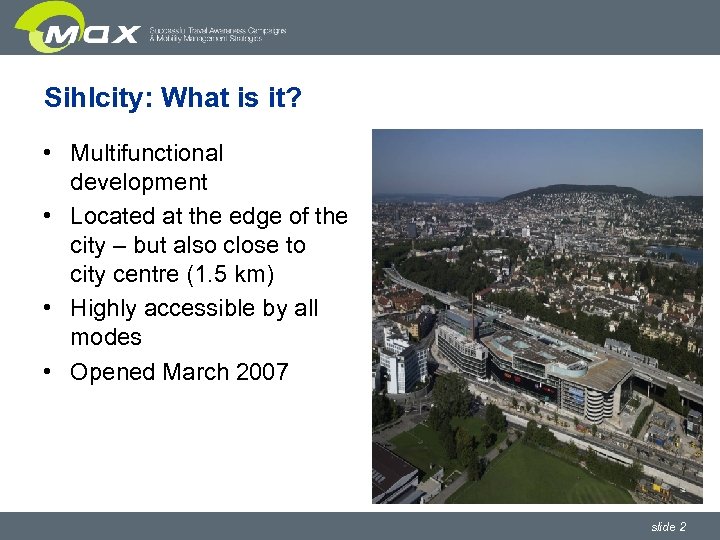
Sihlcity: What is it? • Multifunctional development • Located at the edge of the city – but also close to city centre (1. 5 km) • Highly accessible by all modes • Opened March 2007 slide 2
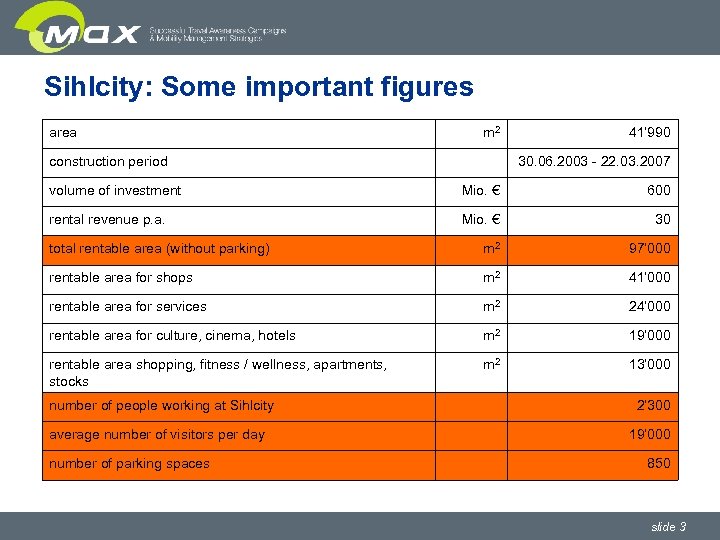
Sihlcity: Some important figures area m 2 construction period 41’ 990 30. 06. 2003 - 22. 03. 2007 volume of investment Mio. € 600 rental revenue p. a. Mio. € 30 total rentable area (without parking) m 2 97’ 000 rentable area for shops m 2 41’ 000 rentable area for services m 2 24’ 000 rentable area for culture, cinema, hotels m 2 19’ 000 rentable area shopping, fitness / wellness, apartments, stocks m 2 13’ 000 number of people working at Sihlcity average number of visitors per day number of parking spaces 2’ 300 19’ 000 850 slide 3
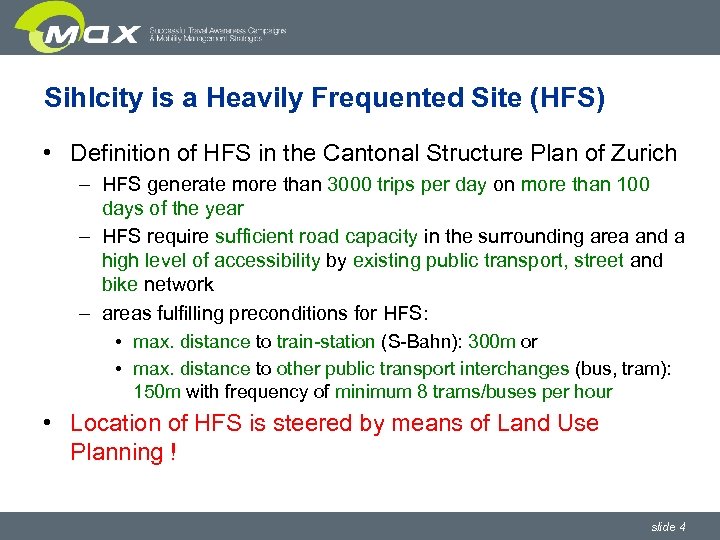
Sihlcity is a Heavily Frequented Site (HFS) • Definition of HFS in the Cantonal Structure Plan of Zurich – HFS generate more than 3000 trips per day on more than 100 days of the year – HFS require sufficient road capacity in the surrounding area and a high level of accessibility by existing public transport, street and bike network – areas fulfilling preconditions for HFS: • max. distance to train-station (S-Bahn): 300 m or • max. distance to other public transport interchanges (bus, tram): 150 m with frequency of minimum 8 trams/buses per hour • Location of HFS is steered by means of Land Use Planning ! slide 4
Sihlcity: Requirement to obtain planning permission, 2002 • • • Financial contribution to public transport improvements 600 bike parking spaces Assure “recreation quality” within the area Finance construction of access ramp to main road Max. 850 car parking spaces Car parking management (with charges) and limit on total car trips per year (lever for MM measures) • Home delivery service by bike • Regulated in a contract and part of the building permission slide 5
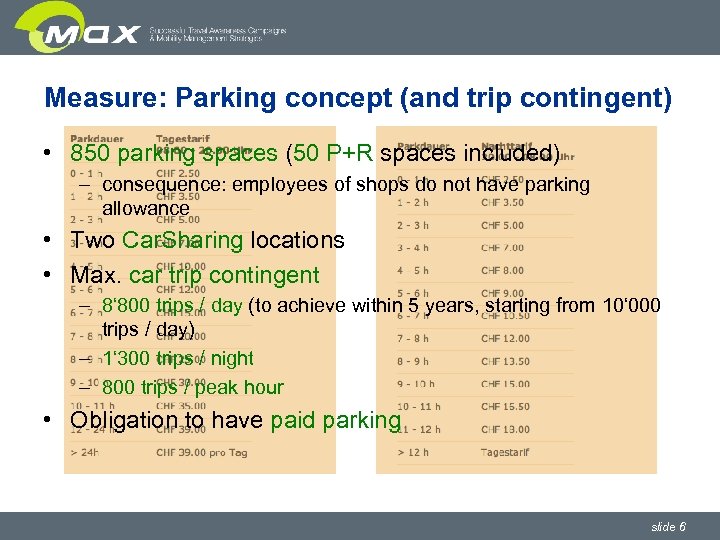
Measure: Parking concept (and trip contingent) • 850 parking spaces (50 P+R spaces included) – consequence: employees of shops do not have parking allowance • Two Car. Sharing locations • Max. car trip contingent – 8‘ 800 trips / day (to achieve within 5 years, starting from 10‘ 000 trips / day) – 1‘ 300 trips / night – 800 trips / peak hour • Obligation to have paid parking slide 6
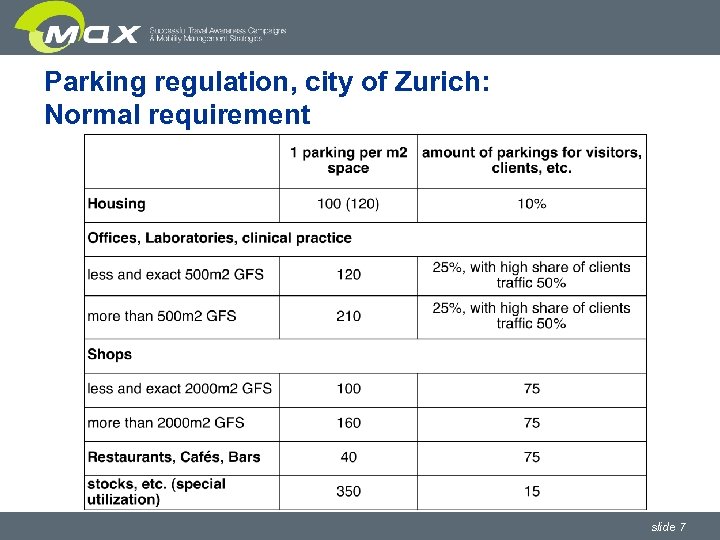
Parking regulation, city of Zurich: Normal requirement slide 7
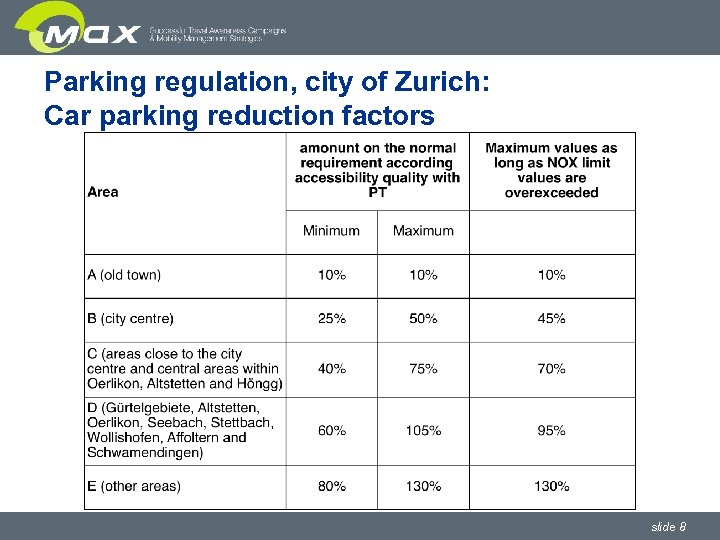
Parking regulation, city of Zurich: Car parking reduction factors slide 8
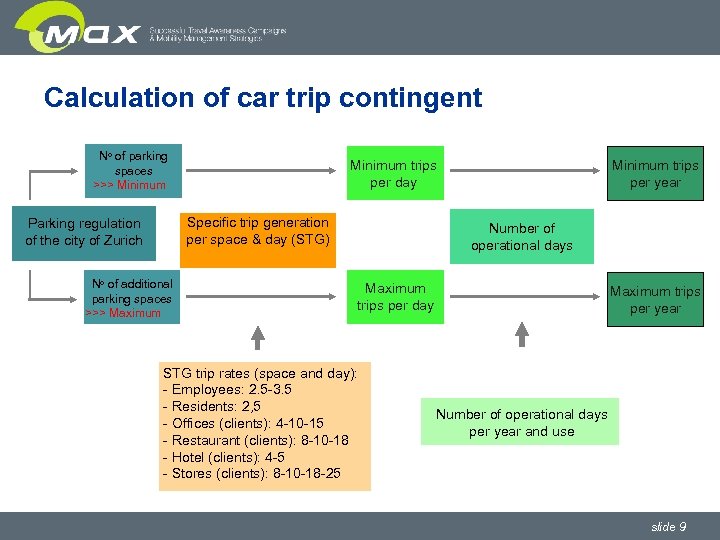
Calculation of car trip contingent No of parking spaces >>> Minimum trips per day Specific trip generation per space & day (STG) Parking regulation of the city of Zurich No of additional parking spaces >>> Maximum Minimum trips per year Number of operational days Maximum trips per day STG trip rates (space and day): - Employees: 2. 5 -3. 5 - Residents: 2, 5 - Offices (clients): 4 -10 -15 - Restaurant (clients): 8 -10 -18 - Hotel (clients): 4 -5 - Stores (clients): 8 -10 -18 -25 Maximum trips per year Number of operational days per year and use slide 9
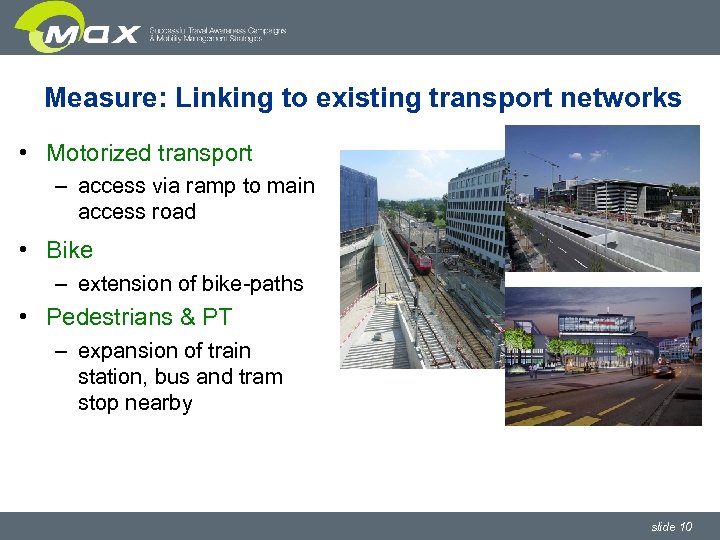
Measure: Linking to existing transport networks • Motorized transport – access via ramp to main access road • Bike – extension of bike-paths • Pedestrians & PT – expansion of train station, bus and tram stop nearby slide 10
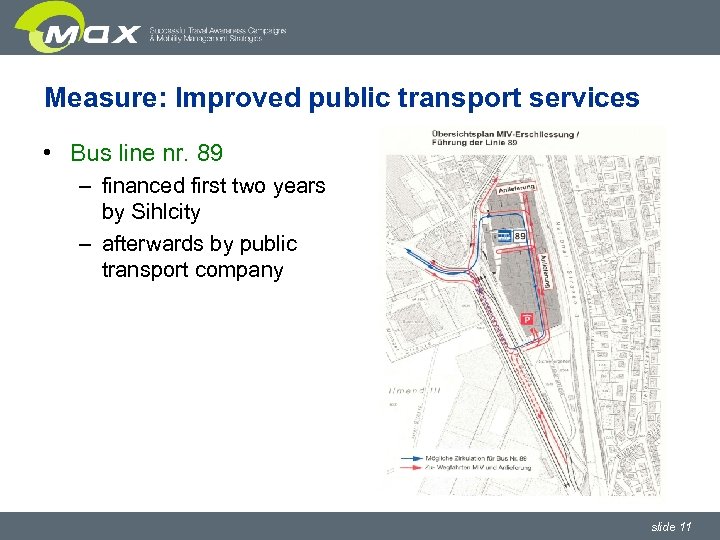
Measure: Improved public transport services • Bus line nr. 89 – financed first two years by Sihlcity – afterwards by public transport company slide 11
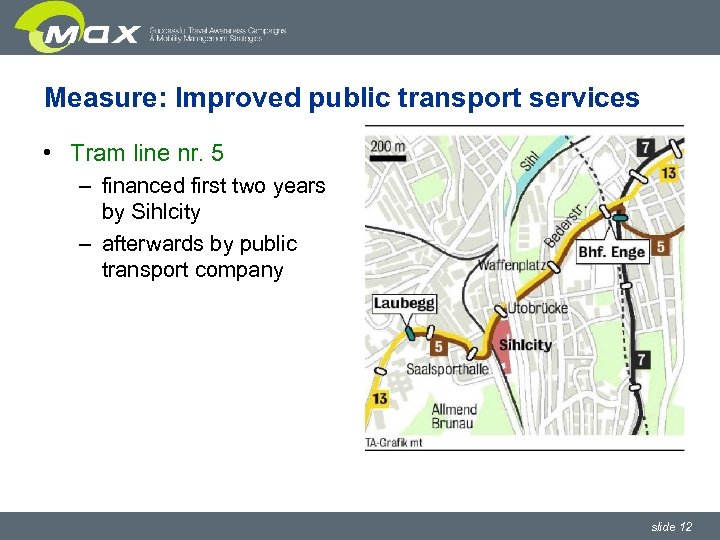
Measure: Improved public transport services • Tram line nr. 5 – financed first two years by Sihlcity – afterwards by public transport company slide 12
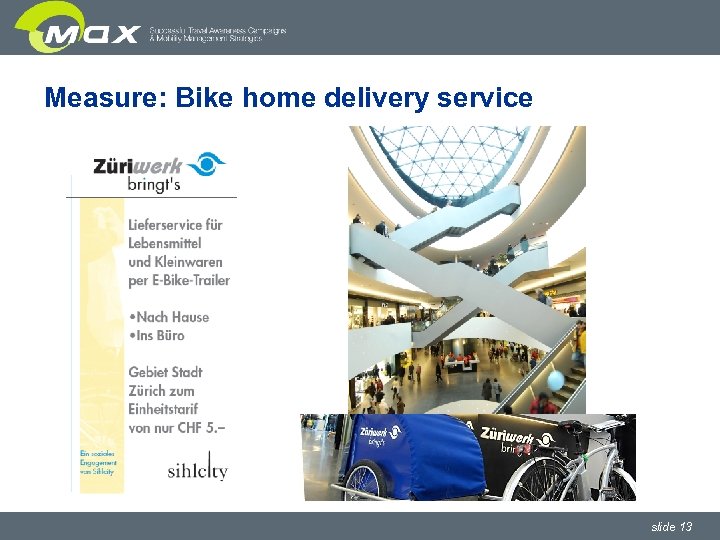
Measure: Bike home delivery service slide 13
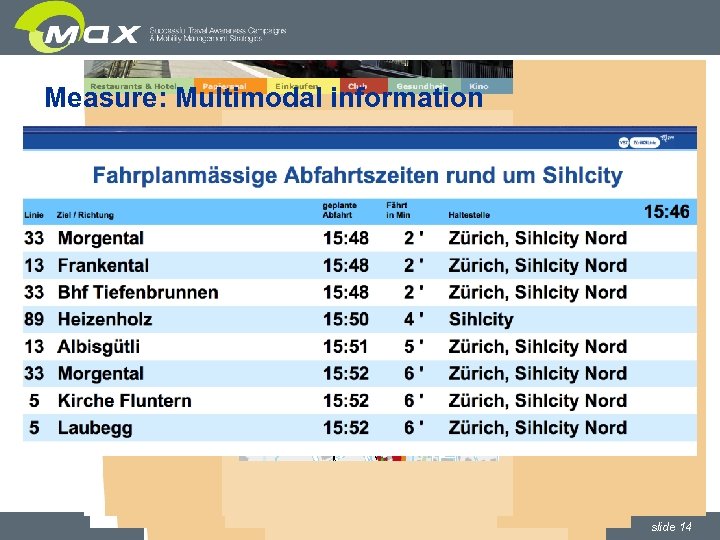
Measure: Multimodal information www. sihlcity. ch slide 14
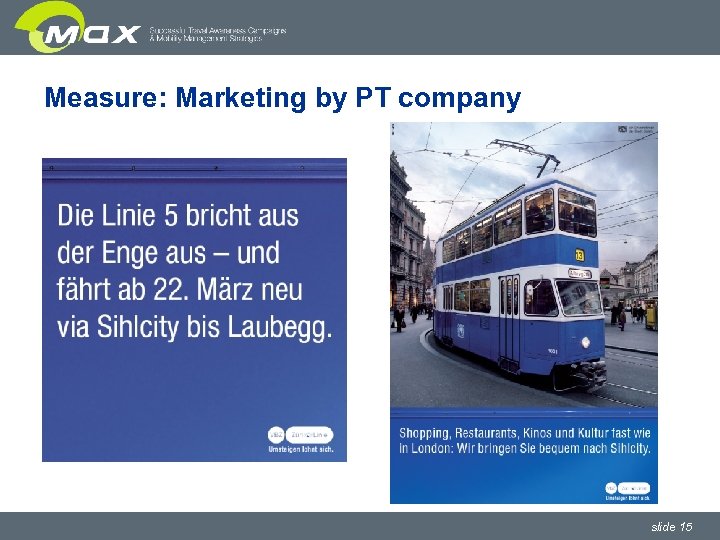
Measure: Marketing by PT company slide 15
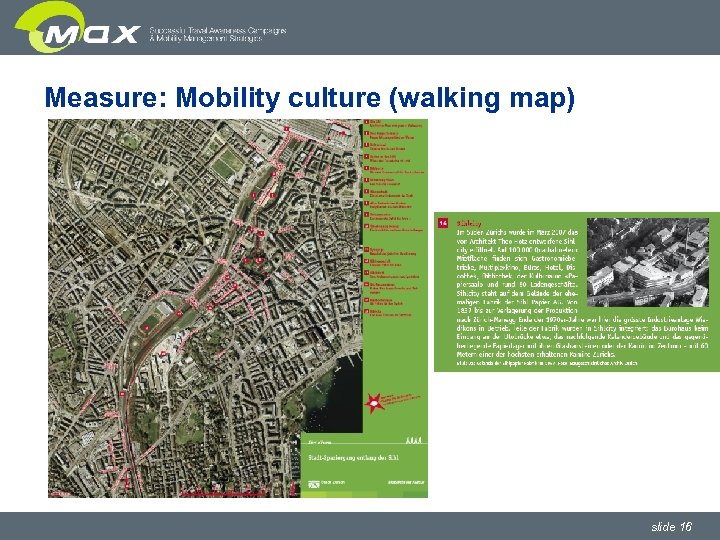
Measure: Mobility culture (walking map) slide 16
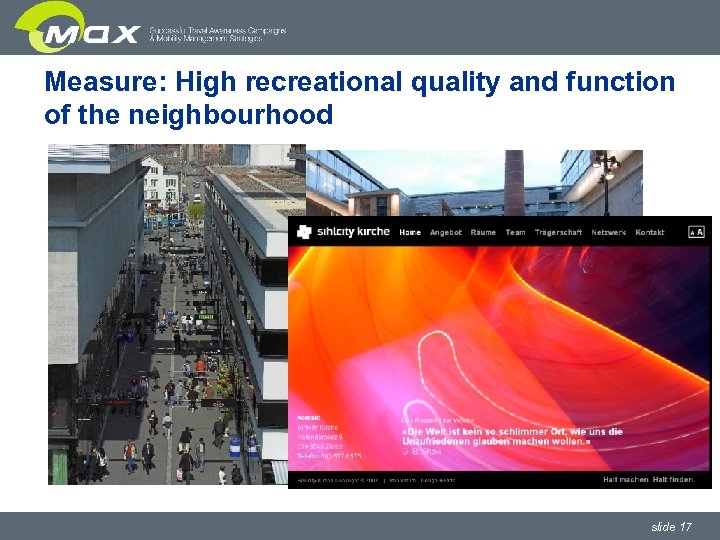
Measure: High recreational quality and function of the neighbourhood slide 17
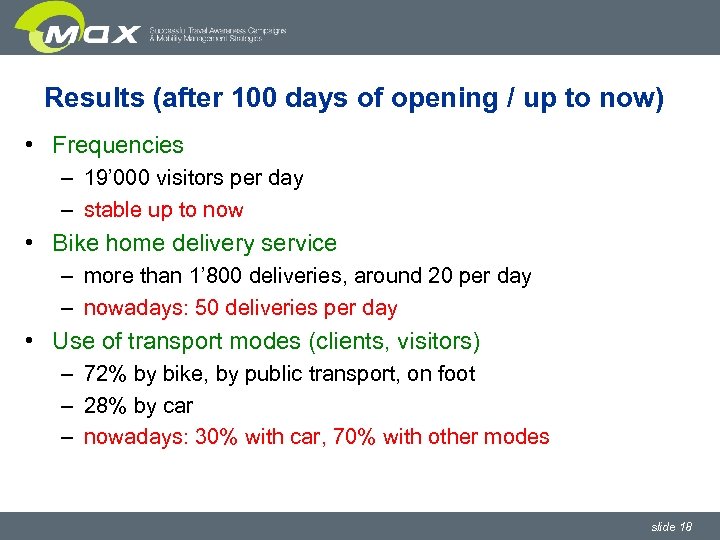
Results (after 100 days of opening / up to now) • Frequencies – 19’ 000 visitors per day – stable up to now • Bike home delivery service – more than 1’ 800 deliveries, around 20 per day – nowadays: 50 deliveries per day • Use of transport modes (clients, visitors) – 72% by bike, by public transport, on foot – 28% by car – nowadays: 30% with car, 70% with other modes slide 18
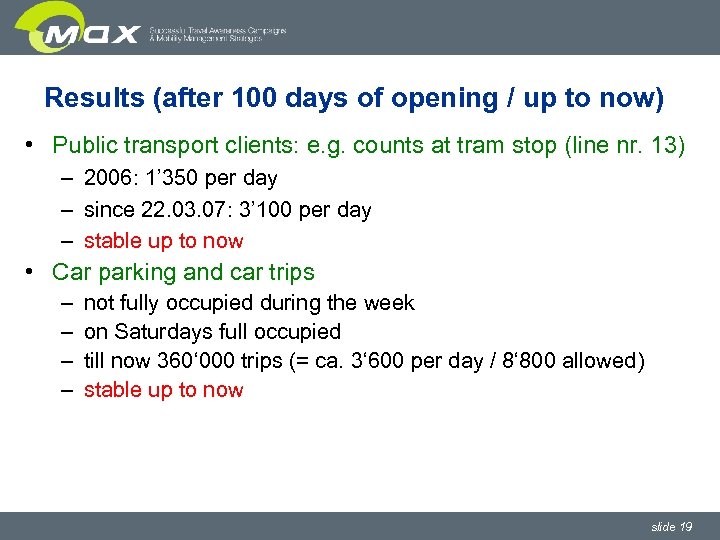
Results (after 100 days of opening / up to now) • Public transport clients: e. g. counts at tram stop (line nr. 13) – 2006: 1’ 350 per day – since 22. 03. 07: 3’ 100 per day – stable up to now • Car parking and car trips – – not fully occupied during the week on Saturdays full occupied till now 360‘ 000 trips (= ca. 3‘ 600 per day / 8‘ 800 allowed) stable up to now slide 19
IT WORKS !!! Thanks for your attention ! slide 20

WP D Contact details Germany - ILS, Dortmund janina. welsch@ils-forschung. de Spain - ETT, Madrid cmattsson@ett. es Lithuania - VGTU, Vilnius Kris@ap. vtu. lt Sweden - Trivector, Lund christer. ljungberg@trivector. se Poland - CUT, Cracow ola@transys. wil. pk. edu. pl For further information about Sihlcity: Switzerland - synergo, Zürich detommasi@synergo. ch Slovenia - UNI, Maribor aljaz. plevnik@uirs. si United Kingdom - ENU, Edinburgh t. rye@napier. ac. uk slide 21
Скачать презентацию WP D Integrating Mobility Management and Land Use
b3db2202d7df71ea9047236088ff0ac5.ppt