 Скачать презентацию Wouldn t Life Be Easier If Words Meant The
eb516fb18359e0b6a75929e2b62bd46c.ppt
- Количество слайдов: 133



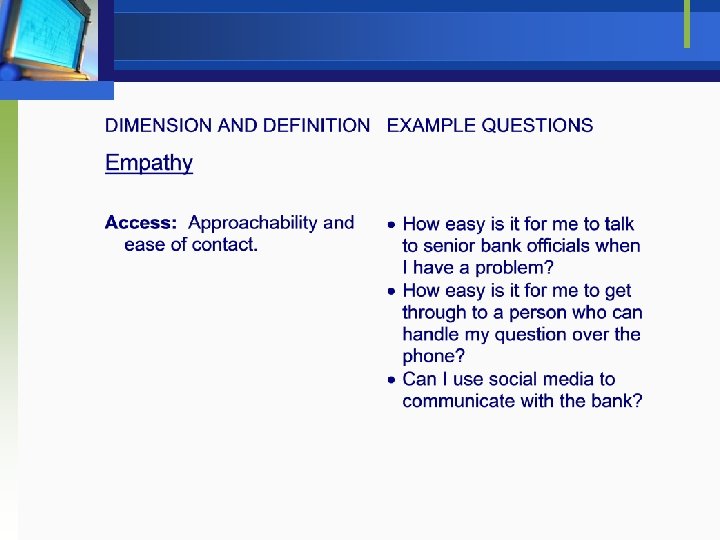
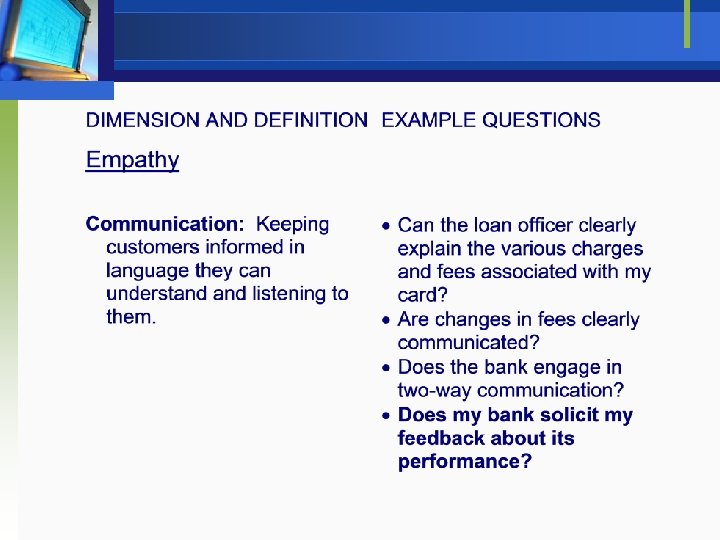
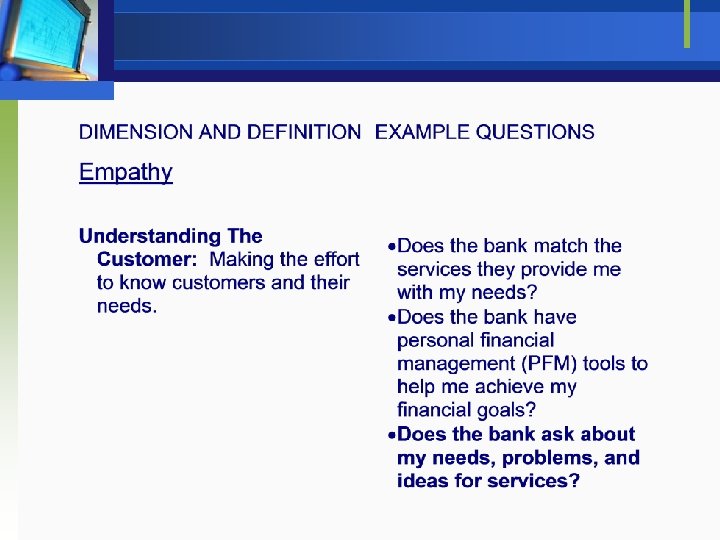
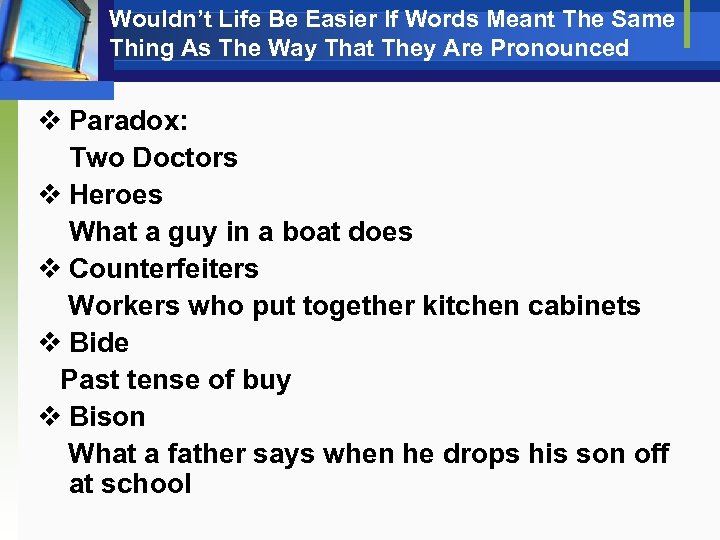
Wouldn’t Life Be Easier If Words Meant The Same Thing As The Way That They Are Pronounced v Paradox: Two Doctors v Heroes What a guy in a boat does v Counterfeiters Workers who put together kitchen cabinets v Bide Past tense of buy v Bison What a father says when he drops his son off at school
Wouldn’t Life Be Easier If Words Meant The Same Thing As The Way That They Are Pronounced v Parasites: What you see from the top of the Eiffel Tower v Subdued Like, a guy, like who works on like one of those, like, submarines, man v Arbitrator: A cook who leaves Arby’s to work at Mc. Donalds v Avoidable What a bullfighter tries to do
` Houma
Why Is Website Performance Important? v 90% of customers form perceptions of company based on customer service experience…including WEBSITES Source: Center for Customer Driven Quality, Purdue University.
Web Site Analytics Analysis of Website Traffic: Visits, Bounce, Time of Site, Number of Pages Visited, Conversion
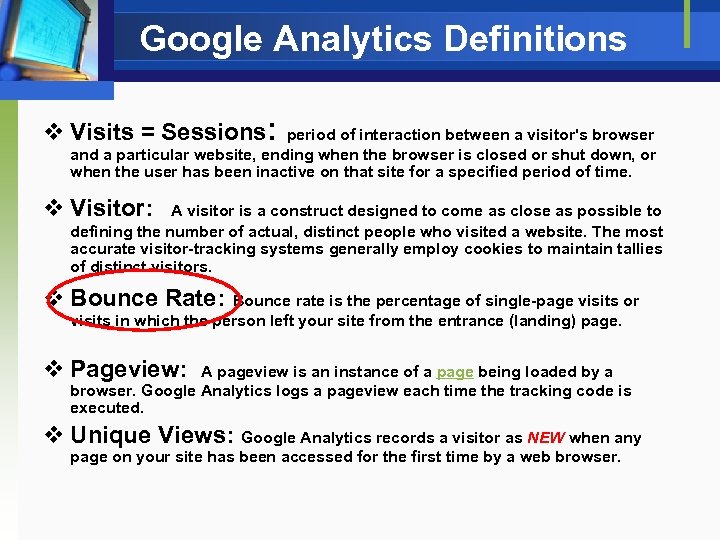
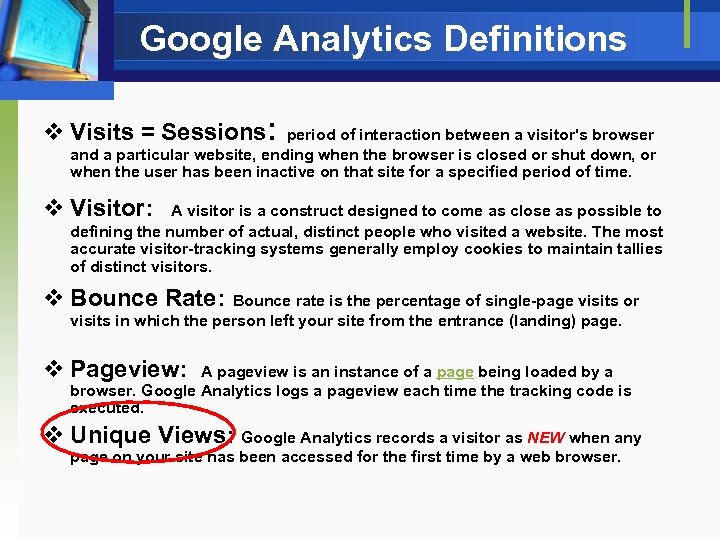
Google Analytics Definitions v Visits = Sessions: period of interaction between a visitor's browser and a particular website, ending when the browser is closed or shut down, or when the user has been inactive on that site for a specified period of time. v Visitor: A visitor is a construct designed to come as close as possible to defining the number of actual, distinct people who visited a website. The most accurate visitor-tracking systems generally employ cookies to maintain tallies of distinct visitors. v Bounce Rate: Bounce rate is the percentage of single-page visits or visits in which the person left your site from the entrance (landing) page. v Pageview: A pageview is an instance of a page being loaded by a browser. Google Analytics logs a pageview each time the tracking code is executed. v Unique Views: Google Analytics records a visitor as NEW when any page on your site has been accessed for the first time by a web browser.
Google Analytics Definitions v Visits = Sessions: period of interaction between a visitor's browser and a particular website, ending when the browser is closed or shut down, or when the user has been inactive on that site for a specified period of time. v Visitor: A visitor is a construct designed to come as close as possible to defining the number of actual, distinct people who visited a website. The most accurate visitor-tracking systems generally employ cookies to maintain tallies of distinct visitors. v Bounce Rate: Bounce rate is the percentage of single-page visits or visits in which the person left your site from the entrance (landing) page. v Pageview: A pageview is an instance of a page being loaded by a browser. Google Analytics logs a pageview each time the tracking code is executed. v Unique Views: Google Analytics records a visitor as NEW when any page on your site has been accessed for the first time by a web browser.
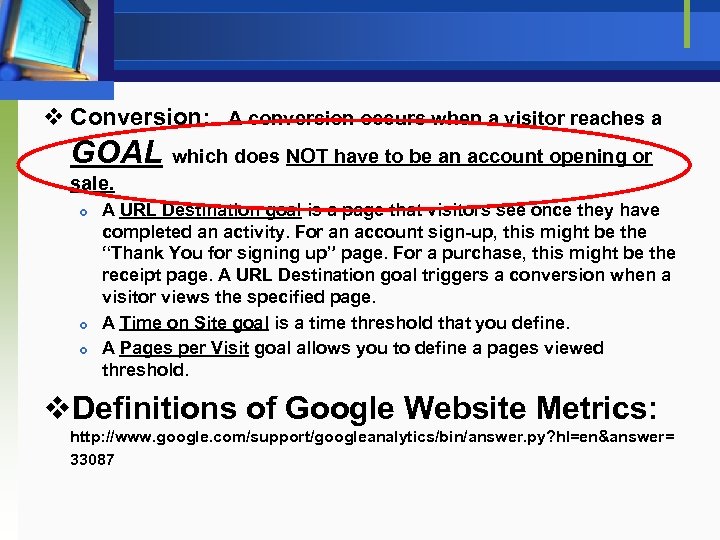
v Conversion: A conversion occurs when a visitor reaches a GOAL which does NOT have to be an account opening or sale. A URL Destination goal is a page that visitors see once they have completed an activity. For an account sign-up, this might be the “Thank You for signing up” page. For a purchase, this might be the receipt page. A URL Destination goal triggers a conversion when a visitor views the specified page. A Time on Site goal is a time threshold that you define. A Pages per Visit goal allows you to define a pages viewed threshold. v. Definitions of Google Website Metrics: http: //www. google. com/support/googleanalytics/bin/answer. py? hl=en&answer= 33087
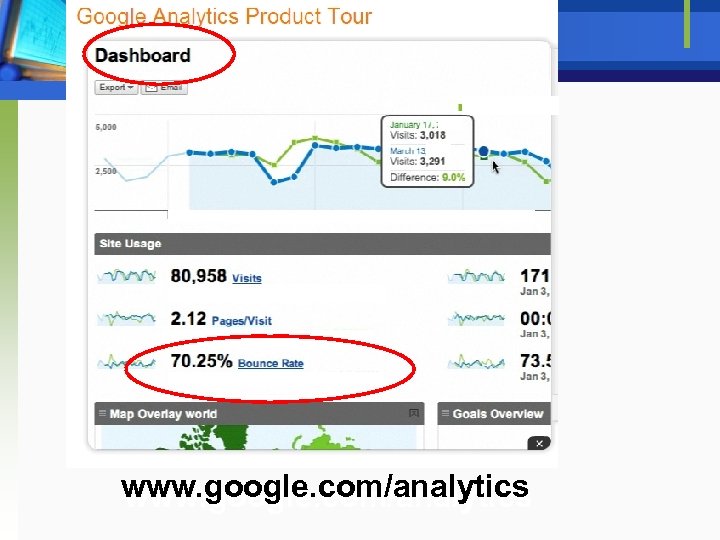
www. google. com/analytics
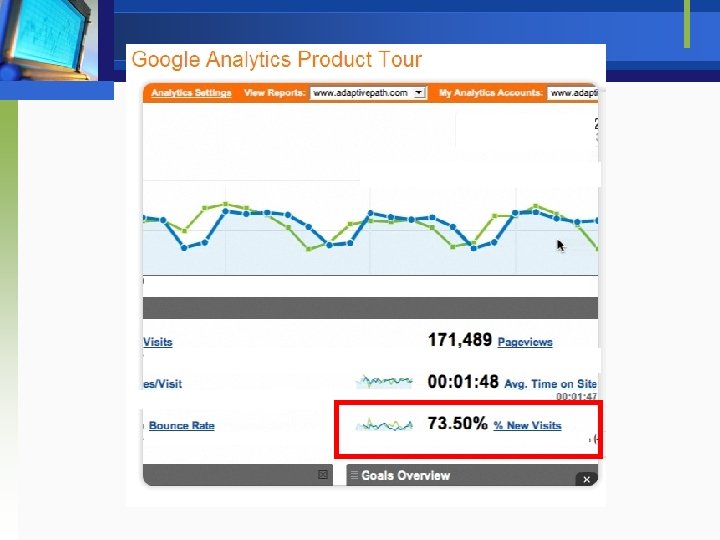
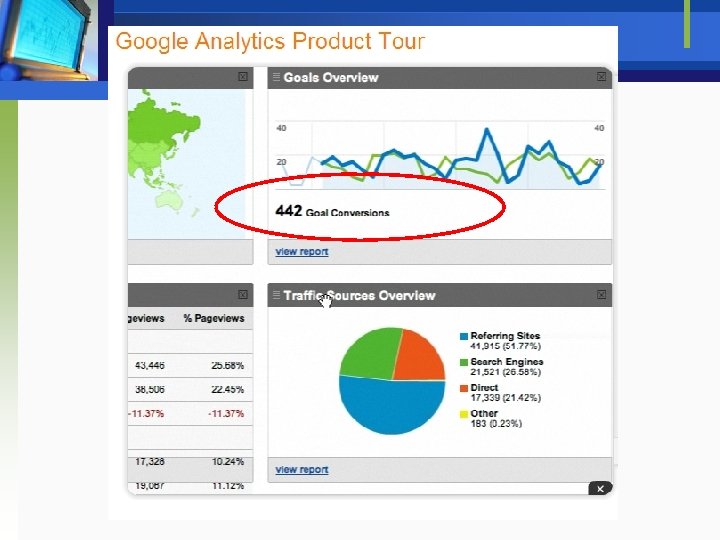

Now called CONTENT EXPERIMENTS www. googlewebsiteoptimizer
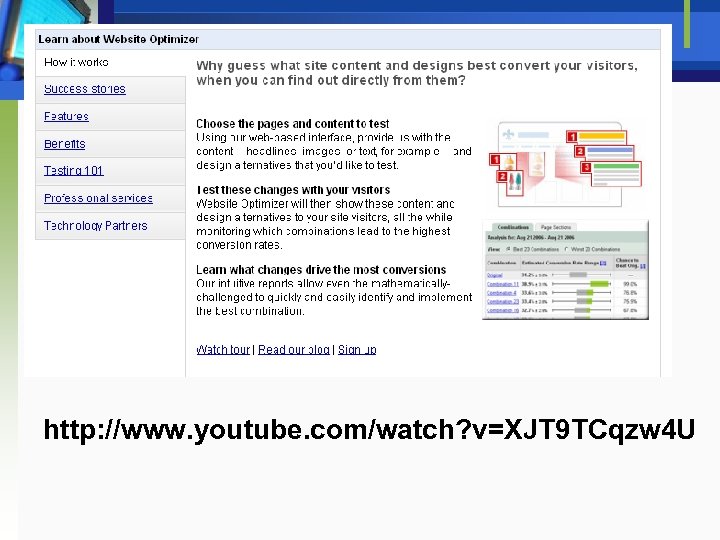
http: //www. youtube. com/watch? v=XJT 9 TCqzw 4 U
COST Cost of Google Analytics and Google Web Optimizer: FREE
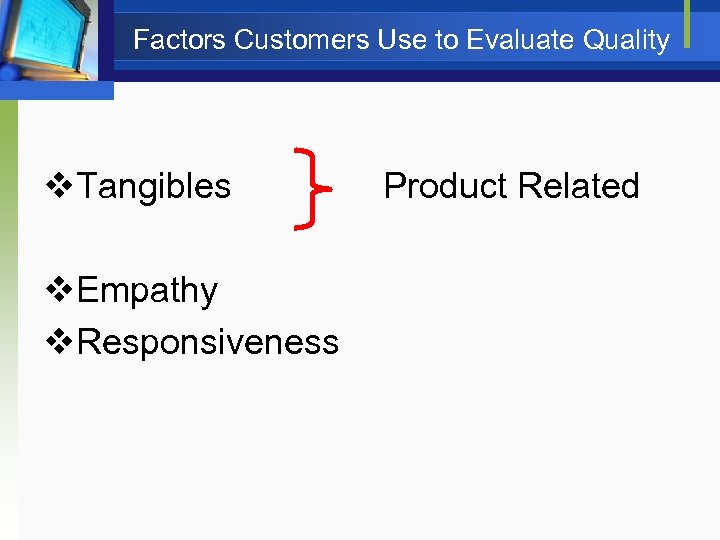
Factors Customers Use to Evaluate Quality v. Tangibles v. Empathy v. Responsiveness Product Related
Button Insurance?



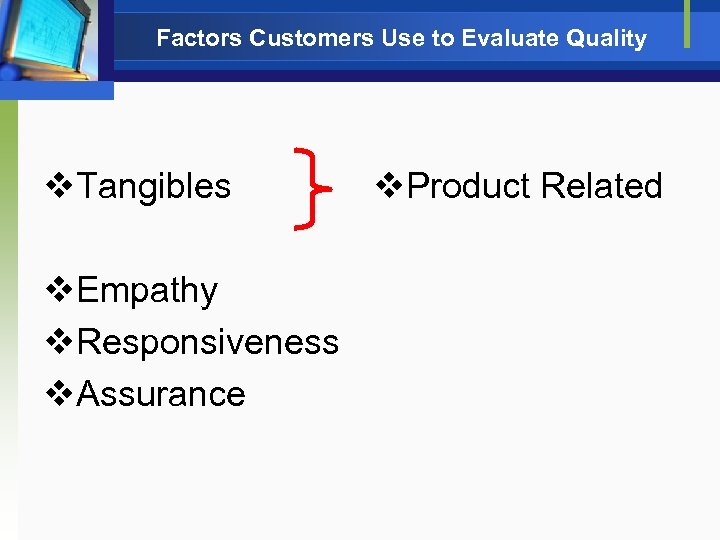
Factors Customers Use to Evaluate Quality v. Tangibles v. Empathy v. Responsiveness v. Assurance v. Product Related
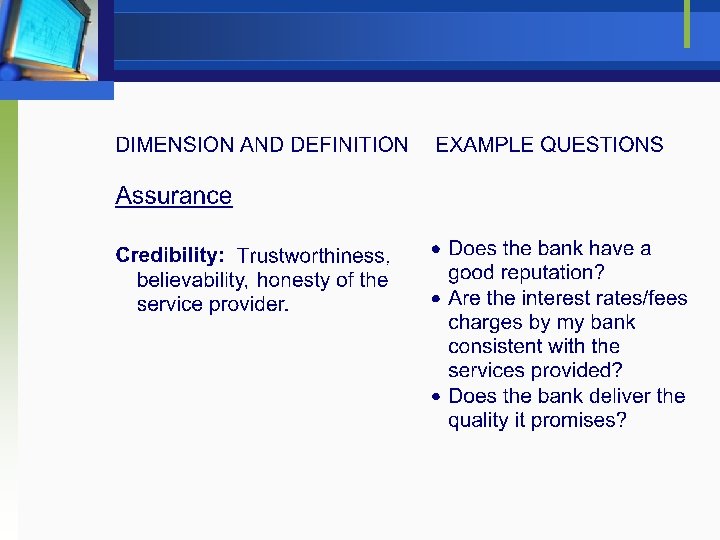
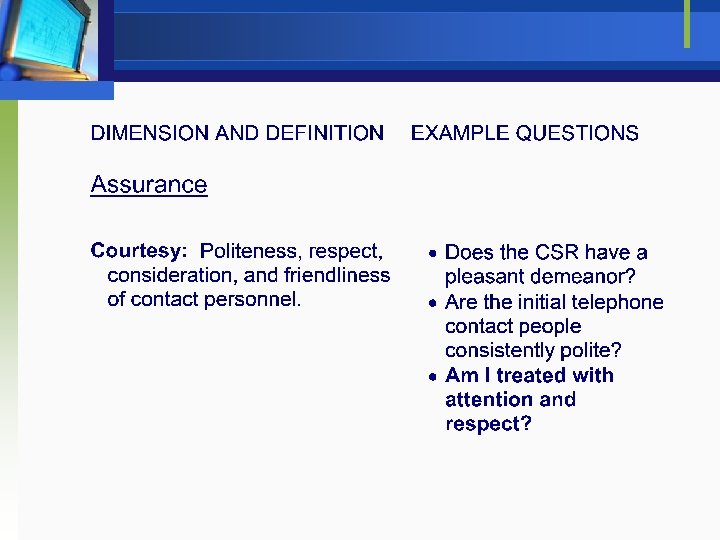
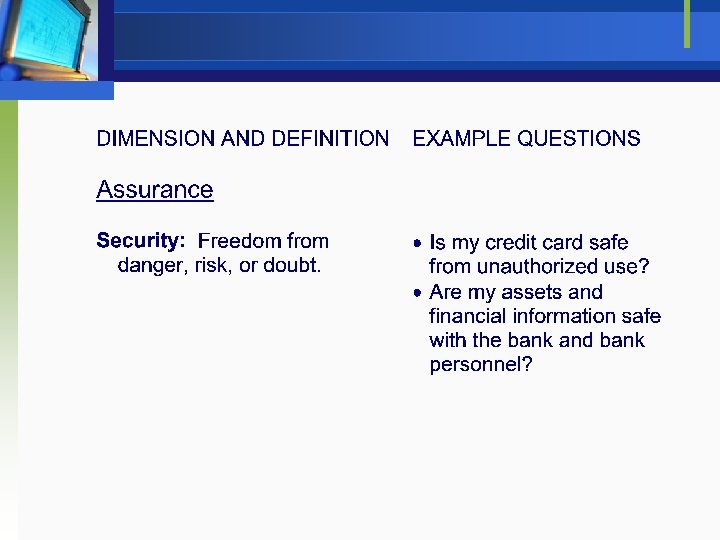
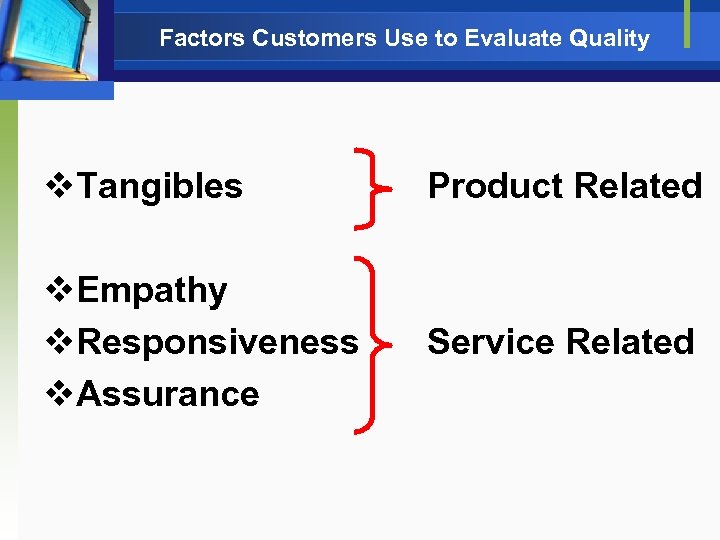
Factors Customers Use to Evaluate Quality v. Tangibles Product Related v. Empathy v. Responsiveness v. Assurance Service Related
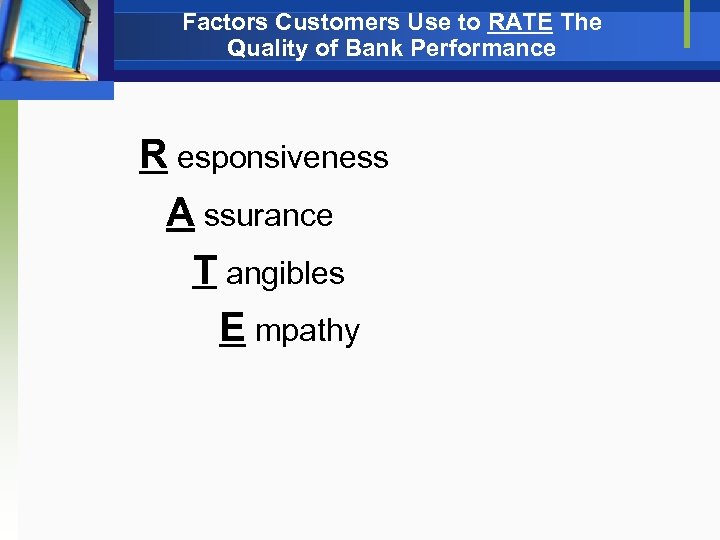
Factors Customers Use to RATE The Quality of Bank Performance R esponsiveness A ssurance T angibles E mpathy
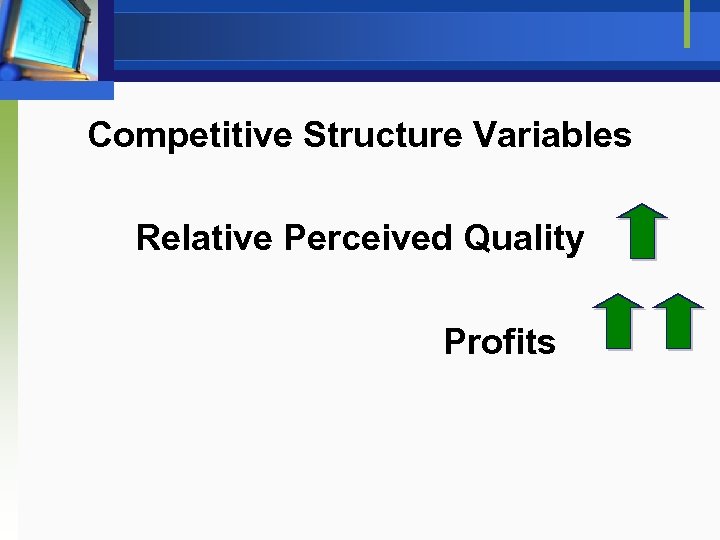
Competitive Structure Variables Relative Perceived Quality Profits
SMALL BUSINESS BANKING
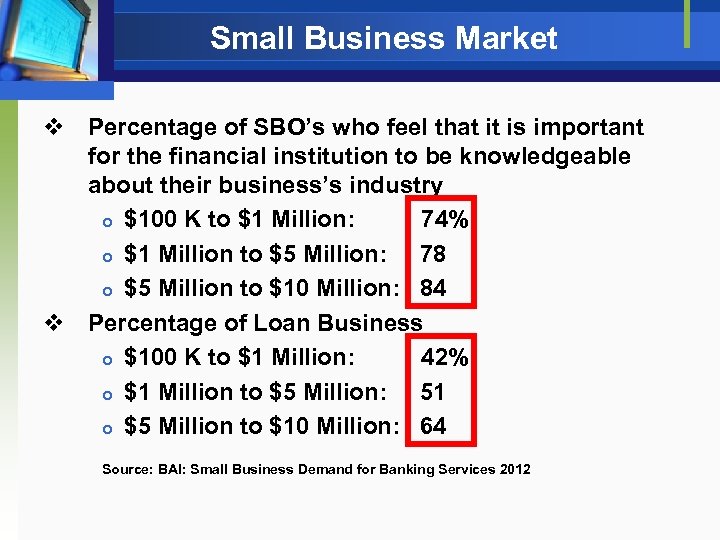
Small Business Market v Percentage of SBO’s who feel that it is important for the financial institution to be knowledgeable about their business’s industry $100 K to $1 Million: 74% $1 Million to $5 Million: 78 $5 Million to $10 Million: 84 v Percentage of Loan Business $100 K to $1 Million: 42% $1 Million to $5 Million: 51 $5 Million to $10 Million: 64 Source: BAI: Small Business Demand for Banking Services 2012
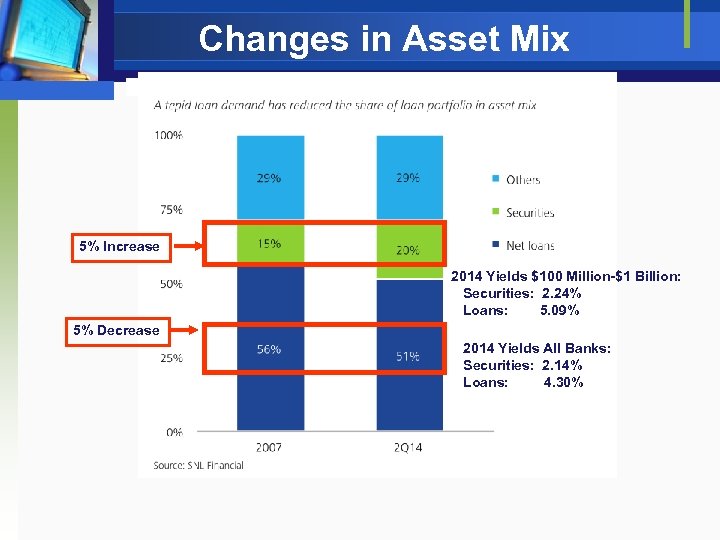
Changes in Asset Mix 5% Increase 2014 Yields $100 Million-$1 Billion: Securities: 2. 24% Loans: 5. 09% 5% Decrease 2014 Yields All Banks: Securities: 2. 14% Loans: 4. 30%
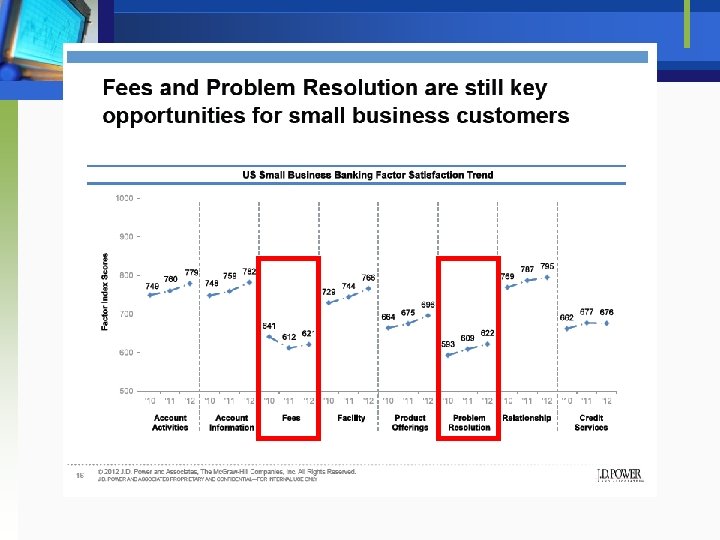
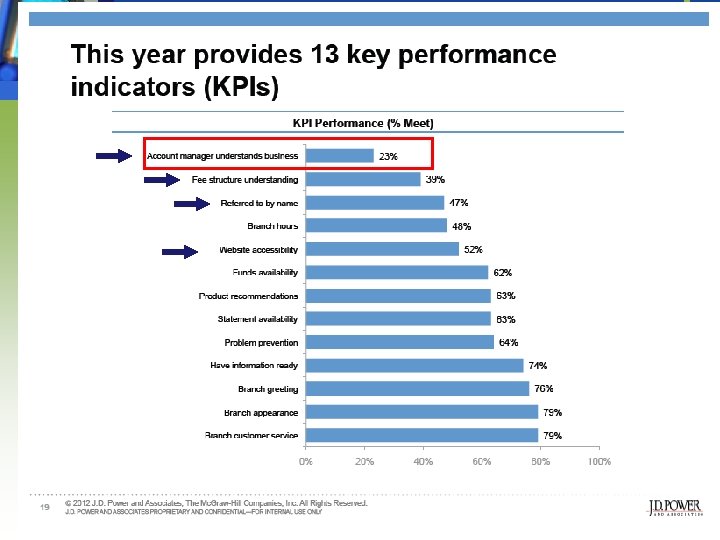
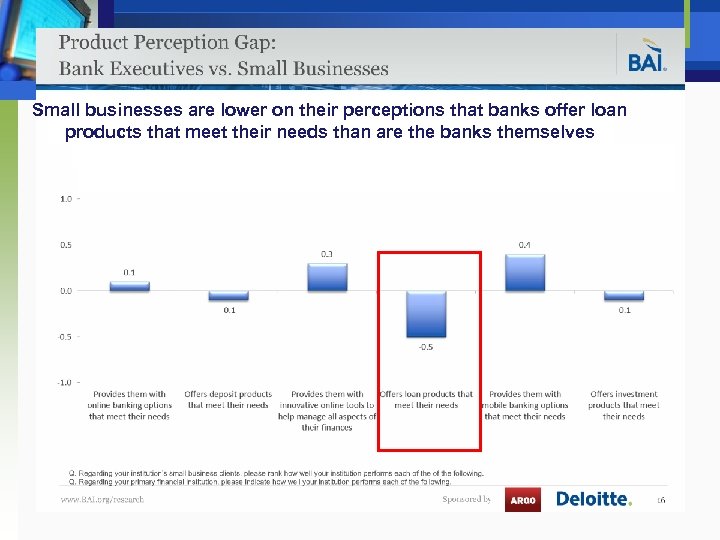
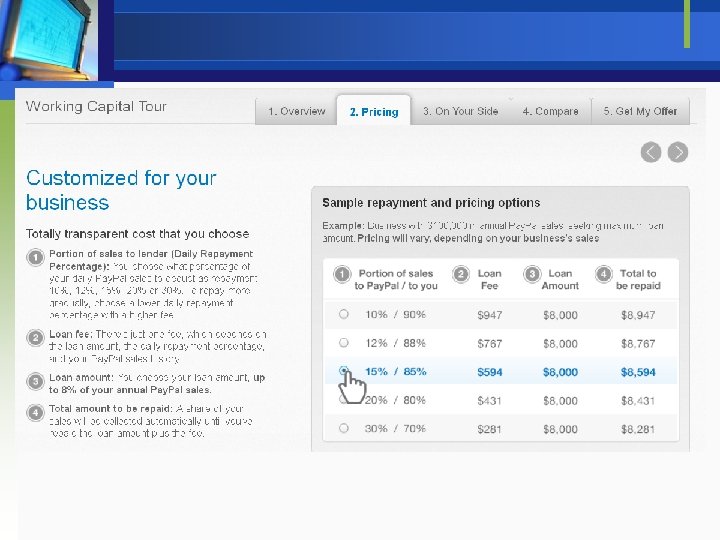
Small businesses are lower on their perceptions that banks offer loan products that meet their needs than are the banks themselves
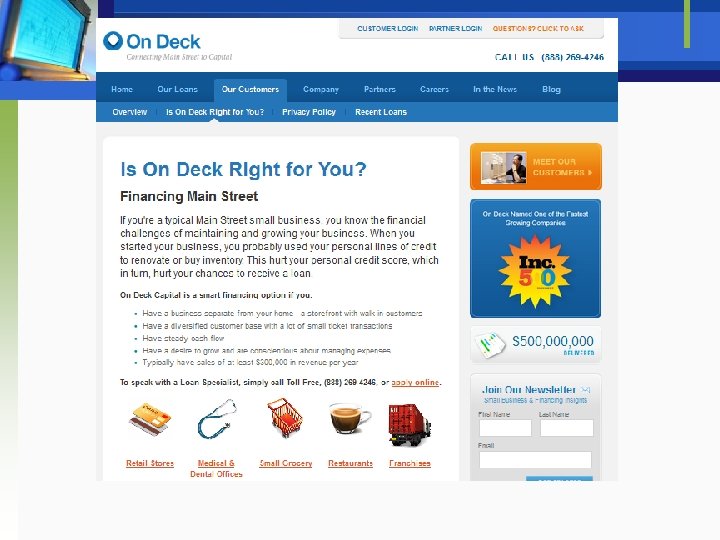
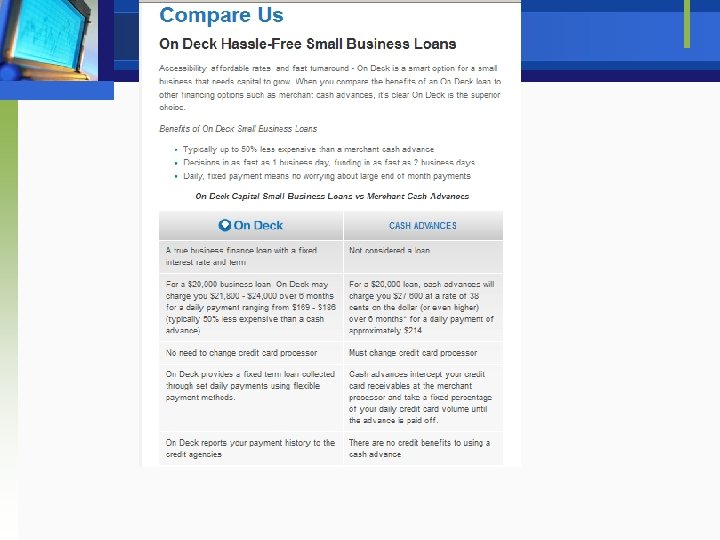
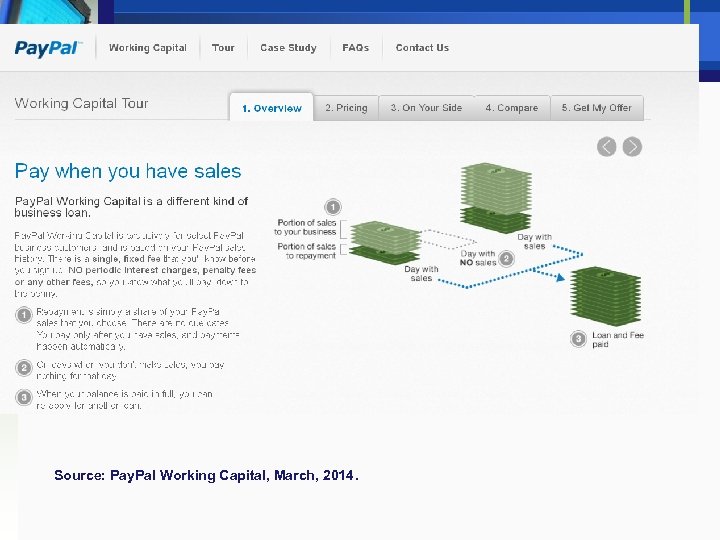
Source: Pay. Pal Working Capital, March, 2014.
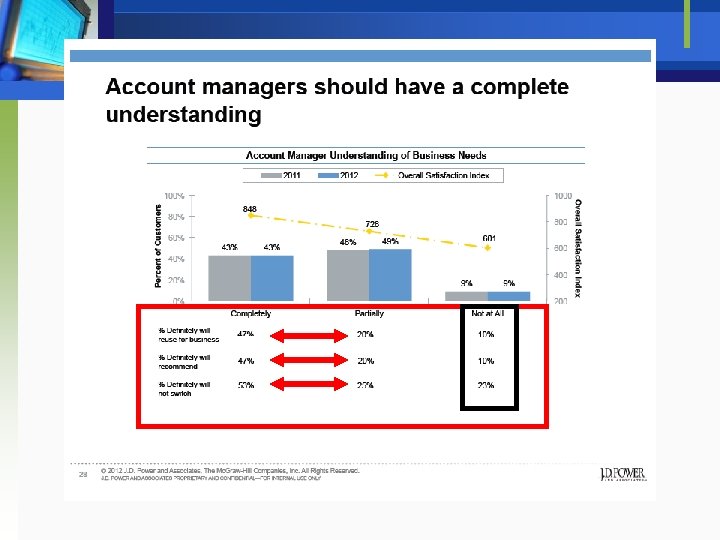
Hesitancy to Engage Business Owners in Financial Discussions v Average front line banker does not come from a business background v Don’t understand cash flow receivables inventory turn working capital other important small business management function v Thus, hesitant to engage in financial dialogue to identify financial issues and solutions for small business
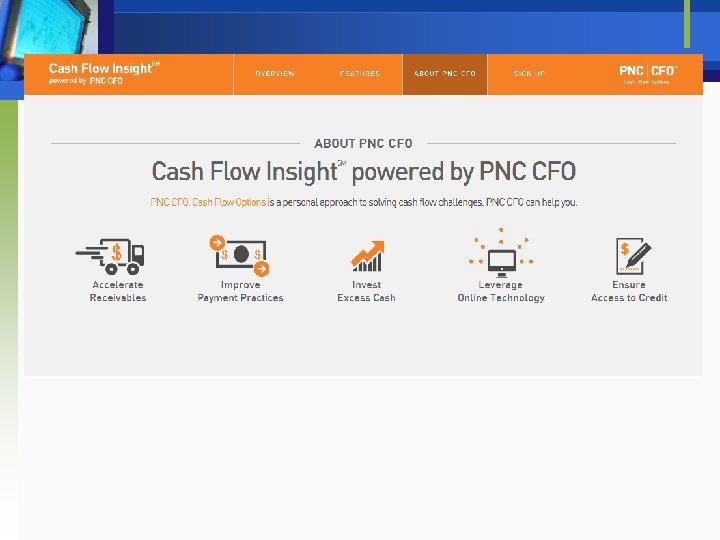
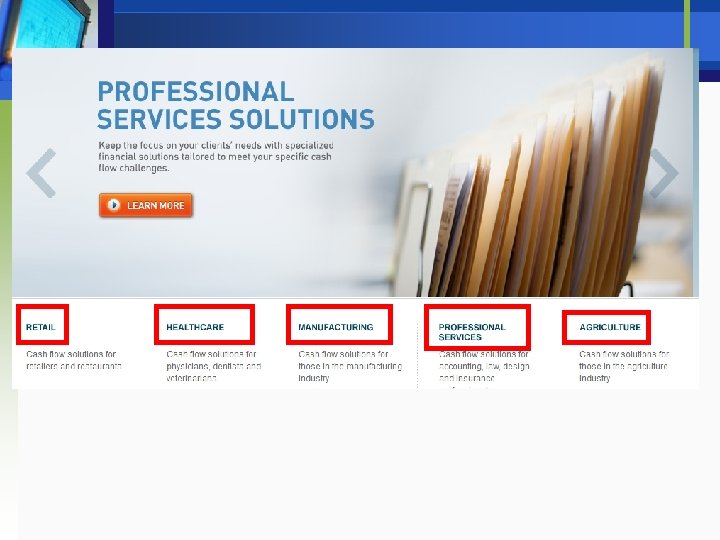
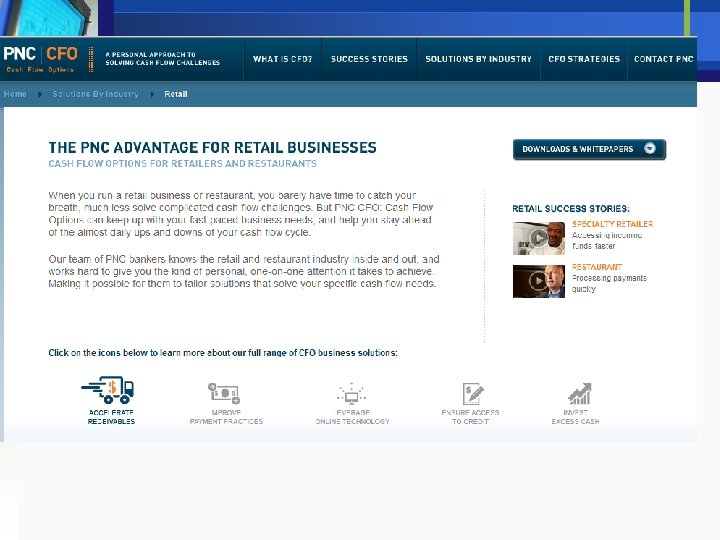
PNC Cash Flow Insights pnc. com/cashflowinsights

The Mobivore
TOOLS To Help Your Bank Achieve Competitive Advantage And Superior Performance
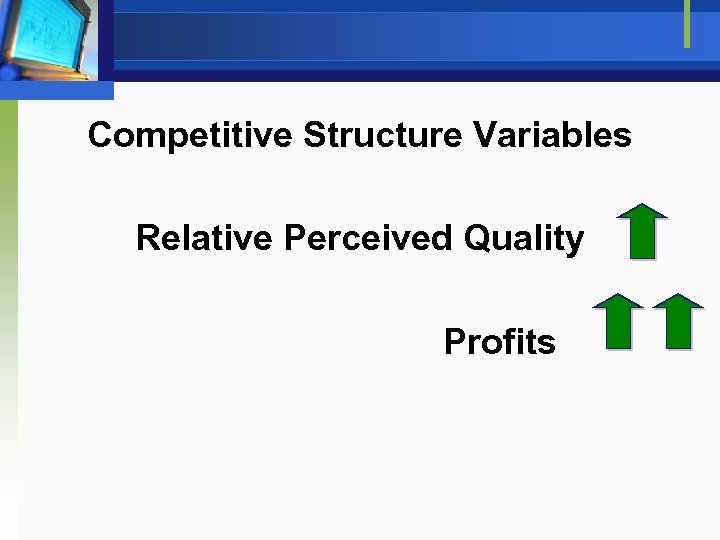
Competitive Structure Variables Relative Perceived Quality Profits
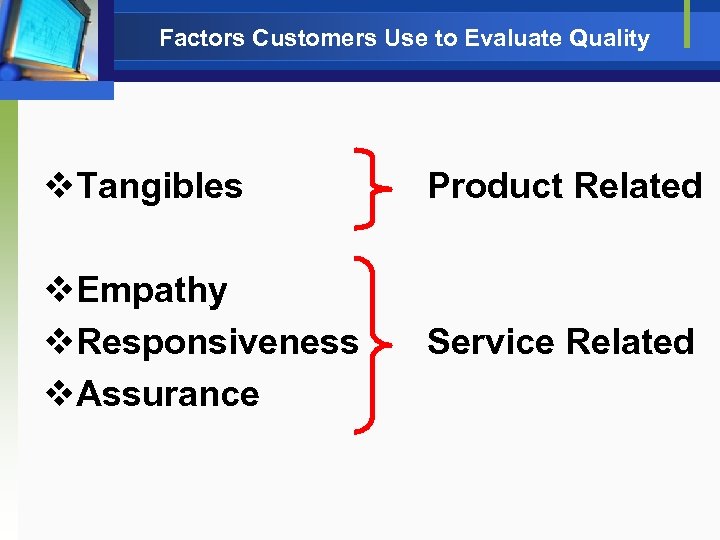
Factors Customers Use to Evaluate Quality v. Tangibles Product Related v. Empathy v. Responsiveness v. Assurance Service Related
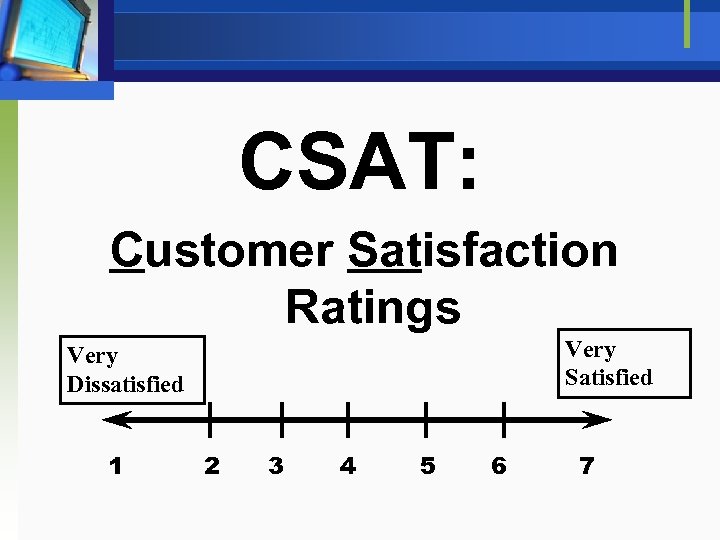
CSAT: Customer Satisfaction Ratings Very Satisfied Very Dissatisfied 1 2 3 4 5 6 7
CGAP Bank Competitive GAP Analysis
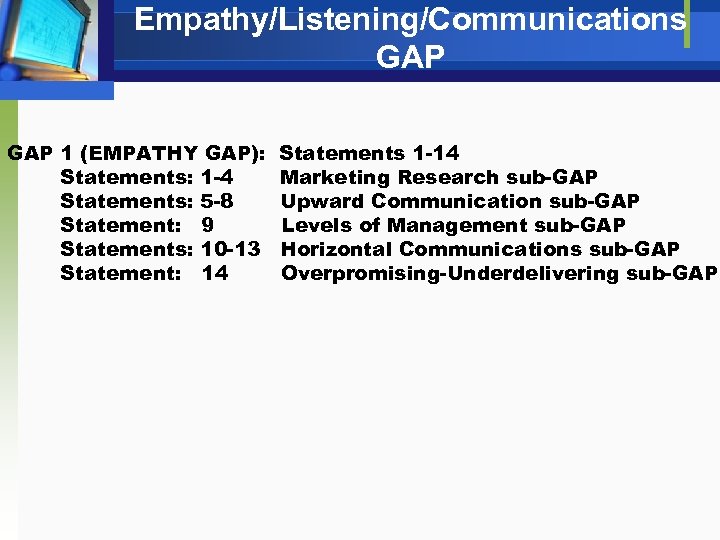
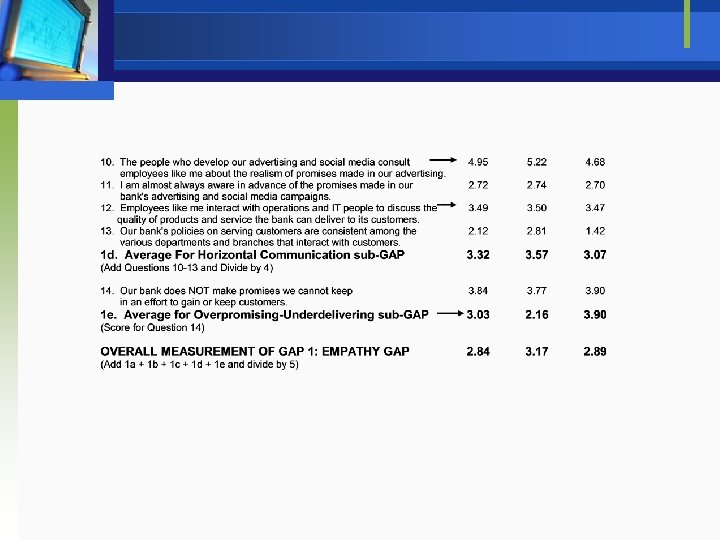
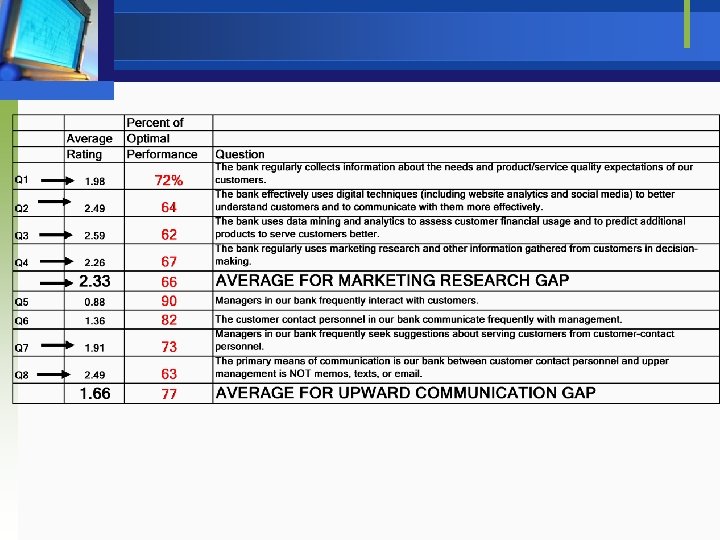
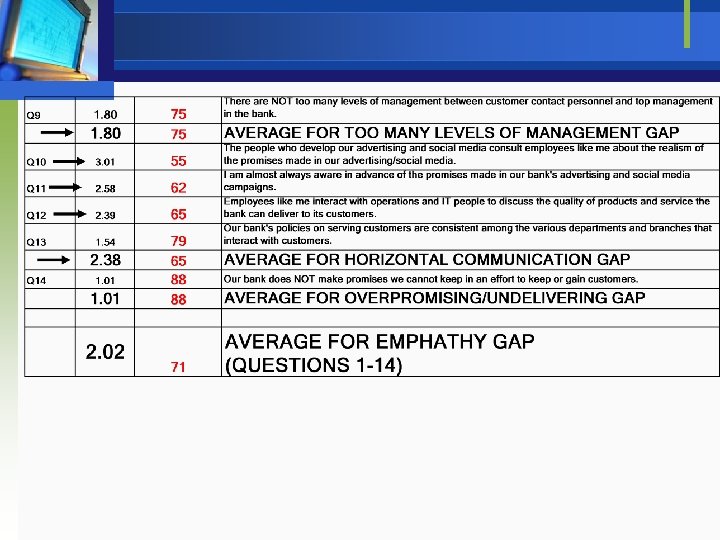
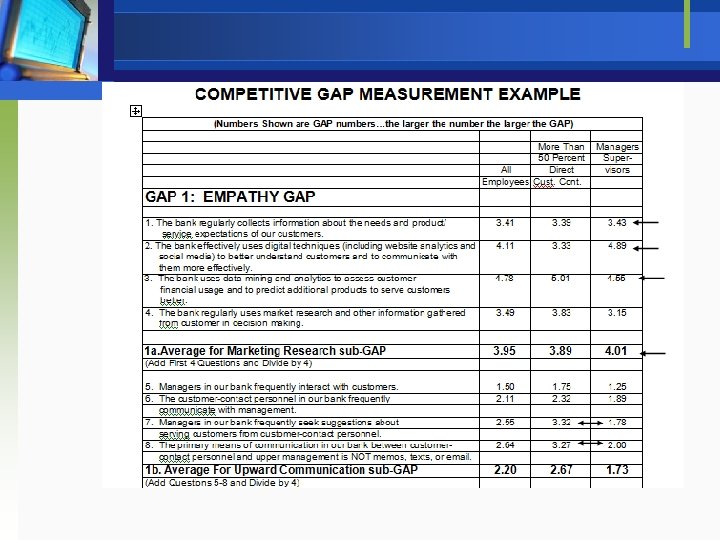
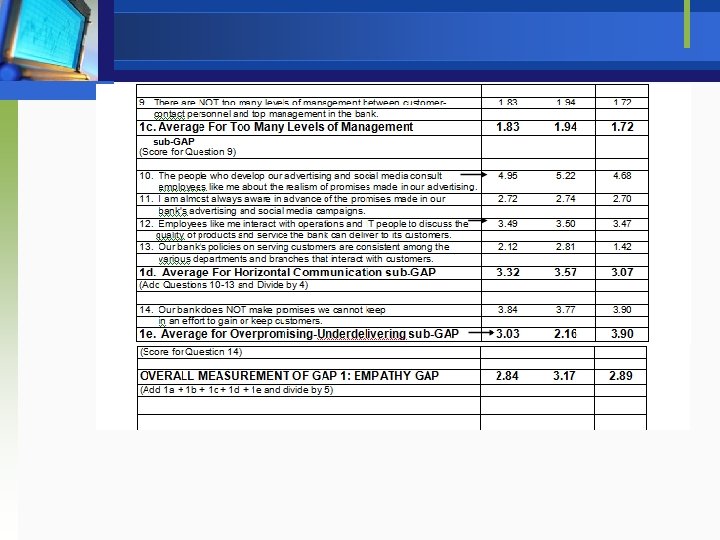
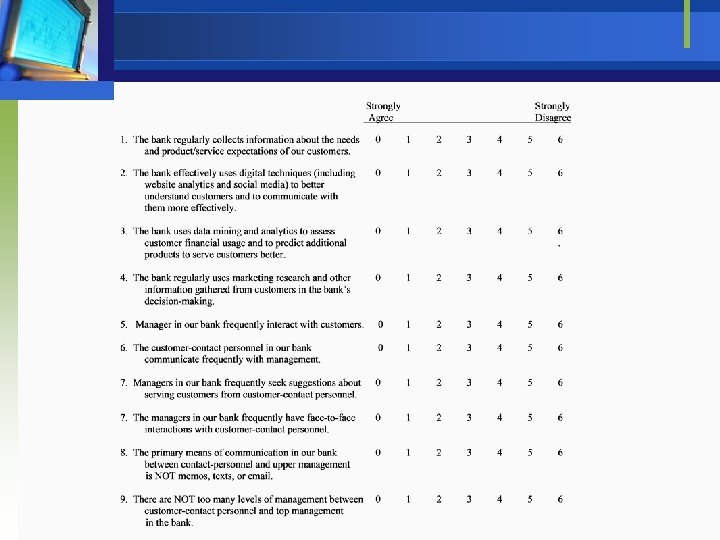
Empathy/Listening/Communications GAP 1 (EMPATHY GAP): Statements: 1 -4 Statements: 5 -8 Statement: 9 Statements: 10 -13 Statement: 14 Statements 1 -14 Marketing Research sub-GAP Upward Communication sub-GAP Levels of Management sub-GAP Horizontal Communications sub-GAP Overpromising-Underdelivering sub-GAP
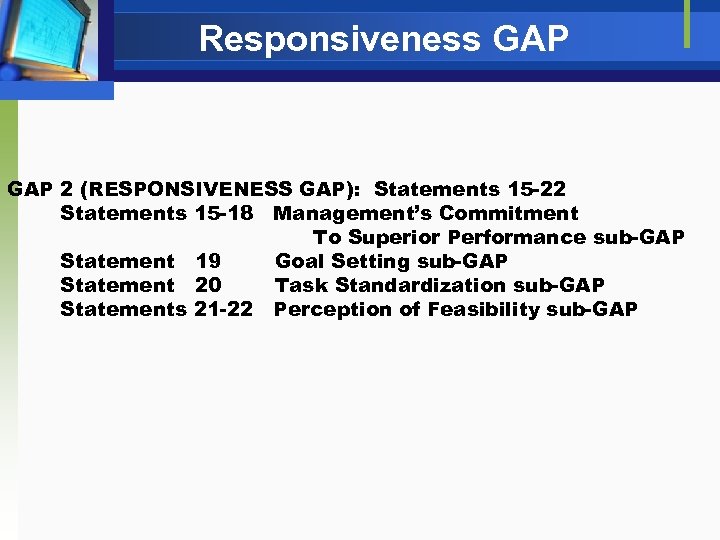
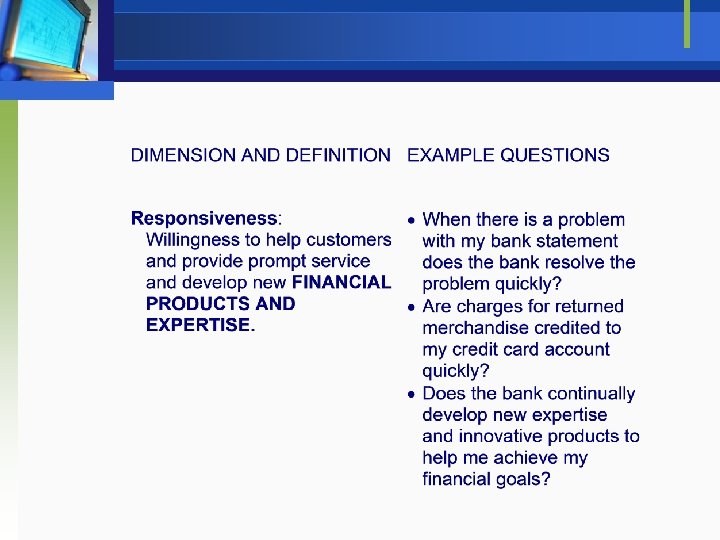
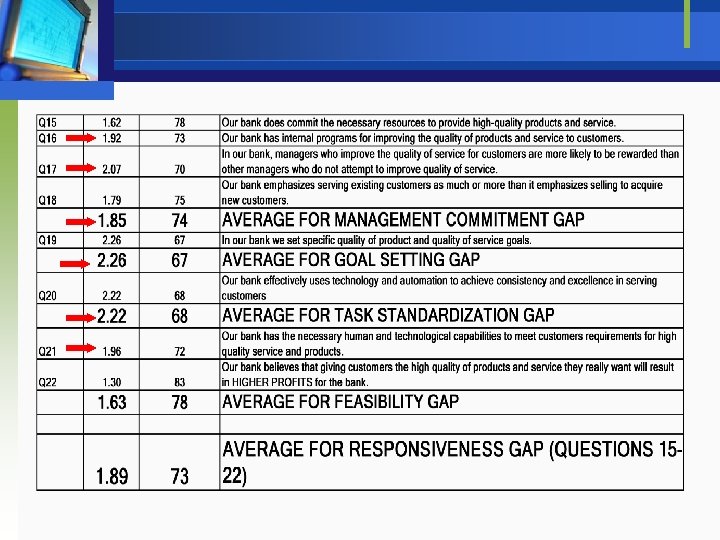
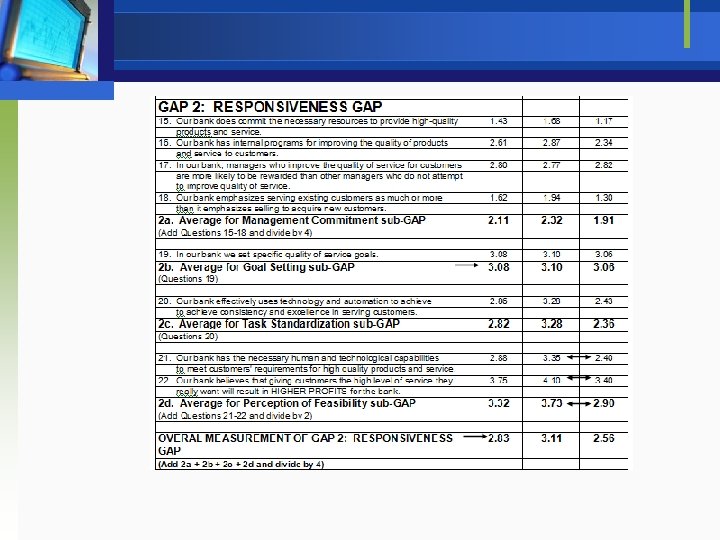
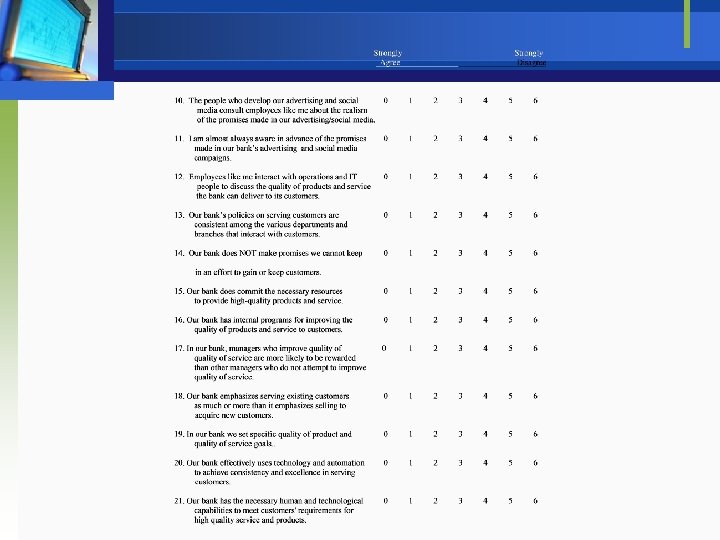
Responsiveness GAP 2 (RESPONSIVENESS GAP): Statements 15 -22 Statements 15 -18 Management’s Commitment To Superior Performance sub-GAP Statement 19 Goal Setting sub-GAP Statement 20 Task Standardization sub-GAP Statements 21 -22 Perception of Feasibility sub-GAP
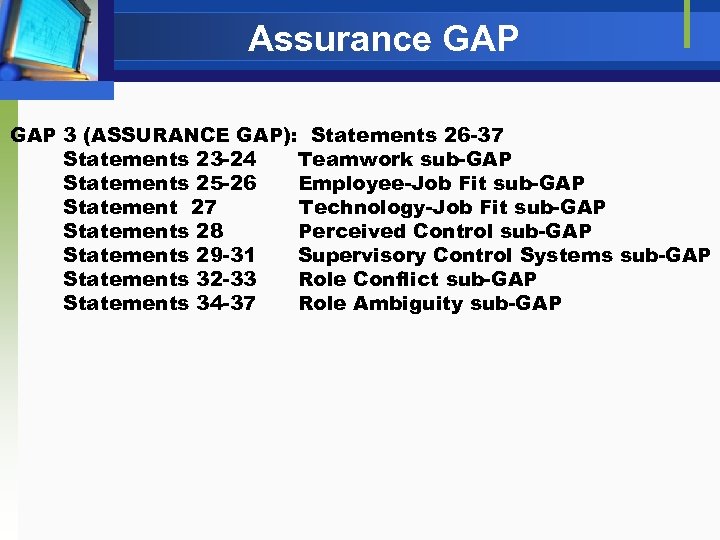
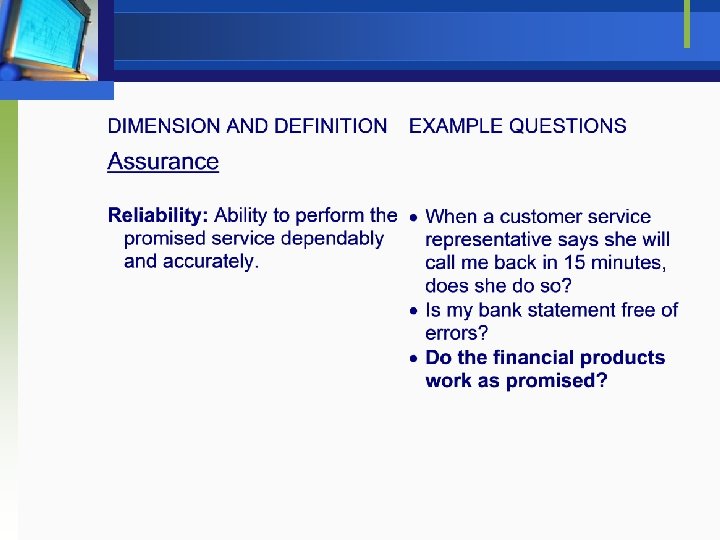
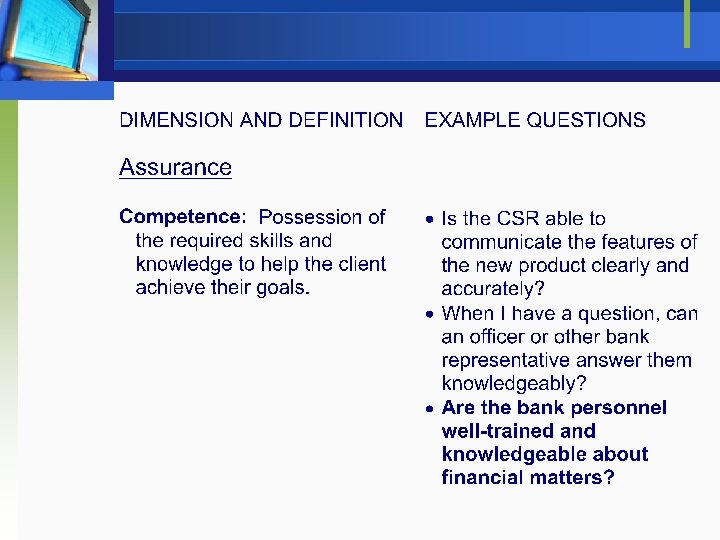
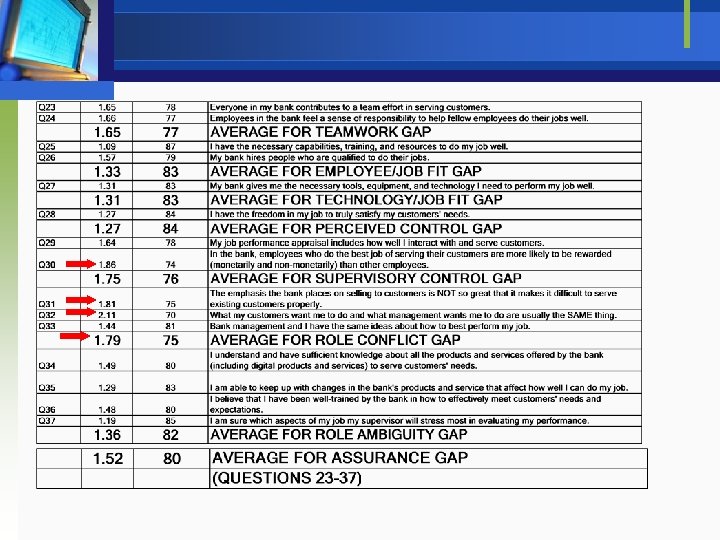
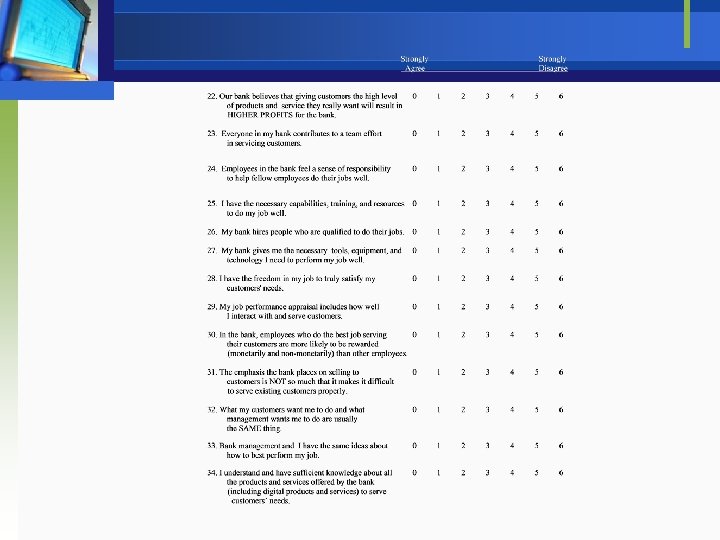
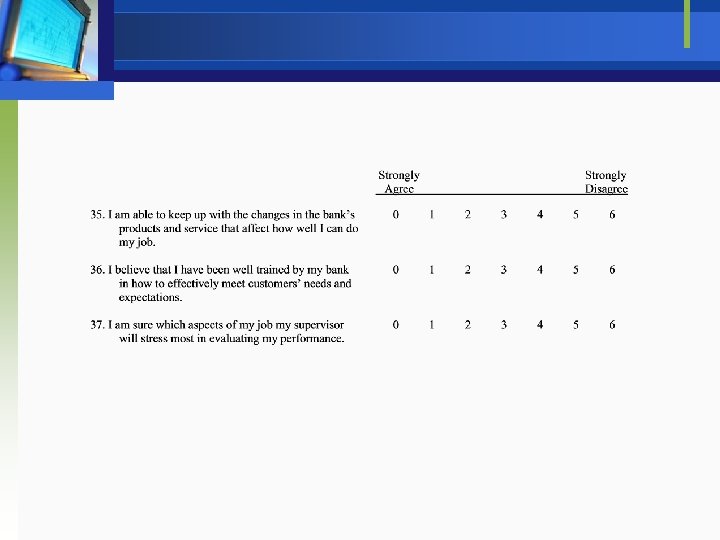
Assurance GAP 3 (ASSURANCE GAP): Statements 26 -37 Statements 23 -24 Teamwork sub-GAP Statements 25 -26 Employee-Job Fit sub-GAP Statement 27 Technology-Job Fit sub-GAP Statements 28 Perceived Control sub-GAP Statements 29 -31 Supervisory Control Systems sub-GAP Statements 32 -33 Role Conflict sub-GAP Statements 34 -37 Role Ambiguity sub-GAP
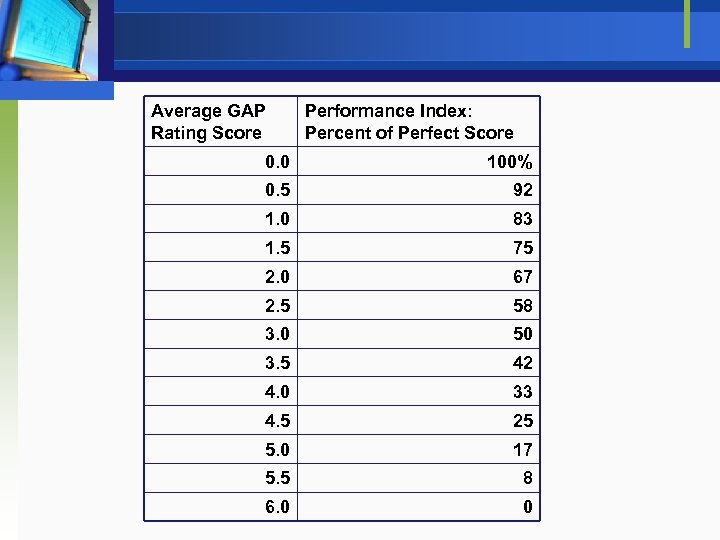
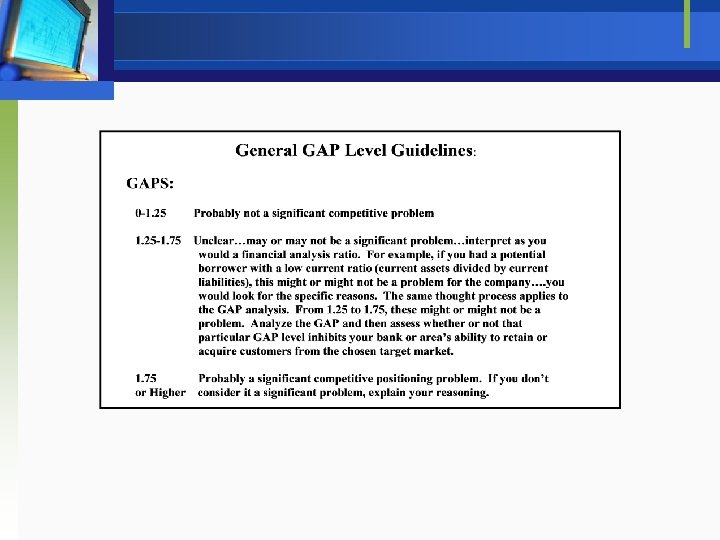
Average GAP Rating Score Performance Index: Percent of Perfect Score 0. 0 100% 0. 5 92 1. 0 83 1. 5 75 2. 0 67 2. 5 58 3. 0 50 3. 5 42 4. 0 33 4. 5 25 5. 0 17 5. 5 8 6. 0 0
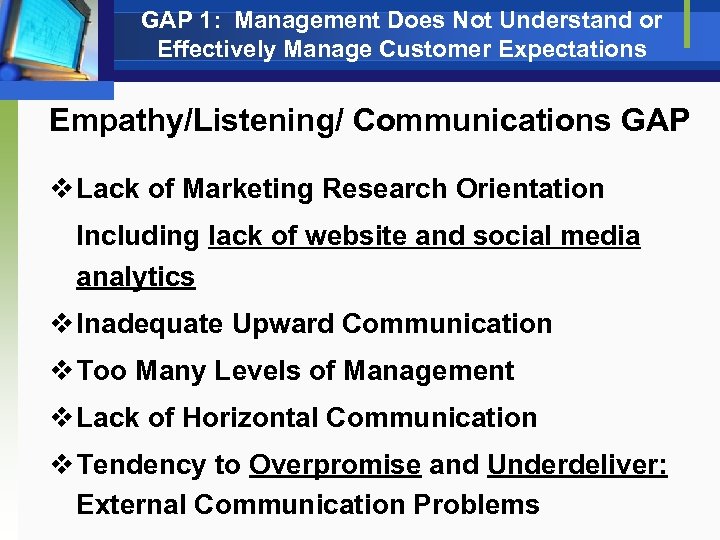
GAP 1: Management Does Not Understand or Effectively Manage Customer Expectations Empathy/Listening/ Communications GAP v Lack of Marketing Research Orientation Including lack of website and social media analytics v Inadequate Upward Communication v Too Many Levels of Management v Lack of Horizontal Communication v Tendency to Overpromise and Underdeliver: External Communication Problems
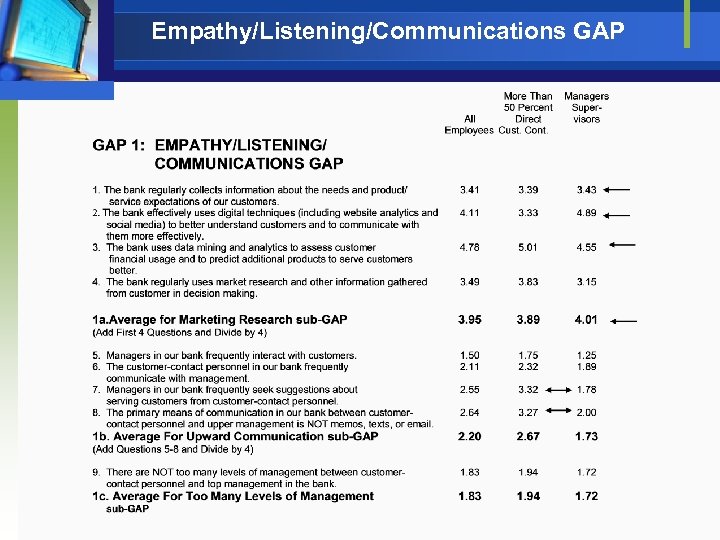
Empathy/Listening/Communications GAP
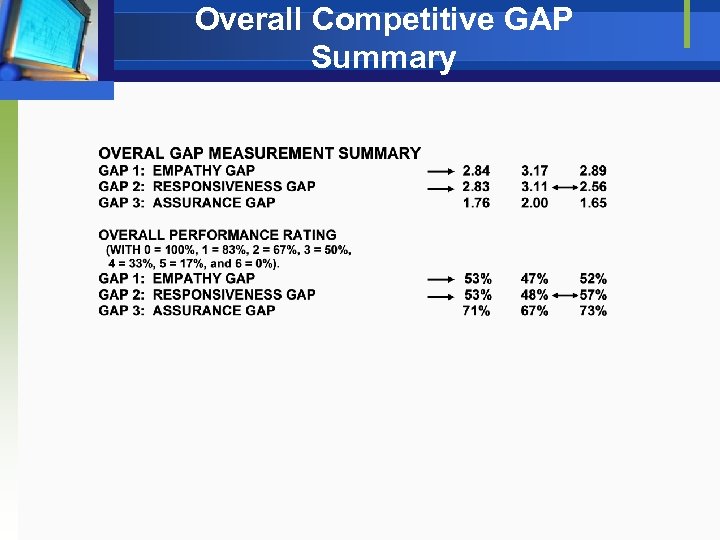
Overall Competitive GAP Summary
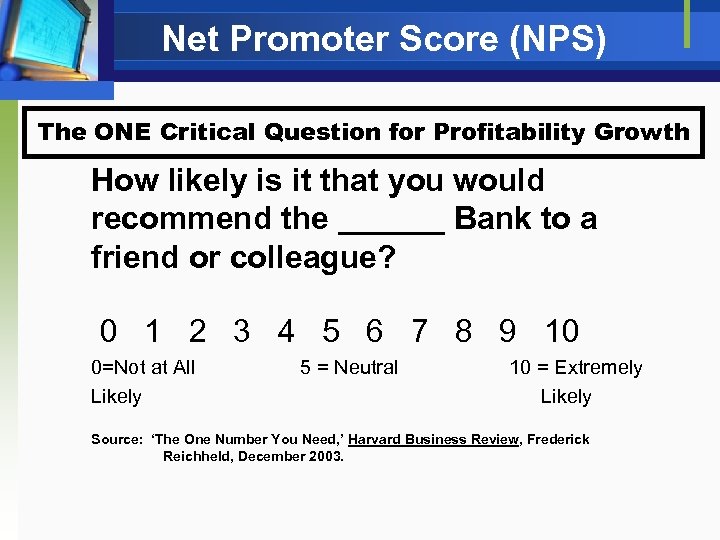
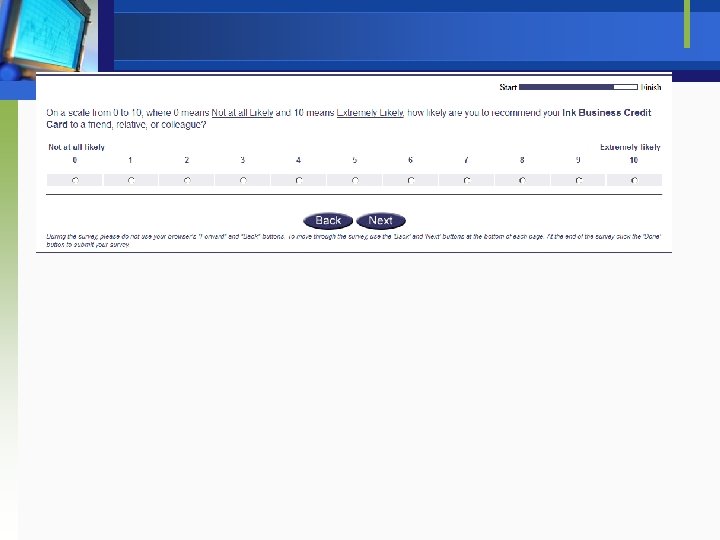
Net Promoter Score (NPS) The ONE Critical Question for Profitability Growth How likely is it that you would recommend the ______ Bank to a friend or colleague? 0 1 2 3 4 5 6 7 8 9 10 0=Not at All Likely 5 = Neutral 10 = Extremely Likely Source: ‘The One Number You Need, ’ Harvard Business Review, Frederick Reichheld, December 2003.
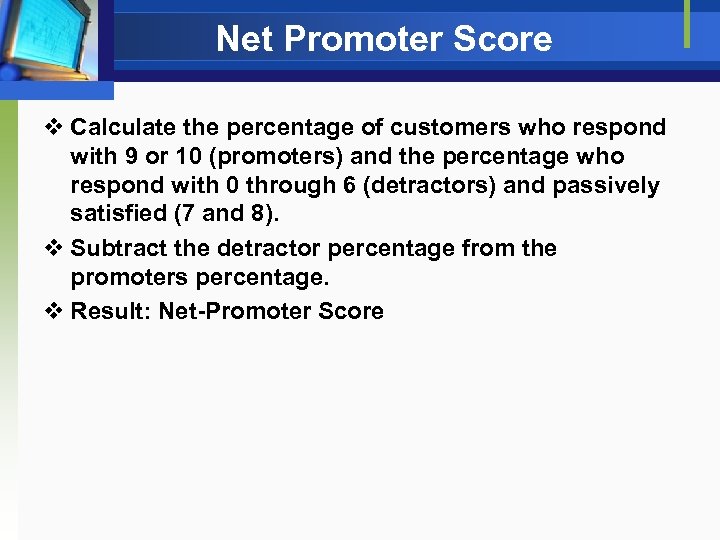
Net Promoter Score v Calculate the percentage of customers who respond with 9 or 10 (promoters) and the percentage who respond with 0 through 6 (detractors) and passively satisfied (7 and 8). v Subtract the detractor percentage from the promoters percentage. v Result: Net-Promoter Score
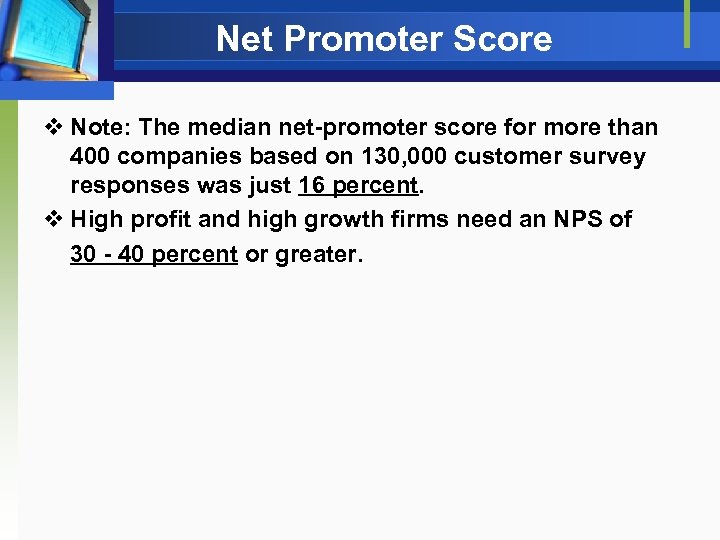
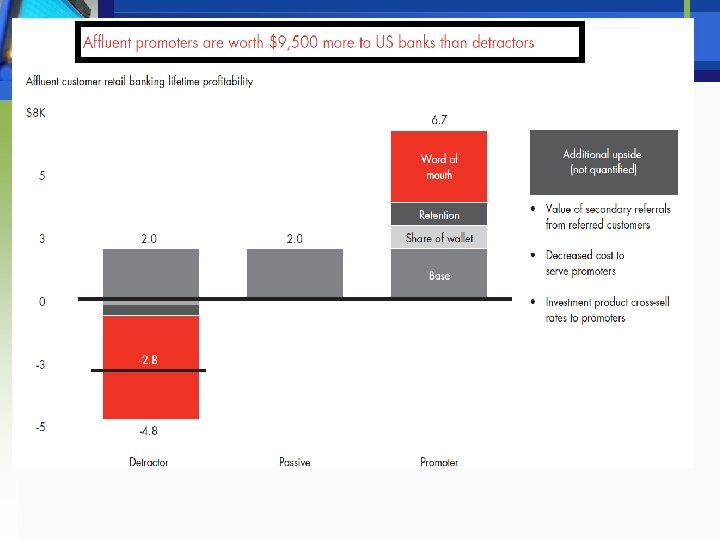
Net Promoter Score v Note: The median net-promoter score for more than 400 companies based on 130, 000 customer survey responses was just 16 percent. v High profit and high growth firms need an NPS of 30 - 40 percent or greater.
`
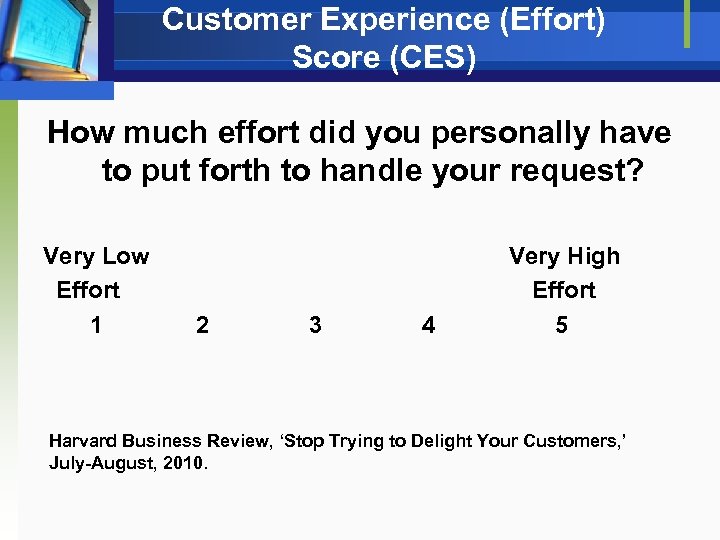
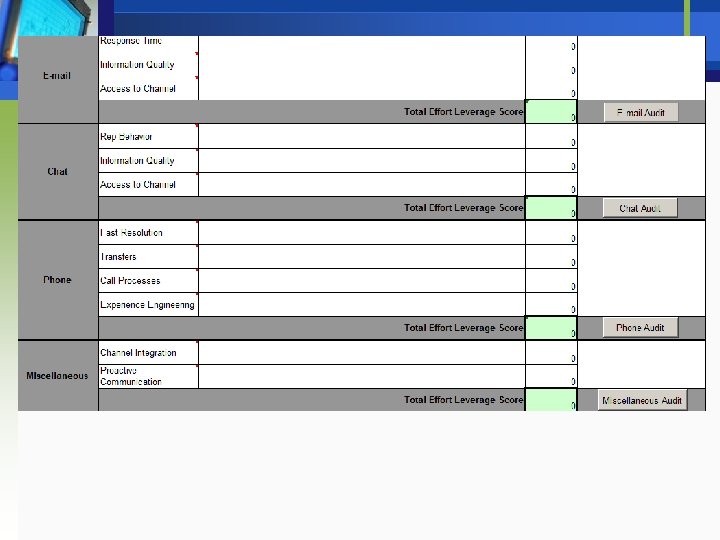
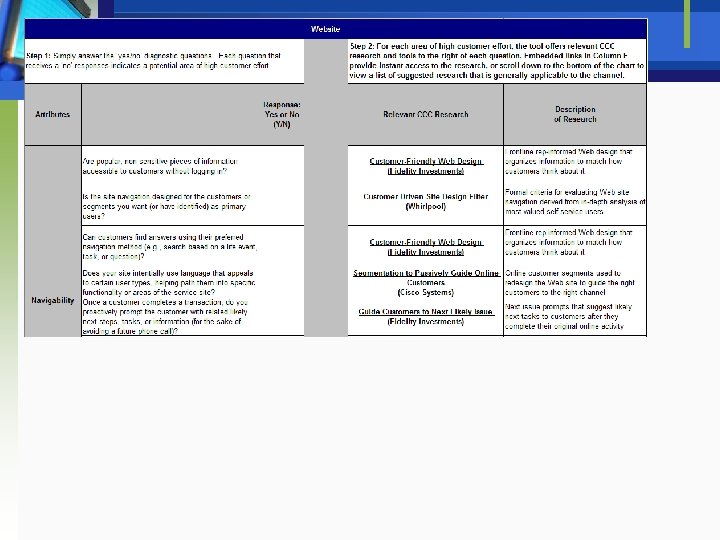
Customer Experience (Effort) Score (CES) How much effort did you personally have to put forth to handle your request? Very Low Effort 1 2 3 4 Very High Effort 5 Harvard Business Review, ‘Stop Trying to Delight Your Customers, ’ July-August, 2010.
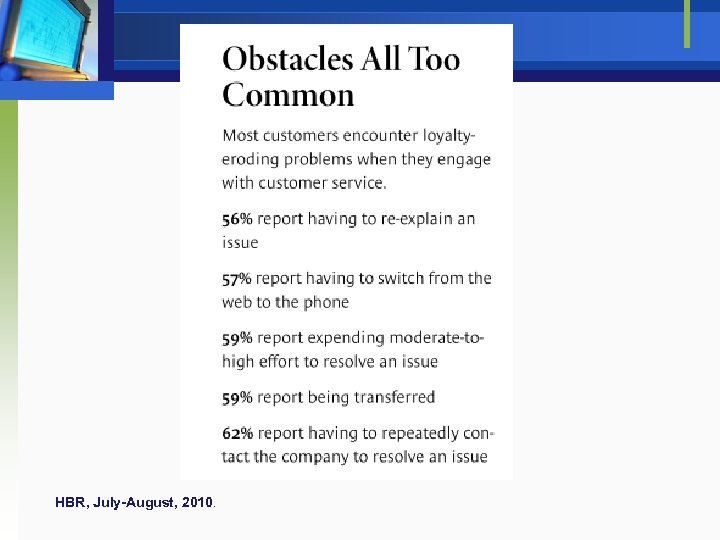
HBR, July-August, 2010.
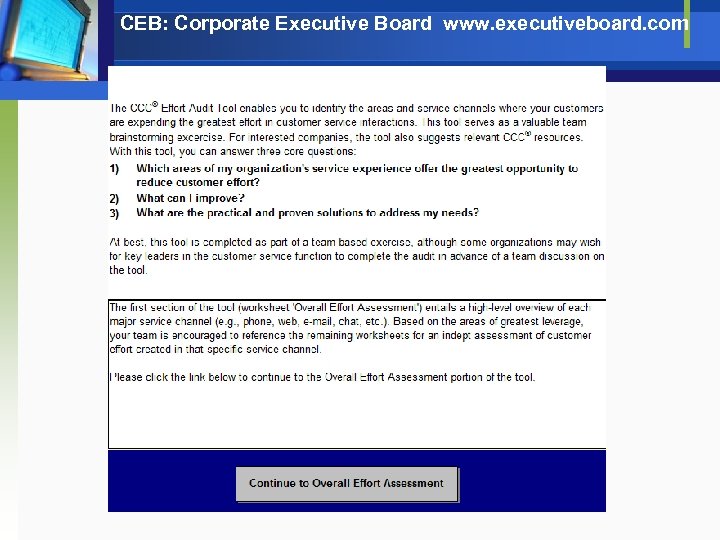
CEB: Corporate Executive Board www. executiveboard. com
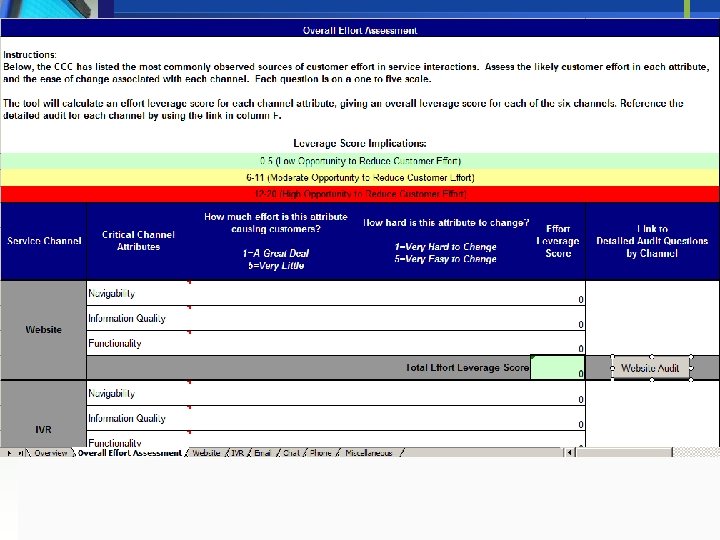
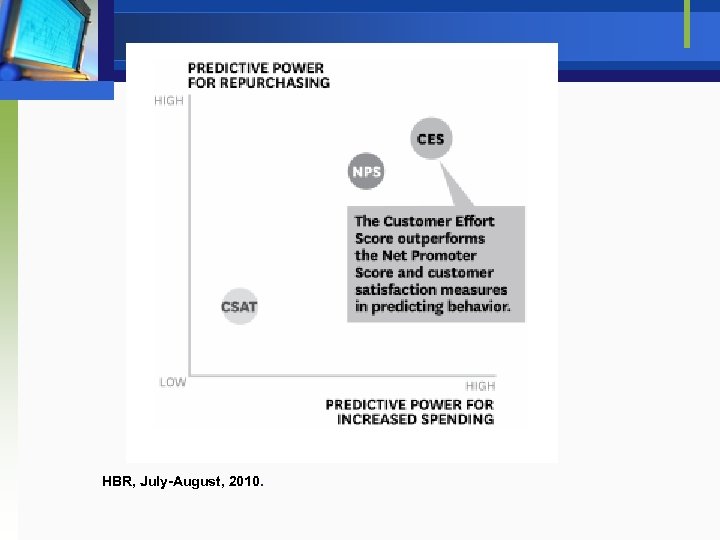
HBR, July-August, 2010.
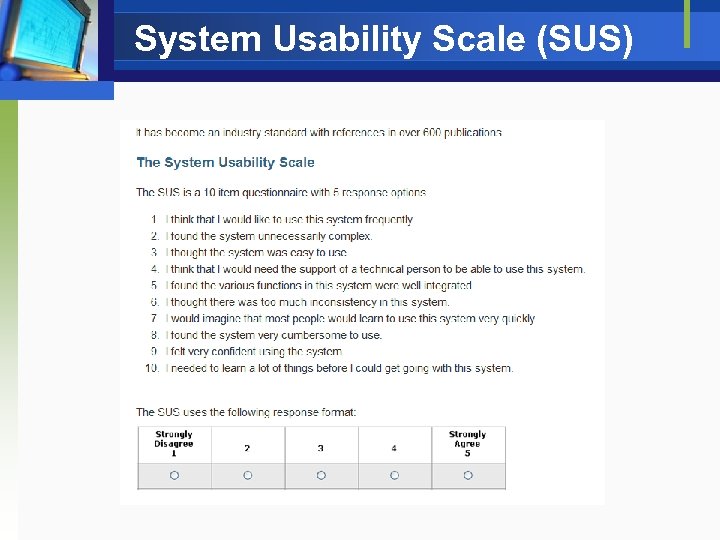
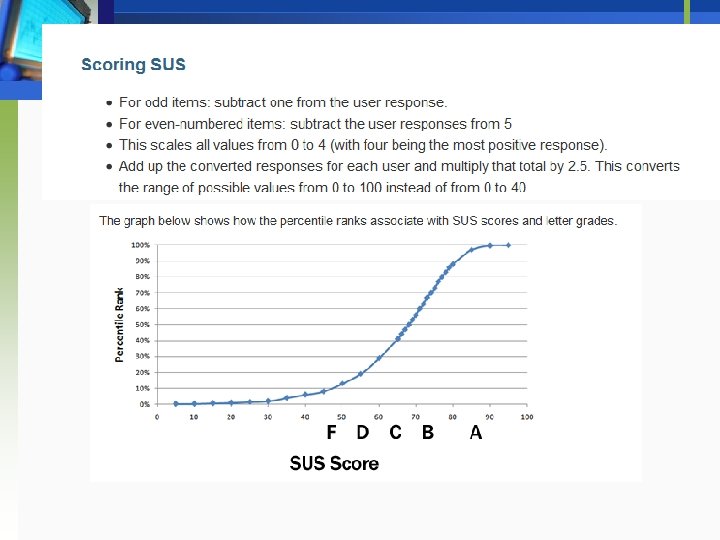
System Usability Scale (SUS)

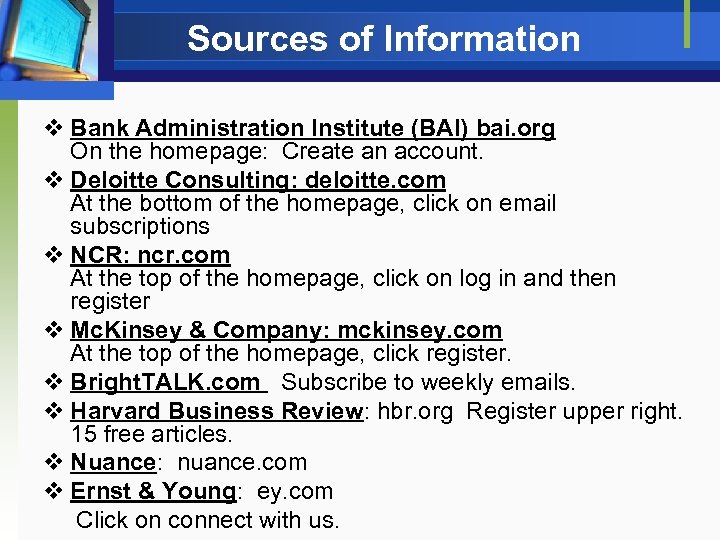
Sources of Information v Bank Administration Institute (BAI) bai. org On the homepage: Create an account. v Deloitte Consulting: deloitte. com At the bottom of the homepage, click on email subscriptions v NCR: ncr. com At the top of the homepage, click on log in and then register v Mc. Kinsey & Company: mckinsey. com At the top of the homepage, click register. v Bright. TALK. com Subscribe to weekly emails. v Harvard Business Review: hbr. org Register upper right. 15 free articles. v Nuance: nuance. com v Ernst & Young: ey. com Click on connect with us.
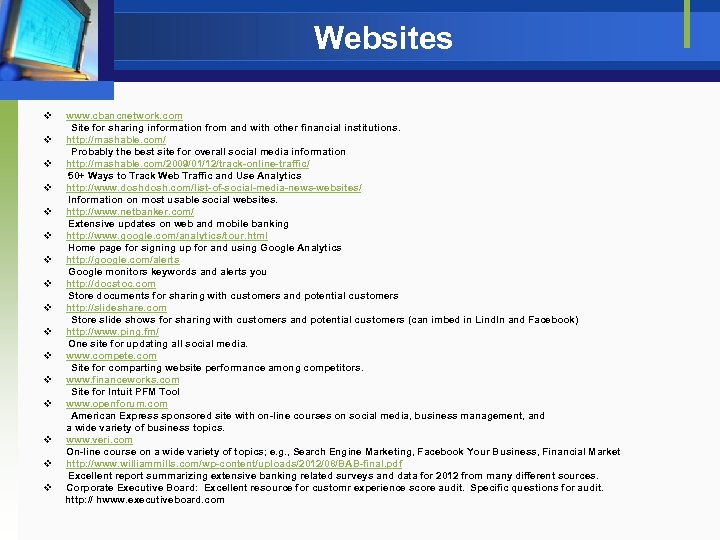
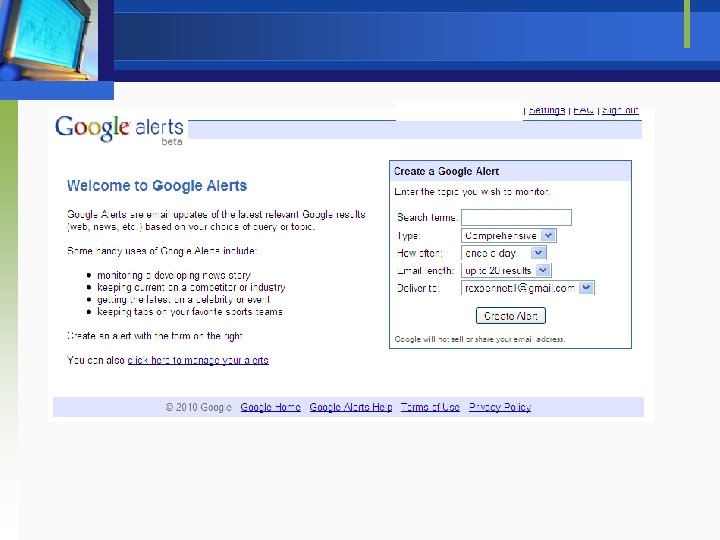
Websites v v v v www. cbancnetwork. com Site for sharing information from and with other financial institutions. http: //mashable. com/ Probably the best site for overall social media information http: //mashable. com/2009/01/12/track-online-traffic/ 50+ Ways to Track Web Traffic and Use Analytics http: //www. dosh. com/list-of-social-media-news-websites/ Information on most usable social websites. http: //www. netbanker. com/ Extensive updates on web and mobile banking http: //www. google. com/analytics/tour. html Home page for signing up for and using Google Analytics http: //google. com/alerts Google monitors keywords and alerts you http: //docstoc. com Store documents for sharing with customers and potential customers http: //slideshare. com Store slide shows for sharing with customers and potential customers (can imbed in Lind. In and Facebook) http: //www. ping. fm/ One site for updating all social media. www. compete. com Site for comparting website performance among competitors. www. financeworks. com Site for Intuit PFM Tool www. openforum. com American Express sponsored site with on-line courses on social media, business management, and a wide variety of business topics. www. veri. com On-line course on a wide variety of topics; e. g. , Search Engine Marketing, Facebook Your Business, Financial Market http: //www. williammills. com/wp-content/uploads/2012/08/BAB-final. pdf Excellent report summarizing extensive banking related surveys and data for 2012 from many different sources. Corporate Executive Board: Excellent resource for customr experience score audit. Specific questions for audit. http: // hwww. executiveboard. com
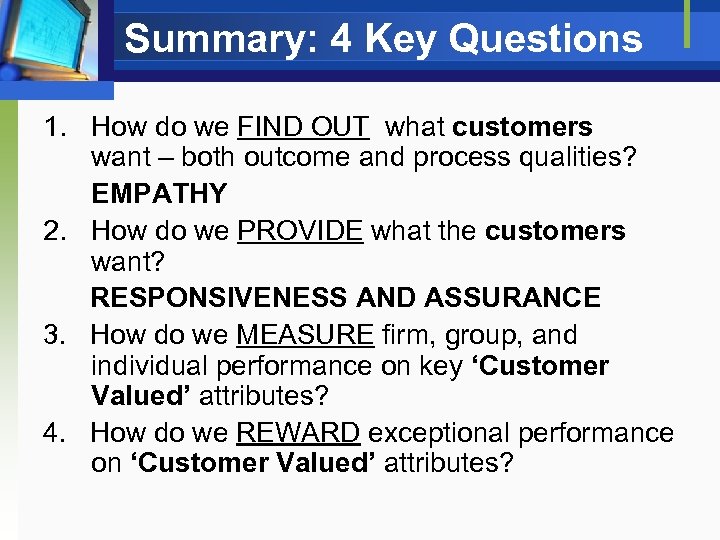
Summary: 4 Key Questions 1. How do we FIND OUT what customers want – both outcome and process qualities? EMPATHY 2. How do we PROVIDE what the customers want? RESPONSIVENESS AND ASSURANCE 3. How do we MEASURE firm, group, and individual performance on key ‘Customer Valued’ attributes? 4. How do we REWARD exceptional performance on ‘Customer Valued’ attributes?
Greatest Competitive Advantage in the World Customers Go Where They Get Rewarded for Going Customers Stay Where They Get Rewarded for Staying
“We do not act rightly because we have virtue or excellence, but we rather have those because we have acted rightly. We are what we repeatedly do. ” “Excellence, then, is not an act but a habit. ” -- Aristotle

Yoda
“I’ll Try!”
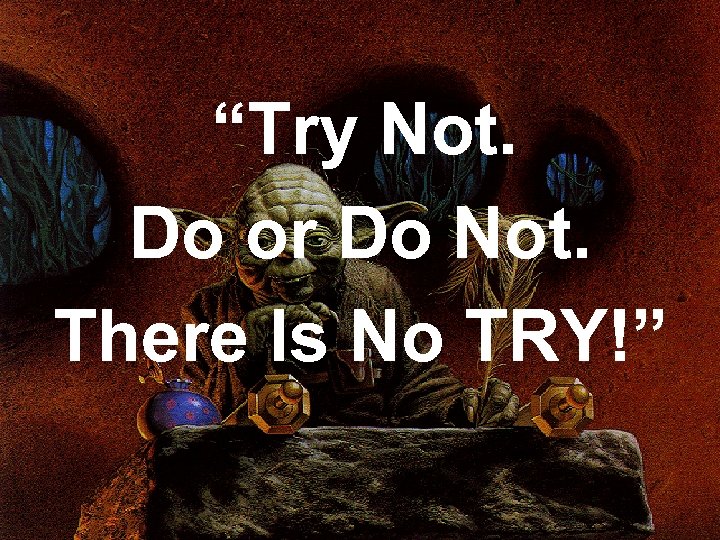
“Try Not. Do or Do Not. There Is No TRY!”
Commit yourself and your bank to doing…to providing exceptional customer satisfaction and performance Then you will simply be THE BEST! And the most PROFITABLE!
In Conclusion: Success Is A Journey. . . Not A Destination

And I Wish You Well on Your Journey of Success
Thank You
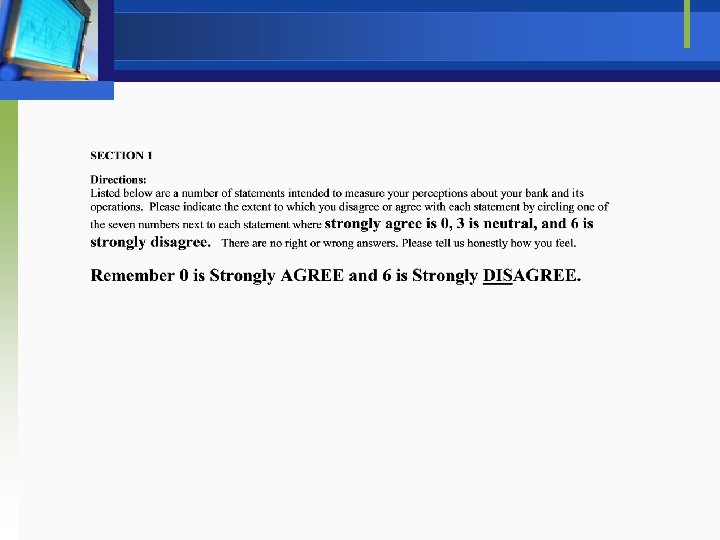
Appendix A Bank Competitive GAP Analysis
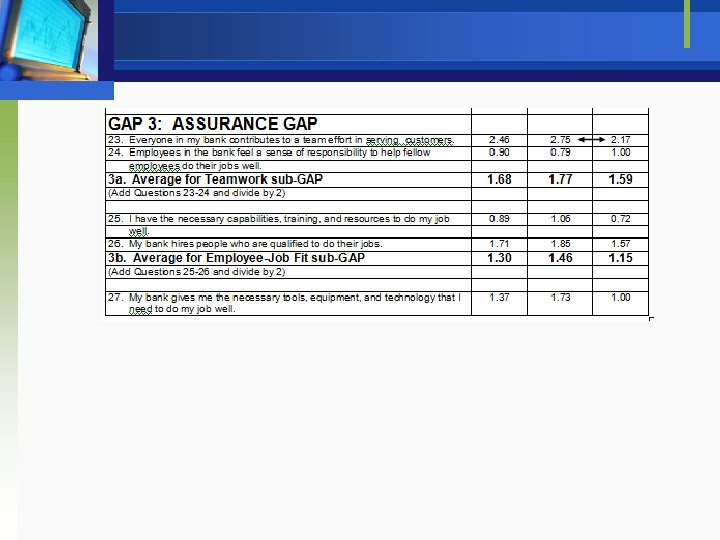
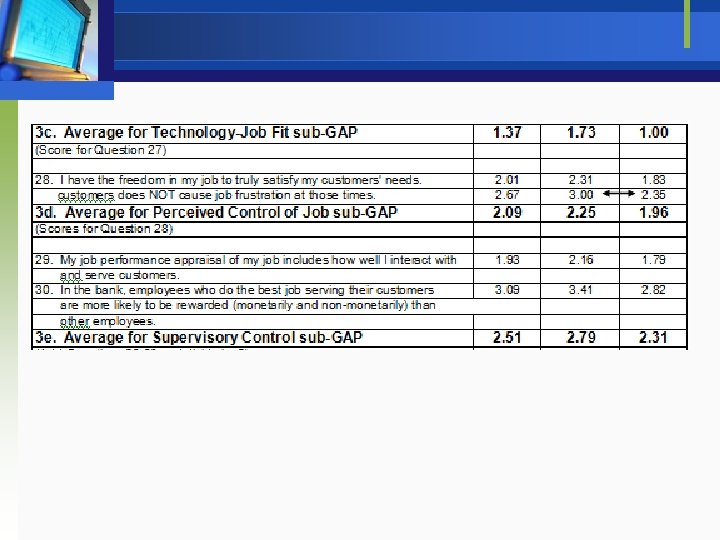
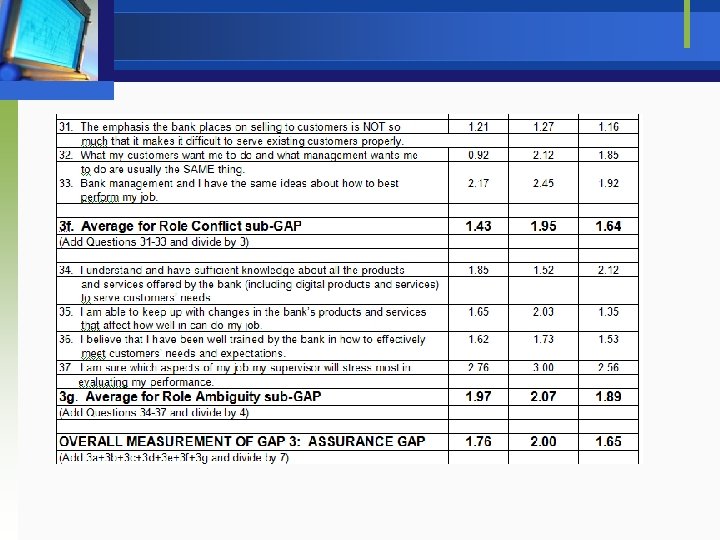
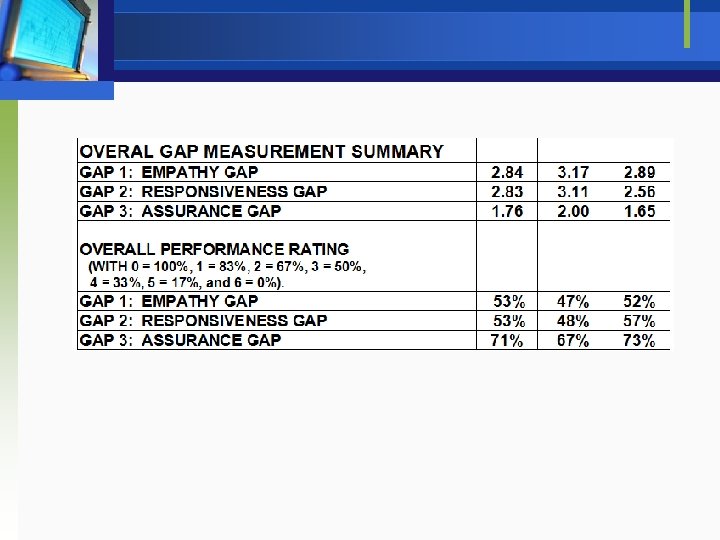
Appendix B
Customer Satisfaction and Dissatisfaction
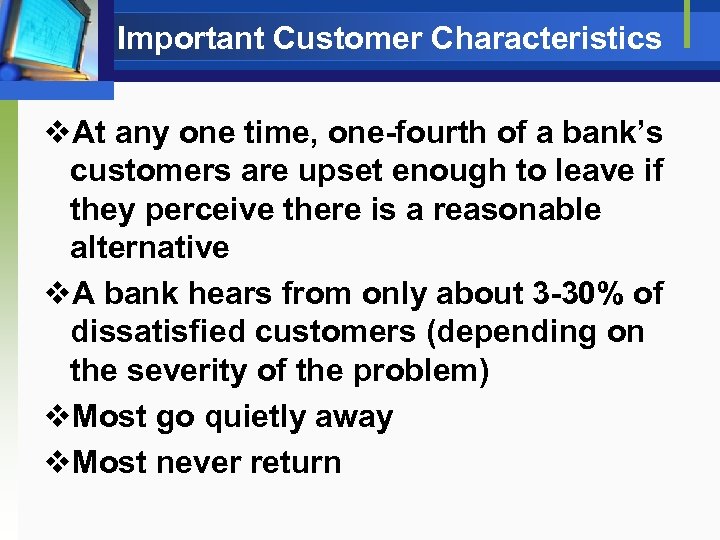
Important Customer Characteristics v. At any one time, one-fourth of a bank’s customers are upset enough to leave if they perceive there is a reasonable alternative v. A bank hears from only about 3 -30% of dissatisfied customers (depending on the severity of the problem) v. Most go quietly away v. Most never return
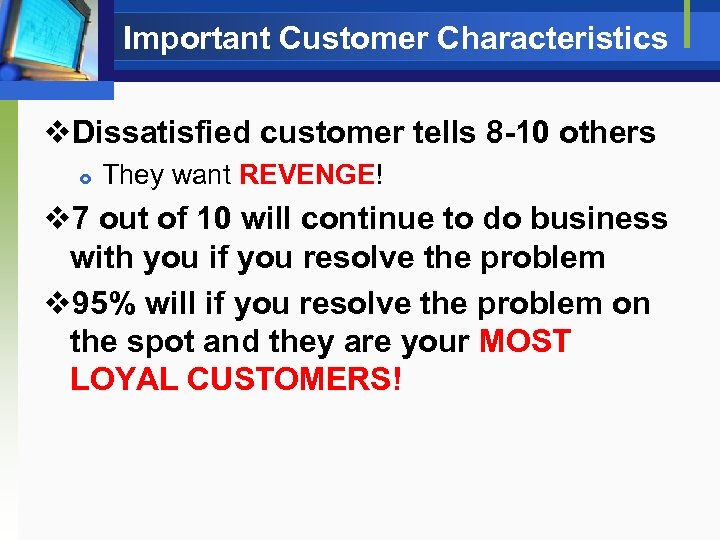
Important Customer Characteristics v. Dissatisfied customer tells 8 -10 others They want REVENGE! v 7 out of 10 will continue to do business with you if you resolve the problem v 95% will if you resolve the problem on the spot and they are your MOST LOYAL CUSTOMERS!
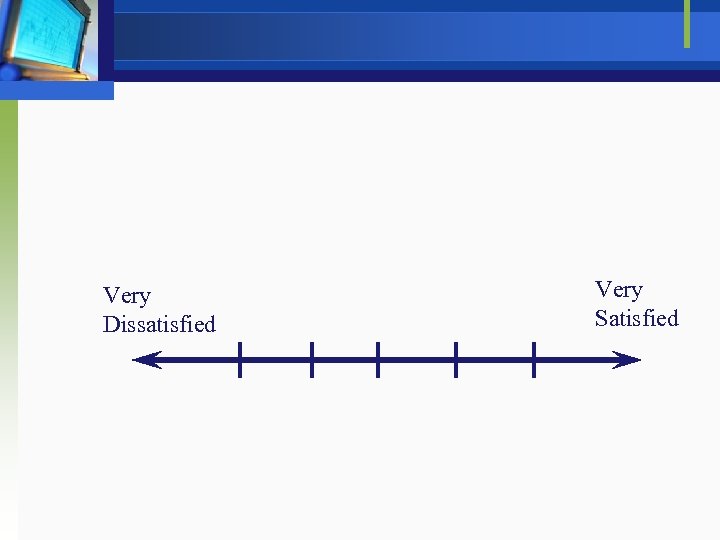
Very Dissatisfied Very Satisfied
Customer Dissatisfaction vs. Customer Satisfaction Are there different factors that produce these customer reactions?
People in Their Work Environment v Satisfiers v Dissatisfiers
Top Three Factors Influencing Job Satisfaction 3. 2. 1.
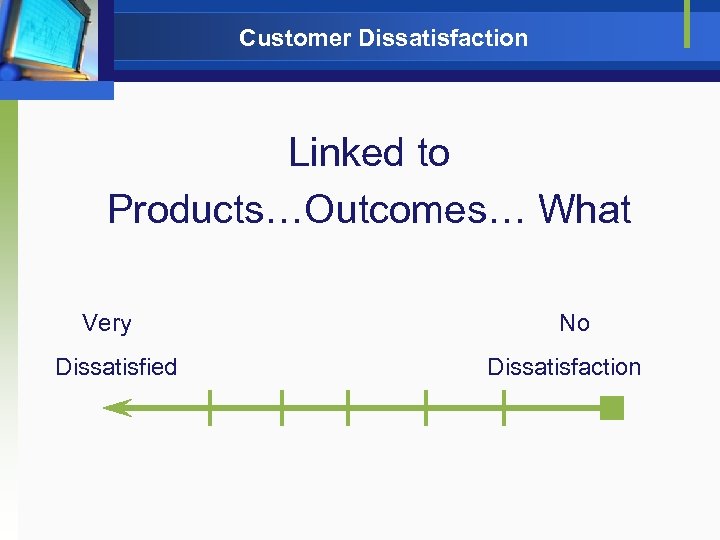
Customer Dissatisfaction Linked to Products…Outcomes… What Very Dissatisfied No Dissatisfaction
Customer Satisfaction Linked to Service…Process…How
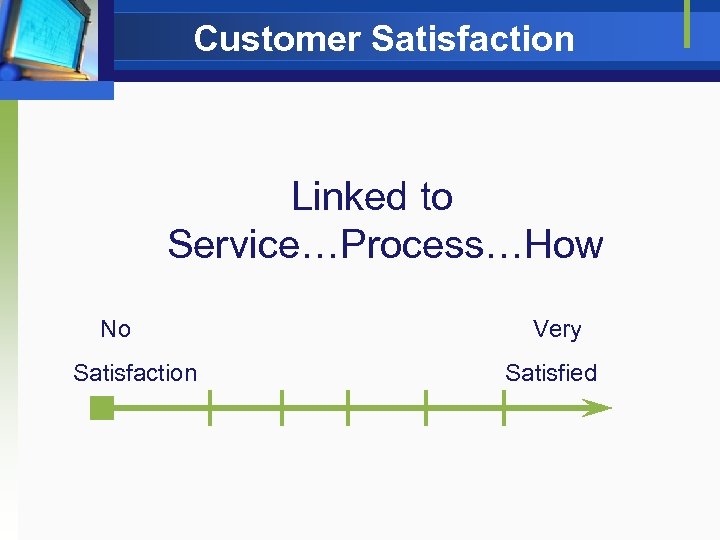
Customer Satisfaction Linked to Service…Process…How No Satisfaction Very Satisfied
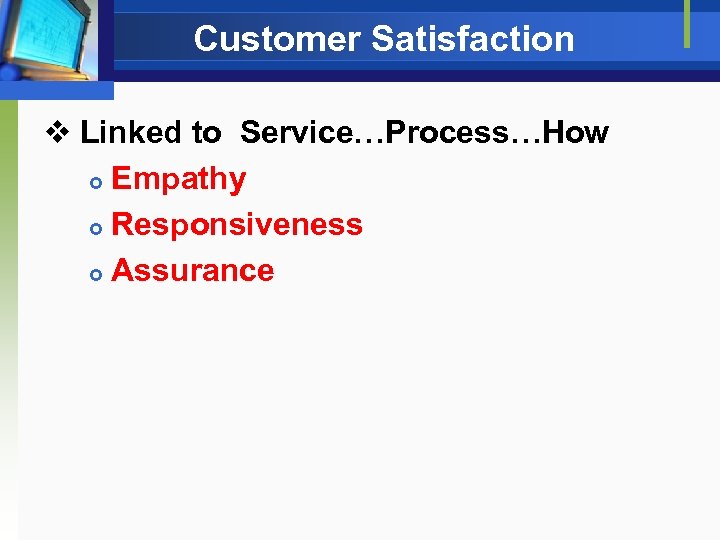
Customer Satisfaction v Linked to Service…Process…How Empathy Responsiveness Assurance
Appendix C
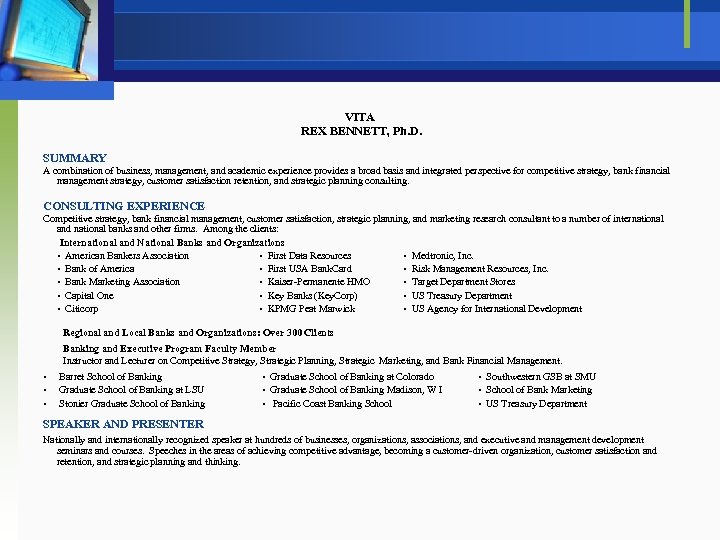
VITA REX BENNETT, Ph. D. SUMMARY A combination of business, management, and academic experience provides a broad basis and integrated perspective for competitive strategy, bank financial management strategy, customer satisfaction retention, and strategic planning consulting. CONSULTING EXPERIENCE Competitive strategy, bank financial management, customer satisfaction, strategic planning, and marketing research consultant to a number of international and national banks and other firms. Among the clients: International and National Banks and Organizations • American Bankers Association • First Data Resources • Medtronic, Inc. • Bank of America • First USA Bank. Card • Risk Management Resources, Inc. • Bank Marketing Association • Kaiser-Permanente HMO • Target Department Stores • Capital One • Key Banks (Key. Corp) • US Treasury Department • Citicorp • KPMG Peat Marwick • US Agency for International Development Regional and Local Banks and Organizations: Over 300 Clients Banking and Executive Program Faculty Member Instructor and Lecturer on Competitive Strategy, Strategic Planning, Strategic Marketing, and Bank Financial Management. • • • Barret School of Banking Graduate School of Banking at LSU Stonier Graduate School of Banking • Graduate School of Banking at Colorado • Graduate School of Banking Madison, W I • Pacific Coast Banking School • Southwestern GSB at SMU • School of Bank Marketing • US Treasury Department SPEAKER AND PRESENTER Nationally and internationally recognized speaker at hundreds of businesses, organizations, associations, and executive and management development seminars and courses. Speeches in the areas of achieving competitive advantage, becoming a customer-driven organization, customer satisfaction and retention, and strategic planning and thinking.
International Experience Speaker and instructor for bank financial strategies, competitive strategies, and marketing strategies in Austria, Bulgaria, China, Czech Republic, Hong Kong, Indonesia, Poland, Romania, Slovakia, Thailand, and Ukraine. Manager, International Financial Services , KPMG Peat Marwick, Prague, the Czech Republic. Responsible for developing and implementing bank training and curriculum for mid and upper management for the Czech banking industry. Topics included competitive advantage strategies, international banking, asset/liability management, credit, bank management, and strategic planning. Expert Witness: Bank Profitability and New Bank Feasibility Comptroller of the Currency Several State Banking Commissions and Boards Academic Position: Professor Emeritus School of Business University of San Francisco 2130 Fulton Street San Francisco, CA 94117 -1080 Publications: Numerous articles in such publications as: The American Banker Journal of Retail Banking Bankers Magazine Bank Marketing Contact: Rex Bennett, Ph. D. President, Achieving Unlimited 4 Excelso Trace Hot Springs Village, AK 71909 (415) 302 -1182 Cell (501) 226 -5555 rexbennett@achievingunlimited. com
Скачать презентацию Wouldn t Life Be Easier If Words Meant The
eb516fb18359e0b6a75929e2b62bd46c.ppt