


 Скачать презентацию Worldwide adoption of the American diet would require
3e9e01a94b5ae923f9a33119efb21c36.ppt
- Количество слайдов: 25
 Worldwide adoption of the American diet would require “more grain than the world can grow and more energy, water, and land than the world can supply” D. Pimental and others, Science, 1980 1
 Food, Hunger, and Nutrition • • • Human Nutrition World Food Resources World Hunger Agricultural Economics Can we feed projected populations sustainably? • Is it possible to convert to sustainable agriculture in the US? 2
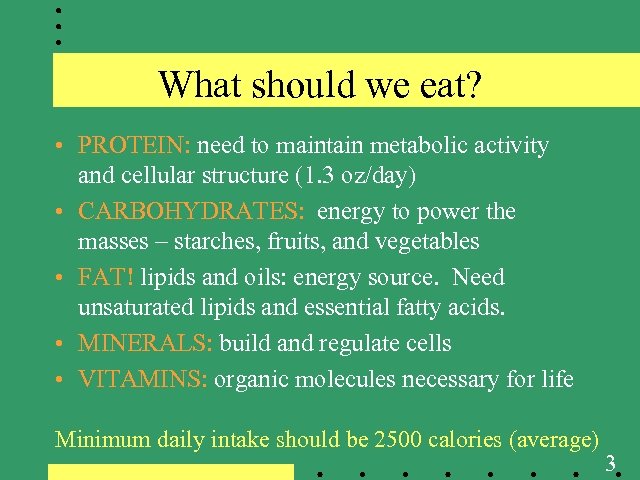 What should we eat? • PROTEIN: need to maintain metabolic activity and cellular structure (1. 3 oz/day) • CARBOHYDRATES: energy to power the masses – starches, fruits, and vegetables • FAT! lipids and oils: energy source. Need unsaturated lipids and essential fatty acids. • MINERALS: build and regulate cells • VITAMINS: organic molecules necessary for life Minimum daily intake should be 2500 calories (average) 3
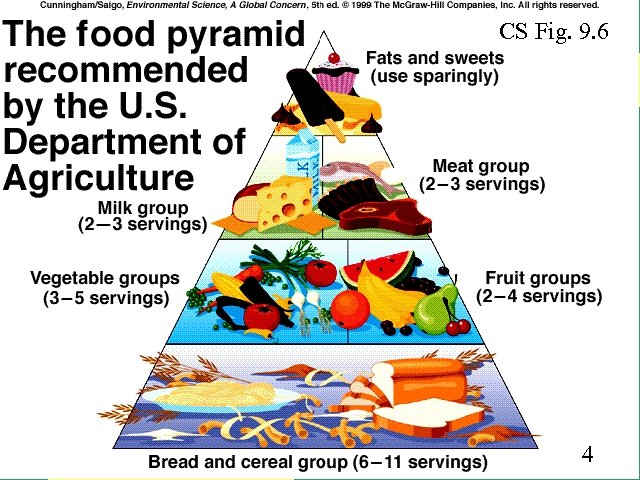 CS Fig. 9. 6 4 4
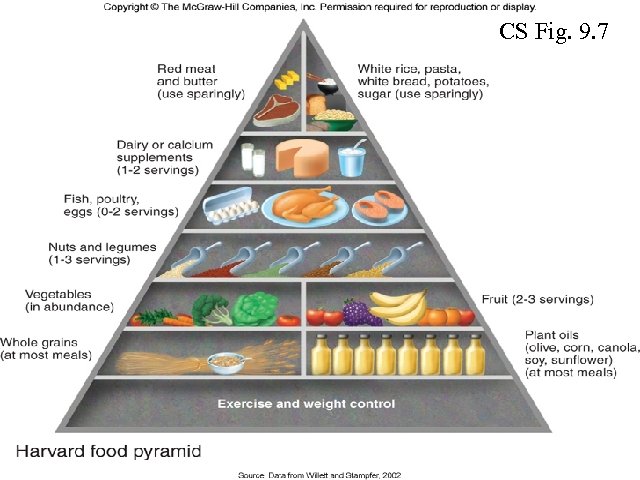 CS Fig. 9. 7 Figure 09_07 5
 What do we eat? • 30 crops feed the world • 3 crops provide over half of calories for the world – Wheat, rice, corn • 2/3 of population eat primarily vegetarian diet • Protein sources: meat, fish, animal products (i. e. dairy) Expensive! • 1 billion in hunger; 1 billion overfed 6
 Nutrition • The most common dietary problem in wealthy countries is over-nutrition. – In NA and Europe, average daily caloric intake is 3, 500 calories. • Sub-Saharan Africa has not kept food production up to pace of population growth. • Collapse of Soviet Union also led to significant collapse in food production. 7
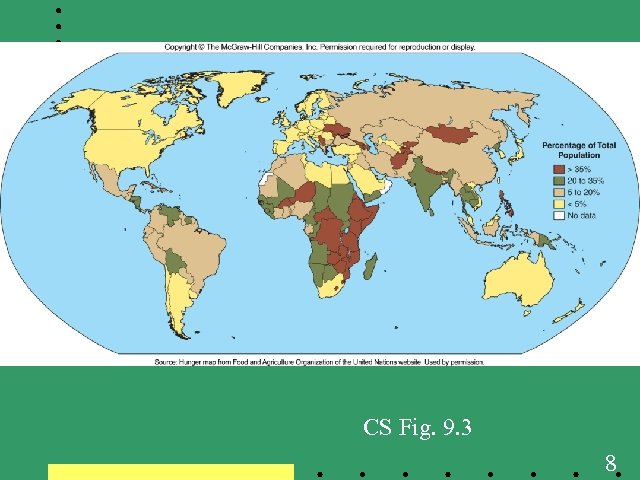 Figure 09_03 CS Fig. 9. 3 8
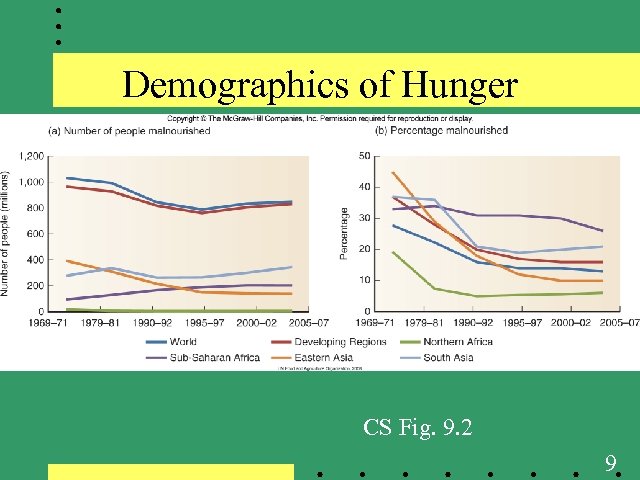 Demographics of Hunger CS Fig. 9. 2 9
 Is there enough for everyone? Feeding the World: World Resources Institute 10
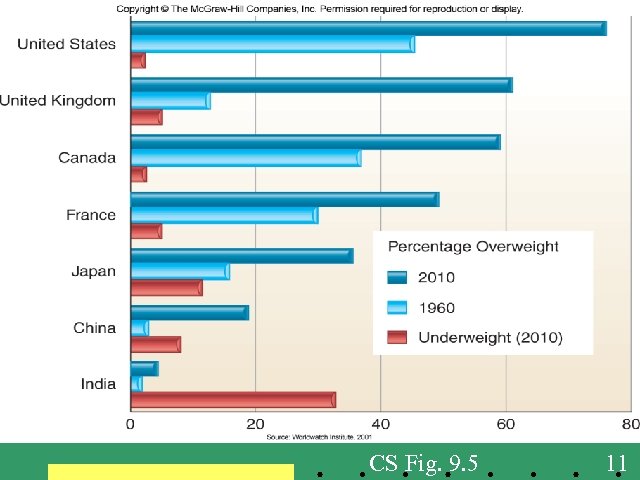 Figure 09_05 CS Fig. 9. 5 11
 Where is it grown? • US has 16% of world’s cropland 255 million to feed • China has 9% to feed 1. 2 billion • India has 8% to feed 1 billion • US grows almost half of the world’s maize – 90% is used to feed dairy and beef cattle 12
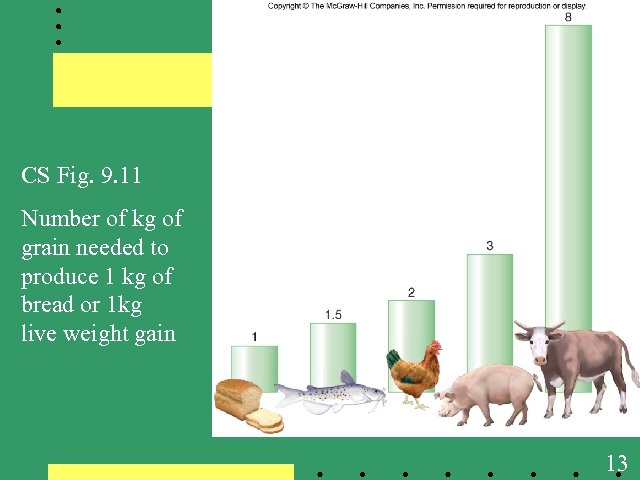 Figure 09_11 CS Fig. 9. 11 Number of kg of grain needed to produce 1 kg of bread or 1 kg live weight gain 13
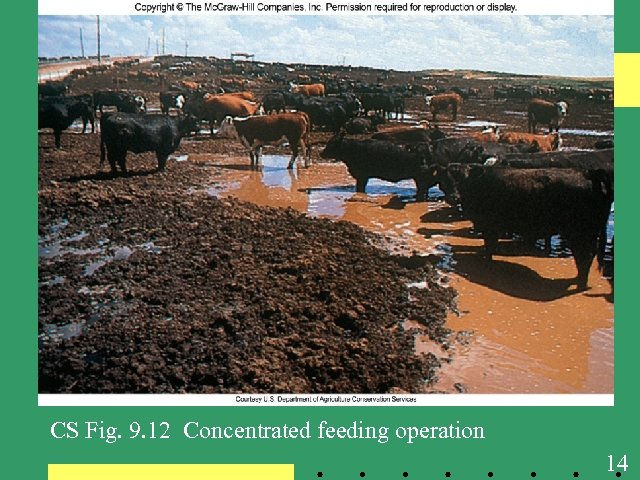 Figure 09_12 CS Fig. 9. 12 Concentrated feeding operation 14
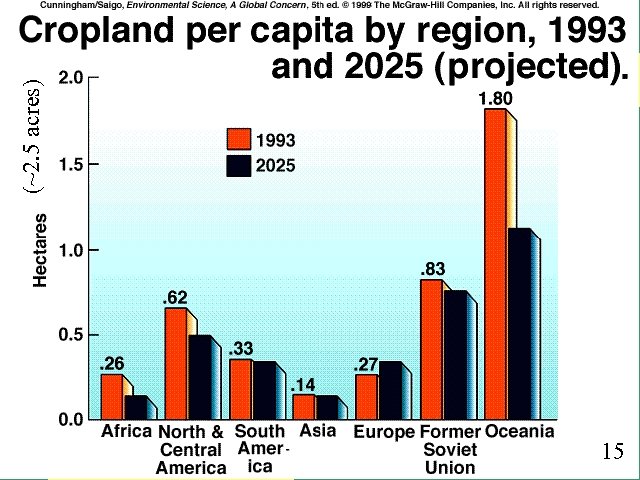 15 15 (~2. 5 acres)
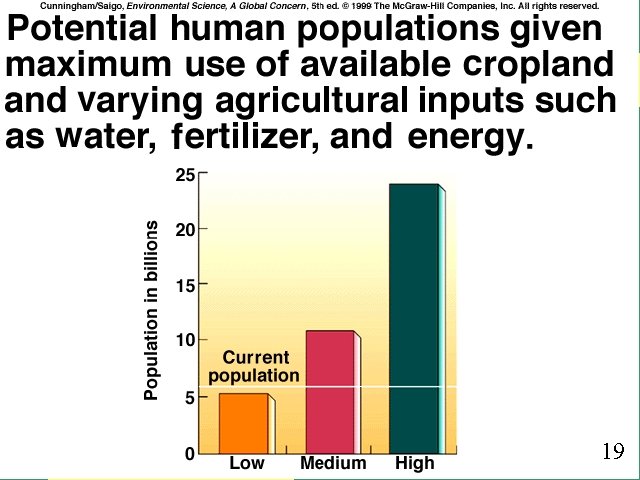
 Worldwide adoption of the American diet would require “more grain than the world can grow and more energy, water, and land than the world can supply” or, put another way If everyone ate like Americans do, the Earth could sustain 2. 5 billion people 16
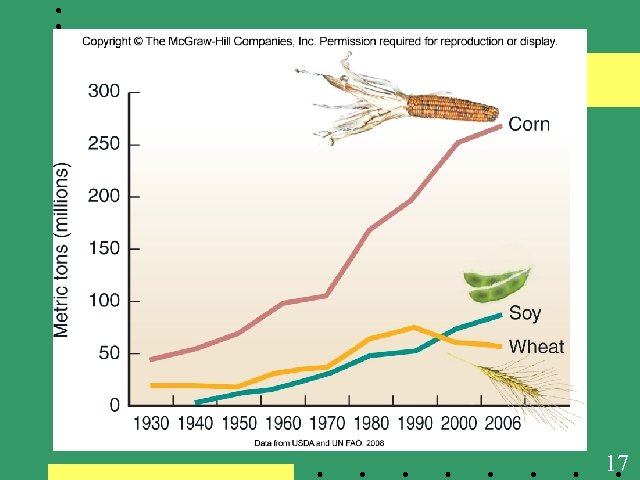 Figure 09_09 17
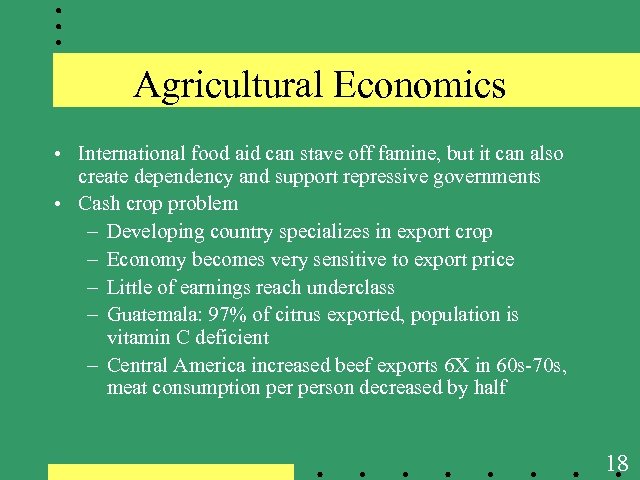 Agricultural Economics • International food aid can stave off famine, but it can also create dependency and support repressive governments • Cash crop problem – Developing country specializes in export crop – Economy becomes very sensitive to export price – Little of earnings reach underclass – Guatemala: 97% of citrus exported, population is vitamin C deficient – Central America increased beef exports 6 X in 60 s-70 s, meat consumption person decreased by half 18
 19 19
19 19
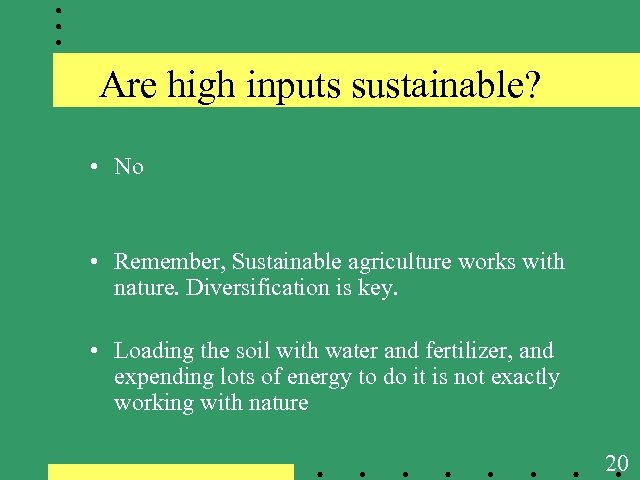 Are high inputs sustainable? • No • Remember, Sustainable agriculture works with nature. Diversification is key. • Loading the soil with water and fertilizer, and expending lots of energy to do it is not exactly working with nature 20
 Is current agriculture sustainable? 21
 World Resource Institute Findings, 2000 • “Results show that, although food production has more than kept pace with population growth it has done so at the expense of biodiversity, clean water, carbon storage capacity and the quality of soils. • – Twenty to 30 percent of the world's forest areas have been converted to agriculture, resulting in extensive species and habitat loss. – Soil degradation, including nutrient depletion, erosion, and salinization, is widespread. Salt accumulation in soils has damaged… 20 percent of the world's total irrigated land. – Agriculture consumes 70 percent of the freshwater withdrawn annually by humans. – Irrigation is draining more water than is being replenished by rainfall, causing water tables to fall. – Moreover, many water sources are being polluted by excessive use of fertilizers and pesticides. For these trends to change, agricultural lands need to meet the double challenge of increasing food production while continuing to provide much -needed environmental goods and services. ” WRI website 22
 America’s Quandary • Agriculture is big business • Big business is about the bottom line, not environmental sustainability • If we shifted over to sustainable, small farms, there wouldn’t be enough food – Note that animals play an important role in small farms. Everybody doesn’t have to become a vegetarian! • Developing countries strive to be like America – is this a good thing? 23
 Sustainable farming in Minnesota? • YES! Minnesota Institute for Sustainable Agriculture (MISA) keeps track of it – http: //www. misa. umn. edu/ – University of Minnesota, St. Paul • By buying locally grown (usually organic) produce at your local coop or farmer’s market, you support sustainable farming • The only way to make real change in a capitalist country is to vote with your wallet. What you buy will determine what is produced! 24
 The End. Back 25