


 Скачать презентацию World War One In the spring of 1914
f0b7766c7fc1189b1d82f4543f0a6a3d.ppt
- Количество слайдов: 31
 World War One In the spring of 1914, an American named Colonel Edward House was on a visit to Europe. He quickly saw that the stories that were being told about Europe we true. Tensions among the nations were threatening the peace of Europe. Colonel House told his close friend, US President Woodrow Wilson that, “The situation is extraordinary. ” A kind of madness was gripping the continent. “There is too much hatred, too many jealousies. ” Not long after Col. House returned to the US, Europe exploded into war.
 Long term Causes of World War I
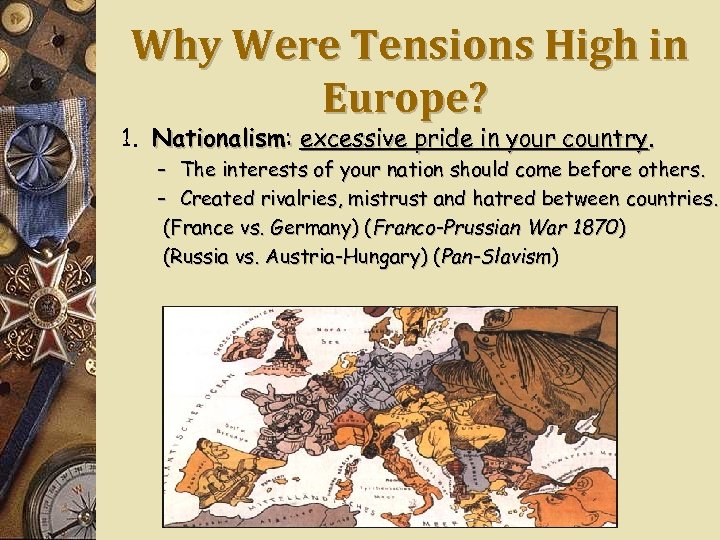 Why Were Tensions High in Europe? 1. Nationalism: excessive pride in your country. – The interests of your nation should come before others. – Created rivalries, mistrust and hatred between countries. (France vs. Germany) (Franco-Prussian War 1870) (Russia vs. Austria-Hungary) (Pan-Slavism)
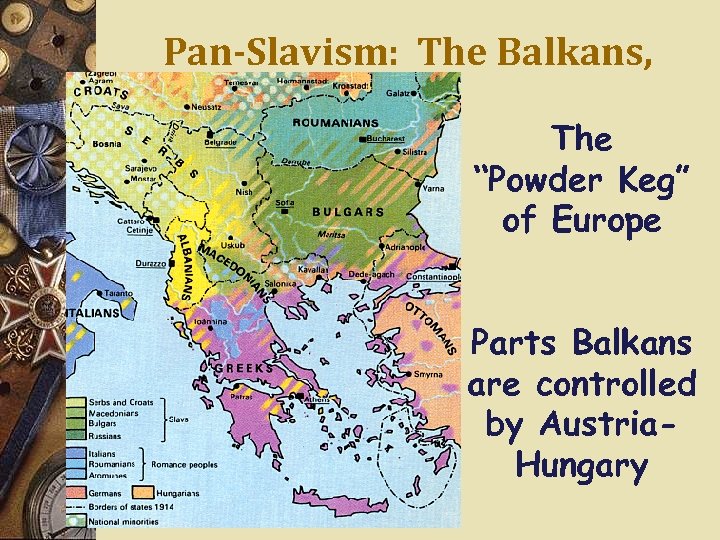 Pan-Slavism: The Balkans, 1914 The “Powder Keg” of Europe Parts Balkans are controlled by Austria. Hungary
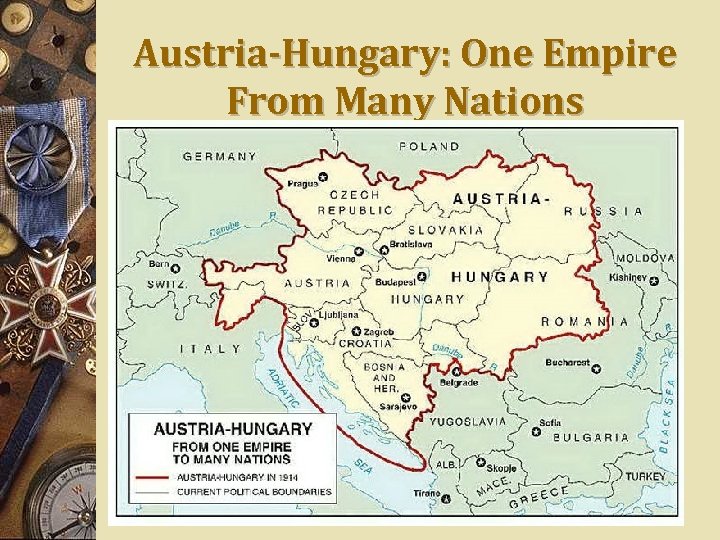 Austria-Hungary: One Empire From Many Nations
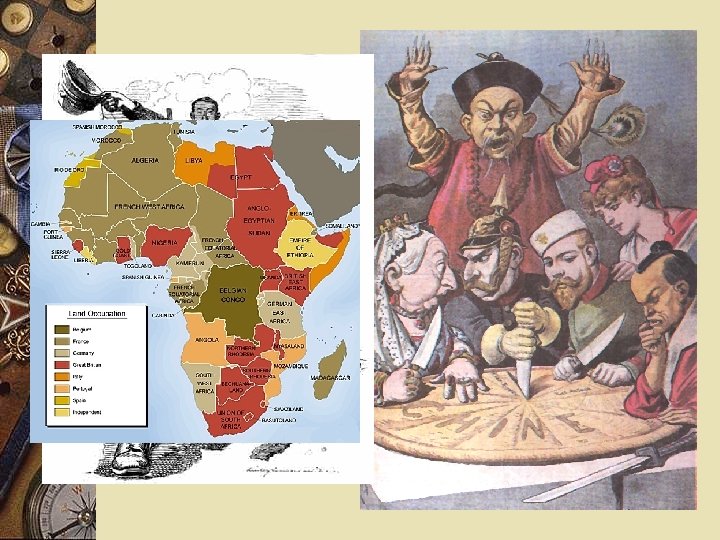
 Imperialism 2. Imperialism: when a powerful country takes political or economic control of weaker countries. w European countries competed for power in same regions (China, Africa, The Middle East & the Pacific).
 Militarism 3. Militarism: policy of building up strong armed forces prepare for war. Strong militaries were necessary to protect national interests at home and abroad. • EXAMPLE- Naval race between Germany and Britain.
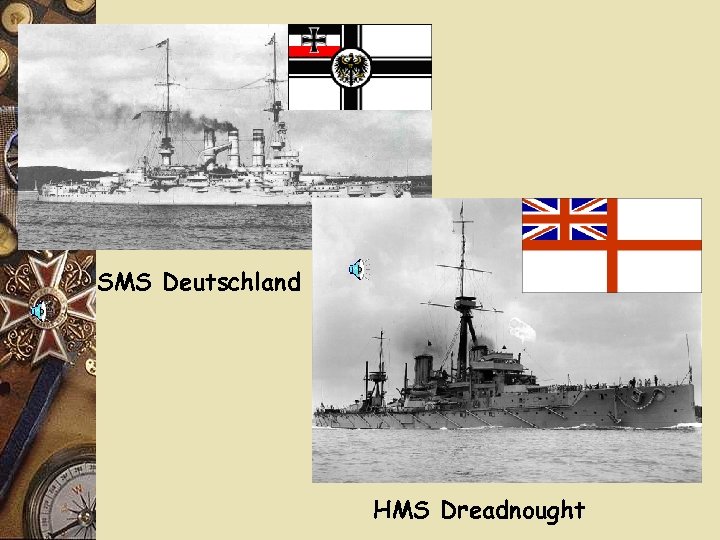 SMS Deutschland HMS Dreadnought
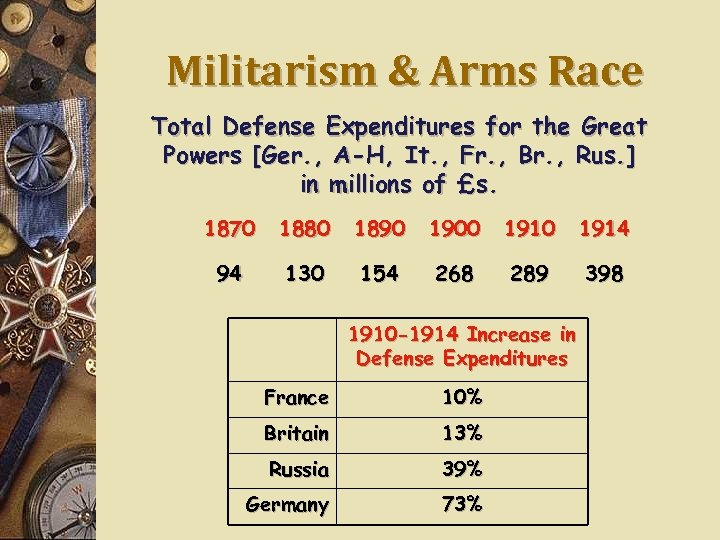 Militarism & Arms Race Total Defense Expenditures for the Great Powers [Ger. , A-H, It. , Fr. , Br. , Rus. ] in millions of £s. 1870 1880 1890 1900 1914 94 130 154 268 289 398 1910 -1914 Increase in Defense Expenditures France 10% Britain 13% Russia 39% Germany 73%
 Alliance Systems 4. Alliances- countries agreeing to support each other in case of war. • Germany formed an alliance with Austria-Hungary (Triple Alliance). • France, Britain, and Russia pledged to come to one another's aid if attacked (Triple Entente). **Any conflict between two powers would quickly involve others. **
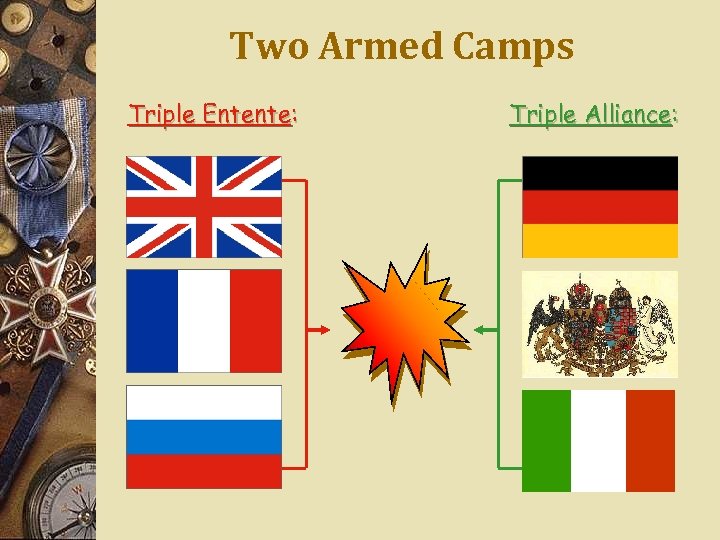 Two Armed Camps Triple Entente: Triple Alliance:
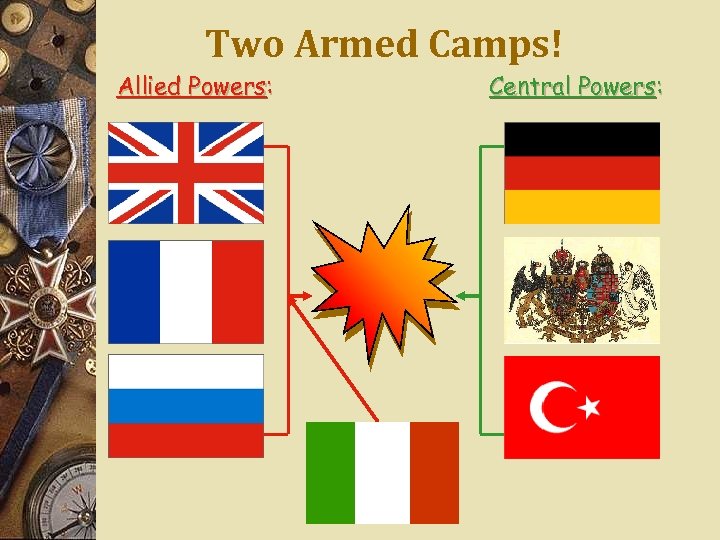 Two Armed Camps! Allied Powers: Central Powers:
![A Family Feud? Czar Nicholas II [Russia] Kaiser Wilhelm II [Germany] King George V](https://present5.com/presentation/f0b7766c7fc1189b1d82f4543f0a6a3d/image-14.jpg "A Family Feud? Czar Nicholas II [Russia] Kaiser Wilhelm II [Germany] King George V") A Family Feud? Czar Nicholas II [Russia] Kaiser Wilhelm II [Germany] King George V [Great Britain]
A Family Feud? Czar Nicholas II [Russia] Kaiser Wilhelm II [Germany] King George V [Great Britain]
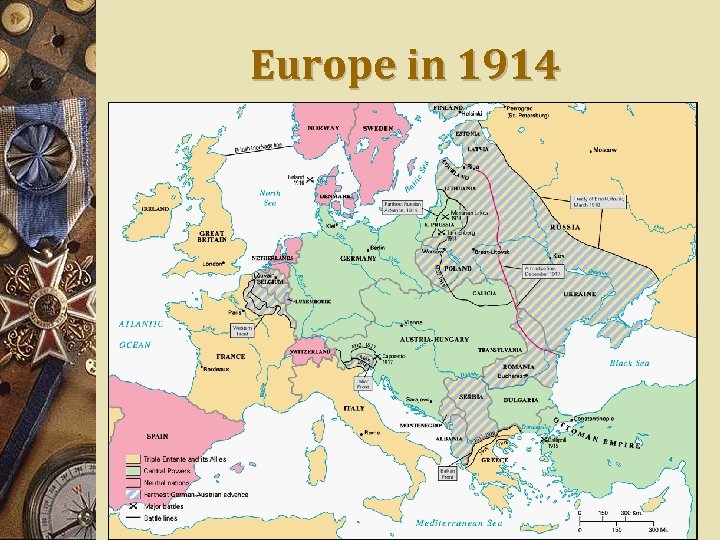 Europe in 1914
 The “Spark”
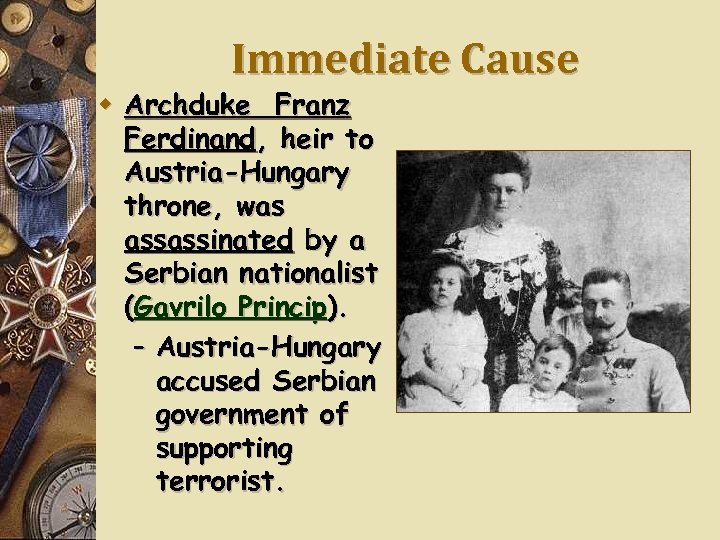 Immediate Cause w Archduke Franz Ferdinand, heir to Austria-Hungary throne, was assassinated by a Serbian nationalist (Gavrilo Princip). – Austria-Hungary accused Serbian government of supporting terrorist.
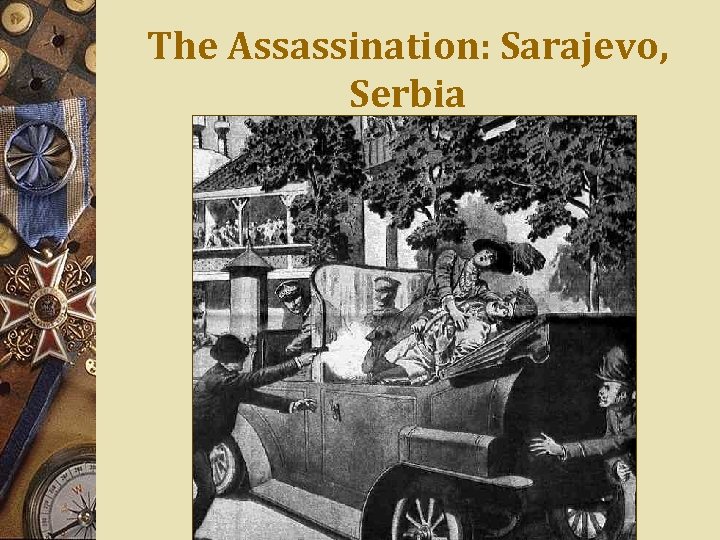 The Assassination: Sarajevo, Serbia
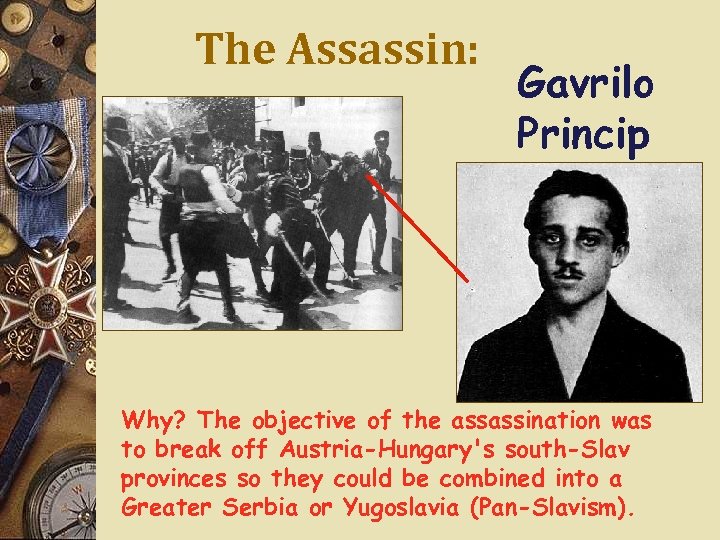 The Assassin: Gavrilo Princip Why? The objective of the assassination was to break off Austria-Hungary's south-Slav provinces so they could be combined into a Greater Serbia or Yugoslavia (Pan-Slavism).
 Road to World War I Summer of 1914 w **The alliance system drew one country after another into the war** w June 28 – Archduke Ferdinand of Austria-Hungary is assassinated by a Serbian terrorist. w July 28 – Austria-Hungary declares war on Serbia. w July 31 -Russia mobilizes armed forces. w August 1 - Germany declares war on Russia.
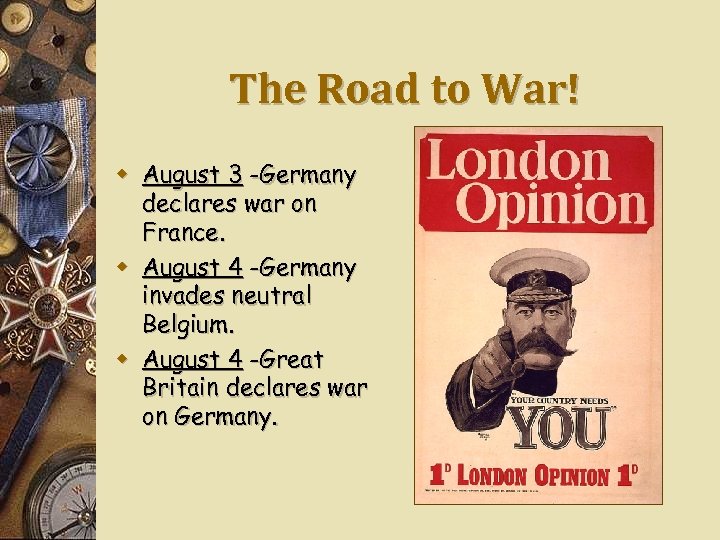 The Road to War! w August 3 -Germany declares war on France. w August 4 -Germany invades neutral Belgium. w August 4 -Great Britain declares war on Germany.
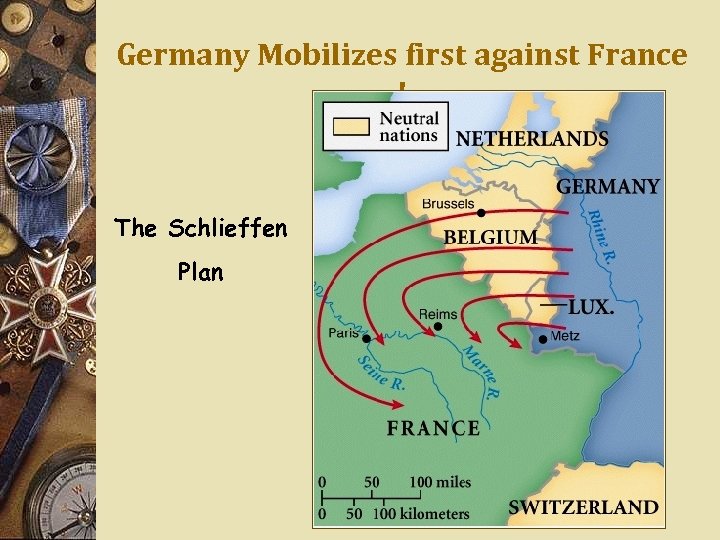 Germany Mobilizes first against France ! The Schlieffen Plan
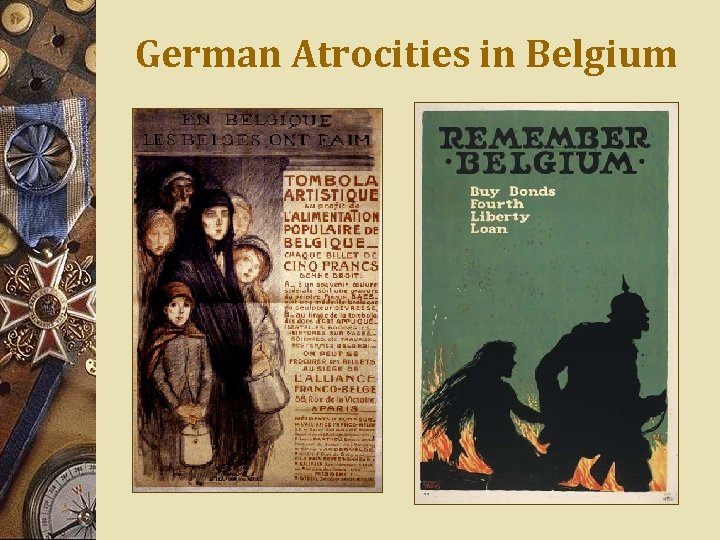 German Atrocities in Belgium
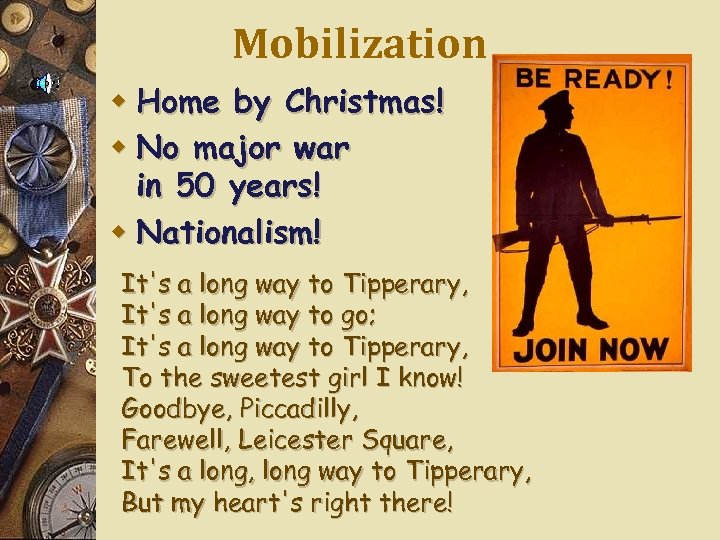 Mobilization w Home by Christmas! w No major war in 50 years! w Nationalism! It's a long way to Tipperary, It's a long way to go; It's a long way to Tipperary, To the sweetest girl I know! Goodbye, Piccadilly, Farewell, Leicester Square, It's a long, long way to Tipperary, But my heart's right there!
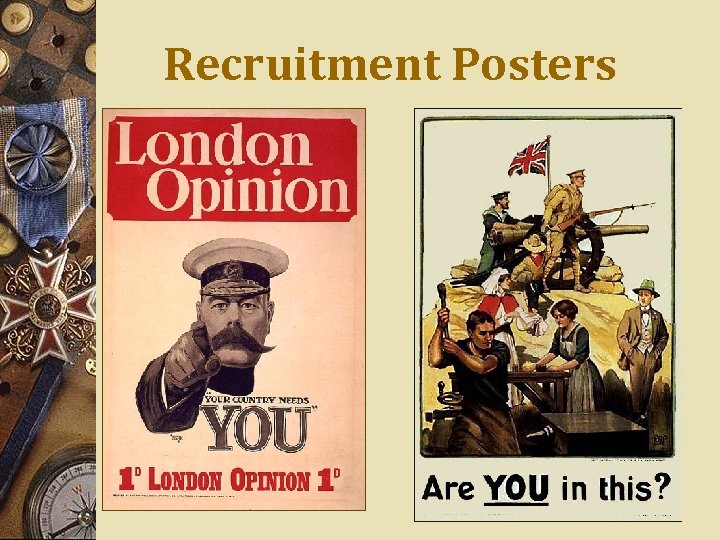 Recruitment Posters
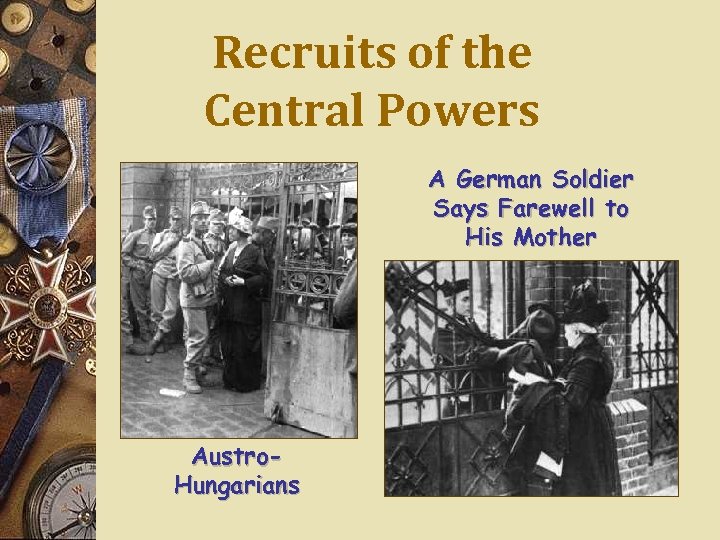 Recruits of the Central Powers A German Soldier Says Farewell to His Mother Austro. Hungarians
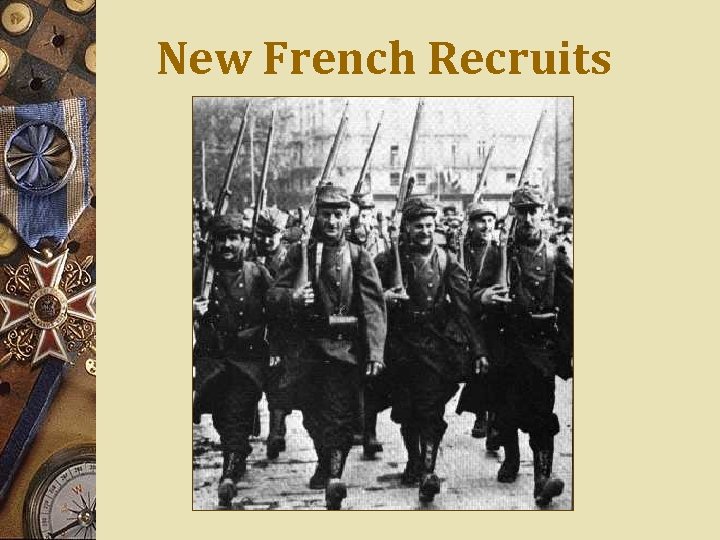 New French Recruits
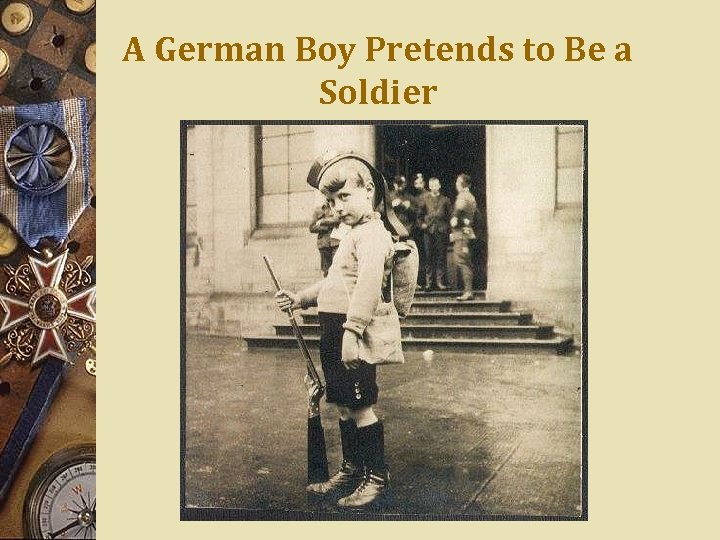 A German Boy Pretends to Be a Soldier
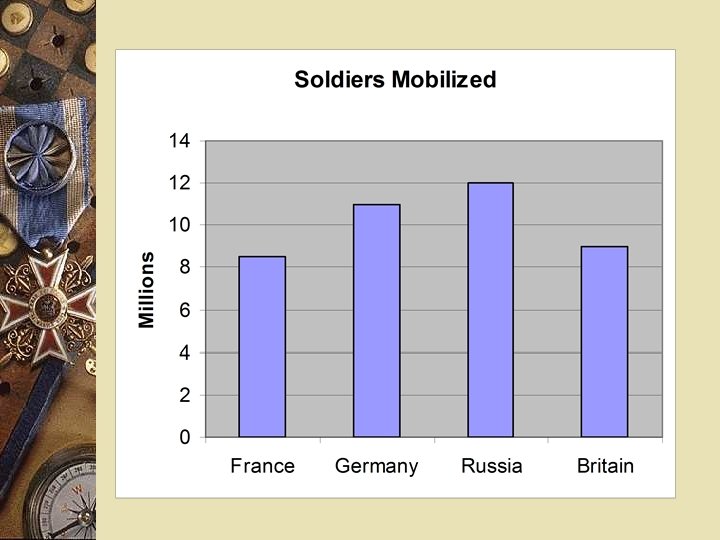
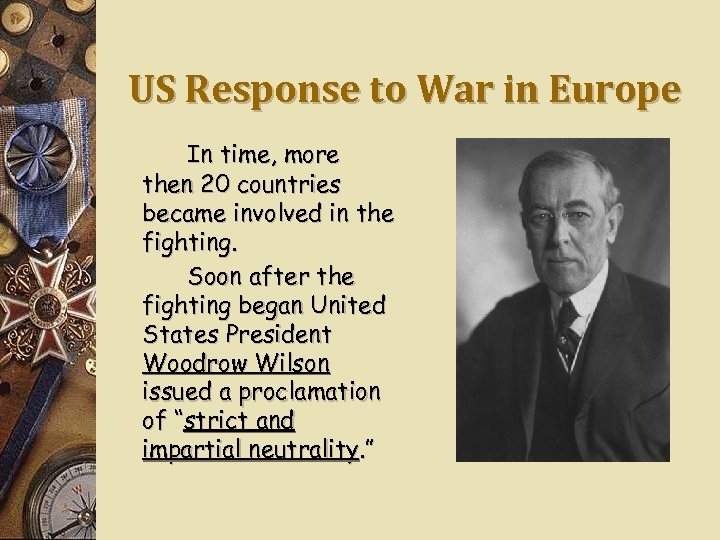 US Response to War in Europe In time, more then 20 countries became involved in the fighting. Soon after the fighting began United States President Woodrow Wilson issued a proclamation of “strict and impartial neutrality. ”