


 Скачать презентацию World War II The Home Front American History
775756cdf6319600b3df40982f278496.ppt
- Количество слайдов: 48
 World War II The Home Front American History Chapter 16
 Mobilizing the Home Front n Building National Morale Ø Japan’s Attack on Pearl Harbor Unified Americans in Favor of War Ø Franklin Roosevelt’s Four Freedoms: Ø Freedom of Speech and Expression Ø Freedom of Worship Ø Freedom from Want Ø Freedom from Fear
 Mobilizing the Home Front n Calling All Volunteers v Government Created the Office of Civilian Defense (OCD) v Citizens Should Contribute One Hour a Day to the War Effort v “Victory Gardens” People Used all Available Space v Produce 40% of all Vegetables Consumed During the War v v Drives: Paper, Scrap Metal, Fat, Aluminum, Tin, etc. v Provided Much of the Necessary Materials for War v
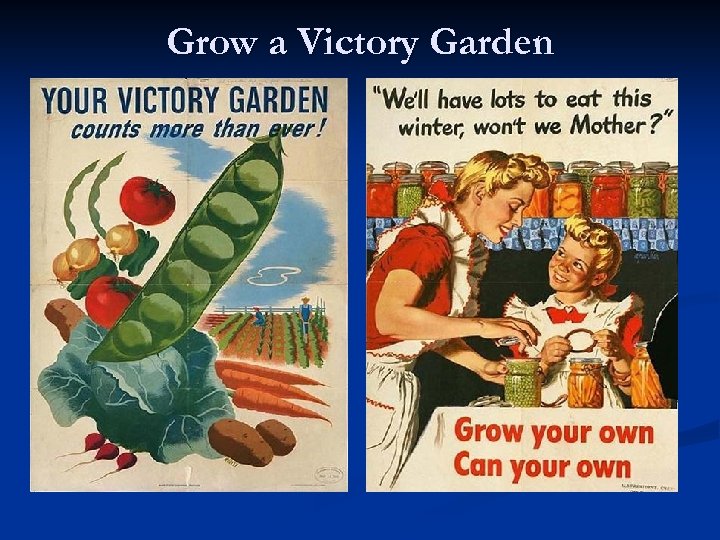 Grow a Victory Garden
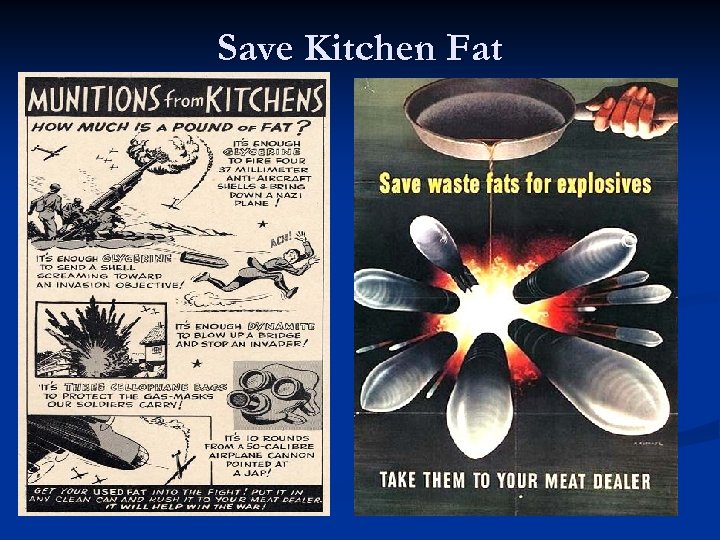 Save Kitchen Fat
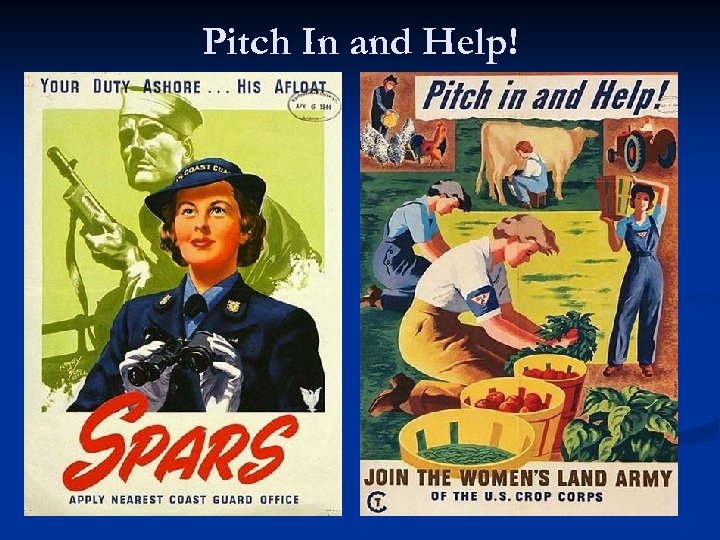 Pitch In and Help!
 Mobilizing the Home Front n The Media Goes to War Ø Office of War Information Ø Official Voice of the Government’s War Efforts Ø Exercised Censorship over Media that Did Not Support the War Effort Ø Produced Propaganda Films to Gain Support for the War Ø Hollywood Films Included: Ø Bombing of Honolulu , Yellow Peril Four Years in Japan For , My , V Victory
 Mobilizing the Home Front n The Media Goes to War Ø Movies Stereotyped the Germans, Japanese and Italians Ø Comic Strip Characters Supported the War Ø Little Orphan Annie– Called for Scrap Metal Drives Ø Daddy Warbucks– Served in the Military Ø Superman– Supported the Red Cross & War Bonds Ø New Comic Strips Included: Ø G. I. Joe War, and Don Winslow of the Navy , Ø Patriotism was Expressed in Songs, Advertisements, Newspapers, and Magazines
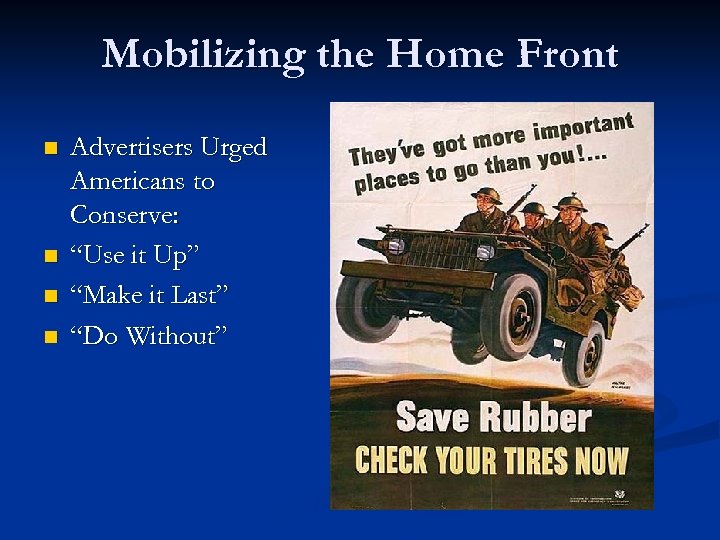 Mobilizing the Home Front n n Advertisers Urged Americans to Conserve: “Use it Up” “Make it Last” “Do Without”
 Mobilizing the Home Front n Staging a Production Miracle Ø 1941– 15% of the Nation’s Manufacturing Was Directed Toward the Military Ø January 1942– FDR Created the War Production Board (WPB) Ø WPB: “Exercise General Responsibility” over the Nation’s Economy Ø Factories Had To Be Converted From Civilian to Military Production Ø Aircraft, Tanks, Uniforms, Bombs, Munitions etc.
 Mobilizing the Home Front n Staging a Production Miracle Ø Sec. of War– Henry Stimson Made Sure Industries Made Money From War Production Ø Henry Kaiser– Shipbuilder, Richmond, Ca. Ø Cut the Construction Time from 105 Days to 14 Ø Kaiser Shipyard Used Women Workers to Construct Ships Ø Richmond, California Became a Wartime Boom Town
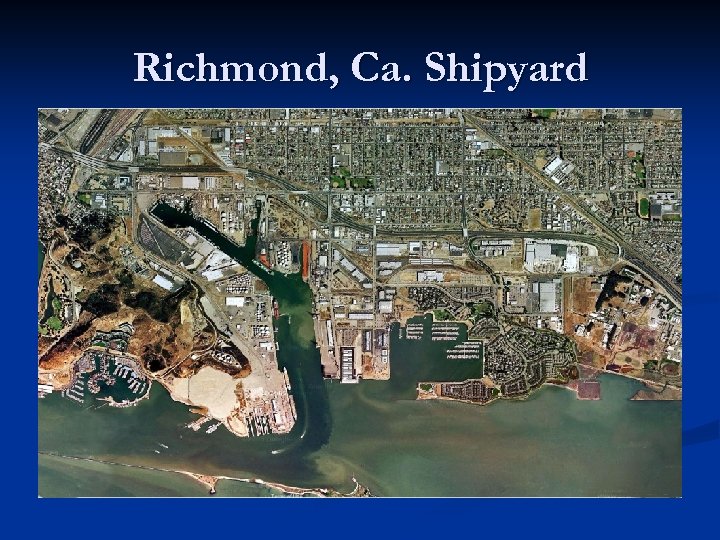 Richmond, Ca. Shipyard
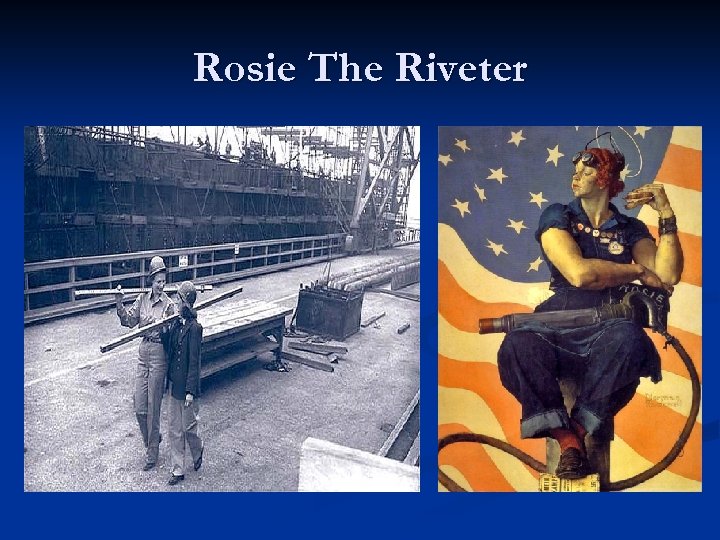 Rosie The Riveter
 Mobilizing the Home Front n Directing a Wartime Economy v Gross National Product (GNP) v Total Value of Good and Services Produced v $90. 5 Billion in 1939 v $211. 9 Billion in 1945 v War Created 17 Million New Jobs v Crop Prices Doubled v Demand For Few Consumer Goods Was High v Cost of Living Increased (Inflation) v To Control Inflation, FDR Froze Wages
 Mobilizing the Home Front n Controlling Wages and Prices ♦ National War Labor Board (NWLB) ♦ ♦ Created by FDR to Control Wages and Keep Track of Inflation 1942 NWLB Created a Formula to Allow Wages to Go Up at the Same Rate as the Cost of Living 1943– Inflation Continued, The NWLB Issued a “Hold the Line” Order on Hourly Wages People Could Still Make More Money by Working Overtime
 Mobilizing the Home Front n Controlling Wages and Prices ♦ ♦ n During the War Wage Rates Rose by 24% Weekly Earning Rose by 70% (Overtime) Office of Price Administration ♦ ♦ Set a Ceiling on All Prices The Consumer Price Index Showed that the Cost of Goods Rose at the Same Percentage as Wages between 1939 and 1945
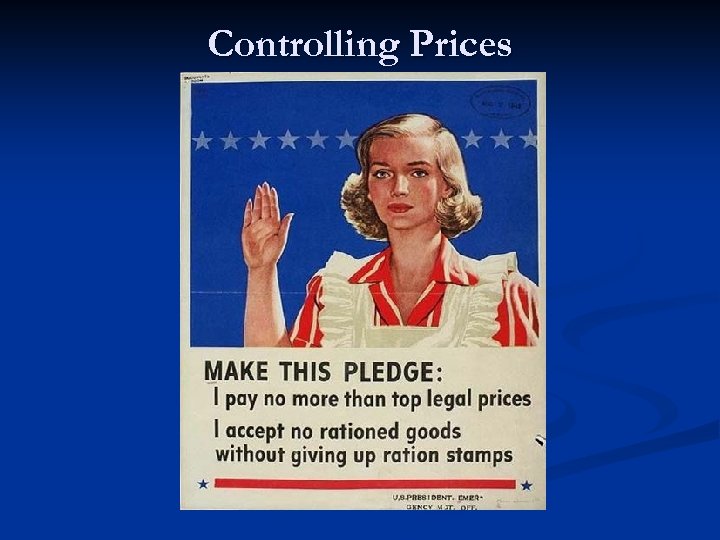 Controlling Prices
 Mobilizing the Home Front n Reducing Demand Through Rationing v Rationing Provided a Fair Distribution of Scarce Consumer Goods v What Was Rationed? v Processed and Canned Foods v Meat v Gasoline v Rubber (Tires) v Dairy Products v Shoes v Many Other Consumer Goods
 Mobilizing the Home Front n Reducing Demand Through Rationing v Every Person in a Household Received a Ration Book (Even Children) v Ration Stamps Were Worth Points v Products had Both a Price and a Point Value v Local War Ration Boards Established Each Families “Need” v A Doctor Received More Ration Stamps than other “Less Important” Occupations v People Turned in Their Stamps to Merchants v Merchants Turned In Stamps to Suppliers
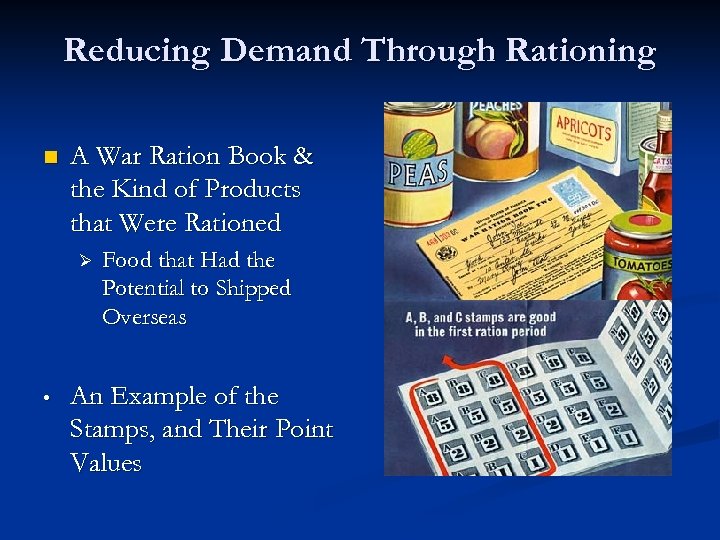 Reducing Demand Through Rationing n A War Ration Book & the Kind of Products that Were Rationed Ø • Food that Had the Potential to Shipped Overseas An Example of the Stamps, and Their Point Values
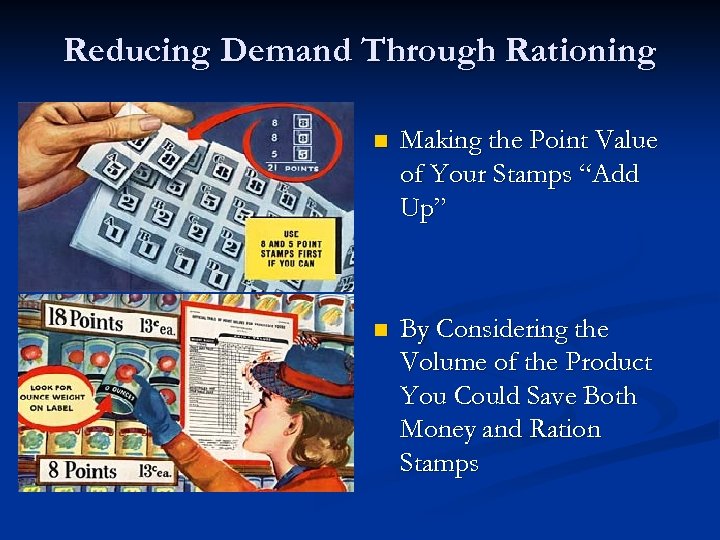 Reducing Demand Through Rationing n Making the Point Value of Your Stamps “Add Up” n By Considering the Volume of the Product You Could Save Both Money and Ration Stamps
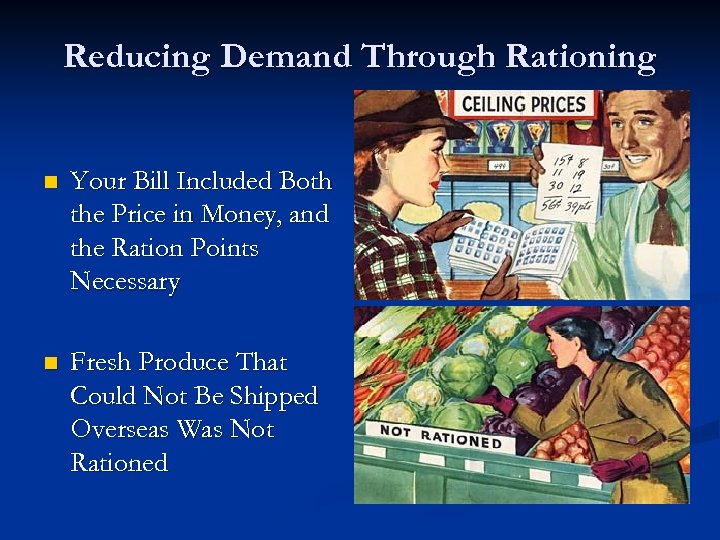 Reducing Demand Through Rationing n Your Bill Included Both the Price in Money, and the Ration Points Necessary n Fresh Produce That Could Not Be Shipped Overseas Was Not Rationed
 Mobilizing the Home Front n Paying For a Costly War Ø World War II Cost Ten Times As Much as World War I Ø 1941 -1945 Government Spent $321 Billion Ø Taxes Covered about 40% of That Amount Ø Before The War Many Americans Did Not Pay Federal Income Tax Ø 1943– Congress Approved the Federal Tax Withholding System (Payroll Deductions) Ø Still In Use Today
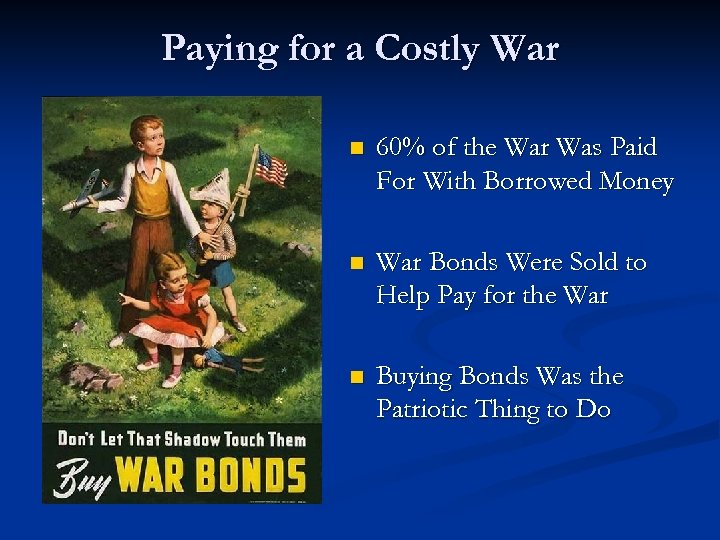 Paying for a Costly War n 60% of the War Was Paid For With Borrowed Money n War Bonds Were Sold to Help Pay for the War n Buying Bonds Was the Patriotic Thing to Do
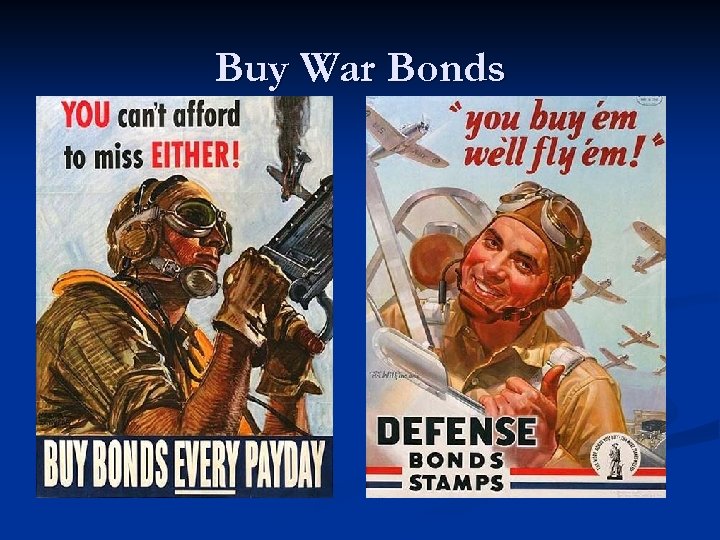 Buy War Bonds
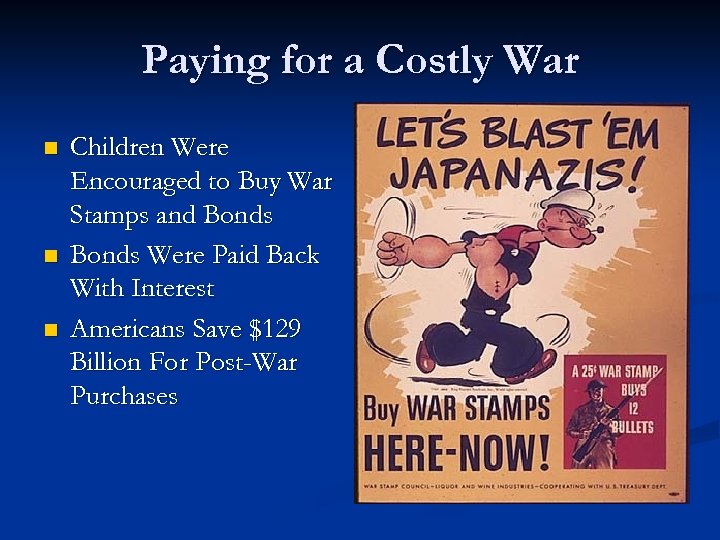 Paying for a Costly War n n n Children Were Encouraged to Buy War Stamps and Bonds Were Paid Back With Interest Americans Save $129 Billion For Post-War Purchases
 Mobilizing the Home Front n Trying to Uphold a No-Strike Pledge v Labor Unions Made a “Non-Binding Pledge” Not to Strike During the War v The NWLB Was to Oversee Wages and Working Conditions to Keep Workers On the Job v 1943– 3 Million Workers Went out on Strike v Most Serious Strike was the Coal Miners v FDR Took over the Mines– Urged to Jail Striking Workers “A Jailed Miner Mines No More Coal Than a Striking Miner” v For the Most Part, The No-Strike Pledge Was Honored v
 Mobilizing the Home Front n Recruiting New Workers Ø 15 Million Americans Served in the Military Ø Workers Were Needed to Fill those Jobs Ø High Unemployment of the Depression Ended Ø 1940 -45 6 Million Women Joined the Workforce Ø Women Worked in Defense Industries Ø Shipbuilding, Aircraft, Assembly Lines, etc. Ø Women Worked for Lower Wages Ø When the War Ended, So Did Women’s Jobs
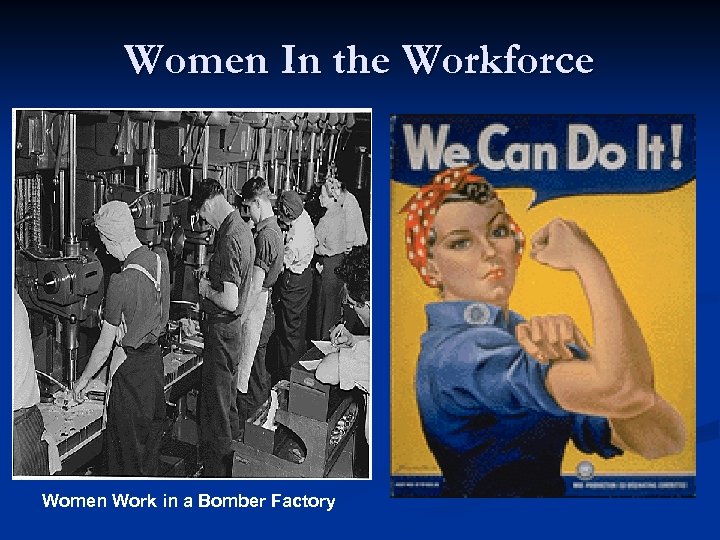 Women In the Workforce Women Work in a Bomber Factory
 The War and Social Change n Americans on the Move ♦ The “Great Migration” ♦ ♦ The Greatest Short-Term Migration of People in American History Rural to Urban, East to West Coast Gained the Greatest Share of the Increased Population (California, Washington, Arizona, & Oregon) During the War, The Number of Farm Workers Fell, but Farm Production Increased
 The War and Social Change n Boomtowns Emerge v Serious Problems were Created by Population Shifts v Inadequate Housing, Poor Medical Facilities, Improper Sanitation, Overcrowded Schools, & No Daycare Facilities v People Lived in Trailers and Tents v 9 Million Migrant Workers Needed Housing v Boomtowns Included: v Willow Run, Michigan– Ford Bomber Factory v Pascagoula, Mississippi-- Shipyard v San Diego, California– Aircraft Factory & Naval Base
 The War and Social Change n Social Stresses Multiply ♦ Racial Tensions Explode ♦ Detroit Riots– June 1943– Violence Between Whites and African Americans ♦ ♦ ♦ 36 Hours of Rioting 25 African Americans and 9 Whites Killed 700 People Injured $2 Million in Property Damage 6, 000 Soldiers Moved into Detroit to Restore Order Other Riots Occurred in Harlem, New York & on Military Bases
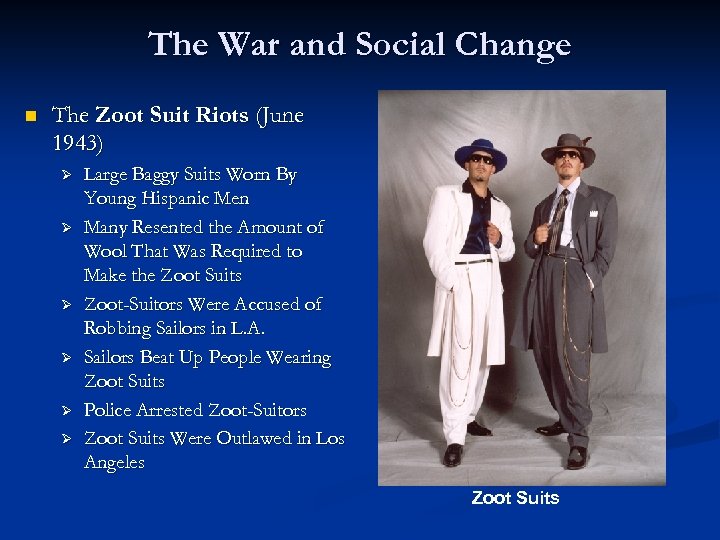 The War and Social Change n The Zoot Suit Riots (June 1943) Ø Ø Ø Large Baggy Suits Worn By Young Hispanic Men Many Resented the Amount of Wool That Was Required to Make the Zoot Suits Zoot-Suitors Were Accused of Robbing Sailors in L. A. Sailors Beat Up People Wearing Zoot Suits Police Arrested Zoot-Suitors Zoot Suits Were Outlawed in Los Angeles Zoot Suits
 The War and Social Change n Wartime Family Stresses Ø By 1944– Almost 3 Million Teenaged Workers Ø Child Labor Laws were Ignored During the War Ø Many Teens Dropped Out of School, and Went to Work Ø Juvenile Delinquency Increased Dramatically Ø “Youth in Crisis”– Wartime Documentary Addressing the Problem of Juvenile Delinquency Ø Even Young Children Contributed to the War Effort Ø Scrap Drives, Stamp Purchases, etc.
 The War and Social Change n The End of the New Deal Military Priorities Replaced Social Reforms Some New Deal Programs Were Here To Stay Social Security, the TVA, Unemployment Insurance Wartime Priorities Demanded Change Longer Work Week (40 to 48 Hours) Stop Rural Electrification– Copper Was a War Metal Suspend Child Labor Laws Antitrust Laws Were Suspended New Deal Agencies were Phased Out (CCC, WPA, etc) Government Stayed Involved in the Economy Deficit Spending to Stimulate the Economy FDR Won a 4 th Term in 1944
 The War and Civil Rights n The Civil Rights Movement Grows Some Drew Parallels Between Racism in The United States and in Germany Racism– Belief that Race Determines Human Capacities, (Some Races are Superior to Others) Racism Provided the Basis for Segregation Racial Inferiority Was Proven False by the 1940 s African Americans Responded by Seeking Equality Double V Campaign– Victory Overseas and At Home Racial Equality Should Help Win the War
 The War and Civil Rights n Civil Rights Gains Jim Crow Laws in the South & Slums in the North Kept African Americans Segregated 1941– Asa Philip Randolph Led the Movement for African American Equality Randolph Is Known as the Father of the Civil Rights Movement He Was Called “The Most Dangerous Black Man in America”
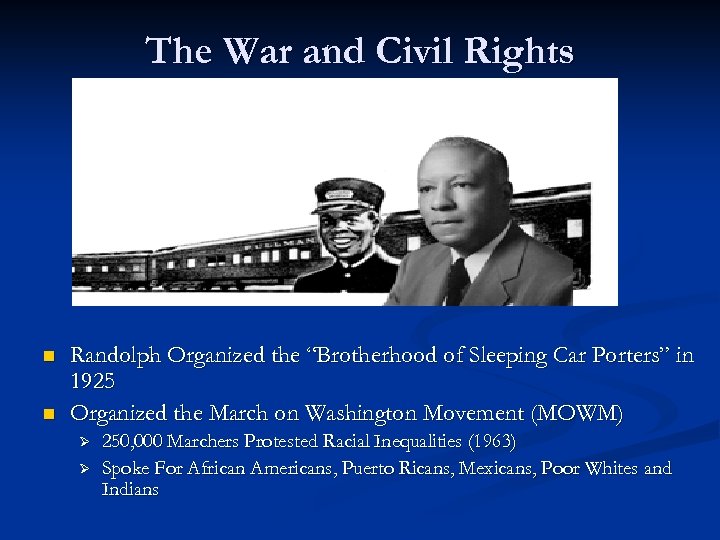 The War and Civil Rights n n Randolph Organized the “Brotherhood of Sleeping Car Porters” in 1925 Organized the March on Washington Movement (MOWM) Ø Ø 250, 000 Marchers Protested Racial Inequalities (1963) Spoke For African Americans, Puerto Ricans, Mexicans, Poor Whites and Indians
 The War and Civil Rights n Roosevelt and Randolph Compromise ♦ FDR Did Not Want a “March on Washington” ♦ Randolph Made 3 Demands on the President: ♦ ♦ End Defense Contracts for Discriminatory Employers End Job Segregation in Federal Agencies Desegregation of the Armed Forces Executive Order 8802– Government Agencies, Job Training Programs, and Defense Contractors End Discrimination (June 25, 1941) ♦ The Fair Employment Practices Committee (FEPC) Investigated Violations of this Order
 The War and Civil Rights n Other Victories Congress of Racial Equality (CORE) Organized in 1942 To Continue the Struggle For Civil Rights CORE Organized Mass Resistance to Discrimination CORE Used “Civil Disobedience” to Challenge Laws “Civil Disobedience”– Openly Violate Unjust Laws and Challenge them in the Courts Membership in the NAACP Grew to 450, 000 by 1946 Smith v. Allwright 1944, The Supreme Court Ruled that African Americans Could Not be Denied the Right to Vote in Primary Elections in the South
 The War and Civil Rights n The Fair Employment Practices Committee Fights Discrimination v The FEPC Was Largely Ineffective v It Had No Power to Enforce Its Actions v Could Act Only Upon Formal Complaints (Few Were Filed) v Government Contracts Could be Canceled for Discrimination, But That Hurt the War Effort v Public Opinion Was Against the FEPC v FEPC Acted Upon Discrimination, Not Segregation v Only Resolved One-Third of the 8, 000 Complaints Filed v FEPC Formally Dissolved by Congress in 1945
 The War and Civil Rights n Internment of Japanese Americans ► There Was Little Backlash Against Americans of German or Italian Decent During WW II ► The Japanese Were the Exception ► 1942 The Government Decided that all Japanese Would be Relocated to Internment Camps ► There Were More Than 100, 000 Japanese Living In the United States ► Issei– Foreign Born Japanese (One Third of the Japanese) ► Nisei– Japanese Born in the United States (Two-Thirds)
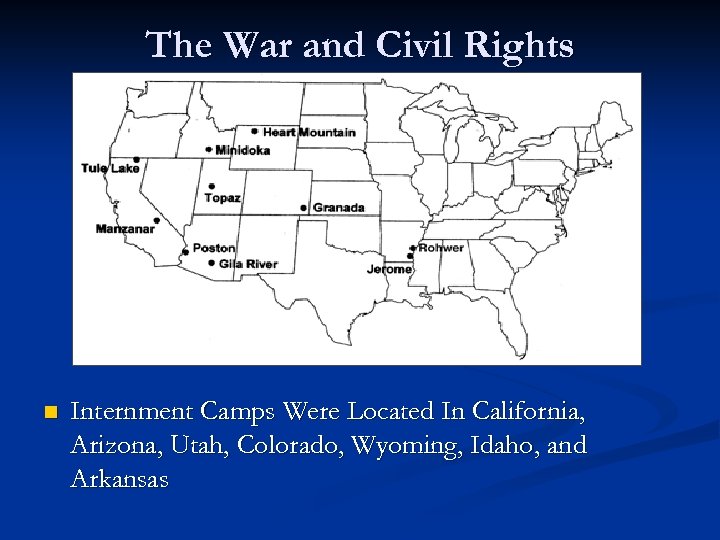 The War and Civil Rights n Internment Camps Were Located In California, Arizona, Utah, Colorado, Wyoming, Idaho, and Arkansas
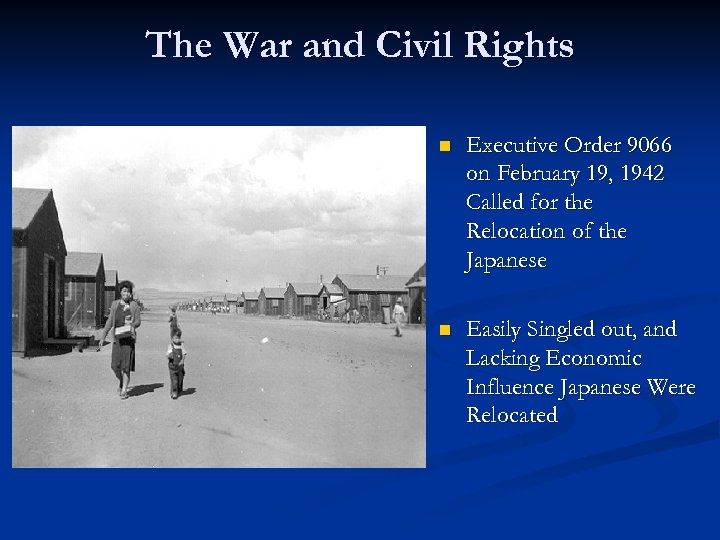 The War and Civil Rights n Executive Order 9066 on February 19, 1942 Called for the Relocation of the Japanese n Easily Singled out, and Lacking Economic Influence Japanese Were Relocated
 The War and Civil Rights n Japanese Internees Were Allowed Few Possessions Ø Ø Most Were Forced to Liquidate Their Assets Property Not Sold Was Often Stolen or Vandalized The Loss Estimates are About $500 Million The Relocation Was Justified On Military Grounds The Japanese Would Sabotage American War Facilities Ø The Japanese Would Become the Targets of Americans Ø The Japanese Race was Seen as an Enemy Race Ø Ø Camps Were Not Located In the Most Desirable Spots Extreme Heat and Cold Ø Dust Ø
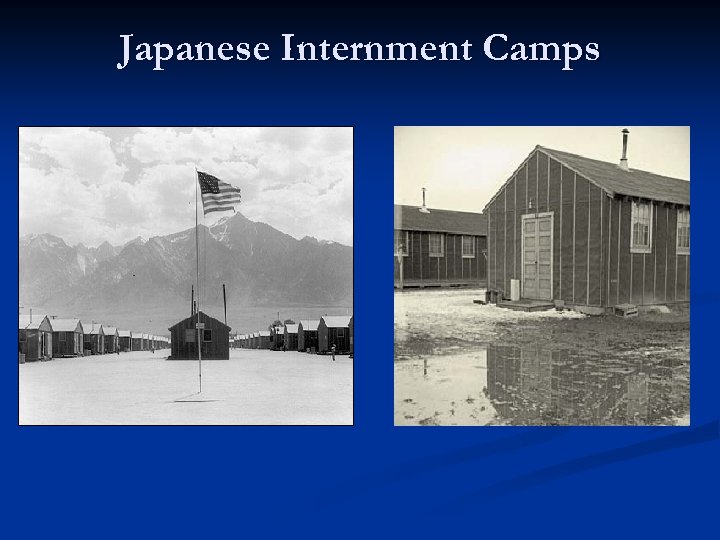 Japanese Internment Camps
 The War and Civil Rights n Life in the Internment Camps Ø Entire Families Lived in a Single Room Ø The Japanese Made the Best of the Situation Ø Formed Schools, Civil Organization, Scouts, Athletic Associations, Newspapers, Gardened, Landscaped, and Looked Forward to the War’s End Ø Many Contributed to the War Effort by Working in Food Production
 The War and Civil Rights n Judicial Rulings Support Relocation ♦ ♦ Hirabayashi v. United States 1943– Court Ruled that a Curfew Order Affecting only Japanese Did Not Violate their Constitutional Rights Korematsu v. United States 1944– Court Supported the Executive Order 9066 Because the Court Could Not Second Guess the Military Once Loyalty Had Been Established the Japanese Must Be Released Civil Rights Gains By African Americans Were Offset by Losses Felt by Japanese Americans