Скачать презентацию World Religions Comparisons and Contrasts Monotheism
70ec2146d6ff9d01e82a1d03128a445c.ppt
- Количество слайдов: 47
 World Religions Comparisons and Contrasts
 Monotheism § Greek roots § Mono=one § Theos=God Monotheistic religions are those that believe in one God. They include the following religions: Judaism Christianity Islam
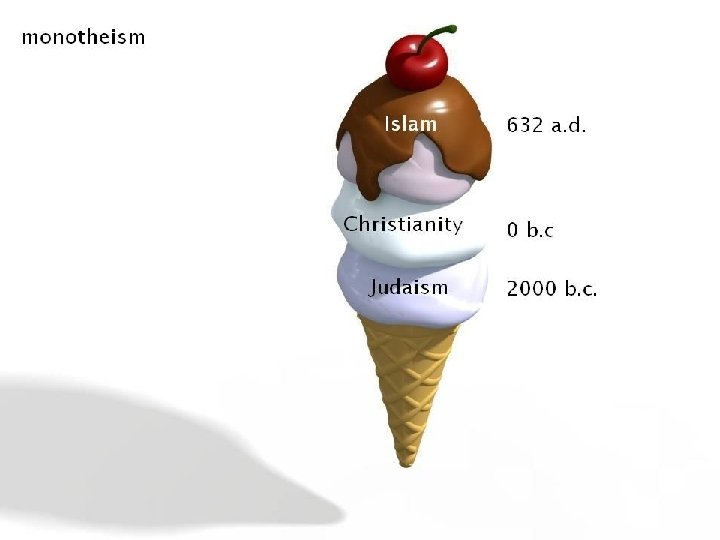 The monotheism triple scoop
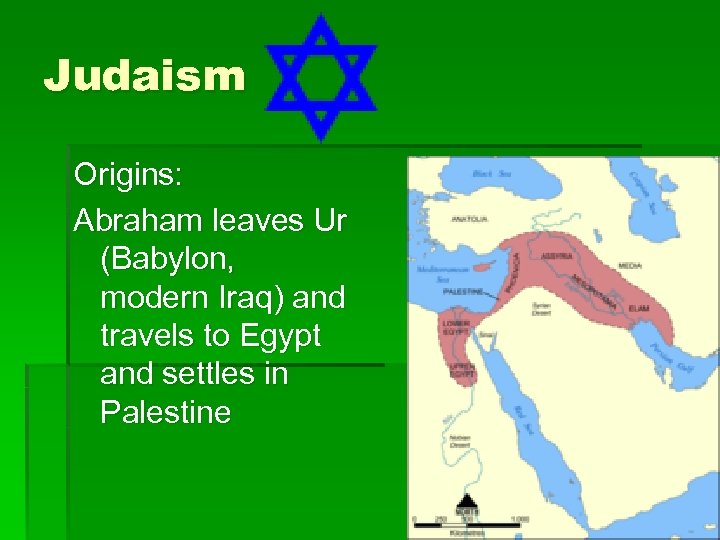 Judaism Origins: Abraham leaves Ur (Babylon, modern Iraq) and travels to Egypt and settles in Palestine
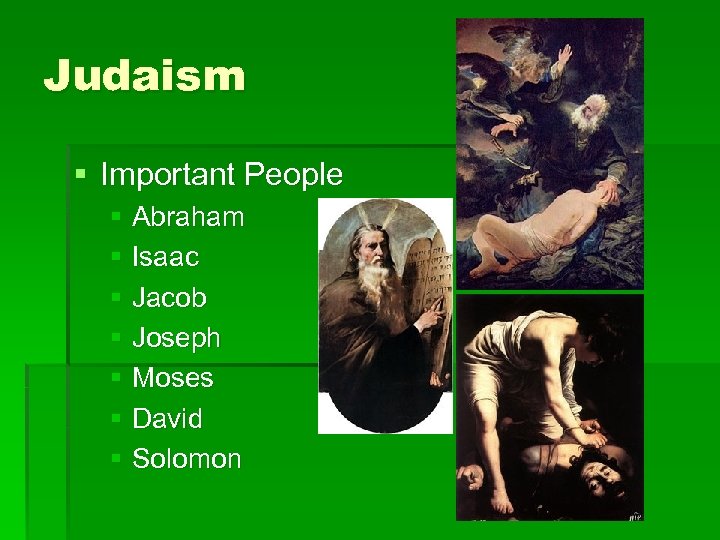 Judaism § Important People § Abraham § Isaac § Jacob § Joseph § Moses § David § Solomon
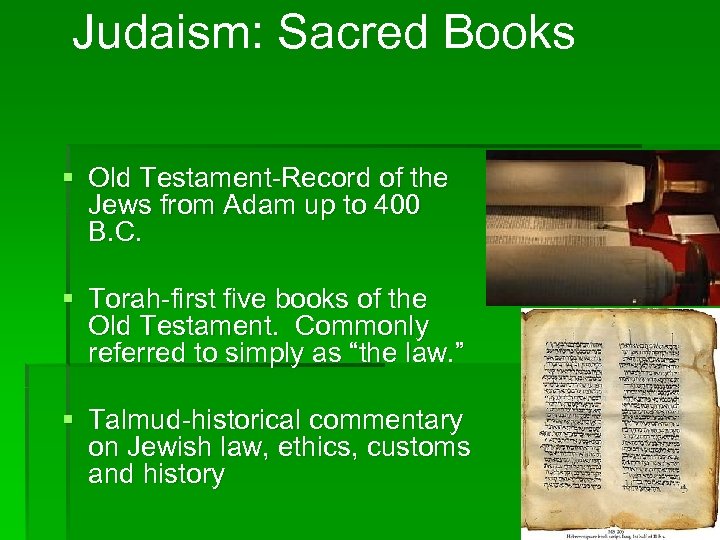 Judaism: Sacred Books § Old Testament-Record of the Jews from Adam up to 400 B. C. § Torah-first five books of the Old Testament. Commonly referred to simply as “the law. ” § Talmud-historical commentary on Jewish law, ethics, customs and history
 Judaism: holidays § Shabat (Sabbath) Period of rest that begins at sundown on Friday night and lasts until sundown on Saturday night. § Passover: A week long festival in late March or early April that celebrates the Exodus from Egypt. § Rosh Hashanah: Jewish New Year. Usually begins in September-October § Yom Kippur: “Day of Atonement” a sacred day spent in fasting and prayer. § Hanukkah: Eight day holiday (usually in December) that celebrates the rededication of the temple in Jerusalem after victory over the Greeks.
 Judaism: customs § Bar (bat) mitzvah: the celebration at twelve when a boy (or girl) enters adolescence. § Jewish law prohibits foods such as pork or eating meat and milk together. § Kosher: foods that have been blessed by a Rabbi.
 Diaspora “Scattering” § The Jews were conquered by the Greeks, Persians, Babylonians and Romans. Each time groups of Jews were either forced from or left Palestine. § There are large groups of Jews in Europe, America and Africa. Jews have had a big influence on the places where they have
 Jewish Populations § Israel 5, 309, 000 United States 5, 275, 000 § France 492, 000 § Canada 373, 000 § United Kingdom 297, 000 Russia 228, 000 Argentina 184, 000 Germany 118, 000
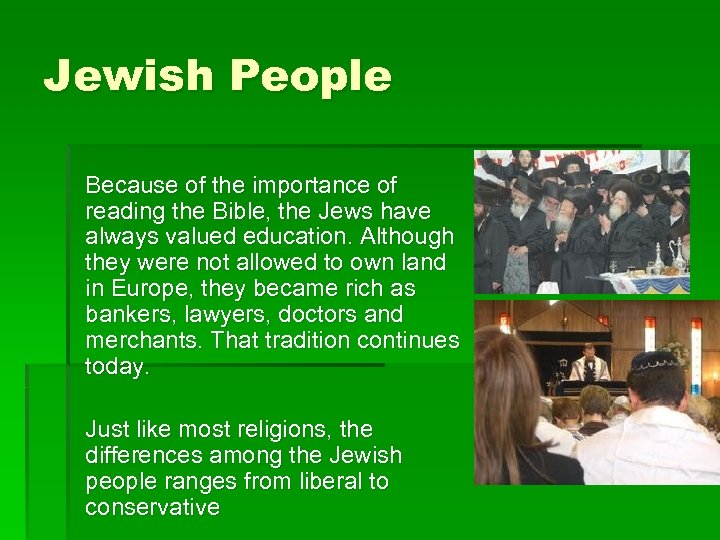 Jewish People Because of the importance of reading the Bible, the Jews have always valued education. Although they were not allowed to own land in Europe, they became rich as bankers, lawyers, doctors and merchants. That tradition continues today. Just like most religions, the differences among the Jewish people ranges from liberal to conservative
 A few famous Jews Albert Einstein Ben Stiller Sarah Jessica Parker Judy Blume Adam Sandler Howard Cosell Jerry Seinfeld Madeline Albright David Beckham Alan Greenspan Paul Newman Calvin Klein Woody Allen Ralph Lauren Levi Strauss Kenneth Cole
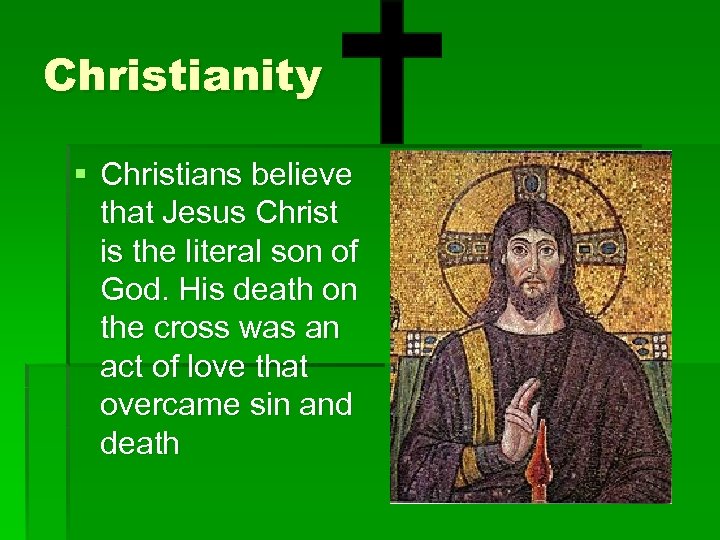 Christianity § Christians believe that Jesus Christ is the literal son of God. His death on the cross was an act of love that overcame sin and death
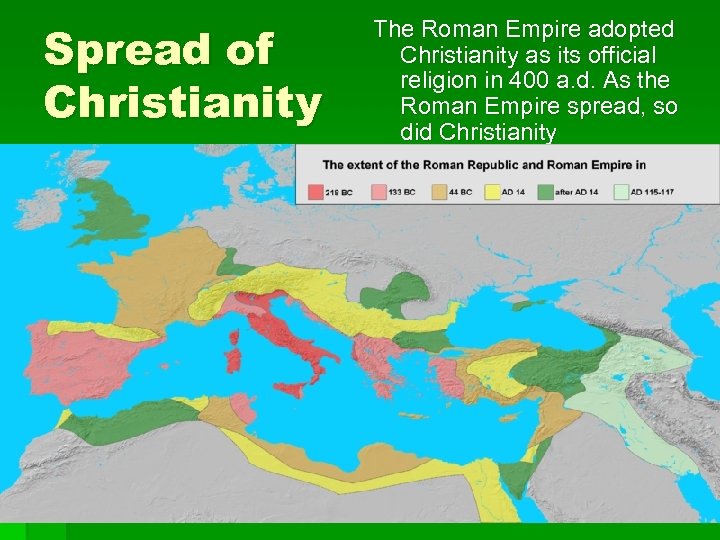 Spread of Christianity The Roman Empire adopted Christianity as its official religion in 400 a. d. As the Roman Empire spread, so did Christianity
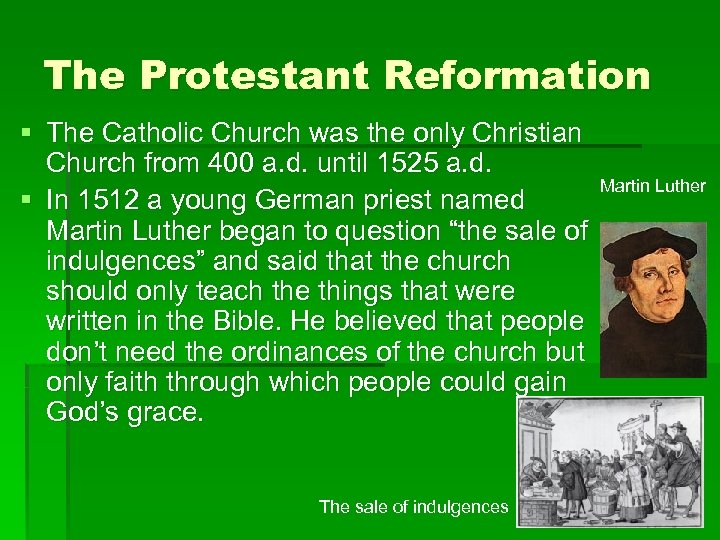 The Protestant Reformation § The Catholic Church was the only Christian Church from 400 a. d. until 1525 a. d. Martin Luther § In 1512 a young German priest named Martin Luther began to question “the sale of indulgences” and said that the church should only teach the things that were written in the Bible. He believed that people don’t need the ordinances of the church but only faith through which people could gain God’s grace. The sale of indulgences
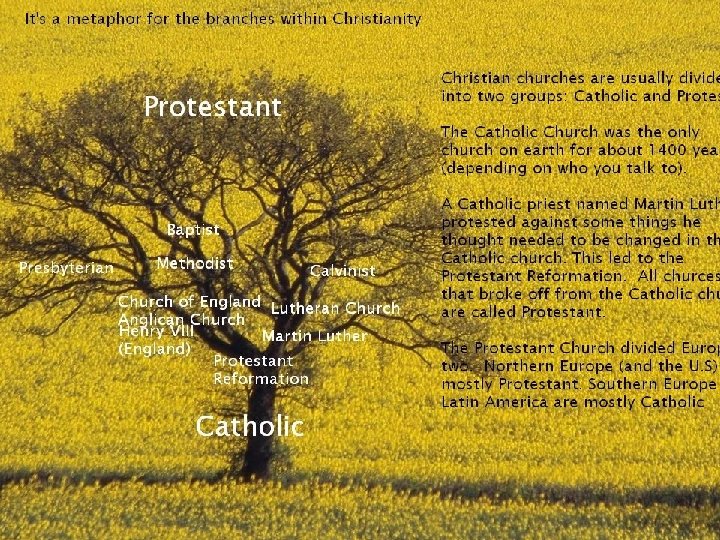
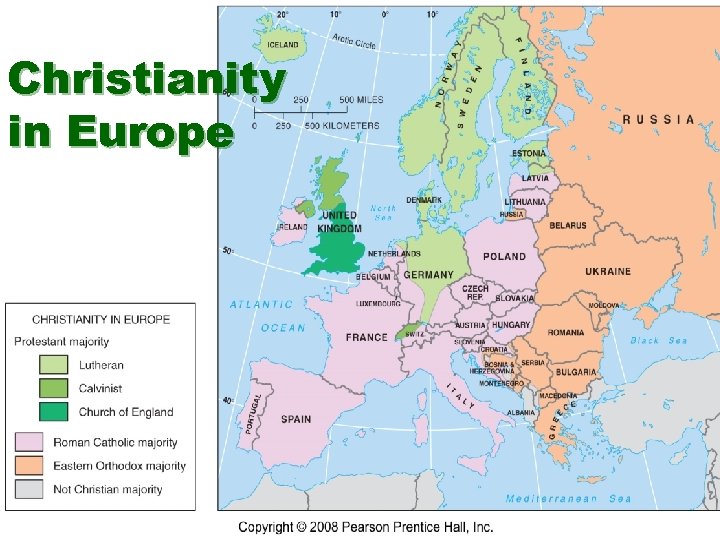 Christianity in Europe
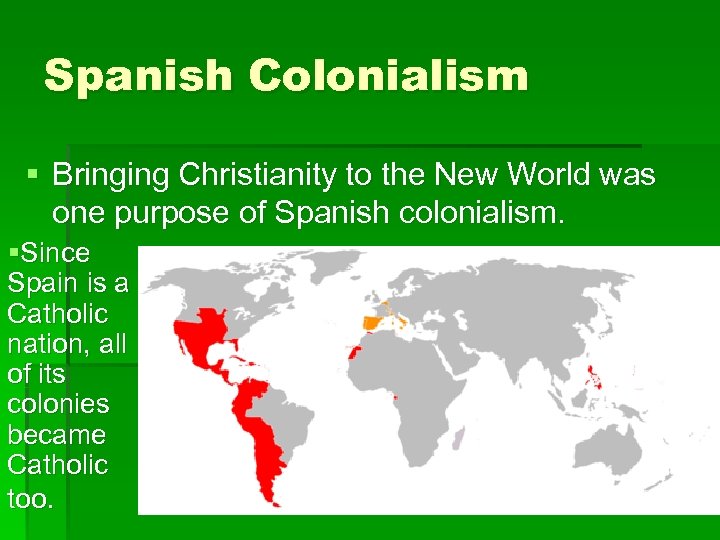 Spanish Colonialism § Bringing Christianity to the New World was one purpose of Spanish colonialism. §Since Spain is a Catholic nation, all of its colonies became Catholic too.
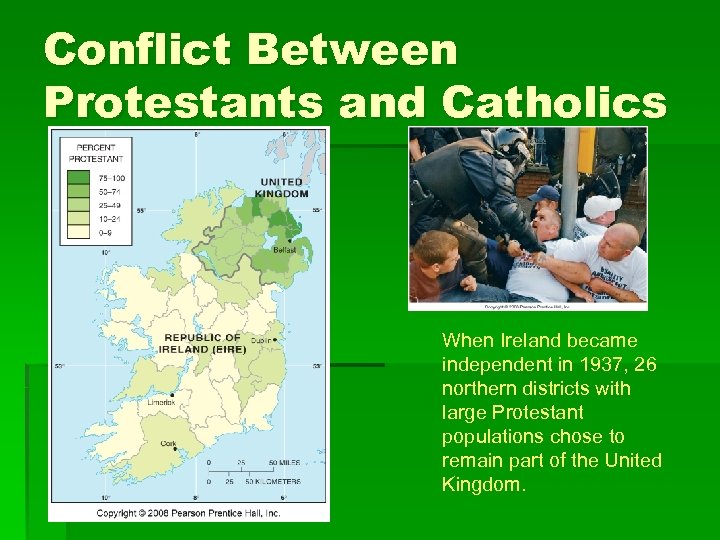 Conflict Between Protestants and Catholics When Ireland became independent in 1937, 26 northern districts with large Protestant populations chose to remain part of the United Kingdom.
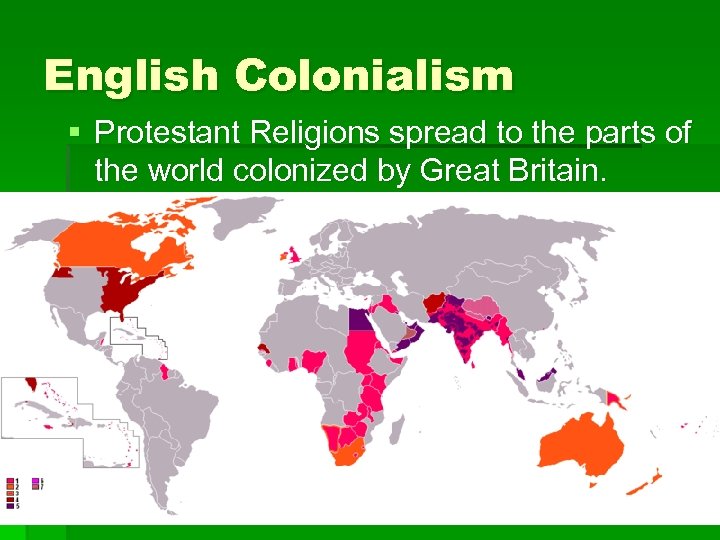 English Colonialism § Protestant Religions spread to the parts of the world colonized by Great Britain.
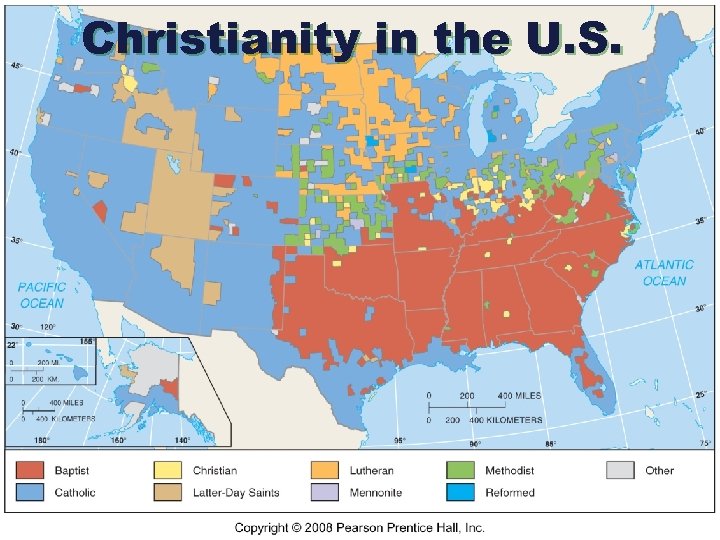 Christianity in the U. S.
 The Protestant Work Ethic § The Reformation had a huge impact on Europe. § The Protestant Work Ethic is an idea that influenced people to work hard to prove their worthiness of salvation. § Some believe that is why the Protestant countries of Northern Europe and North America are more prosperous, materialistic and individualistic.
 Christian Holidays § The word “holiday” is a conjunction for holy day. § Christmas § Easter § St. Patrick’s Day § Mardi Gras/Carnival § Lent
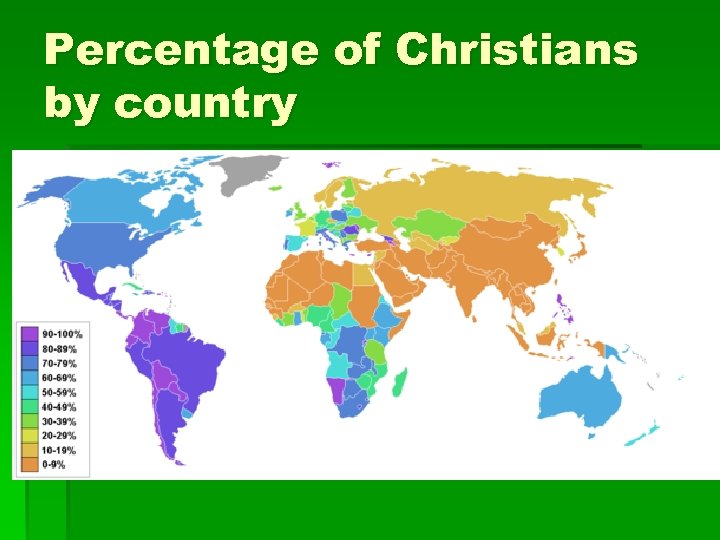 Percentage of Christians by country
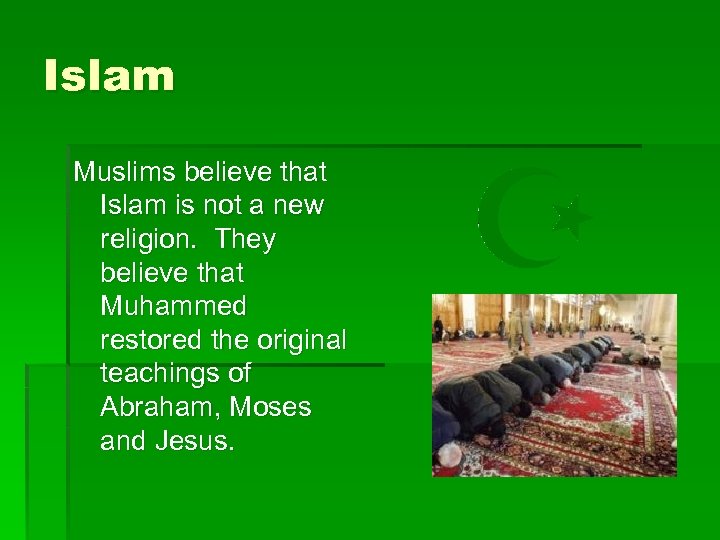 Islam Muslims believe that Islam is not a new religion. They believe that Muhammed restored the original teachings of Abraham, Moses and Jesus.
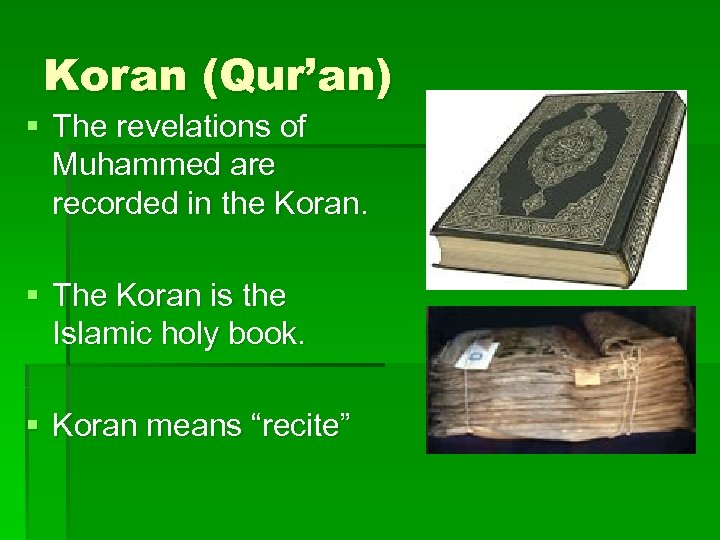 Koran (Qur’an) § The revelations of Muhammed are recorded in the Koran. § The Koran is the Islamic holy book. § Koran means “recite”
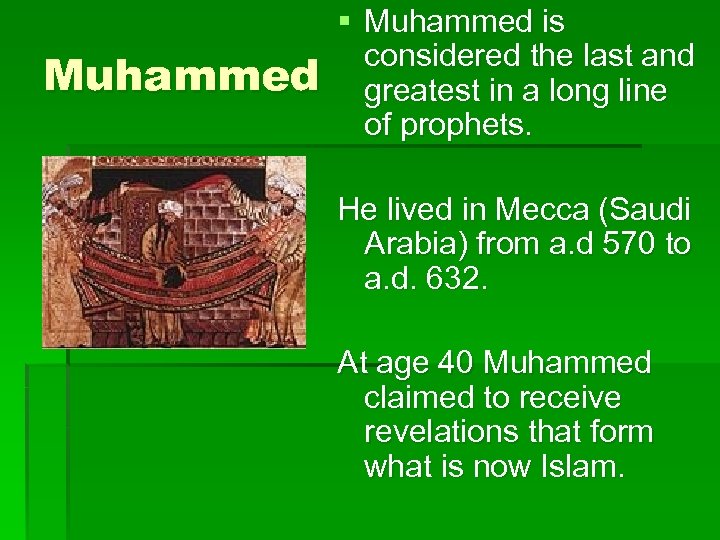 Muhammed § Muhammed is considered the last and greatest in a long line of prophets. He lived in Mecca (Saudi Arabia) from a. d 570 to a. d. 632. At age 40 Muhammed claimed to receive revelations that form what is now Islam.
 Five Pillars of Islam § The five pillars are the basic beliefs of Islam. They are: § Belief in one God § Daily Prayer (5 x): pre-dawn, mid-mornning, noon, after-noon, evening. § Fasting during the holy month of Ramadan (August). Do not eat during day light hours. § Giving to the poor § Make a pilgrimage (journey) to Mecca sometime during your life.
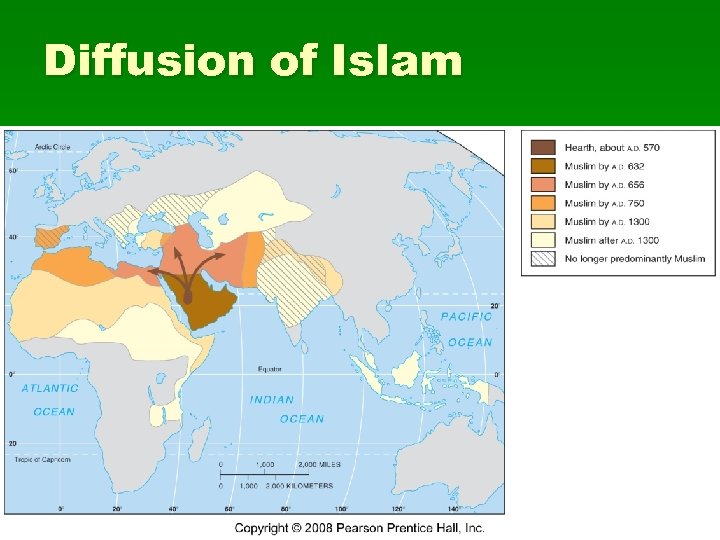 Diffusion of Islam
 Jihad- Holy War § Jihad is the idea that a person will go straight to heaven if they sacrifice their life for some other person or some higher purpose. § Most religions have an idea like this, but some branches of Islam have used the idea of Jihad to motivate young men to blow themselves up in order to fight against “infidels” that they believe are evil and corrupt.
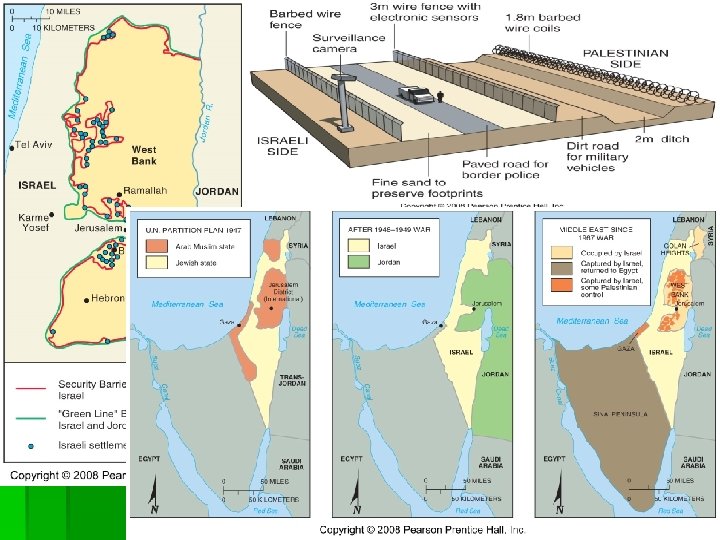 Conflict in Palestine
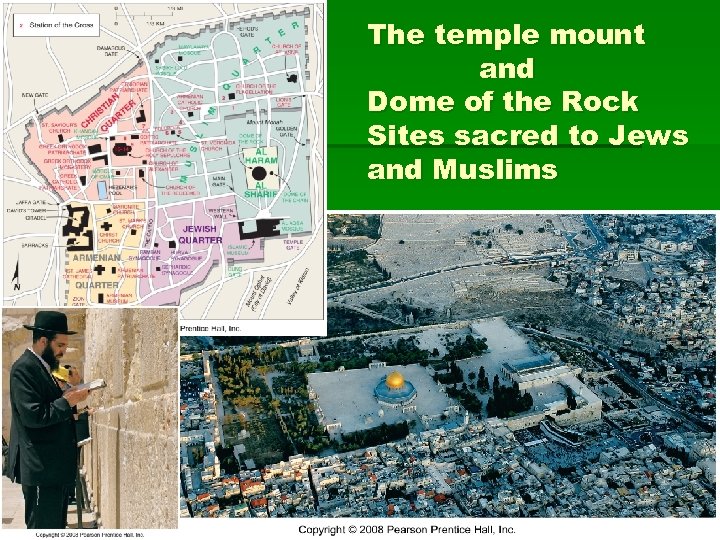 The temple mount and Dome of the Rock Sites sacred to Jews and Muslims
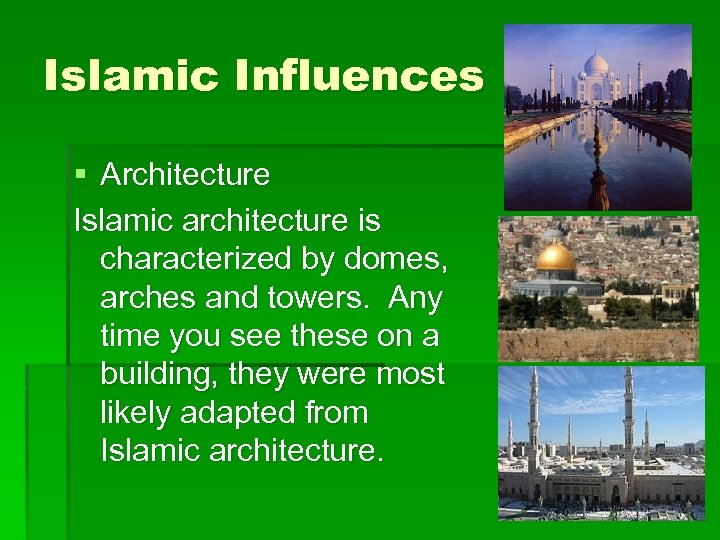 Islamic Influences § Architecture Islamic architecture is characterized by domes, arches and towers. Any time you see these on a building, they were most likely adapted from Islamic architecture.







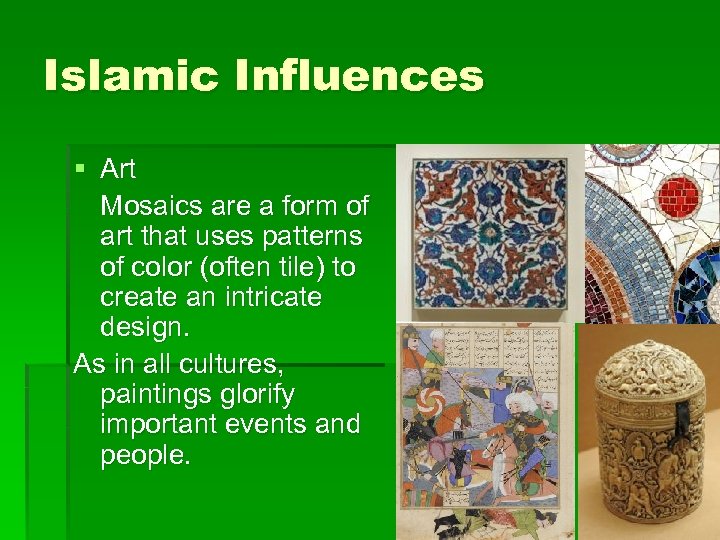 Islamic Influences § Art Mosaics are a form of art that uses patterns of color (often tile) to create an intricate design. As in all cultures, paintings glorify important events and people.
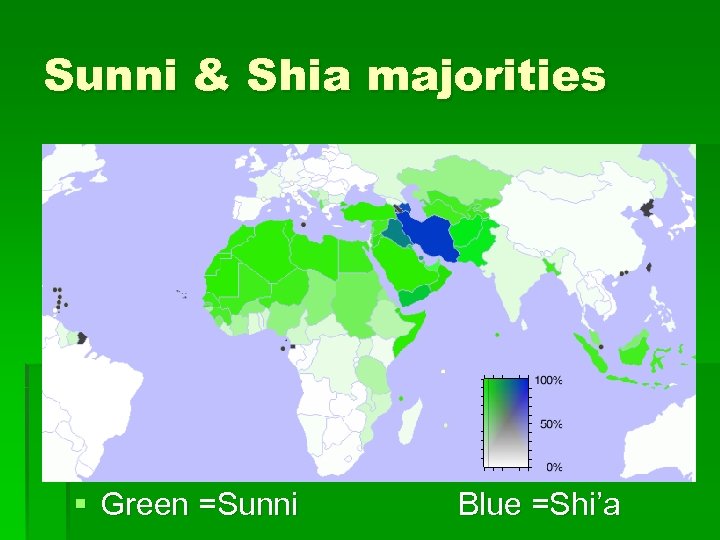 Sunni & Shia majorities § Green =Sunni Blue =Shi’a
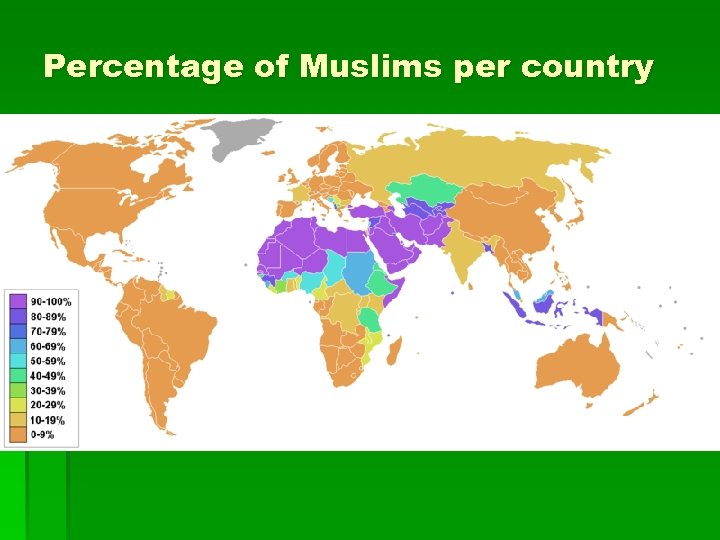 Percentage of Muslims per country
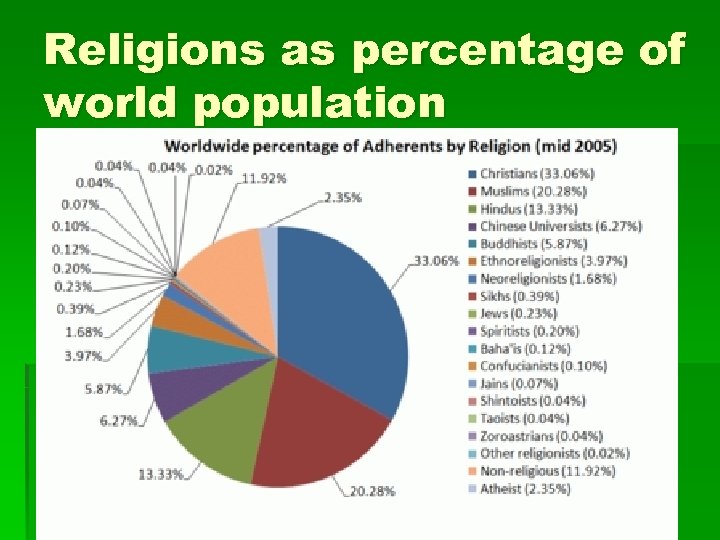 Religions as percentage of world population
![World Religions by total number # Religion Number of Ad herents Remarks[2] 1 Christian](https://present5.com/presentation/70ec2146d6ff9d01e82a1d03128a445c/image-45.jpg "World Religions by total number # Religion Number of Ad herents Remarks[2] 1 Christian") World Religions by total number # Religion Number of Ad herents Remarks[2] 1 Christian 1. 9 billion Has the most followers and most widespread presence of all well-recognized religions. Predominant religion in Europe, the Americas, Southern Africa, Oceania, and the Philippines. 2 Islam 1. 1 billion A widespread religion with many countries majority Muslim, particularly in the Middle East, South Asia, Maritime Southeast Asia, Central Asia, North Africa, West Africa and some parts of Eastern Europe. 3 Hinduism 781 million Umbrella term for various Hindu denominations forming the majority in India, Nepal, North Eastern province of Sri Lanka, and the Bali & Java sub-province of Indonesia, parts of Latin America, Eastern Africa, Australia, USA and UK. 4 Buddhis m Largely in East Asia and the Mainland Southeast Asia, and small parts of South Asia and Russia. 324 million
World Religions by total number # Religion Number of Ad herents Remarks[2] 1 Christian 1. 9 billion Has the most followers and most widespread presence of all well-recognized religions. Predominant religion in Europe, the Americas, Southern Africa, Oceania, and the Philippines. 2 Islam 1. 1 billion A widespread religion with many countries majority Muslim, particularly in the Middle East, South Asia, Maritime Southeast Asia, Central Asia, North Africa, West Africa and some parts of Eastern Europe. 3 Hinduism 781 million Umbrella term for various Hindu denominations forming the majority in India, Nepal, North Eastern province of Sri Lanka, and the Bali & Java sub-province of Indonesia, parts of Latin America, Eastern Africa, Australia, USA and UK. 4 Buddhis m Largely in East Asia and the Mainland Southeast Asia, and small parts of South Asia and Russia. 324 million
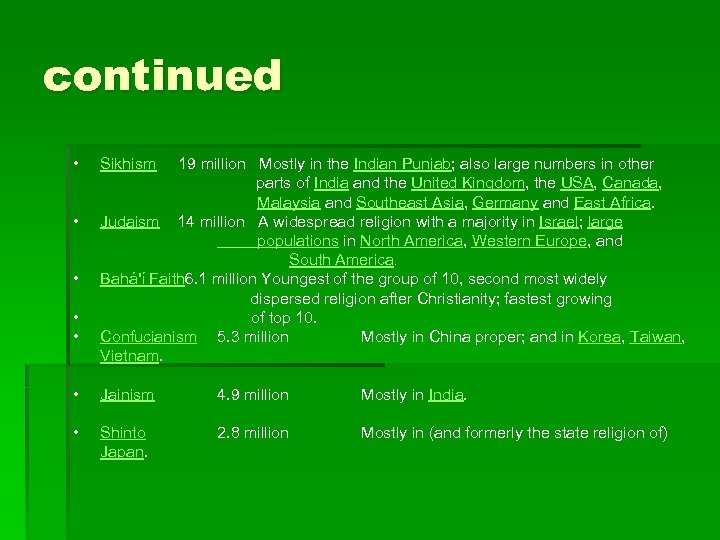 continued • Sikhism 19 million Mostly in the Indian Punjab; also large numbers in other parts of India and the United Kingdom, the USA, Canada, Malaysia and Southeast Asia, Germany and East Africa. • Judaism 14 million A widespread religion with a majority in Israel; large populations in North America, Western Europe, and South America. • Bahá'í Faith 6. 1 million Youngest of the group of 10, second most widely dispersed religion after Christianity; fastest growing • of top 10. • Confucianism 5. 3 million Mostly in China proper; and in Korea, Taiwan, Vietnam. • Jainism 4. 9 million Mostly in India. • Shinto Japan. 2. 8 million Mostly in (and formerly the state religion of)