 Скачать презентацию World Regional Geography February 15 2010 Reading Marston
82c607e8670a0cf470ce1bff52d10435.ppt
- Количество слайдов: 24



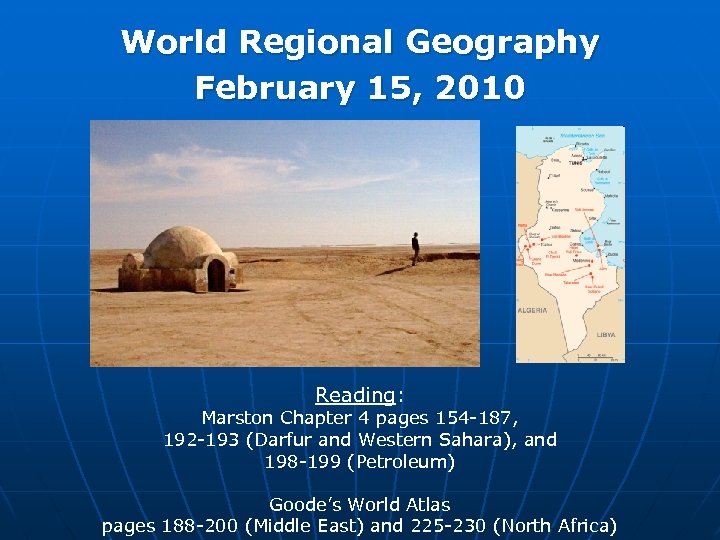
World Regional Geography February 15, 2010 Reading: Marston Chapter 4 pages 154 -187, 192 -193 (Darfur and Western Sahara), and 198 -199 (Petroleum) Goode’s World Atlas pages 188 -200 (Middle East) and 225 -230 (North Africa)
The Middle East & North Africa 1. Political Boundaries 2. Physical Geography A. B. C. D. Physical Features & Topography Climate Land Use Physiographic Regions 3. Human Geography A. Population Characteristics 4. Key Concepts A. Culture, Ethnicity, and Religion a. History b. Politics B. The Politics of Oil a. Economics b. International Politics
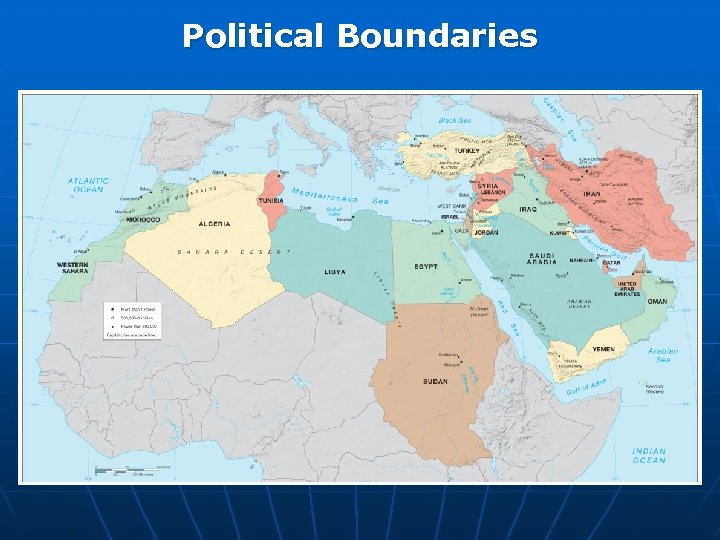
Political Boundaries
The Middle East & North Africa • Why group the Middle East and North Africa? • Culture • Islamic Religion • Arabic Languages • Economics • Oil • Environment • Arid • “Middle East” or Southwest Asia
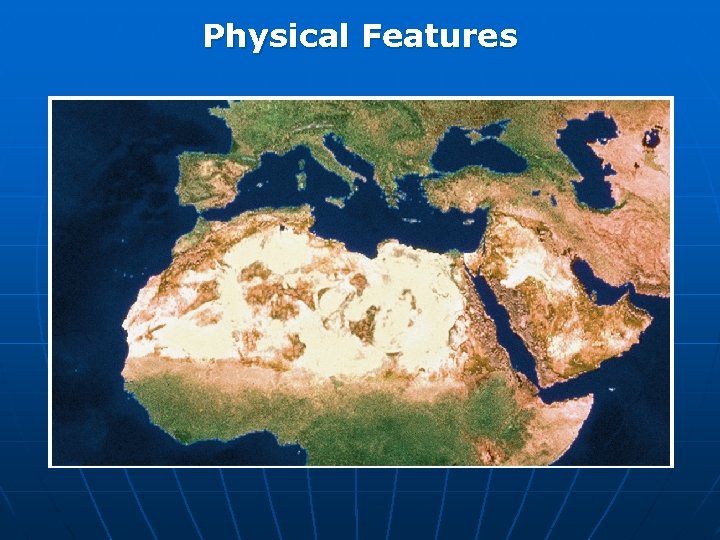
Physical Features
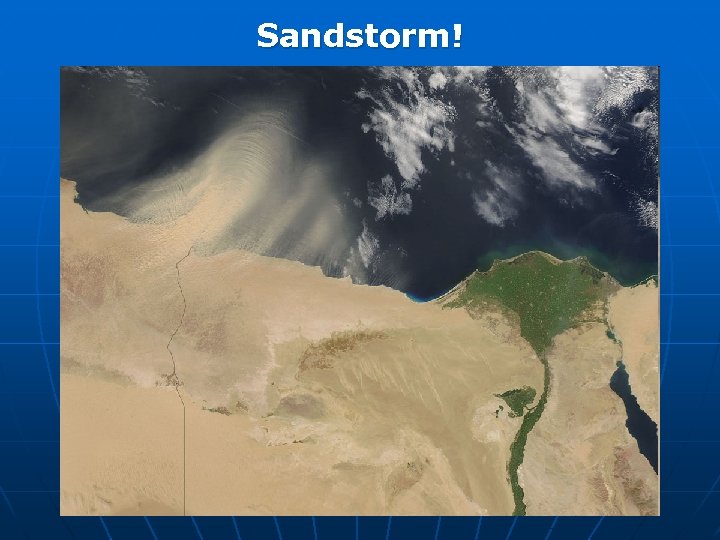
Sandstorm!
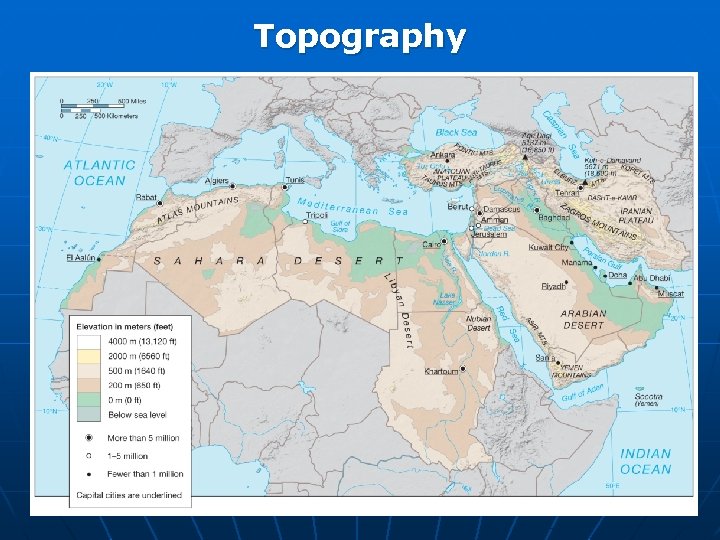
Topography
Temperature and Rainfall • Annual Rainfall • • • 75% of the Region receives less than 10 inches Some desert areas average less than 1 inch Mountain (orographic) and some coastal areas account for vast majority of regions rainfall. • Average Temperature • Large temperature variations in desert areas • Radiational cooling • Large variations can lead to wind/dust storms • More humid climactic regions = less extremes • • Western Atlas Mountains Turkey Mediterranean Coast Western Zagros & Elburz Mountains
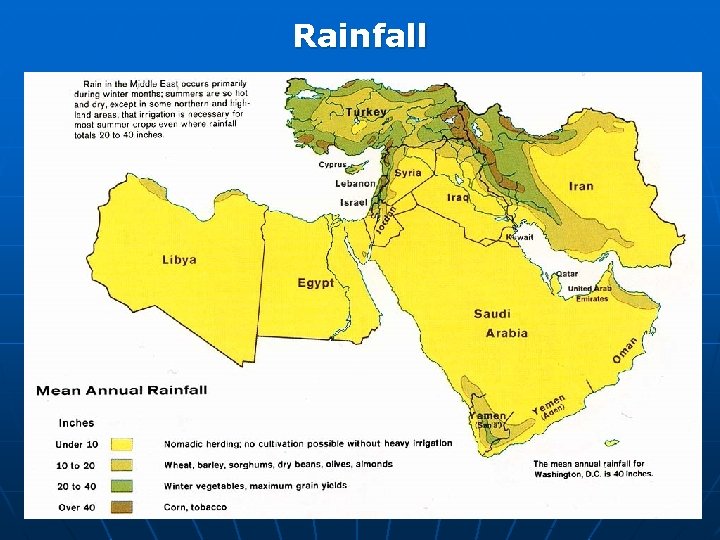
Rainfall
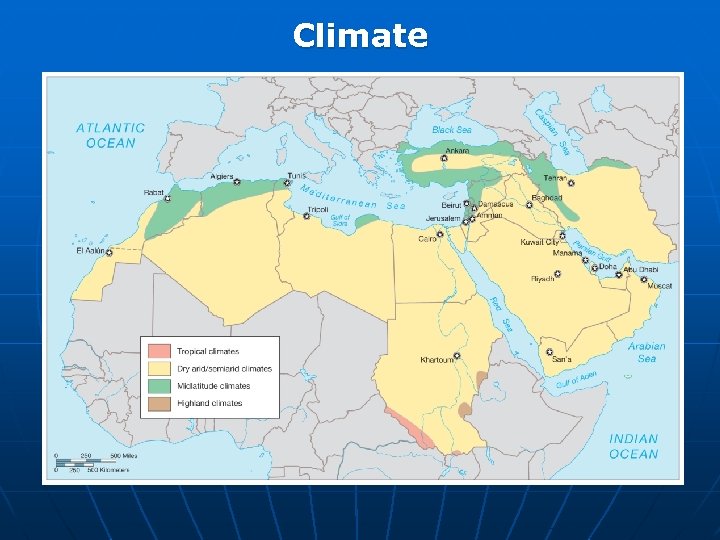
Climate
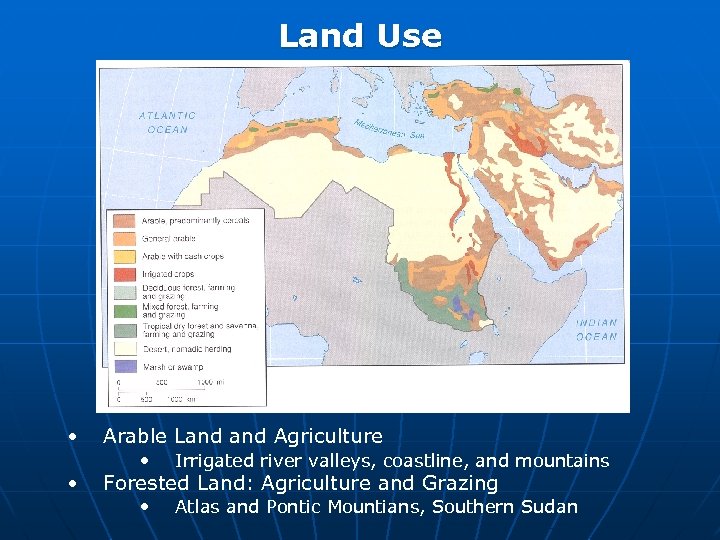
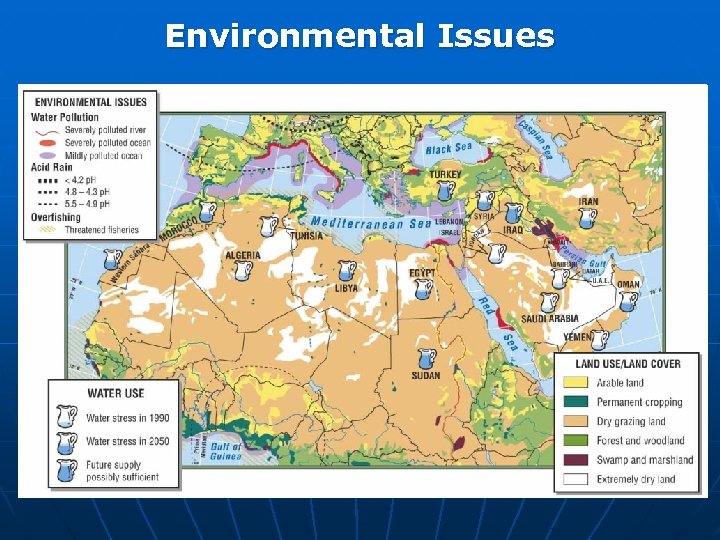
Land Use • • Arable Land Agriculture • Irrigated river valleys, coastline, and mountains • Atlas and Pontic Mountians, Southern Sudan Forested Land: Agriculture and Grazing
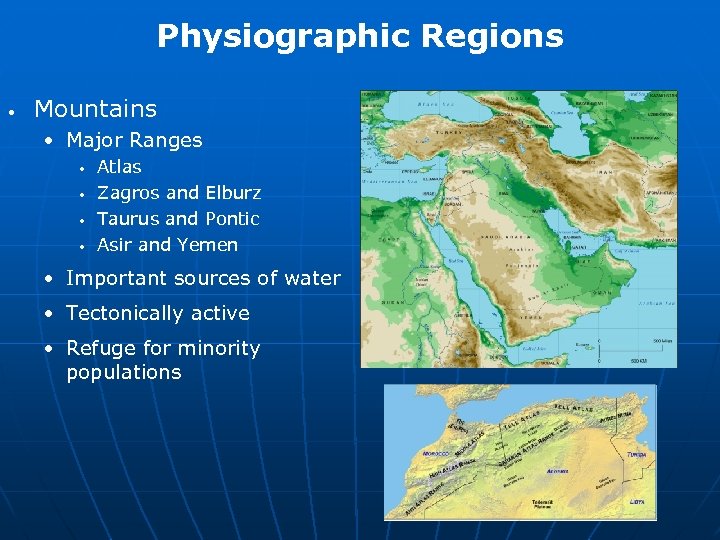
Physiographic Regions • Mountains • Major Ranges • • Atlas Zagros and Elburz Taurus and Pontic Asir and Yemen • Important sources of water • Tectonically active • Refuge for minority populations
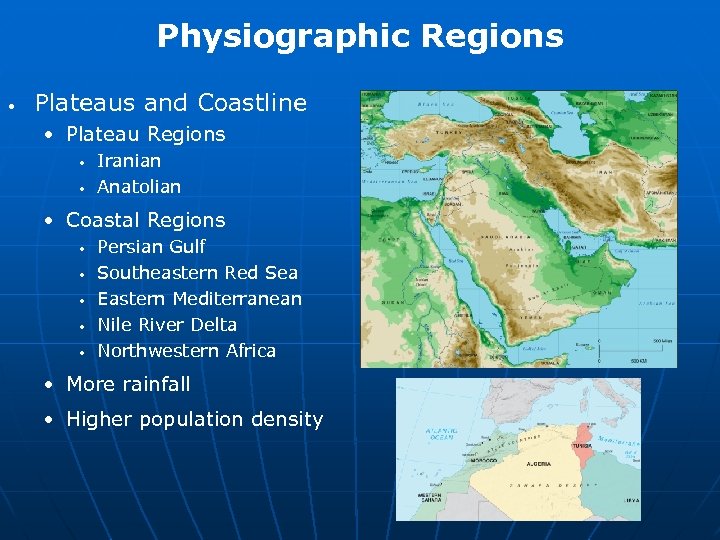
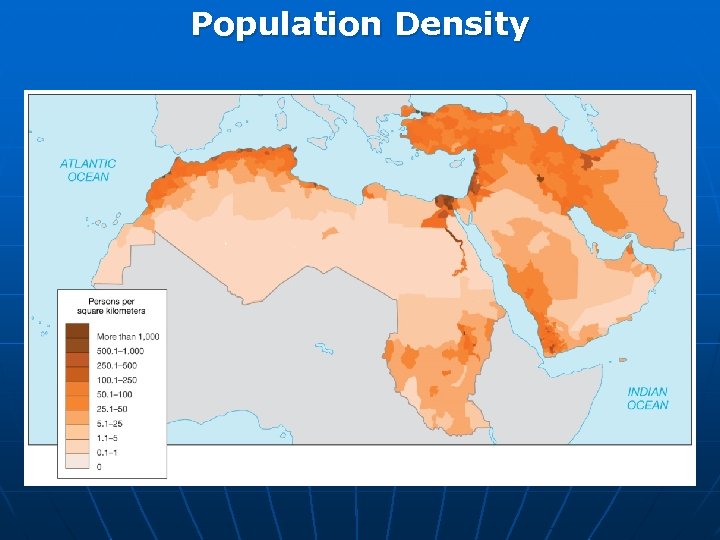
Physiographic Regions • Plateaus and Coastline • Plateau Regions • • Iranian Anatolian • Coastal Regions • • • Persian Gulf Southeastern Red Sea Eastern Mediterranean Nile River Delta Northwestern Africa • More rainfall • Higher population density
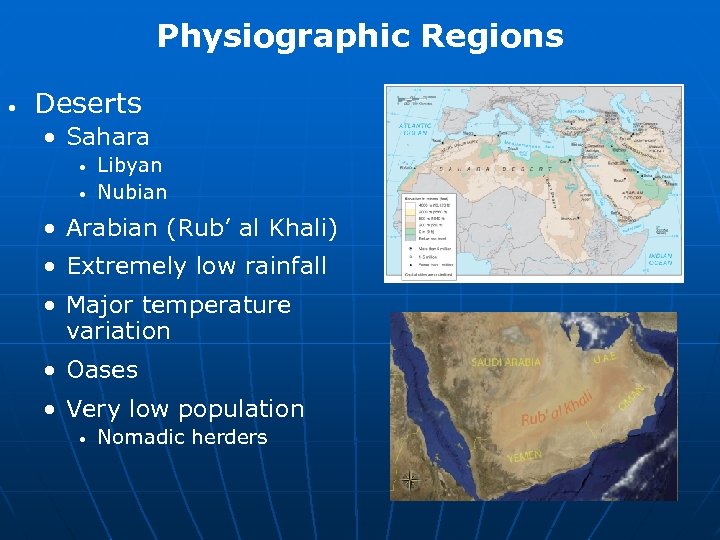
Physiographic Regions • Deserts • Sahara • • Libyan Nubian • Arabian (Rub’ al Khali) • Extremely low rainfall • Major temperature variation • Oases • Very low population • Nomadic herders
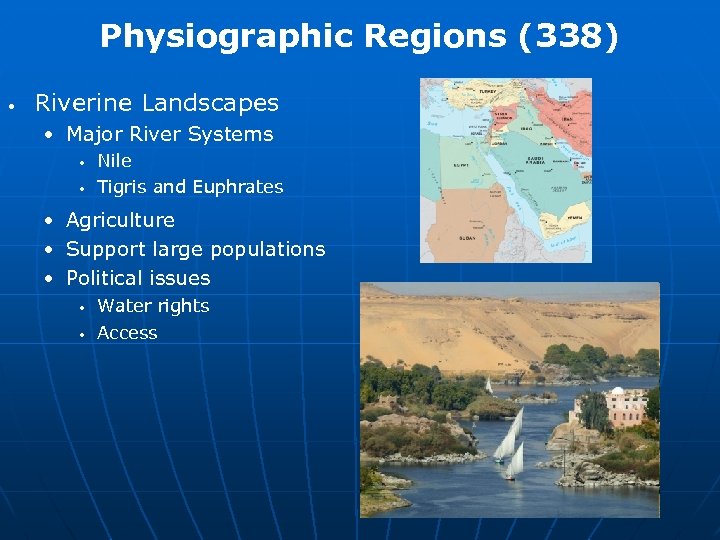
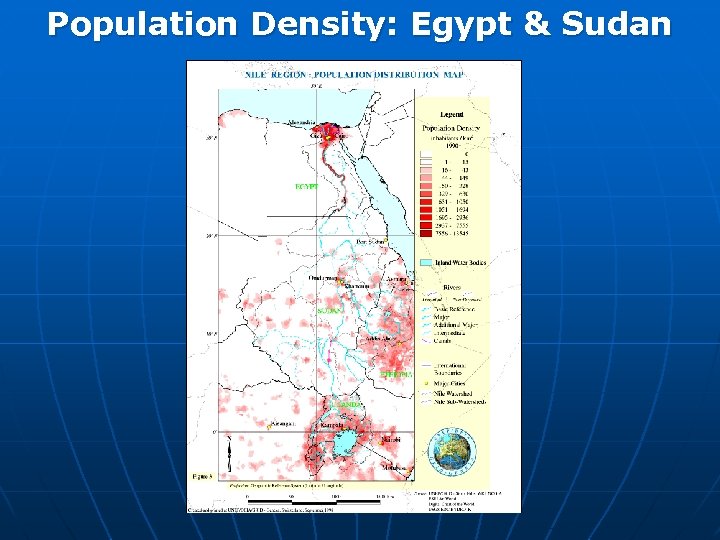
Physiographic Regions (338) • Riverine Landscapes • Major River Systems • • Nile Tigris and Euphrates • Agriculture • Support large populations • Political issues • • Water rights Access
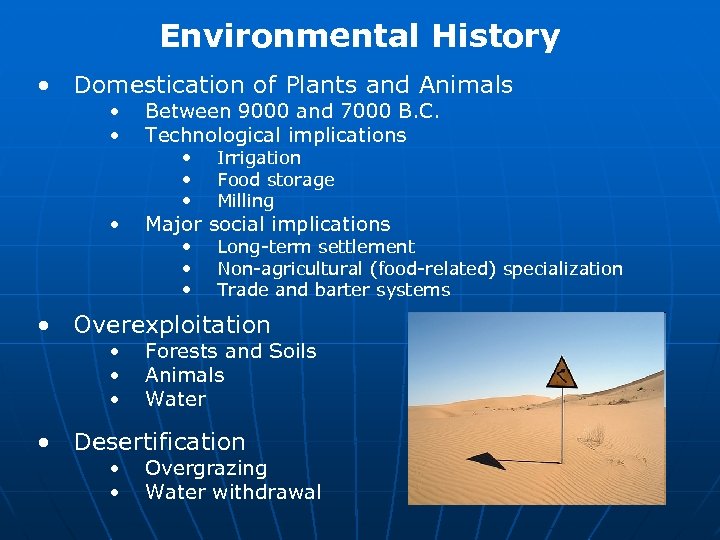
Environmental History • Domestication of Plants and Animals • • Between 9000 and 7000 B. C. Technological implications • Major social implications • • • Irrigation Food storage Milling • • • Long-term settlement Non-agricultural (food-related) specialization Trade and barter systems • Overexploitation • • • Forests and Soils Animals Water • Desertification • • Overgrazing Water withdrawal
Environmental Issues
Population Density
Population Density: Egypt & Sudan
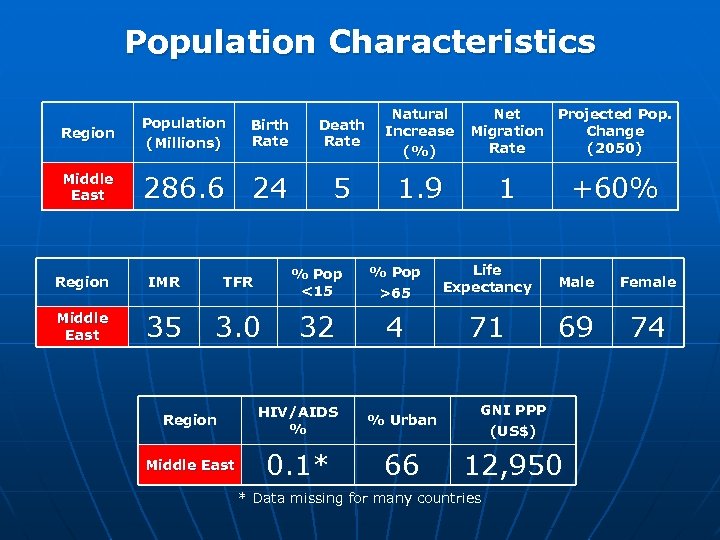
Population Characteristics Region Population (Millions) Middle East Death Rate Natural Increase (%) 5 1. 9 286. 6 24 Birth Rate Net Projected Pop. Migration Change Rate (2050) 1 +60% Region IMR TFR % Pop <15 % Pop >65 Life Expectancy Male Female Middle East 35 3. 0 32 4 71 69 74 Region HIV/AIDS % % Urban GNI PPP (US$) Middle East 0. 1* 66 12, 950 * Data missing for many countries
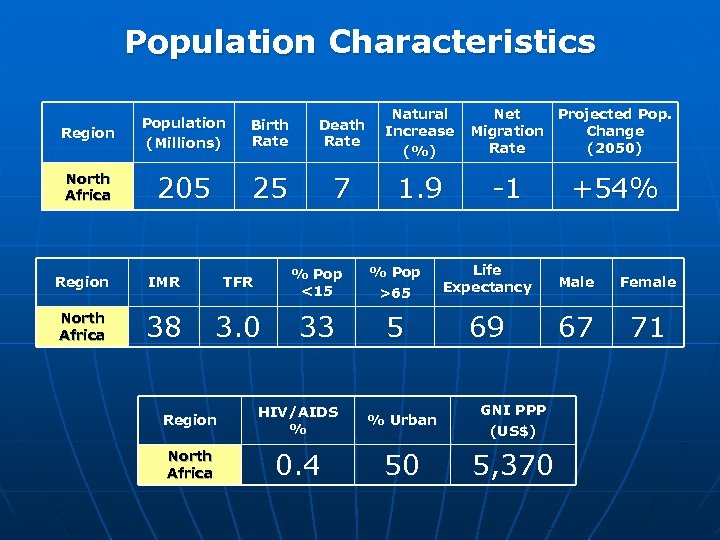
Population Characteristics Region Population (Millions) Birth Rate Death Rate Natural Increase (%) North Africa 205 25 7 1. 9 Net Projected Pop. Migration Change Rate (2050) -1 +54% Region IMR TFR % Pop <15 % Pop >65 Life Expectancy Male Female North Africa 38 3. 0 33 5 69 67 71 Region HIV/AIDS % % Urban GNI PPP (US$) North Africa 0. 4 50 5, 370
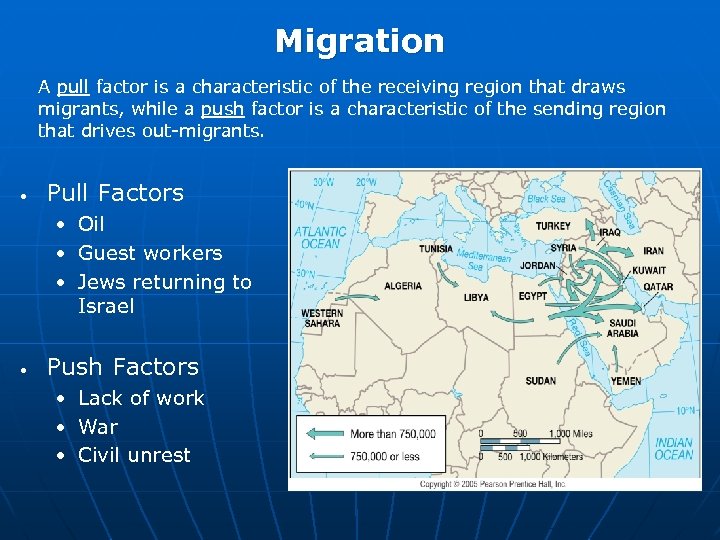
Migration A pull factor is a characteristic of the receiving region that draws migrants, while a push factor is a characteristic of the sending region that drives out-migrants. • Pull Factors • Oil • Guest workers • Jews returning to Israel • Push Factors • Lack of work • War • Civil unrest
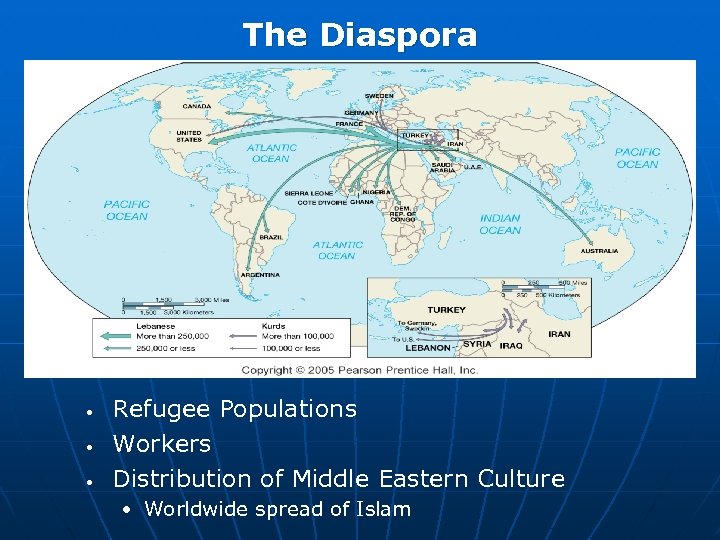
The Diaspora • • • Refugee Populations Workers Distribution of Middle Eastern Culture • Worldwide spread of Islam
Wednesday • Culture and Ethnicity • Religion • Economics • The Politics of Oil
Скачать презентацию World Regional Geography February 15 2010 Reading Marston
82c607e8670a0cf470ce1bff52d10435.ppt