


 Скачать презентацию WORLD LANGUAGES EXPERIENCE Southern California HEINLE Cengage Learning
74e3bd265f954b9d7f5f546f73d84627.ppt
- Количество слайдов: 70
 WORLD LANGUAGES EXPERIENCE Southern California HEINLE Cengage Learning Making Form-Meaning Connections in Foreign Language Classrooms: Structured Input as Grammar Instruction Friday, April 1, 2011 Prof. Wynne Wong The Ohio State University
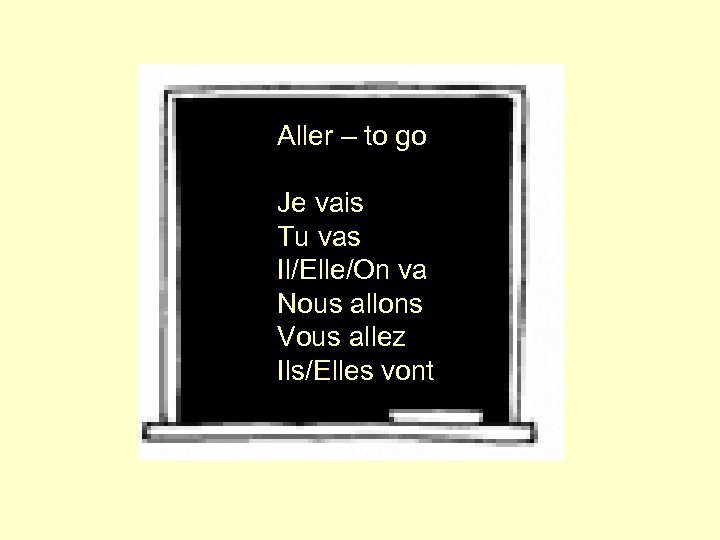 Aller – to go Je vais Tu vas Il/Elle/On va Nous allons Vous allez Ils/Elles vont
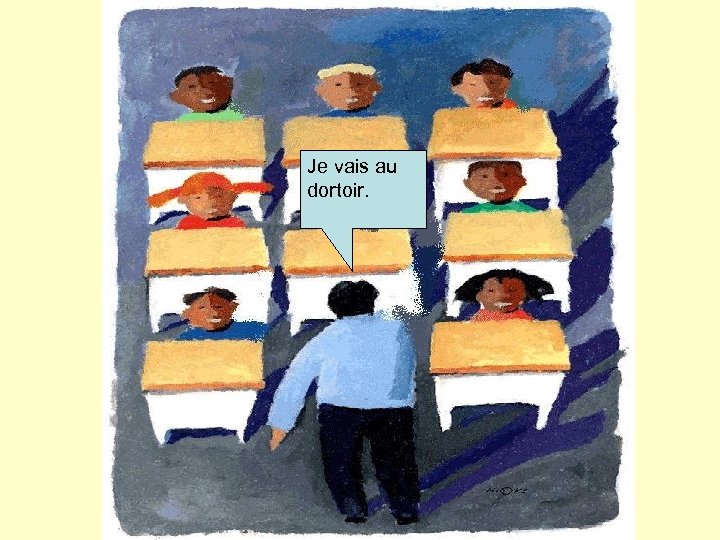 Je vais au dortoir. Répétez…
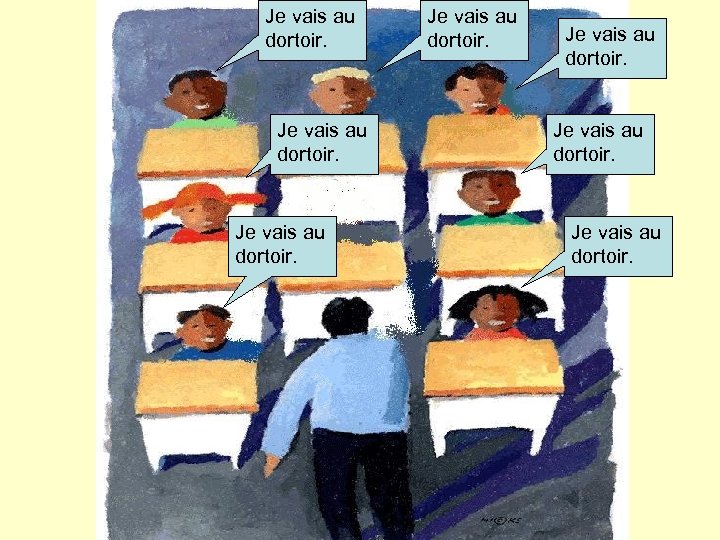 Je vais au dortoir. Je vais au dortoir.
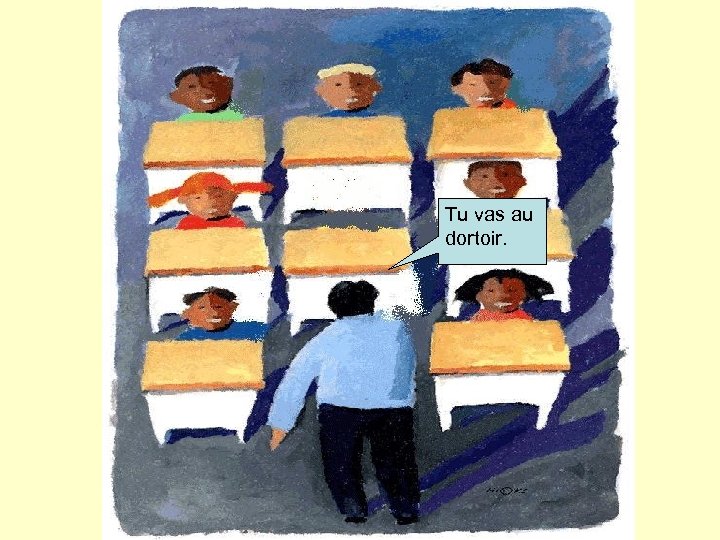 Tu vas au dortoir.
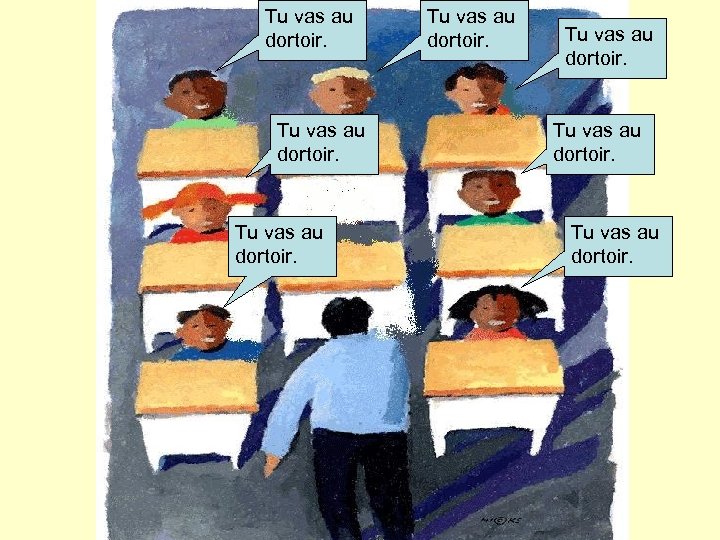 Tu vas au dortoir. Tu vas au dortoir.
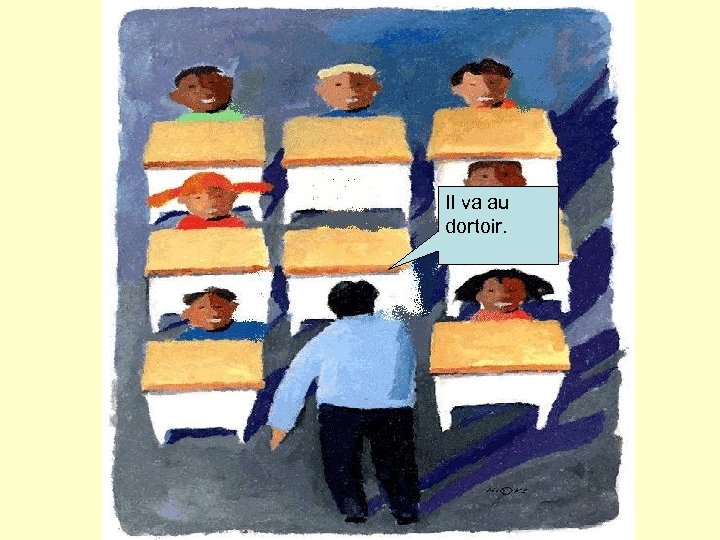 Il va au dortoir.
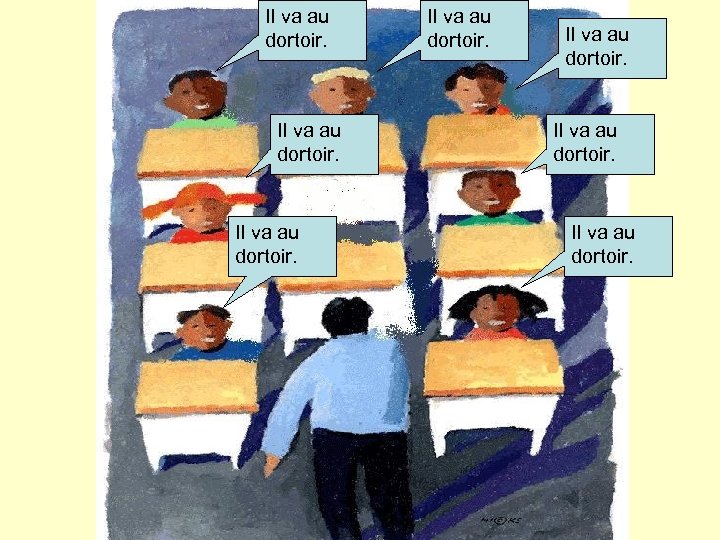 Il va au dortoir. Il va au dortoir.
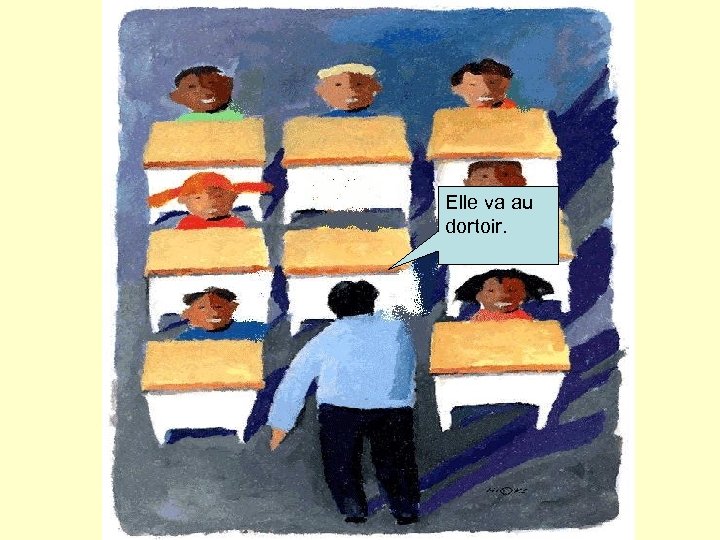 Elle va au dortoir.
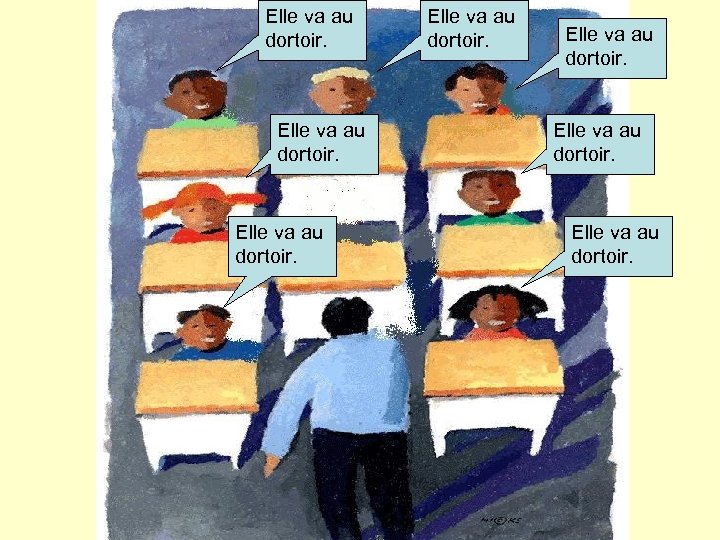 Elle va au dortoir. Elle va au dortoir.
 15 minutes later…
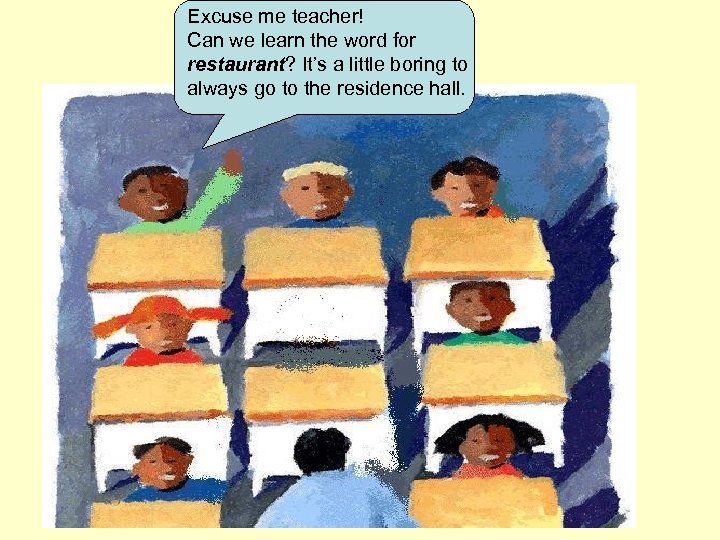 Excuse me teacher! Can we learn the word for restaurant? It’s a little boring to always go to the residence hall.
 WORLD LANGUAGES EXPERIENCE Southern California HEINLE Cengage Learning Making Form-Meaning Connections in Foreign Language Classrooms: Structured Input as Grammar Instruction Friday, April 1, 2011 Prof. Wynne Wong The Ohio State University
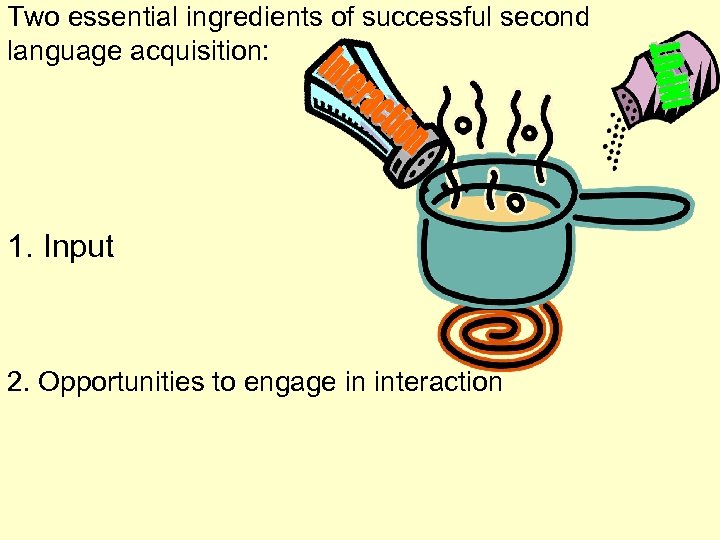 Two essential ingredients of successful second language acquisition: 1. Input 2. Opportunities to engage in interaction
 Today’s Talk Focus on
 What is input? Anything in the target language that communicates some kind of message.
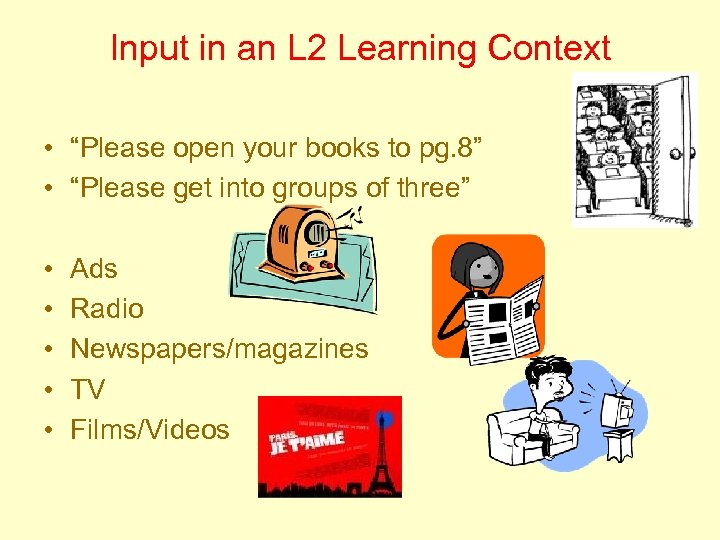 Input in an L 2 Learning Context • “Please open your books to pg. 8” • “Please get into groups of three” • • • Ads Radio Newspapers/magazines TV Films/Videos
 “The concept of input is perhaps the single most important concept of second language acquisition. It is trivial to point out that no individual can learn a second language without input of some sort” (Gass, 1997, p. 1).
 Why is input so crucial? Input provides the linguistic data that a developing linguistic system needs in order to start the process of language acquisition.


 All SLA researchers agree… Acquisition begins with input! Input is as important to acquisition as food is to the human body! Acquisition cannot happen without it!
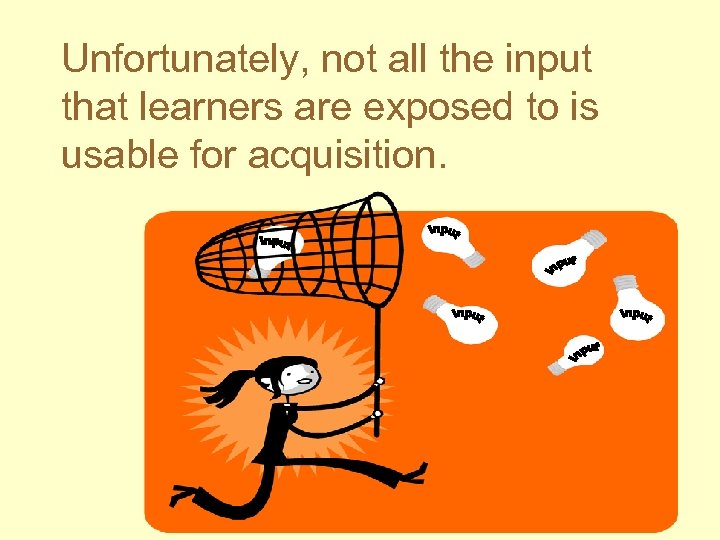 Unfortunately, not all the input that learners are exposed to is usable for acquisition.
 How does input become usable for acquisition? • By making form-meaning connections from input as learners attempt to comprehend messages (Van. Patten, 1996, 2003)
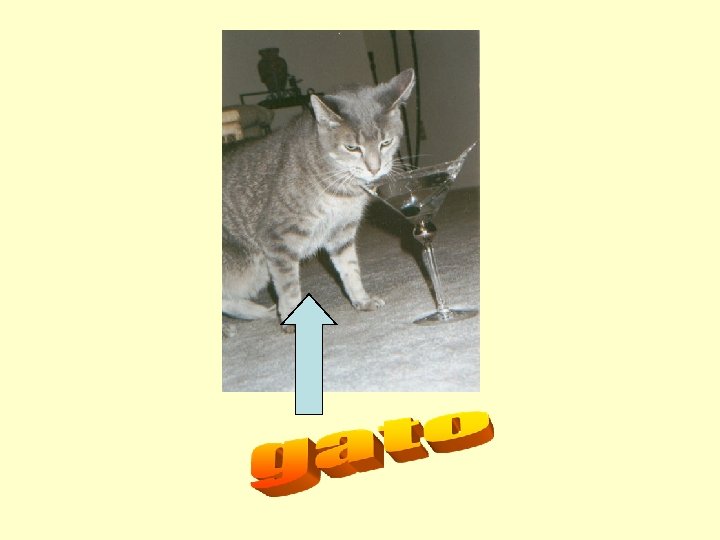
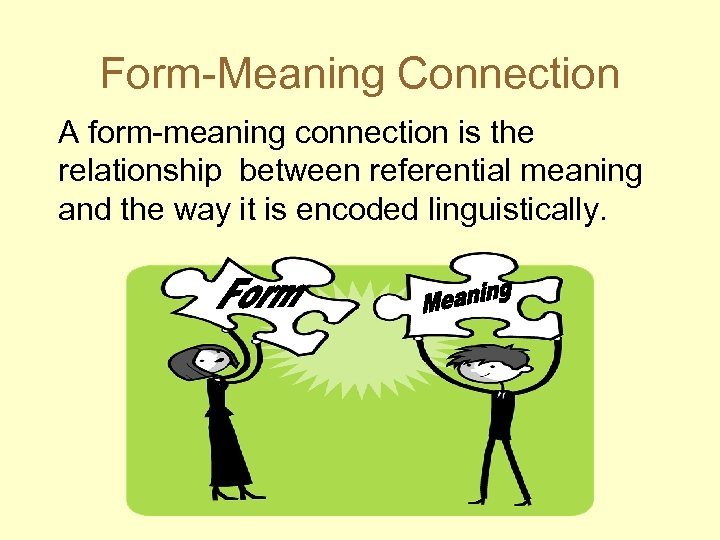 Form Meaning Connection A form meaning connection is the relationship between referential meaning and the way it is encoded linguistically.
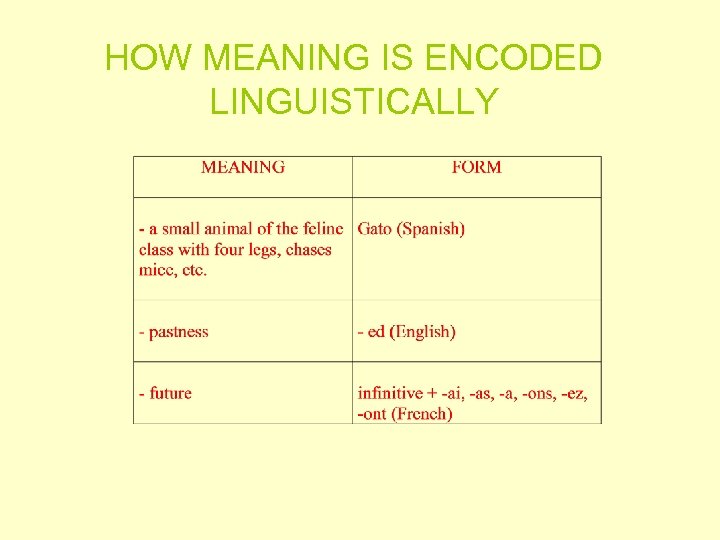 HOW MEANING IS ENCODED LINGUISTICALLY
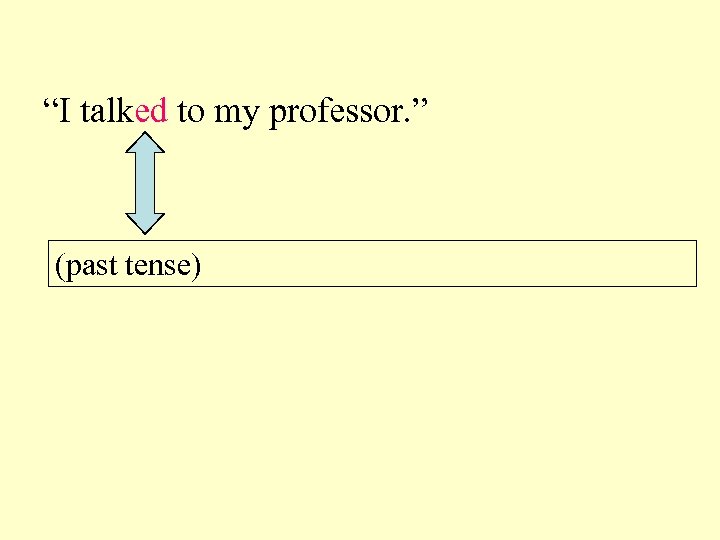 “I talked to my professor. ” (past tense)
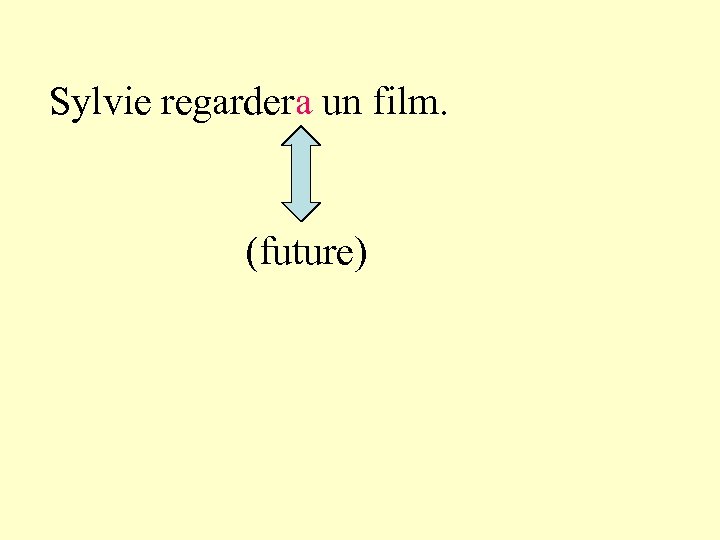 Sylvie regardera un film. (future)
 = INTAKE Form-Meaning Connections = Intake
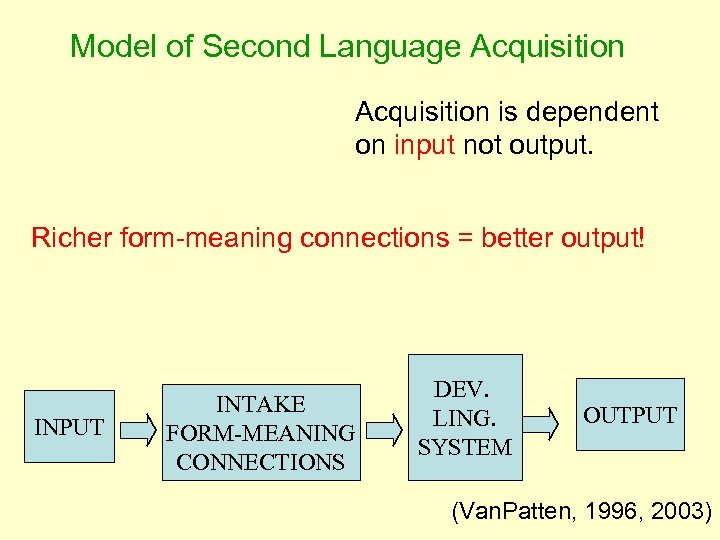 Model of Second Language Acquisition is dependent on input not output. Richer form meaning connections = better output! INPUT INTAKE FORM-MEANING CONNECTIONS DEV. LING. SYSTEM OUTPUT (Van. Patten, 1996, 2003)
 How can we help our students make effective form meaning connections?
 One way…

 What are Structured Input (SI) activities? SI activities are based on information about how learners tend to make form meaning connections on their own (which may be ineffective). Based on this information, activities are designed to push learners away from incorrect or non optimal processing strategies towards more optimal ones.
 Van. Patten’s Model of Input Processing provides a set of principles to explain: – (1) what learners attend to in the input and why – (2) what strategies direct how they make form meaning connections and – (3) why they make some form meaning connections before others
 Principle 1 (P 1). The Primacy of Meaning Principle. Learners process input for meaning before they process it form Principle 2 (P 2). The First Noun Principle. Learners tend to process the first noun or pronoun they encounter in a sentence as the subject or agent.
 Let’s focus on P 1 Consider the following sentence: Last night Ann watched TV. Temporal reference is encoded in two ways… (1)“last night” (2)The morphological form –ed According to P 1, if learners wanted to determine the temporal reference of this sentence, which element in that sentence would they pay attention to first? Answer: “last night”
 An important construct for understanding P 1 is the idea of communicative value • CV refers to the meaning that a form contributes to overall meaning in a piece of input. • Forms that are redundant (i. e. , information carried in the form is also expressed elsewhere in the utterance) tend to have a lower CV. • Forms that are not redundant tend to have a higher CV.
 Is the –ed in the sentence redundant? Last night Ann watched TV Yes. The ed encodes the meaning of pastness and the idea of pastness is already expressed by the content words “last night”.
 What just happened? Anne watched TV. We just made the communicative value of ed higher because learners can no longer rely on “last night” to get the temporal reference of this sentence. They have to rely on ed for this information. We just structured the input so that the ed is no longer redundant and takes on a higher communicative value.
 Activity Identifying Processing Problems
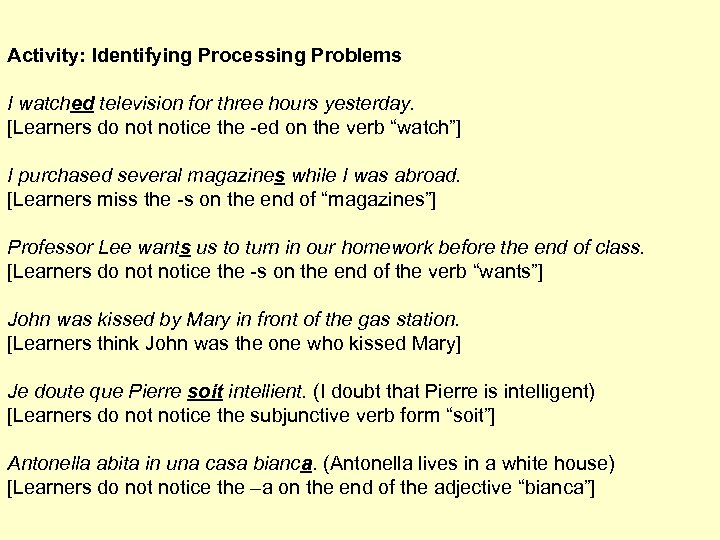 Activity: Identifying Processing Problems I watched television for three hours yesterday. [Learners do notice the ed on the verb “watch”] I purchased several magazines while I was abroad. [Learners miss the s on the end of “magazines”] Professor Lee wants us to turn in our homework before the end of class. [Learners do notice the s on the end of the verb “wants”] John was kissed by Mary in front of the gas station. [Learners think John was the one who kissed Mary] Je doute que Pierre soit intellient. (I doubt that Pierre is intelligent) [Learners do notice the subjunctive verb form “soit”] Antonella abita in una casa bianca. (Antonella lives in a white house) [Learners do notice the –a on the end of the adjective “bianca”]
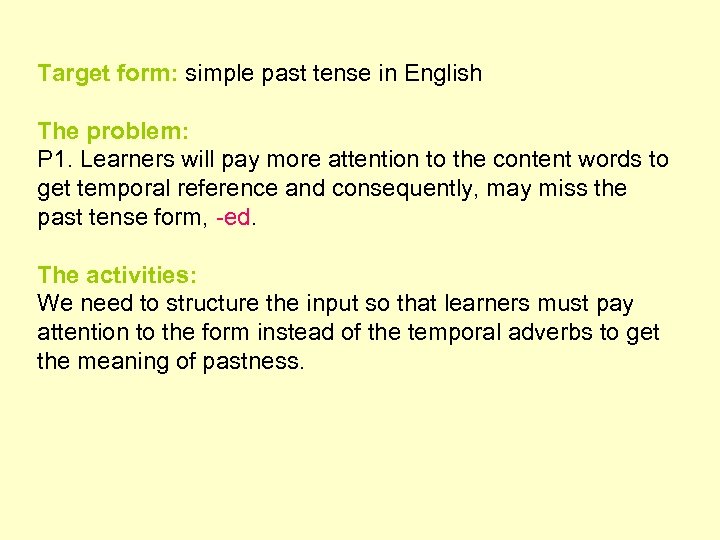 Target form: simple past tense in English The problem: P 1. Learners will pay more attention to the content words to get temporal reference and consequently, may miss the past tense form, ed. The activities: We need to structure the input so that learners must pay attention to the form instead of the temporal adverbs to get the meaning of pastness.
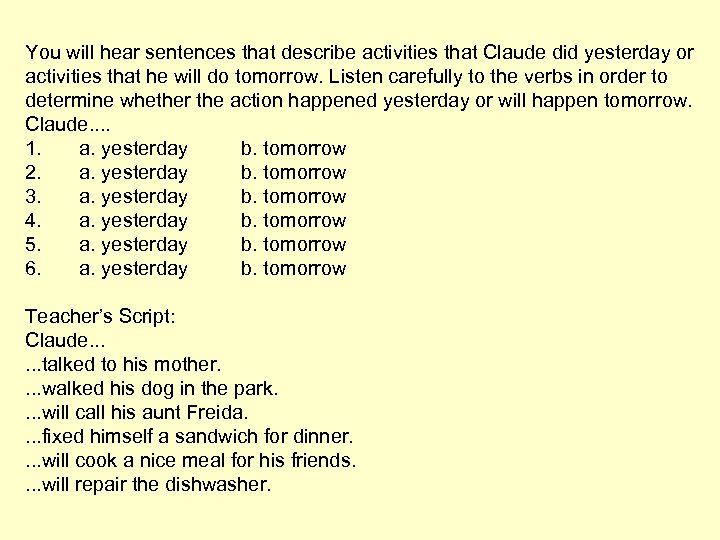 You will hear sentences that describe activities that Claude did yesterday or activities that he will do tomorrow. Listen carefully to the verbs in order to determine whether the action happened yesterday or will happen tomorrow. Claude. . 1. a. yesterday b. tomorrow 2. a. yesterday b. tomorrow 3. a. yesterday b. tomorrow 4. a. yesterday b. tomorrow 5. a. yesterday b. tomorrow 6. a. yesterday b. tomorrow Teacher’s Script: Claude. . . talked to his mother. . walked his dog in the park. . will call his aunt Freida. . fixed himself a sandwich for dinner. . will cook a nice meal for his friends. . will repair the dishwasher.
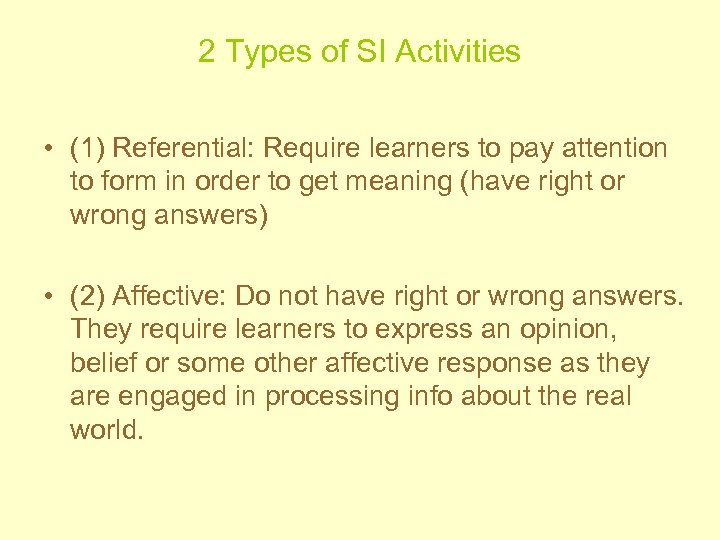 2 Types of SI Activities • (1) Referential: Require learners to pay attention to form in order to get meaning (have right or wrong answers) • (2) Affective: Do not have right or wrong answers. They require learners to express an opinion, belief or some other affective response as they are engaged in processing info about the real world.
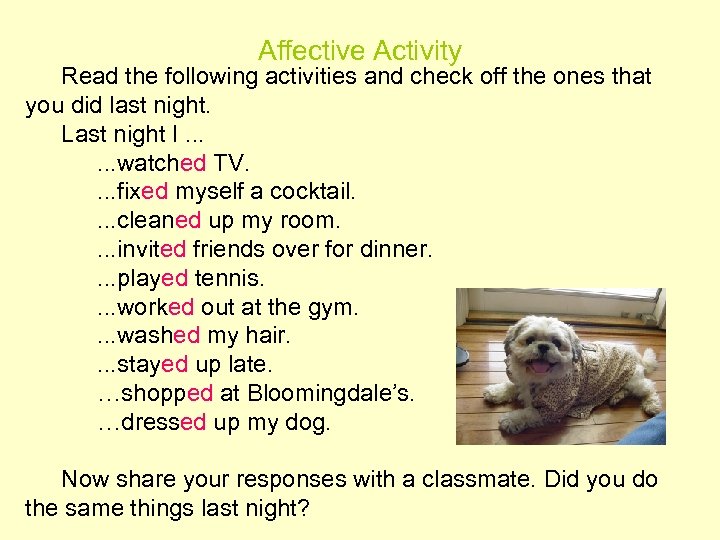 Affective Activity Read the following activities and check off the ones that you did last night. Last night I. . . watched TV. . fixed myself a cocktail. . cleaned up my room. . invited friends over for dinner. . played tennis. . worked out at the gym. . washed my hair. . stayed up late. …shopped at Bloomingdale’s. …dressed up my dog. Now share your responses with a classmate. Did you do the same things last night?
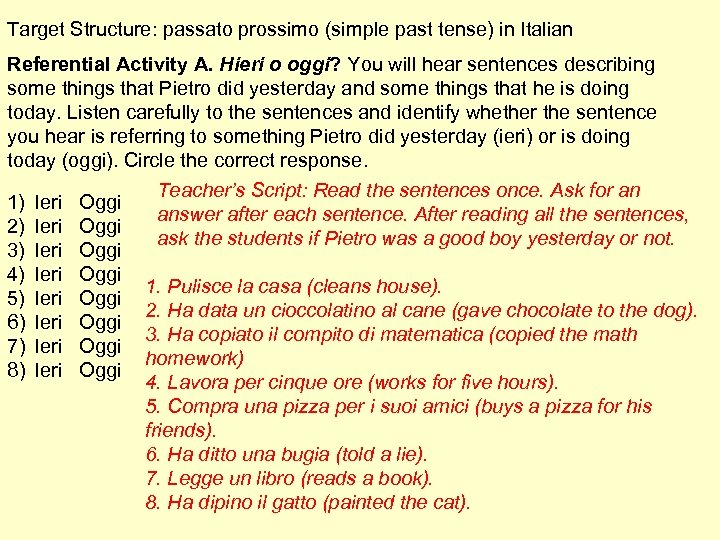 Target Structure: passato prossimo (simple past tense) in Italian Referential Activity A. Hieri o oggi? You will hear sentences describing some things that Pietro did yesterday and some things that he is doing today. Listen carefully to the sentences and identify whether the sentence you hear is referring to something Pietro did yesterday (ieri) or is doing today (oggi). Circle the correct response. 1) 2) 3) 4) 5) 6) 7) 8) Ieri Ieri Oggi Oggi Teacher’s Script: Read the sentences once. Ask for an answer after each sentence. After reading all the sentences, ask the students if Pietro was a good boy yesterday or not. 1. Pulisce la casa (cleans house). 2. Ha data un cioccolatino al cane (gave chocolate to the dog). 3. Ha copiato il compito di matematica (copied the math homework) 4. Lavora per cinque ore (works for five hours). 5. Compra una pizza per i suoi amici (buys a pizza for his friends). 6. Ha ditto una bugia (told a lie). 7. Legge un libro (reads a book). 8. Ha dipino il gatto (painted the cat).
 Affective Activity: Activity B. Instant Messenger. You are on Instant Messenger with your mother and she asks you the usual questions to find out what you did yesterday. Below is a list of her customary questions. Simply write her an IM back for each question responding by yes (sì) or no based on what you actually did yesterday. la vostro madre: voi: la vostro madre: voi: Hai fatto colazione (Did you have breakfast)? _____ Hai bevuto un cappuccino (Did you drink a capuccino)? _______ Hai letto il giornale (Did you read the paper)? _______ Hai mangiato da Mc. Donald’s (Did you eat at Mc. D’s)? _______ Hai guardato la TV (Did you watch TV)? ______ Compare your answers with a classmate. Whose mother would be prouder?
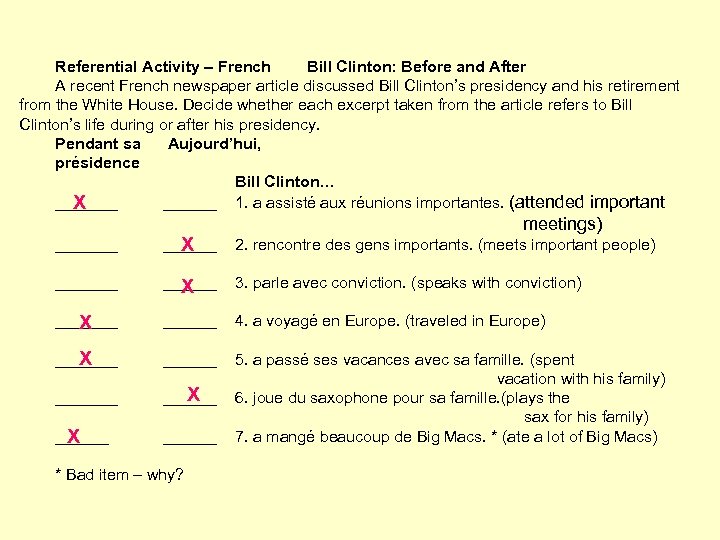 Referential Activity – French Bill Clinton: Before and After A recent French newspaper article discussed Bill Clinton’s presidency and his retirement from the White House. Decide whether each excerpt taken from the article refers to Bill Clinton’s life during or after his presidency. Pendant sa Aujourd’hui, présidence Bill Clinton… _______ 1. a assisté aux réunions importantes. (attended important X meetings) _______ X 2. rencontre des gens importants. (meets important people) _______ X 3. parle avec conviction. (speaks with conviction) _______ X ______ 4. a voyagé en Europe. (traveled in Europe) _______ X ______ 5. a passé ses vacances avec sa famille. (spent vacation with his family) 6. joue du saxophone pour sa famille. (plays the sax for his family) 7. a mangé beaucoup de Big Macs. * (ate a lot of Big Macs) * Bad item – why?
 Target Structure: Adjective Agreement in French/Italian The processing problem is low communicative value. Adjectives in French/Italian must agree in number and gender to the noun they modify (une femme intelligente). The agreement, however, does not contribute any meaning. The following activities were created to force learners to rely on the adjective agreement to establish whether the sentence is referring to a man or a woman.
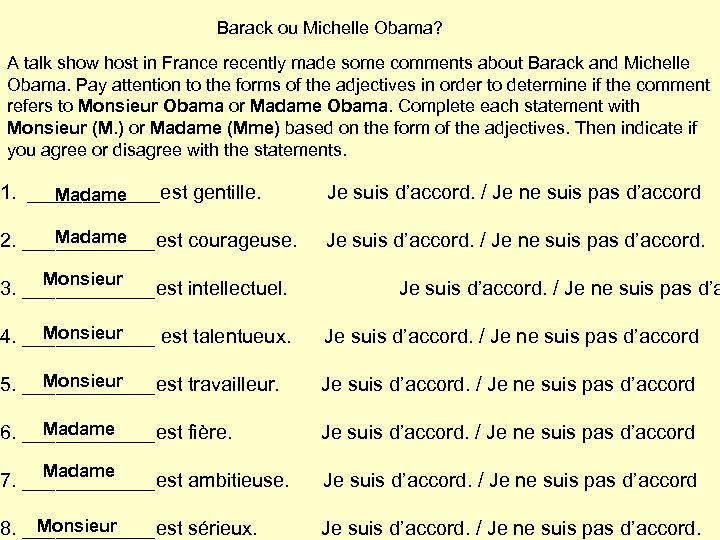 Barack ou Michelle Obama? A talk show host in France recently made some comments about Barack and Michelle Obama. Pay attention to the forms of the adjectives in order to determine if the comment refers to Monsieur Obama or Madame Obama. Complete each statement with Monsieur (M. ) or Madame (Mme) based on the form of the adjectives. Then indicate if you agree or disagree with the statements. 1. ______est gentille. Madame Je suis d’accord. / Je ne suis pas d’accord Madame 2. ______est courageuse. Je suis d’accord. / Je ne suis pas d’accord. Monsieur 3. ______est intellectuel. Je suis d’accord. / Je ne suis pas d’a Monsieur 4. ______ est talentueux. Je suis d’accord. / Je ne suis pas d’accord Monsieur 5. ______est travailleur. Je suis d’accord. / Je ne suis pas d’accord Madame 6. ______est fière. Je suis d’accord. / Je ne suis pas d’accord Madame 7. ______est ambitieuse. Je suis d’accord. / Je ne suis pas d’accord Monsieur 8. ______est sérieux. Je suis d’accord. / Je ne suis pas d’accord.
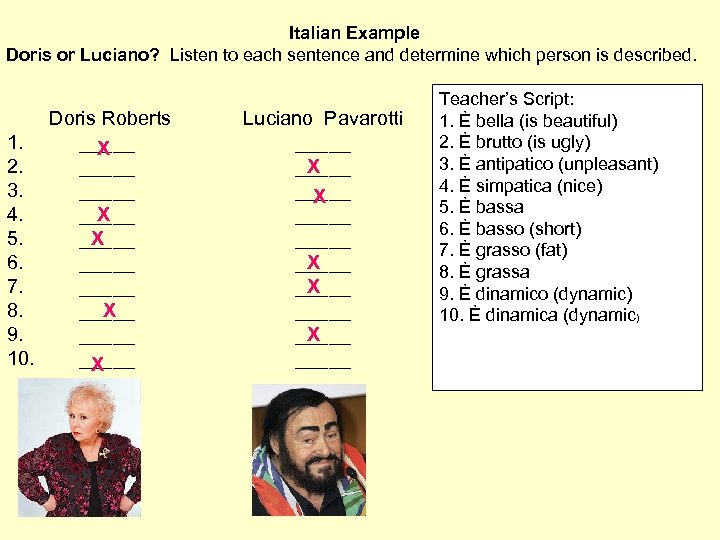 Italian Example Doris or Luciano? Listen to each sentence and determine which person is described. Teacher’s Script: Doris Roberts Luciano Pavarotti 1. È bella (is beautiful) 2. È brutto (is ugly) 1. _____ X 3. È antipatico (unpleasant) X 2. _____ 4. È simpatica (nice) 3. _____ X 5. È bassa X 4. _____ 6. È basso (short) X 5. _____ 7. È grasso (fat) X 6. _____ 8. È grassa X 7. _____ 9. È dinamico (dynamic) X 8. _____ 10. È dinamica (dynamic) 9. 10. _____ X X _____
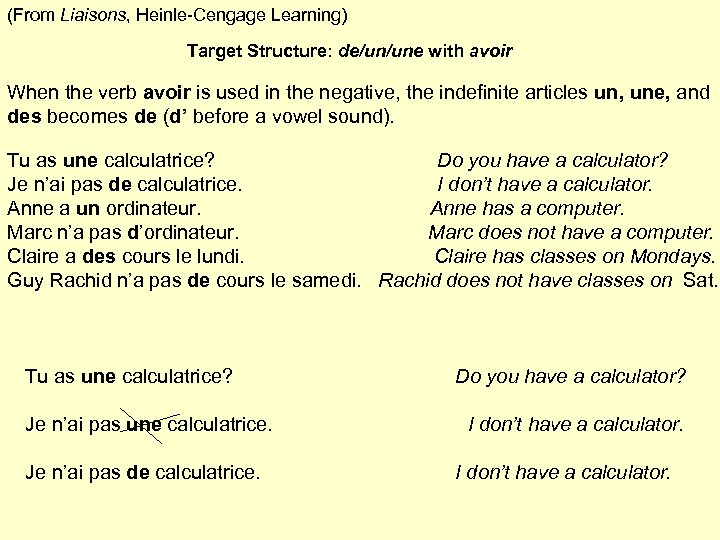 (From Liaisons, Heinle Cengage Learning) Target Structure: de/un/une with avoir When the verb avoir is used in the negative, the indefinite articles un, une, and des becomes de (d’ before a vowel sound). Tu as une calculatrice? Do you have a calculator? Je n’ai pas de calculatrice. I don’t have a calculator. Anne a un ordinateur. Anne has a computer. Marc n’a pas d’ordinateur. Marc does not have a computer. Claire a des cours le lundi. Claire has classes on Mondays. Guy Rachid n’a pas de cours le samedi. Rachid does not have classes on Sat. Tu as une calculatrice? Do you have a calculator? Je n’ai pas une calculatrice. I don’t have a calculator. Je n’ai pas de calculatrice. I don’t have a calculator.
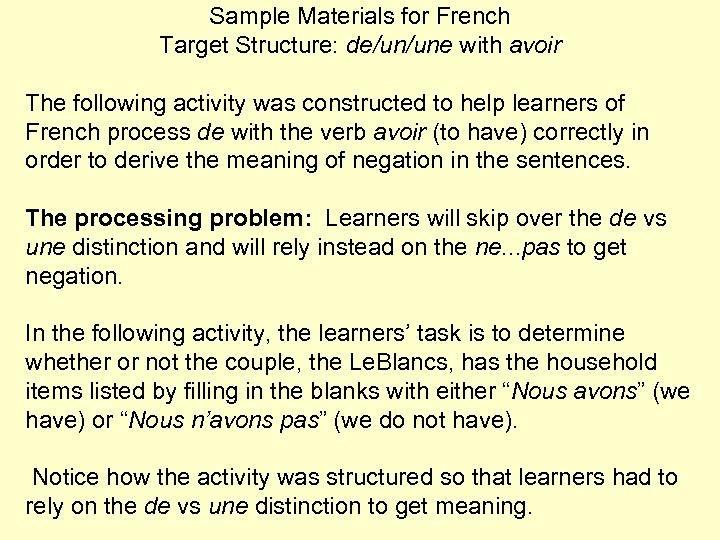 Sample Materials for French Target Structure: de/un/une with avoir The following activity was constructed to help learners of French process de with the verb avoir (to have) correctly in order to derive the meaning of negation in the sentences. The processing problem: Learners will skip over the de vs une distinction and will rely instead on the ne. . . pas to get negation. In the following activity, the learners’ task is to determine whether or not the couple, the Le. Blancs, has the household items listed by filling in the blanks with either “Nous avons” (we have) or “Nous n’avons pas” (we do not have). Notice how the activity was structured so that learners had to rely on the de vs une distinction to get meaning.
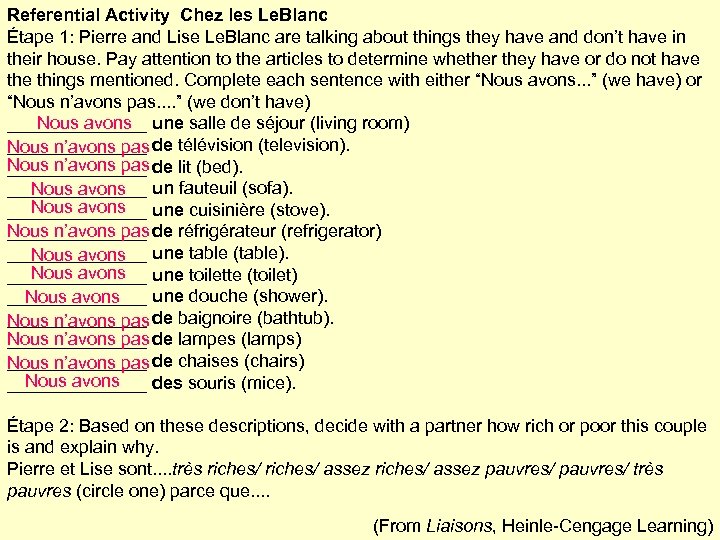 Referential Activity Chez les Le. Blanc Étape 1: Pierre and Lise Le. Blanc are talking about things they have and don’t have in their house. Pay attention to the articles to determine whether they have or do not have things mentioned. Complete each sentence with either “Nous avons. . . ” (we have) or “Nous n’avons pas. . ” (we don’t have) Nous avons _______ une salle de séjour (living room) _______ de télévision (television). Nous n’avons pas _______ de lit (bed). _______ un fauteuil (sofa). Nous avons _______ une cuisinière (stove). Nous n’avons pas _______ de réfrigérateur (refrigerator) _______ une table (table). Nous avons _______ une toilette (toilet) _______ une douche (shower). Nous avons _______ de baignoire (bathtub). Nous n’avons pas _______ de lampes (lamps) _______ de chaises (chairs) Nous n’avons pas Nous avons _______ des souris (mice). Étape 2: Based on these descriptions, decide with a partner how rich or poor this couple is and explain why. Pierre et Lise sont. . très riches/ assez pauvres/ très pauvres (circle one) parce que. . (From Liaisons, Heinle Cengage Learning)
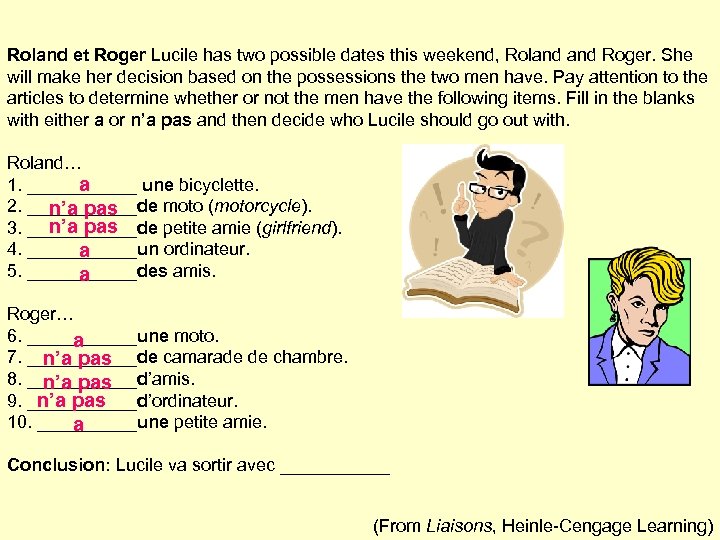 Roland et Roger Lucile has two possible dates this weekend, Roland Roger. She will make her decision based on the possessions the two men have. Pay attention to the articles to determine whether or not the men have the following items. Fill in the blanks with either a or n’a pas and then decide who Lucile should go out with. Roland… 1. ______ une bicyclette. a 2. ______de moto (motorcycle). n’a pas 3. ______de petite amie (girlfriend). 4. ______un ordinateur. a 5. ______des amis. a Roger… 6. ______une moto. a 7. ______de camarade de chambre. n’a pas 8. ______d’amis. n’a pas 9. ______d’ordinateur. n’a pas 10. _____une petite amie. a Conclusion: Lucile va sortir avec ______ (From Liaisons, Heinle Cengage Learning)
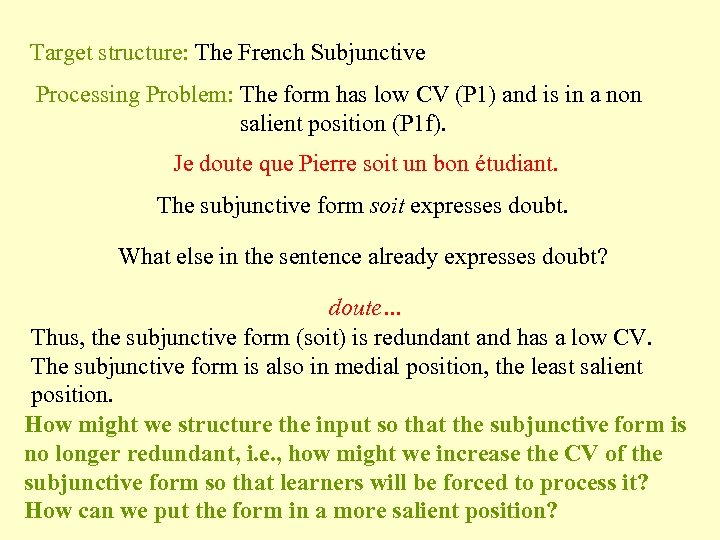 Target structure: The French Subjunctive Processing Problem: The form has low CV (P 1) and is in a non salient position (P 1 f). Je doute que Pierre soit un bon étudiant. The subjunctive form soit expresses doubt. What else in the sentence already expresses doubt? doute… Thus, the subjunctive form (soit) is redundant and has a low CV. The subjunctive form is also in medial position, the least salient position. How might we structure the input so that the subjunctive form is no longer redundant, i. e. , how might we increase the CV of the subjunctive form so that learners will be forced to process it? How can we put the form in a more salient position?
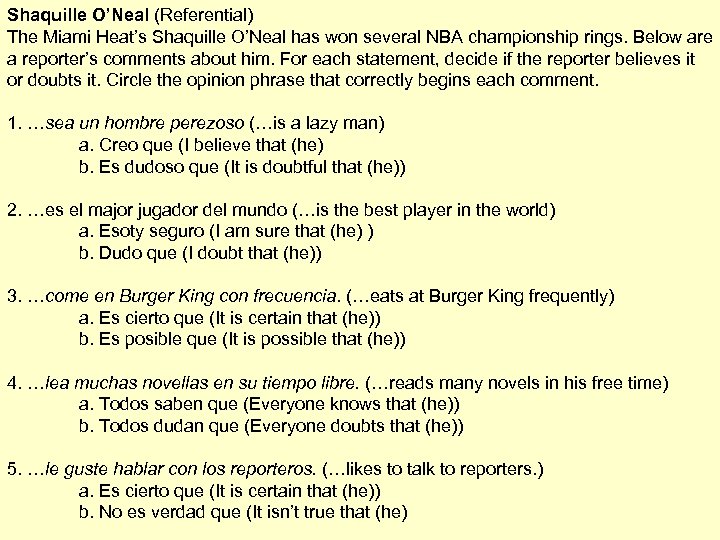 Shaquille O’Neal (Referential) The Miami Heat’s Shaquille O’Neal has won several NBA championship rings. Below are a reporter’s comments about him. For each statement, decide if the reporter believes it or doubts it. Circle the opinion phrase that correctly begins each comment. 1. …sea un hombre perezoso (…is a lazy man) a. Creo que (I believe that (he) b. Es dudoso que (It is doubtful that (he)) 2. …es el major jugador del mundo (…is the best player in the world) a. Esoty seguro (I am sure that (he) ) b. Dudo que (I doubt that (he)) 3. …come en Burger King con frecuencia. (…eats at Burger King frequently) a. Es cierto que (It is certain that (he)) b. Es posible que (It is possible that (he)) 4. …lea muchas novellas en su tiempo libre. (…reads many novels in his free time) a. Todos saben que (Everyone knows that (he)) b. Todos dudan que (Everyone doubts that (he)) 5. …le guste hablar con los reporteros. (…likes to talk to reporters. ) a. Es cierto que (It is certain that (he)) b. No es verdad que (It isn’t true that (he)
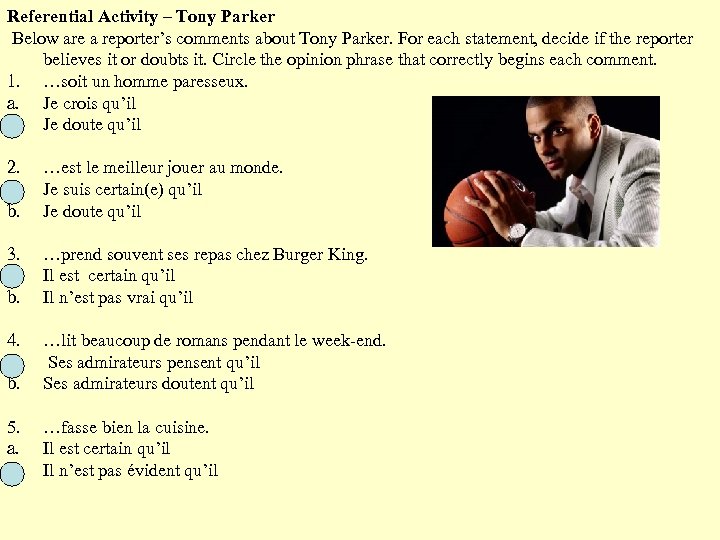 Referential Activity – Tony Parker Below are a reporter’s comments about Tony Parker. For each statement, decide if the reporter believes it or doubts it. Circle the opinion phrase that correctly begins each comment. 1. …soit un homme paresseux. a. Je crois qu’il b. Je doute qu’il 2. a. b. 3. a. b. 4. a. b. 5. a. b. …est le meilleur jouer au monde. Je suis certain(e) qu’il Je doute qu’il …prend souvent ses repas chez Burger King. Il est certain qu’il Il n’est pas vrai qu’il …lit beaucoup de romans pendant le week-end. Ses admirateurs pensent qu’il Ses admirateurs doutent qu’il …fasse bien la cuisine. Il est certain qu’il Il n’est pas évident qu’il
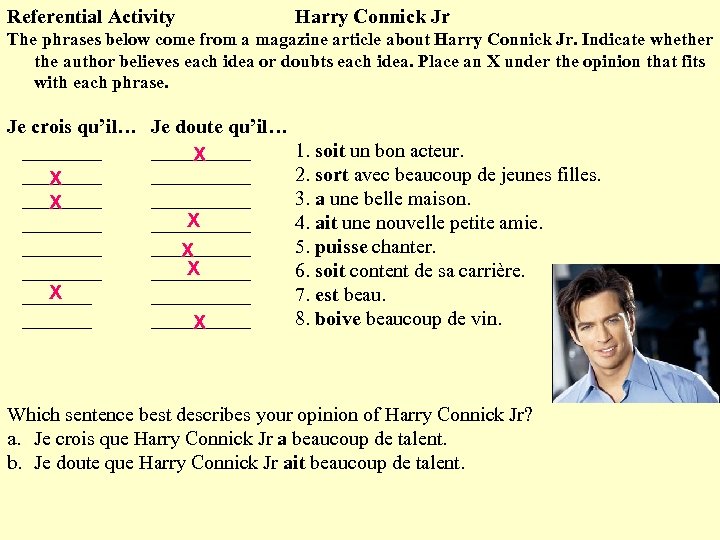 Referential Activity Harry Connick Jr The phrases below come from a magazine article about Harry Connick Jr. Indicate whether the author believes each idea or doubts each idea. Place an X under the opinion that fits with each phrase. Je crois qu’il… ________ X ________ X _______ Je doute qu’il… __________ X __________ _____ X 1. soit un bon acteur. 2. sort avec beaucoup de jeunes filles. 3. a une belle maison. 4. ait une nouvelle petite amie. 5. puisse chanter. 6. soit content de sa carrière. 7. est beau. 8. boive beaucoup de vin. Which sentence best describes your opinion of Harry Connick Jr? a. Je crois que Harry Connick Jr a beaucoup de talent. b. Je doute que Harry Connick Jr ait beaucoup de talent.
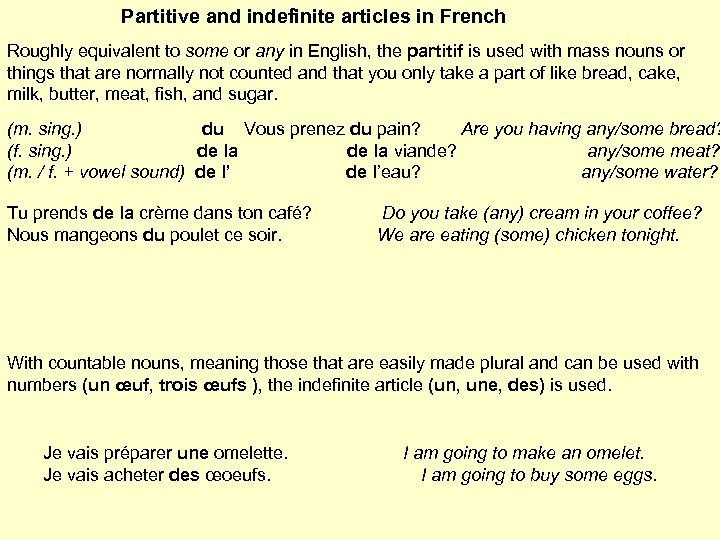 Partitive and indefinite articles in French Roughly equivalent to some or any in English, the partitif is used with mass nouns or things that are normally not counted and that you only take a part of like bread, cake, milk, butter, meat, fish, and sugar. (m. sing. ) du Vous prenez du pain? Are you having any/some bread? (f. sing. ) de la viande? any/some meat? (m. / f. + vowel sound) de l’ de l’eau? any/some water? Tu prends de la crème dans ton café? Do you take (any) cream in your coffee? Nous mangeons du poulet ce soir. We are eating (some) chicken tonight. With countable nouns, meaning those that are easily made plural and can be used with numbers (un œuf, trois œufs ), the indefinite article (un, une, des) is used. Je vais préparer une omelette. I am going to make an omelet. Je vais acheter des œoeufs. I am going to buy some eggs.
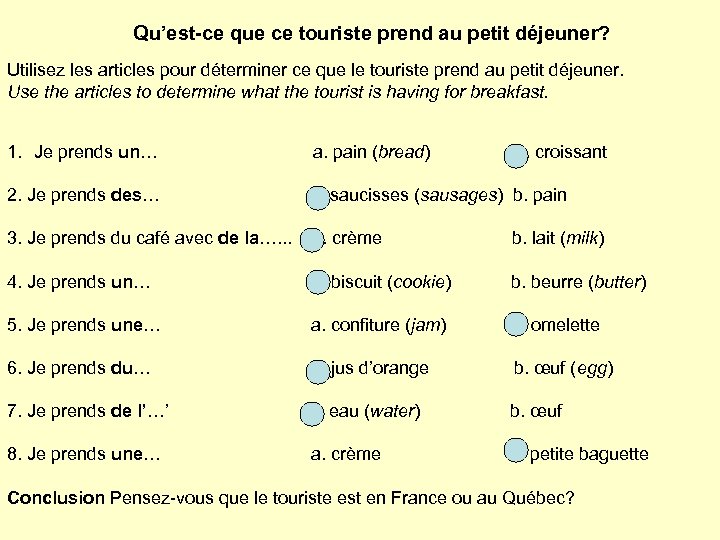 Qu’est-ce que ce touriste prend au petit déjeuner? Utilisez les articles pour déterminer ce que le touriste prend au petit déjeuner. Use the articles to determine what the tourist is having for breakfast. 1. Je prends un… a. pain (bread) b. croissant 2. Je prends des… a. saucisses (sausages) b. pain 3. Je prends du café avec de la…. . . a. crème b. lait (milk) 4. Je prends un… a. biscuit (cookie) b. beurre (butter) 5. Je prends une… a. confiture (jam) b. omelette 6. Je prends du… a. jus d’orange b. œuf (egg) 7. Je prends de l’…’ a. eau (water) b. œuf 8. Je prends une… a. crème b. petite baguette Conclusion Pensez vous que le touriste est en France ou au Québec?
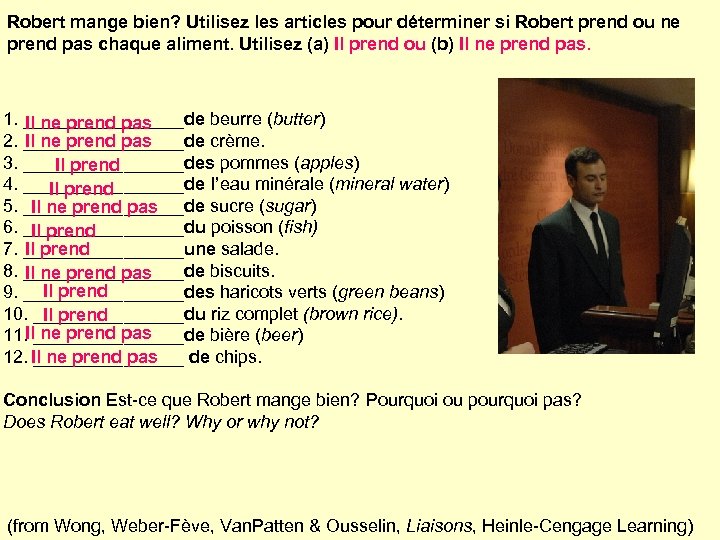 Robert mange bien? Utilisez les articles pour déterminer si Robert prend ou ne prend pas chaque aliment. Utilisez (a) Il prend ou (b) Il ne prend pas. 1. ________de beurre (butter) Il ne prend pas 2. ________de crème. Il ne prend pas 3. ________des pommes (apples) Il prend 4. ________de l’eau minérale (mineral water) Il prend 5. ________de sucre (sugar) Il ne prend pas 6. ________du poisson (fish) Il prend 7. ________une salade. Il prend 8. ________de biscuits. Il ne prend pas Il prend 9. ________des haricots verts (green beans) 10. ________du riz complet (brown rice). Il prend Il ne prend pas 11. ________de bière (beer) 12. ________ de chips. Il ne prend pas Conclusion Est ce que Robert mange bien? Pourquoi ou pourquoi pas? Does Robert eat well? Why or why not? (from Wong, Weber Fève, Van. Patten & Ousselin, Liaisons, Heinle Cengage Learning)
 ACTIVITY In small groups, create an SI activity for 3 rd person singular –s verb forms. Why do nonnative speakers of English sometimes fail to process the –s at the end of 3 rd person singular verb forms? Ex. He reads the newspaper everyday. * He read the newspaper everyday.
 Target Structure: 3 rd person singular –s verb forms The processing problem with this target structure is low communicative value. Learners of English have a tendency to drop the –s when the verb is in the third person singular form because the –s is redundant. The meaning of third person singular is already expressed by the subject, in many cases, the personal pronouns he, she or it. The following activities were designed so that learners are forced to pay attention to verb forms ( i. e. , s or the absence of –s), in order to get meaning.
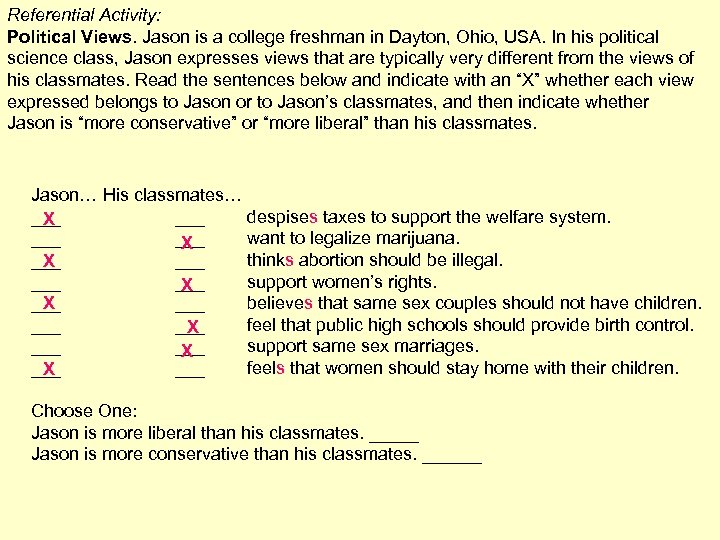 Referential Activity: Political Views. Jason is a college freshman in Dayton, Ohio, USA. In his political science class, Jason expresses views that are typically very different from the views of his classmates. Read the sentences below and indicate with an “X” whether each view expressed belongs to Jason or to Jason’s classmates, and then indicate whether Jason is “more conservative” or “more liberal” than his classmates. Jason… His classmates… ___ despises taxes to support the welfare system. X ___ want to legalize marijuana. X ___ thinks abortion should be illegal. X ___ support women’s rights. X X ___ believes that same sex couples should not have children. ___ feel that public high schools should provide birth control. X ___ support same sex marriages. X ___ feels that women should stay home with their children. X Choose One: Jason is more liberal than his classmates. _____ Jason is more conservative than his classmates. ______
 Affective Activity: The Typical Student. Read the following sentences. Are they true for a typical student at your school? The typical student. . . 1. gets up at 7: 00 a. m. 2. skips breakfast. 3. makes his bed everyday. 4. skips at least one class a week. 5. studies in the library, not at home. 6. works part time. 7. cooks dinner every evening. 8. watches TV at night. 9. goes to bed after midnight. Your instructor will now read each statement and then ask you to raise your hand if you marked it as true. Someone should keep track of the responses on the board.
 Do SI activities work? Research results are quite robust for the languages investigated. • • • • Benati (2001, 2004) [Italian] Benati & Lee (2009) [Italian, ESL] Cadierno (1995) [Spanish] Cheng (1995) [Spanish] Farley (2004) [Spanish] Sanz & Morgan Short (2002) [Spanish] Van. Patten & Cadierno (1993) [Spanish] Van. Patten and Fernandez (2004) [Spanish] Van. Patten & Oikkenon (1996) [Spanish] Van. Patten & Wong (2004) [French] Wong (2004 b) [French] Wong (2008) [French] and many others
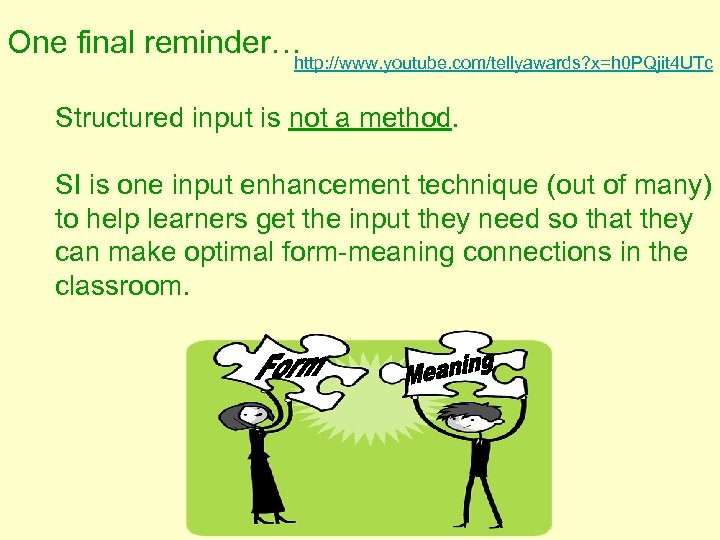 One final reminder… http: //www. youtube. com/tellyawards? x=h 0 PQjit 4 UTc Structured input is not a method. SI is one input enhancement technique (out of many) to help learners get the input they need so that they can make optimal form meaning connections in the classroom.