


 Скачать презентацию Workshop on Advanced Technologies in Radiation Oncology Minesh
1dbf57a2000da31912ad3ce4458a0cbb.ppt
- Количество слайдов: 43
 Workshop on Advanced Technologies in Radiation Oncology Minesh Mehta
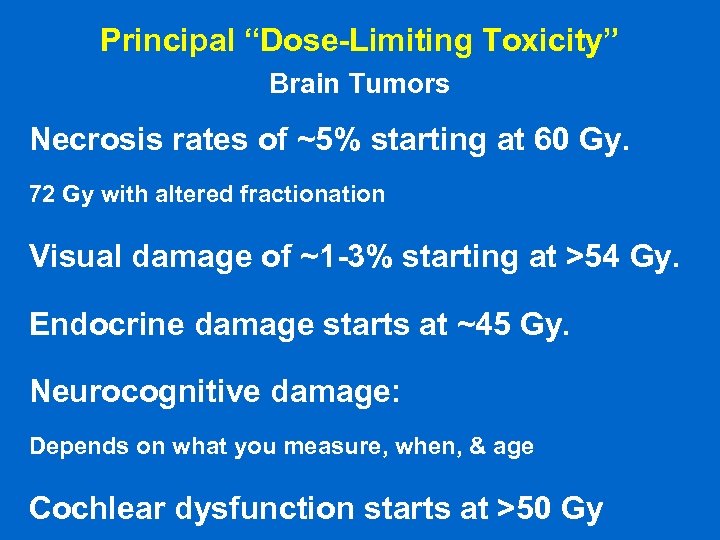 Principal “Dose-Limiting Toxicity” Brain Tumors Necrosis rates of ~5% starting at 60 Gy. 72 Gy with altered fractionation Visual damage of ~1 -3% starting at >54 Gy. Endocrine damage starts at ~45 Gy. Neurocognitive damage: Depends on what you measure, when, & age Cochlear dysfunction starts at >50 Gy
 Evidence Levels l Logically, few of the toxicity data come from phase III trials with toxicity endpoints. l Most come from phase I trials, or “institutional experiences” l Numerous variables need to be teased out separately, e. g. , age, volume, fractionation, comorbidities, otherapies, etc.
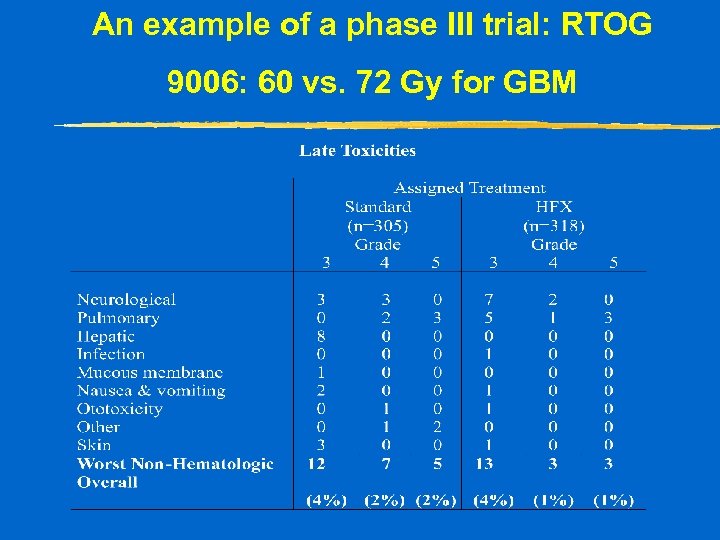 An example of a phase III trial: RTOG 9006: 60 vs. 72 Gy for GBM
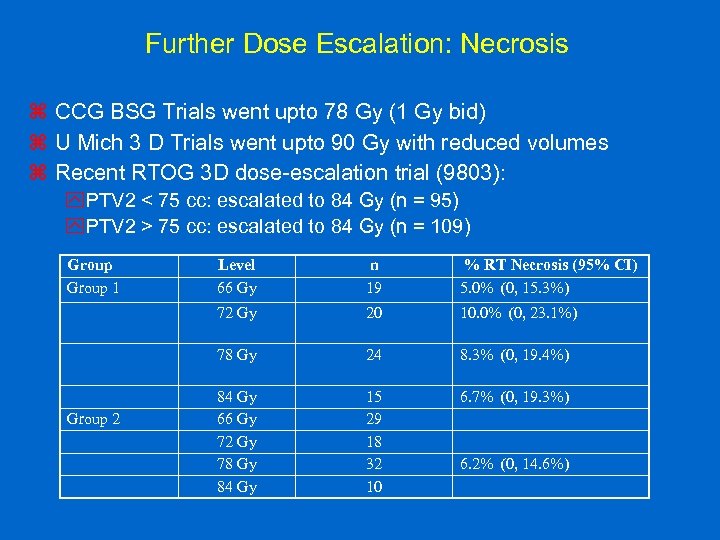 Further Dose Escalation: Necrosis z CCG BSG Trials went upto 78 Gy (1 Gy bid) z U Mich 3 D Trials went upto 90 Gy with reduced volumes z Recent RTOG 3 D dose-escalation trial (9803): y. PTV 2 < 75 cc: escalated to 84 Gy (n = 95) y. PTV 2 > 75 cc: escalated to 84 Gy (n = 109) Group 1 n 19 % RT Necrosis (95% CI) 5. 0% (0, 15. 3%) 72 Gy 20 10. 0% (0, 23. 1%) 78 Gy Group 2 Level 66 Gy 24 8. 3% (0, 19. 4%) 84 Gy 66 Gy 72 Gy 78 Gy 84 Gy 15 29 18 32 10 6. 7% (0, 19. 3%) 6. 2% (0, 14. 6%)
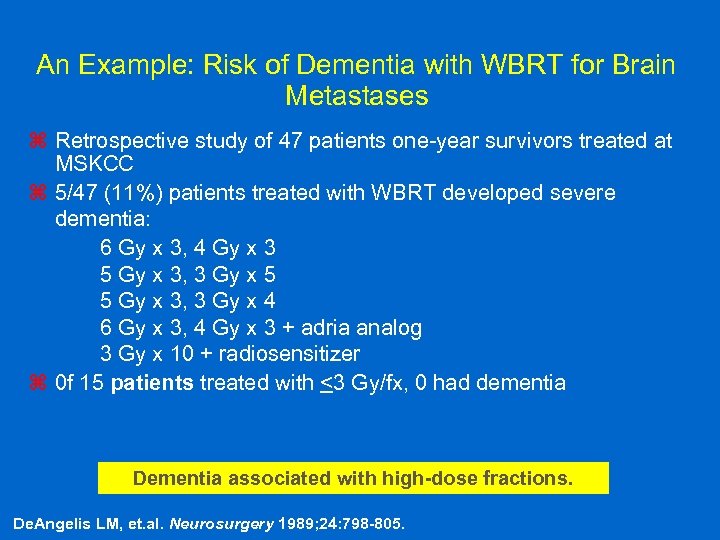 An Example: Risk of Dementia with WBRT for Brain Metastases z Retrospective study of 47 patients one-year survivors treated at MSKCC z 5/47 (11%) patients treated with WBRT developed severe dementia: 6 Gy x 3, 4 Gy x 3 5 Gy x 3, 3 Gy x 5 5 Gy x 3, 3 Gy x 4 6 Gy x 3, 4 Gy x 3 + adria analog 3 Gy x 10 + radiosensitizer z 0 f 15 patients treated with <3 Gy/fx, 0 had dementia Dementia associated with high-dose fractions. De. Angelis LM, et. al. Neurosurgery 1989; 24: 798 -805.
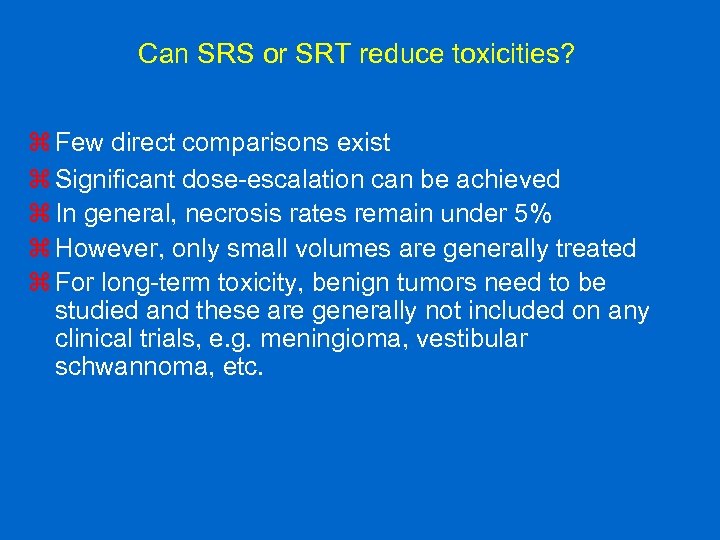 Can SRS or SRT reduce toxicities? z Few direct comparisons exist z Significant dose-escalation can be achieved z In general, necrosis rates remain under 5% z However, only small volumes are generally treated z For long-term toxicity, benign tumors need to be studied and these are generally not included on any clinical trials, e. g. meningioma, vestibular schwannoma, etc.
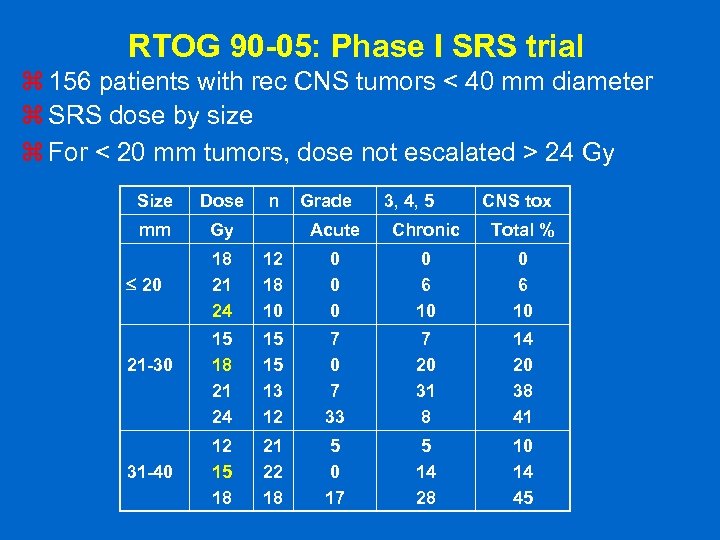 RTOG 90 -05: Phase I SRS trial z 156 patients with rec CNS tumors < 40 mm diameter z SRS dose by size z For < 20 mm tumors, dose not escalated > 24 Gy Size Dose mm Gy 20 21 -30 31 -40 n Grade 3, 4, 5 CNS tox Acute Chronic Total % 18 21 24 12 18 10 0 0 6 10 15 18 21 24 15 15 13 12 7 0 7 33 7 20 31 8 14 20 38 41 12 15 18 21 22 18 5 0 17 5 14 28 10 14 45
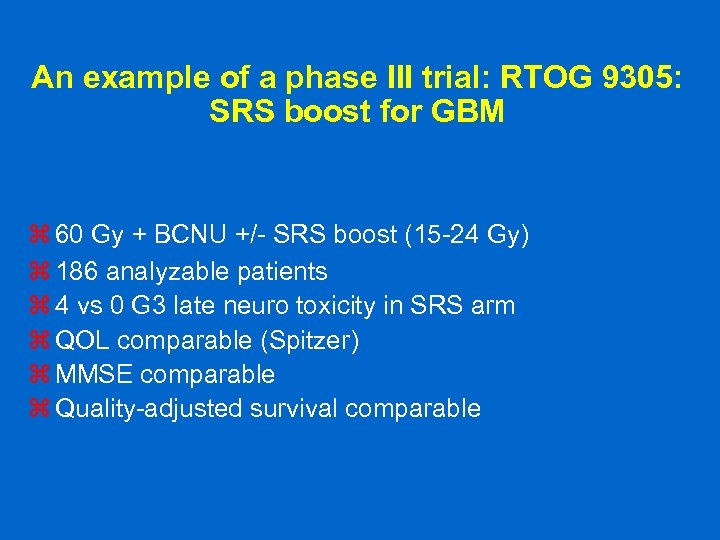 An example of a phase III trial: RTOG 9305: SRS boost for GBM z 60 Gy + BCNU +/- SRS boost (15 -24 Gy) z 186 analyzable patients z 4 vs 0 G 3 late neuro toxicity in SRS arm z QOL comparable (Spitzer) z MMSE comparable z Quality-adjusted survival comparable
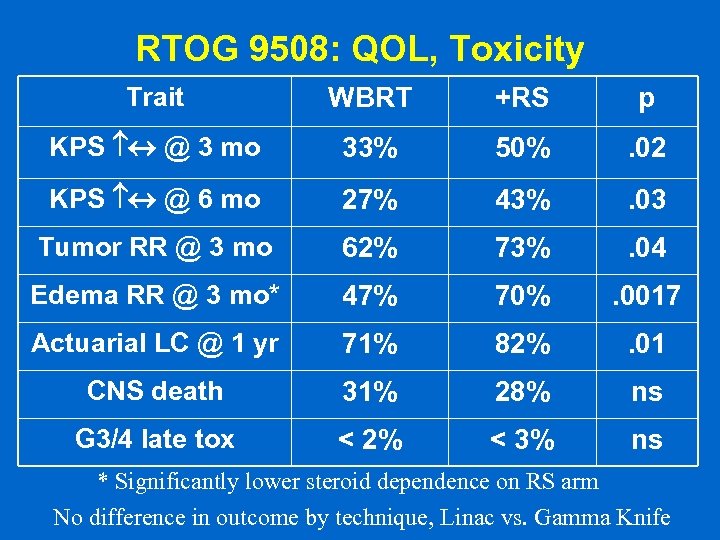 RTOG 9508: QOL, Toxicity Trait WBRT +RS p KPS @ 3 mo 33% 50% . 02 KPS @ 6 mo 27% 43% . 03 Tumor RR @ 3 mo 62% 73% . 04 Edema RR @ 3 mo* 47% 70% . 0017 Actuarial LC @ 1 yr 71% 82% . 01 CNS death 31% 28% ns G 3/4 late tox < 2% < 3% ns * Significantly lower steroid dependence on RS arm No difference in outcome by technique, Linac vs. Gamma Knife
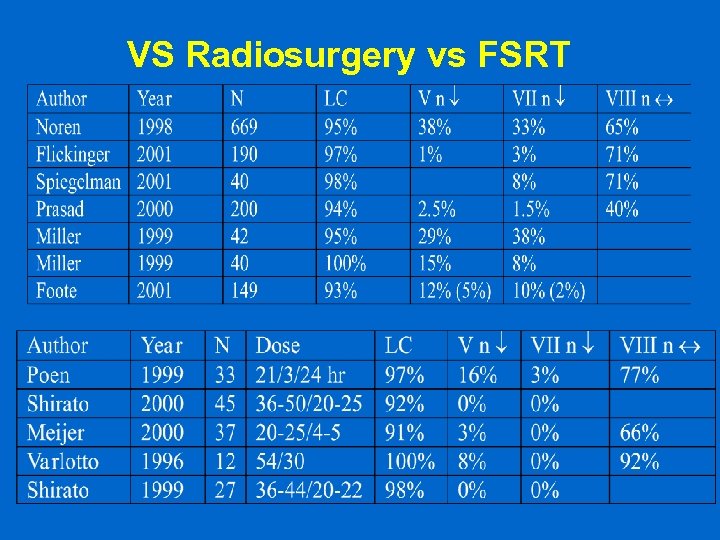 VS Radiosurgery vs FSRT
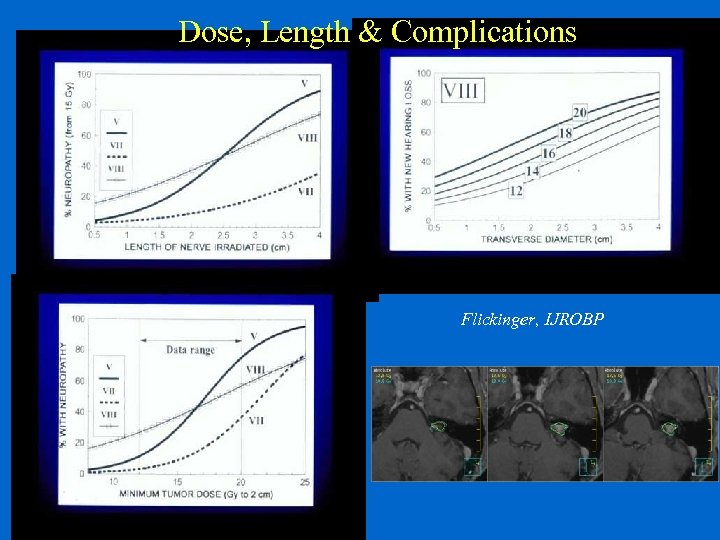 Dose, Length & Complications Flickinger, IJROBP
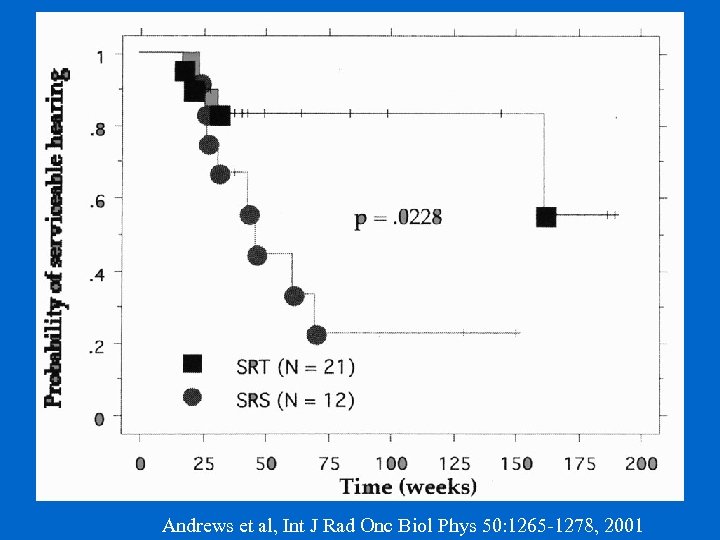 Probability of Serviceable Hearing Andrews et al, Int J Rad Onc Biol Phys 50: 1265 -1278, 2001
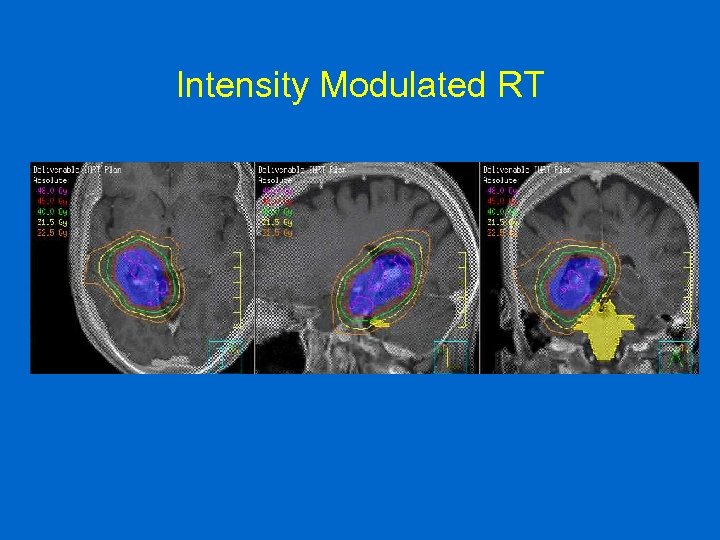 Intensity Modulated RT
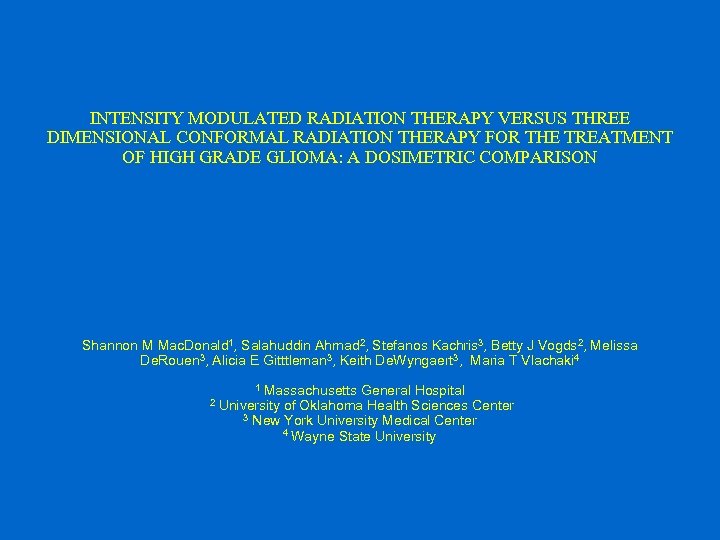 INTENSITY MODULATED RADIATION THERAPY VERSUS THREE DIMENSIONAL CONFORMAL RADIATION THERAPY FOR THE TREATMENT OF HIGH GRADE GLIOMA: A DOSIMETRIC COMPARISON Shannon M Mac. Donald 1, Salahuddin Ahmad 2, Stefanos Kachris 3, Betty J Vogds 2, Melissa De. Rouen 3, Alicia E Gitttleman 3, Keith De. Wyngaert 3, Maria T Vlachaki 4 Massachusetts General Hospital University of Oklahoma Health Sciences Center 3 New York University Medical Center 4 Wayne State University 1 2
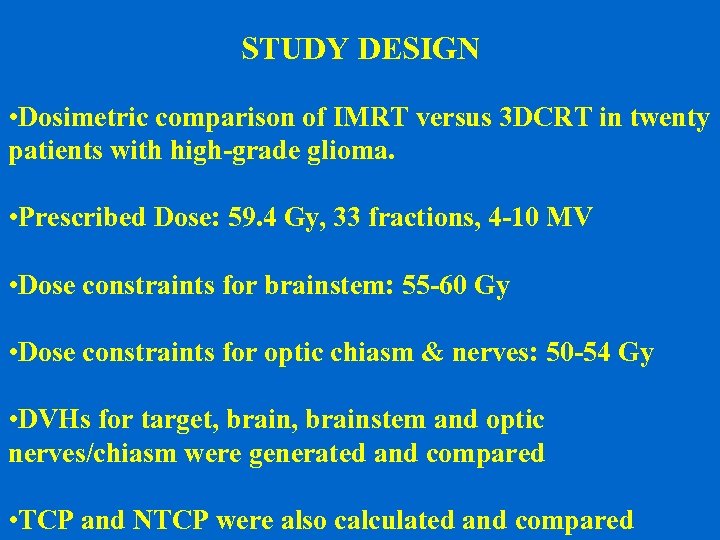 STUDY DESIGN • Dosimetric comparison of IMRT versus 3 DCRT in twenty patients with high-grade glioma. • Prescribed Dose: 59. 4 Gy, 33 fractions, 4 -10 MV • Dose constraints for brainstem: 55 -60 Gy • Dose constraints for optic chiasm & nerves: 50 -54 Gy • DVHs for target, brainstem and optic nerves/chiasm were generated and compared • TCP and NTCP were also calculated and compared
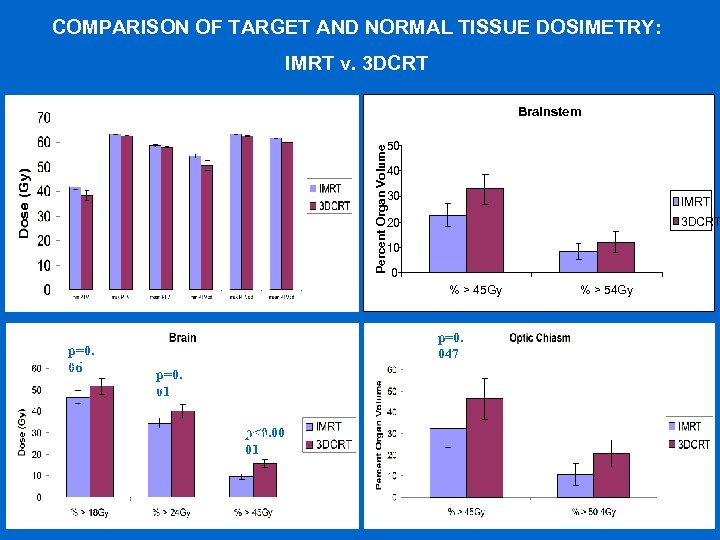 COMPARISON OF TARGET AND NORMALp=0. 0 TISSUE DOSIMETRY: IMRT v. 3 DCRT 04 Brainstem p=0. 023 p=0. 003 p≤ 0. 0001 p=0. 01 50 Percent Organ Volume p=0. 006 40 p=0. 004 30 IMRT 20 3 DCRT 10 0 % > 45 Gy p=0. 059 06 p=0. 047 p=0. 015 01 p<0. 00 p≤ 0. 0001 01 % > 54 Gy
 So, Can IMRT further reduce toxicities? z Almost no direct comparisons exist z Significantly improved DVHs can be achieved z These may be meaningful for sites such as the chiasm, pit gland, hypothalamus, hippocampus, etc. z Limited data support that cochlear sparing in the pediatric population might preserve hearing
 Compartmental Studies: Stem Cells z Subventricular zone stem cell compartment y. Remains mitotically active in adulthood y. Cells have self-renewal capacity xand differentiate into neurons or glia which xcan migrate over long distances in the brain xand are involved in repair processes after brain injury/toxicity y. In young rats, irradiation with 2 Gy produces apoptosis in the subependymal cell layer and also in the proliferating cellsin the hippocampus xwhich leads to prolonged impairment of repopulative capacity Doetsch, 1999; Hopewell, 1972; Bellinzona, 1996; Peissner, 1999; Tada, 1999
 The Role of the Hippocampus z Many patients exhibit learning/memory deficits with no pathologic changes, especially when the RT field involves the temporal lobes. z Recent work has shown that hippocampus-dependent learning and memory are strongly influenced by the activity of neural stem cells and their proliferative progeny. z The hippocampal granule cell layer undergoes continuous renewal and restructuring by the addition of new neurons. z Radiation at low doses affects the highly proliferative progenitors. A single low dose to the cranium of a mature rat is sufficient to ablate hippocampal neurogenesis. Monje ML: Radiation injury and neurogenesis. Current Opinion in Neurology. 16: 129 -34, 2003. ML
 Hippocampus Avoidance Hypothesis z. The hippocampus plays a significant role in RT induced dementia z. Doses as low as 2 Gy cause significant toxicity to the hippocampus z. Conformal avoidance of the hippocampus may help reduce neurocognitive deficits
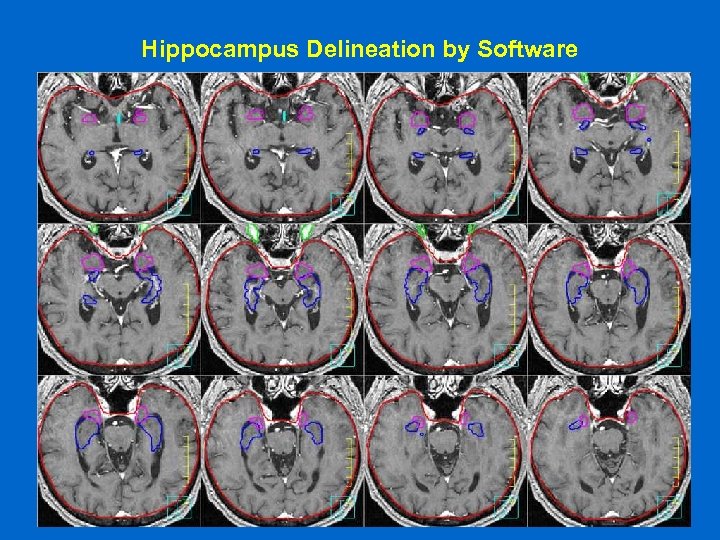 Hippocampus Delineation by Software
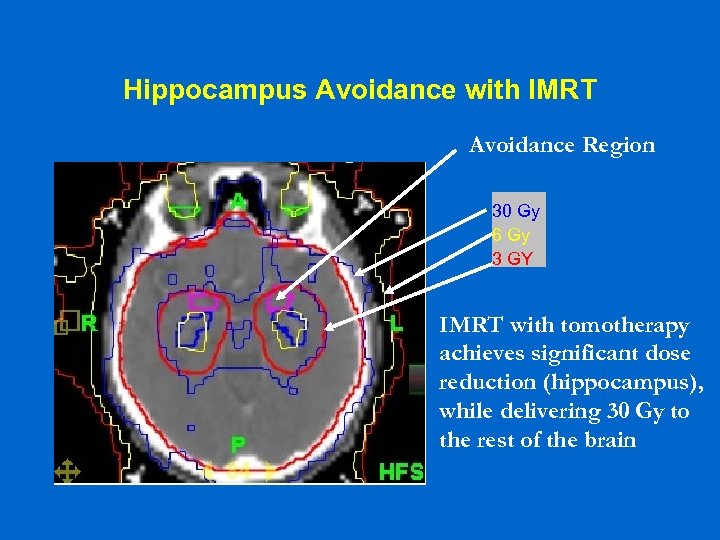 Hippocampus Avoidance with IMRT Avoidance Region 30 Gy 6 Gy 3 GY IMRT with tomotherapy achieves significant dose reduction (hippocampus), while delivering 30 Gy to the rest of the brain
 Can IGRT further reduce toxicities? z Even in the head, positioning is a significant issue z IGRT reveals this dramatically z Application of IGRT might permit more accurate dose delivery z H/N serves as a good surrogate for the brain in this regard
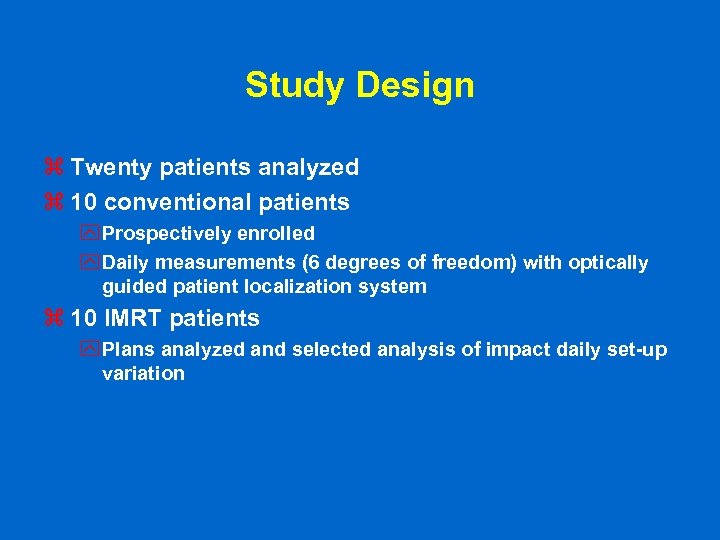 Study Design z Twenty patients analyzed z 10 conventional patients y Prospectively enrolled y Daily measurements (6 degrees of freedom) with optically guided patient localization system z 10 IMRT patients y Plans analyzed and selected analysis of impact daily set-up variation
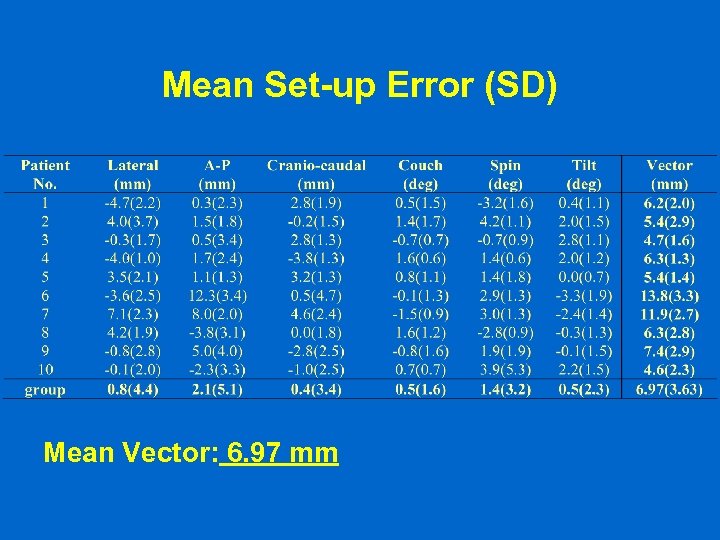 Mean Set-up Error (SD) Mean Vector: 6. 97 mm
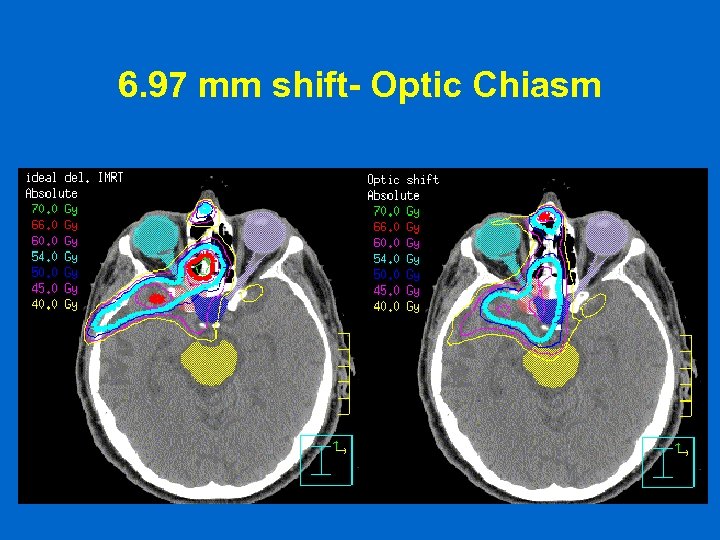 6. 97 mm shift- Optic Chiasm
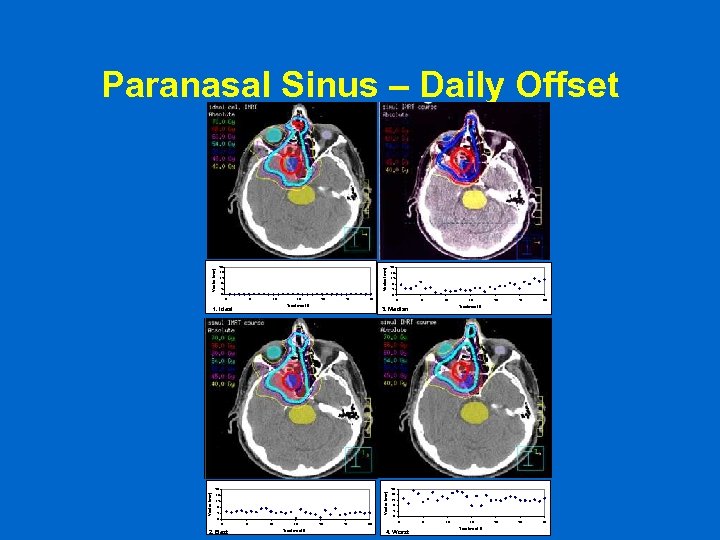 Paranasal Sinus – Daily Offset Vector (mm) 20 16 12 8 4 0 0 5 10 15 20 25 30 Treatment # 1. Ideal 0 5 10 15 20 25 30 Treatment # 3. Median 20 Vector (mm) 20 16 12 8 4 0 0 2. Best 5 10 15 Treatment # 20 25 30 16 12 8 4 0 0 4. Worst 5 10 15 Treatment #
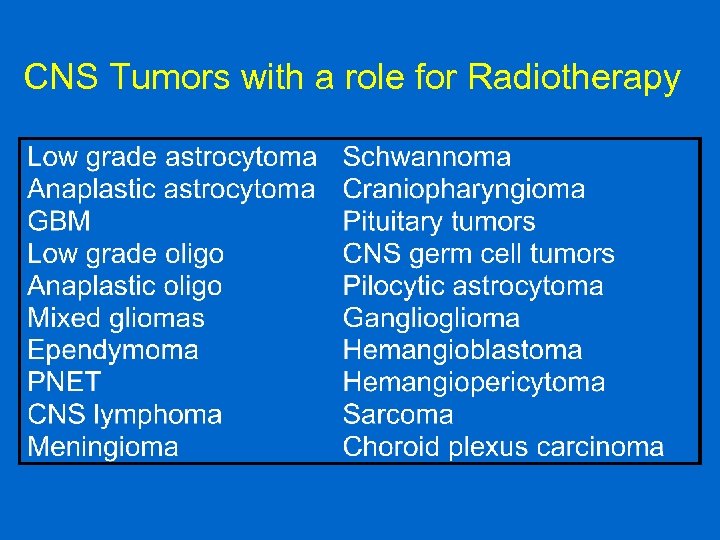 CNS Tumors with a role for Radiotherapy
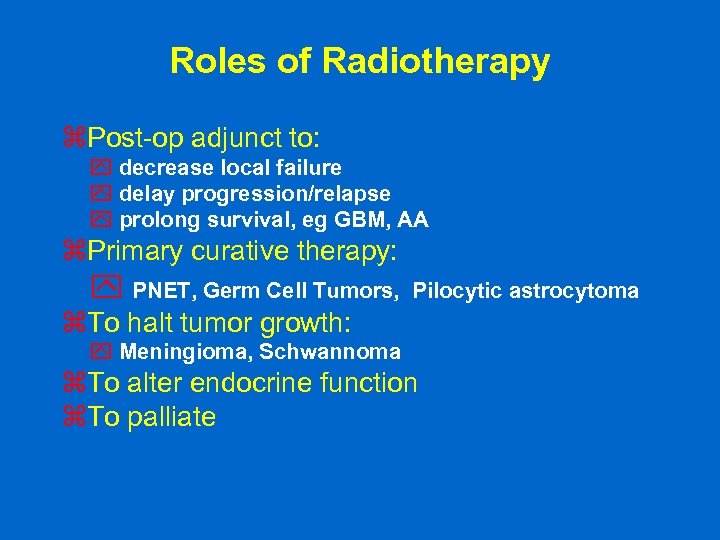 Roles of Radiotherapy z. Post-op adjunct to: y decrease local failure y delay progression/relapse y prolong survival, eg GBM, AA z. Primary curative therapy: y PNET, Germ Cell Tumors, Pilocytic astrocytoma z. To halt tumor growth: y Meningioma, Schwannoma z. To alter endocrine function z. To palliate
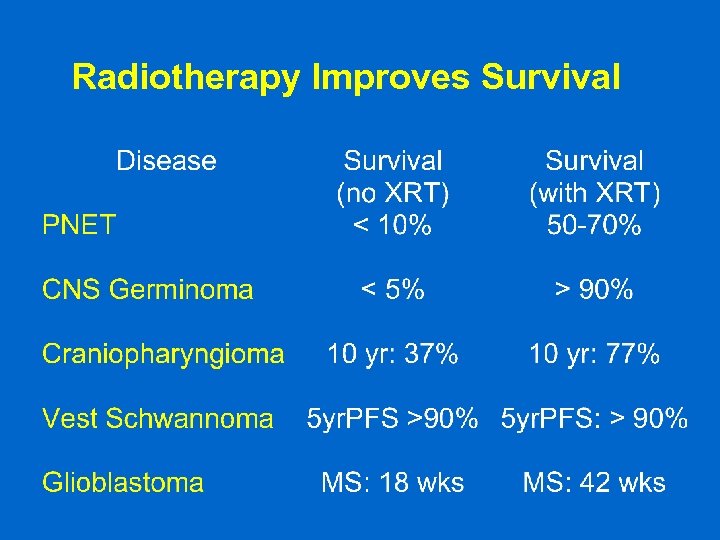 Radiotherapy Improves Survival
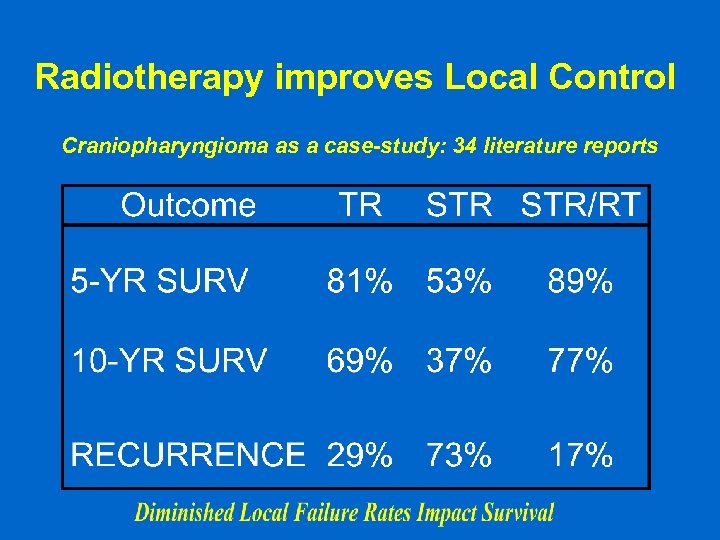 Radiotherapy improves Local Control Craniopharyngioma as a case-study: 34 literature reports
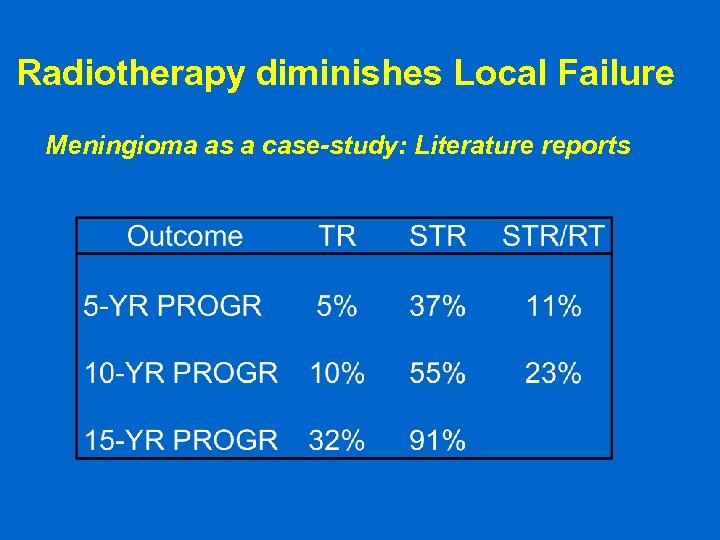 Radiotherapy diminishes Local Failure Meningioma as a case-study: Literature reports
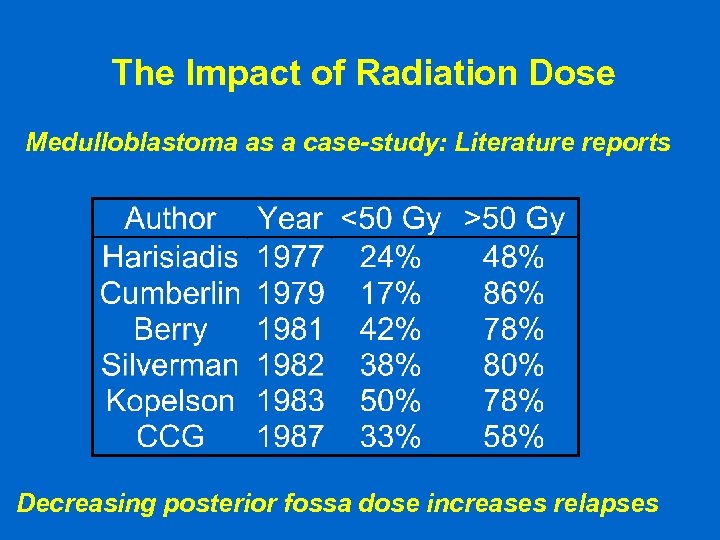 The Impact of Radiation Dose Medulloblastoma as a case-study: Literature reports Decreasing posterior fossa dose increases relapses
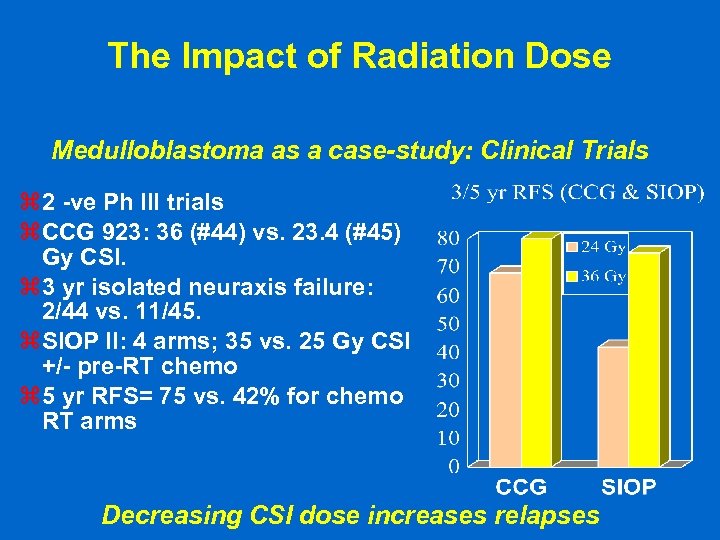 The Impact of Radiation Dose Medulloblastoma as a case-study: Clinical Trials z 2 -ve Ph III trials z CCG 923: 36 (#44) vs. 23. 4 (#45) Gy CSI. z 3 yr isolated neuraxis failure: 2/44 vs. 11/45. z SIOP II: 4 arms; 35 vs. 25 Gy CSI +/- pre-RT chemo z 5 yr RFS= 75 vs. 42% for chemo RT arms Decreasing CSI dose increases relapses
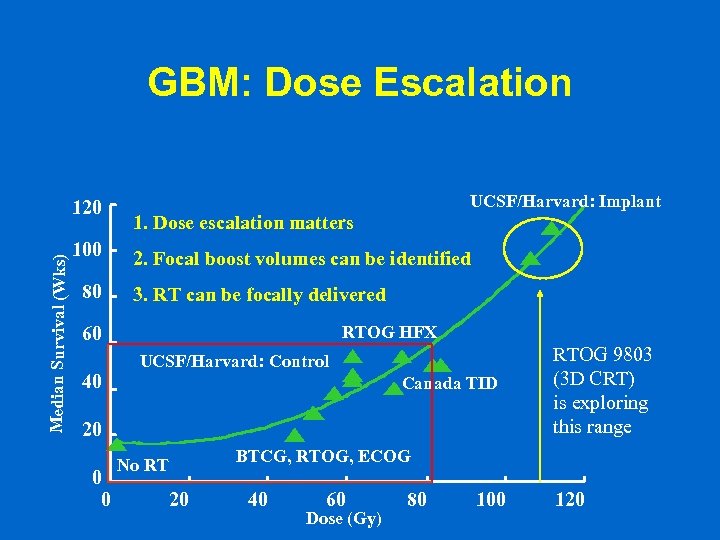 GBM: Dose Escalation Median Survival (Wks) 120 100 80 UCSF/Harvard: Implant 1. Dose escalation matters 2. Focal boost volumes can be identified 3. RT can be focally delivered RTOG HFX 60 40 UCSF/Harvard: Control Canada TID 20 0 0 No RT 20 RTOG 9803 (3 D CRT) is exploring this range BTCG, RTOG, ECOG 40 60 Dose (Gy) 80 100 120
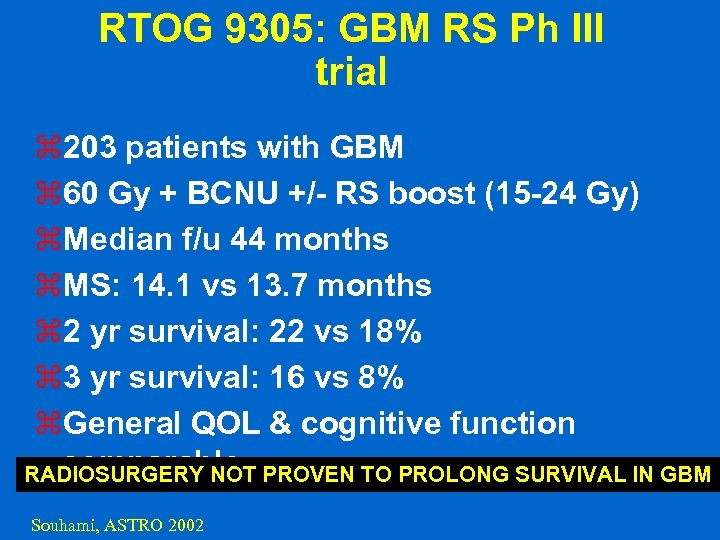 RTOG 9305: GBM RS Ph III trial z 203 patients with GBM z 60 Gy + BCNU +/- RS boost (15 -24 Gy) z. Median f/u 44 months z. MS: 14. 1 vs 13. 7 months z 2 yr survival: 22 vs 18% z 3 yr survival: 16 vs 8% z. General QOL & cognitive function comparable RADIOSURGERY NOT PROVEN TO PROLONG SURVIVAL IN GBM Souhami, ASTRO 2002
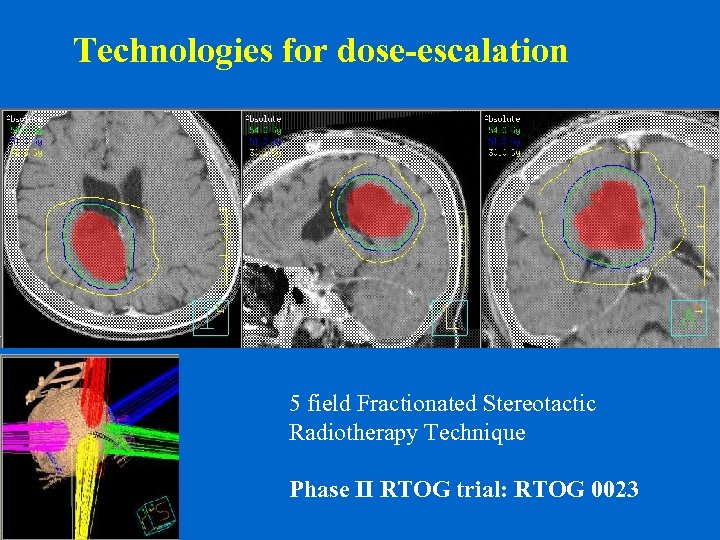 Technologies for dose-escalation 5 field Fractionated Stereotactic Radiotherapy Technique Phase II RTOG trial: RTOG 0023
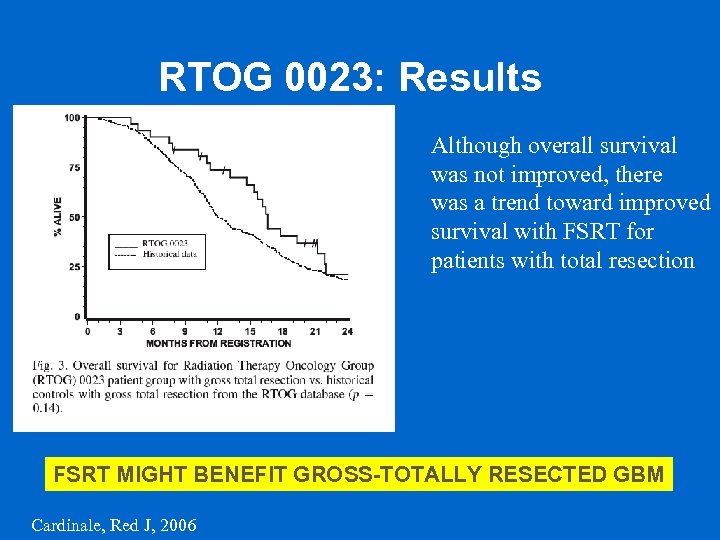 RTOG 0023: Results Although overall survival was not improved, there was a trend toward improved survival with FSRT for patients with total resection FSRT MIGHT BENEFIT GROSS-TOTALLY RESECTED GBM Cardinale, Red J, 2006
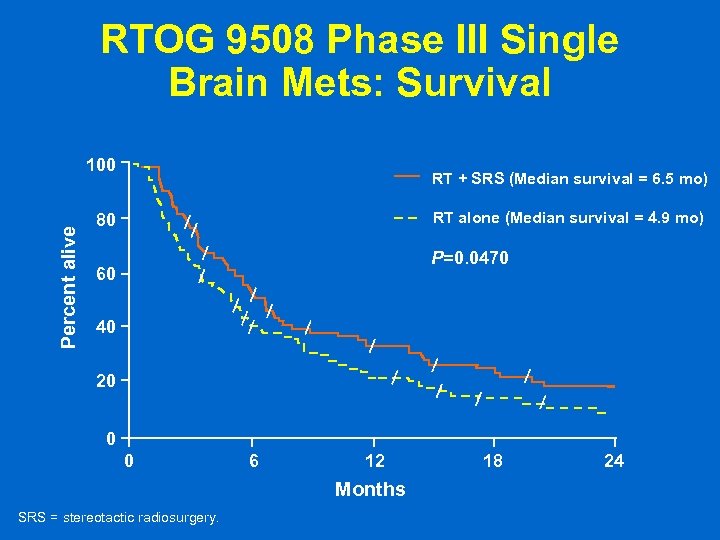 RTOG 9508 Phase III Single Brain Mets: Survival Percent alive 100 RT + SRS (Median survival = 6. 5 mo) RT alone (Median survival = 4. 9 mo) 80 P=0. 0470 60 40 20 0 0 6 12 Months SRS = stereotactic radiosurgery. 18 24
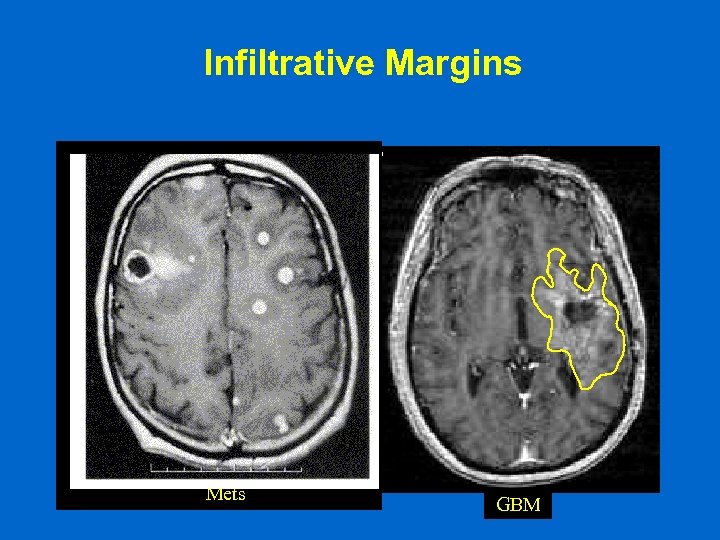 Infiltrative Margins A B Mets GBM
 MRSI for Treatment Planning z 34 pts (22 G 3, 12 G 4) evaluated with MRI/MRSI z MRI contours: T 2 for initial field; T 1 for boost z MRSI: Multivoxel technique: CNI (Choline/NAA Index) z Results: MRSI would change fields y. T 2 estimated microscopic region 50% larger than MRSI y. T 2 missed MRSI abnormality in 88% of pts (upto 28 mm) y. T 1 suggested lesser volume than MRSI y. T 1 suggested different location than MRSI Pirzkall A: IJROBP 2001 Mc. Knight: J Neurosurg, 2002: 90% sensitivity & 86% biopsy specificity for CNI >2. 5
 Conclusions z Radiotherapy plays a major role in the management of most primary brain tumors z Local failure is still paramount z Failed strategies: limited dose escalation, neutrons, brachytherapy, Imidazoles & BUd. R z Newer technologies may allow an improved therapeutic index