 Скачать презентацию Working with you to be the change Dementia
743d7971b007fcd9c6b807a9cf69442a.ppt
- Количество слайдов: 24



Working with you to “be the change” Dementia reablement guidelines to support function in people with mild to moderate dementia Claire O’Connor M Gresham, R Poulos, L Clemson, K Mc. Gilton, I Cameron, W Hudson, H Radoslovich, J Jackman, C Poulos
Cognitive Decline Partnership Centre (CDPC): Clinical Practice Guidelines for People with Dementia Services for people living with dementia should: – Promote and maintain functional and social independence of people with dementia – Offer occupational therapy and tailored interventions – Strongly encourage people with dementia to exercise Guideline Adaption Committee 2016
Reablement, restorative care, wellness
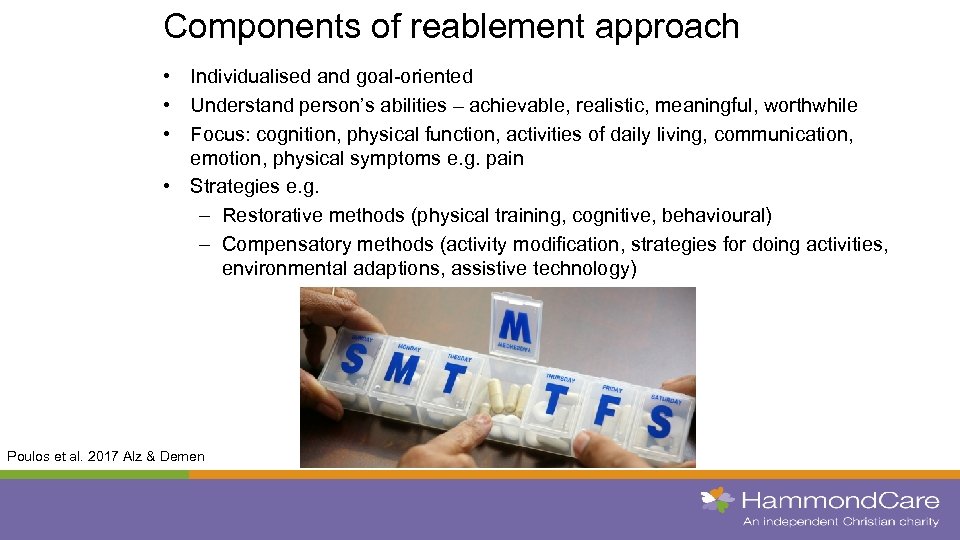
Components of reablement approach • Individualised and goal-oriented • Understand person’s abilities – achievable, realistic, meaningful, worthwhile • Focus: cognition, physical function, activities of daily living, communication, emotion, physical symptoms e. g. pain • Strategies e. g. – Restorative methods (physical training, cognitive, behavioural) – Compensatory methods (activity modification, strategies for doing activities, environmental adaptions, assistive technology) Poulos et al. 2017 Alz & Demen
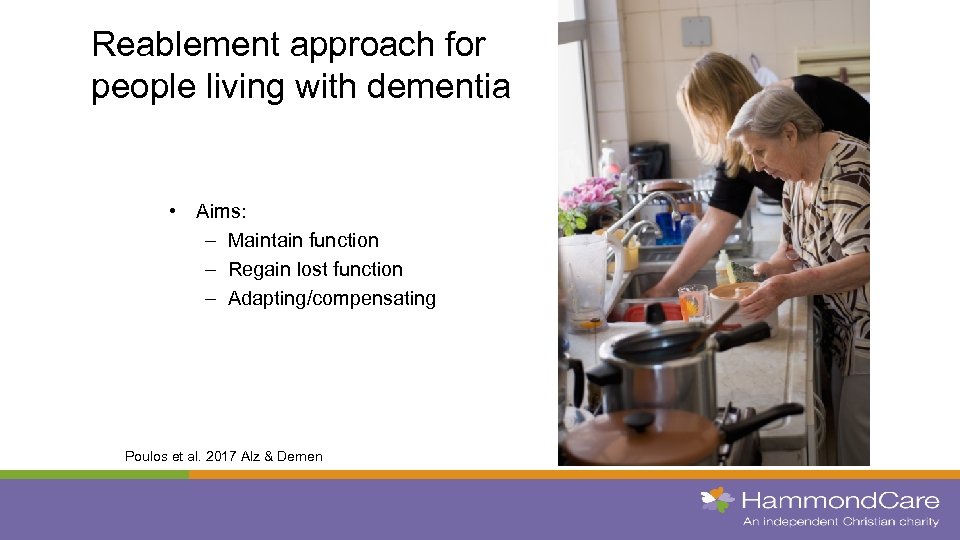
Reablement approach for people living with dementia • Aims: – Maintain function – Regain lost function – Adapting/compensating Poulos et al. 2017 Alz & Demen
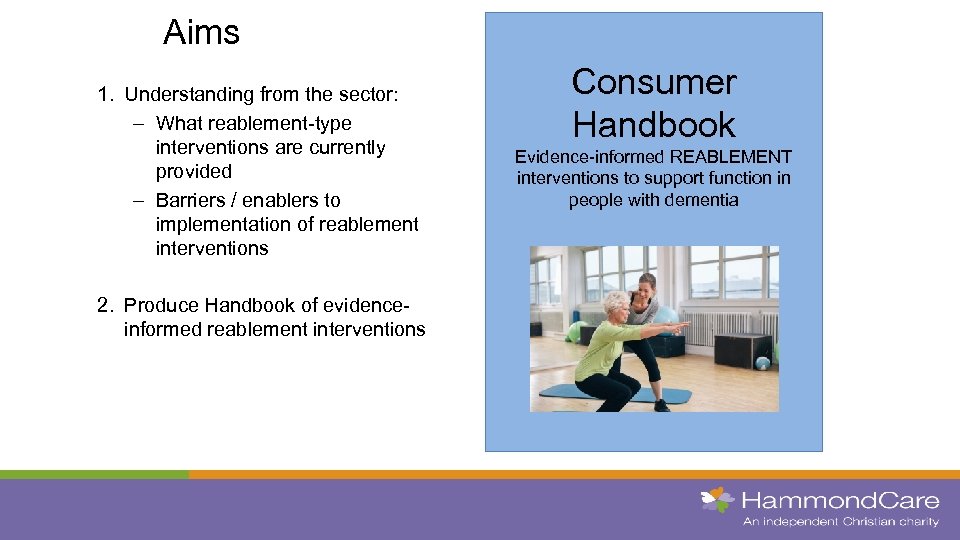
Aims 1. Understanding from the sector: – What reablement-type interventions are currently provided – Barriers / enablers to implementation of reablement interventions 2. Produce Handbook of evidenceinformed reablement interventions Consumer Handbook Evidence-informed REABLEMENT interventions to support function in people with dementia
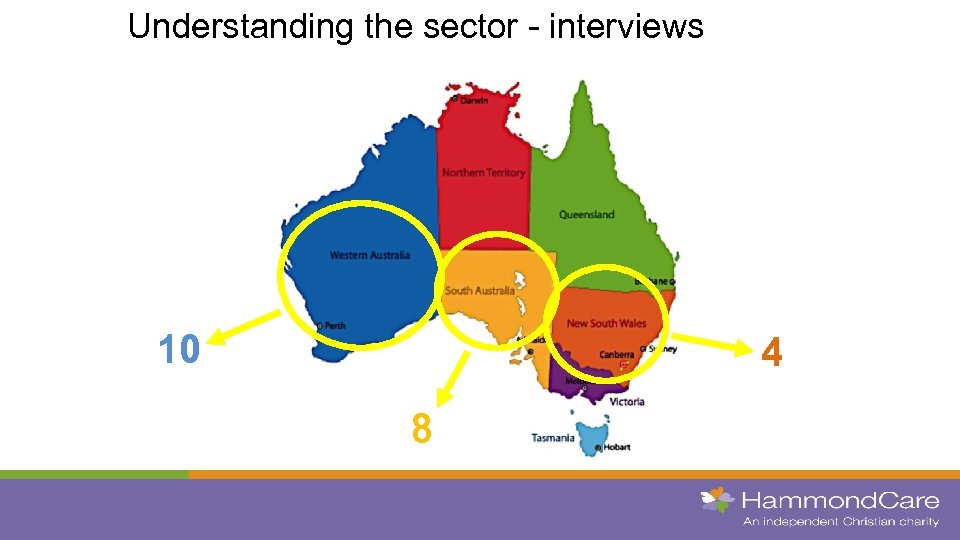
Understanding the sector - interviews 10 4 8
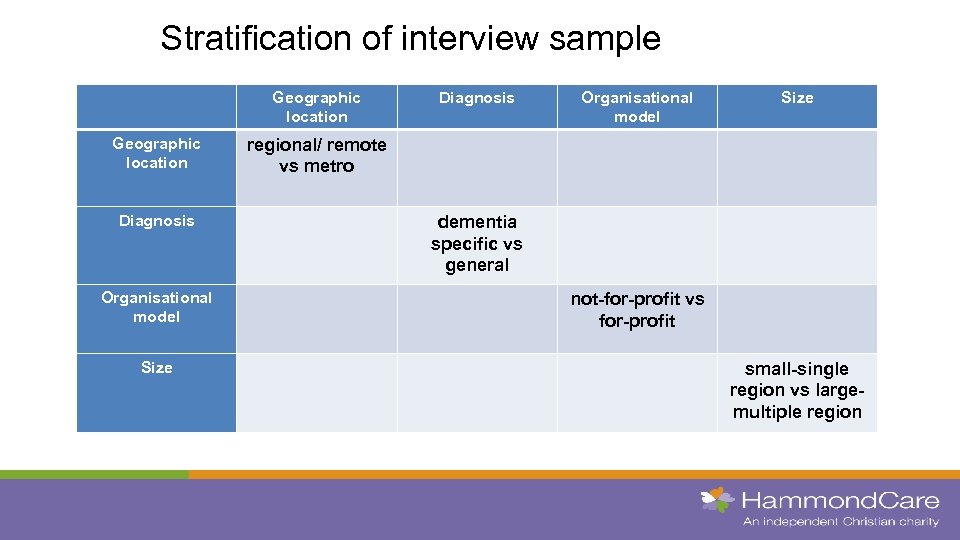
Stratification of interview sample Geographic location Diagnosis Organisational model Size regional/ remote vs metro dementia specific vs general not-for-profit vs for-profit small-single region vs largemultiple region
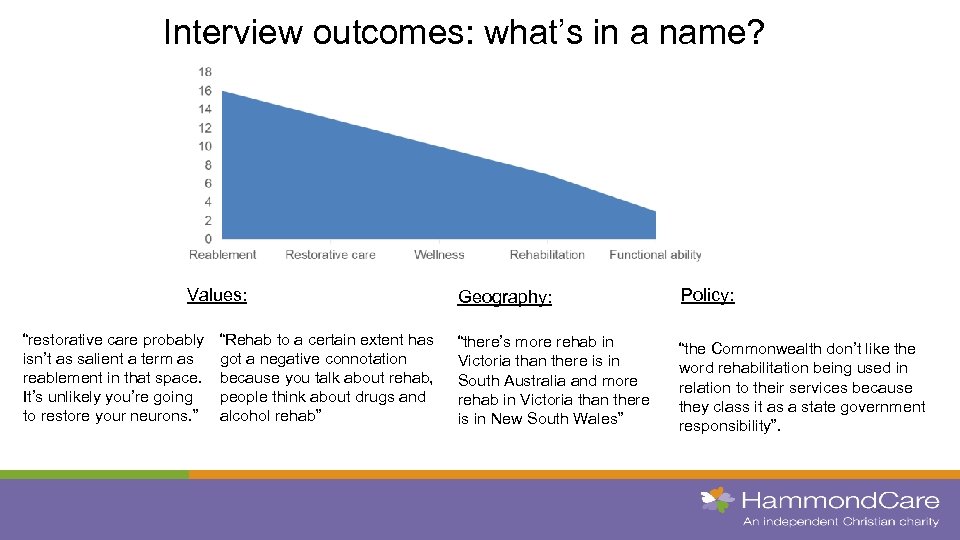
Interview outcomes: what’s in a name? Values: “restorative care probably isn’t as salient a term as reablement in that space. It’s unlikely you’re going to restore your neurons. ” “Rehab to a certain extent has got a negative connotation because you talk about rehab, people think about drugs and alcohol rehab” Geography: Policy: “there’s more rehab in Victoria than there is in South Australia and more rehab in Victoria than there is in New South Wales” “the Commonwealth don’t like the word rehabilitation being used in relation to their services because they class it as a state government responsibility”.
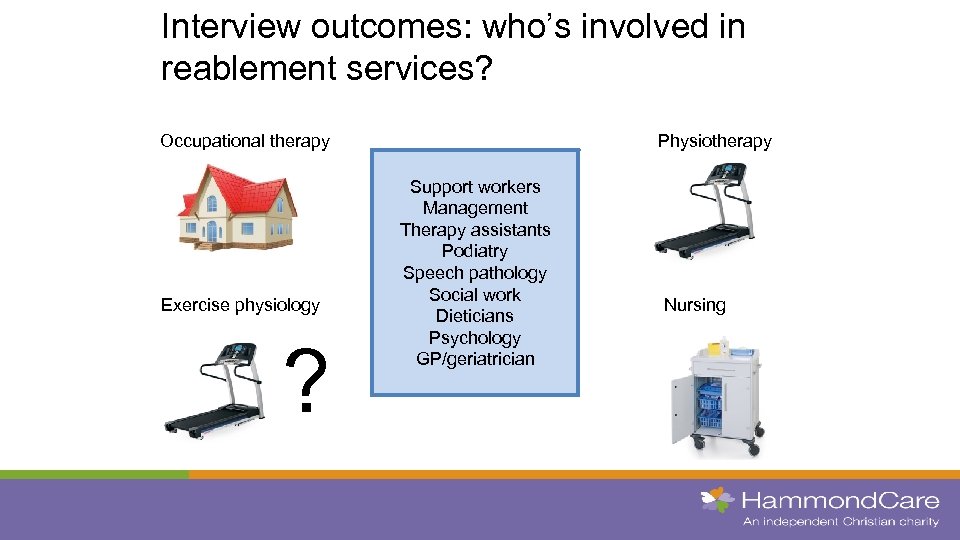
Interview outcomes: who’s involved in reablement services? Physiotherapy Occupational therapy Exercise physiology ? Support workers Management Therapy assistants Podiatry Speech pathology Social work Dieticians Psychology GP/geriatrician Nursing
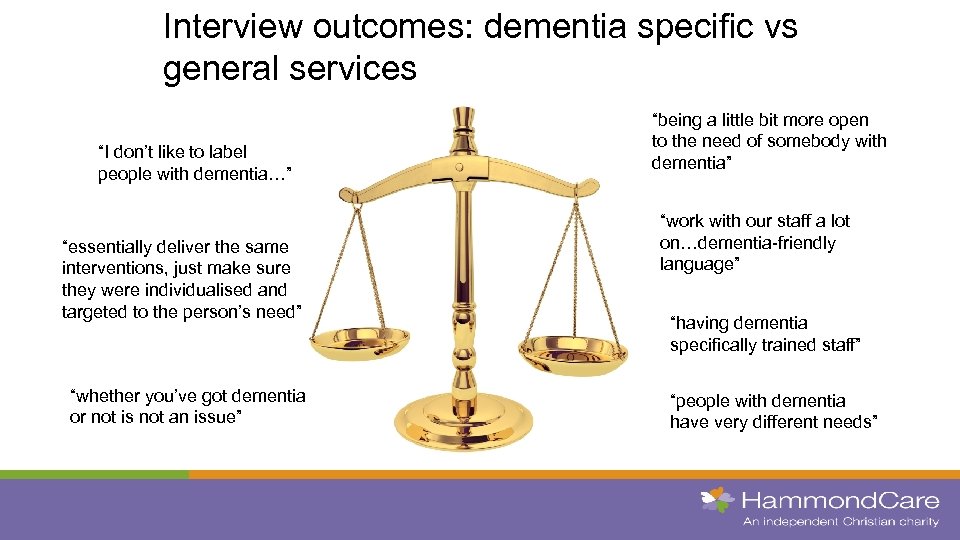
Interview outcomes: dementia specific vs general services “I don’t like to label people with dementia…” “essentially deliver the same interventions, just make sure they were individualised and targeted to the person’s need” “whether you’ve got dementia or not is not an issue” “being a little bit more open to the need of somebody with dementia” “work with our staff a lot on…dementia-friendly language” “having dementia specifically trained staff” “people with dementia have very different needs”
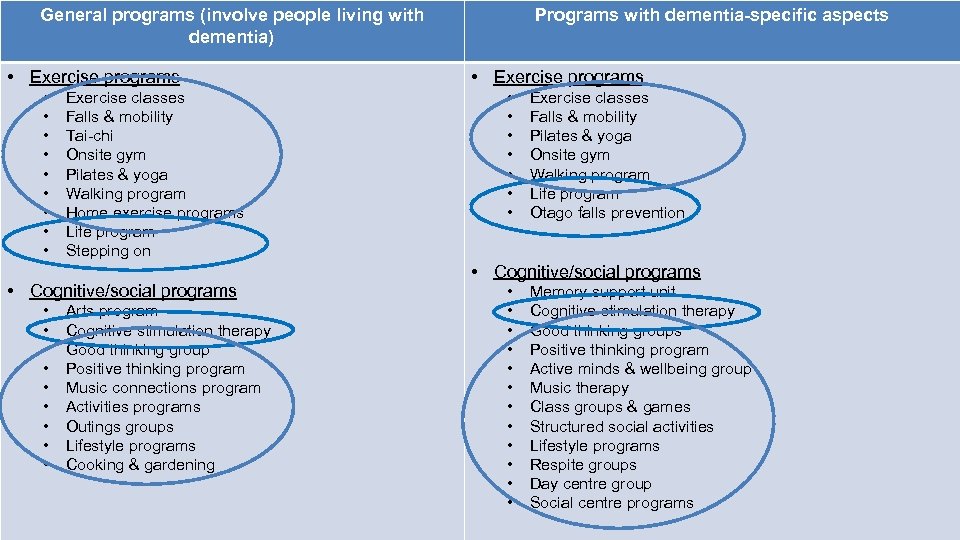
General programs (involve people living with dementia) • Exercise programs • • • Exercise classes Falls & mobility Tai-chi Onsite gym Pilates & yoga Walking program Home exercise programs Life program Stepping on • Cognitive/social programs • • • Arts program Cognitive stimulation therapy Good thinking group Positive thinking program Music connections program Activities programs Outings groups Lifestyle programs Cooking & gardening Programs with dementia-specific aspects • Exercise programs • • Exercise classes Falls & mobility Pilates & yoga Onsite gym Walking program Life program Otago falls prevention • Cognitive/social programs • • • Memory support unit Cognitive stimulation therapy Good thinking groups Positive thinking program Active minds & wellbeing group Music therapy Class groups & games Structured social activities Lifestyle programs Respite groups Day centre group Social centre programs
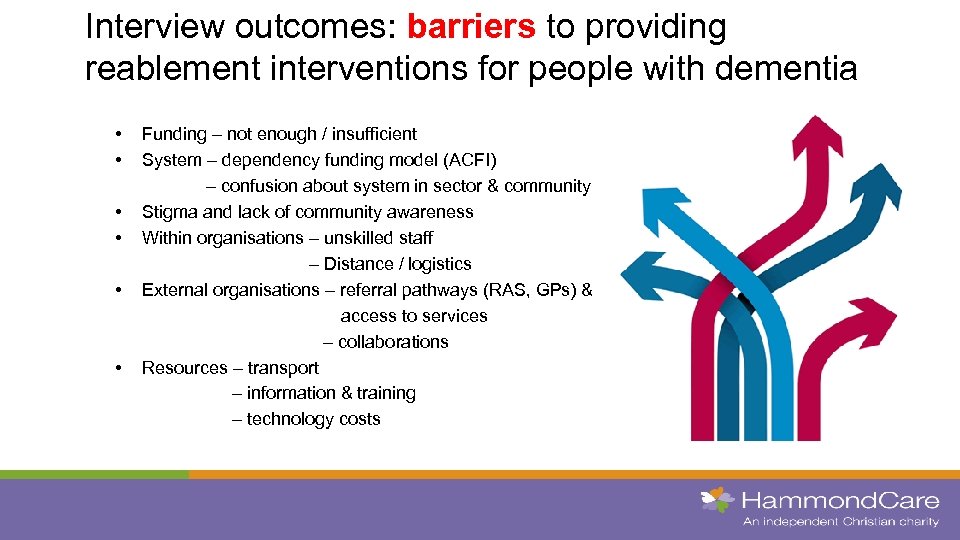
Interview outcomes: barriers to providing reablement interventions for people with dementia • • • Funding – not enough / insufficient System – dependency funding model (ACFI) – confusion about system in sector & community Stigma and lack of community awareness Within organisations – unskilled staff – Distance / logistics External organisations – referral pathways (RAS, GPs) & access to services – collaborations Resources – transport – information & training – technology costs
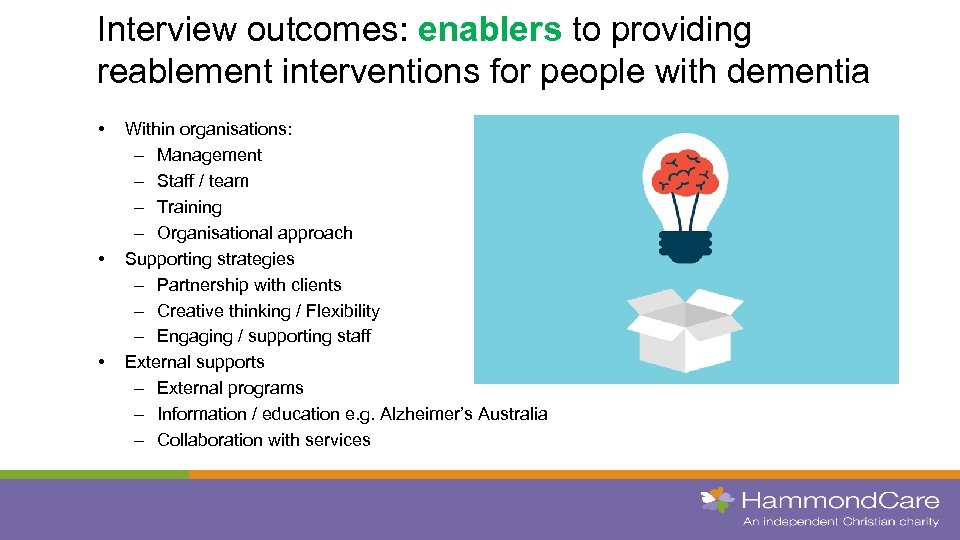
Interview outcomes: enablers to providing reablement interventions for people with dementia • • • Within organisations: – Management – Staff / team – Training – Organisational approach Supporting strategies – Partnership with clients – Creative thinking / Flexibility – Engaging / supporting staff External supports – External programs – Information / education e. g. Alzheimer’s Australia – Collaboration with services
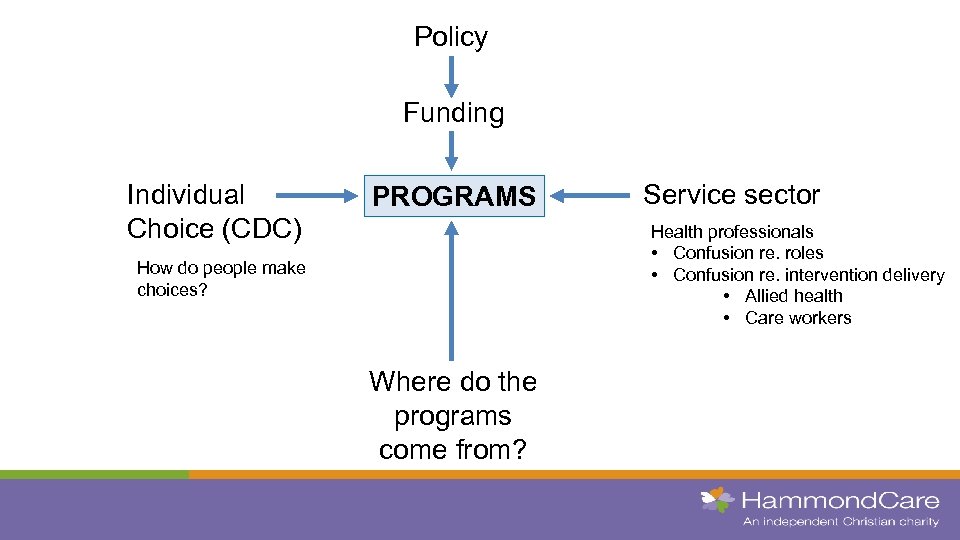
Policy Funding Individual Choice (CDC) PROGRAMS Service sector Health professionals • Confusion re. roles • Confusion re. intervention delivery • Allied health • Care workers How do people make choices? Where do the programs come from?
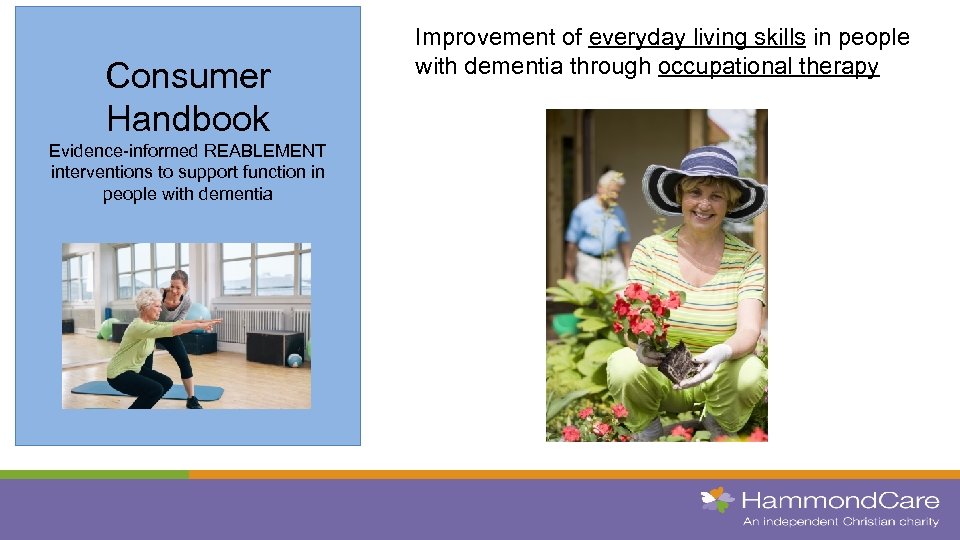
Consumer Handbook Evidence-informed REABLEMENT interventions to support function in people with dementia Improvement of everyday living skills in people with dementia through occupational therapy
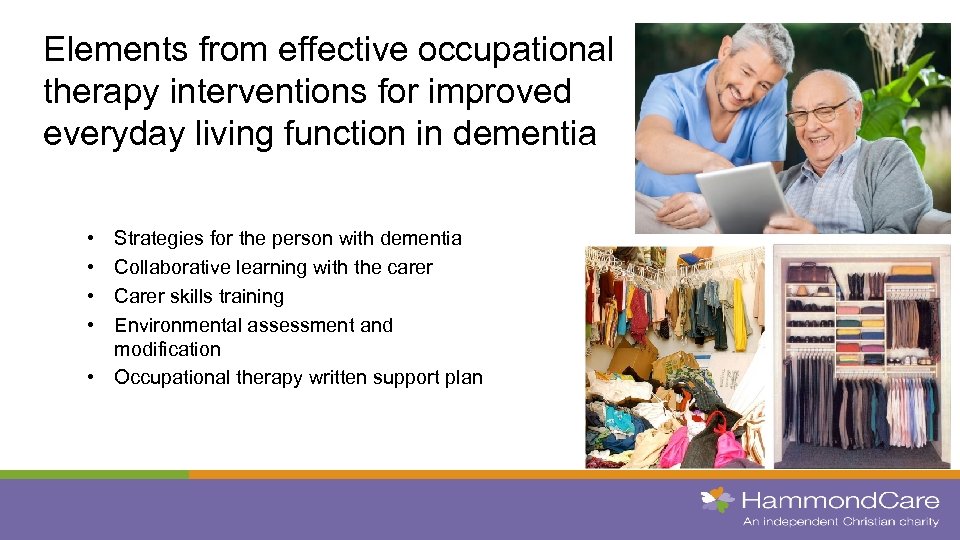
Elements from effective occupational therapy interventions for improved everyday living function in dementia • • Strategies for the person with dementia Collaborative learning with the carer Carer skills training Environmental assessment and modification • Occupational therapy written support plan
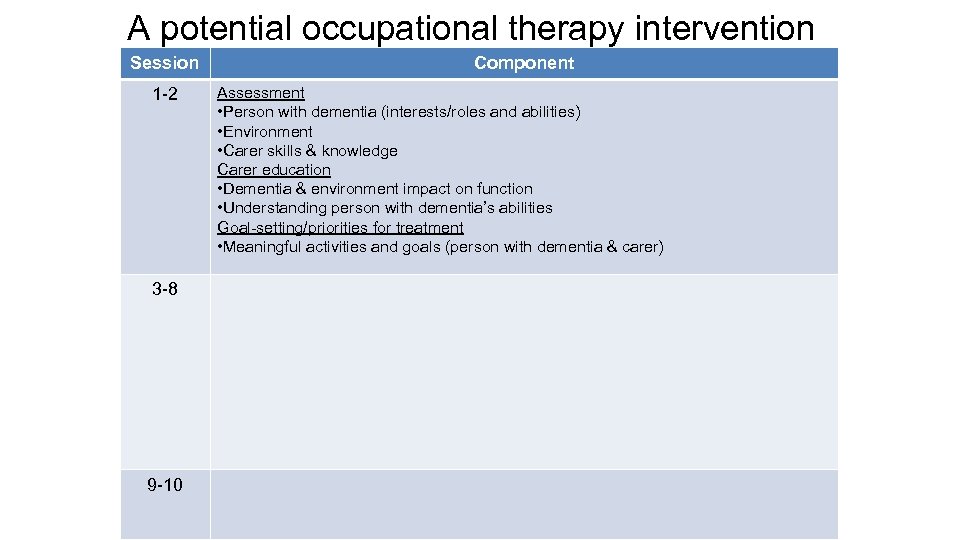
A potential occupational therapy intervention Session 1 -2 3 -8 9 -10 Component Assessment • Person with dementia (interests/roles and abilities) • Environment • Carer skills & knowledge Carer education • Dementia & environment impact on function • Understanding person with dementia’s abilities Goal-setting/priorities for treatment • Meaningful activities and goals (person with dementia & carer)
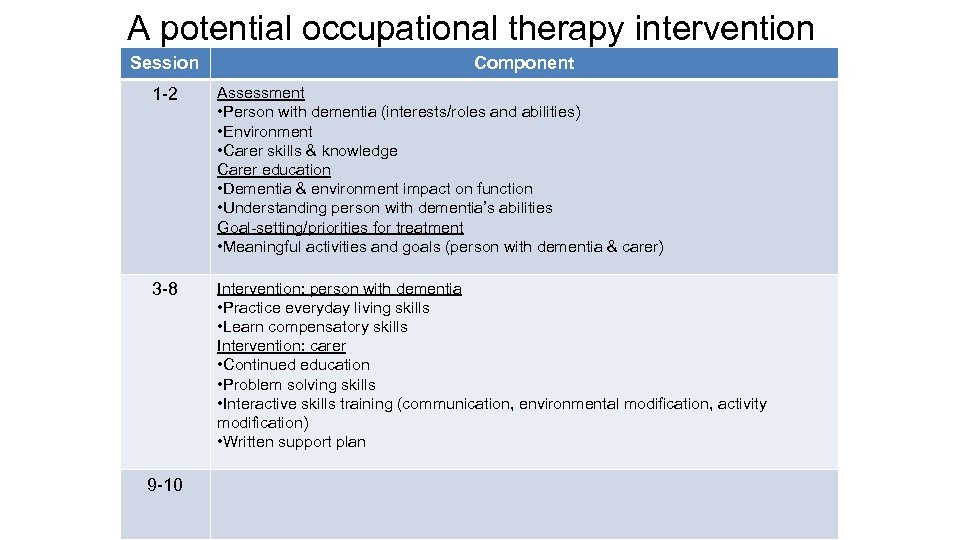
A potential occupational therapy intervention Session Component 1 -2 Assessment • Person with dementia (interests/roles and abilities) • Environment • Carer skills & knowledge Carer education • Dementia & environment impact on function • Understanding person with dementia’s abilities Goal-setting/priorities for treatment • Meaningful activities and goals (person with dementia & carer) 3 -8 Intervention: person with dementia • Practice everyday living skills • Learn compensatory skills Intervention: carer • Continued education • Problem solving skills • Interactive skills training (communication, environmental modification, activity modification) • Written support plan 9 -10
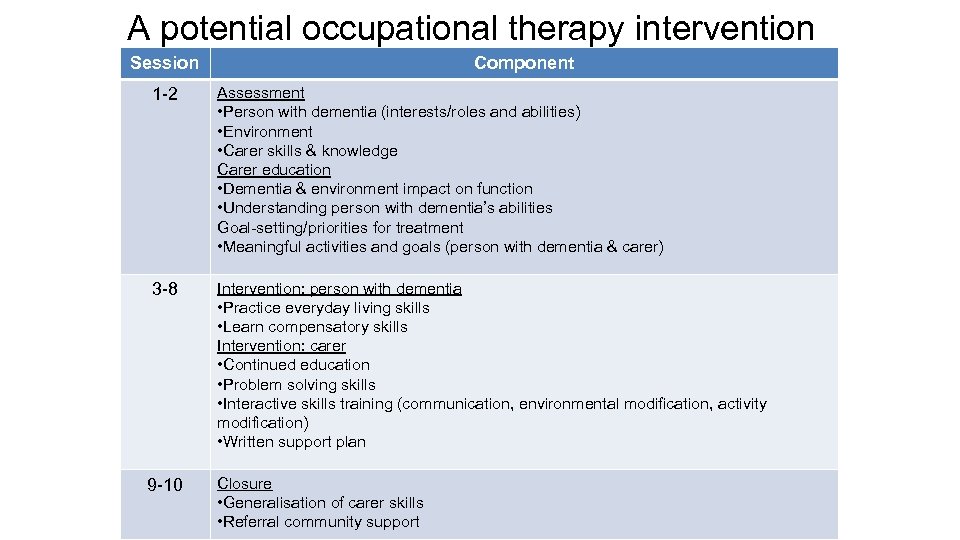
A potential occupational therapy intervention Session Component 1 -2 Assessment • Person with dementia (interests/roles and abilities) • Environment • Carer skills & knowledge Carer education • Dementia & environment impact on function • Understanding person with dementia’s abilities Goal-setting/priorities for treatment • Meaningful activities and goals (person with dementia & carer) 3 -8 Intervention: person with dementia • Practice everyday living skills • Learn compensatory skills Intervention: carer • Continued education • Problem solving skills • Interactive skills training (communication, environmental modification, activity modification) • Written support plan 9 -10 Closure • Generalisation of carer skills • Referral community support
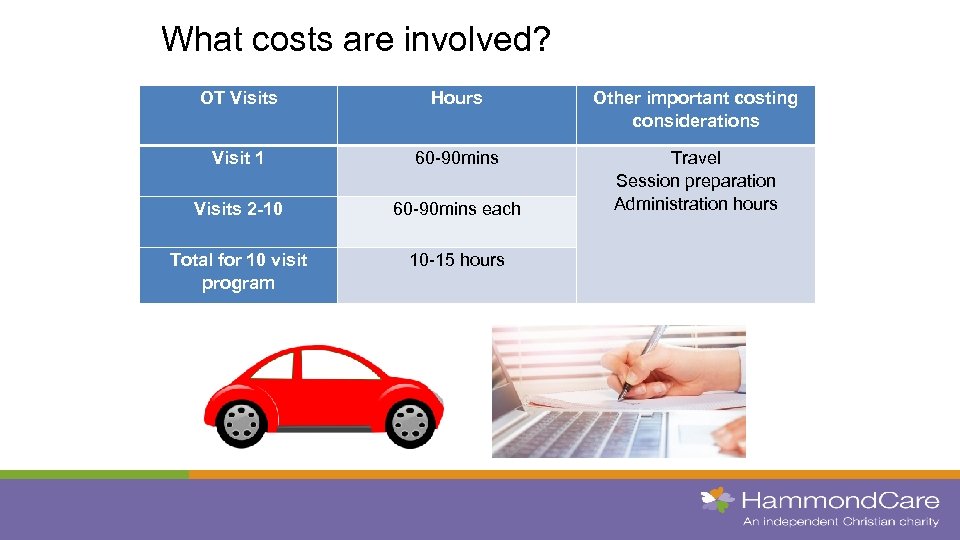
What costs are involved? OT Visits Hours Other important costing considerations Visit 1 60 -90 mins Visits 2 -10 60 -90 mins each Travel Session preparation Administration hours Total for 10 visit program 10 -15 hours
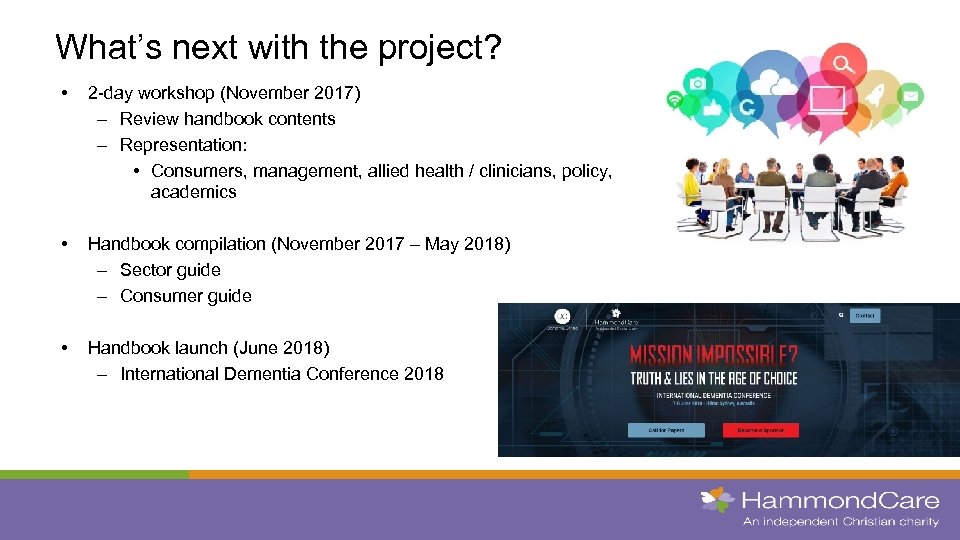
What’s next with the project? • 2 -day workshop (November 2017) – Review handbook contents – Representation: • Consumers, management, allied health / clinicians, policy, academics • Handbook compilation (November 2017 – May 2018) – Sector guide – Consumer guide • Handbook launch (June 2018) – International Dementia Conference 2018
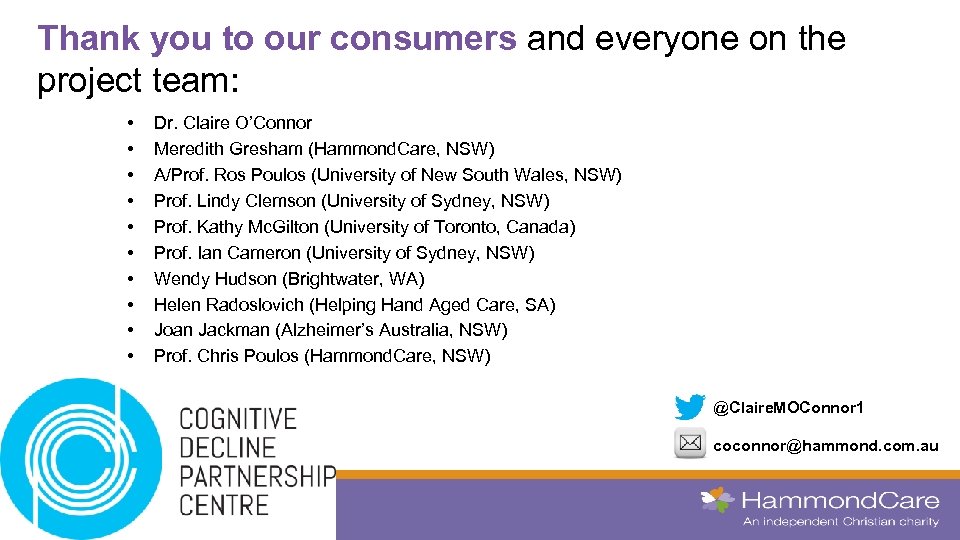
Thank you to our consumers and everyone on the project team: • • • Dr. Claire O’Connor Meredith Gresham (Hammond. Care, NSW) A/Prof. Ros Poulos (University of New South Wales, NSW) Prof. Lindy Clemson (University of Sydney, NSW) Prof. Kathy Mc. Gilton (University of Toronto, Canada) Prof. Ian Cameron (University of Sydney, NSW) Wendy Hudson (Brightwater, WA) Helen Radoslovich (Helping Hand Aged Care, SA) Joan Jackman (Alzheimer’s Australia, NSW) Prof. Chris Poulos (Hammond. Care, NSW) @Claire. MOConnor 1 coconnor@hammond. com. au
Скачать презентацию Working with you to be the change Dementia
743d7971b007fcd9c6b807a9cf69442a.ppt