


 Скачать презентацию Working with the Media — press-conference
Press conference.pptx
- Количество слайдов: 29
 Working with the Media • - press-conference • - press-briefing • - press-tour • - press-lunch • - presentation • - conference, seminar, round-table
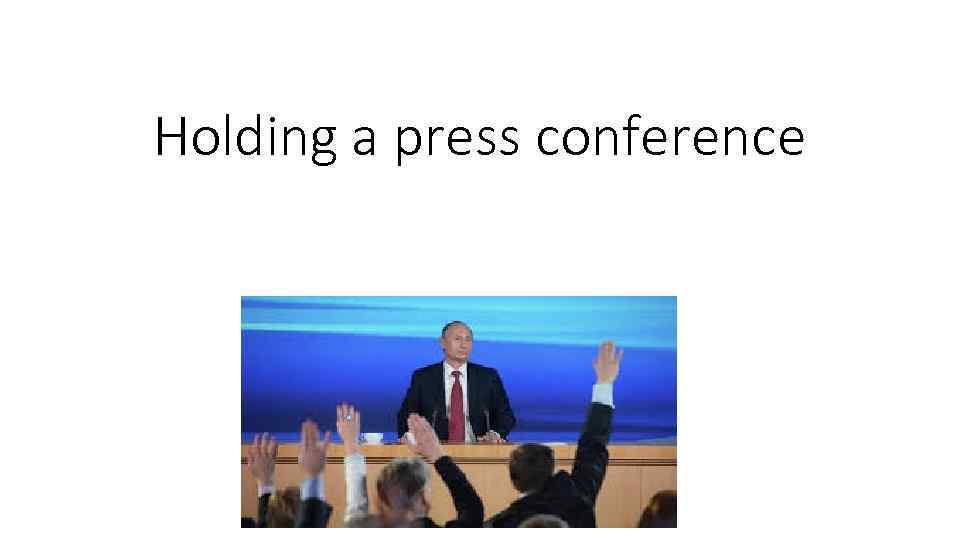 Holding a press conference
 Schedule the date and time • Tuesdays, Wednesdays and Thursdays are the best days for press conferences, as they are considered slower news days. Try to have your press conference on one of these days if at all possible. • The best time to schedule your press conference is between 10: 00 a. m. and 11: 00 a. m, to ensure maximum coverage by the media. If you schedule it later, you risk missing the afternoon paper or evening news. • Remember, you are competing with all the other news of the day; so don't be too worried if everyone doesn't show up.
 When? • When the event includes a prominent individual to whom the media should have access. • When you have significant announcements to make, such as a campaign start-up or a lobbying victory. • When there is an emergency or crisis centered around your group or the issues it deals with. • When a number of groups are participating in an action, and the show of support will emphasize that this action is news. • When you want to react to a related event; for example, when a national report relevant to your issue is released
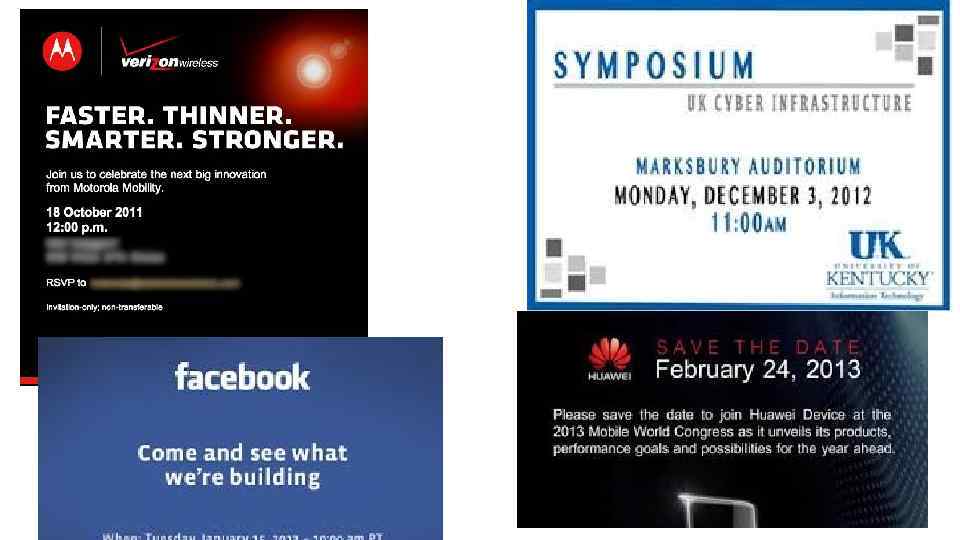
 Press conference holding • - press conference banner • - press conference podium • - press conference agenda • - invitation • - name badgers/ name tags • - name cards • - speaker(s) • - moderator • - press-kit
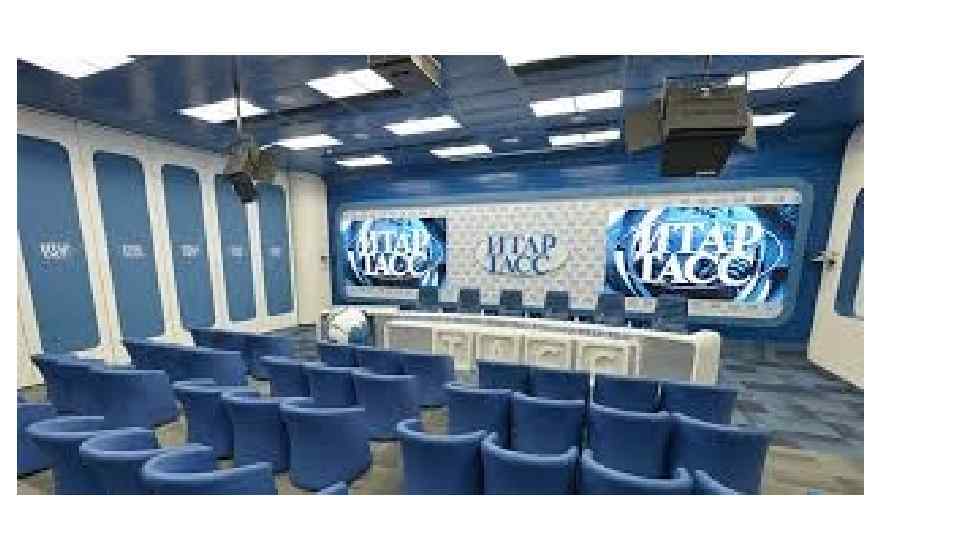
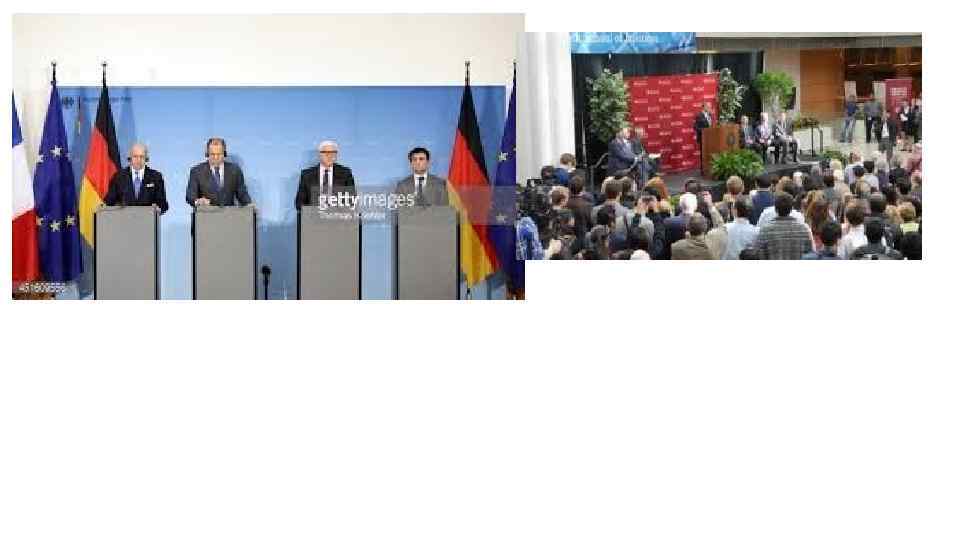
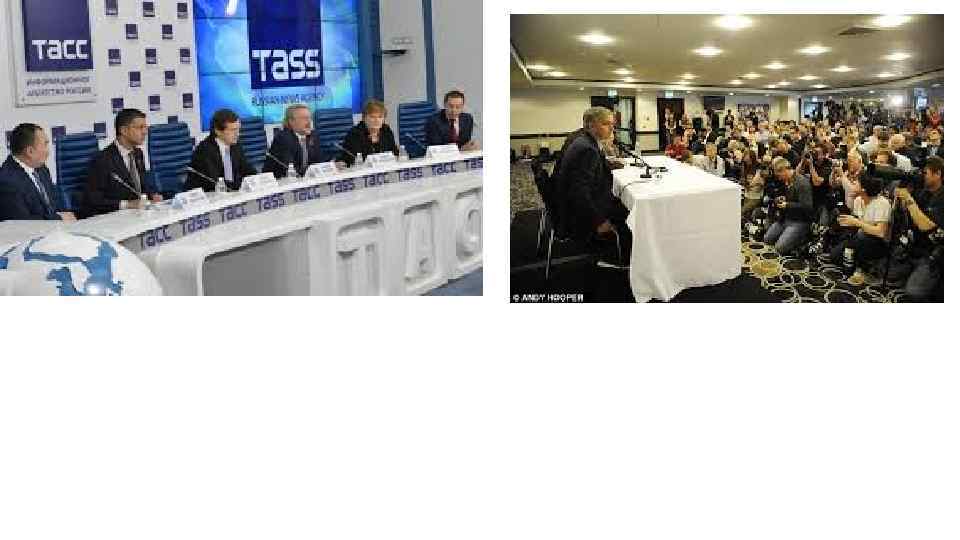
 Prepare the room • Check the location of electrical outlets for microphones and lights. • Set up the room with a table long enough to seat all your spokespeople, with name cards. • Provide enough seating in the room for reporters, and enough room for their supporting equipment (e. g. , cameras, microphone). • Display visuals as a backdrop to your speaker's table: charts, posters, etc. • Have a sign-in pad for attendance. • Provide a podium for the moderator, perhaps with your organization's logo on it. • Have coffee, tea, water, and any other refreshments set up.
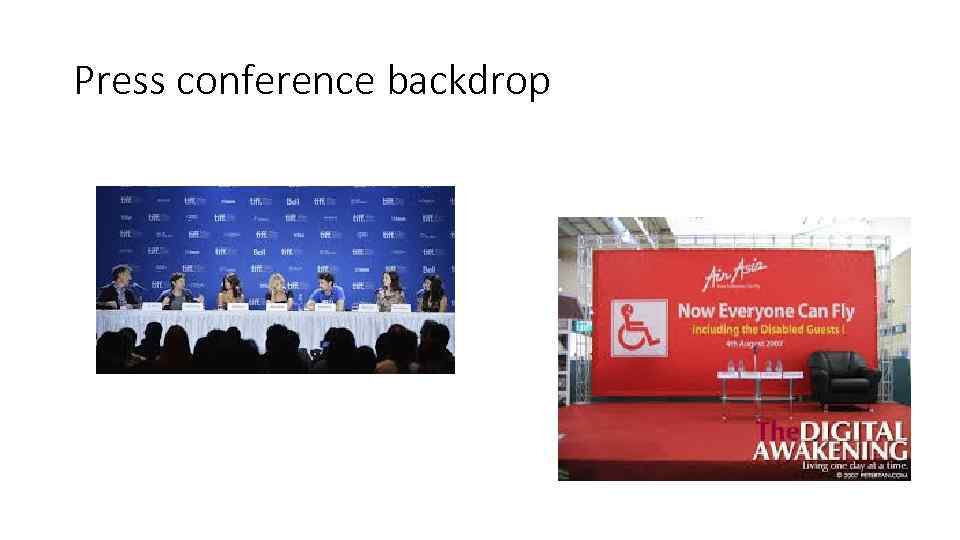 Press conference backdrop
 Speakers • Don't let your press conference drag on by having too many speakers or having them talk too long. You don't want reporters to lose interest or feel like you're wasting their time. • Aim for a few speakers each talking for a few minutes, so that you get from presentations to reporters' questions in 15 minutes. It may not always be possible - it can be challenging to enforce that kind of discipline if you have a large coalition. But it's better to create other opportunities for different leaders to speak than making reporters wait for 20 minutes before getting to ask questions. Other leaders can stand behind the speakers to create a good image of a campaign with broad support.
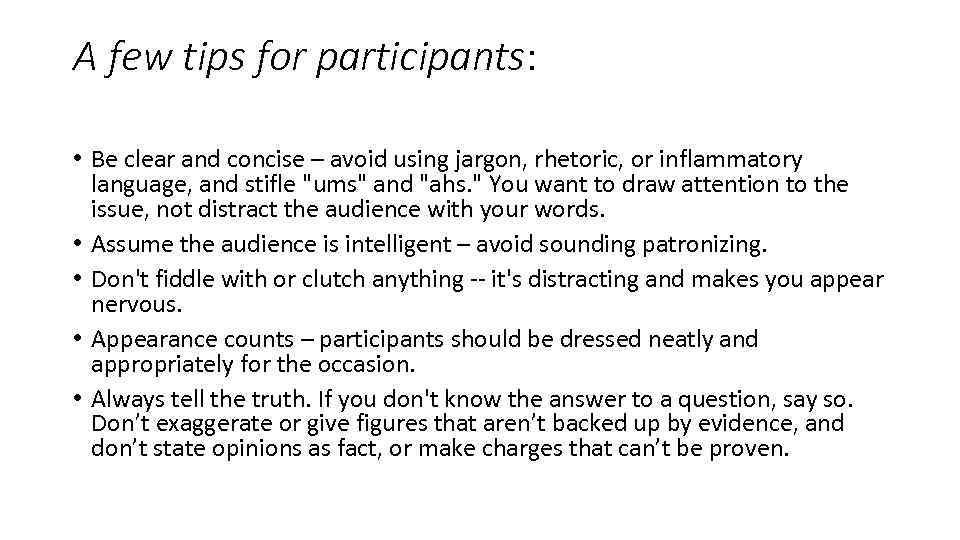 A few tips for participants: • Be clear and concise – avoid using jargon, rhetoric, or inflammatory language, and stifle "ums" and "ahs. " You want to draw attention to the issue, not distract the audience with your words. • Assume the audience is intelligent – avoid sounding patronizing. • Don't fiddle with or clutch anything -- it's distracting and makes you appear nervous. • Appearance counts – participants should be dressed neatly and appropriately for the occasion. • Always tell the truth. If you don't know the answer to a question, say so. Don’t exaggerate or give figures that aren’t backed up by evidence, and don’t state opinions as fact, or make charges that can’t be proven.
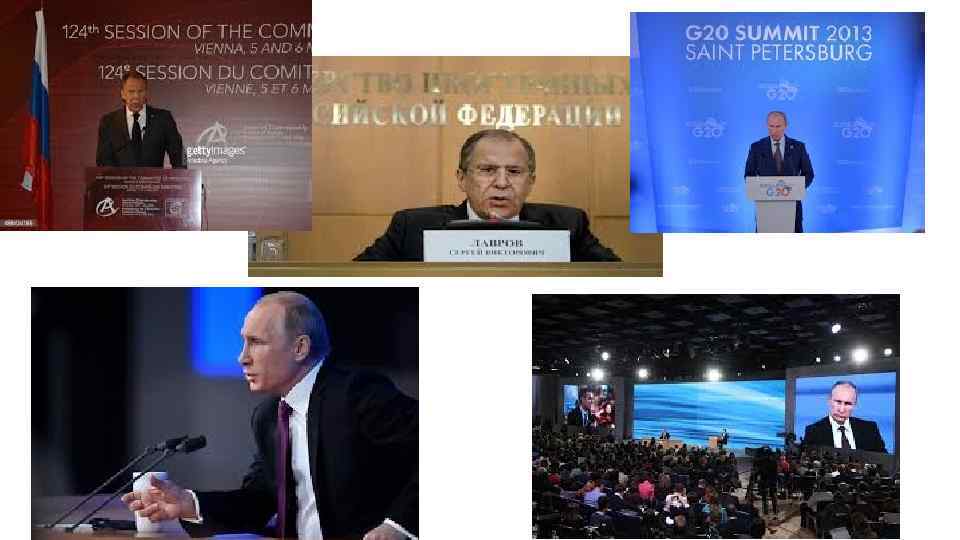
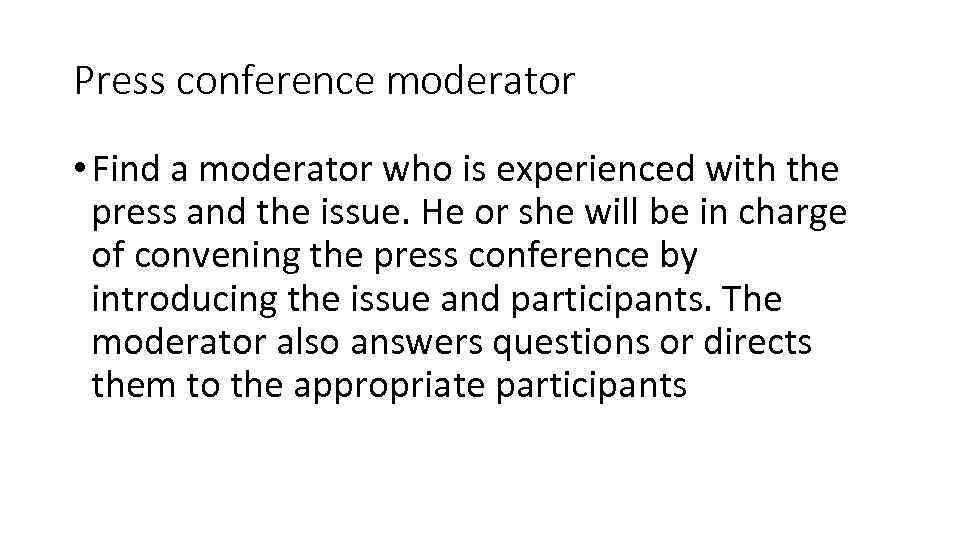 Press conference moderator • Find a moderator who is experienced with the press and the issue. He or she will be in charge of convening the press conference by introducing the issue and participants. The moderator also answers questions or directs them to the appropriate participants
 Press-kit and its aims • A set of texts and illustrative materials (photos, pictures, diagrams) which are devoted to one event. Press-kits are distributed among journalists who come to the company’s press-conference or presentation. • To provide journalists with relevant information • To present the message in a digestible way for reporters
 Press kit • A list of press conference participants. • A press release, which should state your group's position on the issue, highlights of the press conference, and a few quotes from participants (for more, see Preparing Press Releases). • Background information about the issue (i. e. , statistics, historical background, case histories, or reprints of news stories). • A few black & white glossy photographs (action photos are most interesting). • Short (less than a page) biographies of participants. • Press statement. • Putting the kit together: The press release goes in the right side of the folder, and the other information goes in the left side of the folder
 Press Release Checklist • - print it on headed paper • - head it “Press information” or “Press Release” • - give an e-mail address or phone number and name of contact • - a short, simple, relevant headline • - start with a bang • - answer: “Who? What? When? Where? Why/How? ”
 Fact Sheet • Fact sheet describes quickly and clearly with some variation the basic who, what, when, where and why of an issue or organization. • Well structured information.
 Style of Fact Sheet • - an enumeration of facts, dates, statistics • - in the third person • - in an objective neutral tone • - short, direct, no-nonsense writing
 Backgrounder • The backgrounder goes into more details than the fact sheet. It is a full story describing the event in question or the organization.
 Style of Backgrounder • - usually 3 -5 pages in length • - direct, concise and informative • - the writing tone is neutral and factual
 Biographical Sketch (Biography) • Describes pertinent background of an individual, including • - current position • - past positions • - past jobs and titles • - educational accomplishments • - professional credentials • - honours and awards
 Style of Biography • - is written in the third person • - a historical report of an individual’s accomplishments • - chronological • - brief, direct and tight and relevant to the issue
 At the press conference • • • Welcome members of the press as they arrive. Have members of the press sign in, with their affiliation, and give each of them a press kit. Seat the press conference participants behind the table facing the seated reporters. Check the sign in pad to see which media outlets are represented. You may also want to make personal contact with major media representatives before or after the press conference. Start approximately on time -- no later than 5 minutes after the scheduled time. Tape record the event, for your own records, and for possible media use. Have the moderator welcome the press, and introduce the issue and participants. Each participant should present for no more than 3 -5 minutes, making his/her 3 -5 key points. After all the presentations, the moderator should entertain any questions from the press, and direct questions to the appropriate participants. After about 45 minutes, bring the formal conference to an end. Thank the participants for presenting, and the media for attending. In many cases, you may want to encourage the media to stay for further informal conversation with the participants.
 Sample Agenda • Good morning. I'm Tanya Doe from the Downtown Cluster of Congregations and a co-chair of the Make Yourself Count committee. Today we're going to hear about the launch of our campaign and the importance of the census. We'll hear from Mayor Jones, Bob Smith from the Chamber of Commerce, Sue Brown from the labor council, and Bill Doe from the city school board. We're also proud to be joined by other community leaders who will be important to making this campaign a success. After each of our speakers has made a few remarks, we'll take questions. • [Have each speaker go to the podium, introduce themselves, and speak for a few minutes, then after all the speakers have finished, have one or more of them take questions from reporters] • Thank you for coming. Some of the speakers may be able to stay for a few minutes and answer questions individually. If you have any other questions about the campaign, feel free to contact me or another of the campaign co-chairs. Our contact information is on the press release.
 After the press conference • After the press conference, send the press release and other materials to reporters who did not make it to the event and follow up with phone calls offering them the opportunity to speak with one or more of the speakers
 Topics for press conferences • Russia’s national security strategy to 2010 • Russian antiterrorist strategy today • Iran nuclear deal • Europe migrant crisis • Ukraine-Russia-EU gas negotiation • Russia in Syria conflict • Arctic policy of Russia
 Thank you for your attention