 Скачать презентацию Working together to embrace difference Kathmandu case example
4c2e188cd19a01edb7ce6a88db36e2e9.ppt
- Количество слайдов: 22



Working together to embrace difference: Kathmandu case example Roni Bamber and Bernie Quinn, Queen Margaret University 1
QMU Overseas Collaborative Partners • Egypt • Greece – Athens, Thessaloniki • India – Nerul, Oshiwara, Greater Noida Approx 14 validated + franchised programmes • Nepal • Singapore 2
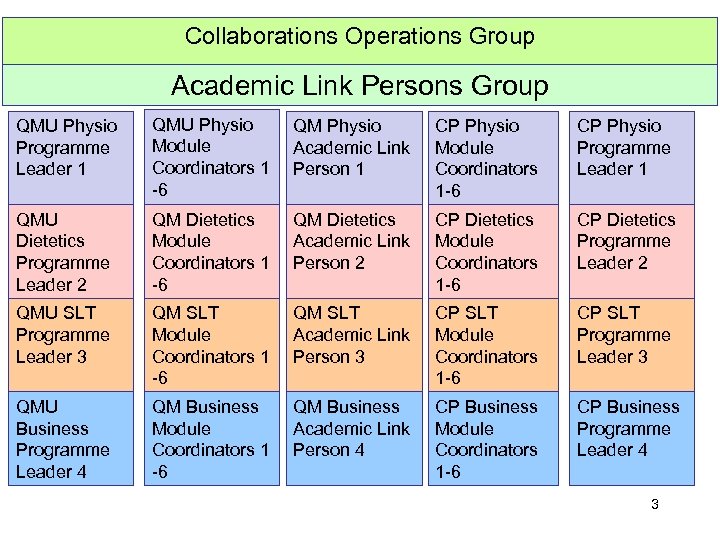
Collaborations Operations Group Academic Link Persons Group QMU Physio Programme Leader 1 QMU Physio Module Coordinators 1 -6 QM Physio Academic Link Person 1 CP Physio Module Coordinators 1 -6 CP Physio Programme Leader 1 QMU Dietetics Programme Leader 2 QM Dietetics Module Coordinators 1 -6 QM Dietetics Academic Link Person 2 CP Dietetics Module Coordinators 1 -6 CP Dietetics Programme Leader 2 QMU SLT Programme Leader 3 QM SLT Module Coordinators 1 -6 QM SLT Academic Link Person 3 CP SLT Module Coordinators 1 -6 CP SLT Programme Leader 3 QMU Business Programme Leader 4 QM Business Module Coordinators 1 -6 QM Business Academic Link Person 4 CP Business Module Coordinators 1 -6 CP Business Programme Leader 4 3
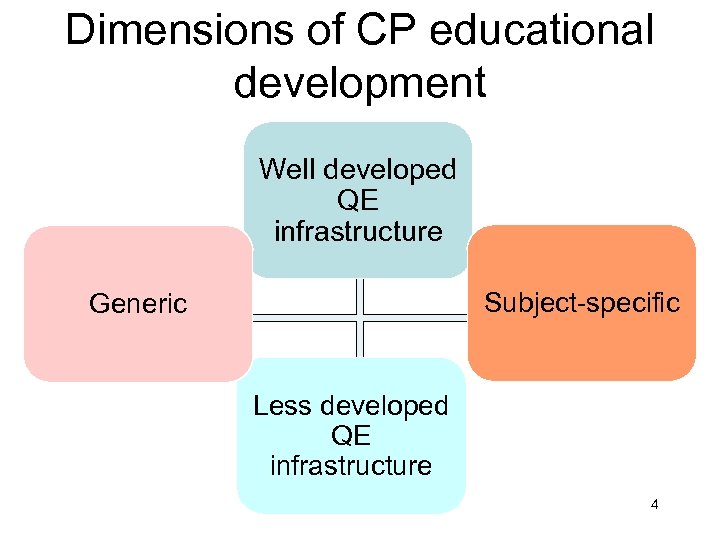
Dimensions of CP educational development Well developed QE infrastructure Subject-specific Generic Less developed QE infrastructure 4
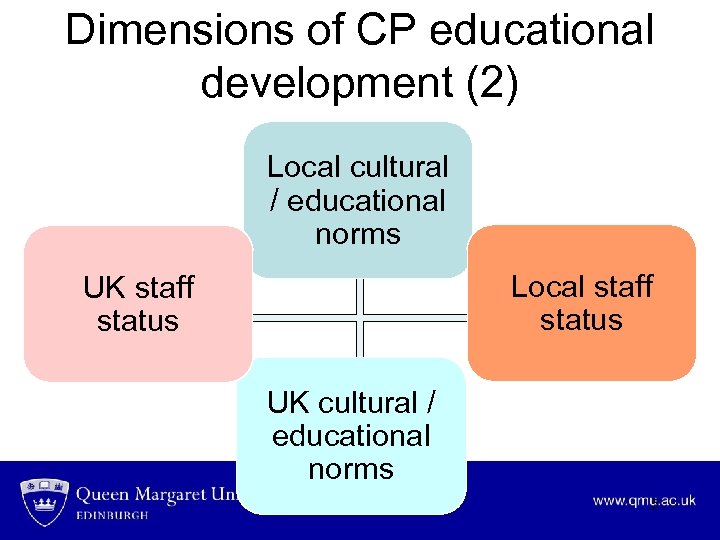
Dimensions of CP educational development (2) Local cultural / educational norms Local staff status UK cultural / educational norms 5
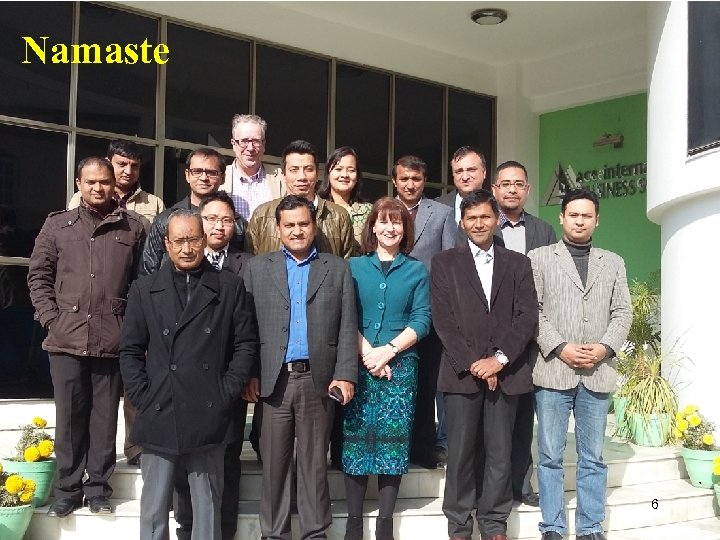
Namaste 6
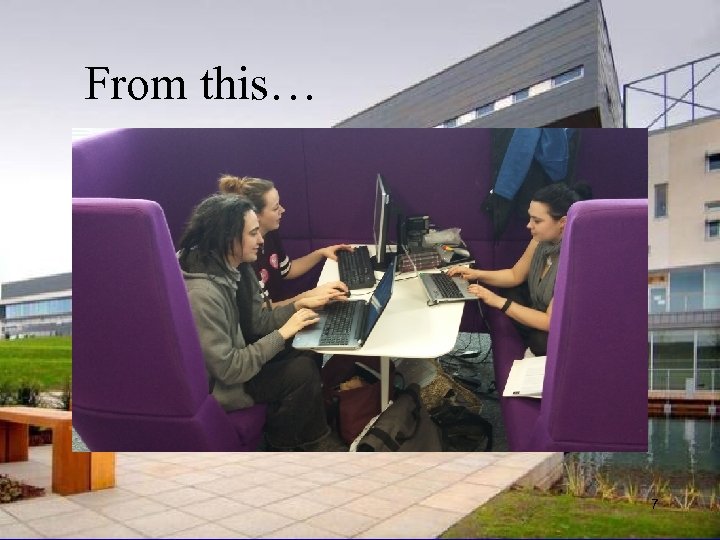
From this… 7

To this… 8
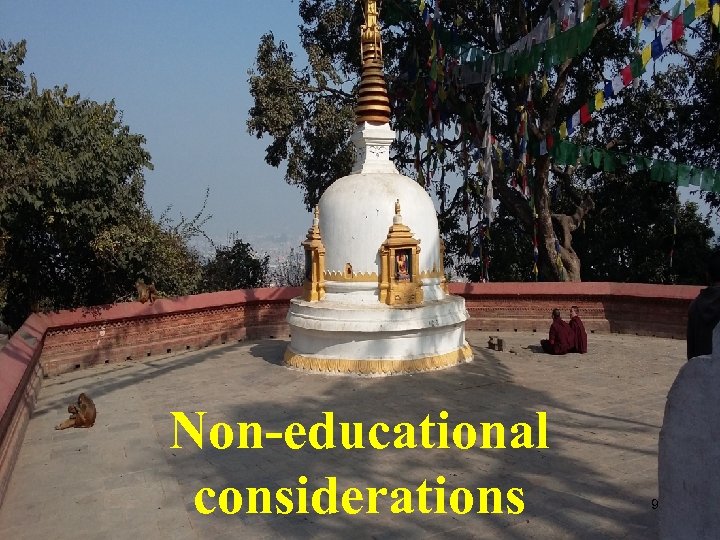
Non-educational considerations 9

Geography, location (eg earthquake) 10
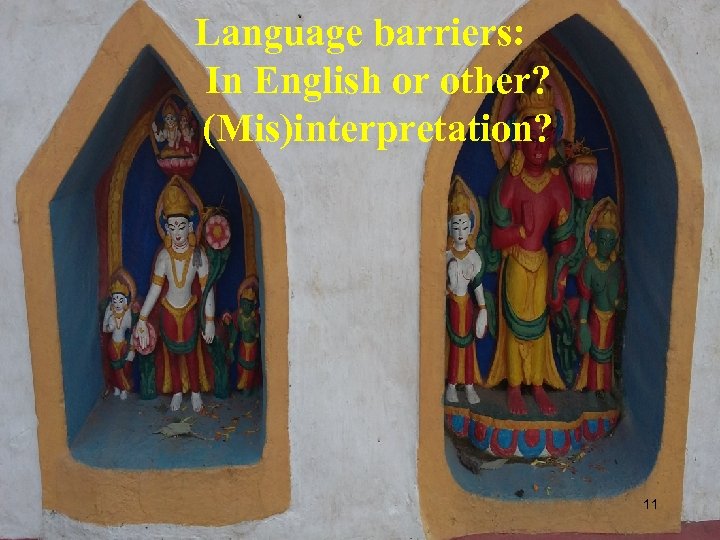
Language barriers: In English or other? (Mis)interpretation? 11
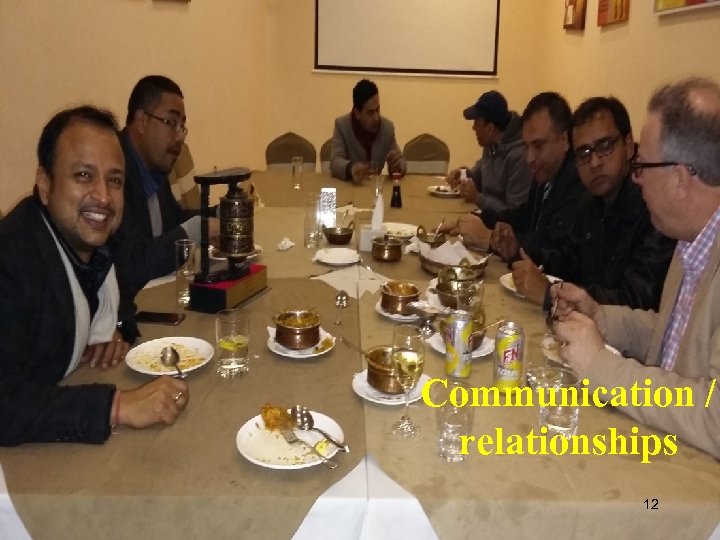
Communication / relationships 12
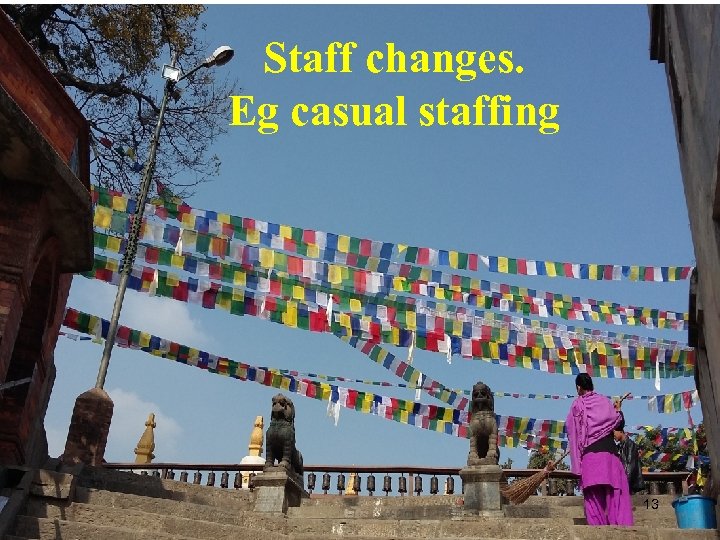
Staff changes. Eg casual staffing 13
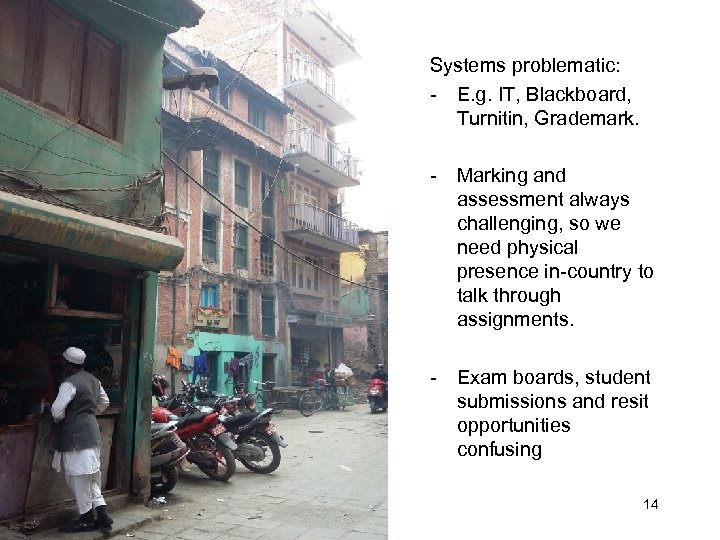
Systems problematic: - E. g. IT, Blackboard, Turnitin, Grademark. - Marking and assessment always challenging, so we need physical presence in-country to talk through assignments. - Exam boards, student submissions and resit opportunities confusing 14
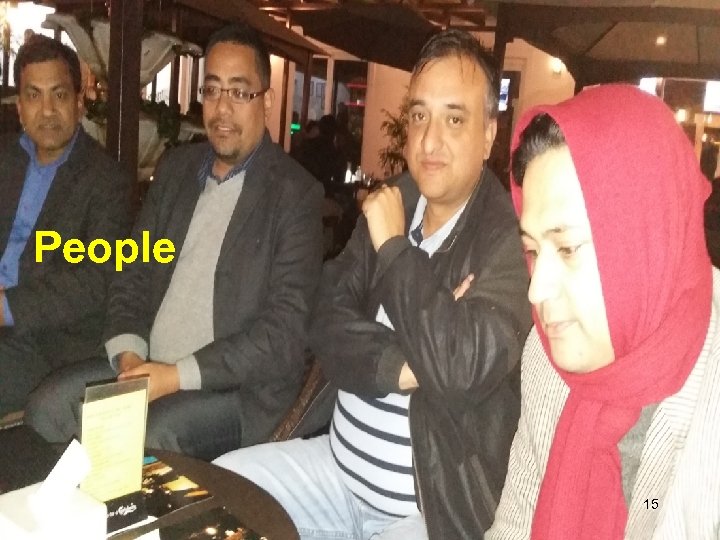
People 15
Negotiating the CP development mix • At start of collaboration, and ongoing – Subject staff (ALPs) + CAP + CP • Development costed into contracts • However, we should never be restricted by budget if students are potentially disadvantaged 16
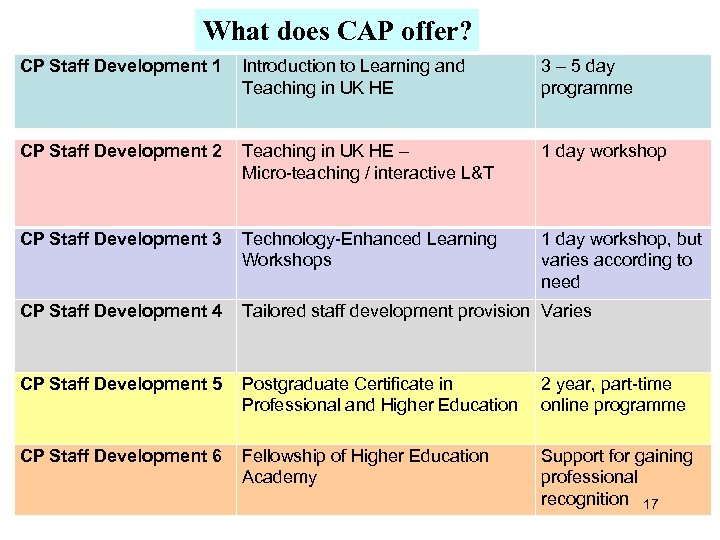
What does CAP offer? CP Staff Development 1 Introduction to Learning and Teaching in UK HE 3 – 5 day programme CP Staff Development 2 Teaching in UK HE – Micro-teaching / interactive L&T 1 day workshop CP Staff Development 3 Technology-Enhanced Learning Workshops 1 day workshop, but varies according to need CP Staff Development 4 Tailored staff development provision Varies CP Staff Development 5 Postgraduate Certificate in Professional and Higher Education 2 year, part-time online programme CP Staff Development 6 Fellowship of Higher Education Academy Support for gaining professional recognition 17
What do subject specialists offer? • • Communication Knowledge exchange Joint research opportunities Contextualization of teaching materials Sharing good practice Maintaining Blackboard sites Encourage appropriate approaches to SCL within module teaching 18
Challenges • Miscommunication – No communication • Staff in Kathmandu mostly P/T + other (teaching) jobs • Students ‘Sitting at the feet of the Master’ • Occasional misalignment of LOs • SCQF levels of understanding • Being ‘critical’ • Library/Learning Resource centre confusion 19
What have we learned? • Loose – tight arrangements – Constantly shifting • Respect cultural context – While maintaining UK quality standards • Get staff at QMU on board • E. g. moderation • A Scottish/UK style of education can be delivered but it requires constant work, vigilance, empathy, listening and dialogue 20
What next? • • • Revalidations Expansion New programmes Staff development plans New roles Reflection – how do we deliver this better? Maintain Quality • Develop our own systems and people, training for next challenges 21
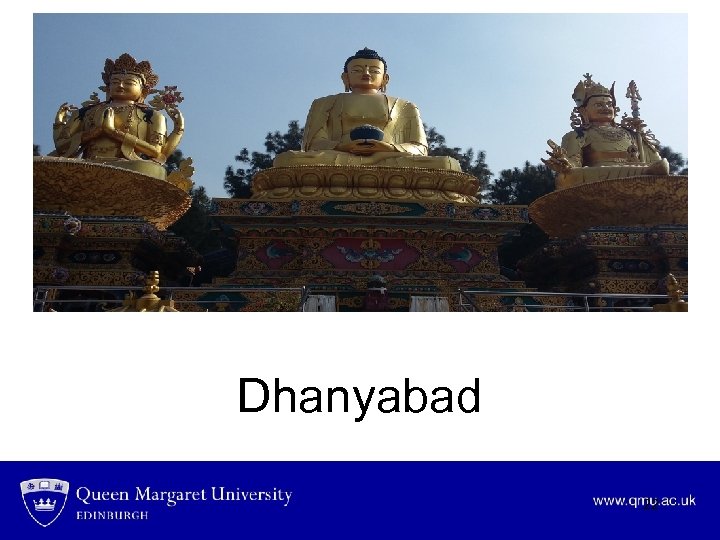
Dhanyabad 22
Скачать презентацию Working together to embrace difference Kathmandu case example
4c2e188cd19a01edb7ce6a88db36e2e9.ppt