 Скачать презентацию Working Safely In Your Biological Safety Cabinet
a69ea599ffd0b00ec34e4654297772c5.ppt
- Количество слайдов: 30



Working Safely In Your Biological Safety Cabinet
Training Overview Part II. HEPA & ULPA Filters Different Types of Cabinets Class I, Class II and Class III BSC Differences between A 2 and B 2 BSC International Standards Part III. Biosafety Cabinet Certification Part IV. Common user mistakes Part V. Demonstration on how to use a BSC
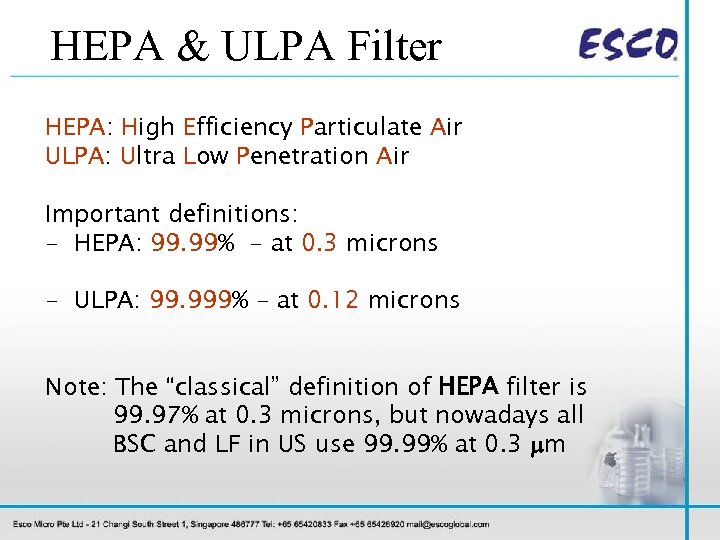
HEPA & ULPA Filter HEPA: High Efficiency Particulate Air ULPA: Ultra Low Penetration Air Important definitions: - HEPA: 99. 99% - at 0. 3 microns - ULPA: 99. 999% - at 0. 12 microns Note: The “classical” definition of HEPA filter is 99. 97% at 0. 3 microns, but nowadays all BSC and LF in US use 99. 99% at 0. 3 m
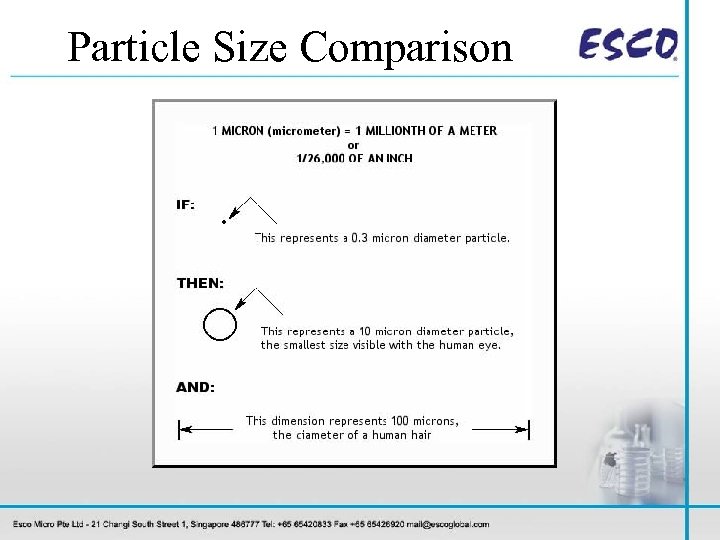
Particle Size Comparison
HEPA/ULPA Capability Removes a broad range of airborne contaminants: • Fine dust • Smoke • Bacteria (typical size: 500 to 0. 3 micron) • Soot • Pollen • Radioactive particles • Impurity ion -> can affect Integrated Circuit speed
Types of Cabinets • Biohazard Safety Cabinet (BSC) • Laminar Flow Cabinet (LFC) • Fume Hood
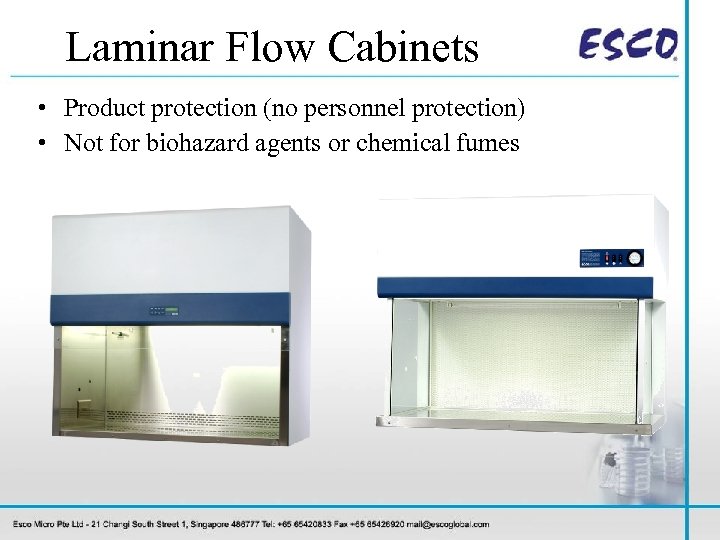
Laminar Flow Cabinets • Product protection (no personnel protection) • Not for biohazard agents or chemical fumes
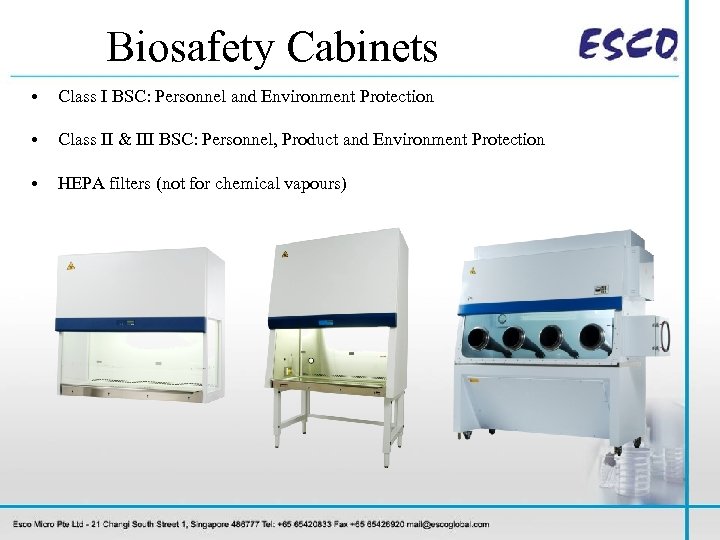
Biosafety Cabinets • Class I BSC: Personnel and Environment Protection • Class II & III BSC: Personnel, Product and Environment Protection • HEPA filters (not for chemical vapours)
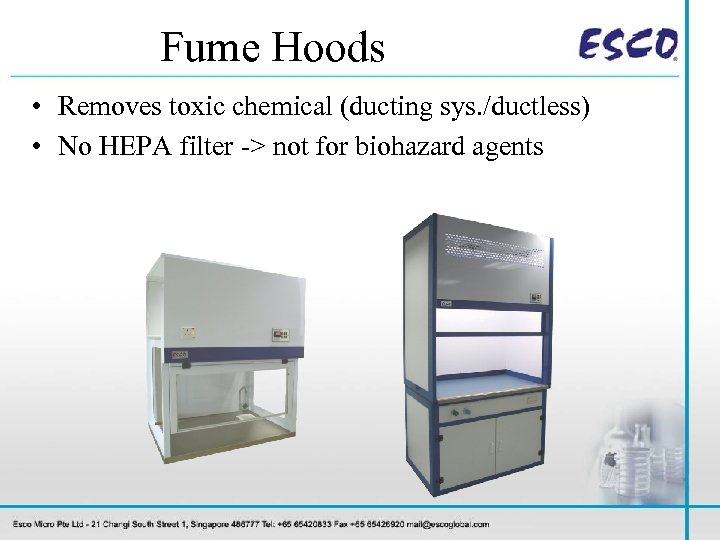
Fume Hoods • Removes toxic chemical (ducting sys. /ductless) • No HEPA filter -> not for biohazard agents
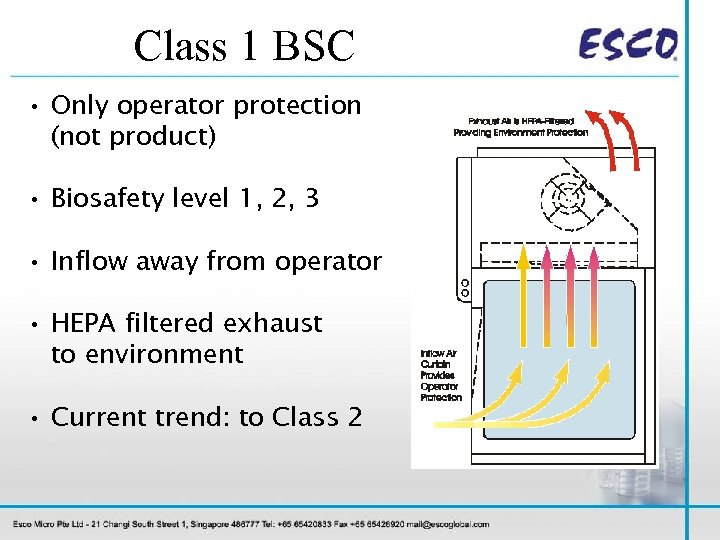
Class 1 BSC • Only operator protection (not product) • Biosafety level 1, 2, 3 • Inflow away from operator • HEPA filtered exhaust to environment • Current trend: to Class 2
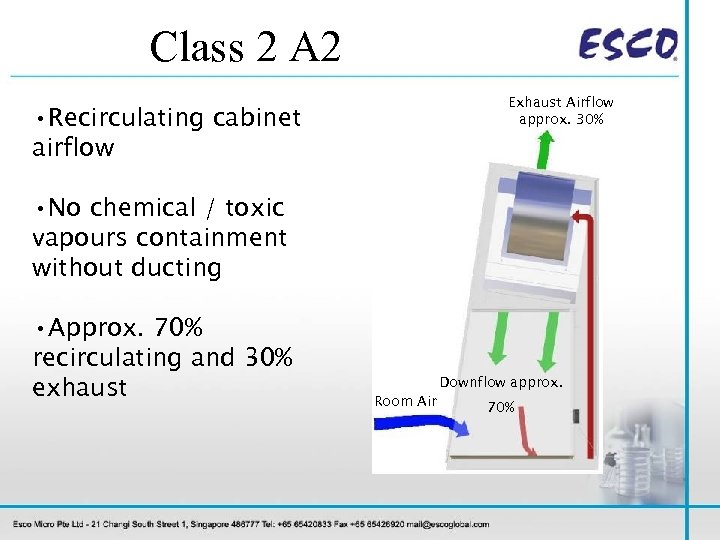
Class 2 A 2 Exhaust Airflow approx. 30% • Recirculating cabinet airflow • No chemical / toxic vapours containment without ducting • Approx. 70% recirculating and 30% exhaust Room Air Downflow approx. 70%
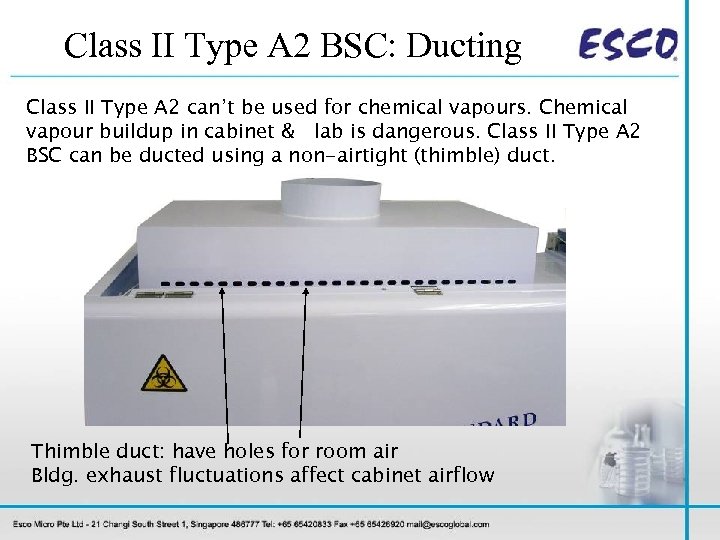
Class II Type A 2 BSC: Ducting Class II Type A 2 can’t be used for chemical vapours. Chemical vapour buildup in cabinet & lab is dangerous. Class II Type A 2 BSC can be ducted using a non-airtight (thimble) duct. Thimble duct: have holes for room air Bldg. exhaust fluctuations affect cabinet airflow
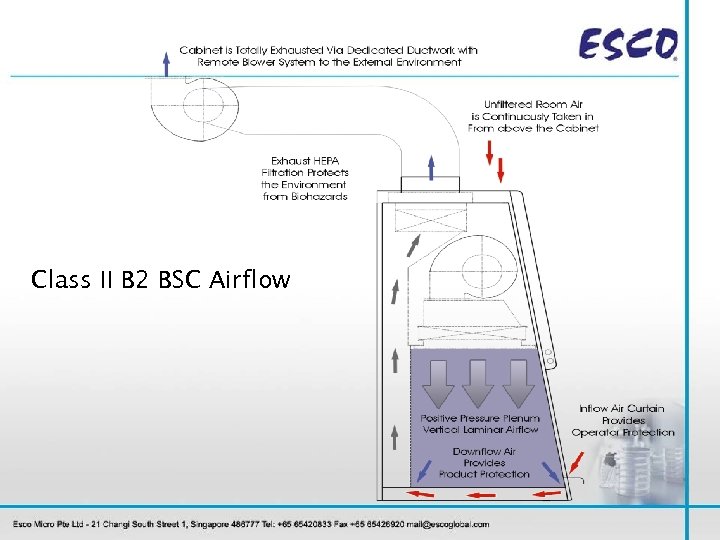
Class II B 2 BSC Airflow
Class 2 Type B 2 • Total exhaust cabinet (no recirculation) • Both biological and chemical vapor containment • Care with chemical: should not destroy filter • High exhaust air volume • Interlock system: if building exhaust fails • Dedicated exhaust fan with dynamic balancing • Exhaust fan -> precisely match the cabinet: - airflow volume - static pressure • Inflow and downflow are opposite each other • High level of expertise for install & maintenance
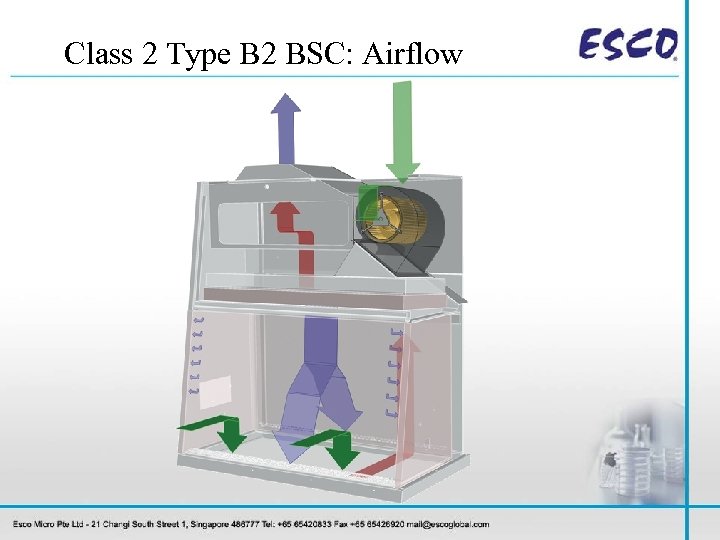
Class 2 Type B 2 BSC: Airflow
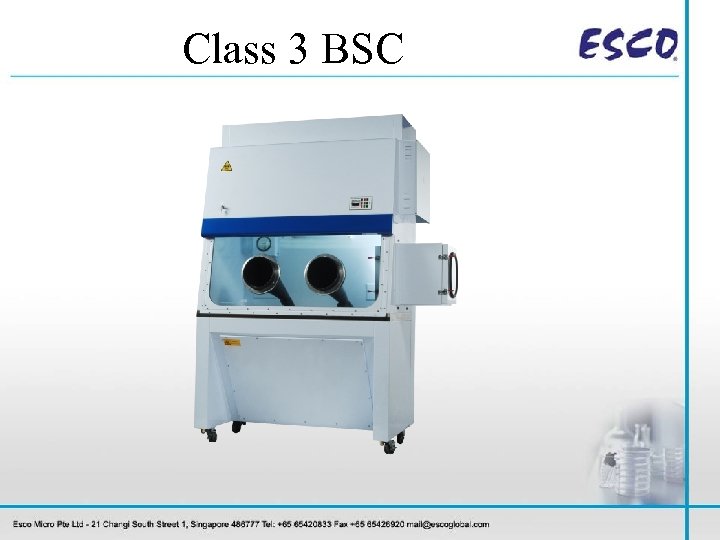
Class 3 BSC
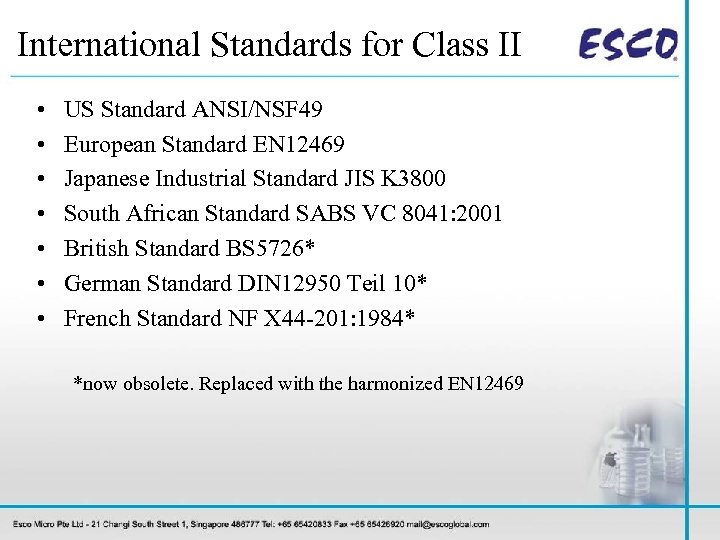
International Standards for Class II • • US Standard ANSI/NSF 49 European Standard EN 12469 Japanese Industrial Standard JIS K 3800 South African Standard SABS VC 8041: 2001 British Standard BS 5726* German Standard DIN 12950 Teil 10* French Standard NF X 44 -201: 1984* *now obsolete. Replaced with the harmonized EN 12469
Biosafety Cabinet Certification
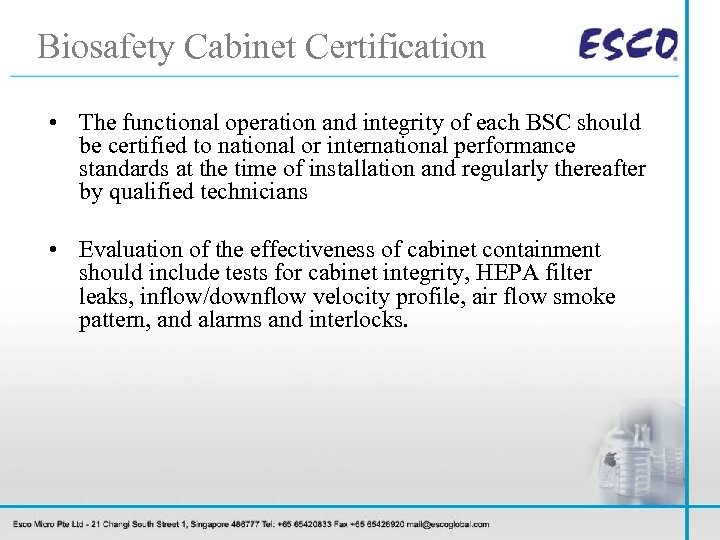
Biosafety Cabinet Certification • The functional operation and integrity of each BSC should be certified to national or international performance standards at the time of installation and regularly thereafter by qualified technicians • Evaluation of the effectiveness of cabinet containment should include tests for cabinet integrity, HEPA filter leaks, inflow/downflow velocity profile, air flow smoke pattern, and alarms and interlocks.
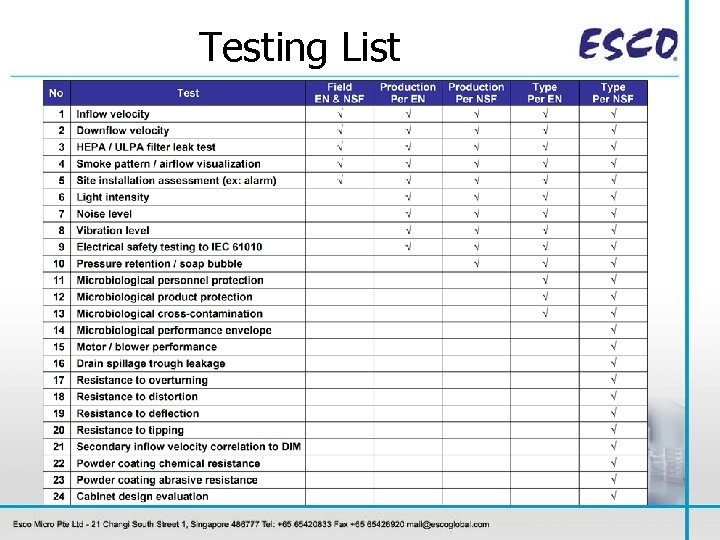
Testing List
Common User Mistakes
Common User Mistakes • Confusing a vertical laminar flow cabinet for a Class II BSC • Failure to identify the type of BSC needed for their operations • Class II B 2 cabinet not necessarily “safer” than a Class II A 2 cabinet (A 2 cabinets can also be ducted out when necessary) • Inappropriate choice of installation site / cabinet location • Inappropriate usage / maintenance of the BSC
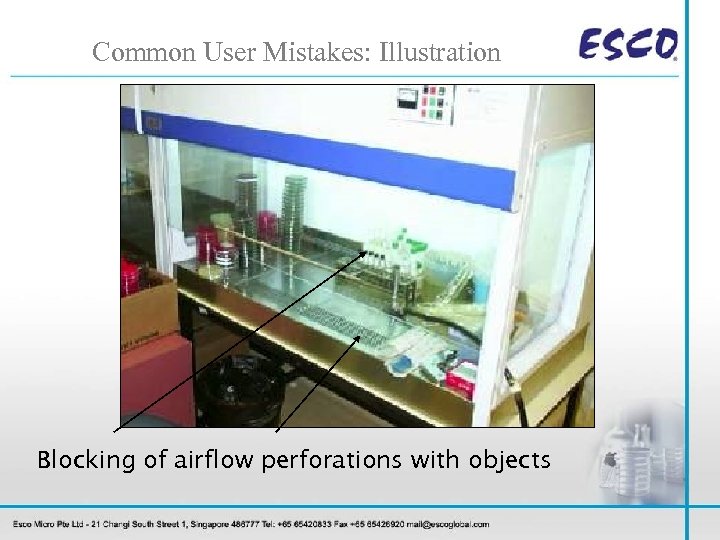
Common User Mistakes: Illustration Blocking of airflow perforations with objects
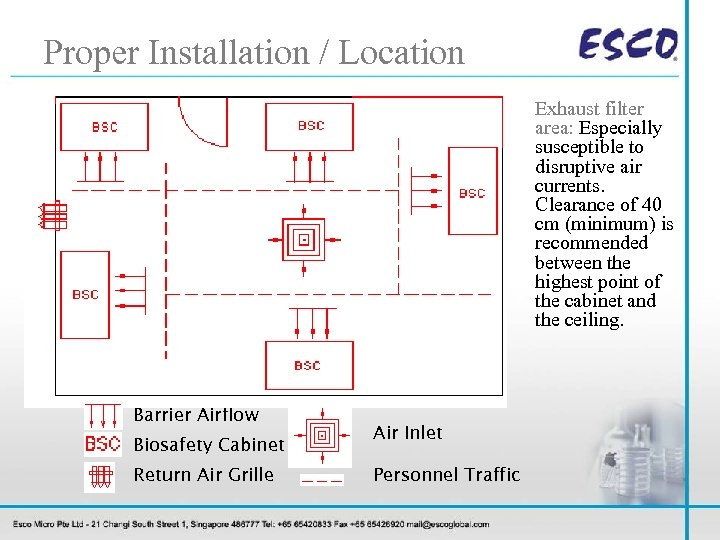
Proper Installation / Location Exhaust filter area: Especially susceptible to disruptive air currents. Clearance of 40 cm (minimum) is recommended between the highest point of the cabinet and the ceiling. Barrier Airflow Biosafety Cabinet Return Air Grille Air Inlet Personnel Traffic
Proper Operation • Slow deliberate movements that will not disrupt airflow, minimize arm movement • When an alarm is activated, do NOT use the cabinet • After usage, wipe down the cabinet with cleaning agents • Work as far into the cabinet as possible • Work starting from clean to “dirty” objects • Do not block airflow perforations with objects/equipments
Annual Testing • Recommended recertification for BSC’s: – Upon installation at customer’s site – On-site annually in accordance with international standards – When the cabinet is moved
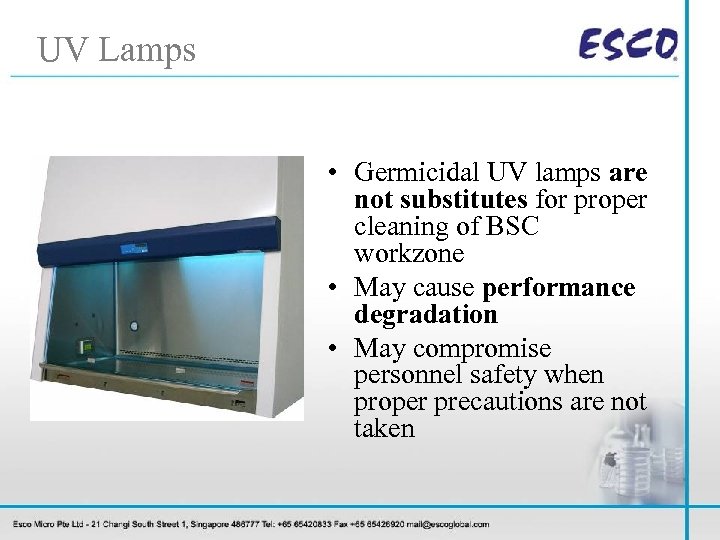
UV Lamps • Germicidal UV lamps are not substitutes for proper cleaning of BSC workzone • May cause performance degradation • May compromise personnel safety when proper precautions are not taken
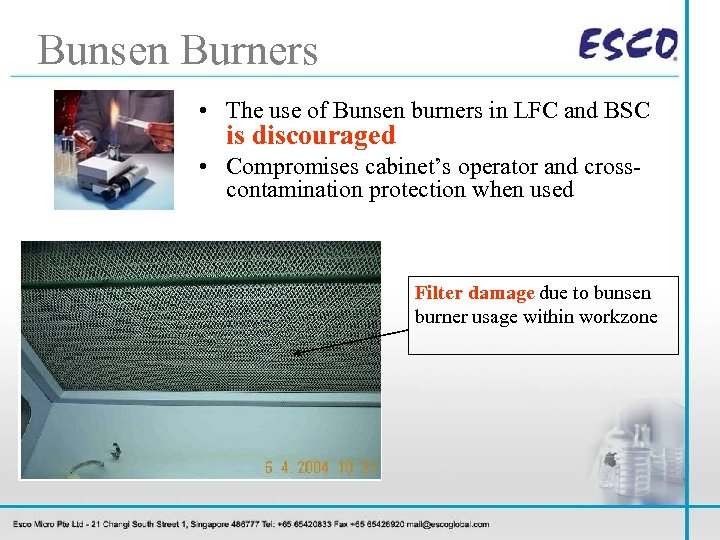
Bunsen Burners • The use of Bunsen burners in LFC and BSC is discouraged • Compromises cabinet’s operator and crosscontamination protection when used Filter damage due to bunsen burner usage within workzone
Reporting of accident/incident • If there is a spillage in the BSC, notify the PI(s)/supervisor(s)/laboratory officer(s) immediately and decontaminate all objects in the cabinet without turning off the cabinet.
Demonstration
Скачать презентацию Working Safely In Your Biological Safety Cabinet
a69ea599ffd0b00ec34e4654297772c5.ppt