


 Скачать презентацию Working for Change Using the Power of a
2b1950cc7c1304c942d283b031af2783.ppt
- Количество слайдов: 28
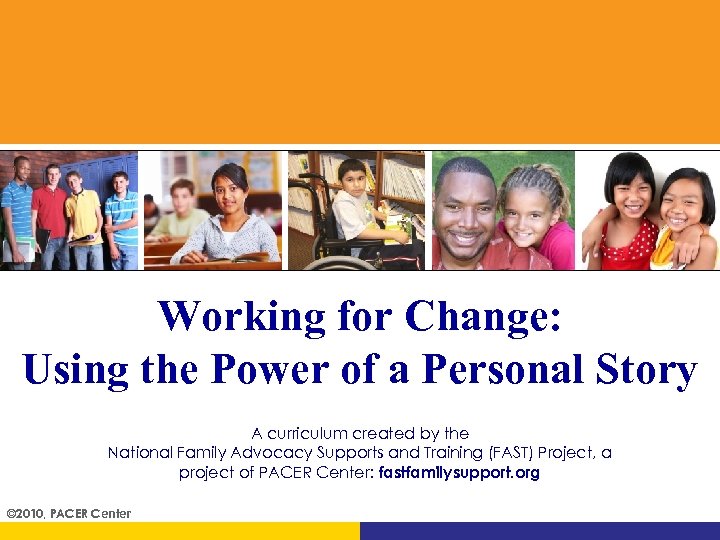 Working for Change: Using the Power of a Personal Story A curriculum created by the National Family Advocacy Supports and Training (FAST) Project, a project of PACER Center: fastfamilysupport. org © 2010, PACER Center
 Working for Change: Using the Power of a Personal Story A curriculum created by the National Family Advocacy Supports and Training (FAST) Project Page 2
 Agenda You will learn: • What advocacy is and why it’s important • Why changing systems is important • How to use the power of a personal story to make positive changes Page 3
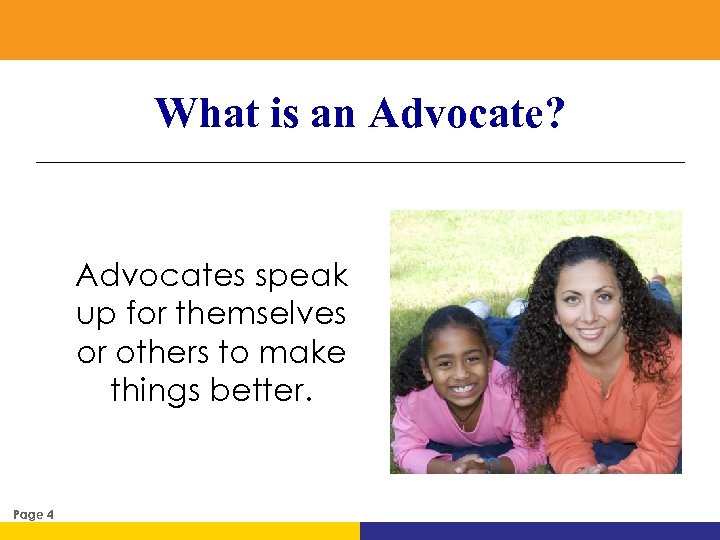 What is an Advocate? Advocates speak up for themselves or others to make things better. Page 4
 An Effective Advocate: • • Page 5 Has a strong knowledge base Organizes information Listens Asks questions Respects others Works with others Shares own experiences
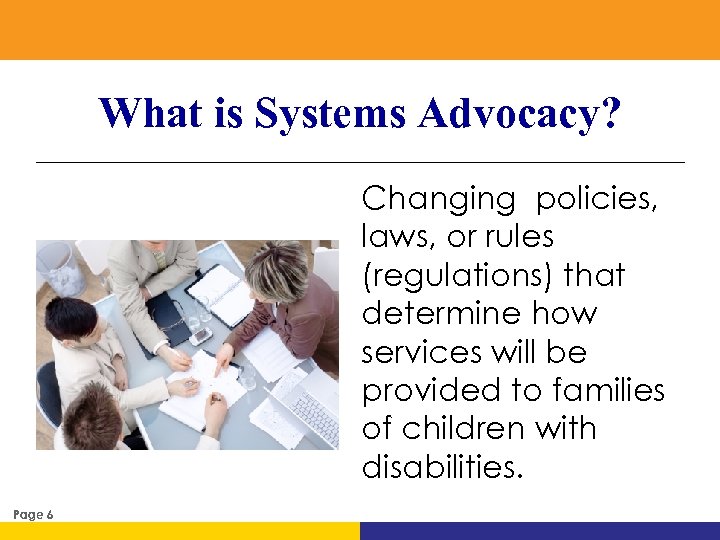 What is Systems Advocacy? Changing policies, laws, or rules (regulations) that determine how services will be provided to families of children with disabilities. Page 6
 Systems Advocacy: Terms To Know • Law • Rules • Policy Page 7
 Systems Advocacy: Why Do It? “Be the change you want to see in the world. ” -Mahatma Gandhi Parents can: • share “real world experience” on how a system is working or not working • suggest ideas for improving services • encourage other parents to participate Page 8
 Influencing a System: Does It Make a Difference? • "People do have an impact. Elected officials can examine statistics, but its the stories told by individuals that have the potential to move elected officials, by appealing to the heart. " -Pam Rykken, school board member • "Our constituents concerns are important to us as we consider and make decisions that impact them and our community. We welcome their input and find it extremely helpful in thoughtful decision making. " -Cynthia Bremer, city council member • "Nothing matters more to elected officials, like myself, than hearing real stories from real constituents. " -Mindy Greiling, state representative Page 9
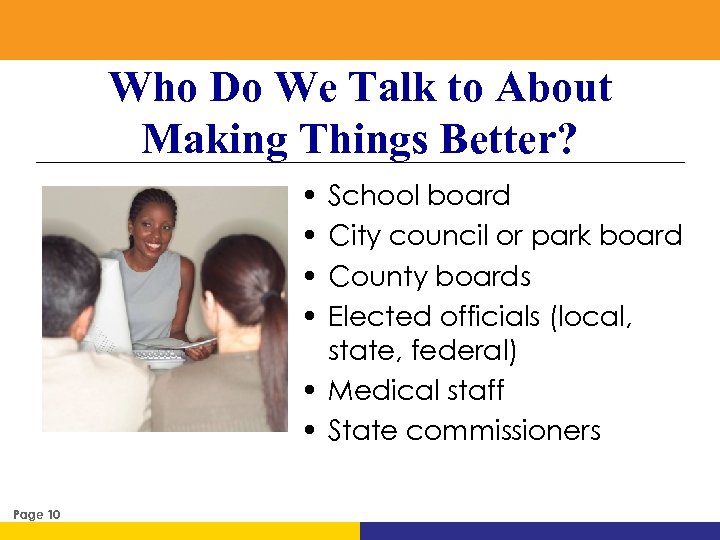 Who Do We Talk to About Making Things Better? • • School board City council or park board County boards Elected officials (local, state, federal) • Medical staff • State commissioners Page 10
 “Never doubt that a small group of committed people can change the world. It is the only thing that does. ” -Margaret Mead Page 11
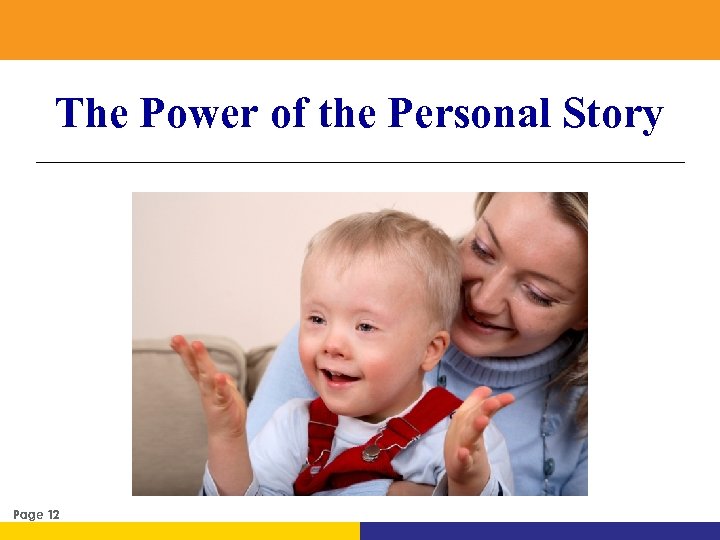 The Power of the Personal Story Page 12
 Why Use a Personal Story? “Tell me a fact, and I’ll learn. Tell me a truth, and I’ll believe. But tell me a story, and it will live in my heart forever. ” - Indian Proverb Page 13
 Personal Stories are Powerful! Personal Stories: • Hold attention • Trigger feelings • Are memorable • Influence others Page 14
 Personal Story Tips Be brief and clear • Time is limited • Choose one thing to talk about • Keep sentences short • Use words, not acronyms Page 15
 Story Outline: the Beginning • Who are you? • Who is your child? • What is working? Page 16
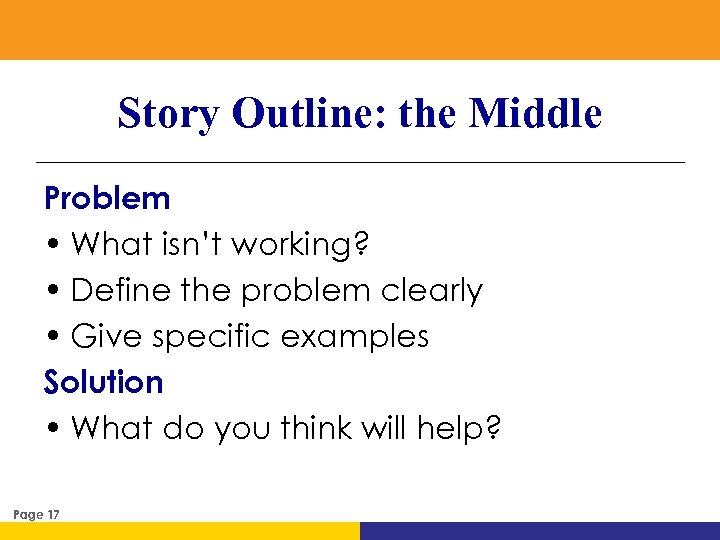 Story Outline: the Middle Problem • What isn’t working? • Define the problem clearly • Give specific examples Solution • What do you think will help? Page 17
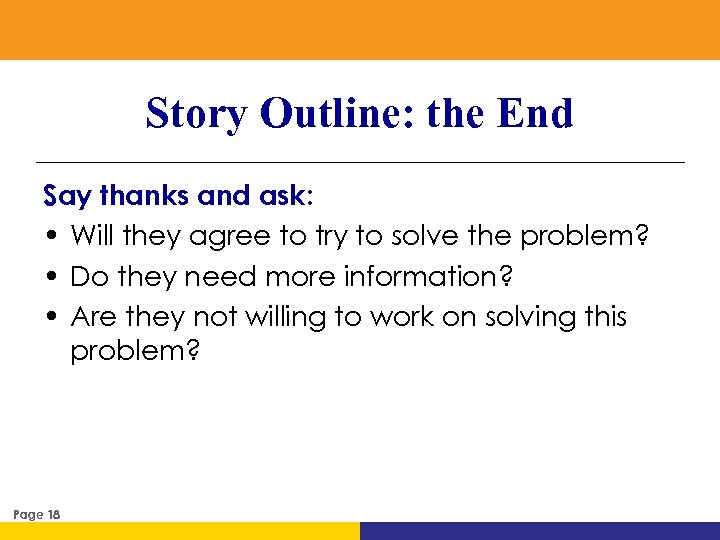 Story Outline: the End Say thanks and ask: • Will they agree to try to solve the problem? • Do they need more information? • Are they not willing to work on solving this problem? Page 18
 Putting It all Together Exercise: Sharing Your Personal Story Page 19
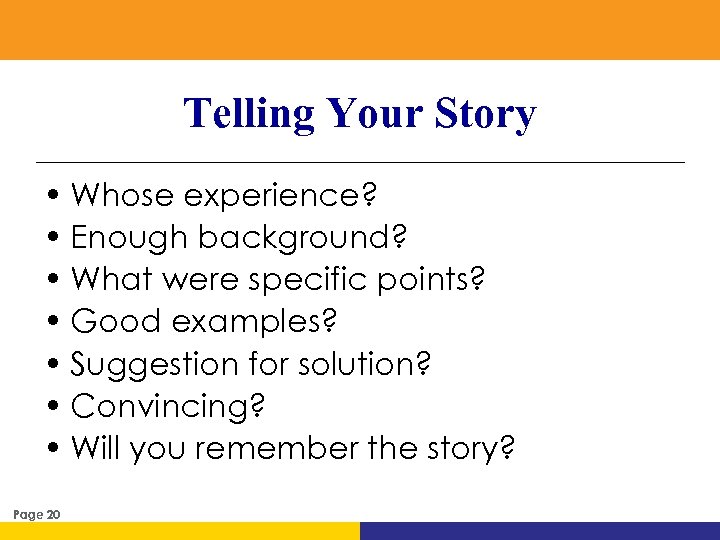 Telling Your Story • Whose experience? • Enough background? • What were specific points? • Good examples? • Suggestion for solution? • Convincing? • Will you remember the story? Page 20
 You Can Do It! • Practice in front of a mirror or with a trusted family member or friend. • Be yourself. Your story is unique! • Try to remain calm. • Stay flexible. • Find a supportive person to go with you. • Breathe and speak “your truth. ” Page 21
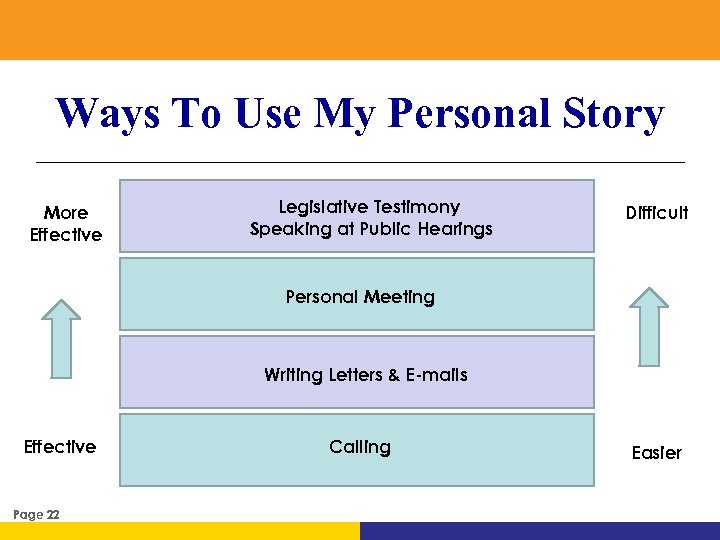 Ways To Use My Personal Story More Effective Legislative Testimony Speaking at Public Hearings Difficult Personal Meeting Writing Letters & E-mails Effective Page 22 Calling Easier
 Who Should Hear Your Story? Find the right audience. Ask: • Who makes decisions in this “system”? • Who has the power to support the changes I want to see? Page 23
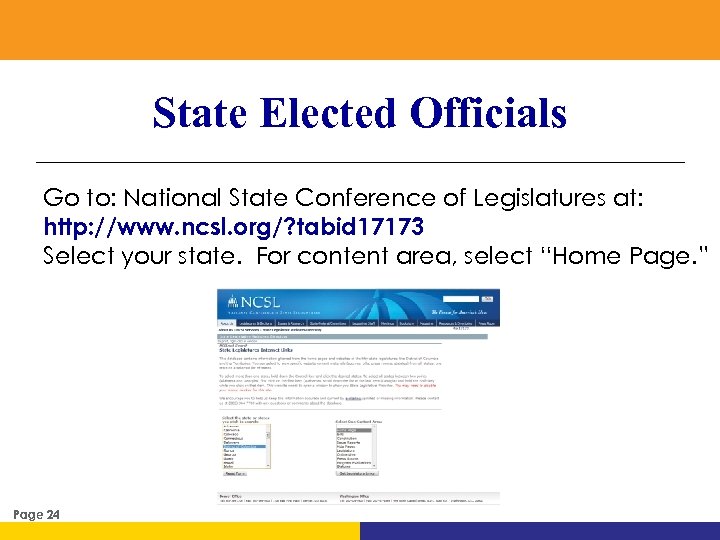 State Elected Officials Go to: National State Conference of Legislatures at: http: //www. ncsl. org/? tabid 17173 Select your state. For content area, select “Home Page. ” Page 24
 Federal Elected Officials • U. S. Senators https: //www. senate. gov/general/contact_ information/senators_cfm. cfm • U. S. House of Representatives https: //writerep. house. gov/writerep/welcome. shtml • President of the United States (White House) http: //www. whitehouse. gov • Call U. S. Capitol Switchboard (202) 224 -3121 Page 25
 Other Ways to Share Your Story • Tell your story to an advocate and give permission for her to share it • Join a focus or other small group and share your story • Write a letter to a publication using your story to make a point • Other ideas? Page 26
 “Be the change you want to see in the world. ” ~Mahatma Gandhi Page 27
 Contact Information National Family Advocacy Supports and Training (FAST) Project: fastfamilysupport. org 888. 248. 0822 (toll-free nationwide) The FAST Project is funded by the Administration on Developmental Disabilities (ADD) as a Project of National Significance. FAST is a project of: PACER. org | 952. 838. 9000 | 888. 248. 0822 Page 28