


 Скачать презентацию Women s movements of the 1920 s and the
4d92cf195487bebf7c5ac9ea9020ff0f.ppt
- Количество слайдов: 36
 Women’s movements of the 1920 s and the 1960 s Paige Z. Horace Greeley HS Ahap KLM Chappaqua, NY
 How does the women’s movement of the 1920 s compare with the women’s movement of the 1960 s?
 1920 s
 Background Historically, women have been considered intellectually inferior to men. They were seen as major sources of temptation and evil. Women were also considered naturally weaker than men
 “Woman is the gate of the devil, the path of wickedness, the sting of the serpent, in a word a perilous object. ” -- St. Jerome, a 4 th-c Latin father of the Christian church
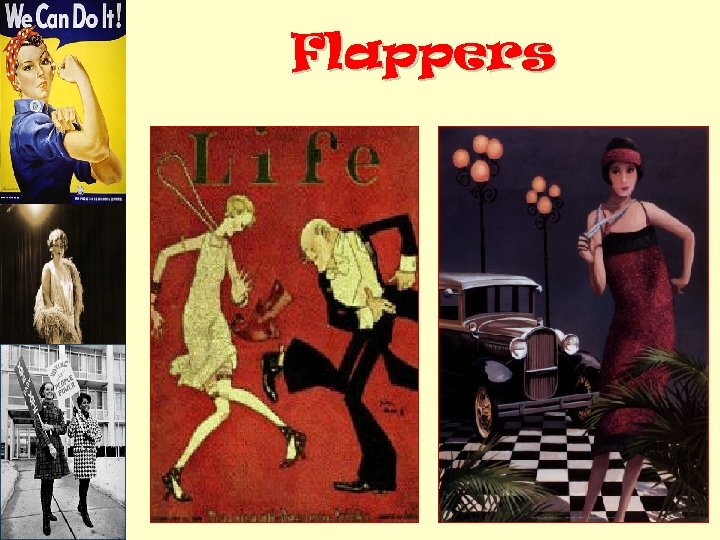 Flappers
 Flappers
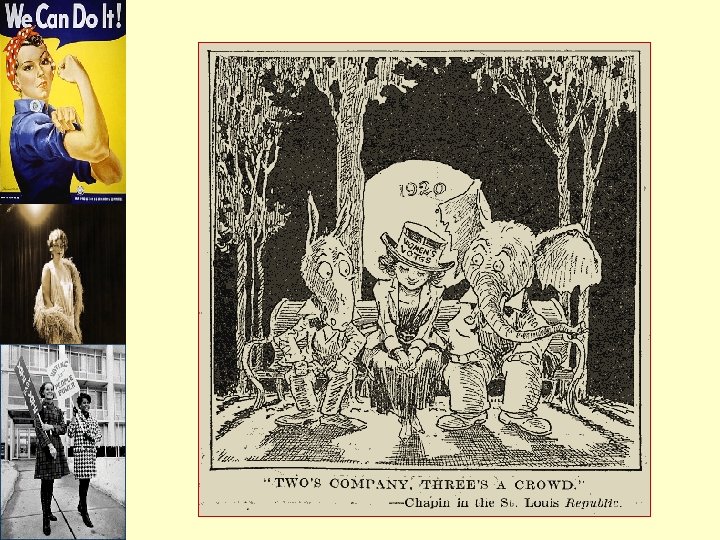
 th 19 Amendment “The right of citizens of the United States to vote shall not be denied or abridged by the United States or by any State on account of sex. Congress shall have power to enforce this article by appropriate legislation. ” It was ratified on August 18 th, 1920.
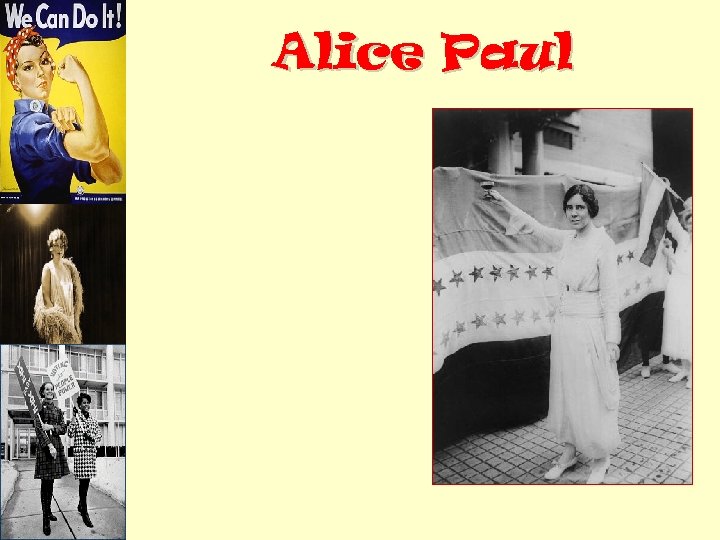 Alice Paul
 The Equal Rights Amendment (ERA)
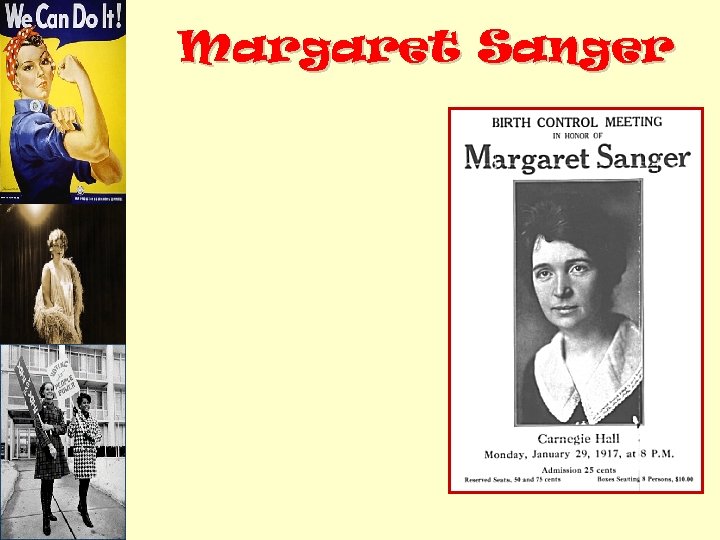 Margaret Sanger
 “Woman was created to be man's helpmeet, but her unique role is in conception. . . since for other purposes men would be better assisted by other men. " --Thomas Aquinas, 13 th century Christian theologian
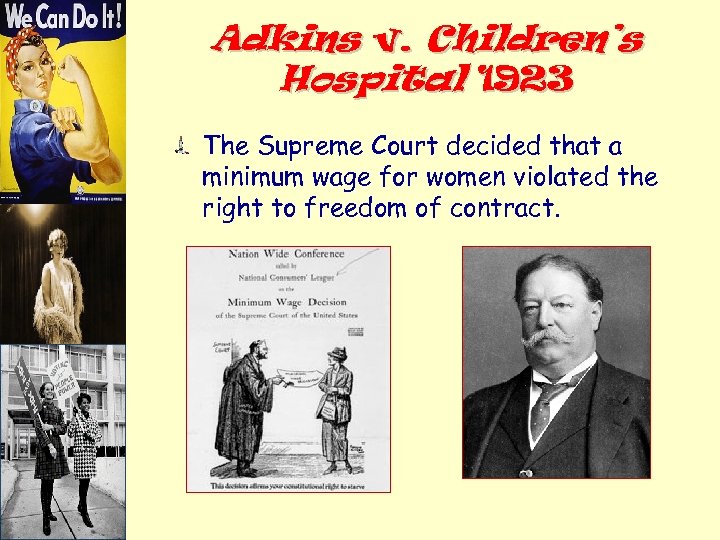 Adkins v. Children’s Hospital 1923 The Supreme Court decided that a minimum wage for women violated the right to freedom of contract.
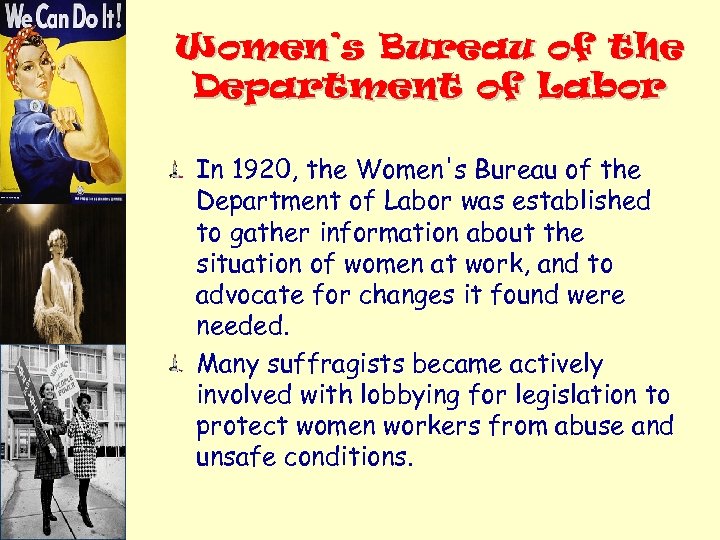 Women’s Bureau of the Department of Labor In 1920, the Women's Bureau of the Department of Labor was established to gather information about the situation of women at work, and to advocate for changes it found were needed. Many suffragists became actively involved with lobbying for legislation to protect women workers from abuse and unsafe conditions.
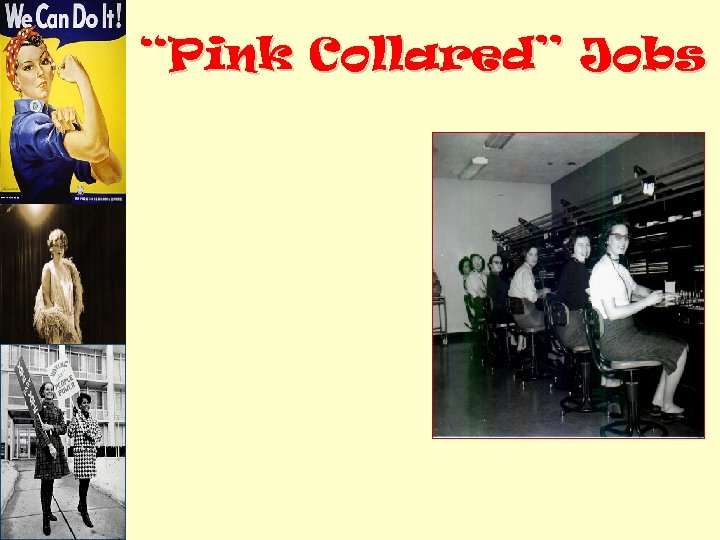 “Pink Collared” Jobs
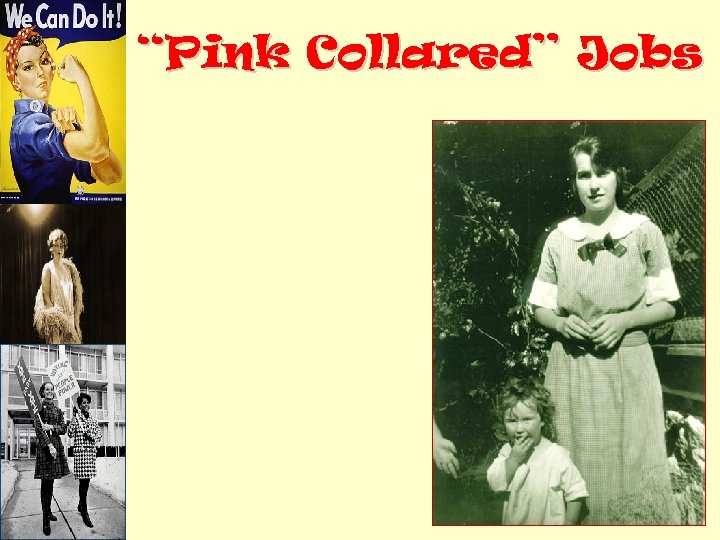 “Pink Collared” Jobs
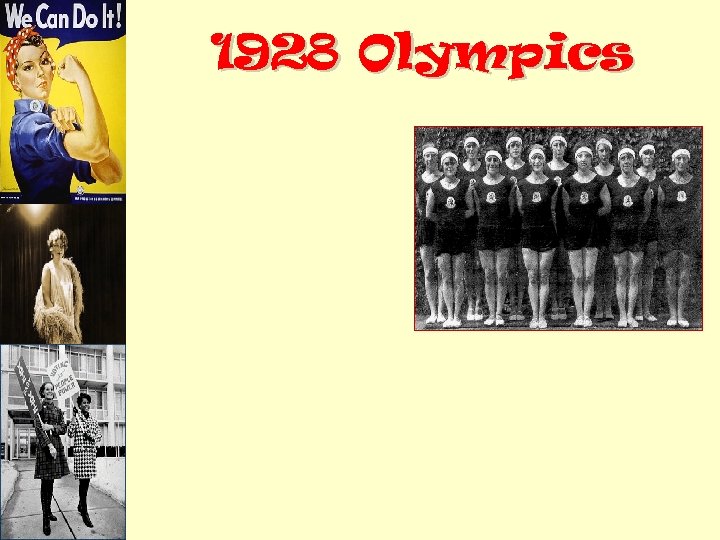 1928 Olympics
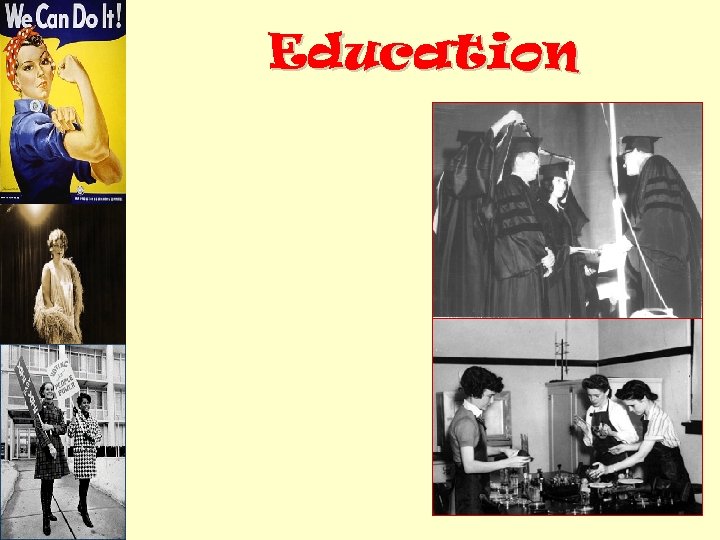 Education
 1960 s
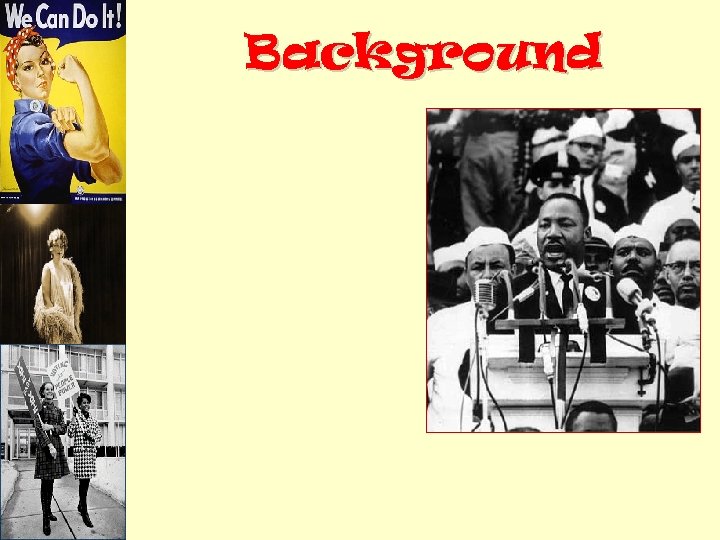 Background
 Background Cont
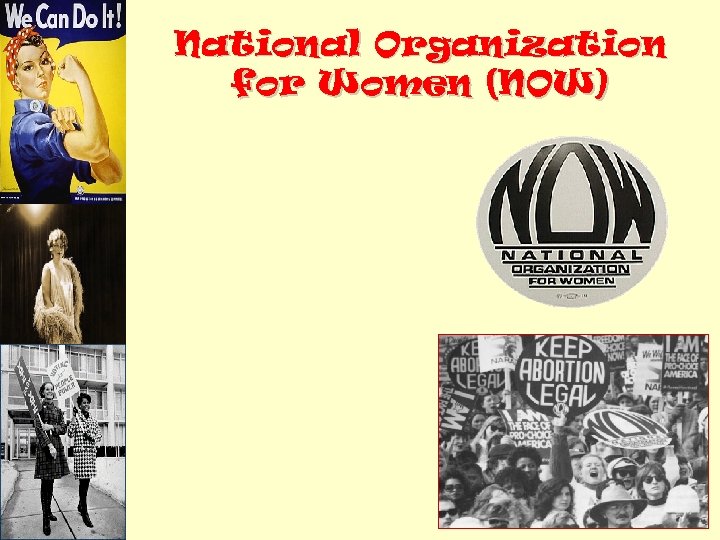 National Organization for Women (NOW)
 NOW (con’t. )
 Rachel Carson Wrote the controversial book, Silent Spring It says that pesticides are destroying wildlife and endangering humanity. May 27 th, 1907 April 14 th, 1964
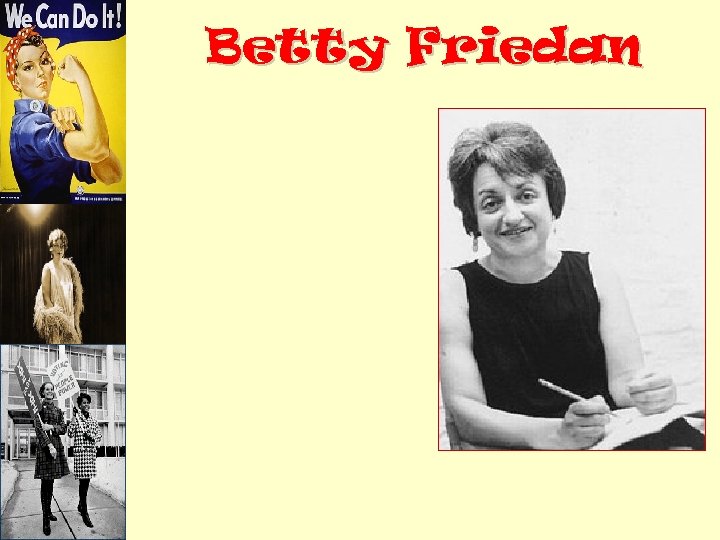 Betty Friedan
 The problem that has no name– which is simply the fact that American women are kept from growing to their full human capacities–is taking a far greater toll on the physical and mental health of our country than any known disease. -- Betty Friedan
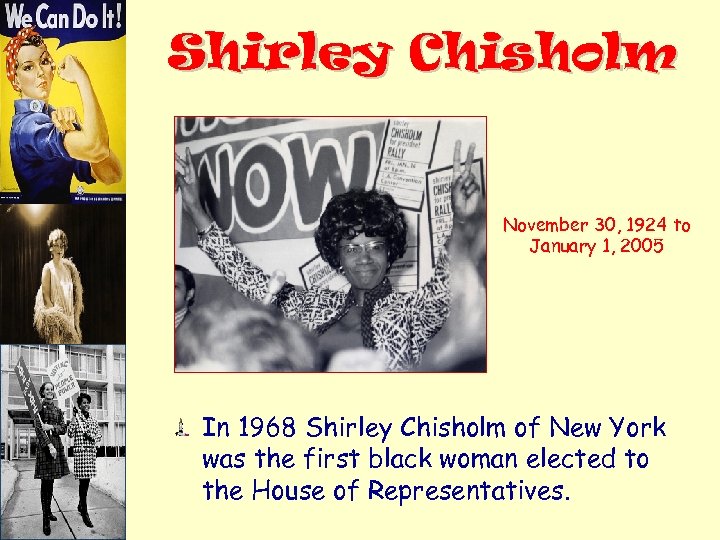 Shirley Chisholm November 30, 1924 to January 1, 2005 In 1968 Shirley Chisholm of New York was the first black woman elected to the House of Representatives.
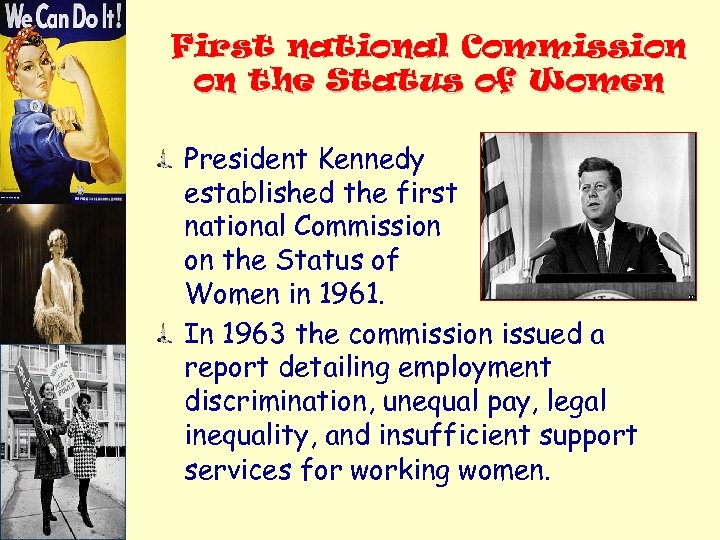 First national Commission on the Status of Women President Kennedy established the first national Commission on the Status of Women in 1961. In 1963 the commission issued a report detailing employment discrimination, unequal pay, legal inequality, and insufficient support services for working women.
 Equal Pay Act 1963
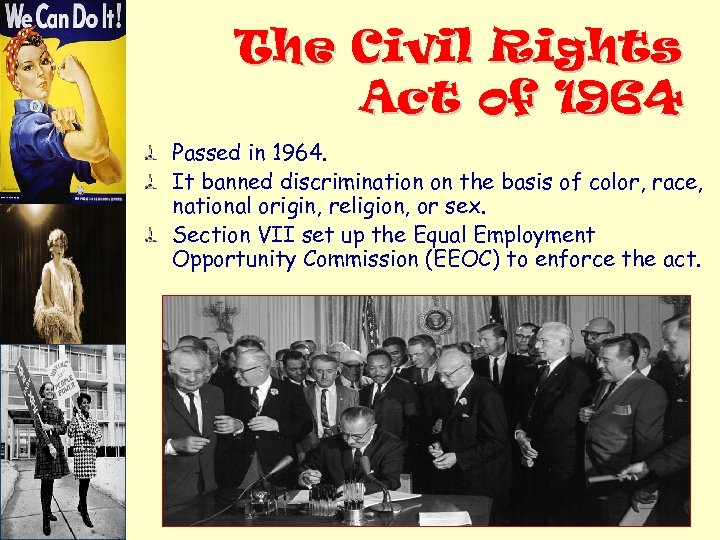 The Civil Rights Act of 1964 Passed in 1964. It banned discrimination on the basis of color, race, national origin, religion, or sex. Section VII set up the Equal Employment Opportunity Commission (EEOC) to enforce the act.
 Presidential Executive Order 11246 It was signed by President Lyndon B. Johnson on September 24 th, 1965 It prohibited bias against women in hiring by federal government contractors. “…Prohibits federal contractors and federally assisted construction contractors and subcontractors, who do over $10, 000 in Government business in one year from discriminating in employment decisions on the basis of race, color, religion, sex, or national origin. "
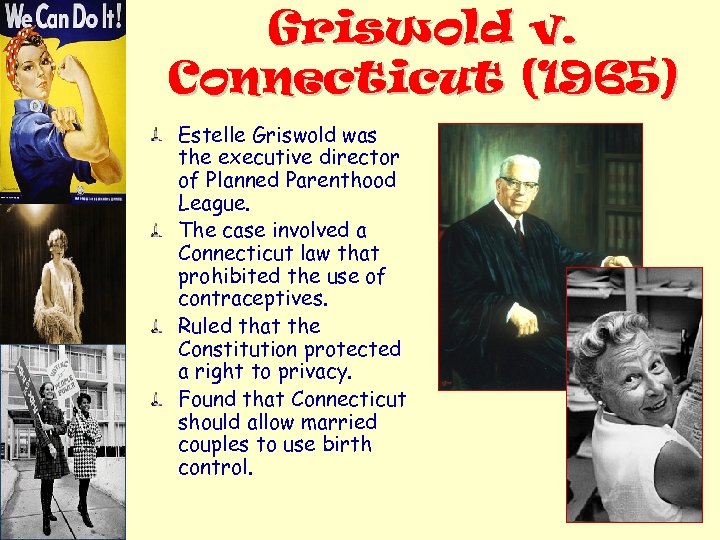 Griswold v. Connecticut (1965) Estelle Griswold was the executive director of Planned Parenthood League. The case involved a Connecticut law that prohibited the use of contraceptives. Ruled that the Constitution protected a right to privacy. Found that Connecticut should allow married couples to use birth control.
 The End
 Works Cited "1920 s. " Women of the Century. 2006. Discovery Channel. 1 June 2007
 Works Cited Cont "Equal Rights Amendment. " National Organization of Women. 2007. NOW. 19 May 2007