 Скачать презентацию WMO 3 1 Feedback from PTC-2014 meeting CAS
d58109483fbfe1c2cc1868062c46cba5.ppt
- Количество слайдов: 11



WMO 3. 1 Feedback from PTC-2014 meeting CAS MG meeting WMO Geneva 23 -25 April 2014 Øystein Hov Norwegian Meteorological Institute WMO; Name of Department (ND)
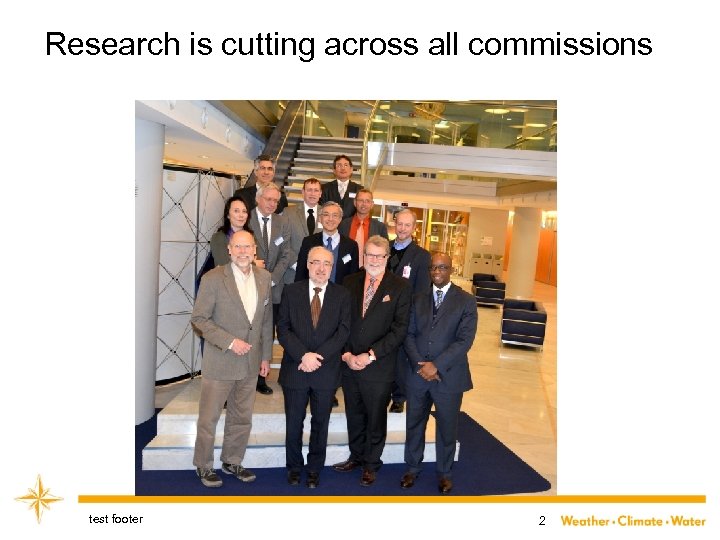
Research is cutting across all commissions test footer 2
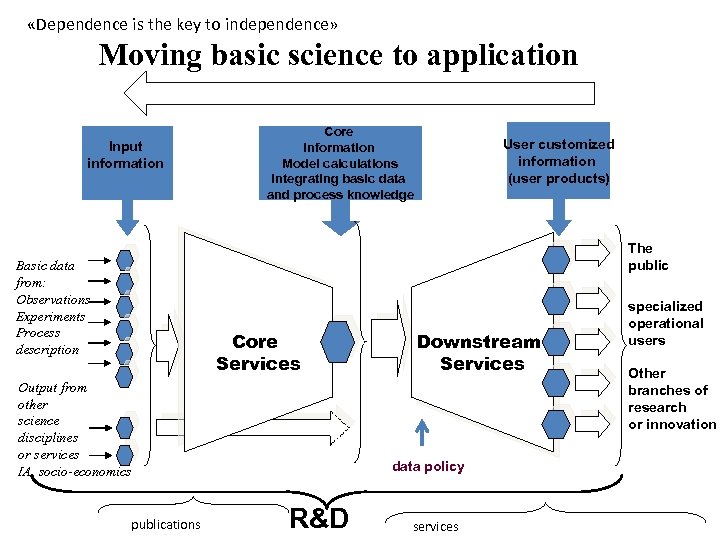
«Dependence is the key to independence» Moving basic science to application Input information Core information Model calculations integrating basic data and process knowledge User customized information (user products) The public Basic data from: Observations Experiments Process description Core Services Output from other science disciplines or services IA, socio-economics publications Downstream Services data policy R&D services specialized operational users Other branches of research or innovation
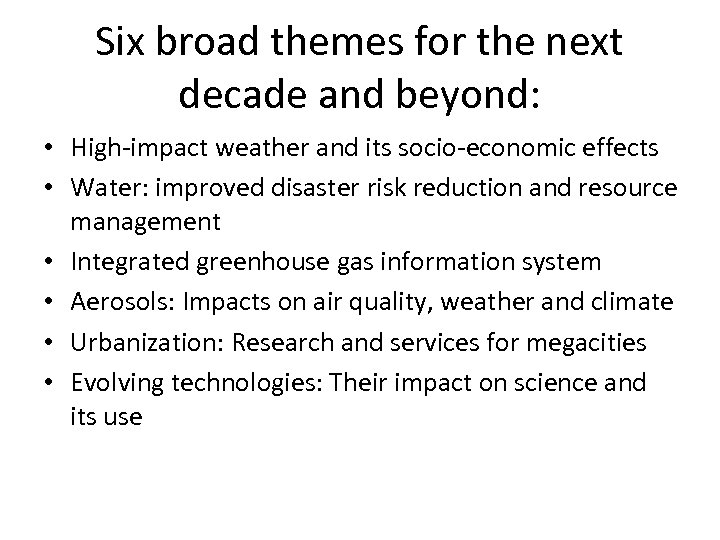
Six broad themes for the next decade and beyond: • High-impact weather and its socio-economic effects • Water: improved disaster risk reduction and resource management • Integrated greenhouse gas information system • Aerosols: Impacts on air quality, weather and climate • Urbanization: Research and services for megacities • Evolving technologies: Their impact on science and its use
R&D as a cross-cutting activity CAS needs to interact closely with • Other technical commissions • Regional associations • Other cross-cutting structures – EC-PORS – GFCS – WIGOS
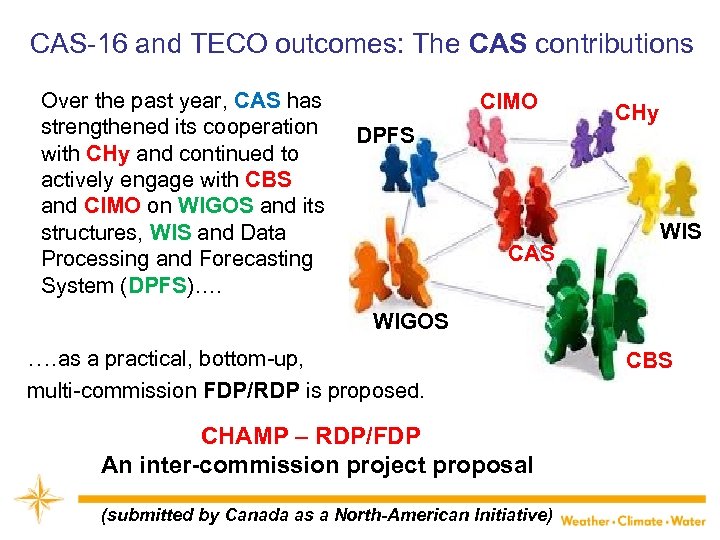
CAS-16 and TECO outcomes: The CAS contributions Over the past year, CAS has strengthened its cooperation with CHy and continued to actively engage with CBS and CIMO on WIGOS and its structures, WIS and Data Processing and Forecasting System (DPFS)…. CIMO DPFS CAS CHy WIS WIGOS …. as a practical, bottom-up, multi-commission FDP/RDP is proposed. CHAMP – RDP/FDP An inter-commission project proposal (submitted by Canada as a North-American Initiative) CBS
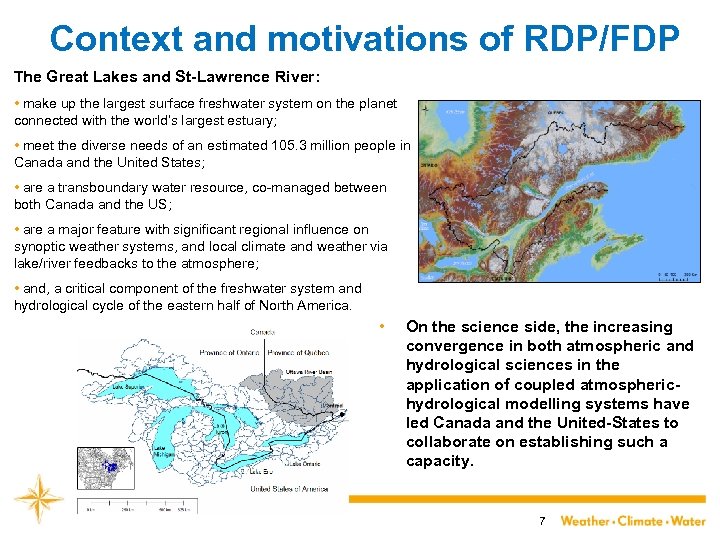
Context and motivations of RDP/FDP The Great Lakes and St-Lawrence River: • make up the largest surface freshwater system on the planet connected with the world’s largest estuary; • meet the diverse needs of an estimated 105. 3 million people in Canada and the United States; • are a transboundary water resource, co-managed between both Canada and the US; • are a major feature with significant regional influence on synoptic weather systems, and local climate and weather via lake/river feedbacks to the atmosphere; • and, a critical component of the freshwater system and hydrological cycle of the eastern half of North America. • On the science side, the increasing convergence in both atmospheric and hydrological sciences in the application of coupled atmospherichydrological modelling systems have led Canada and the United-States to collaborate on establishing such a capacity. 7
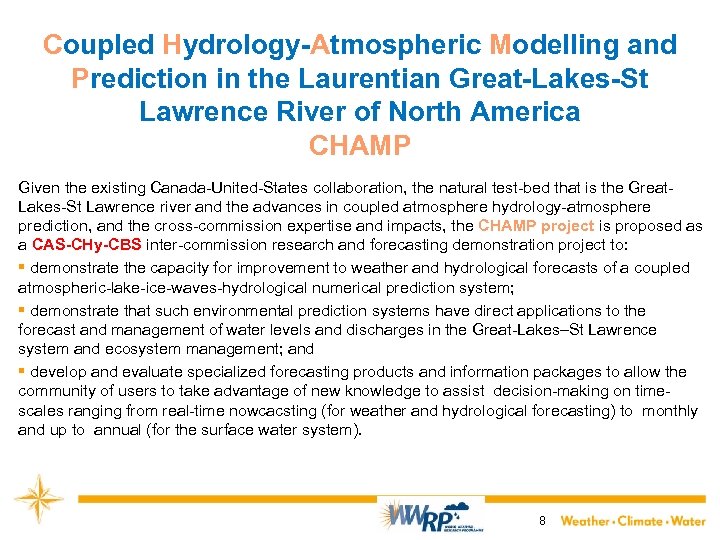
Coupled Hydrology-Atmospheric Modelling and Prediction in the Laurentian Great-Lakes-St Lawrence River of North America CHAMP Given the existing Canada-United-States collaboration, the natural test-bed that is the Great. Lakes-St Lawrence river and the advances in coupled atmosphere hydrology-atmosphere prediction, and the cross-commission expertise and impacts, the CHAMP project is proposed as a CAS-CHy-CBS inter-commission research and forecasting demonstration project to: § demonstrate the capacity for improvement to weather and hydrological forecasts of a coupled atmospheric-lake-ice-waves-hydrological numerical prediction system; § demonstrate that such environmental prediction systems have direct applications to the forecast and management of water levels and discharges in the Great-Lakes–St Lawrence system and ecosystem management; and § develop and evaluate specialized forecasting products and information packages to allow the community of users to take advantage of new knowledge to assist decision-making on timescales ranging from real-time nowcacsting (for weather and hydrological forecasting) to monthly and up to annual (for the surface water system). 8
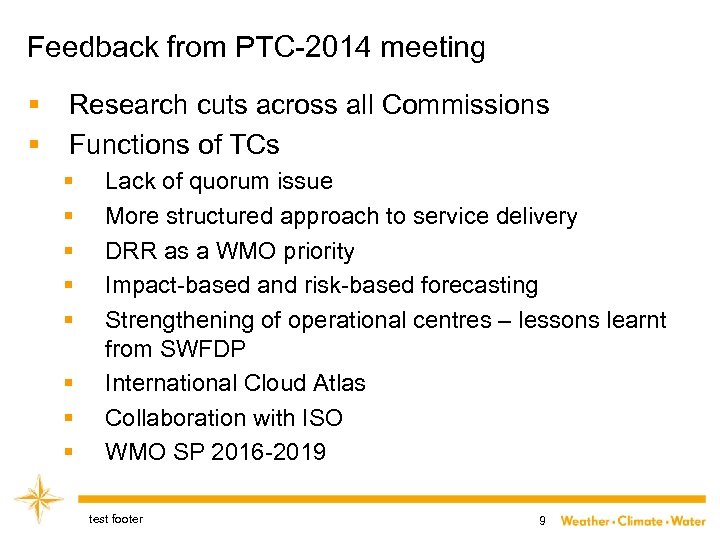
Feedback from PTC-2014 meeting § § Research cuts across all Commissions Functions of TCs § § § § Lack of quorum issue More structured approach to service delivery DRR as a WMO priority Impact-based and risk-based forecasting Strengthening of operational centres – lessons learnt from SWFDP International Cloud Atlas Collaboration with ISO WMO SP 2016 -2019 test footer 9
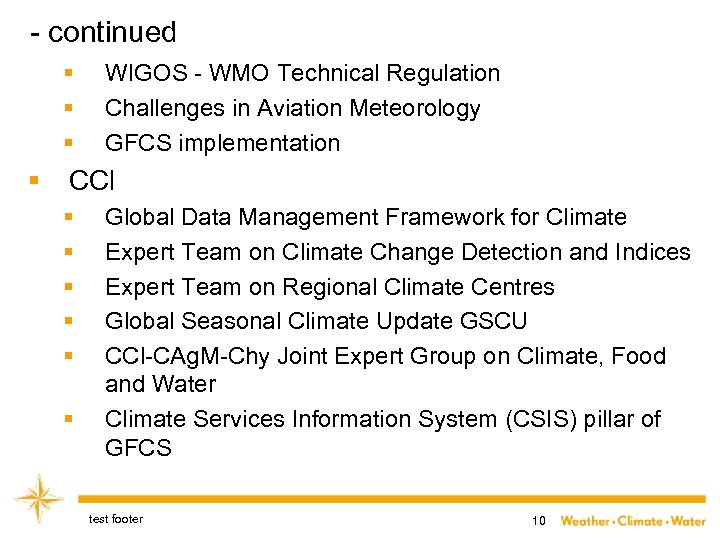
- continued § § WIGOS - WMO Technical Regulation Challenges in Aviation Meteorology GFCS implementation CCl § § § Global Data Management Framework for Climate Expert Team on Climate Change Detection and Indices Expert Team on Regional Climate Centres Global Seasonal Climate Update GSCU CCl-CAg. M-Chy Joint Expert Group on Climate, Food and Water Climate Services Information System (CSIS) pillar of GFCS test footer 10
Thank you for your attention www. wmo. int
Скачать презентацию WMO 3 1 Feedback from PTC-2014 meeting CAS
d58109483fbfe1c2cc1868062c46cba5.ppt