


 Скачать презентацию Wireless Technology Wireless devices transmit information
cfbb8892826954ef0dc7368654497f75.ppt
- Количество слайдов: 39
 Wireless Technology • • Wireless devices transmit information via Electromagnetic waves Early wireless devices – Radios – often called wireless in old WWII movies – Broadcast TV – TV remote controls – Garage door openers
 Wireless technology • Today’s wireless devices include – Mobile phones – Satellite TV – Satellite radio – Global Positioning Systems (GPS) – “Bluetooth” devices – Wi-Fi systems – RFID tags
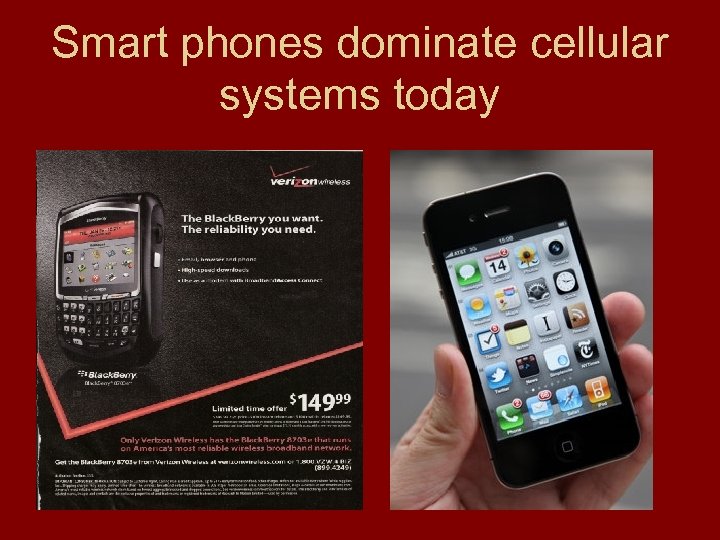 Smart phones dominate cellular systems today
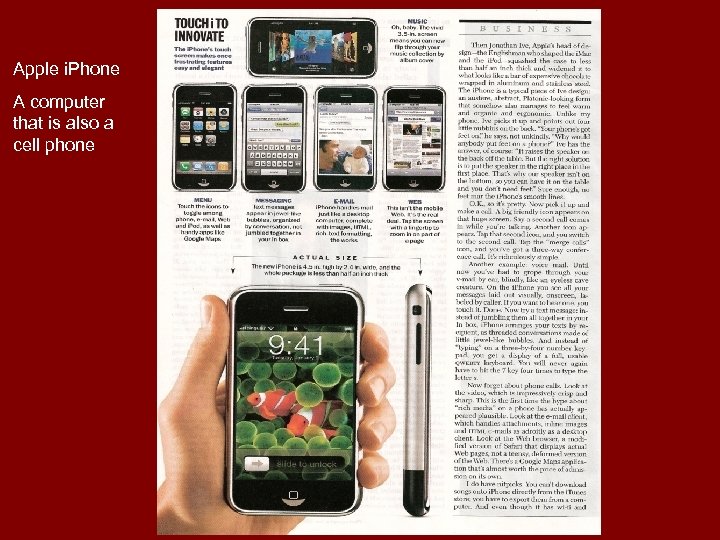 Apple i. Phone A computer that is also a cell phone
 Mobile Phone (Cellular) Systems • Mobile phones are two-way radios. They transmit and receive RF signals. Old style phones are not radios. • Original mobile phones used a single large central antenna and had limited channels available to carry signals. Only a small number of mobile phones were available in a city due to the limited amount of usable frequency bands. • Cellular technology allowed for a near limitless number of mobile phones to operate in a city.
 Mobile Phone (Cellular) Systems • Cellular systems operate at a frequency of 824 to 894 Mhz, and 1850 to 1990 Mhz. Other bands are also being used as demand increases. • These frequency bands are controlled by the Federal government. • The original cell phones operated at 824 -894 MHz. Sometimes these phones are referred to as “analog phones” since digital technology had not yet been developed. • Many systems today operate at 1850 to 1990 Mhz, the PCS band in the digital mode but can also operate at the lower frequency band. These phones are called “dual band” phones. • The term “cellular” refers to the fact that service areas are divided into “cells” typically 1 - 10 miles apart. Cell size is dependent on the population density of the area. Large population areas require closer spaced cells. • Each cellular company has their own towers, thus the large number of towers throughout the area. Sometimes towers will have multiple sets for the same system or multiple systems.
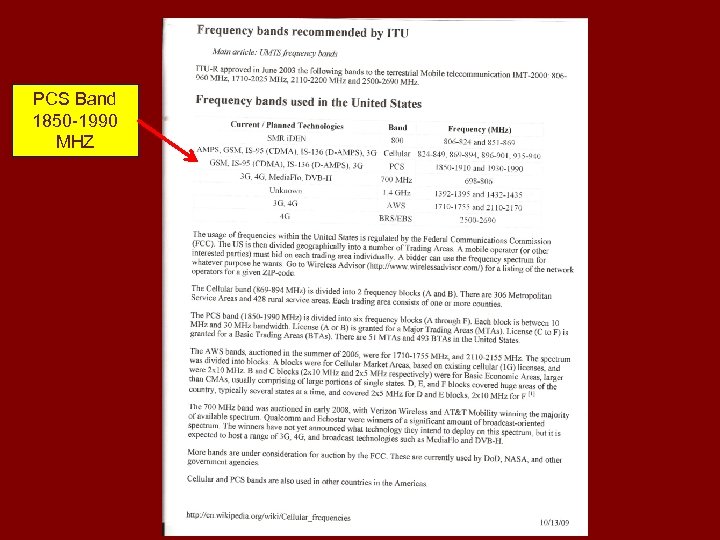 PCS Band 1850 -1990 MHZ
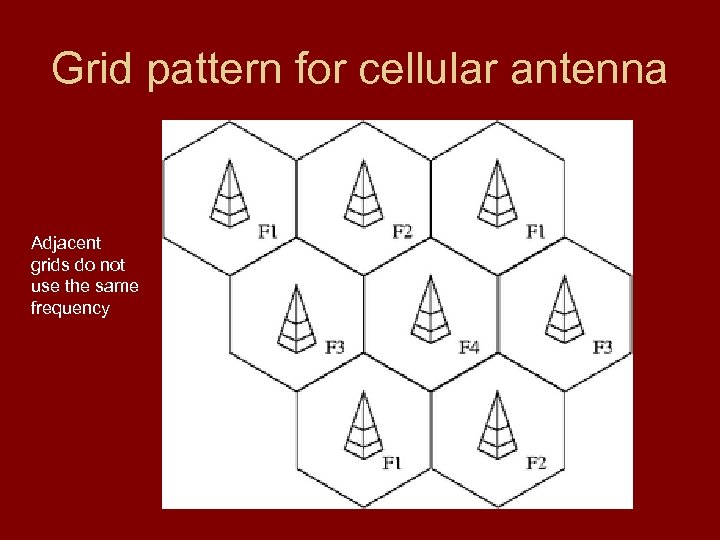 Grid pattern for cellular antenna Adjacent grids do not use the same frequency
 Mobile Phone (Cellular) Systems • Each phone has a unique code. • If your cell phone is “on”, it is transmitting a signal to the nearest cell tower. • This signal locates you and allows you to receive calls. • It also identifies your phone, carrier, and status of your account. • When you make a call, it is transmitted to the nearest tower and it is then routed to the person you called. • The call may go via radio waves, land lines, or satellite. • As you move, the call can be transferred to the next cell. This is done automatically as signal strength changes • Phones typically transmit with around 600 m. W of power.
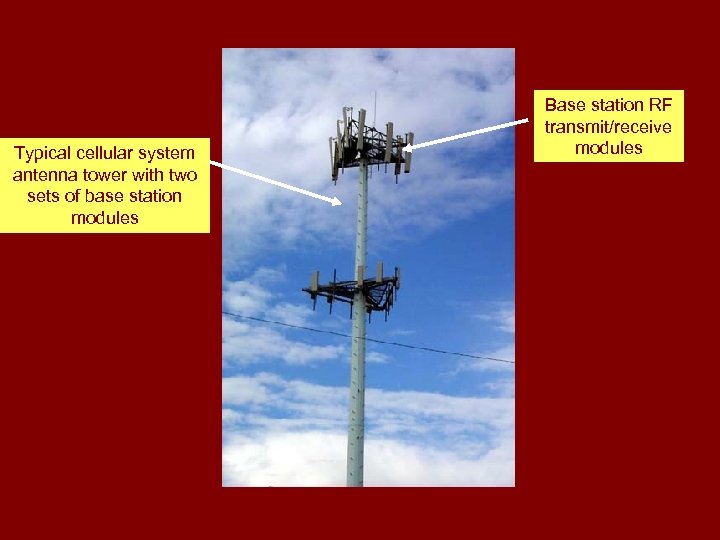 Typical cellular system antenna tower with two sets of base station modules Base station RF transmit/receive modules
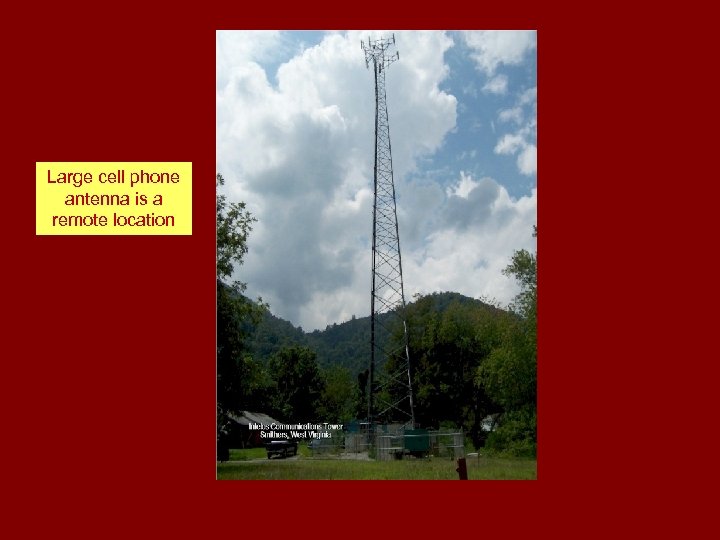 Large cell phone antenna is a remote location
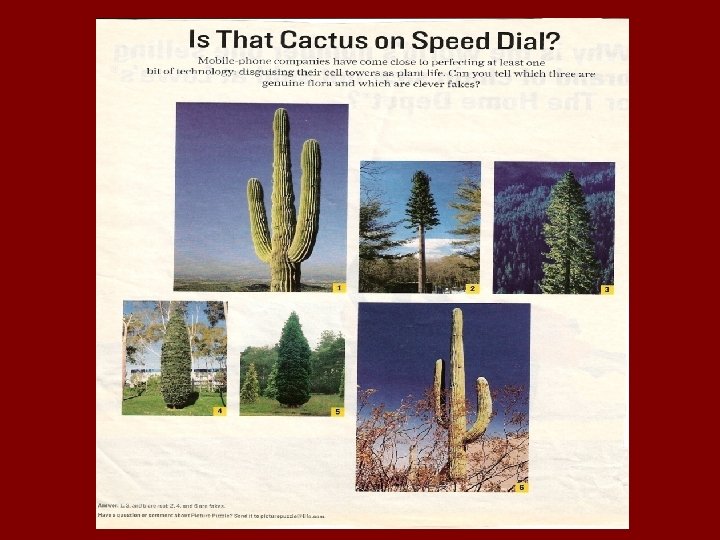
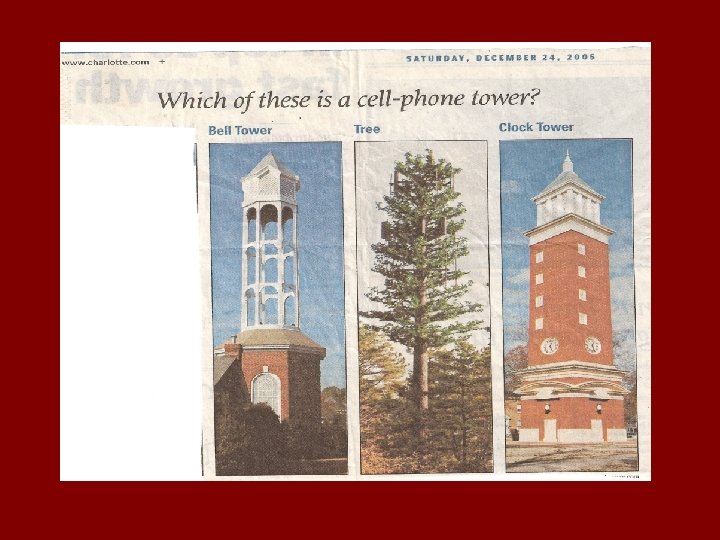
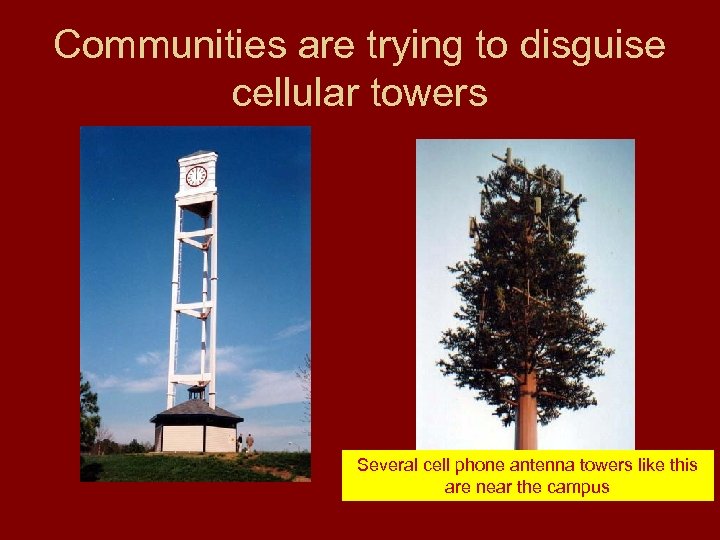 Communities are trying to disguise cellular towers Several cell phone antenna towers like this are near the campus
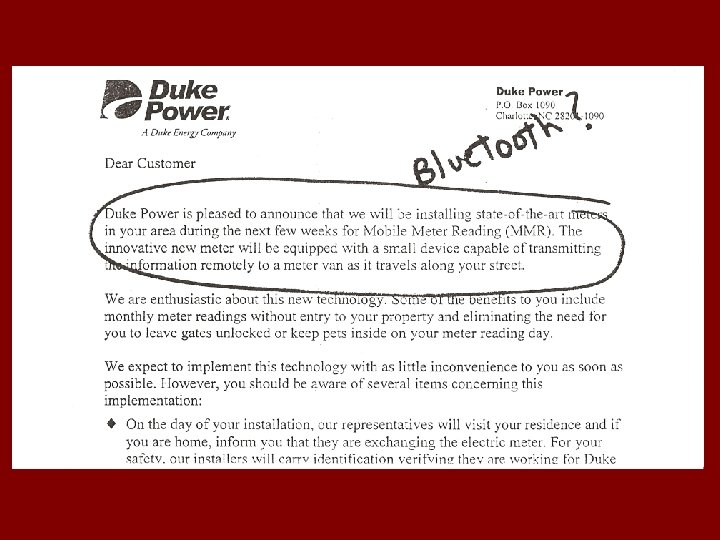
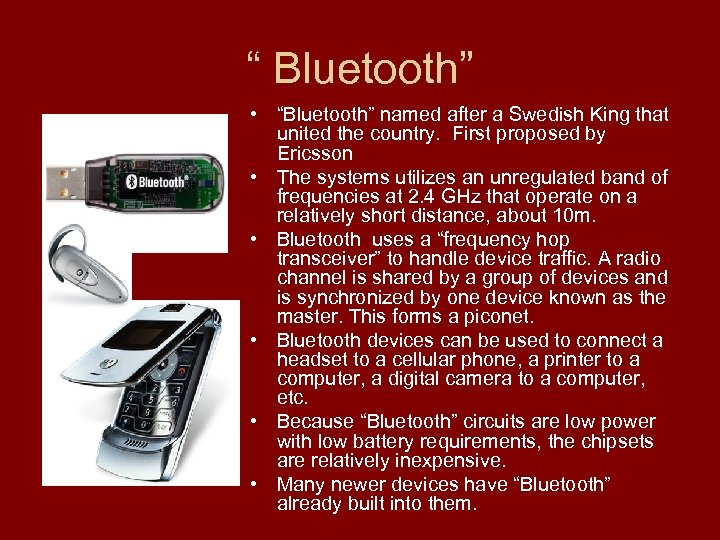 “ Bluetooth” • “Bluetooth” named after a Swedish King that united the country. First proposed by Ericsson • The systems utilizes an unregulated band of frequencies at 2. 4 GHz that operate on a relatively short distance, about 10 m. • Bluetooth uses a “frequency hop transceiver” to handle device traffic. A radio channel is shared by a group of devices and is synchronized by one device known as the master. This forms a piconet. • Bluetooth devices can be used to connect a headset to a cellular phone, a printer to a computer, a digital camera to a computer, etc. • Because “Bluetooth” circuits are low power with low battery requirements, the chipsets are relatively inexpensive. • Many newer devices have “Bluetooth” already built into them.
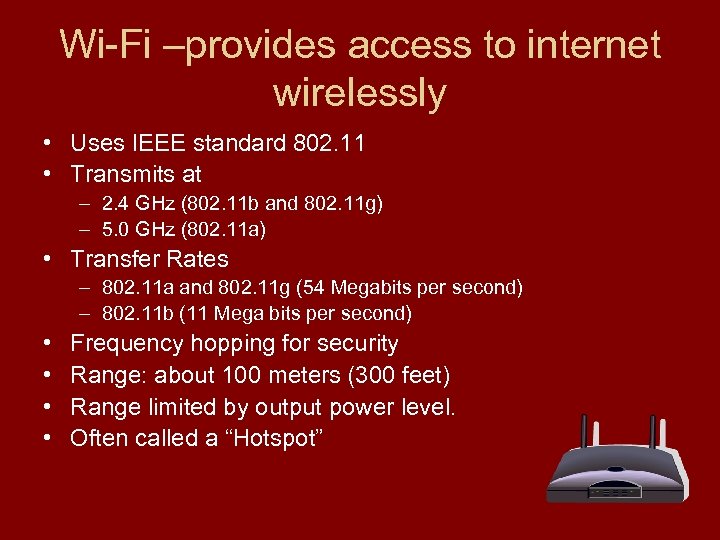 Wi-Fi –provides access to internet wirelessly • Uses IEEE standard 802. 11 • Transmits at – 2. 4 GHz (802. 11 b and 802. 11 g) – 5. 0 GHz (802. 11 a) • Transfer Rates – 802. 11 a and 802. 11 g (54 Megabits per second) – 802. 11 b (11 Mega bits per second) • • Frequency hopping for security Range: about 100 meters (300 feet) Range limited by output power level. Often called a “Hotspot”
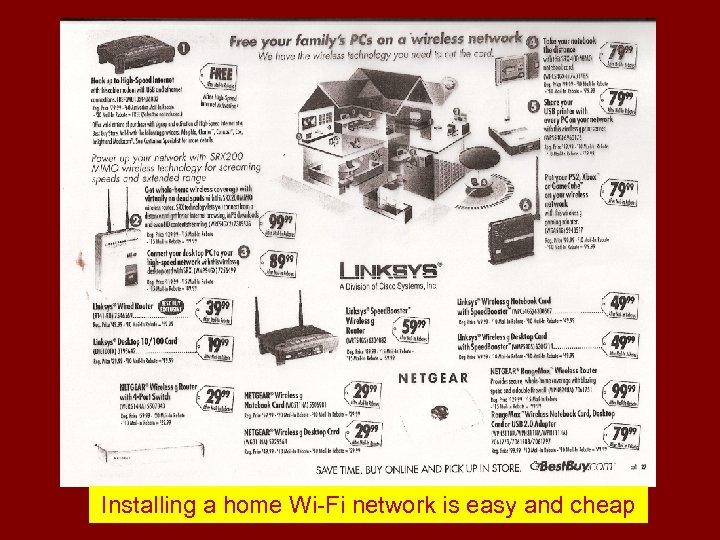 Installing a home Wi-Fi network is easy and cheap
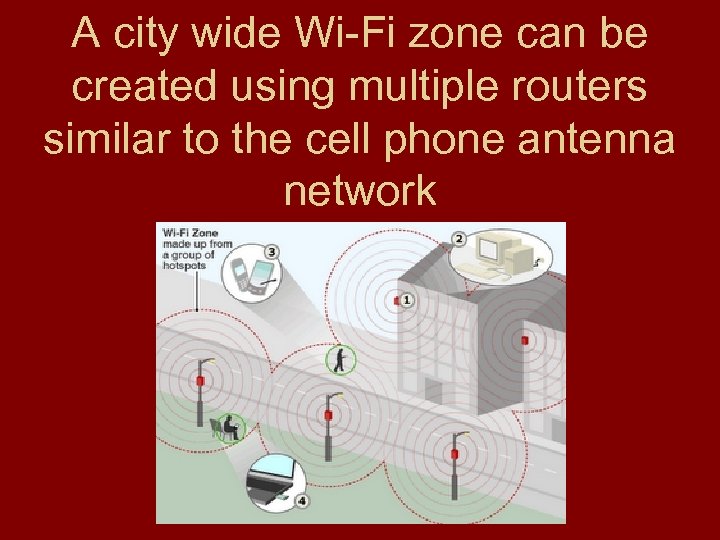 A city wide Wi-Fi zone can be created using multiple routers similar to the cell phone antenna network
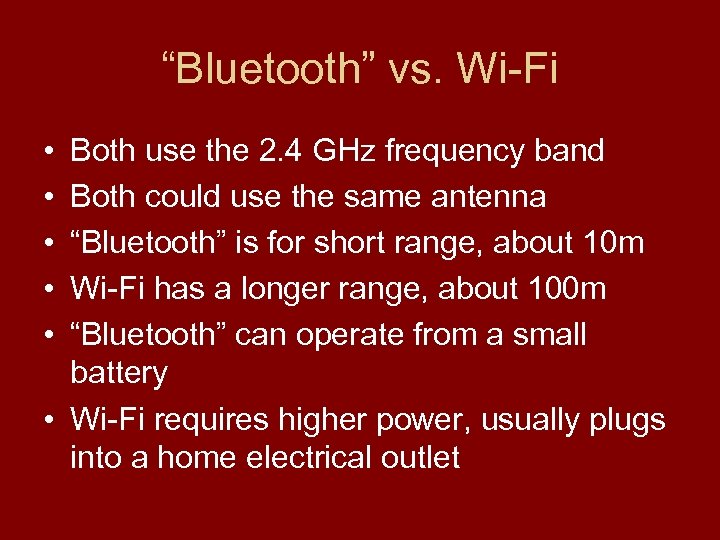 “Bluetooth” vs. Wi-Fi • • • Both use the 2. 4 GHz frequency band Both could use the same antenna “Bluetooth” is for short range, about 10 m Wi-Fi has a longer range, about 100 m “Bluetooth” can operate from a small battery • Wi-Fi requires higher power, usually plugs into a home electrical outlet
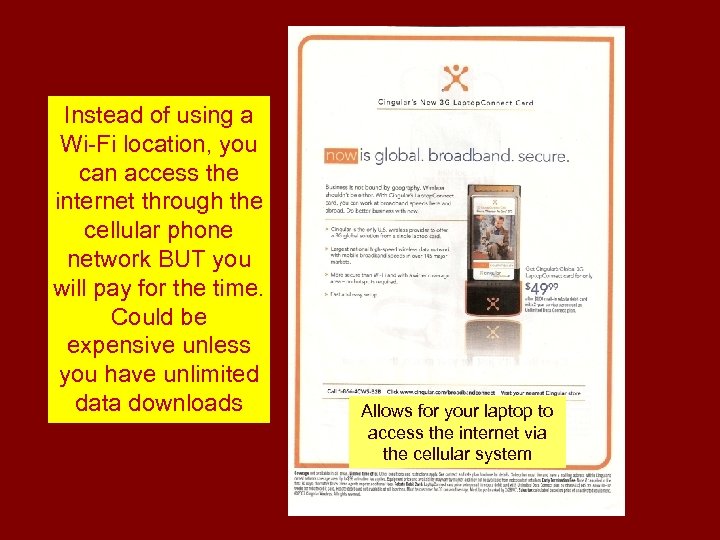 Instead of using a Wi-Fi location, you can access the internet through the cellular phone network BUT you will pay for the time. Could be expensive unless you have unlimited data downloads Allows for your laptop to access the internet via the cellular system
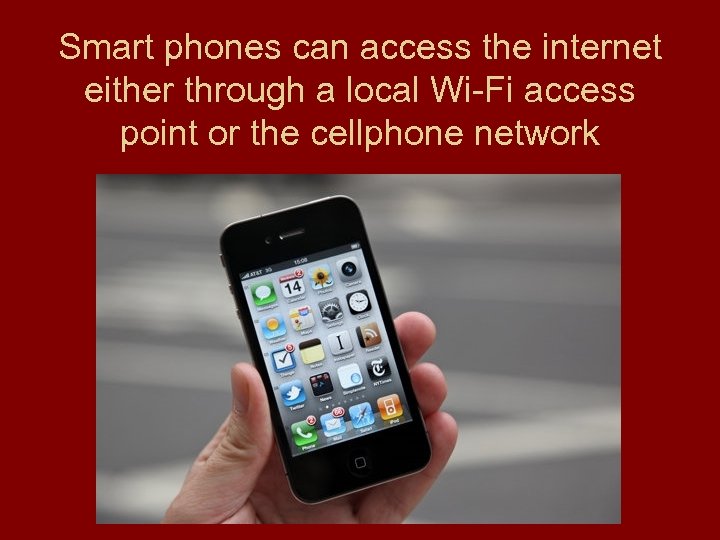 Smart phones can access the internet either through a local Wi-Fi access point or the cellphone network
 RFID tags • Passive -uses the incoming signal for power to transmit • Active- requires an internal power supply, more expensive and less widely used • Could replace bar codes and security attachments on merchandise • Implantable for medical and security data
 Implantable RFID device
 Companies like Wal-Mart plan to use RFID extensively
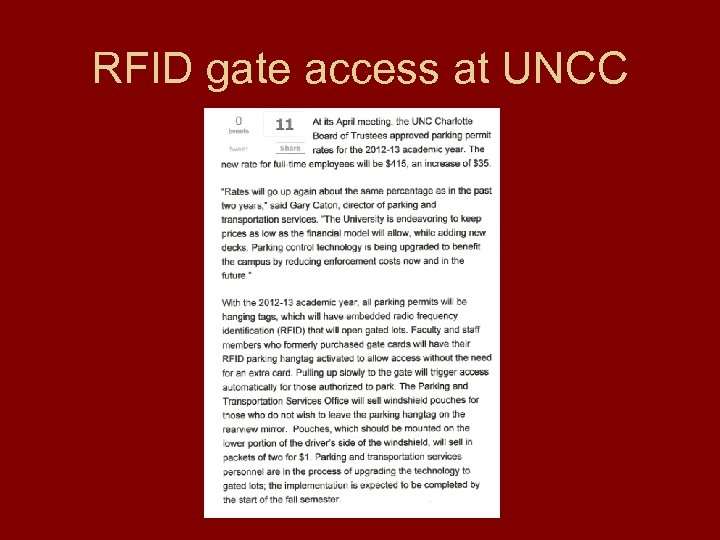 RFID gate access at UNCC
 GPS systems uses orbiting satellites The primary frequency of operation is 1575. 42 MHz with a secondary frequency of 1227. 6 MHz Cellular GPS systems use local cellular antennas
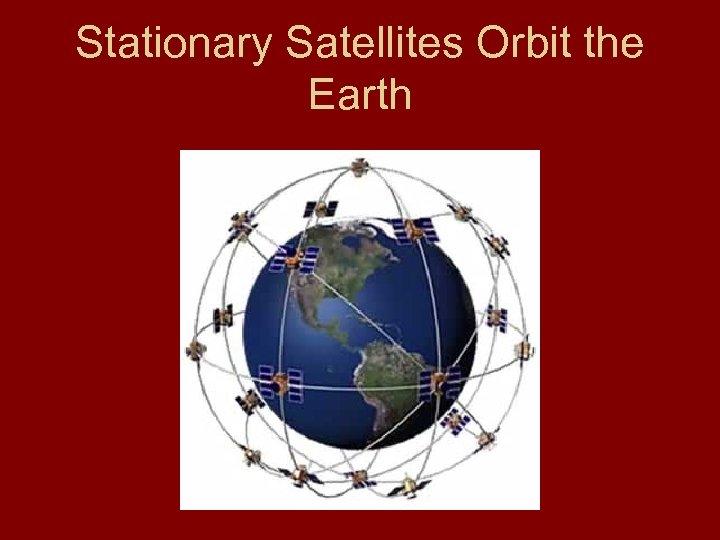 Stationary Satellites Orbit the Earth
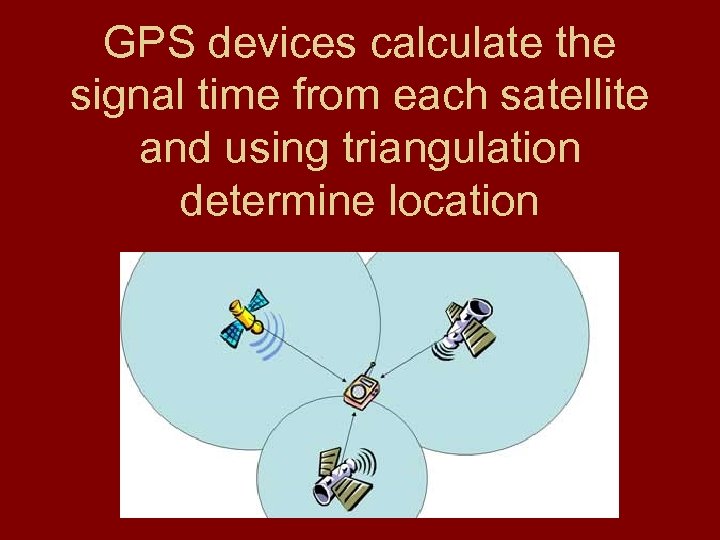 GPS devices calculate the signal time from each satellite and using triangulation determine location
 Antenna Design • • • In antenna design, an important design parameter is the wavelength of the EM wave Wavelength is a function of frequency Antenna length is typically either 1. 1 wavelength 2. ¼ wavelength 3. ½ wavelength
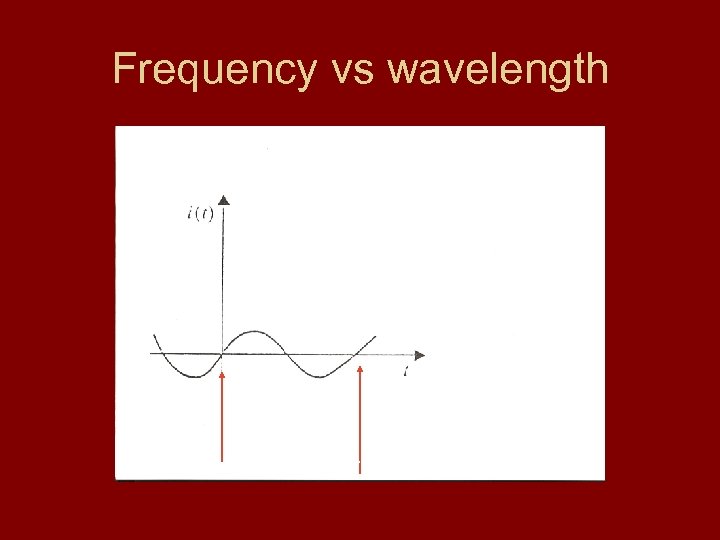 Frequency vs wavelength Wavelength
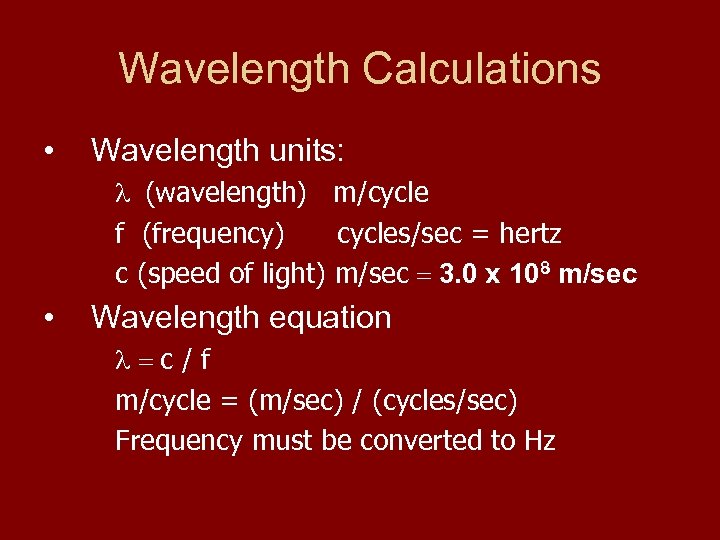 Wavelength Calculations • Wavelength units: l (wavelength) m/cycle f (frequency) cycles/sec = hertz c (speed of light) m/sec = 3. 0 x 108 m/sec • Wavelength equation l=c/f m/cycle = (m/sec) / (cycles/sec) Frequency must be converted to Hz
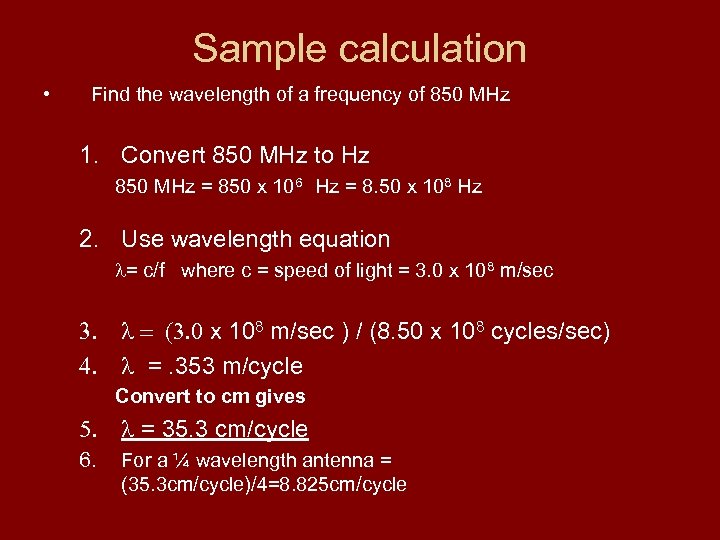 Sample calculation • Find the wavelength of a frequency of 850 MHz 1. Convert 850 MHz to Hz 850 MHz = 850 x 106 Hz = 8. 50 x 108 Hz 2. Use wavelength equation l= c/f where c = speed of light = 3. 0 x 108 m/sec 3. l = (3. 0 x 108 m/sec ) / (8. 50 x 108 cycles/sec) 4. l =. 353 m/cycle Convert to cm gives 5. l = 35. 3 cm/cycle 6. For a ¼ wavelength antenna = (35. 3 cm/cycle)/4=8. 825 cm/cycle
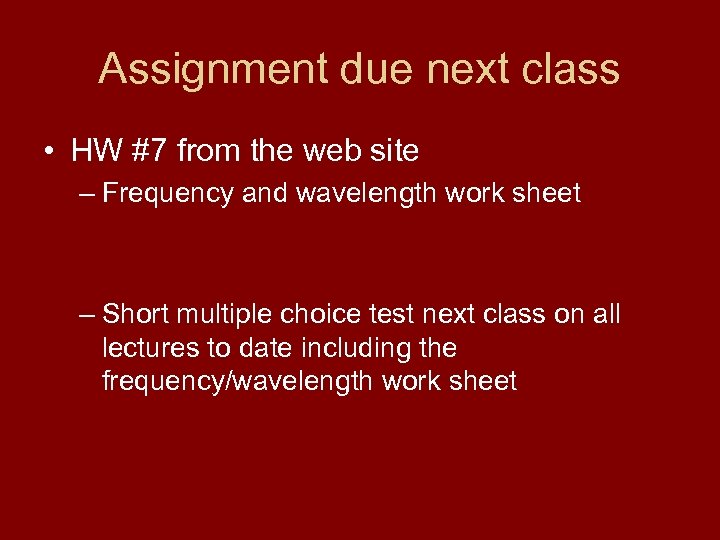 Assignment due next class • HW #7 from the web site – Frequency and wavelength work sheet – Short multiple choice test next class on all lectures to date including the frequency/wavelength work sheet