


 Скачать презентацию Wired and Wireless Communication Slid e 1
Тема3.3 wireless.ppt
- Количество слайдов: 31
 Wired and Wireless Communication Slid e 1
 What You Will Learn. . . The definition of bandwidth The bandwidth needs of a typical user How modems change digital signals into analog Transmission media and methods Limitations of public switched telephone network (PTSN) for sending and receiving data Slid e 2
 What You Will Learn. . . Multiplexing and digital telephony and their impact on line usage Examples of how digitization and convergence are blurring the boundaries between popular communication devices Various wired and wireless applications Slid e 3
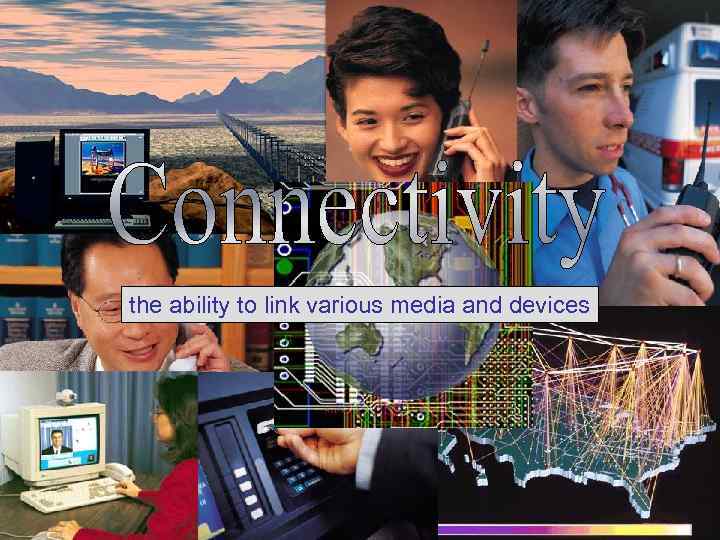 Connectivity the ability to link various media and devices Slid e 4
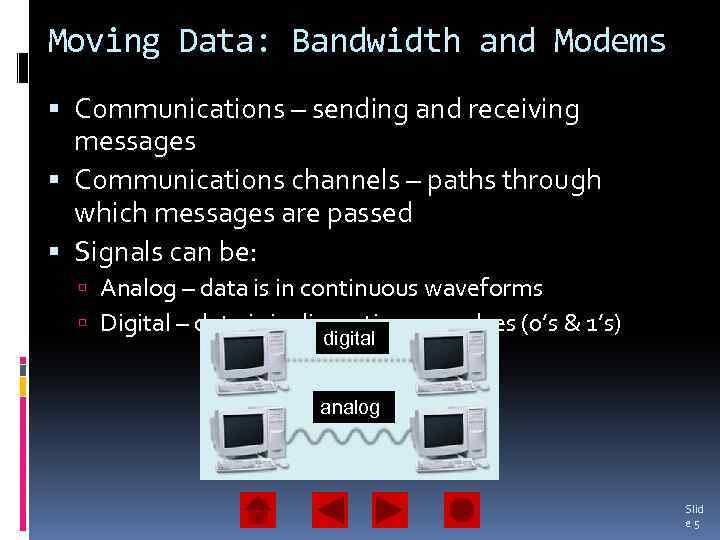 Moving Data: Bandwidth and Modems Communications – sending and receiving messages Communications channels – paths through which messages are passed Signals can be: Analog – data is in continuous waveforms Digital – data is in discontinuous pulses (0’s & 1’s) digital analog Slid e 5
 Moving Data: Bandwidth and Modems Bandwidth – the amount of data that can be transmitted through a given communications channel Analog measured in cycles per second (Hz) Digital measured in bits per second (bps) Broadband – any transmission medium that transports high volumes of data at high speeds Slid e 6
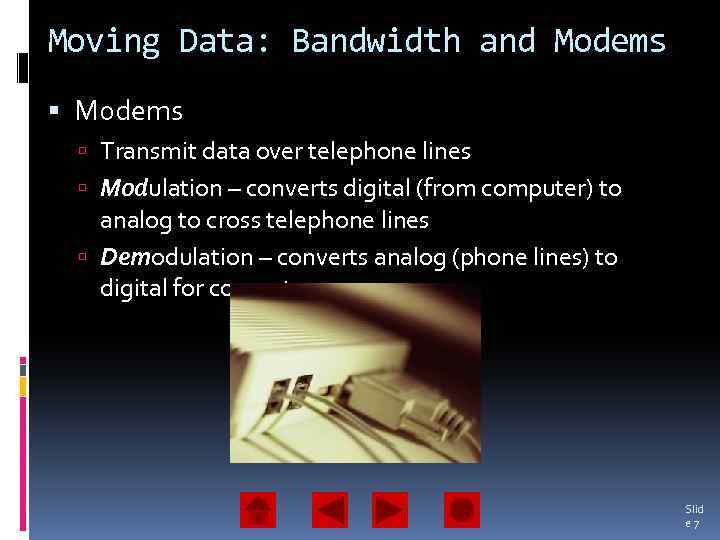 Moving Data: Bandwidth and Modems Transmit data over telephone lines Modulation – converts digital (from computer) to analog to cross telephone lines Demodulation – converts analog (phone lines) to digital for computer Slid e 7
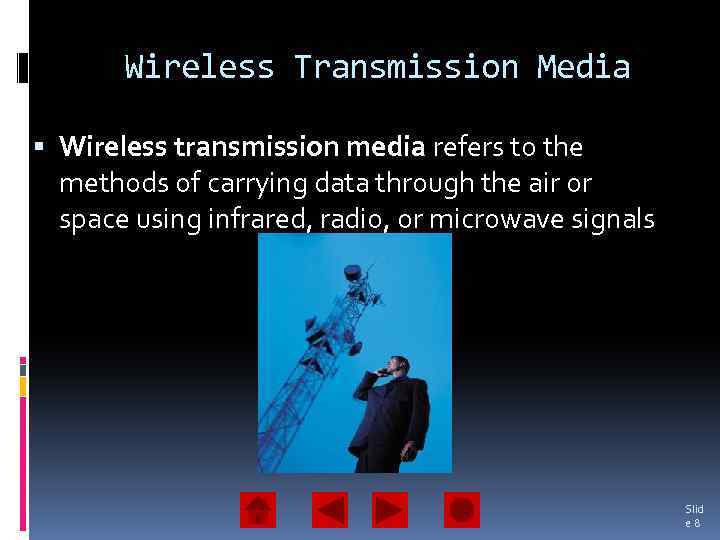 Wireless Transmission Media Wireless transmission media refers to the methods of carrying data through the air or space using infrared, radio, or microwave signals Slid e 8
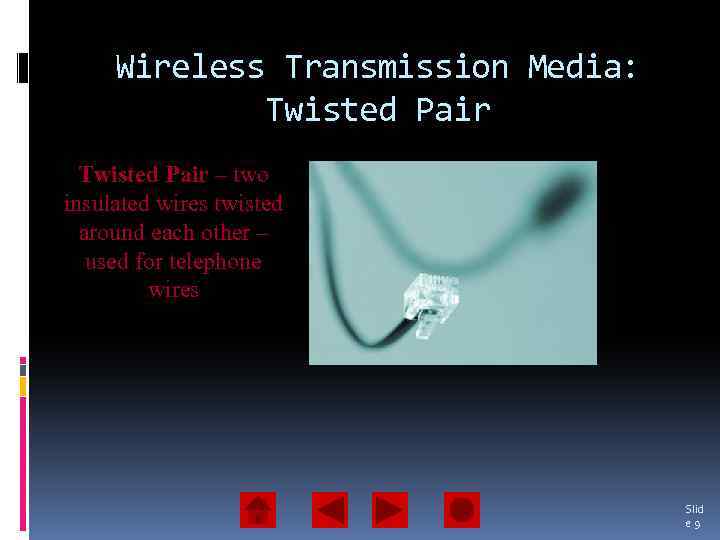 Wireless Transmission Media: Twisted Pair – two insulated wires twisted around each other – used for telephone wires Slid e 9
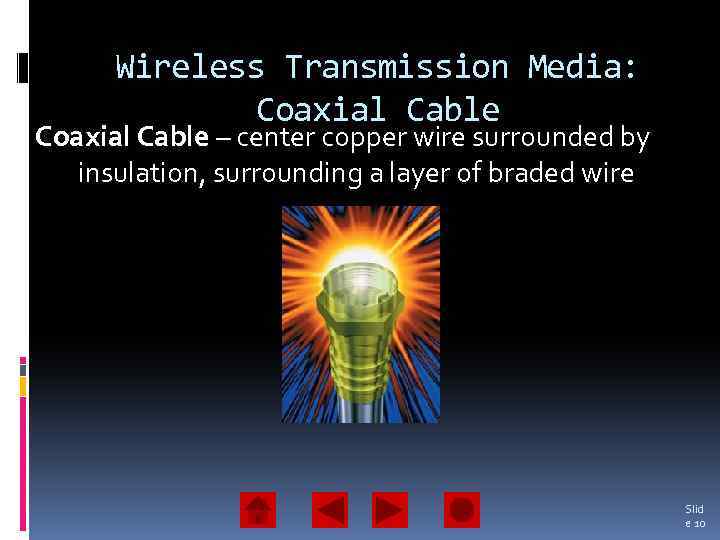 Wireless Transmission Media: Coaxial Cable – center copper wire surrounded by insulation, surrounding a layer of braded wire Slid e 10
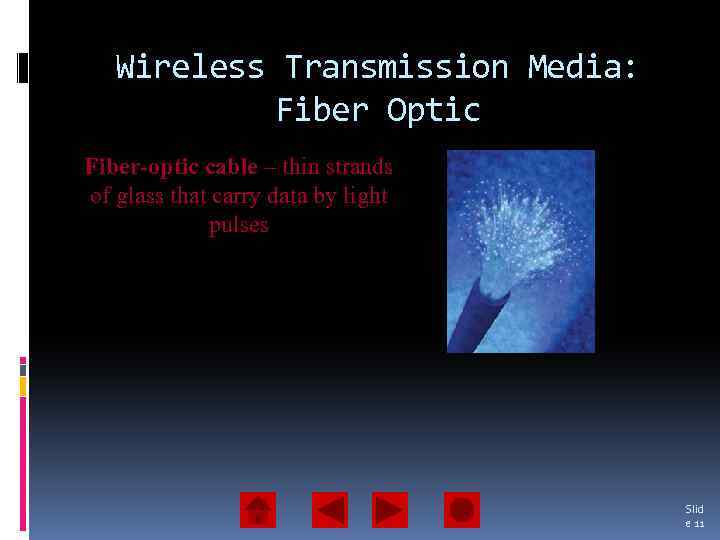 Wireless Transmission Media: Fiber Optic Fiber-optic cable – thin strands of glass that carry data by light pulses Slid e 11
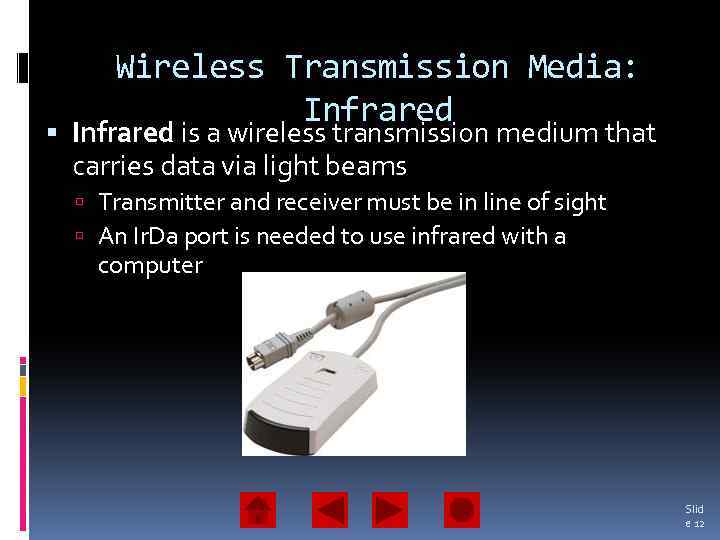 Wireless Transmission Media: Infrared is a wireless transmission medium that carries data via light beams Transmitter and receiver must be in line of sight An Ir. Da port is needed to use infrared with a computer Slid e 12
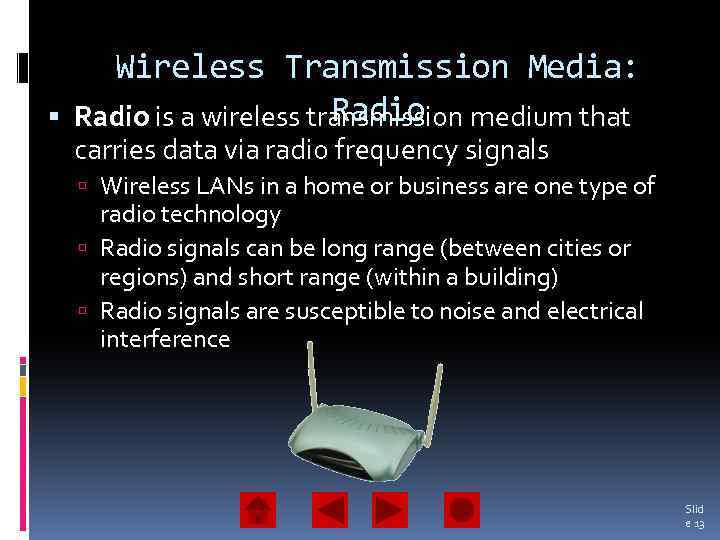 Wireless Transmission Media: Radio is a wireless transmission medium that carries data via radio frequency signals Wireless LANs in a home or business are one type of radio technology Radio signals can be long range (between cities or regions) and short range (within a building) Radio signals are susceptible to noise and electrical interference Slid e 13
 Wireless Transmission Media: Bluetooth Short-range radio transmission technology Devices identify each other by identification number Connection is confirmed before it is made final Does not require a line of site Slid e 14
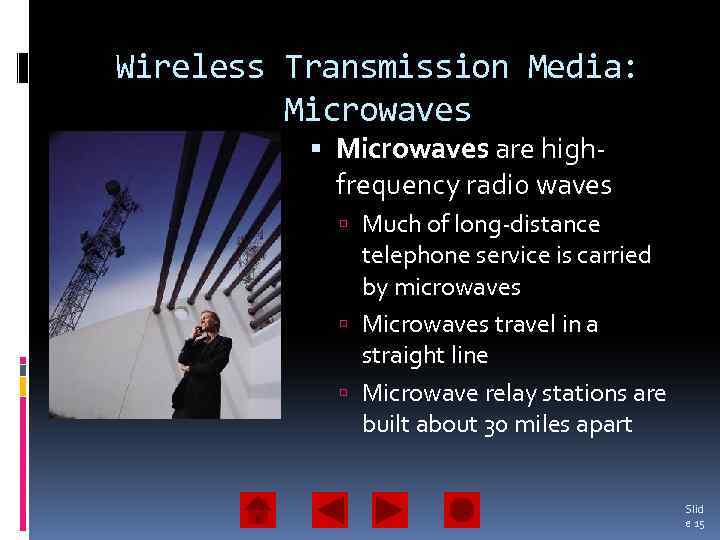 Wireless Transmission Media: Microwaves are highfrequency radio waves Much of long-distance telephone service is carried by microwaves Microwaves travel in a straight line Microwave relay stations are built about 30 miles apart Slid e 15
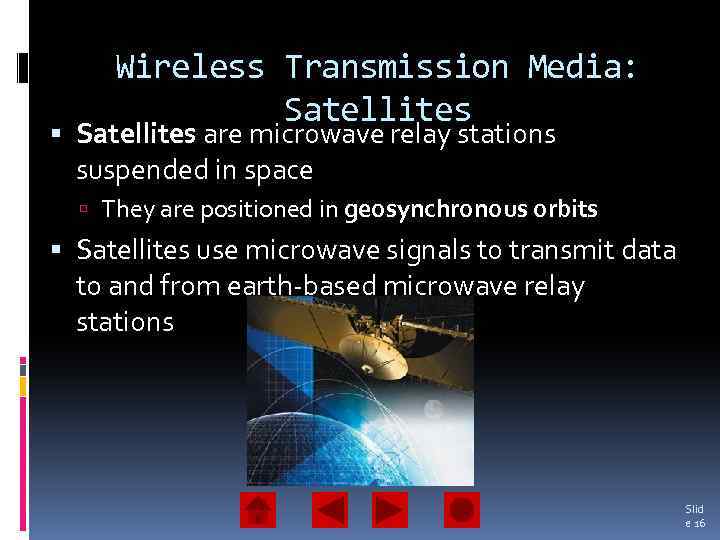 Wireless Transmission Media: Satellites are microwave relay stations suspended in space They are positioned in geosynchronous orbits Satellites use microwave signals to transmit data to and from earth-based microwave relay stations Slid e 16
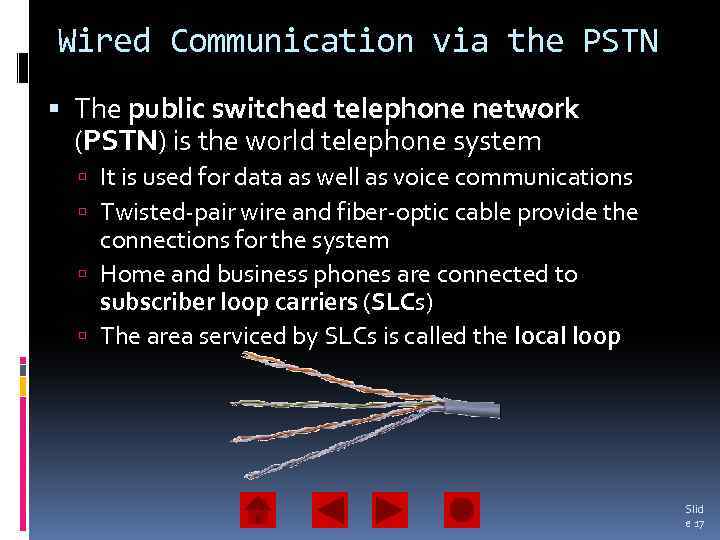 Wired Communication via the PSTN The public switched telephone network (PSTN) is the world telephone system It is used for data as well as voice communications Twisted-pair wire and fiber-optic cable provide the connections for the system Home and business phones are connected to subscriber loop carriers (SLCs) The area serviced by SLCs is called the local loop Slid e 17
 Multiplexing technology enables simultaneous multi-use of transmission lines Copper wire allows up to 24 simultaneous calls per wire Fiber-optic cable permits up to 43, 384 calls per strand Slid e 18
 Last Mile Technologies The “last mile” refers to the phone lines that connect homes and businesses to the local loop The inability of users to access the high-speed fiber- optic cable creates a bottleneck of data called the last mile problem Slid e 19
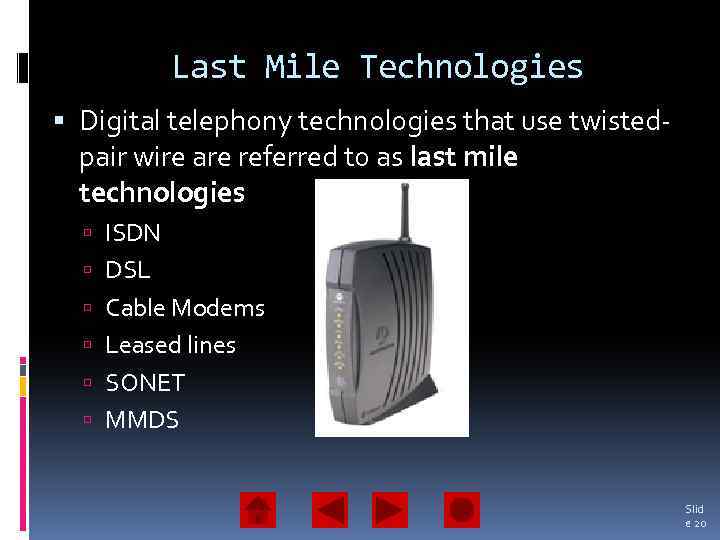 Last Mile Technologies Digital telephony technologies that use twistedpair wire are referred to as last mile technologies ISDN DSL Cable Modems Leased lines SONET MMDS Slid e 20
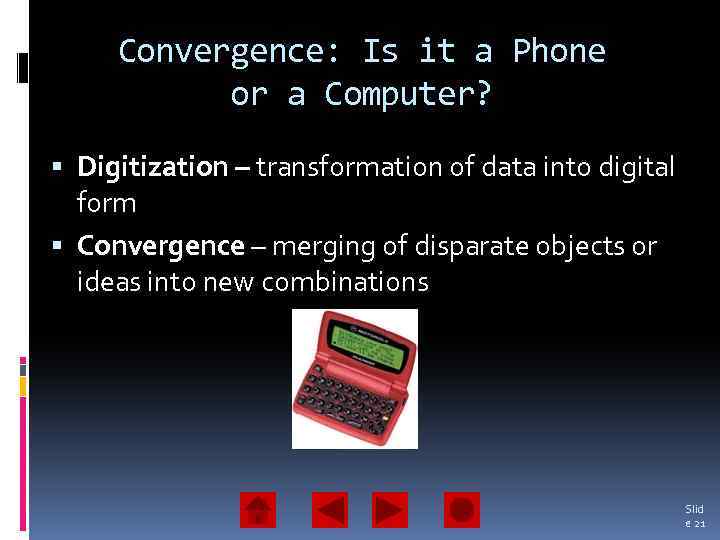 Convergence: Is it a Phone or a Computer? Digitization – transformation of data into digital form Convergence – merging of disparate objects or ideas into new combinations Slid e 21
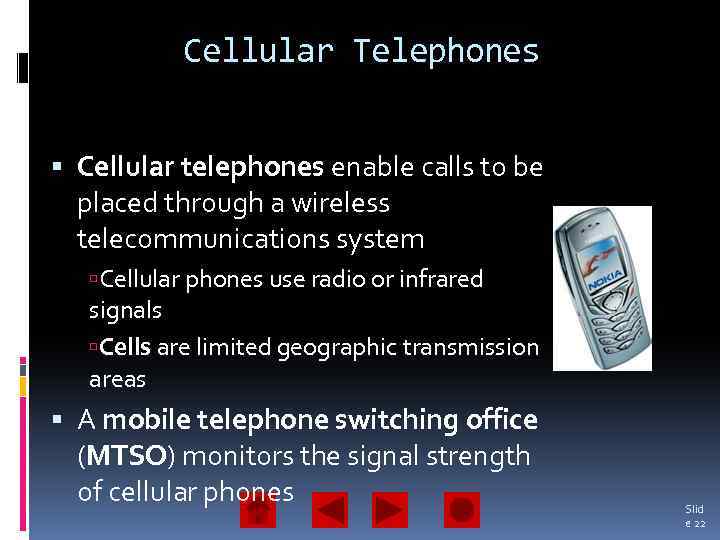 Cellular Telephones Cellular telephones enable calls to be placed through a wireless telecommunications system Cellular phones use radio or infrared signals Cells are limited geographic transmission areas A mobile telephone switching office (MTSO) monitors the signal strength of cellular phones Slid e 22
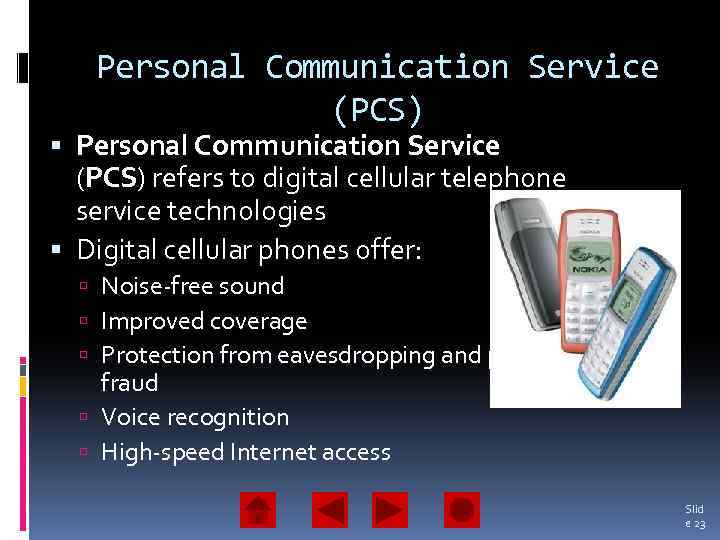 Personal Communication Service (PCS) refers to digital cellular telephone service technologies Digital cellular phones offer: Noise-free sound Improved coverage Protection from eavesdropping and phone fraud Voice recognition High-speed Internet access Slid e 23
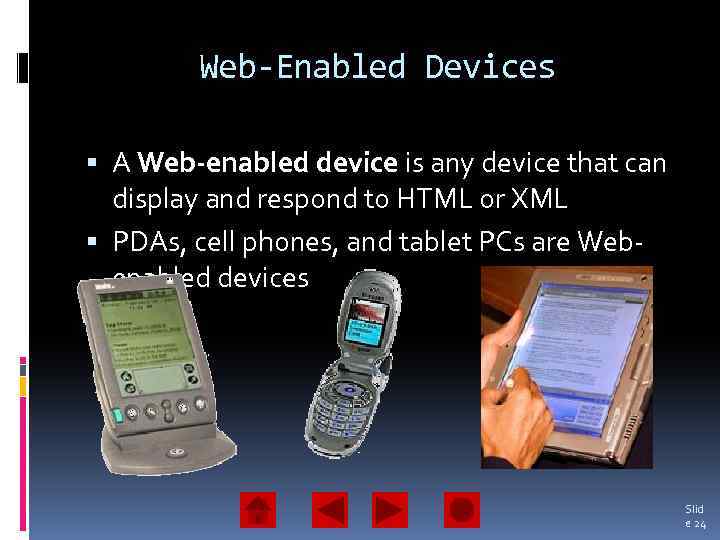 Web-Enabled Devices A Web-enabled device is any device that can display and respond to HTML or XML PDAs, cell phones, and tablet PCs are Webenabled devices Slid e 24
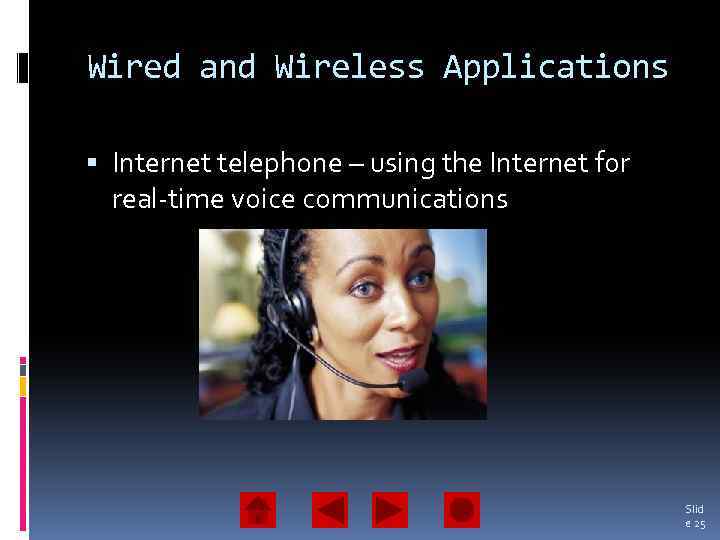 Wired and Wireless Applications Internet telephone – using the Internet for real-time voice communications Slid e 25
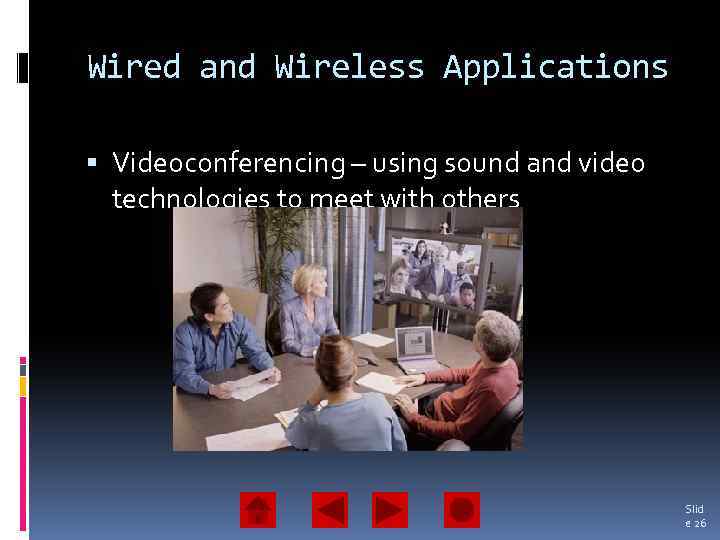 Wired and Wireless Applications Videoconferencing – using sound and video technologies to meet with others Slid e 26
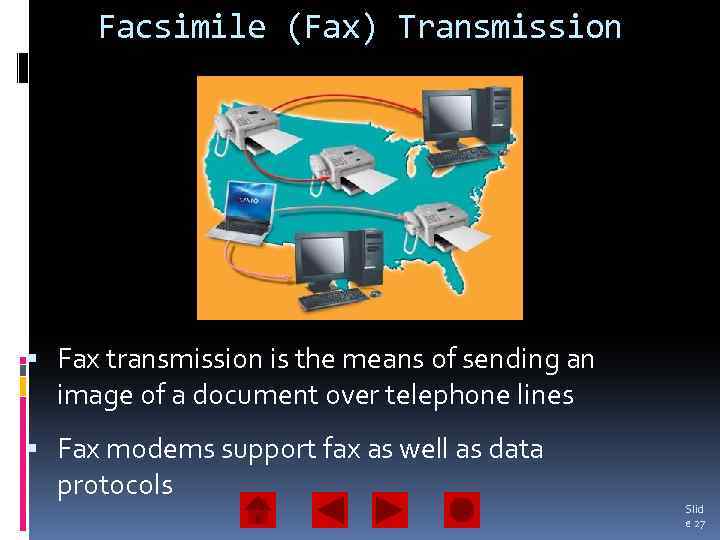 Facsimile (Fax) Transmission Fax transmission is the means of sending an image of a document over telephone lines Fax modems support fax as well as data protocols Slid e 27
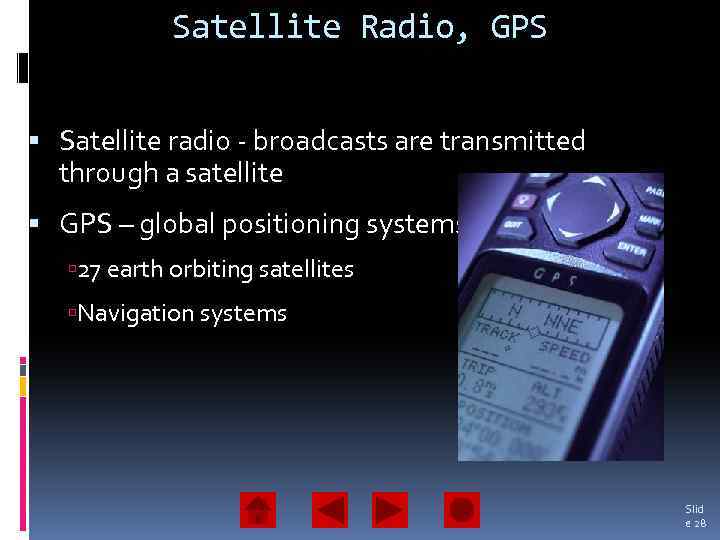 Satellite Radio, GPS Satellite radio - broadcasts are transmitted through a satellite GPS – global positioning systems 27 earth orbiting satellites Navigation systems Slid e 28
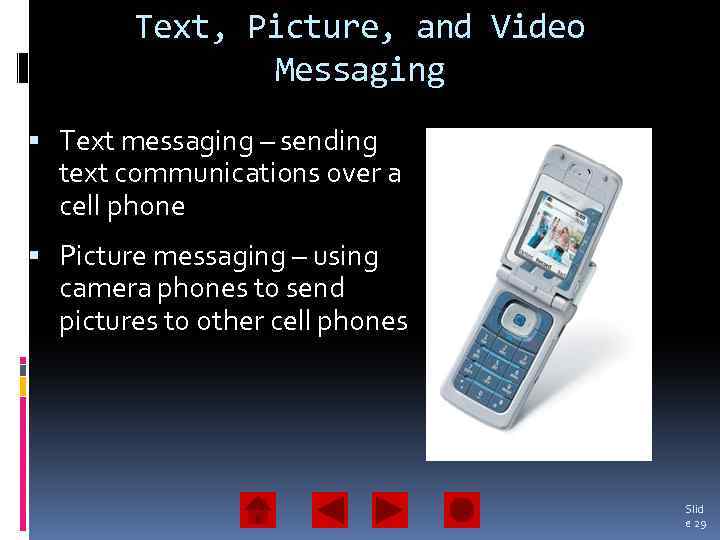 Text, Picture, and Video Messaging Text messaging – sending text communications over a cell phone Picture messaging – using camera phones to send pictures to other cell phones Slid e 29
 Summary • Bandwidth is the data transfer capacity of a communication channel • A modem is used to send digital data over a phone line • Physical and wireless media are used to communicate with technology • The public switched telephone network (PSTN) is mostly digital Slid e 30
 Summary • Multiplexing is the transmission of more than one communication on a single line • Digitization is the transformation of data into digital form • Internet telephony and faxing can be accomplished through the Internet Slid e 31