


 Скачать презентацию WIPO Ono Academic College Israel Ministry
5495a0023980d609d5c9dc639b0e98de.ppt
- Количество слайдов: 22
 WIPO – Ono Academic College – Israel Ministry of Foreign Affairs Traditional Knowledge The Open Questions Dr. Shlomit Yanisky-Ravid Shalom Comparative Legal Research Center, Ono Academic College Yale, Information Society Center 10/2011
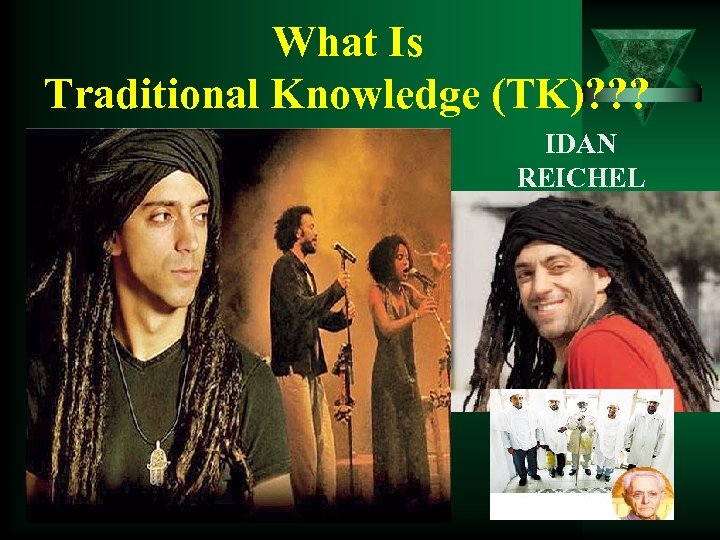 What Is Traditional Knowledge (TK)? ? ? IDAN REICHEL
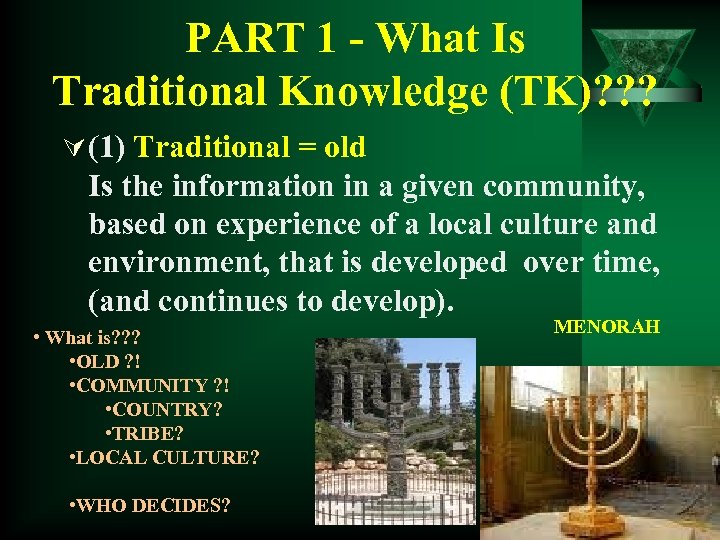 PART 1 - What Is Traditional Knowledge (TK)? ? ? Ú (1) Traditional = old Is the information in a given community, based on experience of a local culture and environment, that is developed over time, (and continues to develop). • What is? ? ? • OLD ? ! • COMMUNITY ? ! • COUNTRY? • TRIBE? • LOCAL CULTURE? • WHO DECIDES? MENORAH
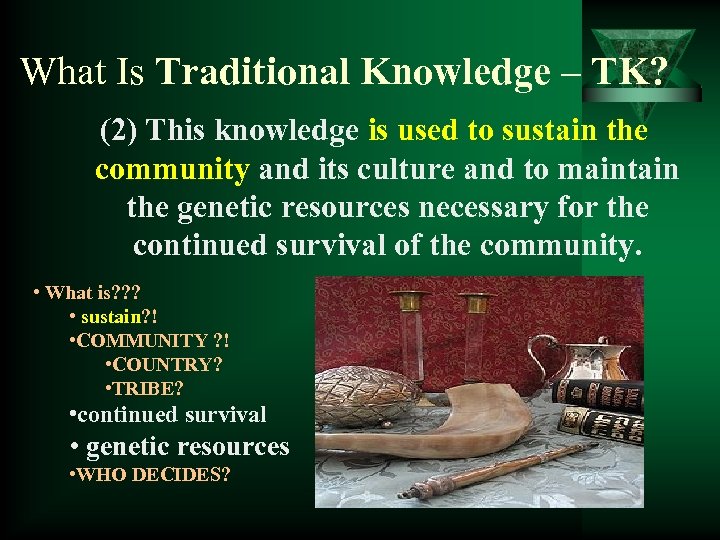 What Is Traditional Knowledge – TK? (2) This knowledge is used to sustain the community and its culture and to maintain the genetic resources necessary for the continued survival of the community. • What is? ? ? • sustain? ! • COMMUNITY ? ! • COUNTRY? • TRIBE? • continued survival • genetic resources • WHO DECIDES?
 What Is TK? Ú(3) Collective in nature. Considered the property of the entire community and not belonging to any single individual within the community. (4) Transferred by cultural means [ not by a written signed agreement]. http: //shr. aaas. org/tek/handbook_1. pdf (18/6/2010)
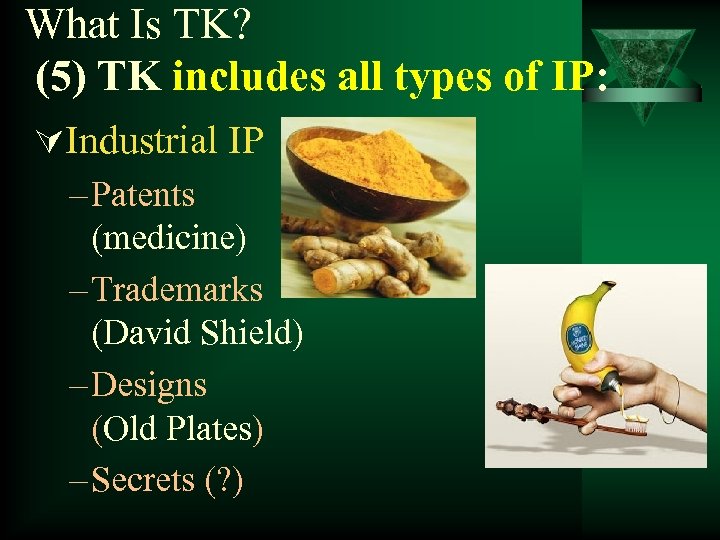 What Is TK? (5) TK includes all types of IP: ÚIndustrial IP – Patents (medicine) – Trademarks (David Shield) – Designs (Old Plates) – Secrets (? )
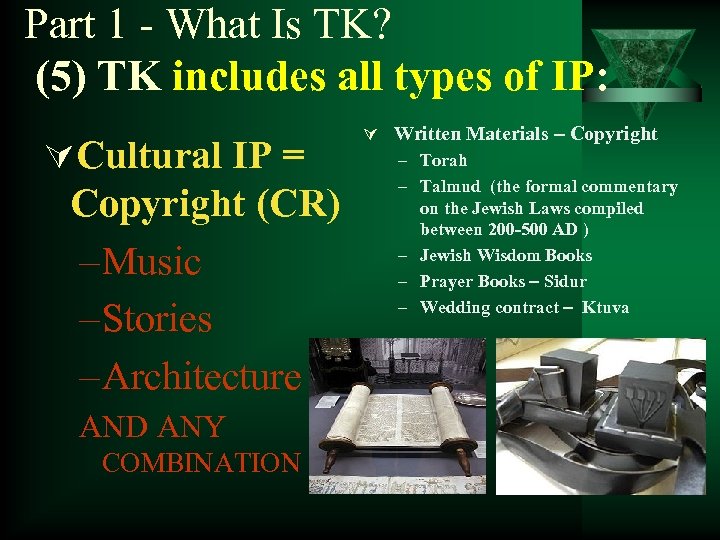 Part 1 - What Is TK? (5) TK includes all types of IP: ÚCultural IP = Copyright (CR) – Music – Stories – Architecture AND ANY COMBINATION Ú Written Materials – Copyright – Torah – Talmud (the formal commentary on the Jewish Laws compiled between 200 -500 AD ) – Jewish Wisdom Books – Prayer Books – Sidur – Wedding contract – Ktuva
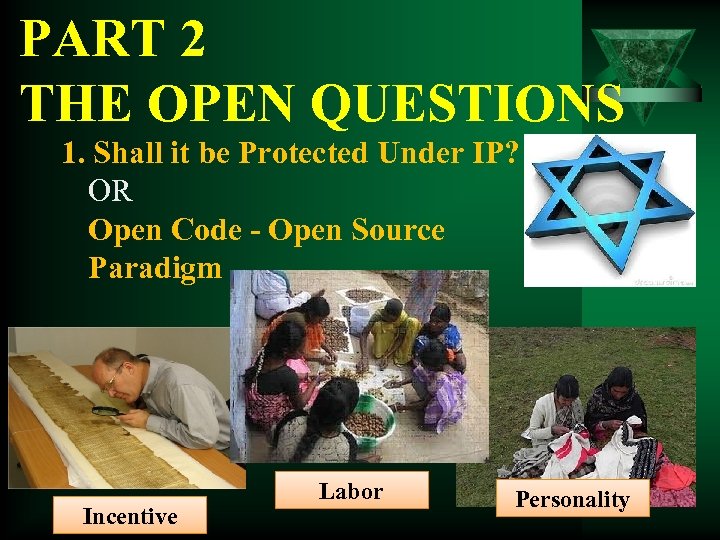 PART 2 THE OPEN QUESTIONS 1. Shall it be Protected Under IP? OR Open Code - Open Source Paradigm Incentive Labor Personality
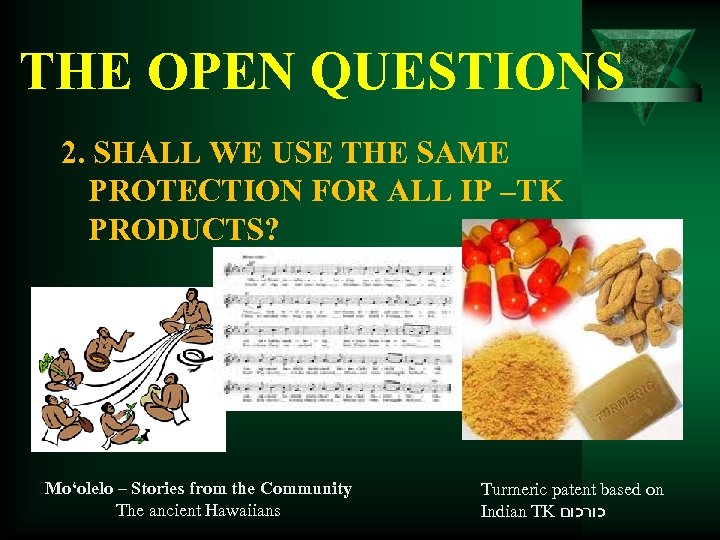 THE OPEN QUESTIONS 2. SHALL WE USE THE SAME PROTECTION FOR ALL IP –TK PRODUCTS? Mo‘olelo – Stories from the Community The ancient Hawaiians Turmeric patent based on Indian TK כורכום
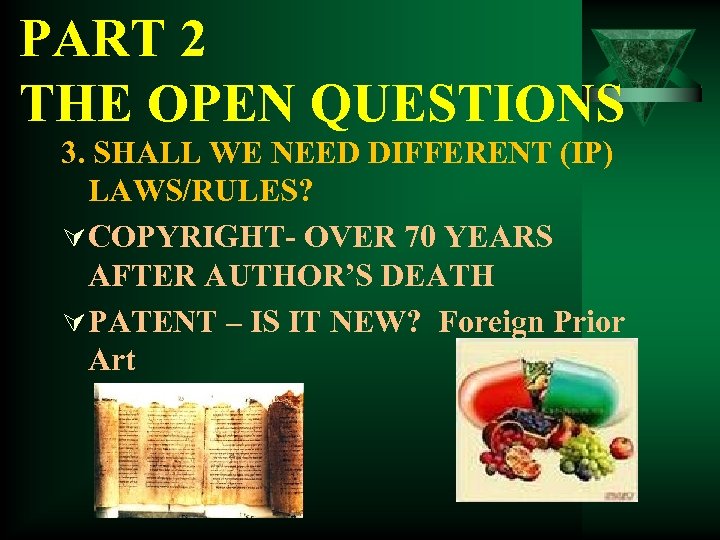 PART 2 THE OPEN QUESTIONS 3. SHALL WE NEED DIFFERENT (IP) LAWS/RULES? Ú COPYRIGHT- OVER 70 YEARS AFTER AUTHOR’S DEATH Ú PATENT – IS IT NEW? Foreign Prior Art
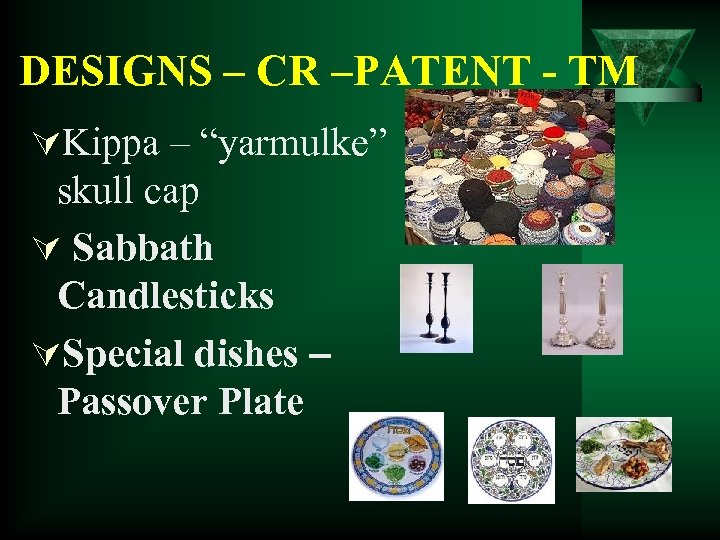 DESIGNS – CR –PATENT - TM ÚKippa – “yarmulke” skull cap Ú Sabbath Candlesticks ÚSpecial dishes – Passover Plate
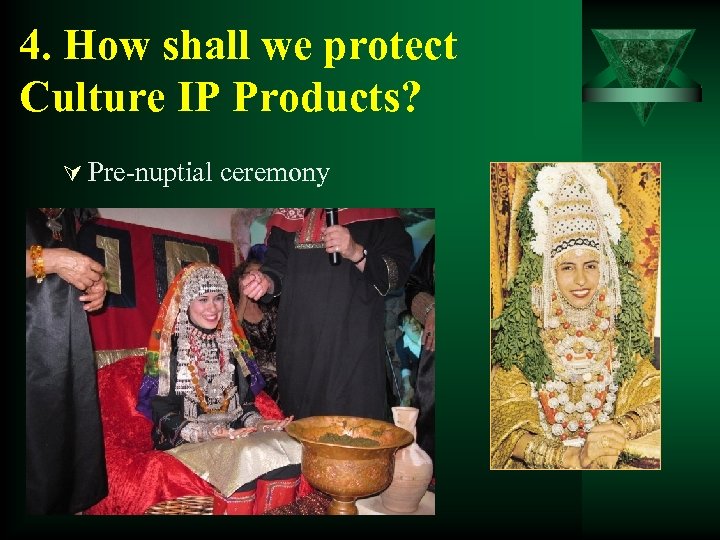 4. How shall we protect Culture IP Products? Ú Pre-nuptial ceremony
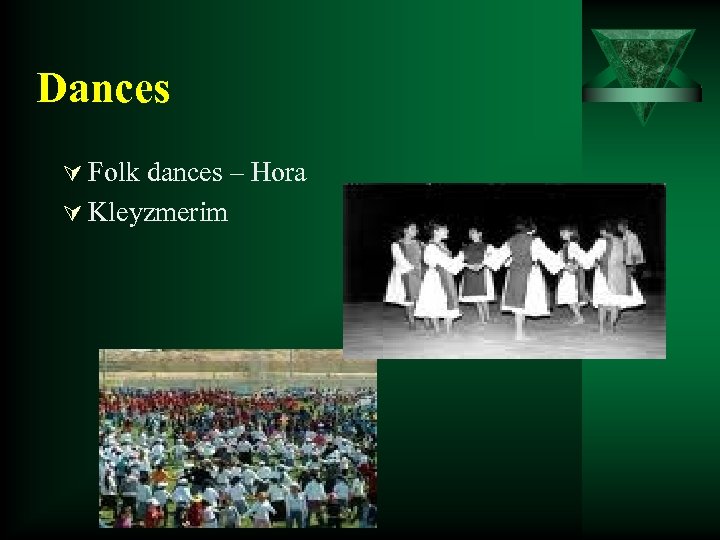 Dances Ú Folk dances – Hora Ú Kleyzmerim
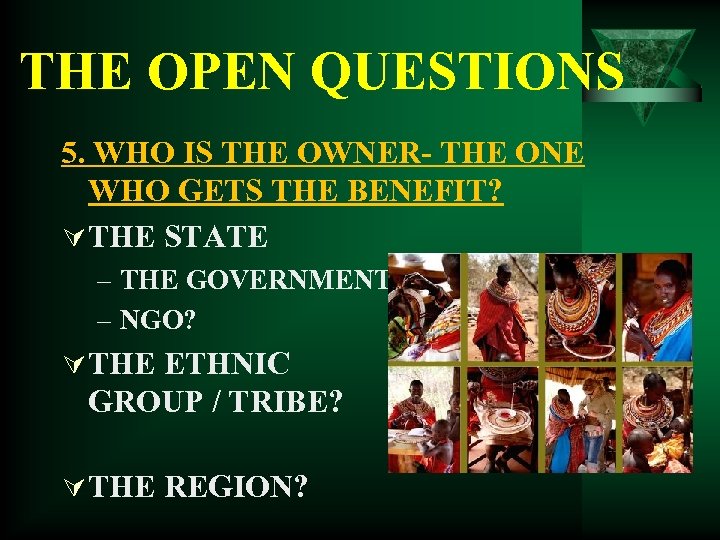 THE OPEN QUESTIONS 5. WHO IS THE OWNER- THE ONE WHO GETS THE BENEFIT? Ú THE STATE – THE GOVERNMENT – NGO? Ú THE ETHNIC GROUP / TRIBE? Ú THE REGION?
 THE OPEN QUESTIONS 6. Is Moral right the Solution a. To be given proper acknowledgement of their TK b. Not to have it modified without permission c. Not to have it used in a manner that discredits TK holders The entity? To whom? Who decides? Enforcement?
 THE OPEN QUESTIONS 7. TK and TM (Trade Marks) Registration of TK follows the registration of GI. Registries can be established and maintained either locally – within the community or the country or outside the community or the country by international means. Who should file? To whom? Can it influence other IP fields?
 THE OPEN QUESTIONS 7. TK Registries - Trade Marks The pros of registries are the fact that the TK might be protected. TK will be easy to detect The cons are the lack of registries for all TK. Private registry is not always accessible to the public
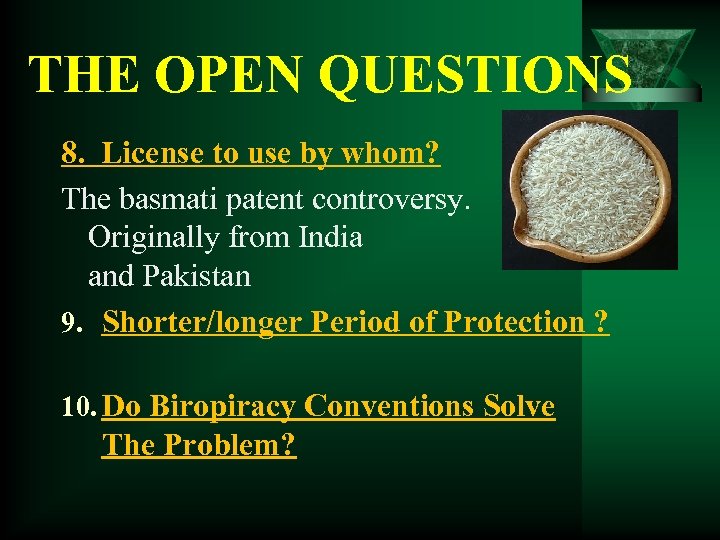 THE OPEN QUESTIONS 8. License to use by whom? The basmati patent controversy. Originally from India and Pakistan 9. Shorter/longer Period of Protection ? 10. Do Biropiracy Conventions Solve The Problem?
 International Tools Ú International tools: – International: Mutual relationships - Rights & Obligations – Ethnic or Geographical? Local or Global? – Mandatory Convention or Recommendation? – Dispute Resolution – Acceptance
 PART 3 - New Right Ú Quasi IP Ú - Not all IP products are protectable Ú Registration is just the first step Ú Moral Right Ú Using & Improving
 THANK YOU!!! DR. SHLOMIT YANISKY – RAVID Prof. of Law SHLOMIT. RAVID@GMAIL. COM
 International Human Rights Instruments Addressing IP Ú Universal Declaration of Human Rights (UDHR) (1948), article 27: 1. Everyone has the right freely to participate in the culture life of the community, to enjoy the arts and to share in scientific advancement and its benefit/ 2. Everyone has the right to the protection of the moral and material interests resulting from any scientific, literary or artistic production of which he is the author. Ú International Covenant on Economic, Social and Cultural Rights (ICESCR), article 15: 1. The States Parties to the present Covenant recognize the right of everyone: (a) To take part in cultural life; (b) To enjoy the benefits of scientific progress and its applications; (c) To benefit from the protection of the moral and material interests resulting from any scientific, literary or artistic production of which he is the author. Ú International Labor Organization Convention NO. 169, article 15 (1) The rights of the peoples concerned to the natural resources pertaining to their lands shall be specially safeguarded. These include the right of these people to participate in the use, management and conservation of these resources" Ú Ú see also Convention on Biological Diversity (CBD), article 8 (J) Draft Declaration of Indigenous Rights