 Скачать презентацию WIPO-ARIPO Sub-Regional Training of Trainers Program on Effective
6552c38279256714005db003eb7cf8ea.ppt
- Количество слайдов: 30



WIPO-ARIPO Sub-Regional Training of Trainers Program on Effective Intellectual Property Asset Management by Small and Medium Sized Enterprises (SMEs) Introduction to WIPO and its Development Cooperation Activities in African Countries Harare, Zimbabwe October, 2014
Contents WIPO’s Development Sector Africa Innovation Landscape WIPO’s TA Programs Conclusion 2
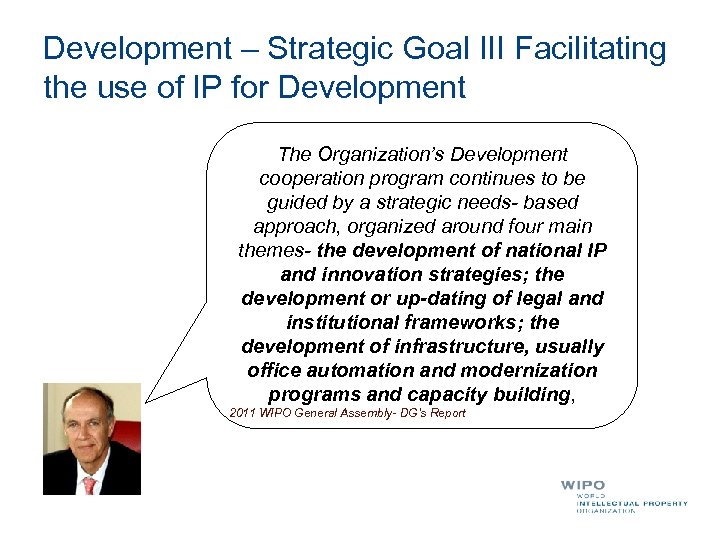
Development – Strategic Goal III Facilitating the use of IP for Development The Organization’s Development cooperation program continues to be guided by a strategic needs- based approach, organized around four main themes- the development of national IP and innovation strategies; the development or up-dating of legal and institutional frameworks; the development of infrastructure, usually office automation and modernization programs and capacity building, 2011 WIPO General Assembly- DG’s Report
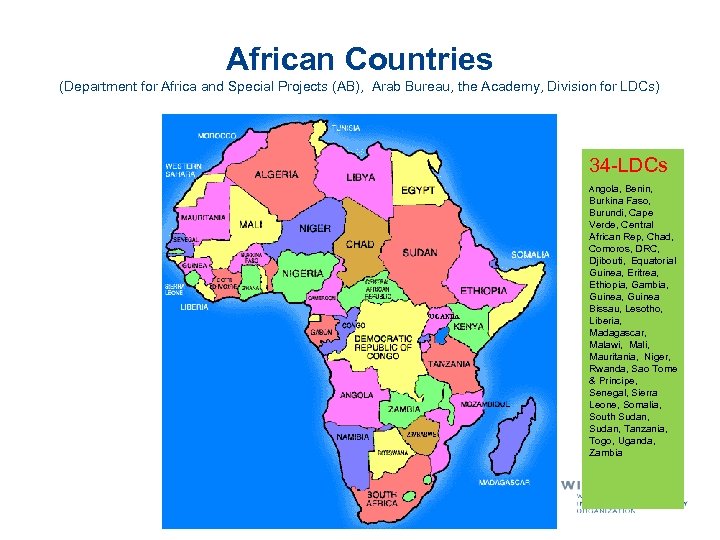
African Countries (Department for Africa and Special Projects (AB), Arab Bureau, the Academy, Division for LDCs) 34 -LDCs Angola, Benin, Burkina Faso, Burundi, Cape Verde, Central African Rep, Chad, Comoros, DRC, Djibouti, Equatorial Guinea, Eritrea, Ethiopia, Gambia, Guinea Bissau, Lesotho, Liberia, Madagascar, Malawi, Mali, Mauritania, Niger, Rwanda, Sao Tome & Principe, Senegal, Sierra Leone, Somalia, South Sudan, Tanzania, Togo, Uganda, Zambia
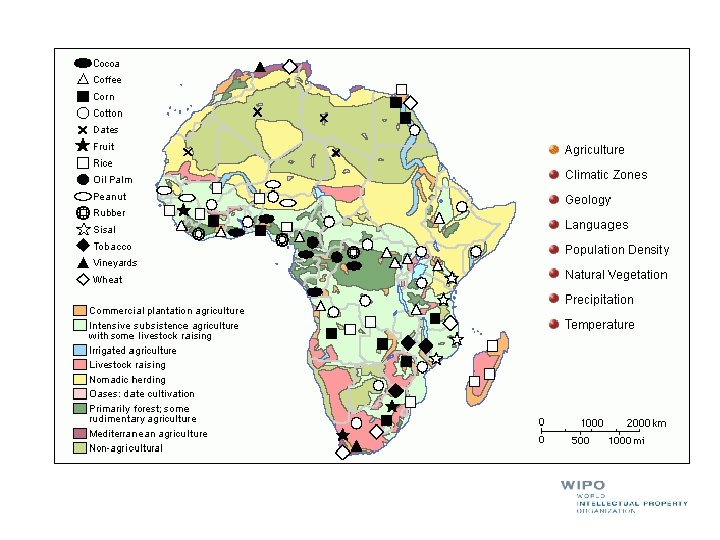
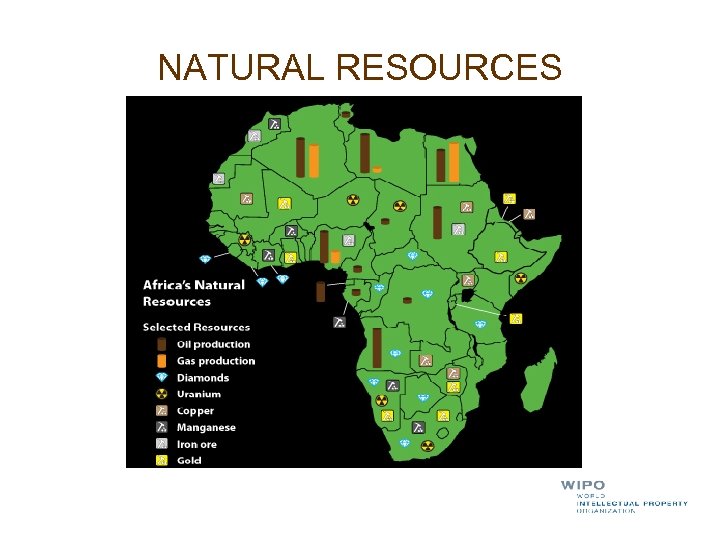
NATURAL RESOURCES
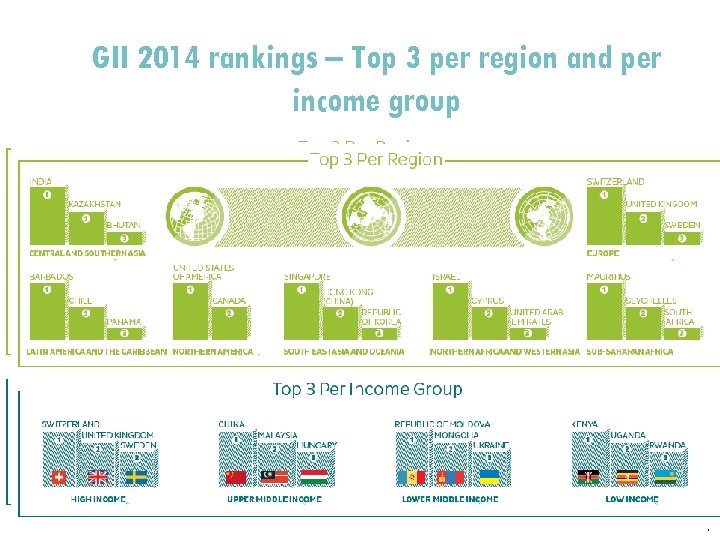
GII 2014 rankings – Top 3 per region and per income group 7
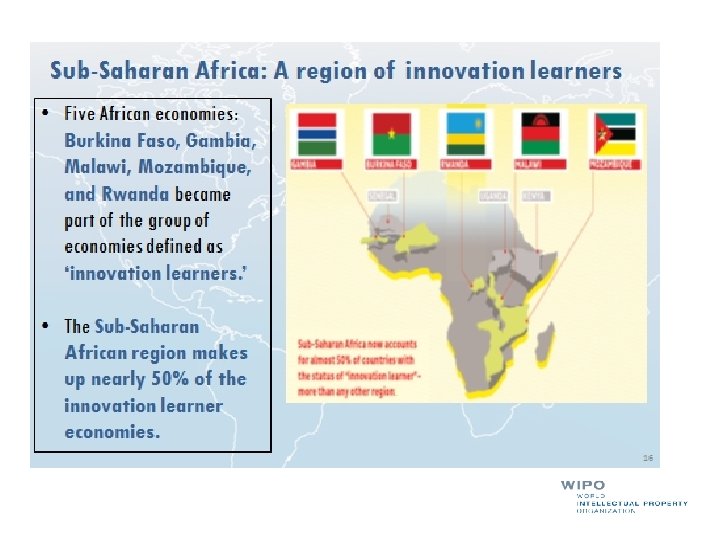
9 IP indicators in relation to DCs/LDCs Low level of patenting by residents Relatively higher use of the Utility Model system to protect inventions in domestic markets Low level of R&D spending While high-income countries still dominate global R&D spending, low and middle income economies increased their share of global R&D by 13% between 1993 and 2009
Narrowing the Knowledge Gap Using innovation and creativity for development ? What are the contributions of WIPO to narrow the knowledge gap to use innovation and creativity for development?
11 DS : Facilitate the use of IP for development Clearly defined and coherent national IP strategies that support national development goals Advice to MS to develop tailored and balanced IP legislative, regulatory and policy frameworks Enhanced infrastructure/business systems for IP offices and other institutions; enhanced access to, and use of, IP information and knowledge to promote innovation and creativity Enhanced IP-related skills for the effective use of IP for development through workshops, seminars and WIPO Academy courses + DEVELOPMENT PROJECTS
Skills Development & Capacity Building Partnerships- Governments, IGOs, Regional, Inter-regional Orgs. Beneficiaries: Policy makers, Government officials, Academia, researchers and professionals engaged in science and technology (e. g. agriculture, energy, environment, health, manufacturing etc. ), IP lawyers and practitioners, Entrepreneurs, business and industry representatives. Systematic Training Programs. Japan FIT with Japan, France, Italy , Brazil or partnership e. g. Sweden (Sida-WIPO)
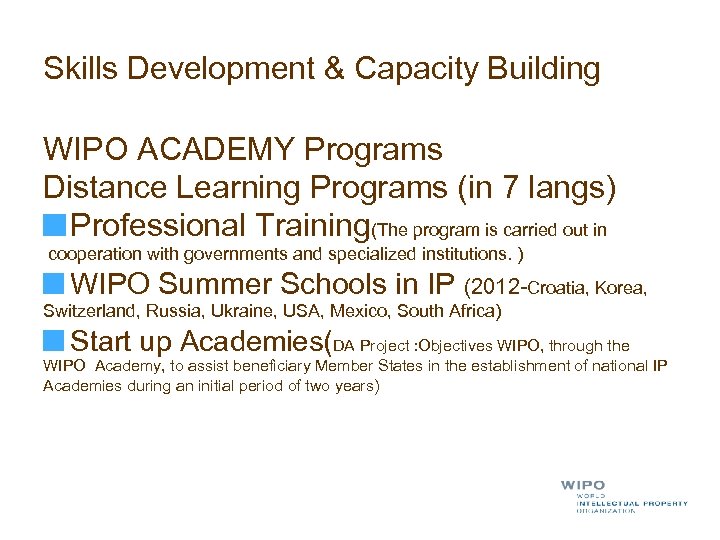
Skills Development & Capacity Building WIPO ACADEMY Programs Distance Learning Programs (in 7 langs) Professional Training(The program is carried out in cooperation with governments and specialized institutions. ) WIPO Summer Schools in IP (2012 -Croatia, Korea, Switzerland, Russia, Ukraine, USA, Mexico, South Africa) Start up Academies(DA Project : Objectives WIPO, through the WIPO Academy, to assist beneficiary Member States in the establishment of national IP Academies during an initial period of two years)
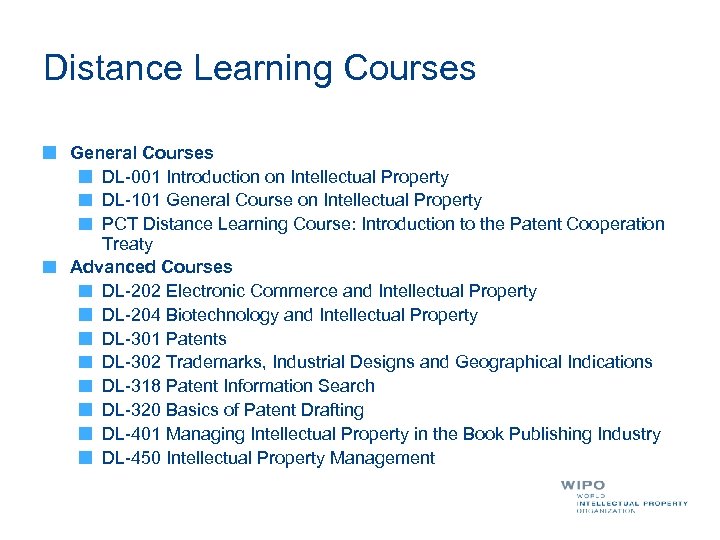
Distance Learning Courses General Courses DL-001 Introduction on Intellectual Property DL-101 General Course on Intellectual Property PCT Distance Learning Course: Introduction to the Patent Cooperation Treaty Advanced Courses DL-202 Electronic Commerce and Intellectual Property DL-204 Biotechnology and Intellectual Property DL-301 Patents DL-302 Trademarks, Industrial Designs and Geographical Indications DL-318 Patent Information Search DL-320 Basics of Patent Drafting DL-401 Managing Intellectual Property in the Book Publishing Industry DL-450 Intellectual Property Management
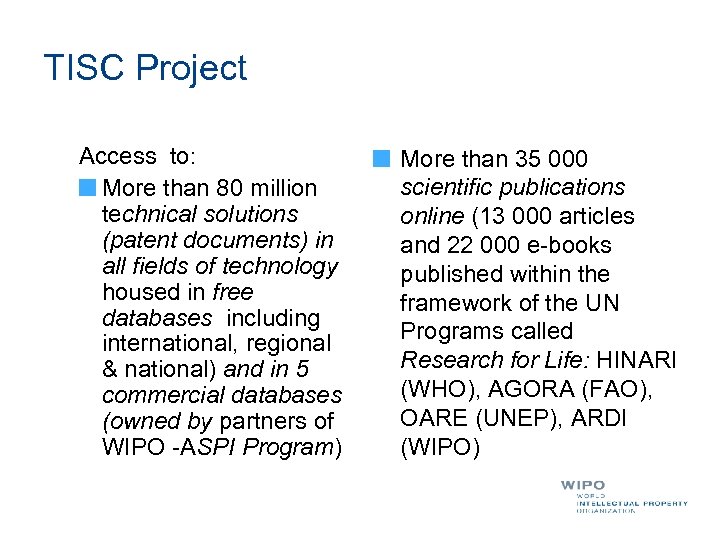
TISC Project Access to: More than 80 million technical solutions (patent documents) in all fields of technology housed in free databases including international, regional & national) and in 5 commercial databases (owned by partners of WIPO -ASPI Program) More than 35 000 scientific publications online (13 000 articles and 22 000 e-books published within the framework of the UN Programs called Research for Life: HINARI (WHO), AGORA (FAO), OARE (UNEP), ARDI (WIPO)
16 WIPO development work in action… IP and Branding for Development: Some project experiences
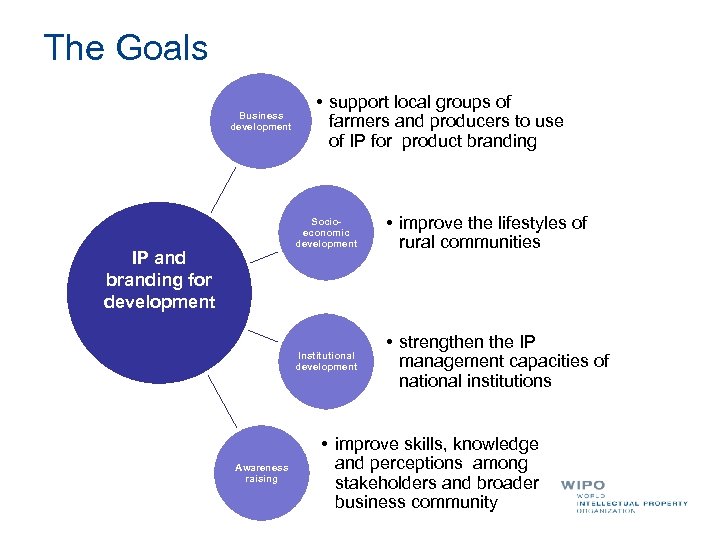
The Goals Business development • support local groups of farmers and producers to use of IP for product branding Socioeconomic development Institutional development IP and branding for development Awareness raising • improve the lifestyles of rural communities • strengthen the IP management capacities of national institutions • improve skills, knowledge and perceptions among stakeholders and broader business community
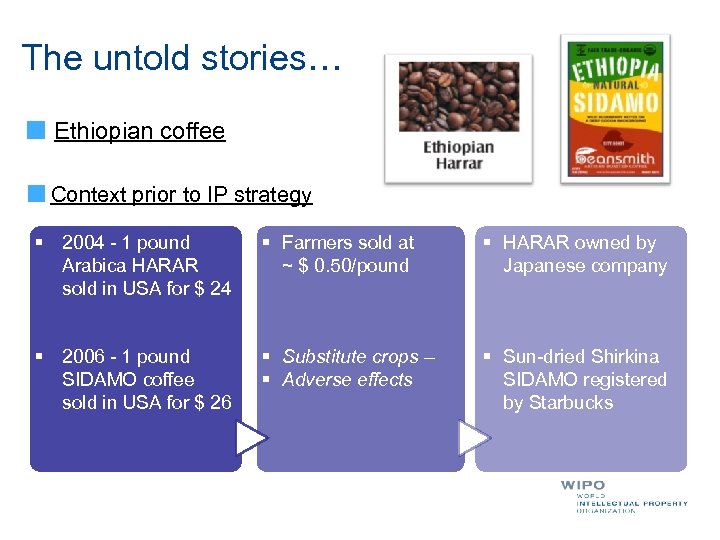
The untold stories… Ethiopian coffee Context prior to IP strategy § 2004 - 1 pound Arabica HARAR sold in USA for $ 24 § Farmers sold at ~ $ 0. 50/pound § HARAR owned by Japanese company § 2006 - 1 pound SIDAMO coffee sold in USA for $ 26 § Substitute crops – § Adverse effects § Sun-dried Shirkina SIDAMO registered by Starbucks
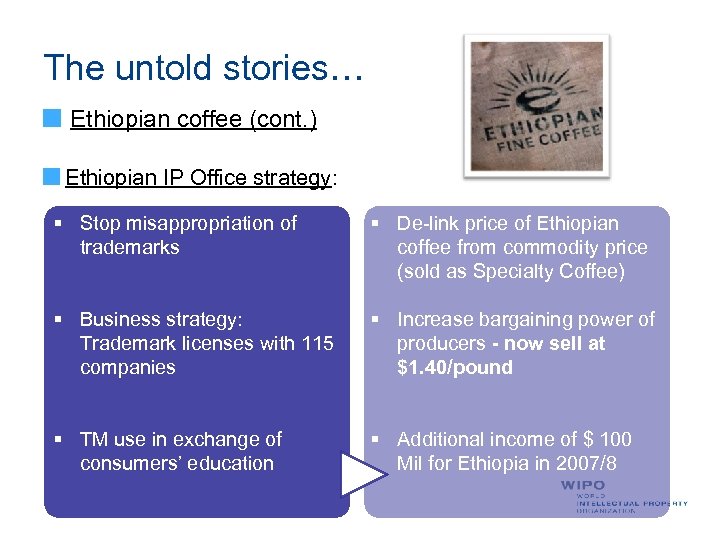
The untold stories… Ethiopian coffee (cont. ) Ethiopian IP Office strategy: § Stop misappropriation of trademarks § De-link price of Ethiopian coffee from commodity price (sold as Specialty Coffee) § Business strategy: Trademark licenses with 115 companies § Increase bargaining power of producers - now sell at $1. 40/pound § TM use in exchange of consumers’ education § Additional income of $ 100 Mil for Ethiopia in 2007/8
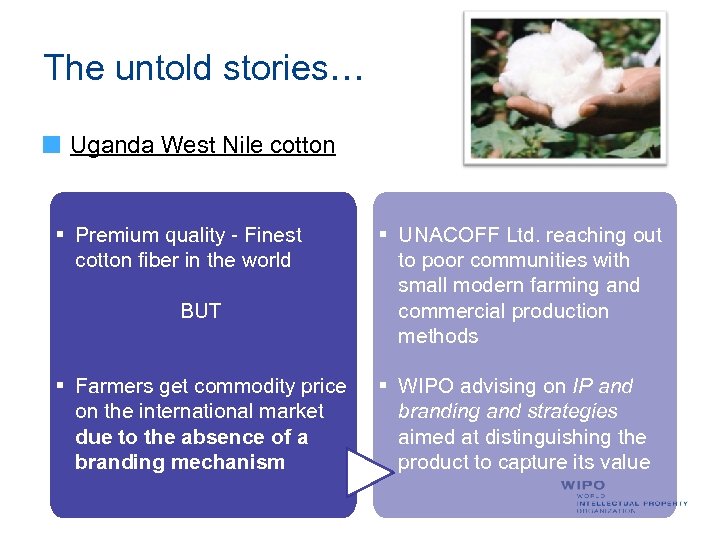
The untold stories… Uganda West Nile cotton § Premium quality - Finest cotton fiber in the world BUT § Farmers get commodity price on the international market due to the absence of a branding mechanism § UNACOFF Ltd. reaching out to poor communities with small modern farming and commercial production methods § WIPO advising on IP and branding and strategies aimed at distinguishing the product to capture its value
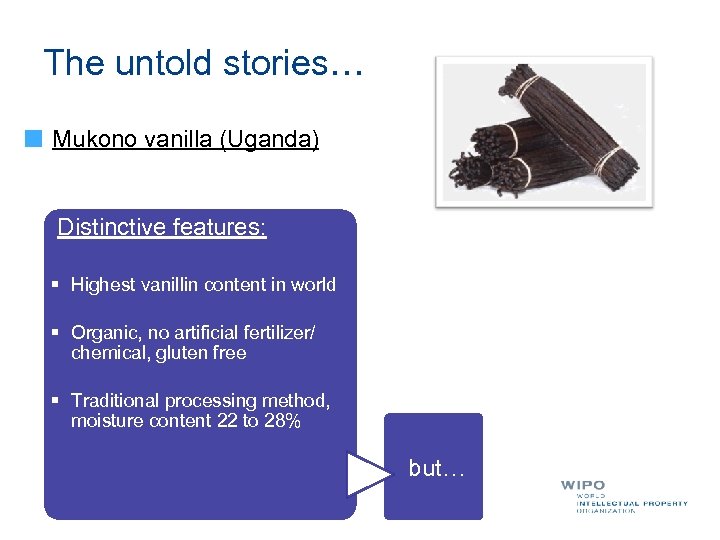
The untold stories… Mukono vanilla (Uganda) Distinctive features: § Highest vanillin content in world § Organic, no artificial fertilizer/ chemical, gluten free § Traditional processing method, moisture content 22 to 28% but…
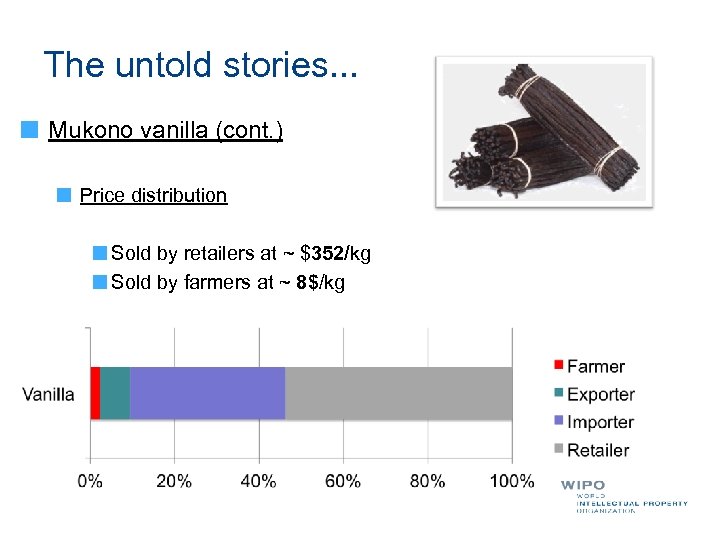
The untold stories. . . Mukono vanilla (cont. ) Price distribution Sold by retailers at ~ $352/kg Sold by farmers at ~ 8$/kg
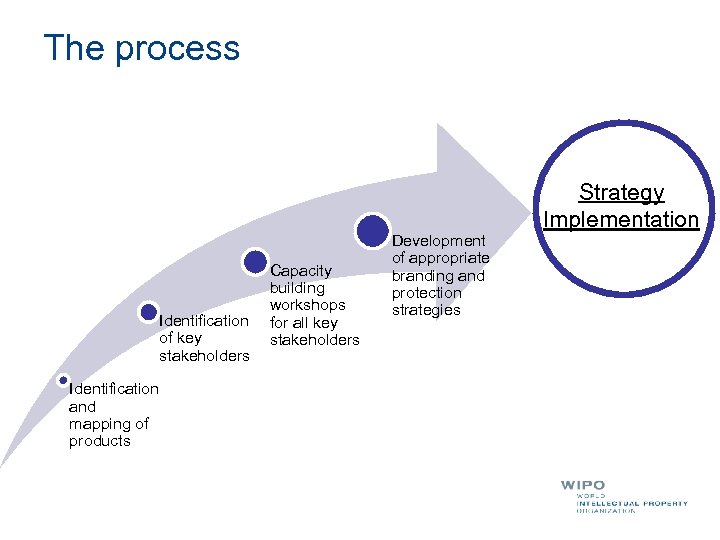
The process Identification of key stakeholders Identification and mapping of products Capacity building workshops for all key stakeholders Development of appropriate branding and protection strategies Strategy Implementation
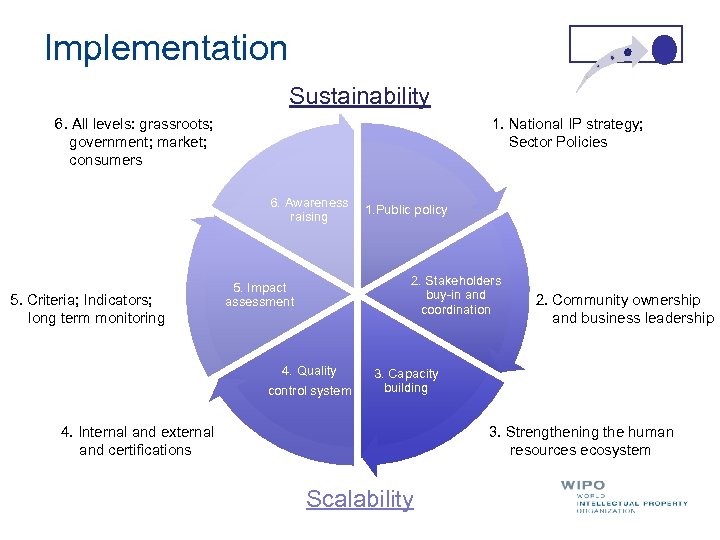
Implementation Sustainability 6. All levels: grassroots; government; market; consumers 1. National IP strategy; Sector Policies 6. Awareness raising 5. Criteria; Indicators; long term monitoring 1. Public policy 2. Stakeholders buy-in and coordination 5. Impact assessment 4. Quality control system 2. Community ownership and business leadership 3. Capacity building 4. Internal and external and certifications 3. Strengthening the human resources ecosystem Scalability
Appropriate technology Building LDCs’ knowledge base on how to Make use of the IP system to facilitate transfer , adaptation and use of appropriate technology. In 2014 WIPO successfully completed the Transfer of Technolgy in three pilot LDCs namely: Bangladesh, Nepal, and Zambia.
Appropriate technology Application by the Country Review of Application Participation Agreement to clarifying the obligations of each Party. Establishing a National Expert Group (NEG) Chairman of NEG National and International Experts.
Appropriate technology Needs Areas WIPO will support NEG to identify several needs areas Prioritize one or two need areas. Prepare Search Request: Prepare Search Report: to prepare the finding of Patent Information Search undertaken for the identified project. Formulate TOR Technology Landscape
Appropriate technology Prepare Technology Landscape. Approve the Landscape Report: Business Plan: Outreach Program: . External Evaluation:
Challenges Lack of political will – elaboration of IP Policy and Strategies ( Awareness of Senior Policy makers, ) IP Legislations - ( WIPO provides advisory & technical assistance) Lack of IP Skills - ( Capacity building and skills development programs) Lack of resources/funding ( Need for governments to put in place Innovation and Technology Funds , put more funding in R&Ds etc
Thank you for your kind attention Joyce C. Banya Senior Counsellor , Regional Bureau for Africa joyce. banya@wipo. int
Скачать презентацию WIPO-ARIPO Sub-Regional Training of Trainers Program on Effective
6552c38279256714005db003eb7cf8ea.ppt