


 Скачать презентацию Wind and Rain MCC Synoptic Week 11 -15
663bd229f7642f698fc5924aa2c2e9fe.ppt
- Количество слайдов: 53
 Wind and Rain MCC Synoptic Week 11 -15 March 2013, UCD
 Surface Weather Systems Weather systems in the northern hemisphere generally move from west to east due to the earth’s rotation. Movement of tropical systems such as hurricanes are more variable. In the northern hemisphere, winds blow anti-clockwise around lows such as depressions, and clockwise around highs. When the isobars (lines of equal pressure) become more closely spaced, then winds increase. That is, the closer the isobars over a particular area, the higher the wind speed.
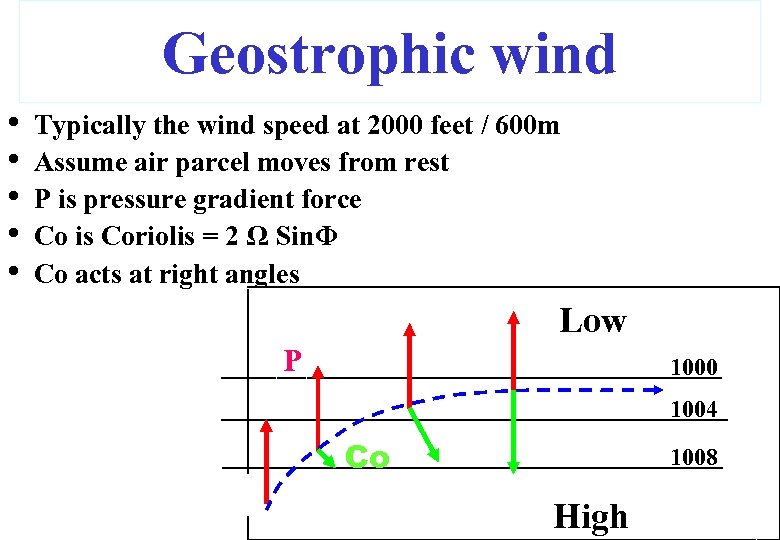 Geostrophic wind • • • Typically the wind speed at 2000 feet / 600 m Assume air parcel moves from rest P is pressure gradient force Co is Coriolis = 2 Ω SinΦ Co acts at right angles Low P 1000 1004 Co 1008 High
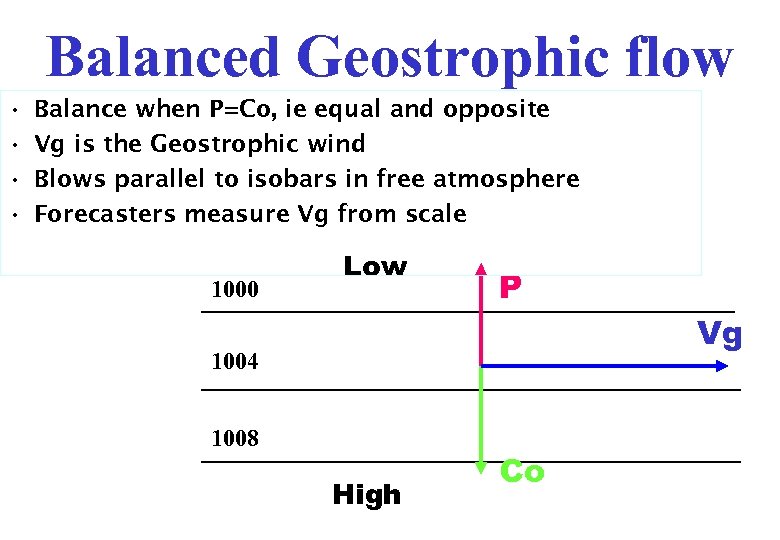 Balanced Geostrophic flow • • Balance when P=Co, ie equal and opposite Vg is the Geostrophic wind Blows parallel to isobars in free atmosphere Forecasters measure Vg from scale 1000 Low P Vg 1004 1008 High Co
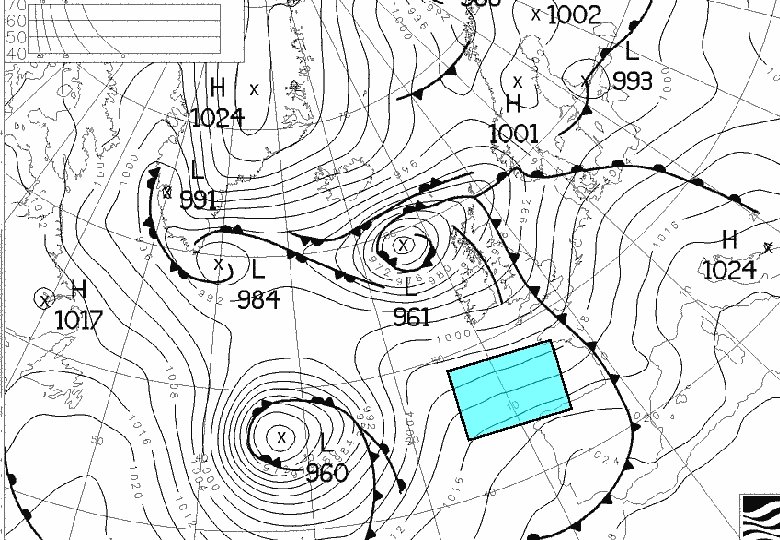 This is the chart for Monday
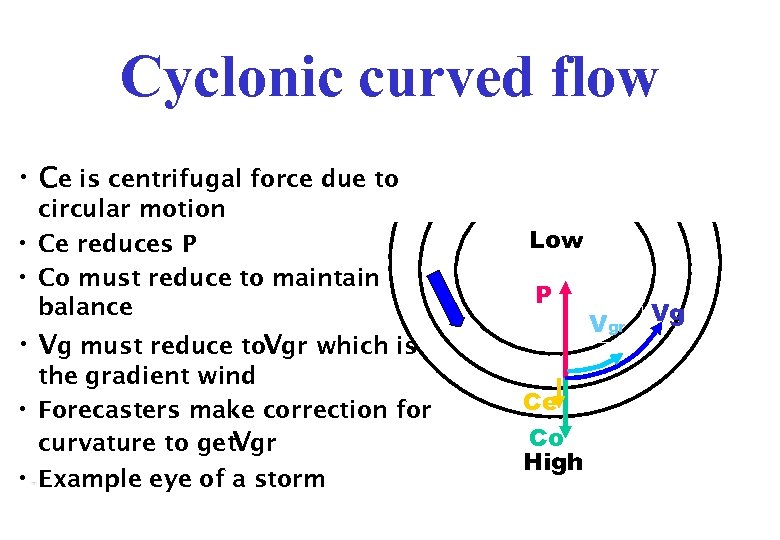 Cyclonic curved flow • Ce is centrifugal force due to circular motion • Ce reduces P • Co must reduce to maintain balance Low P • Vg must reduce to. Vgr which is the gradient wind • Forecasters make correction for curvature to get. Vgr • Example eye of a storm Ce Co High Vgr Vg
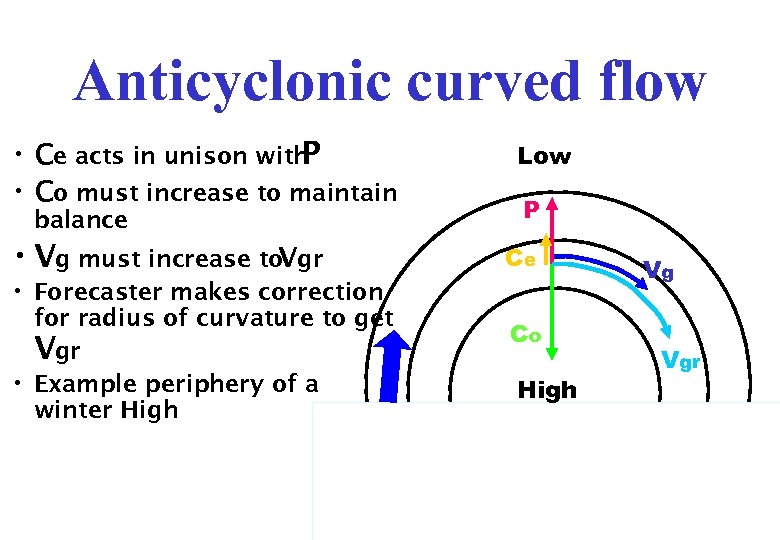 Anticyclonic curved flow • Ce acts in unison with P • Co must increase to maintain balance • Vg must increase to. Vgr • Forecaster makes correction for radius of curvature to get Vgr • Example periphery of a winter High Low P Ce Co High Vg Vgr
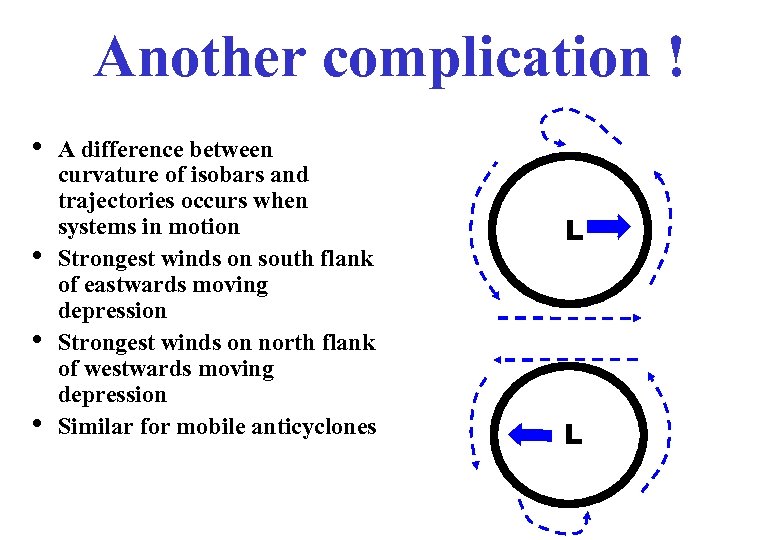 Another complication ! • • A difference between curvature of isobars and trajectories occurs when systems in motion Strongest winds on south flank of eastwards moving depression Strongest winds on north flank of westwards moving depression Similar for mobile anticyclones L L
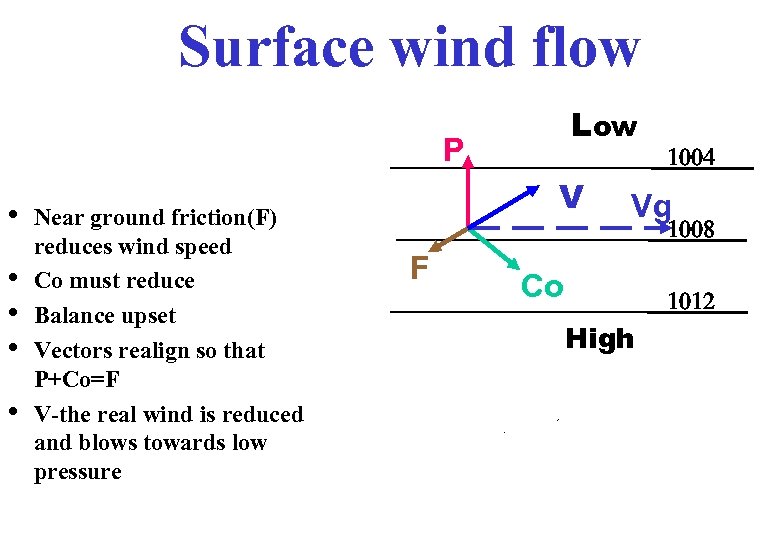 Surface wind flow Low P • • • Near ground friction(F) reduces wind speed Co must reduce Balance upset Vectors realign so that P+Co=F V-the real wind is reduced and blows towards low pressure V F Vg Co High
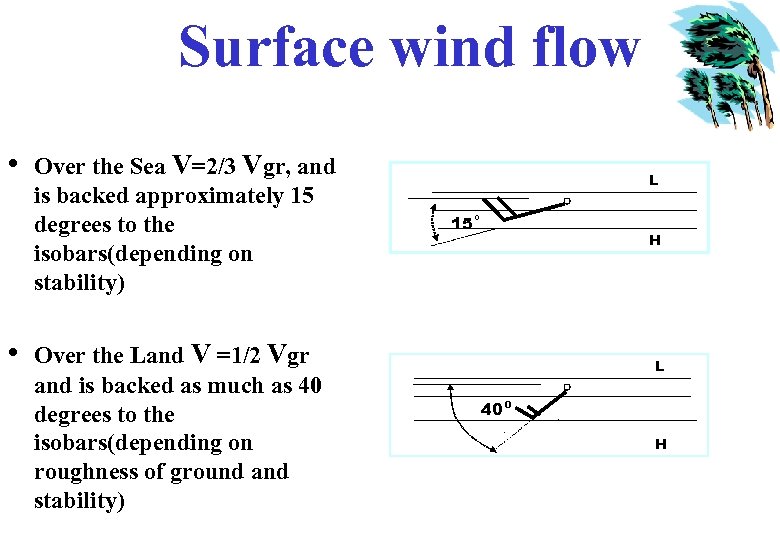 Surface wind flow • • Over the Sea V=2/3 Vgr, and is backed approximately 15 degrees to the isobars(depending on stability) Over the Land V =1/2 Vgr and is backed as much as 40 degrees to the isobars(depending on roughness of ground and stability) L 15 0 H L 40 0 H
 Measuring Wind • A confusion of units! – Beaufort Forces – Knots (Nautical Miles per hour) – Miles per hour – Kilometres per hour – Metres per second
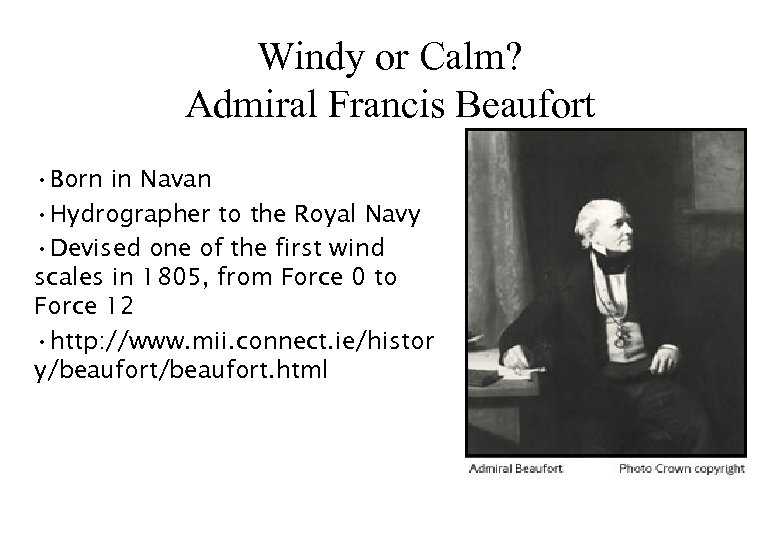 Windy or Calm? Admiral Francis Beaufort • Born in Navan • Hydrographer to the Royal Navy • Devised one of the first wind scales in 1805, from Force 0 to Force 12 • http: //www. mii. connect. ie/histor y/beaufort. html
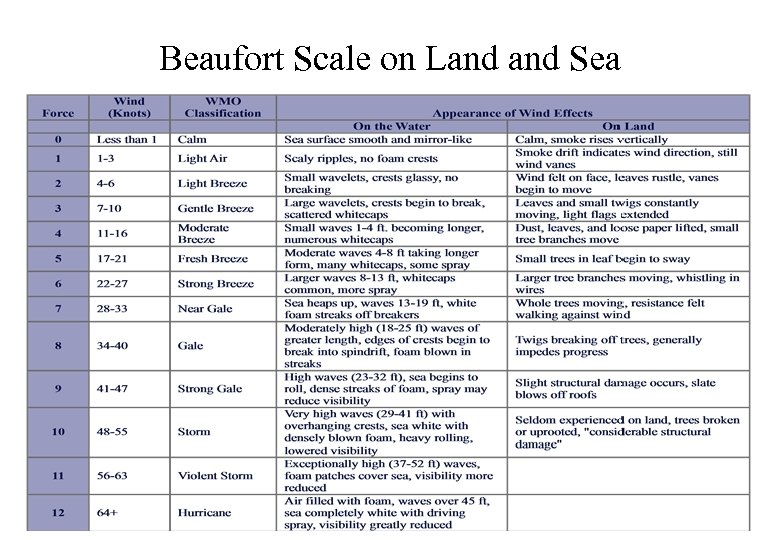 Beaufort Scale on Land Sea
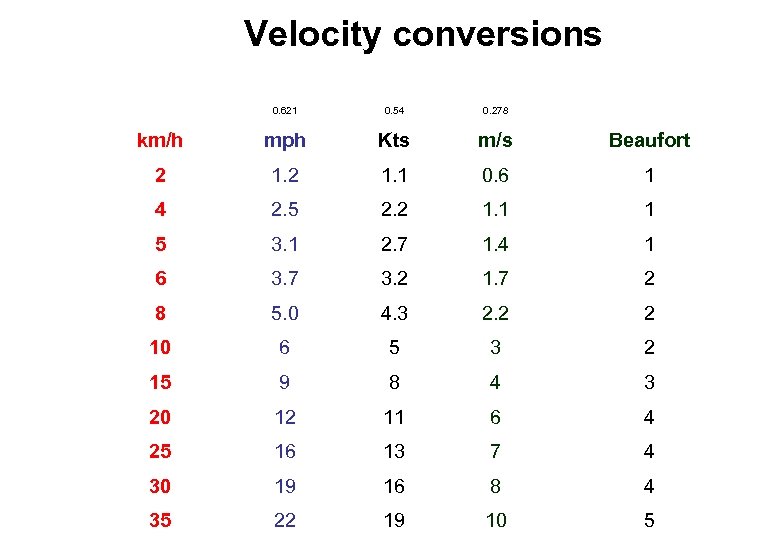 Velocity conversions 0. 621 0. 54 0. 278 km/h mph Kts m/s Beaufort 2 1. 1 0. 6 1 4 2. 5 2. 2 1. 1 1 5 3. 1 2. 7 1. 4 1 6 3. 7 3. 2 1. 7 2 8 5. 0 4. 3 2. 2 2 10 6 5 3 2 15 9 8 4 3 20 12 11 6 4 25 16 13 7 4 30 19 16 8 4 35 22 19 10 5
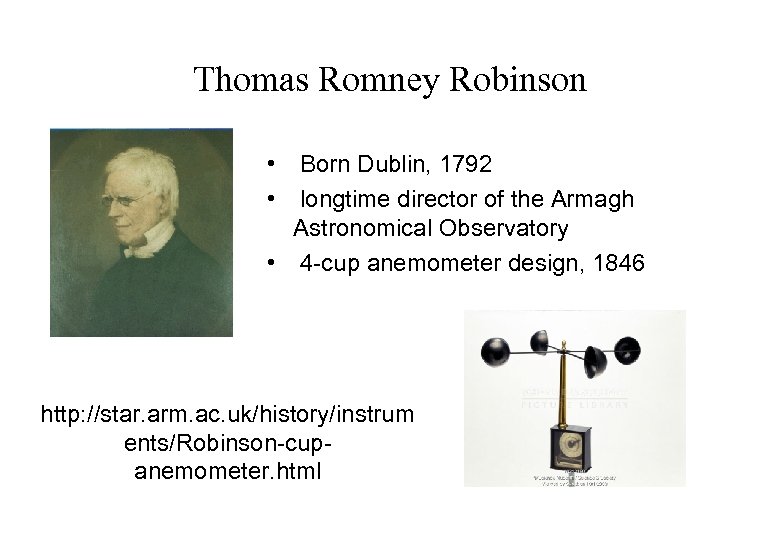 Thomas Romney Robinson • Born Dublin, 1792 • longtime director of the Armagh Astronomical Observatory • 4 -cup anemometer design, 1846 http: //star. arm. ac. uk/history/instrum ents/Robinson-cupanemometer. html
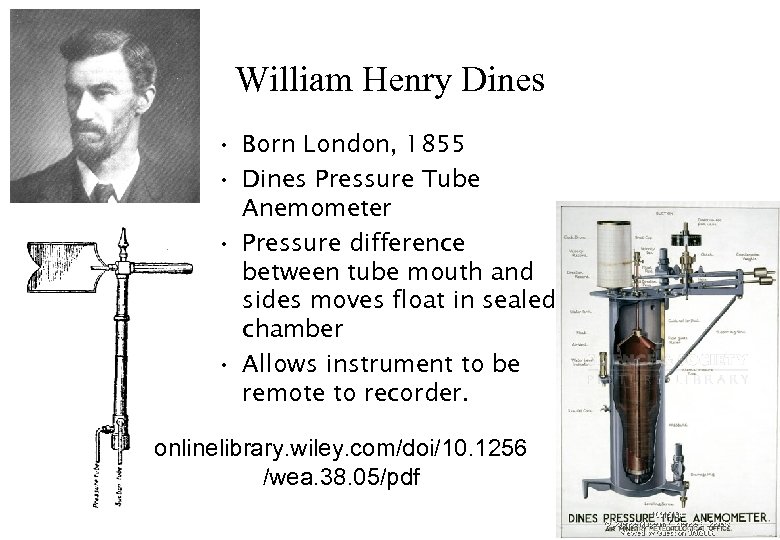 William Henry Dines • Born London, 1855 • Dines Pressure Tube Anemometer • Pressure difference between tube mouth and sides moves float in sealed chamber • Allows instrument to be remote to recorder. onlinelibrary. wiley. com/doi/10. 1256 /wea. 38. 05/pdf
 Fundamentals of Wind • Measured at 10 m above the ground • (Always be aware that Malin Head is much higher. Treat wind readings from oil platforms, ships etc with caution). • Mean Speed – average over a ten-minute period • Gust Speed – highest instantaneous wind speed • Gusts normally do the damage!!
 Wind Speed and Gusts • Wind speed mentioned in marine observations, forecasts, and warnings is the average speed over a 10 minute interval. • Wind gusts may be up to 70% higher than the average wind speed. • For example, if the average wind speed is 25 knots, occasional gusts up to 40 knots can be expected, depending on stability of the air-mass.
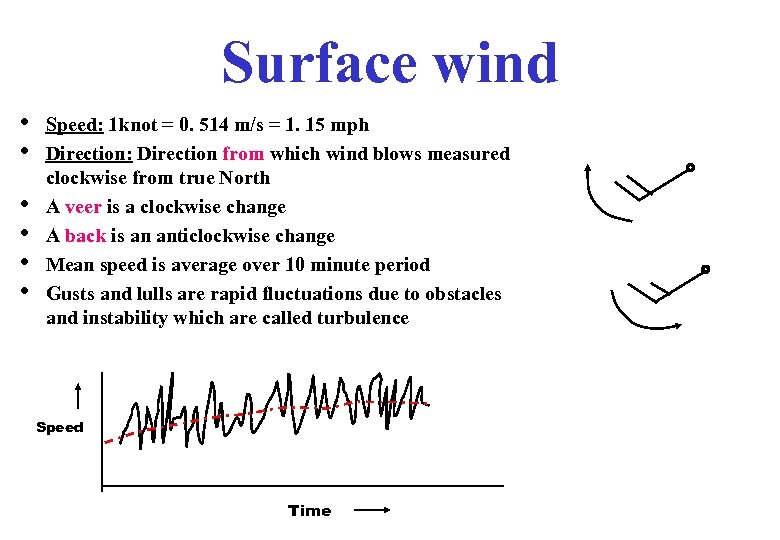 Surface wind • • • Speed: 1 knot = 0. 514 m/s = 1. 15 mph Direction: Direction from which wind blows measured clockwise from true North A veer is a clockwise change A back is an anticlockwise change Mean speed is average over 10 minute period Gusts and lulls are rapid fluctuations due to obstacles and instability which are called turbulence Speed Time
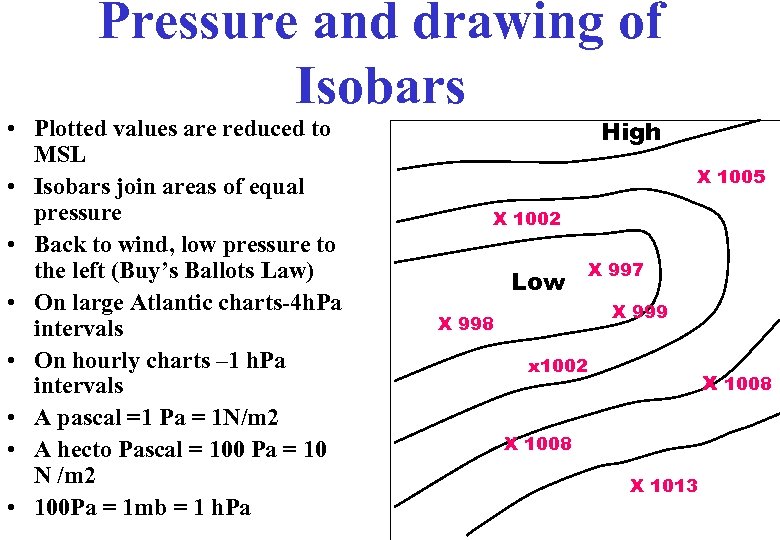 Pressure and drawing of Isobars • Plotted values are reduced to MSL • Isobars join areas of equal pressure • Back to wind, low pressure to the left (Buy’s Ballots Law) • On large Atlantic charts-4 h. Pa intervals • On hourly charts – 1 h. Pa intervals • A pascal =1 Pa = 1 N/m 2 • A hecto Pascal = 100 Pa = 10 N /m 2 • 100 Pa = 1 mb = 1 h. Pa High X 1005 X 1002 Low X 997 X 999 X 998 x 1002 X 1008 X 1013
 The Sea Breeze • An onshore breeze which develops in coastal areas on a warm day. • Differential heating between the land sea.
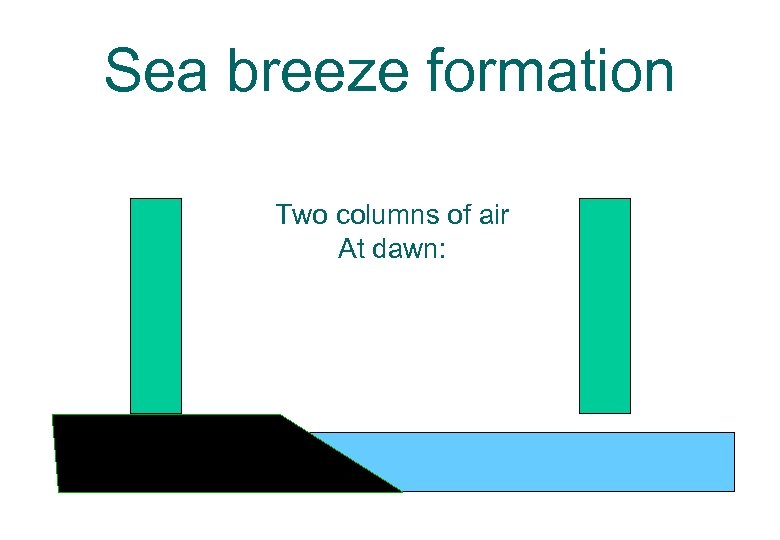 Sea breeze formation Two columns of air At dawn:
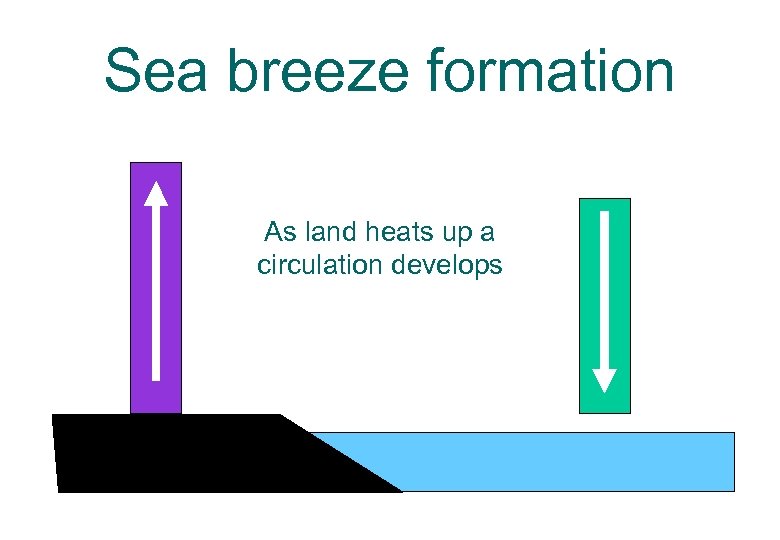 Sea breeze formation As land heats up a circulation develops
 How… and When? • Land temperatures need to be at least 3. 5 o. C warmer than sea temperatures … • They are very common and strong in tropical regions • In Ireland generally from March to late September.
 Land breeze • Anothermally driven circulation. • Sea warmer than land at night. • Usually weaker than the sea breeze. • Very rarely exceeds 10 kt.
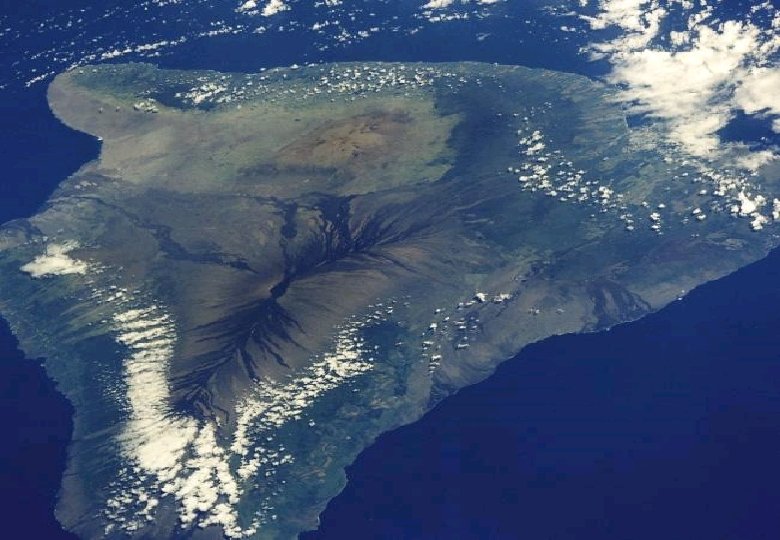
 It’s not just a coastal thing • Sea breezes can occasionally penetrate over 50 km inland • Sea breezes can enhance convection due to convergence, particularly on peninsulas
 Bureau of Meteorology 03/11/13
 Sea breeze front • Offshore wind opposes sea breeze • Enhanced convergence • Tightening temperature and humidity gradients
 Sea Breeze Summary • Nice cooling breeze on the coast. • Can bring in offshore stratus to spoil a sunny day right on the coast • Useful for yachtsmen and inshore fishermen • Enhanced convection can lead to some severe weather.
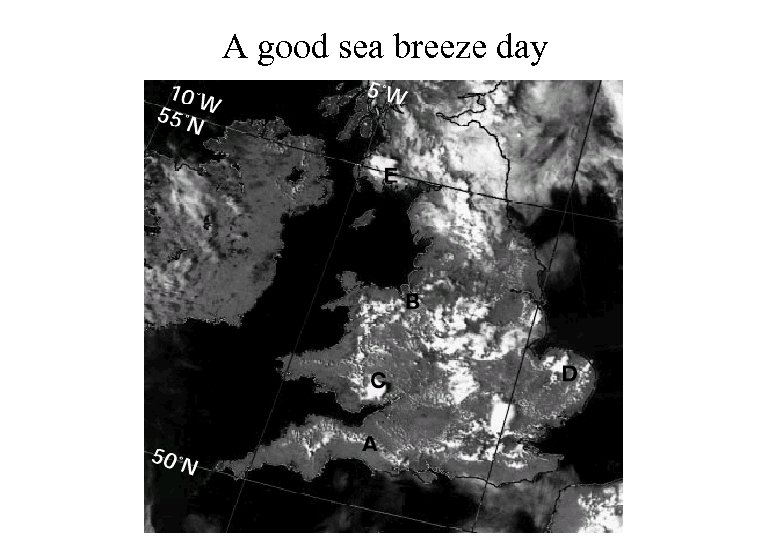 A good sea breeze day
 Mountain Airflow • Modification of broadscale winds Deflection, channelling and shelter Effect on depressions and fronts • Lee waves • Locally induced winds Katabatic and anabatic winds Valley wind circulations • Downslope winds Föhn and Chinook winds Bora wind
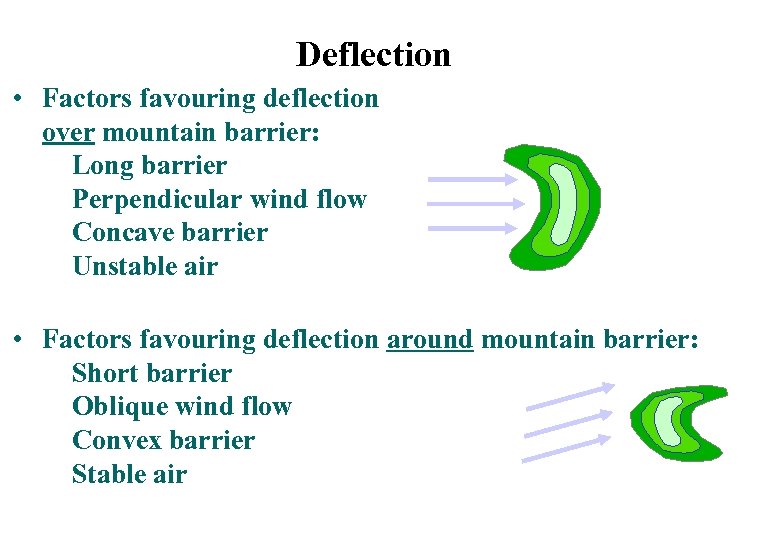 Deflection • Factors favouring deflection over mountain barrier: Long barrier Perpendicular wind flow Concave barrier Unstable air • Factors favouring deflection around mountain barrier: Short barrier Oblique wind flow Convex barrier Stable air
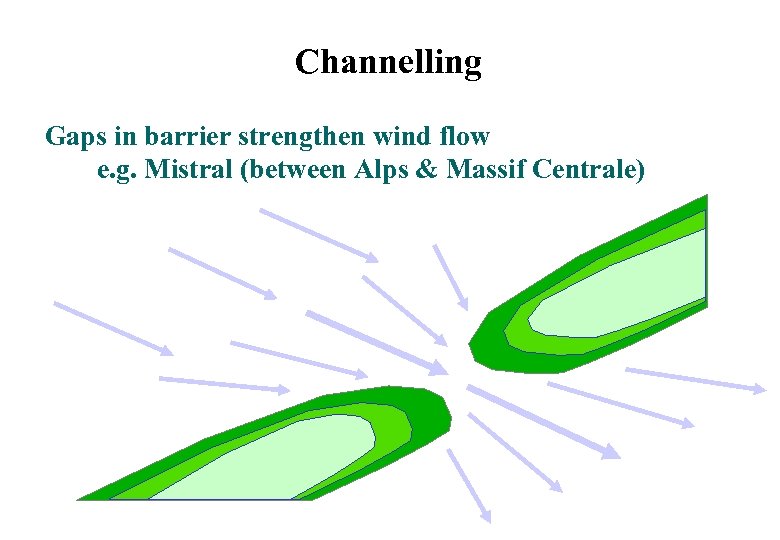 Channelling Gaps in barrier strengthen wind flow e. g. Mistral (between Alps & Massif Centrale)
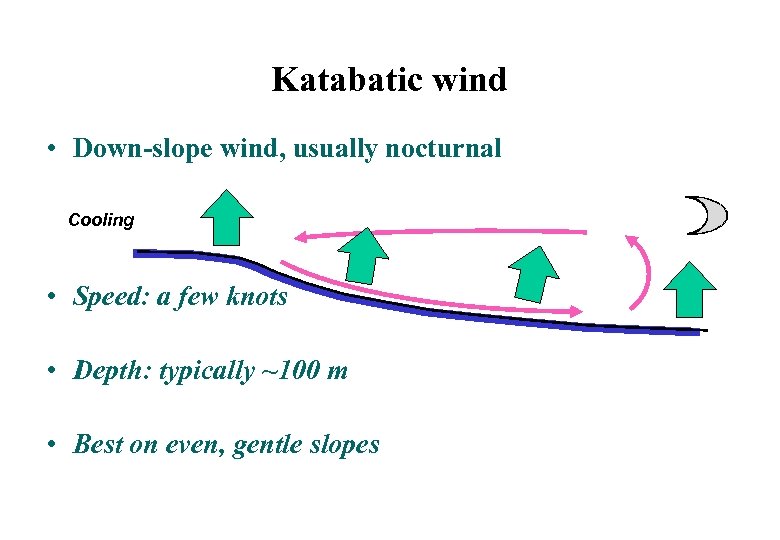 Katabatic wind • Down-slope wind, usually nocturnal Cooling • Speed: a few knots • Depth: typically ~100 m • Best on even, gentle slopes
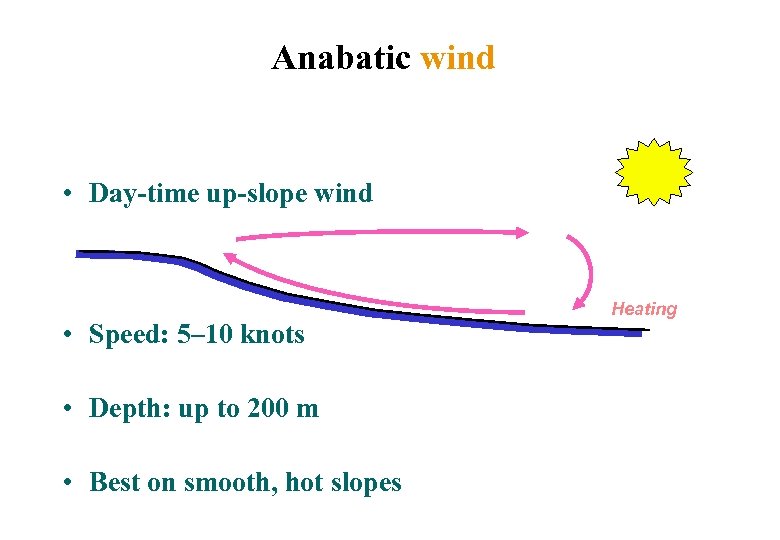 Anabatic wind • Day-time up-slope wind • Speed: 5– 10 knots • Depth: up to 200 m • Best on smooth, hot slopes Heating
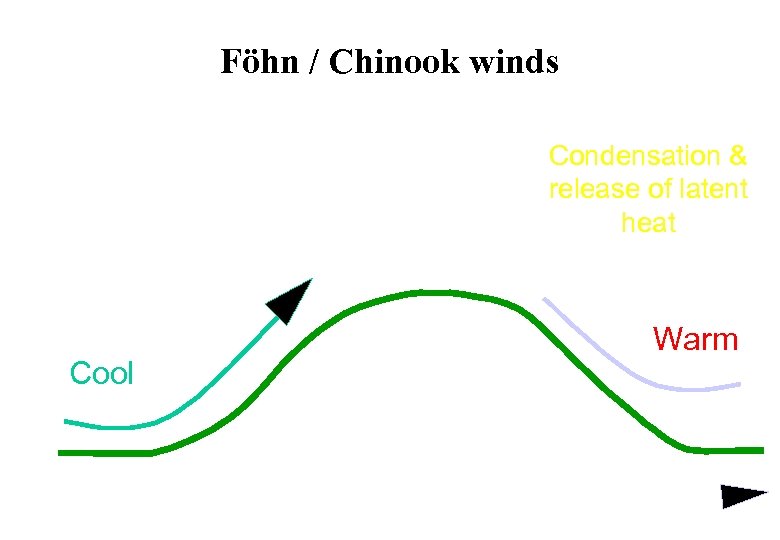 Föhn / Chinook winds Condensation & release of latent heat Cool Warm
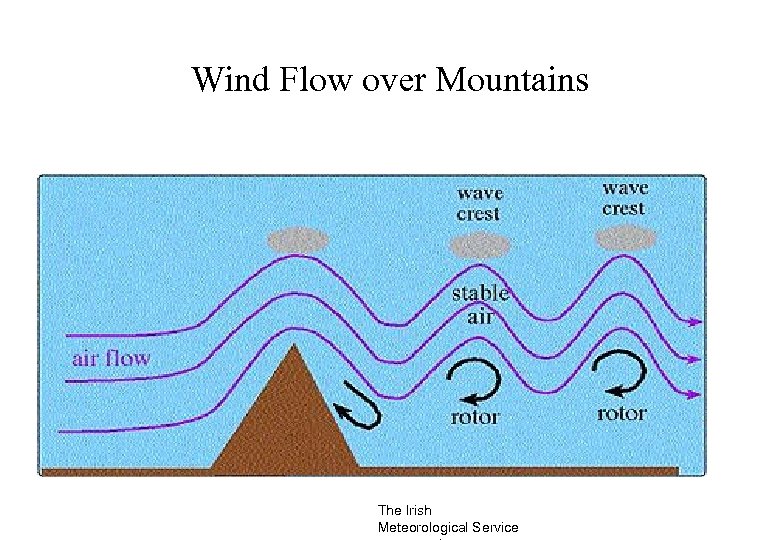 Wind Flow over Mountains The Irish Meteorological Service
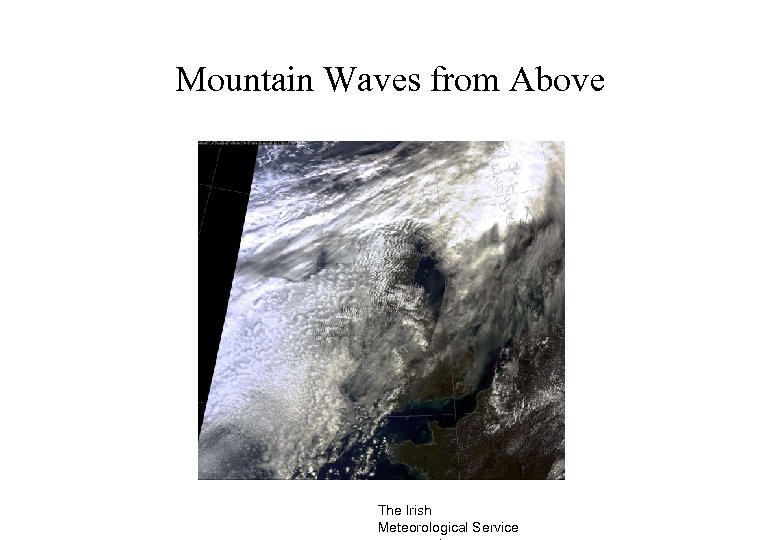 Mountain Waves from Above The Irish Meteorological Service
 Bureau of Meteorology 03/11/13
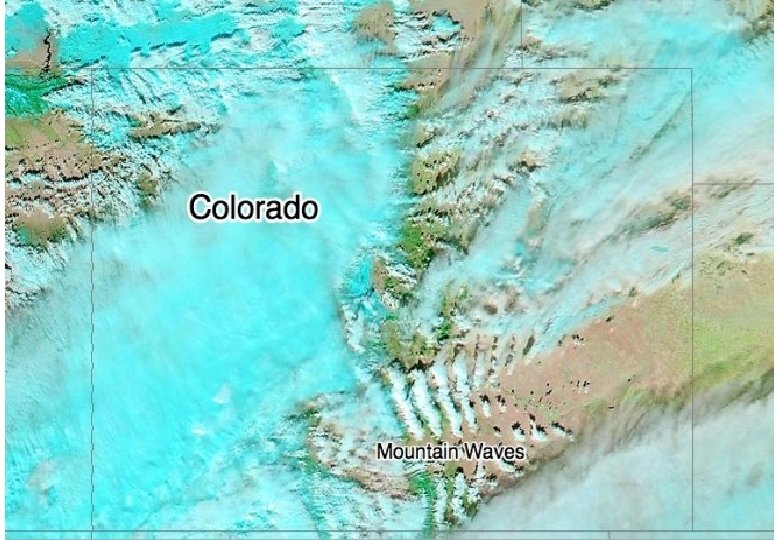 Bureau of Meteorology 03/11/13
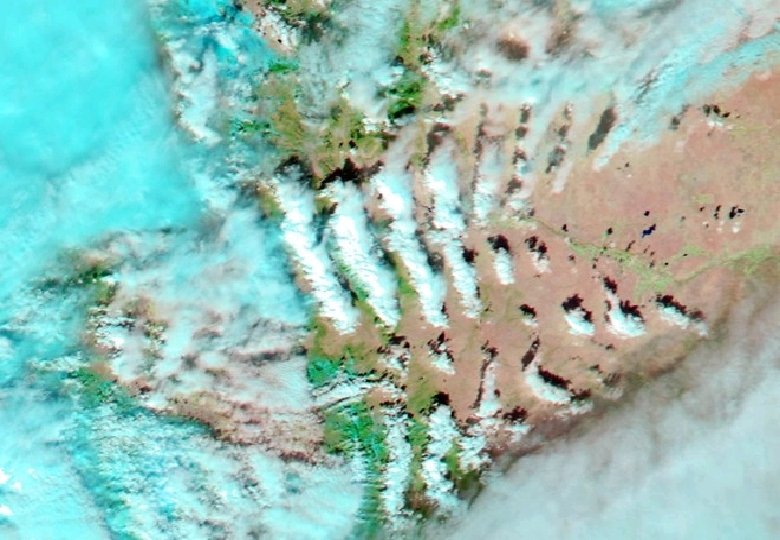 Bureau of Meteorology 03/11/13
 Lenticular Altocumulus The Irish Meteorological Service
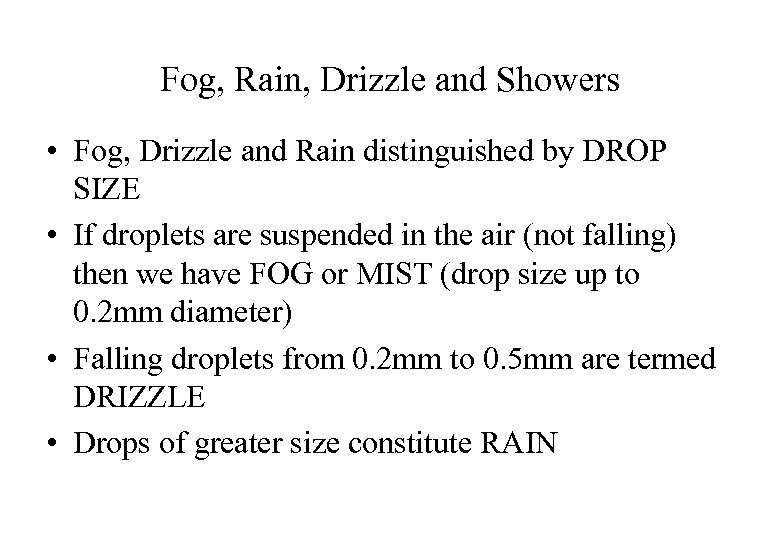 Fog, Rain, Drizzle and Showers • Fog, Drizzle and Rain distinguished by DROP SIZE • If droplets are suspended in the air (not falling) then we have FOG or MIST (drop size up to 0. 2 mm diameter) • Falling droplets from 0. 2 mm to 0. 5 mm are termed DRIZZLE • Drops of greater size constitute RAIN
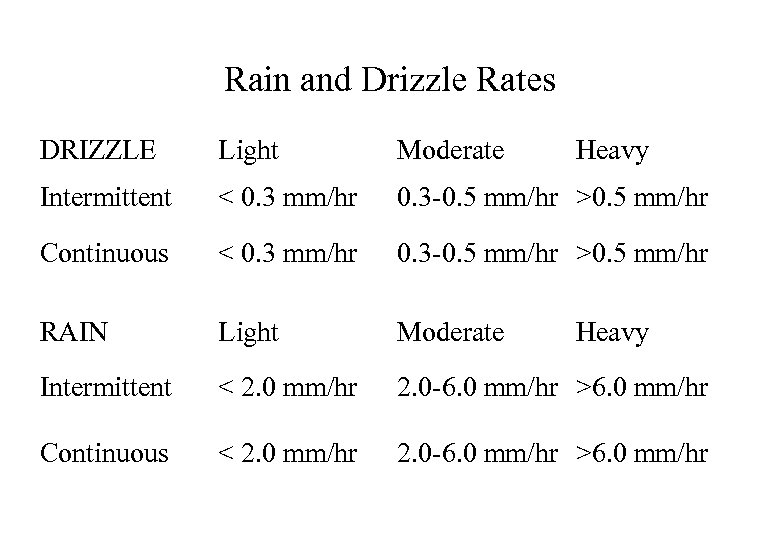 Rain and Drizzle Rates DRIZZLE Light Moderate Heavy Intermittent < 0. 3 mm/hr 0. 3 -0. 5 mm/hr >0. 5 mm/hr Continuous < 0. 3 mm/hr 0. 3 -0. 5 mm/hr >0. 5 mm/hr RAIN Light Moderate Intermittent < 2. 0 mm/hr 2. 0 -6. 0 mm/hr >6. 0 mm/hr Continuous < 2. 0 mm/hr 2. 0 -6. 0 mm/hr >6. 0 mm/hr Heavy
 Rain and Showers • Rain – Primarily large geographical scale – Origin in dynamical processes • Showers – Small spatial scale (500 m – 20 Km) – Convective in origin – Much higher rates of rainfall – Can be embedded in larger scale rain bands
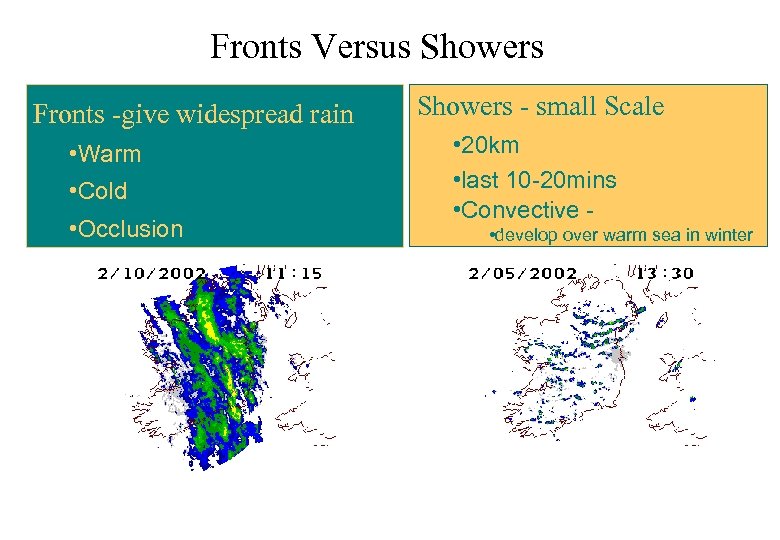 Fronts Versus Showers Fronts -give widespread rain • Warm • Cold • Occlusion Showers - small Scale • 20 km • last 10 -20 mins • Convective • develop over warm sea in winter
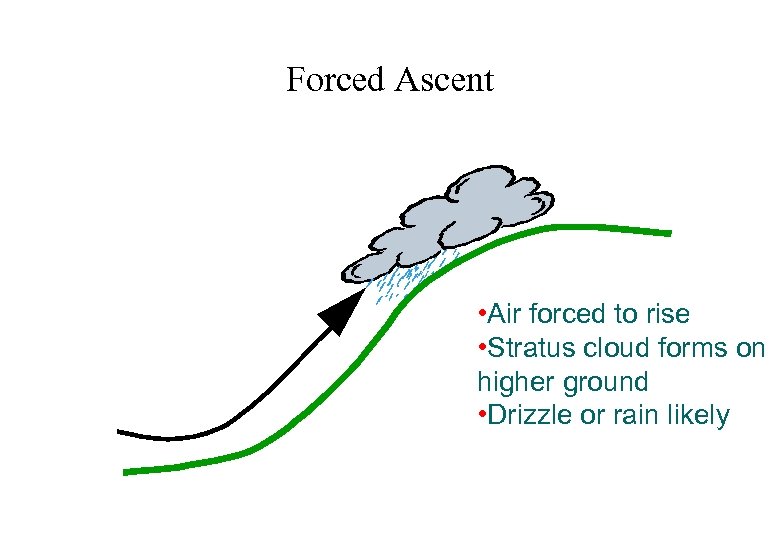 Forced Ascent • Air forced to rise • Stratus cloud forms on higher ground • Drizzle or rain likely
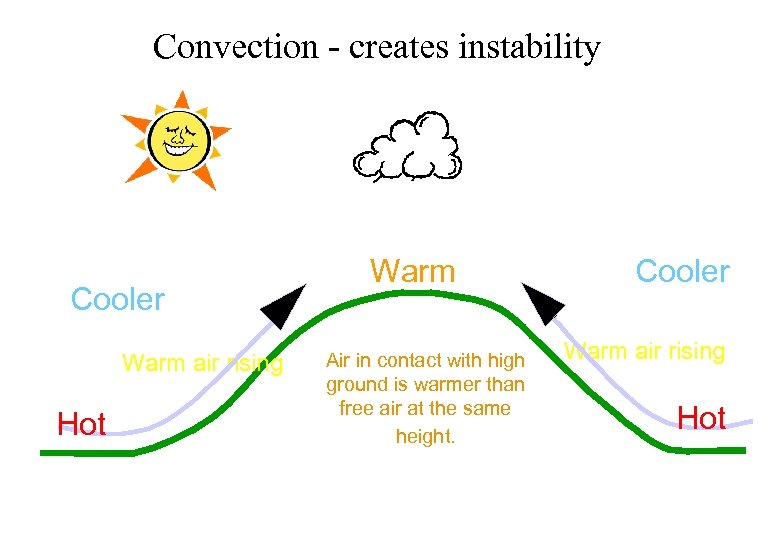 Convection - creates instability Cooler Warm air rising Hot Warm Air in contact with high ground is warmer than free air at the same height. Cooler Warm air rising Hot
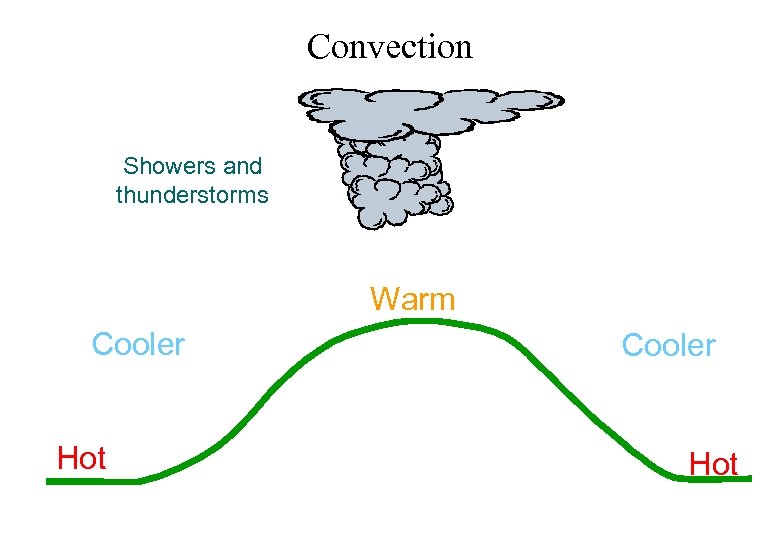 Convection Showers and thunderstorms Warm Cooler Hot
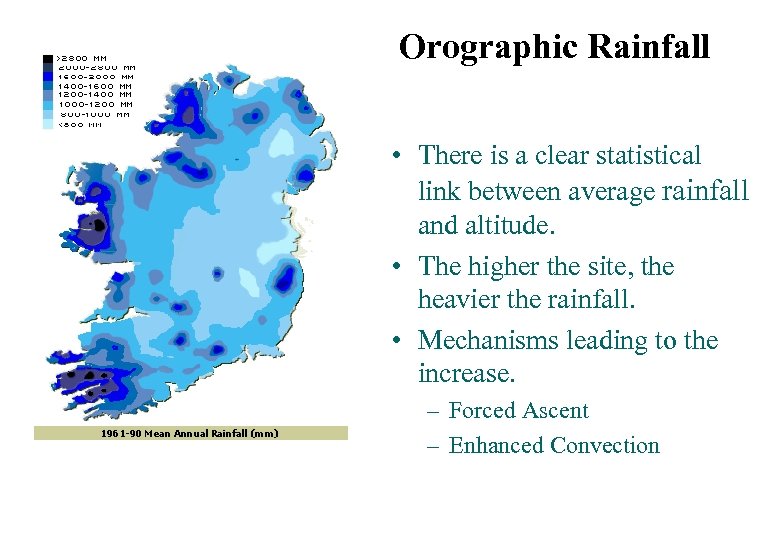 Orographic Rainfall • There is a clear statistical link between average rainfall and altitude. • The higher the site, the heavier the rainfall. • Mechanisms leading to the increase. – Forced Ascent – Enhanced Convection
 Irish Rainfall Rates • Range from about 800 mm/yr (Dublin) to about 3000 mm/yr (Kerry Mountains) • Very variable in nature • Greatest rainfall totals: – Hourly 97 mm Co. Antrim 1887 – Daily 243. 5 mm Co. Kerry 1993 – Monthly 790 mm Co. Waterford 1996 • Hourly totals of > 10 mm are uncommon in Ireland
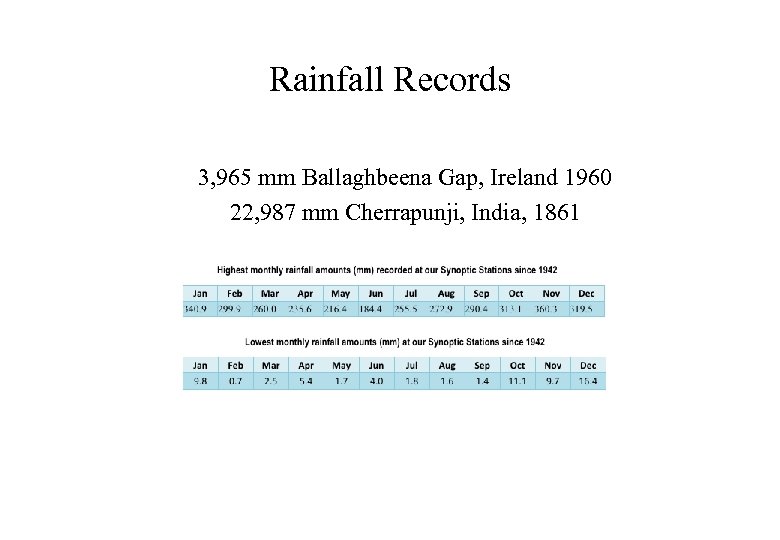 Rainfall Records 3, 965 mm Ballaghbeena Gap, Ireland 1960 22, 987 mm Cherrapunji, India, 1861