


 Скачать презентацию WIN 02 Francis Halzen the sky
43356064727b584112148c90d3258471.ppt
- Количество слайдов: 95
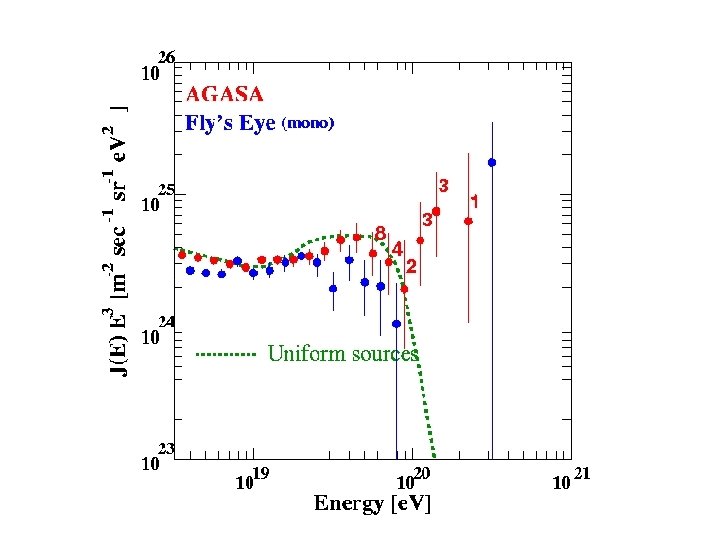
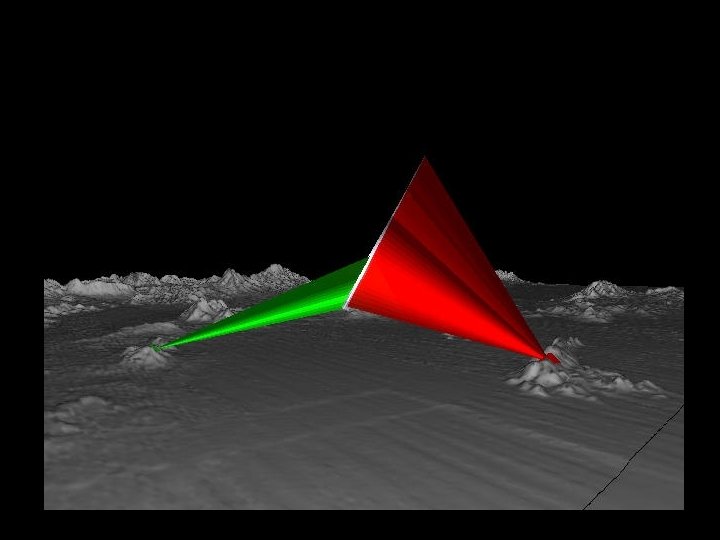
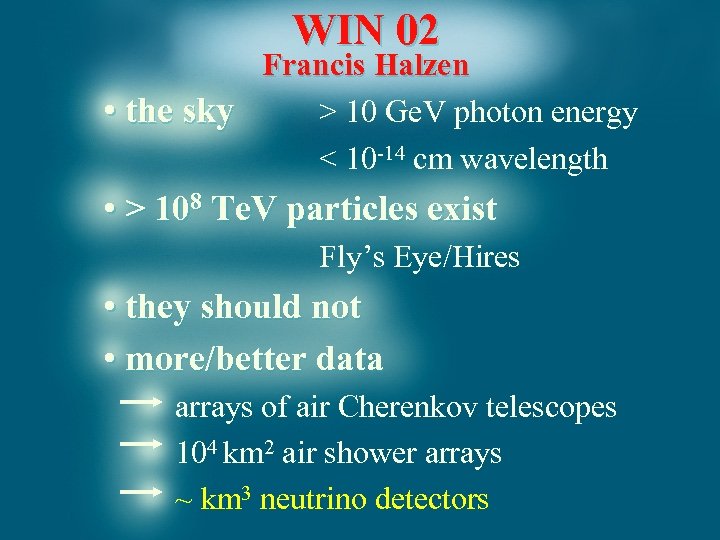 WIN 02 Francis Halzen • the sky > 10 Ge. V photon energy < 10 -14 cm wavelength • > 108 Te. V particles exist Fly’s Eye/Hires • they should not • more/better data arrays of air Cherenkov telescopes 104 km 2 air shower arrays ~ km 3 neutrino detectors
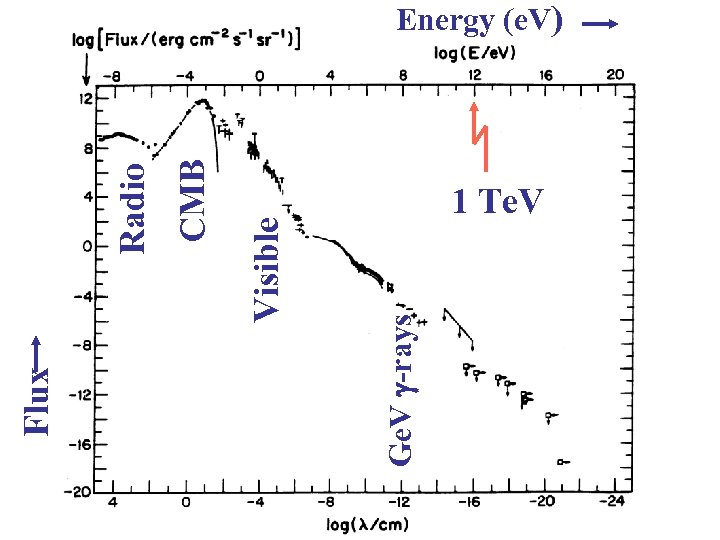 CMB Radio Visible Ge. V g-rays Flux Energy (e. V) 1 Te. V
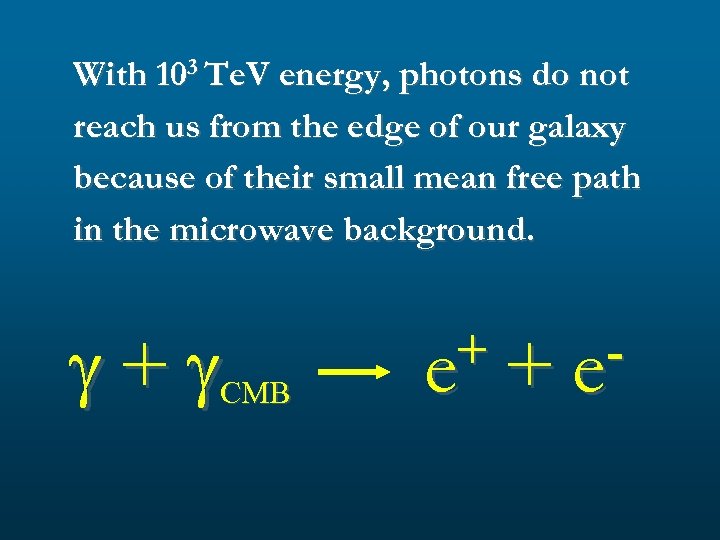 With 103 Te. V energy, photons do not reach us from the edge of our galaxy because of their small mean free path in the microwave background. + CMB + e + e
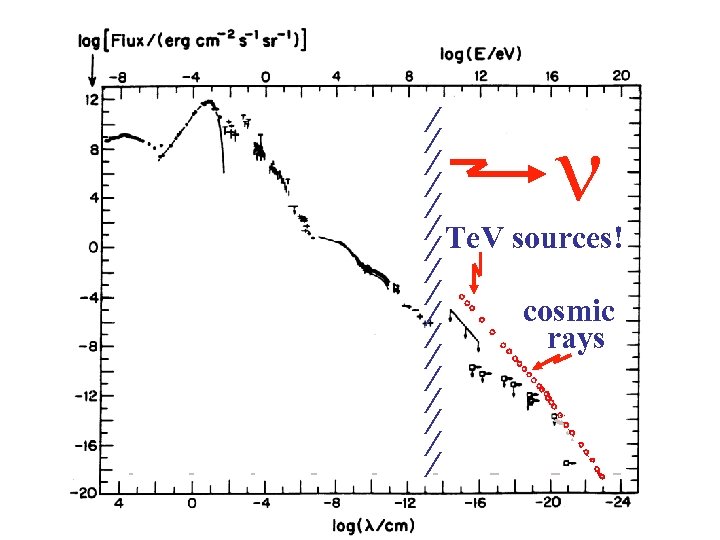 / / / Te. V sources! / / / cosmic / / rays / / /
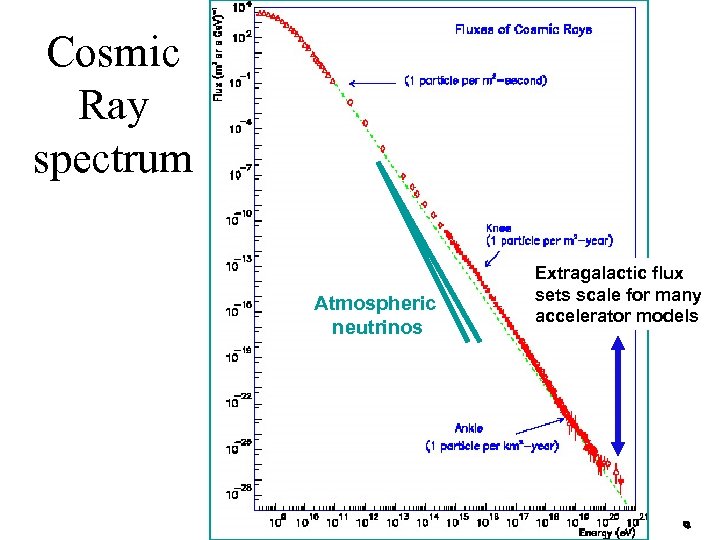 Cosmic Ray spectrum Atmospheric neutrinos Extragalactic flux sets scale for many accelerator models
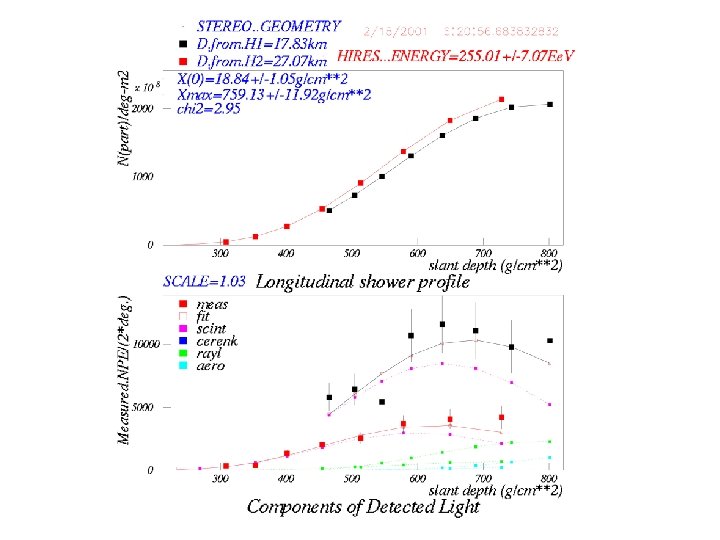
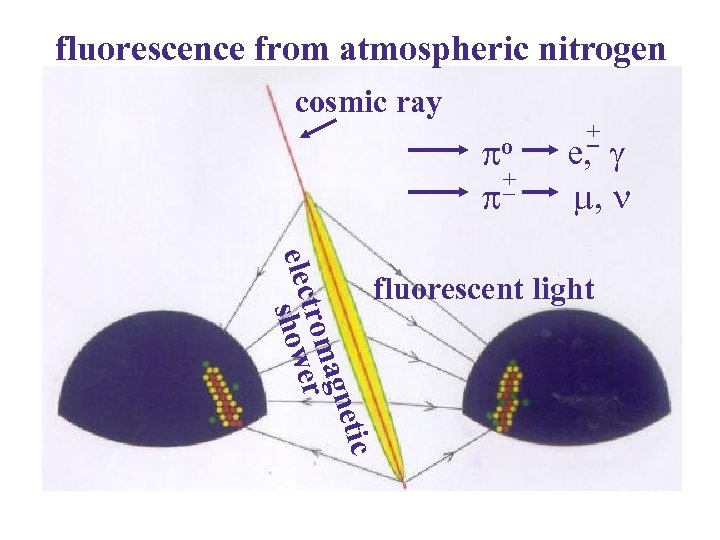 fluorescence from atmospheric nitrogen cosmic ray + _ o e + _ etic agn trom r elec showe fluorescent light
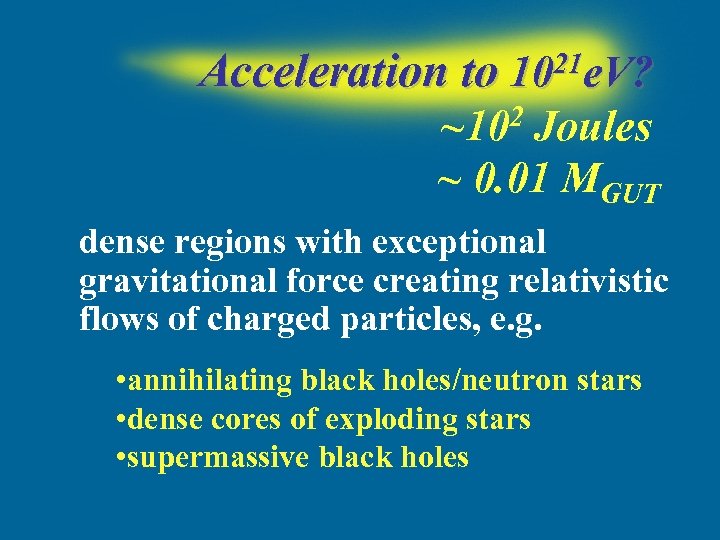 Acceleration to 1021 e. V? ~102 Joules ~ 0. 01 MGUT dense regions with exceptional gravitational force creating relativistic flows of charged particles, e. g. • annihilating black holes/neutron stars • dense cores of exploding stars • supermassive black holes
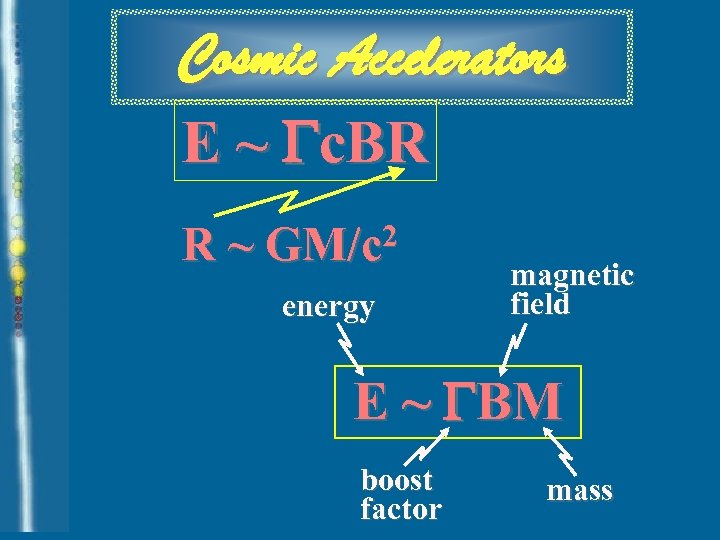 Cosmic Accelerators E ~ Gc. BR R~ 2 GM/c energy magnetic field E ~ GBM boost factor mass
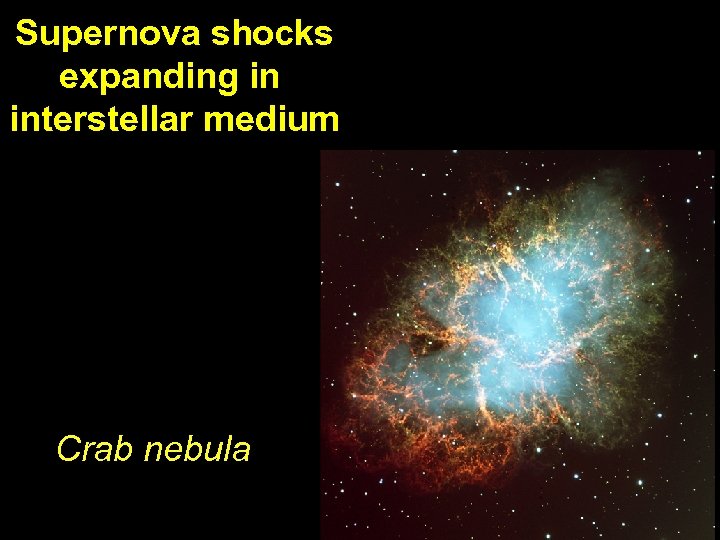 Supernova shocks expanding in interstellar medium Crab nebula
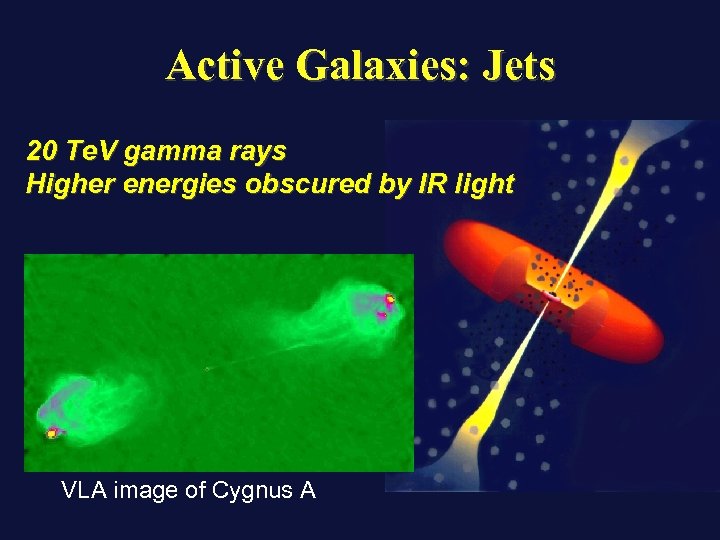 Active Galaxies: Jets 20 Te. V gamma rays Higher energies obscured by IR light VLA image of Cygnus A
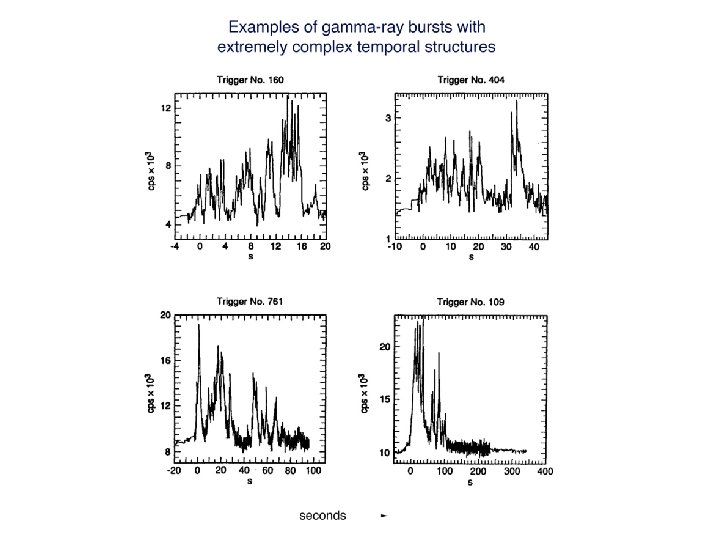
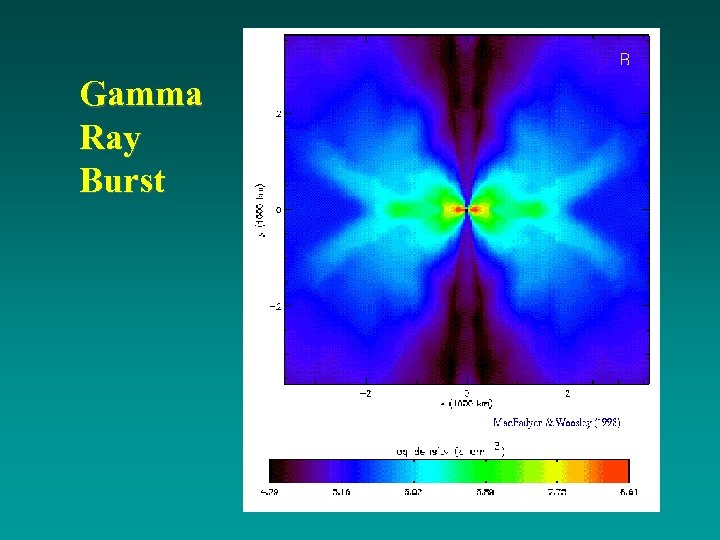 Gamma Ray Burst
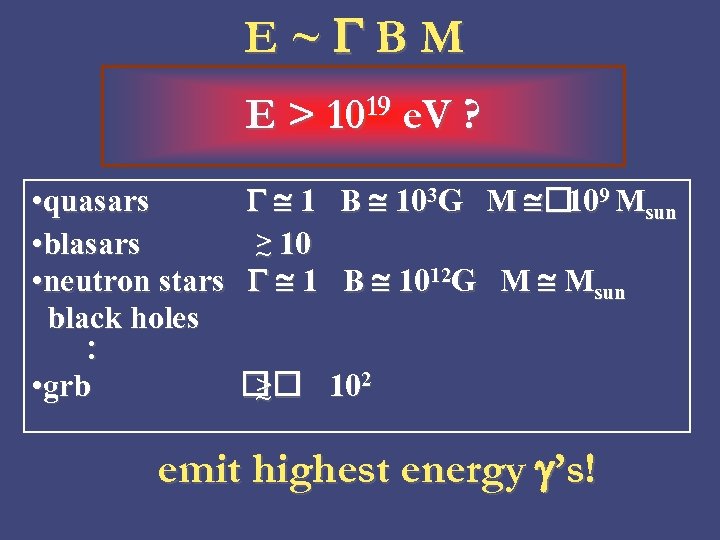 E ~ G B M E> • quasars • blasars • neutron stars black holes. . • grb G@1 > 10 ~ G@1 19 10 e. V ? B @ 103 G M @ 9 Msun 10 B @ 1012 G M @ Msun > 102 ~ emit highest energy g’s!
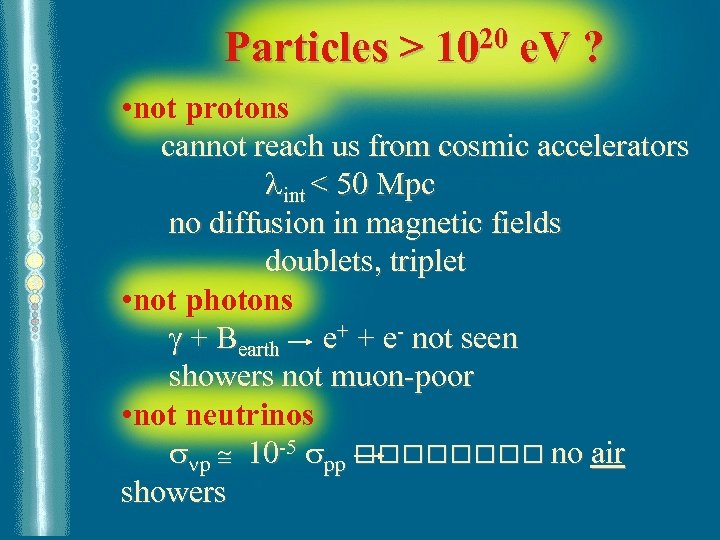 Particles > 20 10 e. V ? • not protons cannot reach us from cosmic accelerators lint < 50 Mpc no diffusion in magnetic fields doublets, triplet • not photons + Bearth e+ + e- not seen showers not muon-poor • not neutrinos s p 10 -5 spp no air showers
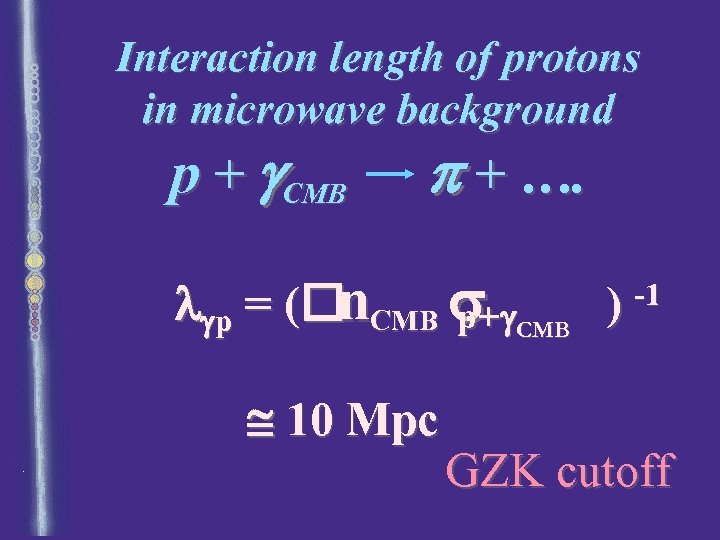 Interaction length of protons in microwave background p + g. CMB p + …. lgp = ( CMB s+ g ) -1 n p CMB @ 10 Mpc GZK cutoff
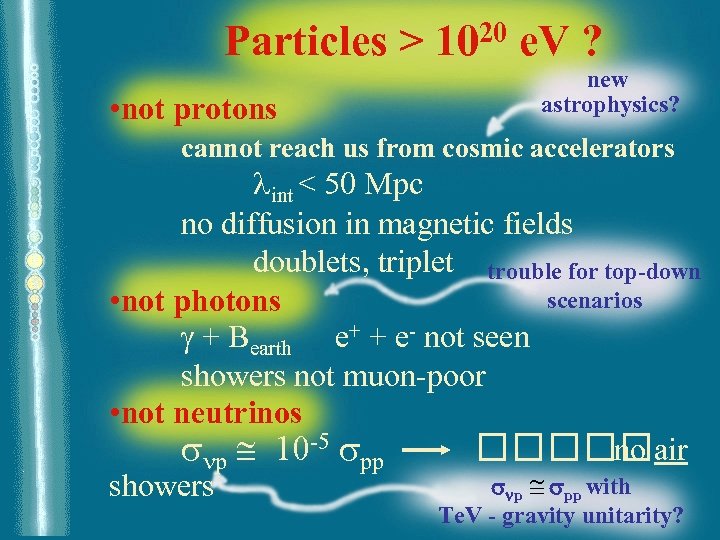 Particles > 1020 e. V ? • not protons new astrophysics? cannot reach us from cosmic accelerators lint < 50 Mpc no diffusion in magnetic fields doublets, triplet trouble for top-down scenarios • not photons + Bearth e+ + e- not seen showers not muon-poor • not neutrinos s p 10 -5 spp air no s p spp with showers Te. V - gravity unitarity?
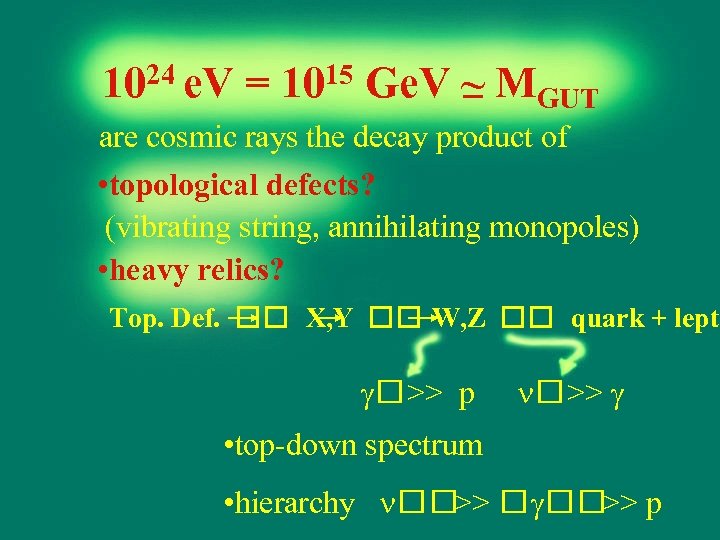 24 e. V 10 = 15 10 _ Ge. V ~ MGUT are cosmic rays the decay product of • topological defects? (vibrating string, annihilating monopoles) • heavy relics? Top. Def. X, Y W, Z quark + lepto >> p >> • top-down spectrum • hierarchy >> >> p
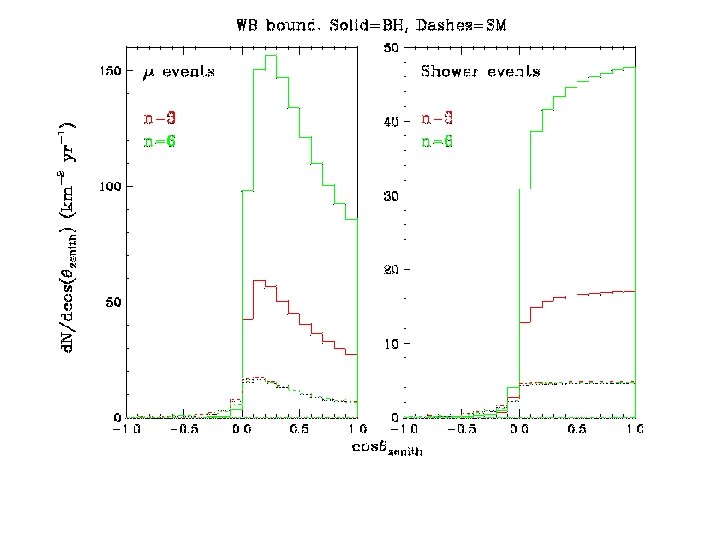
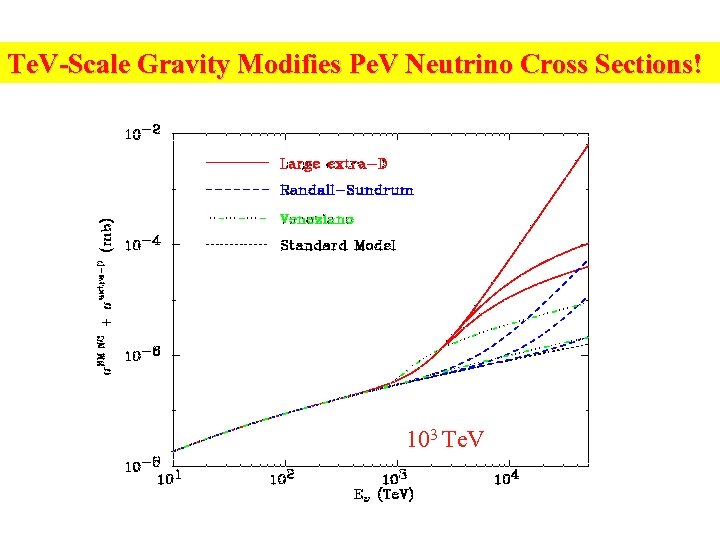 Te. V-Scale Gravity Modifies Pe. V Neutrino Cross Sections! 103 Te. V
 The Oldest Problem in Astronomy: • No accelerator • No particle candidate (worse than dark matter!) • Not photons (excludes extravagant particle physics ideas) What Now?
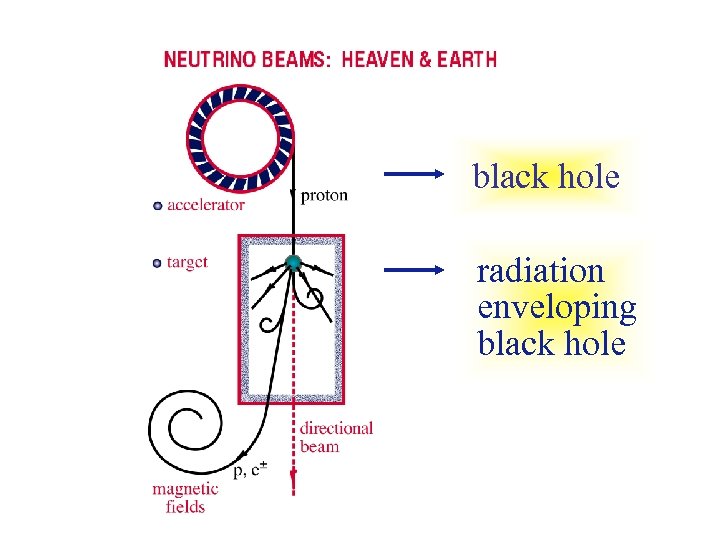 black hole radiation enveloping black hole
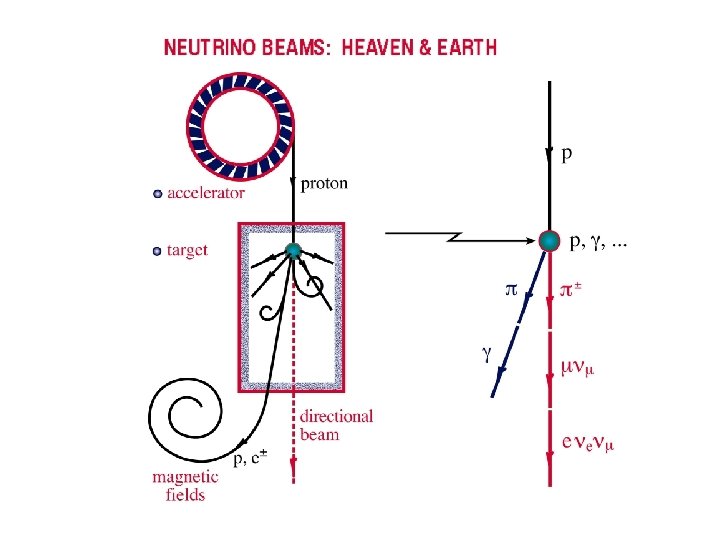
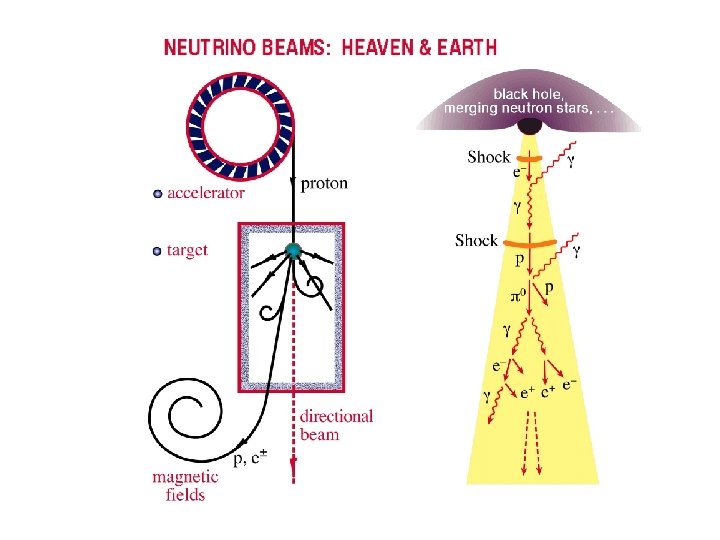
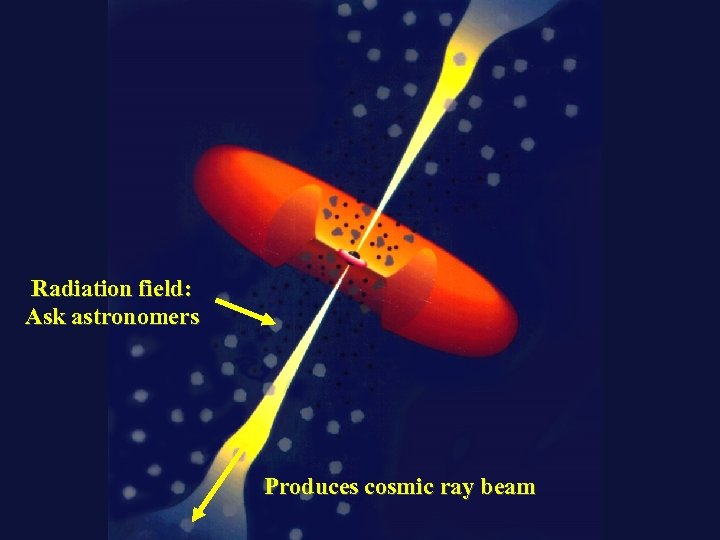 Radiation field: Ask astronomers Produces cosmic ray beam
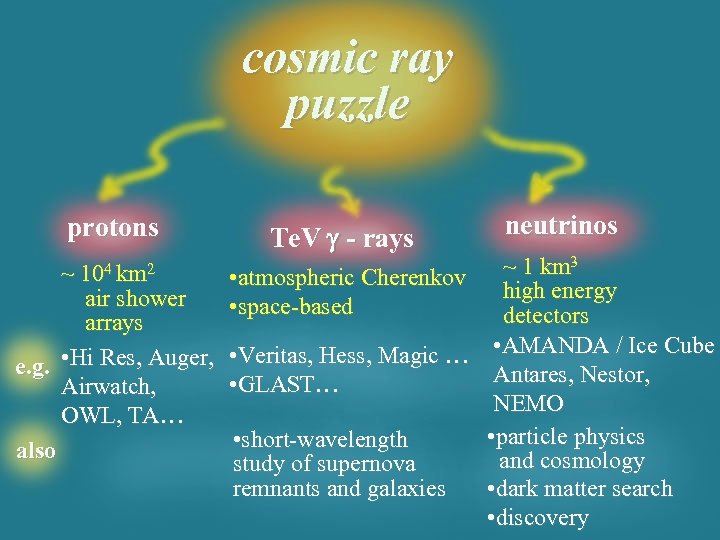 cosmic ray puzzle protons Te. V g - rays neutrinos ~ 1 km 3 ~ • atmospheric Cherenkov high energy air shower • space-based detectors arrays • Hi Res, Auger, • Veritas, Hess, Magic … • AMANDA / Ice Cube e. g. Antares, Nestor, • GLAST… Airwatch, NEMO OWL, TA… • particle physics • short-wavelength also and cosmology study of supernova remnants and galaxies • dark matter search • discovery 104 km 2
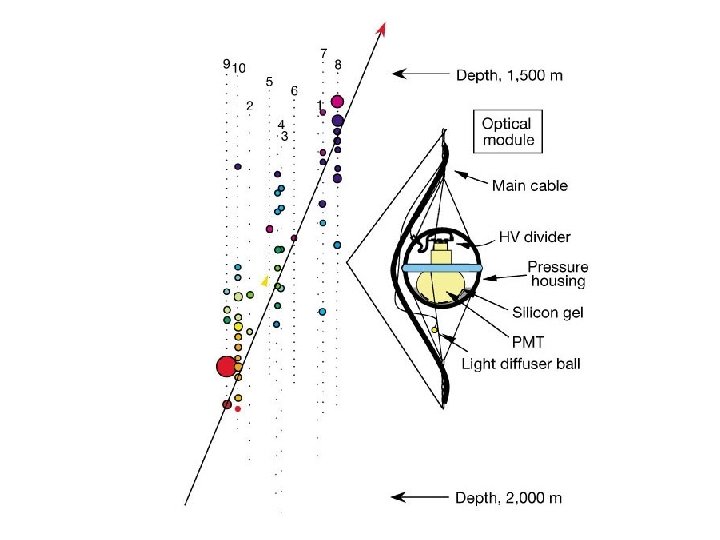
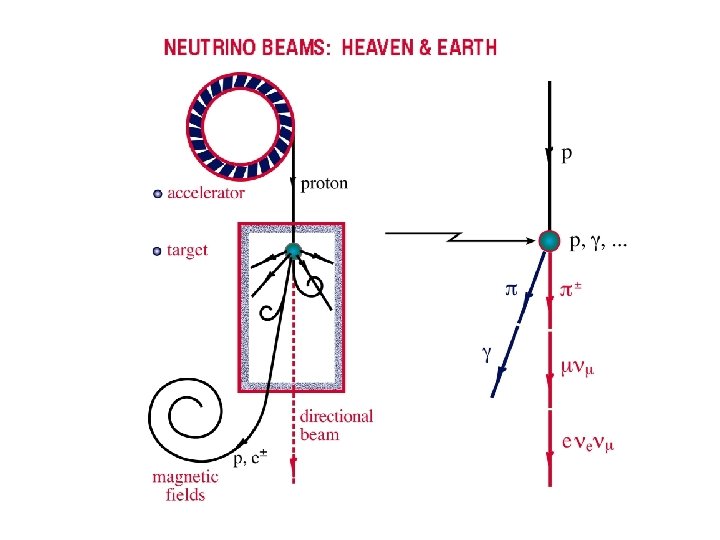
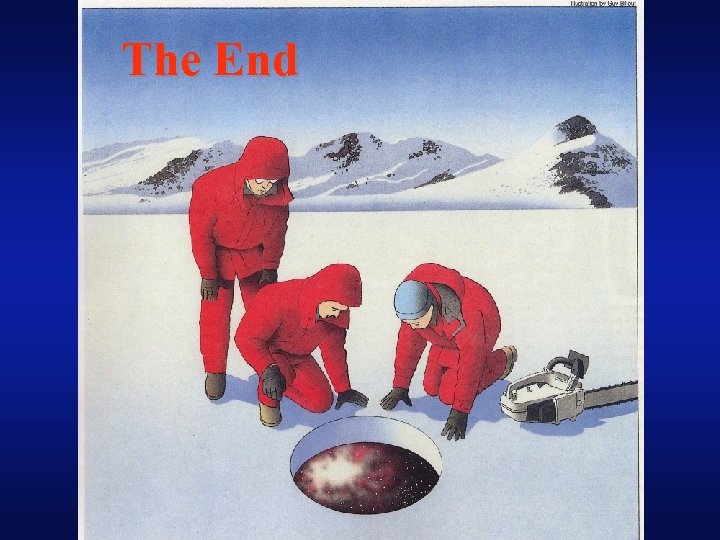
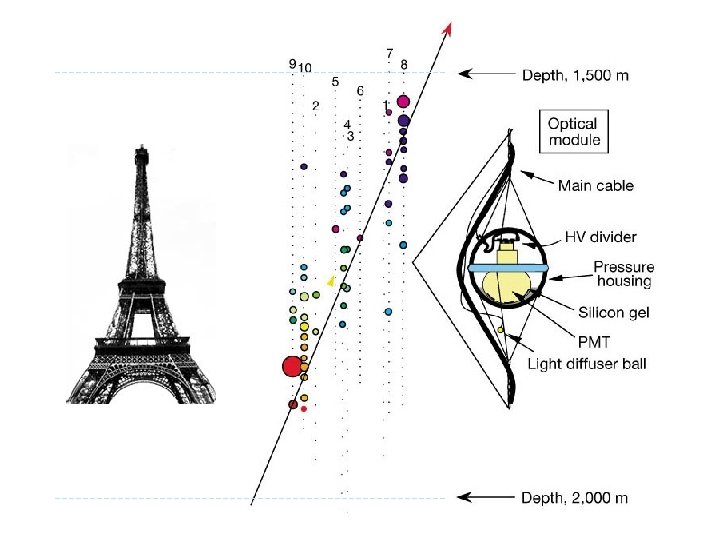
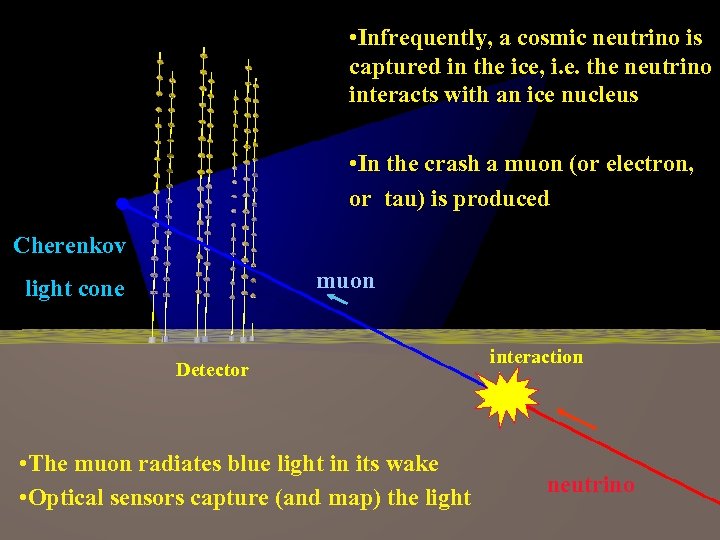 • Infrequently, a cosmic neutrino is captured in the ice, i. e. the neutrino interacts with an ice nucleus • In the crash a muon (or electron, or tau) is produced Cherenkov muon light cone Detector • The muon radiates blue light in its wake • Optical sensors capture (and map) the light interaction neutrino
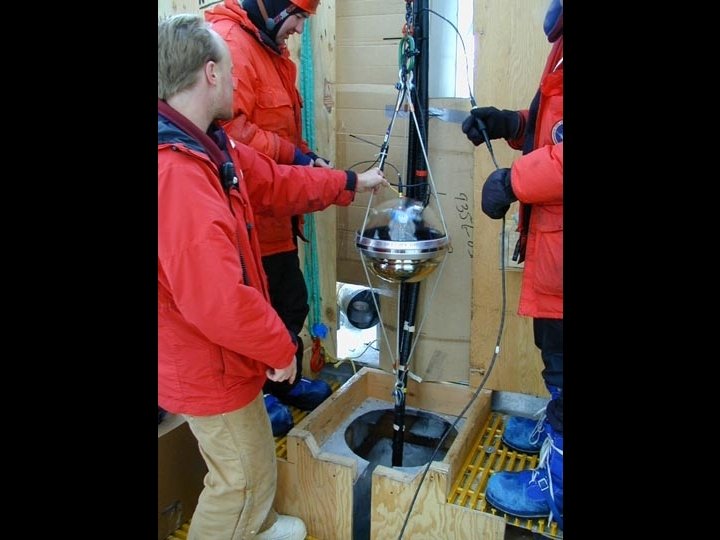
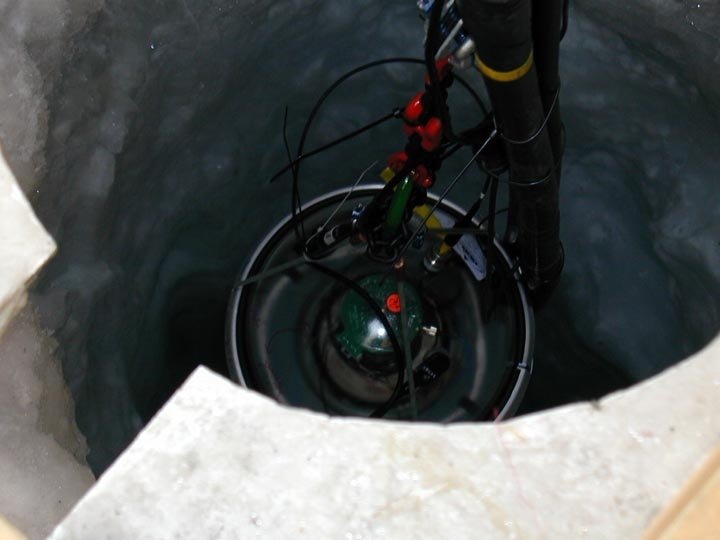
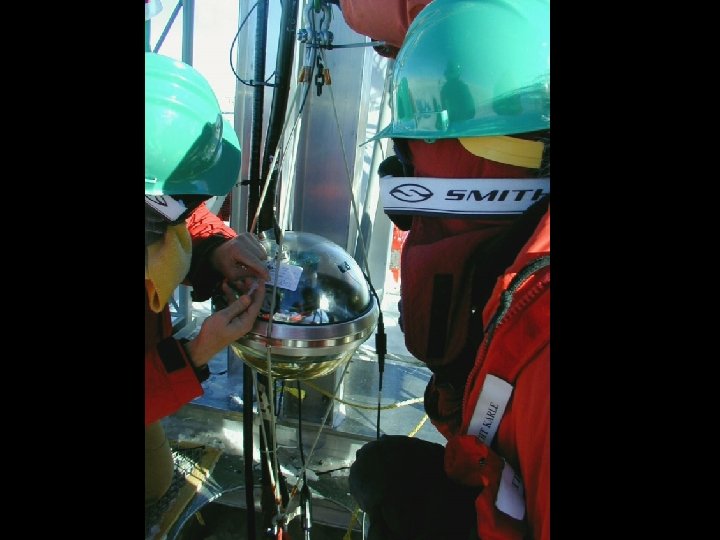
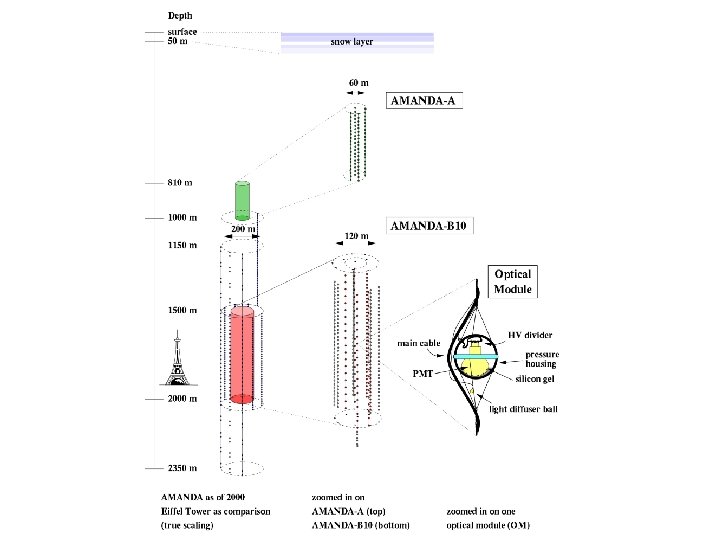
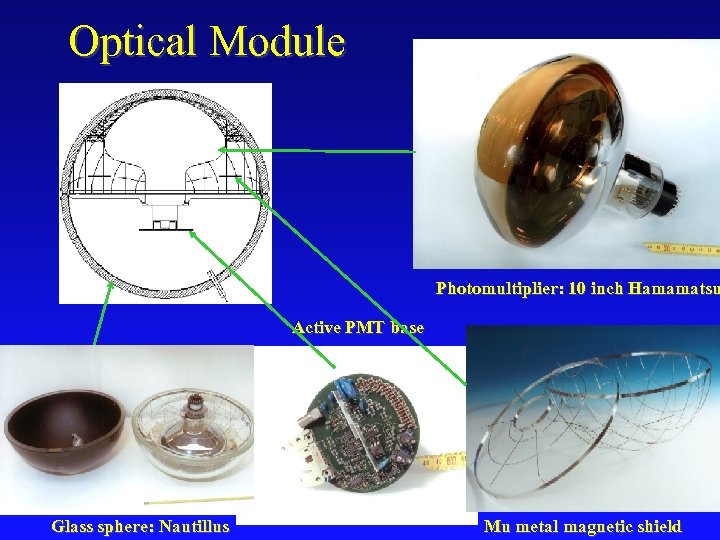 Optical Module Photomultiplier: 10 inch Hamamatsu Active PMT base Glass sphere: Nautillus Mu metal magnetic shield
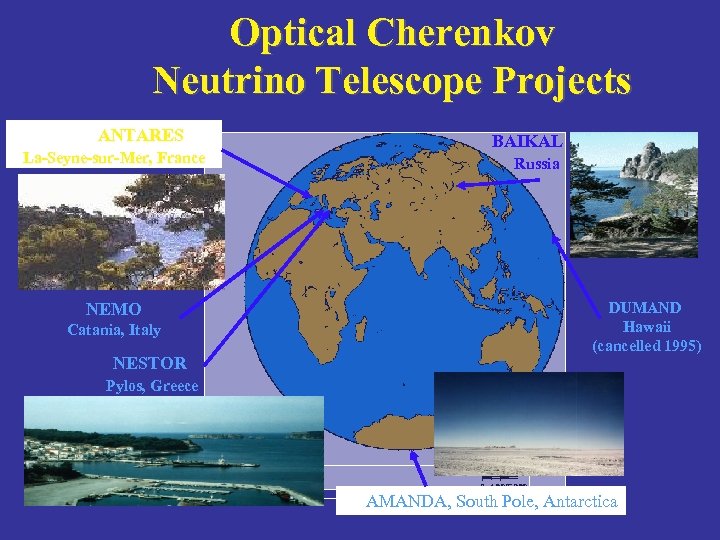 Optical Cherenkov Neutrino Telescope Projects ANTARES La-Seyne-sur-Mer, France NEMO Catania, Italy NESTOR BAIKAL Russia DUMAND Hawaii (cancelled 1995) Pylos, Greece AMANDA, South Pole, Antarctica
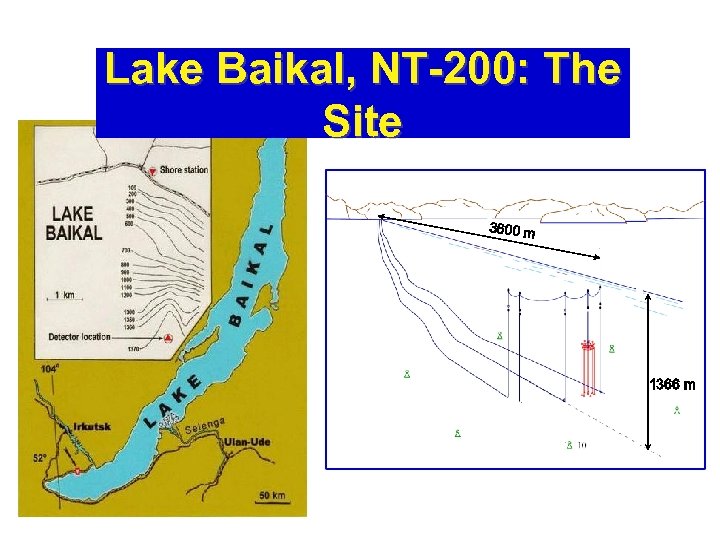 Lake Baikal, NT-200: The Site 3600 m 1366 m
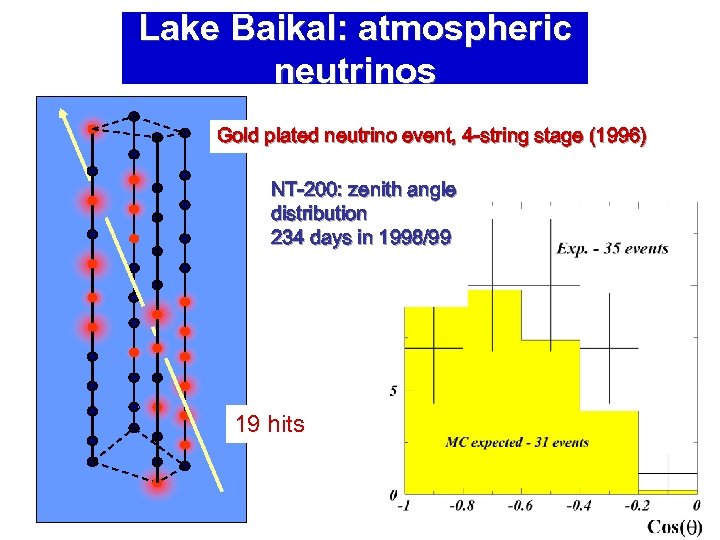 Lake Baikal: atmospheric neutrinos Gold plated neutrino event, 4 -string stage (1996) NT-200: zenith angle distribution 234 days in 1998/99 19 hits
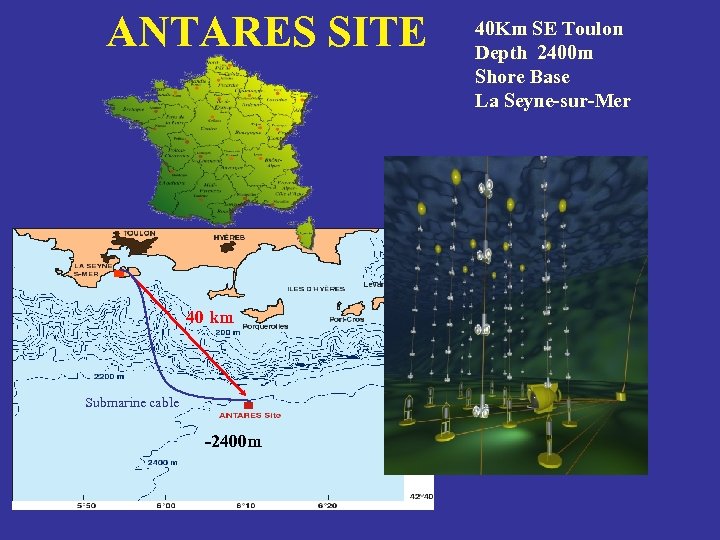 ANTARES SITE 40 km Submarine cable -2400 m 40 Km SE Toulon Depth 2400 m Shore Base La Seyne-sur-Mer
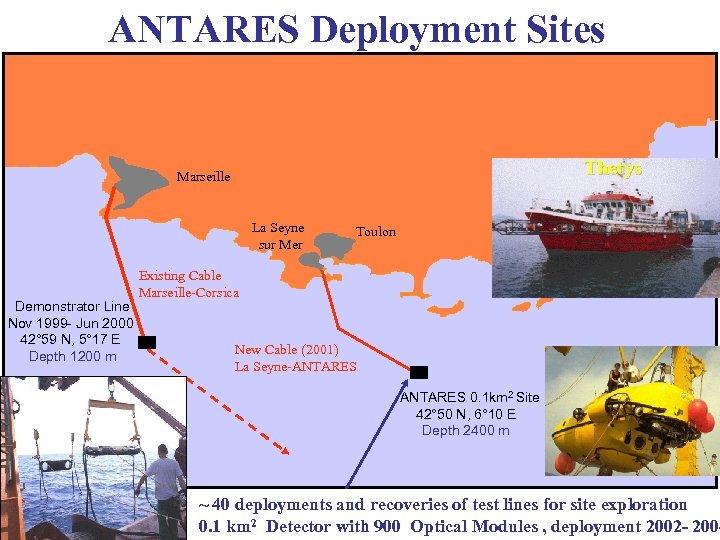 ANTARES Deployment Sites Thetys Marseille La Seyne sur Mer Demonstrator Line Nov 1999 - Jun 2000 42° 59 N, 5° 17 E Depth 1200 m Toulon Existing Cable Marseille-Corsica New Cable (2001) La Seyne-ANTARES 0. 1 km 2 Site 42° 50 N, 6° 10 E Depth 2400 m ~ 40 deployments and recoveries of test lines for site exploration 0. 1 km 2 Detector with 900 Optical Modules , deployment 2002 - 2004
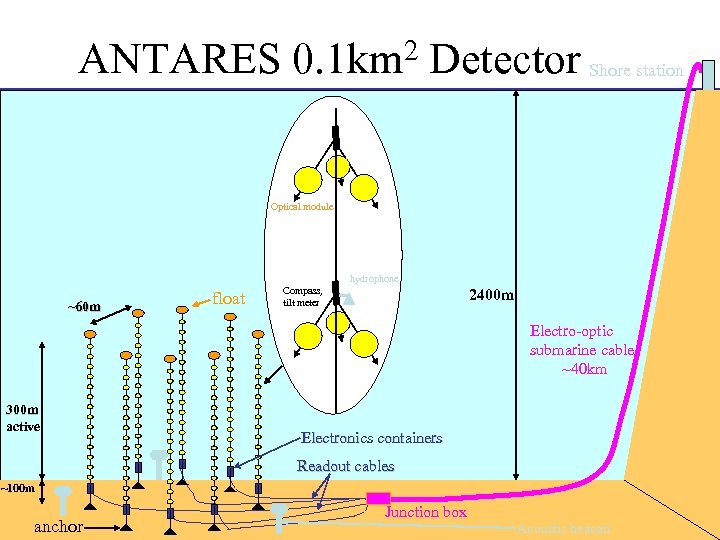 ANTARES 2 0. 1 km Detector Shore station Optical module hydrophone ~60 m float Compass, tilt meter 2400 m Electro-optic submarine cable ~40 km 300 m active Electronics containers Readout cables ~100 m anchor Junction box Acoustic beacon
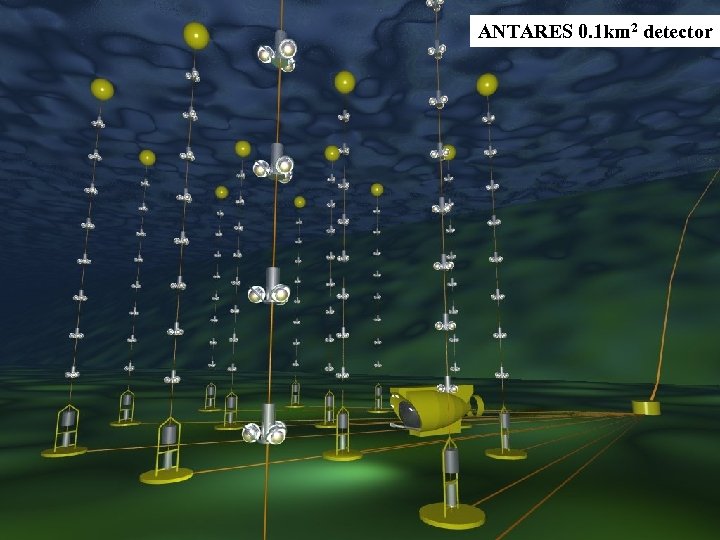 ANTARES 0. 1 km 2 detector
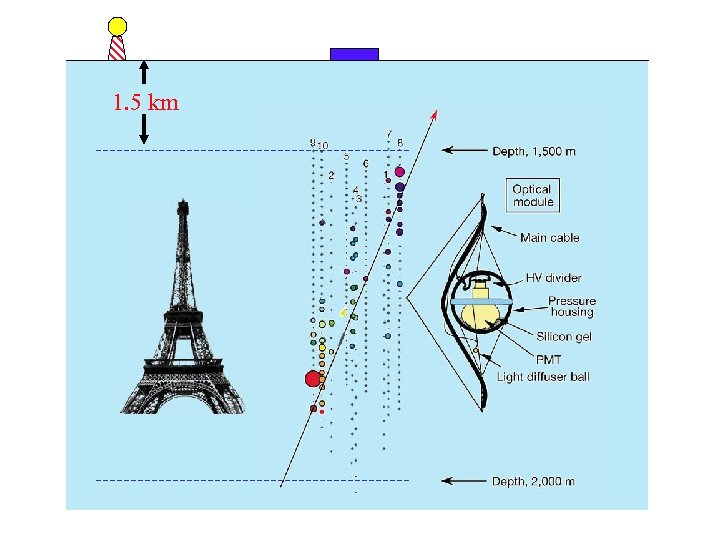 1. 5 km
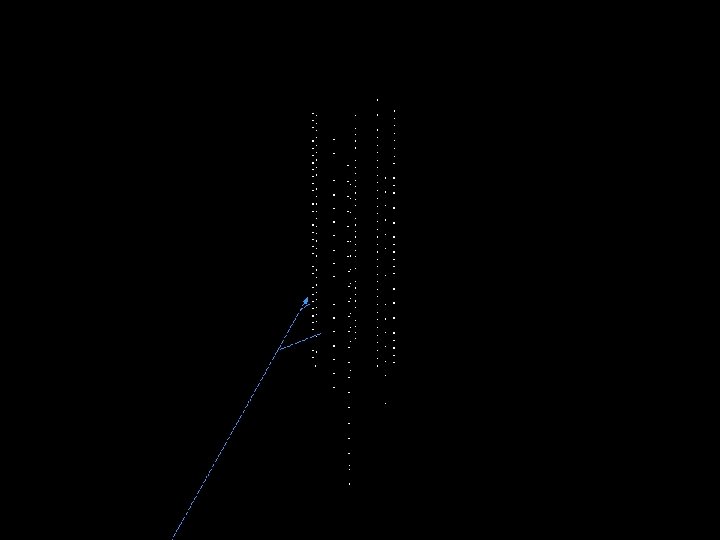
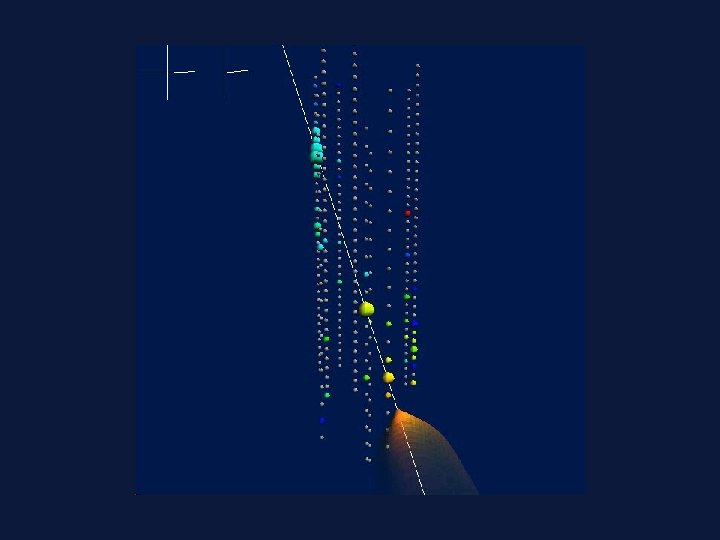
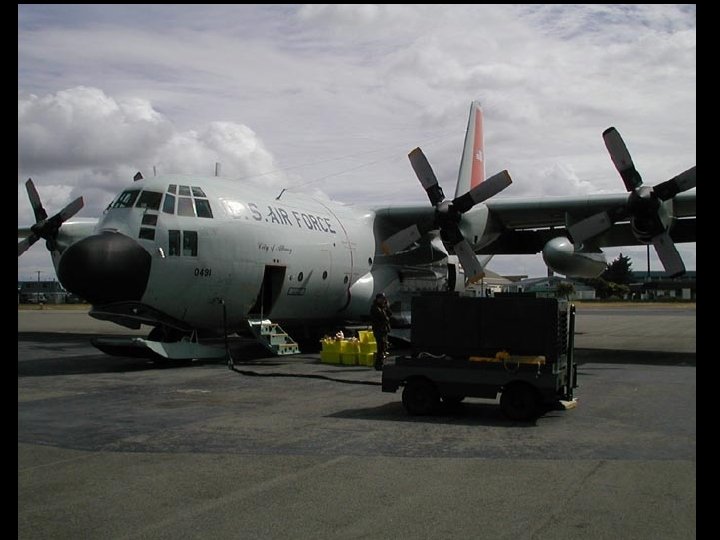
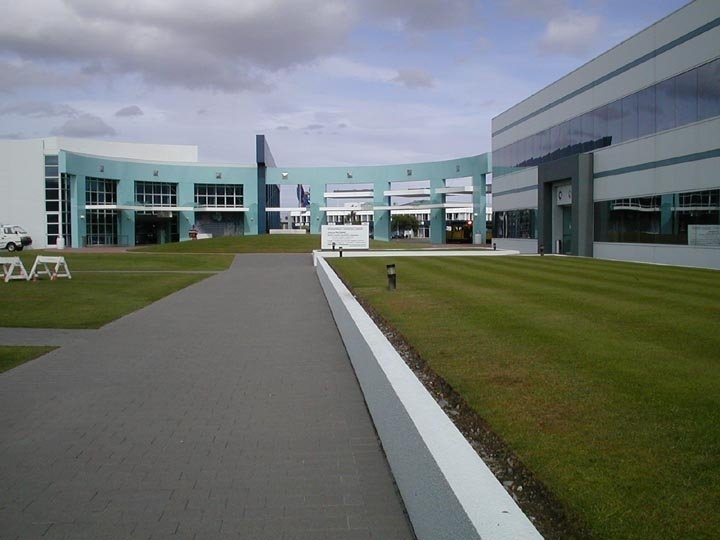
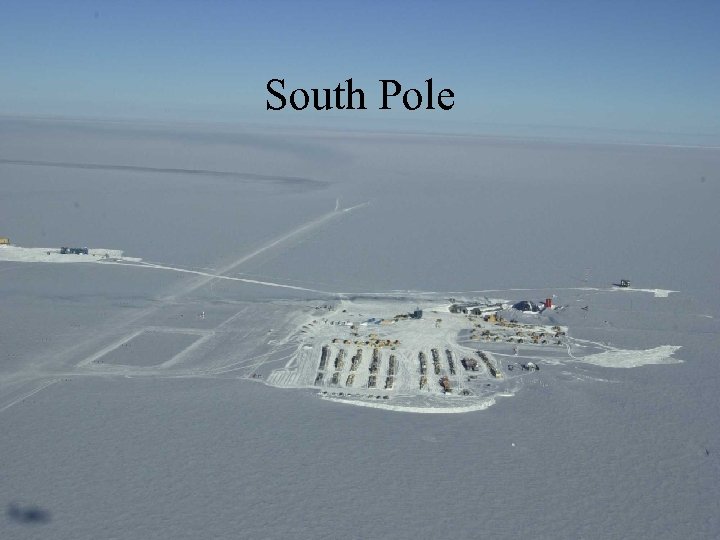
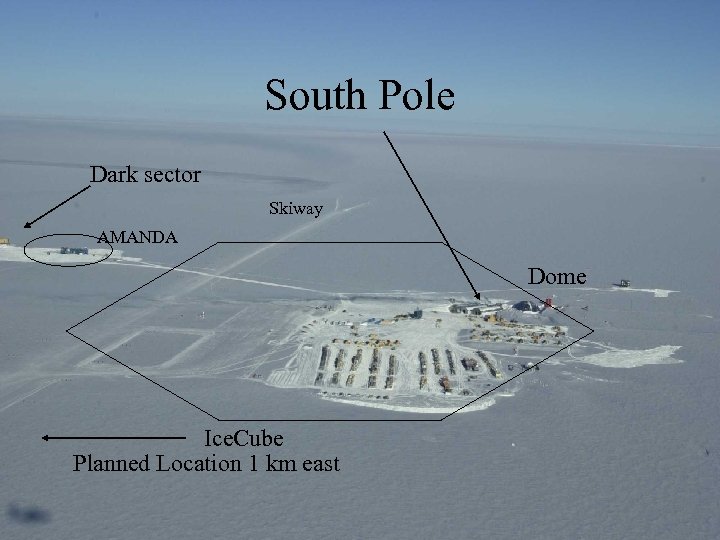
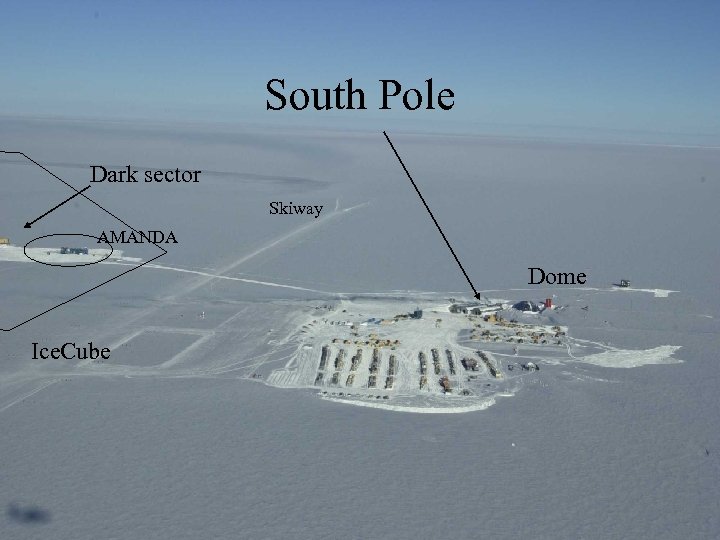
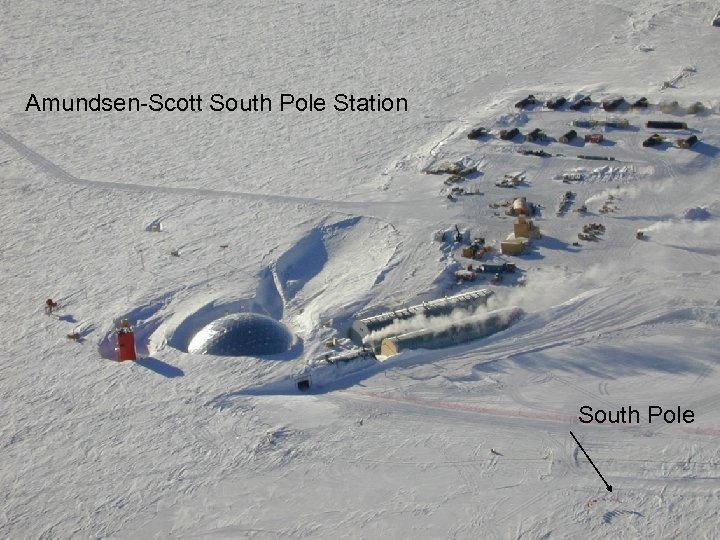 Amundsen-Scott South Pole Station South Pole
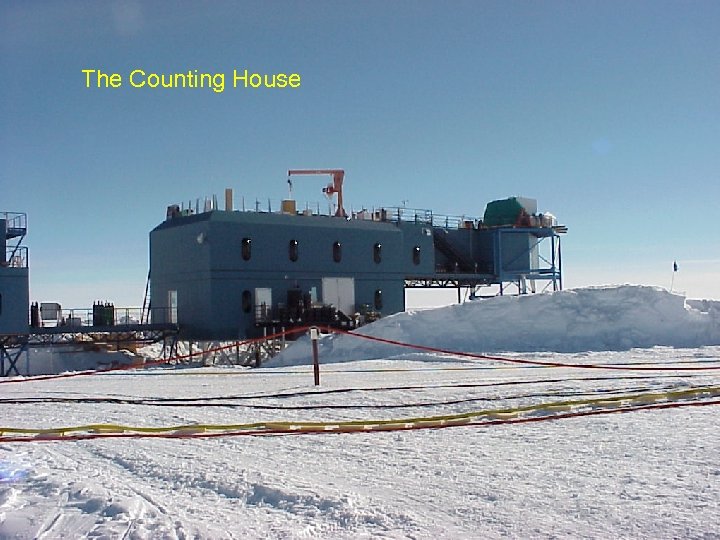 Optical sensor The Counting House
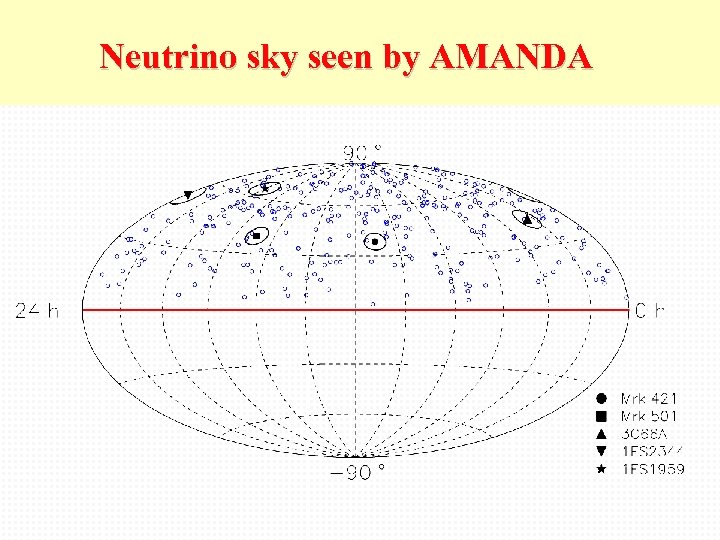
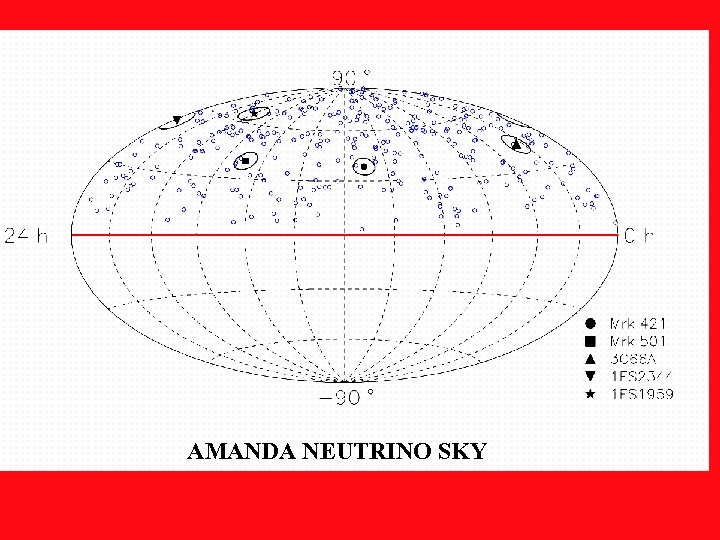 AMANDA NEUTRINO SKY
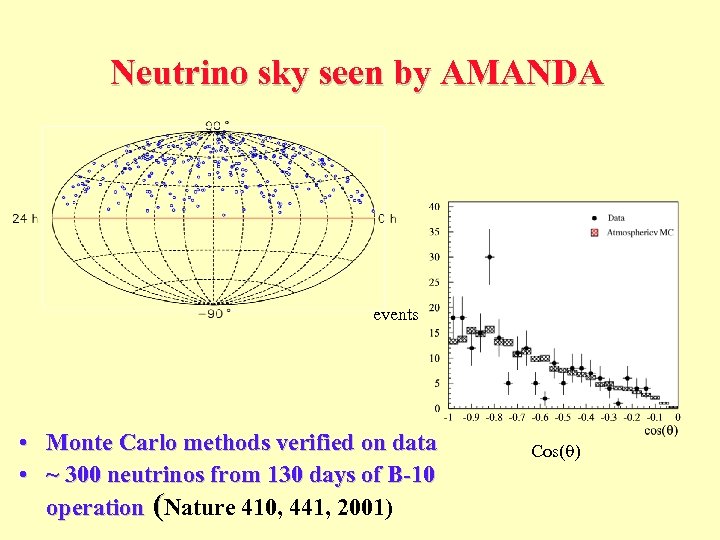 Neutrino sky seen by AMANDA events • Monte Carlo methods verified on data • ~ 300 neutrinos from 130 days of B-10 operation (Nature 410, 441, 2001) Cos( )
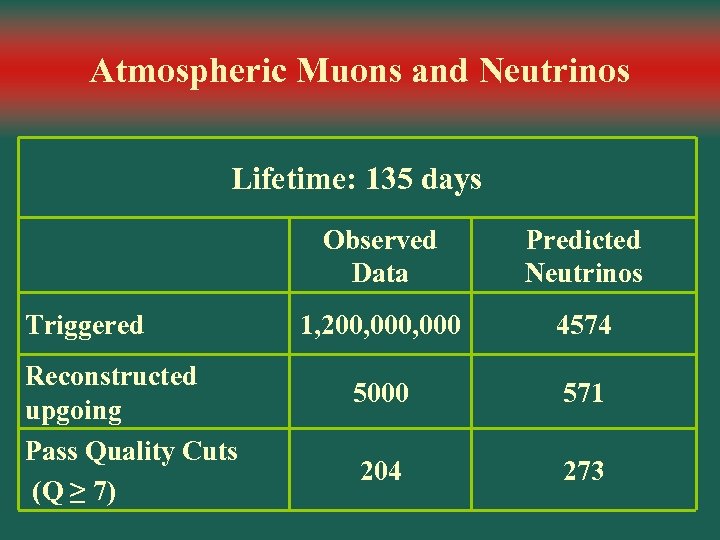 Atmospheric Muons and Neutrinos Lifetime: 135 days Observed Data Triggered Reconstructed upgoing Pass Quality Cuts (Q ≥ 7) Predicted Neutrinos 1, 200, 000 4574 5000 571 204 273
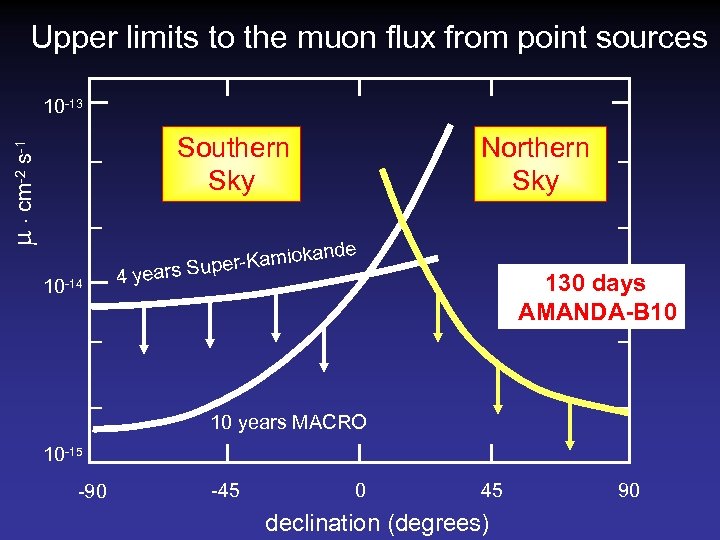 Upper limits to the muon flux from point sources 10 -13 cm-2 s-1 Southern Sky 10 -14 Northern Sky de Kamiokan uper 4 years S 130 days AMANDA-B 10 10 years MACRO 10 -15 -90 -45 0 45 declination (degrees) 90
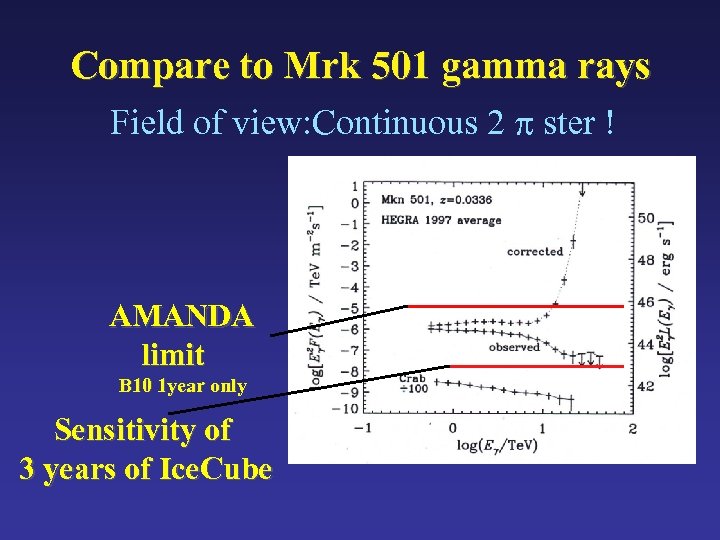 Compare to Mrk 501 gamma rays Field of view: Continuous 2 ster ! AMANDA limit B 10 1 year only Sensitivity of 3 years of Ice. Cube
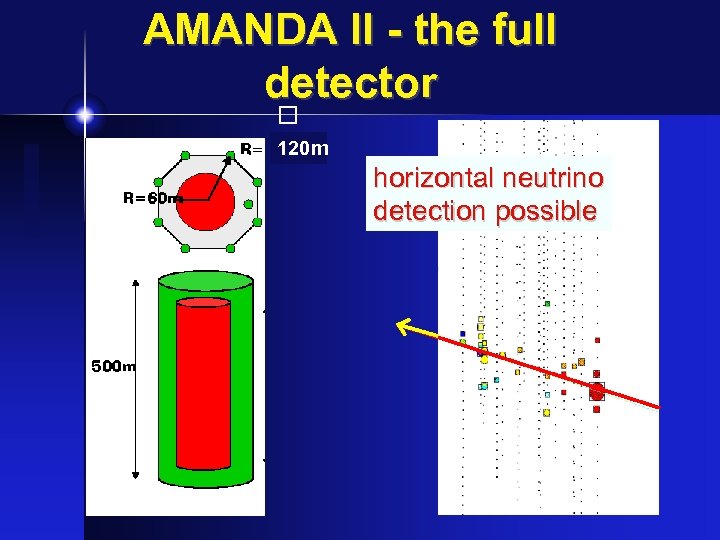 AMANDA II - the full detector 120 m horizontal neutrino detection possible
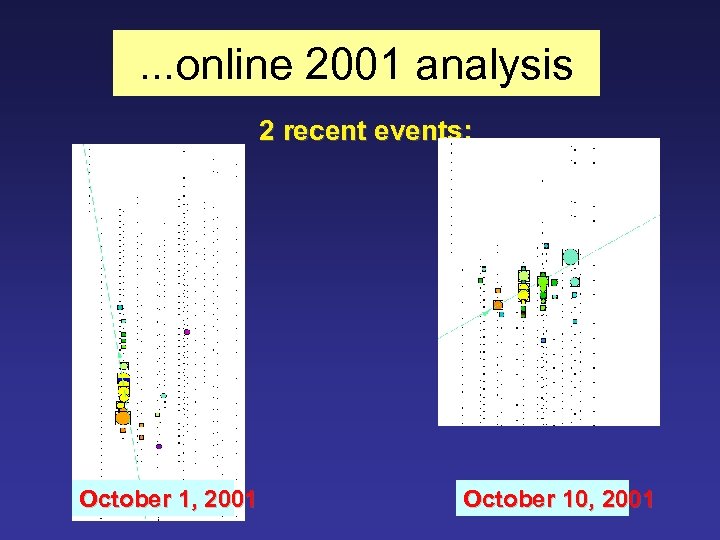 . . . online 2001 analysis 2 recent events: October 1, 2001 October 10, 2001
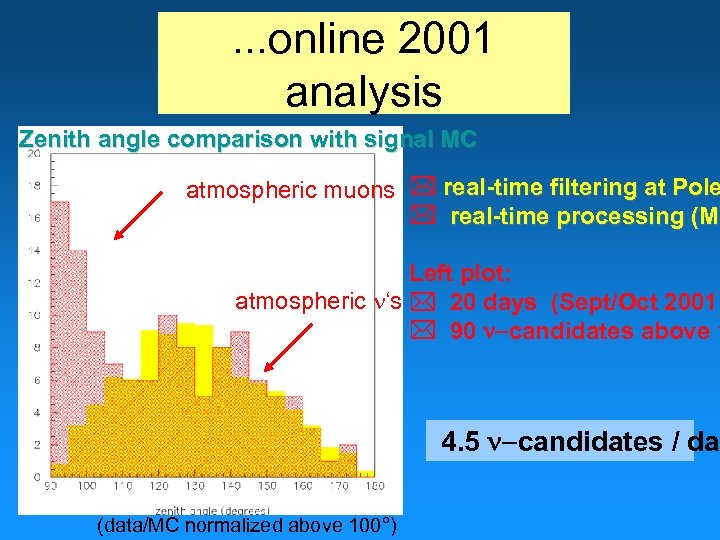 . . . online 2001 analysis Zenith angle comparison with signal MC atmospheric muons real-time filtering at Pole real-time processing (Ma Left plot: atmospheric ‘s 20 days (Sept/Oct 2001) 90 candidates above 1 4. 5 candidates / day (data/MC normalized above 100°)
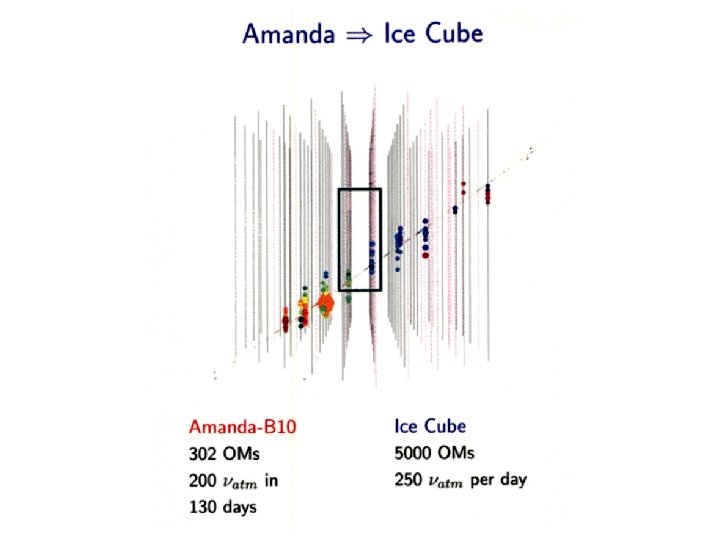
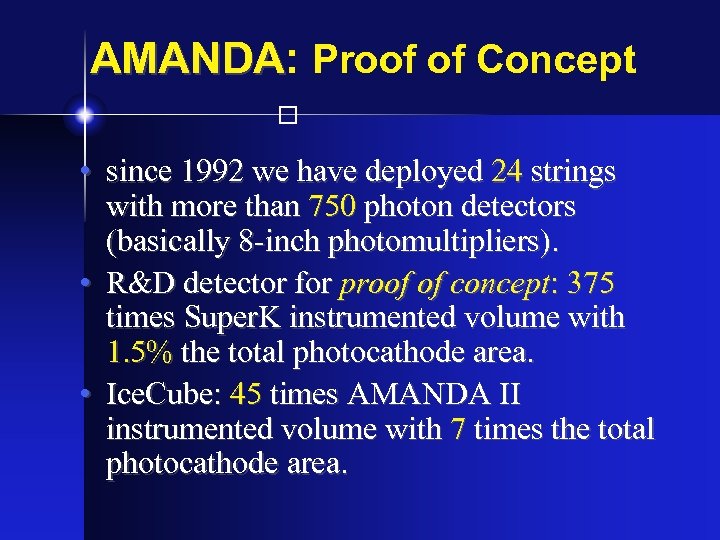 AMANDA: Proof of Concept AMANDA • since 1992 we have deployed 24 strings with more than 750 photon detectors (basically 8 -inch photomultipliers). • R&D detector for proof of concept: 375 times Super. K instrumented volume with 1. 5% the total photocathode area. • Ice. Cube: 45 times AMANDA II instrumented volume with 7 times the total photocathode area.
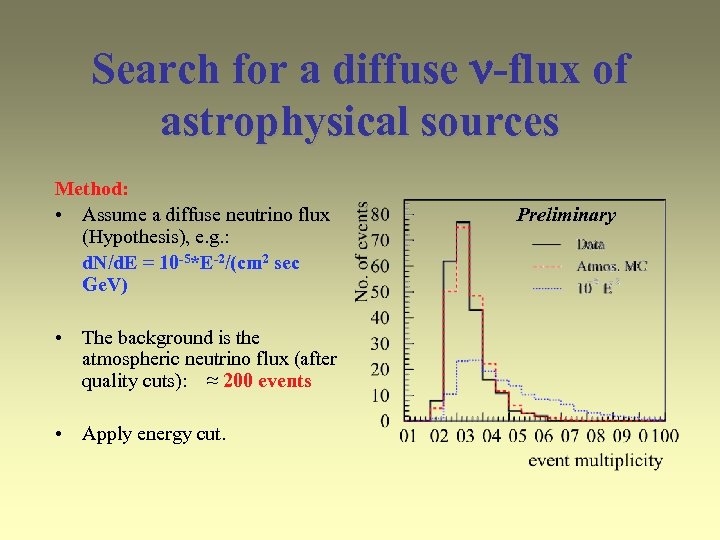 Search for a diffuse -flux of astrophysical sources Method: • Assume a diffuse neutrino flux (Hypothesis), e. g. : d. N/d. E = 10 -5*E-2/(cm 2 sec Ge. V) • The background is the atmospheric neutrino flux (after quality cuts): ≈ 200 events • Apply energy cut. Preliminary
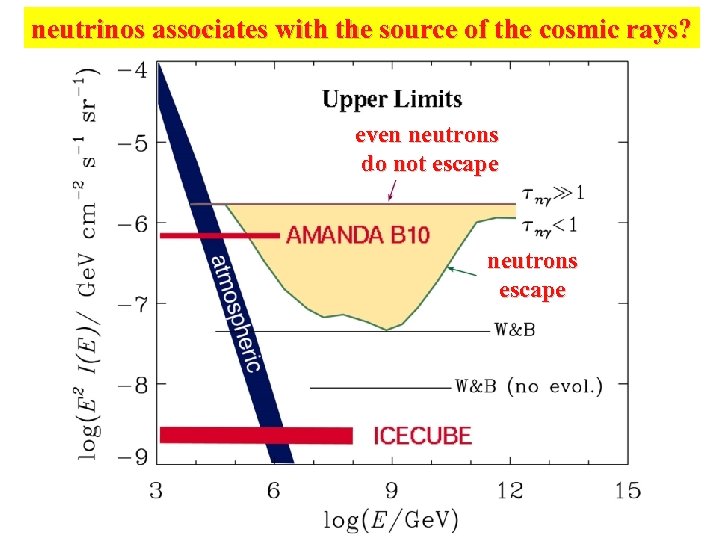 neutrinos associates with the source of the cosmic rays? even neutrons do not escape neutrons escape
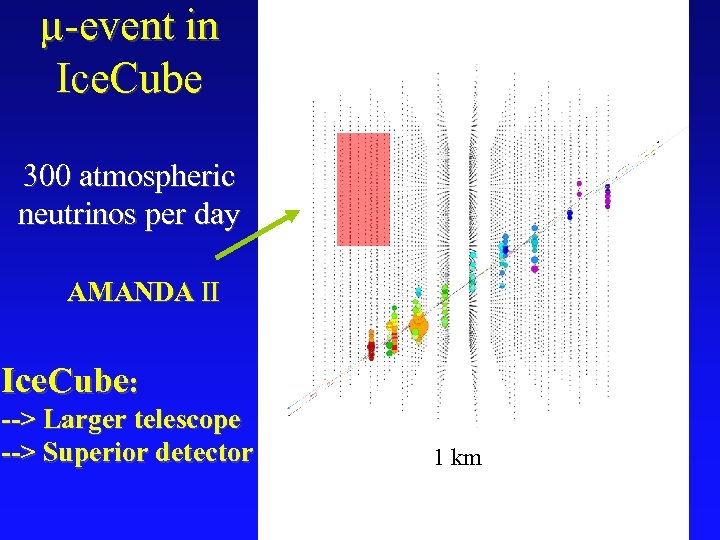
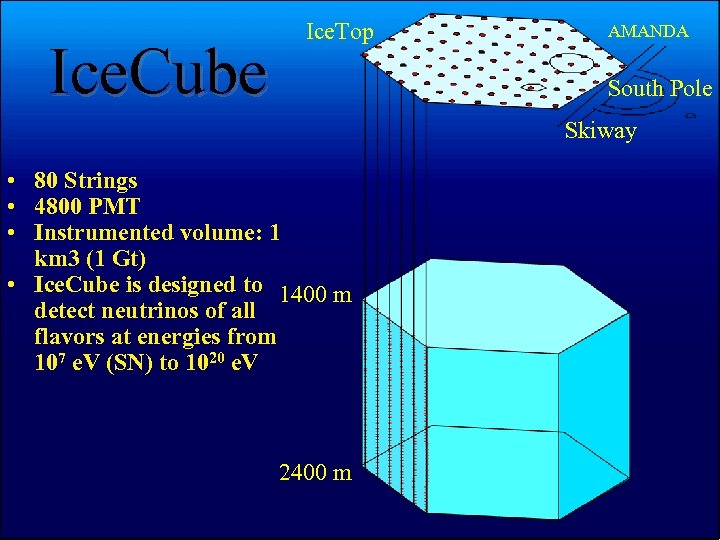 Ice. Cube Ice. Top AMANDA South Pole Skiway • 80 Strings • 4800 PMT • Instrumented volume: 1 km 3 (1 Gt) • Ice. Cube is designed to 1400 m detect neutrinos of all flavors at energies from 107 e. V (SN) to 1020 e. V 2400 m
 South Pole
 South Pole Dark sector Skiway AMANDA Dome Ice. Cube Planned Location 1 km east
 South Pole Dark sector Skiway AMANDA Dome Ice. Cube
 µ-event in Ice. Cube 300 atmospheric neutrinos per day AMANDA II Ice. Cube: --> Larger telescope --> Superior detector 1 km
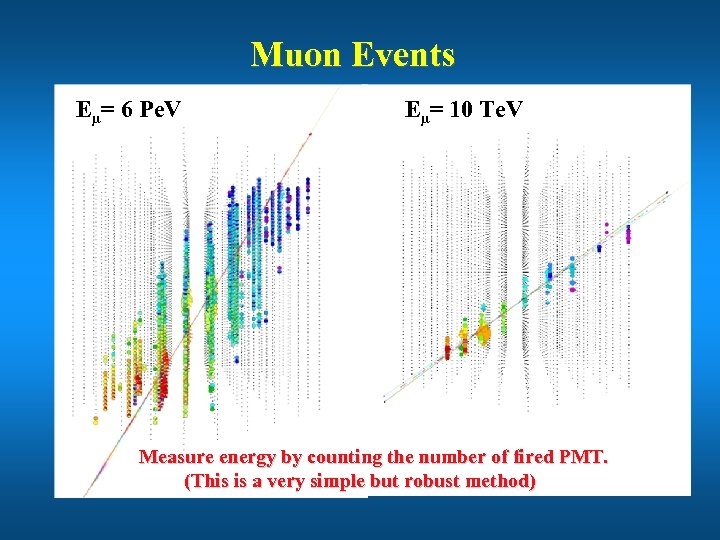 Muon Events Eµ= 6 Pe. V Eµ= 10 Te. V Measure energy by counting the number of fired PMT. (This is a very simple but robust method)
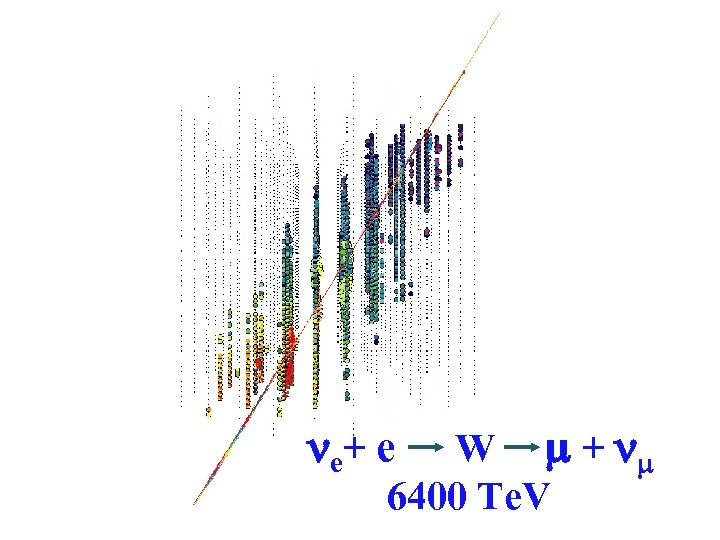 e+ e W m + m 6400 Te. V
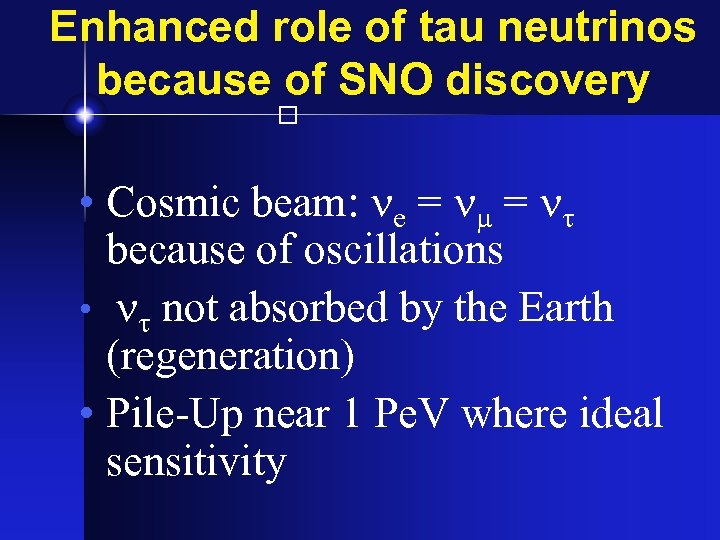 Enhanced role of tau neutrinos because of SNO discovery • Cosmic beam: e = µ = t because of oscillations • t not absorbed by the Earth (regeneration) • Pile-Up near 1 Pe. V where ideal sensitivity
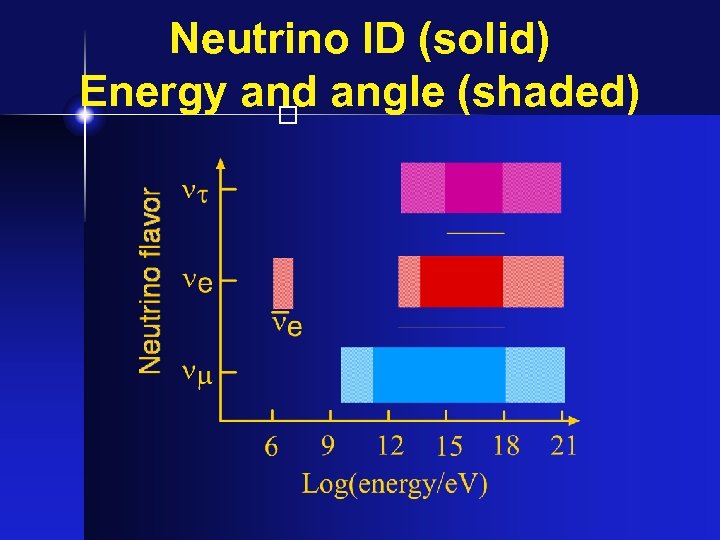 Neutrino ID (solid) Energy and angle (shaded)
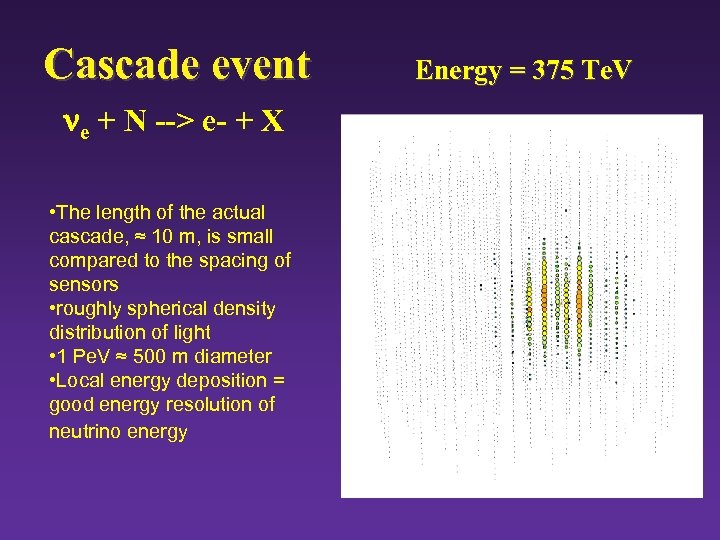 Cascade event e + N --> e- + X • The length of the actual cascade, ≈ 10 m, is small compared to the spacing of sensors • roughly spherical density distribution of light • 1 Pe. V ≈ 500 m diameter • Local energy deposition = good energy resolution of neutrino energy Energy = 375 Te. V
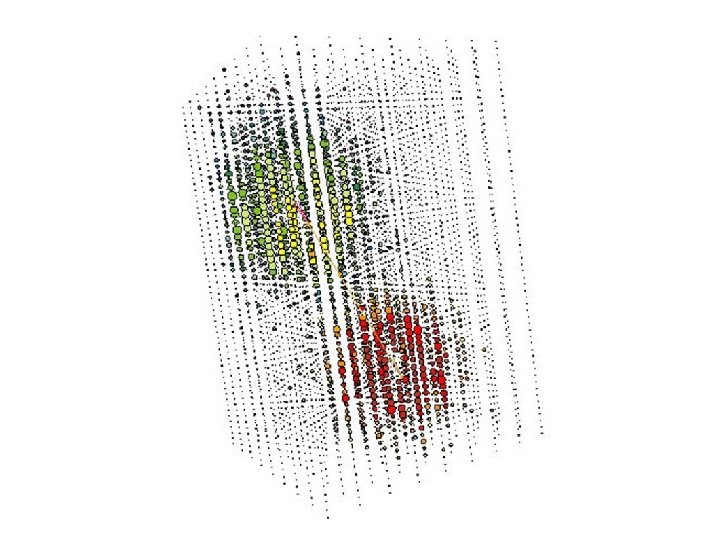
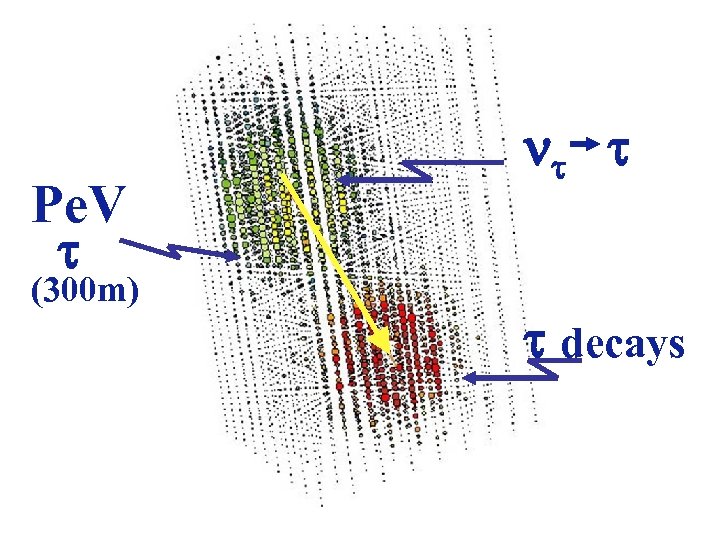 Pe. V (300 m) decays
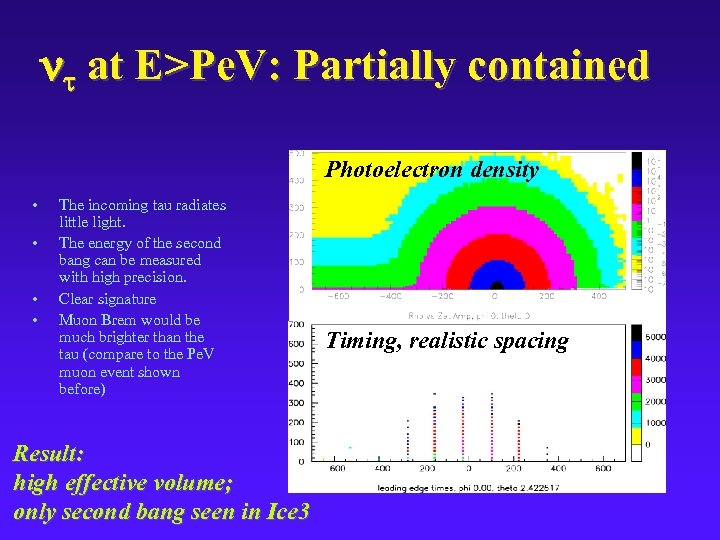 at E>Pe. V: Partially contained Photoelectron density • • The incoming tau radiates little light. The energy of the second bang can be measured with high precision. Clear signature Muon Brem would be much brighter than the tau (compare to the Pe. V muon event shown before) Result: high effective volume; only second bang seen in Ice 3 Timing, realistic spacing
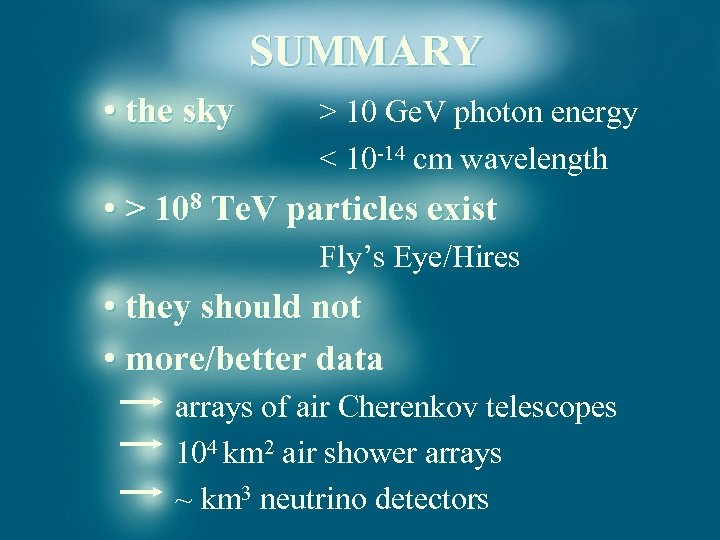 SUMMARY • the sky > 10 Ge. V photon energy < 10 -14 cm wavelength • > 108 Te. V particles exist Fly’s Eye/Hires • they should not • more/better data arrays of air Cherenkov telescopes 104 km 2 air shower arrays ~ km 3 neutrino detectors
 The End
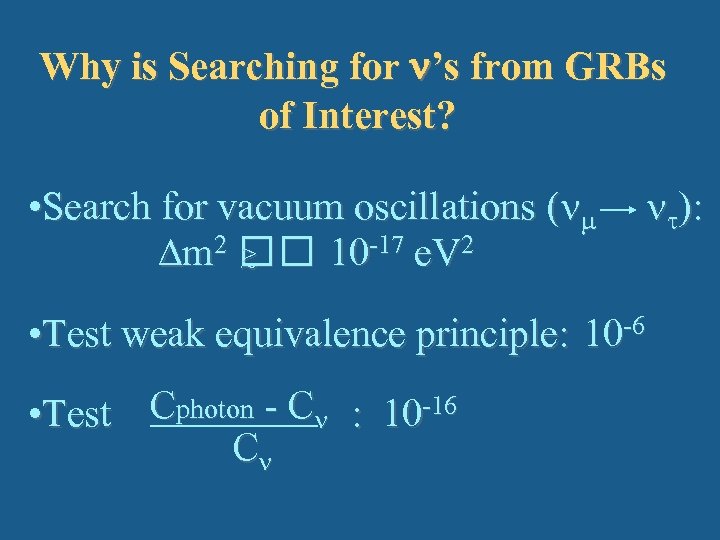 Why is Searching for ’s from GRBs of Interest? • Search for vacuum oscillations ( t): > Dm 2 10 -17 e. V 2 ~ • Test weak equivalence principle: 10 -6 • Test Cphoton - C : 10 -16 C
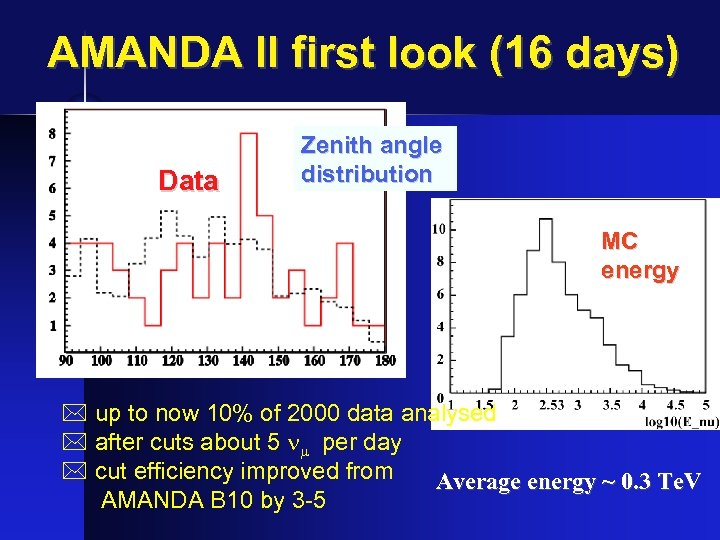 AMANDA II first look (16 days) MC Data Zenith angle distribution MC energy up to now 10% of 2000 data analysed after cuts about 5 per day cut efficiency improved from Average energy ~ 0. 3 Te. V AMANDA B 10 by 3 -5
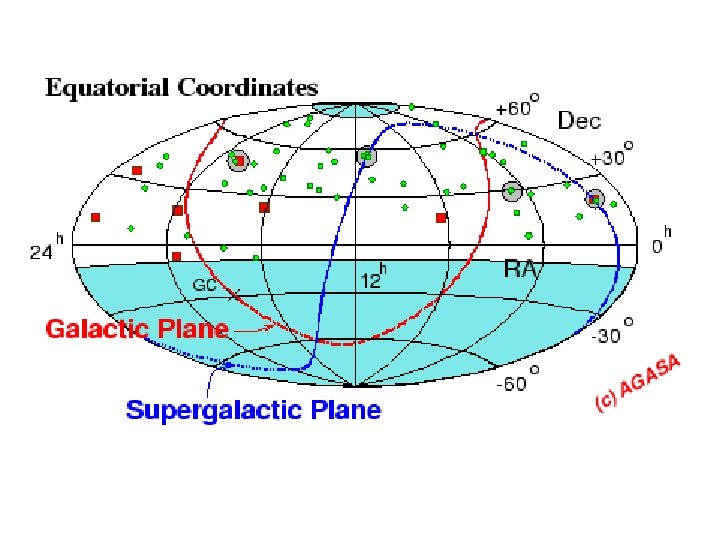
 Forthcoming AGASA Results • The highest energy cosmic rays do come from point sources: 5 sigma correlation between directions of pairs of particles. Birth of proton astronomy! • Are the highest energy cosmic rays Fe? GKZ cutoff at ~2 1020 e. V ?
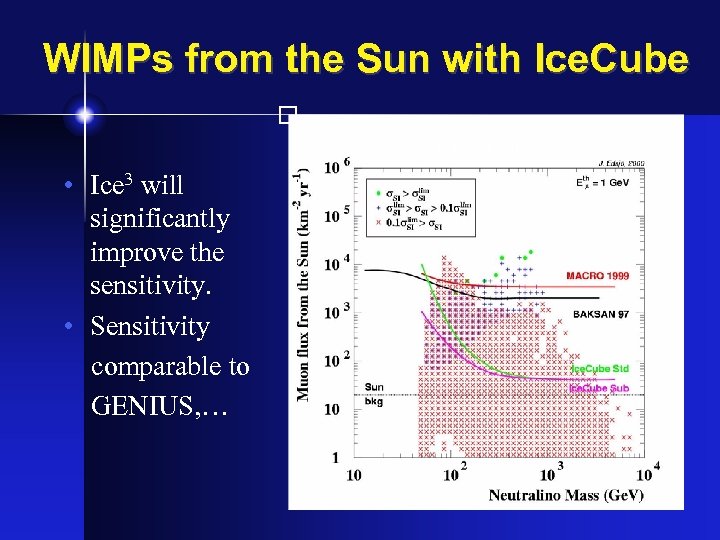 WIMPs from the Sun with Ice. Cube J. Edsjö, 2000 • Ice 3 will significantly improve the sensitivity. • Sensitivity comparable to GENIUS, …
 The Ice. Cube Collaboration Institutions: 11 US and 9 European institutions (most of them are also AMANDA member institutions) 1. 2. 3. 4. 5. 6. 7. 8. 9. 10. 11. 12. 13. 14. 15. 16. 17. 18. 19. 20. Bartol Research Institute, University of Delaware BUGH Wuppertal, Germany Universite Libre de Bruxelles, Brussels, Belgium CTSPS, Clark-Atlanta University, Atlanta USA DESY-Zeuthen, Germany Institute for Advanced Study, Princeton, USA Dept. of Technology, Kalmar University, Kalmar, Sweden Lawrence Berkeley National Laboratory, Berkeley, USA Department of Physics, Southern University and A&M College, Baton Rouge, LA, USA Dept. of Physics, UC Berkeley, USA Institute of Physics, University of Mainz, Germany Dept. of Physics, University of Maryland, USA University of Mons-Hainaut, Mons, Belgium Dept. of Physics and Astronomy, University of Pennsylvania, Philadelphia, USA Dept. of Astronomy, Dept. of Physics, SSEC, PSL, University of Wisconsin, Madison, USA Physics Department, University of Wisconsin, River Falls, USA Division of High Energy Physics, Uppsala University, Uppsala, Sweden Fysikum, Stockholm University, Stockholm, Sweden University of Alabama, Tuscaloosa, USA Vrije Universiteit Brussel, Belgium
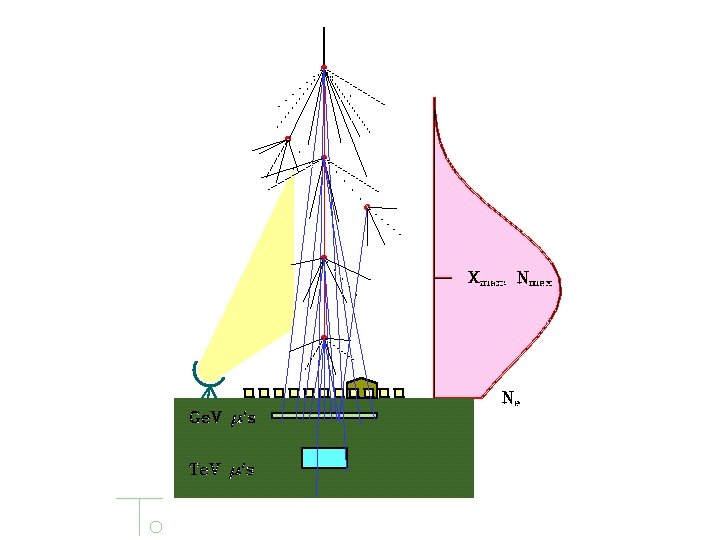
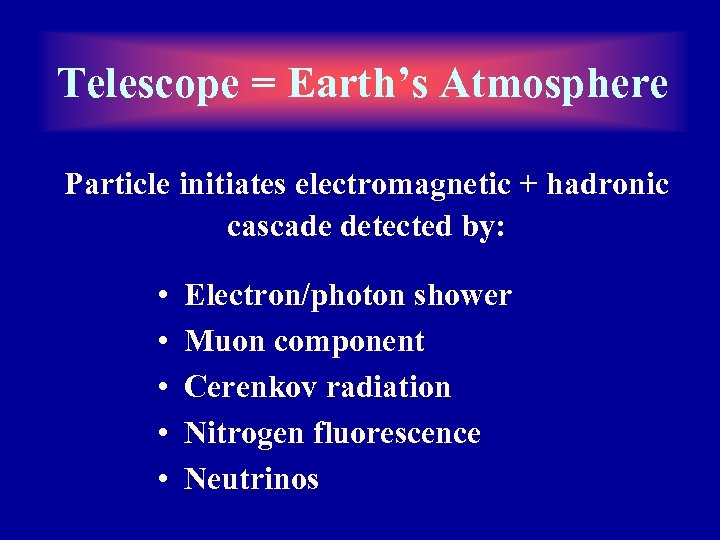 Telescope = Earth’s Atmosphere Particle initiates electromagnetic + hadronic cascade detected by: • • • Electron/photon shower Muon component Cerenkov radiation Nitrogen fluorescence Neutrinos
 Neutrino sky seen by AMANDA
 . . . online 2001 analysis 2 recent events October 7, 2001 October 10, 2001
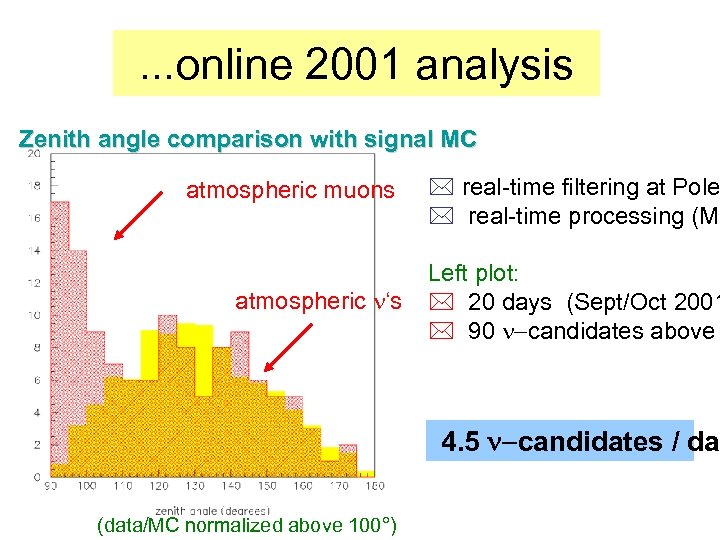 . . . online 2001 analysis Zenith angle comparison with signal MC atmospheric muons real-time filtering at Pole real-time processing (Ma atmospheric ‘s Left plot: 20 days (Sept/Oct 2001 90 candidates above 4. 5 candidates / day (data/MC normalized above 100°)
 Two Puzzles or One? • Gamma ray bursts • Source of the highest energy cosmic rays
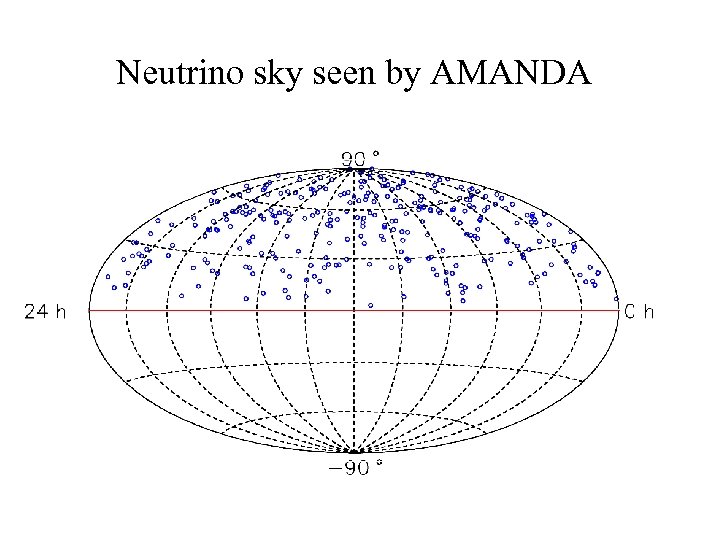 Neutrino sky seen by AMANDA
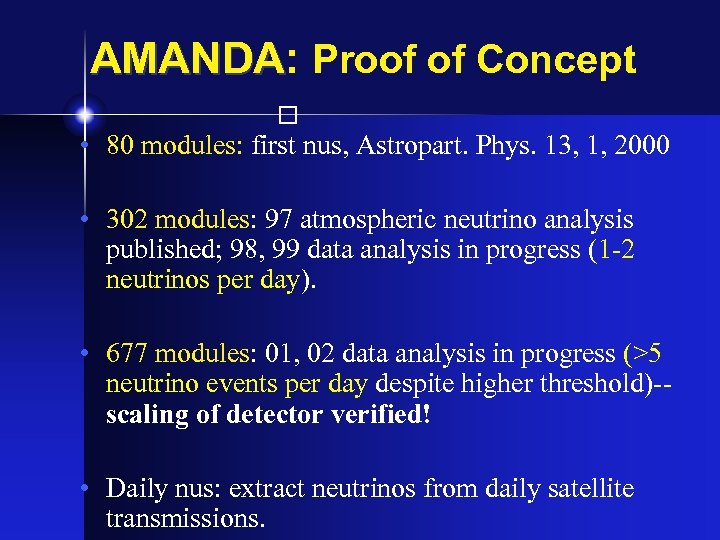 AMANDA: Proof of Concept AMANDA • 80 modules: first nus, Astropart. Phys. 13, 1, 2000 • 302 modules: 97 atmospheric neutrino analysis published; 98, 99 data analysis in progress (1 -2 neutrinos per day). • 677 modules: 01, 02 data analysis in progress (>5 neutrino events per day despite higher threshold)-scaling of detector verified! • Daily nus: extract neutrinos from daily satellite transmissions.
 Profile of Gamma Ray Bursts • • • Total energy: one solar mass Photon energy: 0. 1 Me. V to Te. V Duration: 0. 1 secs -- 20 min Several per day Brightest object in the sky Complicated temporal structure: no ‘typical’ burst profile