


 Скачать презентацию William Stallings Data and Computer Communications Chapter 12
60a6a91ca72806aedab6282b94707d17.ppt
- Количество слайдов: 45
 William Stallings Data and Computer Communications Chapter 12 Congestion in Data Networks
 What Is Congestion? z Congestion occurs when the number of packets being transmitted through the network approaches the packet handling capacity of the network z Congestion control aims to keep number of packets below level at which performance falls off dramatically z Data network is a network of queues z Generally 80% utilization is critical z Finite queues mean data may be lost
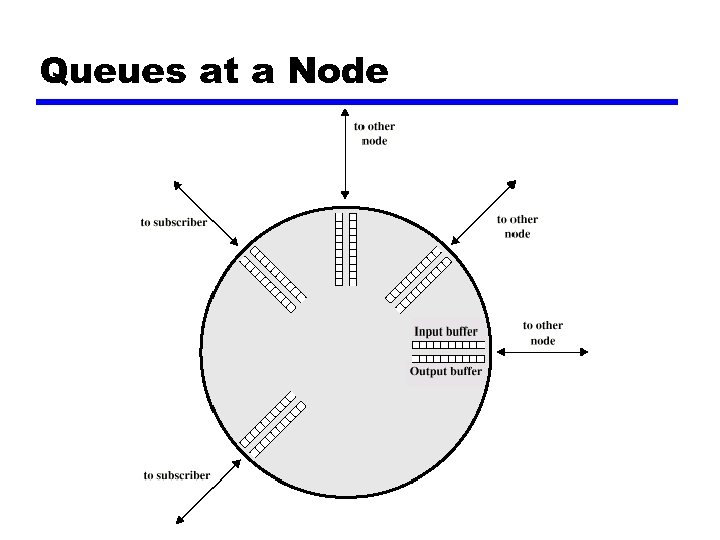 Queues at a Node
 Effects of Congestion z Packets arriving are stored at input buffers z Routing decision made z Packet moves to output buffer z Packets queued for output transmitted as fast as possible y. Statistical time division multiplexing z If packets arrive to fast to be routed, or to be output, buffers will fill z Can discard packets z Can use flow control y. Can propagate congestion through network
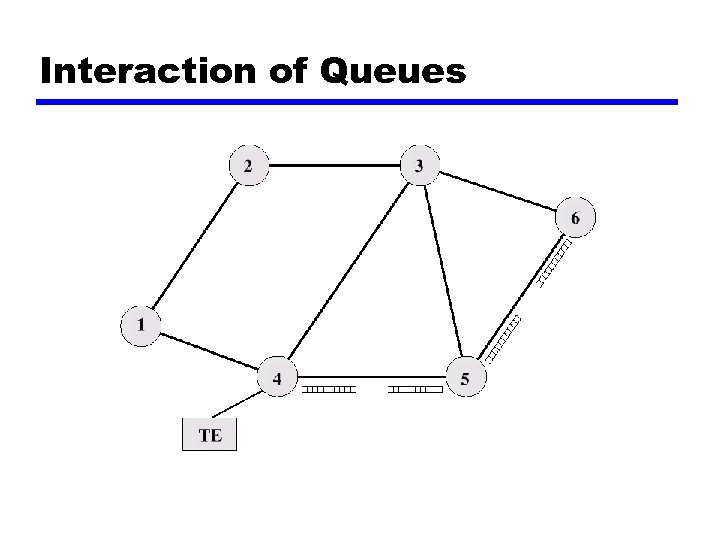 Interaction of Queues
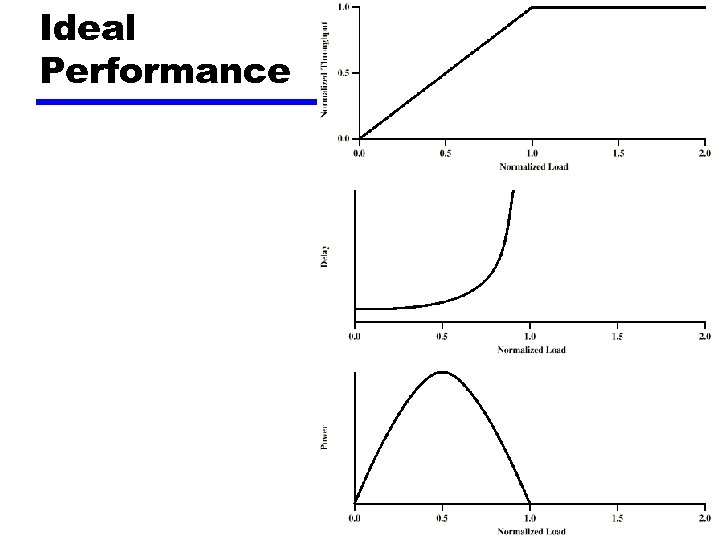 Ideal Performance
 Practical Performance z Ideal assumes infinite buffers and no overhead z Buffers are finite z Overheads occur in exchanging congestion control messages
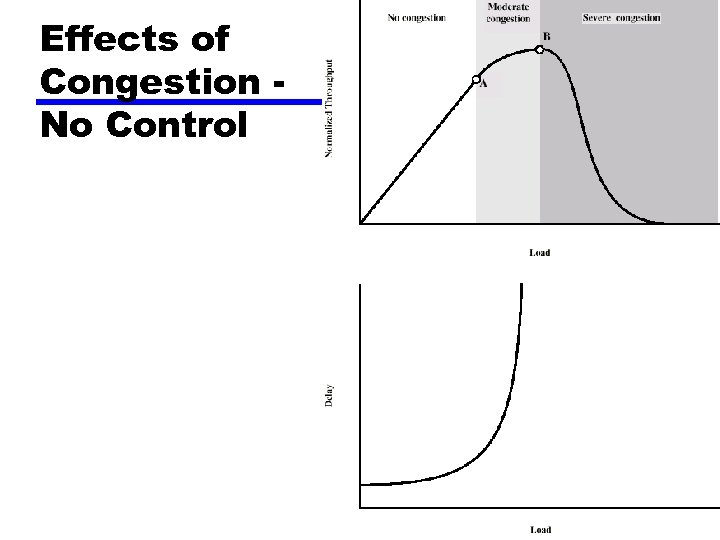 Effects of Congestion No Control
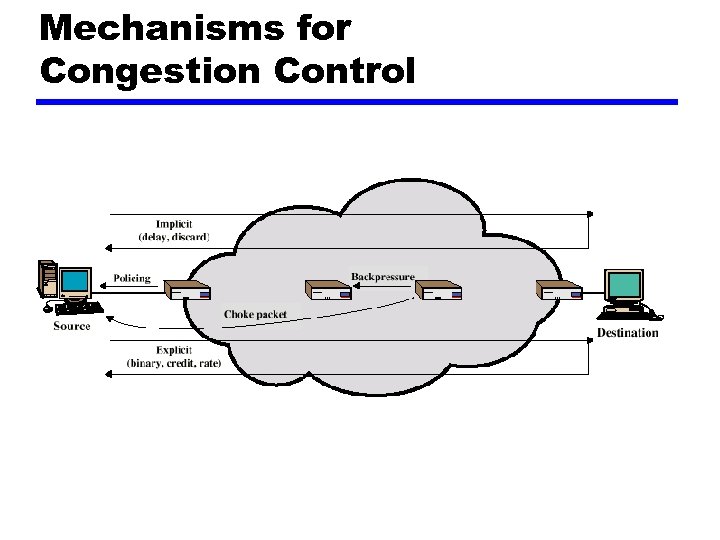 Mechanisms for Congestion Control
 Backpressure z If node becomes congested it can slow down or halt flow of packets from other nodes z May mean that other nodes have to apply control on incoming packet rates z Propagates back to source z Can restrict to logical connections generating most traffic z Used in connection oriented that allow hop by hop congestion control (e. g. X. 25) z Not used in ATM nor frame relay z Only recently developed for IP
 Choke Packet z Control packet y. Generated at congested node y. Sent to source node ye. g. ICMP source quench x. From router or destination x. Source cuts back until no more source quench message x. Sent for every discarded packet, or anticipated z Rather crude mechanism
 Implicit Congestion Signaling z Transmission delay may increase with congestion z Packet may be discarded z Source can detect these as implicit indications of congestion z Useful on connectionless (datagram) networks ye. g. IP based x(TCP includes congestion and flow control - see chapter 17) z Used in frame relay LAPF
 Explicit Congestion Signaling z Network alerts end systems of increasing congestion z End systems take steps to reduce offered load z Backwards y. Congestion avoidance in opposite direction to packet required z Forwards y. Congestion avoidance in same direction as packet required
 Categories of Explicit Signaling z Binary y. A bit set in a packet indicates congestion z Credit based y. Indicates how many packets source may send y. Common for end to end flow control z Rate based y. Supply explicit data rate limit ye. g. ATM
 Traffic Management z Fairness z Quality of service y. May want different treatment for different connections z Reservations ye. g. ATM y. Traffic contract between user and network
 Congestion Control in Packet Switched Networks z Send control packet to some or all source nodes y. Requires additional traffic during congestion z Rely on routing information y. May react too quickly z End to end probe packets y. Adds to overhead z Add congestion info to packets as they cross nodes y. Either backwards or forwards
 ATM Traffic Management z High speed, small cell size, limited overhead bits z Still evolving z Requirements y. Majority of traffic not amenable to flow control y. Feedback slow due to reduced transmission time compared with propagation delay y. Wide range of application demands y. Different traffic patterns y. Different network services y. High speed switching and transmission increases volatility
 Latency/Speed Effects z ATM 150 Mbps z ~2. 8 x 10 -6 seconds to insert single cell z Time to traverse network depends on propagation delay, switching delay z Assume propagation at two-thirds speed of light z If source and destination on opposite sides of USA, propagation time ~ 48 x 10 -3 seconds z Given implicit congestion control, by the time dropped cell notification has reached source, 7. 2 x 106 bits have been transmitted z So, this is not a good strategy for ATM
 Cell Delay Variation z For ATM voice/video, data is a stream of cells z Delay across network must be short z Rate of delivery must be constant z There will always be some variation in transit z Delay cell delivery to application so that constant bit rate can be maintained to application
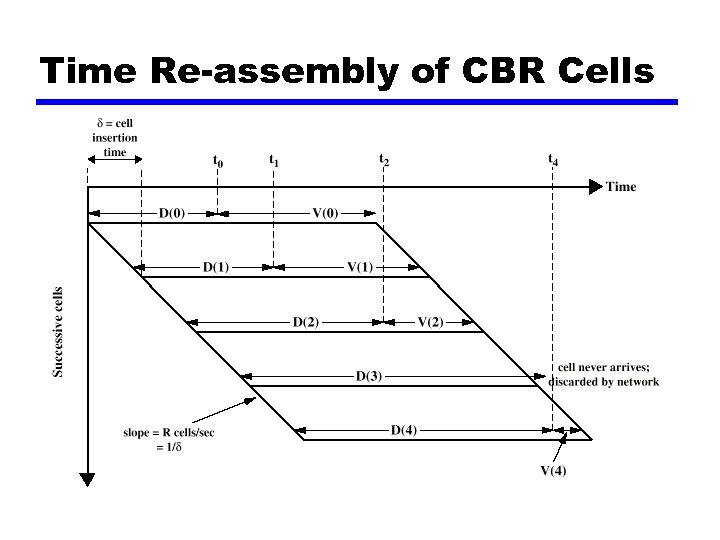 Time Re-assembly of CBR Cells
 Network Contribution to Cell Delay Variation z Packet switched networks y. Queuing delays y. Routing decision time z Frame relay y. As above but to lesser extent z ATM y. Less than frame relay y. ATM protocol designed to minimize processing overheads at switches y. ATM switches have very high throughput y. Only noticeable delay is from congestion y. Must not accept load that causes congestion
 Cell Delay Variation At The UNI z Application produces data at fixed rate z Processing at three layers of ATM causes delay y. Interleaving cells from different connections y. Operation and maintenance cell interleaving y. If using synchronous digital hierarchy frames, these are inserted at physical layer y. Can not predict these delays
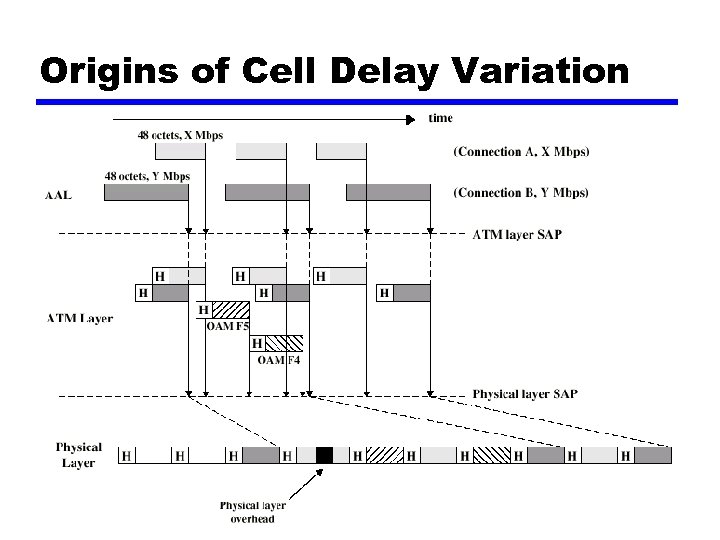 Origins of Cell Delay Variation
 Traffic and Congestion Control Framework z ATM layer traffic and congestion control should support Qo. S classes for all foreseeable network services z Should not rely on AAL protocols that are network specific, nor higher level application specific protocols z Should minimize network and end to end system complexity
 Timings Considered z Cell insertion time z Round trip propagation time z Connection duration z Long term z Determine whether a given new connection can be accommodated z Agree performance parameters with subscriber
 Traffic Management and Congestion Control Techniques z Resource management using virtual paths z Connection admission control z Usage parameter control z Selective cell discard z Traffic shaping
 Resource Management Using Virtual Paths z Separate traffic flow according to service characteristics z User to user application z User to network application z Network to network application z Concern with: y. Cell loss ratio y. Cell transfer delay y. Cell delay variation
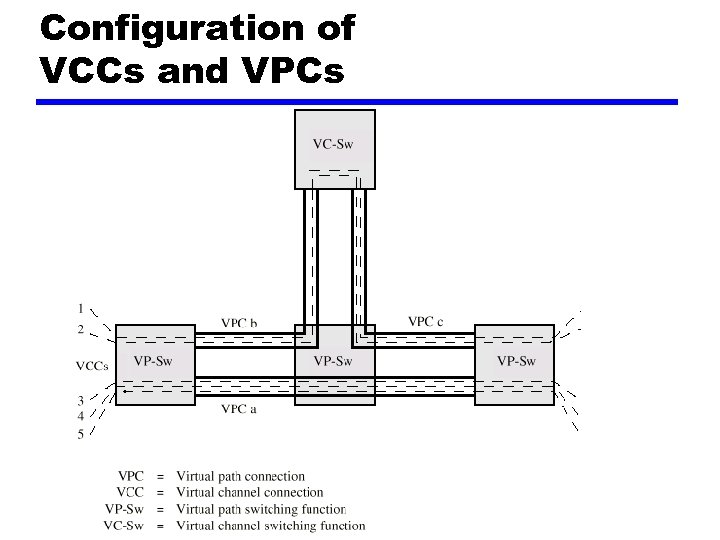 Configuration of VCCs and VPCs
 Allocating VCCs within VPC z All VCCs within VPC should experience similar network performance z Options for allocation: y. Aggregate peak demand y. Statistical multiplexing
 Connection Admission Control z First line of defence z User specifies traffic characteristics for new connection (VCC or VPC) by selecting a Qo. S z Network accepts connection only if it can meet the demand z Traffic contract y. Peak cell rate y. Cell delay variation y. Sustainable cell rate y. Burst tolerance
 Usage Parameter Control z Monitor connection to ensure traffic conforms to contract z Protection of network resources from overload by one connection z Done on VCC and VPC z Peak cell rate and cell delay variation z Sustainable cell rate and burst tolerance z Discard cells that do not conform to traffic contract z Called traffic policing
 Traffic Shaping z Smooth out traffic flow and reduce cell clumping z Token bucket
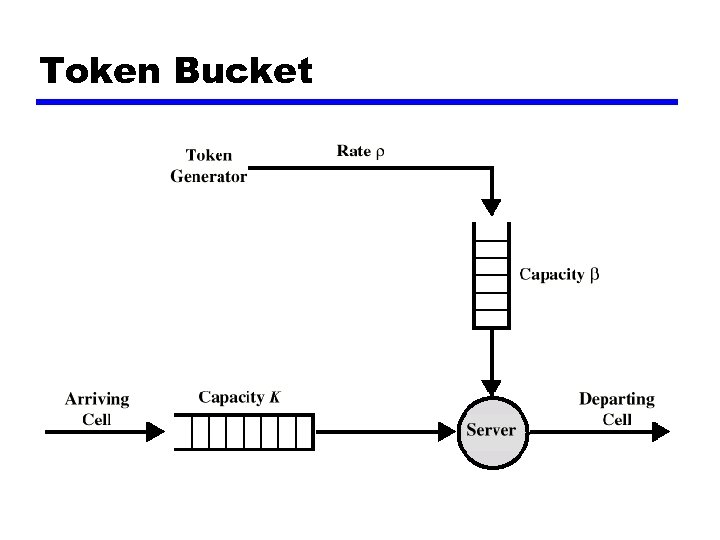 Token Bucket
 ATM-ABR Traffic Management z Some applications (Web, file transfer) do not have well defined traffic characteristics z Best efforts y. Allow these applications to share unused capacity x. If congestion builds, cells are dropped z Closed loop control y. ABR connections share available capacity y. Share varies between minimum cell rate (MCR) and peak cell rate (PCR) y. ARB flow limited to available capacity by feedback x. Buffers absorb excess traffic during feedback delay y. Low cell loss
 Feedback Mechanisms z Transmission rate characteristics: y. Allowed cell rate y. Minimum cell rate y. Peak cell rate y. Initial cell rate z Start with ACR=ICR z Adjust ACR based on feedback from network y. Resource management cells x. Congestion indication bit x. No increase bit x. Explicit cell rate field
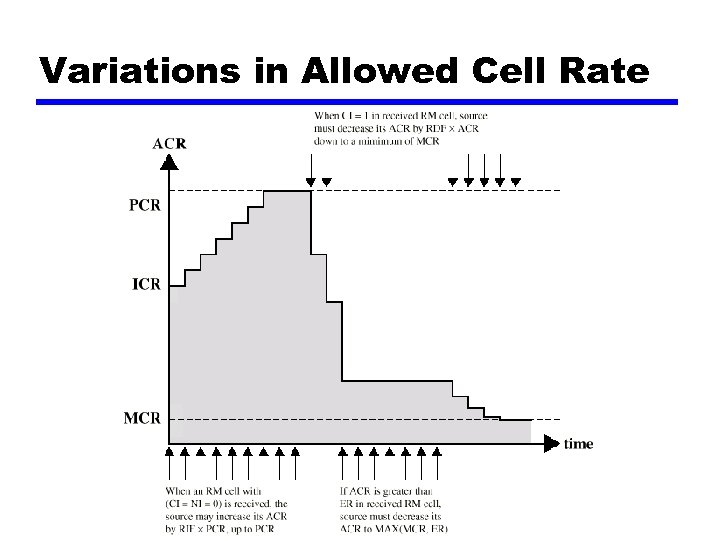 Variations in Allowed Cell Rate
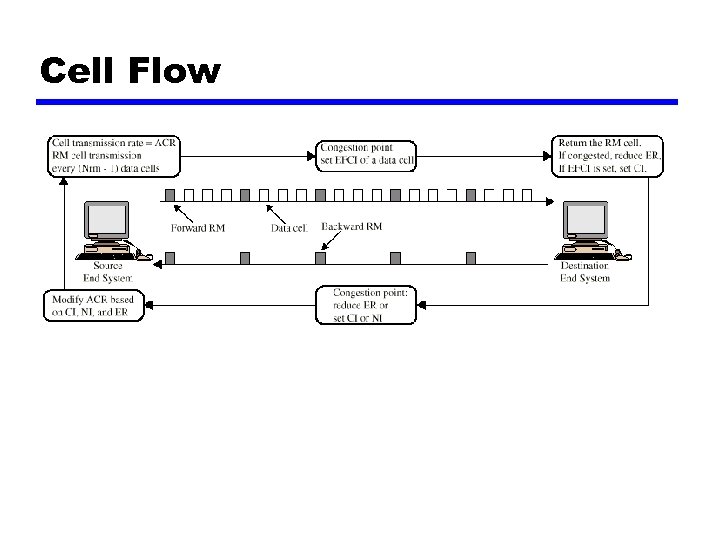 Cell Flow
 Rate Control Feedback z EFCI (Explicit forward congestion indication) marking z Relative rate marking z Explicit rate marking
 Frame Relay Congestion Control z Minimize discards z Miantain agreed Qo. S z Minimize probability of one end user monoply z Simple to implement y. Little overhead on network or user z Create minimal additional traffic z Distribute resources fairly z Limit spread of congestion z Operate effectively regardless of traffic flow z Minimum impact on other systems z Minimize variance in Qo. S
 Techniques z Discard strategy z Congestion avoidance z Explicit signaling z Congestion recovery z Implicit signaling mechanism
 Traffic Rate Management z Must discard frames to cope with congestion y. Arbitrarily, no regard for source y. No reward for restraint so end systems transmit as fast as possible y. Committed information rate (CIR) x. Data in excess of this liable to discard x. Not guaranteed x. Aggregate CIR should not exceed physical data rate z Committed burst size z Excess burst size
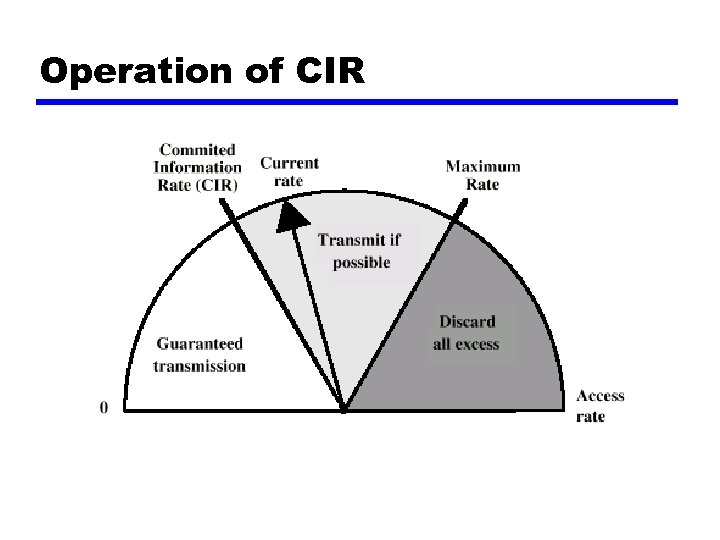 Operation of CIR
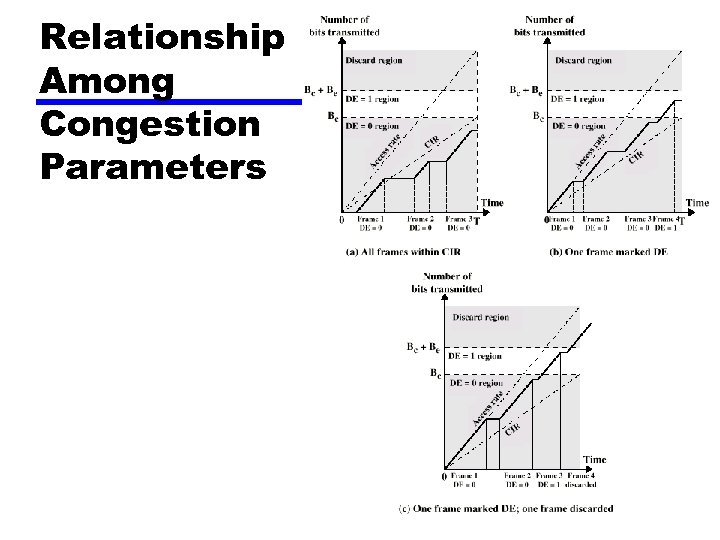 Relationship Among Congestion Parameters
 Explicit Signaling z Network alerts end systems of growing congestion z Backward explicit congestion notification z Forward explicit congestion notification z Frame handler monitors its queues z May notify some or all logical connections z User response y. Reduce rate
 Required Reading z Stallings chapter 12