


 Скачать презентацию William Stallings Data and Computer Communications Chapter 11
90617bc45bcbe384f1d125075df60368.ppt
- Количество слайдов: 61
 William Stallings Data and Computer Communications Chapter 11 Asynchronous Transfer Mode and Frame Relay
 Protocol Architecture z Similarities between ATM and packet switching y. Transfer of data in discrete chunks y. Multiple logical connections over single physical interface z In ATM flow on each logical connection is in fixed sized packets called cells z Minimal error and flow control y. Reduced overhead z Data rates (physical layer) 25. 6 Mbps to 622. 08 Mbps
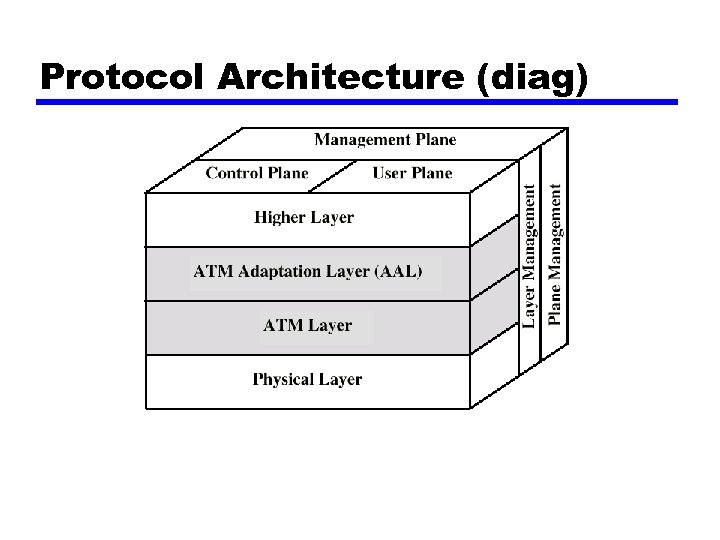 Protocol Architecture (diag)
 Reference Model Planes z User plane y. Provides for user information transfer z Control plane y. Call and connection control z Management plane y. Plane management xwhole system functions y. Layer management x. Resources and parameters in protocol entities
 ATM Logical Connections z Virtual channel connections (VCC) z Analogous to virtual circuit in X. 25 z Basic unit of switching z Between two end users z Full duplex z Fixed size cells z Data, user-network exchange (control) and network-network exchange (network management and routing) z Virtual path connection (VPC) y. Bundle of VCC with same end points
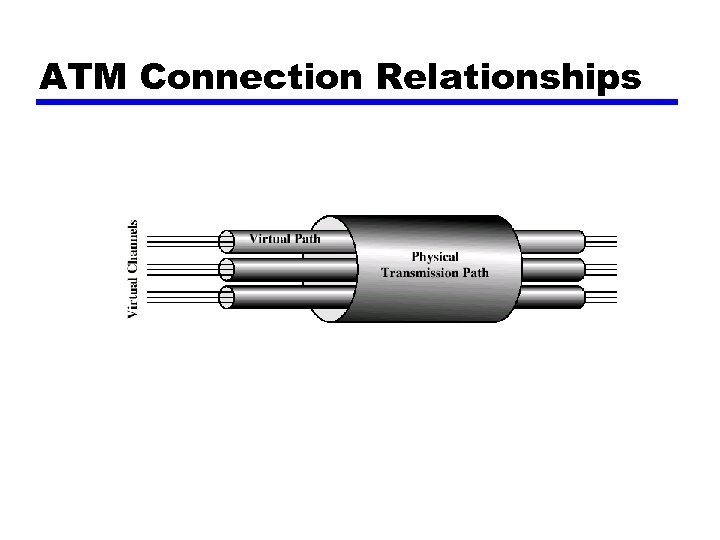 ATM Connection Relationships
 Advantages of Virtual Paths z Simplified network architecture z Increased network performance and reliability z Reduced processing z Short connection setup time z Enhanced network services
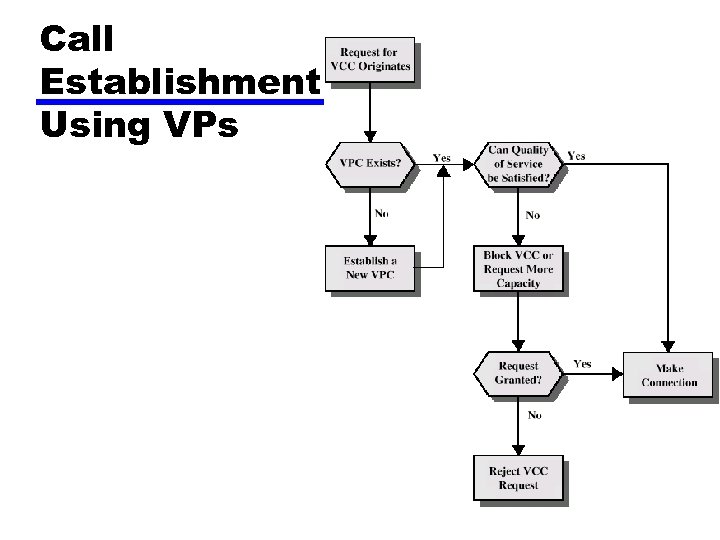 Call Establishment Using VPs
 Virtual Channel Connection Uses z Between end users y. End to end user data y. Control signals y. VPC provides overall capacity x. VCC organization done by users z Between end user and network y. Control signaling z Between network entities y. Network traffic management y. Routing
 VP/VC Characteristics z Quality of service z Switched and semi-permanent channel connections z Call sequence integrity z Traffic parameter negotiation and usage monitoring z VPC only y. Virtual channel identifier restriction within VPC
 Control Signaling - VCC z Done on separate connection z Semi-permanent VCC z Meta-signaling channel y. Used as permanent control signal channel z User to network signaling virtual channel y. For control signaling y. Used to set up VCCs to carry user data z User to user signaling virtual channel y. Within pre-established VPC y. Used by two end users without network intervention to establish and release user to user VCC
 Control Signaling - VPC z Semi-permanent z Customer controlled z Network controlled
 ATM Cells z Fixed size z 5 octet header z 48 octet information field z Small cells reduce queuing delay for high priority cells z Small cells can be switched more efficiently z Easier to implement switching of small cells in hardware
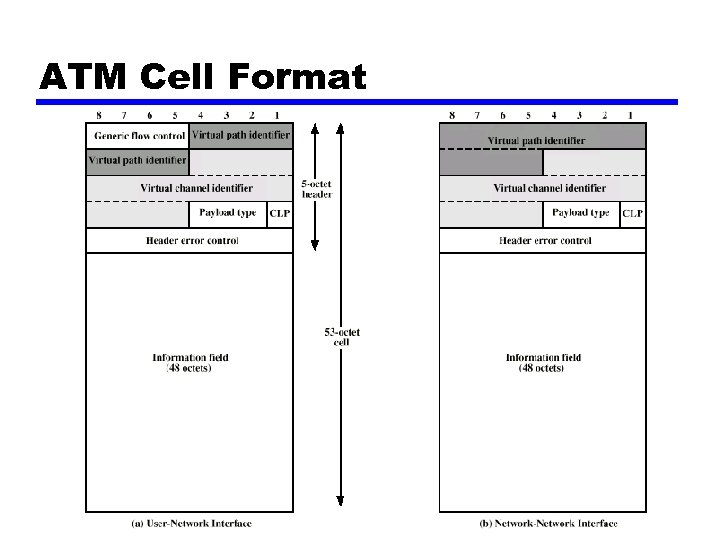 ATM Cell Format
 Header Format z Generic flow control y. Only at user to network interface y. Controls flow only at this point z Virtual path identifier z Virtual channel identifier z Payload type ye. g. user info or network management z Cell loss priority z Header error control
 Generic Flow Control (GFC) z Control traffic flow at user to network interface (UNI) to alleviate short term overload z Two sets of procedures y. Uncontrolled transmission y. Controlled transmission z Every connection either subject to flow control or not z Subject to flow control y. May be one group (A) default y. May be two groups (A and B) z Flow control is from subscriber to network y. Controlled by network side
 Single Group of Connections (1) z Terminal equipment (TE) initializes two variables y. TRANSMIT flag to 1 y. GO_CNTR (credit counter) to 0 z If TRANSMIT=1 cells on uncontrolled connection may be sent any time z If TRANSMIT=0 no cells may be sent (on controlled or uncontrolled connections) z If HALT received, TRANSMIT set to 0 and remains until NO_HALT
 Single Group of Connections (2) z If TRANSMIT=1 and no cell to transmit on any uncontrolled connection: y. If GO_CNTR>0, TE may send cell on controlled connection x. Cell marked as being on controlled connection x. GO_CNTR decremented y. If GO_CNTR=0, TE may not send on controlled connection z TE sets GO_CNTR to GO_VALUE upon receiving SET signal y. Null signal has no effect
 Use of HALT z To limit effective data rate on ATM z Should be cyclic z To reduce data rate by half, HALT issued to be in effect 50% of time z Done on regular pattern over lifetime of connection
 Two Queue Model z Two counters y. GO_CNTR_A, GO_VALUE_A, GO_CNTR_B, GO_VALUE_B
 Header Error Control z 8 bit error control field z Calculated on remaining 32 bits of header z Allows some error correction
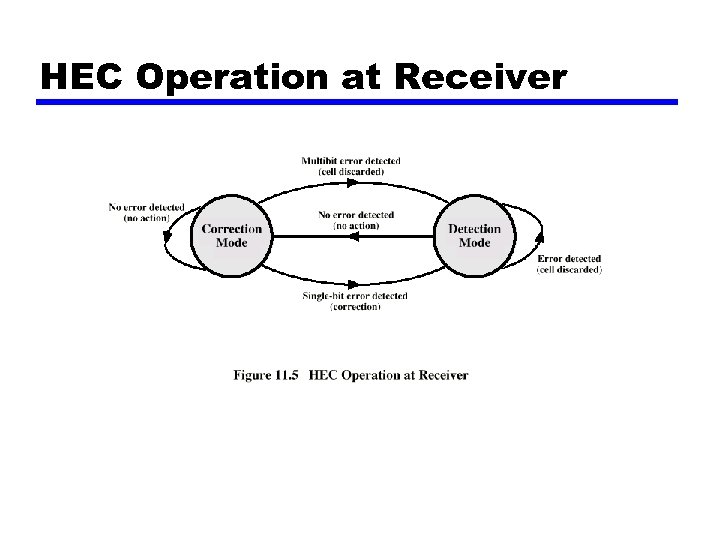 HEC Operation at Receiver
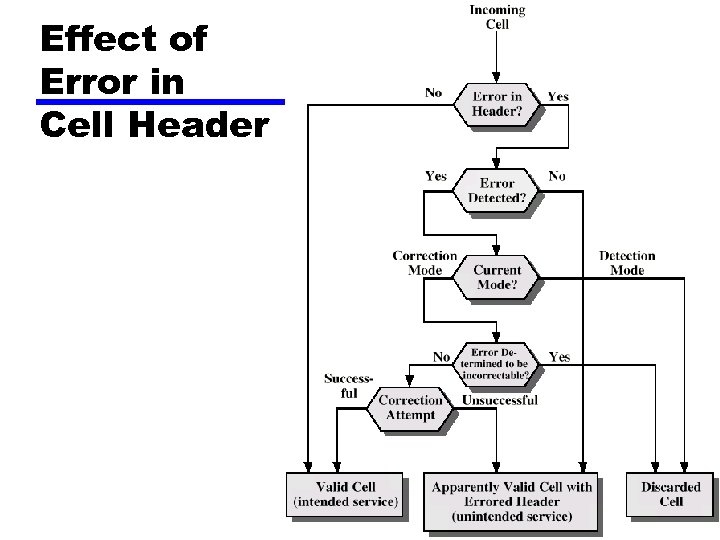 Effect of Error in Cell Header
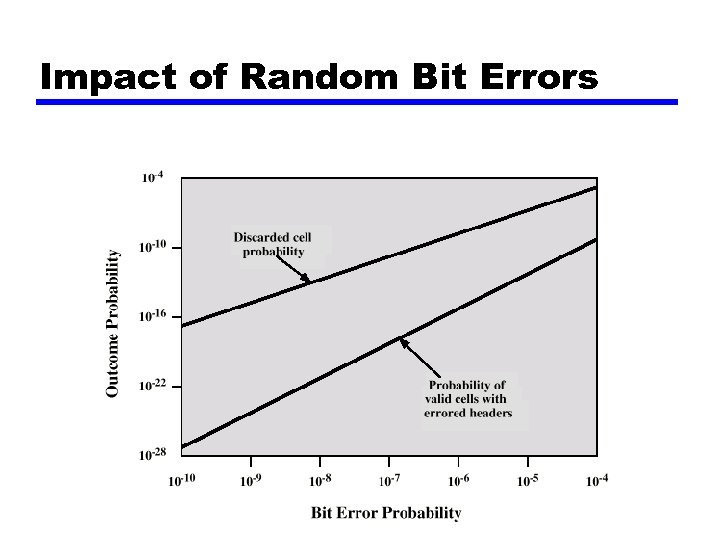 Impact of Random Bit Errors
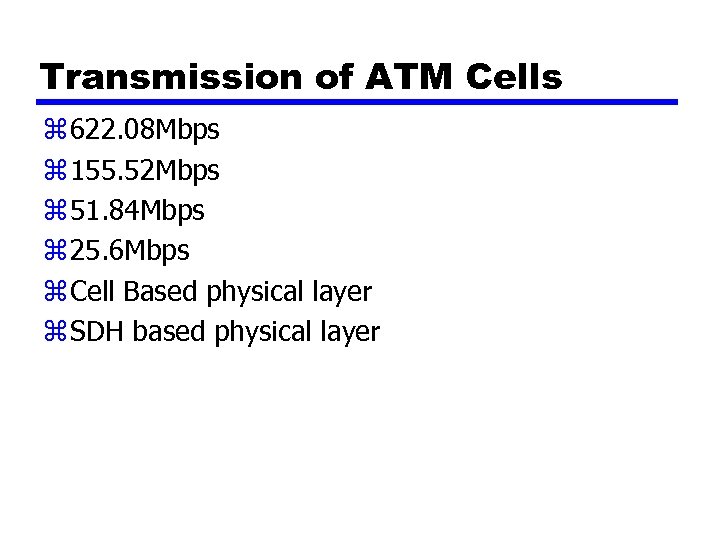 Transmission of ATM Cells z 622. 08 Mbps z 155. 52 Mbps z 51. 84 Mbps z 25. 6 Mbps z Cell Based physical layer z SDH based physical layer
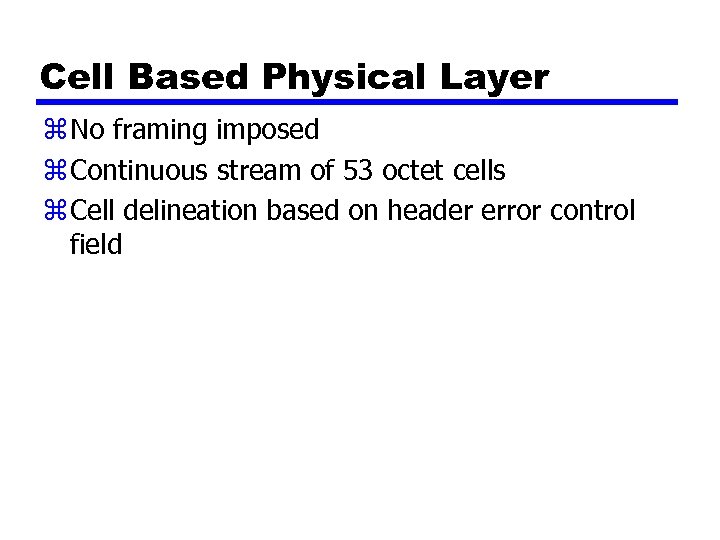 Cell Based Physical Layer z No framing imposed z Continuous stream of 53 octet cells z Cell delineation based on header error control field
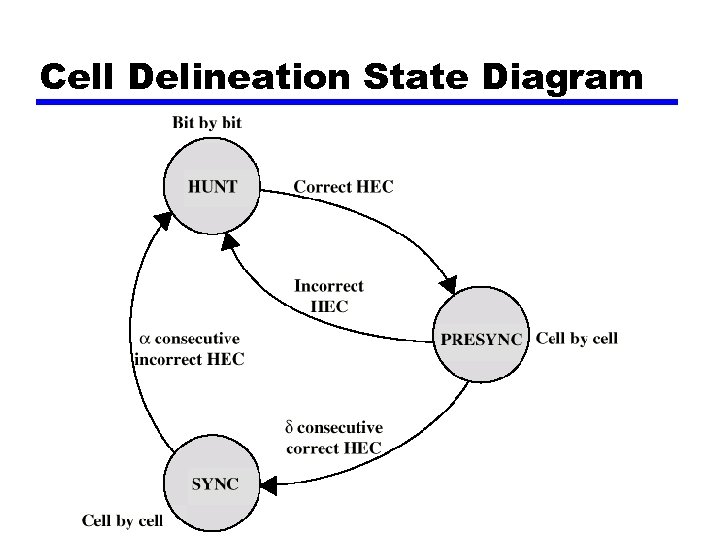 Cell Delineation State Diagram
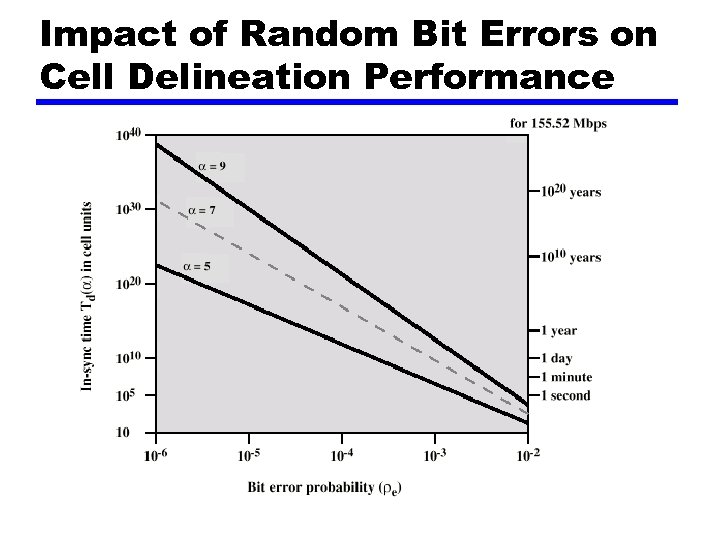 Impact of Random Bit Errors on Cell Delineation Performance
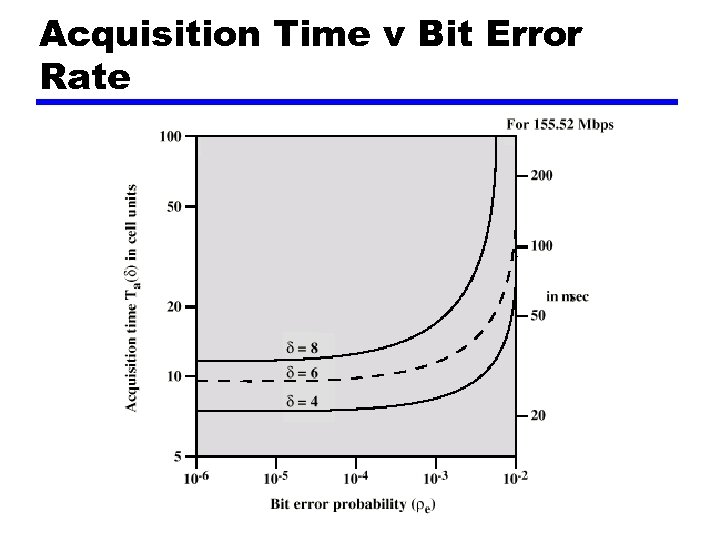 Acquisition Time v Bit Error Rate
 SDH Based Physical Layer z Imposes structure on ATM stream z e. g. for 155. 52 Mbps z Use STM-1 (STS-3) frame z Can carry ATM and STM payloads z Specific connections can be circuit switched using SDH channel z SDH multiplexing techniques can combine several ATM streams
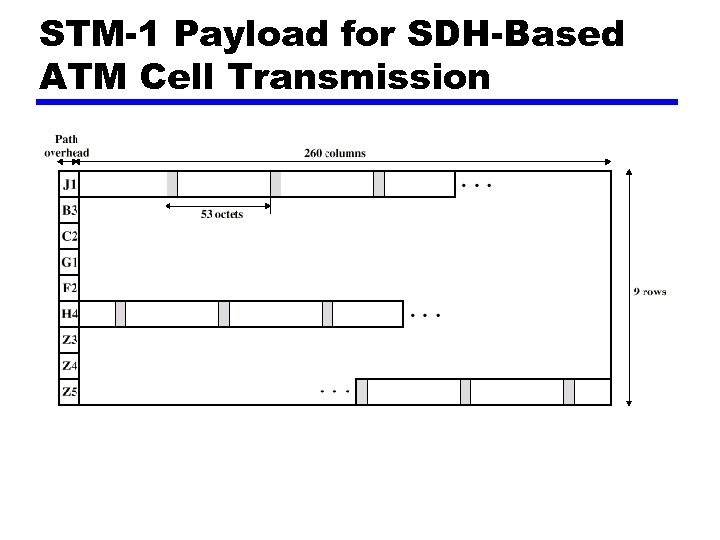 STM-1 Payload for SDH-Based ATM Cell Transmission
 ATM Service Categories z Real time y. Constant bit rate (CBR) y. Real time variable bit rate (rt-VBR) z Non-real time y. Non-real time variable bit rate (nrt-VBR) y. Available bit rate (ABR) y. Unspecified bit rate (UBR)
 Real Time Services z Amount of delay z Variation of delay (jitter)
 CBR z Fixed data rate continuously available z Tight upper bound on delay z Uncompressed audio and video y. Video conferencing y. Interactive audio y. A/V distribution and retrieval
 rt-VBR z Time sensitive application y. Tightly constrained delay and delay variation z rt-VBR applications transmit at a rate that varies with time z e. g. compressed video y. Produces varying sized image frames y. Original (uncompressed) frame rate constant y. So compressed data rate varies z Can statistically multiplex connections
 nrt-VBR z May be able to characterize expected traffic flow z Improve Qo. S in loss and delay z End system specifies: y. Peak cell rate y. Sustainable or average rate y. Measure of how bursty traffic is z e. g. Airline reservations, banking transactions
 UBR z May be additional capacity over and above that used by CBR and VBR traffic y. Not all resources dedicated y. Bursty nature of VBR z For application that can tolerate some cell loss or variable delays ye. g. TCP based traffic z Cells forwarded on FIFO basis z Best efforts service
 ABR z Application specifies peak cell rate (PCR) and minimum cell rate (MCR) z Resources allocated to give at least MCR z Spare capacity shared among all ARB sources z e. g. LAN interconnection
 ATM Adaptation Layer z Support for information transfer protocol not based on ATM z PCM (voice) y. Assemble bits into cells y. Re-assemble into constant flow z IP y. Map IP packets onto ATM cells y. Fragment IP packets y. Use LAPF over ATM to retain all IP infrastructure
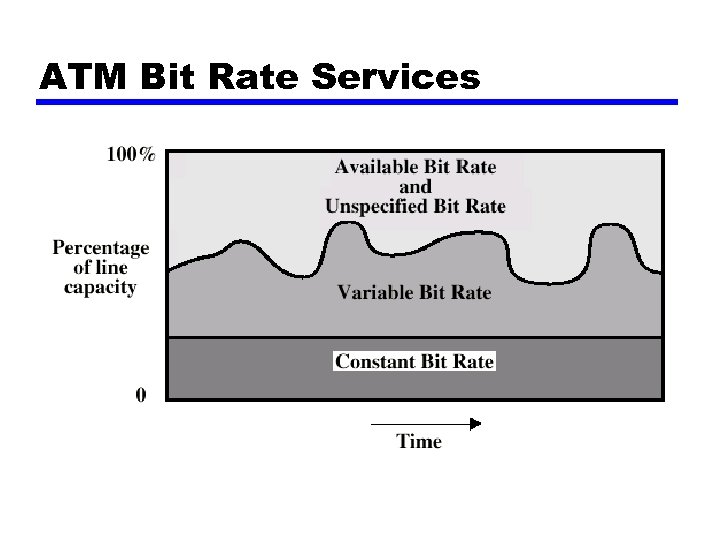 ATM Bit Rate Services
 Adaptation Layer Services z Handle transmission errors z Segmentation and re-assembly z Handle lost and misinserted cells z Flow control and timing
 Supported Application types z Circuit emulation z VBR voice and video z General data service z IP over ATM z Multiprotocol encapsulation over ATM (MPOA) y. IPX, Apple. Talk, DECNET) z LAN emulation
 AAL Protocols z Convergence sublayer (CS) y. Support for specific applications y. AAL user attaches at SAP z Segmentation and re-assembly sublayer (SAR) y. Packages and unpacks info received from CS into cells z Four types y. Type 1 2 3/4 5
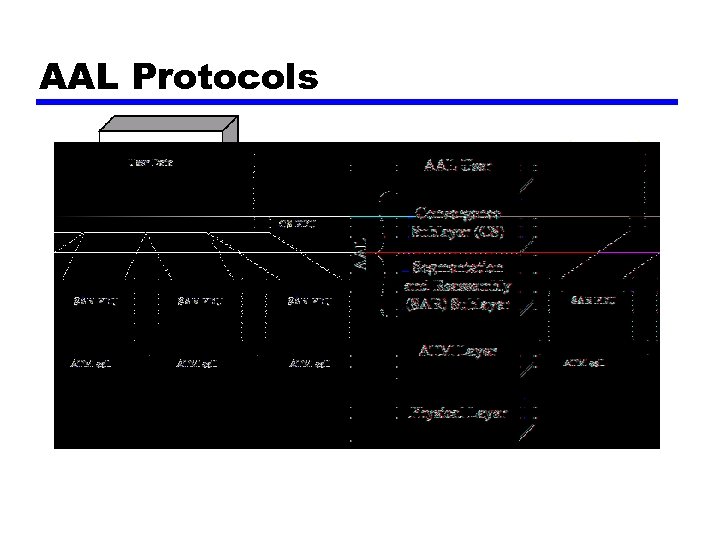 AAL Protocols
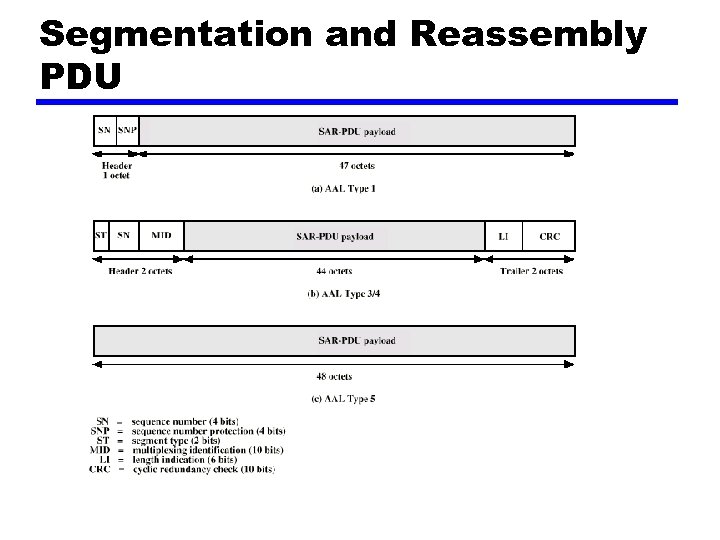 Segmentation and Reassembly PDU
 AAL Type 1 z CBR source z SAR packs and unpacks bits z Block accompanied by sequence number
 AAL Type 2 z VBR z Analog applications
 AAL Type 3/4 z Connectionless or connected z Message mode or stream mode
 AAL Type 5 z Streamlined transport for connection oriented higher layer protocols
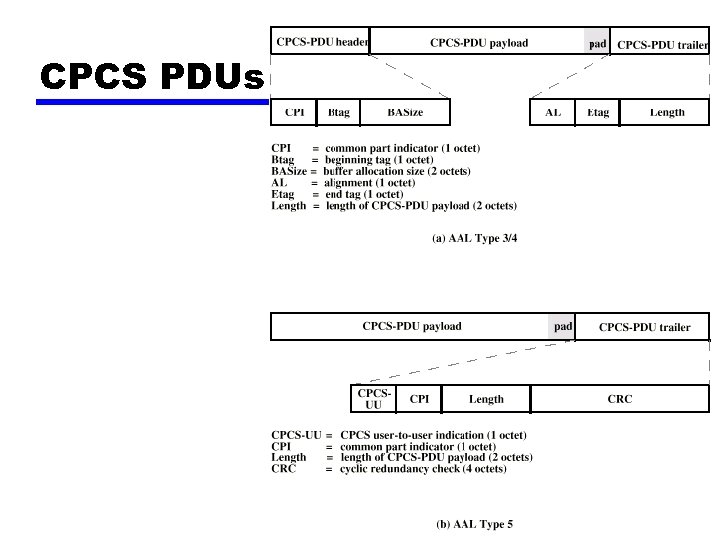 CPCS PDUs
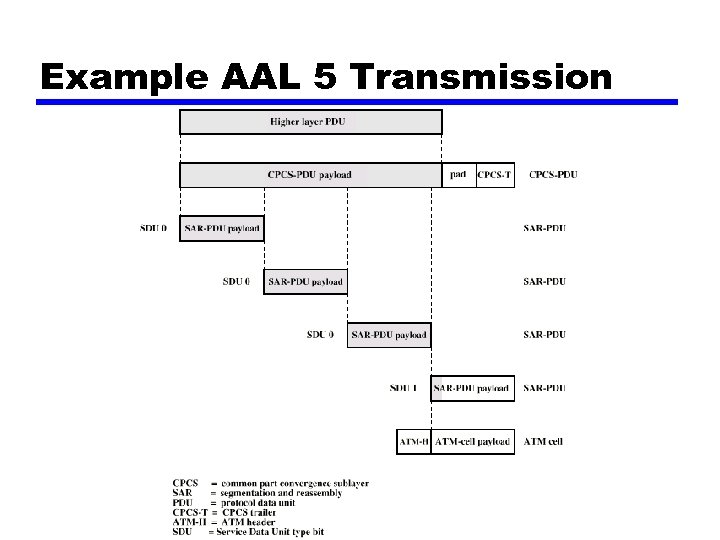 Example AAL 5 Transmission
 Frame Relay z Designed to be more efficient than X. 25 z Developed before ATM z Larger installed base than ATM z ATM now of more interest on high speed networks
 Frame Relay Background - X. 25 z Call control packets, in band signaling z Multiplexing of virtual circuits at layer 3 z Layer 2 and 3 include flow and error control z Considerable overhead z Not appropriate for modern digital systems with high reliability
 Frame Relay - Differences z Call control carried in separate logical connection z Multiplexing and switching at layer 2 y. Eliminates one layer of processing z No hop by hop error or flow control z End to end flow and error control (if used) are done by higher layer z Single user data frame sent from source to destination and ACK (from higher layer) sent back
 Advantages and Disadvantages z Lost link by link error and flow control y. Increased reliability makes this less of a problem z Streamlined communications process y. Lower delay y. Higher throughput z ITU-T recommend frame relay above 2 Mbps
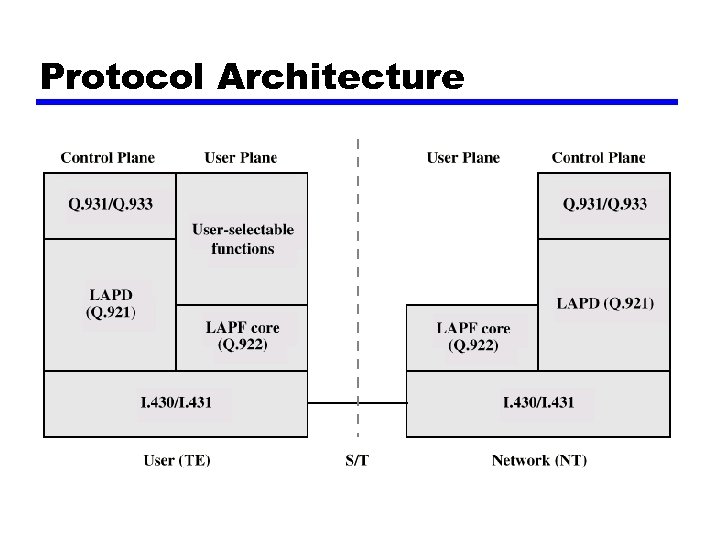 Protocol Architecture
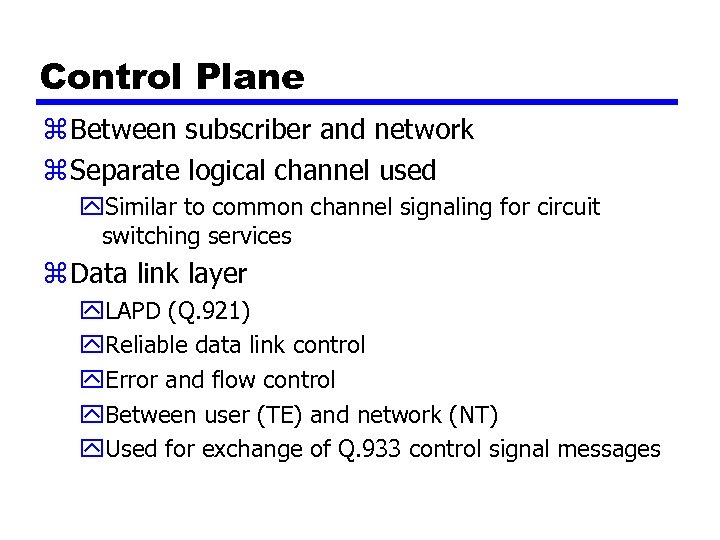 Control Plane z Between subscriber and network z Separate logical channel used y. Similar to common channel signaling for circuit switching services z Data link layer y. LAPD (Q. 921) y. Reliable data link control y. Error and flow control y. Between user (TE) and network (NT) y. Used for exchange of Q. 933 control signal messages
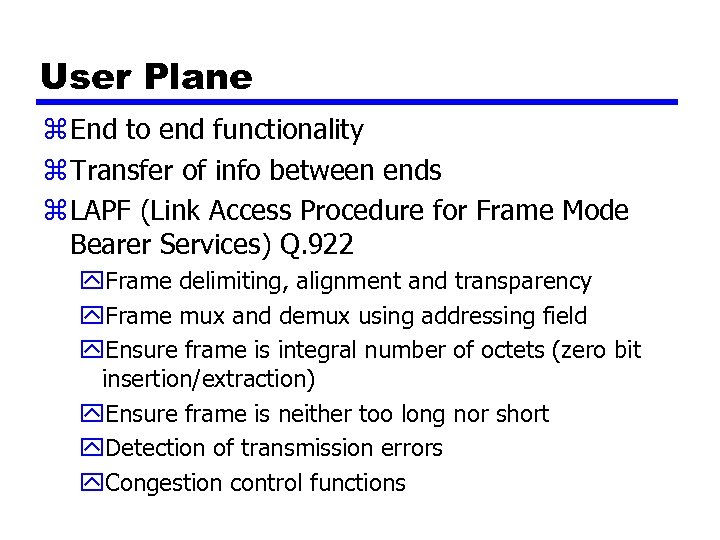 User Plane z End to end functionality z Transfer of info between ends z LAPF (Link Access Procedure for Frame Mode Bearer Services) Q. 922 y. Frame delimiting, alignment and transparency y. Frame mux and demux using addressing field y. Ensure frame is integral number of octets (zero bit insertion/extraction) y. Ensure frame is neither too long nor short y. Detection of transmission errors y. Congestion control functions
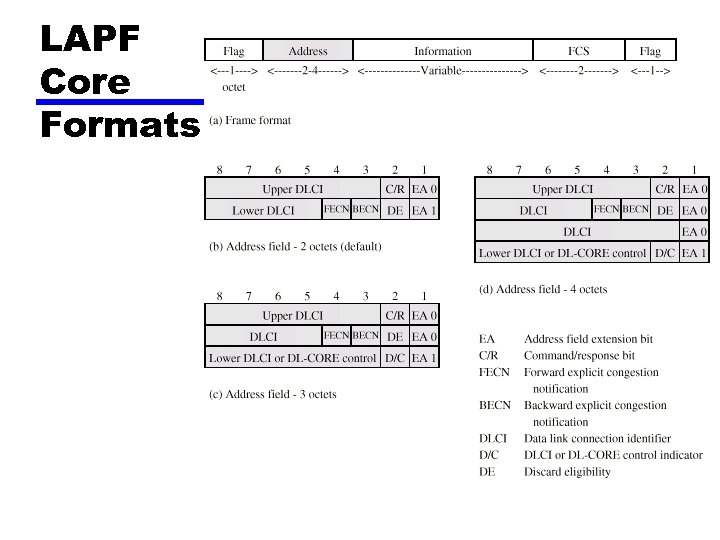 LAPF Core Formats
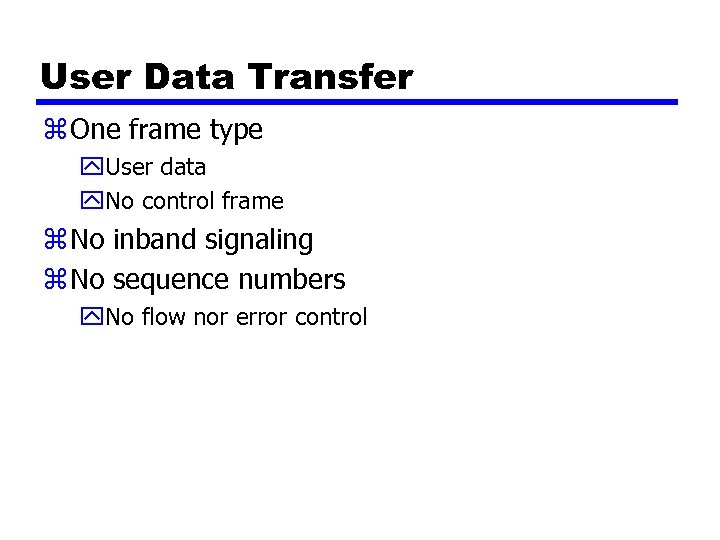 User Data Transfer z One frame type y. User data y. No control frame z No inband signaling z No sequence numbers y. No flow nor error control
 Required Reading z Stallings Chapter 11 z ATM Forum Web site z Frame Relay forum