


 Скачать презентацию Wide Area Networks WAN vs LAN
84829e7aa8bd597a1f3939ae1be73870.ppt
- Количество слайдов: 59
 Wide Area Networks
 WAN vs LAN • • • Span BW Delay Different protocols Usually you don’t own the WAN infrastructure
 Point to point link • That’s what you “see” • Ex: leased line • Usually simulated by a circuit or packet switched network
 Circuit Switching • Based on the PSTN (Public Switched Telephone Network) • Analog: modems up to 56 K • Digital: 64 K circuits - SDH w/ TDM • cf Bocq • Designated circuits
 Packet Switching • Data streams segmented in packets • Statistical Multiplexing (FIFO or Qo. S techniques)
 Circuit vs Packet switching • Circuit: Sum of peak data rates < transmission capacity • Packet: Sum of average data rates < transmission capacity • Circuit: waste of BW • Packet: delay => unacceptable for voice
 Connection oriented vs Connectionless • Circuit: CO • Data: CL => need addressing
 Virtual Circuits • Connection Oriented: encapsulation includes a “flow” identifier • Best of two worlds? • Switched VCs - 3 phases: circuit setup, data transfer, circuit termination • Permanent VCs - more expensive as need to be constantly up, use less BW
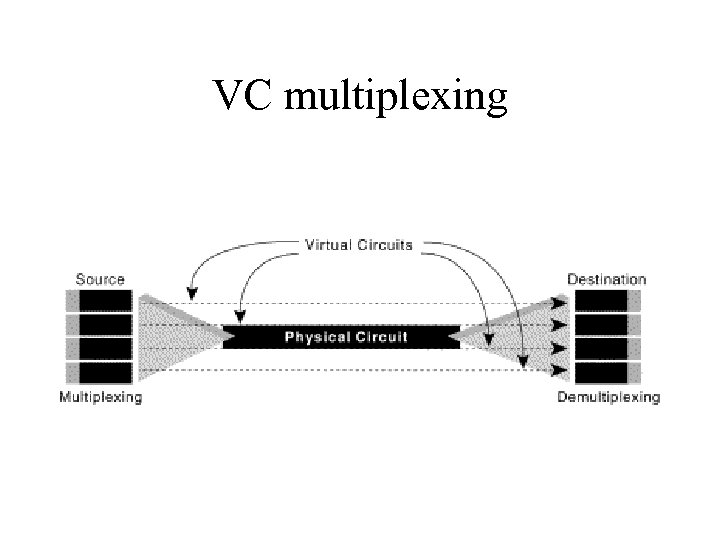 VC multiplexing
 Synchronous Data Link Control SDLC
 SDLC • Developped by IBM for use w/ SNA • Most of L 2 protocols are based on the SDLC format (HDLC, LAPB, 802. 2, etc…)
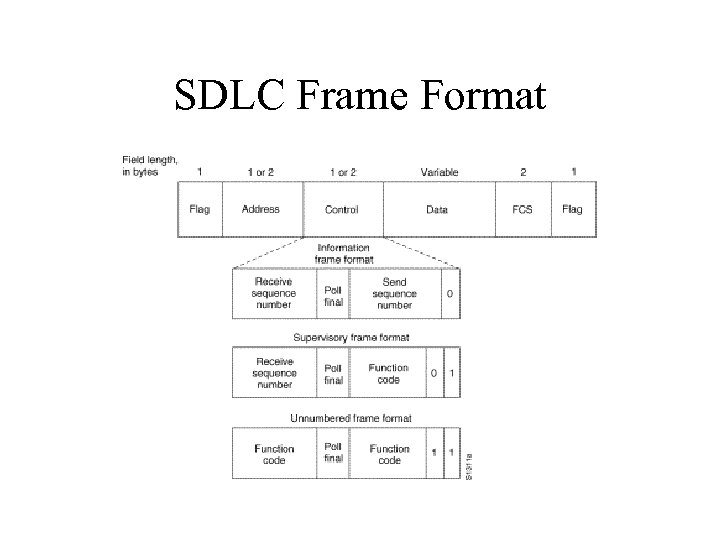 SDLC Frame Format
 X. 25
X. 25
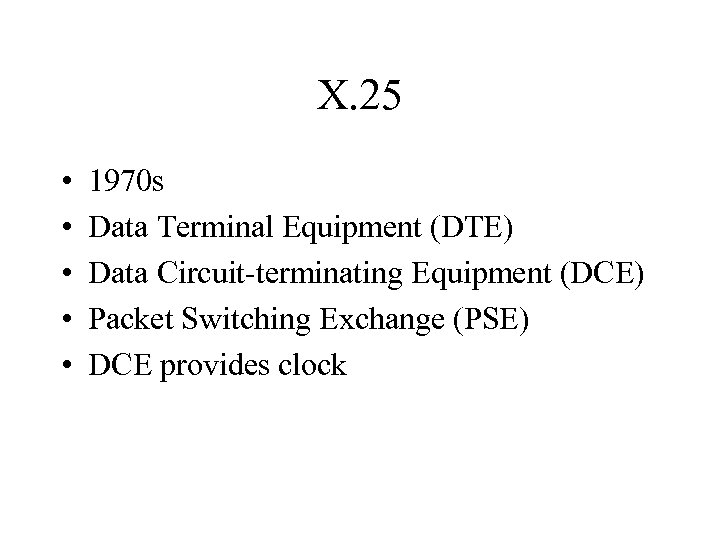 X. 25 • • • 1970 s Data Terminal Equipment (DTE) Data Circuit-terminating Equipment (DCE) Packet Switching Exchange (PSE) DCE provides clock
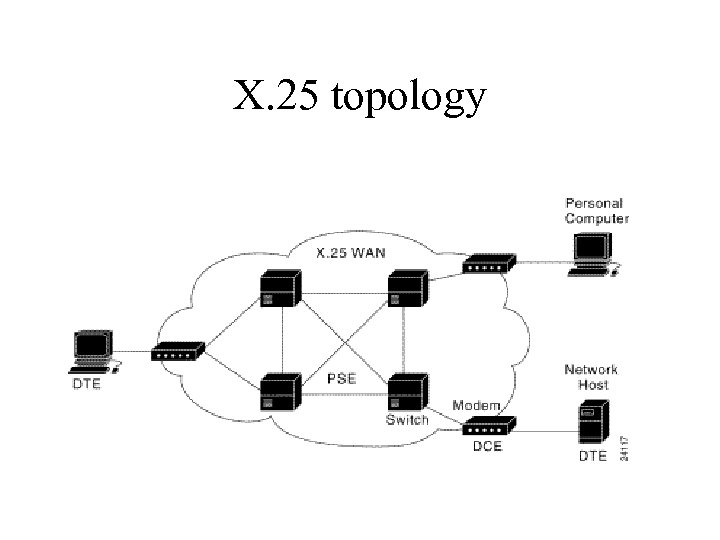 X. 25 topology
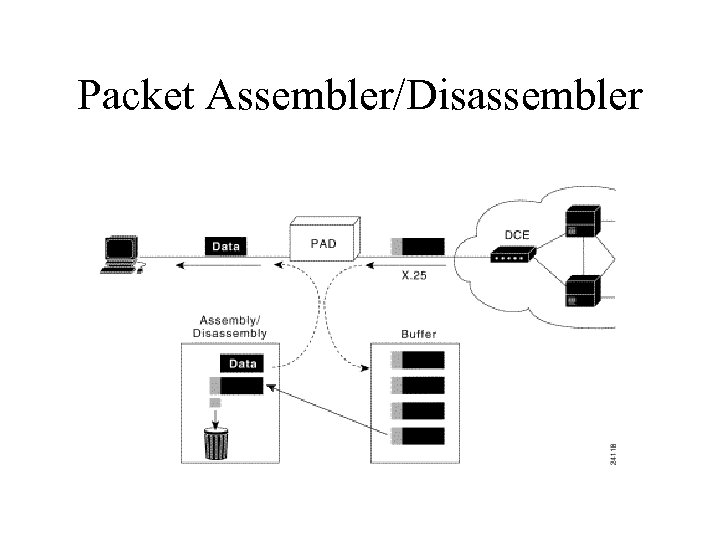 Packet Assembler/Disassembler
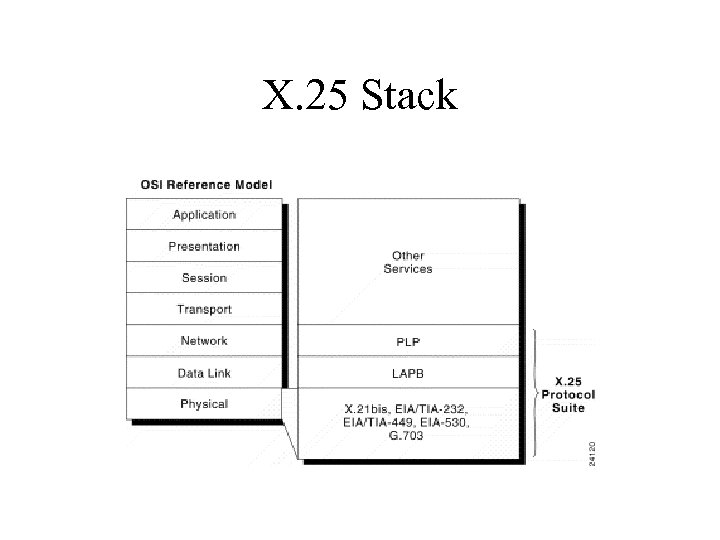 X. 25 Stack
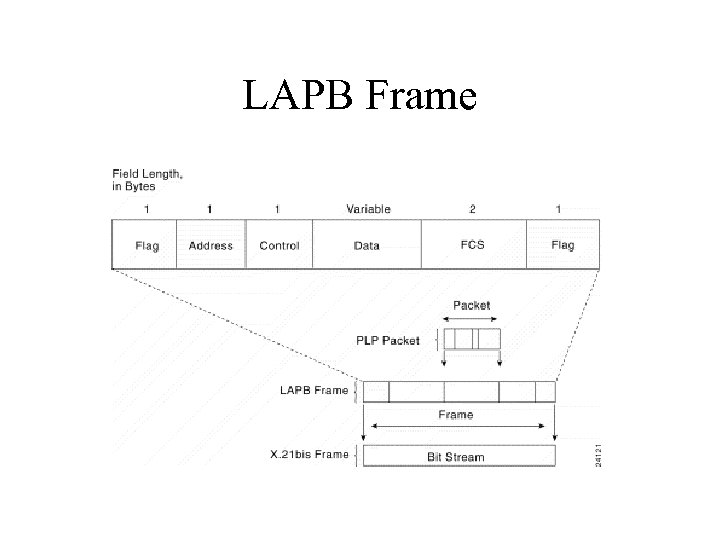 LAPB Frame
 X. 25 Data Link Control • Point to point full duplex data links • Correction of errors and congestion control • Encapsulation of data in variable length frames delimited by flags • Redundant error correction bits • Sliding window (8 or 128 frames)
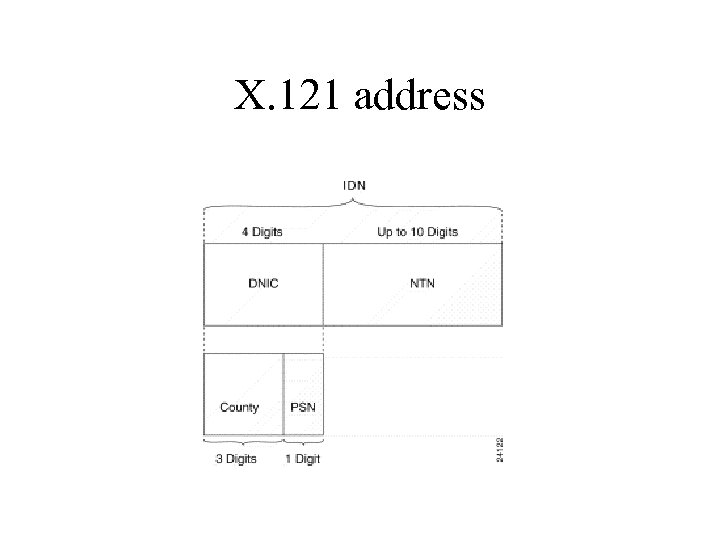 X. 121 address
 X. 121 address • Data Network Identification Code (DNIC) • National Terminal Number (NTN)
 Packet Level Protocol • Several circuits multiplexed • Sliding window error and congestion control for every VC • Call restriction, charging, Qo. S, . . .
 VC Setup • PVC: permanent entry in “routing” table (static), substitute to leased lines • SVC: dynamic entry in “routing” table triggered by an “open” packet and torn down by “close” packet
 Frame Relay
 Characteristics • Introduced in 1984 but only (significantly) deployed in the late 1980 s • L 1 and 2 • Packet Switched technology: PVCs and SVCs • Connection-oriented data link layer communication • X. 25 “lite”
 Differences with X. 25 • Less robust • Assumes more reliable medium => – No retransmission of lost data – No windowing • Error control handled by higher layers • Higher performance and transmission efficiency
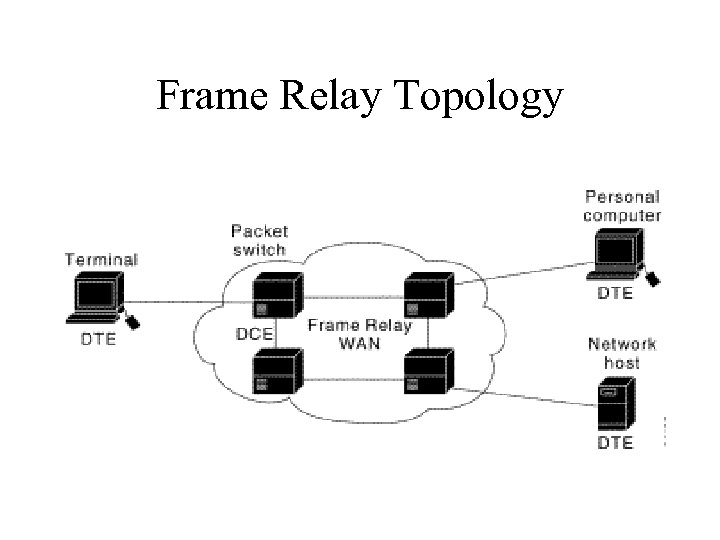 Frame Relay Topology
 DLCI • • Data Link Connection Identifier Uniquely identify circuits Assigned by service provider Local significance only (except with LMI)
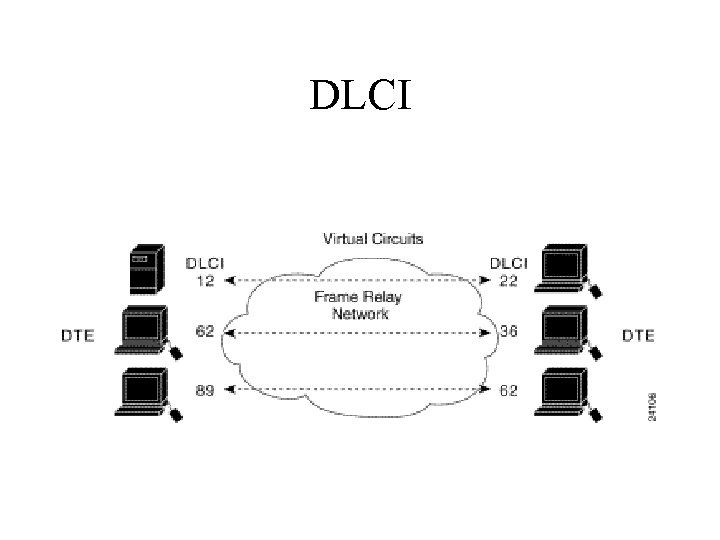 DLCI
DLCI
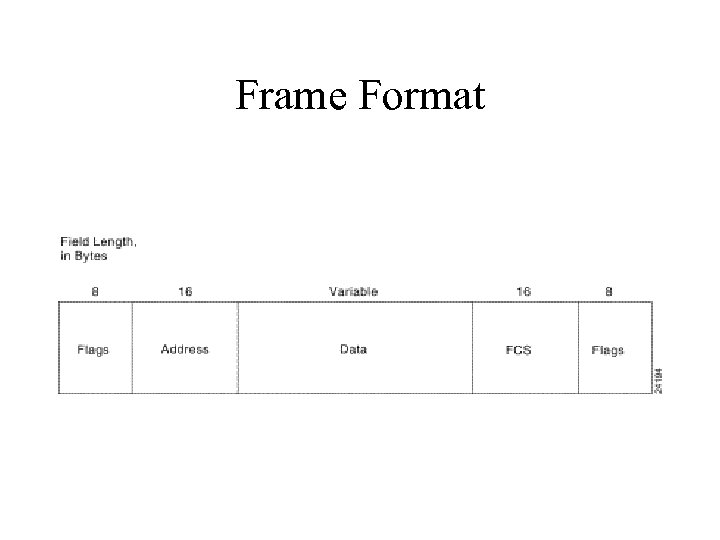 Frame Format
 Discard Eligibility • One bit in the address field • Identifies lower importance traffic that will be dropped first if congestion occurs • Set by DTE equipment
 Congestion Control: FECN • FECN: Forward Explicit Congestion Notification • DCE sets FECN bit to 1 • When received by DTE, it indicates that frame experienced congestion • Sent to higher layers or ignored
 Congestion Control: BECN • BECN: Backward Explicit Congestion Notification • Same as FECN but set on the return flow
 LMI • Local Management Interface • Frame Relay “extension” • Introduced in 1990 by the “gang of four” (Cisco, DEC, Nortel and Stratacom) • Additional capabilities for complex internetworking environments • Later Standardized by CCITT
 LMI (2) • Global addressing: DLCIs become global addresses • Virtual-circuit status messages • Multicasting
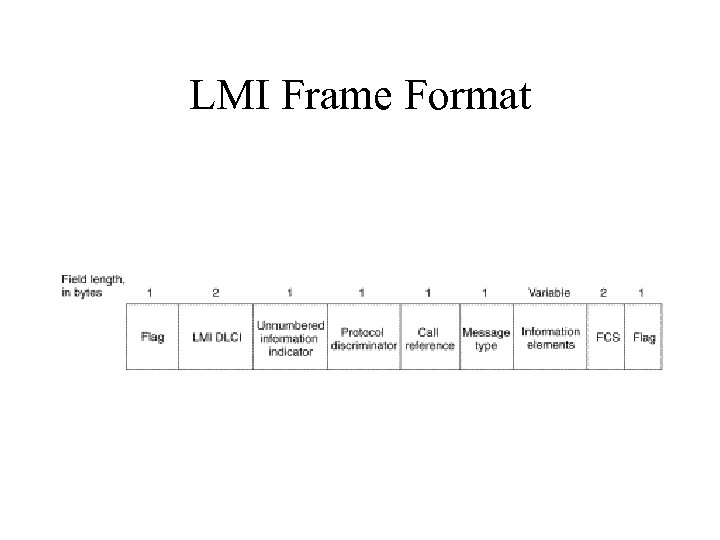 LMI Frame Format
 CIR • • What you buy with a FR connection Committed Information Rate CIR= Committed Burst/Committed Time Also Maximum Rate
 ATM Asynchronous Transfer Mode
 Characteristics • Originally designed to transmit voice, video and data over the same network • Cell switching • Each communication is assigned a timeslot • Timeslots are assigned on a demand-basis => asynchronous (as opposed to TDM)
 Cells • 53 bytes: 5 byte header + 48 byte payload • Tradeoff between voice world and data world: – Voice needs small payloads and low delay – Data needs big payload and less overhead
 ATM Interfaces • UNI: User to Network Interface • NNI: Network to Network Interface
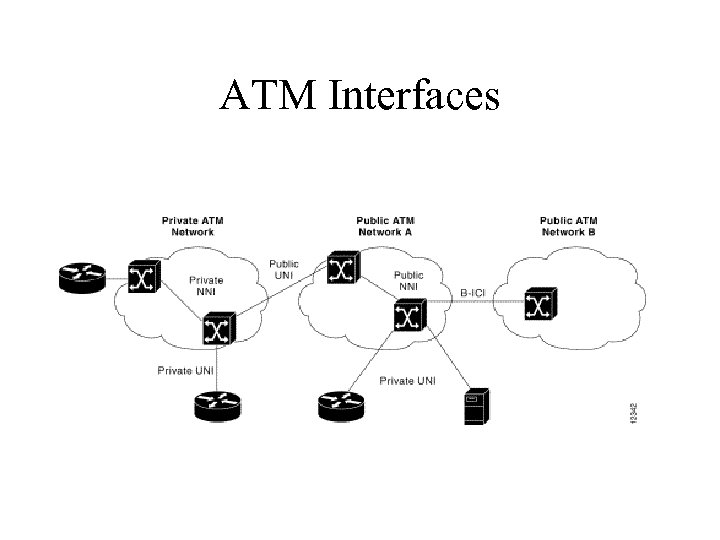 ATM Interfaces
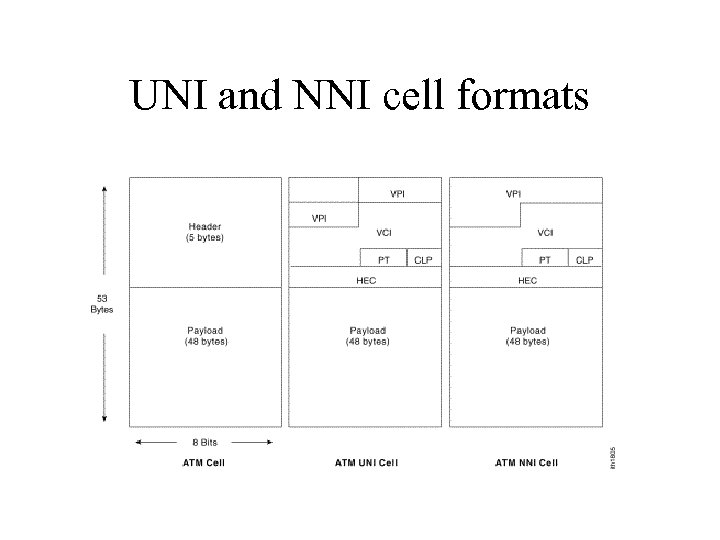 UNI and NNI cell formats
 UNI and NNI differences • NNI has bigger VPI range • UNI has Generic Flow Control field • GFC used to identify different end stations
 VPI and VCI • • Used to determine paths VPI: Virtual Path Identifier VCI: Virtual Channel Identifier VPI identifies a bundle of VCIs
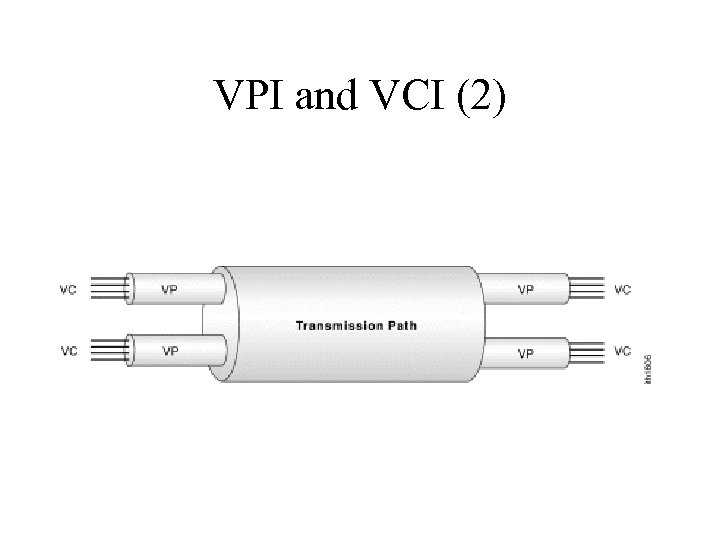 VPI and VCI (2)
 ATM Switching • Table look up • Incoming interface/VPI/VCI is mapped to an outgoing interface/VPI/VCI
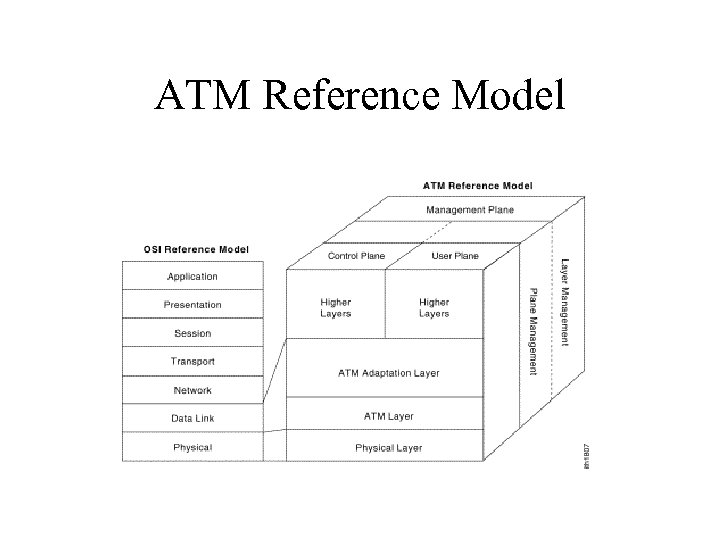 ATM Reference Model
 ATM Adaptation Layer (AAL) • Together with ATM layer, equivalent to Data Link layer in OSI model • AAL 1: Connection Oriented => Voice and Video • AAL 3, 4: Connection Oriented and Connectionless (similar to SMDS) • AAL 5: Connection Oriented and Connectionless for CLIP and LANE
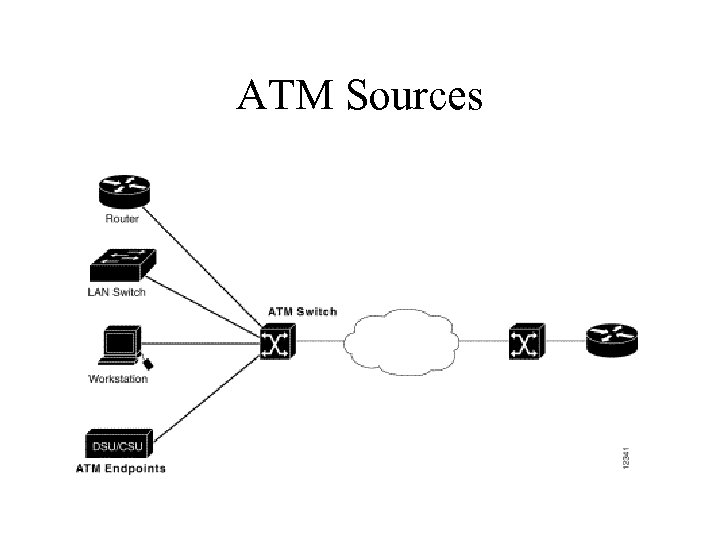 ATM Sources
 ATM Addresses • ITU-T Standard: E. 164 (Telephone #) • ATM Forum defined 20 -byte NSAP Addresses for use in private networks • E. 164 address used as prefix on NSAP • Mapped to IP addresses by ATM ARP (in CLIP)
 ATM Qo. S • Traffic Contract: peak bandwidth, average sustained bandwidth, burst size , … Similar to FR • Traffic Shaping (end device): Queuing, Buffering • Traffic Policing (switches): Enforces contract
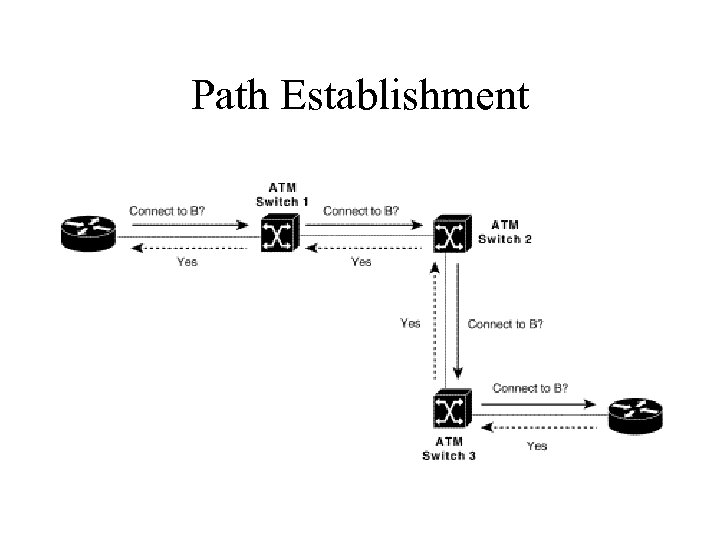 Path Establishment
 LAN Emulation (LANE) • Purpose: emulate a LAN over an ATM network • Ethernet or Token Ring • Resolves MAC addresses to ATM addresses
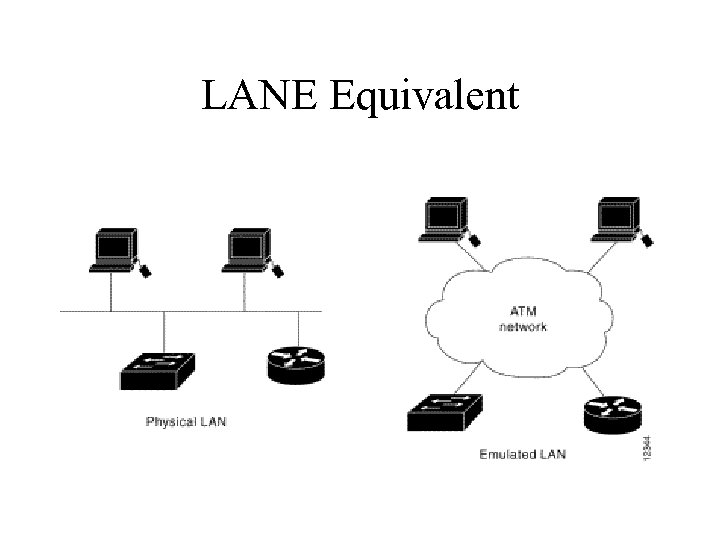 LANE Equivalent
 LANE Components • • LEC: LAN Emulation Client LES: LAN Emulation Server BUS: Broadcast and Unknown Server LECS: LAN Emulation Configuration Server
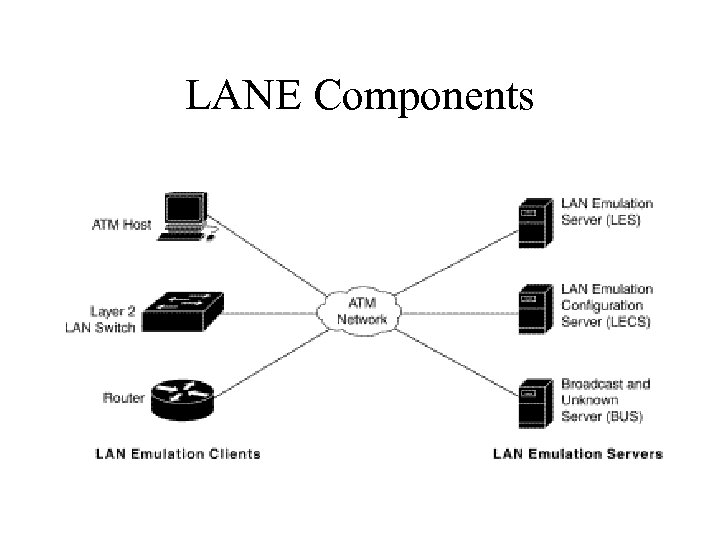 LANE Components
 Initialization • LEC finds LECS via pre-established ILMI procedure or through well-known circuit • LECS returns: ATM address of the LES, type of LAN being emulated, maximum packet size on the ELAN, and ELAN name • LEC registers to its LES (LES checks with LECS) • LES assigns LECID (LE Client ID)
 Communication • LE ARP Request sent to LES • If LES doesn’t know, it floods the request