


 Скачать презентацию Why is aquaculture developing so successfully in Asia
bc5ea671a36f6cef98eba5e09205710b.ppt
- Количество слайдов: 22
 "Why is aquaculture developing so successfully in Asia whereas it appears to be lagging in Africa? Are there new prospects? " Prof. James Muir, University of Stirling, Scotland: FISHERY FORUM FOR DEVELOPMENT COOPERATION ANNUAL MEETING 2005 Clarion Hotel Admiral, C. Sundtsgt. 9, Bergen 31 st March - 1 st April 2005
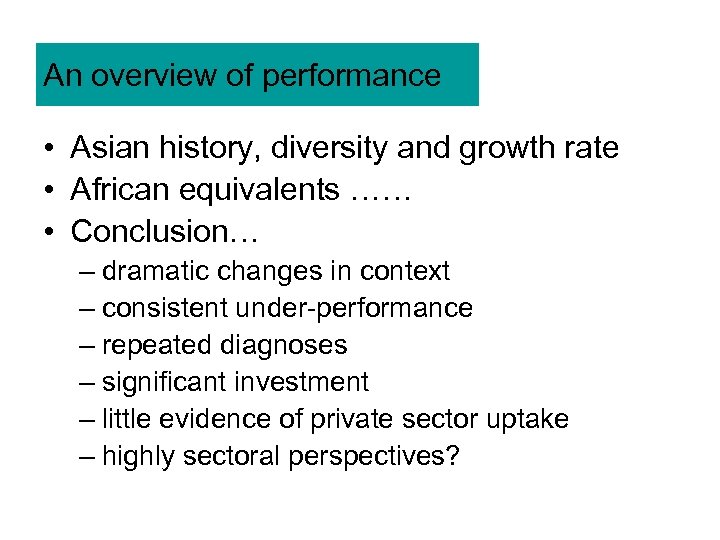 An overview of performance • Asian history, diversity and growth rate • African equivalents …… • Conclusion… – dramatic changes in context – consistent under-performance – repeated diagnoses – significant investment – little evidence of private sector uptake – highly sectoral perspectives?
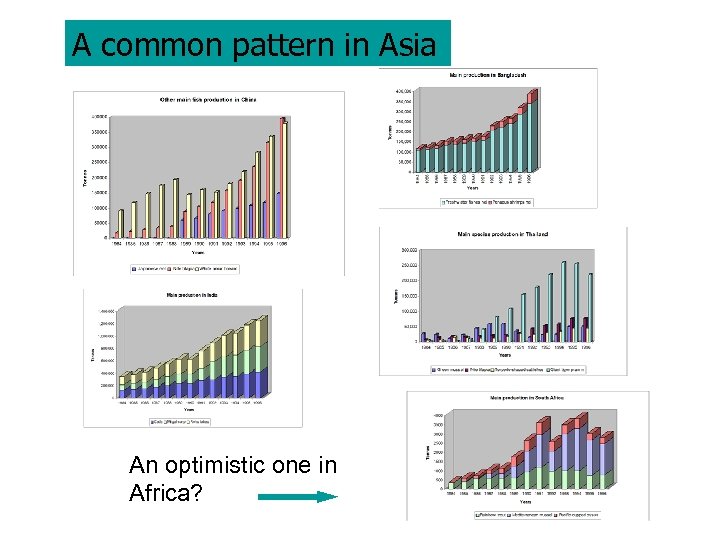 A common pattern in Asia An optimistic one in Africa?
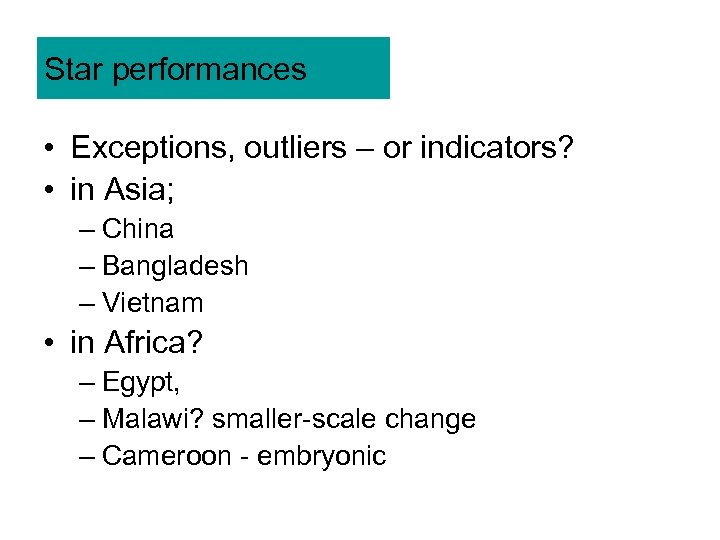 Star performances • Exceptions, outliers – or indicators? • in Asia; – China – Bangladesh – Vietnam • in Africa? – Egypt, – Malawi? smaller-scale change – Cameroon - embryonic
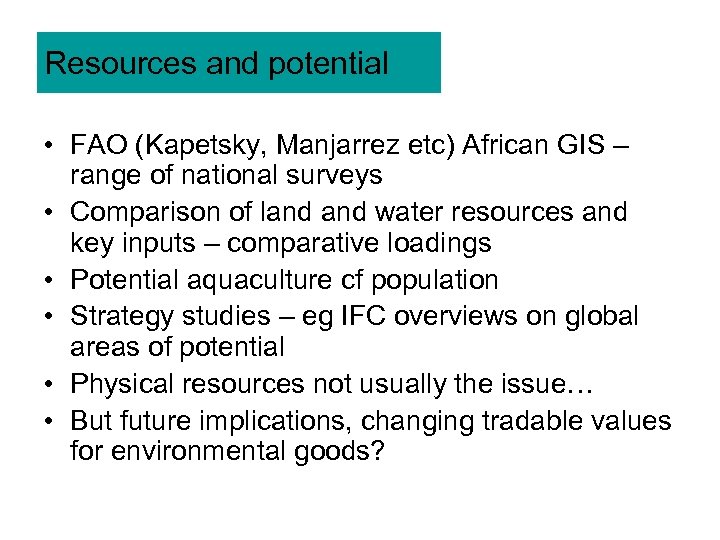 Resources and potential • FAO (Kapetsky, Manjarrez etc) African GIS – range of national surveys • Comparison of land water resources and key inputs – comparative loadings • Potential aquaculture cf population • Strategy studies – eg IFC overviews on global areas of potential • Physical resources not usually the issue… • But future implications, changing tradable values for environmental goods?
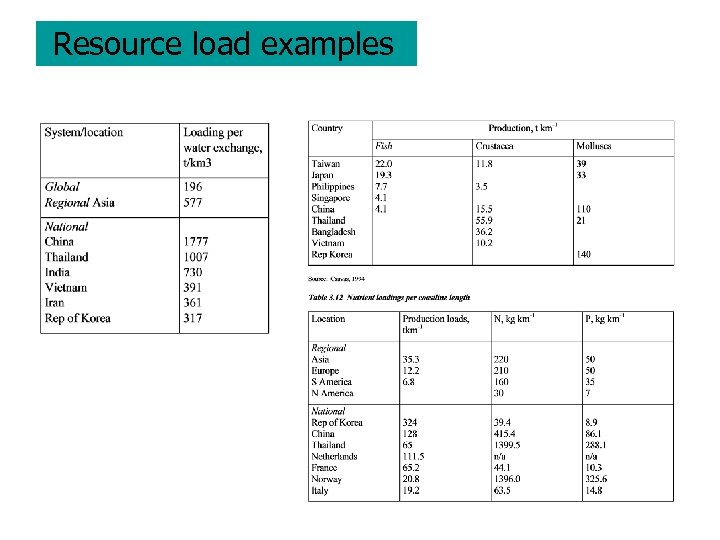 Resource load examples
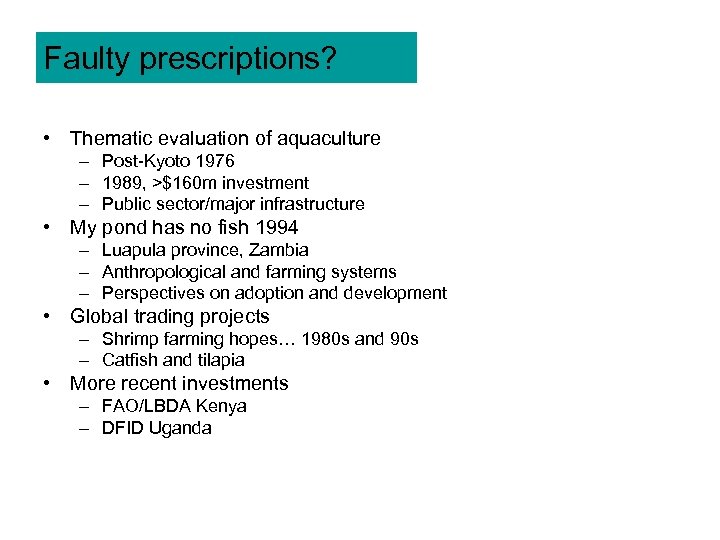 Faulty prescriptions? • Thematic evaluation of aquaculture – Post-Kyoto 1976 – 1989, >$160 m investment – Public sector/major infrastructure • My pond has no fish 1994 – Luapula province, Zambia – Anthropological and farming systems – Perspectives on adoption and development • Global trading projects – Shrimp farming hopes… 1980 s and 90 s – Catfish and tilapia • More recent investments – FAO/LBDA Kenya – DFID Uganda
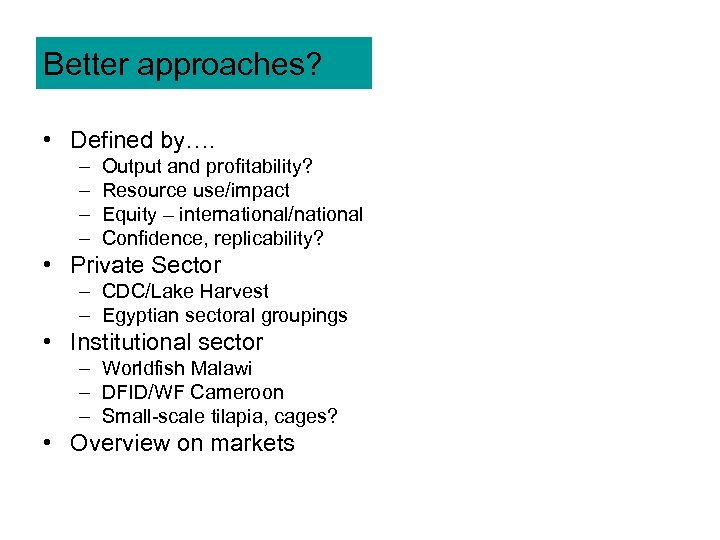 Better approaches? • Defined by…. – – Output and profitability? Resource use/impact Equity – international/national Confidence, replicability? • Private Sector – CDC/Lake Harvest – Egyptian sectoral groupings • Institutional sector – Worldfish Malawi – DFID/WF Cameroon – Small-scale tilapia, cages? • Overview on markets
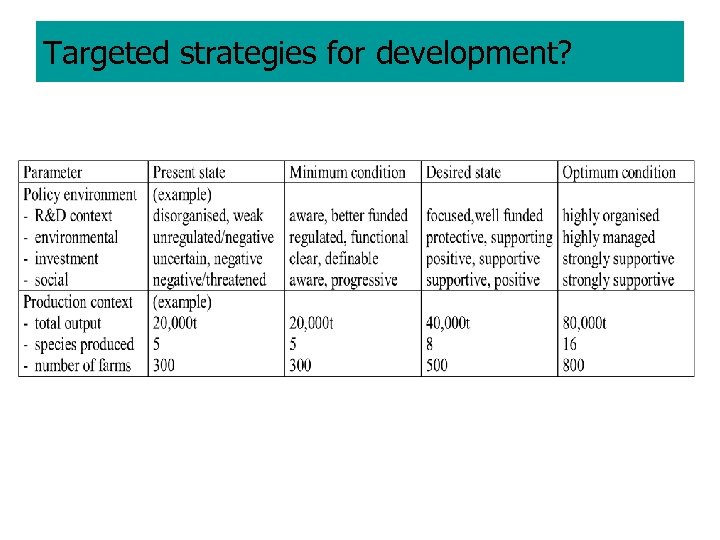 Targeted strategies for development?
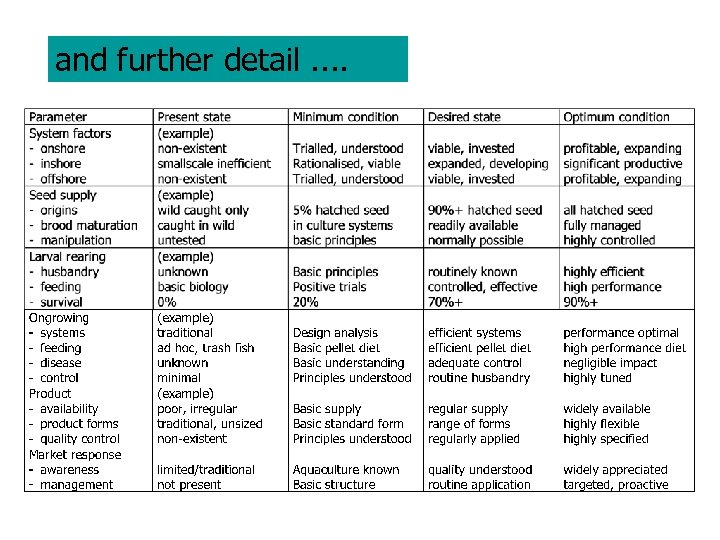 and further detail. .
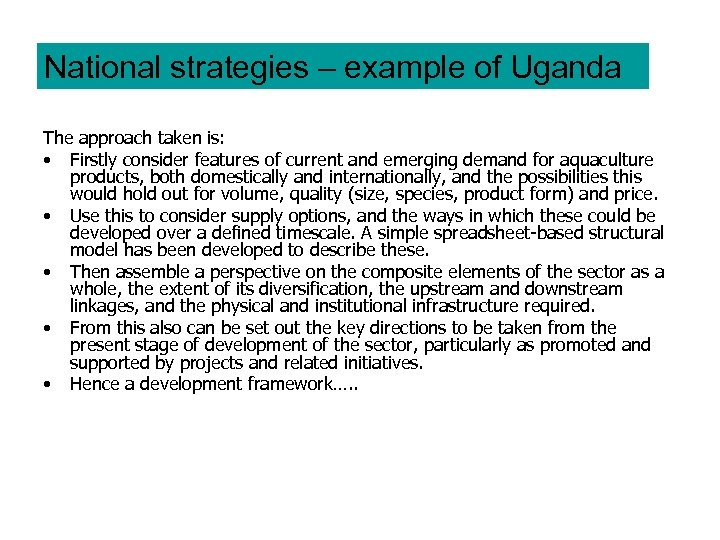 National strategies – example of Uganda The approach taken is: • Firstly consider features of current and emerging demand for aquaculture products, both domestically and internationally, and the possibilities this would hold out for volume, quality (size, species, product form) and price. • Use this to consider supply options, and the ways in which these could be developed over a defined timescale. A simple spreadsheet-based structural model has been developed to describe these. • Then assemble a perspective on the composite elements of the sector as a whole, the extent of its diversification, the upstream and downstream linkages, and the physical and institutional infrastructure required. • From this also can be set out the key directions to be taken from the present stage of development of the sector, particularly as promoted and supported by projects and related initiatives. • Hence a development framework…. .
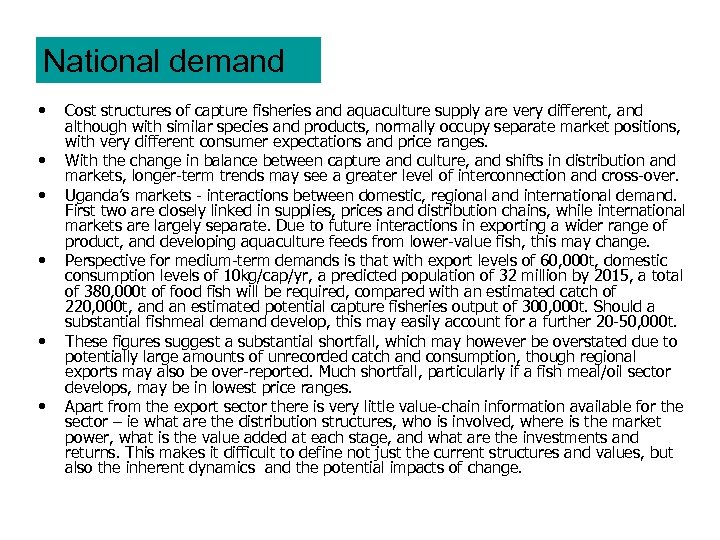 National demand • • • Cost structures of capture fisheries and aquaculture supply are very different, and although with similar species and products, normally occupy separate market positions, with very different consumer expectations and price ranges. With the change in balance between capture and culture, and shifts in distribution and markets, longer-term trends may see a greater level of interconnection and cross-over. Uganda’s markets - interactions between domestic, regional and international demand. First two are closely linked in supplies, prices and distribution chains, while international markets are largely separate. Due to future interactions in exporting a wider range of product, and developing aquaculture feeds from lower-value fish, this may change. Perspective for medium-term demands is that with export levels of 60, 000 t, domestic consumption levels of 10 kg/cap/yr, a predicted population of 32 million by 2015, a total of 380, 000 t of food fish will be required, compared with an estimated catch of 220, 000 t, and an estimated potential capture fisheries output of 300, 000 t. Should a substantial fishmeal demand develop, this may easily account for a further 20 -50, 000 t. These figures suggest a substantial shortfall, which may however be overstated due to potentially large amounts of unrecorded catch and consumption, though regional exports may also be over-reported. Much shortfall, particularly if a fish meal/oil sector develops, may be in lowest price ranges. Apart from the export sector there is very little value-chain information available for the sector – ie what are the distribution structures, who is involved, where is the market power, what is the value added at each stage, and what are the investments and returns. This makes it difficult to define not just the current structures and values, but also the inherent dynamics and the potential impacts of change.
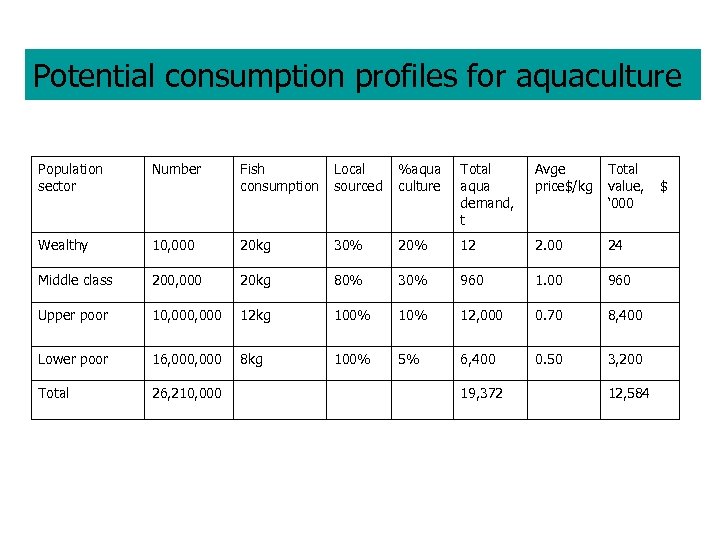 Potential consumption profiles for aquaculture Population sector Number Fish consumption Local sourced %aqua culture Total aqua demand, t Avge price$/kg Total value, ‘ 000 Wealthy 10, 000 20 kg 30% 20% 12 2. 00 24 Middle class 200, 000 20 kg 80% 30% 960 1. 00 960 Upper poor 10, 000 12 kg 100% 12, 000 0. 70 8, 400 Lower poor 16, 000 8 kg 100% 5% 6, 400 0. 50 3, 200 Total 26, 210, 000 19, 372 12, 584 $
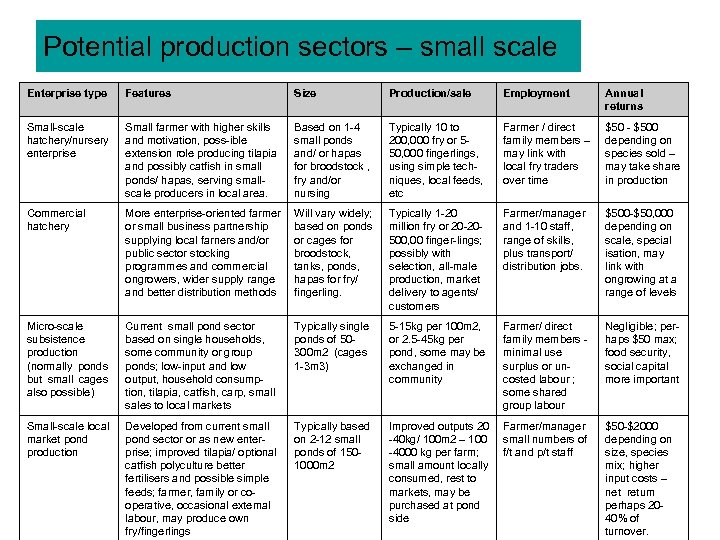 Potential production sectors – small scale Enterprise type Features Size Production/sale Employment Annual returns Small-scale hatchery/nursery enterprise Small farmer with higher skills and motivation, poss-ible extension role producing tilapia and possibly catfish in small ponds/ hapas, serving smallscale producers in local area. Based on 1 -4 small ponds and/ or hapas for broodstock , fry and/or nursing Typically 10 to 200, 000 fry or 550, 000 fingerlings, using simple techniques, local feeds, etc Farmer / direct family members – may link with local fry traders over time $50 - $500 depending on species sold – may take share in production Commercial hatchery More enterprise-oriented farmer or small business partnership supplying local farners and/or public sector stocking programmes and commercial ongrowers, wider supply range and better distribution methods Will vary widely; based on ponds or cages for broodstock, tanks, ponds, hapas for fry/ fingerling. Typically 1 -20 million fry or 20 -20500, 00 finger-lings; possibly with selection, all-male production, market delivery to agents/ customers Farmer/manager and 1 -10 staff, range of skills, plus transport/ distribution jobs. $500 -$50, 000 depending on scale, special isation, may link with ongrowing at a range of levels Micro-scale subsistence production (normally ponds but small cages also possible) Current small pond sector based on single households, some community or group ponds; low-input and low output, household consumption, tilapia, catfish, carp, small sales to local markets Typically single ponds of 50300 m 2 (cages 1 -3 m 3) 5 -15 kg per 100 m 2, or 2. 5 -45 kg per pond, some may be exchanged in community Farmer/ direct family members minimal use surplus or uncosted labour ; some shared group labour Negligible; perhaps $50 max; food security, social capital more important Small-scale local market pond production Developed from current small pond sector or as new enterprise; improved tilapia/ optional catfish polyculture better fertilisers and possible simple feeds; farmer, family or cooperative, occasional external labour, may produce own fry/fingerlings Typically based on 2 -12 small ponds of 1501000 m 2 Improved outputs 20 -40 kg/ 100 m 2 – 100 -4000 kg per farm; small amount locally consumed, rest to markets, may be purchased at pond side Farmer/manager small numbers of f/t and p/t staff $50 -$2000 depending on size, species mix; higher input costs – net return perhaps 2040% of turnover.
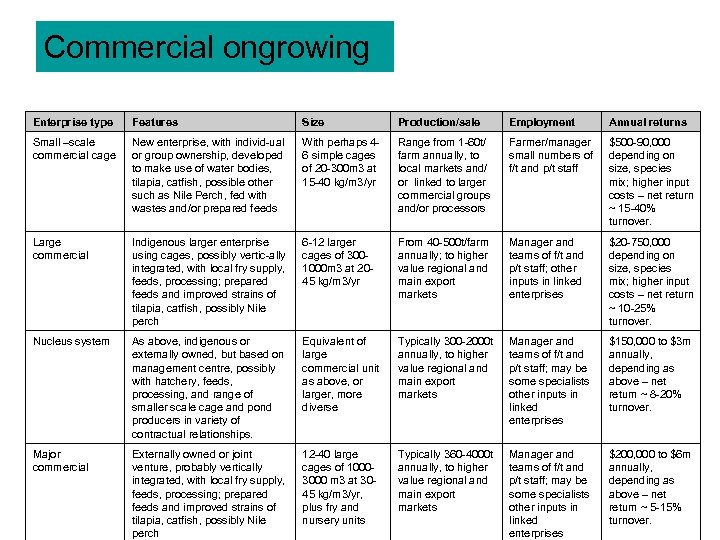 Commercial ongrowing Enterprise type Features Size Production/sale Employment Annual returns Small –scale commercial cage New enterprise, with individ-ual or group ownership, developed to make use of water bodies, tilapia, catfish, possible other such as Nile Perch, fed with wastes and/or prepared feeds With perhaps 46 simple cages of 20 -300 m 3 at 15 -40 kg/m 3/yr Range from 1 -60 t/ farm annually, to local markets and/ or linked to larger commercial groups and/or processors Farmer/manager small numbers of f/t and p/t staff $500 -90, 000 depending on size, species mix; higher input costs – net return ~ 15 -40% turnover. Large commercial Indigenous larger enterprise using cages, possibly vertic-ally integrated, with local fry supply, feeds, processing; prepared feeds and improved strains of tilapia, catfish, possibly Nile perch 6 -12 larger cages of 3001000 m 3 at 2045 kg/m 3/yr From 40 -500 t/farm annually; to higher value regional and main export markets Manager and teams of f/t and p/t staff; other inputs in linked enterprises $20 -750, 000 depending on size, species mix; higher input costs – net return ~ 10 -25% turnover. Nucleus system As above, indigenous or externally owned, but based on management centre, possibly with hatchery, feeds, processing, and range of smaller scale cage and pond producers in variety of contractual relationships. Equivalent of large commercial unit as above, or larger, more diverse Typically 300 -2000 t annually, to higher value regional and main export markets Manager and teams of f/t and p/t staff; may be some specialists other inputs in linked enterprises $150, 000 to $3 m annually, depending as above – net return ~ 8 -20% turnover. Major commercial Externally owned or joint venture, probably vertically integrated, with local fry supply, feeds, processing; prepared feeds and improved strains of tilapia, catfish, possibly Nile perch 12 -40 large cages of 10003000 m 3 at 3045 kg/m 3/yr, plus fry and nursery units Typically 360 -4000 t annually, to higher value regional and main export markets Manager and teams of f/t and p/t staff; may be some specialists other inputs in linked enterprises $200, 000 to $6 m annually, depending as above – net return ~ 5 -15% turnover.
 Sample subsector targets Small-scale subsistence Gross Value ponds 2004 levels Avge Yield kg size m 2 /100 m 2 t/h a 240 0. 5 '000 $ 15 5 3 3 5 10210 232 17 1. 7 39 237 403 0. 64 257. 9 10 13030 269 20 2 54 351 702 0. 81 568. 6 20 21230 361 27 2. 7 97 766 2068 1. 33 2750. 4 18000 300 25 2. 5 75 540 1350 1. 6 2160 (modified 20 yr target) 160 $/kg 200 Target period, yrs 30 Output tonnes 8000 Expected growth of factor 1. 5 kg/unit Are a ha 120 5
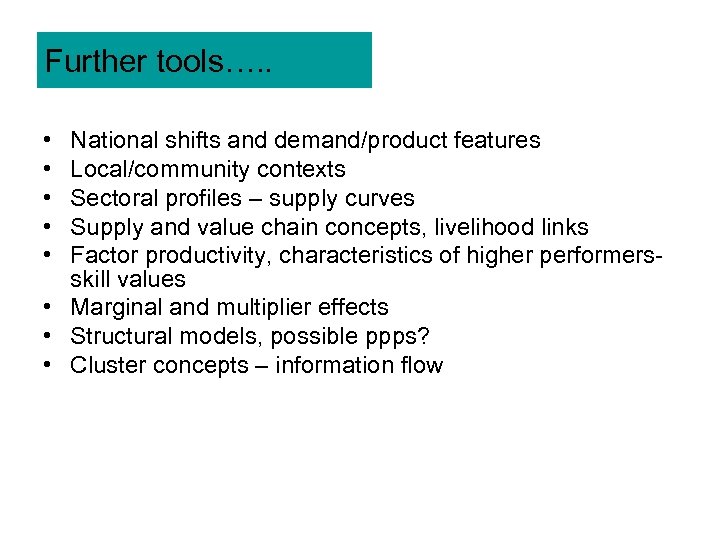 Further tools…. . • • • National shifts and demand/product features Local/community contexts Sectoral profiles – supply curves Supply and value chain concepts, livelihood links Factor productivity, characteristics of higher performersskill values • Marginal and multiplier effects • Structural models, possible ppps? • Cluster concepts – information flow
 (Some) upcoming initiatives…. • WFC/DFID Kampala – market overviews • Egyptian national development workshops through 2005 • NEPAD/Fish for All – Egypt workshop May 2005, Abuja August 2005 • Commercialisation issues – follow from FAO meeting Uganda – also traceability/other trade issues • USAID programme Uganda- based on private enterprise • Programmes in Malawi, Mozambique, • Further analyses, updates – perspectives
 Ideas feeding into NEPAD… • • • Structural Thematic Investment and goals MDGs Cross-sectoral PRSPs
 Current trends • • Artisanal and commercial sectors Domestic and export production Investment stimulus Market demand Growth and competition, Bypass of public sector dependence Identification of robust and equitable alternatives
 Policy development and implementation • • Support environment Investment Resource access Capacity building Trading, quality Partnerships Indicators of achievement
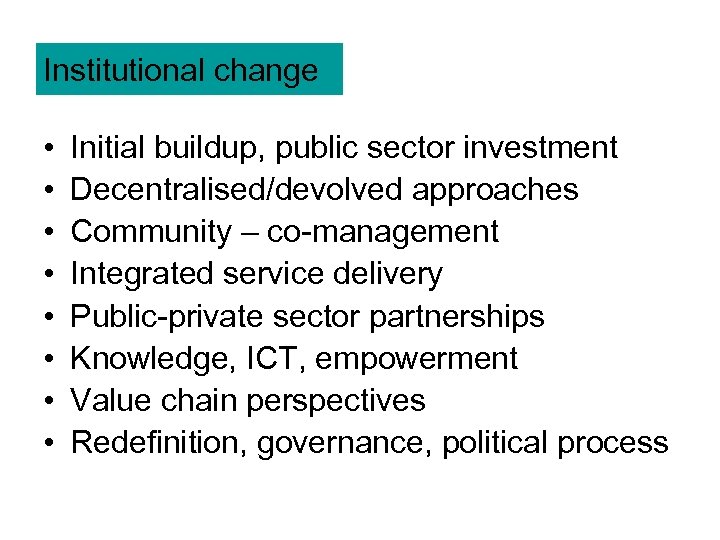 Institutional change • • Initial buildup, public sector investment Decentralised/devolved approaches Community – co-management Integrated service delivery Public-private sector partnerships Knowledge, ICT, empowerment Value chain perspectives Redefinition, governance, political process