


 Скачать презентацию Why do we need Food n Nutrients
adfeeec430e7d6f5f72e37bffba59176.ppt
- Количество слайдов: 45
 Why do we need Food? n Nutrients; ¨ Provide energy ¨ Provide building blocks ¨ Maintain body cells ¨ essential vs. non-essential n n n deficiency causes health problem normal function regained if added back biologic function identified
 Too much Food n Too many calories + inactivity = obesity epidemic n Obesity = health problems
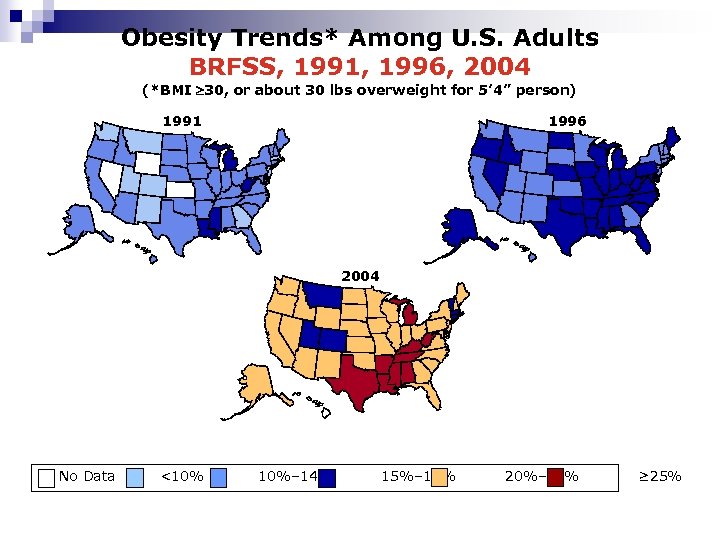 Obesity Trends* Among U. S. Adults BRFSS, 1991, 1996, 2004 (*BMI 30, or about 30 lbs overweight for 5’ 4” person) 1991 1996 2004 No Data <10% 10%– 14% 15%– 19% 20%– 24% ≥ 25%
 8 Leading Causes of Death (US) 1. Heart Disease (29%)* 2. Cancer (22%)* 3. Stroke (7%)* 4. Lung diseases (5%) 5. Accidental death (4%) 6. Diabetes (3%)* 7. Flu and pneumonia (3%) 8. Alzheimers (2%)
 History of Nutrition 1700 -1800’s knew certain foods would treat or prevent certain conditions n Nutritional deficiencies and diseases n (early 1900 -1945) Identification of vitamins and 45 essential nutrients n
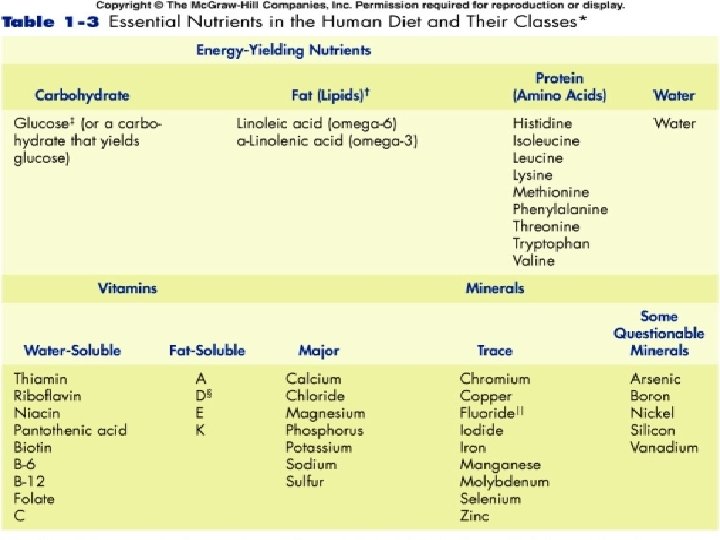
 The Six Classes of Nutrients n n n Carbohydrates Fats Proteins ¨ Also n n called macronutrients Vitamins Minerals ¨ micronutrients n Water
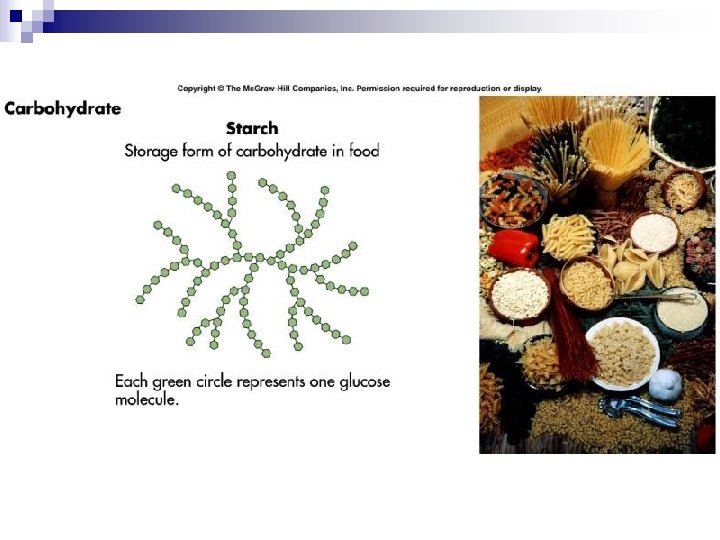
 Carbohydrates Composed of C, H, O n Provide a major source of fuel for the body n Basic unit is glucose n Simple and Complex CHO n Energy yielding (4 kcal /gm) n
 .
.
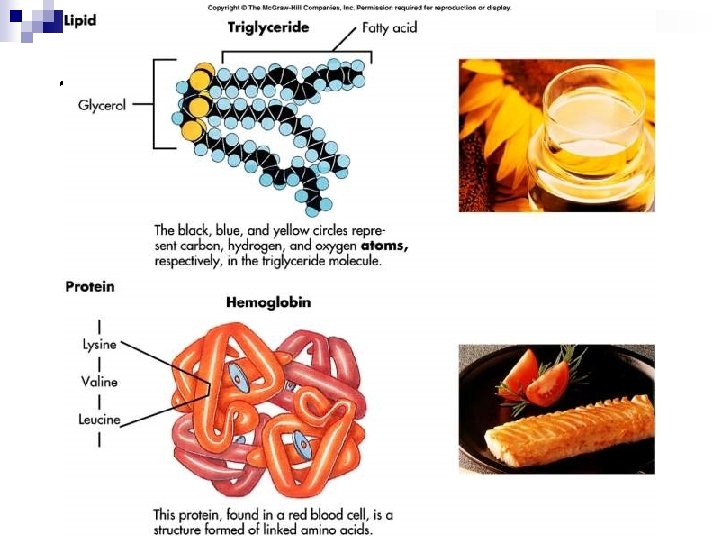
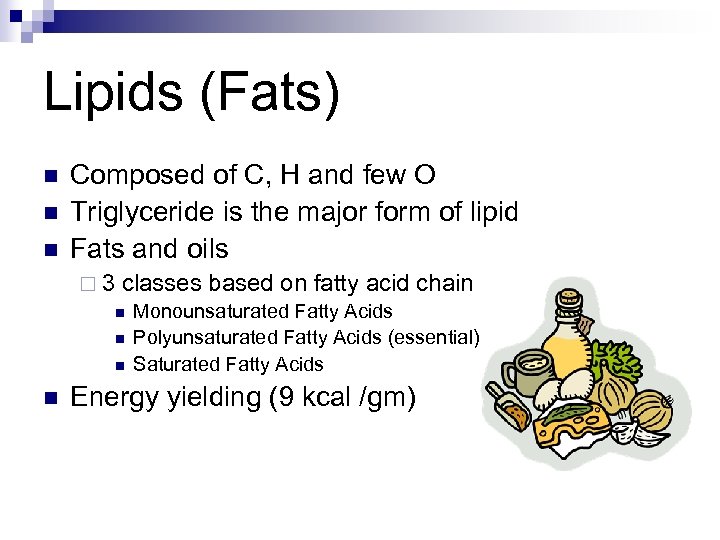 Lipids (Fats) n n n Composed of C, H and few O Triglyceride is the major form of lipid Fats and oils ¨ 3 classes based on fatty acid chain n n Monounsaturated Fatty Acids Polyunsaturated Fatty Acids (essential) Saturated Fatty Acids Energy yielding (9 kcal /gm)
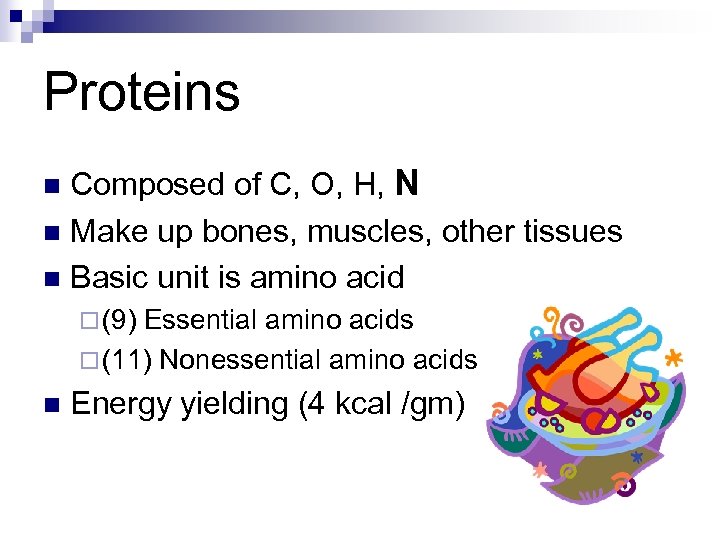 Proteins Composed of C, O, H, N n Make up bones, muscles, other tissues n Basic unit is amino acid n ¨ (9) Essential amino acids ¨ (11) Nonessential amino acids n Energy yielding (4 kcal /gm)
 1. 1 b
 Vitamins Composed of various elements n Vital to life, participate in metabolic pathways n Needed in tiny amounts n 2 categories: n ¨ Fat soluble ¨ Water soluble n Yields no energy
 Minerals n n Inorganic substances Needed in tiny amounts Some contribute to body structure (calcium) 2 categories: ¨ Trace minerals (need less than 100 mg) ¨ Major minerals (need more than 100 mg) n Yields no energy
 Water Composed of H, O n Vital to life n Is a solvent, lubricant, medium for transport, chemical processes, and temperature regulator n Makes up majority of our body (60%) n Yields no energy n
 .
.
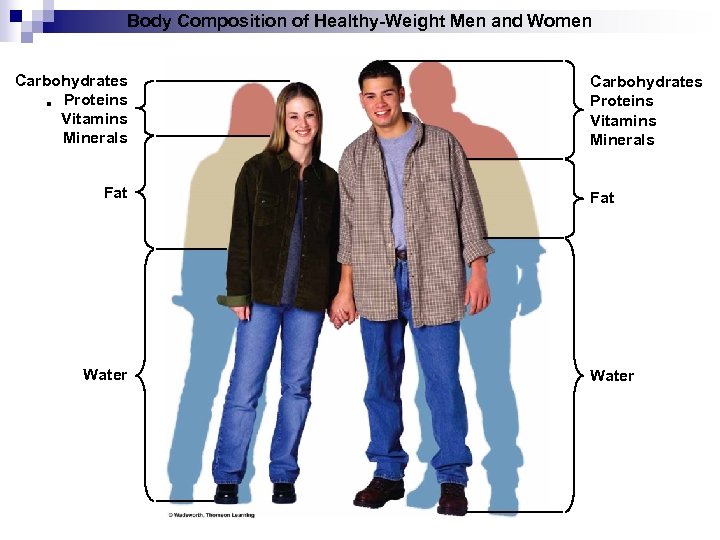 Body Composition of Healthy-Weight Men and Women . Carbohydrates Proteins Vitamins Minerals Fat Water
 Transformation of Energy (Calories) For muscular movements n To build new compounds n For nerve transmissions n For ion balance n
 What is a Calorie? n A measurement of energy (in heat form) n “the amount of heat it takes to raise the temperature of 1 gram of water by 1 degree Celsius”
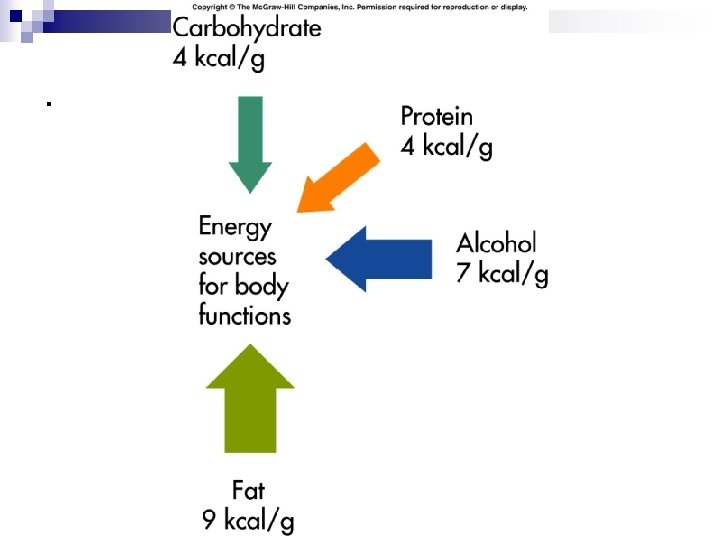 .
.
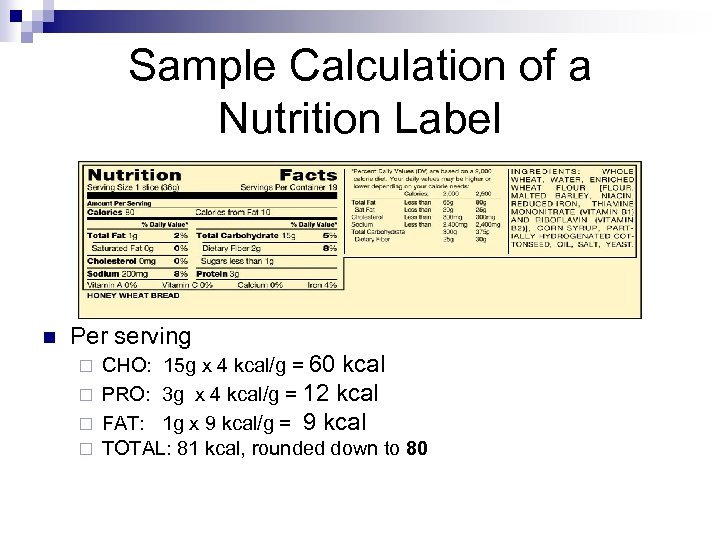 Sample Calculation of a Nutrition Label n Per serving CHO: 15 g x 4 kcal/g = 60 kcal ¨ PRO: 3 g x 4 kcal/g = 12 kcal ¨ FAT: 1 g x 9 kcal/g = 9 kcal ¨ TOTAL: 81 kcal, rounded down to 80 ¨
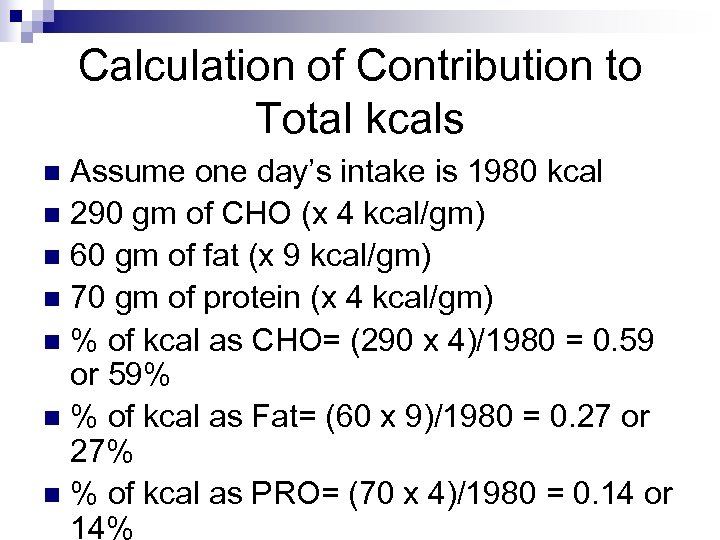 Calculation of Contribution to Total kcals Assume one day’s intake is 1980 kcal n 290 gm of CHO (x 4 kcal/gm) n 60 gm of fat (x 9 kcal/gm) n 70 gm of protein (x 4 kcal/gm) n % of kcal as CHO= (290 x 4)/1980 = 0. 59 or 59% n % of kcal as Fat= (60 x 9)/1980 = 0. 27 or 27% n % of kcal as PRO= (70 x 4)/1980 = 0. 14 or 14% n
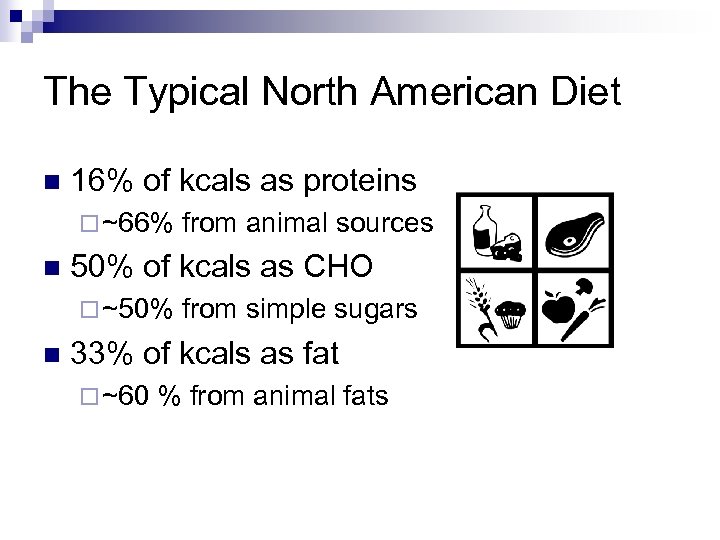 The Typical North American Diet n 16% of kcals as proteins ¨ ~66% n 50% of kcals as CHO ¨ ~50% n from animal sources from simple sugars 33% of kcals as fat ¨ ~60 % from animal fats
 Data Collection Surveys n Continuing Survey or Food Intake by Individuals (CSFII) n National Health and Nutrition Examination Survey (NHANES) n
 The Government and Nutrition DHHS: Department of Health and Human Services n USDA: pyramid and dietary guidelines n FDA: health claims n FTC: labeling and false advertising n Food and Nutrition Board: RDA’s n
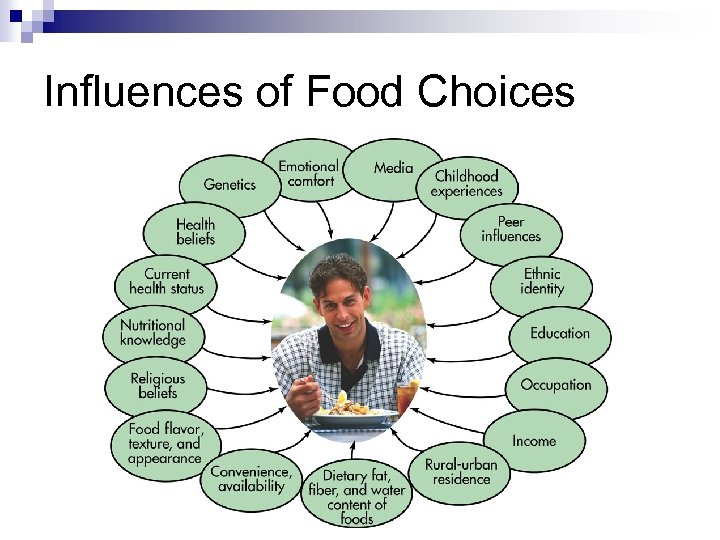 Influences of Food Choices
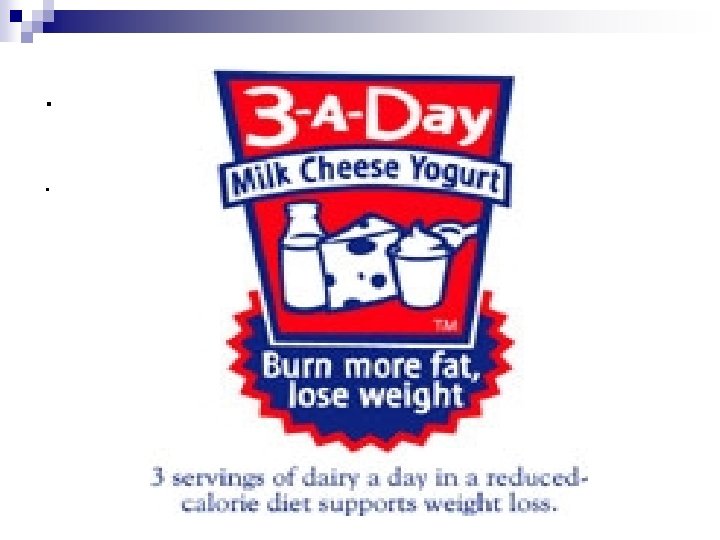
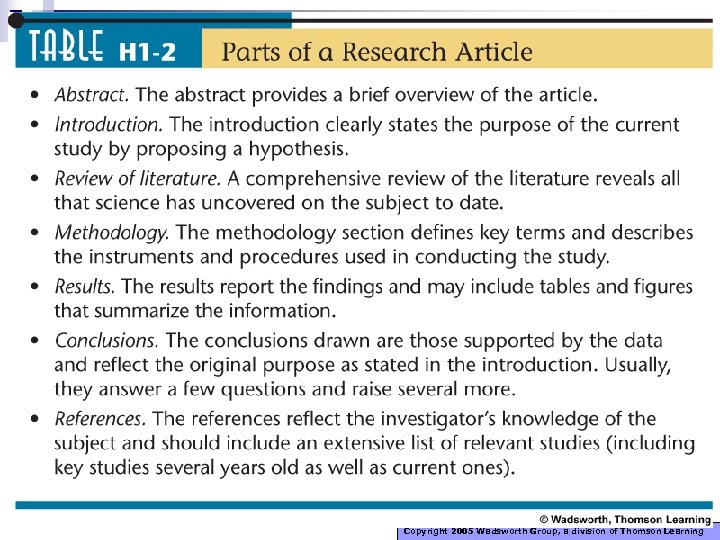
 Nutrition Information and Misinformation Not everything on the Internet is true!! ¨Determination of the reliability of a website n Not everything on the news or in the newspaper is accurately reported!! n Copyright 2005 Wadsworth Group, a division of Thomson Learning
 . .
. .
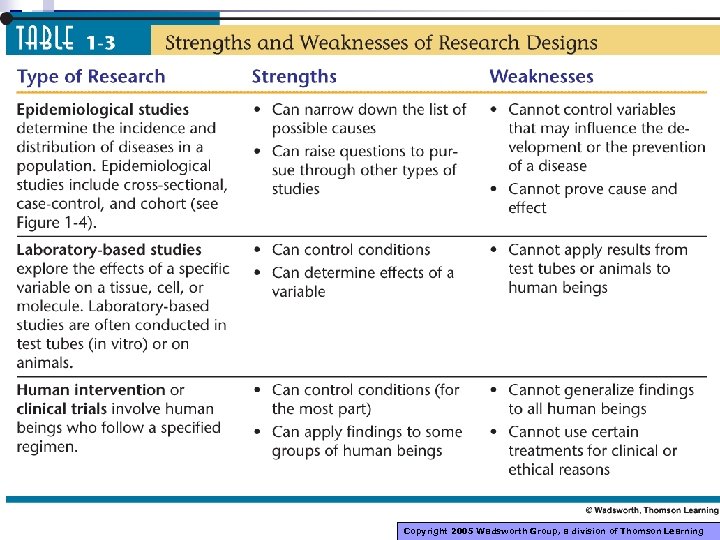
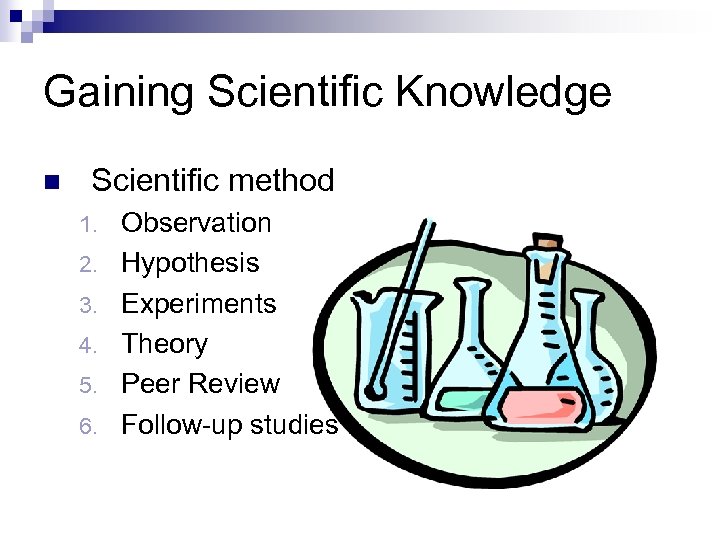 Gaining Scientific Knowledge n Scientific method 1. 2. 3. 4. 5. 6. Observation Hypothesis Experiments Theory Peer Review Follow-up studies
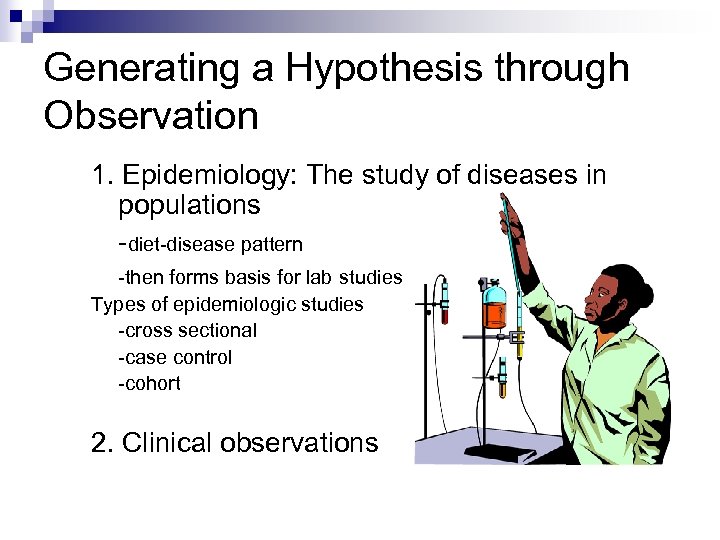 Generating a Hypothesis through Observation 1. Epidemiology: The study of diseases in populations -diet-disease pattern -then forms basis for lab studies Types of epidemiologic studies -cross sectional -case control -cohort 2. Clinical observations
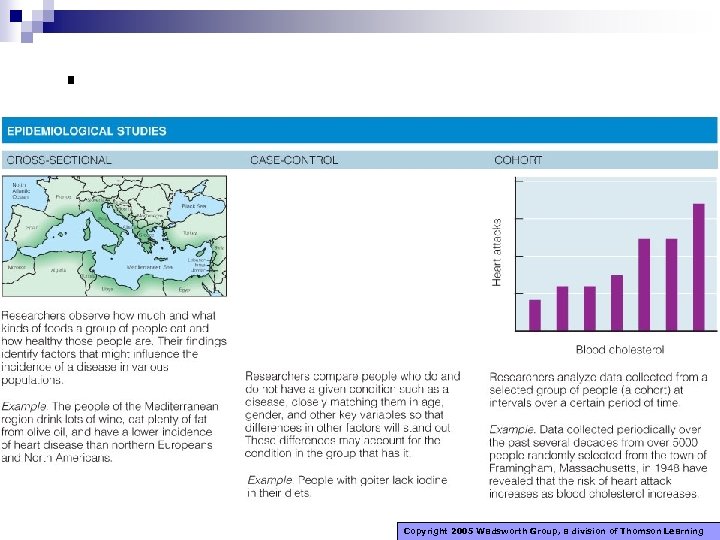 . Copyright 2005 Wadsworth Group, a division of Thomson Learning
 Experiments n Animal Studies ¨ need animal model: the disease in the animal must closely mimic the disease in humans n n Lab studies (test tubes) Human studies (clinical trials) ¨ Double Blind Study n Typically consists of; experimental group and control group n subjects randomly assigned n neither researchers or subjects know which group they’re in ¨ reduces chances of placebo effect
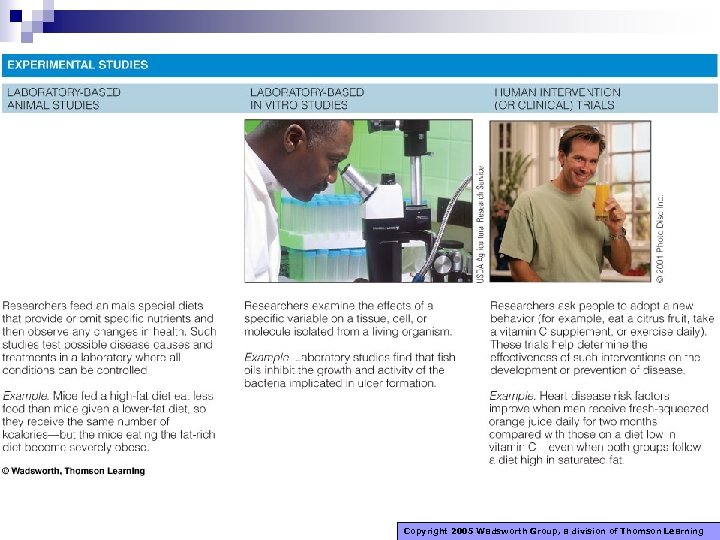 . Copyright 2005 Wadsworth Group, a division of Thomson Learning
 Copyright 2005 Wadsworth Group, a division of Thomson Learning
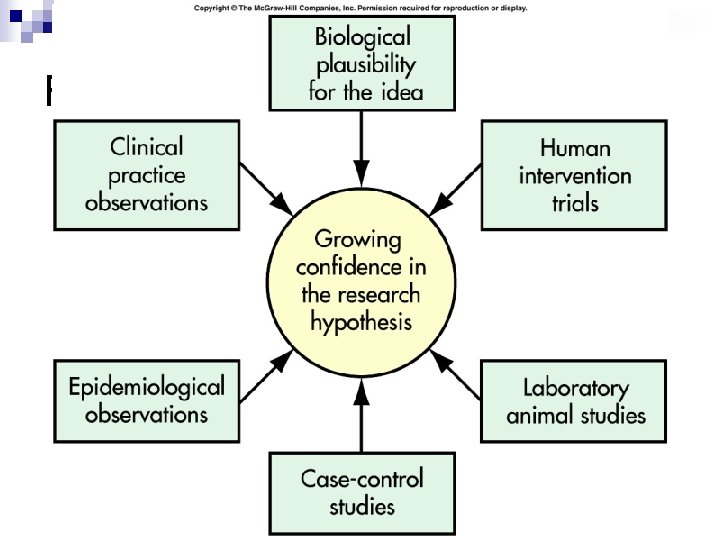 Fig. 1. 6
 Copyright 2005 Wadsworth Group, a division of Thomson Learning
 Copyright 2005 Wadsworth Group, a division of Thomson Learning
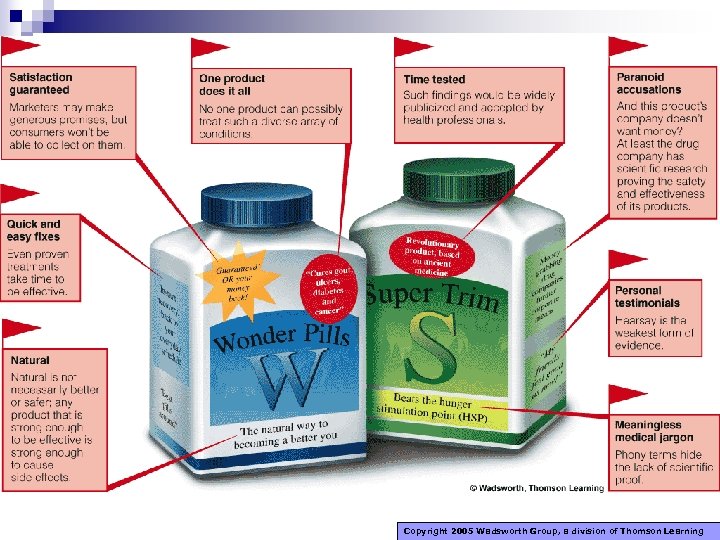
 The Dietary Supplement Health and Education Act (DSHEA) ‘ 94 n n Classifies vitamins, minerals, amino acids, herbal remedies as “foods” Prevents the FDA from regulating them as heavily as additives or drugs FDA must prove this “food” is unsafe before it can be pulled from the shelf Dietary supplements can be sold without FDA approval
 Disclaimer on Claims “This statement has not been evaluated by the Food and Drug Administration. This product is not intended to diagnose, treat, cure, or prevent any disease” n Many people still buy the products n
 Where to Get Reliable Nutrition Information n Accredited University n Hospital dietetics department n Well known health entities (e. g. , American Heart Association, American Dietetic Association, etc. ) n Registered Dietitian (RD)
 Genetics and Nutrition: Is There A Relationship? Genes contain information n Genes direct growth, development, maintenance of cell n Genes control expression of individual traits (hair color etc…) n Genes control susceptibility to diseases n
 Nutrition, Genetics and Chronic Diseases n Heart disease n Hypertension n Obesity n Diabetes n Cancer n Osteoporosis
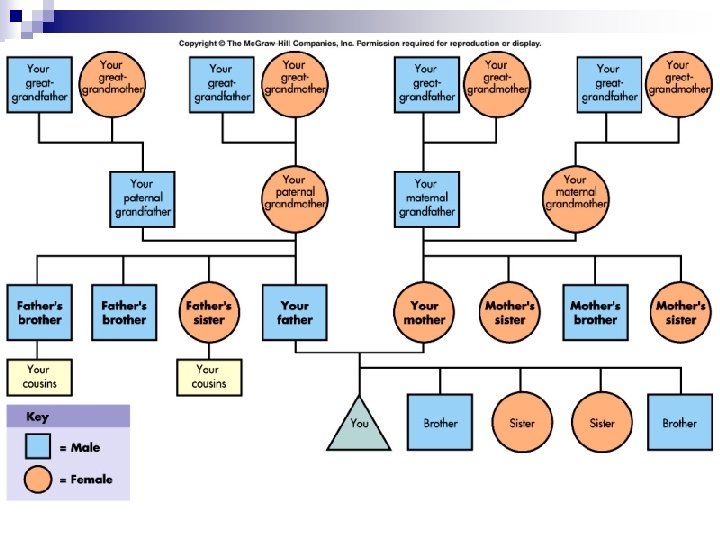
 Assess Your Disease Potential n Family medical history n Your risk increases if you have more relatives with diseases n Your risk increases if relationship to relative(s) is closer
 Solutions(? ) Gene therapy n Nutrition therapy n Genetic testing n
 pg. 30
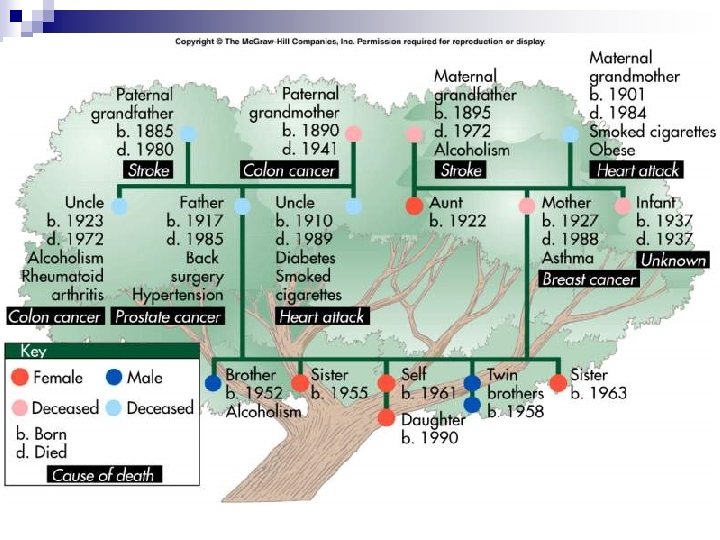 Fig. 1. 7