


 Скачать презентацию WHU Campus for Finance Rationality of Stock Markets
5e6c10a572c58b31991b383fb15fff7b.ppt
- Количество слайдов: 75
 WHU Campus for Finance “Rationality of Stock Markets and Empirical Finance” January 2003 Rational International Investment Campbell R. Harvey, Ph. D. , Professor, Duke University http: //www. duke. edu/~charvey 1
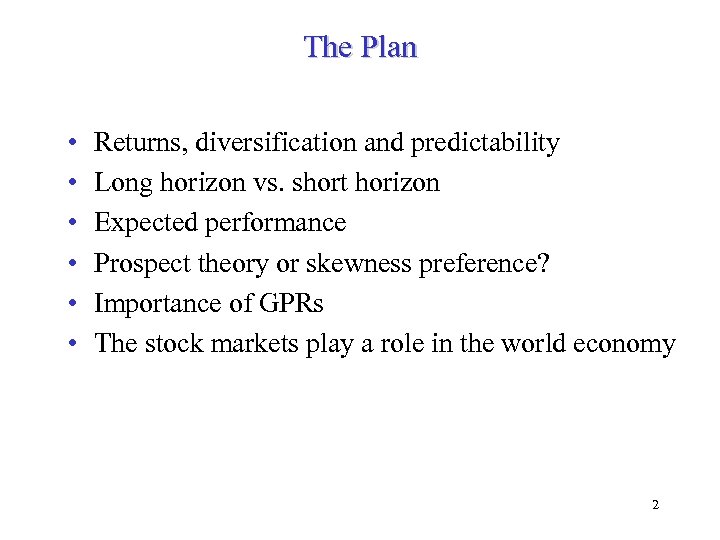 The Plan • • • Returns, diversification and predictability Long horizon vs. short horizon Expected performance Prospect theory or skewness preference? Importance of GPRs The stock markets play a role in the world economy 2
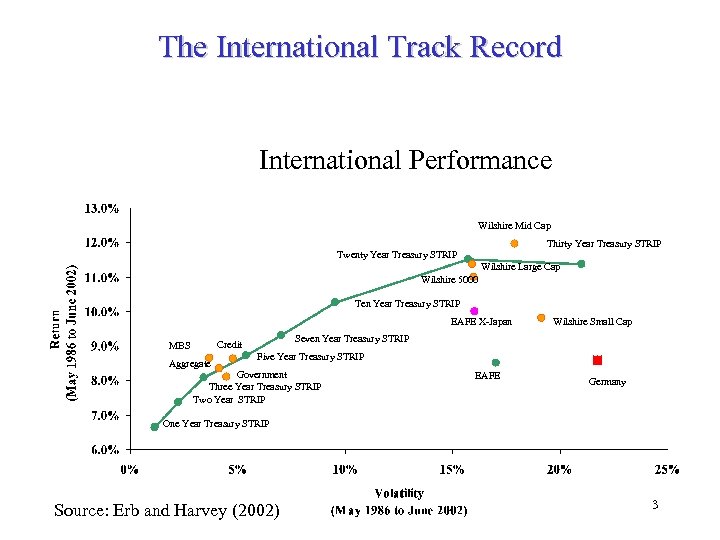 The International Track Record International Performance Wilshire Mid Cap Thirty Year Treasury STRIP Twenty Year Treasury STRIP Wilshire Large Cap Wilshire 5000 Ten Year Treasury STRIP EAFE X-Japan Seven Year Treasury STRIP Credit MBS Aggregate Wilshire Small Cap Five Year Treasury STRIP Government Three Year Treasury STRIP Two Year STRIP EAFE Germany One Year Treasury STRIP Source: Erb and Harvey (2002) 3
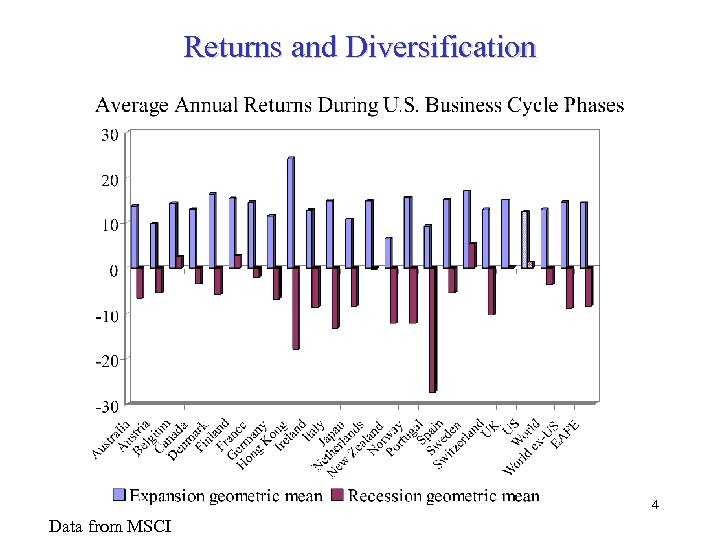 Returns and Diversification 4 Data from MSCI
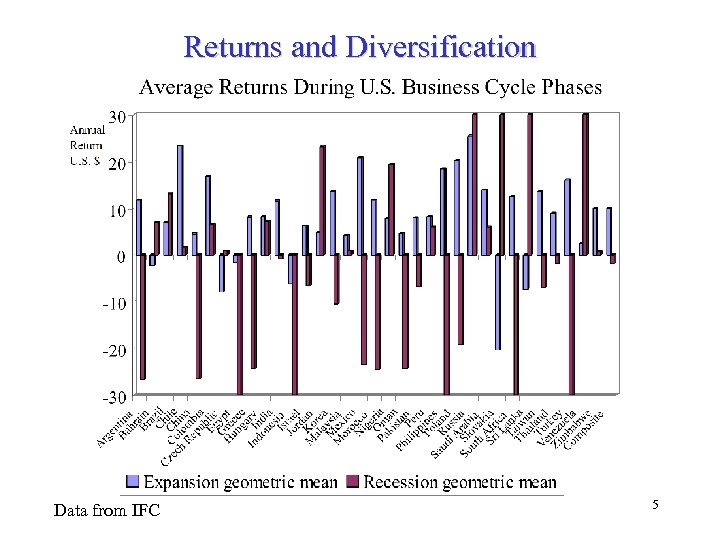 Returns and Diversification Data from IFC 5
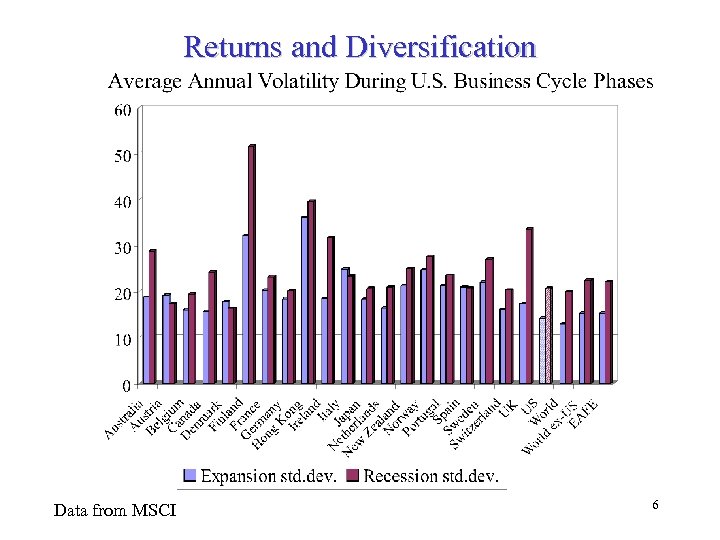 Returns and Diversification Data from MSCI 6
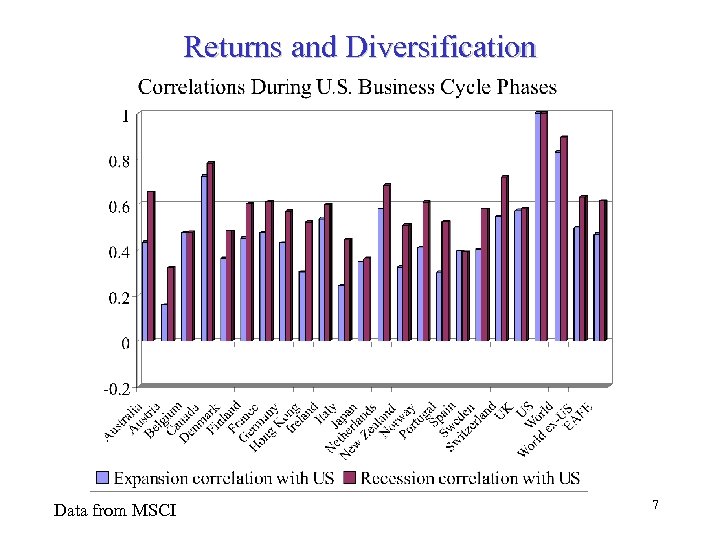 Returns and Diversification Data from MSCI 7
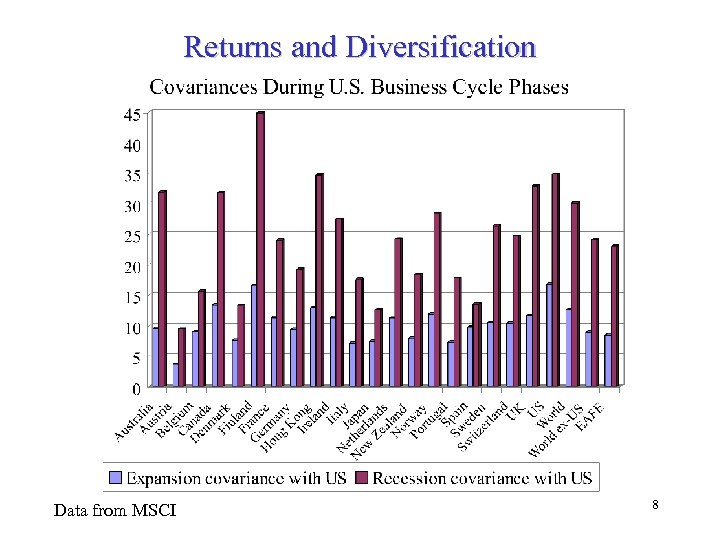 Returns and Diversification Data from MSCI 8
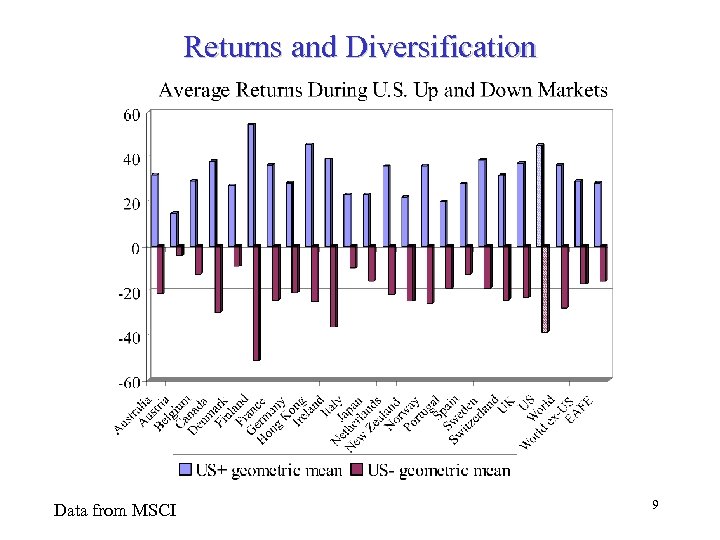 Returns and Diversification Data from MSCI 9
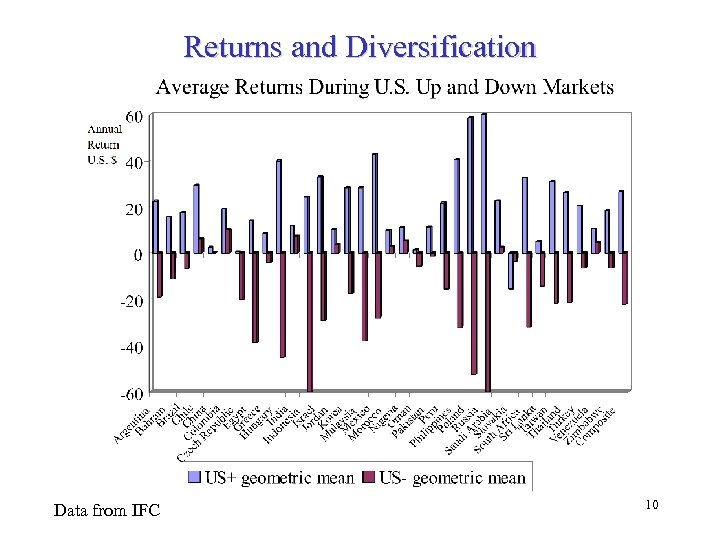 Returns and Diversification Data from IFC 10
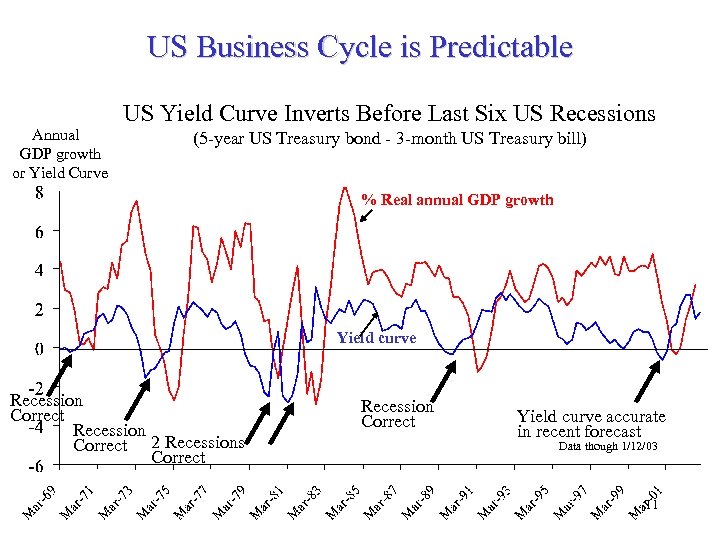 US Business Cycle is Predictable Annual GDP growth or Yield Curve US Yield Curve Inverts Before Last Six US Recessions (5 -year US Treasury bond - 3 -month US Treasury bill) % Real annual GDP growth Yield curve Recession Correct 2 Recessions Correct Recession Correct Yield curve accurate in recent forecast Data though 1/12/03 11
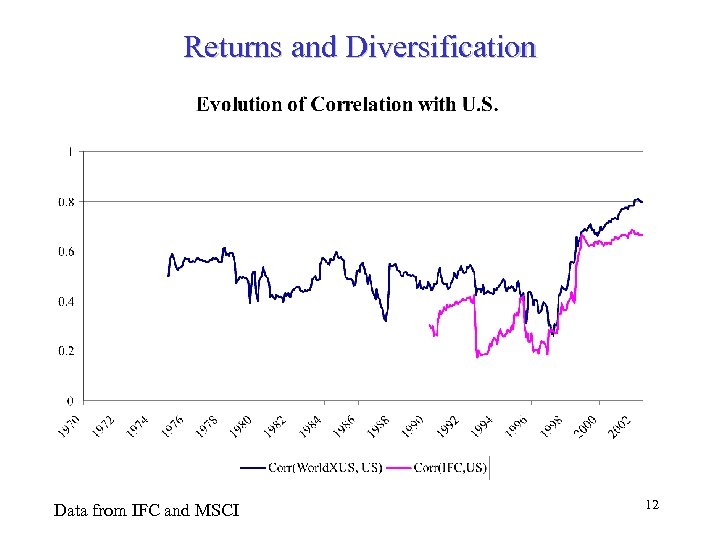 Returns and Diversification Data from IFC and MSCI 12
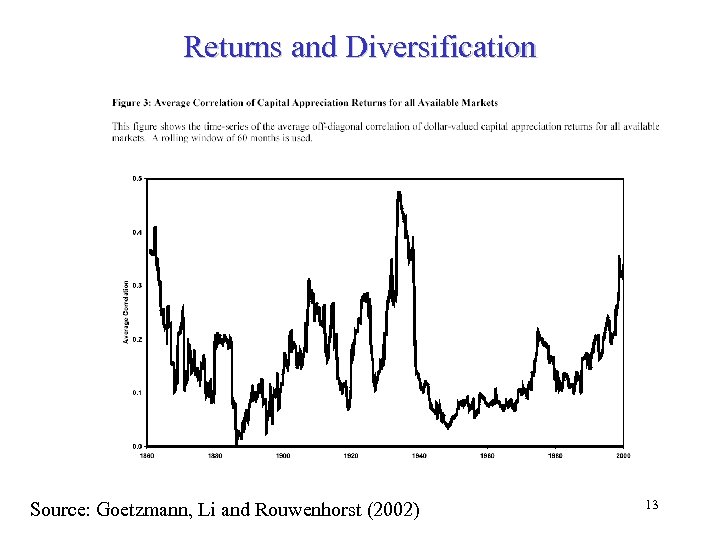 Returns and Diversification Acrobat Document Source: Goetzmann, Li and Rouwenhorst (2002) 13
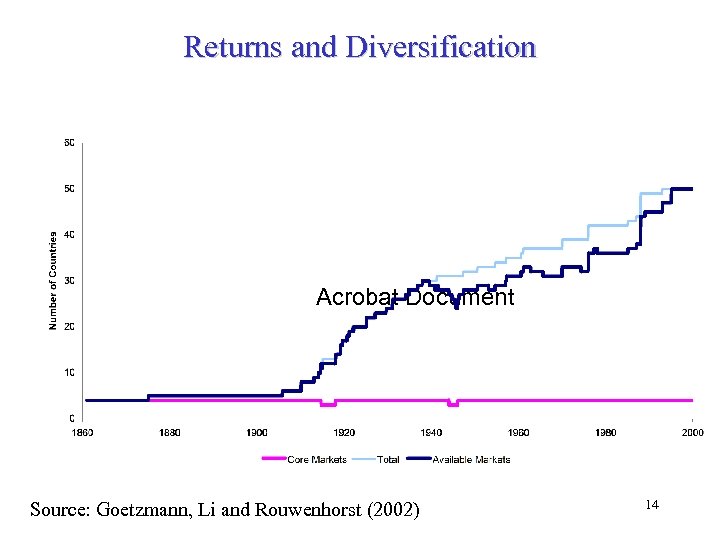 Returns and Diversification Acrobat Document Source: Goetzmann, Li and Rouwenhorst (2002) 14
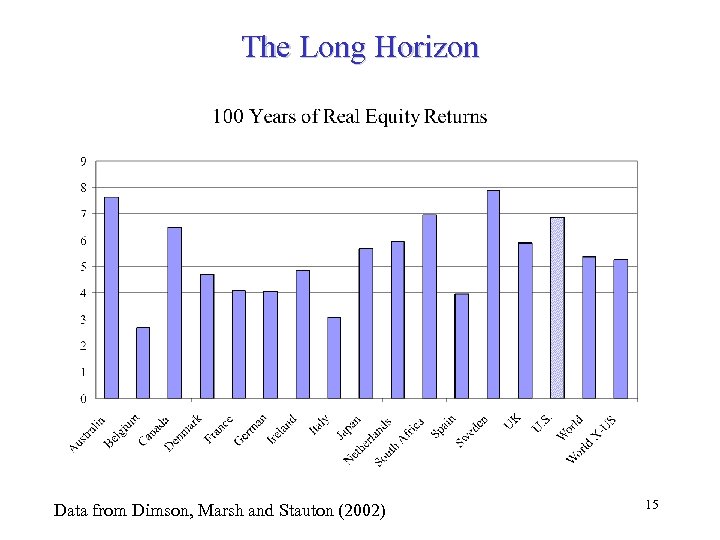 The Long Horizon Data from Dimson, Marsh and Stauton (2002) 15
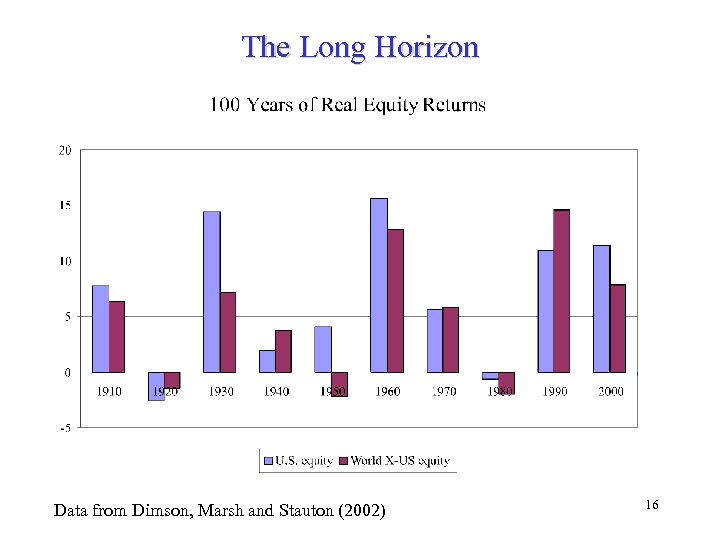 The Long Horizon Data from Dimson, Marsh and Stauton (2002) 16
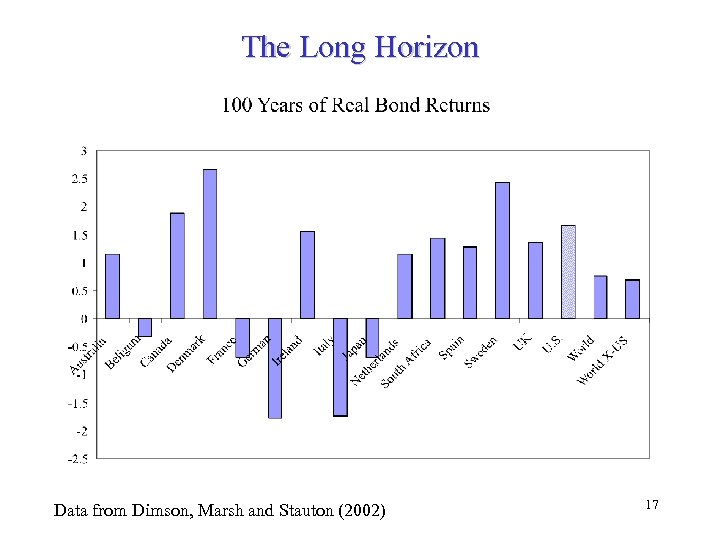 The Long Horizon Data from Dimson, Marsh and Stauton (2002) 17
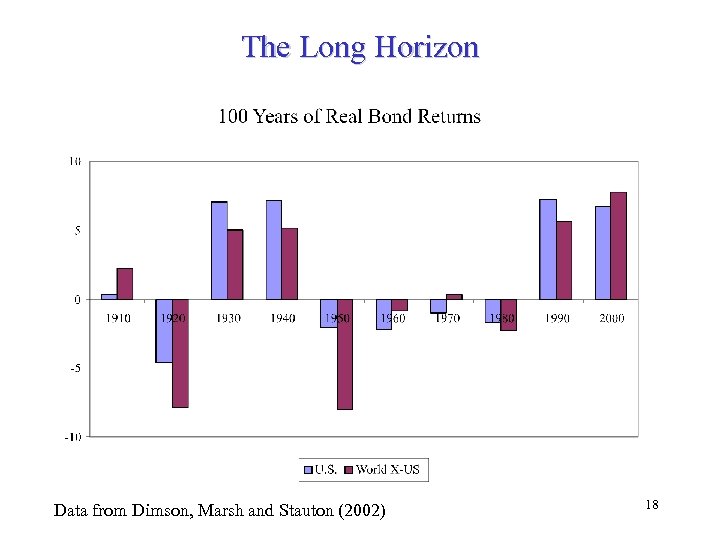 The Long Horizon Data from Dimson, Marsh and Stauton (2002) 18
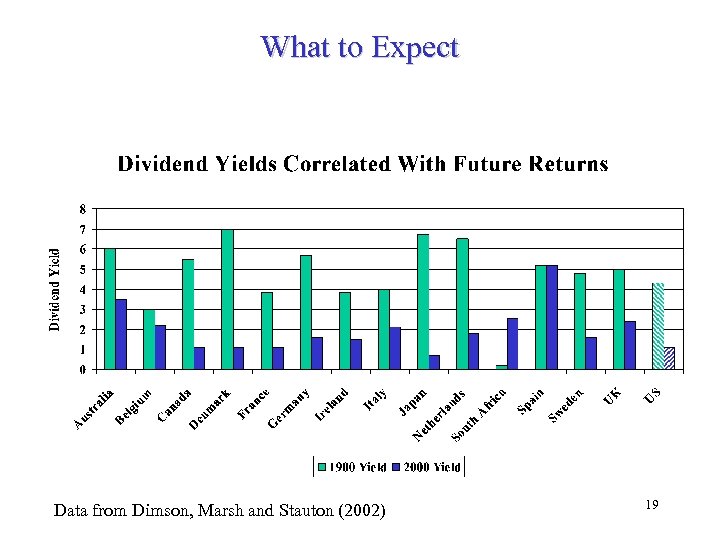 What to Expect Data from Dimson, Marsh and Stauton (2002) 19
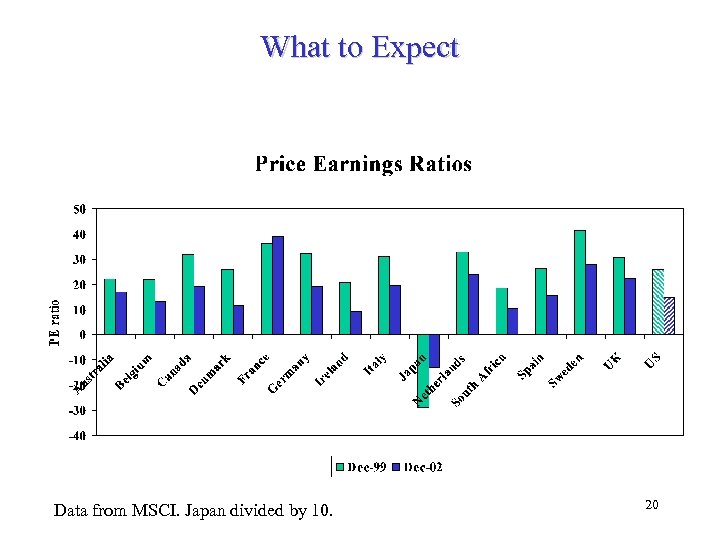 What to Expect Data from MSCI. Japan divided by 10. 20
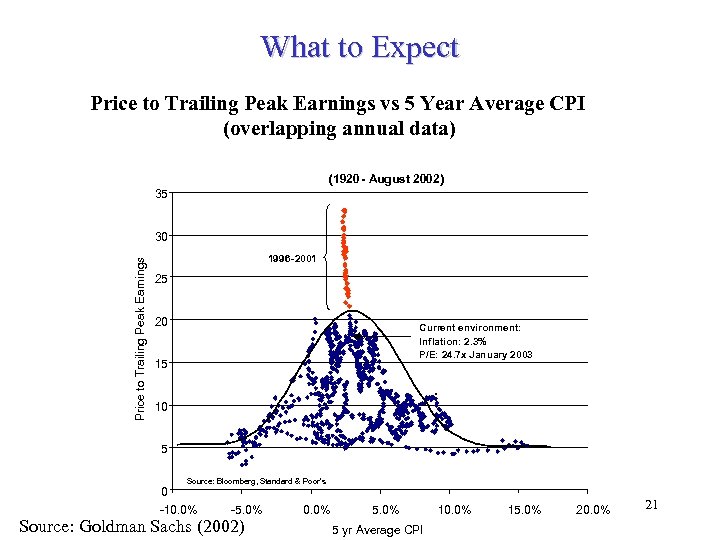 What to Expect Price to Trailing Peak Earnings vs 5 Year Average CPI (overlapping annual data) (1920 - August 2002) 35 Price to Trailing Peak Earnings 30 1996 -2001 25 20 Current environment: Inflation: 2. 3% P/E: 24. 7 x January 2003 15 . 10 5 Source: Bloomberg, Standard & Poor’s 0 -10. 0% -5. 0% Source: Goldman Sachs (2002) 0. 0% 5 yr Average CPI 10. 0% 15. 0% 20. 0% 21
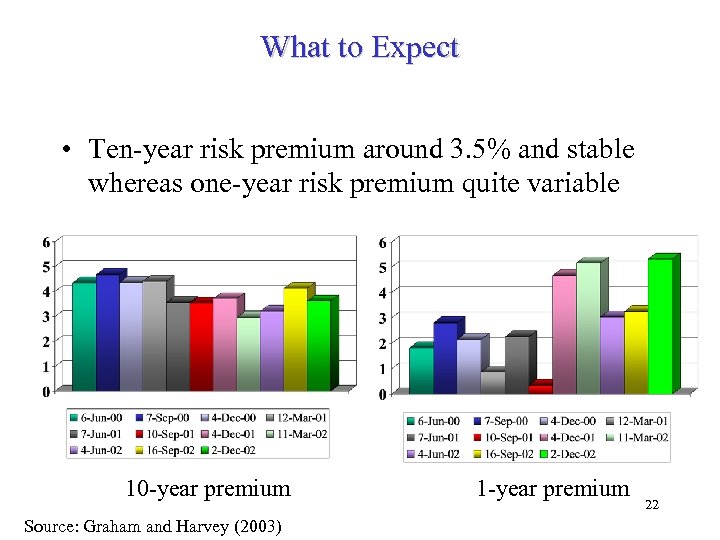 What to Expect • Ten-year risk premium around 3. 5% and stable whereas one-year risk premium quite variable 10 -year premium Source: Graham and Harvey (2003) 1 -year premium 22
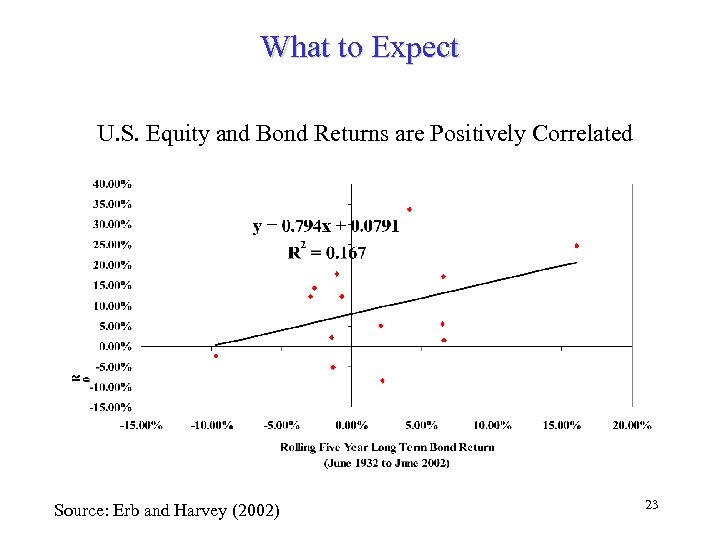 What to Expect U. S. Equity and Bond Returns are Positively Correlated Source: Erb and Harvey (2002) 23
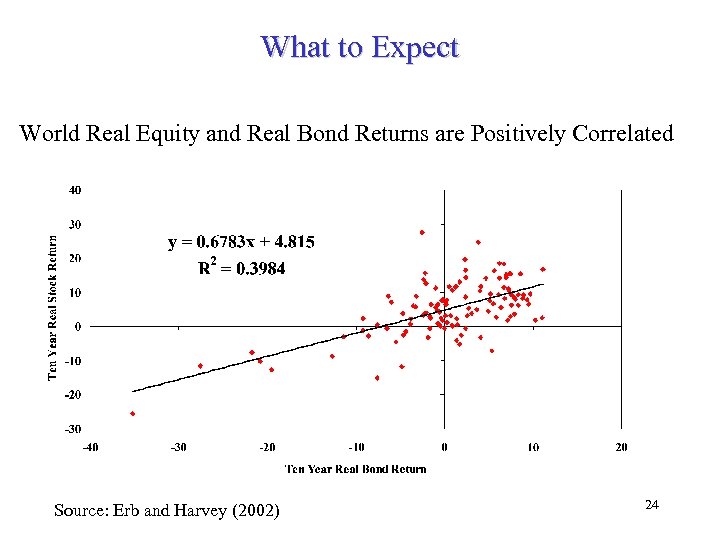 What to Expect World Real Equity and Real Bond Returns are Positively Correlated Source: Erb and Harvey (2002) 24
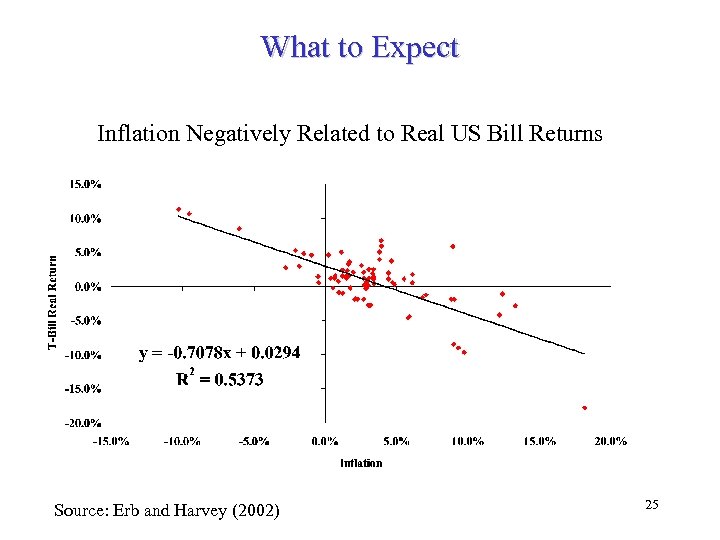 What to Expect Inflation Negatively Related to Real US Bill Returns Source: Erb and Harvey (2002) 25
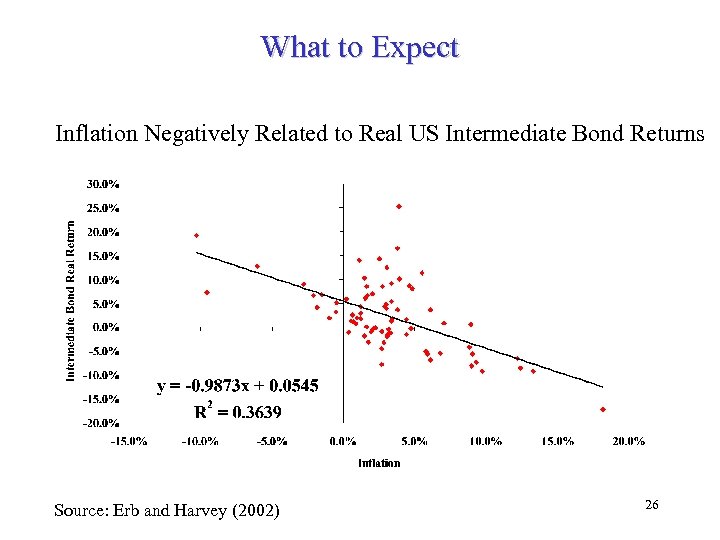 What to Expect Inflation Negatively Related to Real US Intermediate Bond Returns Source: Erb and Harvey (2002) 26
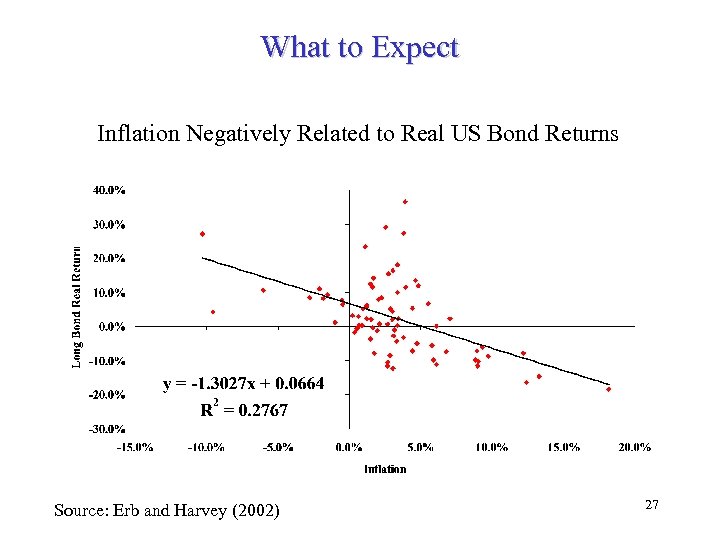 What to Expect Inflation Negatively Related to Real US Bond Returns Source: Erb and Harvey (2002) 27
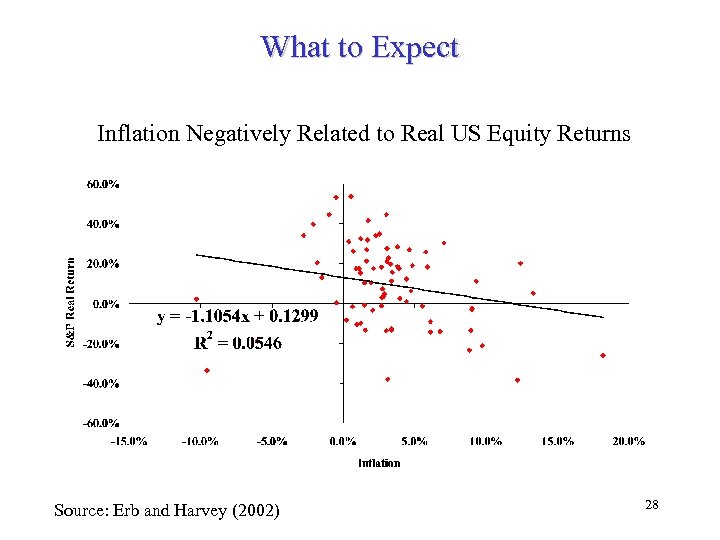 What to Expect Inflation Negatively Related to Real US Equity Returns Source: Erb and Harvey (2002) 28
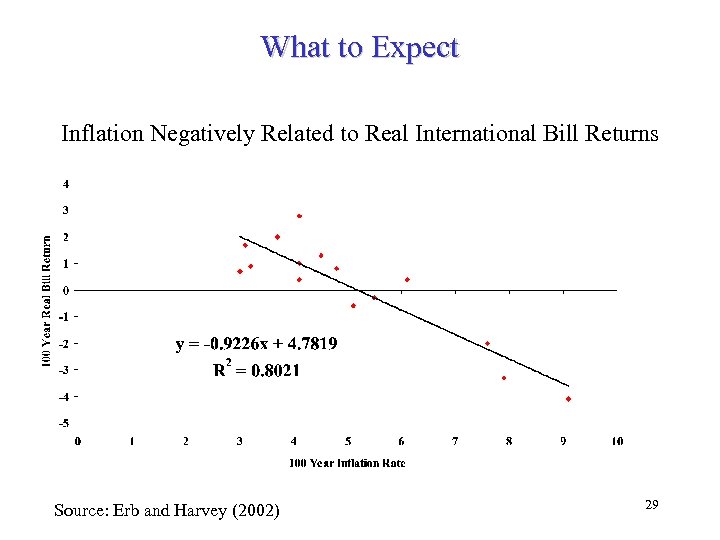 What to Expect Inflation Negatively Related to Real International Bill Returns Source: Erb and Harvey (2002) 29
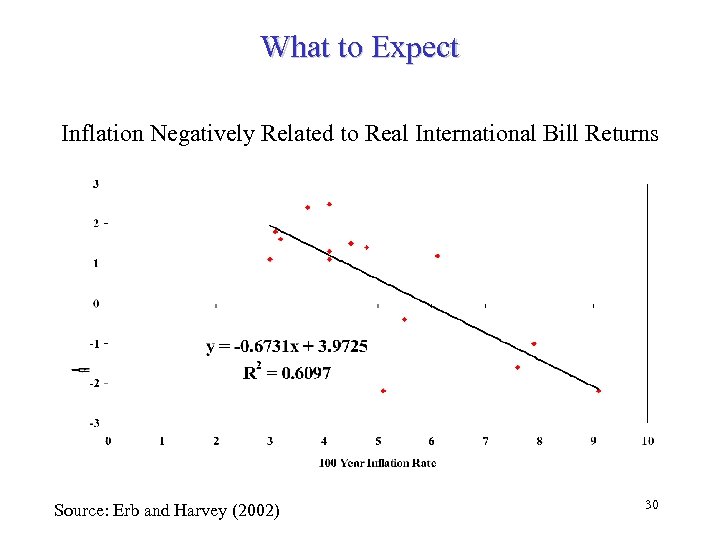 What to Expect Inflation Negatively Related to Real International Bill Returns Source: Erb and Harvey (2002) 30
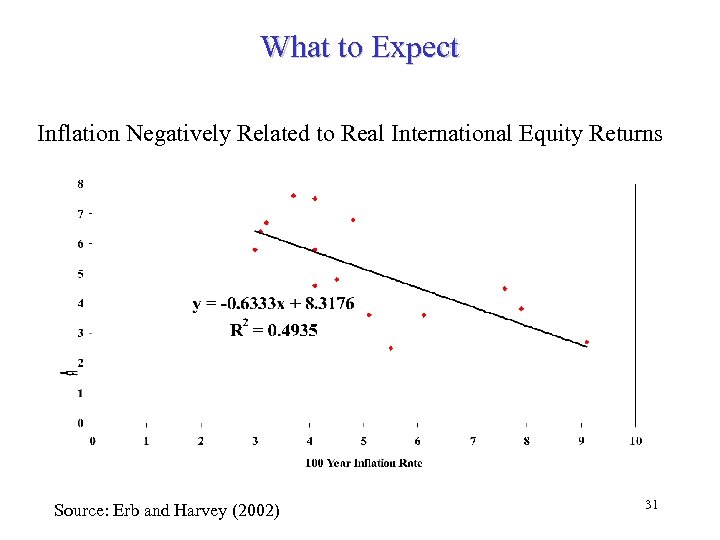 What to Expect Inflation Negatively Related to Real International Equity Returns Source: Erb and Harvey (2002) 31
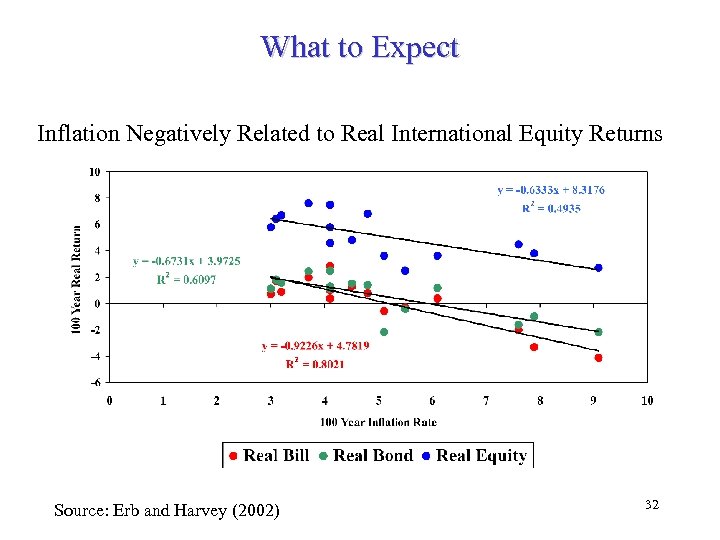 What to Expect Inflation Negatively Related to Real International Equity Returns Source: Erb and Harvey (2002) 32
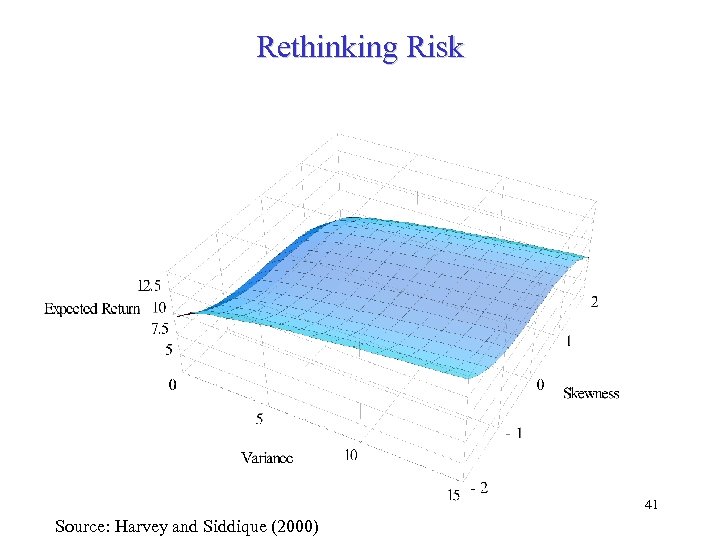
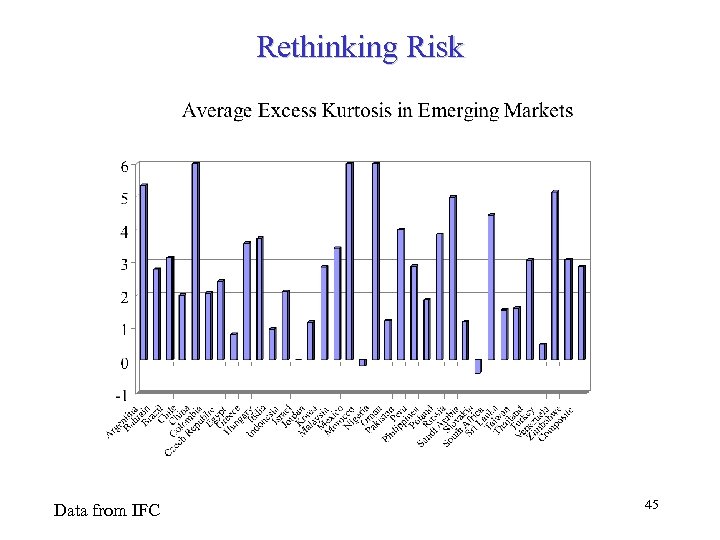
 Rethinking Risk • Traditional models maximize expected returns for some level of volatility • Is volatility a complete measure of risk? 33
 Rethinking Risk • Much interest in prospect theory, downside risk, asymmetric volatility, semi-variance, extreme value analysis, regime-switching, jump processes, . . . 34
 Rethinking Risk • In prospect theory (Kahneman and Tversky) – Investor risk averse in the case of gains, as a small certain gain is preferred to a probable risky gain – Investor risk seeking in the case of losses, as a probable risky loss is preferred to a small certain loss • So investors do not evaluate outcomes based on true probabilities 35
 Rethinking Risk • Loss aversion is a special case – Investor has a greater incremental utility penalty for losses than for an equally large gain – Overall, investor looks risk averse 36
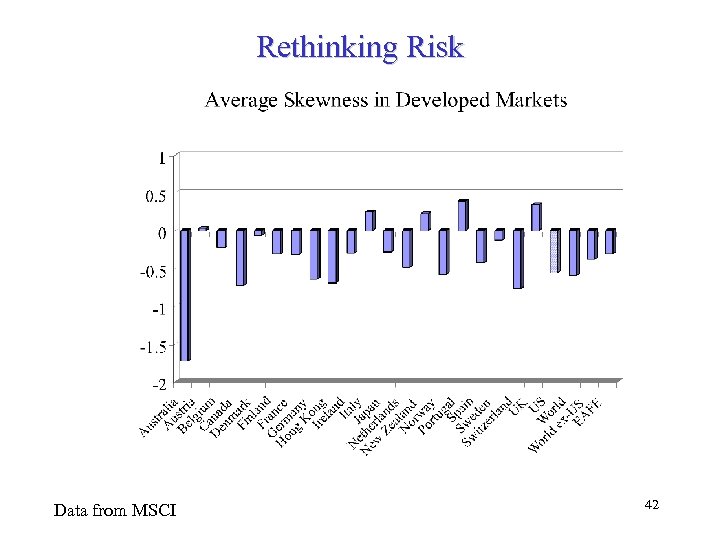
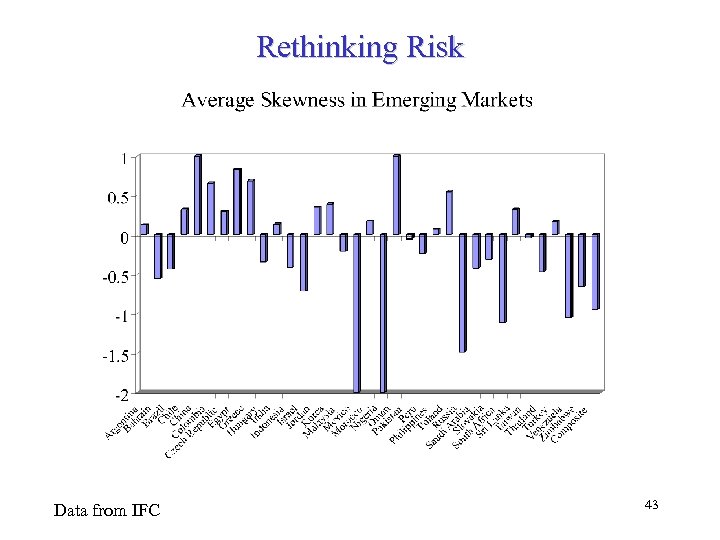
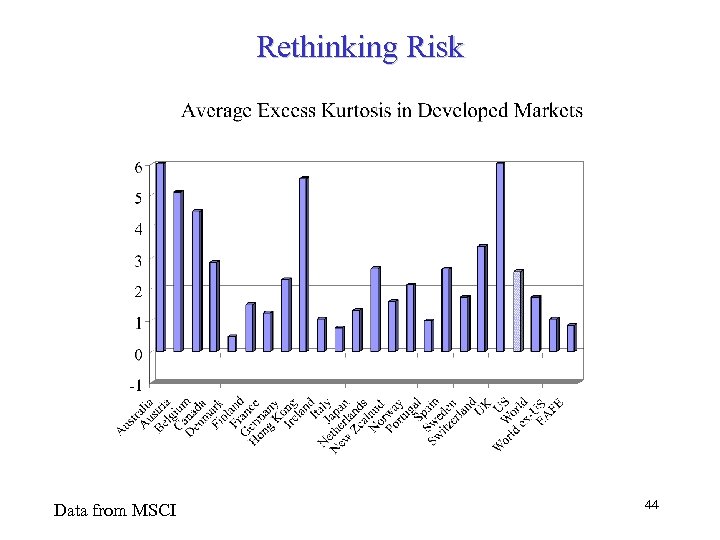
 Rethinking Risk • But, perhaps we can think of these situations in terms of preference for higher moments • Most asset allocation work operates in two dimensions: mean and variance -- but skew is important for investors. • Examples: 37
 Rethinking Risk 1. The $1 lottery ticket. The expected value is $0. 45 (hence a -55%) expected return. – Why is price so high? – Lottery delivers positive skew, people like positive skew and are willing to pay a premium 38
 Rethinking Risk 2. High implied vol in out of the money OEX put options. – Why is price so high? – Option limits downside (reduces negative skew). – Investors are willing to pay a premium for assets that reduce negative skew – Is this loss aversion or skewness preference? 39
 Rethinking Risk 3. Some stocks that trade with seemingly “too high” P/E multiples – Why is price so high? – Enormous upside potential (some of which is not well understood) – Investors are willing to pay a premium for assets that produce positive skew – [Note: Expected returns could be small or negative!] 40
 Rethinking Risk 41 Source: Harvey and Siddique (2000)
 Rethinking Risk Data from MSCI 42
 Rethinking Risk Data from IFC 43
 Rethinking Risk Data from MSCI 44
 Rethinking Risk Data from IFC 45
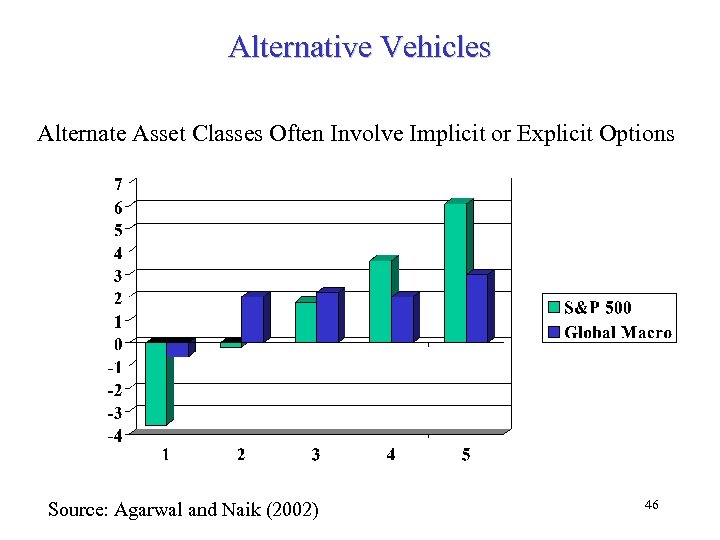 Alternative Vehicles Alternate Asset Classes Often Involve Implicit or Explicit Options Source: Agarwal and Naik (2002) 46
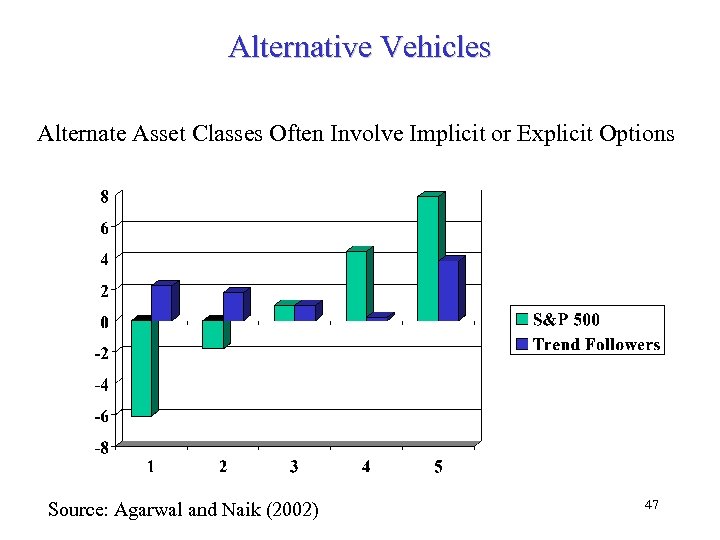 Alternative Vehicles Alternate Asset Classes Often Involve Implicit or Explicit Options Source: Agarwal and Naik (2002) 47
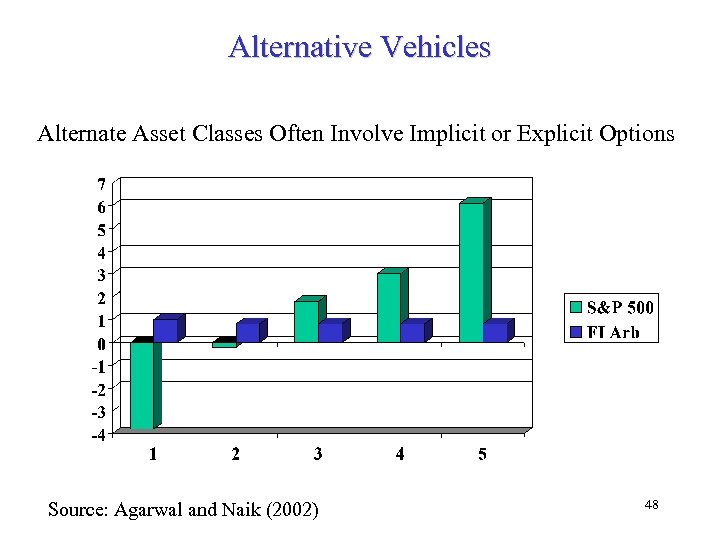 Alternative Vehicles Alternate Asset Classes Often Involve Implicit or Explicit Options Source: Agarwal and Naik (2002) 48
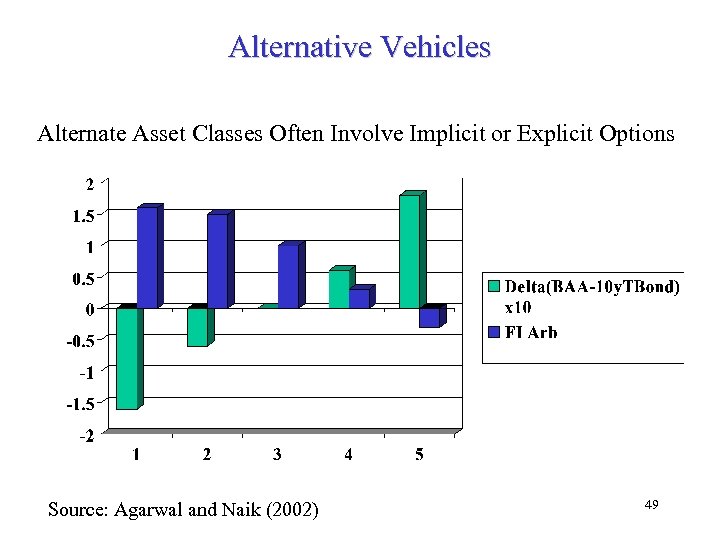 Alternative Vehicles Alternate Asset Classes Often Involve Implicit or Explicit Options Source: Agarwal and Naik (2002) 49
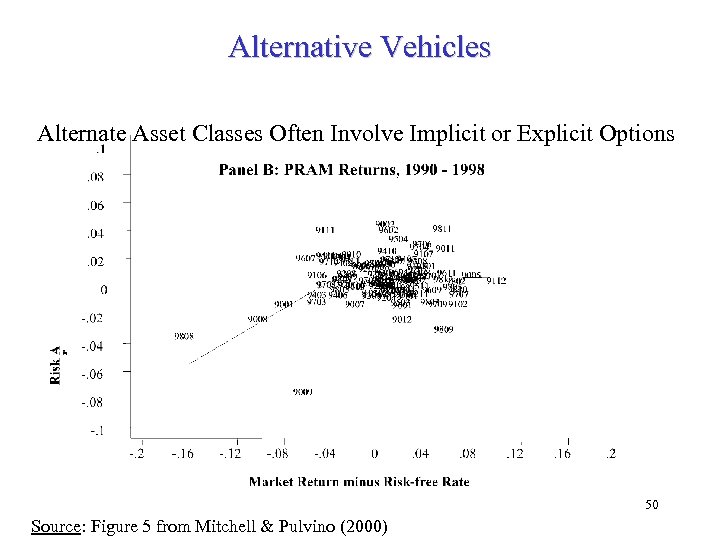 Alternative Vehicles Alternate Asset Classes Often Involve Implicit or Explicit Options 50 Source: Figure 5 from Mitchell & Pulvino (2000)
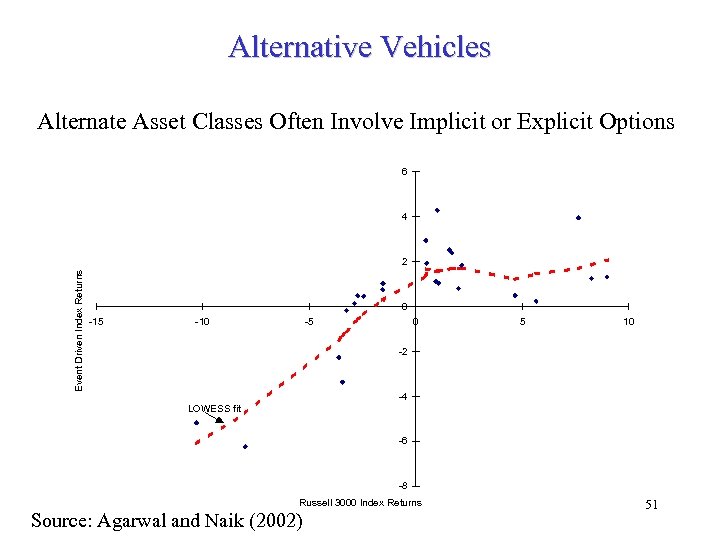 Alternative Vehicles Alternate Asset Classes Often Involve Implicit or Explicit Options 6 4 Event Driven Index Returns 2 0 -15 -10 -5 0 5 10 -2 -4 LOWESS fit -6 -8 Russell 3000 Index Returns Source: Agarwal and Naik (2002) 51
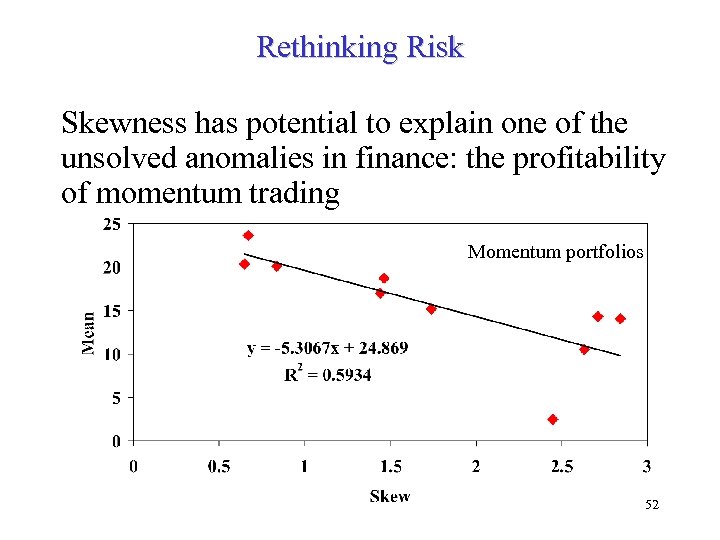 Rethinking Risk Skewness has potential to explain one of the unsolved anomalies in finance: the profitability of momentum trading Momentum portfolios 52
 Rethinking Risk • Harvey, Liechty and Müller (2002) “Portfolio Selection with Higher Moments” provide a new approach to portfolio selection which accounts for: ØHigher moments ØEstimation errors in the inputs 53
 The Evolution of World Risk • The U. S. has become much more risky – High sensitivity to some GPRs – Disagreement on strength of economy – Financial information less credible 54
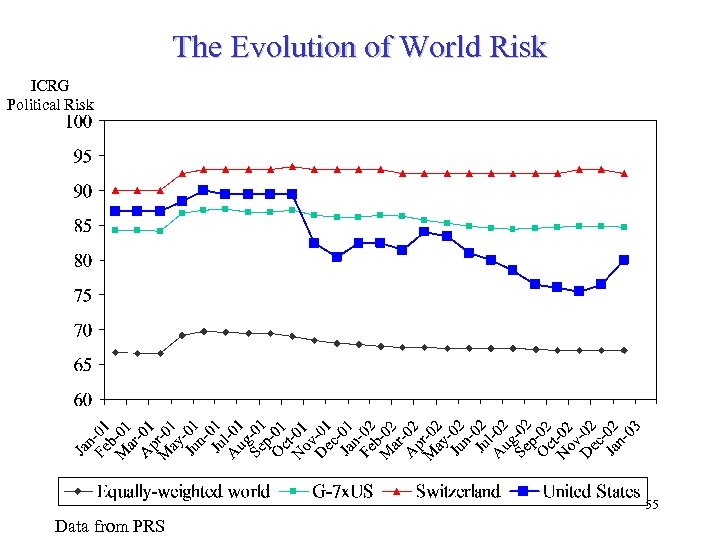 The Evolution of World Risk ICRG Political Risk 55 Data from PRS
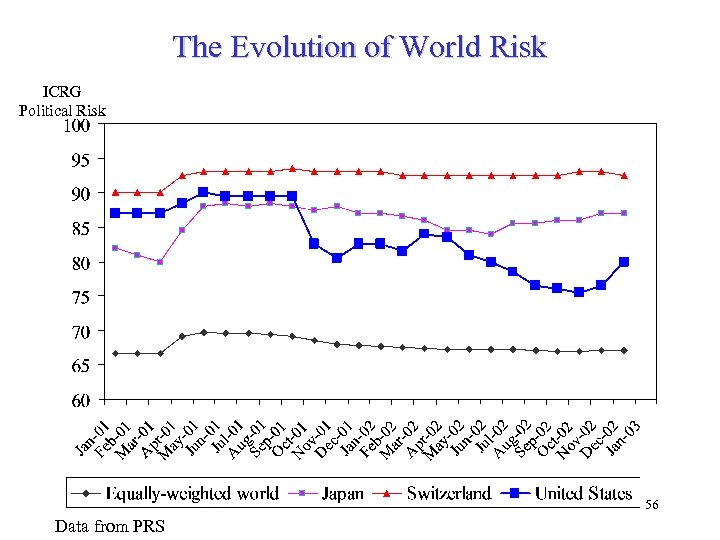 The Evolution of World Risk ICRG Political Risk 56 Data from PRS
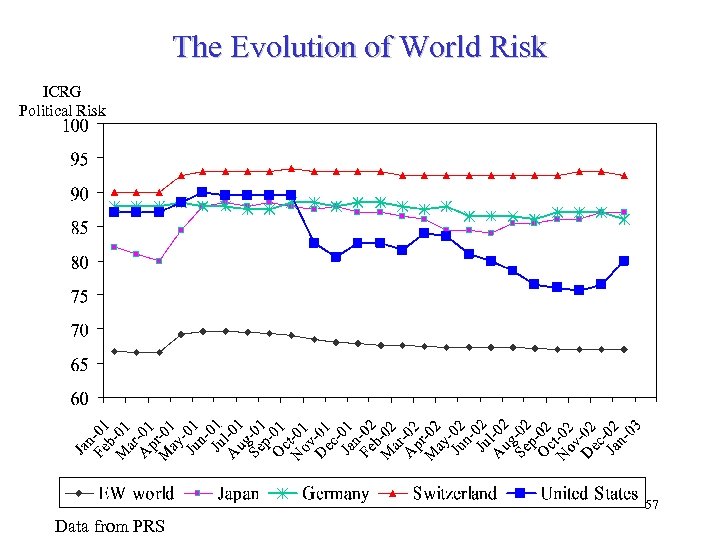 The Evolution of World Risk ICRG Political Risk 57 Data from PRS
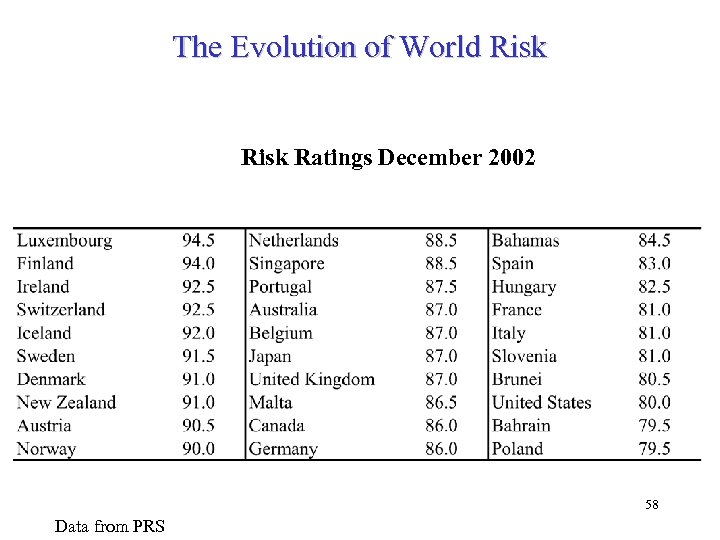 The Evolution of World Risk Ratings December 2002 58 Data from PRS
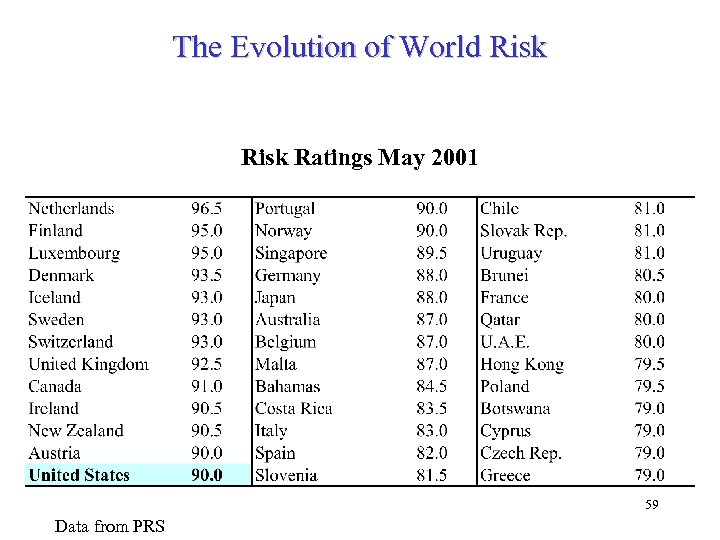 The Evolution of World Risk Ratings May 2001 59 Data from PRS
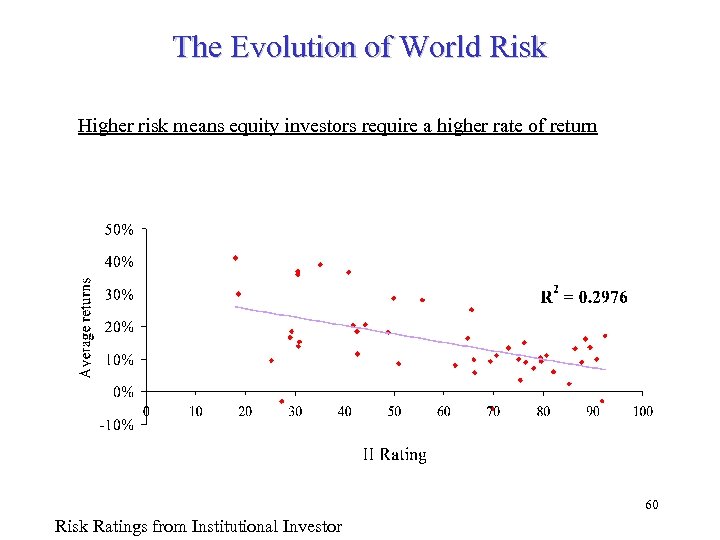 The Evolution of World Risk Higher risk means equity investors require a higher rate of return 60 Risk Ratings from Institutional Investor
 The Evolution of World Risk • Equation implies an increase in the mediumterm risk premium – This helps explain the recent decline in the equity market – This helps explain the recent behavior of the U. S. dollar – This helps explain the slow down in real investment (hurdle rates are up) 61
 Stock Markets and the Real Economy • Efficiently functioning stock markets make a difference in the real economy – There is now substantial cross-country evidence on the impact of stock market development on the real economy 62
 Stock Markets and the Real Economy • Market integration has a fundamental influence on asset prices 63
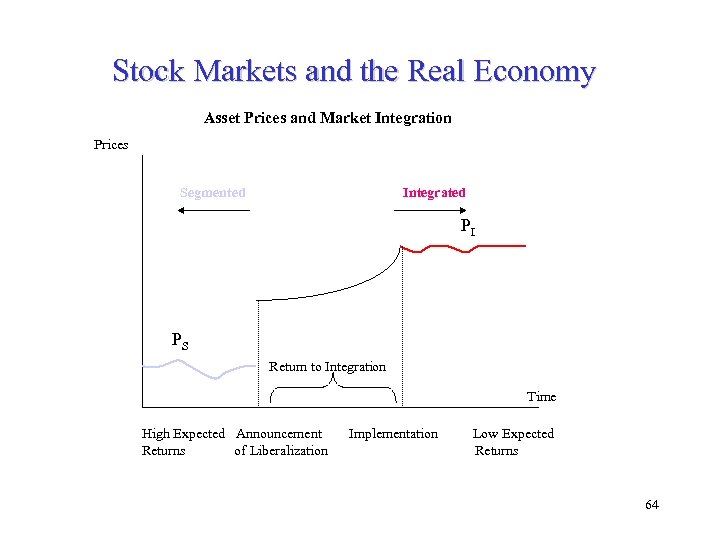 Stock Markets and the Real Economy Asset Prices and Market Integration Prices Segmented Integrated PI PS Return to Integration Time High Expected Announcement Returns of Liberalization Implementation Low Expected Returns 64
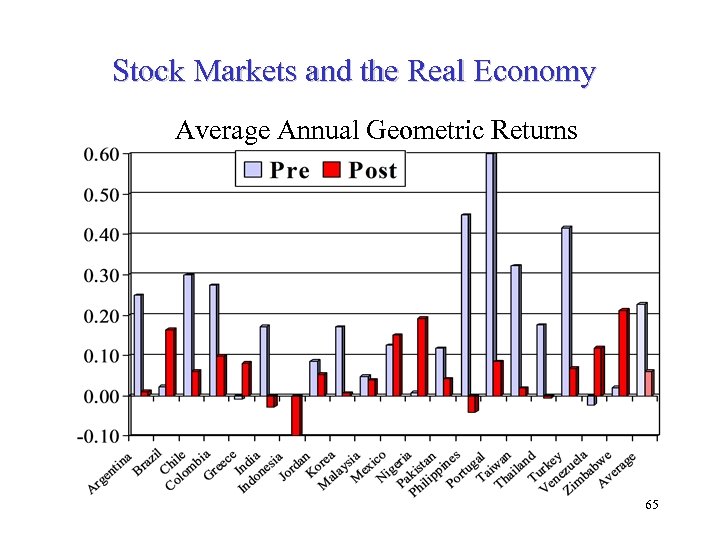 Stock Markets and the Real Economy Average Annual Geometric Returns 65
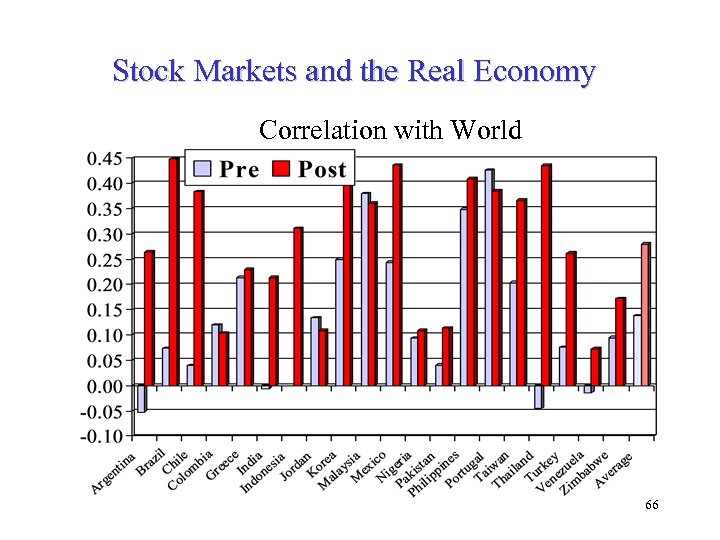 Stock Markets and the Real Economy Correlation with World 66
 Stock Markets and the Real Economy Implications • Lower cost of capital • More investment, employment • More economic growth Ø Geert Bekaert, Campbell Harvey and Chris Lundblad, Does Financial Liberalization Spur Growth? • Not just an emerging markets effect: Euro also increased integration 67
 Stock Markets and the Real Economy Findings • Liberalization increases real growth by 1% per year for five years – which is a large number • The liberalization effect is robust to – different definitions of liberalization dates – to business cycle or interest rate controls – allowing for intensity of liberalization . . . and independent of capital account liberalization 68
 Stock Markets and the Real Economy Findings • We control » macroeconomic reforms » financial development » other regulatory reforms . . . and effect is intact 69
 Stock Markets and the Real Economy But is there a cost? • Foreign speculators • Economic crises • Irrational contagion 70
 Stock Markets and the Real Economy But is there a cost? • Liberalization may lead to “hot speculative capital” and induce capital flight (Stiglitz & others) – One can always point to a particular country to support this idea – What about looking at a broad cross section? 71
 Stock Markets and the Real Economy But is there a cost? Geert Bekaert, Campbell Harvey and Chris Lundblad, Growth Volatility and Equity Market Liberalization, 2002. • No evidence that GDP growth volatility increases after markets open up 72
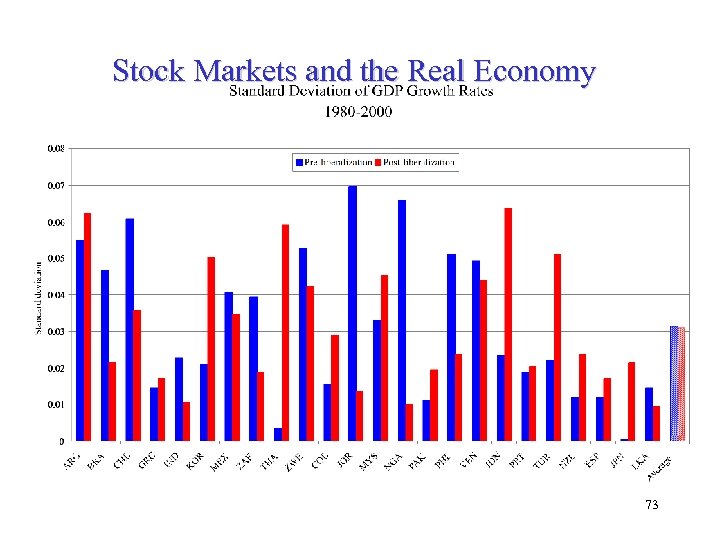 Stock Markets and the Real Economy 73
 Conclusions • Predictability arises naturally from business cycle fluctuations – it need not be confused with irrationality • While the research is very important, the case has not yet been made for widespread application of behavioral models • Stock markets, in general, play a positive role – not just for investors and corporations – but the economy 74
 Readings • My articles on www. duke. edu/~charvey – The Drivers of Expected Returns in International Markets (2000) – Global Tactical Asset Allocation (2001) with Magnus Dahlquist – The Term Structure of Equity Risk Premia (2002) with Claude Erb – Characterizing Systematic Risk of Hedge Funds with Buy-and-Hold and Option-Based Strategies, (2002) Vikas Agarwal and Naranyan Y. Naik – Portfolio Selection with Higher Moments, with John Liechty, Merrill Liechty, and Peter Müller – Does Financial Liberalization Spur Growth? with Geert Bekaert, and Chris Lundblad – Growth Volatility and Equity Market Liberalization 75 with Geert Bekaert, and Chris Lundblad