


 Скачать презентацию WHO NEEDS INSURANCE COMPANIES ANYWAY or Get the
25f1c9aac1d9557b3850a9df51bec44e.ppt
- Количество слайдов: 72
 WHO NEEDS INSURANCE COMPANIES ANYWAY? or “Get the insurance companies out of my health care” Leonard Rodberg, Ph. D Physicians for a National Health Program New York Metro Chapter Comments: pnhpnyc@igc. org 1
 BEFORE HEALTH INSURANCE BEGAN… Before 1936 • Health care 1% or less of GNP • Out-of-pocket payment for physician care • Charity and public hospital care 2
 BEGINNINGS OF PRIVATE EMPLOYMENT-BASED HEALTH INSURANCE 1936 - 1965 • • Blue Cross is formed in 1936; Blue Shield in 1946 WW II: health benefits linked to employment IRS rules employer contributions tax deductible Commercial life insurance companies begin selling health insurance to employers 3
 LIMITED GOVERNMENT HEALTH INSURANCE 1965 - 1990 • Rising cost of medical care due in part to innovations in medical technology and drugs • Medicare for those over 65 years • Medicaid for the poor • U. S. remains the only industrialized nation without universal access to health care 4
 DOMINANCE OF FOR-PROFIT HEALTH INSURANCE • • 1990 – present Experience-rated premiums (where the sick pay more) dominate the market Expansion of for-profit managed care companies Managed care restricts access and maintains profits Non-profit Blue Cross plans convert to for-profit companies 5
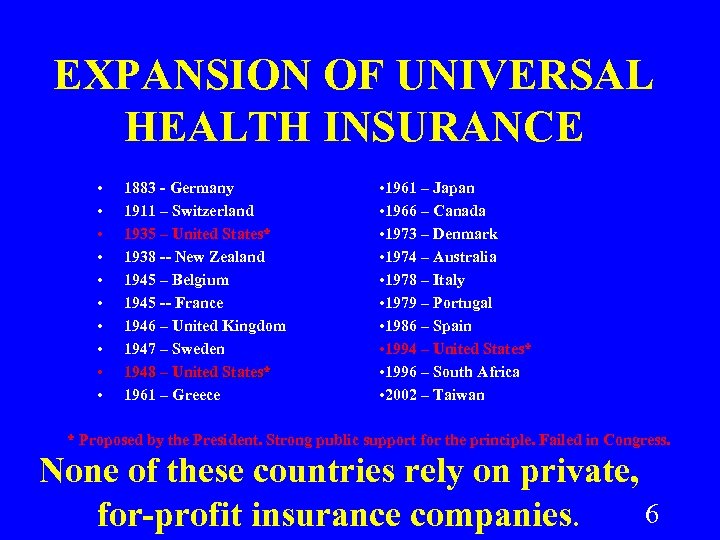 EXPANSION OF UNIVERSAL HEALTH INSURANCE • • • 1883 - Germany 1911 – Switzerland 1935 – United States* 1938 -- New Zealand 1945 – Belgium 1945 -- France 1946 – United Kingdom 1947 – Sweden 1948 – United States* 1961 – Greece • 1961 – Japan • 1966 – Canada • 1973 – Denmark • 1974 – Australia • 1978 – Italy • 1979 – Portugal • 1986 – Spain • 1994 – United States* • 1996 – South Africa • 2002 – Taiwan * Proposed by the President. Strong public support for the principle. Failed in Congress. None of these countries rely on private, 6 for-profit insurance companies.
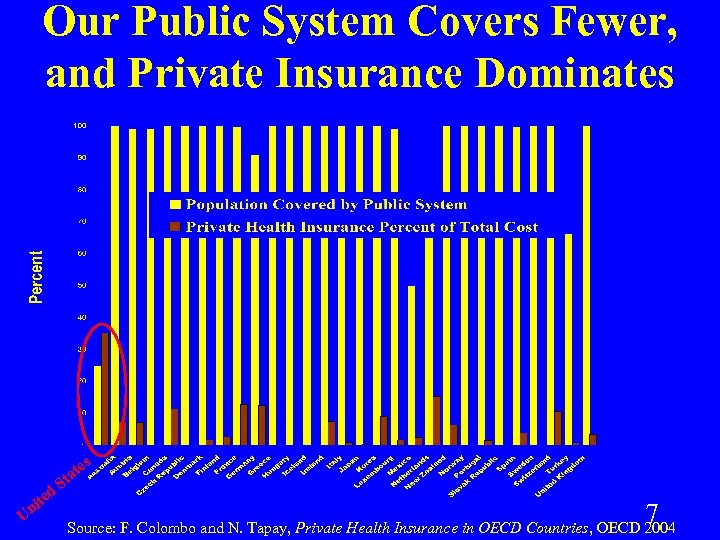 Our Public System Covers Fewer, and Private Insurance Dominates te ni U d tes a St 7 Source: F. Colombo and N. Tapay, Private Health Insurance in OECD Countries, OECD 2004
 How Does the U. S. Compare with Other Countries? • We provide the same medical care • We use the same medical technology But… • We have large numbers of uninsured • We spend much more • We remain the only major country that builds its health care system around private for-profit insurance companies. 8
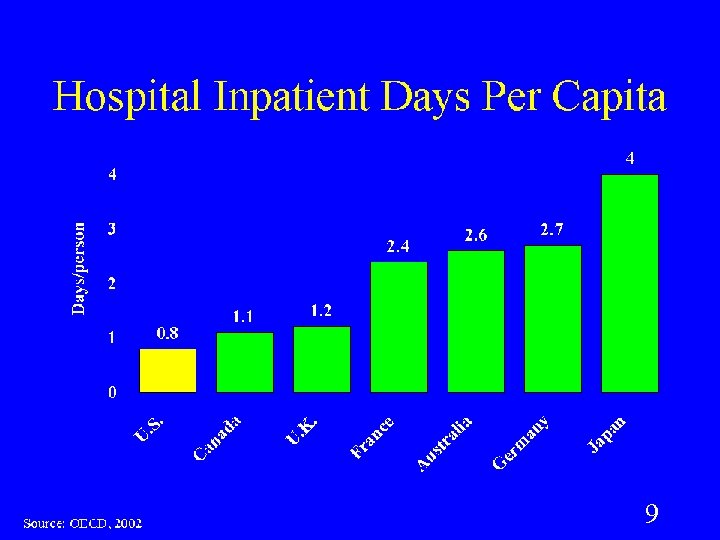 Hospital Inpatient Days Per Capita 9
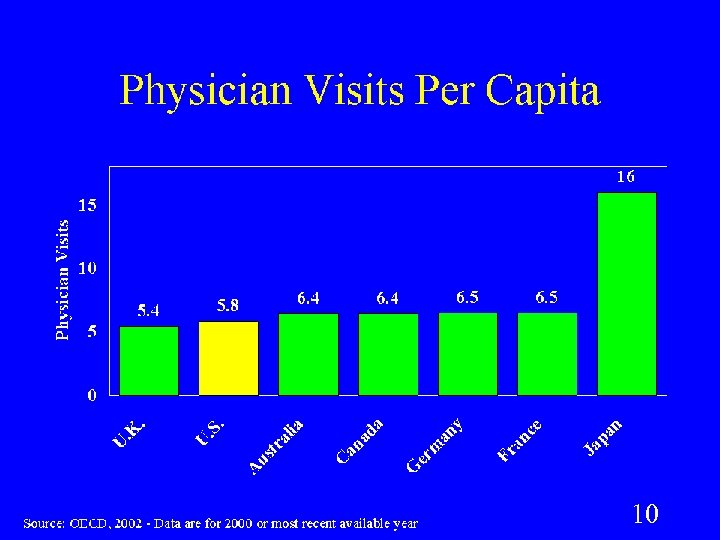 Physician Visits Per Capita 10
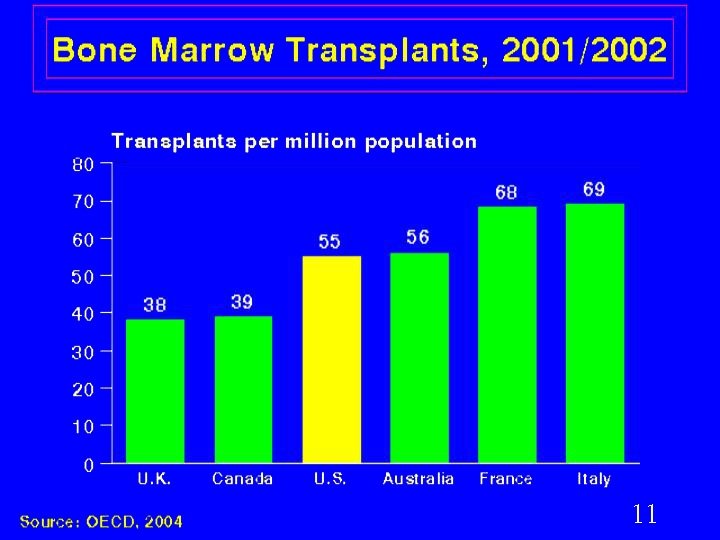 Bone Marrow Transplants 11
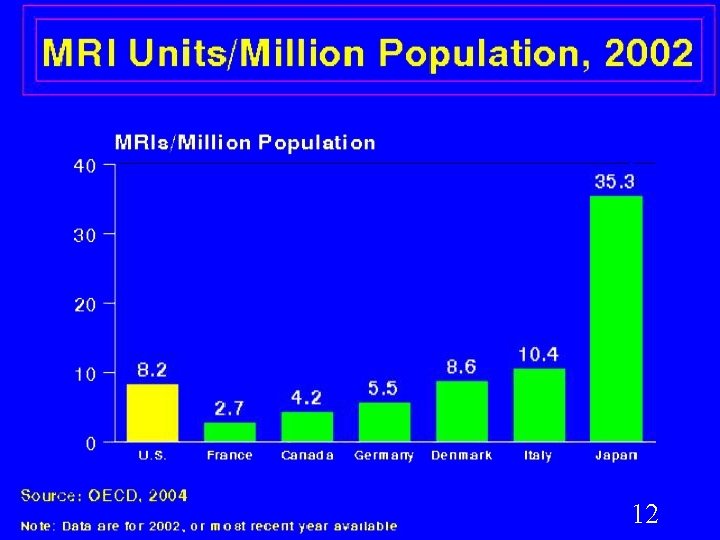 MRI Units/Population 12
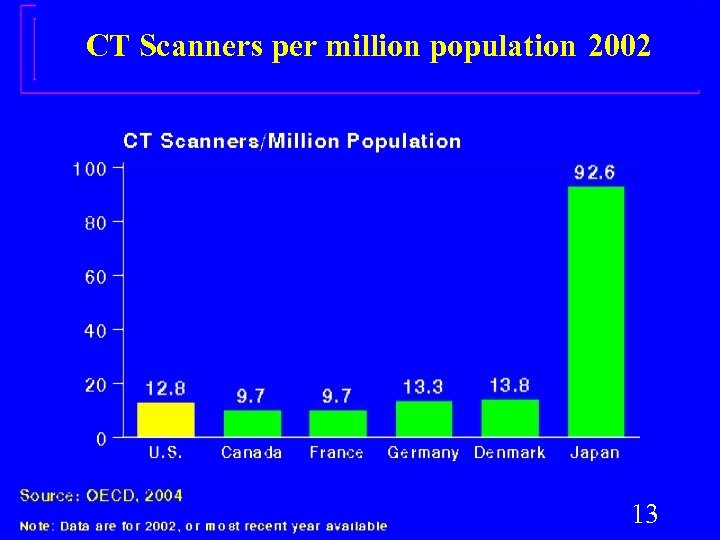 CT Scanners per million population 2002 13
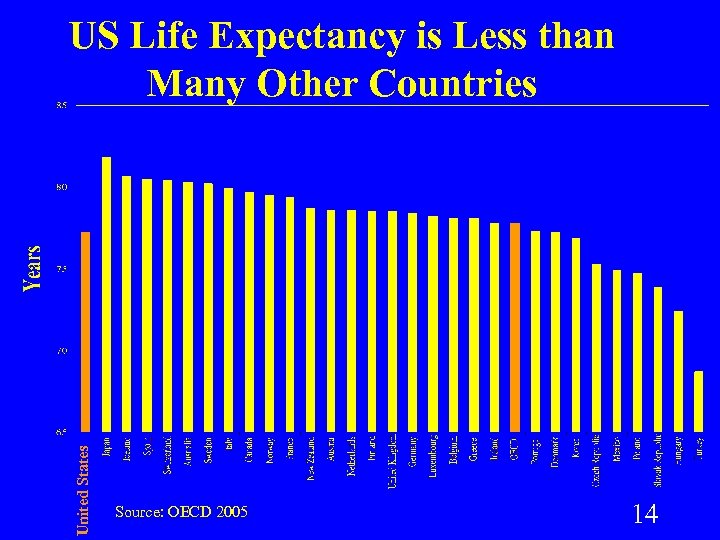 United States US Life Expectancy is Less than Many Other Countries Source: OECD 2005 14
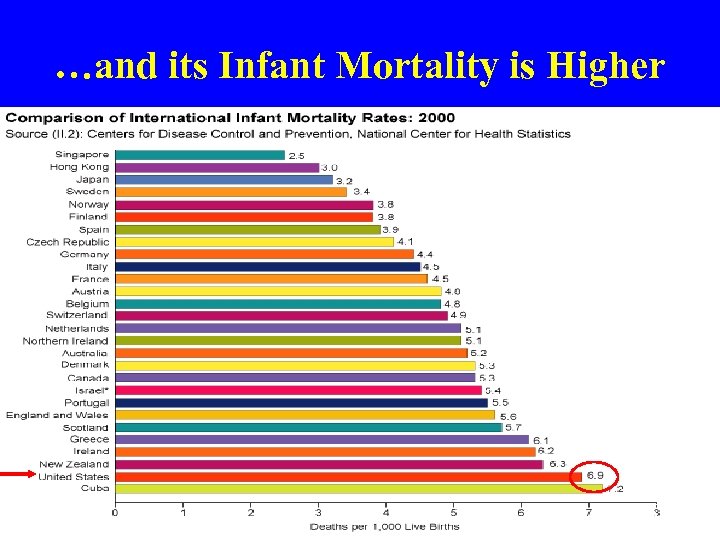 …and its Infant Mortality is Higher 15
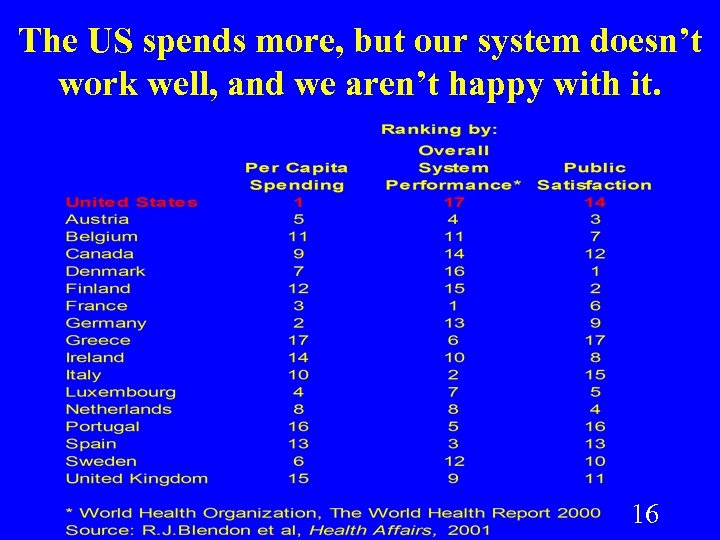 The US spends more, but our system doesn’t work well, and we aren’t happy with it. 16
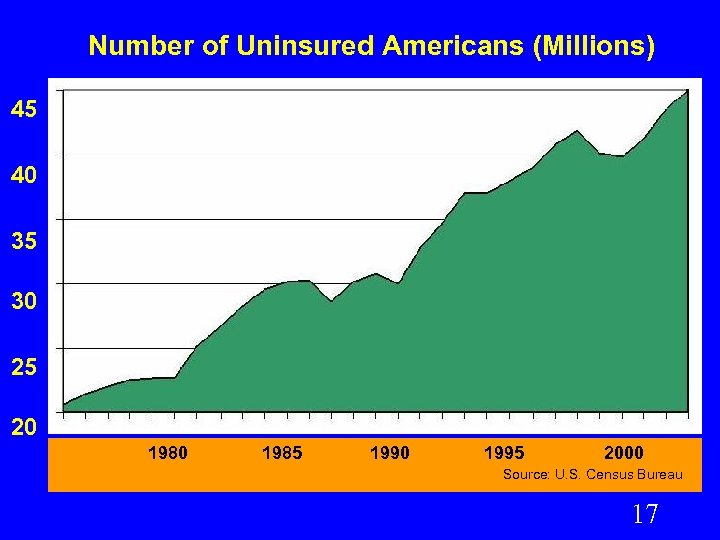 Number of Uninsured Americans (Millions) 45 40 Rising Number of uninsured 35 30 25 20 1985 1990 1995 2000 Source: U. S. Census Bureau 17
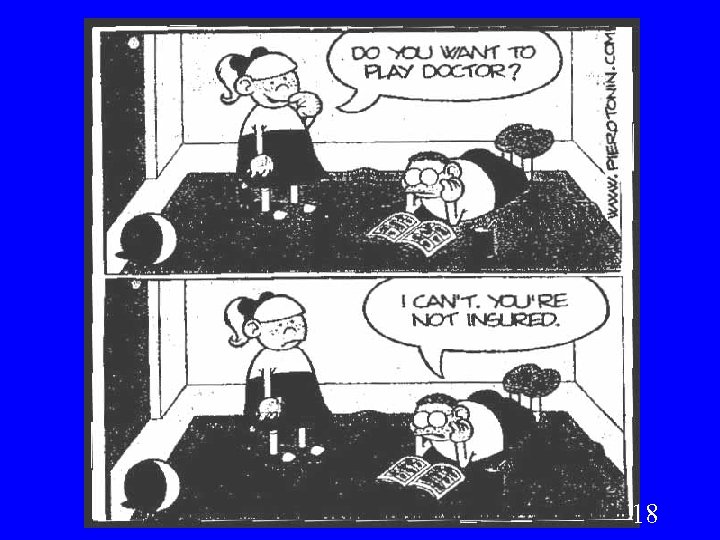 Playing Doctor? (cartoon) 18
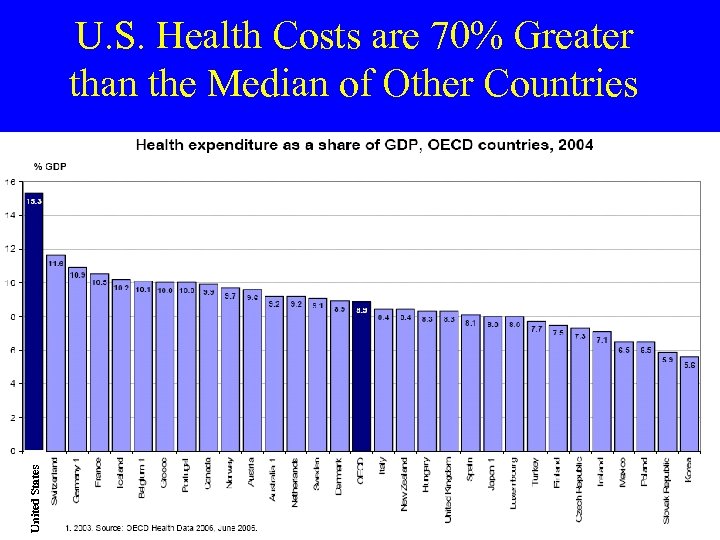 United States U. S. Health Costs are 70% Greater than the Median of Other Countries 19
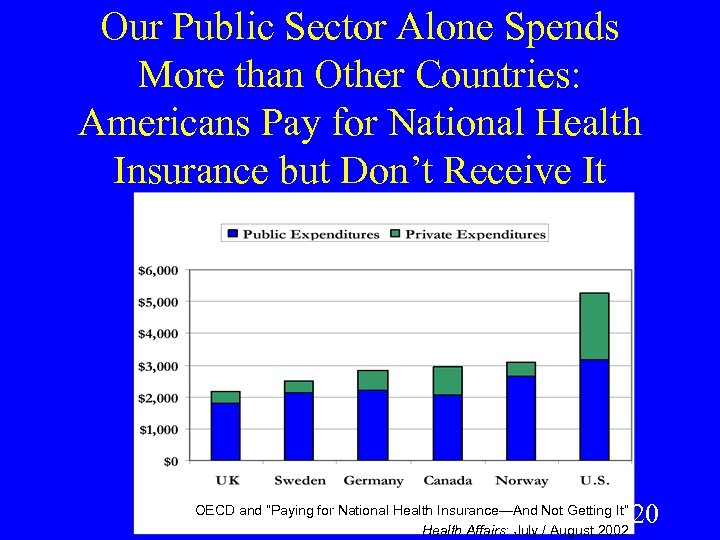 Our Public Sector Alone Spends More than Other Countries: Americans Pay for National Health Insurance but Don’t Receive It OECD and “Paying for National Health Insurance—And Not Getting It” Health Affairs: July / August 2002 20
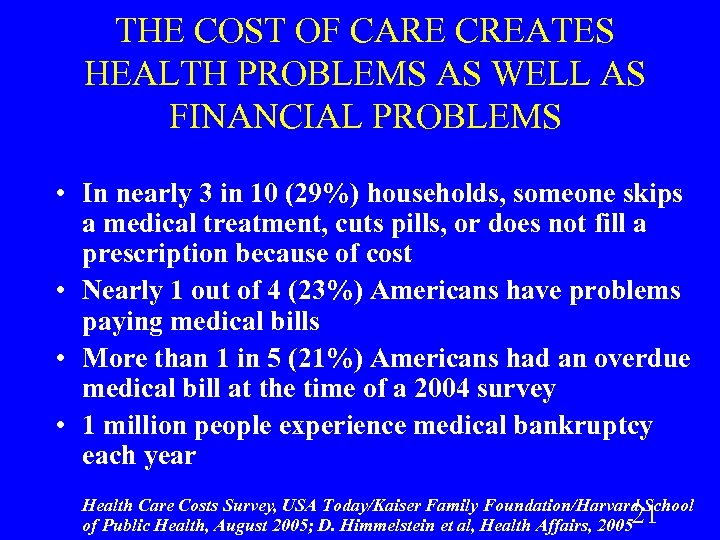 THE COST OF CARE CREATES HEALTH PROBLEMS AS WELL AS FINANCIAL PROBLEMS • In nearly 3 in 10 (29%) households, someone skips a medical treatment, cuts pills, or does not fill a prescription because of cost • Nearly 1 out of 4 (23%) Americans have problems paying medical bills • More than 1 in 5 (21%) Americans had an overdue medical bill at the time of a 2004 survey • 1 million people experience medical bankruptcy each year Health Care Costs Survey, USA Today/Kaiser Family Foundation/Harvard School of Public Health, August 2005; D. Himmelstein et al, Health Affairs, 200521
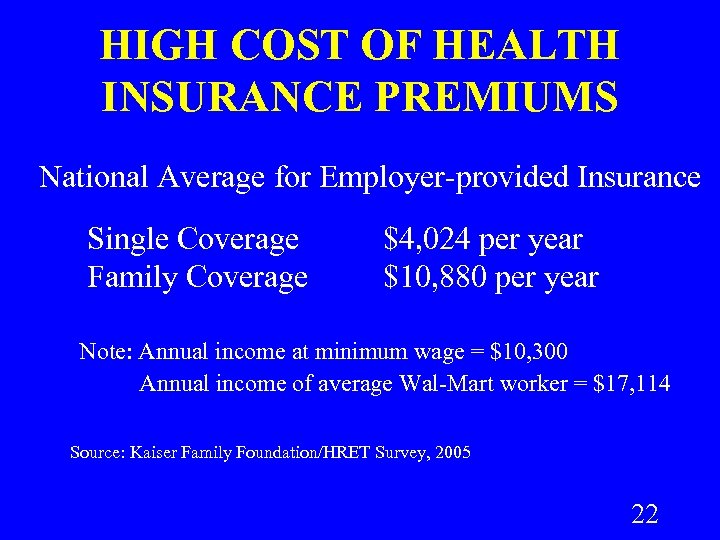 HIGH COST OF HEALTH INSURANCE PREMIUMS National Average for Employer-provided Insurance Single Coverage Family Coverage $4, 024 per year $10, 880 per year Note: Annual income at minimum wage = $10, 300 Annual income of average Wal-Mart worker = $17, 114 Source: Kaiser Family Foundation/HRET Survey, 2005 22
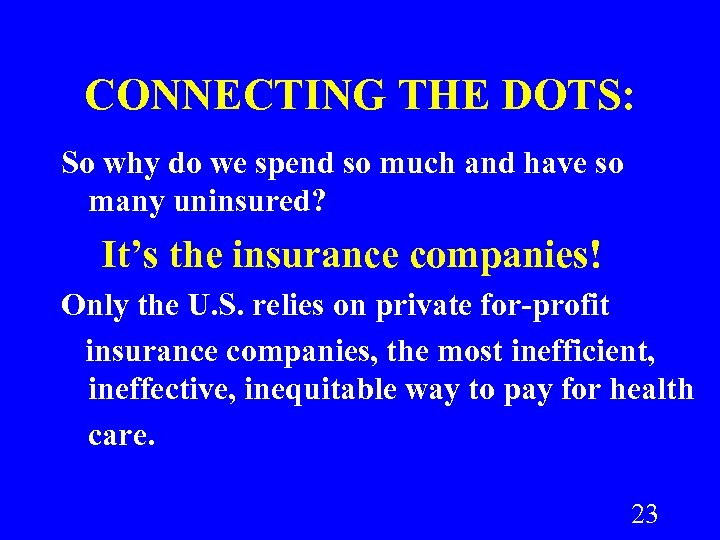 CONNECTING THE DOTS: So why do we spend so much and have so many uninsured? It’s the insurance companies! Only the U. S. relies on private for-profit insurance companies, the most inefficient, ineffective, inequitable way to pay for health care. 23
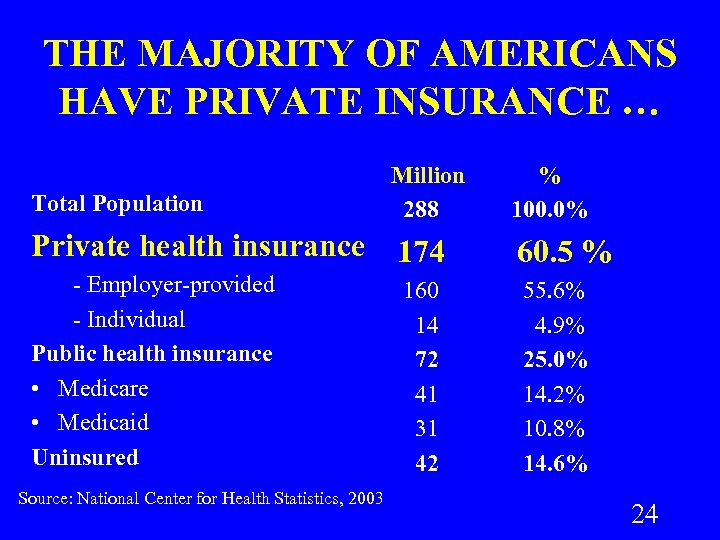 THE MAJORITY OF AMERICANS HAVE PRIVATE INSURANCE … Total Population Million 288 % 100. 0% Private health insurance 174 60. 5 % - Employer-provided - Individual Public health insurance • Medicare • Medicaid Uninsured 160 14 72 41 31 42 55. 6% 4. 9% 25. 0% 14. 2% 10. 8% 14. 6% Source: National Center for Health Statistics, 2003 24
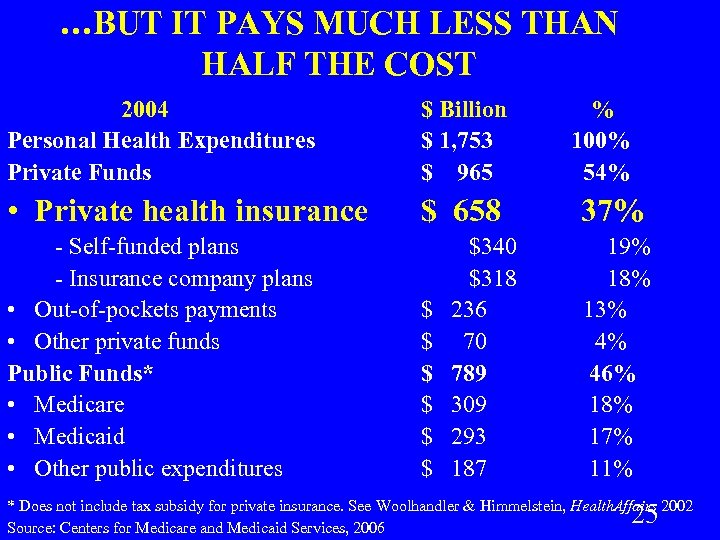 …BUT IT PAYS MUCH LESS THAN HALF THE COST 2004 Personal Health Expenditures Private Funds $ Billion $ 1, 753 $ 965 • Private health insurance $ 658 - Self-funded plans - Insurance company plans • Out-of-pockets payments • Other private funds Public Funds* • Medicare • Medicaid • Other public expenditures $ $ $ $340 $318 236 70 789 309 293 187 % 100% 54% 37% 19% 18% 13% 4% 46% 18% 17% 11% * Does not include tax subsidy for private insurance. See Woolhandler & Himmelstein, Health. Affairs 2002 Source: Centers for Medicare and Medicaid Services, 2006 25
 A PUZZLE: If private insurance pays for such a small portion of the total, how can it be responsible for the high cost of our system? 26
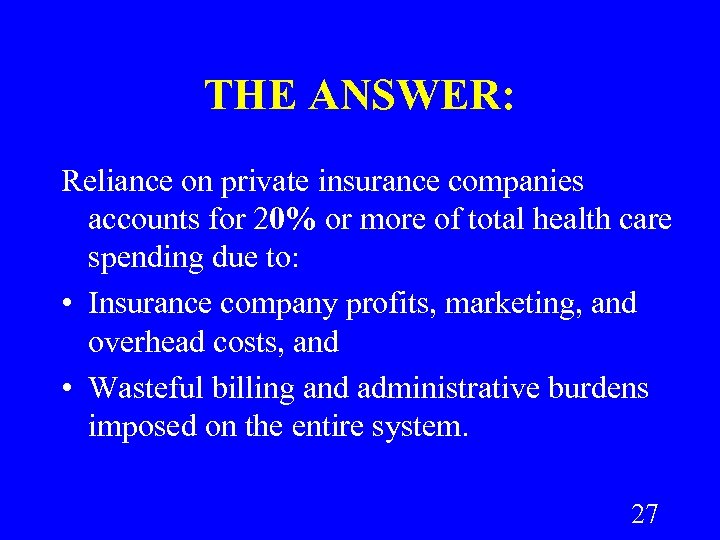 THE ANSWER: Reliance on private insurance companies accounts for 20% or more of total health care spending due to: • Insurance company profits, marketing, and overhead costs, and • Wasteful billing and administrative burdens imposed on the entire system. 27
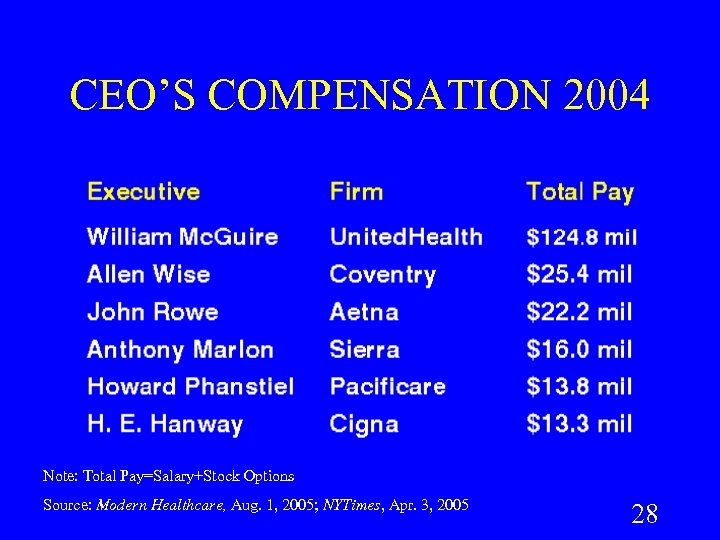 CEO’S COMPENSATION 2004 Note: Total Pay=Salary+Stock Options Source: Modern Healthcare, Aug. 1, 2005; NYTimes, Apr. 3, 2005 28
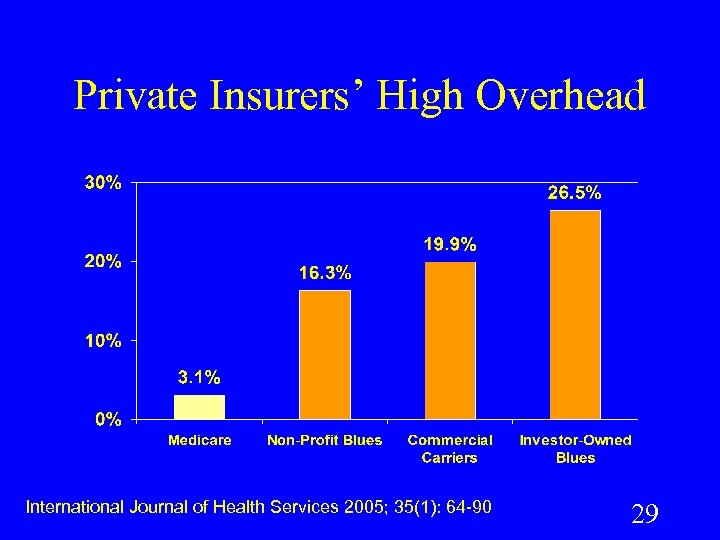 Private Insurers’ High Overhead International Journal of Health Services 2005; 35(1): 64 -90 29
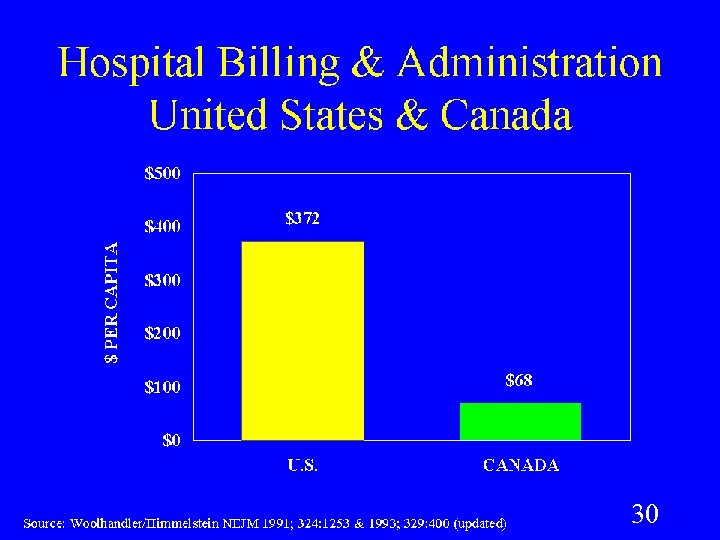 Hospital Billing & Administration United States & Canada 30
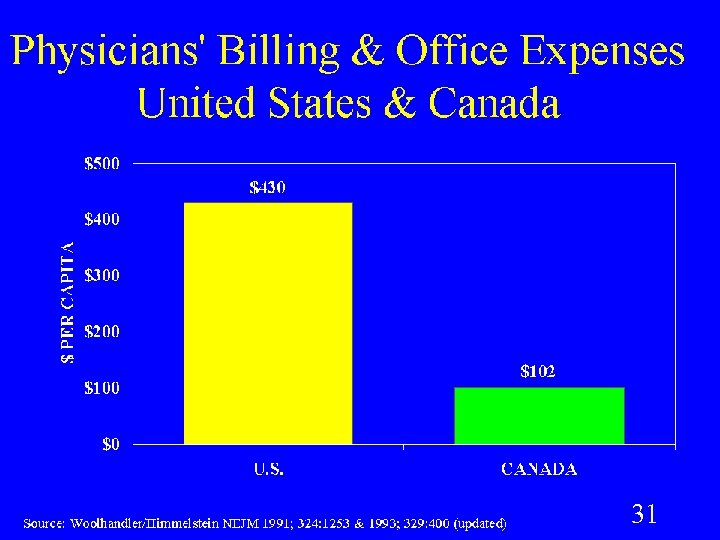 Physicians' Billing & Office Expenses United States & Canada 31
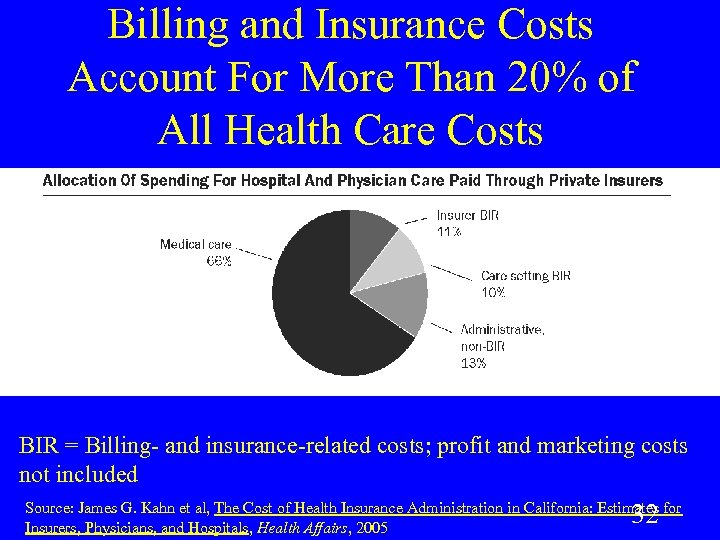 Billing and Insurance Costs Account For More Than 20% of All Health Care Costs BIR = Billing- and insurance-related costs; profit and marketing costs not included 32 Source: James G. Kahn et al, The Cost of Health Insurance Administration in California: Estimates for Insurers, Physicians, and Hospitals, Health Affairs, 2005
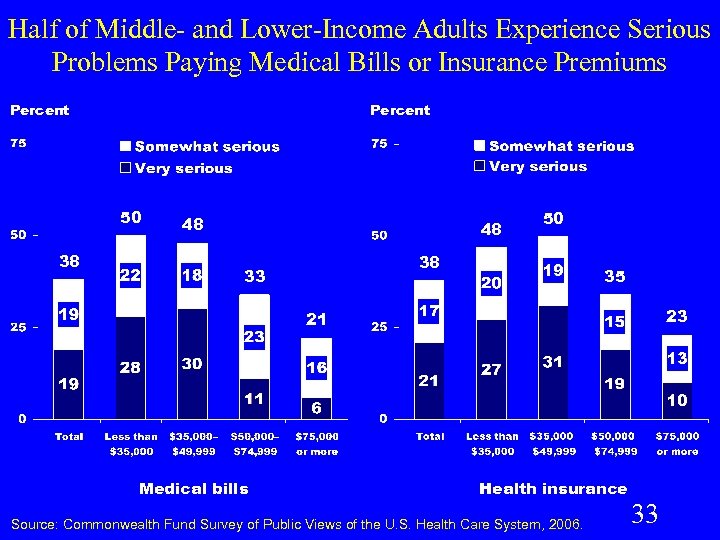 Half of Middle- and Lower-Income Adults Experience Serious Problems Paying Medical Bills or Insurance Premiums Percent 50 38 48 48 50 38 33 35 23 21 Medical bills Health insurance Source: Commonwealth Fund Survey of Public Views of the U. S. Health Care System, 2006. 33
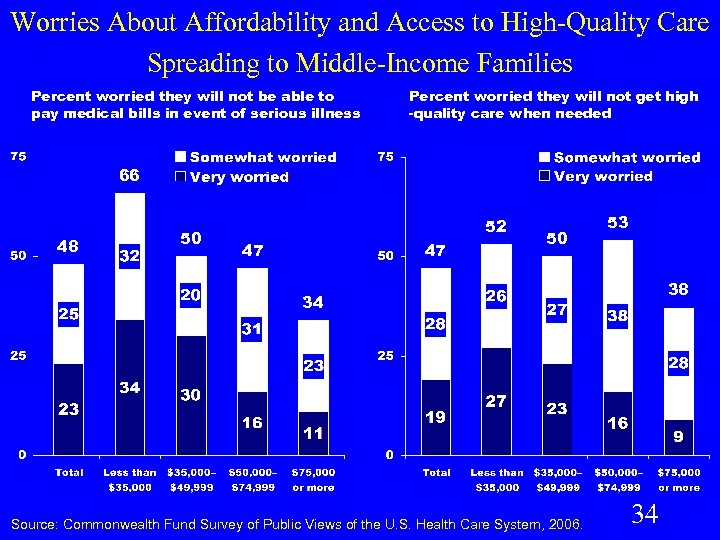 Worries About Affordability and Access to High-Quality Care Spreading to Middle-Income Families Percent worried they will not be able to pay medical bills in event of serious illness Percent worried they will not get high -quality care when needed 66 48 50 52 47 47 50 53 38 34 Source: Commonwealth Fund Survey of Public Views of the U. S. Health Care System, 2006. 34
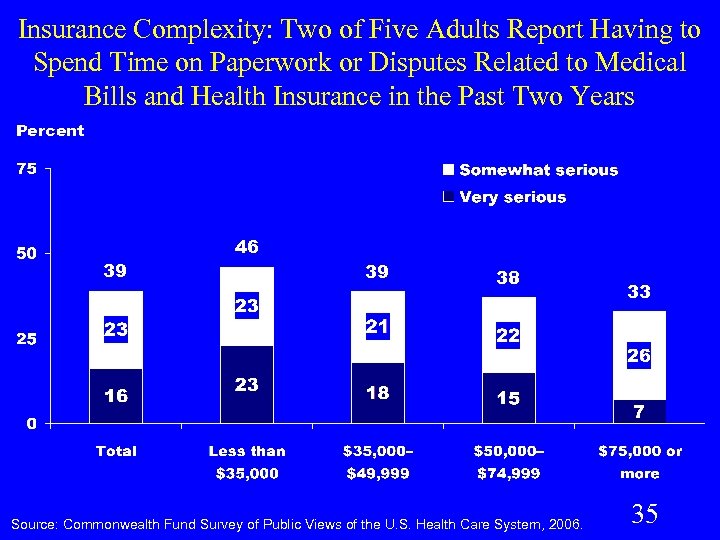 Insurance Complexity: Two of Five Adults Report Having to Spend Time on Paperwork or Disputes Related to Medical Bills and Health Insurance in the Past Two Years Percent 39 46 39 38 Source: Commonwealth Fund Survey of Public Views of the U. S. Health Care System, 2006. 33 35
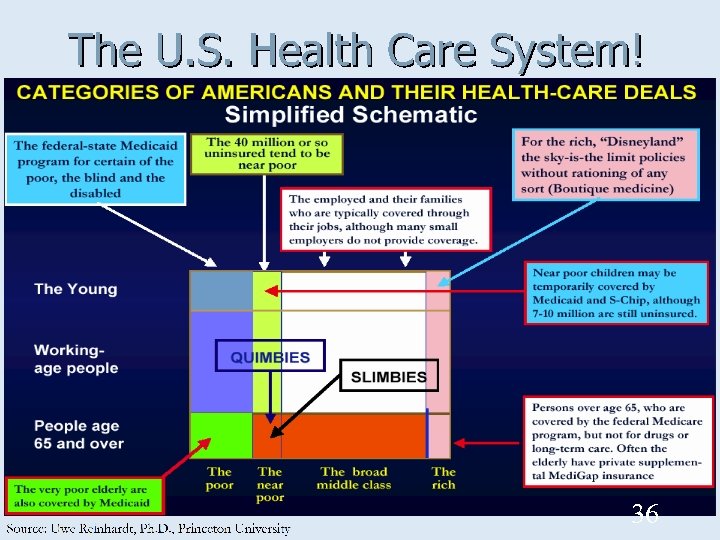 The US Health Care System! – Uwe Reinhardt 36
 PROBLEMS CREATED BY PRIVATE HEALTH INSURANCE #1 High cost • Excessive administrative costs • System complexity And, as a direct consequence of high cost, • Large numbers of uninsured and underinsured who cannot afford adequate coverage 37
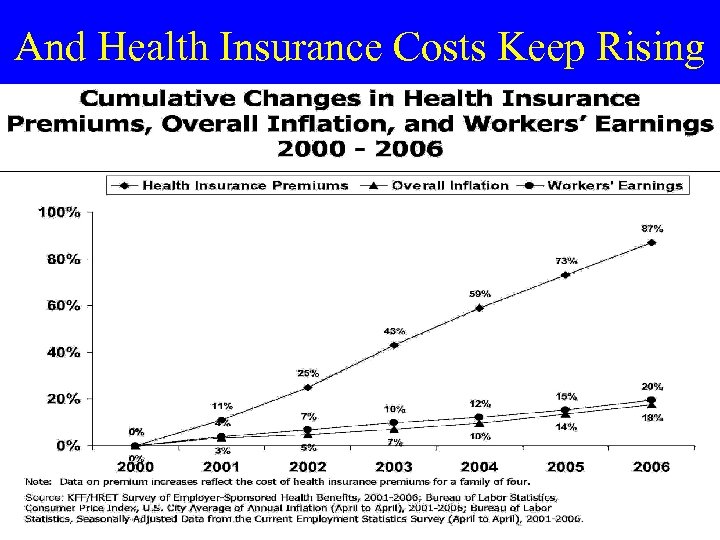 And Health Insurance Costs Keep Rising 38
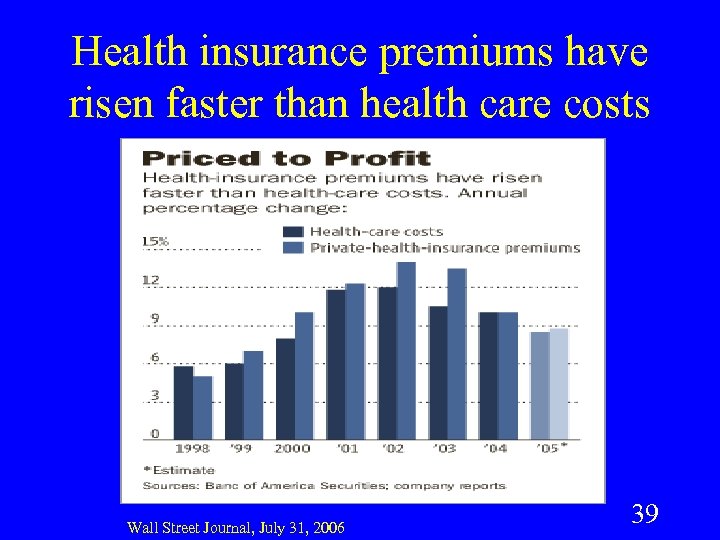 Health insurance premiums have risen faster than health care costs Wall Street Journal, July 31, 2006 39
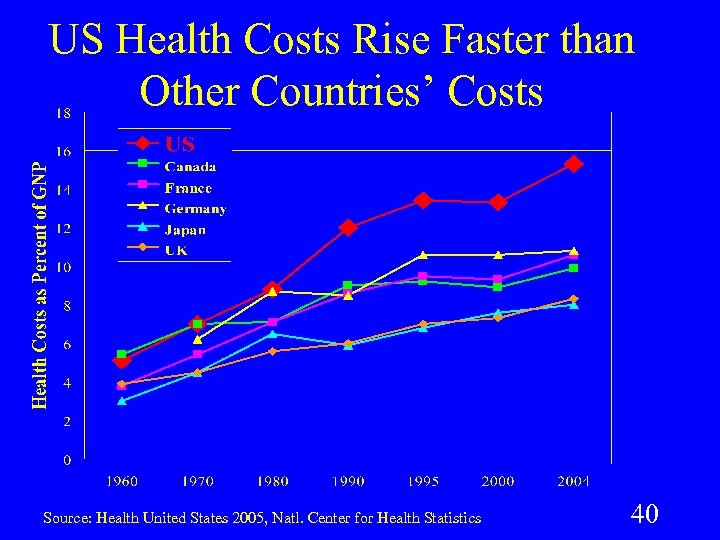 US Health Costs Rise Faster than Other Countries’ Costs Source: Health United States 2005, Natl. Center for Health Statistics 40
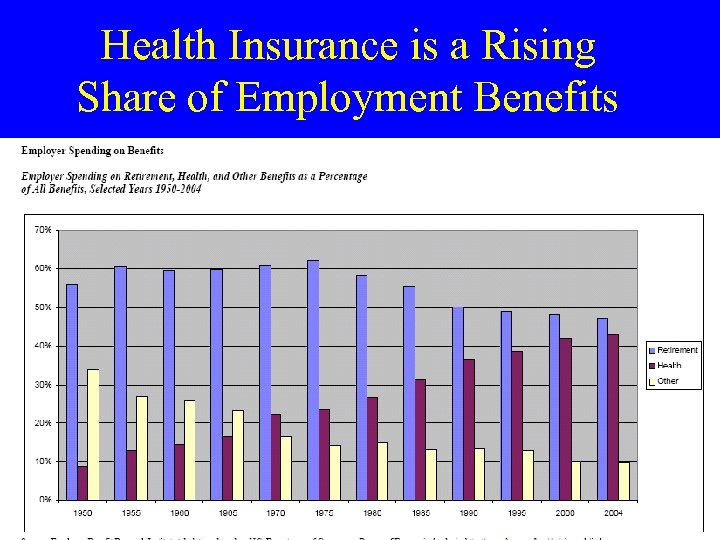 Health Insurance is a Rising Share of Employment Benefits 41
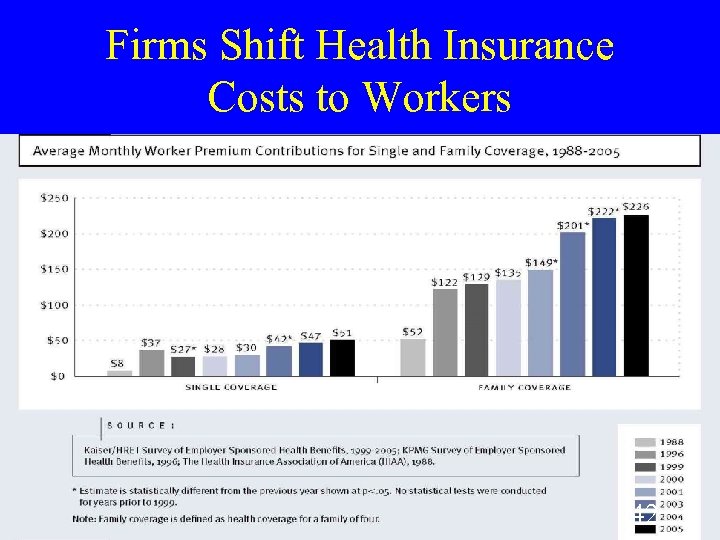 Firms Shift Health Insurance Costs to Workers 42
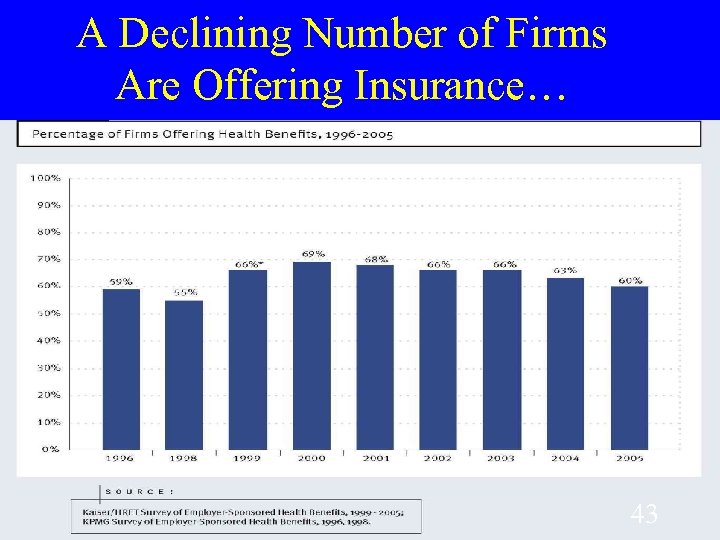 A Declining Number of Firms Are Offering Insurance… 43
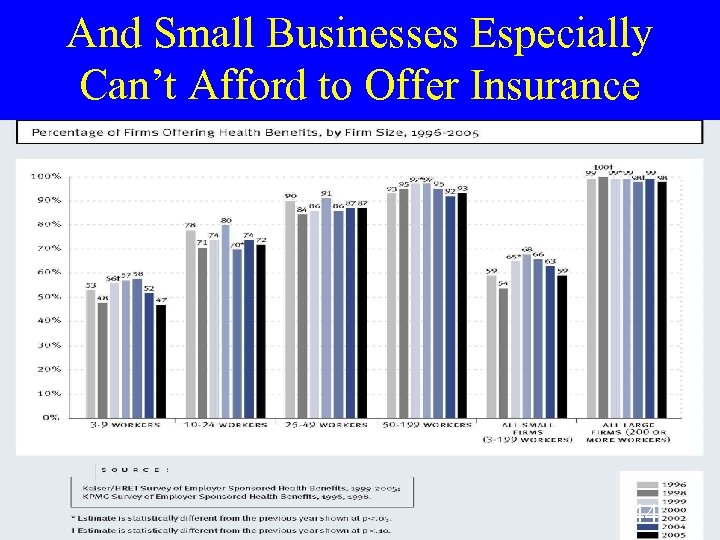 And Small Businesses Especially Can’t Afford to Offer Insurance 44
 PROBLEMS CREATED BY PRIVATE HEALTH INSURANCE #2 Failure to control costs Continuing double-digit annual cost increases Costs cannot be controlled in a for-profit multi-payer system that resists coordination, budgeting, and planning. 45
 CLAIMS BY HEALTH INSURANCE COMPANY SUPPORTERS Private health insurance gives consumers: • Greater choice • Efficiency through competition 46
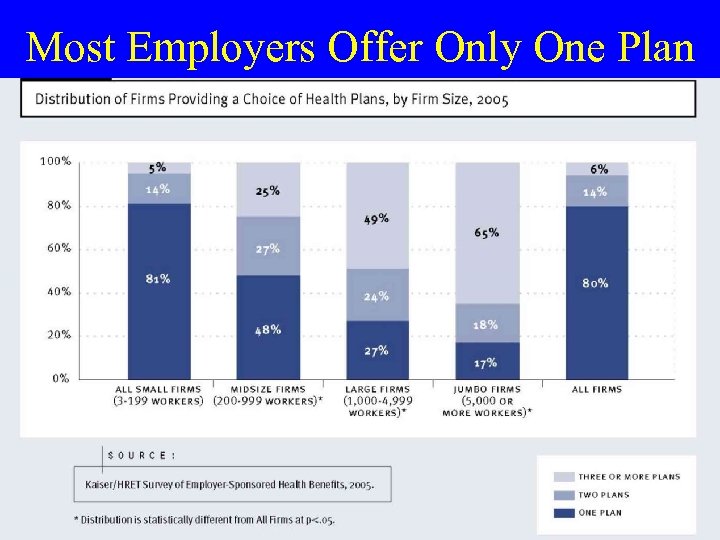 Most Employers Offer Only One Plan 47
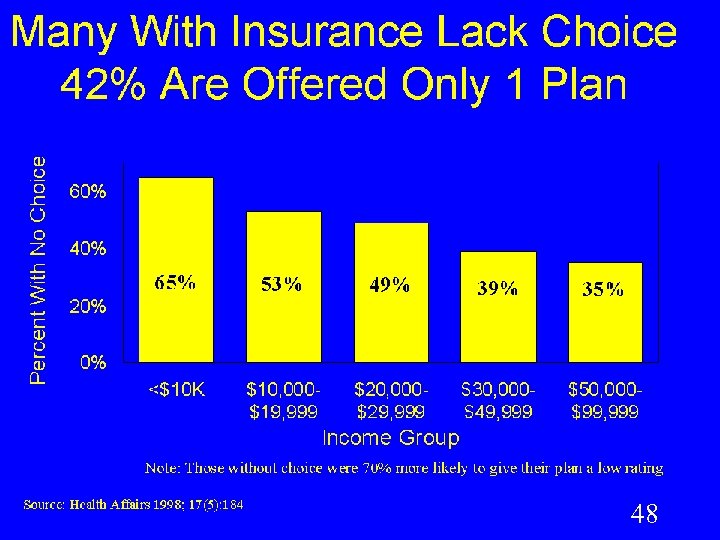 Many With Insurance Lack Choice 42% Are Offered Only 1 Plan 48
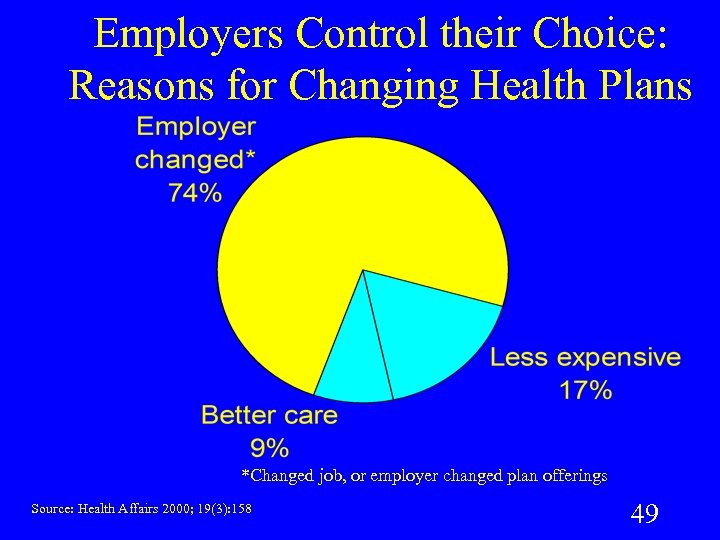 Employers Control their Choice: Reasons for Changing Health Plans *Changed job, or employer changed plan offerings Source: Health Affairs 2000; 19(3): 158 49
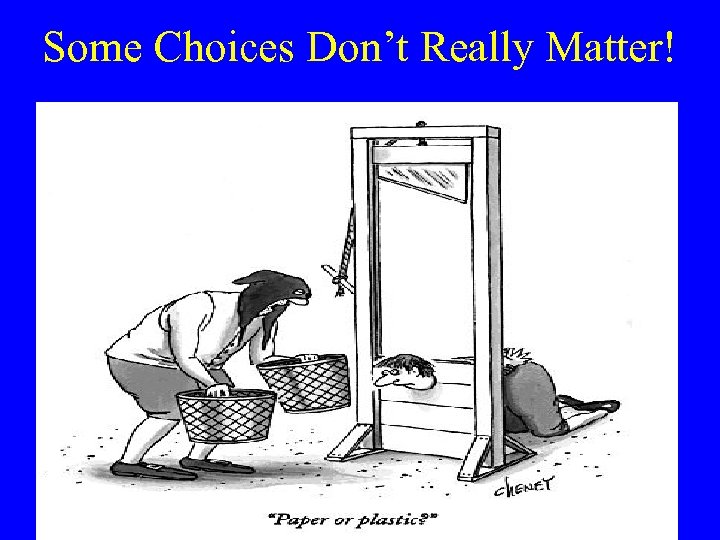 Some Choices Don’t Really Matter! 50
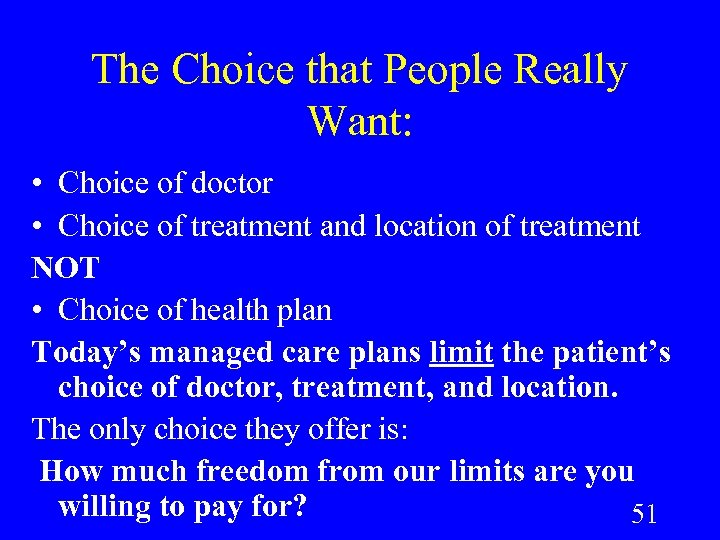 The Choice that People Really Want: • Choice of doctor • Choice of treatment and location of treatment NOT • Choice of health plan Today’s managed care plans limit the patient’s choice of doctor, treatment, and location. The only choice they offer is: How much freedom from our limits are you willing to pay for? 51
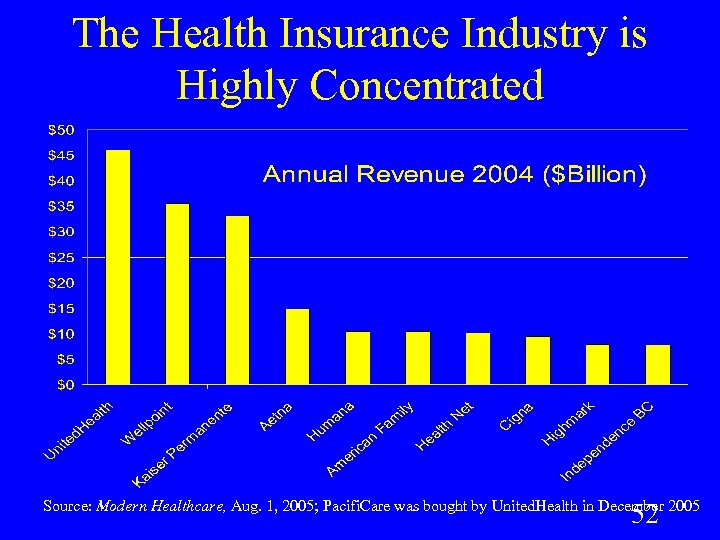 The Health Insurance Industry is Highly Concentrated Source: Modern Healthcare, Aug. 1, 2005; Pacifi. Care was bought by United. Health in December 2005 52
 …And the Concentration is Growing • Between 1995 and 2005, there were more than 400 mergers involving health insurers and managed care organizations. • In 95% of metropolitan areas, a single insurer had 30% or more of the market • In 56% of the areas, a single insurer had 50% or more of the market. Source: Competition in Health Insurance: A Comprehensive Study of US Markets, American Medical Association, 2005. 53
 THE TRUTH ABOUT HEALTH INSURANCE COMPANY CLAIMS They fail to provide real choice or competition • Many employees have no choice of plan • Many employers change plans • People want choice of provider, not plan • Competition is declining through mergers 54
 OTHER PROBLEMS CREATED BY PRIVATE HEALTH INSURANCE • Financing by income-independent (and often unaffordable) premiums is highly regressive • Millions have inadequate coverage and high out-of-pocket expenses • One million households each year face healthrelated bankruptcy • The “hassle factor: Filing of claims by consumers is confusing, costly, stressful • Claims are often denied or delayed 55
 STILL MORE PROBLEMS CREATED BY PRIVATE HEALTH INSURANCE • Insurers avoid covering those who are sick (underwriting or risk selection) • Insurance companies interfere in physician decision-making • Trust in the doctor-patient relationship erodes • Money is spent on treatment, not prevention • Health care is treated as a commodity to be purchased rather than a service to be provided 56
 THE ULTIMATE PROBLEM “Physicians have a professional and ethical obligation to their patients; health insurers’ primary legal obligation is to their shareholders. ” Competition in Health Insurance: A Comprehensive Study of US Markets, American Medical Association, 2005 (Note: Perhaps now the AMA will reconsider its support for private for-profit insurance over publicly-provided insurance plans. ) 57
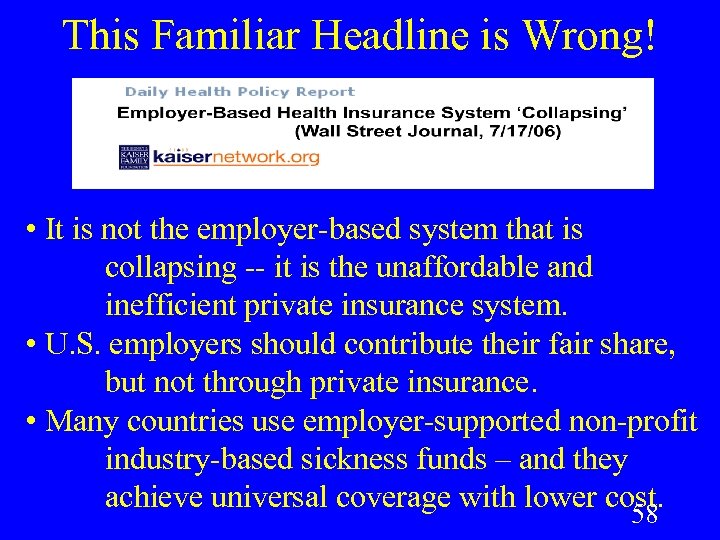 This Familiar Headline is Wrong! • It is not the employer-based system that is collapsing -- it is the unaffordable and inefficient private insurance system. • U. S. employers should contribute their fair share, but not through private insurance. • Many countries use employer-supported non-profit industry-based sickness funds – and they achieve universal coverage with lower cost. 58
 SOME PROPOSALS BASED ON PRIVATE INSURANCE • • Employer mandate to provide insurance Individual mandate to purchase insurance Tax credits for the purchase of insurance Health savings accounts and high-deductible insurance (“Consumer-directed health care”) ALL OF THESE WILL FAIL They are more of the same: They all rely on private health insurance 59
 WHAT’S WRONG WITH THE ME/MA/VT PLANS What is really wrong with these plans is not their details. The problem with them is: They continue to rely on private insurance. • Covering the uninsured with private insurance will increase the cost of health care. • Costs will continue to rise as long as there are multiple private payers with no coordination, no budgeting, and no planning. 60
 SO WHO NEEDS INSURANCE COMPANIES ANYWAY? The U. S. today runs a very successful program that • Pays for comprehensive health services • Covers more than forty million people • Gives patients free choice of doctors and hospitals • Is funded by a public agency, not by private insurance companies It’s called Medicare. 61
 THE EVIDENCE FROM MEDICARE Since 1997, the US has conducted a head-to-head comparison between private insurance (“Medicare Choice+”, now called “Medicare Advantage”) and “public” Medicare. The result: • Private insurance companies require a subsidy of at least 15% just to stay in the business. • Fewer than 1 in 6 Medicare-eligibles choose the private insurance option. 62
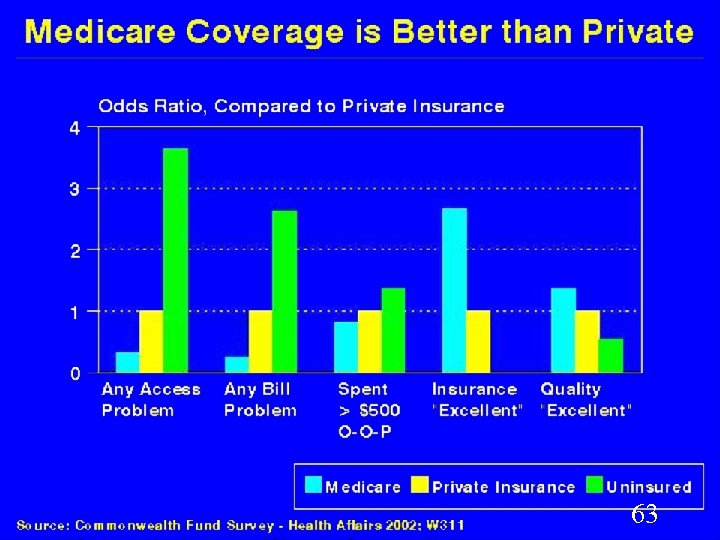 Medicare Coverage is Better than Private 63
 SO HERE’S OUR SOLUTION: • Expand Medicare to cover everyone • Improve the coverage it offers • Eliminate private insurance Expanded and Improved Medicare for All Conyers Bill - HR 676 -- The “single payer” solution 64 --
 HOW WOULD “MEDICARE FOR ALL” WORK? • Everyone would receive a Medicare card assuring payment for all needed care • Complete free choice of doctor and hospital • Doctors and hospitals remain independent, negotiate fees and budgets with Medicare • Progressive taxes go to Medicare Trust Fund • Public agency processes and pays bills 65
 SOME IMPLICATIONS OF MEDICARE FOR ALL • The same coverage for everyone: No means testing; coverage would not depend on income, employment or age • Medicaid would no be longer needed • Hundreds of billions of dollars in administrative costs would be saved • Costs would be controlled through capital planning and quality reviews conducted through the single insurer 66
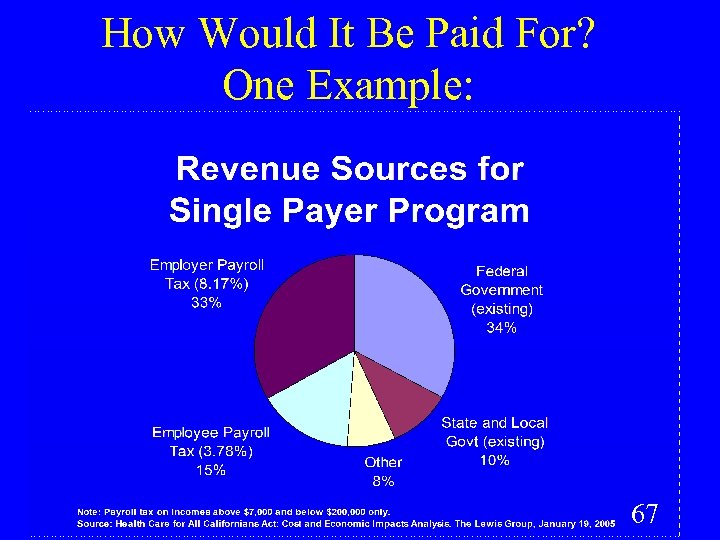 How Would It Be Paid For? One Example: 67
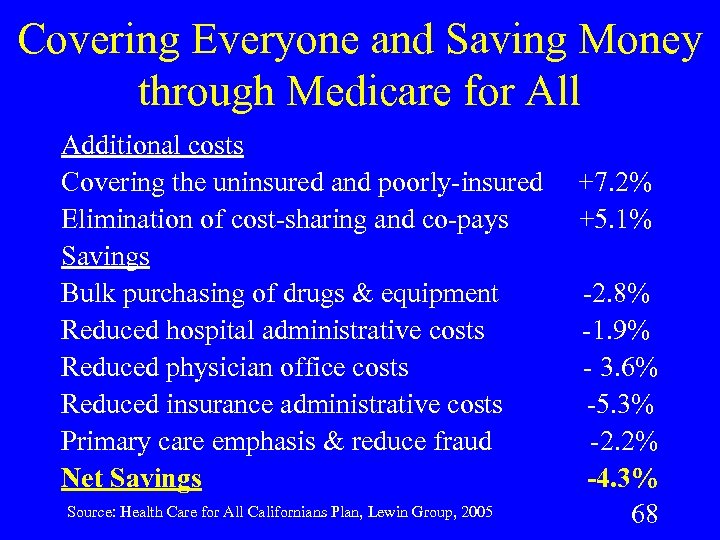 Covering Everyone and Saving Money through Medicare for All Additional costs Covering the uninsured and poorly-insured Elimination of cost-sharing and co-pays Savings Bulk purchasing of drugs & equipment Reduced hospital administrative costs Reduced physician office costs Reduced insurance administrative costs Primary care emphasis & reduce fraud Net Savings Source: Health Care for All Californians Plan, Lewin Group, 2005 +7. 2% +5. 1% -2. 8% -1. 9% - 3. 6% -5. 3% -2. 2% -4. 3% 68
 WHY IS SUCH A NATIONAL HEALTH PROGRAM POSSIBLE TODAY? • Private insurance is not addressing the fundamental problems of cost, choice, access and quality. • Everyone is affected: the uninsured, the underinsured, and everyone else who is insecurely insured. • Employers who provide insurance want to be relieved of the burden of rising costs and unfair competition from employers who don't offer insurance. • Small businesses want to offer insurance to their employees but can’t afford it. • Every other industrialized country has done it. 69
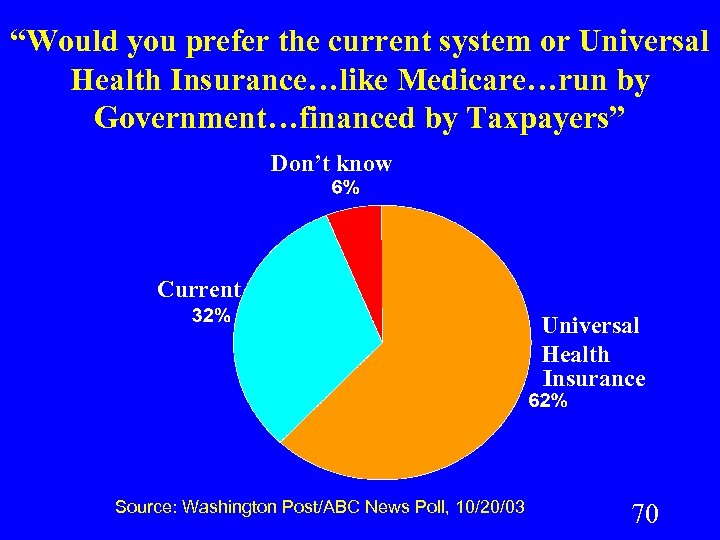 “Would you prefer the current system or Universal Health Insurance…like Medicare…run by Government…financed by Taxpayers” Don’t know Current Universal Health Insurance Source: Washington Post/ABC News Poll, 10/20/03 70
 PHYSICIANS FOR A NATIONAL HEALTH PROGRAM (PNHP) says: Who needs insurance companies anyway? • Limited reforms that keep private insurance in place have been tried and failed. • If we get rid of the insurance companies, we can have a Medicare for All system that is: - Simpler - Less costly - Better for our health - Equitable, and - Covers everyone Let’s do it! 71
 RESOURCES • Physicians for a National Health Program (PNHP) www. pnhp. org • PNHP New York Metro Chapter www. pnhpnyc. org. • Rekindling Reform www. rekindlingreform. org • Health. Care-NOW www. healthcare. NOW. org • Citizens Health Care Working Group (US govt) www. citizenshealthcare. gov 72