


«Who help our Planet? » Project by Goncharova Alyona Form 9 -A School № 56 2014 year
The Problems: Every day we lose so many species of a different plants and animals; water and atmosphere are polluted more and more; deforestation is progressing! And almost nobody’s trying to stop it. If we don’t protect our planet, the Earth will die soon!
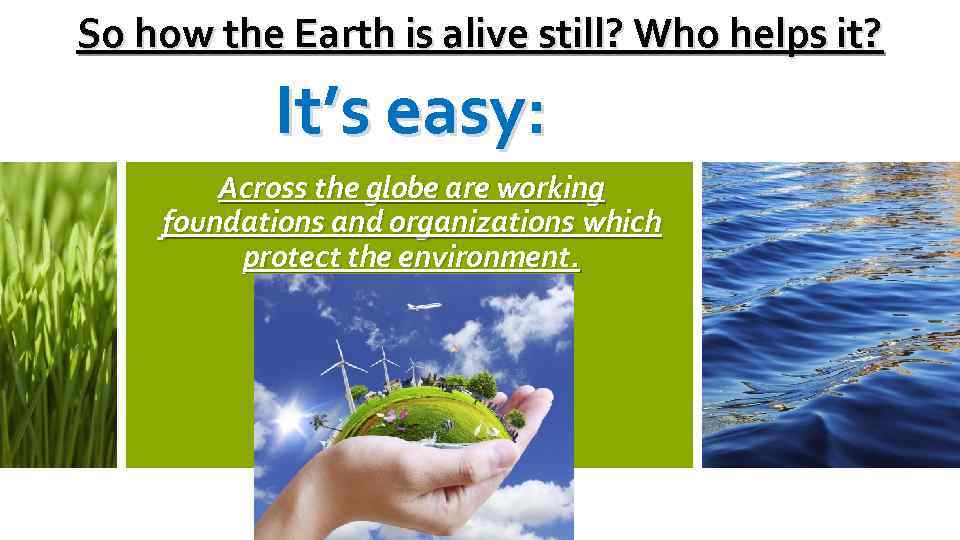
So how the Earth is alive still? Who helps it? It’s easy: Across the globe are working foundations and organizations which protect the environment.
There’re Three The Most Famous Organizations

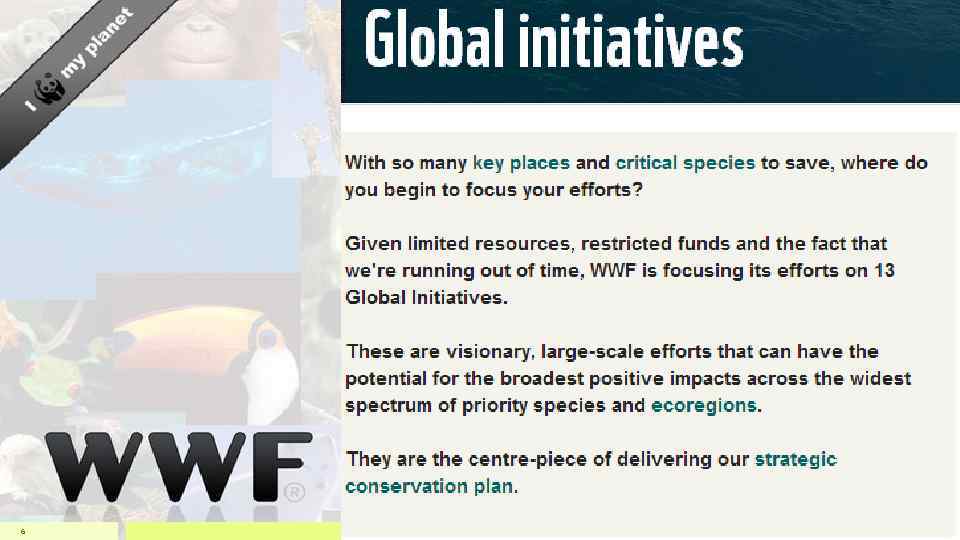
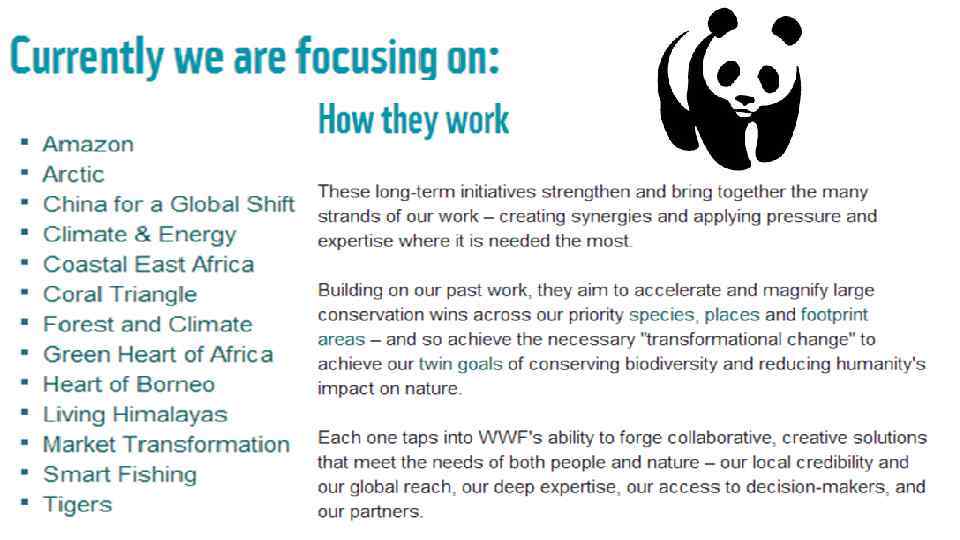
The World Wide Fund for Nature (WWF) is an international non-governmental organization working on issues regarding the conservation, research and restoration of the environment, formerly named the World Wildlife Fund, which remains its official name in Canada and the United States. It is the world's largest independent conservation organization with over 5 million supporters worldwide, working in more than 100 countries, supporting around 1, 300 conservation and environmental projects. WWF is a foundation, [ in 2010 deriving 57% of funding from individuals and bequests, 17% from government sources (such as the World Bank, DFID, USAID) and 11% from corporations. The group says its mission is "to stop the degradation of the planet’s natural environment and to build a future in which humans live in harmony with nature. " Currently, much of its work focuses on the conservation of three biomes that contain most of the world's biodiversity: oceans and coasts, forests, and freshwater ecosystems. Among other issues, it is also concerned with endangered species, pollution and climate change.
6
7 22 липня 2012 р. Текст нижнього колонтитула
is a non-governmental environmental organization with offices in over forty countries and with an international coordinating body in Amsterdam, the Netherlands. Greenpeace states its goal is to "ensure the ability of the Earth to nurture life in all its diversity" and focuses its campaigning on world wide issues such as global warming, deforestation, overfishing, commercial whaling, genetic engineering, and anti-nuclear issues. Greenpeace uses direct action, lobbying and research to achieve its goals. The global organization does not accept funding from governments, corporations or political parties, relying on 2. 9 million individual supporters and foundation grants. Greenpeace has a general consultative status with the United Nations Economic and Social Council and is a founding member of the INGO Accountability Charter; an international non-governmental organization that intends to foster accountability and transparency of non-governmental organizations.
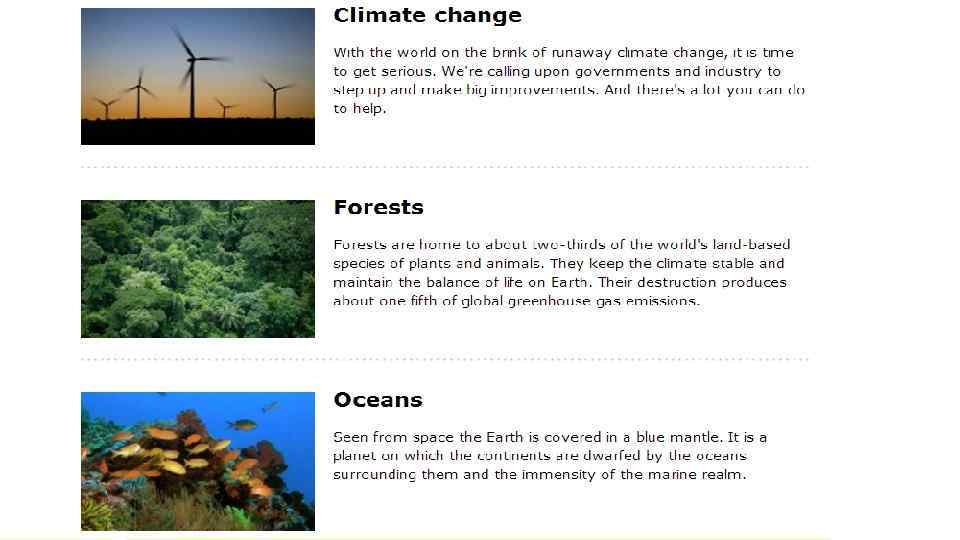
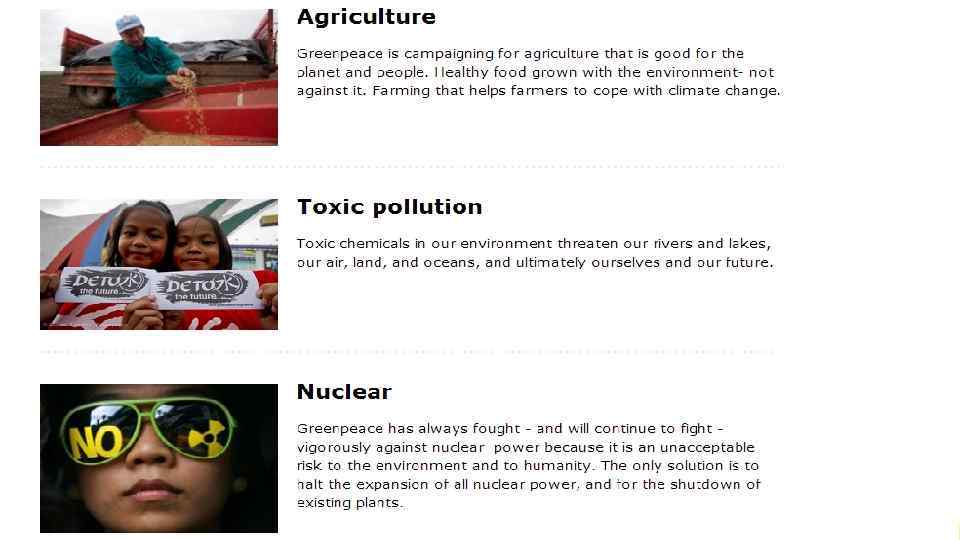
What we do: The issues we work on Greenpeace exists because this fragile Earth deserves a voice. It needs solutions. It needs change. It needs action!
Friends of the Earth International (Fo. EI) is an international network of environmental organizations in 74 countries. Friends of the Earth was founded in 1969 as an anti nuclear group by Robert O Anderson who contributed $200, 000 in personal funds to launch FOTE with David Brower, Donald Aitken and Jerry Mander after Brower's split with the Sierra Club. FOTE main mission was to lock up and prevent further development of nuclear energy. Their first employee was Amory Lovins, who kicked off FOE in the UK. It became an international network in 1971 with a meeting of representatives from the U. S. , Sweden, the UK and France. For further historical details see articles on the national FOE organizations. Fo. EI is assisted by a small secretariat (based in Amsterdam, Netherlands) which provides support for the network and its agreed major campaigns. The executive committee of elected representatives from national groups set policy and oversee the work of the secretariat. In 2010 Nigerian activist Nnimmo Bassey was elected to serve as chair of Friends of the Earth International.
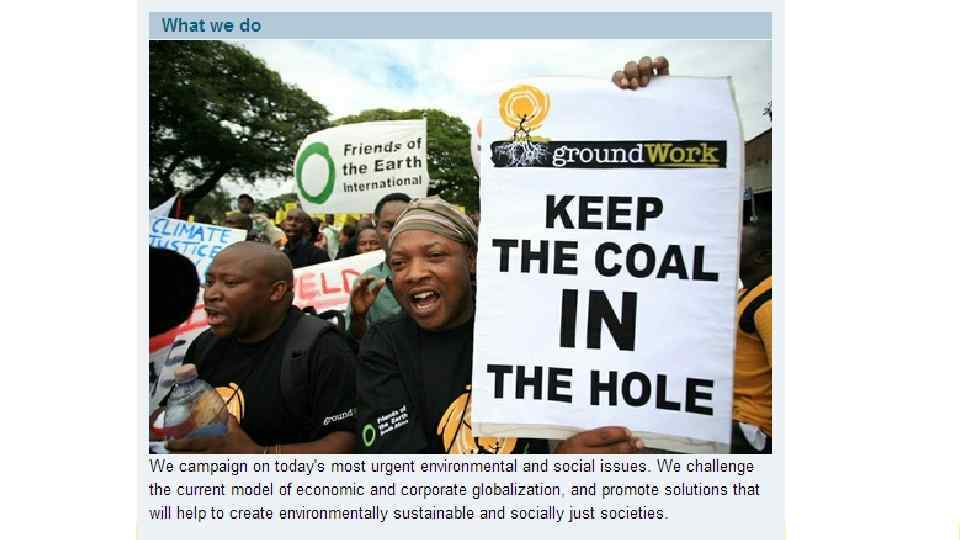
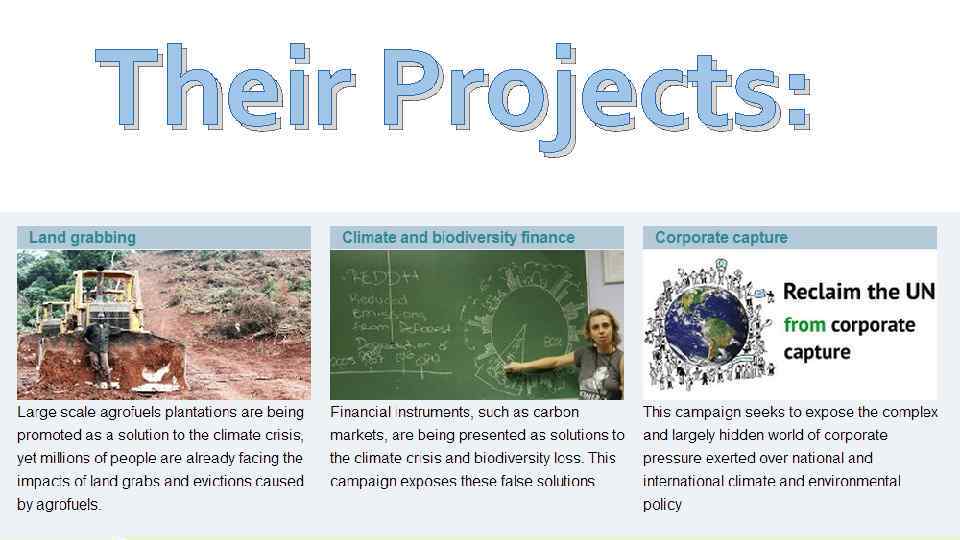
Their Projects:
So, How we can help our environment? ØDon’t throw trash on the streets. ØDon’t scare animals. ØDon’t tear the plants. ØDon't contaminate water. ØUse the public transport. ØUse the rule of «Three R» .
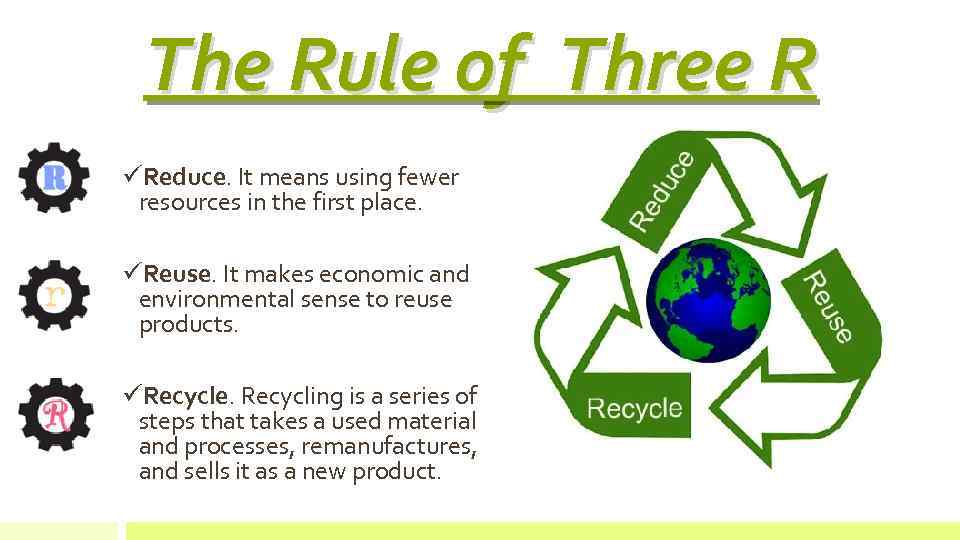
The Rule of Three R üReduce. It means using fewer resources in the first place. üReuse. It makes economic and environmental sense to reuse products. üRecycle. Recycling is a series of steps that takes a used material and processes, remanufactures, and sells it as a new product.

Together we can deal with the all over the problems. Let’s start today and we’ll stay alive in future!
18 22 липня 2012 р. Текст нижнього колонтитула
