 Скачать презентацию Who benefits most of BNCT A review
869bc05e82cd6bd38a33e672c0ca3170.ppt
- Количество слайдов: 26



Who benefits most of BNCT? – A review on literature data on the prognostic value of protein expression of amino acid transporter 4 F 2 hc/LAT 1 C. L. Schütz 1; D. Ngoga 1; A. Detta 1; S. Green 2; G. Cruickshank 1 1 University of Birmingham, School of Cancer Sciences, Queen Elizabeth Hospital, Department of Neurosurgery 2 University of Birmingham, Queen Elizabeth Hospital, Department of Medical Physics ICNCT-16, June 2014, Helsinki
Who profits most of BNCT? – The role of 4 F 2 hc/LAT 1 Patient selection for clinical trials § Location, dimension and stage of lesions: Historically in BNCT mostly glioma, H&N tumours and melanoma - Application of a neutron beam is comparably easy § Outcome of BNCT is unsystematic within many cohorts, the effectiveness of the applied protocols varies: While certain patients, even so-called lost cases, show complete response, other do not respond at all § Do we know the reason for the very different outcome? § Could we select patients accordingly before therapy? ICNCT-16, Helsinki, June 2014 / Christian Schütz 2
Who profits most of BNCT? – The role of 4 F 2 hc/LAT 1 Targeting and boron compounds ICNCT-16, Helsinki, June 2014 / Christian Schütz 3
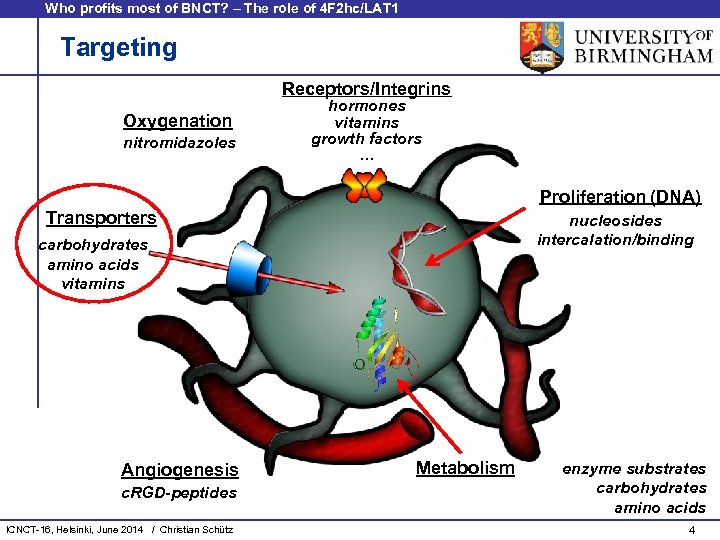
Who profits most of BNCT? – The role of 4 F 2 hc/LAT 1 Targeting Receptors/Integrins Oxygenation nitromidazoles hormones vitamins growth factors … Proliferation (DNA) Transporters nucleosides intercalation/binding carbohydrates amino acids vitamins Angiogenesis c. RGD-peptides ICNCT-16, Helsinki, June 2014 / Christian Schütz Metabolism enzyme substrates carbohydrates amino acids 4
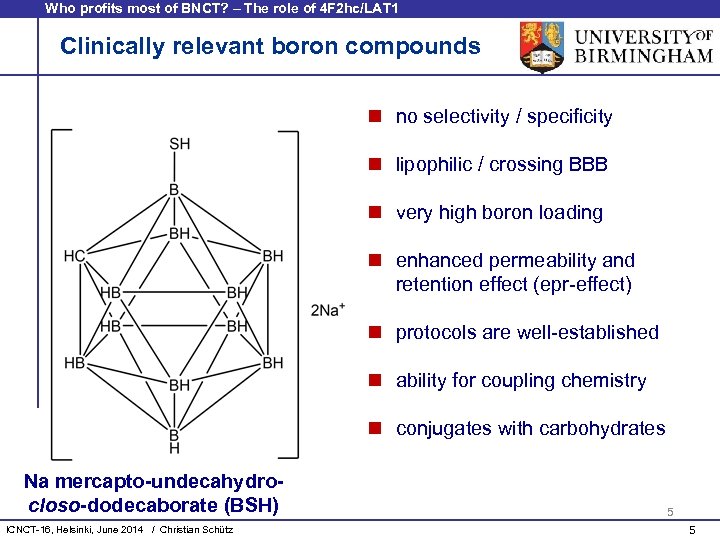
Who profits most of BNCT? – The role of 4 F 2 hc/LAT 1 Clinically relevant boron compounds n no selectivity / specificity n lipophilic / crossing BBB n very high boron loading n enhanced permeability and retention effect (epr-effect) n protocols are well-established n ability for coupling chemistry n conjugates with carbohydrates Na mercapto-undecahydrocloso-dodecaborate (BSH) ICNCT-16, Helsinki, June 2014 / Christian Schütz 5 5
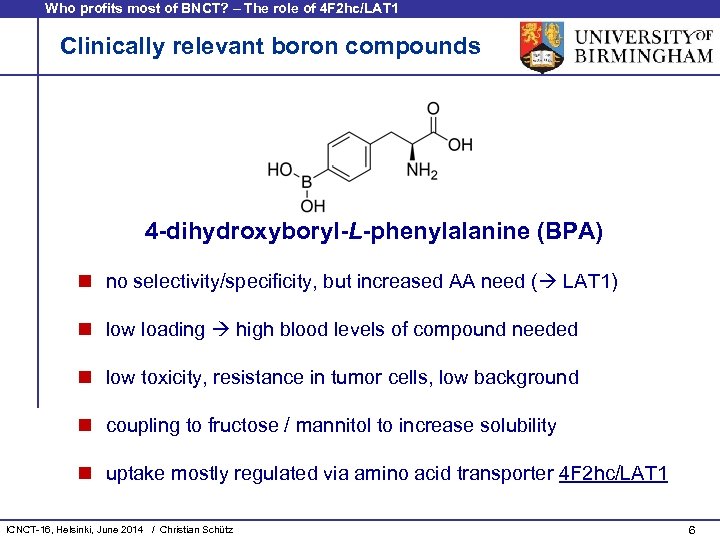
Who profits most of BNCT? – The role of 4 F 2 hc/LAT 1 Clinically relevant boron compounds 4 -dihydroxyboryl-L-phenylalanine (BPA) n no selectivity/specificity, but increased AA need ( LAT 1) n low loading high blood levels of compound needed n low toxicity, resistance in tumor cells, low background n coupling to fructose / mannitol to increase solubility n uptake mostly regulated via amino acid transporter 4 F 2 hc/LAT 1 ICNCT-16, Helsinki, June 2014 / Christian Schütz 6
Who profits most of BNCT? – The role of 4 F 2 hc/LAT 1 Why is BPA-BNCT effective in tumour therapy? ICNCT-16, Helsinki, June 2014 / Christian Schütz 7
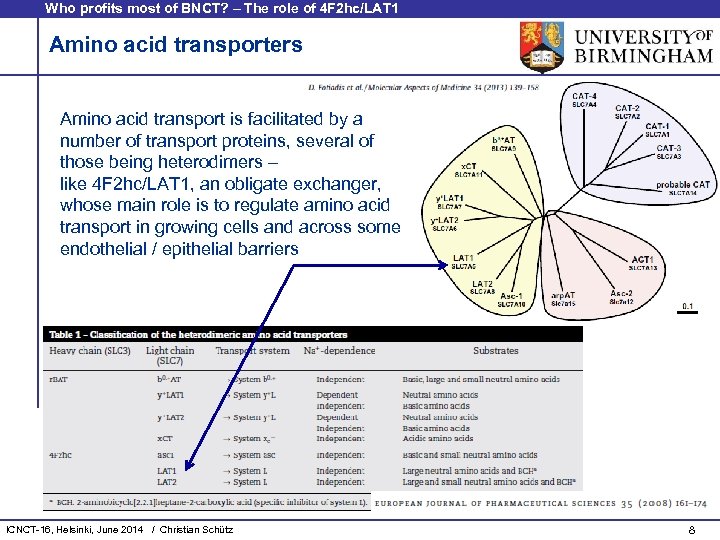
Who profits most of BNCT? – The role of 4 F 2 hc/LAT 1 Amino acid transporters Amino acid transport is facilitated by a number of transport proteins, several of those being heterodimers – like 4 F 2 hc/LAT 1, an obligate exchanger, whose main role is to regulate amino acid transport in growing cells and across some endothelial / epithelial barriers ICNCT-16, Helsinki, June 2014 / Christian Schütz 8
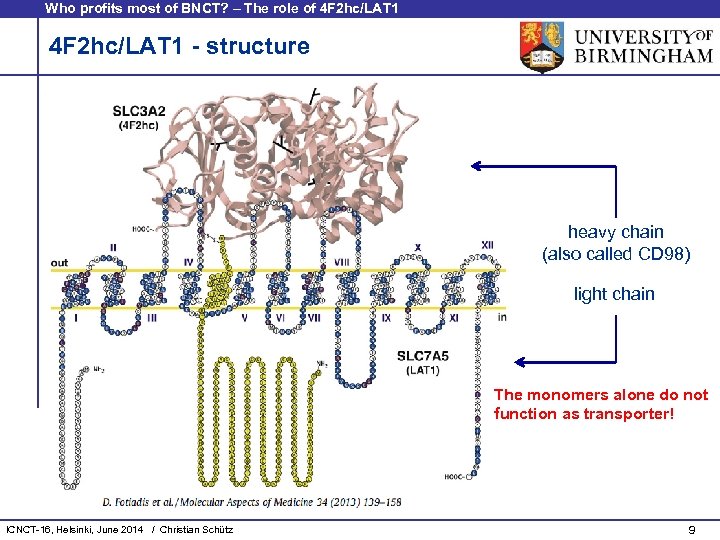
Who profits most of BNCT? – The role of 4 F 2 hc/LAT 1 - structure heavy chain (also called CD 98) light chain The monomers alone do not function as transporter! ICNCT-16, Helsinki, June 2014 / Christian Schütz 9
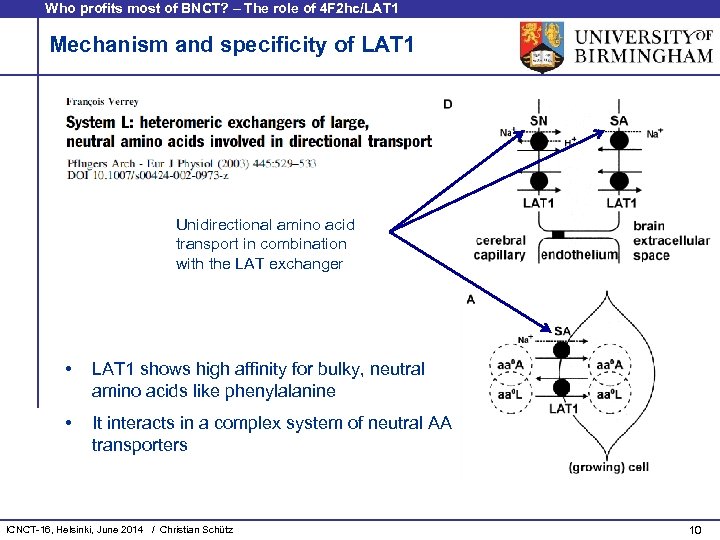
Who profits most of BNCT? – The role of 4 F 2 hc/LAT 1 Mechanism and specificity of LAT 1 Unidirectional amino acid transport in combination with the LAT exchanger • LAT 1 shows high affinity for bulky, neutral amino acids like phenylalanine • It interacts in a complex system of neutral AA transporters ICNCT-16, Helsinki, June 2014 / Christian Schütz 10
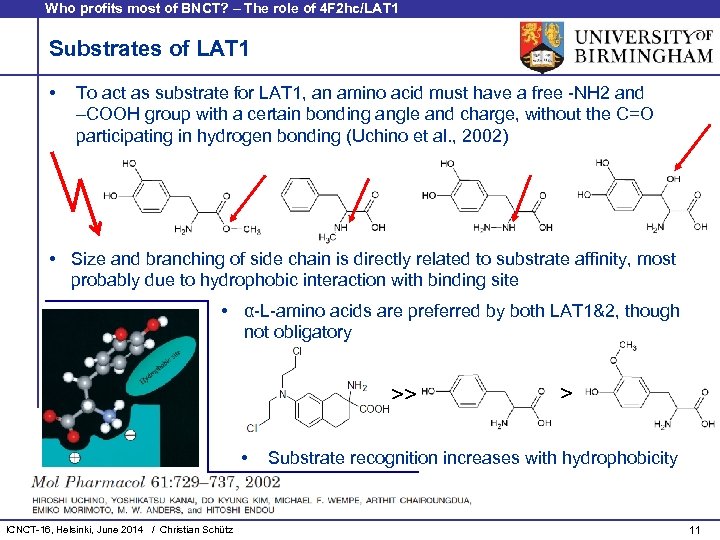
Who profits most of BNCT? – The role of 4 F 2 hc/LAT 1 Substrates of LAT 1 • To act as substrate for LAT 1, an amino acid must have a free -NH 2 and –COOH group with a certain bonding angle and charge, without the C=O participating in hydrogen bonding (Uchino et al. , 2002) • Size and branching of side chain is directly related to substrate affinity, most probably due to hydrophobic interaction with binding site • α-L-amino acids are preferred by both LAT 1&2, though not obligatory >> • ICNCT-16, Helsinki, June 2014 / Christian Schütz > Substrate recognition increases with hydrophobicity 11
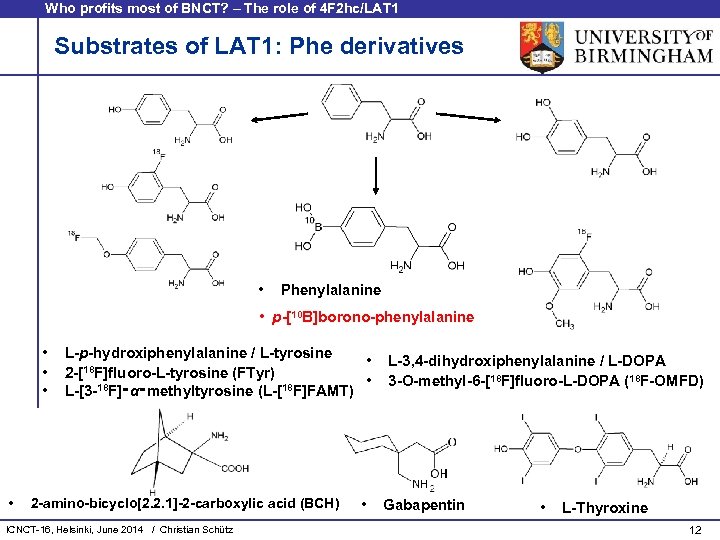
Who profits most of BNCT? – The role of 4 F 2 hc/LAT 1 Substrates of LAT 1: Phe derivatives • Phenylalanine • p-[10 B]borono-phenylalanine • • L-p-hydroxiphenylalanine / L-tyrosine • 2 -[18 F]fluoro-L-tyrosine (FTyr) • L-[3 -18 F]‑α‑methyltyrosine (L-[18 F]FAMT) 2 -amino-bicyclo[2. 2. 1]-2 -carboxylic acid (BCH) ICNCT-16, Helsinki, June 2014 / Christian Schütz • L-3, 4 -dihydroxiphenylalanine / L-DOPA 3 -O-methyl-6 -[18 F]fluoro-L-DOPA (18 F-OMFD) Gabapentin • L-Thyroxine 12
Who profits most of BNCT? – The role of 4 F 2 hc/LAT 1 The role and potential of 4 F 2 hc/LAT in tumour therapy ICNCT-16, Helsinki, June 2014 / Christian Schütz 13
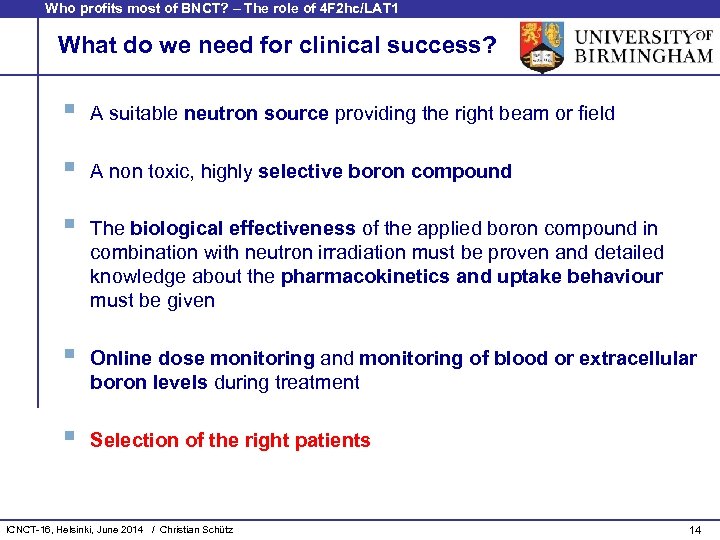
Who profits most of BNCT? – The role of 4 F 2 hc/LAT 1 What do we need for clinical success? § A suitable neutron source providing the right beam or field § A non toxic, highly selective boron compound § The biological effectiveness of the applied boron compound in combination with neutron irradiation must be proven and detailed knowledge about the pharmacokinetics and uptake behaviour must be given § Online dose monitoring and monitoring of blood or extracellular boron levels during treatment § Selection of the right patients ICNCT-16, Helsinki, June 2014 / Christian Schütz 14
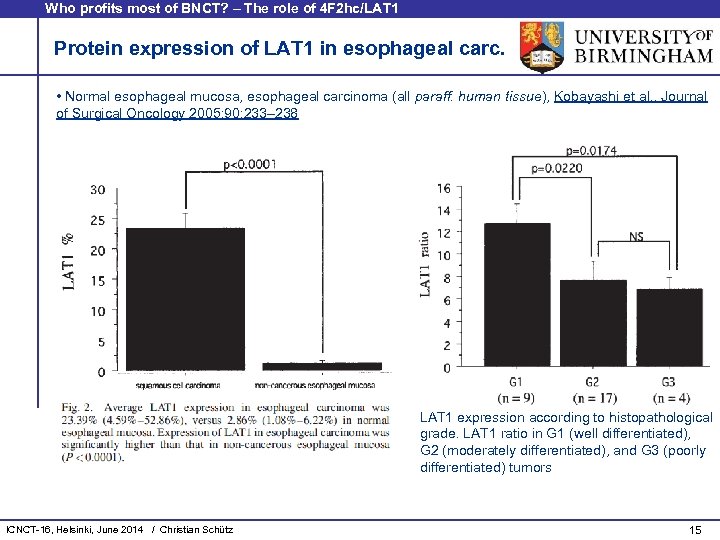
Who profits most of BNCT? – The role of 4 F 2 hc/LAT 1 Protein expression of LAT 1 in esophageal carc. • Normal esophageal mucosa, esophageal carcinoma (all paraff. human tissue), Kobayashi et al. , Journal of Surgical Oncology 2005; 90: 233– 238 LAT 1 expression according to histopathological grade. LAT 1 ratio in G 1 (well differentiated), G 2 (moderately differentiated), and G 3 (poorly differentiated) tumors ICNCT-16, Helsinki, June 2014 / Christian Schütz 15
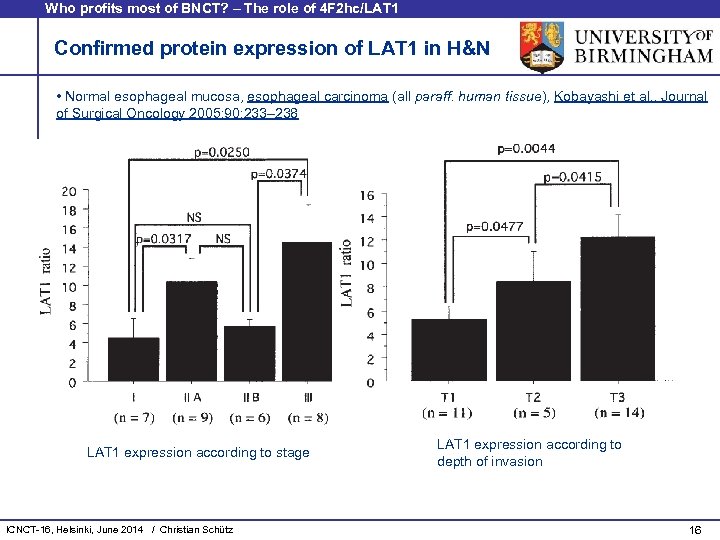
Who profits most of BNCT? – The role of 4 F 2 hc/LAT 1 Confirmed protein expression of LAT 1 in H&N • Normal esophageal mucosa, esophageal carcinoma (all paraff. human tissue), Kobayashi et al. , Journal of Surgical Oncology 2005; 90: 233– 238 LAT 1 expression according to stage ICNCT-16, Helsinki, June 2014 / Christian Schütz LAT 1 expression according to depth of invasion 16
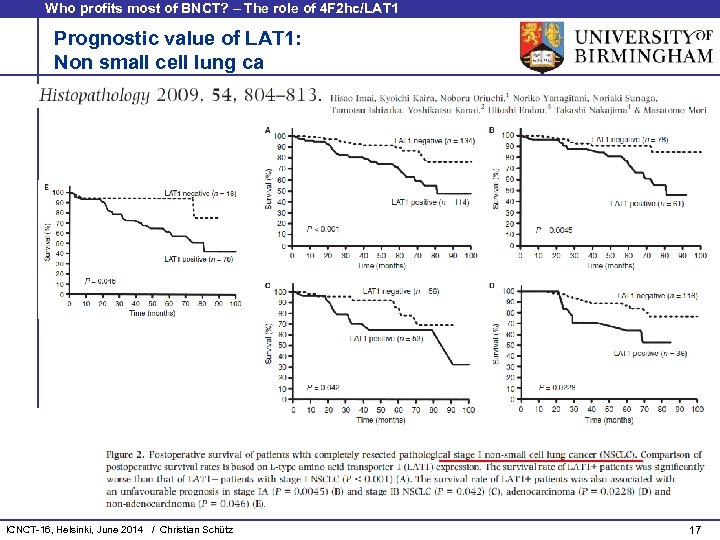
Who profits most of BNCT? – The role of 4 F 2 hc/LAT 1 Prognostic value of LAT 1: Non small cell lung ca ICNCT-16, Helsinki, June 2014 / Christian Schütz 17
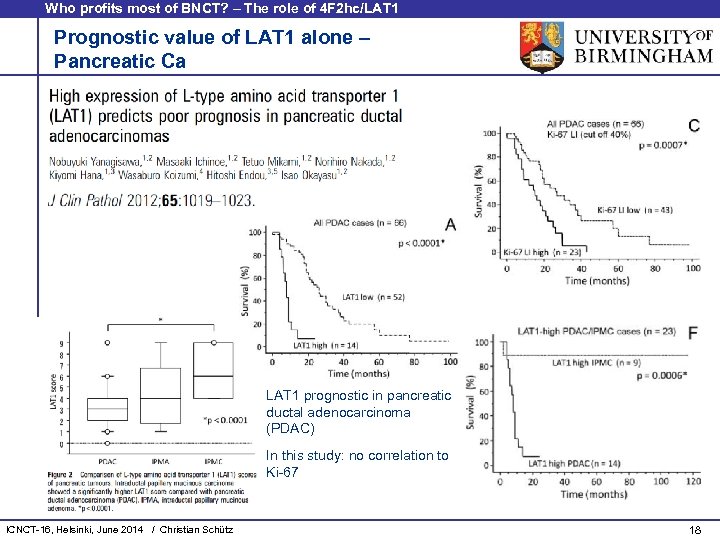
Who profits most of BNCT? – The role of 4 F 2 hc/LAT 1 Prognostic value of LAT 1 alone – Pancreatic Ca LAT 1 prognostic in pancreatic ductal adenocarcinoma (PDAC) In this study: no correlation to Ki-67 ICNCT-16, Helsinki, June 2014 / Christian Schütz 18
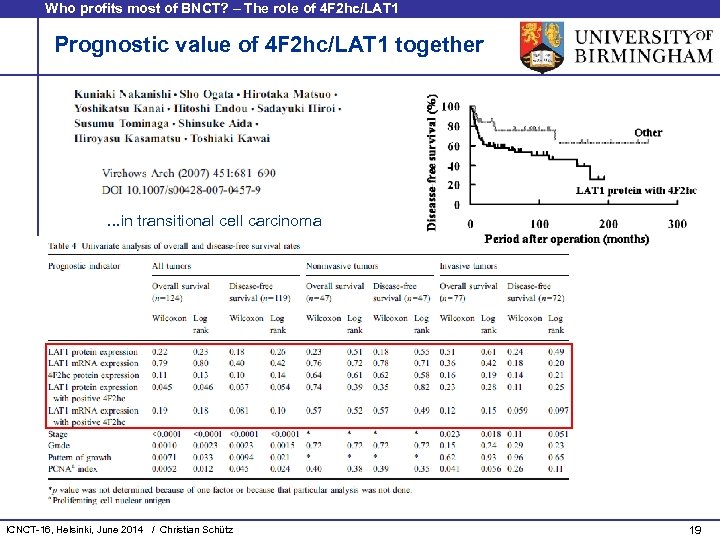
Who profits most of BNCT? – The role of 4 F 2 hc/LAT 1 Prognostic value of 4 F 2 hc/LAT 1 together . . . in transitional cell carcinoma ICNCT-16, Helsinki, June 2014 / Christian Schütz 19
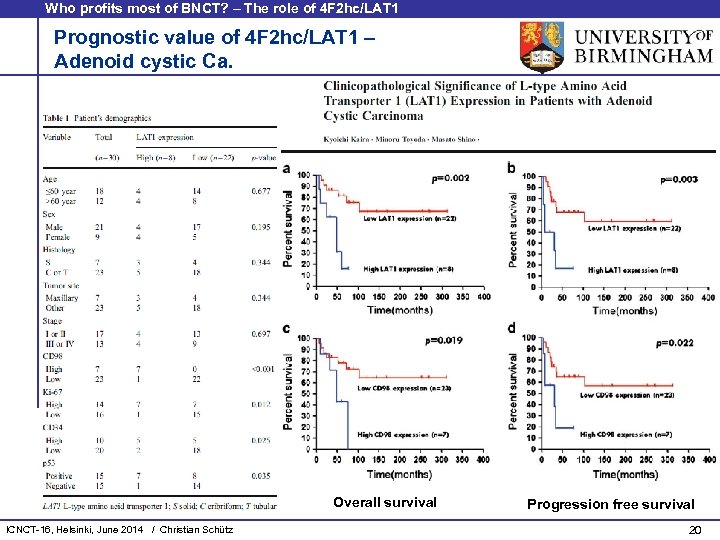
Who profits most of BNCT? – The role of 4 F 2 hc/LAT 1 Prognostic value of 4 F 2 hc/LAT 1 – Adenoid cystic Ca. Overall survival ICNCT-16, Helsinki, June 2014 / Christian Schütz Progression free survival 20
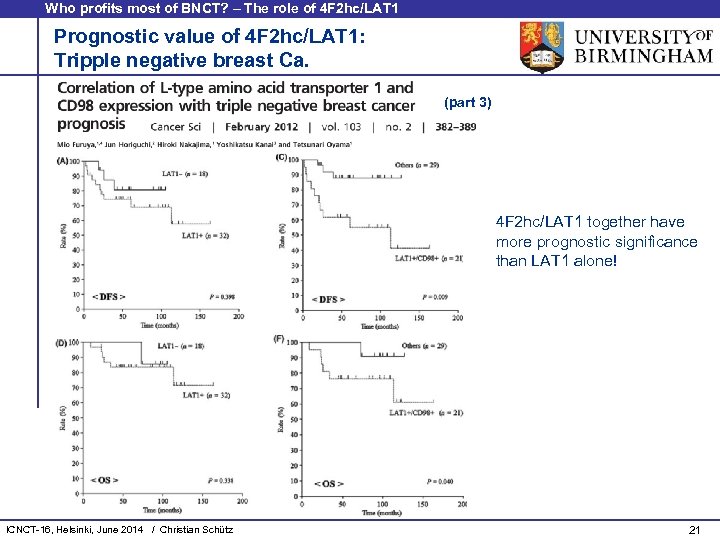
Who profits most of BNCT? – The role of 4 F 2 hc/LAT 1 Prognostic value of 4 F 2 hc/LAT 1: Tripple negative breast Ca. (part 3) 4 F 2 hc/LAT 1 together have more prognostic significance than LAT 1 alone! ICNCT-16, Helsinki, June 2014 / Christian Schütz 21
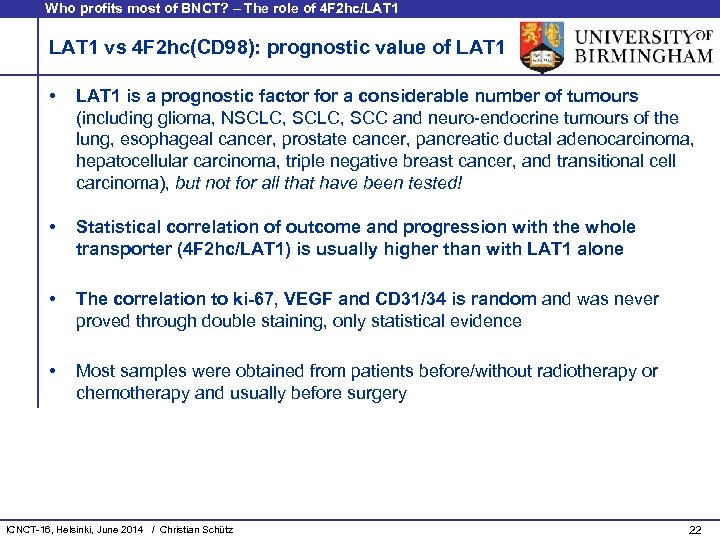
Who profits most of BNCT? – The role of 4 F 2 hc/LAT 1 vs 4 F 2 hc(CD 98): prognostic value of LAT 1 • LAT 1 is a prognostic factor for a considerable number of tumours (including glioma, NSCLC, SCC and neuro-endocrine tumours of the lung, esophageal cancer, prostate cancer, pancreatic ductal adenocarcinoma, hepatocellular carcinoma, triple negative breast cancer, and transitional cell carcinoma), but not for all that have been tested! • Statistical correlation of outcome and progression with the whole transporter (4 F 2 hc/LAT 1) is usually higher than with LAT 1 alone • The correlation to ki-67, VEGF and CD 31/34 is random and was never proved through double staining, only statistical evidence • Most samples were obtained from patients before/without radiotherapy or chemotherapy and usually before surgery ICNCT-16, Helsinki, June 2014 / Christian Schütz 22
Who profits most of BNCT? – The role of 4 F 2 hc/LAT 1 The potential of BPA-BNCT – if offered to the right patient ICNCT-16, Helsinki, June 2014 / Christian Schütz 23
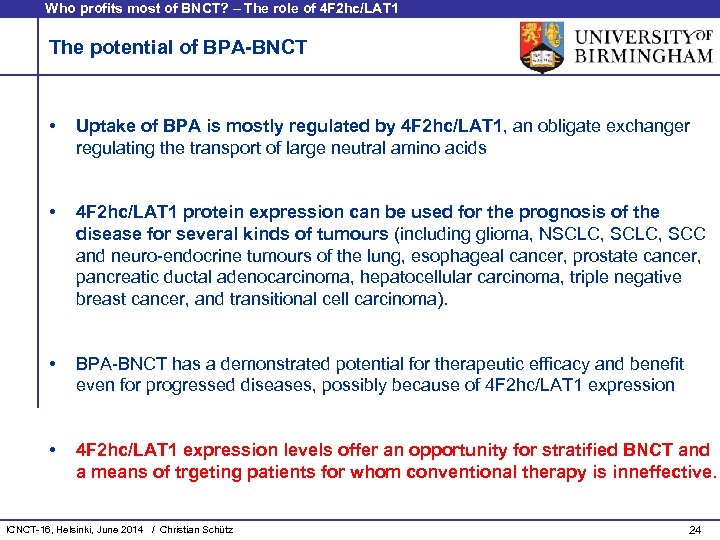
Who profits most of BNCT? – The role of 4 F 2 hc/LAT 1 The potential of BPA-BNCT • Uptake of BPA is mostly regulated by 4 F 2 hc/LAT 1, an obligate exchanger regulating the transport of large neutral amino acids • 4 F 2 hc/LAT 1 protein expression can be used for the prognosis of the disease for several kinds of tumours (including glioma, NSCLC, SCC and neuro-endocrine tumours of the lung, esophageal cancer, prostate cancer, pancreatic ductal adenocarcinoma, hepatocellular carcinoma, triple negative breast cancer, and transitional cell carcinoma). • BPA-BNCT has a demonstrated potential for therapeutic efficacy and benefit even for progressed diseases, possibly because of 4 F 2 hc/LAT 1 expression • 4 F 2 hc/LAT 1 expression levels offer an opportunity for stratified BNCT and a means of trgeting patients for whom conventional therapy is inneffective. ICNCT-16, Helsinki, June 2014 / Christian Schütz 24
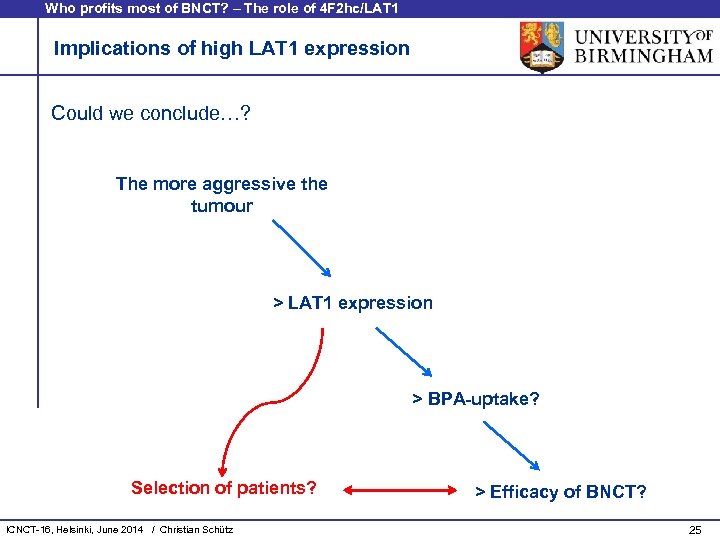
Who profits most of BNCT? – The role of 4 F 2 hc/LAT 1 Implications of high LAT 1 expression Could we conclude…? The more aggressive the tumour > LAT 1 expression > BPA-uptake? Selection of patients? ICNCT-16, Helsinki, June 2014 / Christian Schütz > Efficacy of BNCT? 25
Thank you for your attention Further questions? schuetc@uni-mainz. de // d. g. ngoga@bham. ac. uk
Скачать презентацию Who benefits most of BNCT A review
869bc05e82cd6bd38a33e672c0ca3170.ppt