


 Скачать презентацию Who are we Marloes Hendriks MSc senior
6a184f4a2275ec05784508a1bb9e9168.ppt
- Количество слайдов: 40
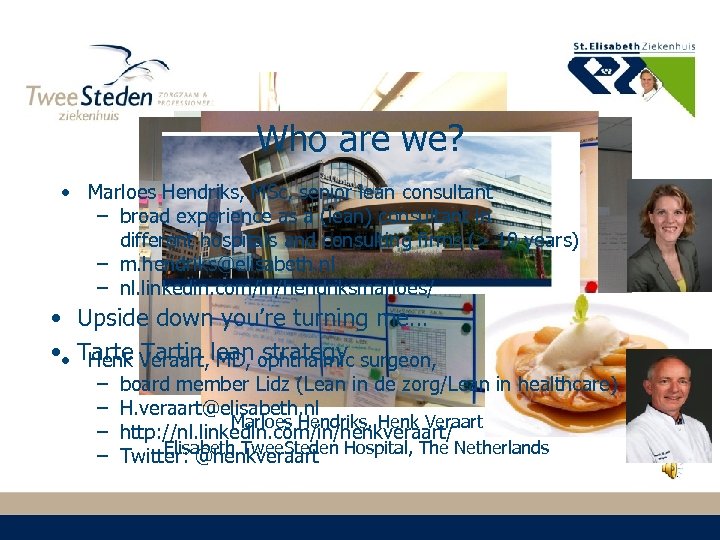 Who are we? • Marloes Hendriks, MSc, senior lean consultant – broad experience as a (lean) consultant in different hospitals and consulting firms (> 10 years) – m. hendriks@elisabeth. nl – nl. linkedin. com/in/hendriksmarloes/ • Upside down you’re turning me… • • Tarte Veraart, lean ophthalmic surgeon, Henk Tartin MD, strategy – – board member Lidz (Lean in de zorg/Lean in healthcare) H. veraart@elisabeth. nl Marloes Hendriks, Henk Veraart http: //nl. linkedin. com/in/henkveraart/ Elisabeth Twee. Steden Twitter: @henkveraart Hospital, The Netherlands
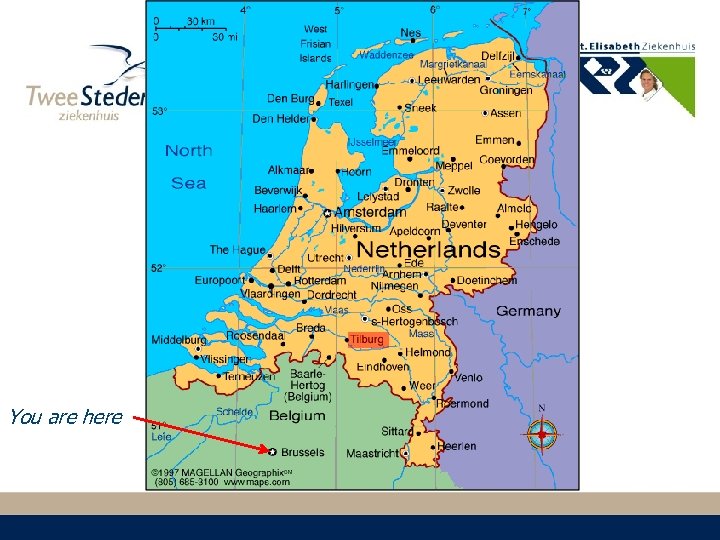 You are here
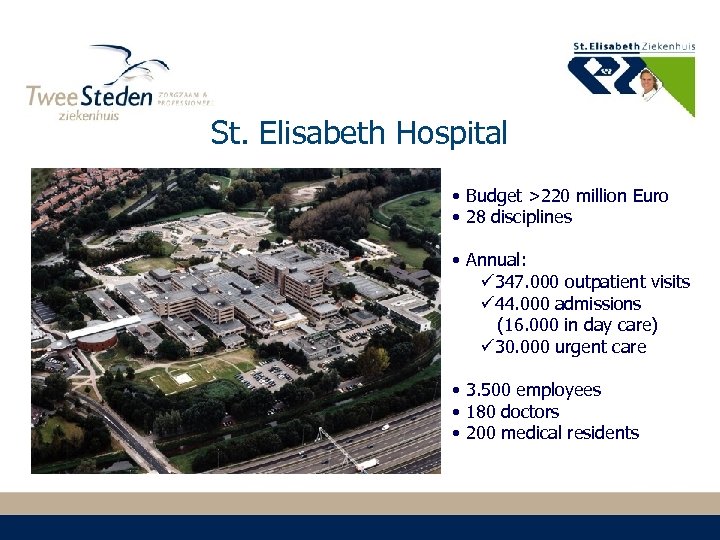 St. Elisabeth Hospital • Budget >220 million Euro • 28 disciplines • Annual: ü 347. 000 outpatient visits ü 44. 000 admissions (16. 000 in day care) ü 30. 000 urgent care • 3. 500 employees • 180 doctors • 200 medical residents
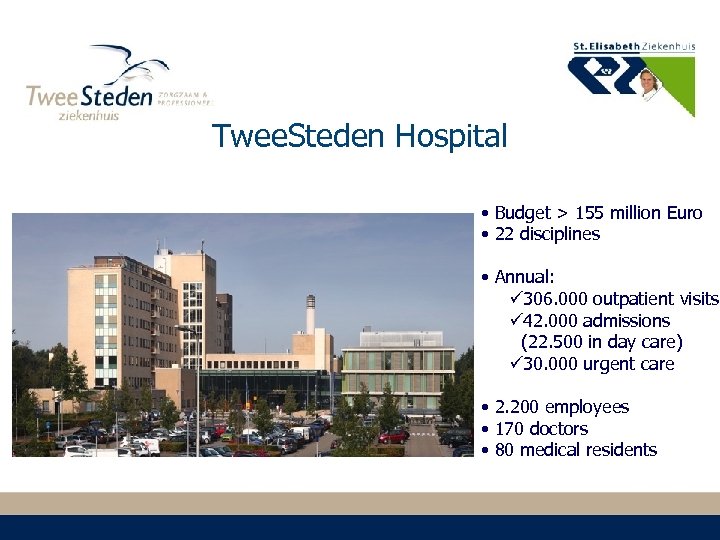 Twee. Steden Hospital • Budget > 155 million Euro • 22 disciplines • Annual: ü 306. 000 outpatient visits ü 42. 000 admissions (22. 500 in day care) ü 30. 000 urgent care • 2. 200 employees • 170 doctors • 80 medical residents
 Learning objectives • • • Understand the different strategies for lean: top down vs. bottom up ("Tarte Tatin") orientated. Understand the pro's and con's for each strategy Know how to decide on the best strategy for your organisation, related to the lean-objectives
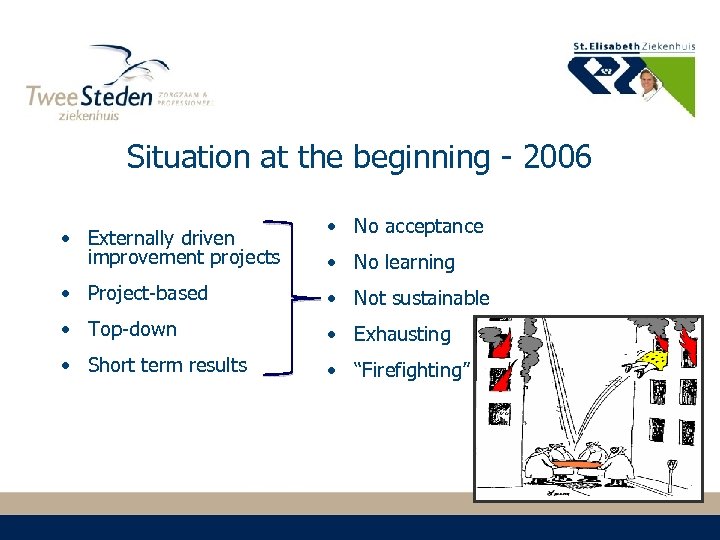 Situation at the beginning - 2006 • Externally driven improvement projects • No acceptance • No learning • Project-based • Not sustainable • Top-down • Exhausting • Short term results • “Firefighting”
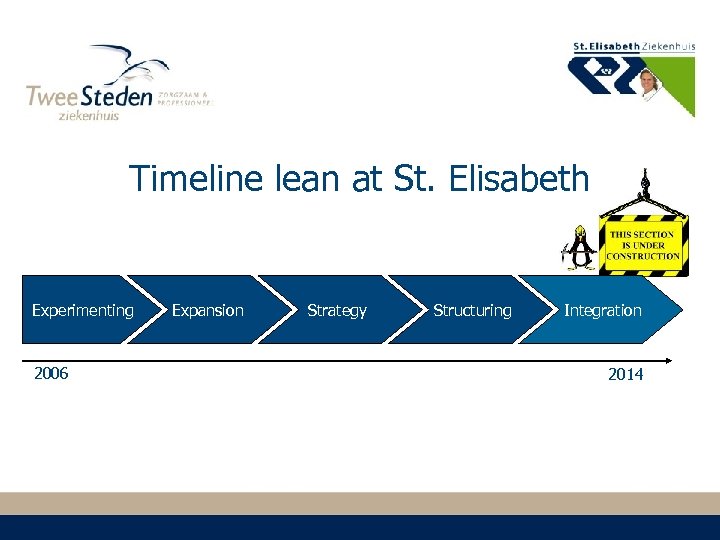 Timeline lean at St. Elisabeth Experimenting 2006 Expansion Strategy Structuring Integration 2014
 Phase 1: Experimenting by frontrunners: LMMI, neurosurgery, orthopedics • Sense of urgency: high costs, searching for new methods for improvement, renovation • Nurses and doctors’ initiative • Coincidence: “right answer at the right moment”
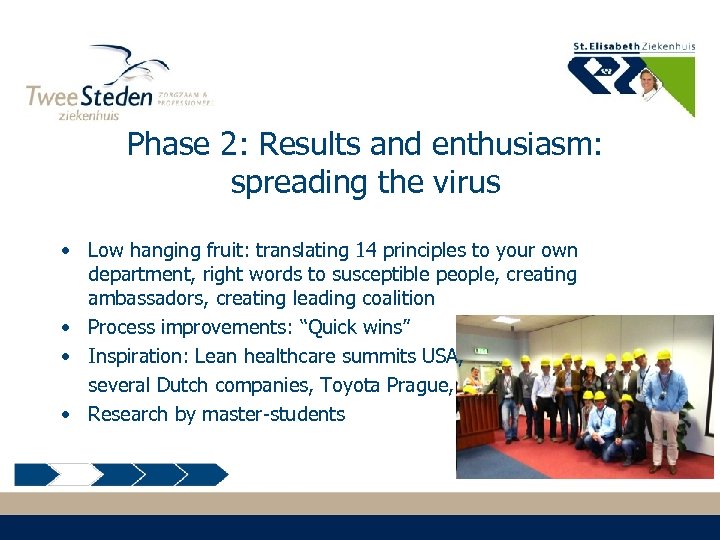 Phase 2: Results and enthusiasm: spreading the virus • Low hanging fruit: translating 14 principles to your own department, right words to susceptible people, creating ambassadors, creating leading coalition • Process improvements: “Quick wins” • Inspiration: Lean healthcare summits USA, several Dutch companies, Toyota Prague, • Research by master-students
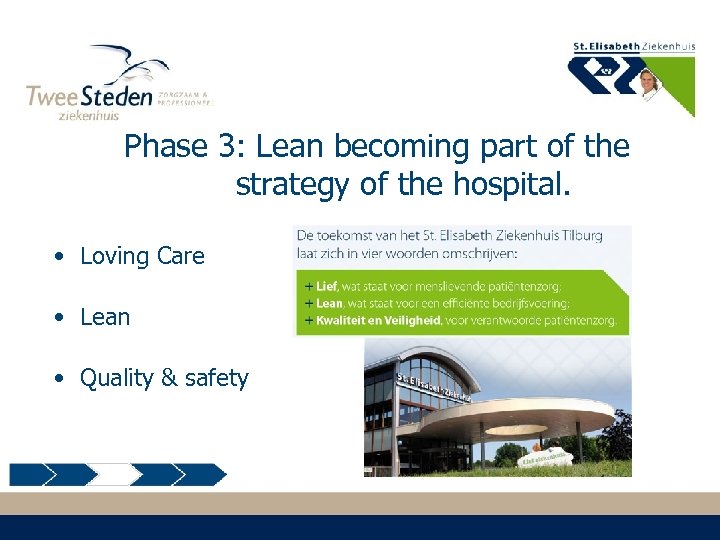 Phase 3: Lean becoming part of the strategy of the hospital. • Loving Care • Lean • Quality & safety
 Goals for Lean at St. Elisabeth 1. Creating an improvement culture: Improvement of problem solving capabilities throughout the entire organization 2. Improvement of the process by eliminating waste
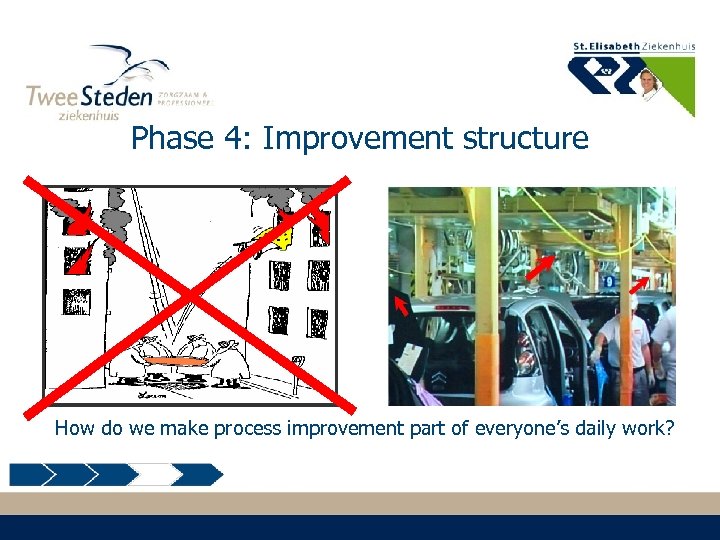 Phase 4: Improvement structure How do we make process improvement part of everyone’s daily work?
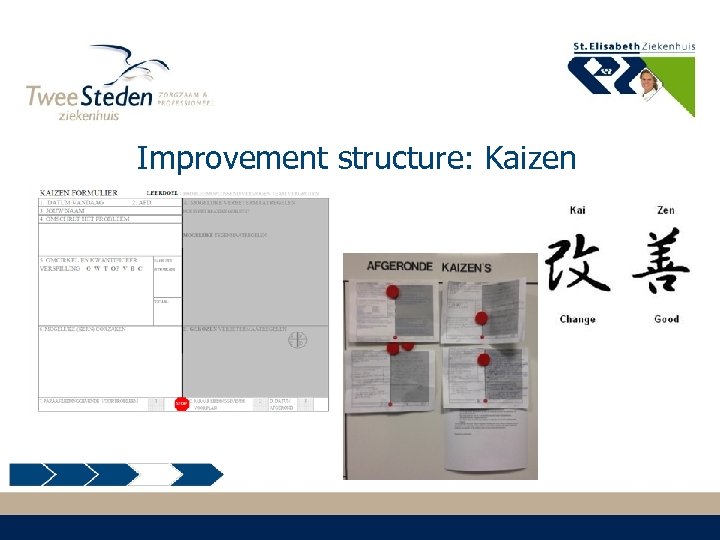
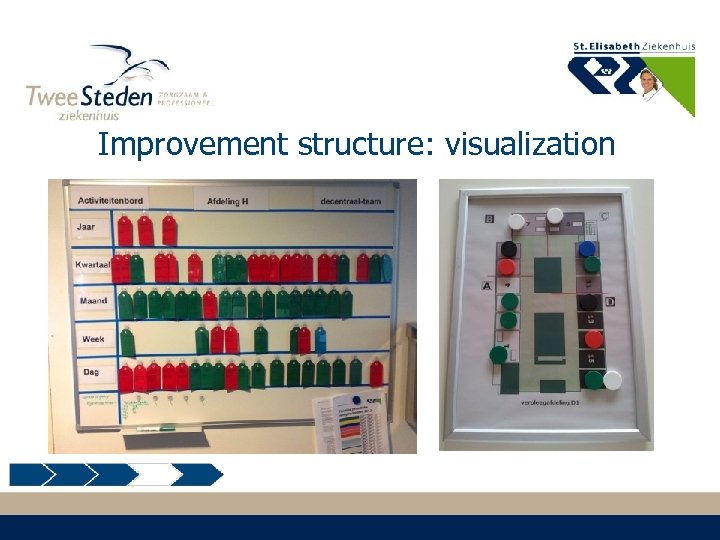
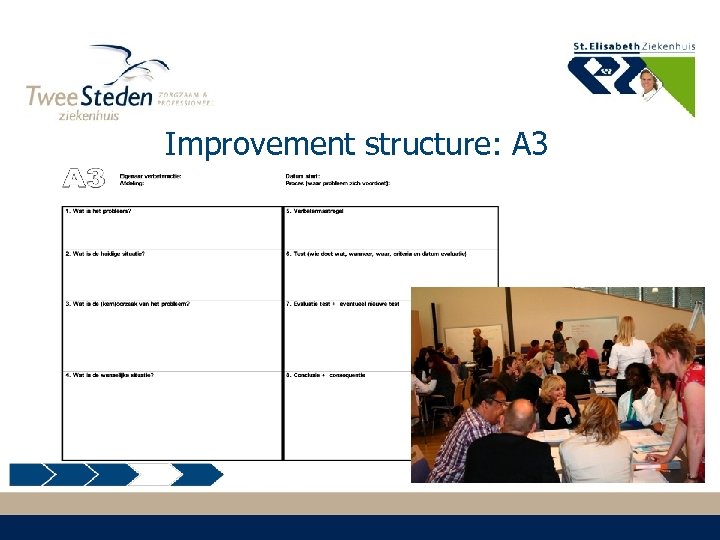
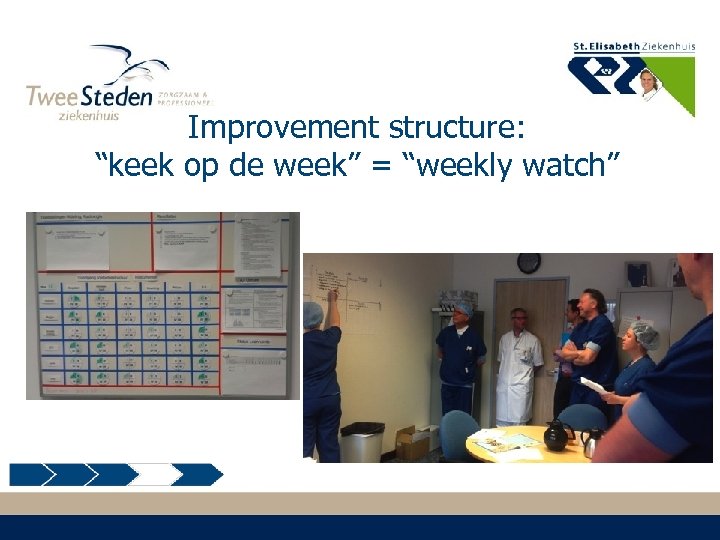
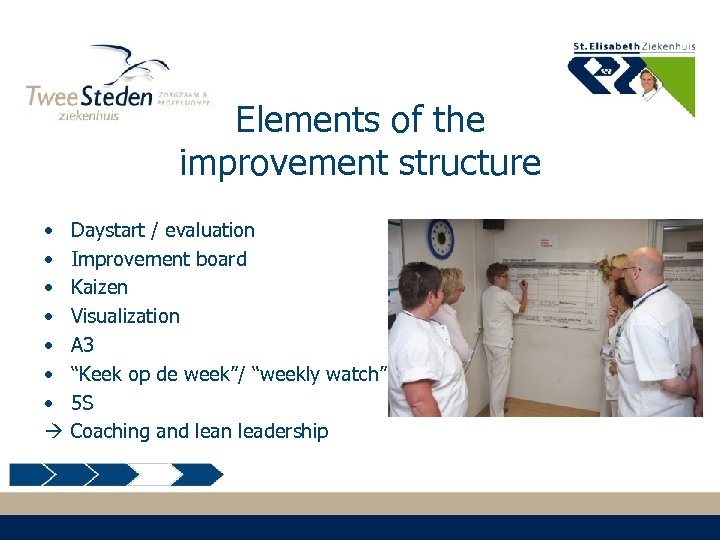 Elements of the improvement structure • • Daystart / evaluation Improvement board Kaizen Visualization A 3 “Keek op de week”/ “weekly watch” 5 S Coaching and lean leadership
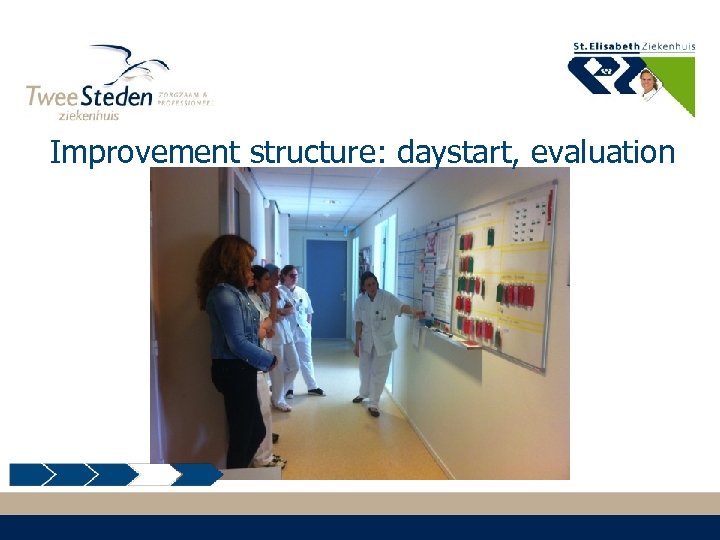 Improvement structure: daystart, evaluation
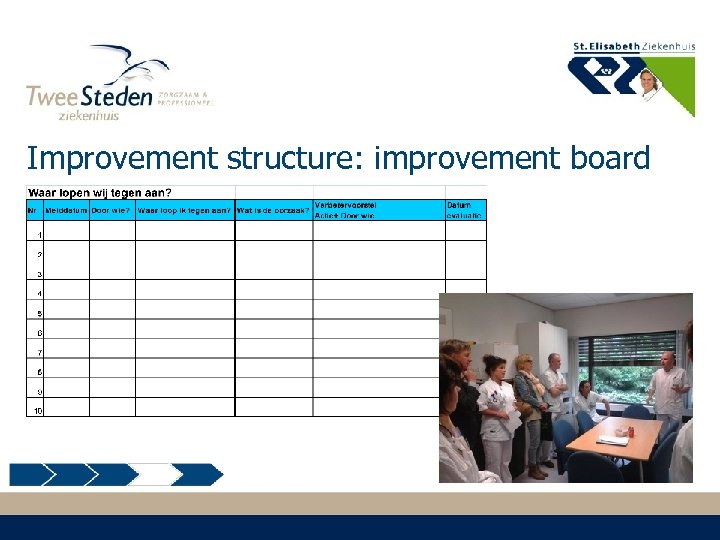 Improvement structure: improvement board
 Improvement structure: Kaizen
 Improvement structure: visualization
 Improvement structure: A 3
 Improvement structure: “keek op de week” = “weekly watch”
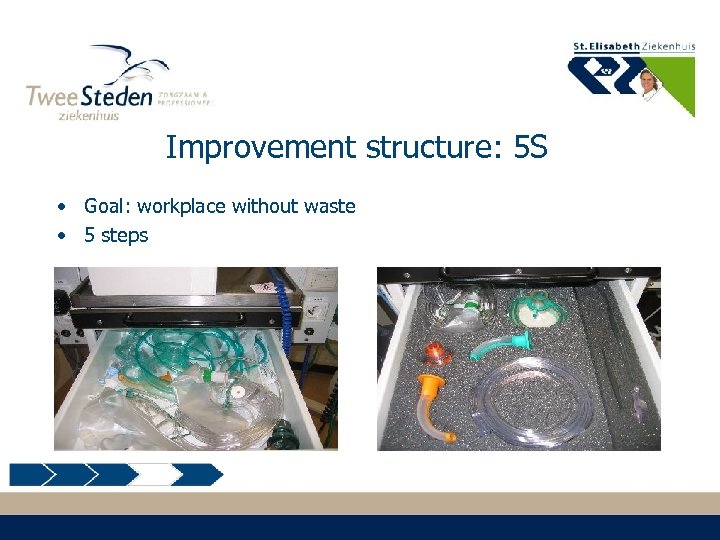 Improvement structure: 5 S • Goal: workplace without waste • 5 steps
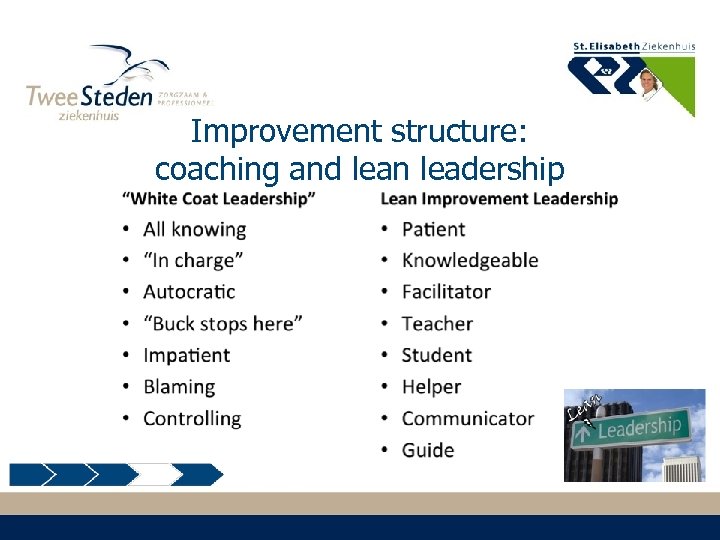 Improvement structure: coaching and lean leadership
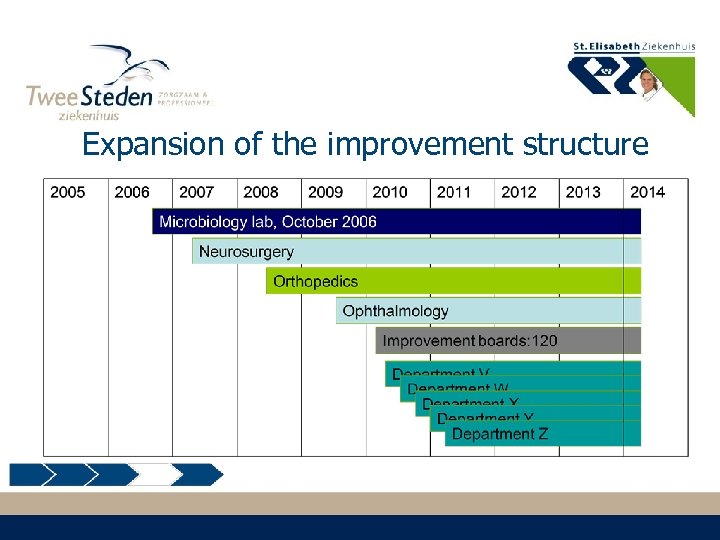 Expansion of the improvement structure
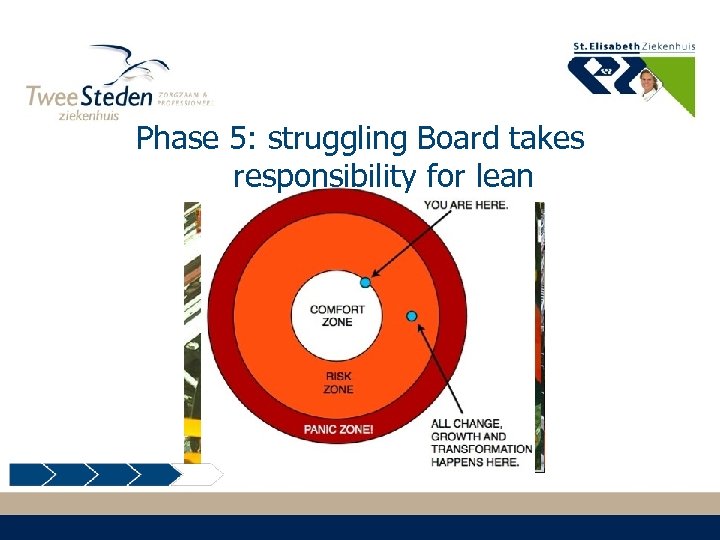 Phase 5: struggling Board takes responsibility for lean
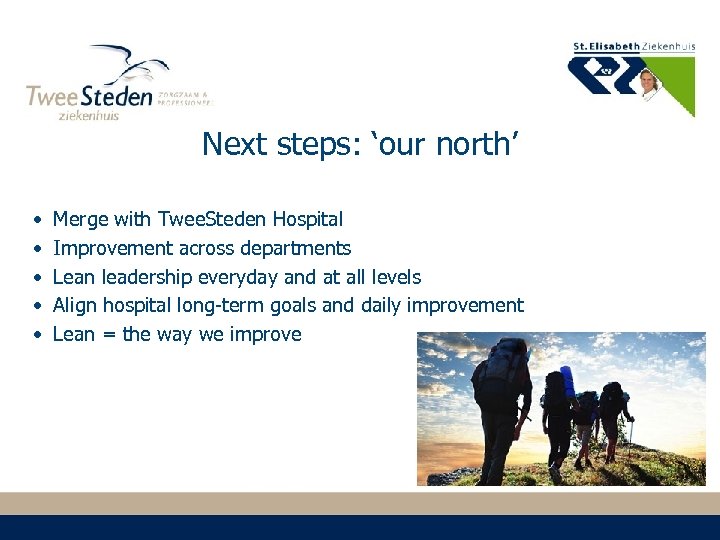 Next steps: ‘our north’ • • • Merge with Twee. Steden Hospital Improvement across departments Lean leadership everyday and at all levels Align hospital long-term goals and daily improvement Lean = the way we improve
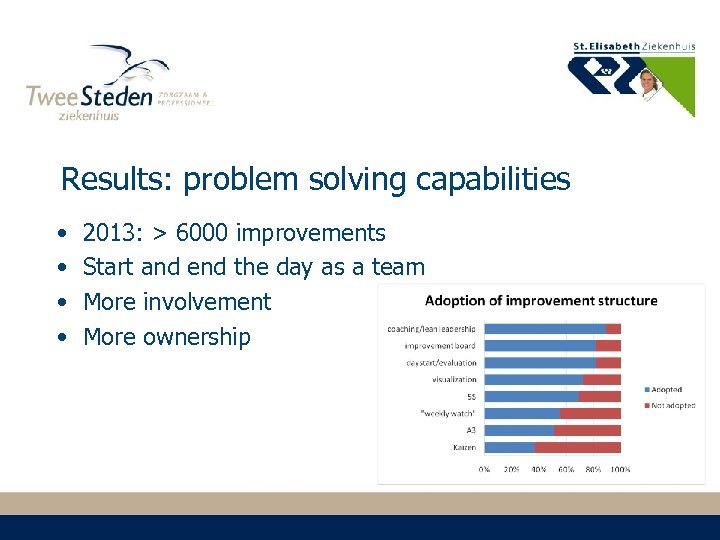 Results: problem solving capabilities • • 2013: > 6000 improvements Start and end the day as a team More involvement More ownership
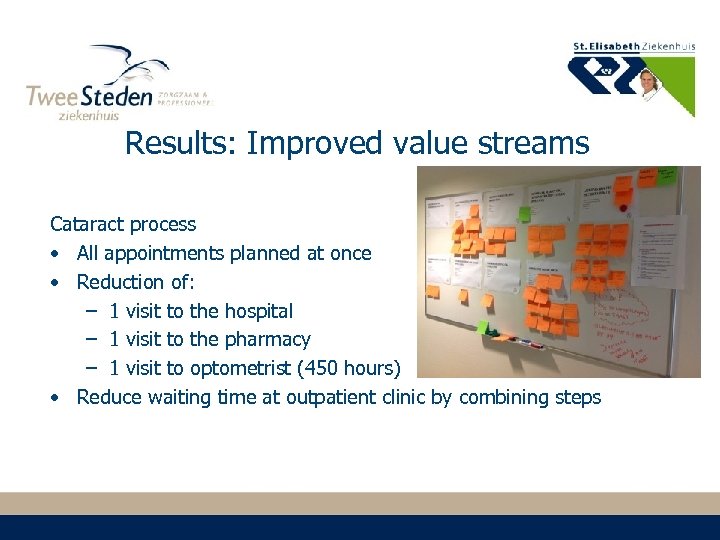 Results: Improved value streams Cataract process • All appointments planned at once • Reduction of: – 1 visit to the hospital – 1 visit to the pharmacy – 1 visit to optometrist (450 hours) • Reduce waiting time at outpatient clinic by combining steps
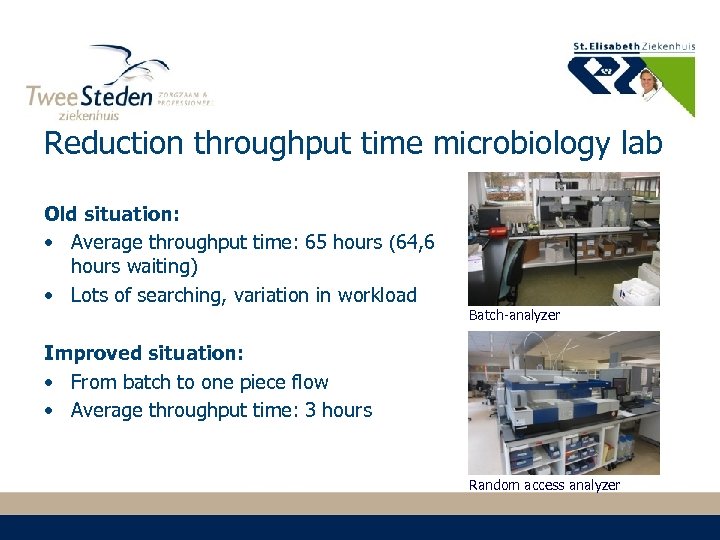 Reduction throughput time microbiology lab Old situation: • Average throughput time: 65 hours (64, 6 hours waiting) • Lots of searching, variation in workload Batch-analyzer Improved situation: • From batch to one piece flow • Average throughput time: 3 hours Random access analyzer
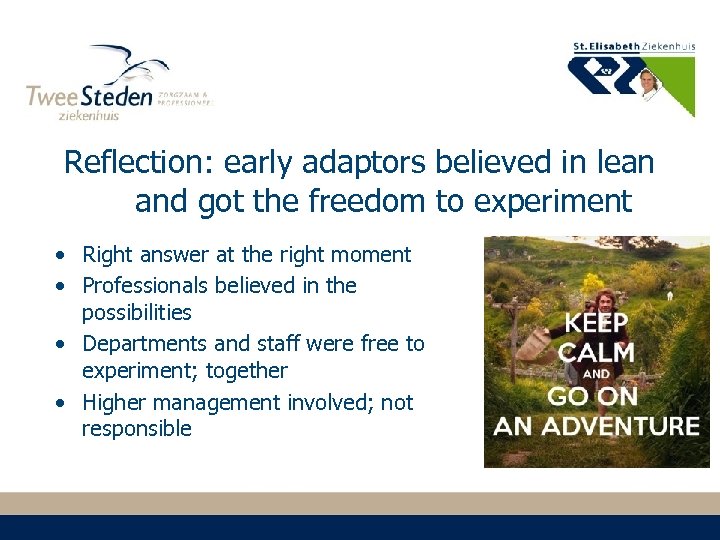 Reflection: early adaptors believed in lean and got the freedom to experiment • Right answer at the right moment • Professionals believed in the possibilities • Departments and staff were free to experiment; together • Higher management involved; not responsible
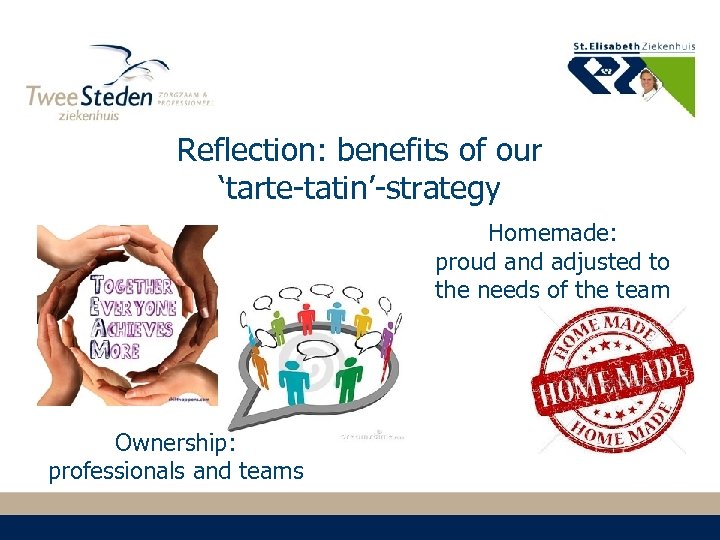 Reflection: benefits of our ‘tarte-tatin’-strategy Homemade: proud and adjusted to the needs of the team Ownership: professionals and teams
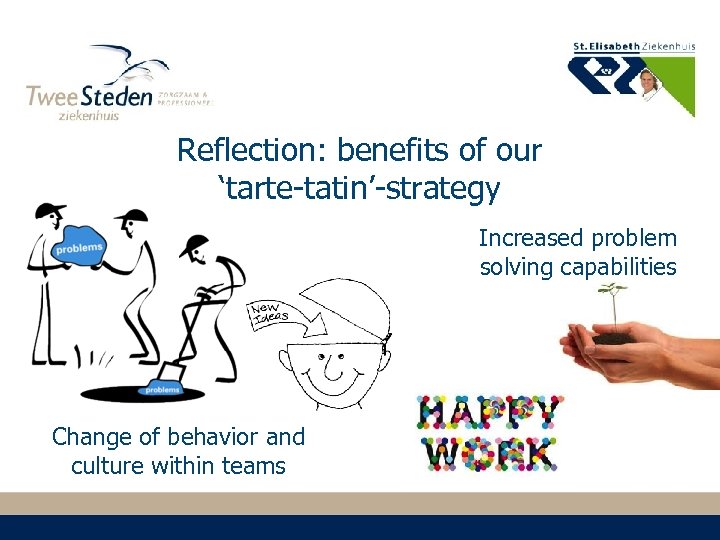 Reflection: benefits of our ‘tarte-tatin’-strategy Increased problem solving capabilities Change of behavior and culture within teams
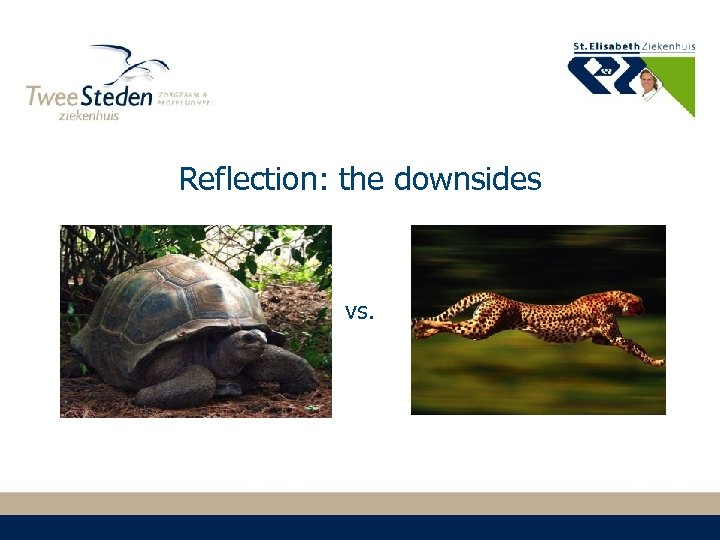 Reflection: the downsides vs.
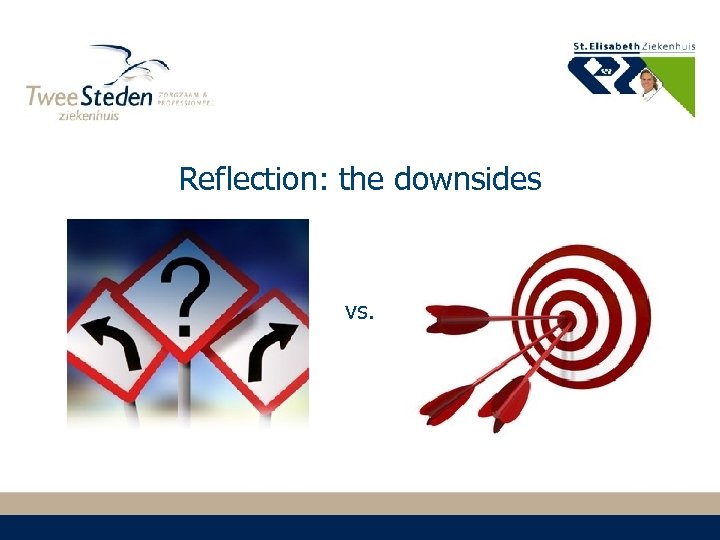 Reflection: the downsides vs.
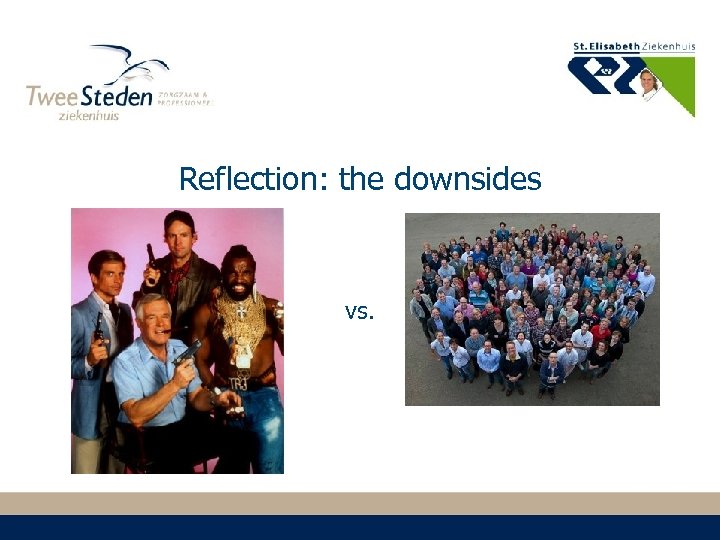 Reflection: the downsides vs.
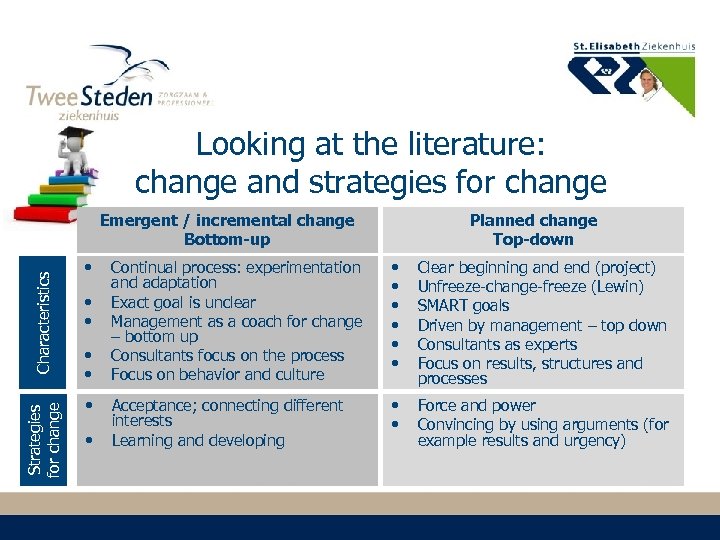 Looking at the literature: change and strategies for change Strategies for change Characteristics Emergent / incremental change Bottom-up • • Planned change Top-down Continual process: experimentation and adaptation Exact goal is unclear Management as a coach for change – bottom up Consultants focus on the process Focus on behavior and culture • • • Clear beginning and end (project) Unfreeze-change-freeze (Lewin) SMART goals Driven by management – top down Consultants as experts Focus on results, structures and processes Acceptance; connecting different interests Learning and developing • • Force and power Convincing by using arguments (for example results and urgency)
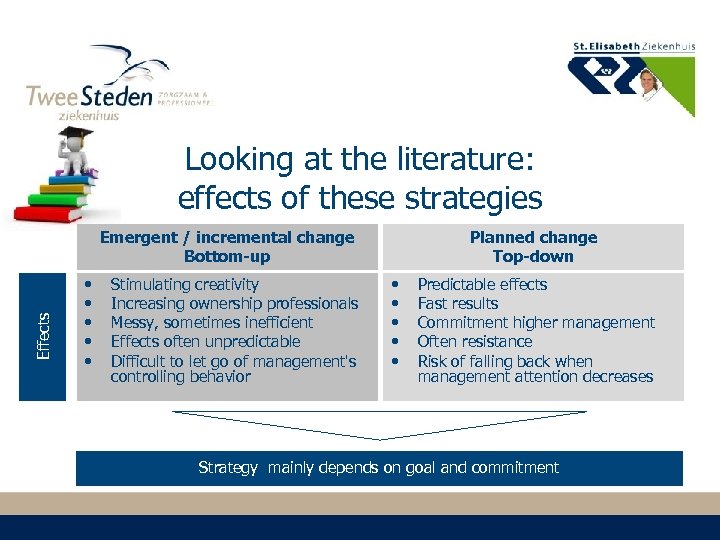 Looking at the literature: effects of these strategies Effects Emergent / incremental change Bottom-up • • • Stimulating creativity Increasing ownership professionals Messy, sometimes inefficient Effects often unpredictable Difficult to let go of management's controlling behavior Planned change Top-down • • • Predictable effects Fast results Commitment higher management Often resistance Risk of falling back when management attention decreases Strategy mainly depends on goal and commitment
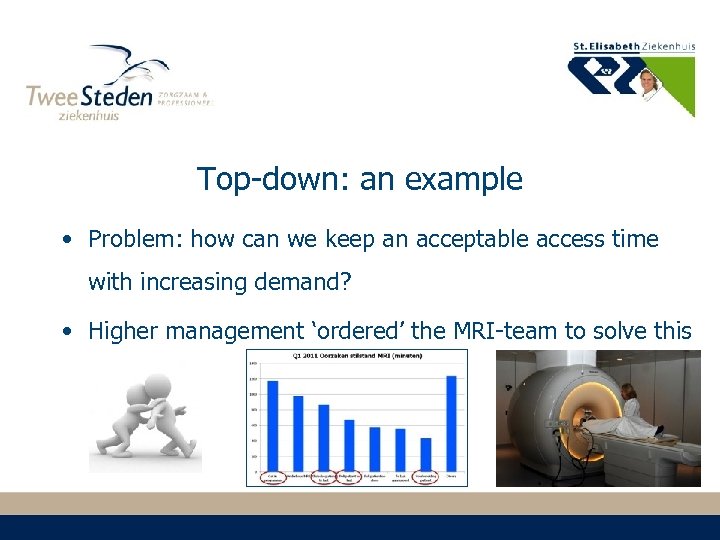 Top-down: an example • Problem: how can we keep an acceptable access time with increasing demand? • Higher management ‘ordered’ the MRI-team to solve this
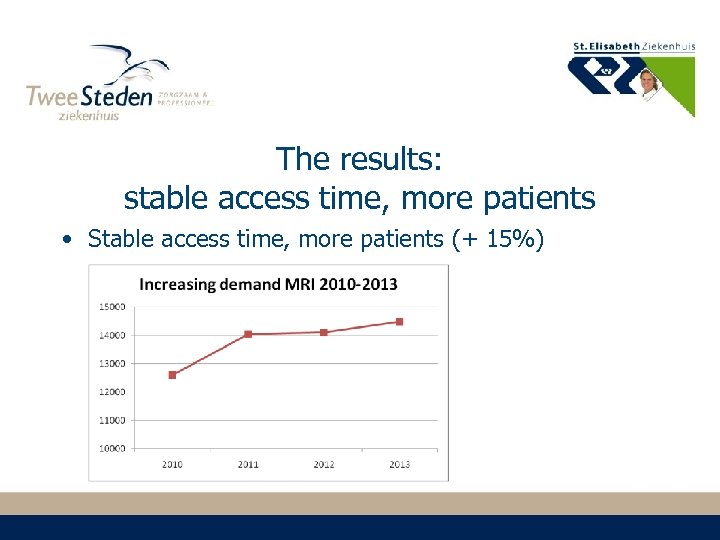 The results: stable access time, more patients • Stable access time, more patients (+ 15%)
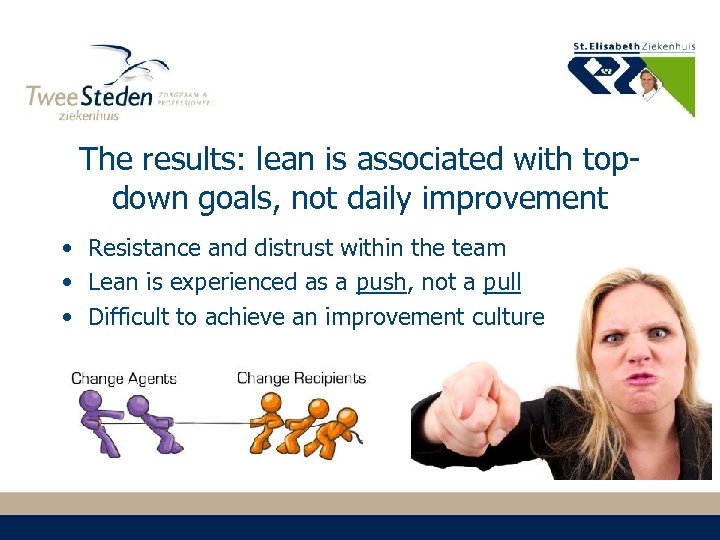 The results: lean is associated with topdown goals, not daily improvement • Resistance and distrust within the team • Lean is experienced as a push, not a pull • Difficult to achieve an improvement culture
 Wrap-up; discussion • Tarte tatin is the only lean strategy for sustainable, daily improvement; everyone, everyday • Tarte tatin is the only lean strategy for touching the hearts of the co-workers (change of culture and behaviour) • Apply push and pull also to the change-process • Only apply top-down strategies when: • high urgency for quantitative results • quantitative results are the only goal