Скачать презентацию Who am I What s d 4 d
e3e5099f4a664484f44ea58039663f96.ppt
- Количество слайдов: 29
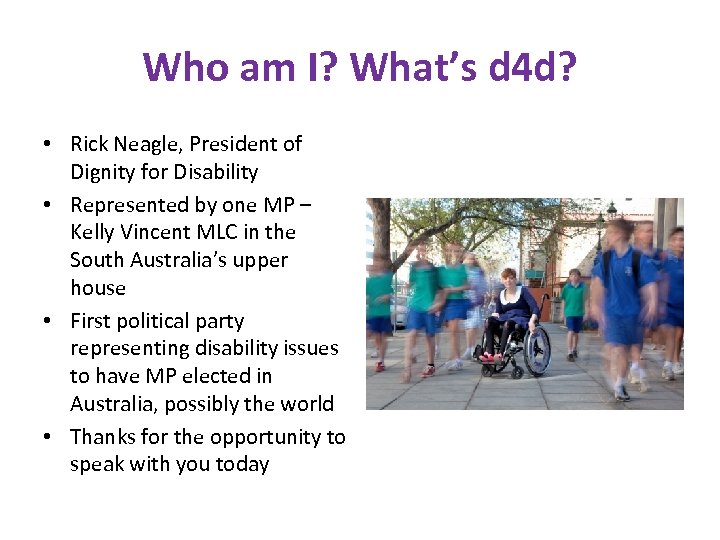 Who am I? What’s d 4 d? • Rick Neagle, President of Dignity for Disability • Represented by one MP – Kelly Vincent MLC in the South Australia’s upper house • First political party representing disability issues to have MP elected in Australia, possibly the world • Thanks for the opportunity to speak with you today
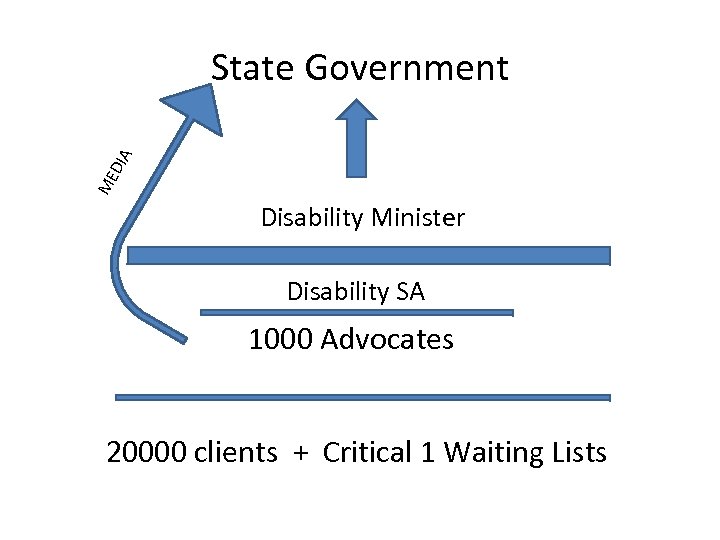 ME DIA State Government Disability Minister Disability SA 1000 Advocates 20000 clients + Critical 1 Waiting Lists
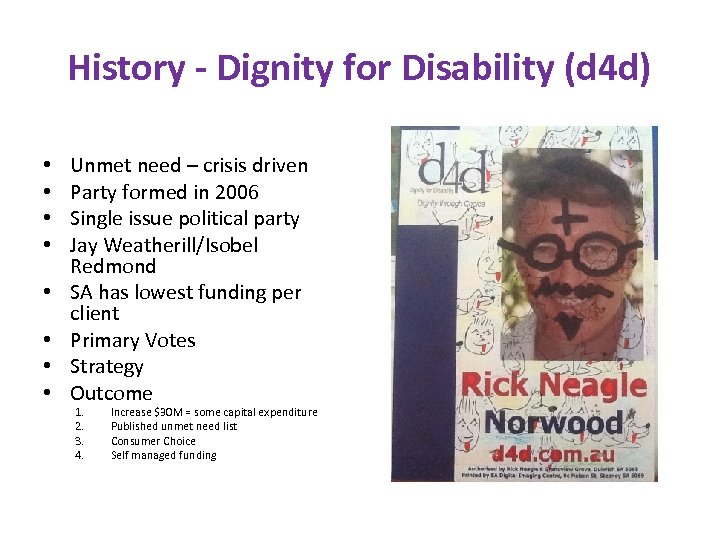 History - Dignity for Disability (d 4 d) • • Unmet need – crisis driven Party formed in 2006 Single issue political party Jay Weatherill/Isobel Redmond SA has lowest funding per client Primary Votes Strategy Outcome 1. 2. 3. 4. Increase $30 M = some capital expenditure Published unmet need list Consumer Choice Self managed funding
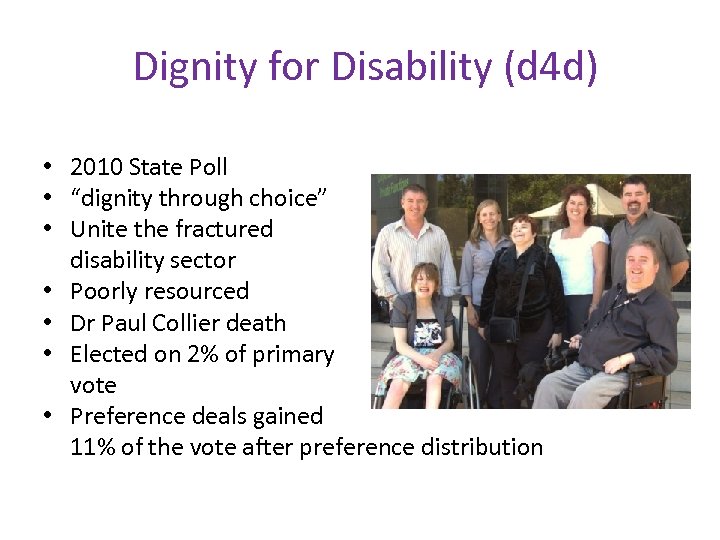 Dignity for Disability (d 4 d) • 2010 State Poll • “dignity through choice” • Unite the fractured disability sector • Poorly resourced • Dr Paul Collier death • Elected on 2% of primary vote • Preference deals gained 11% of the vote after preference distribution
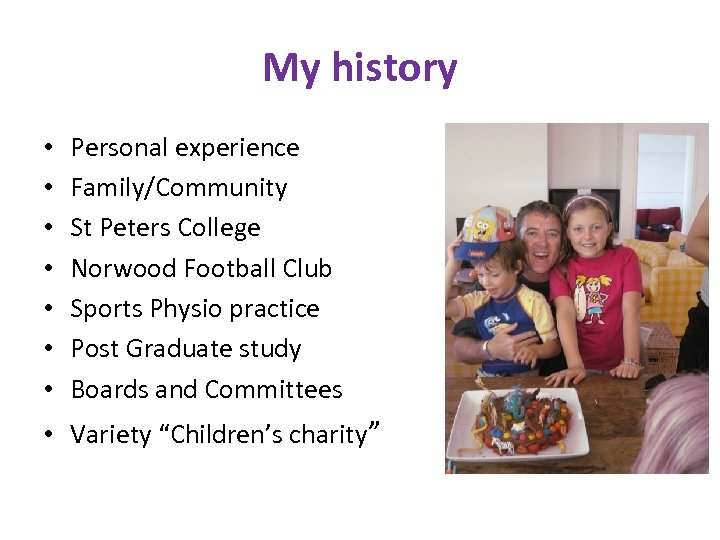 My history • • Personal experience Family/Community St Peters College Norwood Football Club Sports Physio practice Post Graduate study Boards and Committees • Variety “Children’s charity”
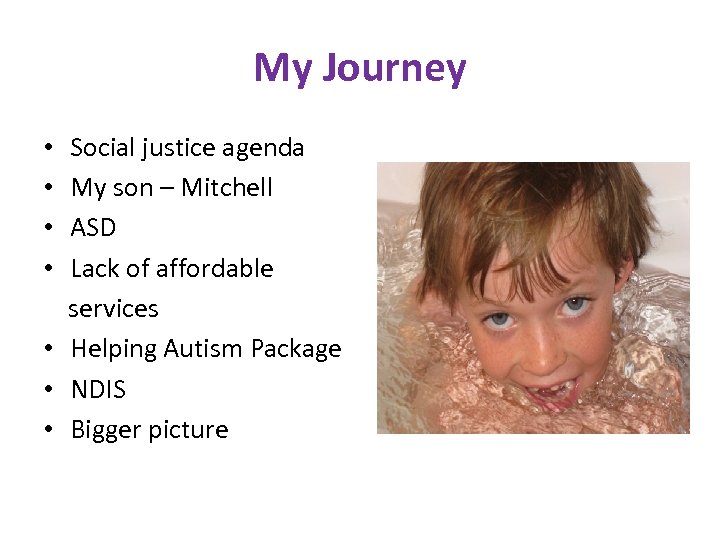 My Journey Social justice agenda My son – Mitchell ASD Lack of affordable services • Helping Autism Package • NDIS • Bigger picture • •
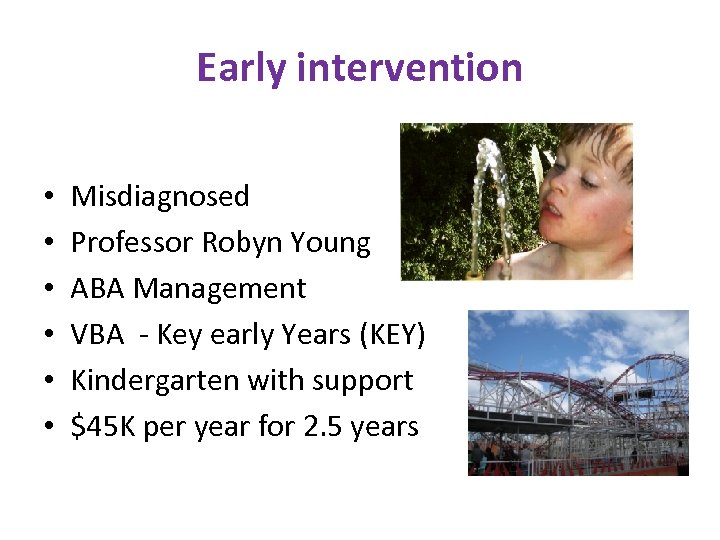 Early intervention • • • Misdiagnosed Professor Robyn Young ABA Management VBA - Key early Years (KEY) Kindergarten with support $45 K per year for 2. 5 years
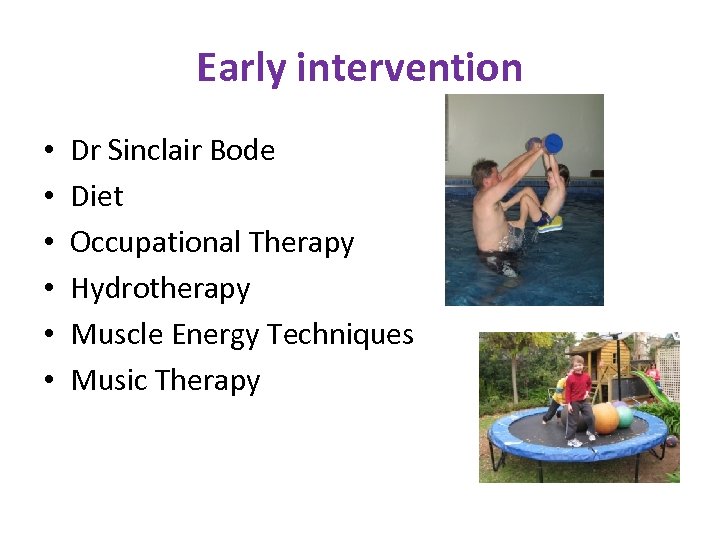 Early intervention • • • Dr Sinclair Bode Diet Occupational Therapy Hydrotherapy Muscle Energy Techniques Music Therapy
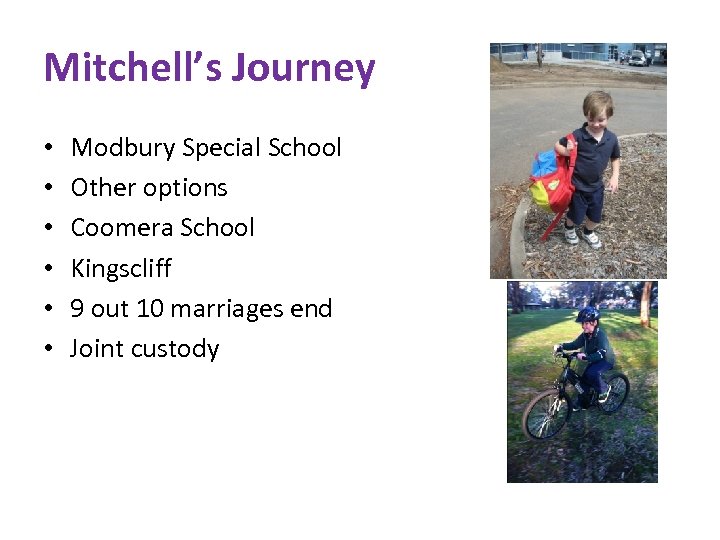 Mitchell’s Journey • • • Modbury Special School Other options Coomera School Kingscliff 9 out 10 marriages end Joint custody
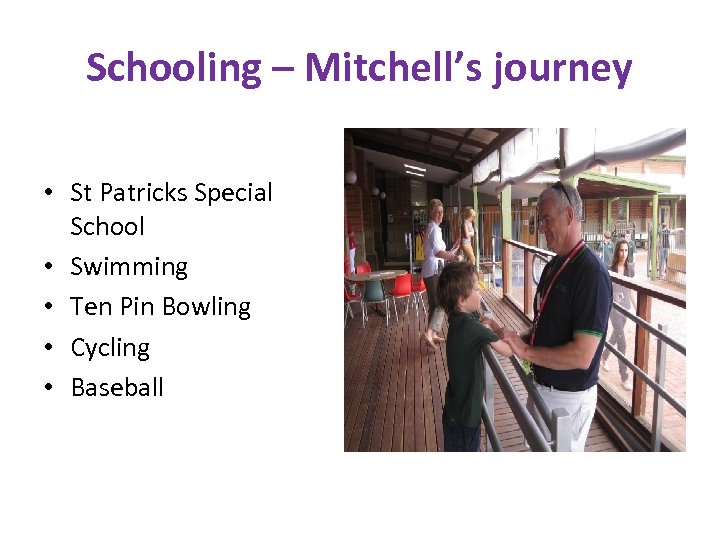 Schooling – Mitchell’s journey • St Patricks Special School • Swimming • Ten Pin Bowling • Cycling • Baseball
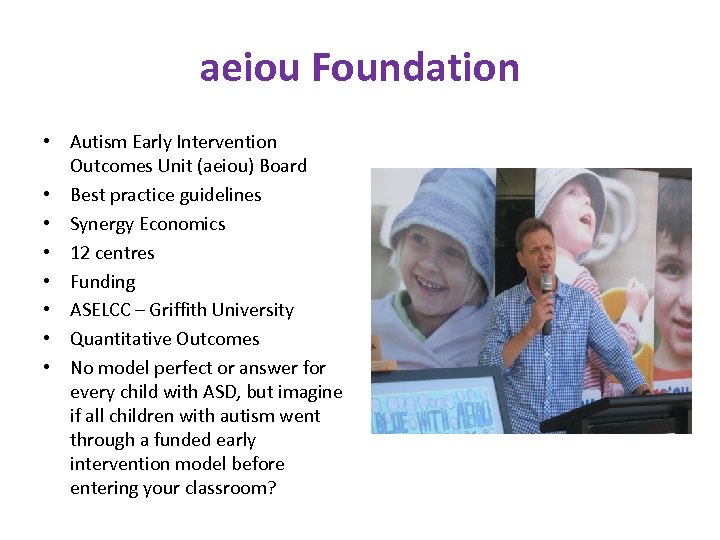 aeiou Foundation • Autism Early Intervention Outcomes Unit (aeiou) Board • Best practice guidelines • Synergy Economics • 12 centres • Funding • ASELCC – Griffith University • Quantitative Outcomes • No model perfect or answer for every child with ASD, but imagine if all children with autism went through a funded early intervention model before entering your classroom?
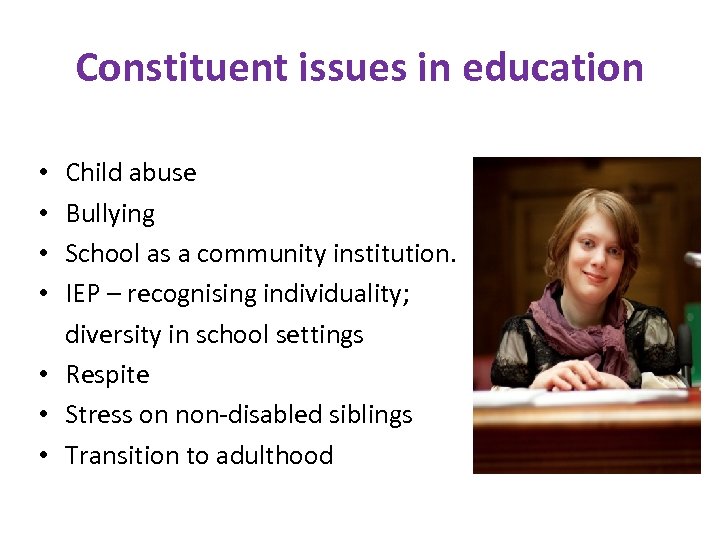 Constituent issues in education Child abuse Bullying School as a community institution. IEP – recognising individuality; diversity in school settings • Respite • Stress on non-disabled siblings • Transition to adulthood • •
 Abuse of children with disabilities • significant media coverage about protection for children with disabilities • greater than 4 x more abuse • implications for teachers or educators – many parents have significant anxiety about school buses or with unfamiliar school staff – mandatory reporting
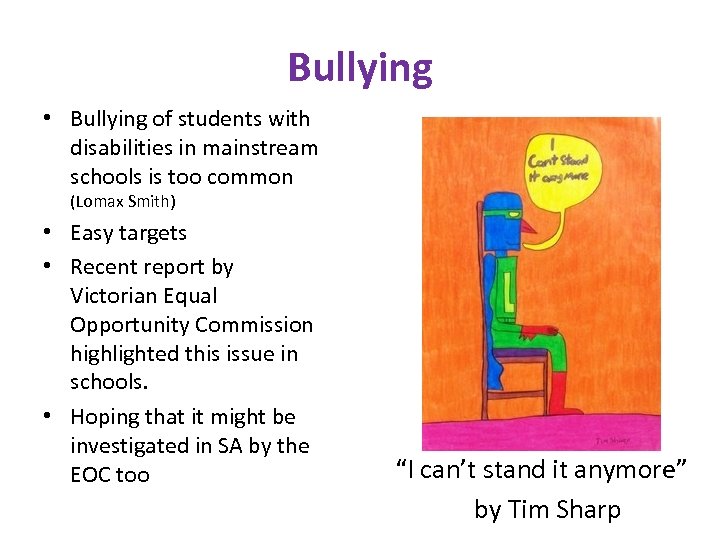 Bullying • Bullying of students with disabilities in mainstream schools is too common (Lomax Smith) • Easy targets • Recent report by Victorian Equal Opportunity Commission highlighted this issue in schools. • Hoping that it might be investigated in SA by the EOC too “I can’t stand it anymore” by Tim Sharp
 Institutions • • Devalued life - self expression personal development No freedom or control - hard to be heard Impoverishment - disempowerment Sheltered but homeless - home is more than a roof Care and not Support - assumes passivity Disconnected - citizens who report abuse Loveless - the shift of focussing on prevention of abuse Active citizenship
 School as a community institution • School are institutions in our community • Important that the culture and norms valued at schools respect diversity of students – whether it be ethnic, gender or disability • Many special schools are an important and invaluable system of social support for students with disabilities and their families – can be essential, especially in times of crises
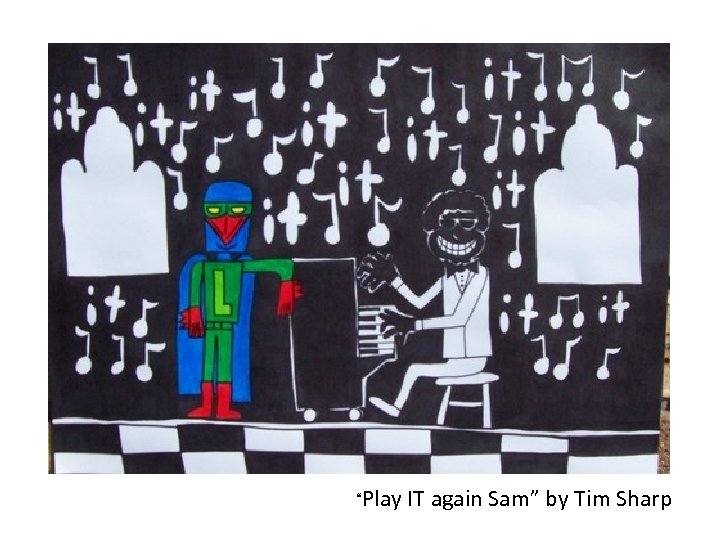 “Play IT again Sam” by Tim Sharp
 Individual Education Plans • Kelly’s office regularly gets calls from parents that feel their child’s IEP is too rigid, doesn’t acknowledge the unique challenges and gifts of their child, nor the general diversity of disability eg. thinking all children with autism are artistic or mathematic savants! • Need for schools to adapt bureaucratic processes to suit students with disability eg. communication methods with parents. • SACE certificates – writing student disability on the Record of Achievement. They already know they’re different – no need to highlight it! Ongoing issue Kelly’s office looking into with DECD.
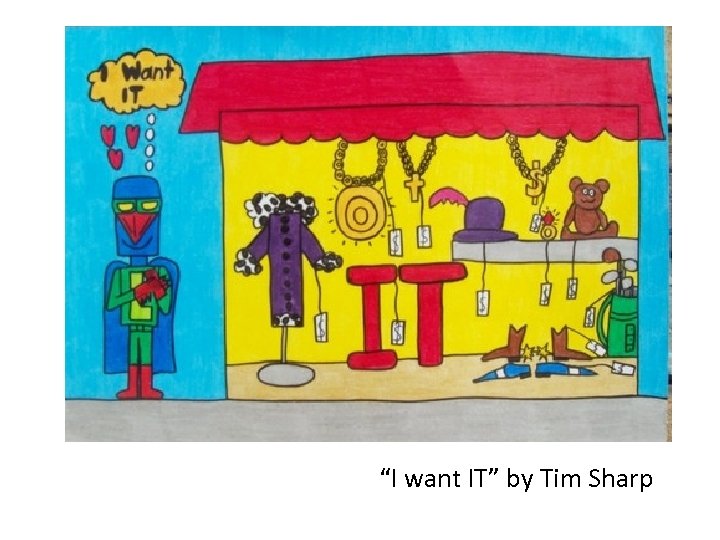 “I want IT” by Tim Sharp
 Respite • The ‘unmet needs’ list in South Australia is long and ever-increasing • The need for respite for parents and families of children with disabilities are a significant part of this ‘unmet needs’ queue – issue will often become evident in school environment • Need for support and understanding from the school – and reporting to Department to help drive reform and more support
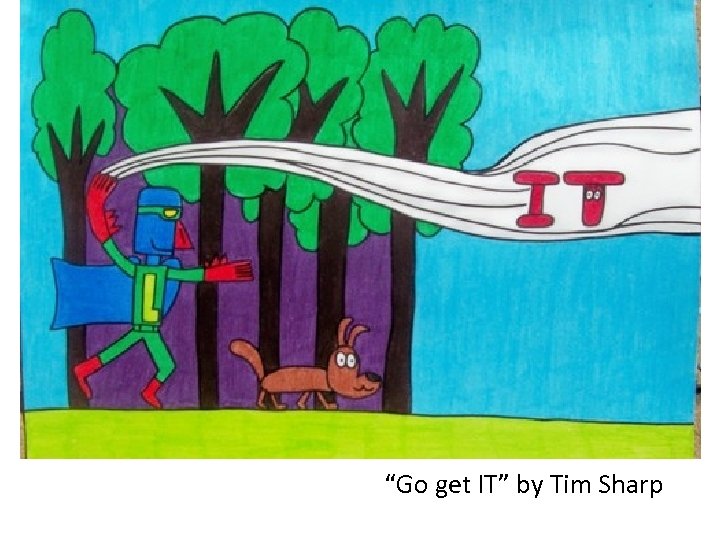 “Go get IT” by Tim Sharp
 The stress on non-disabled siblings • In addition to the complexities developing strategies for children with disabilities, understanding needed by teachers of students where siblings have disability. • Lack of attention on non-disabled child/children cause them to act out, feel unloved. • Important teachers are aware of extra stress in home environment for non-disabled child.
 Transition to adulthood • Services ceasing at end of school or 18 years of age – big problem as disability doesn’t cease when you become an adult! • Lack of transition options – further education? Work? Housing? Social integration? • Hoping that NDIS will assist with this issue, but it remains to be seen. • Another anxious time for parents – Disability Services SA are currently phasing out use of Day Options for some PWD when they leave school.