


 Скачать презентацию Where Does Congress Power Come From Congress gets
0f17f6920e3669ba9903938d652223d1.ppt
- Количество слайдов: 28
 Where Does Congress’ Power Come From? Congress gets all of its power from Article I of the U. S. Constitution
 Powers of Congress has 3 kinds of power: › Expressed – directly written in the Constitution › Implied – reasonably assumed based on the expressed powers › Inherent – nowhere in the Constitution, but always held by national governments
 Interpreting the Constitution How much power Congress has depends on how we interpret the Constitution There are two major “schools of thought” on how much power Congress should have
 Interpreting the Constitution Strict Constructionist (originalist)– believe that Congress should only have the expressed powers and no more › Support very limited government › Believe that individual liberty is most important › First SC was Thomas Jefferson
 Interpreting the Constitution Liberal Constructionist (living constitution) – believed that we should interpret the Constitution loosely, so that Congress could have more power › Support an active government › Believe that governmental effectiveness is most important › First LC was Alexander Hamilton
 The Power To Tax The Constitution gives Congress the power: “To lay and collect Taxes, Duties, Imposts and Excises, to pay the Debts and provide for the common Defense and general Welfare of the United States. …” —Article I, Section 8, Clause 1
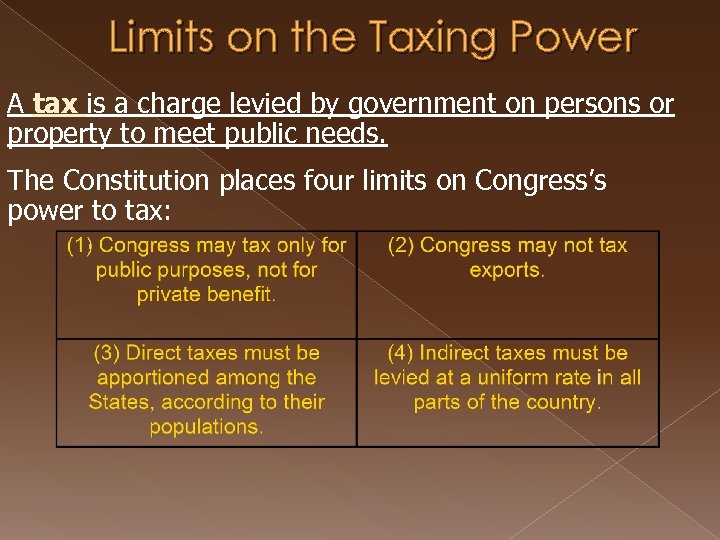 Limits on the Taxing Power A tax is a charge levied by government on persons or property to meet public needs. The Constitution places four limits on Congress’s power to tax:
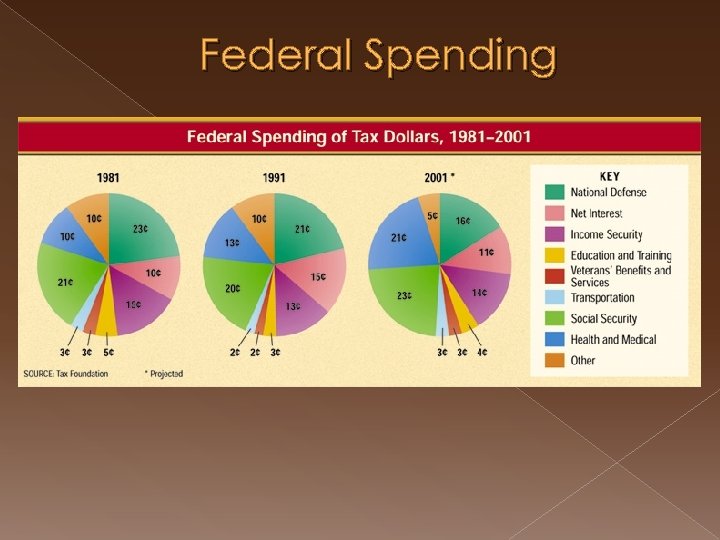 Federal Spending
 Powers that Both Houses use Together › Power to “borrow money on the credit of the United States” Deficit – money spent exceeding tax revenue, must be borrowed this year to pay our bills ($172 billion in 2007) Borrowed by selling bonds Debt – total of all deficits yet to be paid back, plus interest owed
 National Debt For your information The Outstanding Public Debt as of 07 Apr 2009 at 05: 07: 25 PM GMT is: $11, 161, 252, 299, 320. 58 The estimated population of the United States is 305, 958, 505 so each citizen's share of this debt is $36, 479. 63. The National Debt has continued to increase an average of $3. 87 billion per day since September 28, 2007!
 Powers that Both Houses use Together The commerce power—the power of Congress to regulate interstate and foreign trade—is granted in the Commerce Clause of the Constitution. Power is often extended to do seemingly unrelated implied powers Build interstate highways Ban racial discrimination
 Powers that Both Houses use Together › Power to “coin money and regulate the value thereof” (1 st legal tender 1863) › Power to “establish uniform laws on the subject of bankruptcies” Bankruptcy – person declared incapable of repaying debt, debts are cleared
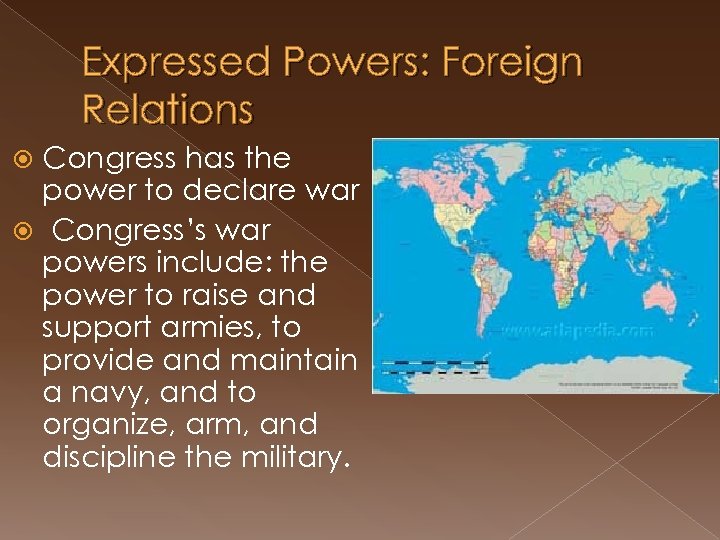 Expressed Powers: Foreign Relations Congress has the power to declare war Congress’s war powers include: the power to raise and support armies, to provide and maintain a navy, and to organize, arm, and discipline the military.
 Other Expressed Powers Naturalization – setting the rules to become a citizen Postal Power – Congress sets up the Post Office Copyrights and Patents Weights and Measures – making sure they mean the same thing nationwide
 Other Expressed Powers Power over territories – Congress controls territories, and decides whether they become states or not Eminent Domain – Congress can take private property for public use Judicial Power – Congress sets up the court system
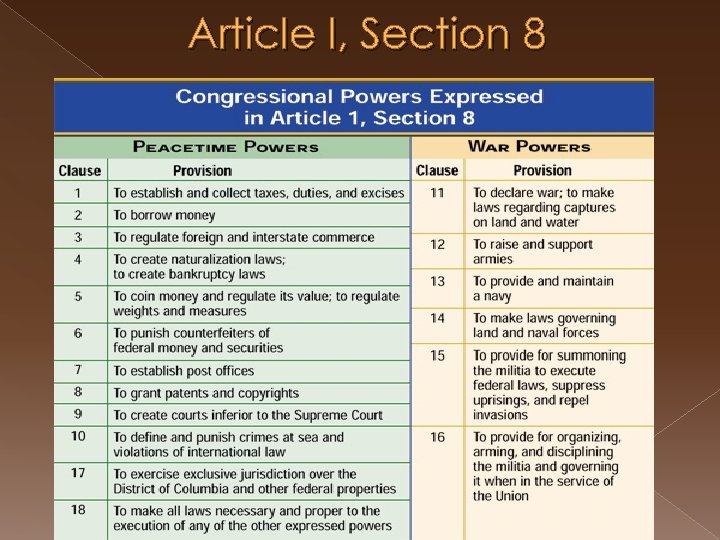 Article I, Section 8
 Implied Powers Necessary and Proper Clause – Where the implied powers come from › Tells Congress they can make any laws “necessary and proper” for carrying out their expressed powers
 Mc. Culloch v. Maryland (1819) First case that tested the Necessary and Proper Clause Congress created a national bank, and Maryland hated it Maryland placed a tax on all national bank transactions to try and put it out of business
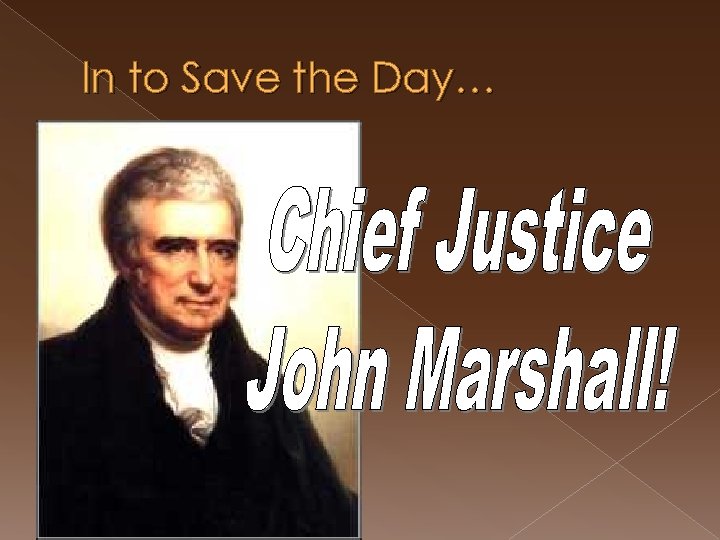 In to Save the Day…
 John Marshall and the Court Say: Any laws Congress passes, so long as they hold to the spirit of the Constitution, are okay This is a liberal constructionist position Since this case, Congress has used many implied powers
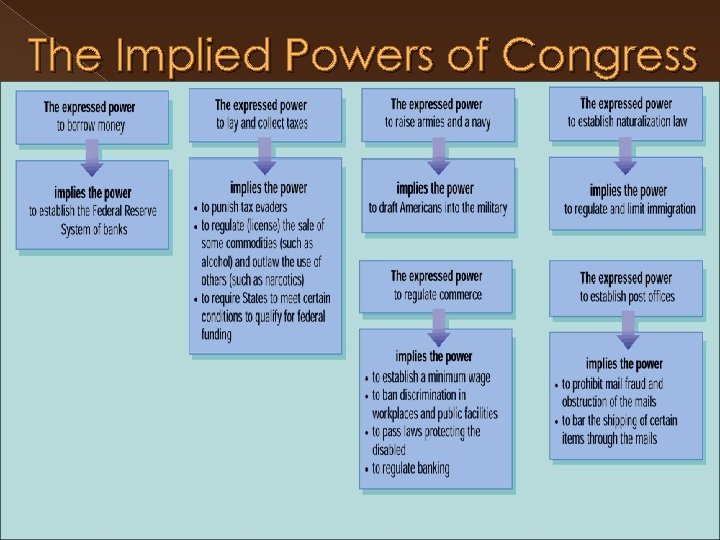 The Implied Powers of Congress
 Nonlegislative Powers Propose Constitutional Amendments with 2/3 vote in both houses House of Reps. chooses the president if no candidate gets a majority in the electoral college Senate chooses vice-president
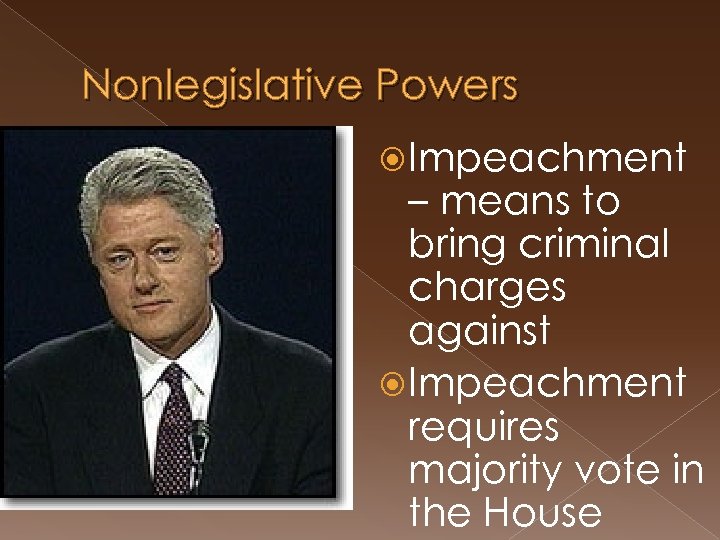 Nonlegislative Powers Impeachment – means to bring criminal charges against Impeachment requires majority vote in the House
 Nonlegislative Powers After House votes, trial begins Chief Justice acts as judge, Senate acts as jury
 Nonlegislative Powers A conviction, which would remove the pres. from office, requires a 2/3 vote in the Senate
 Executive Powers Appointment – President appoints officials with majority approval of Senate
 Executive Powers Treaties – President makes treaties, but Senate must approve with 2/3 vote