


 Скачать презентацию When Money Matters Liquidity Shocks with Real Effects
4a008770f51404f59c11370a87115629.ppt
- Количество слайдов: 30
 When Money Matters: Liquidity Shocks with Real Effects John Driffill and Marcus Miller Birkbeck and University of Warwick
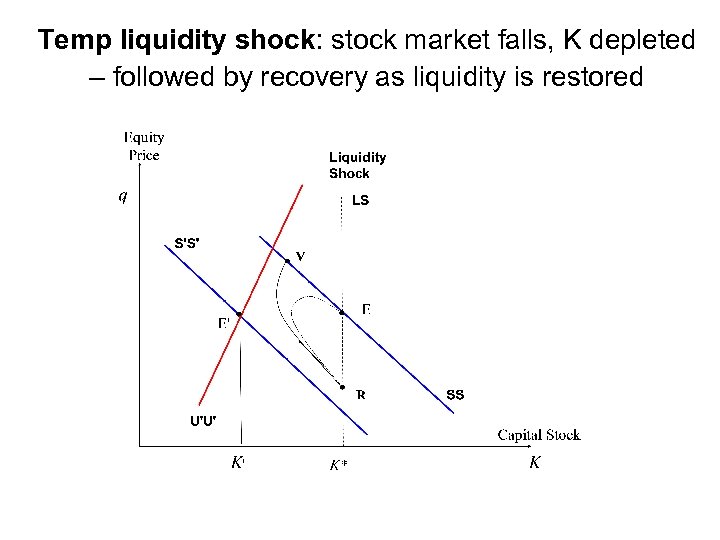
 Summary • Kiyotaki and Moore (2008) show an unexpected temporary tightening of credit cuts current investment and future supply. • FLEXPRICE: With flexible prices and wages, aggregate demand matches current supply via a ‘Pigou effect’ and there’s no unemployment. • FIXPRICE : If prices and wages are inflexible downward, demand failures and unemployment emerge • But, given the capital depletion in the recession, deficient demand turns to excess demand as recovery progresses, i. e. there is a risk of ‘stagflation’.
 Great Moderation has succumbed to credit crunch • US unemployment rate has doubled from 4. 8 per cent to 9. 5 percent and may peak at 10. 5 -11 • “the world is currently undergoing an economic shock every bit as big as the Great Depression shock of 1929302” , Eichengreen and O’Rourke (2009). • “The good news is that the policy response is very different. ” • The bad news is that this owes virtually nothing to modern macro paradigm.
 Kiyotaki and Moore (2008) Liquidity, Business Cycles, and Monetary Policy • firms face credit constraints - with real consequences for composition of output. • credit market imperfections lead to a precautionary demand for money.
 Adding Non Market Clearing to KM • With money wages and prices fixed, goods and labour markets may fail to clear (as in fix-price macroeconomics) • cf. Akerlof and Shiller. • Del Negro et al. at NY Fed have similar idea, using Calvo contracts
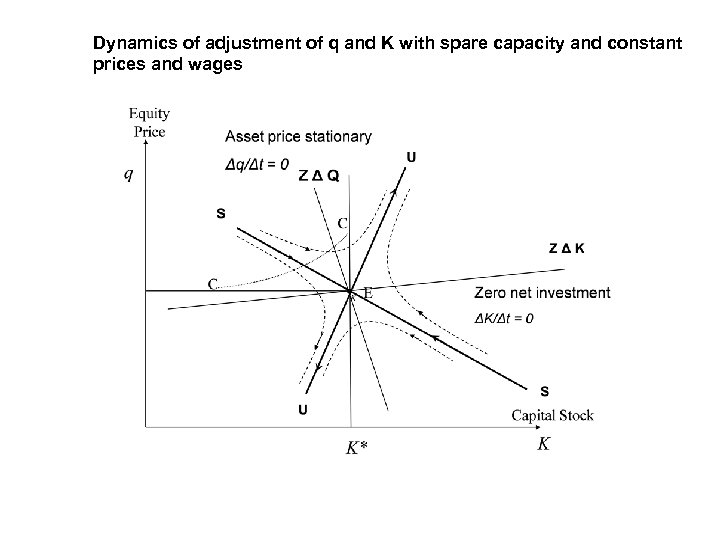
 We turn to temporary equilibrium: French ‘fix-price macro’ Benassy*/Malinvaud • Note that if prices are inflexible downward, there will be no Pigou effect to stabilise aggregate demand in the face of a fall of investment • A fall in demand will contract employment if the real wage is determined by bargaining, as argued for the UK in Layard and Nickell, Alan Manning. • Graphical representation follows *Was Ph D student of Debreu at Berkeley
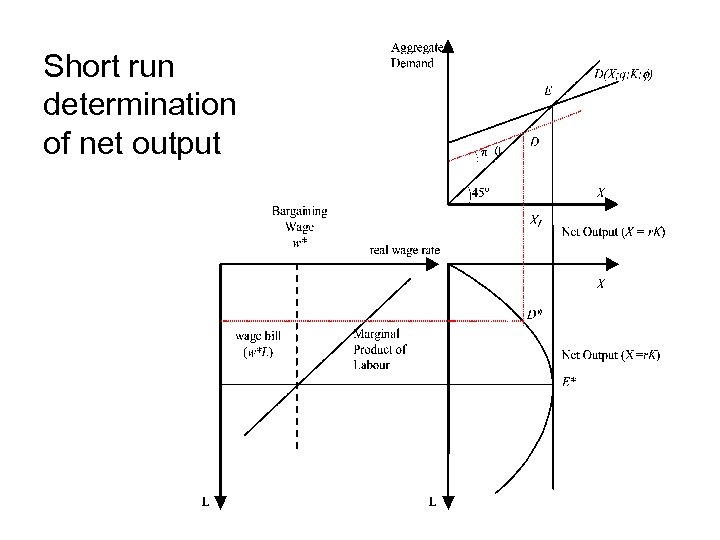 Short run determination of net output
 The model in summary: Liquidity constraints • Kiyotaki and Moore (2008) ‘Liquidity, Business Cycles, and Monetary Policy’ • Money and equity • Money is completely liquid • Equity is not so liquid – only a fraction of holdings can be sold each period – only a fraction of newly produced capital goods can be financed by issuing new equity
 Investment Entrepreneurs can only finance investment using money, selling existing equity claims to others, raising equity on new capital, and spending out of current income
 Workers: trapped in time • Spend what they get • Rational and forward-looking, but impatient and credit constrained. • No borrowing • They can hold money and equity if they choose • But they choose not to save • Consumption equals wages
 Heterogeneous entrepreneurs • May (prob π) or may not (prob 1 -π) have an idea for a profitable investment • Those with no ideas (no investment) – Consume – Save in form of money and equity holdings • Those with an idea (Investors) – Buy new capital goods – Issue equity against them, i. e. borrow – Use money, other equity holdings, and current income to finance investment
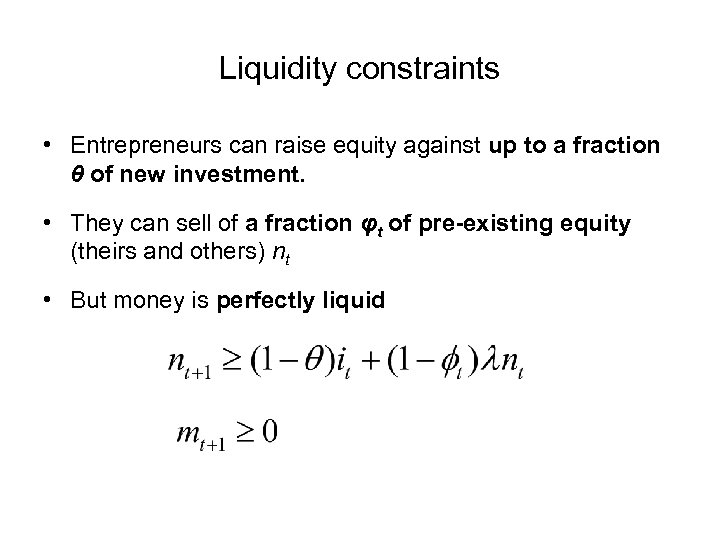 Liquidity constraints • Entrepreneurs can raise equity against up to a fraction θ of new investment. • They can sell of a fraction φt of pre-existing equity (theirs and others) nt • But money is perfectly liquid
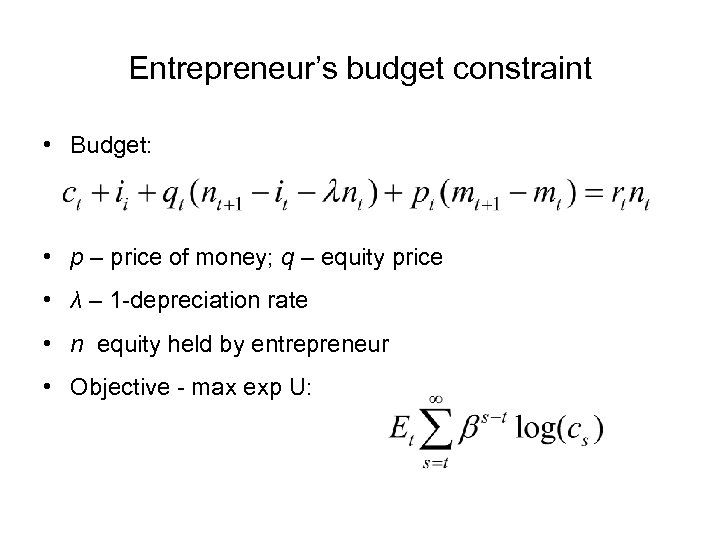 Entrepreneur’s budget constraint • Budget: • p – price of money; q – equity price • λ – 1 -depreciation rate • n equity held by entrepreneur • Objective - max exp U:
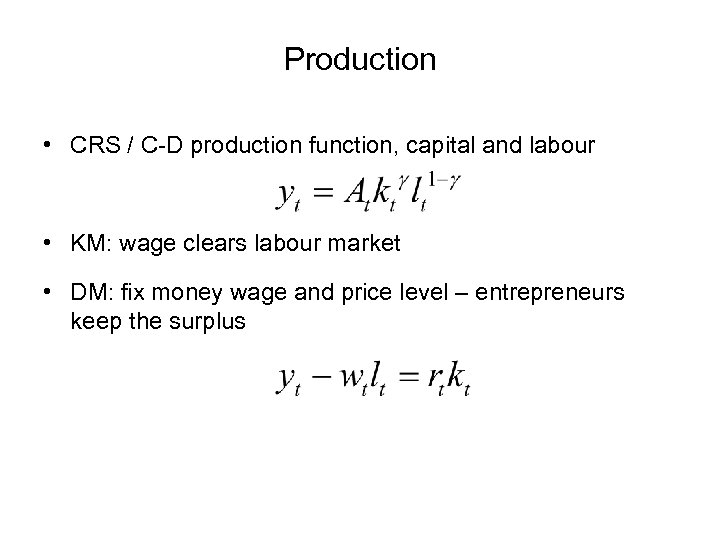 Production • CRS / C-D production function, capital and labour • KM: wage clears labour market • DM: fix money wage and price level – entrepreneurs keep the surplus
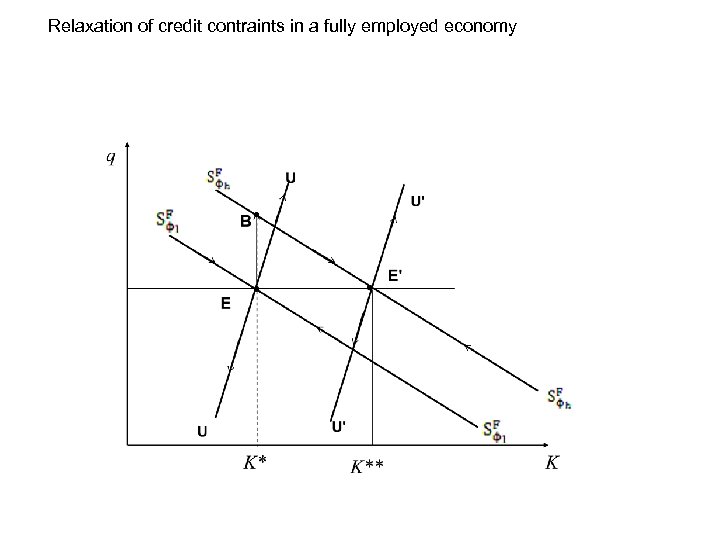
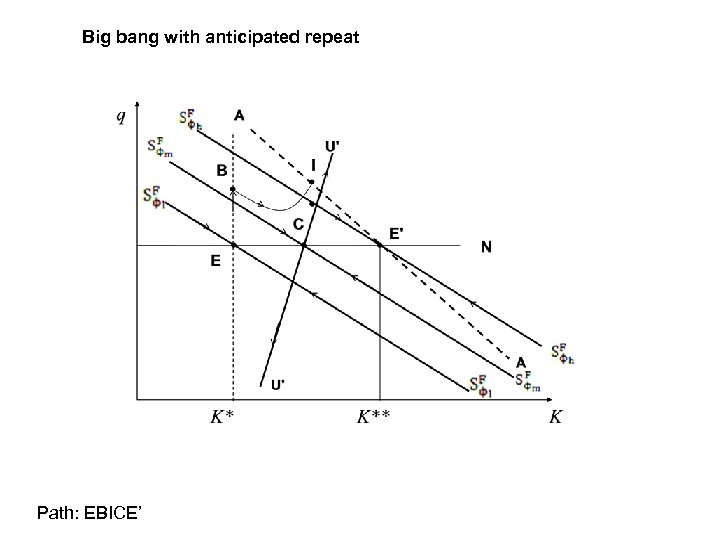
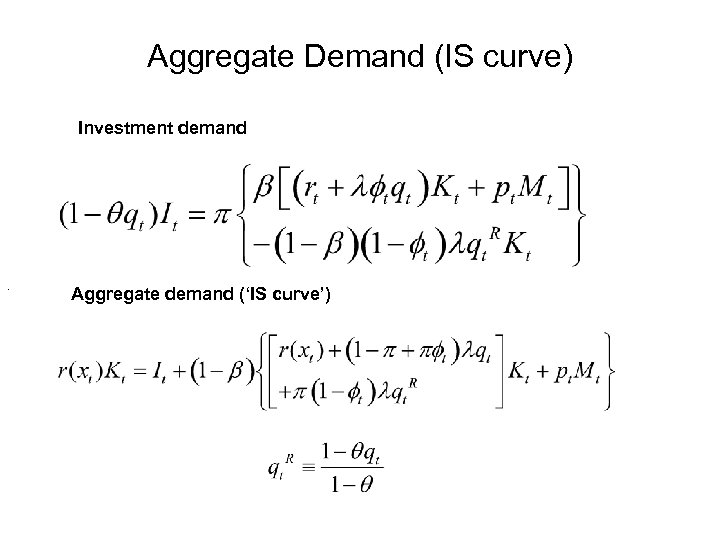 Aggregate Demand (IS curve) Investment demand . Aggregate demand (‘IS curve’)
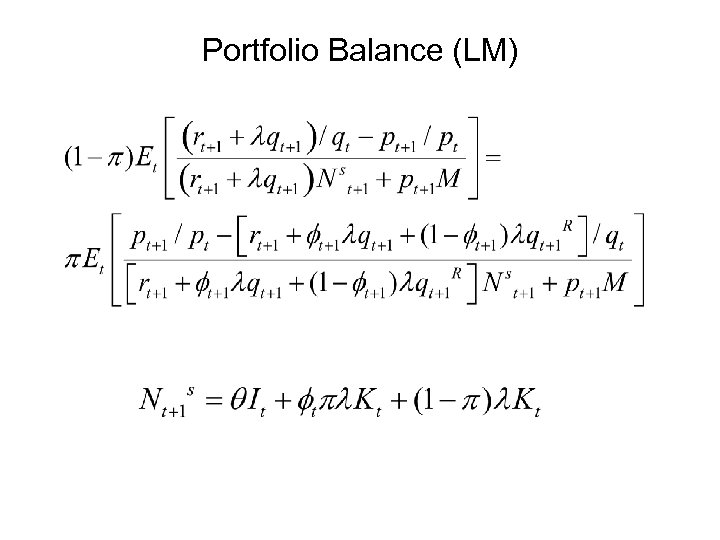 Portfolio Balance (LM)
 Relaxation of credit contraints in a fully employed economy
 Big bang with anticipated repeat Path: EBICE’
 Dynamics of adjustment of q and K with spare capacity and constant prices and wages
 Temp liquidity shock: stock market falls, K depleted – followed by recovery as liquidity is restored
 Policy: QE in Credit crunch • With firms who want to invest more credit constrained and workers income constrained - no Pigou effect to stimulate entrepreneurial consumption, a ‘credit crunch’ causes recession. • The antidote discussed by KM should work here : Quantitative Easing as the government supplies liquidity in exchange for corporate securities (not government bonds). • i. e. more like Fed policy than Bank of England
 Adding (more) behavioural aspects • Phase diagram can portray effects of an asset price bubble as discussed in Akerlof and Shiller’s book Animal Spirits [Perhaps Paul De Grauwe’s approach to ‘animal spirits’ be incorporated by making state contingent , so there’s less innovation in recession? ]
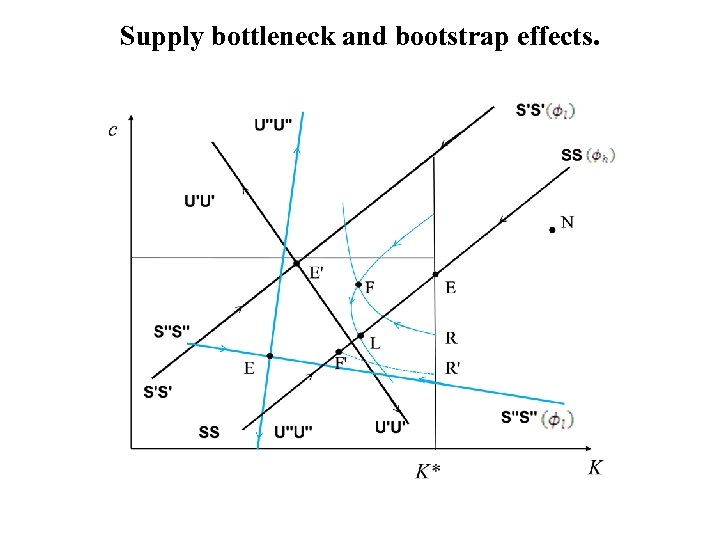 Supply bottleneck and bootstrap effects.
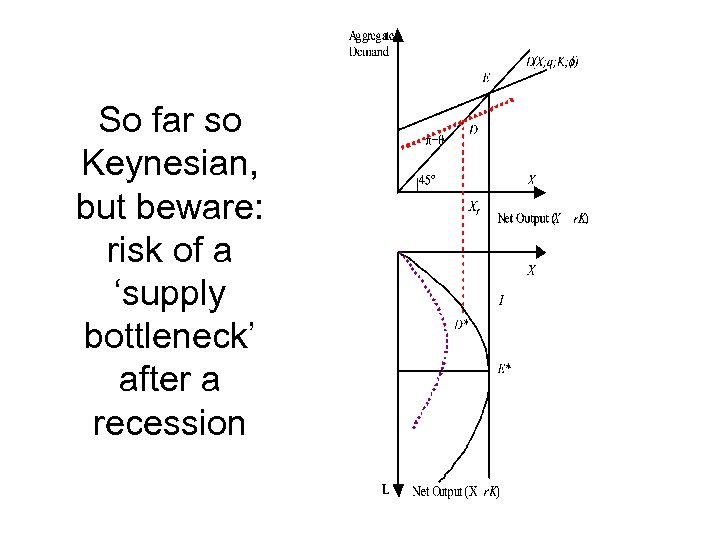 So far so Keynesian, but beware: risk of a ‘supply bottleneck’ after a recession
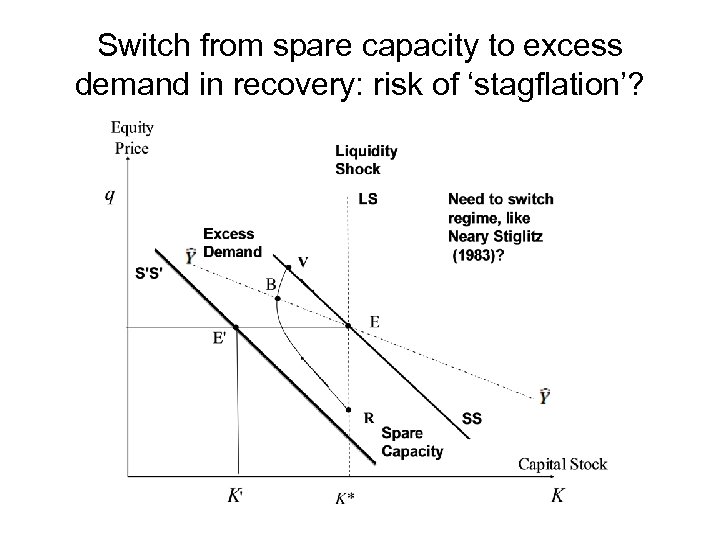 Switch from spare capacity to excess demand in recovery: risk of ‘stagflation’?
 KM framework introduces Keynesian elements into DSGE • In Kiyotaki and Moore (2008) model, tightening credit constraints cut current investment and future aggregate supply. • If prices are inflexible, downward Keynesian demand failure can emerge after a liquidity shock • There is a risk of ‘stagflation’ as demand recovers faster than supply- so it’s back to flexprice growth modelling
 Conclusion • Modelling (severe) financial frictions creates role for money as the liquid asset • Agents heterogeneous – get away from ‘representative household assumption’ • Credit crunch has real effects • Route out of recession may encounter supply bottlenecks • Simple schematic model
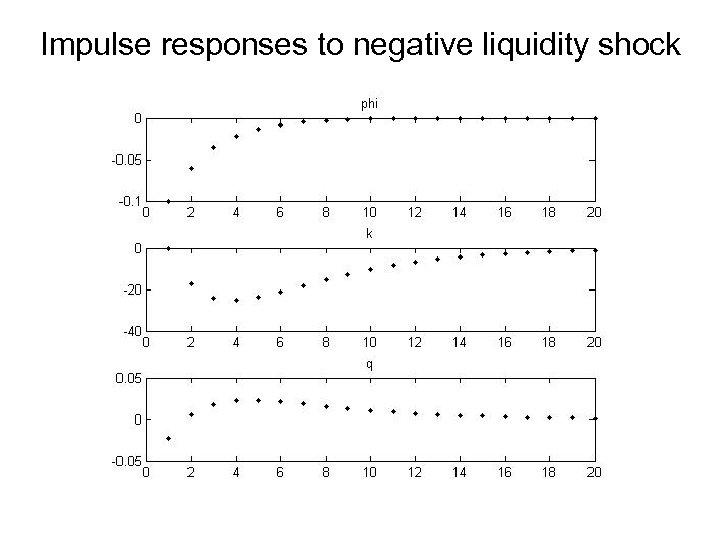 Impulse responses to negative liquidity shock
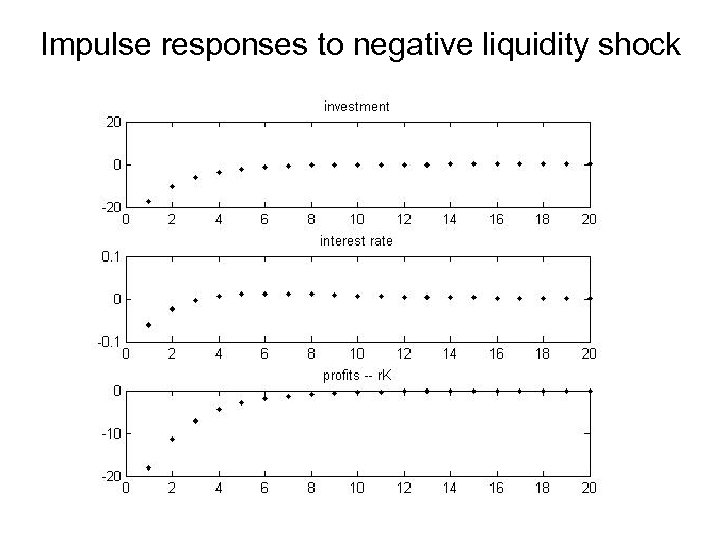 Impulse responses to negative liquidity shock
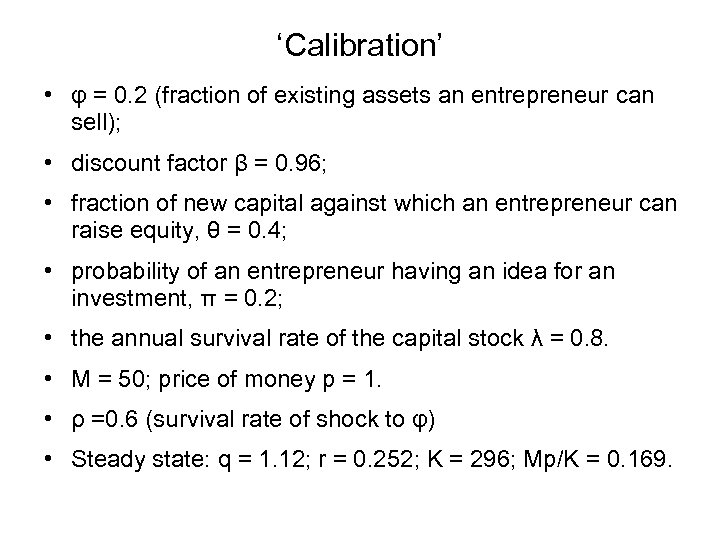 ‘Calibration’ • φ = 0. 2 (fraction of existing assets an entrepreneur can sell); • discount factor β = 0. 96; • fraction of new capital against which an entrepreneur can raise equity, θ = 0. 4; • probability of an entrepreneur having an idea for an investment, π = 0. 2; • the annual survival rate of the capital stock λ = 0. 8. • M = 50; price of money p = 1. • ρ =0. 6 (survival rate of shock to φ) • Steady state: q = 1. 12; r = 0. 252; K = 296; Mp/K = 0. 169.