


 Скачать презентацию When learners are at a distance the careful
281979e25c9e0140c3bfc60dd45a3748.ppt
- Количество слайдов: 61
 “When learners are at a distance, the careful design of assessments is particularly important, because society somewhat unfairly imposes higher expectations on the assessment of online learners. ” Oosterhof, et al. (2008) Assessing Learners Online 1
 Assessing Distance Learning: Are they learning what we think we’re teaching? ? ? ? ? ? ? Donald Staub, Title III Director Carteret Community College 2
 http: //ccctitle 3. wordpress. com/ 3
 The Lineup • DL @ CCC • Why Worry about DL Assessment? • How We’re Doing It • The DL Program • DL in Programs & Courses • Possibilities & Challenges 4
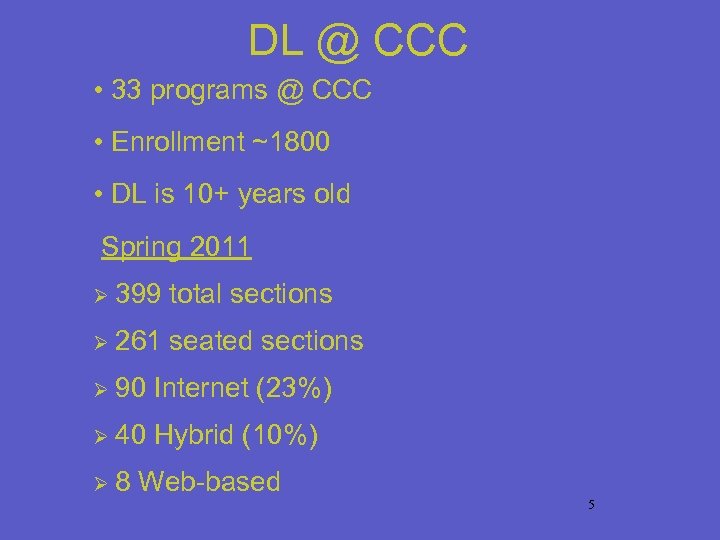 DL @ CCC • 33 programs @ CCC • Enrollment ~1800 • DL is 10+ years old Spring 2011 Ø 399 total sections Ø 261 seated sections Ø 90 Internet (23%) Ø 40 Hybrid (10%) Ø 8 Web-based 5
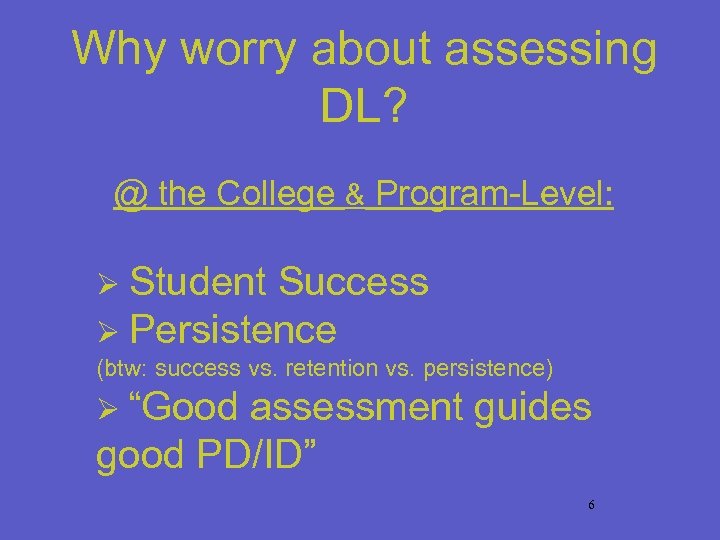 Why worry about assessing DL? @ the College & Program-Level: Ø Student Success Ø Persistence (btw: success vs. retention vs. persistence) Ø “Good assessment guides good PD/ID” 6
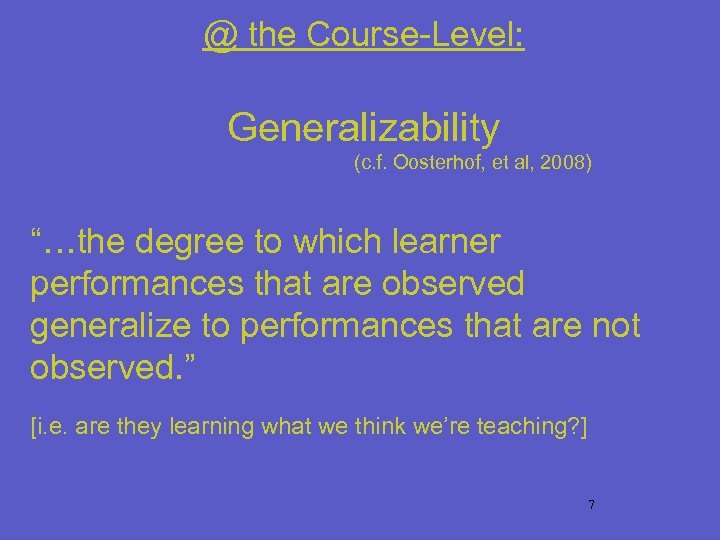 @ the Course-Level: Generalizability (c. f. Oosterhof, et al, 2008) “…the degree to which learner performances that are observed generalize to performances that are not observed. ” [i. e. are they learning what we think we’re teaching? ] 7
 So, how are we doing this? Caveat: We’re not saying this is right or wrong…it’s just the way that we’re currently approaching it. 8
 “Comparability of distance education programs to campus-based programs and courses is ensured by the evaluation of educational effectiveness, including assessments of student learning outcomes, student retention, and student satisfaction. ” (CS 3. 3. 1) COC Distance Education Policy Statement http: //www. sacscoc. org/pdf/Distance%20 and%20 correspondence%20 policy%20 final. pdf 9
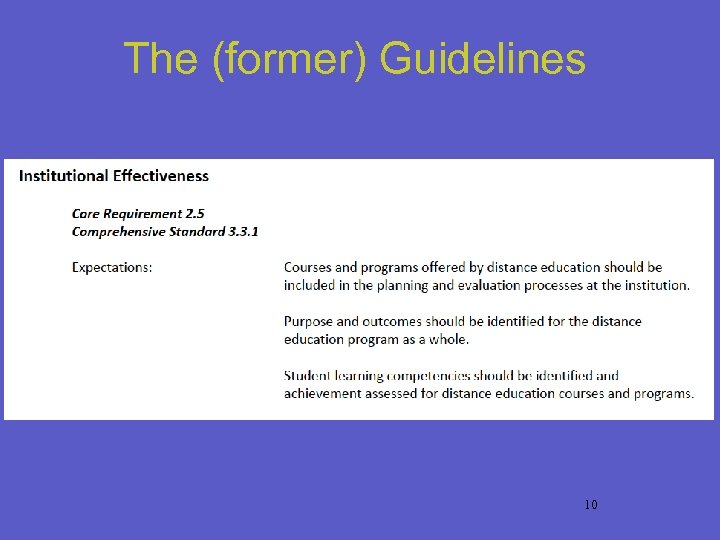 The (former) Guidelines 10
 11
11
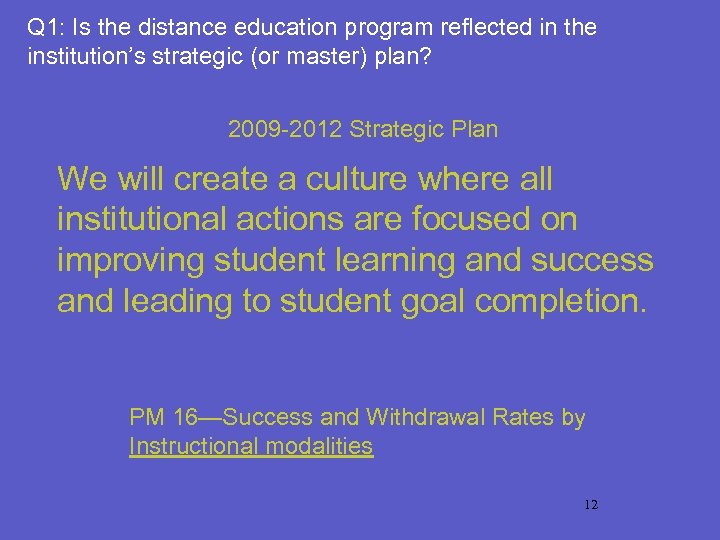 Q 1: Is the distance education program reflected in the institution’s strategic (or master) plan? 2009 -2012 Strategic Plan We will create a culture where all institutional actions are focused on improving student learning and success and leading to student goal completion. PM 16—Success and Withdrawal Rates by Instructional modalities 12
 Q 2: Is there evidence that outcomes for the program have been identified? DL-AO #1: Faculty demonstrate the ability to teach in the online environment in a proficient (student centered) manner. DL-AO #2: Students have more educational options to pursue degrees, diplomas, and certificates due to expanded online course offerings at CCC. 13
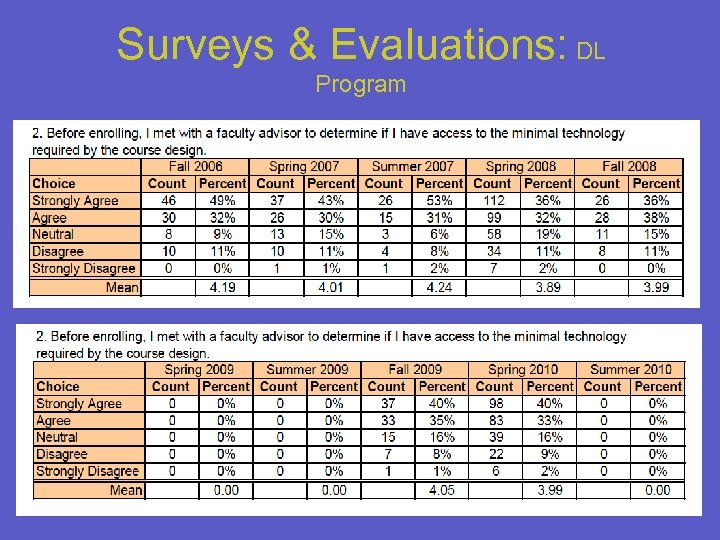
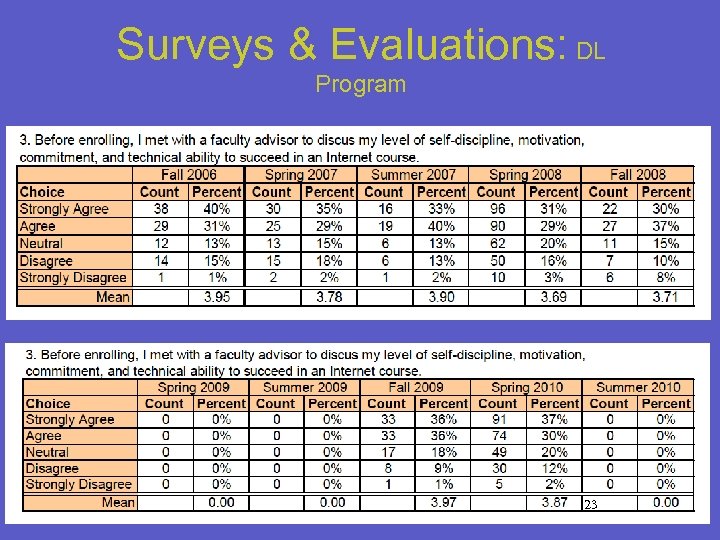
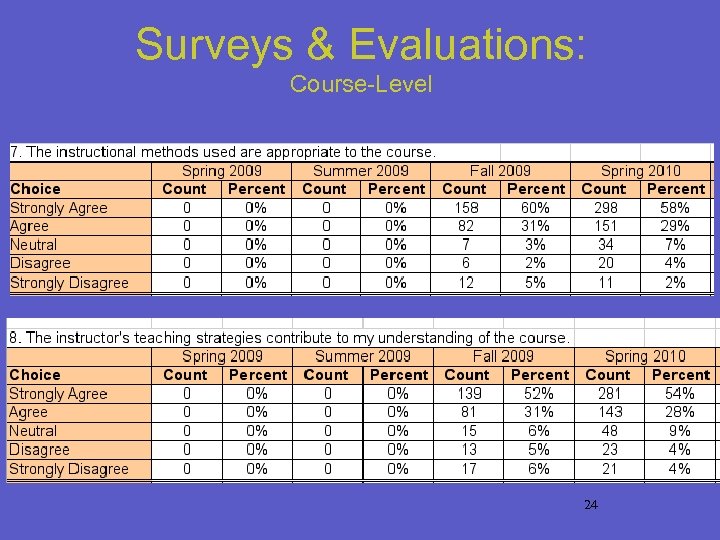
 Q 3: Is there evidence that the effectiveness of the distance education program is regularly assessed and steps taken for improvement of the program? AO #1: Faculty demonstrate the ability to teach in the online environment in a proficient (student centered) manner. Assessment: Quality Assessment Plan, Success/ Persistence Rates, Student Surveys/Evaluations. AO #2: Students have more educational options to pursue degrees, diplomas, and certificates due to expanded online course offerings at CCC. Assessment: The number of internet/hybrid sections offered. 14
 QAP 15
 The QAP (Quality Assessment Plan) • Developed in-house (using models) • Peer-reviewed by content specialist • Stipends (T 3) • All current online courses have been reviewed • All new online courses must be reviewed/ certified http: //web. carteret. edu/keoughp/Title. III/Final. QAP. xls 16
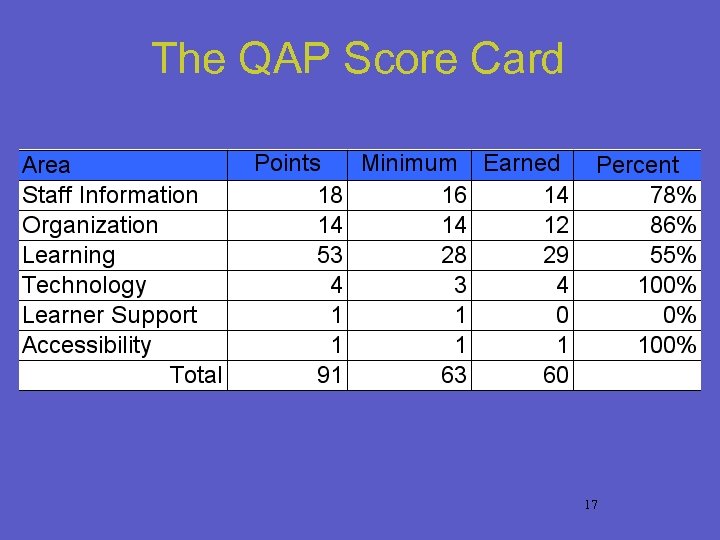 The QAP Score Card 17
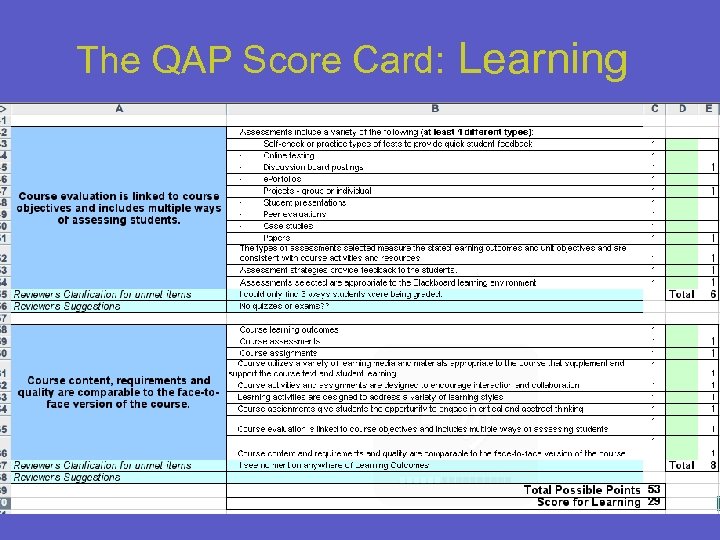 The QAP Score Card: Learning 18
 QAP Success/Persistence 19
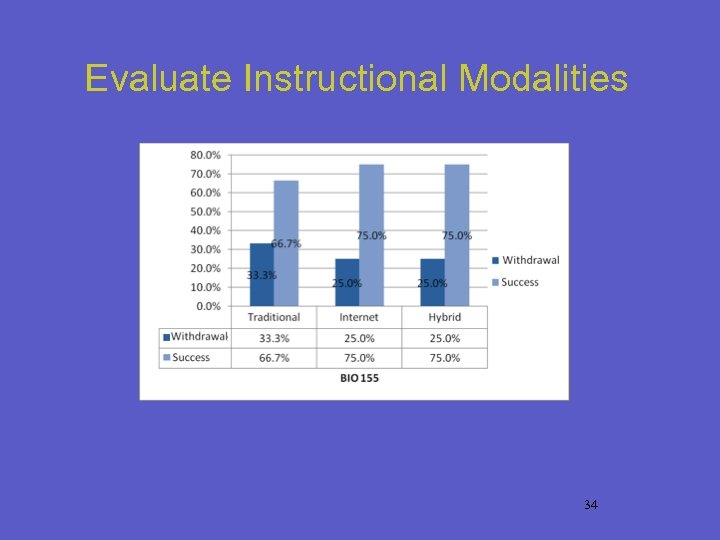
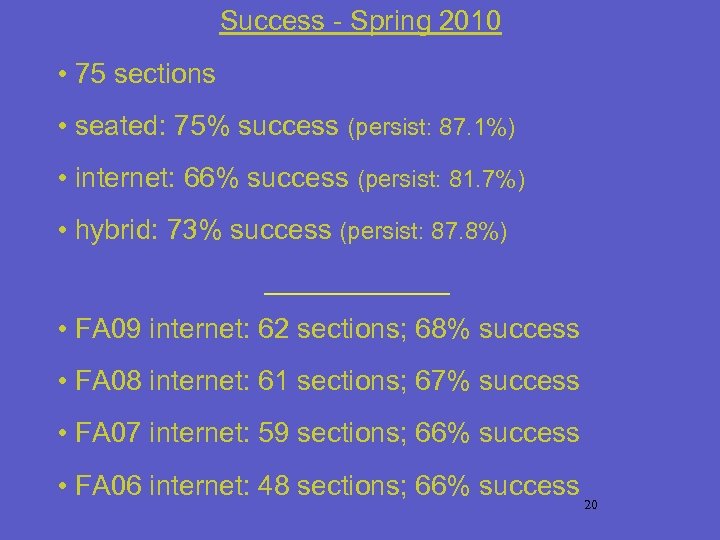 Success - Spring 2010 • 75 sections • seated: 75% success (persist: 87. 1%) • internet: 66% success (persist: 81. 7%) • hybrid: 73% success (persist: 87. 8%) • FA 09 internet: 62 sections; 68% success • FA 08 internet: 61 sections; 67% success • FA 07 internet: 59 sections; 66% success • FA 06 internet: 48 sections; 66% success 20
 QAP Success/Persistence Program/Course Evaluations 21
 Surveys & Evaluations: DL Program 22
 Surveys & Evaluations: DL Program 23
 Surveys & Evaluations: Course-Level 24
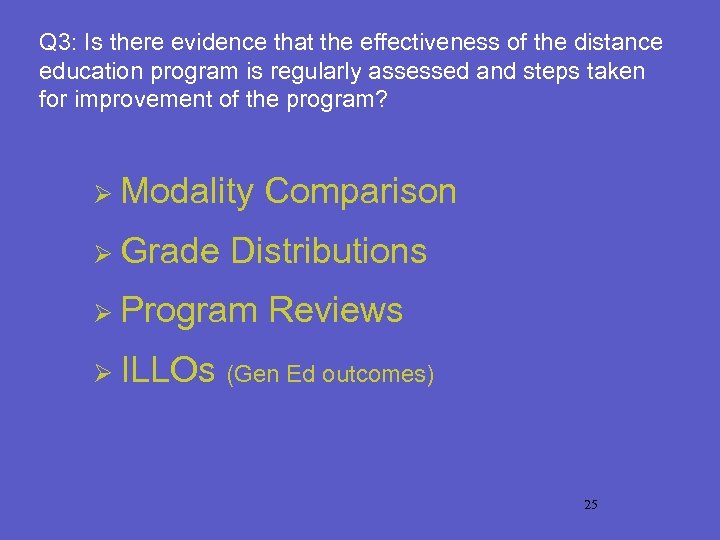 Q 3: Is there evidence that the effectiveness of the distance education program is regularly assessed and steps taken for improvement of the program? Ø Modality Ø Grade Comparison Distributions Ø Program Reviews Ø ILLOs (Gen Ed outcomes) 25
 Modality Comparison 26
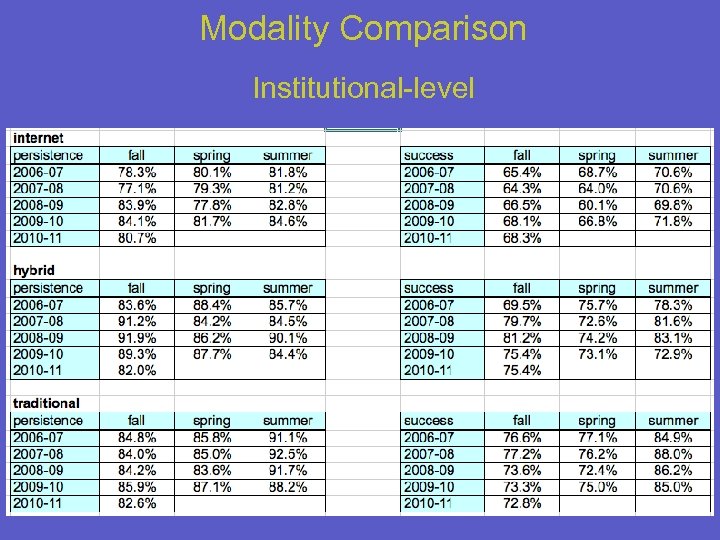 Modality Comparison Institutional-level 27
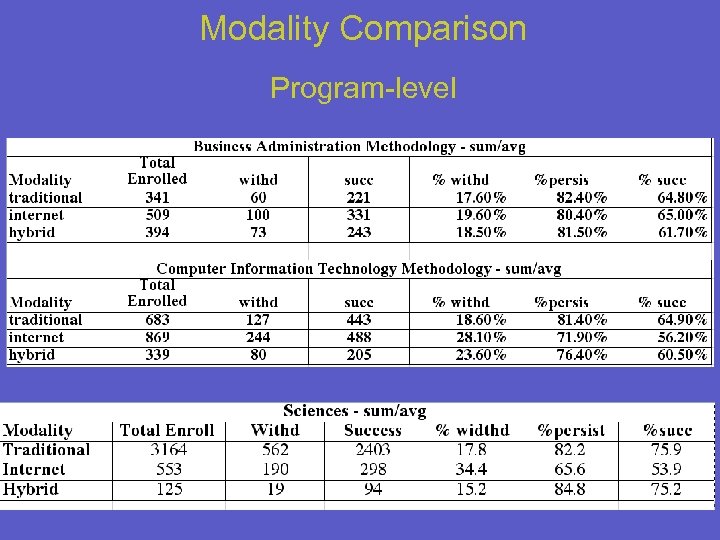 Modality Comparison Program-level 28
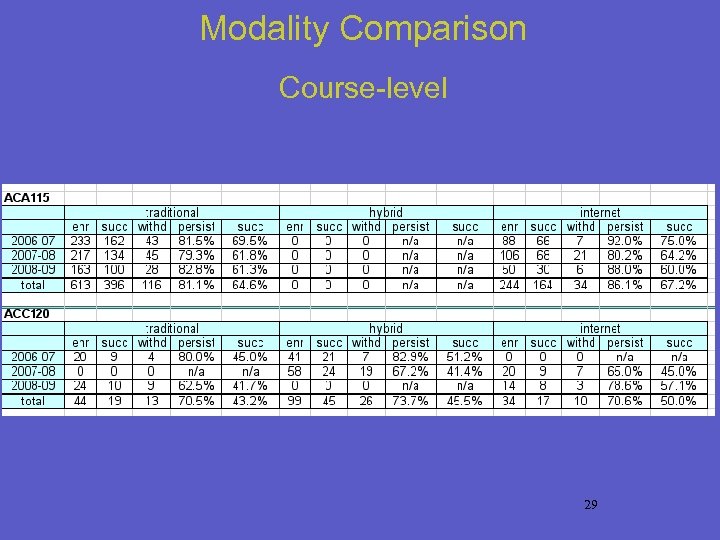 Modality Comparison Course-level 29
 Modality Comparison Grade Distributions 30
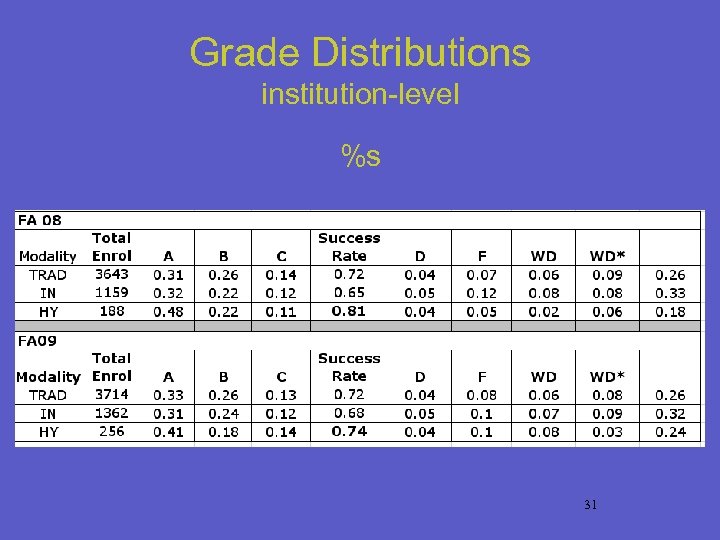 Grade Distributions institution-level %s 31
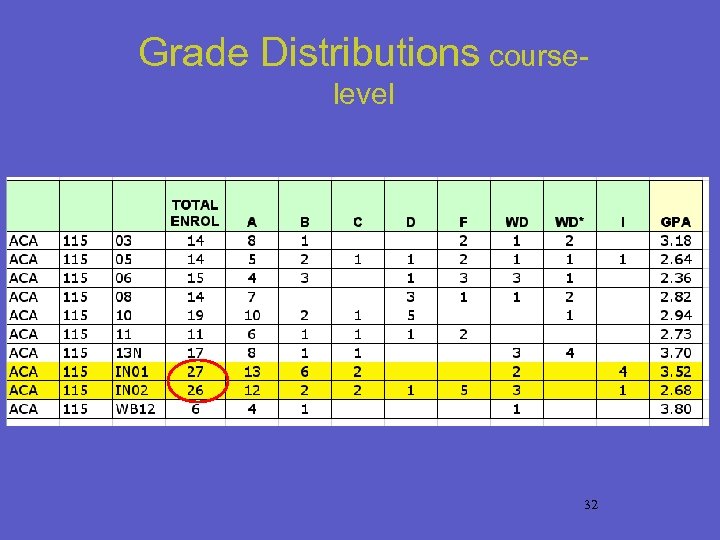 Grade Distributions courselevel 32
 Modality Comparison Grade Distributions Program Reviews 33
 Evaluate Instructional Modalities 34
 Modality Comparison Grade Distributions Program Reviews ILLOs 35
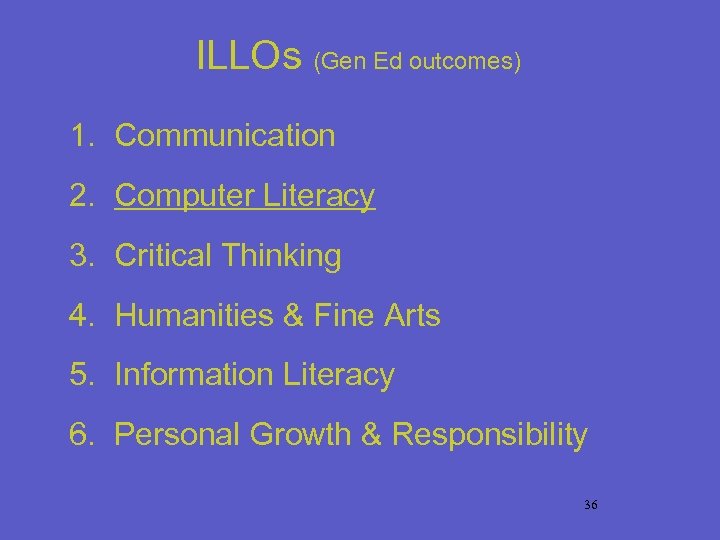 ILLOs (Gen Ed outcomes) 1. Communication 2. Computer Literacy 3. Critical Thinking 4. Humanities & Fine Arts 5. Information Literacy 6. Personal Growth & Responsibility 36
 Computer Literacy - CIS 110 Outcome: Students demonstrate proficiency in the use of computer technology including application software, system software, and internet browsers. Assessment: Final Exam in CIS 110. 37
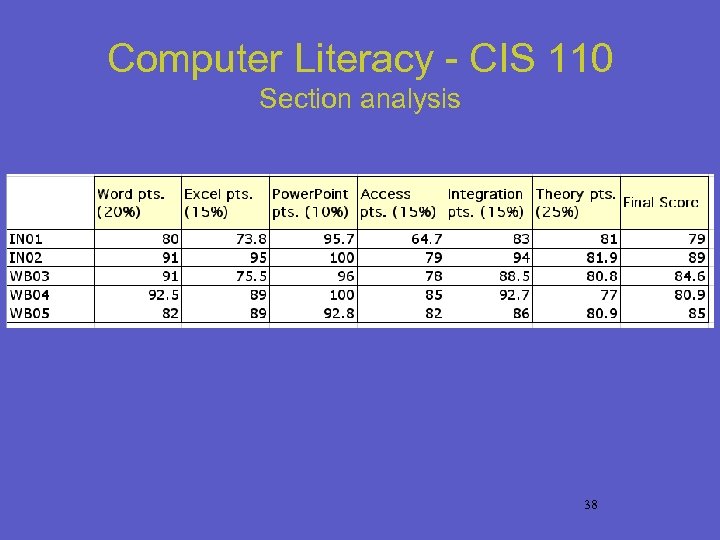 Computer Literacy - CIS 110 Section analysis 38
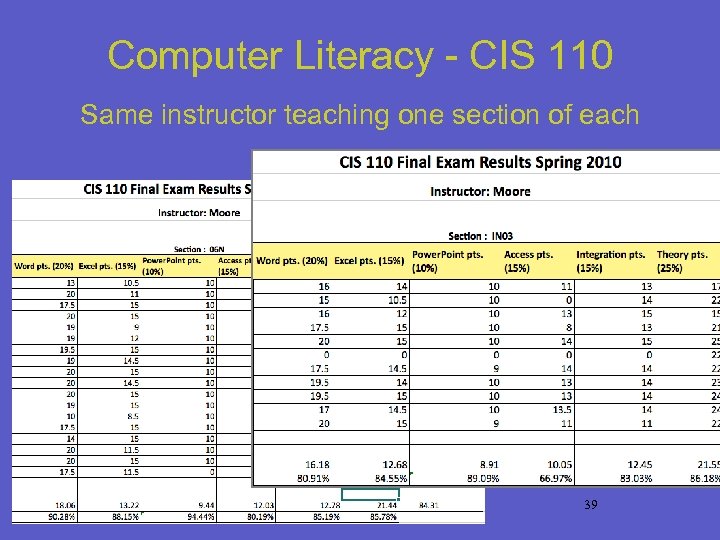 Computer Literacy - CIS 110 Same instructor teaching one section of each 39
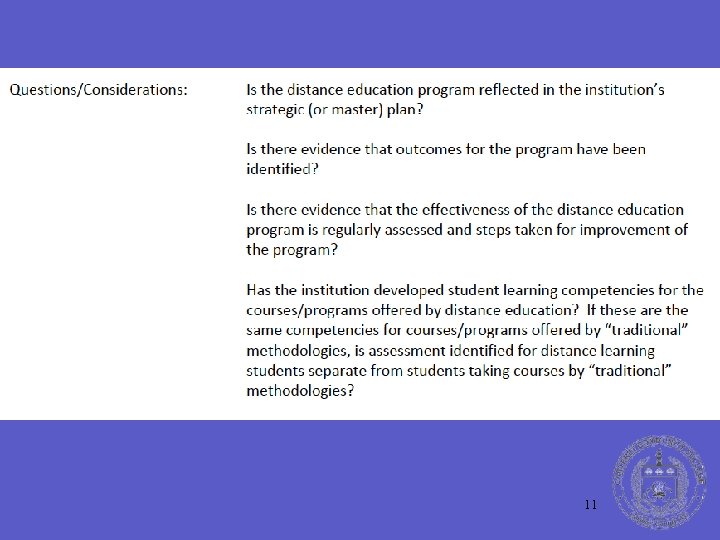
 Q 4: Has the institution developed student learning competencies for the courses/programs offered by distance education? If these are the same competencies for courses/programs offered by “traditional” methodologies, is assessment identified for distance learning students separate from students taking courses by “traditional” methodologies? 40
 “Comparability of distance education programs to campus-based programs and courses is ensured by the evaluation of educational effectiveness, including assessments of student learning outcomes, student retention, and student satisfaction. ” So, are they learning what we think we’re teaching? 41
 And the answer is… Yes! … No? …maybe? ? • PLLOs • CLLOs 42
 PLLOs 43
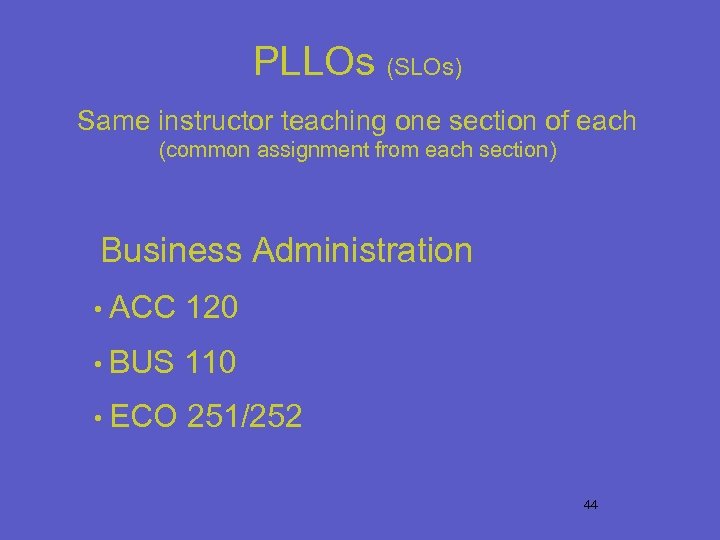 PLLOs (SLOs) Same instructor teaching one section of each (common assignment from each section) Business Administration • ACC 120 • BUS 110 • ECO 251/252 44
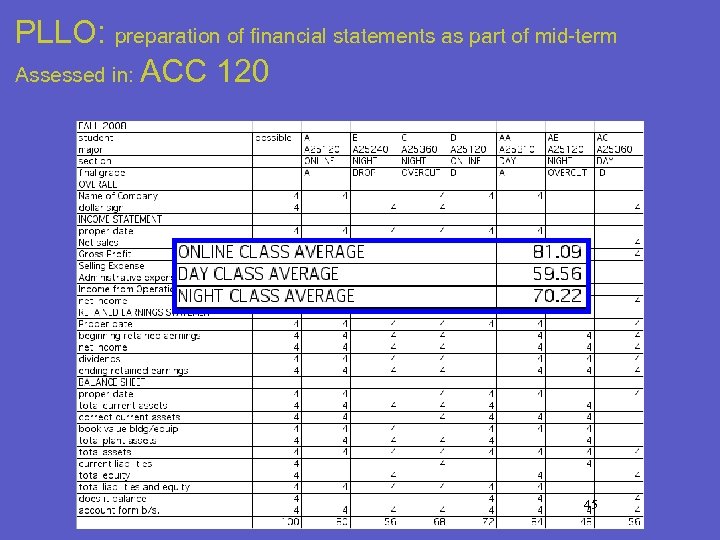 PLLO: preparation of financial statements as part of mid-term Assessed in: ACC 120 45
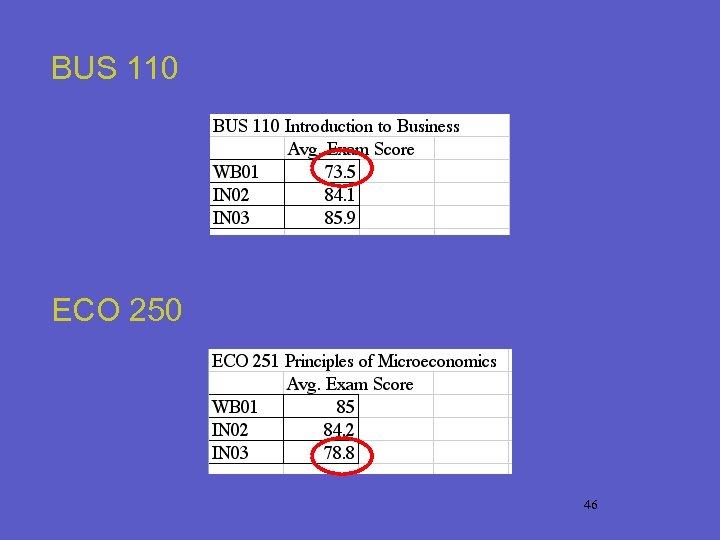 BUS 110 ECO 250 46
 PLLOs CLLOs 47
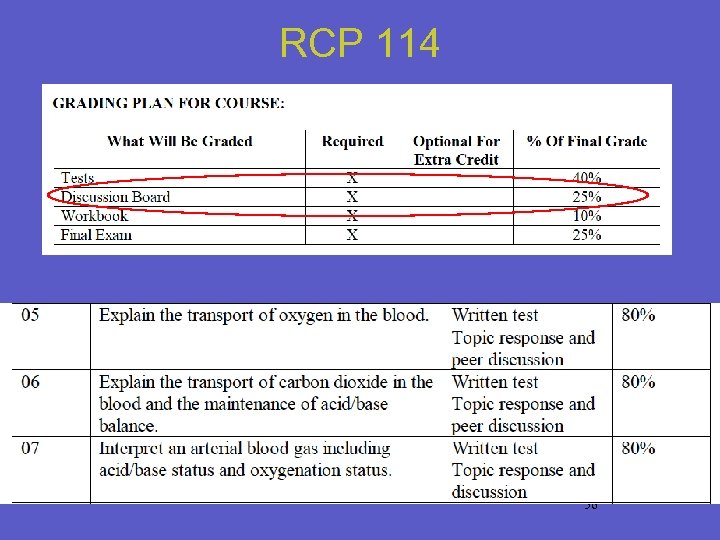
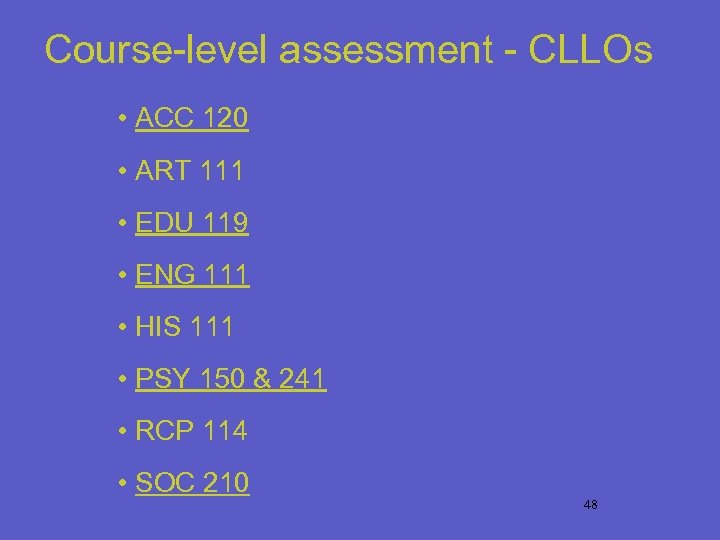 Course-level assessment - CLLOs • ACC 120 • ART 111 • EDU 119 • ENG 111 • HIS 111 • PSY 150 & 241 • RCP 114 • SOC 210 48
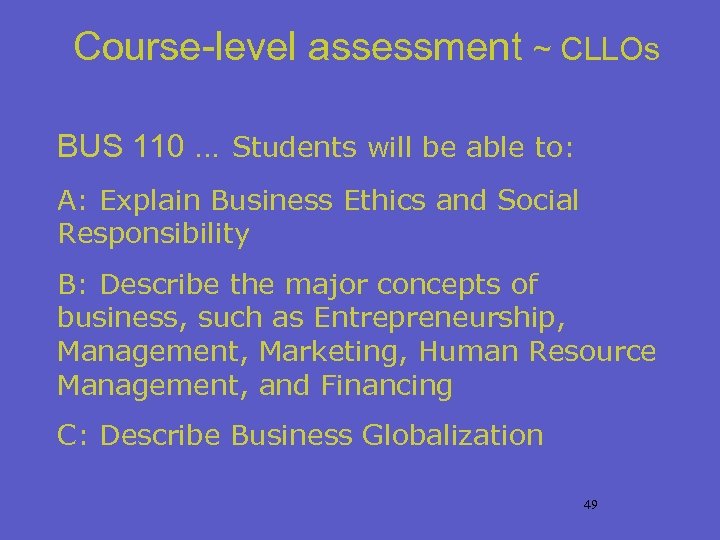 Course-level assessment ~ CLLOs BUS 110 … Students will be able to: A: Explain Business Ethics and Social Responsibility B: Describe the major concepts of business, such as Entrepreneurship, Management, Marketing, Human Resource Management, and Financing C: Describe Business Globalization 49
 50
50
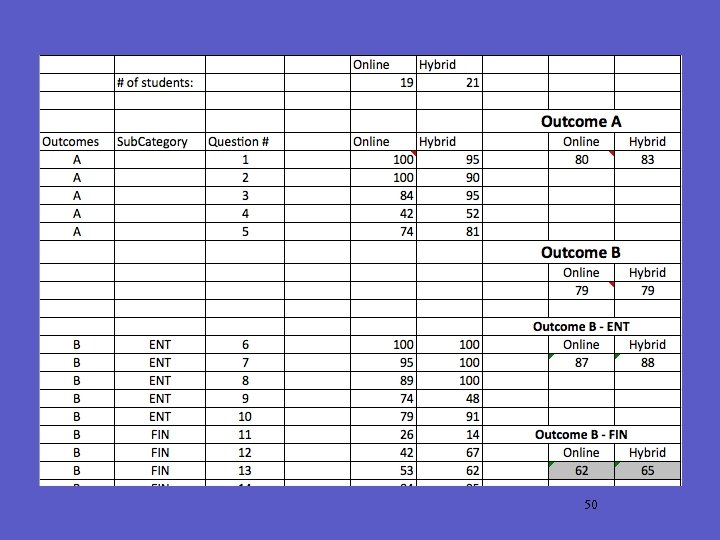
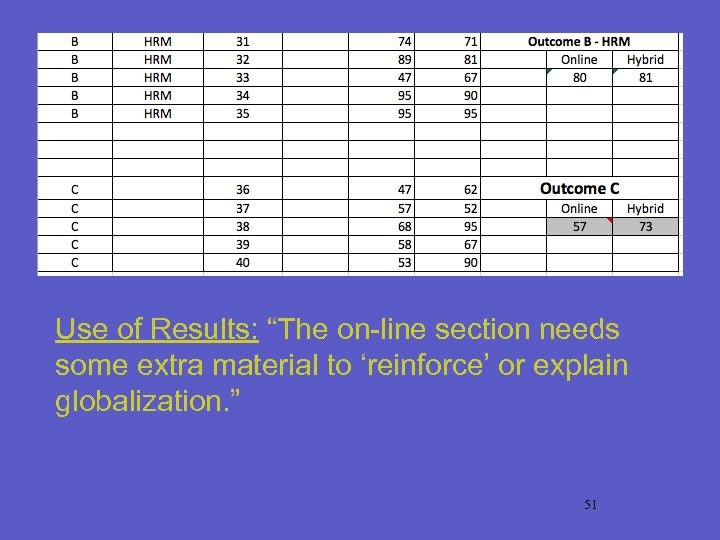 Use of Results: “The on-line section needs some extra material to ‘reinforce’ or explain globalization. ” 51
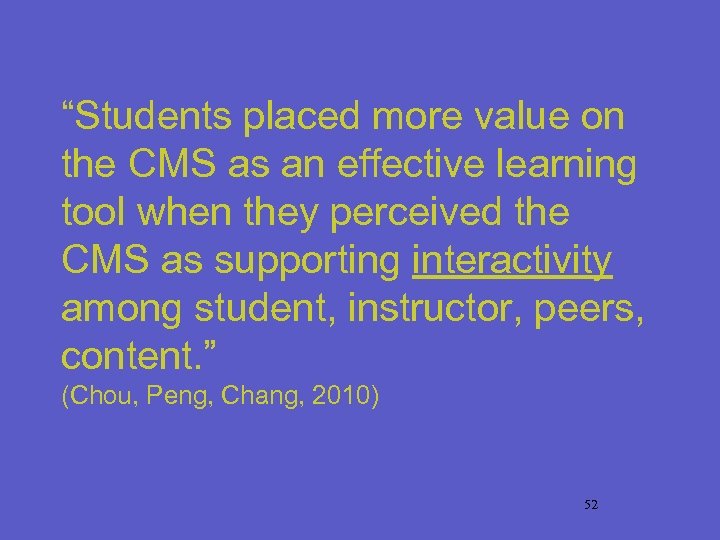 “Students placed more value on the CMS as an effective learning tool when they perceived the CMS as supporting interactivity among student, instructor, peers, content. ” (Chou, Peng, Chang, 2010) 52
 ART 111 53
 A - (100 - 90): - You posted 3 or more times and you completed the Assignment with a well thought through response. (The more you post MEANINGFUL responses over 3 the higher your grade. Though welcome and expected, please understand that a One or Two sentence "feel good" post such as (. . . Great response Michaela!!) or (. . . I love how you put the meaning and then went down and talked about them. it made it easy to understand!!) will count for very little towards your grade. 54
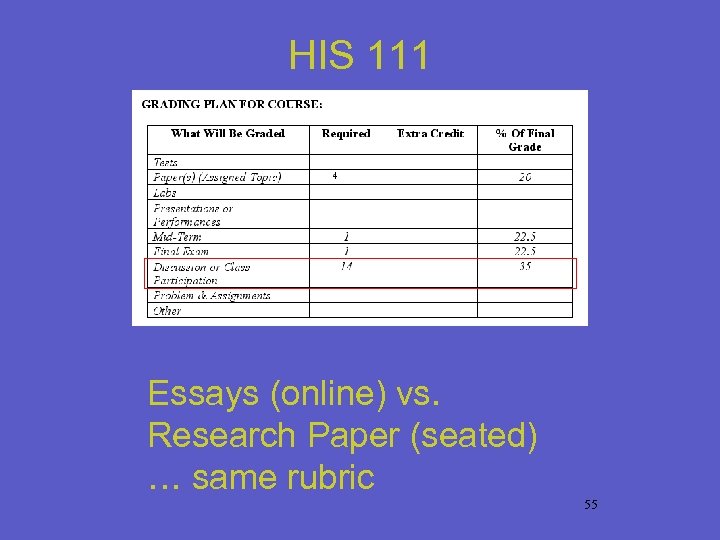 HIS 111 Essays (online) vs. Research Paper (seated) … same rubric 55
 RCP 114 56
 Other Possibilities • Downstream assessment • E-ports 57
 Challenges 58
![“I got rid of [the discussion board]…it’s a pain in the ass. ” “I](https://present5.com/presentation/281979e25c9e0140c3bfc60dd45a3748/image-59.jpg "“I got rid of [the discussion board]…it’s a pain in the ass. ” “I") “I got rid of [the discussion board]…it’s a pain in the ass. ” “I have to pull teeth to get them to post even when they get a score” “Value of discussion board is suspect at best. ” 59
“I got rid of [the discussion board]…it’s a pain in the ass. ” “I have to pull teeth to get them to post even when they get a score” “Value of discussion board is suspect at best. ” 59
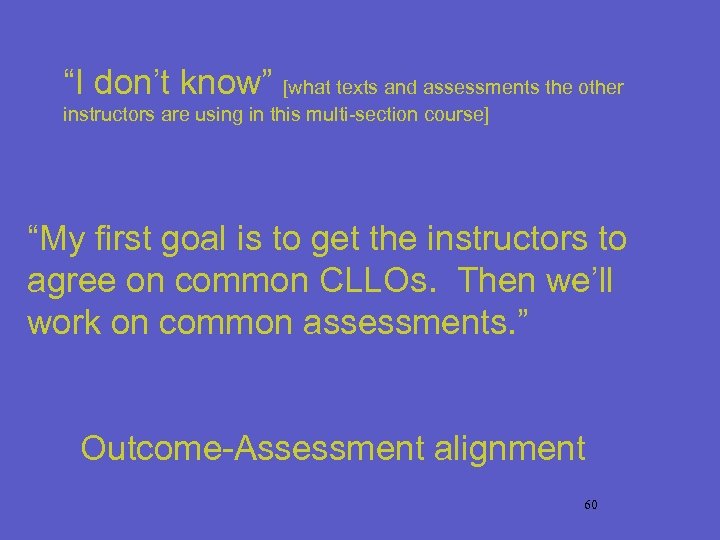 “I don’t know” [what texts and assessments the other instructors are using in this multi-section course] “My first goal is to get the instructors to agree on common CLLOs. Then we’ll work on common assessments. ” Outcome-Assessment alignment 60
 Donald Staub Title III Director Carteret Community College staubd@carteret. edu 252 - 222 -6010 http: //ccctitle 3. wordpress. com www. carteret. edu 61