 Скачать презентацию Whats new in Campylobacter infection Andrew Fox Health
42357d32a4c9ff9d89e6b89b0a5b4d69.ppt
- Количество слайдов: 41



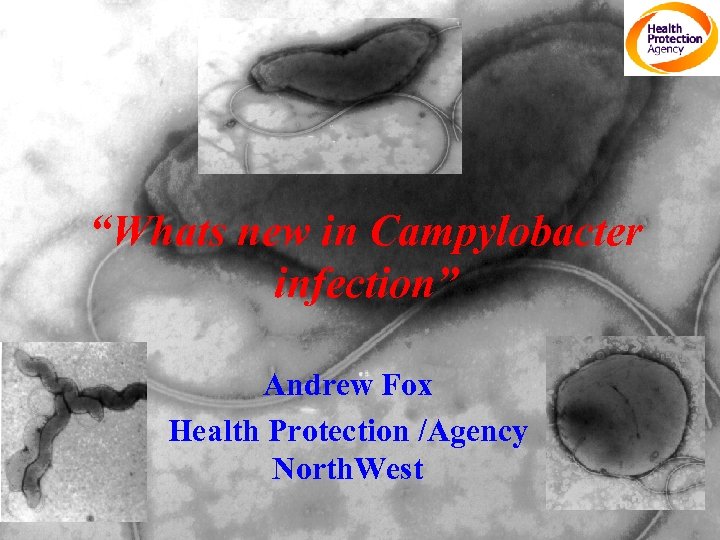
“Whats new in Campylobacter infection” Andrew Fox Health Protection /Agency North. West
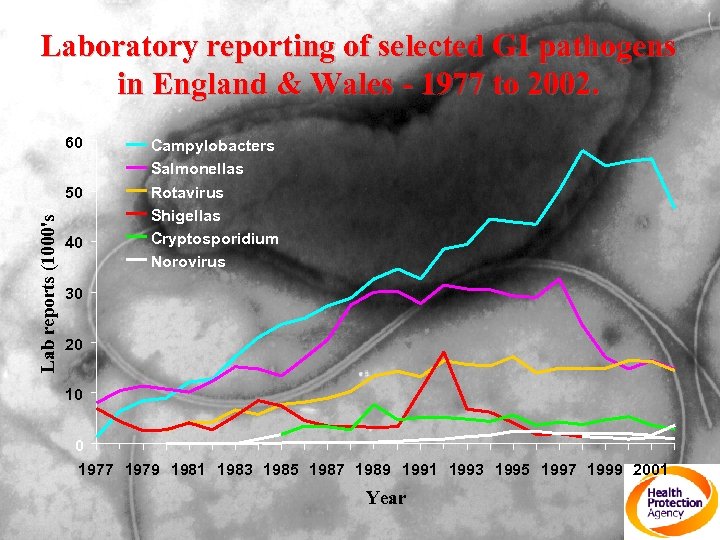
Laboratory reporting of selected GI pathogens in England & Wales - 1977 to 2002. 60 Lab reports (1000's) 50 40 Campylobacters Salmonellas Rotavirus Shigellas Cryptosporidium Norovirus 30 20 10 0 1977 1979 1981 1983 1985 1987 1989 1991 1993 1995 1997 1999 2001 Year
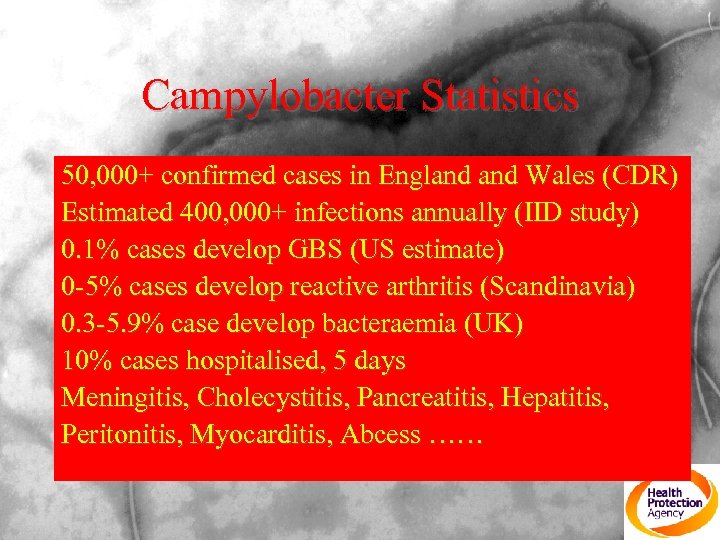
Campylobacter Statistics 50, 000+ confirmed cases in England Wales (CDR) Estimated 400, 000+ infections annually (IID study) 0. 1% cases develop GBS (US estimate) 0 -5% cases develop reactive arthritis (Scandinavia) 0. 3 -5. 9% case develop bacteraemia (UK) 10% cases hospitalised, 5 days Meningitis, Cholecystitis, Pancreatitis, Hepatitis, Peritonitis, Myocarditis, Abcess ……
There’s a lot of it about… BUT… Common source outbreaks are rarely identified and the source of the majority of cases reported in the UK is unknown. In one case control study, epidemiology of infection for over 60% of cases remained unknown.
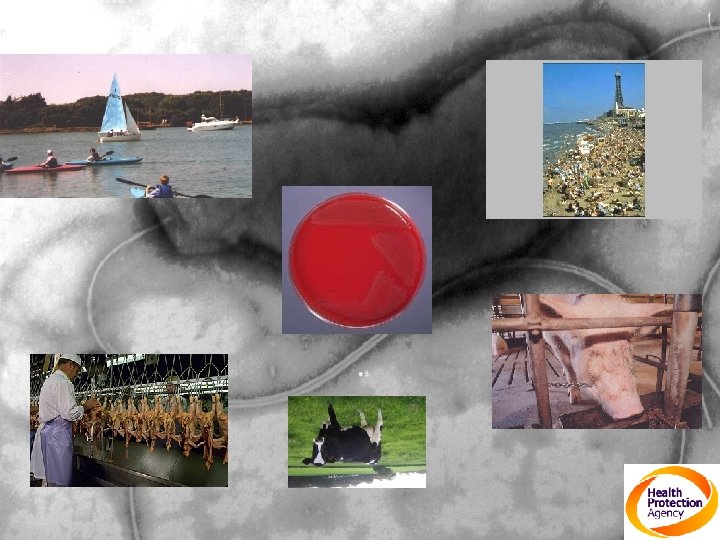
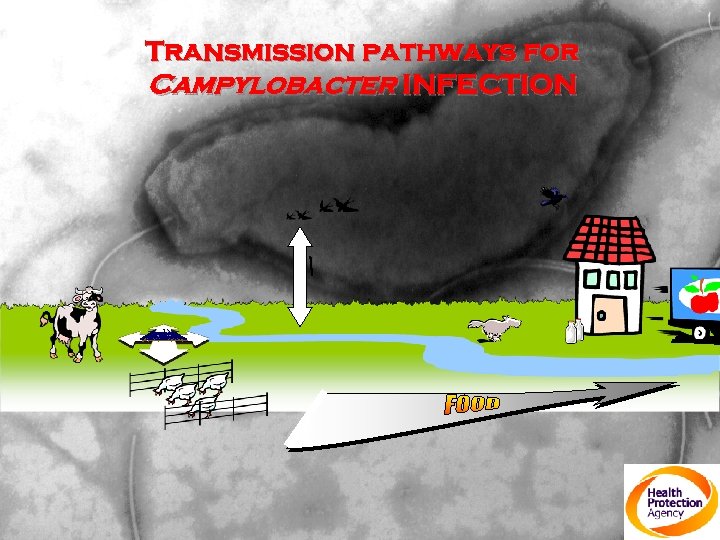
Transmission pathways for Campylobacter INFECTION
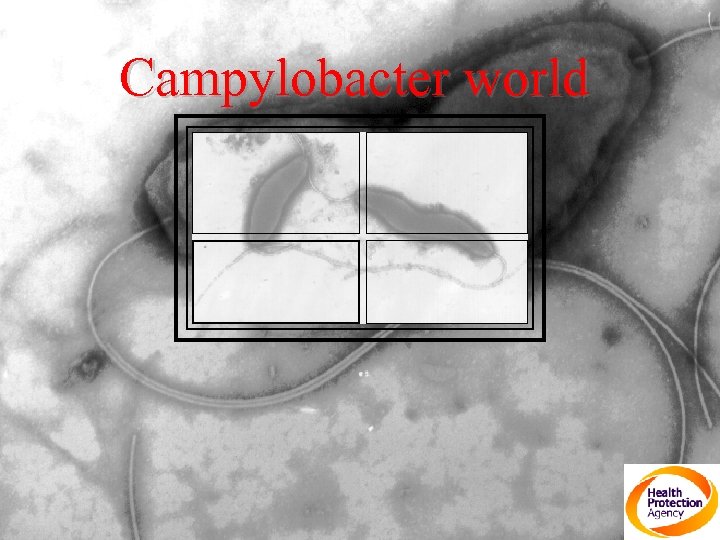
Campylobacter world
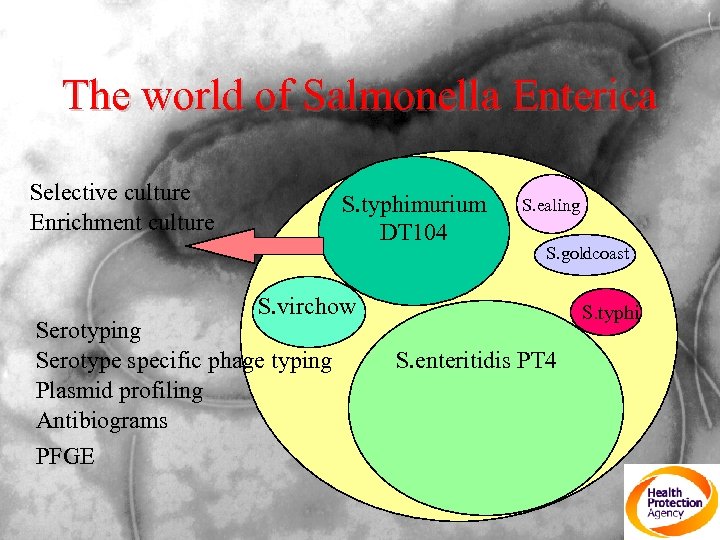
The world of Salmonella Enterica Selective culture Enrichment culture S. typhimurium DT 104 S. ealing S. goldcoast S. virchow Serotyping Serotype specific phage typing Plasmid profiling Antibiograms PFGE S. typhi S. enteritidis PT 4
Campylobacter world Selective culture Enrichment culture (foods) Typing methods Campylobacter spp.
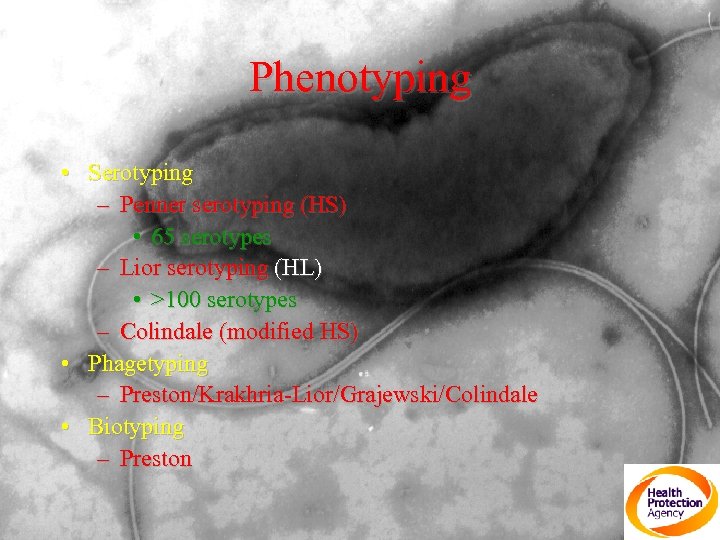
Phenotyping • Serotyping – Penner serotyping (HS) • 65 serotypes – Lior serotyping (HL) • >100 serotypes – Colindale (modified HS) • Phagetyping – Preston/Krakhria-Lior/Grajewski/Colindale • Biotyping – Preston
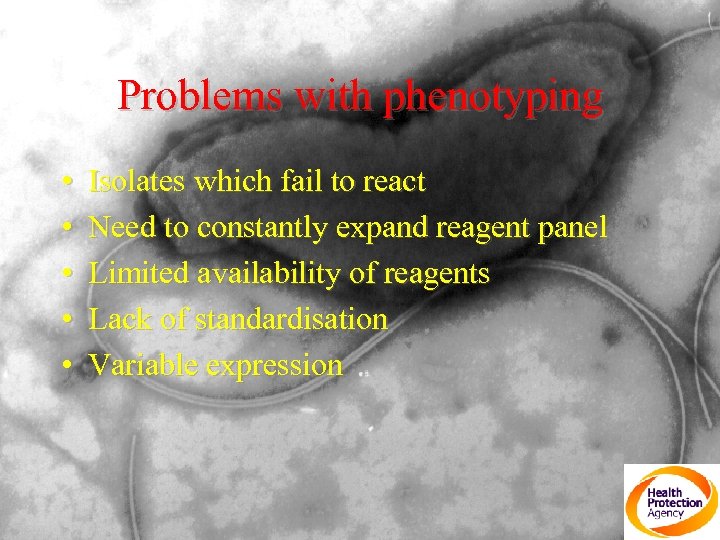
Problems with phenotyping • • • Isolates which fail to react Need to constantly expand reagent panel Limited availability of reagents Lack of standardisation Variable expression
Molecular sub-typing for C. jejuni • • Restriction endonuclease analysis RFLPs Ribotyping PFGE But problems remain, fla typing Ambiguities need combinations Standardisation PCR RFLP Roll out RAPD ERICs
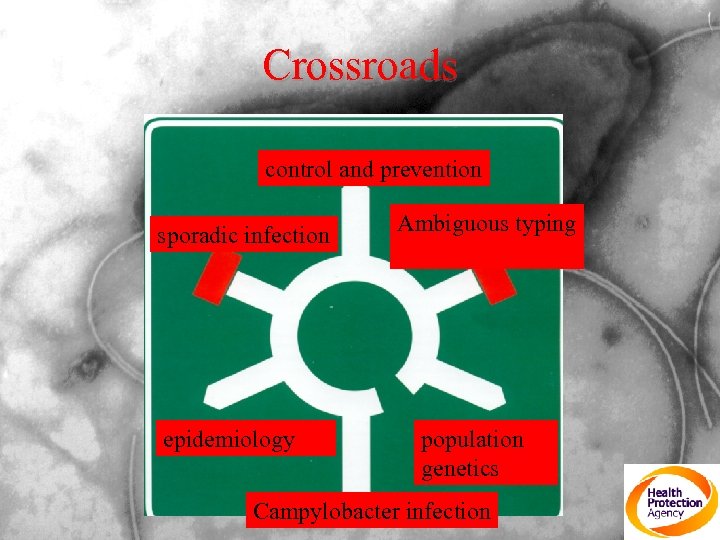
Crossroads control and prevention sporadic infection epidemiology Ambiguous typing population genetics Campylobacter infection
Campylobacter isolate characterisation • Is central to disease surveillance and epidemiology, requiring methods that are – accurate – comprehensive – reproducible
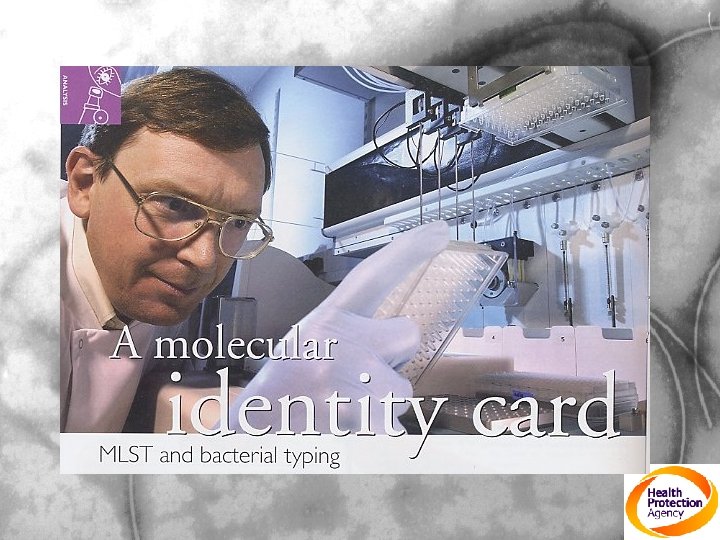
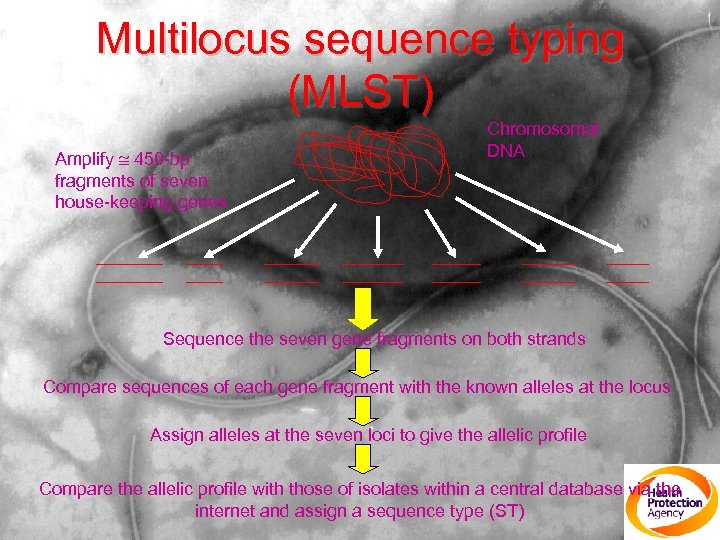
Multilocus sequence typing (MLST) Amplify 450 -bp fragments of seven house-keeping genes Chromosomal DNA Sequence the seven gene fragments on both strands Compare sequences of each gene fragment with the known alleles at the locus Assign alleles at the seven loci to give the allelic profile Compare the allelic profile with those of isolates within a central database via the internet and assign a sequence type (ST)
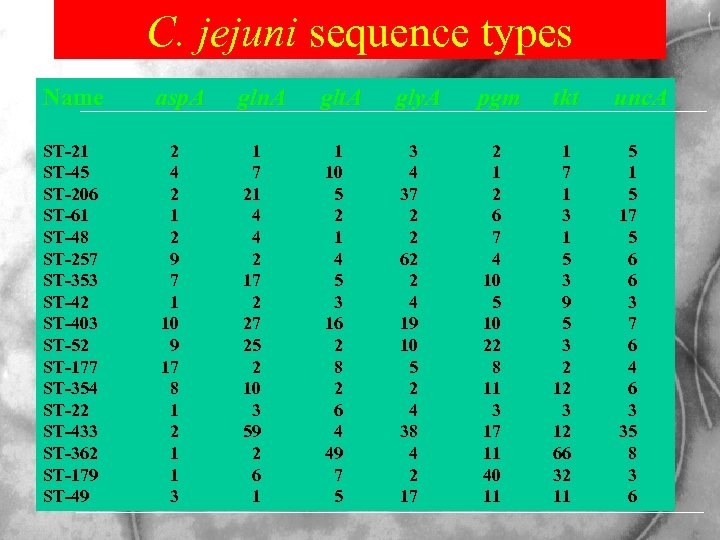
C. jejuni sequence types Name asp. A gln. A glt. A gly. A pgm tkt unc. A ST-21 ST-45 ST-206 ST-61 ST-48 ST-257 ST-353 ST-42 ST-403 ST-52 ST-177 ST-354 ST-22 ST-433 ST-362 ST-179 ST-49 2 4 2 1 2 9 7 1 10 9 17 8 1 2 1 1 3 1 7 21 4 4 2 17 2 27 25 2 10 3 59 2 6 1 1 10 5 2 1 4 5 3 16 2 8 2 6 4 49 7 5 3 4 37 2 2 62 2 4 19 10 5 2 4 38 4 2 17 2 1 2 6 7 4 10 5 10 22 8 11 3 17 11 40 11 1 7 1 3 1 5 3 9 5 3 2 12 3 12 66 32 11 5 17 5 6 6 3 7 6 4 6 3 35 8 3 6
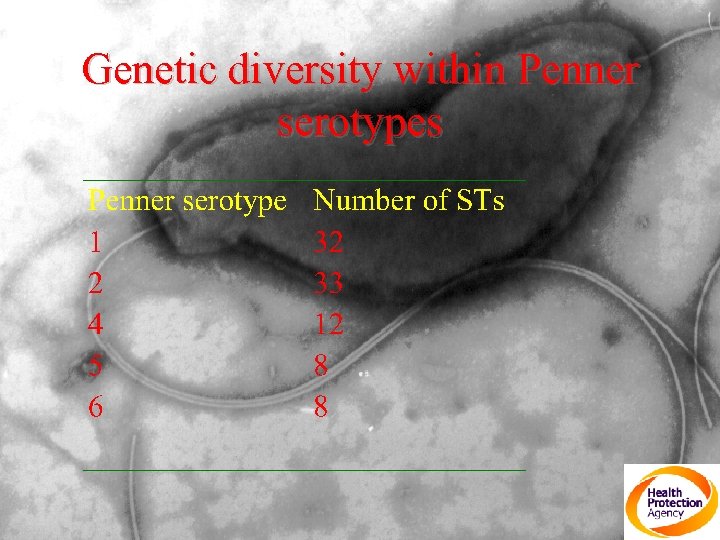
Genetic diversity within Penner serotypes
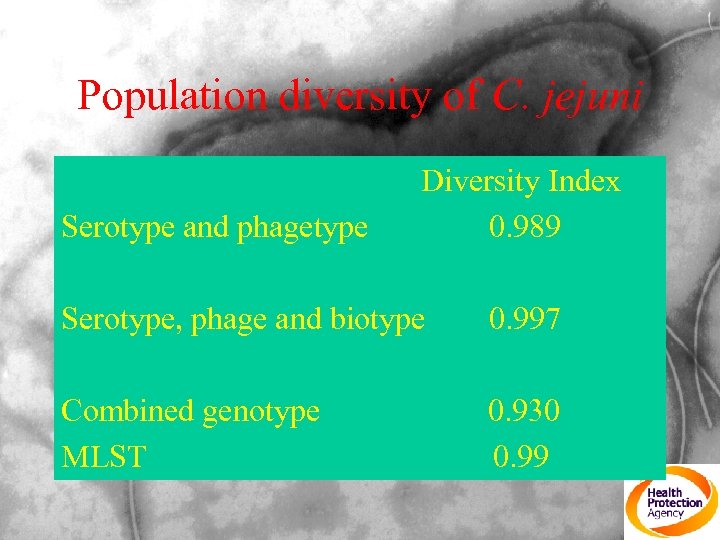
Population diversity of C. jejuni Diversity Index Serotype and phagetype 0. 989 Serotype, phage and biotype 0. 997 Combined genotype 0. 930 MLST 0. 99
Do we need yet another typing scheme for Campylobacter? • A nucleotide sequence based approach capitalises on technology which is largely automated and increasingly applied to the characterisation of pathogens
Advantages of MLST • The technique is portable, reproducible and relatively quick, easy and cheap to perform • Unlike antigen and antibiotic resistance genes, housekeeping genes are selectively neutral • Freedom from reliance on serological typing reagents which are becoming more difficult to produce (recent changes in Animal Procedures Act)
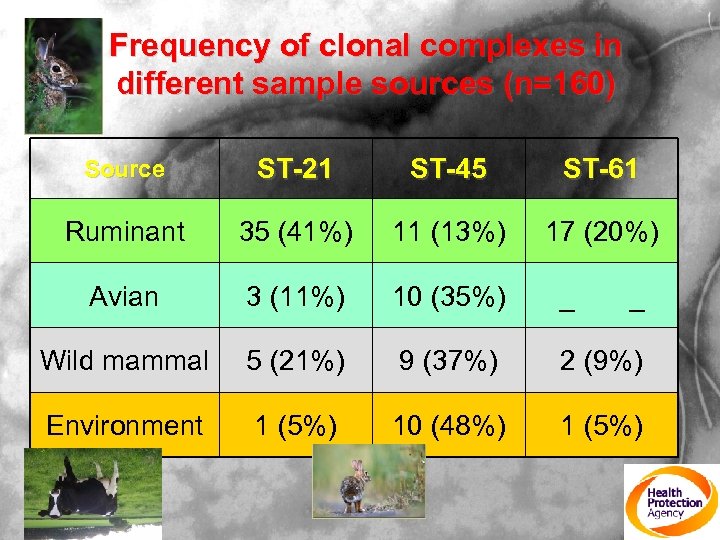
Frequency of clonal complexes in different sample sources (n=160) Source ST-21 ST-45 ST-61 Ruminant 35 (41%) 11 (13%) 17 (20%) Avian 3 (11%) 10 (35%) _ Wild mammal 5 (21%) 9 (37%) 2 (9%) Environment 1 (5%) 10 (48%) 1 (5%) _
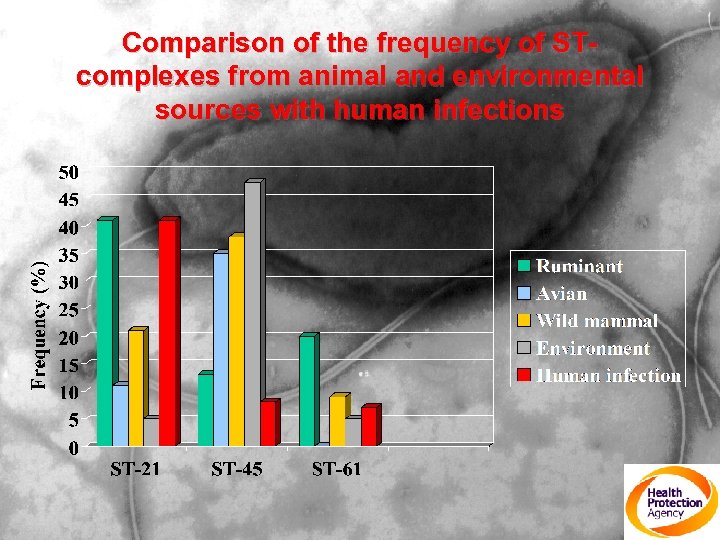
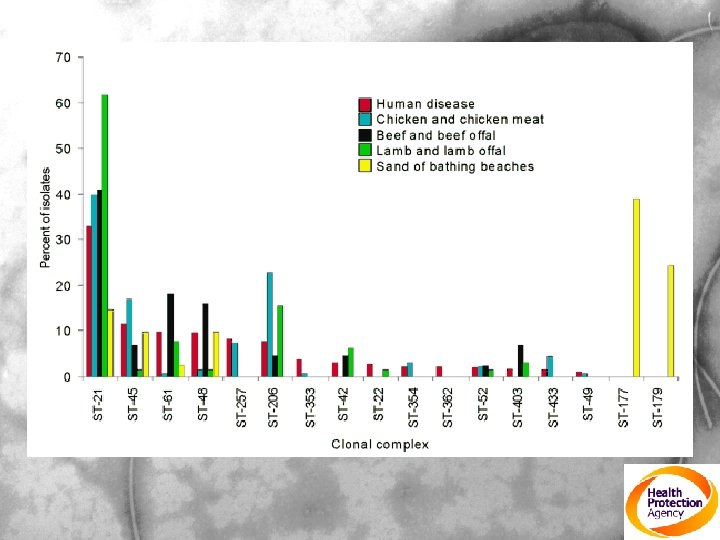
Comparison of the frequency of STcomplexes from animal and environmental sources with human infections
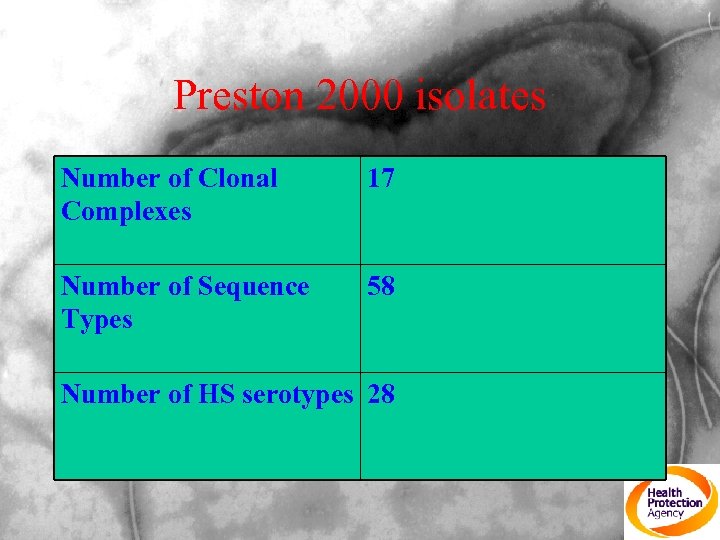
Preston 2000 isolates Number of Clonal Complexes 17 Number of Sequence Types 58 Number of HS serotypes 28
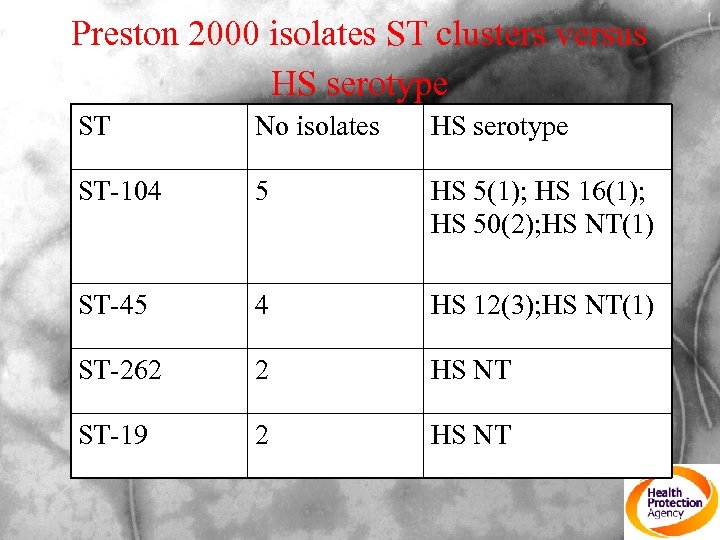
Preston 2000 isolates ST clusters versus HS serotype ST No isolates HS serotype ST-104 5 HS 5(1); HS 16(1); HS 50(2); HS NT(1) ST-45 4 HS 12(3); HS NT(1) ST-262 2 HS NT ST-19 2 HS NT
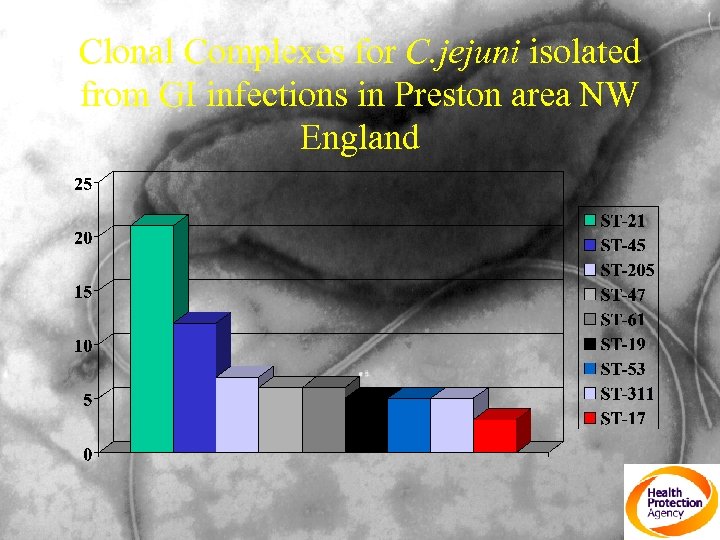
Clonal Complexes for C. jejuni isolated from GI infections in Preston area NW England
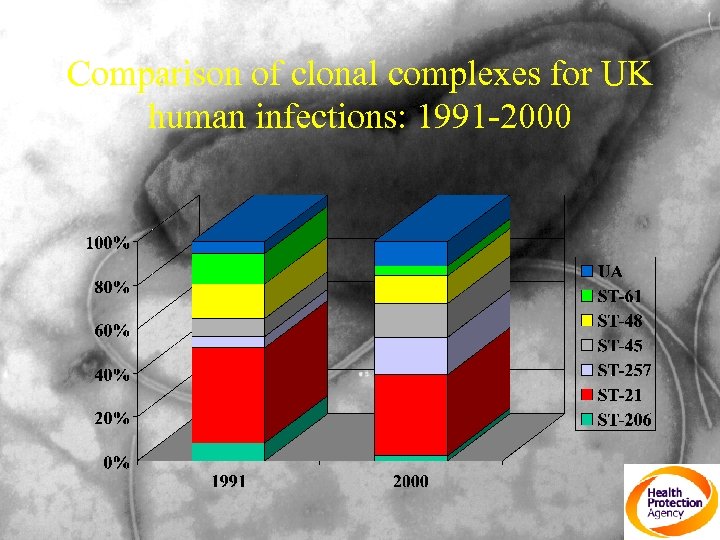
Comparison of clonal complexes for UK human infections: 1991 -2000
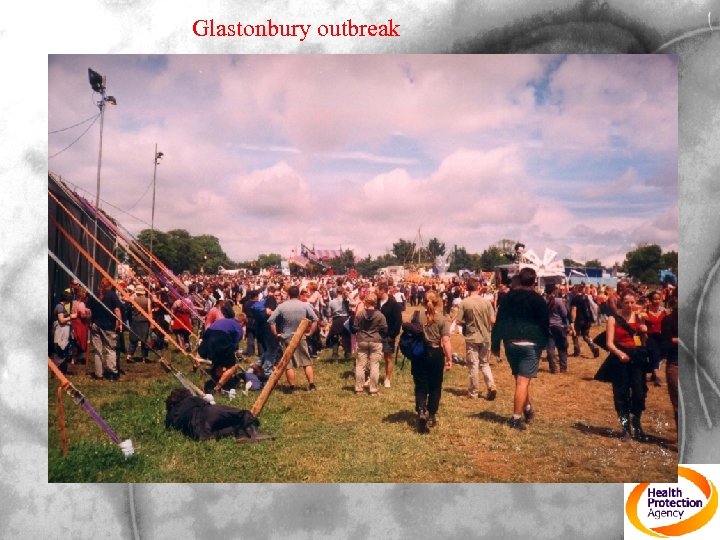
Glastonbury outbreak
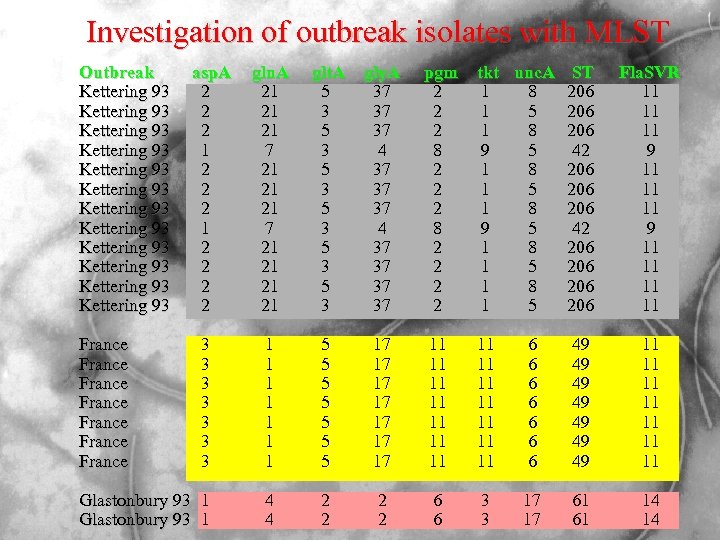
Investigation of outbreak isolates with MLST Outbreak Kettering 93 Kettering 93 Kettering 93 asp. A 2 2 2 1 2 2 gln. A 21 21 21 7 21 21 glt. A 5 3 5 3 gly. A 37 37 37 4 37 37 pgm 2 2 2 8 2 2 tkt 1 1 1 9 1 1 unc. A 8 5 8 5 ST 206 206 206 42 206 206 Fla. SVR 11 11 11 9 11 11 France France 3 3 1 1 5 5 17 17 11 11 11 11 6 6 49 49 11 11 Glastonbury 93 1 Glastonbury 93 4 4 2 2 6 6 3 3 17 61 61 14 14
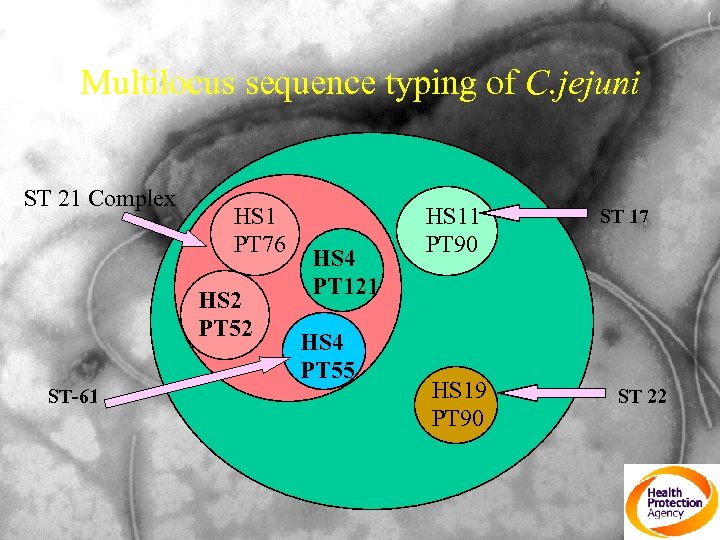
Multilocus sequence typing of C. jejuni ST 21 Complex HS 1 PT 76 HS 2 PT 52 ST-61 HS 4 PT 121 HS 4 PT 55 HS 11 PT 90 HS 19 PT 90 ST 17 ST 22
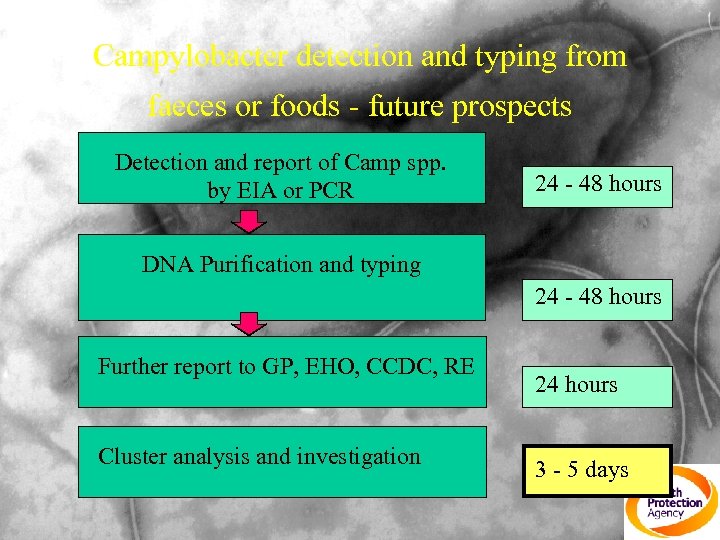
Campylobacter detection and typing from faeces or foods - future prospects Detection and report of Camp spp. by EIA or PCR 24 - 48 hours DNA Purification and typing 24 - 48 hours Further report to GP, EHO, CCDC, RE Cluster analysis and investigation 24 hours 3 - 5 days
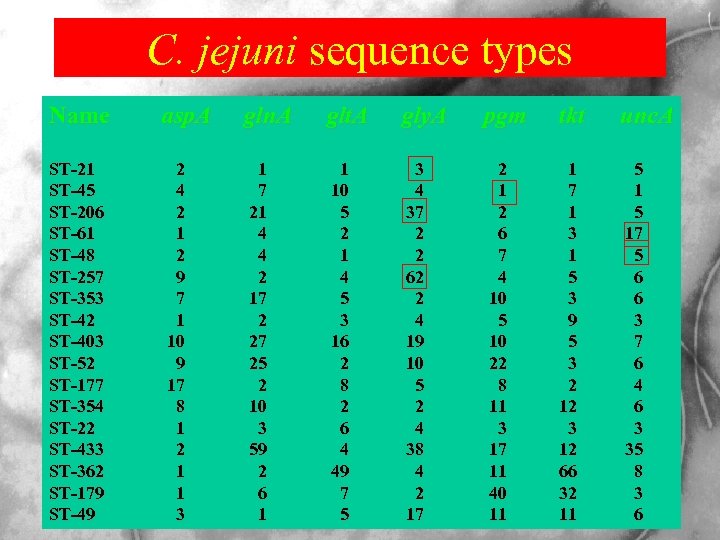
C. jejuni sequence types Name asp. A gln. A glt. A gly. A pgm tkt unc. A ST-21 ST-45 ST-206 ST-61 ST-48 ST-257 ST-353 ST-42 ST-403 ST-52 ST-177 ST-354 ST-22 ST-433 ST-362 ST-179 ST-49 2 4 2 1 2 9 7 1 10 9 17 8 1 2 1 1 3 1 7 21 4 4 2 17 2 27 25 2 10 3 59 2 6 1 1 10 5 2 1 4 5 3 16 2 8 2 6 4 49 7 5 3 4 37 2 2 62 2 4 19 10 5 2 4 38 4 2 17 2 1 2 6 7 4 10 5 10 22 8 11 3 17 11 40 11 1 7 1 3 1 5 3 9 5 3 2 12 3 12 66 32 11 5 17 5 6 6 3 7 6 4 6 3 35 8 3 6
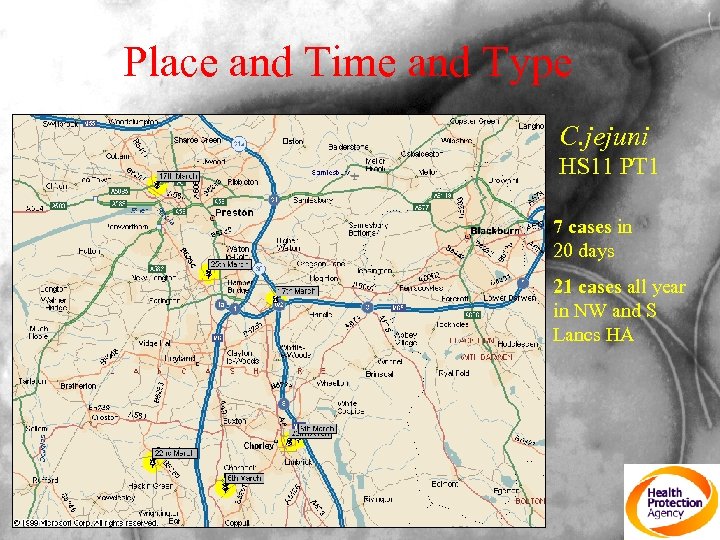
Place and Time and Type C. jejuni HS 11 PT 1 7 cases in 20 days 21 cases all year in NW and S Lancs HA
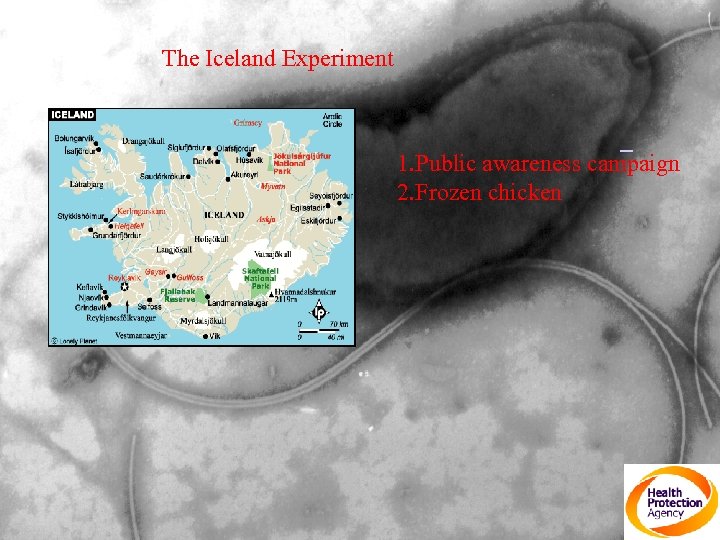
The Iceland Experiment 1. Public awareness campaign 2. Frozen chicken
USDA Intervention studies Norman Stern • Novel biological agents to reduce or eliminate Campylobacter from chicken intestinal flora – Competitive exclusion • Bacteriocins – 15 trials – Administer bacteriocin 5 days before slaughter – 5 -fold or total reduction in Campylobacter from chicken at slaughter
Acknowledgements Preston PHL Eric Bolton Roisin Ure David Wareing (Dynal Biotech) University of Staffordshire Mishele Barrigas Pete Gowland DEFRA Epidemiology Unit, University of Liverpool Nigel French Richard Kemp Howard Leatherbarrow WCIED, Oxford Frances Colles Kate Dingle Martin Maiden Rachel Urwin
 Скачать презентацию Whats new in Campylobacter infection Andrew Fox Health
42357d32a4c9ff9d89e6b89b0a5b4d69.ppt